This post may contain affiliate links. If you make a purchase through these links, we may earn a commission at no additional cost to you.
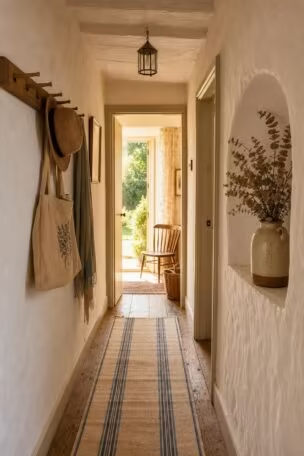
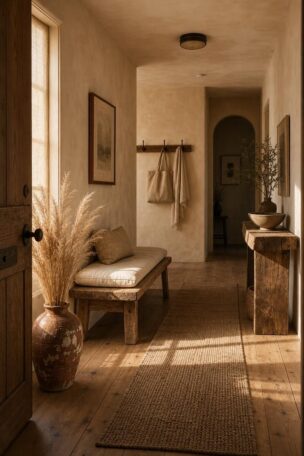
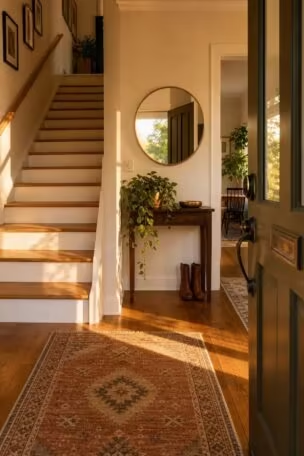
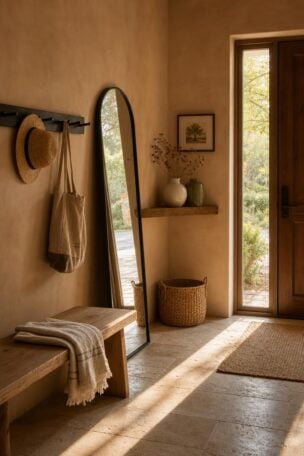
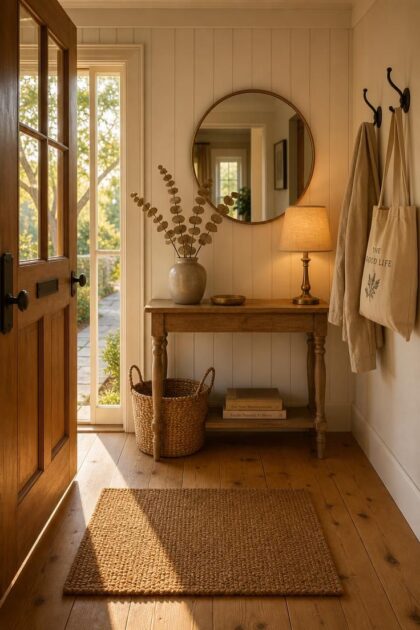
A cottage entryway sets the mood for everything that follows.
It is the first handshake between your home and the people who walk through it, and that first impression lingers longer than most homeowners realize.
The right mix of worn textures, soft colors, and personal details can make even a narrow hallway feel like a warm invitation.
These 26 cottage entryway ideas pair natural materials with lived-in character so your front door area works just as beautifully as the rooms behind it.
Slate Tile Floor With a Coir-and-Cotton Layered Doormat
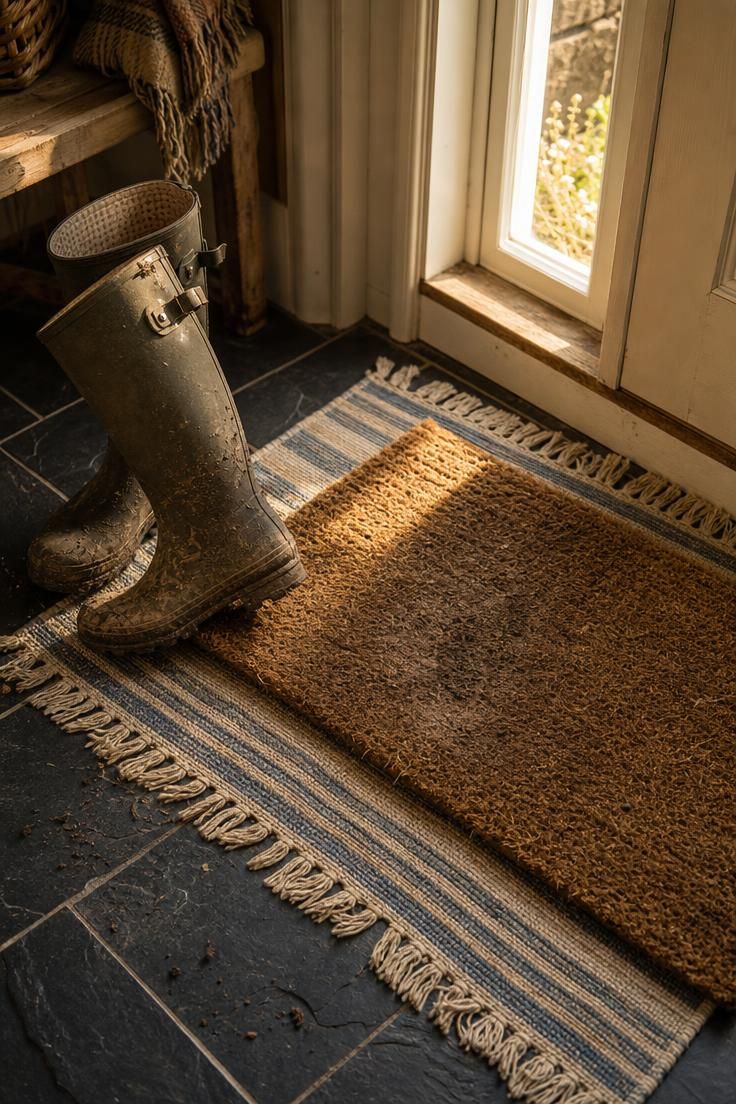
The layered doormat trick is one of the fastest ways to make a cottage entryway feel grounded and intentional.
A coir mat handles the heavy lifting of dirt and moisture, while the cotton flatweave beneath it introduces color and softness that bare stone cannot offer on its own.
Slate works especially well here because its irregular surface hides scuffs and footprints better than polished tile or sealed concrete.
The tonal range within natural cleft slate, from deep blue-black to soft dove, picks up the muted palette that cottage interiors rely on.
Placing a patterned cotton runner beneath a smaller coir mat also defines the entry zone in an open floor plan where walls do not separate the front door from the living space.
Cotton flatweaves are machine-washable, making seasonal swaps painless when you want to shift from cool-toned stripes in spring to warmer earth tones by October.
That simple material pairing, one rough and one soft, creates a sensory transition the moment someone steps inside.
Style Blueprint:
- Natural cleft slate tile in charcoal or blue-black with pale grout
- Thick rectangular coir doormat with visible fiber texture
- Handwoven cotton flatweave runner in faded cream and dusty blue stripes
- Worn leather or rubber rain boots placed casually
- Warm-toned sidelight window for natural golden light
A Painted Dutch Door With Iron Strap Hinges and a Sidelight Window
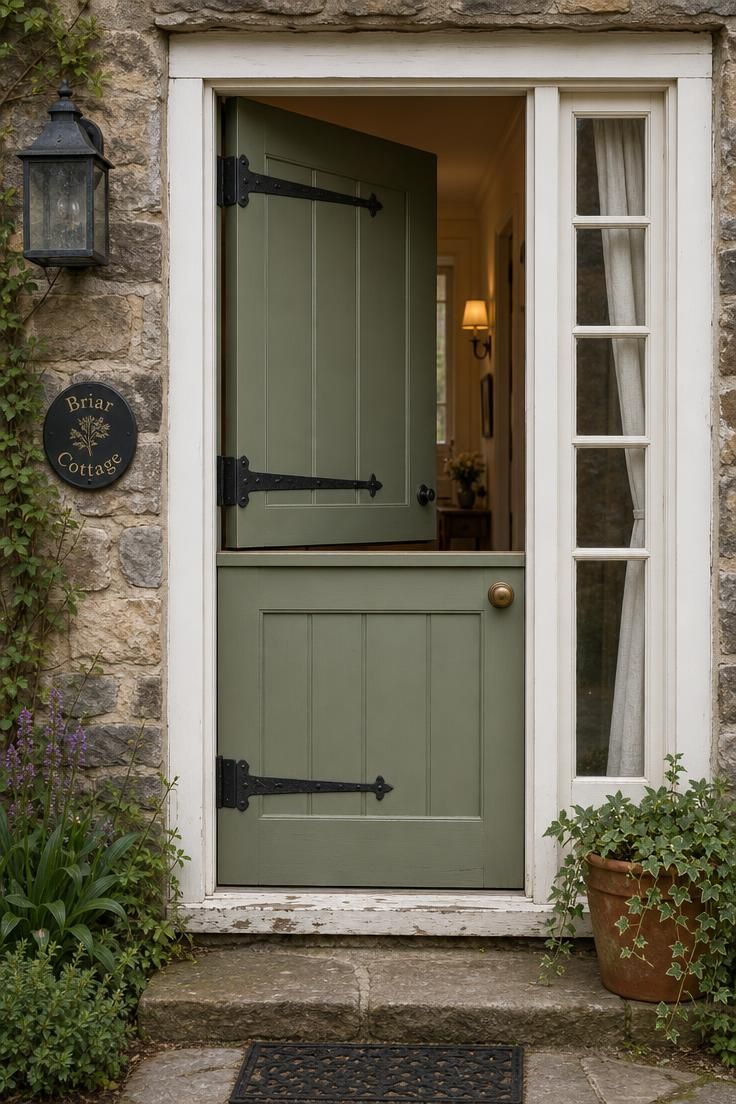
A Dutch door is one of the most practical and character-rich choices for a cottage entryway because it lets fresh air circulate while the lower half stays closed to pets, children, or a wandering breeze.
The sage green on this particular door falls into the muted middle ground between bright and dark, a shade that reads as earthy without competing with surrounding plantings.
Iron strap hinges add weight and age to the door’s personality, and hammered finishes hide fingerprints and minor rust spots far better than polished hardware.
Pairing the door with a narrow sidelight introduces borrowed light into the hallway without requiring a larger window opening, which matters in older cottage construction where wall thickness limits structural changes.
The divided lites in the sidelight glass also echo the gridded pane patterns found in traditional English and American cottage architecture.
A simple brass doorknob with a natural patina ages alongside the iron hinges, creating a mixed-metal look that feels collected rather than coordinated.
Style Blueprint:
- Dutch door painted in muted sage green with a half-open top
- Iron strap hinges in hammered matte black finish
- Simple brass knob with a dull natural patina
- Narrow sidelight window with six divided lites
- Terracotta pot with trailing ivy on the stone threshold
A Row of Mismatched Ceramic Hooks on a Painted Plank Board
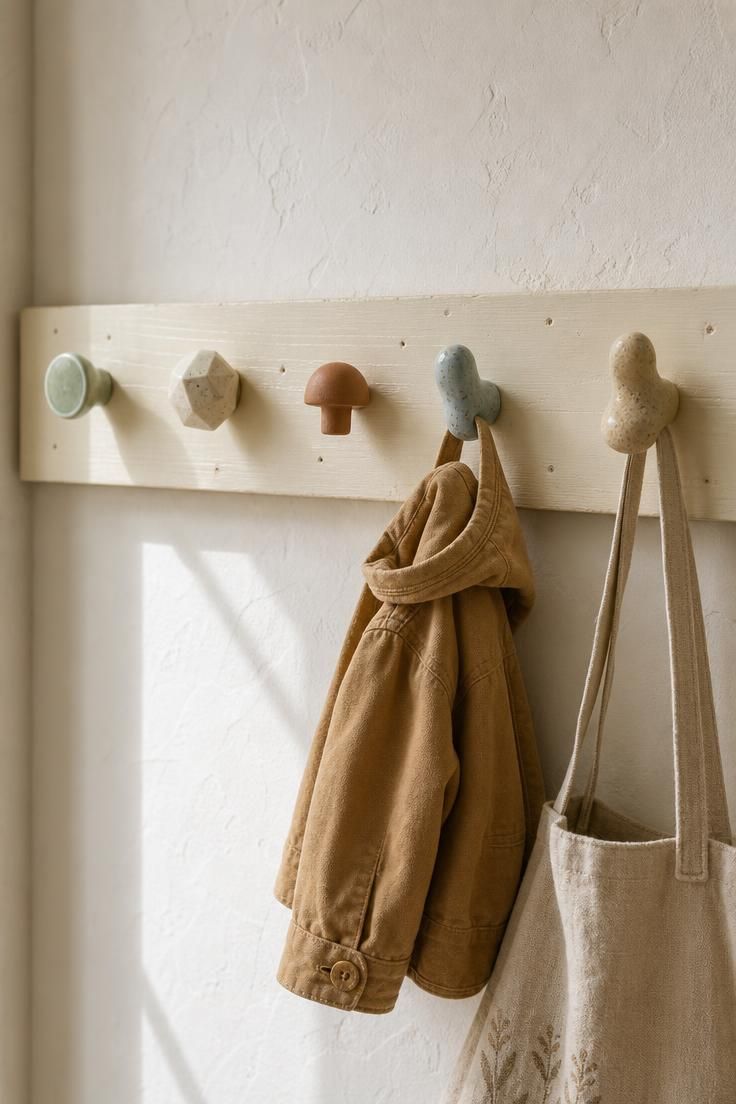
Mismatched hooks turn a purely functional wall fixture into something worth looking at twice.
The variation in shape and glaze across these ceramic pieces keeps the eye moving, and that subtle visual rhythm is what separates a cottage entryway from one that looks like a hotel corridor.
Mounting the hooks on a painted plank board rather than directly into the wall protects plaster or drywall from repeated screw holes when you rearrange, move, or swap out a hook.
The celadon, terracotta, and speckled white glazes in this grouping pull from the same muted palette that dominates cottage interiors without matching too precisely.
Spacing the hooks unevenly, with a slightly wider gap near the center, avoids the rigid symmetry that reads as institutional rather than personal.
Children’s coats and daily-use bags look relaxed on these hooks because the organic shapes make even a cluttered row feel composed.
Ceramic hooks are available from small pottery studios and online makers, so building a collection over time adds a layer of story that mass-produced metal hooks never carry.
Leaving a hook or two empty is a deliberate choice that keeps the arrangement from looking overcrowded and signals room for a guest’s coat.
Style Blueprint:
- Horizontal plank board painted in warm cream, mounted at shoulder height
- Five ceramic hooks in mismatched glazes: celadon, speckled white, raw terracotta, pale blue, warm oatmeal
- Mix of round, faceted, mushroom, and organic shapes
- Soft white plaster wall with faint trowel texture behind
- Bright natural midday light source from a nearby window
A Milk-Paint Side Table With Stacked Botanical Prints and a Stoneware Lamp
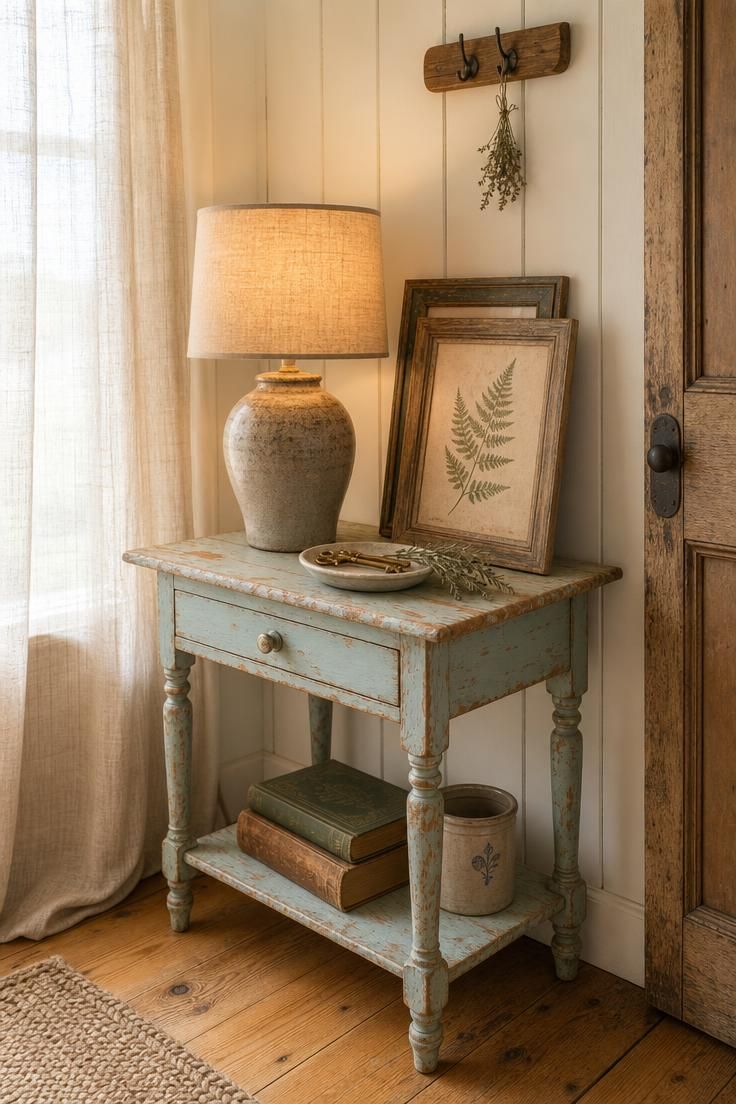
A side table is more forgiving than a full console in a tight cottage entryway because it occupies less wall space while still giving you a surface for keys, mail, and a lamp, and the console table styling principles still apply at this smaller scale.
Milk paint ages with a distinctive chippy finish that reveals the wood beneath, which saves you from worrying about nicks and scratches because every mark adds to the piece’s character.
The stoneware lamp anchors the arrangement with a handmade quality that overhead lighting cannot replicate, and the warm glow it throws into a dim hallway corner changes the mood of the entire entry.
Leaning prints against the wall instead of hanging them lets you rotate art seasonally without putting new holes in tongue-and-groove paneling.
A small ceramic dish near the lamp catches everyday pocket items and prevents them from scattering across the table surface.
The dried rosemary sprig adds a faint herbal scent that greets you the moment you drop your keys, turning a visual vignette into something you can smell.
Style Blueprint:
- Small side table in chippy milk paint, pale robin’s-egg blue over raw pine
- Hand-thrown stoneware lamp with a linen drum shade
- Three botanical prints in mismatched wood frames, leaned against the wall
- Small ceramic dish for keys and dried rosemary sprig
- Tongue-and-groove wall painted in antique white
Design Pro-Tip: When layering a cottage entryway vignette on a small surface, follow the triangle rule: place the tallest object (a lamp or vase) at one end, the mid-height piece (leaning frames or a stack of books) at the opposite end, and the smallest object (a dish or single stem) in front and between them. This creates depth without clutter, and your eye reads the grouping as intentional rather than accidental.
A Built-In Mudroom Nook With Open Cubbies and a Linen Seat Pad
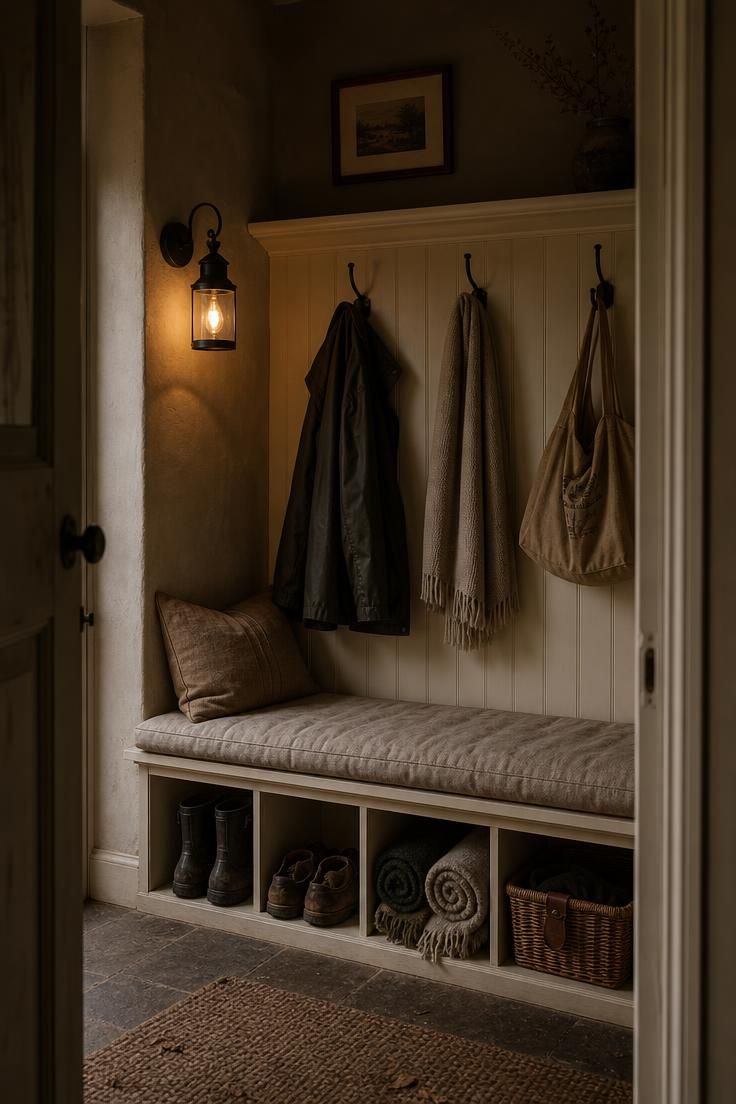
A built-in mudroom nook with an entryway bench solves the two biggest problems in a cottage entryway at once: seating for pulling on boots, and storage for the coats and bags that pile up near the door.
Beadboard wainscoting on the backing ties the nook into the rest of the room’s trim work, making the built-in feel like an original architectural feature rather than a later addition.
The open cubbies below the seat keep shoes visible and accessible, which matters in a household where people cycle through rain boots, garden clogs, and house slippers depending on the season.
A linen seat pad in natural flax softens the bench without introducing a busy pattern, and the slight rumple in the fabric makes the space look used rather than staged.
Iron hooks above the bench handle heavier items like rain jackets without bending under the weight, something that decorative ceramic hooks struggle with over time.
The muted mushroom wall color above the hooks recedes in low light, pulling attention toward the textiles and objects on the bench rather than the wall itself.
A glass lantern sconce provides just enough ambient glow to find your coat without flooding the nook with brightness that would kill the cozy, end-of-day atmosphere.
Style Blueprint:
- Built-in bench with beadboard backing, painted in warm cream
- Linen seat cushion pad in natural flax, slightly rumpled
- Four open cubbies with shoes, rolled blankets, and a wicker basket
- Three iron coat hooks for outerwear and bags
- Single glass lantern sconce on the adjacent wall
A Glass Bell Jar Sconce Pair Flanking a Paneled Front Door
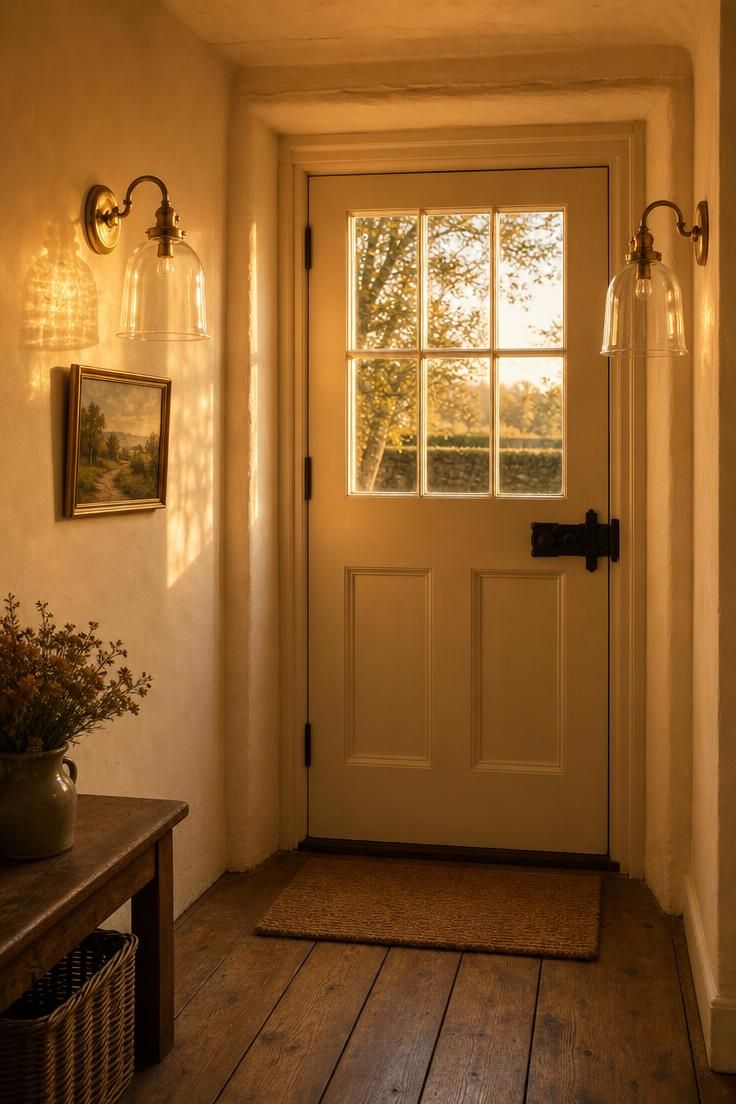
Flanking sconces create a framed moment around the front door that draws your eye to the entry point itself, which is exactly where a cottage entryway should direct attention.
Glass bell jar shapes have a centuries-long history in English and Colonial American homes, and their clear domes let the wall color and surrounding details show through rather than hiding them behind an opaque shade.
Aged brass fittings sit comfortably alongside both warm and cool metals elsewhere in the entry because patinated brass reads as neutral, not shiny or statement-making.
Mounting the sconces at eye height places the light source where it warms faces and coats rather than casting harsh downlight from above.
Even when the sconces are off during daylight hours, their glass catches and redirects sunlight in a way that adds sparkle to an otherwise matte-finish hallway.
A paneled door painted in deep cream provides the architectural backbone that these sconces need, because bell jar glass reads as too formal against a flat, featureless slab door.
Pairing the sconces with a small landscape painting nearby creates a gallery-like entry moment that hints at the collected, personal approach found in the rooms beyond.
The black iron latch on the door introduces a third metal finish, but it works because the hardware hierarchy is clear: brass for light, iron for function, and gold for accent.
Style Blueprint:
- Glass bell jar sconces with aged brass fittings, mounted at eye height
- Front door painted in deep cream with four recessed panels
- Black iron door latch for a period-appropriate finish
- Small oil landscape painting in a thin gold frame beside the sconces
- Wide-plank oak floor with a narrow coir mat
Woven Seagrass Basket Beside a Stone-Topped Entry Ledge
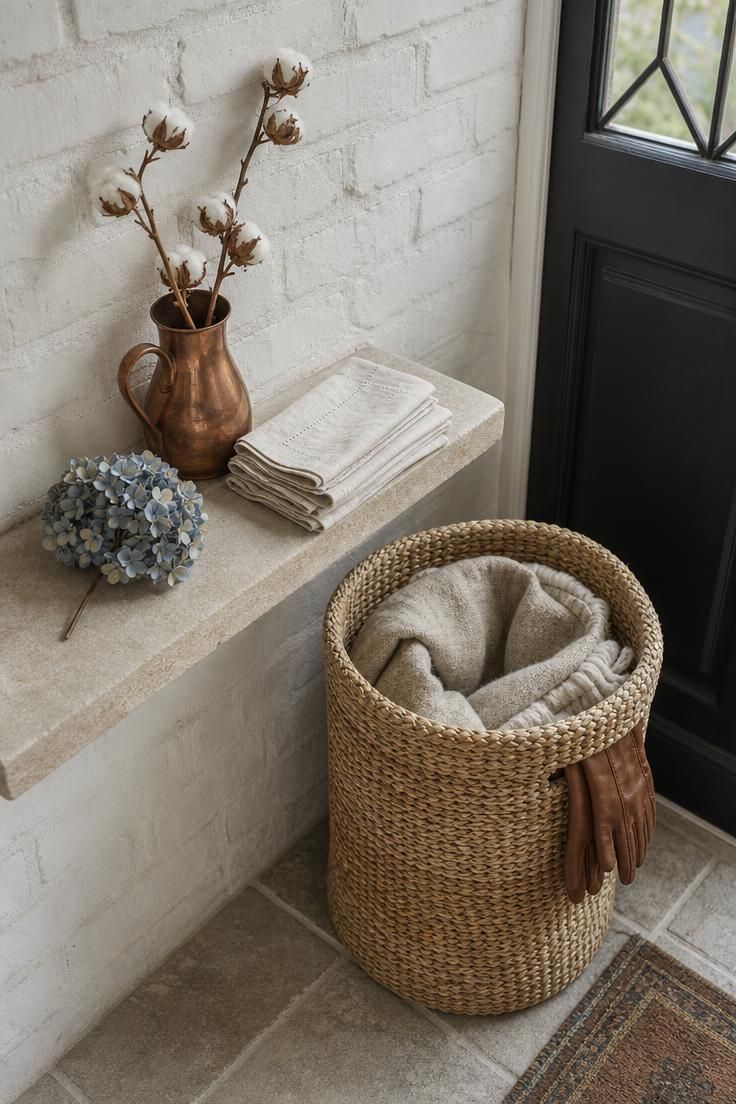
A tall seagrass basket at the entry catches all the items that do not belong on hooks or shelves: umbrellas, rolled blankets, dog leashes, and the scarves you grab on your way out the door.
The material itself brings a tonal warmth to cool-toned entries, and the natural color variation within a single basket, from pale wheat to deeper honey, adds visual interest without introducing a pattern.
Stone ledges mounted directly to a wall take up far less floor space than a console table, making them a practical choice in narrow cottage hallways where every inch matters.
Limestone in a honed matte finish hides water rings and scratches better than polished marble, which is important for a surface that sits near the front door and catches rain-damp bags.
The copper pitcher and dried cotton branches on this ledge form a compact still life that changes with minimal effort, a swap of the branches for fresh wildflower stems shifts the entire mood.
Seagrass is durable enough to survive years of daily use without unraveling, and its scent fades after the first few weeks, so it will not overpower a small hallway.
Style Blueprint:
- Tall woven seagrass basket with a rolled brim for blankets and accessories
- Narrow limestone ledge with honed matte finish on a whitewashed brick wall
- Small copper pitcher holding dried cotton branches
- Folded linen napkins or cloths in soft ecru on the ledge
- Dried hydrangea head as a seasonal accent
A Floral Wallpaper Accent Above a Painted Chair Rail
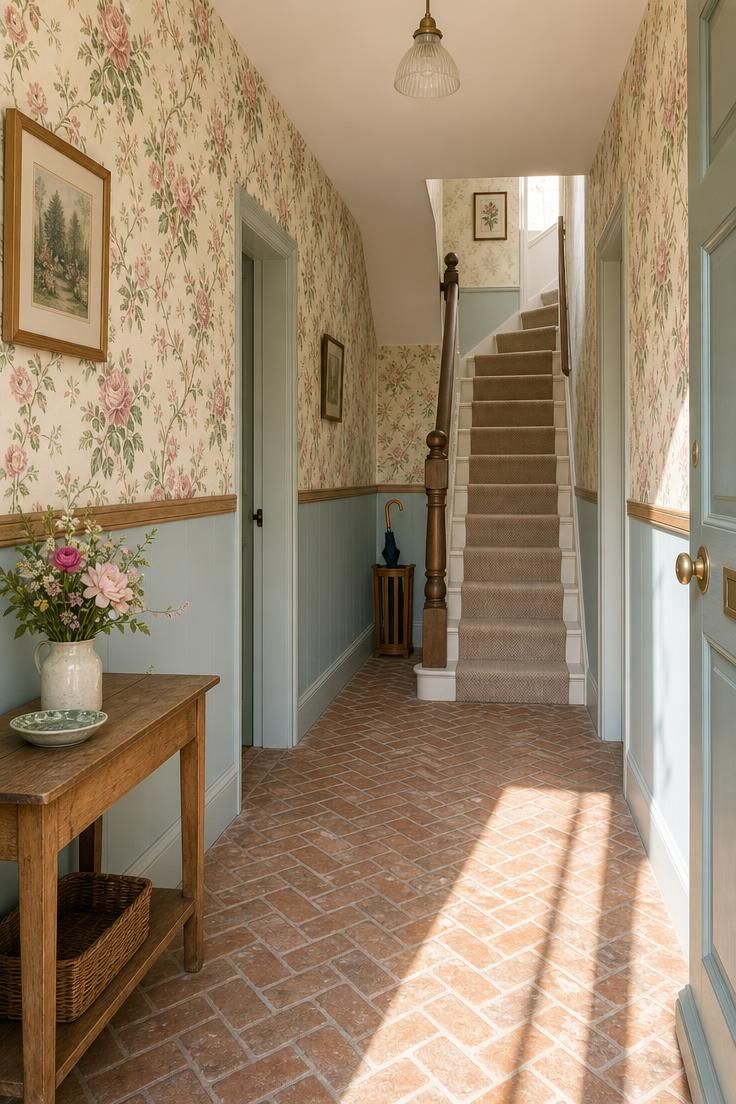
Wallpaper above a chair rail is a classic cottage move that protects the more vulnerable lower wall from scuffs while letting the upper section carry the room’s personality.
The two-tone approach, painted below and patterned above, breaks up a tall narrow hallway visually and tricks the eye into reading the space as wider than it actually is.
Muted floral patterns in the pink-and-sage family feel cottage-appropriate because they reference the traditional chintz and botanical prints found in English country homes.
A warm ivory ground behind the florals keeps the hallway bright even on overcast days, while a stark white ground would make the same pattern feel colder and more clinical.
Duck-egg blue on the lower wall is a safe, period-consistent choice that pairs with almost any floral palette without competing for attention.
The wooden chair rail itself adds a horizontal line that anchors the eye and creates a visual shelf, making the space feel more structured without adding furniture.
Herringbone brick tile on the floor introduces a geometric counterpoint to the organic floral shapes above, and the clay tone warms up the cooler blue paint.
Modern peel-and-stick wallpapers make this treatment reversible for renters or anyone hesitant to commit to a pattern long-term, and the approach also works beautifully over a shiplap entryway wall where the horizontal lines add extra texture beneath the pattern.
A slim umbrella stand near the stairs keeps the floor clear and echoes the vertical lines of the wallpaper’s trailing vines.
Style Blueprint:
- Vintage-style floral wallpaper in muted pink roses and sage on warm ivory ground
- Painted lower wall in soft duck-egg blue with a simple wooden chair rail
- Herringbone-pattern brick tile floor in faded clay
- Slim wooden umbrella stand near the staircase
- Bright midday light source from an open or windowed front door
Design Pro-Tip: When mixing wallpaper and paint in a cottage entryway, pull your paint color directly from a secondary shade in the wallpaper pattern rather than matching the dominant color. This creates a connected but not matchy palette. If the wallpaper has sage leaves, paint the lower wall in the sage rather than the dominant rose, so the pattern does the talking and the painted section plays a supporting role.
An Oval Brass Mirror With a Leather Strap Hanger on a Plaster Wall
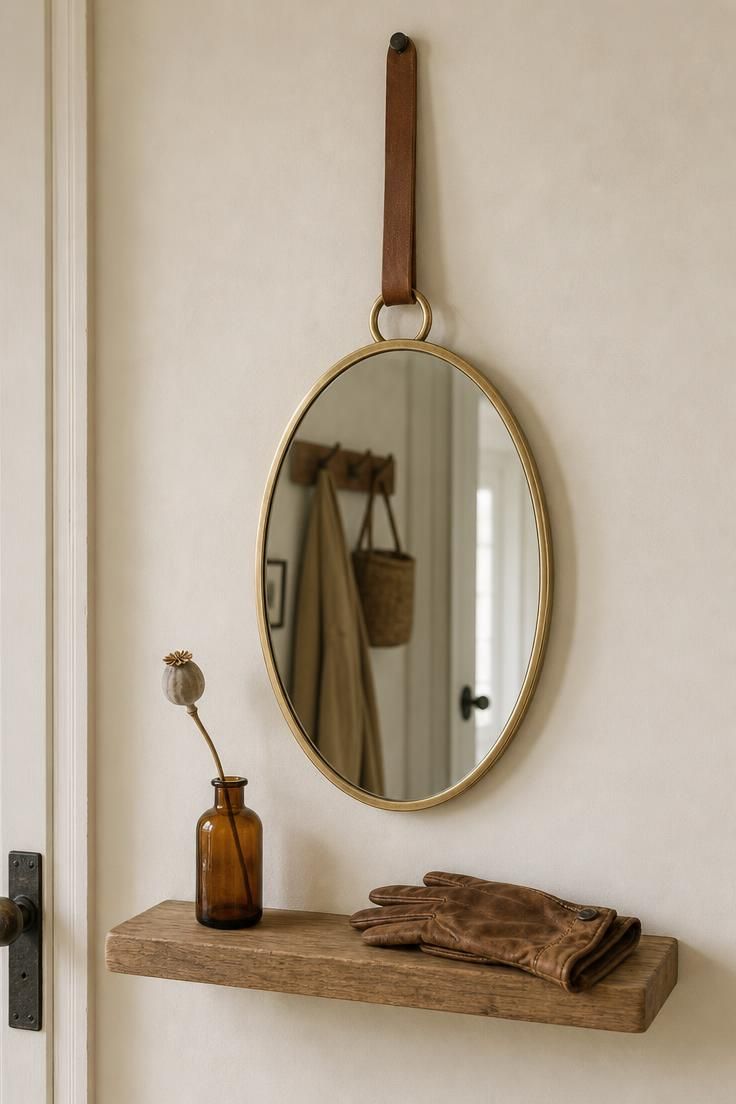
A leather strap hanger turns a simple mirror into a statement piece by adding a material layer that most cottage entryways lack.
The strap introduces rich brown tones that connect to leather shoes by the door, wooden furniture, and the natural fibers found throughout a cottage interior, and it gives even a new mirror the character of a vintage mirror found at a flea market.
An oval shape softens a hallway filled with rectangular frames, door panels, and trim lines, giving the eye a curved resting point amid all those right angles.
Thin brass frames feel lighter than thick wood frames in a narrow entry, and the minimal profile lets the mirror’s reflective surface do the work of bouncing light deeper into the hallway.
Hanging the mirror from a single visible iron nail leans into the handmade, imperfect aesthetic that cottage style celebrates, rather than hiding the hardware behind a flush mount.
The raw oak shelf below provides a landing spot for small objects without requiring a full table, and its unfinished surface gains character over time as it darkens and develops a natural patina.
A single dried poppy stem in an amber glass bottle is the kind of specific, seasonal detail that makes a cottage entryway feel personally curated rather than generically styled.
Style Blueprint:
- Oval mirror with a thin brass frame and brass ring at the crown
- Thick saddle-brown leather strap hanger looped from a single iron nail
- Smooth plaster wall painted in pale putty
- Narrow floating shelf in raw, unfinished oak
- Small amber glass bottle with a single dried poppy stem
Reclaimed Barn Wood Floating Shelf Displaying Mismatched Pottery
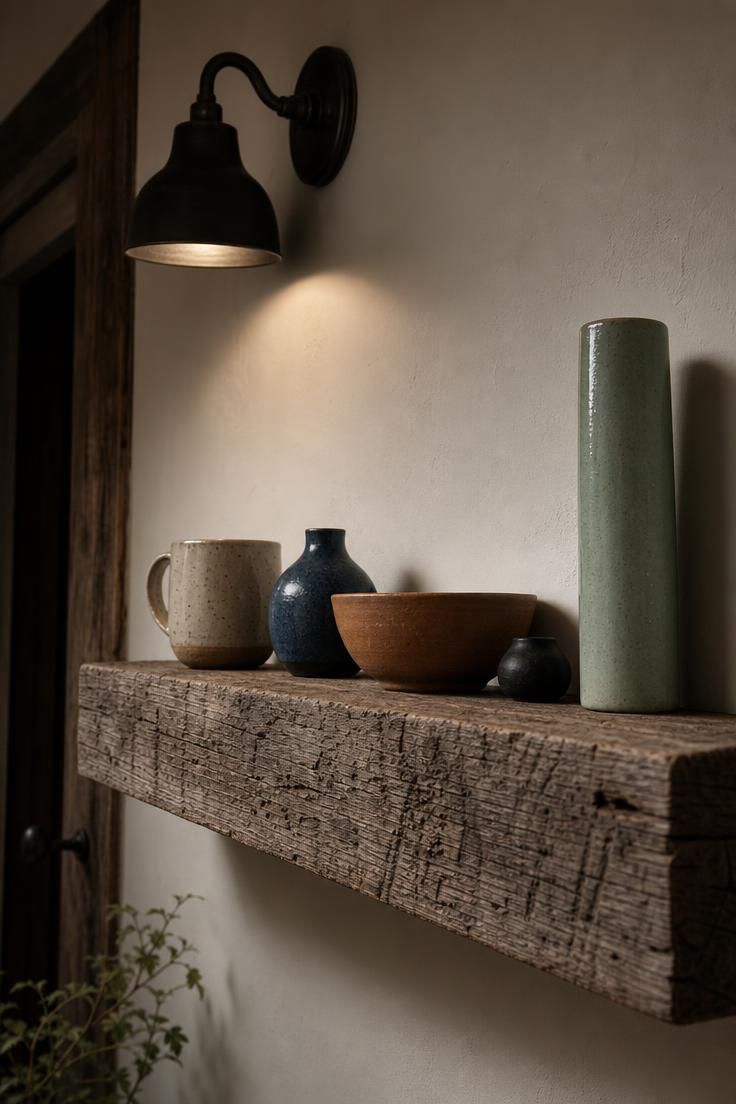
A single thick plank of reclaimed wood from a salvaged barn has more presence than a manufactured shelf because the saw marks, nail holes, and weathered patina tell a story that new lumber simply cannot.
Mismatched pottery collected over time turns a shelf into a personal archive, and the range of glazes, from matte black to speckled cream, creates a color conversation that holds your attention longer than a matched set would.
Floating the shelf with hidden brackets keeps the hardware invisible and lets the wood itself carry the visual weight, which matters in a cottage entryway where every surface is on display.
A low-angle perspective looking up at the shelf mimics how you actually see it when walking through the entry, and the slight upward tilt reveals the shadows behind each piece that overhead lighting would flatten.
Irregular spacing between the pottery pieces avoids the museum-shelf look and makes the arrangement feel like it happened naturally over weeks of adding one piece at a time.
The low sconce light from a nearby fixture gives the indigo and celadon glazes a richer tonal depth than they would show under flat daylight.
Style Blueprint:
- Thick reclaimed barn wood plank, rough-sawn and weathered to silvery brown
- Five mismatched pottery pieces in speckled cream, indigo, terracotta, celadon, and matte black
- Hidden floating shelf brackets for a clean mount
- Deep linen white wall paint as a neutral backdrop
- Low-output wall sconce for directional, moody lighting
A Ceramic Table Lamp on a Painted Entry Cabinet With Iron Ring Pulls
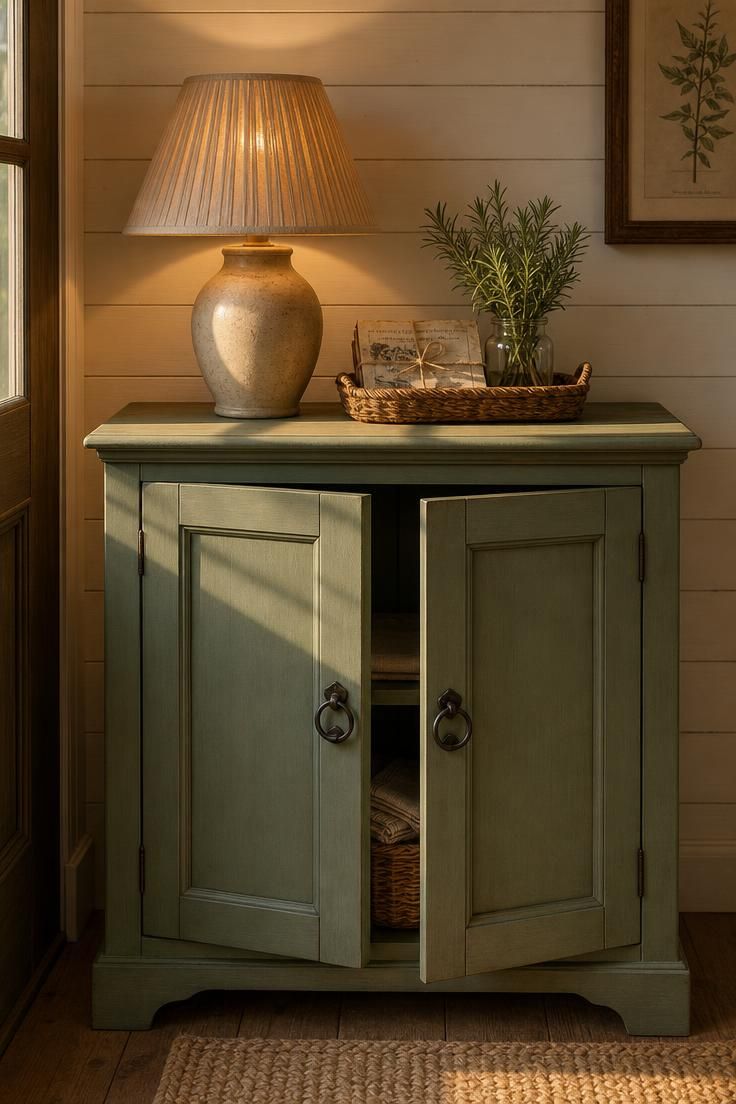
A painted entry cabinet offers hidden storage that open shelving and hook walls cannot, which matters in a cottage entryway where you need a place for items that should stay out of sight.
Soft sage green on the cabinet body keeps the piece feeling fresh without drifting into the bright territory that would clash with the muted cottage palette.
Iron ring pulls are some of the oldest hardware forms in domestic furniture, and their simple circular shape avoids the ornate fussiness that can tip cottage style into something too precious.
The ceramic lamp in warm putty acts as an anchor for the cabinet top, and its rounded body introduces a curved form that softens the straight lines of the cabinet and plank wall behind it.
A pleated linen shade diffuses the bulb’s light into a wide, soft pool that fills the entry corner without the harshness of a bare bulb or the directionality of a sconce.
The small tray with postcards and rosemary is the kind of curated surface moment that makes guests feel they have walked into a home with a point of view, not a staging exercise.
Leaving the cabinet doors slightly ajar hints at the storage behind them and makes the piece feel actively used rather than purely decorative.
A horizontal plank wall in antique white adds architectural texture behind the cabinet and lifts the entire vignette out of flatness.
Style Blueprint:
- Two-door entry cabinet painted in soft sage green
- Iron ring pulls with a simple circular profile
- Ceramic table lamp with a rounded putty body and pleated linen shade
- Small woven tray with postcards, kitchen twine, and fresh rosemary in a glass jar
- Narrow horizontal wood plank wall painted in antique white
Flagstone Step-Down Entry With a Hand-Knotted Wool Runner
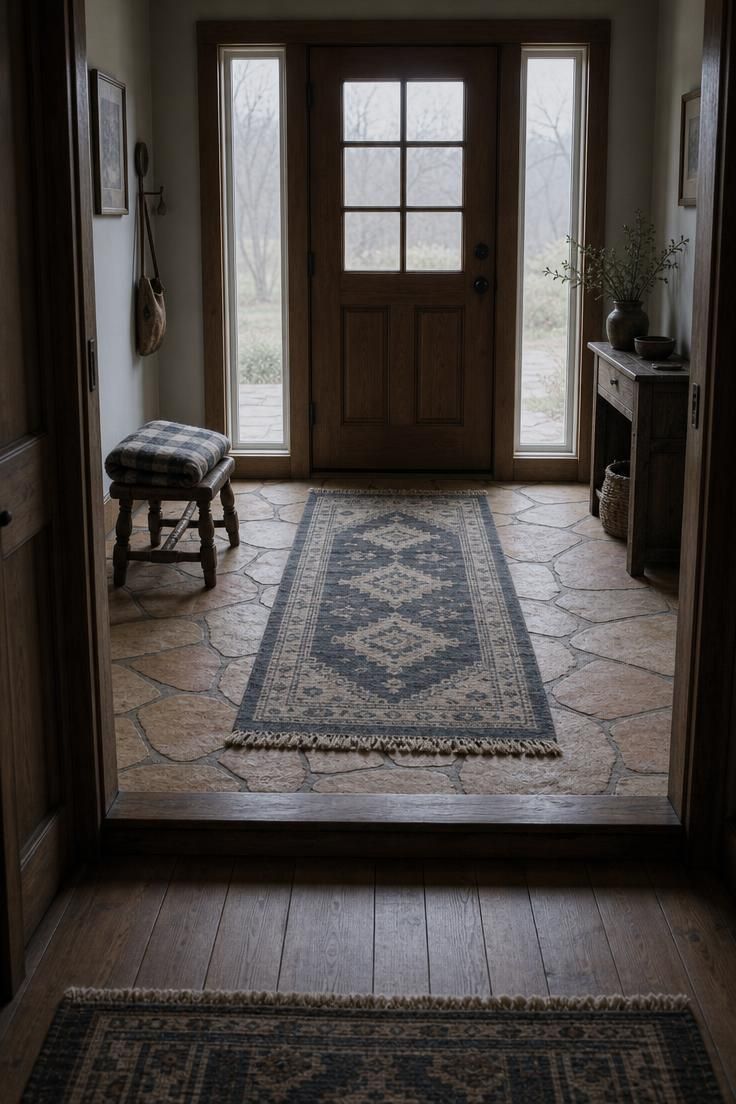
A step-down entry creates a physical separation between the outdoors and the home that a same-level threshold cannot match.
That small change in elevation signals a transition, and visitors instinctively slow down and pay attention to the space they are stepping into.
Flagstone in warm buff and terra tones brings an earthy warmth underfoot that balances the cooler overcast light common in cottage-heavy regions.
A hand-knotted wool runner over stone is both practical and beautiful, cushioning the hard surface while protecting the highest-traffic path from dirt and grit.
Faded indigo and cream geometric patterns are one of the most enduring combinations in textile design because the contrast is strong enough to register but soft enough to age well.
The low wooden stool beside the entry serves as an informal seat for removing shoes, and its turned legs add a small architectural detail at floor level where most entryways have nothing to look at.
A plaid wool blanket folded on the stool invites you to grab it on the way out to the porch, connecting the entry to the outdoor living areas just beyond the door.
Style Blueprint:
- Sunken entry paved in irregular flagstone in warm buff and pale terra tones
- Hand-knotted wool runner in faded indigo and cream geometric patterns with fringed ends
- Low wooden stool with turned legs
- Folded plaid wool blanket in muted tones
- Tall narrow sidelight windows flanking the front door for cool filtered light
Design Pro-Tip: If your cottage entryway has a level change, keep the step riser visible rather than carpeting over it or concealing it with a flush runner. That exposed horizontal line acts as a visual threshold that tells the brain, “you have arrived.” Covering it erases the boundary and makes the entry feel like a continuation of the hallway rather than a destination of its own.
A Potted Herb Cluster on a Raw-Edge Live-Edge Bracket Shelf
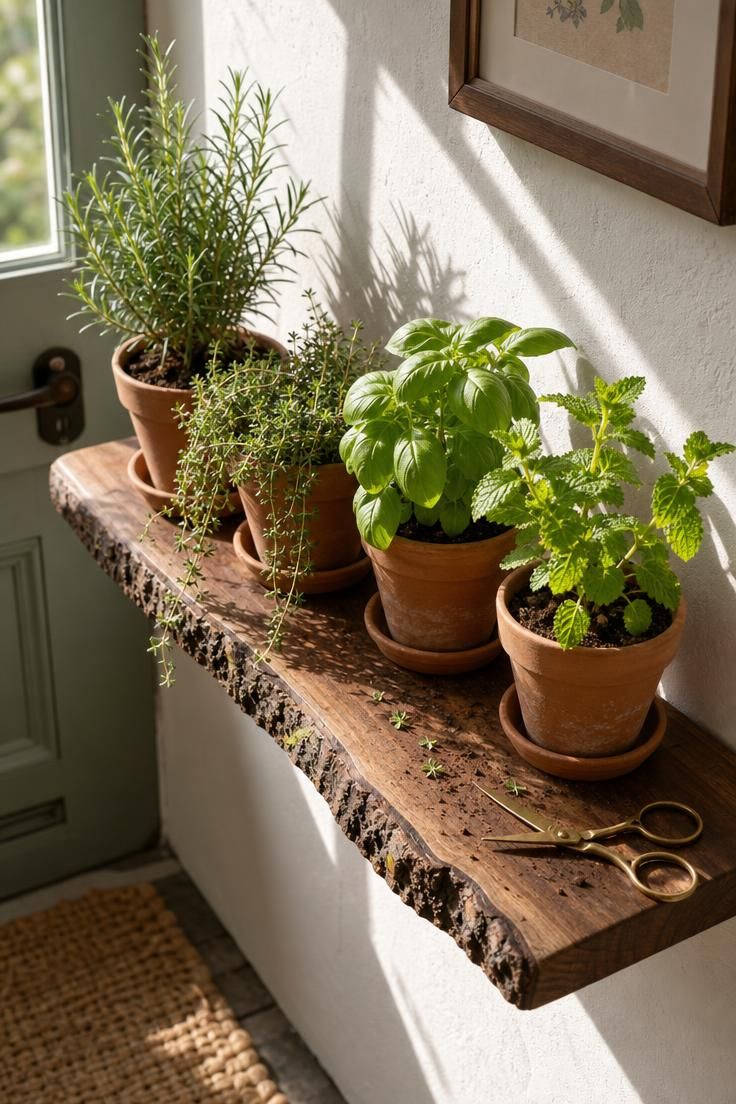
A cluster of potted herbs near the cottage entryway front door does something that cut flowers and dried arrangements cannot: it introduces a living, changing, useful element that connects the indoors to the garden outside.
The scent is immediate and personal, a brush of rosemary as you reach for your keys, a faint mint note as the breeze pushes through the open door.
Terracotta pots breathe, which keeps herb roots healthier than glazed ceramic, and the unfinished clay surface develops a white mineral bloom over time that cottage gardeners consider a badge of honor.
A live-edge walnut shelf brings an organic line into a space dominated by straight trim, flat walls, and rectangular door panels.
The raw bark edge is the visual anchor of this shelf because it contrasts so sharply with the smooth plaster wall behind it, and that contrast is what makes the shelf worth noticing.
Keeping a small pair of brass scissors beside the pots signals that these herbs are meant to be snipped and used, not just admired.
The scattered soil crumbs and fallen leaves are part of the appeal, a reminder that this is a working arrangement tied to meals and mornings, not a decorative still life.
Style Blueprint:
- Live-edge walnut bracket shelf with one raw bark edge
- Four small terracotta pots with fresh rosemary, thyme, basil, and mint
- Small brass scissors for snipping herbs
- White plaster wall as a clean backdrop
- Bright midday light to catch translucent leaf edges
A Painted Pine Hall Tree With Brass Hooks and a Linen Seat Cushion
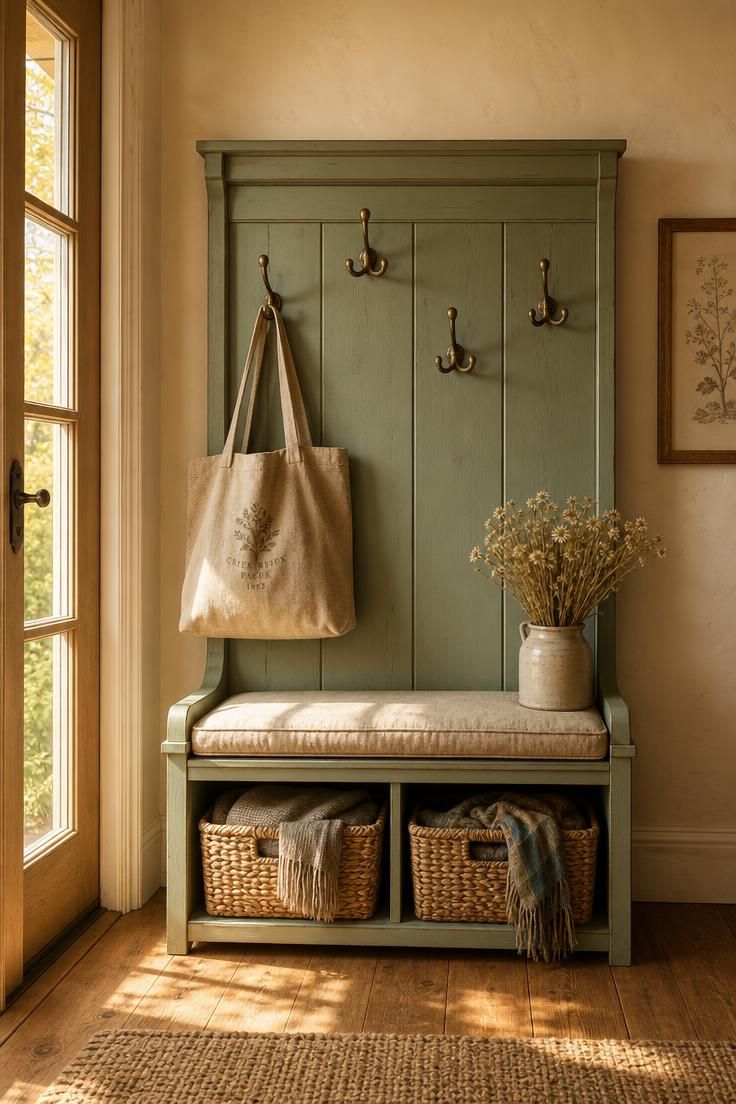
A hall tree is the single most hardworking piece of furniture you can place in a cottage entryway, and painting it in a muted sage green gives it the kind of soft presence that blends into the wall without disappearing.
Brass hooks age beautifully over time, developing a patina that only adds to the collected, lived-in character of the piece.
The linen seat cushion in oatmeal creates a landing spot that is comfortable enough to sit on while pulling off boots, but neutral enough to let the painted finish of the pine stay in focus.
Seagrass baskets tucked below the seat handle the practical work of storing shoes, dog leashes, or reusable bags without introducing any visual clutter.
The key to making this work in a smaller cottage foyer is choosing a hall tree that is no wider than 36 inches, so it does not crowd the traffic path.
Pairing the sage green paint with warm-toned brass rather than chrome or nickel keeps everything feeling soft and cohesive, like the room has been gathering its personality over years rather than assembled all at once.
A single dried flower arrangement on the seat adds a finishing detail that signals this is a cared-for space, not just a pass-through.
Style Blueprint:
- Painted pine hall tree in sage green or soft blue milk paint
- Aged brass double hooks, 4 minimum
- Natural linen seat cushion in oatmeal or flax
- Seagrass or wicker basket for under-seat storage
- Small stoneware jar with dried botanicals
Herringbone Brick Floor Leading to a Whitewashed Dutch Door
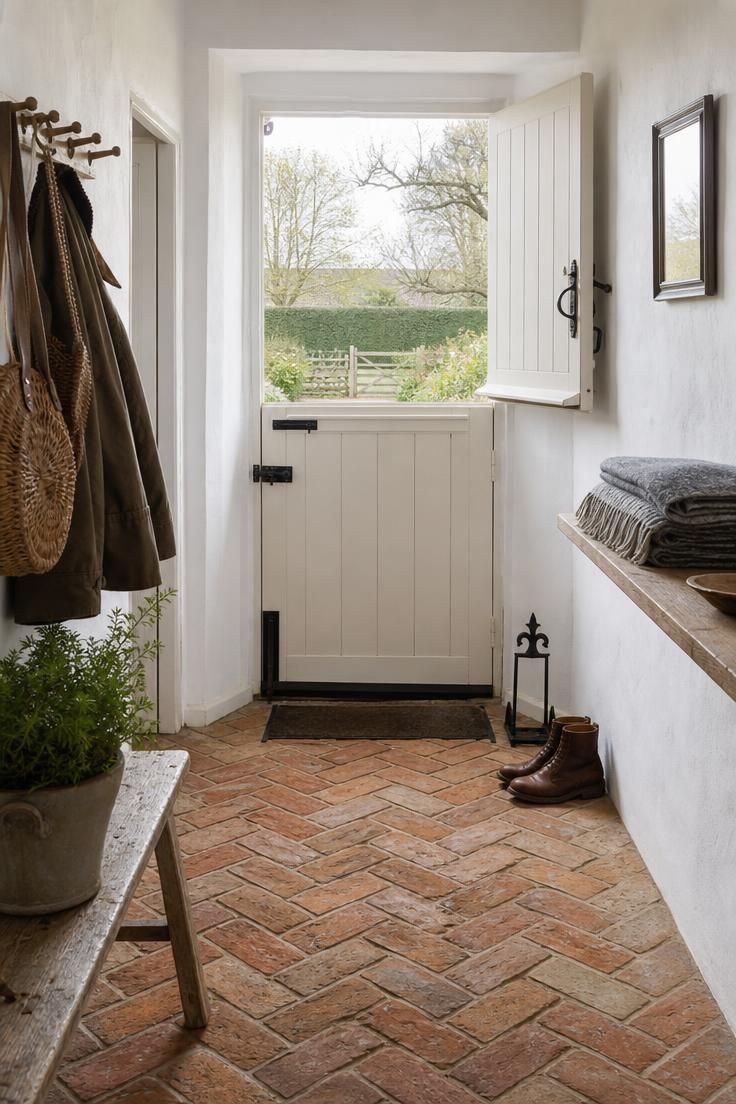
A herringbone brick floor brings a texture and weight to a cottage entryway that no other material quite matches.
The pattern itself creates visual movement, drawing the eye naturally toward the front door and making even a short hallway feel like it has direction and purpose.
Whitewashing the Dutch door keeps the palette light without losing the character of the wood grain underneath, and the split-door design lets fresh air move through without opening the whole entry to the outside.
Brick is one of the most forgiving flooring choices for an entryway because it hides dirt, handles moisture from wet shoes, and actually improves with wear.
An iron boot scraper beside the door is the kind of old-fashioned, functional detail that feels right in a cottage setting, where practicality and charm are never at odds.
The wool blanket on a slim shelf adds a layer of softness to a space that could otherwise lean too hard or too cold with all that masonry.
Style Blueprint:
- Herringbone-laid brick floor in terracotta or reclaimed red tones
- Whitewashed Dutch door with wrought-iron hardware
- Cast-iron boot scraper
- Slim wall-mounted wooden shelf at hip height
- Folded wool blanket in heather or oatmeal
A Narrow Oak Console Table With a Turned-Leg Profile and Seagrass Bins Below
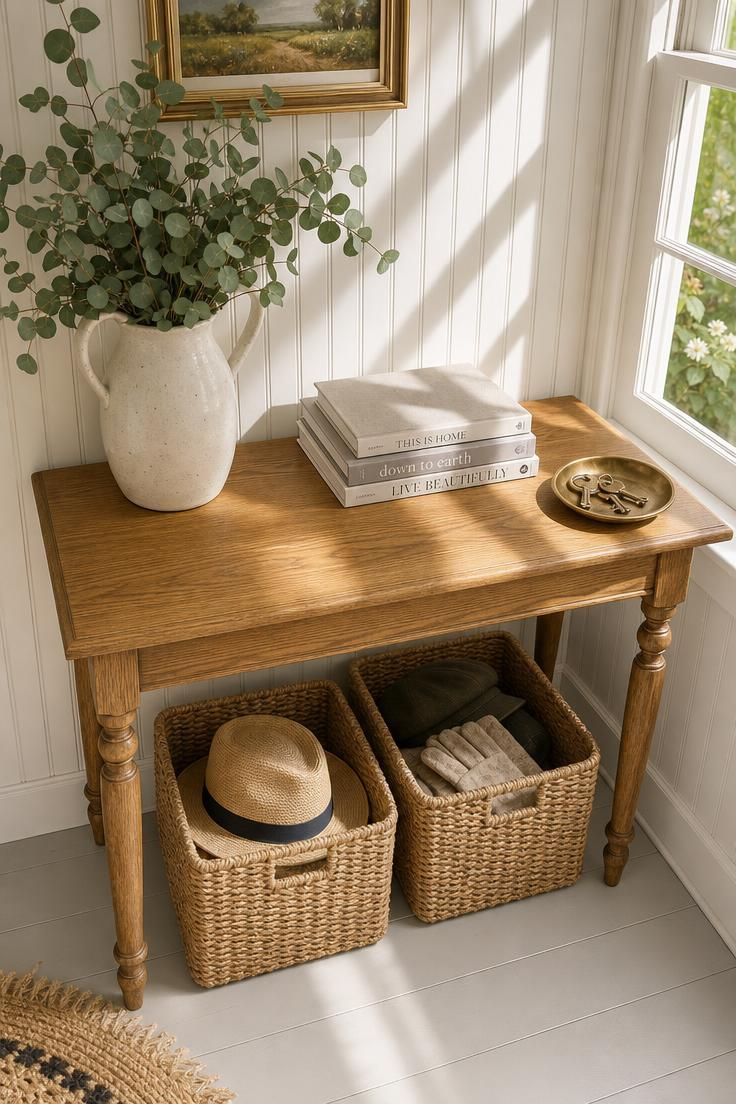
Console table styling in a cottage entryway works best when the table itself has real architectural detail, and turned legs give a simple oak piece the kind of character that a flat-front modern table never will.
Keeping the table narrow, no deeper than 12 inches, is what makes this idea practical in a real cottage foyer where every inch of floor space matters.
The beadboard wall behind it adds vertical rhythm that makes the ceiling feel taller, and painting it in creamy white lets the warm oak finish of the table become the focal point.
Seagrass bins below the console handle the everyday mess of hats, scarves, and dog leashes without hiding them behind closed doors, which is the cottage way of keeping things accessible and honest.
A ceramic pitcher with fresh eucalyptus is a better choice than a formal flower arrangement here because it feels picked rather than purchased, casual rather than composed.
The brass key dish is a small detail, but it solves the real problem of lost keys while adding a warm metallic accent that ties back to any brass hardware on the front door.
Painting the floor in pale dove is a cottage tradition that softens the room and makes the natural fiber rug and warm wood tones feel richer by contrast.
Cottage entryway ideas like this one work because they combine function, texture, and a collected feeling in a footprint that takes up almost no floor space.
Style Blueprint:
- Narrow oak console table with turned legs, under 12 inches deep
- Woven seagrass storage bins, 2 matching
- Ceramic pitcher in speckled white for greenery
- Brass key dish or tray
- Beadboard wall in creamy white paint
Milk Paint Wainscoting in Soft Blue Below a Row of Framed Seed Packet Art
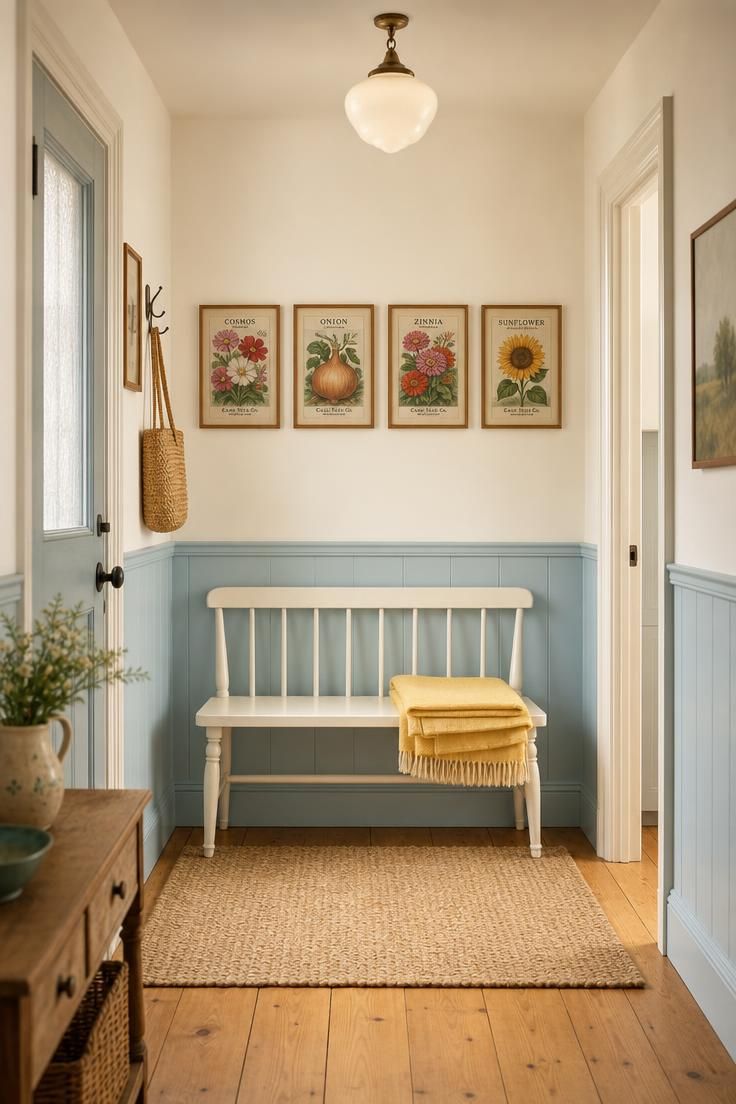
Milk paint has a chalky, matte depth that modern latex paint cannot replicate, and using it on wainscoting in the entryway brings an old-world quality that feels genuinely aged rather than artificially distressed.
The soft robin’s-egg blue is cheerful without being loud, and limiting it to the lower third of the wall keeps the color grounded while the warm white plaster above opens up the space.
Framed seed packet art is a cottage classic that costs very little but delivers a surprising amount of visual personality, especially when the frames are thin natural wood that does not compete with the illustrations.
Hanging them in a single straight row just above the wainscoting line creates a gallery effect that is orderly enough to feel intentional but relaxed enough to feel cottagelike.
The butter yellow throw on the bench introduces a warm complementary accent that keeps the blue from reading too cool, and cotton is the right textile here because it is washable, unfussy, and soft.
A natural fiber rug beneath the bench ties the flooring to the wainscoting tonally and adds a layer of texture underfoot that makes the entryway feel warmer.
Style Blueprint:
- Milk paint wainscoting in soft blue, lower third of wall
- Framed vintage seed packet illustrations, 4 in a row
- Small painted white entryway bench
- Cotton throw in butter yellow or warm cream
- Natural fiber rug in wheat or jute
Design Pro-Tip: When choosing a paint finish for cottage wainscoting, go with a true matte or eggshell rather than satin. The flatter the finish, the more the texture of the wood grain shows through, and that subtle imperfection is what gives a cottage entryway its handmade, lived-in quality. Satin and semi-gloss reflect too much light and make the paneling look manufactured rather than crafted.
An Iron Umbrella Stand and a Wall-Mounted Coat Rack in Oil-Rubbed Bronze
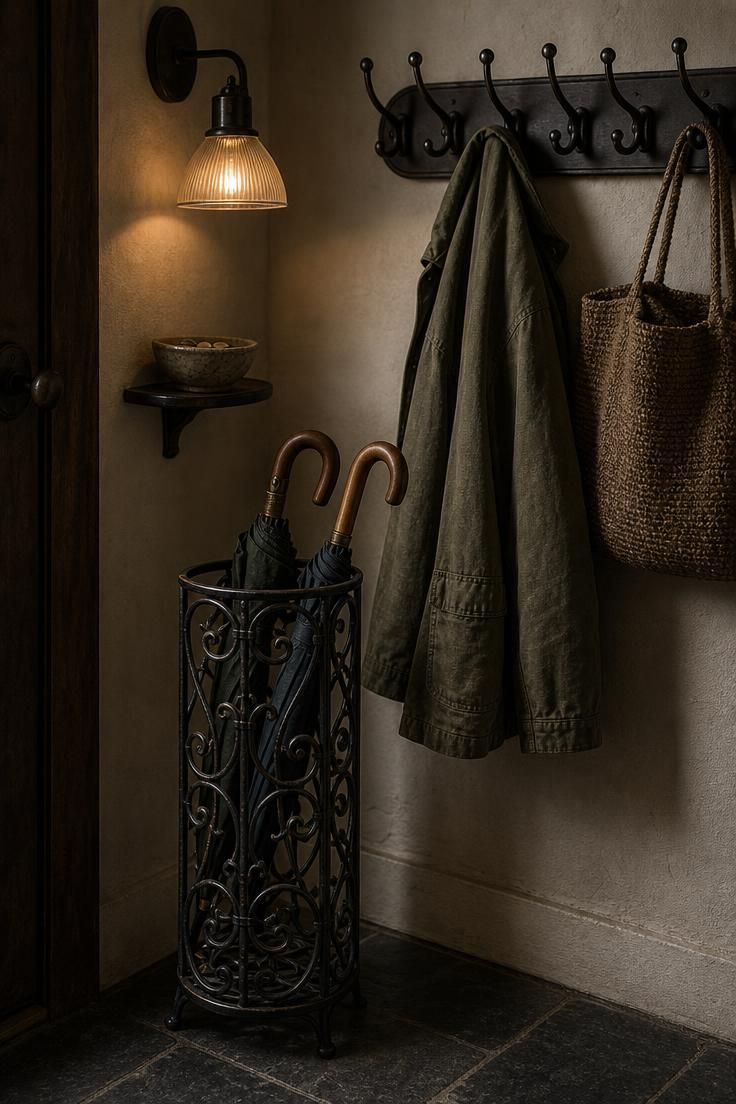
Iron and bronze together create a tonal pairing in a cottage entryway that feels heavier and more grounded than the typical brass-and-white combination, and that weight is what gives a small entry a sense of permanence.
The scrollwork on the umbrella stand is the kind of detail that reads as handcrafted rather than mass-produced, and choosing a stand that holds only two or three umbrellas keeps it from looking overstuffed.
Oil-rubbed bronze hooks have a dark, warm patina that hides fingerprints and wear, making them one of the most practical hardware choices for a space that gets heavy daily use.
Mounting the coat rack at a height where the hooks sit about 60 inches from the floor keeps coats and bags from dragging on the ground and puts everything within easy reach.
Dark slate tile on the floor is nearly indestructible in an entryway, and its charcoal tone creates a moody base that makes the warm bronze and iron feel even richer.
The amber glass sconce is doing most of the atmospheric work here, casting a pool of warm light that turns a functional corner into something that feels like the opening scene of a well-loved novel.
A ceramic bowl for loose change is the kind of small, thoughtful touch that says someone actually lives here and has designed this space around the rhythms of real daily life.
Style Blueprint:
- Wrought-iron umbrella stand with scrollwork detail
- Wall-mounted coat rack in oil-rubbed bronze, 5 hooks
- Dark slate tile flooring in charcoal
- Single wall sconce with amber glass shade
- Hand-thrown ceramic bowl on a small wall shelf
A Salvaged Church Pew Bench Along a Plaster Wall With a Sisal Runner Underneath
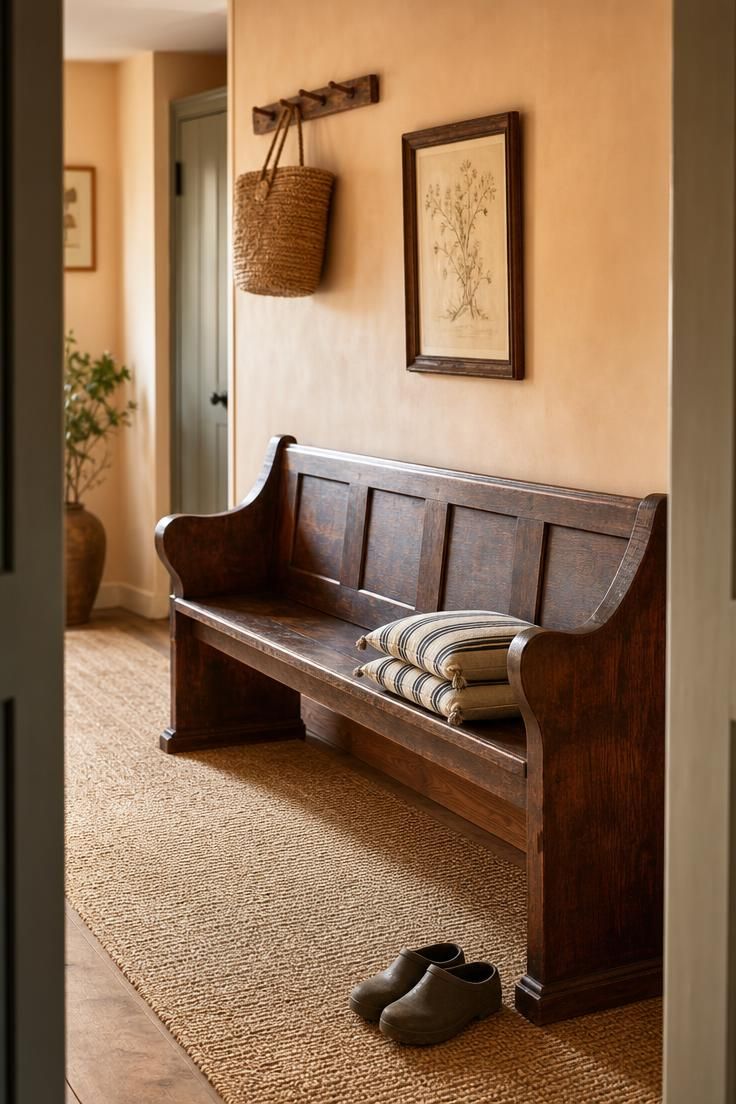
A salvaged church pew is one of the most dramatic and characterful pieces you can bring into a cottage entryway, and the high paneled back creates a sense of enclosure that makes the entry feel like a distinct room rather than just a corridor.
The worn edges and patina of decades of use are impossible to fake, and that authenticity is what separates a real cottage interior from one that is merely styled to look like one.
Positioning the pew along a plaster wall in soft apricot creates a warm tonal contrast with the dark oak that keeps the space from feeling heavy or somber.
Flat woven cushions in cream and indigo stripe add comfort without hiding the beautiful woodwork of the pew itself, and the indigo picks up well under both warm and cool light conditions throughout the day.
A sisal runner beneath the bench protects the floor and adds a layer of texture that grounds the piece visually, preventing the heavy pew from looking like it was dropped into the room as an afterthought.
The length of a pew, typically five to six feet, makes it one of the few entryway bench options that can seat two people comfortably, which matters in a home where guests actually gather.
Garden clogs beside the bench are a styling choice that signals this is a working cottage, a place where people come and go through the garden, not just a decorative stage.
Cottage entryway ideas built around salvaged furniture like this one carry more visual weight and story than anything you could buy new.
Style Blueprint:
- Salvaged dark oak church pew bench with paneled back
- Flat woven cushions in cream and indigo stripe
- Sisal runner in warm sand, extending down the hallway
- Warm plaster wall in soft apricot or blush
- Garden clogs or leather boots as styled accent
Slate Flagstone Floor Paired With a Copper Boot Tray and Leather-Strap Wall Hooks
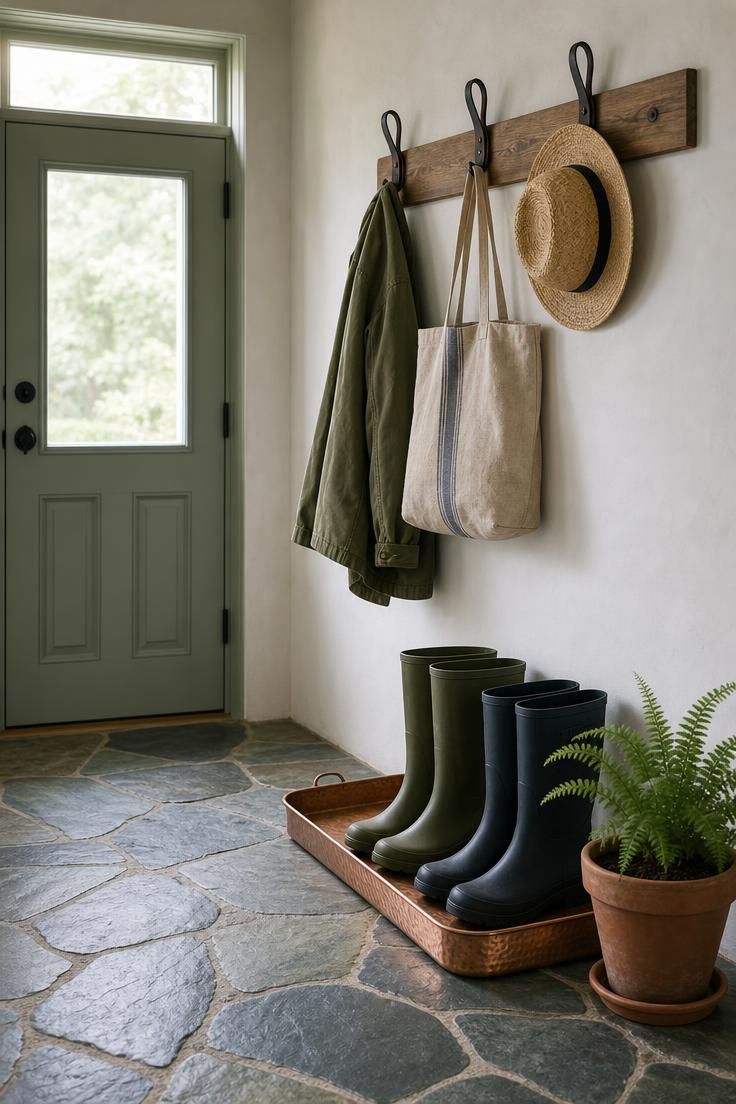
Slate flagstone is the quintessential cottage floor material because its irregular edges and natural color variation make every entry unique, and the cool tones of silver and blue-green bring a sense of the outdoors inside.
A hammered copper boot tray is a better solution than a rubber mat because it contains water and mud just as well but looks beautiful enough to leave out permanently, and copper develops a green patina over time that only deepens its character.
Leather-strap wall hooks mounted on a raw pine board bring a Scandinavian simplicity that pairs surprisingly well with English cottage architecture, creating a clean mudroom storage solution that feels both modern and handcrafted.
Three hooks is the right number for a small entry, enough to handle the daily rotation of coats and bags without turning the wall into a cluttered mess.
Lime plaster in cool off-white has a subtle luminosity that latex paint cannot match, and it plays beautifully with natural daylight, especially the even, shadowless light of a cool overcast morning.
The potted fern beside the boot tray is a deliberate choice because ferns do well in the cool, indirect light of an entryway and bring a living green accent that dried botanicals cannot provide.
Style Blueprint:
- Irregular slate flagstone floor in silver and blue-green tones
- Hammered copper boot tray
- Leather-strap wall hooks on a raw pine board, set of 3
- Lime plaster walls in cool off-white
- Potted fern in a terracotta pot
A Cottage-Scale Lantern Pendant Hanging in a Low-Ceiling Foyer
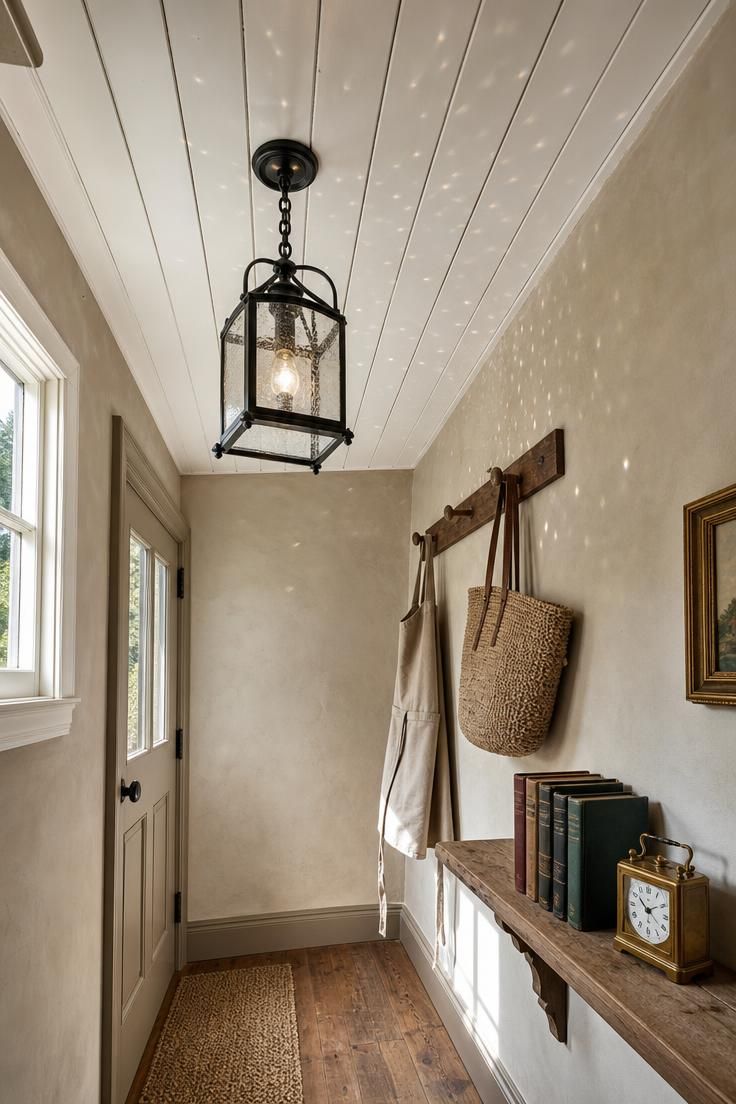
A lantern pendant is the right scale of light fixture for a cottage foyer because it delivers personality and warmth without the visual bulk of a chandelier, and the wrought-iron frame ties it to the hardware language of the rest of the entry.
Seeded glass panels diffuse the light in a way that creates tiny scattered patterns on the ceiling and walls, adding a layer of visual texture that a smooth glass shade would never produce.
Hanging the lantern from a short chain rather than a long one is the key detail in a low-ceiling space, keeping the bottom of the fixture at least 80 inches from the floor so no one bumps their head.
The tongue-and-groove ceiling in white is a cottage hallmark that adds horizontal lines overhead, drawing the eye outward and making the ceiling feel wider even if it is not tall.
A peg rail with wooden pegs is one of the oldest and most practical mudroom storage solutions in cottage architecture, and placing it near the light fixture creates a vignette that feels intentional and complete.
The small brass clock on the shelf is a functional accent that gives the entryway a sense of purpose beyond just storage, suggesting that this is a space where you pause and orient yourself before heading out.
Vintage hallway decor like old hardcover books stacked on a shelf adds intellectual warmth and a sense of personal history that new accessories cannot replicate.
Style Blueprint:
- Wrought-iron lantern pendant with seeded glass panels
- Short hanging chain for low ceilings, fixture base at 80+ inches
- White tongue-and-groove ceiling
- Wooden peg rail with 3 pegs
- Slim shelf with old hardcover books and brass clock
Design Pro-Tip: In a cottage foyer with ceilings below 8 feet, mount your peg rail lower than you think you should, around 48 inches from the floor rather than the standard 60. This keeps hanging coats and bags from blocking sightlines and makes the room feel less crowded. Children can reach their own hooks, and the lower line visually opens up the wall space above for art or a mirror.
A Freestanding Coat Rack in Turned Birch With a Ceramic Umbrella Jar at the Base
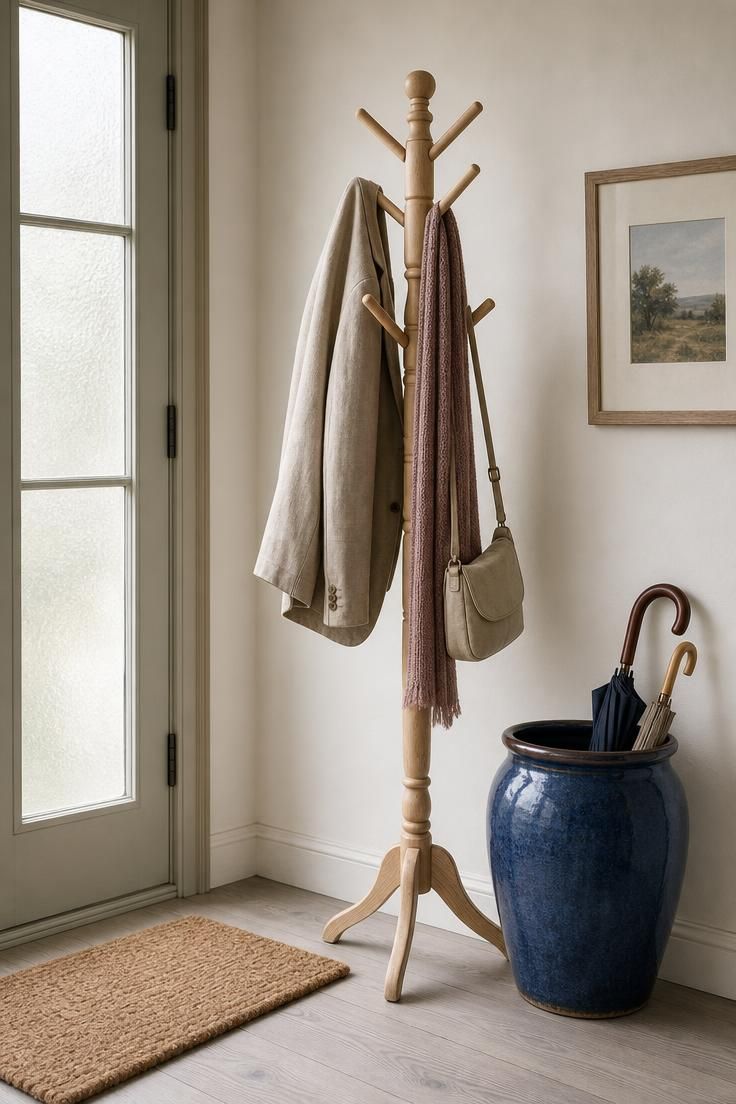
A freestanding coat rack in turned birch has a sculptural quality that makes it function as both storage and decoration, and the pale natural finish keeps it feeling light in a small entry.
The turning detail on the post and hooks is what separates a cottage-style rack from a utilitarian one, giving it the handcrafted look that this aesthetic demands.
Placing a ceramic umbrella jar at the base creates a visual anchor that keeps the tall, slim coat rack from looking top-heavy, and the cobalt blue glaze introduces a strong color accent that the rest of the entry can echo in smaller doses.
Limiting the rack to three or four items, a jacket, a scarf, and a bag, keeps it looking composed rather than overloaded, and leaving empty hooks is perfectly fine because it suggests the space is ready for guests.
The silvery ash floor is an unusual but effective choice in a cottage entryway, bringing a cooler, more contemporary tone that lets the warmth of the birch and the depth of the cobalt jar stand out.
Soft diffused light from a frosted sidelight creates the most flattering conditions for a scene like this, eliminating harsh shadows that would make the coat rack’s slim profile look spindly rather than graceful.
A coir doormat at the base adds function without visual noise, and its rough natural texture contrasts nicely with the smooth ceramic and polished birch.
Cottage entryway ideas that combine vertical storage with a floor-level accent like this jar make the most of corners that would otherwise go unused.
The whole arrangement takes up less than two square feet of floor space, proving that a well-chosen coat rack can do the work of an entire closet.
Style Blueprint:
- Freestanding coat rack in turned birch, natural pale finish
- Ceramic umbrella jar in cobalt blue or deep teal glaze
- No more than 3-4 items hung on the rack
- Wide-plank ash or birch floor in silvery tone
- Natural coir doormat at the base
Wide Plank Heart Pine Floor With a Hand-Knotted Wool Runner in Muted Plaid
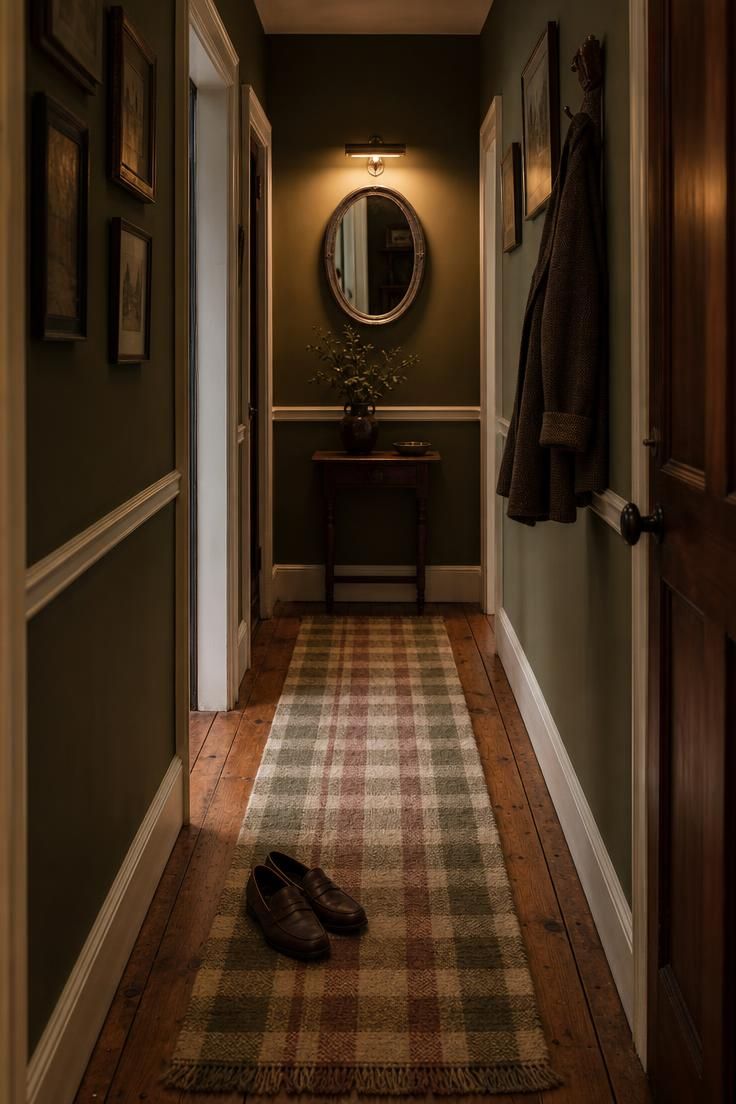
Heart pine is a reclaimed wood with a density and color depth that new pine cannot match, and its amber patina gives a cottage entryway the feeling of a home that has been loved for generations.
The visible nail holes and grain variation are features, not flaws, and they tell a story that polished hardwood floors simply do not carry.
A hand-knotted wool runner in muted plaid brings pattern into the entry without overwhelming it, and the combination of sage, cream, and dusty rose creates a palette that is both warm and grounded.
Plaid is one of the most enduring cottage patterns because it reads as heritage and comfort in any light, and a muted version avoids the tartanlike formality that a brighter plaid would introduce.
The deep olive green walls above white chair rail molding create a rich, enveloping atmosphere that makes the hallway feel like a room in its own right, not just a passage between rooms.
A small oval mirror at the far end of the hall serves a dual purpose, reflecting light back through the space and giving the corridor a sense of destination.
Style Blueprint:
- Wide-plank heart pine flooring, reclaimed with original nail holes
- Hand-knotted wool runner in muted plaid, sage, cream, and dusty rose
- Deep olive green paint above white chair rail molding
- Oval mirror in tarnished silver frame
- Brass picture light above the mirror
A Gingham-Upholstered Stool Pulled Next to a Drop-Front Secretary Desk
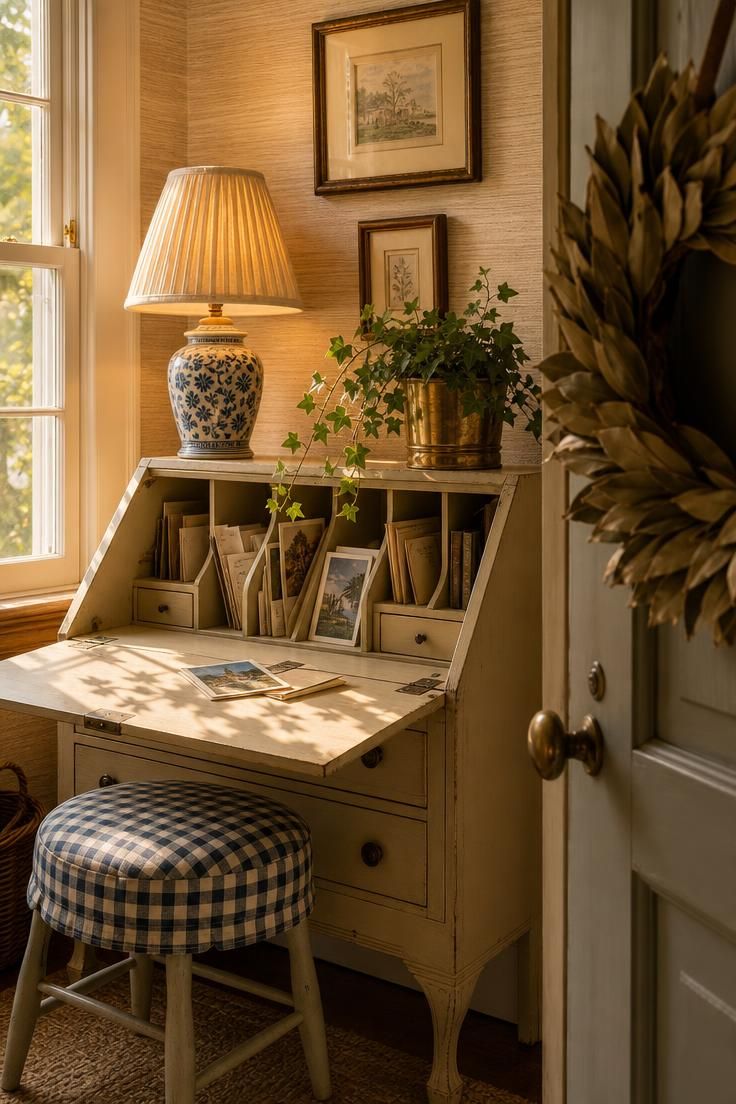
A drop-front secretary desk is an unexpected choice for a cottage entryway, but it creates a functional landing zone that goes far beyond what a simple console table can offer.
The cubbies behind the folded-down front hold mail, keys, and postcards in an organized way that keeps them visible and accessible, which suits the cottage philosophy of beautiful, honest storage.
Upholstering a round stool in blue and white gingham gives the vignette a textile accent that is unmistakably cottage, and gingham is one of those patterns that reads as warm and informal no matter how it is used.
Grasscloth wallpaper behind the desk adds a layer of natural texture that you feel more than you see, giving the wall depth and warmth without competing with the desk or the fabric.
A ceramic table lamp with a pleated linen shade provides a warm reading light for sorting mail and also serves as a welcoming glow visible through the sidelight when approaching the house at dusk.
The potted ivy in a brass cachepot is a practical choice because ivy tolerates the low-light conditions of most entryways and stays green year-round.
A front door wreath of dried bay leaves is a detail that connects the entryway to the garden and the kitchen simultaneously, and its herbal scent adds an invisible layer of welcome.
This arrangement turns a forgotten alcove into the most useful and characterful square footage in the entire house.
Style Blueprint:
- Drop-front secretary desk in painted cream, under 30 inches wide
- Round stool upholstered in blue and white gingham
- Warm off-white grasscloth wallpaper
- Ceramic table lamp with pleated linen shade
- Front door wreath of dried bay leaves or herbs
Terracotta Tile Entry With a Wall-Mounted Mirror in a Distressed Gilded Frame
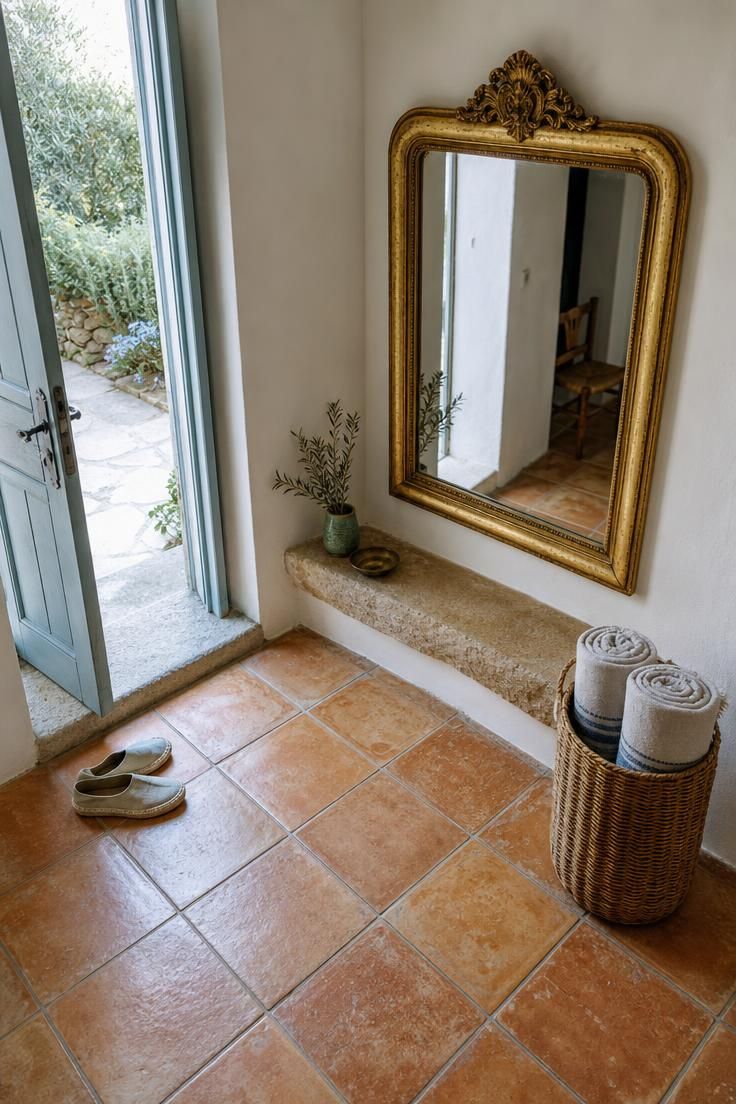
Terracotta tile is one of the oldest flooring materials in cottage architecture, and its warm clay tone brings an earthy warmth to an entryway that stone or wood approaches differently.
The slight surface variation of handmade terracotta means no two tiles are exactly alike, which gives the floor the kind of imperfect beauty that defines the cottage aesthetic.
A distressed gilded mirror is the perfect counterpoint to the rustic floor because it introduces a note of faded elegance that keeps the space from reading as purely rustic.
Mounting the mirror above a low stone ledge creates a natural shelf for keys, sunglasses, or a small vase, combining the reflective function with practical surface area.
Lime plaster walls in soft warm white have a luminous quality that bounces light around the room and makes the terracotta tones feel richer and more saturated.
A tall wicker basket holding rolled linen towels is a detail borrowed from Mediterranean cottages, where the line between indoor and outdoor living is intentionally blurred.
Cool overcast daylight through an open front door is the most flattering light for terracotta because it brings out the full range of clay tones without the yellow cast that direct sunlight introduces.
Style Blueprint:
- Square terracotta tiles, handmade with surface variation
- Large wall-mounted mirror in distressed gilded frame
- Low stone ledge below the mirror
- Tall wicker basket for towels or blankets
- Lime plaster walls in soft warm white
Design Pro-Tip: If your cottage entryway has a terracotta or brick floor, seal it with a matte penetrating sealer rather than a topical gloss coat. A matte sealer protects against stains and moisture while preserving the natural, chalky texture of the clay. Gloss sealers make terracotta look like laminate and trap moisture underneath, which can cause the tiles to spall in cold climates.
A Reclaimed Timber Door Frame Leading Into a Whitewashed Mudroom Nook
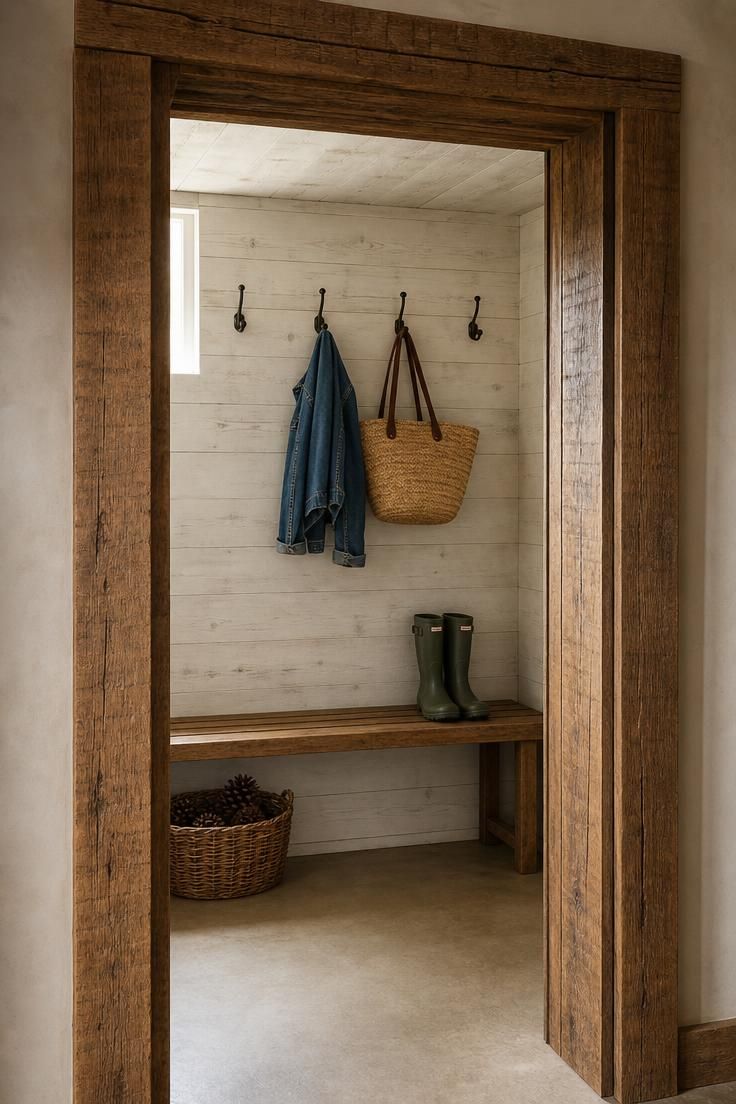
Framing a mudroom nook with a reclaimed timber header and posts turns a simple transition into an architectural moment, and the rough-sawn texture of the oak creates a visual threshold that separates the entry from the rest of the house.
Whitewashing the pine plank walls and ceiling inside the nook keeps the small space feeling open and bright, and the lime-wash finish lets the wood grain show through in a way that flat white paint does not.
Four iron hooks on the back wall provide enough hanging storage for daily use without crowding the space, and iron is the most durable hook material for a mudroom that handles wet coats and heavy bags.
A narrow slatted bench is a better choice than a solid-top bench in a mudroom because the gaps allow air to circulate, helping wet boots dry faster and preventing moisture from pooling on the seat.
Poured concrete sealed in warm taupe is nearly indestructible as a mudroom floor, and it brings an honest, utilitarian quality that pairs surprisingly well with the warmth of the reclaimed timber and whitewashed pine.
A wicker basket of pinecones on the floor is the kind of seasonal, foraged accent that costs nothing but adds a layer of natural beauty and fragrance.
Style Blueprint:
- Reclaimed timber door frame, rough-sawn oak header and posts
- Whitewashed pine plank walls and ceiling
- Iron hooks mounted on back wall, set of 4
- Narrow slatted oak bench for boots
- Poured concrete floor sealed in warm taupe
Conclusion
A cottage entryway is at its best when it feels like a room that has been collecting character for years, not a space that was designed in a single afternoon.
The ideas in this list lean on natural materials, muted colors, and handmade details because those are the elements that age well and reward daily use rather than punishing it.
Start with the pieces that solve a real problem in your entry, whether that is a built-in bench for shoe storage, a peg rail for coats, or a mirror that bounces light into a dark hallway.
Layer in the softer details, the pottery, the herbs, the vintage art, as you find them, and let the cottage entryway grow into something that feels uniquely yours.