
How to Use The Wall Art Size Calculator
This wall art size calculator helps you find the right art dimensions for any wall and furniture combination.
Enter the width of your furniture or wall, choose whether you are hanging a single piece, a pair, or a triptych, and the calculator returns a recommended size range along with the ideal hanging height and nail placement.
Start by selecting the furniture type below your art — such as a sofa, bed, console table, or fireplace mantel. Then enter the width in inches or centimeters.
If you are hanging art on an open wall with no furniture below, enter the wall width instead.
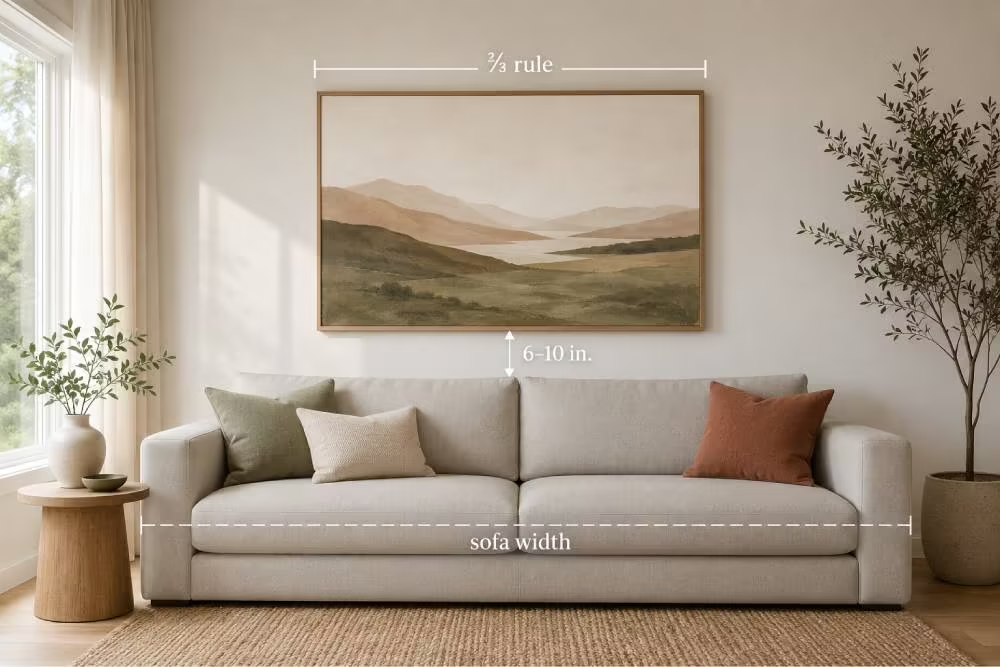
The calculator uses the two-thirds proportion rule that interior designers rely on to keep artwork visually balanced with the furniture or wall space beneath it.
Wall Art Size Guide
Choosing the right size wall art is one of the most common decorating challenges.
A piece that is too small looks lost on the wall, and a piece that is too large can overwhelm the room.
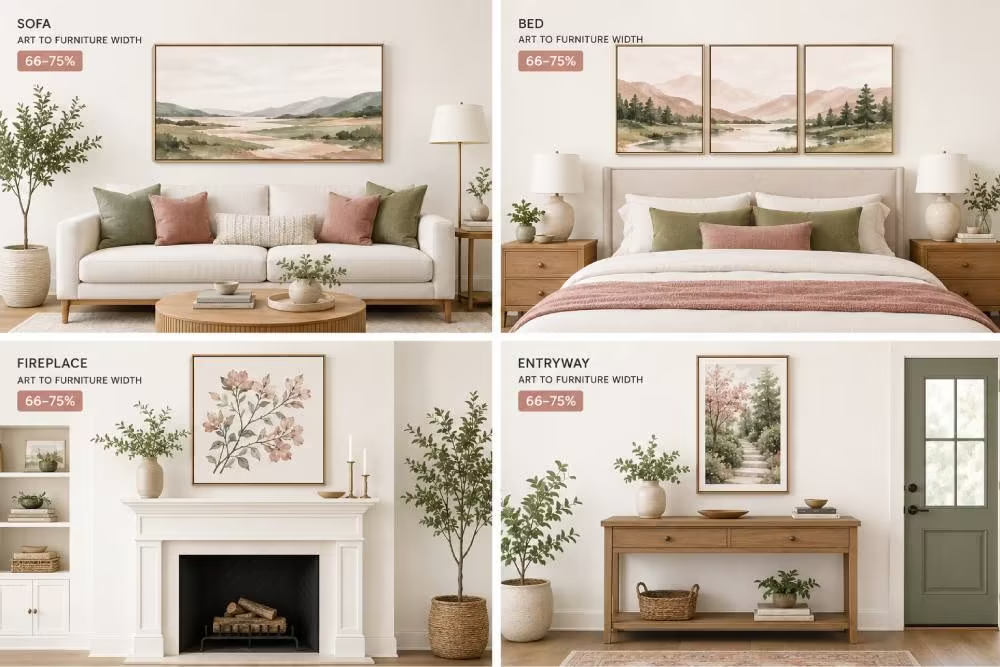
This wall art size guide covers the proportions, spacing, and hanging heights that interior designers use so you can make confident decisions without hiring a professional.
How to Choose Wall Art Size Above a Sofa
The sofa is usually the largest piece of furniture in a living room, which makes the wall above it the most visible spot for artwork.
Getting the proportions right here sets the tone for the entire room.
A piece that is too narrow will look like an afterthought, while one that is too wide can make the sofa feel smaller than it is.
- Measure the full width of the sofa, then look for art that is about two-thirds to three-quarters as wide. For example, a 90-inch sofa pairs well with art that is 60 to 68 inches wide.
- For most sofas, one large piece, a pair, or a triptych works best when the total outside width feels connected to the sofa below.
- Leave about 6 to 10 inches between the top of the sofa and the bottom edge of the frame. This keeps the art visually anchored to the furniture rather than floating on the wall.
- If your sofa sits against a wall that is much wider than the sofa itself, size the art to the sofa — not the wall. The furniture is the anchor.
See more above couch wall decor ideas for inspiration.
How to Choose Wall Art Size Above a Bed
The wall above a bed is the natural focal point of any bedroom, and the right artwork can tie the entire design together.
Whether you have a tall upholstered headboard or a simple bed frame, the same proportion rules apply — just adjust your reference measurement.
- Use the headboard width as your reference if you have one. If you have no headboard, use the mattress width instead. Aim for art that is around 66% to 75% of that width.
- A king bed (76 inches wide) pairs well with art that spans 50 to 57 inches. A queen bed (60 inches wide) works with art around 40 to 45 inches.
- Wide horizontal art, a calm pair, or a balanced triptych usually works well above a bed. Vertical or portrait-oriented pieces can also work if your ceiling is tall and the wall space is narrow.
- Hang art so the bottom edge sits about 8 to 10 inches above the top of the headboard. If you have no headboard, treat the top of the pillows as your reference point.
- Always use secure hanging hardware above a bed. Avoid adhesive strips or lightweight hooks — this is a place where safety matters most.
Explore bedroom wall decor ideas for more ways to style the space above your bed.
How to Choose Wall Art Size Above a Fireplace
A fireplace mantel is one of the most prominent spots for wall art, but it comes with its own set of sizing rules.
The width of the mantel — not the fireplace opening — is the measurement that matters most when selecting art.
- Choose art that is about two-thirds to three-quarters of the mantel width. For a standard 60-inch mantel, that means art between 40 and 48 inches wide.
- The art should be wider than the fireplace opening but narrower than the full mantel shelf. This creates balanced negative space on either side.
- Leave 4 to 8 inches between the top of the mantel and the bottom of the frame. Because mantels are already elevated, you do not need as much gap as you would above a sofa or bed.
- Be mindful of heat. If you use the fireplace regularly, avoid hanging delicate or heat-sensitive artwork directly above it. Canvas and acrylic prints handle warmth better than framed paper prints.
- In rooms with tall ceilings, consider a vertically-oriented piece or a taller canvas to fill the wall space above the mantel without looking undersized.
How to Choose Wall Art Size Above a Console Table
Console tables in entryways, hallways, and dining rooms are popular spots for wall art, but their narrower width calls for different proportions than a sofa or bed.
The key is to treat the console and the art as a single visual unit.
- Choose art that is about two-thirds the width of the console table. A 48-inch console pairs well with art that is roughly 30 to 36 inches wide.
- Hang the art 6 to 8 inches above the tabletop. If the console has tall items on it — like a lamp or a vase — hang the art slightly higher to avoid visual overlap.
- Center the art over the console table, not over the wall. If the console is positioned off-center on the wall, the art should follow the table.
- Narrow hallway consoles work well with vertical or portrait-oriented art, while wider entryway consoles can support a horizontal piece or a small gallery arrangement.
For inspiration on styling the wall above a console, browse our entryway wall decor ideas.
How to Choose Wall Art Size for an Open Wall
When there is no furniture beneath the art, the wall itself becomes your reference.
Filling a blank wall requires larger art than most people expect, because the wall space makes smaller pieces look lost.
- For an open wall, the art should fill roughly 60% to 75% of the available wall width. On a 10-foot (120-inch) wall, that means art between 72 and 90 inches wide — either a single oversized piece or a gallery arrangement.
- Center the artwork at approximately 57 inches from the floor to the middle of the piece. This is the standard gallery hanging height used in museums and galleries worldwide.
- For very tall walls (above 10 feet), choose art with enough vertical presence that it does not look like a postage stamp. A piece that is at least 30 to 40 inches tall usually works for standard residential walls.
- If a single piece at the right scale is hard to find or too expensive, a gallery wall arrangement is a great alternative. Treat the entire grouping as one unit and size it using the same proportions.
How High to Hang Wall Art
Hanging height is just as important as art size.
Even a perfectly sized piece will look wrong if it is hung too high or too low.
The goal is to place art at a height that feels natural for a standing viewer while keeping it visually connected to any furniture below.
- On an open wall with no furniture, center the artwork so the midpoint is about 57 inches from the floor. This is the standard eye-level height used in art galleries.
- Above furniture, prioritize the connection between the art and the piece below it. Keep the bottom of the frame 6 to 10 inches above the furniture, even if that means the center is slightly lower than 57 inches.
- If the center of the artwork lands above 66 inches, it will generally feel too high for most viewers. If it falls below 52 inches, it may feel uncomfortably low.
- In rooms with tall or vaulted ceilings, resist the urge to hang art higher just because there is more wall space. The furniture and the viewer — not the ceiling — should guide the height.
How to Calculate Nail Height
Once you know where you want the center of your art, you need to figure out exactly where the nail or hook goes on the wall.
This is the step that trips most people up — but it only takes three measurements.
- Find the target center height first. For most situations, this is 57 inches from the floor or a height that places the bottom edge 6 to 10 inches above your furniture.
- Add half of the artwork height to the center height. For example, if your target center is 57 inches and the art is 24 inches tall, that gives you 57 + 12 = 69 inches.
- Subtract the hanger drop, which is the distance from the top edge of the frame to where the wire or hook catches. If the hanger drop is 2 inches, the nail goes at 69 − 2 = 67 inches from the floor.
- Always measure the hanger drop with the wire pulled taut to the point where it will rest on the hook. Loose wire measurements can lead to the art hanging lower than expected.
Single Large Art vs Pair vs Triptych
Deciding between a single piece, a pair, or a triptych depends on the width of the wall space, the look you want, and what is available in the right size.
Each option creates a different visual effect.
- Choose one large piece when you want a clean, simple focal point. A single work is the easiest to hang and creates the strongest visual impact in minimalist or modern rooms.
- Choose a pair when you want symmetry or when two medium pieces are easier to find than one large piece. Place both pieces at the same height with 2 to 4 inches of space between the inside edges.
- Choose a triptych (three-panel set) for wider furniture, long walls, or a more designed gallery look. Keep 2 to 3 inches between each panel so the set reads as a group rather than three separate pieces.
- When measuring a pair or triptych, the total width should include all pieces and the gaps between them. Two 20-inch-wide pieces with 3 inches of space between them span 43 inches total.
Common Wall Art Sizing Mistakes
Even experienced decorators make sizing and placement mistakes.
Recognizing these common errors before you start can save you from extra nail holes and returns.
- Buying art that is less than half the width of the furniture below it. This is the most common mistake and almost always makes the art look too small.
- Hanging art too high because the wall or ceiling is tall. The ceiling should not dictate hanging height — the viewer and the furniture should.
- Leaving a large gap (more than 12 inches) above furniture, which makes the art feel disconnected from the room layout.
- Forgetting to include the width of all pieces and gaps when planning a pair or triptych. Always measure the total span, not just the individual frames.
- Not accounting for the frame or mat when sizing. A 16×20-inch print in a frame with a 2-inch mat becomes roughly 22×26 inches — measure the finished size, not the image size.
- Skipping the tape test. Before hanging, use painter’s tape to mark the outline of the art on the wall and step back to check the proportions from across the room.
Standard Wall Art Sizes
Standard wall art sizes are based on common frame and canvas dimensions that are widely available and easy to find frames for.
Knowing these sizes can help you narrow your search and match what is available in stores or online.
| Size Category | Common Dimensions | Best Use |
|---|---|---|
| Small accent pieces | 5×7, 8×10, and 11×14 inches | Shelves, gallery wall groupings, powder rooms, narrow hallways, and other small spaces |
| Medium versatile pieces | 16×20, 18×24, and 20×24 inches | Above console tables, desks, and as supporting pieces in gallery walls |
| Large statement pieces | 24×36, 30×40, and 36×48 inches | Above sofas, beds, and dining tables as stand-alone focal points |
| Oversized feature wall pieces | 40×60, 48×72, and larger | Large open walls, high-ceiling spaces, and rooms where you want dramatic visual impact |
When choosing between sizes, remember that the right size depends on the furniture and wall space — not just what looks large in the store.
A 24×36-inch piece that seems big when you hold it can look small above a 96-inch sofa.
To see how standard sizes work together in a gallery arrangement, check out our family photos wall decor ideas for grid and ledge layouts you can copy.
Planning your whole room layout? Try our rug size calculator for the floor dimensions.
FAQ
These are the most common questions about choosing wall art sizes.
If you used the calculator above and want more context, these answers explain the reasoning behind the recommendations.
What size art should I hang above a sofa?
A good starting point is 66% to 75% of the sofa width.
For example, above a standard 84-inch sofa, look for art that is 56 to 63 inches wide.
The balanced target is about two-thirds (70%) of the sofa width, which is the proportion interior designers use most often.
Should wall art be centered on the wall or furniture?
Above furniture, always center the art over the furniture — not the wall.
On a blank wall with no furniture below, center the art on the wall and aim for a midpoint height around 57 inches from the floor.
How much space should be between furniture and art?
The ideal gap depends on the furniture type.
Most sofa and bed placements look best with about 6 to 10 inches between the top of the furniture and the bottom of the frame.
Console tables often work with 6 to 8 inches, and fireplace mantels usually need only 4 to 8 inches because the mantel is already elevated.
How do I use hanger drop?
Hanger drop is the distance from the top edge of the frame to where the wire or hook will rest on the nail. T
o find your nail height, start with your target center height, add half the artwork height, then subtract the hanger drop.
The calculator does this math for you automatically.
How big should wall art be?
Wall art should generally cover about 60% to 75% of the width of the furniture it hangs above, or 60% to 75% of the available wall width if there is no furniture.
This applies to sofas, beds, consoles, and dining room sideboards alike.
The calculator above applies these ratios automatically based on your measurements.
What is the two-thirds rule for wall art?
The two-thirds rule is the most widely used interior design guideline for sizing wall art.
It states that your artwork — or the combined span of a multi-piece arrangement — should be approximately two-thirds the width of the furniture below it.
This proportion creates visual balance and ensures the art feels intentionally placed rather than randomly hung.
What size art goes above a fireplace?
Art above a fireplace should be about two-thirds to three-quarters of the mantel width.
For a 60-inch mantel, look for art that is 40 to 48 inches wide.
Hang it 4 to 8 inches above the mantel shelf.
The piece should be wider than the fireplace opening but narrower than the full mantel to leave balanced space on each side.
Can wall art be too big?
Yes. Oversized art can overwhelm a space by competing with the furniture instead of complementing it.
If your art is wider than the furniture below it, it tends to make the furniture look undersized and throws off the room’s proportions.
As a rule, art should never be wider than the piece of furniture it hangs above.
This rug size calculator is part of our growing collection of free home decor tools designed to help you make confident decorating decisions.
Image note: Some images in this article are AI-generated or AI-assisted design visualizations created to illustrate the concepts discussed. They are not photographs of completed Simple Spaces projects unless explicitly identified otherwise. Learn more about our editorial and visual process in our Editorial Standards.