This post may contain affiliate links. If you make a purchase through these links, we may earn a commission at no additional cost to you.
Your bedroom walls hold the most potential of any surface in the house, and most people leave them completely bare.
Unlike a living room where decor is partly performance, bedroom wall decor ideas are personal, quiet, and built for your comfort alone.
These 17 approaches cover real materials, layered textures, and deliberate arrangements that make a room feel collected rather than decorated.
Whether you lean toward soft neutrals or deep painted tones, every idea here is specific enough to picture and simple enough to start this weekend.
A Raw Plaster Arched Niche Framing a Slim Brass Pendant Behind the Bed
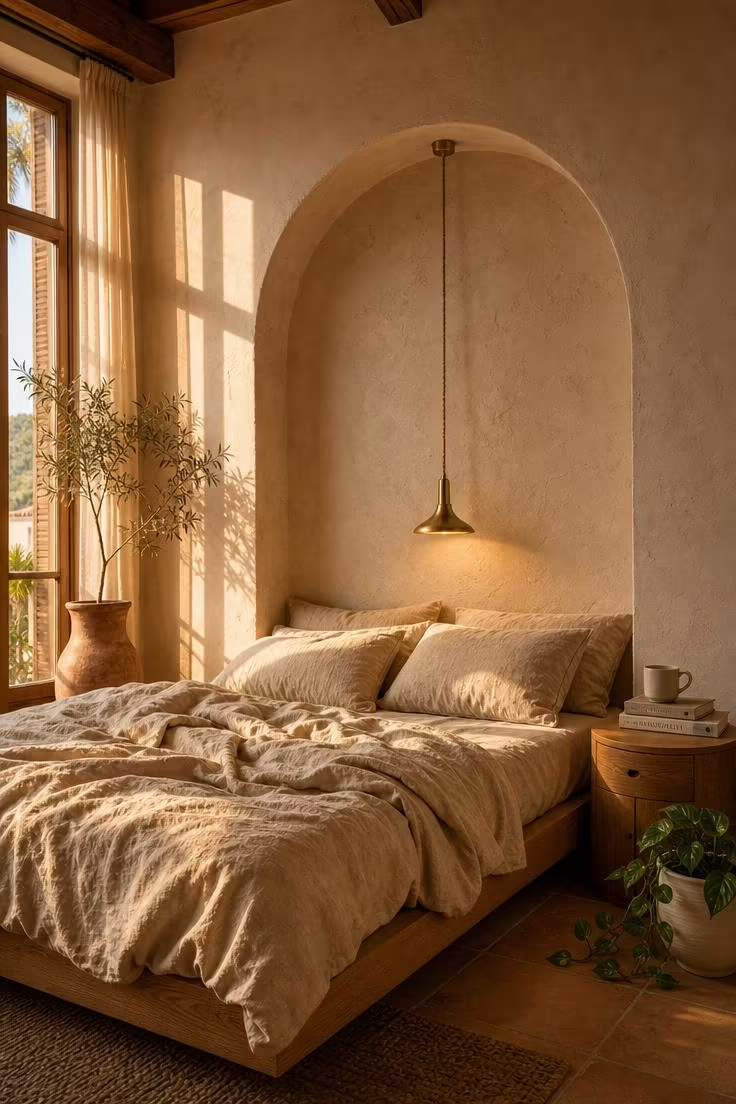
Building an arched niche into the wall behind your bed is one of the most architectural bedroom wall decor ideas you can attempt, and it reads far more expensive than it costs.
The arch shape draws the eye upward and creates a natural frame around the sleeping area, almost like a built-in headboard with depth.
Raw plaster left with visible trowel marks adds a handmade quality that painted drywall simply cannot replicate.
A single brass pendant hung inside the niche becomes both a reading light and a sculptural focal point, replacing the need for bedside lamps entirely.
The warmth of brass against the matte, mineral surface of plaster creates a material contrast that feels old-world yet completely current.
This approach works best on walls with at least eight feet of ceiling height, where the top of the arch can peak without feeling cramped.
Style Blueprint:
- Raw plaster or skim-coat finish applied over a drywall arch form
- Slim brass pendant with a cloth-wrapped cord
- Low platform bed with no headboard
- Oatmeal or flax linen bedding
- Round wood nightstand with minimal styling
A Pair of Vintage Linen Grain Sack Panels Hung From Matte Black Iron Rods
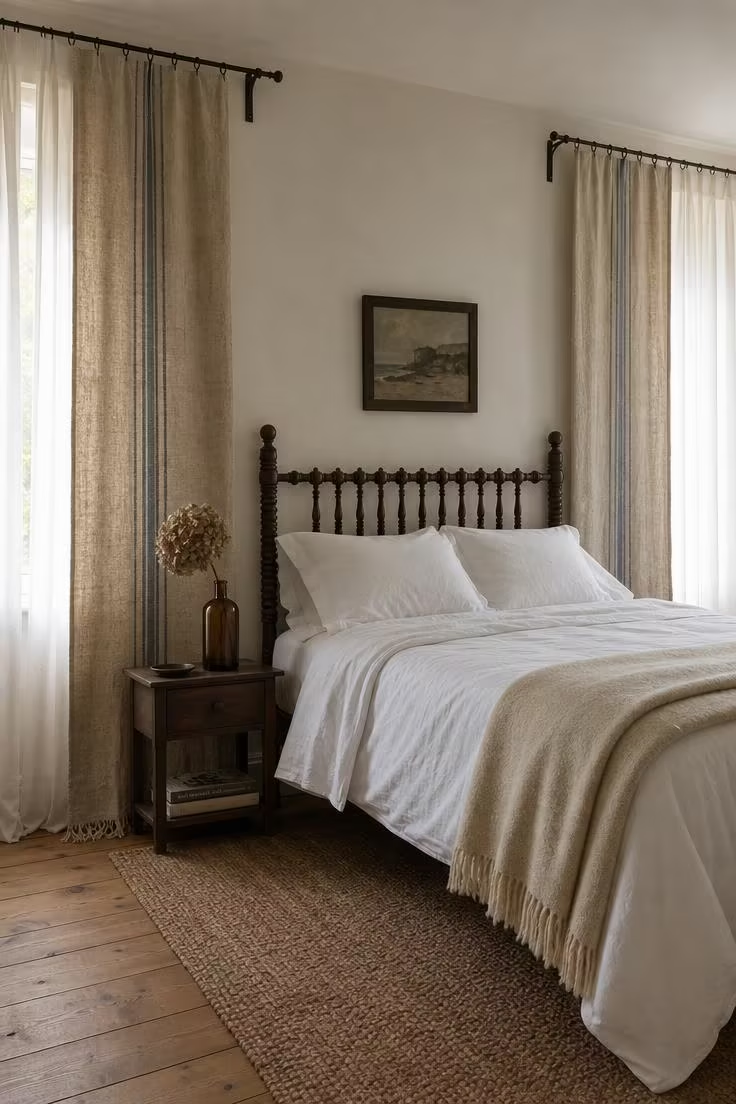
Grain sacks are one of the few textiles that look better with age, and hanging them as wall art for bedroom spaces brings a sense of European history into the room.
The weight and drape of real linen falls differently from cotton or synthetic fabric, creating soft folds that catch light and shadow in a way that printed art cannot.
Matte black iron rods give the installation a slightly industrial edge that keeps it from reading too country or too precious.
Authentic grain sacks carry printed or woven stripes, monograms, and merchant marks that tell an actual story, making each panel a one-of-a-kind piece.
The acoustic benefit is real, too, as fabric on walls absorbs sound and makes a room quieter, which matters in a bedroom more than anywhere else.
Pairing these panels with other linen elements, like bedding, curtains, or a table runner on the nightstand, builds a cohesive material language across the room.
You can rotate grain sacks seasonally or swap them entirely when you find new ones at flea markets or antique shops.
Style Blueprint:
- Two authentic or reproduction linen grain sack panels
- Matte black iron curtain rods with simple finials
- Spindle or turned-wood headboard in a dark finish
- White cotton bedding with a neutral wool throw
- Woven jute or sisal rug
A Floor-to-Ceiling Board-and-Batten Accent Wall in Pale Mushroom
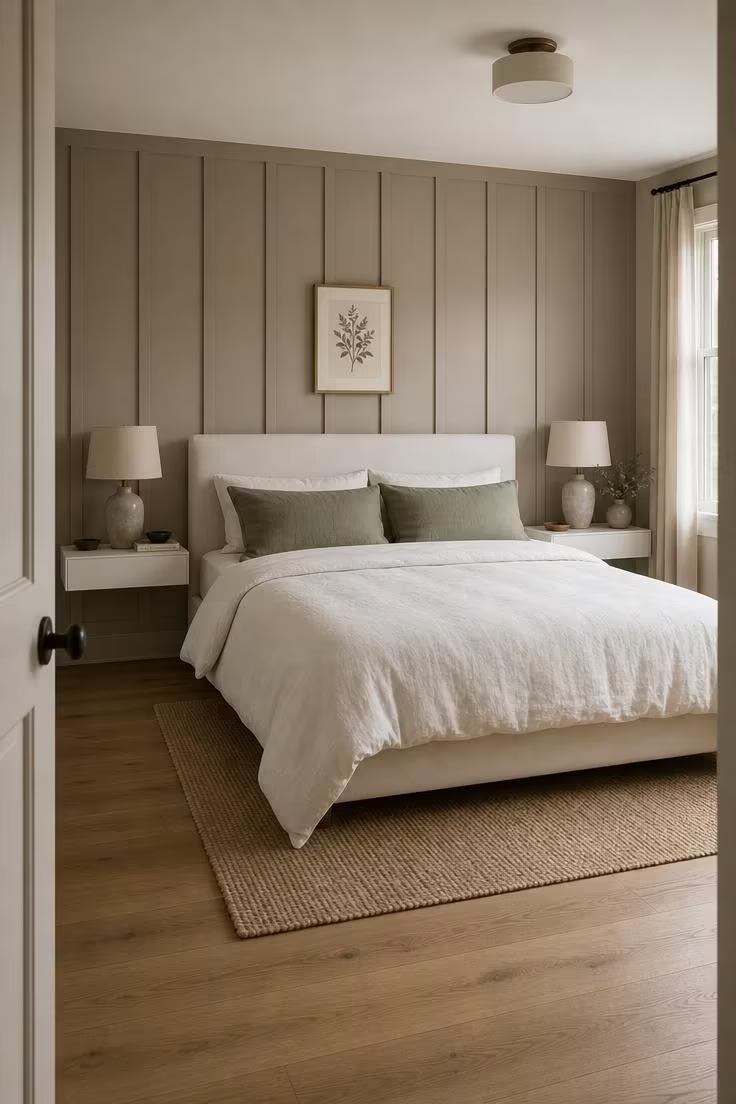
Board-and-batten is one of those bedroom accent wall ideas that adds architectural depth without a single piece of furniture or art.
The vertical rhythm of evenly spaced battens creates a sense of height, which is especially useful in rooms with standard eight-foot ceilings.
Choosing a muted color like pale mushroom, greyed taupe, or soft putty lets the texture do the work rather than the color.
A flat or eggshell paint sheen keeps the surface matte and soft, avoiding the plastic-looking sheen that satin or semi-gloss can create on paneling.
When installed floor to ceiling, the treatment reads as a complete accent wall rather than a half-height wainscot, which can sometimes feel unfinished.
This wall becomes a headboard alternative on its own, allowing you to use a simple low-profile bed frame without any headboard at all.
Minimal wall art, like a single framed print or a small shelf, works best here because the paneling provides its own visual interest.
The spacing between battens matters: four to six inches creates a refined, modern look, while wider gaps lean more farmhouse.
Style Blueprint:
- Board-and-batten paneling in flat or eggshell paint (pale mushroom, greyed taupe, or putty)
- Low-profile bed frame or upholstered headboard
- Slim floating nightstands in white or light wood
- Ceramic table lamps with linen shades
- One small framed print centered above the bed
Three Oversized Black-and-White Landscape Prints in Thin Walnut Frames Above the Headboard

A triptych of landscape photographs reads as one cohesive piece rather than three separate artworks, and this unified quality gives the wall a gallery wall feel without the visual noise.
Black-and-white photography works particularly well in bedrooms because the absence of color keeps the images calming rather than stimulating.
Thin walnut frames add just enough warmth to prevent the arrangement from feeling clinical or cold.
The key to this wall art for bedroom arrangement is scale: each print should be at least 20 by 30 inches, so the trio spans roughly two-thirds the width of the headboard.
Consistent matting, where all three prints use the same mat color and width, ties the group together even if the photographs themselves vary in composition.
Mounting all three at exactly the same height with two to three inches of spacing between frames keeps the line clean and intentional.
Style Blueprint:
- Three black-and-white landscape prints, 20×30 inches minimum each
- Thin walnut frames with white mats
- Cream or white linen upholstered headboard
- Neutral bedding in whites and creams
- Brass and walnut nightstands
Design Pro-Tip: When hanging art above a headboard, leave six to eight inches of space between the top of the headboard and the bottom of the frame. Any closer and the art feels squeezed; any further and it disconnects from the bed entirely.
A Slim Floating Picture Ledge in White Oak Holding Rotating Postcards and Small Ceramics
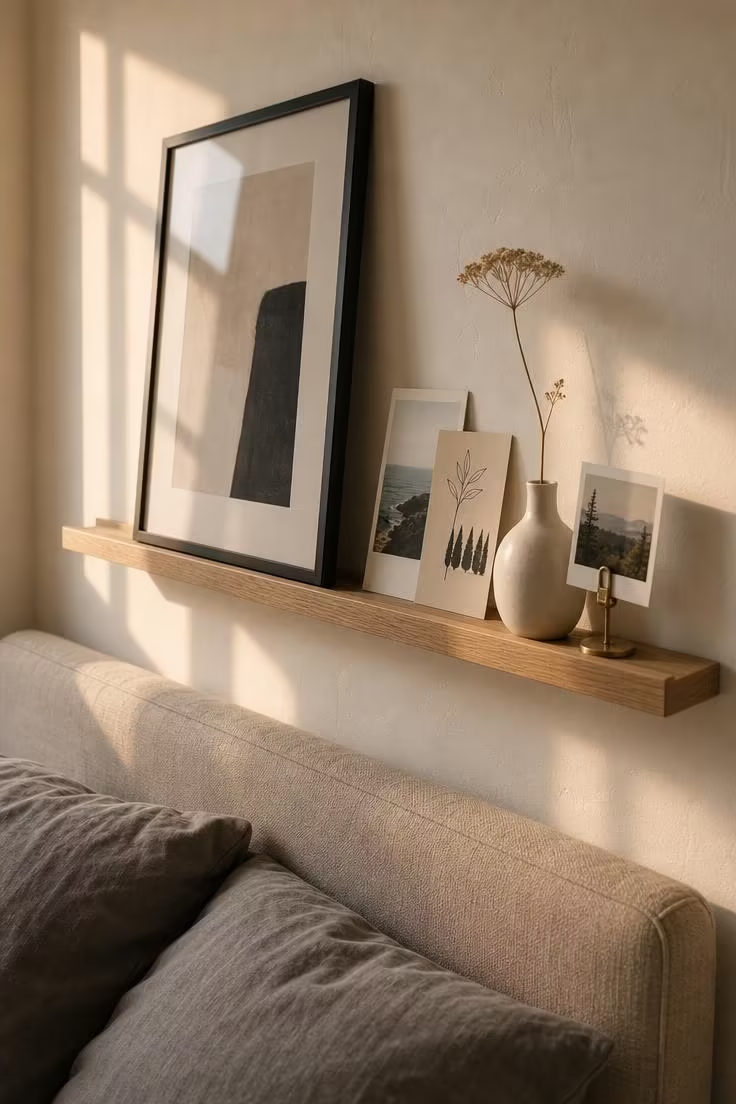
A picture ledge is the most forgiving form of bedroom wall decor ideas because nothing is permanent and everything can change on a whim.
The slim profile of a white oak ledge reads warm and clean without competing with whatever you place on it.
Leaning artwork, postcards, and small framed photos against the wall rather than hanging them creates a relaxed, collected look that feels personal rather than staged.
Adding dimensional objects like a bud vase, a small ceramic sculpture, or a brass clip holding a snapshot gives the arrangement depth that flat art alone cannot achieve.
The key to a good ledge display is layering front to back, with taller pieces behind and smaller objects in front, so everything remains visible.
You can mount a single long ledge spanning most of the wall, or stack two or three shorter ledges vertically for a tiered effect.
Changing the display seasonally, or whenever you find a new postcard or print, keeps the bedroom feeling alive and current.
This is the easiest renter-friendly option on the list, requiring only two screws and leaving minimal wall damage.
One more advantage: because items lean rather than hang, you avoid the crooked-frame problem entirely.
Style Blueprint:
- Slim floating picture ledge in white oak or natural birch
- Mix of leaning framed prints, postcards, and photographs
- One or two small ceramic objects (bud vase, figurine)
- Brass clip or tiny easel for polaroids
- Linen or cotton upholstered headboard below
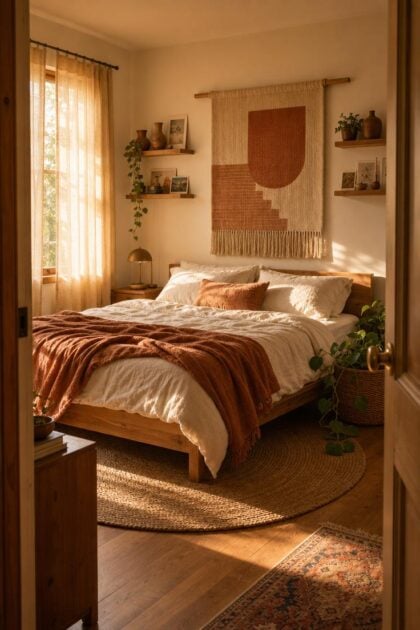
A Hand-Knotted Wool and Cotton Wall Hanging in Ivory and Rust on a Raw Dowel
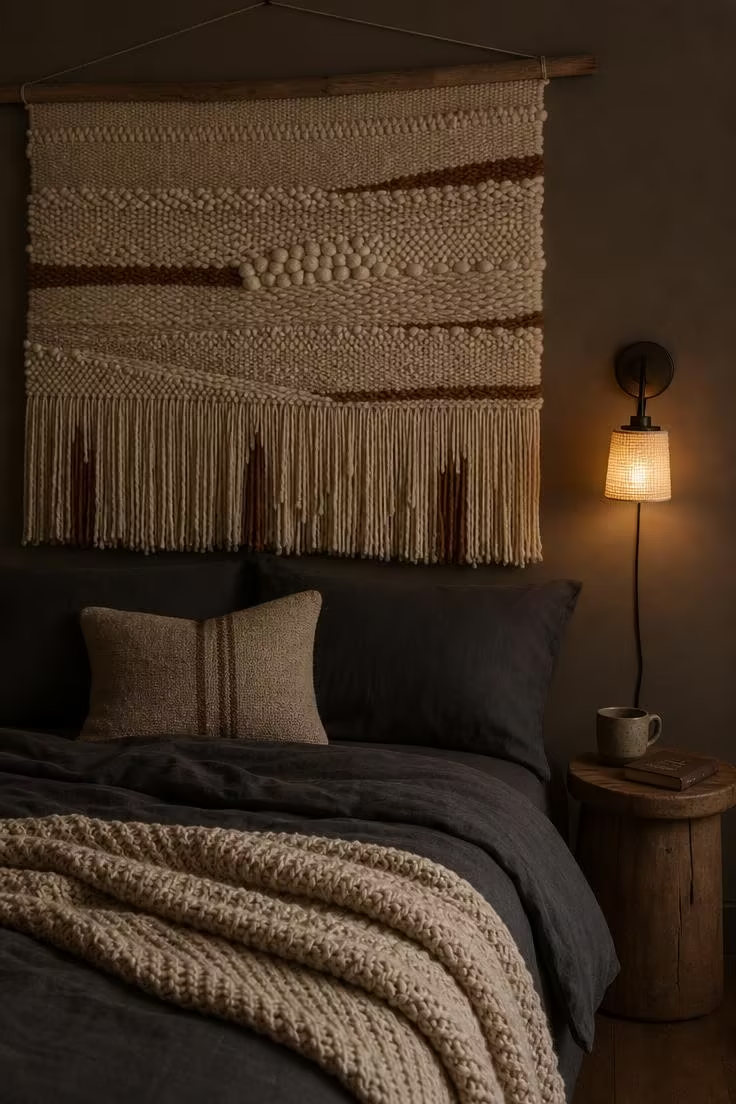
A woven wall hanging this size takes over the entire wall behind the bed, acting as a headboard alternative that brings warmth, texture, and acoustic softness all at once.
Ivory and rust together create a palette that feels warm without being loud, and the natural fibers pick up light differently depending on the time of day.
The raw wooden dowel, left unsanded and unfinished, adds a material honesty that polished brass or painted rods cannot match.
Hand-knotted pieces, where you can see the maker’s irregularities and variations in tension, carry a presence that machine-made weavings simply do not.
The fringe at the bottom of the hanging should fall to roughly the top of the pillows, creating a gentle curtain of texture that moves with air currents.
Mounting a piece this large requires a sturdy wall anchor or cleat, as the weight of wool and cotton together can be surprising.
Paired with dark linen bedding, the lighter tones of the hanging pop forward and become the room’s clear focal point.
Style Blueprint:
- Hand-knotted wool and cotton wall hanging, at least 48 inches wide
- Raw unfinished wooden dowel or branch for hanging
- Dark linen bedding (charcoal, slate, or deep taupe)
- Warm dark wall paint behind the hanging
- Round wood stool as nightstand
A Vertical Stack of Round Rattan Mirrors in Three Graduated Sizes on a Sage Wall
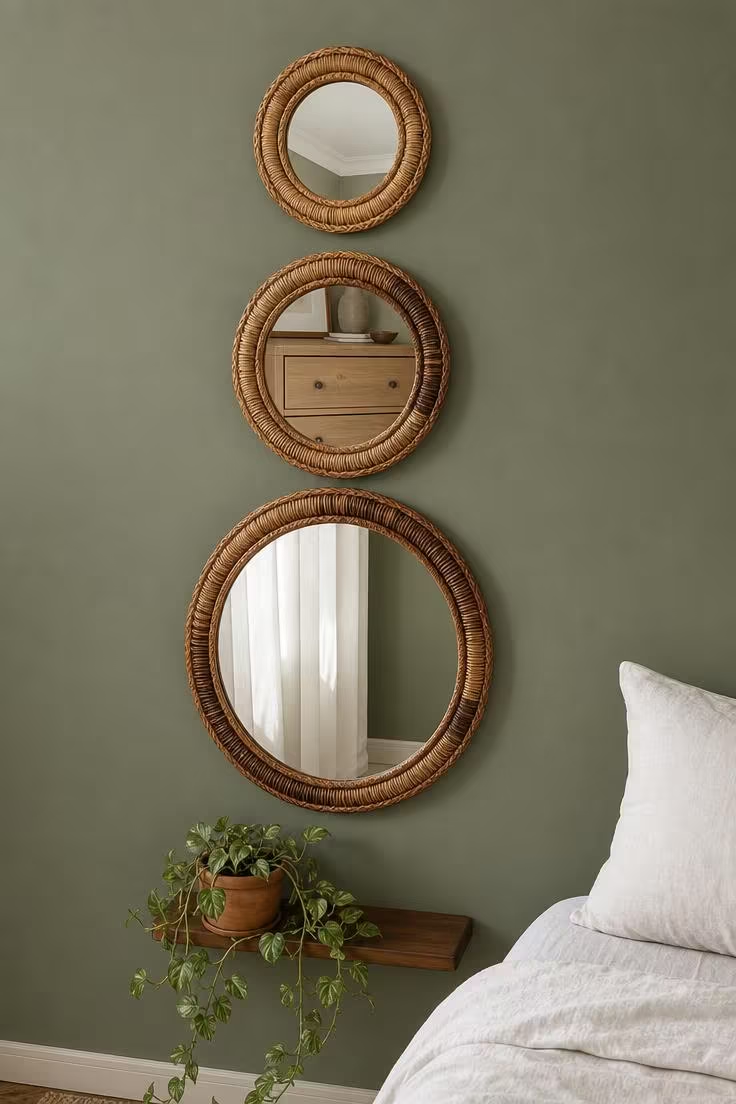
Round mirrors break up the angular geometry that dominates most bedrooms, where the bed, nightstands, dresser, and windows are all rectangles.
Rattan frames bring an organic, handwoven quality that metal and wood mirror frames rarely achieve, and the natural color variation in rattan adds visual richness.
A sage green wall, specifically a muted, grey-toned sage, makes the warm honey tones of rattan leap forward, creating a contrast that neither color nor material could produce alone.
Placing this stack on the wall adjacent to the bed rather than above it keeps the mirrors at a height where they actually reflect light from the window back into the room.
Graduated sizing, from small to large or the reverse, gives the arrangement a sense of direction and movement that three identical mirrors would not.
Thick rattan frames, at least two inches wide, read as solid and intentional, while thin frames can look flimsy at this scale.
Mixing frame weave styles, one tight, one loose, one wrapped, adds subtle variation without disrupting the cohesion of the group.
Vertical stacking works better than a horizontal row on most bedroom walls because it fills the height of the wall more naturally.
Style Blueprint:
- Three round rattan-framed mirrors in graduated sizes (12, 16, and 20 inches)
- Sage green wall paint in matte finish
- Narrow floating shelf or ledge below the bottom mirror
- Small trailing plant in a terracotta pot
- Light wood furniture in the room to echo the rattan tones
Plug-In Brass Swing-Arm Sconces Flanking a Linen Upholstered Headboard
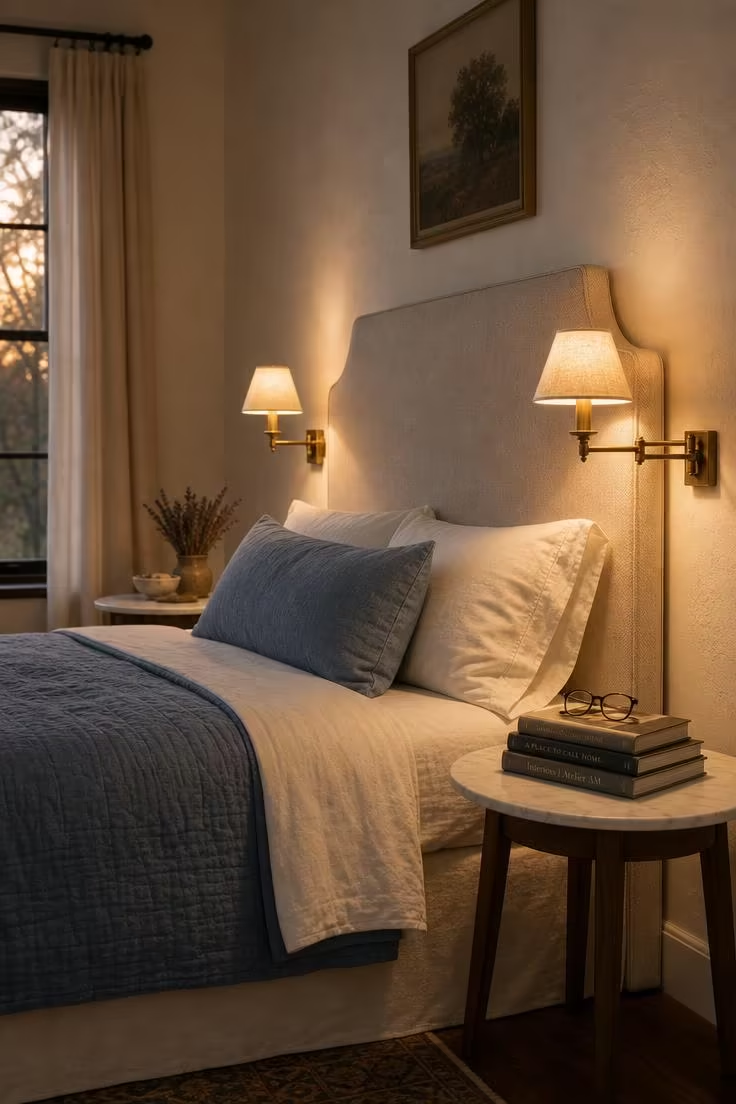
Wall sconces do something no table lamp can: they free the nightstand surface entirely while adding a warm, focused pool of light exactly where you need it for reading.
Plug-in models eliminate the cost and complexity of hardwiring, making them ideal for renters or anyone who wants to avoid cutting into drywall.
Brass in an unlacquered or satin finish develops a subtle patina over time, so the sconces look better with age rather than worse.
The swing-arm mechanism lets you pull the light closer when reading and push it back flat against the wall during the day.
Fabric cord covers in a matching brass or cream color turn the visible cord into a quiet detail rather than an eyesore.
Style Blueprint:
- Two plug-in brass swing-arm sconces with small linen shades
- Tall cream linen upholstered headboard
- Cord covers in brass or matching fabric
- Marble-topped or wood round nightstands
- White and dusty blue bedding
Design Pro-Tip: Mount wall sconces eight to ten inches above the top of the mattress and about six inches to either side of the headboard edge. This height puts the light at the right angle for reading while keeping the fixture proportionate to the bed.
A Half-Wall Painted in Deep Clay With Slim Floating Shelves Holding Stoneware
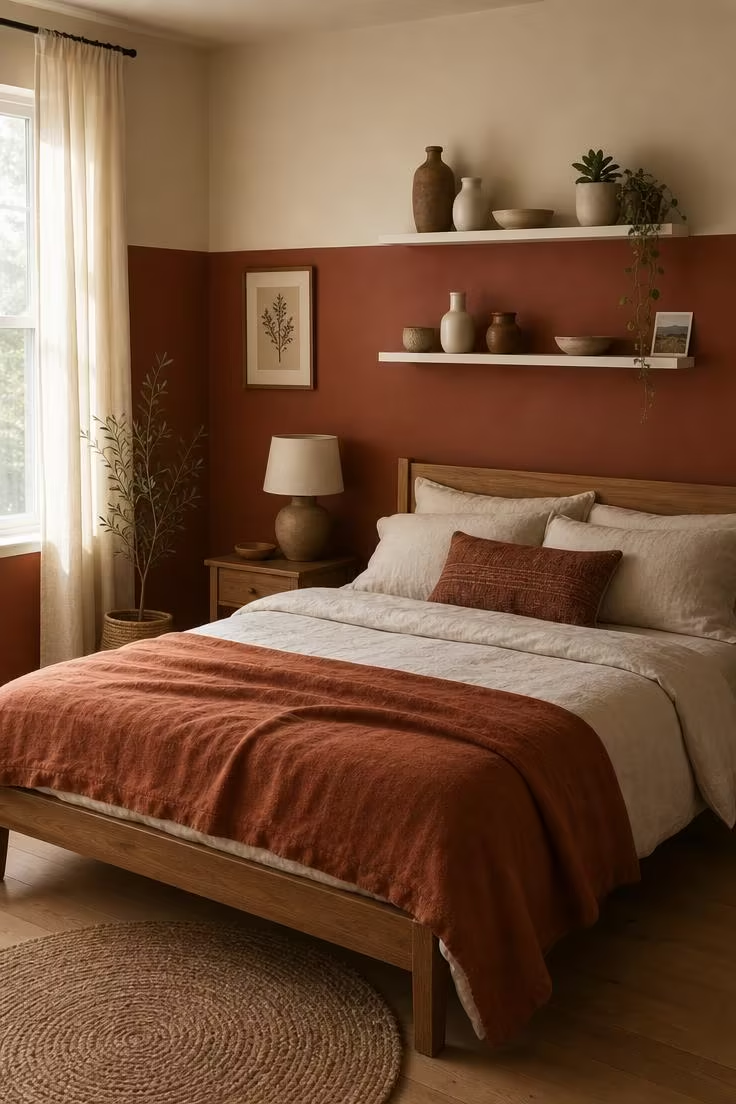
Color blocking a wall at the halfway point creates a grounding effect that makes the room feel anchored and intentional, even without furniture or art doing the heavy lifting.
Deep clay, somewhere between terracotta and burnt sienna, reads warm and earthy without the heaviness that navy or charcoal can bring.
Floating shelves mounted on the painted section act as a gallery within the color block, displaying small objects against a rich backdrop that makes each piece pop.
The stoneware vessels work best in a tight color palette of three or four tones, all warm, so they feel curated without looking matchy.
A crisp, clean paint line at the transition point is what separates this from looking like a half-finished paint job, so painter’s tape and patience are both worth the effort.
Leaving the upper wall in cream or warm white creates breathing room and prevents the dark lower half from making the room feel small.
This technique costs almost nothing compared to wallpaper or paneling, making it one of the most accessible bedroom accent wall ideas on this list.
Style Blueprint:
- Deep clay paint for the lower half (flat or eggshell finish)
- Warm cream or off-white for the upper wall
- Two slim floating shelves in matte white or light wood
- Stoneware vessels in cream, brown, and matte white
- Natural wood bed frame with warm linen bedding
A Large Abstract Canvas in Blush and Charcoal Leaning Against a White Brick Feature Wall
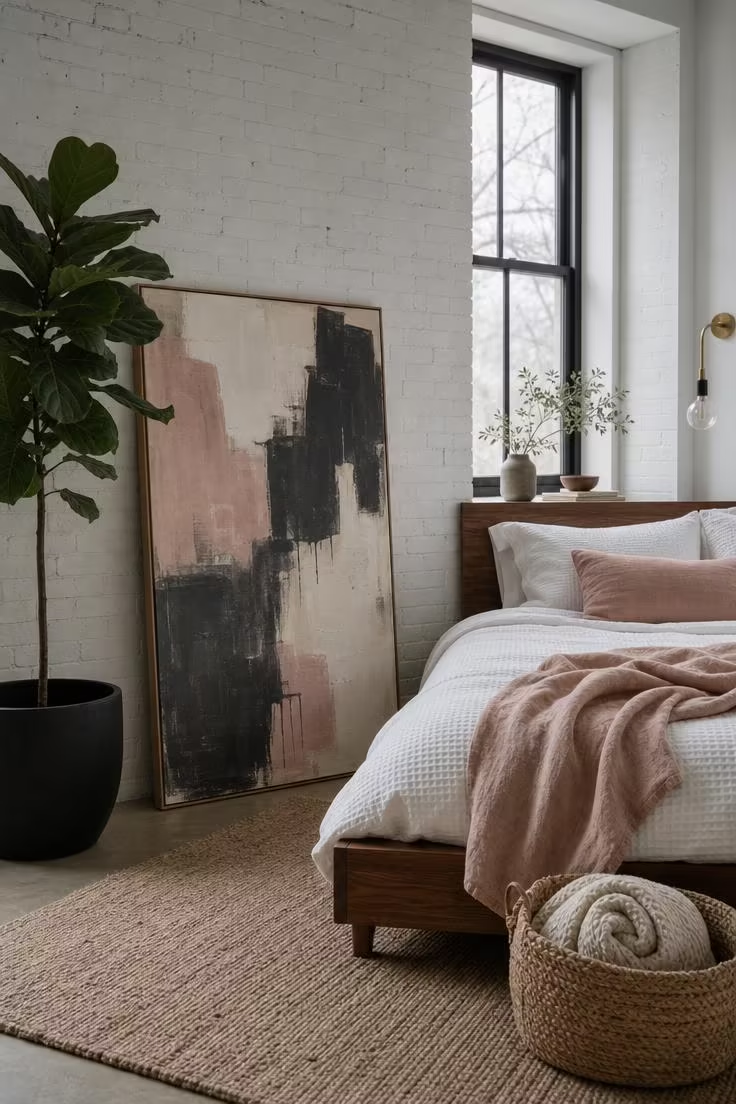
Leaning a canvas against the wall rather than hanging it creates an effortlessly relaxed, gallery-style look that makes the art feel considered but not rigid.
Blush and charcoal together are one of the most balanced color pairings for bedrooms, warm enough to feel soft and grounded but sophisticated enough to avoid looking too sweet.
White-painted brick adds a layer of texture behind the canvas that a flat painted wall cannot provide, and the slight unevenness of the mortar lines creates depth.
The canvas needs to be large, at least 30 by 40 inches, to hold its own against a brick wall and beside a full-size bed.
Abstract art works well in sleeping spaces because it invites a mood without demanding interpretation, letting you settle into the room without visual stimulation.
A single tall plant beside the canvas bridges the gap between the floor-leaning art and the standing furniture, filling what would otherwise be a dead zone.
Securing the bottom of the canvas with museum putty prevents it from sliding forward on hard floors, which is a practical step that most people forget.
Waffle-weave cotton bedding echoes the textured quality of the brick and the brushwork in the painting, tying the room together through surface rather than color.
This approach makes it easy to swap art whenever you find something new, since there is nothing to unhang or patch.
Style Blueprint:
- Large abstract canvas (36×48 inches minimum) in a limited palette
- White-painted brick feature wall (or brick-look peel-and-stick panels)
- Low walnut or dark wood bed frame
- Fiddle leaf fig or other tall floor plant in a matte ceramic pot
- Waffle-weave cotton bedding in white
An Asymmetric Cluster of Hand-Thrown Ceramic Bowls Mounted on a Pale Linen Wall
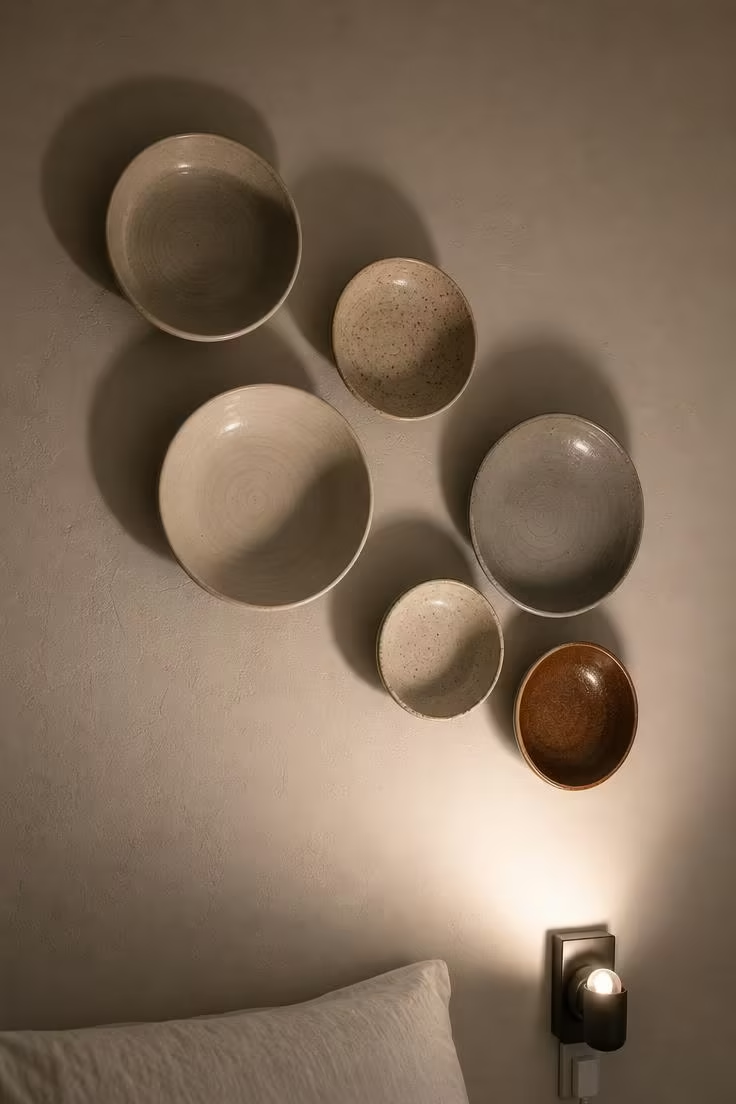
Mounting ceramic bowls on a wall turns functional objects into sculptural art, and the concave surfaces catch and hold light in a way that flat wall art simply cannot.
Hand-thrown bowls carry the subtle imperfections of a maker’s hand, with wobbled rims, uneven glaze pooling, and visible throwing marks that mass-produced options lack.
An asymmetric arrangement, clustered tighter in one area and spreading out toward the edges, creates organic movement across the wall.
Keeping the color palette within one family, here matte whites and creams with a single rust accent, prevents the cluster from reading as chaotic.
Plate hangers with spring-loaded hooks or adhesive disc mounts are the most reliable mounting methods, and both are invisible from the front.
A pale linen wall color, a warm off-white with a slight yellow undertone, acts as a neutral backdrop that makes the subtle color differences between the bowls more visible.
Style Blueprint:
- Five to eight hand-thrown ceramic bowls in varied sizes (4 to 10 inches)
- Matte glazes in white, cream, pale grey, and one accent color
- Spring-loaded plate hangers or adhesive disc mounts
- Pale linen wall paint (warm off-white)
- Asymmetric arrangement with organic spacing
A Peel-and-Stick Botanical Mural in Faded Green Behind a Solid Wood Bed Frame

A botanical mural replaces the need for any other wall decor entirely, covering the full wall behind the bed in a single cohesive scene.
Peel-and-stick application means no paste, no commitment, and no damage when you remove it, which makes it one of the most practical accent wall treatments available.
Faded or muted green tones, where the greens lean toward sage, olive, and dusty forest rather than bright emerald or lime, create a calming backdrop that works for sleep.
The scale of the botanical print matters: oversized fronds and leaves printed at near life-size create drama, while small repeating patterns can feel busy and wallpaper-like.
A solid wood bed frame grounds the botanical imagery and prevents the room from feeling too light or airy, giving the organic backdrop a sturdy anchor.
Installation goes smoothest when you start from the center of the wall and work outward, matching the pattern at each seam.
Because the mural is the statement, the rest of the room should remain restrained, with neutral bedding, simple lamps, and no competing patterns.
Coordinating one textile, like a sage green quilt or olive linen pillowcases, with the mural’s dominant color ties the room together without overdoing it.
Style Blueprint:
- Peel-and-stick botanical mural in faded green tones (full wall application)
- Solid walnut or oak bed frame with a simple headboard
- White linen sheets and sage green cotton quilt
- Ceramic table lamps with linen shades
- Pale wood floors with a cream wool rug
Design Pro-Tip: When applying a peel-and-stick mural, use a squeegee or credit card to smooth each panel from the center outward as you unroll it. Working slowly and removing air bubbles as you go prevents the wrinkled seams that make removable wallpaper look cheap.
A Row of Three Shadow Boxes Displaying Dried Protea and Pressed Olive Branches
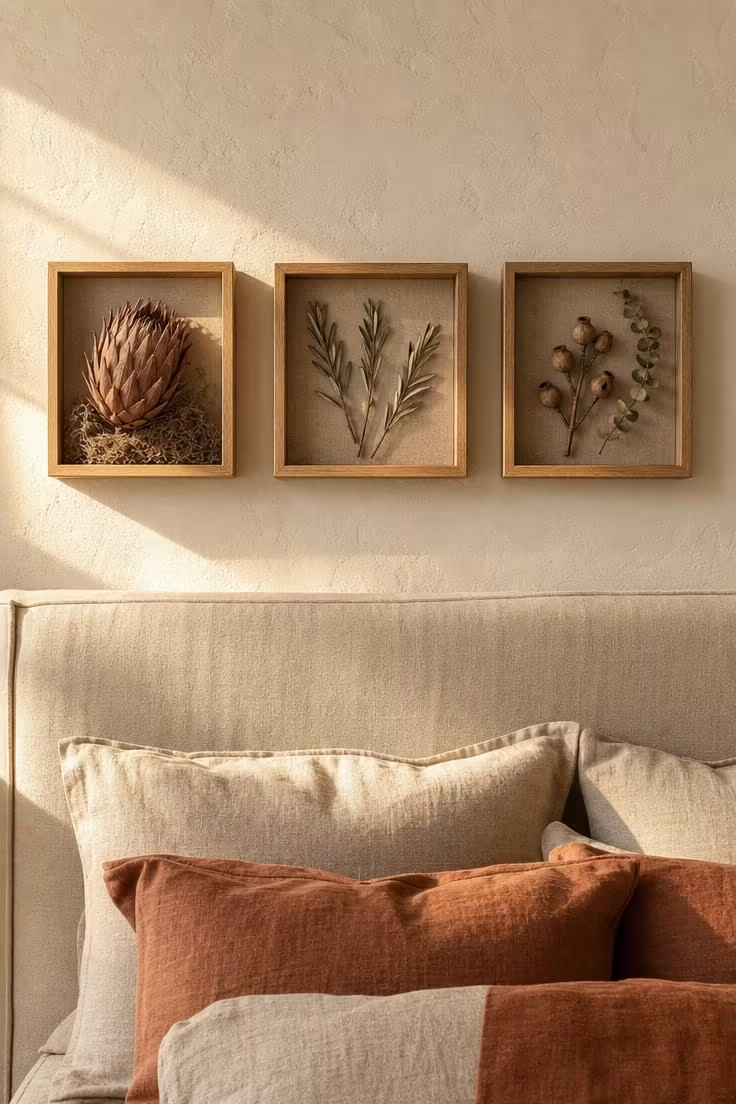
Shadow boxes turn dried botanicals into preserved specimens, protecting them from dust while giving each piece the weight and attention of framed artwork.
Dried protea flowers, with their sculptural shape and muted pink-brown tones, hold their color and form for years without any maintenance.
Pressed olive branches bring a Mediterranean quality, with their silvery-green leaves that darken slightly once dried and flattened.
Three boxes arranged in a tight horizontal row above the headboard creates a unified composition that reads as a curated collection rather than a random grouping.
Natural light oak frames keep the display feeling warm and organic, while black or white frames would push it toward a more clinical, museum-like presentation.
Each box should contain a different type of botanical so the trio offers visual variety rather than repetition, and varying the composition within each box, diagonal placement in one, centered in another, keeps the eye moving.
These boxes are also a way to preserve meaningful plant material from a trip, a garden, or a special occasion.
Style Blueprint:
- Three deep shadow boxes in light oak (12×12 inches each)
- Dried protea flower heads
- Pressed olive branches or eucalyptus
- Dried seed pods, moss, or other botanical specimens
- Cream linen headboard with warm neutral bedding
A Full-Width Herringbone Reclaimed Oak Plank Wall Behind a Low Platform Bed
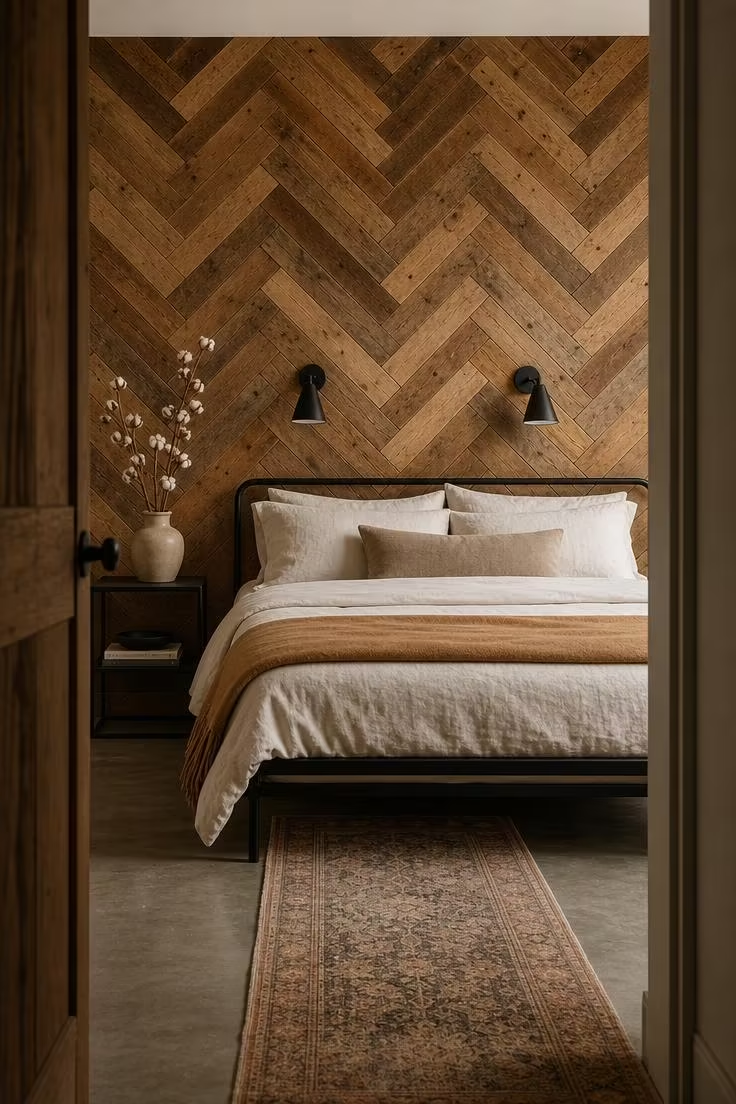
Herringbone pattern elevates reclaimed wood from a rustic accent to something refined and intentional, and the V-shaped lines draw the eye toward the center of the wall where the bed sits.
Reclaimed oak carries a depth of color and character that new wood, even stained or distressed, cannot replicate, with genuine patina from decades of use.
A full-width, floor-to-ceiling installation makes the wood wall feel architectural rather than decorative, like it belongs to the bones of the house.
A low platform bed in black metal or dark wood lets the wall remain the clear star of the room, without a tall headboard competing for attention.
Leaving the wood finished in a matte natural oil preserves its raw texture while protecting it from dust and moisture.
The herringbone pattern itself adds acoustic softness by breaking up the flat surface into angled planes that scatter sound waves.
Style Blueprint:
- Reclaimed oak planks in herringbone pattern (full wall installation)
- Matte natural oil finish or clear matte polyurethane
- Low black metal platform bed
- Warm white linen bedding with a camel wool blanket
- Wall-mounted black reading lights
Matte Black Metal Grid Panels With Clipped Polaroids and Small Dried Stems
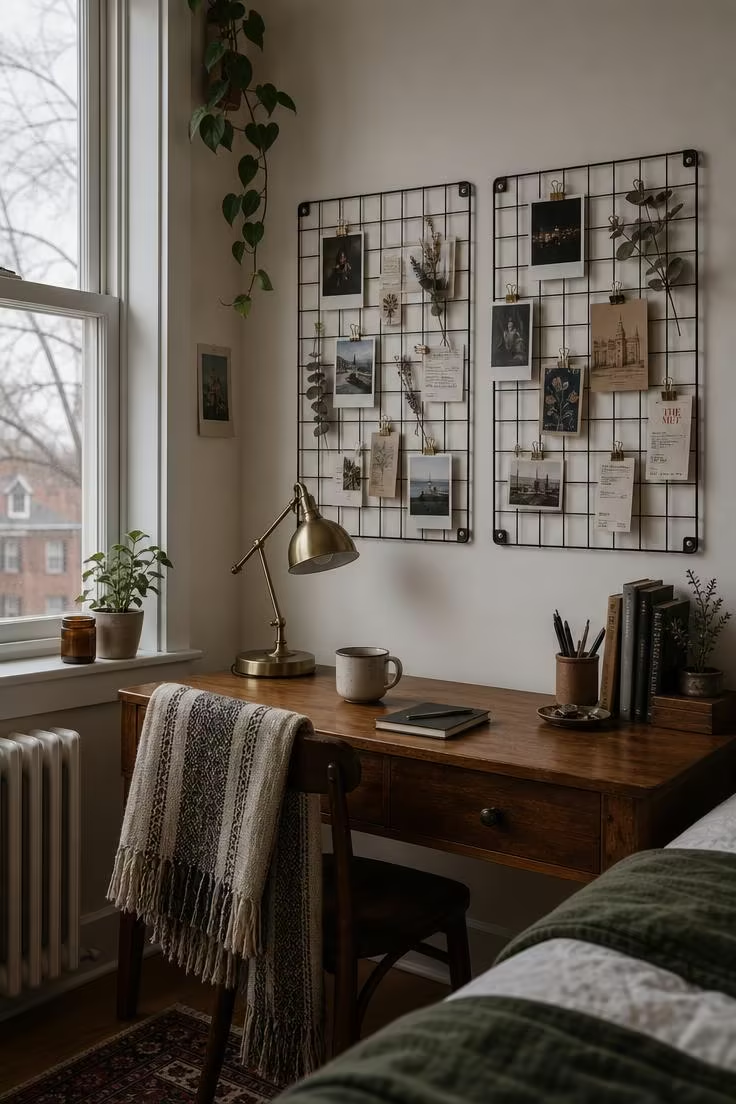
A metal grid panel turns a blank wall into a living, breathing gallery wall that changes every time you add a new photo or tuck in a dried stem.
The matte black finish keeps the grid from looking like office supplies, giving it a clean, modern quality that works in both minimal and eclectic bedrooms.
Clipping polaroids, postcards, concert tickets, and small prints with brass or copper binder clips adds a layer of warmth that plastic clips cannot.
Tucking dried eucalyptus, lavender, or small wildflower stems between the wires brings organic softness to what is otherwise a geometric, industrial object.
Two panels mounted side by side create enough surface area to hold a real collection without overwhelming the wall, and the space between them provides a visual pause.
This is deeply personal bedroom wall decor, where every clipped item tells a specific story, and the display evolves naturally over months and years.
Command strips or small nail hooks make mounting easy and renter-friendly, with no major wall damage.
Refreshing the display is as simple as unclipping one thing and adding another, which keeps the room from feeling stale.
Style Blueprint:
- Two matte black metal wire grid panels (20×28 inches each)
- Brass or copper binder clips
- Polaroids, postcards, ticket stubs, and small art prints
- Dried eucalyptus, lavender, or wildflower stems
- Small wooden desk or shelf below for anchoring
A Single Oversized Arched Mirror in Unlacquered Brass on a Charcoal Accent Wall
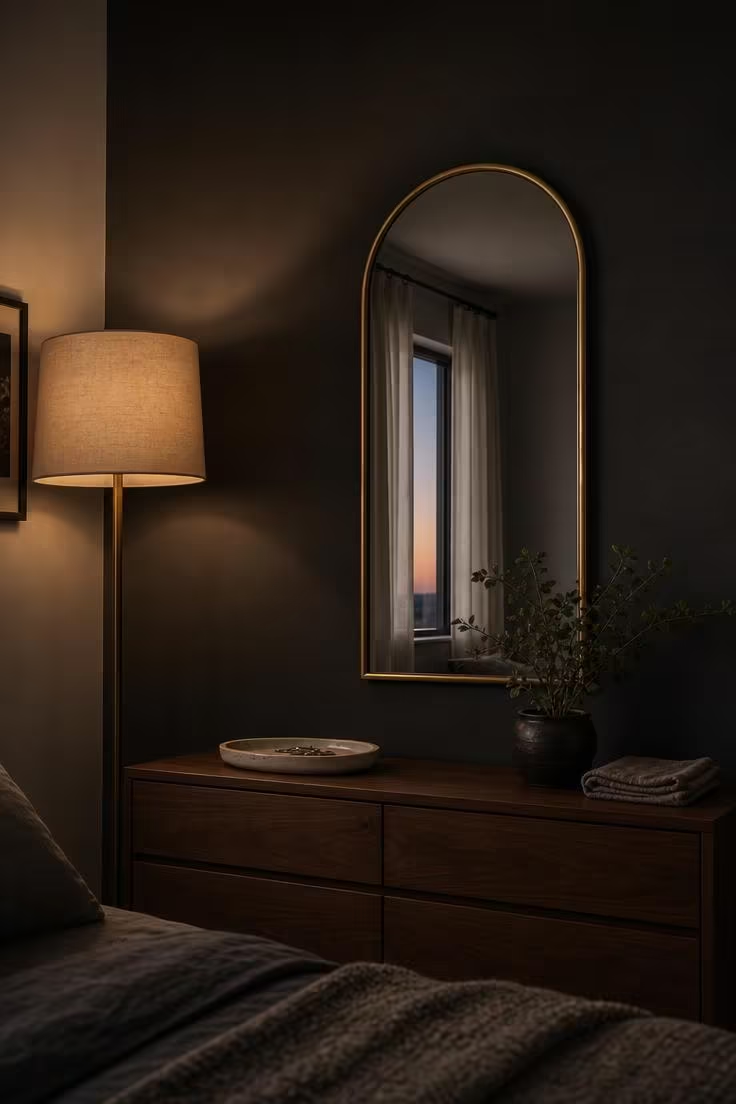
An arched mirror on its own can replace every other piece of wall decor in a bedroom, because it introduces light, depth, shape, and material all at once.
Unlacquered brass ages naturally, developing a patina that darkens and warms over time, making the mirror look more beautiful in year three than it did on day one.
A charcoal accent wall, painted in a flat or matte finish, creates the kind of contrast that makes the brass frame glow, especially in low or evening light.
The arch shape softens the angular lines of the dresser, bed frame, and doorways that dominate most bedrooms.
Hanging it above a low dresser rather than above the bed positions it at a height where it actually catches and reflects light from windows and lamps.
Style Blueprint:
- Oversized arched mirror (24×48 inches minimum) in unlacquered brass
- Charcoal accent wall in flat or matte paint
- Low walnut dresser below the mirror
- Minimal dresser styling (ceramic tray, small plant, folded linen)
- Warm-toned floor lamp for evening glow
Design Pro-Tip: When choosing a mirror for above a dresser, the mirror’s width should be narrower than the dresser by at least four inches on each side. A mirror wider than the furniture below it looks top-heavy and visually unstable.
A Cotton Macrame Panel With Fringe Mounted on a Bleached Cedar Dowel Above the Pillows
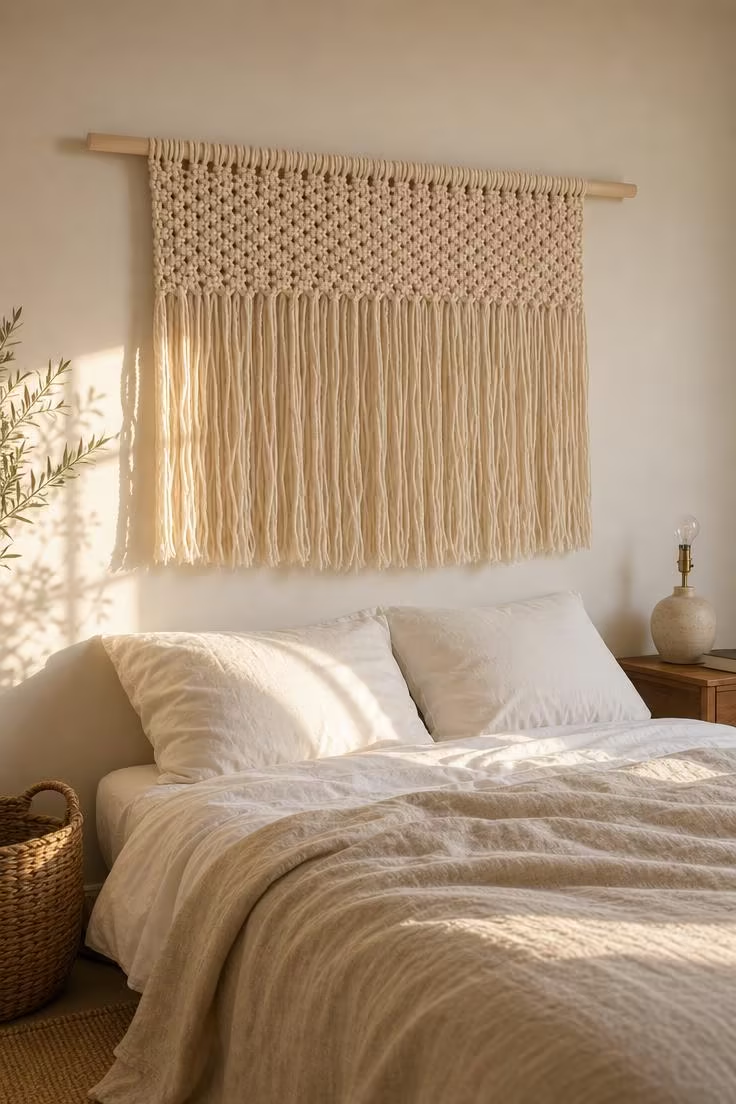
A macrame wall hanging above the pillows acts as a soft, textural headboard alternative that adds warmth and movement to an otherwise flat wall.
Natural undyed cotton catches light in a way that dyed fibers do not, and individual strands lit by morning sun create a subtle halo effect that photographs cannot fully capture.
The combination of tight square knots in the upper section and loose fringe below gives the piece structural variety, so it reads as crafted rather than one-note.
A bleached cedar dowel, lighter and more refined than raw driftwood, complements the cream cotton without adding visual weight.
The fringe should fall to about six inches above the pillows, close enough to frame the sleeping area but not so low that it touches or interferes with the bedding.
Scale matters here: the macrame panel should span at least the width of the pillows, ideally matching the width of the headboard area, to command the wall rather than float lost in the center.
Paired with simple white and natural linen bedding, the macrame becomes the room’s singular textural statement.
Style Blueprint:
- Large cotton macrame wall hanging (at least 36 inches wide)
- Bleached or whitewashed cedar dowel for mounting
- White cotton sheets and natural linen duvet
- Woven seagrass basket on the floor beside the bed
- Simple ceramic lamp on a wooden nightstand
Conclusion
Bedroom walls are the quietest design opportunity in the house, and filling them with things that feel personal and real makes the whole room warmer.
You do not need to tackle all 17 bedroom wall decor ideas at once, and starting with a single project, whether it is a woven wall hanging or a simple floating shelf, is enough to change the feel of the room.
Pick the one idea that matches your space, your skill level, and your budget, and give it a weekend.
The best bedroom walls are the ones that make you pause for a second when you walk in, not because they are perfect, but because they feel like yours.