This post may contain affiliate links. If you make a booking or purchase through these links, we may earn a commission at no additional cost to you.
A bare wall is not empty space, it is unrealized potential sitting right in front of you.
The right piece of simple wall decor can shift the feel of an entire room without a renovation, a large budget, or a weekend of hard labor.
What matters most is choosing something specific, something with texture or warmth or a quiet visual story that makes you pause when you walk by.
These 11 ideas are built around real materials and real arrangements you can recreate at home, each one designed to bring personality to your walls without overcomplicating your life.
A Cluster of Matte White Ceramic Crescent Moons on a Dusty Blue Wall
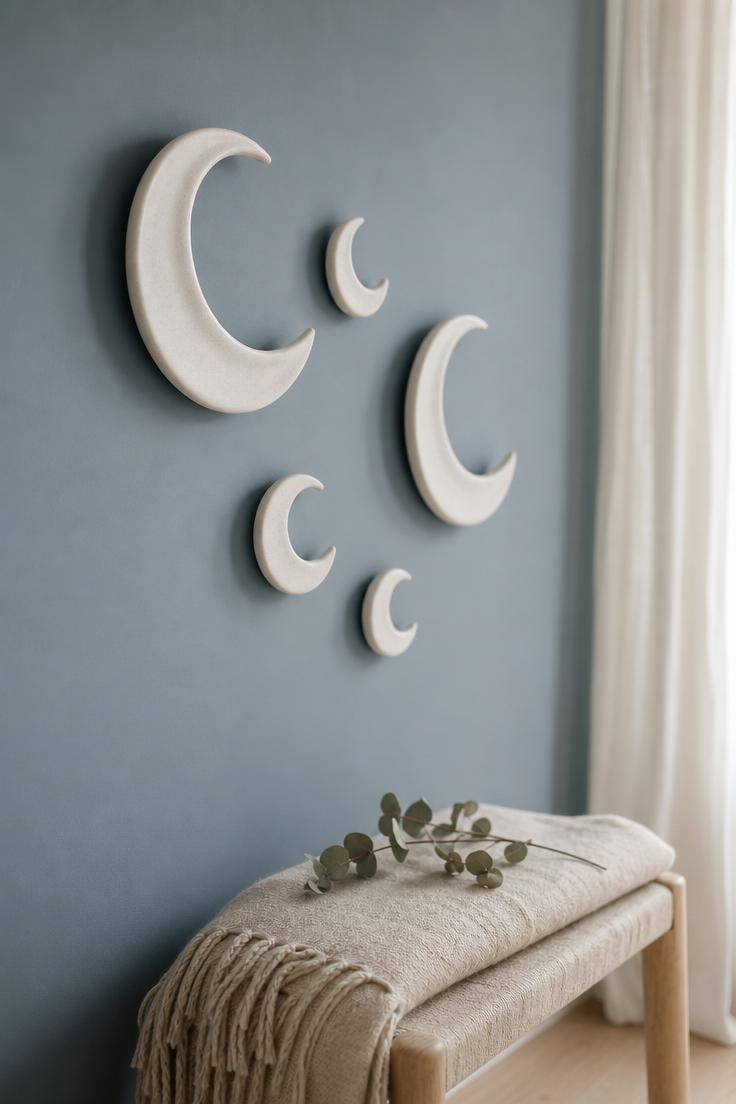
There is something quietly magnetic about curved shapes on a flat surface.
These ceramic crescents break the rigid geometry of a standard wall without demanding attention the way a bold painting might.
The matte white finish absorbs light instead of reflecting it, which gives each piece a chalky, tactile quality you can almost feel from across the room.
Against a dusty blue background, the contrast is soft rather than sharp, more like cloud against sky than object against surface.
If you work with air-dry clay, you can shape these yourself in an afternoon and have them mounted by evening.
The staggered sizing, small to large with uneven spacing, keeps the arrangement from looking too deliberate or manufactured.
One wall. That is all this idea needs.
Style Blueprint:
- 4-5 matte white ceramic or air-dry clay crescent moon wall sculptures in graduating sizes
- Dusty blue or slate blue wall paint as the backdrop
- Adhesive wall hooks or small finishing nails for mounting
- A low linen-covered bench or natural wood side table positioned below
- A single dried botanical sprig on the surface beneath for grounding
Framed Pressed Fern Leaves in Thin Brass Frames Along a Hallway
Hallways get ignored in most decorating plans, which is a mistake because you walk through them more than almost any other space in your home.
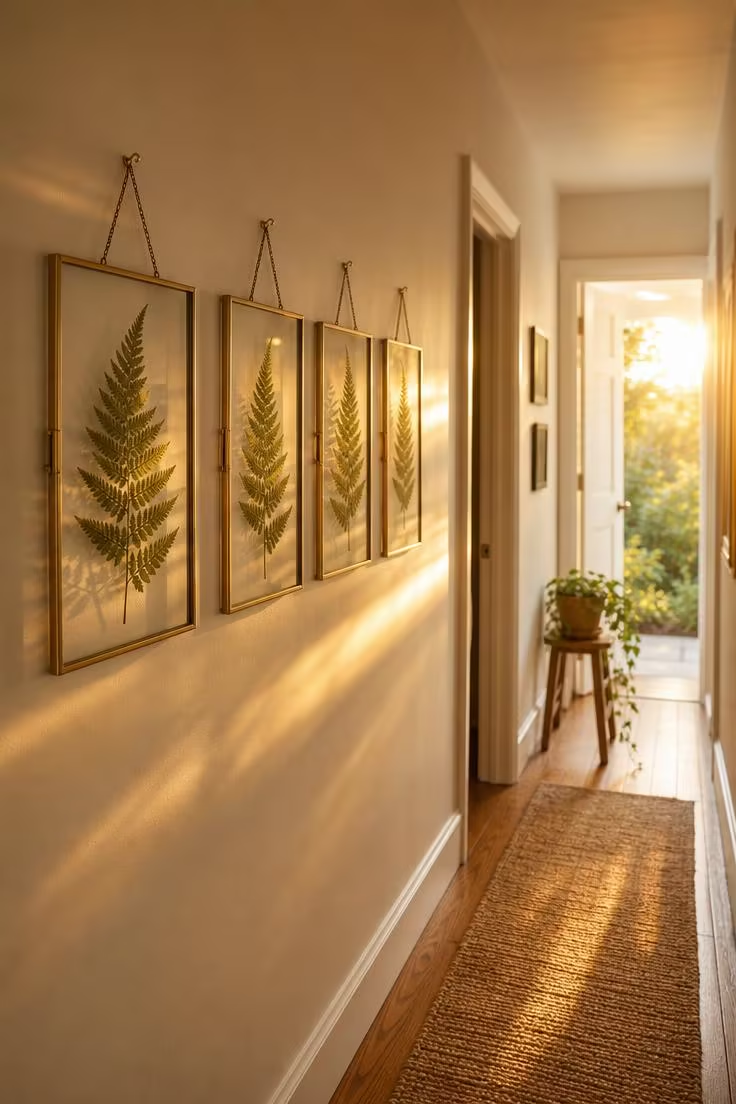
A row of pressed fern fronds in matching brass frames turns a passageway into a moment of visual calm.
The transparency of the glass lets the wall color show through the leaves, which creates a layered, almost watercolor-like effect.
Brass frames add just enough warmth without pulling the arrangement into a formal direction.
Pressing ferns yourself takes about two weeks between heavy books with parchment paper, and the results last for years if kept out of direct sun.
Keep the frames spaced 4 to 6 inches apart at eye level, measured from the center of each frame, so the row reads as one continuous piece rather than four separate objects.
This kind of neutral wall art works in almost any home because ferns are universally familiar and calming.
The narrow profile of the frames means they sit close to the wall, which is especially practical in tight hallways where you do not want anything protruding into the walkway.
Style Blueprint:
- 4 matching thin brass floating glass frames (8×10 or 5×7 inches)
- Pressed fern fronds, one per frame, flattened and dried
- Cream or warm white wall paint behind the row
- Small finishing nails or picture-hanging strips spaced evenly
- A jute or sisal runner on the hallway floor to anchor the visual line
A Peel and Stick Linen-Textured Wallpaper Panel Behind a Rattan Bedside Table
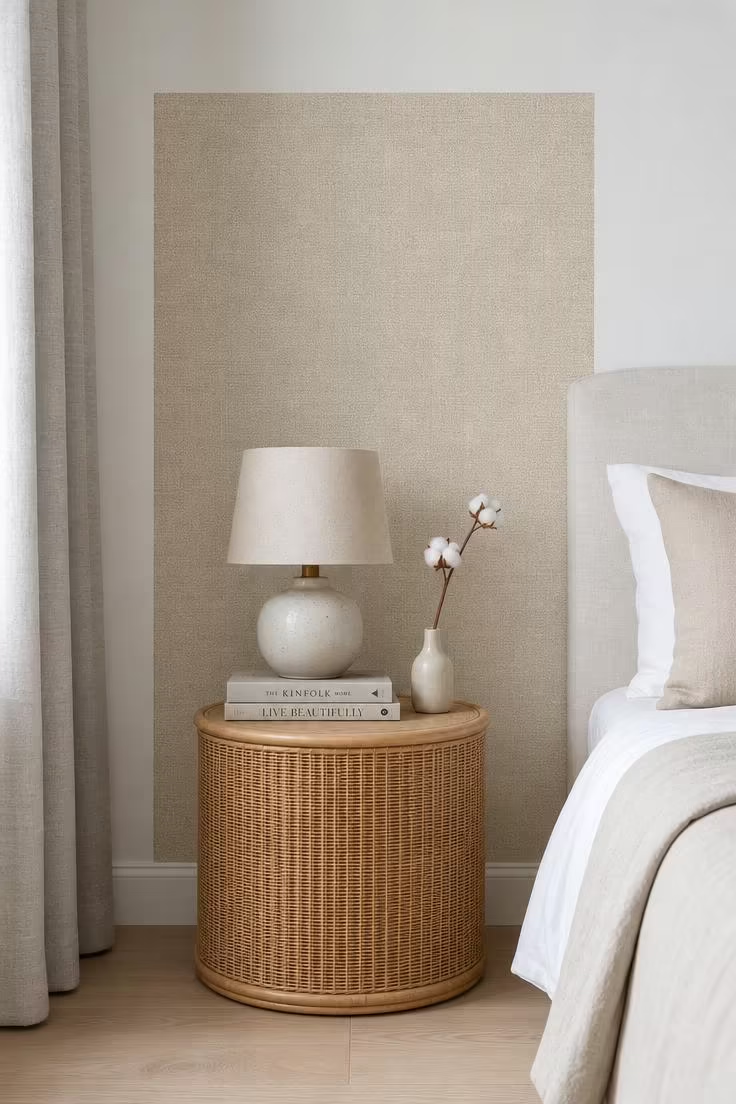
A full accent wall is a commitment, but a single panel of peel and stick wallpaper behind a piece of furniture is low-risk and high-reward.
This approach frames the bedside table the way a mat frames a piece of art, drawing attention to a small zone without overwhelming the rest of the room.
Linen-textured wallpaper adds a layer of tactile interest that flat paint cannot replicate, and the oatmeal tone keeps the palette grounded and warm.
Because it is removable, this is an ideal option for renters or anyone who likes to change their space with the seasons.
Installation requires nothing more than a smoothing card and about fifteen minutes of careful alignment.
The pairing with rattan is intentional, two woven textures at different scales create a conversation between the wall and the furniture that feels collected rather than coordinated.
Style Blueprint:
- One roll of peel and stick wallpaper in a natural linen or woven texture (oatmeal or flax tone)
- A smoothing card or credit card for application
- A rattan or woven bedside table or small console
- A ceramic lamp with a fabric shade for soft warm light
- A single dried botanical stem in a narrow bud vase
Design Pro-Tip: When mixing woven textures in a room, vary the scale. A tight linen weave on the wall pairs well with a looser rattan weave on furniture because the contrast keeps the textures readable. Two textures at the same scale blend together and lose their individual impact.
Raw Pine Picture Ledges With Leaning Charcoal Sketches and a Small Potted Succulent
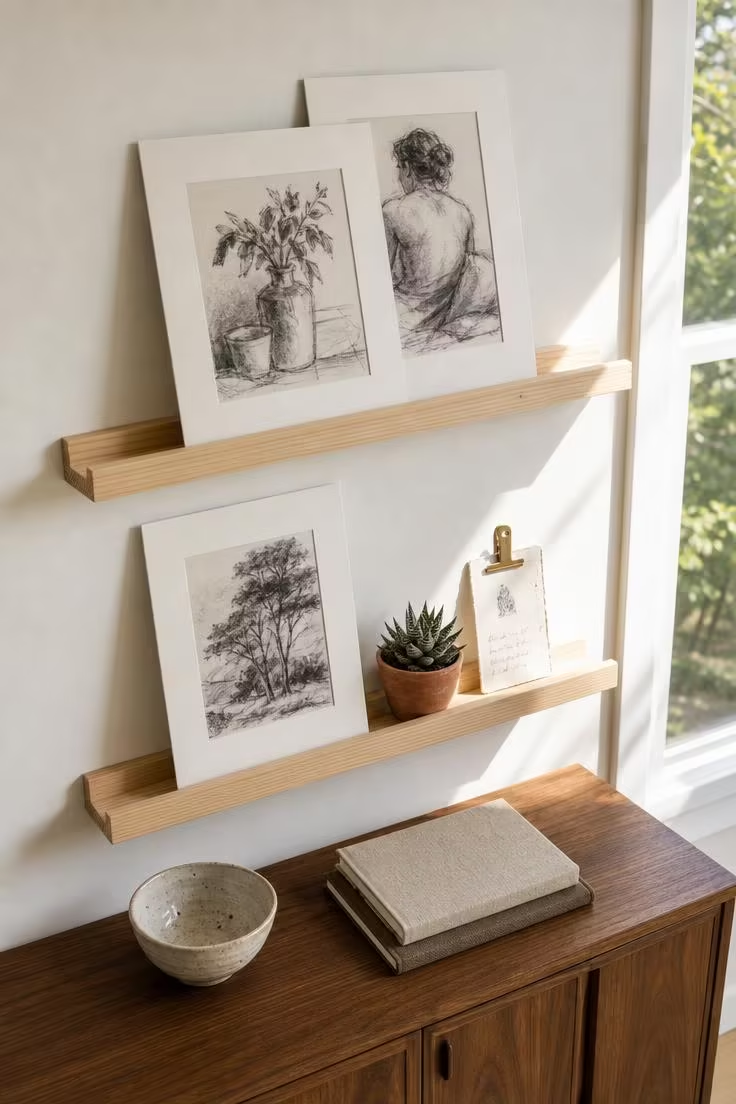
Leaning art on a ledge instead of nailing it to the wall changes the entire relationship between you and the pieces on display.
You can swap a sketch out in two seconds, rotate prints with the seasons, or slide everything to one side when the mood strikes.
Raw pine ledges have a warmth and grain that painted shelves lack, and they age into a deeper honey tone over time that only improves the look.
Charcoal sketches on heavy white paper, especially without frames, have a studio-like quality that makes a room feel like someone creative lives there.
The succulent at the end of the lower ledge adds a small living element that keeps the arrangement from feeling too flat or two-dimensional.
This is floating shelf decor at its most flexible, a system rather than a fixed installation.
If you draw, this is also one of the most satisfying forms of DIY wall decor because the art itself comes from your own hand.
Scale matters here: the ledges should span about two-thirds of whatever furniture sits below them so the grouping feels proportional.
A single brass clip or small object at one end keeps the eye from sliding off the edge of the arrangement.
Style Blueprint:
- Two raw pine picture ledges, each 24 to 36 inches long
- 3-4 charcoal sketches or line drawings on heavy white paper with white mats (no frames)
- One small terra cotta pot with a low-light succulent (haworthia or echeveria)
- A thin brass clip or small sculptural object as an end anchor
- Wall-mounted with simple L-brackets or keyhole hardware
A Trio of Woven Seagrass Fans Staggered Above a Linen Headboard
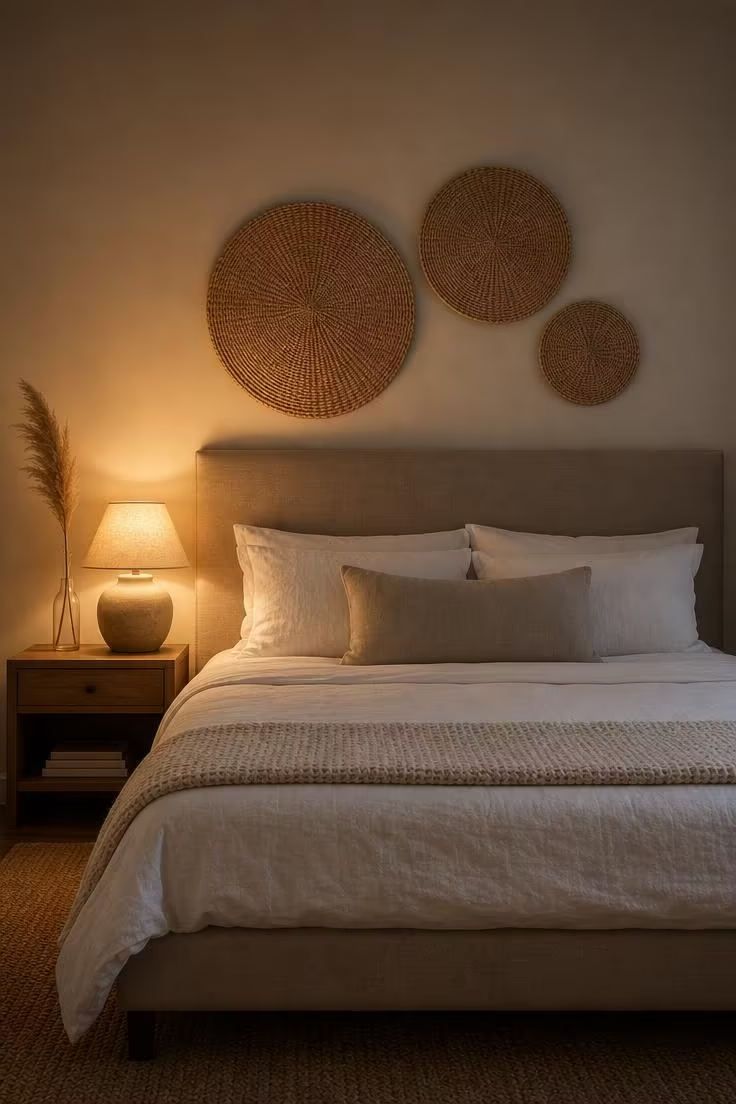
Woven seagrass fans bring a texture to the wall that no print or painting can replicate.
The open weave catches light differently depending on the time of day, which means this arrangement actually changes character from morning to evening.
Staggering the sizes in a diagonal line instead of centering them symmetrically gives the grouping a sense of movement that feels natural rather than rigid.
Above a linen headboard, the combination of two natural fibers at different scales creates a layered, collected feeling that reads as intentional without looking fussy.
This is a woven wall hanging approach that skips the bulk and weight of macrame for something lighter and airier.
Mounting is simple: a single nail or adhesive hook behind each fan, and paper templates beforehand will help you nail the spacing on the first try.
The moody low-light setting is where this arrangement really comes alive, because the lamp casts warm shadows through the weave that add depth and drama you would never get from flat art.
Style Blueprint:
- 3 woven seagrass or palm leaf fans in graduated sizes (small, medium, large)
- A linen or neutral fabric upholstered headboard as the base
- Adhesive hooks or small finishing nails for wall mounting
- A warm-toned ceramic table lamp on one side for directional evening light
- White or cream linen bedding to keep the palette soft and unified
A Linen-Covered Pinboard in a Slim Walnut Frame Beside a Desk Lamp
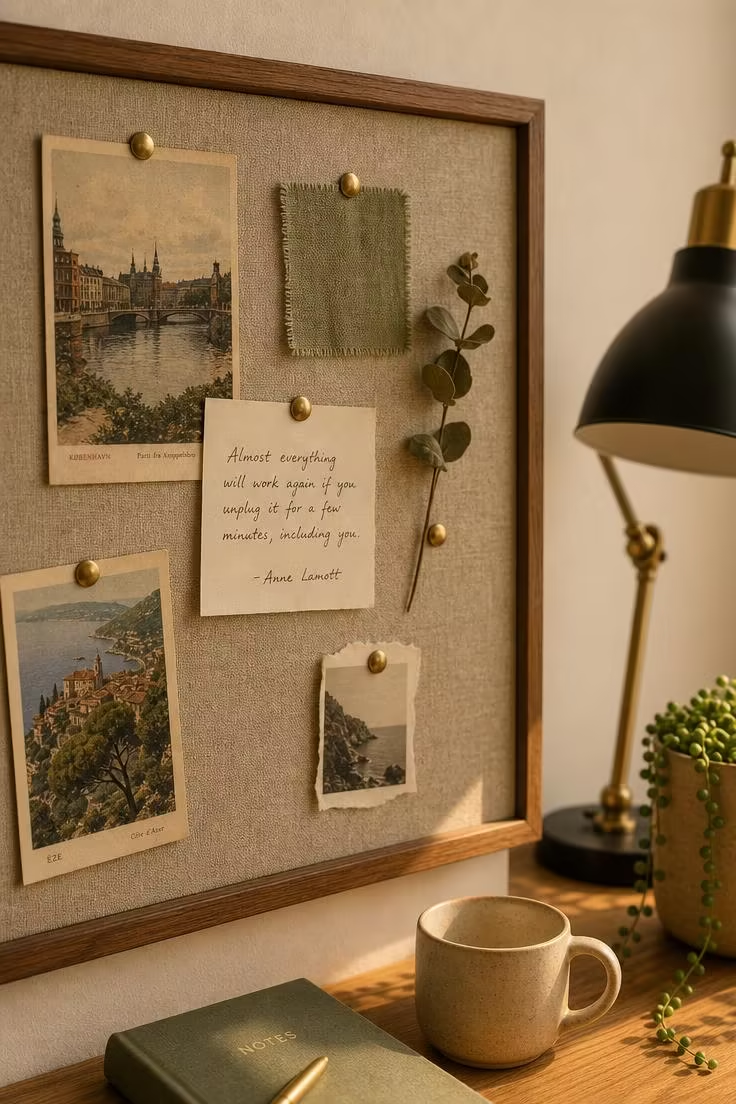
A pinboard is one of those things that can look terrible or wonderful depending entirely on the materials and the frame.
Wrapping a standard cork board in natural linen and setting it inside a slim walnut frame lifts it from dorm room afterthought to something you would actually want on your wall.
What you pin matters: a mix of postcards, small fabric swatches, dried stems, and handwritten notes creates a collage that feels personal without trying too hard.
Brass thumbtacks add a small metallic detail that ties into the desk lamp and keeps the overall look warm.
This is small space wall decor at its most practical because it serves as both decoration and a functional surface for ideas, inspiration, and reminders.
The total material cost sits under thirty dollars, making it one of the most affordable wall art options on this list.
Rotating what you pin every few weeks keeps the board feeling alive and prevents it from becoming visual background noise.
The linen surface also adds a subtle texture that you can feel when you run your hand across it, which gives the board a quality that a bare cork surface cannot match.
Style Blueprint:
- A cork board (standard rectangle, 16×20 or 18×24 inches)
- Natural linen or Belgian linen fabric for wrapping
- A slim walnut wood frame (or stain a basic frame in walnut tone)
- Brass thumbtacks or map pins
- A rotating mix of postcards, fabric swatches, dried sprigs, and personal notes
Design Pro-Tip: When building a pinboard display, limit yourself to a palette of three colors plus one metallic. Too many competing tones make the board feel chaotic instead of collected. A sage-cream-white palette with brass accents keeps everything cohesive even as you swap items in and out.
A Tall Rectangular Antiqued Brass Mirror Propped Against a Charcoal Wall
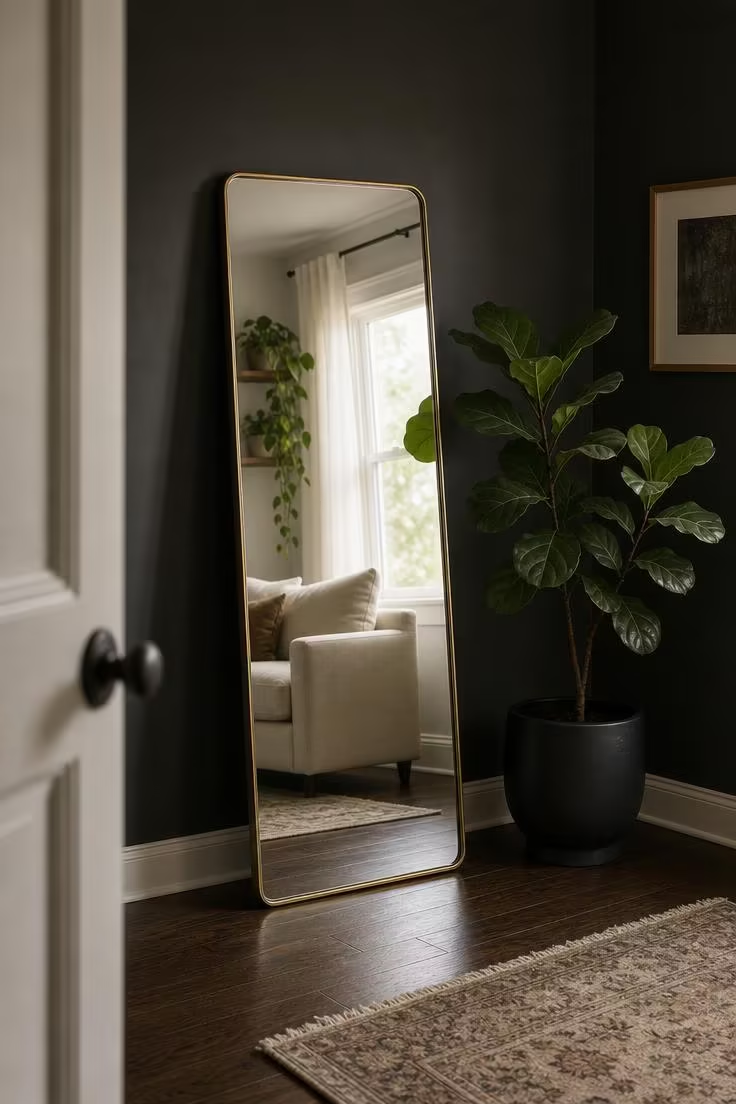
Propping a mirror against a wall instead of hanging it creates an entirely different visual effect than mounting it flush.
The lean introduces a subtle angle that changes what the mirror reflects depending on where you stand, which makes the room feel alive rather than static.
A charcoal wall is the ideal backdrop here because the dark surface makes the brass frame glow and the reflected light inside the mirror pop forward.
This kind of mirror wall decor requires zero tools, zero holes, and zero commitment, you can move it to another room in thirty seconds.
The fiddle leaf fig beside it adds a vertical organic shape that echoes the tall narrow frame and softens the geometry of the mirror edge.
Style Blueprint:
- A tall rectangular mirror (at least 60 inches high) with a thin antiqued brass or gold frame
- A dark charcoal or deep gray painted accent wall
- A medium-sized floor plant in a matte black or dark ceramic planter
- Dark walnut or espresso-toned hardwood or luxury vinyl flooring
- Sheer white curtains on a nearby window as the reflected light source
A Vertical Stack of Mismatched Thrift Store Oil Paintings on a Warm Beige Wall
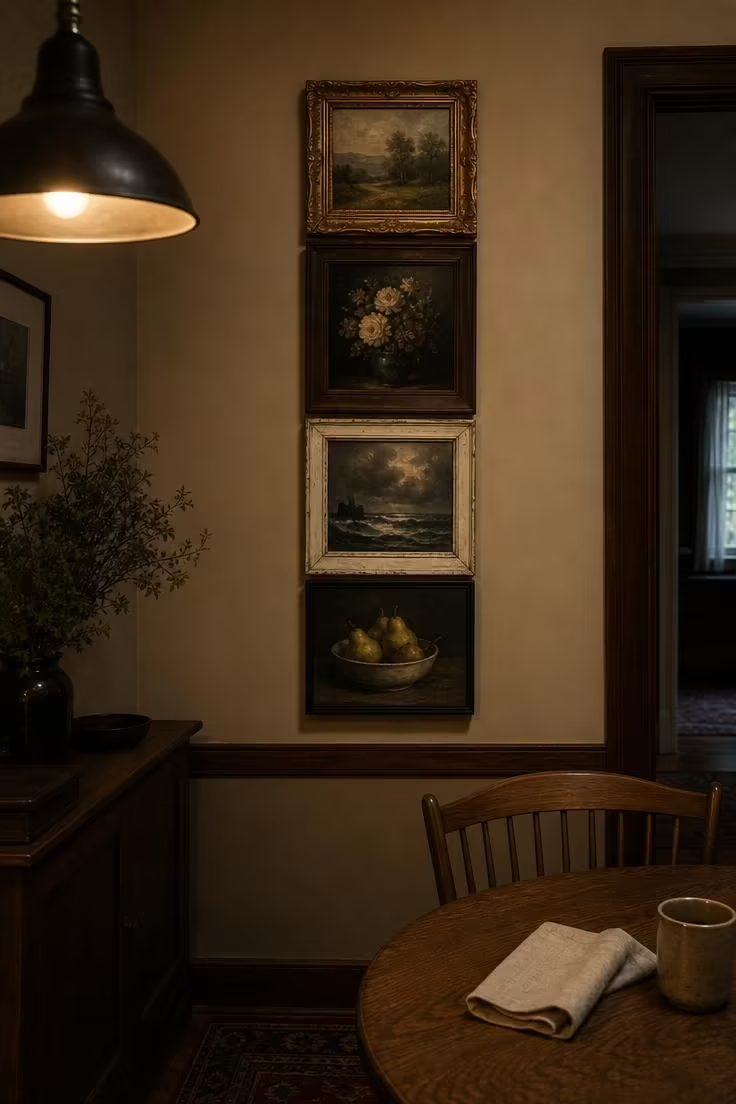
There is a particular kind of charm that only comes from things that were never meant to go together but somehow do.
A vertical column of thrift store oil paintings, each in a different frame and a different subject, creates a gallery wall layout that feels collected over decades rather than ordered from a catalog.
The tight spacing matters most: two inches between frames turns four separate paintings into one visual unit with a strong vertical pull.
Warm beige walls let the rich tones of vintage oil paint, the deep greens, ochres, and stormy blues, sing without competing with the backdrop.
Sourcing these at thrift stores, flea markets, or estate sales keeps the cost low, often five to twenty dollars per painting, which makes this among the most affordable wall art approaches you can try.
The key to making mismatched frames work is finding a shared undertone: if every painting has at least one warm gold or amber note, the set reads as cohesive even though no two pieces match.
This arrangement works especially well on narrow wall sections beside doorways, in dining nooks, or in any spot where a horizontal grouping would not fit.
Style Blueprint:
- 4 small vintage oil paintings (mixed subjects: landscape, floral, still life, seascape)
- Mismatched frames in varied finishes (gold, dark wood, distressed white, black)
- Warm beige or sand-toned wall paint
- Tight vertical spacing of 2 inches between frames
- A warm overhead pendant or sconce to light the column from above
Hand-Torn Watercolor Abstracts Taped With Linen Washi on a Bedroom Wall
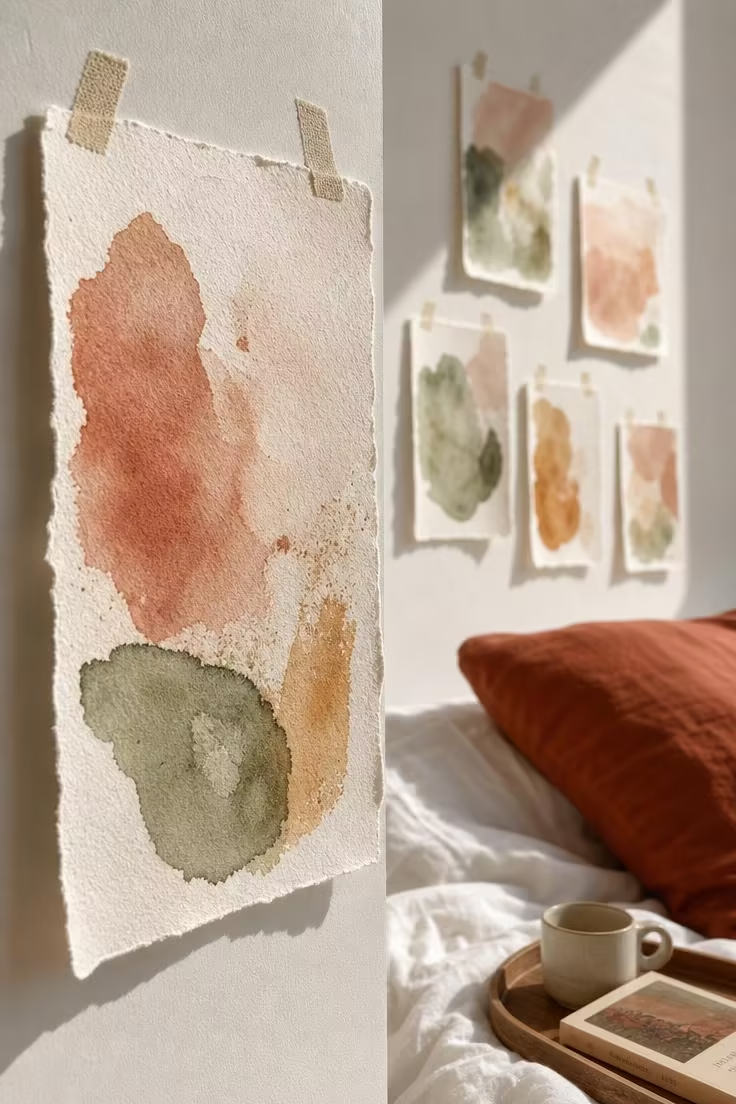
Removing the frame from art changes everything about how it feels on a wall.
These hand-torn watercolor abstracts, taped directly to the surface with linen-textured washi, have a raw and immediate quality that framed prints cannot touch.
The torn edges are the point, not a flaw, and they give each piece an irregular border that makes the cluster feel organic rather than planned.
You do not need painting experience to make these: a few broad washes of diluted watercolor in terracotta, sage, and ochre on heavy cotton paper is all it takes.
Tearing the paper instead of cutting it produces soft, fibrous edges that catch light and add a micro-texture visible even from across the room.
Washi tape as a hanging method is damage-free and repositionable, which means you can rearrange the cluster on a rainy afternoon whenever the layout starts to feel stale.
This is minimalist wall art with a handmade soul, each piece is one of a kind because watercolor never behaves the same way twice.
Laying the pieces out on the floor first and photographing the arrangement before moving to the wall saves time and prevents unnecessary tape marks.
Sticking to three or four earth tones across all six pieces keeps the cluster unified even though no two abstracts look the same.
Style Blueprint:
- 6 small sheets of heavy watercolor paper (torn to roughly 5×7 or 6×8 inches)
- Watercolor paint in 3-4 earth tones (terracotta, sage green, ochre, dusty rose)
- Linen-colored or neutral washi tape for mounting
- A clean warm white wall as the backdrop
- A loose, organic cluster arrangement with uneven spacing
Design Pro-Tip: When creating a cluster of unframed art, keep 1.5 to 3 inches of space between each piece. Tighter than 1 inch and they merge into a blob; wider than 4 inches and they stop reading as a group. The sweet spot is just enough gap to see the wall color between them.
A DIY Plaster-Textured Canvas With Raw Linen Mat in an Oak Frame
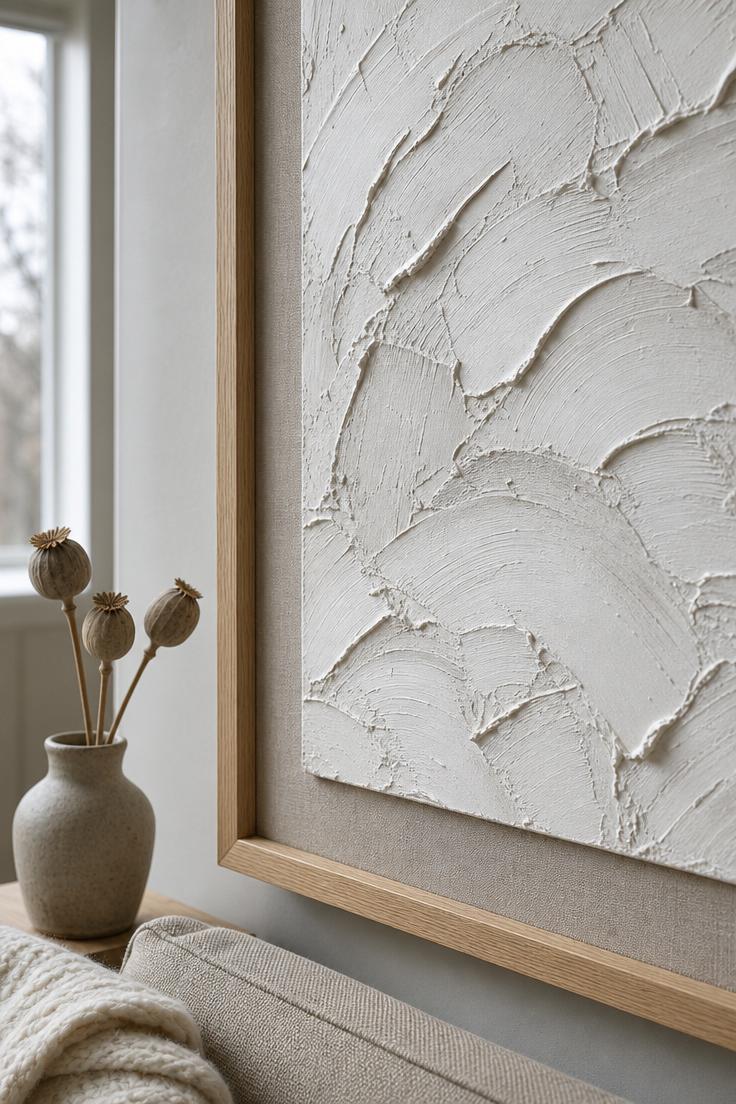
Plaster art has become one of the most popular forms of neutral wall art in the past two years, and the appeal is easy to understand once you see one in person.
The thick, uneven surface catches light in a way that flat canvas or paper simply cannot, creating a piece that looks different at every hour of the day.
Making one yourself requires only a canvas, a tub of joint compound or modeling paste, and a putty knife, all available at any hardware store for under fifteen dollars.
The technique is forgiving: broad, confident strokes in random directions produce the most natural-looking result, and imperfections are part of the charm.
Leaving the plaster white and adding only a faint wash of diluted gray or warm beige acrylic lets the texture do all the visual work.
A raw linen mat inside the frame adds a second layer of texture that bridges the rough plaster surface and the smooth oak edge, making the whole piece feel intentional and finished.
Style Blueprint:
- A stretched canvas (16×20 or 18×24 inches)
- Joint compound or modeling paste for the plaster texture
- A putty knife or wide palette knife for application
- A raw linen or Belgian linen mat cut to frame the textured surface
- A light oak or natural wood frame
A Wooden Peg Rail With Hanging Dried Lavender Bundles and a Small Round Mirror
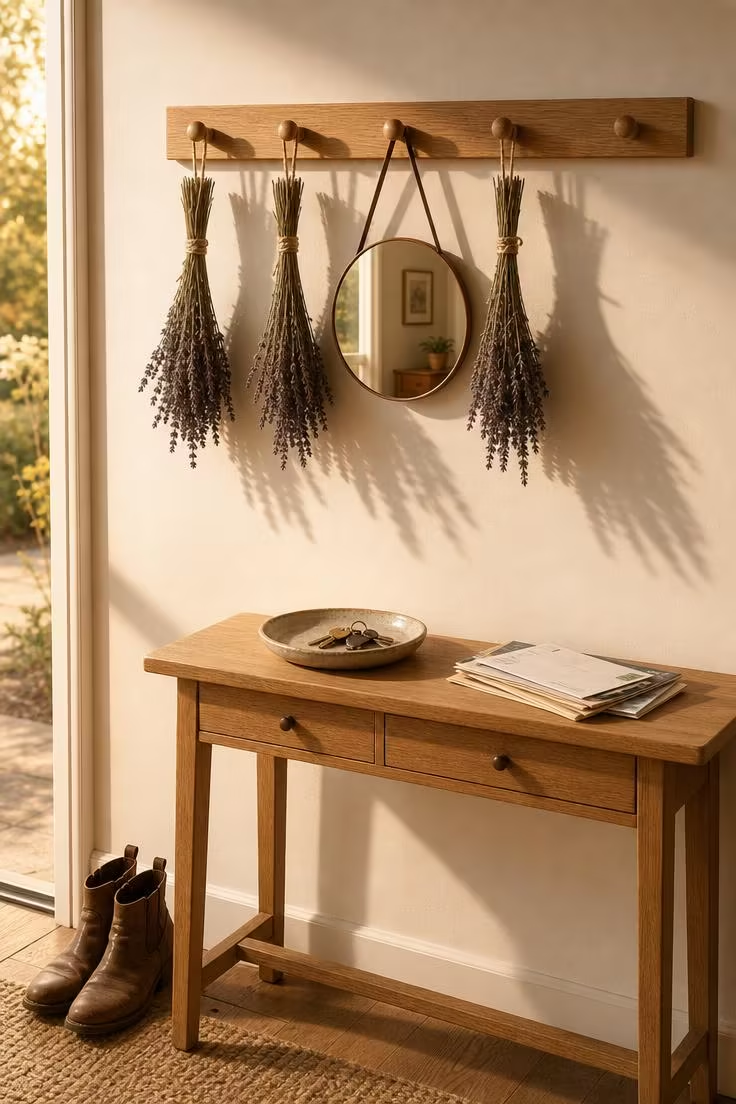
A Shaker-style peg rail is one of the oldest forms of wall organization, and it works just as well as decoration when you choose carefully what hangs from it.
Dried lavender bundles bring a muted purple-grey tone that slots naturally into almost any neutral palette, and they carry a gentle scent that greets you the moment you walk through the door.
The small round mirror on a leather strap adds a functional element without breaking the rhythm of the hanging objects, and its circular shape contrasts pleasantly with the linear rail.
Leaving one peg intentionally empty is a small but important detail: it gives the eye a resting point and prevents the rail from looking cluttered or overstuffed.
This is small space wall decor at its most efficient because the peg rail is only a few inches deep, sits flat against the wall, and serves multiple purposes depending on what you hang from it.
Swapping the lavender for dried wheat in autumn or pine sprigs in winter keeps the rail feeling seasonal without any real effort.
In an entryway, this combination of mirror, dried botanicals, and open peg space covers the three things you need most when arriving or leaving: a quick glance at yourself, something beautiful to look at, and a hook for your bag or hat.
The golden hour light is where this setup reaches its peak, because the long shadows cast by the lavender bundles create a secondary pattern on the wall that doubles the visual interest of the arrangement.
Style Blueprint:
- A wooden peg rail (oak or birch, Shaker-style) with 4-6 pegs
- 3 small dried lavender bundles tied with natural jute or cotton twine
- A small round mirror (6-8 inch diameter) with a leather hanging strap
- A warm white or cream wall paint for the backdrop
- A slim console table or narrow shelf below for keys and small items
Conclusion
You do not need a gallery-sized budget or a design degree to make your walls feel like yours.
Each of these 11 simple wall decor ideas starts with materials you can find at a hardware store, a thrift shop, or even your own backyard.
The common thread is specificity: a particular texture, a deliberate arrangement, a material that adds warmth or depth in a way that generic mass-produced prints cannot.
Start with one idea, the one that made you pause and picture it on your own wall, and build from there.
Mixing two or three of these approaches in different rooms creates a home that feels layered and personal without ever looking overdone.
The best walls are not decorated, they are lived with.