This post may contain affiliate links. If you make a booking or purchase through these links, we may earn a commission at no additional cost to you.
Modern industrial decor works because it respects raw materials instead of hiding them behind layers of polish.
Steel, concrete, reclaimed timber, and weathered metal each carry a texture that no factory-made finish can replicate.
These 13 modern industrial decor ideas focus on specific pairings of material and form, giving you a clear picture of what each scene looks like and how to rebuild it in your own space.
Every section describes one composition worth re-creating, whether you live in a warehouse conversion design or a standard apartment looking for a rougher, more honest atmosphere.
A Weathered Iron Console Table With a Polished Travertine Top
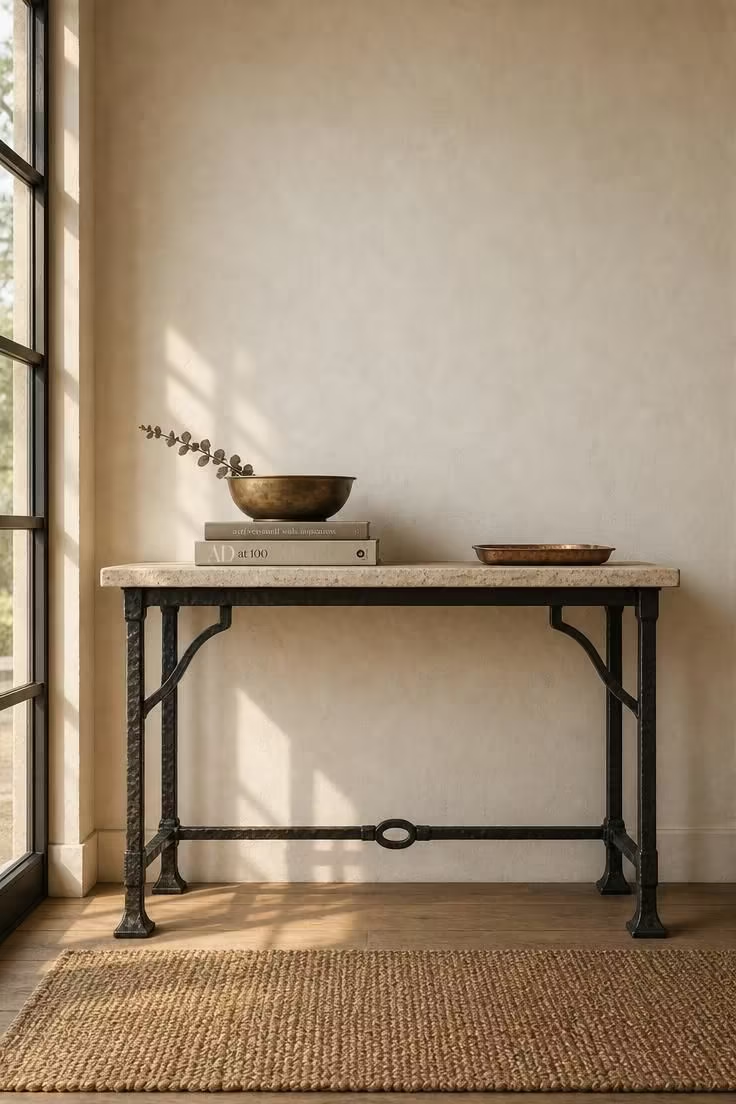
The weight of a forged iron base changes how you feel the moment you walk in.
Iron carries a sense of permanence that lighter metals cannot match, and the visible hammer marks on this particular base tell you someone shaped it by hand.
Pairing that roughness with a honed travertine top introduces a surface so smooth it almost feels like touching water, and the contrast between those two textures is what gives the piece its pull.
Modern industrial decor often leans too hard on one register, all grit or all refinement, but this console sits right between those extremes.
The brass bowl and linen-bound books add warmth without cluttering the surface, keeping the focus on the material conversation between iron and stone.
Golden afternoon light picks up the natural veining in the travertine and deepens the wax finish on the iron, creating a color shift that happens all on its own as the sun moves.
A jute runner beneath the table softens the sound of footsteps and grounds the piece against the oak floor, pulling the earthy palette together from the ground up.
Style Blueprint:
- Forged iron console table with matte wax finish and visible tool marks
- Honed travertine slab top in a warm cream or ivory tone
- Patinated brass bowl or tray for surface styling
- Linen-bound books or natural-fiber decorative objects
- Jute or sisal runner for floor layering beneath the console
Blackened Steel Pendant Lights Above a Poured Concrete Dining Table
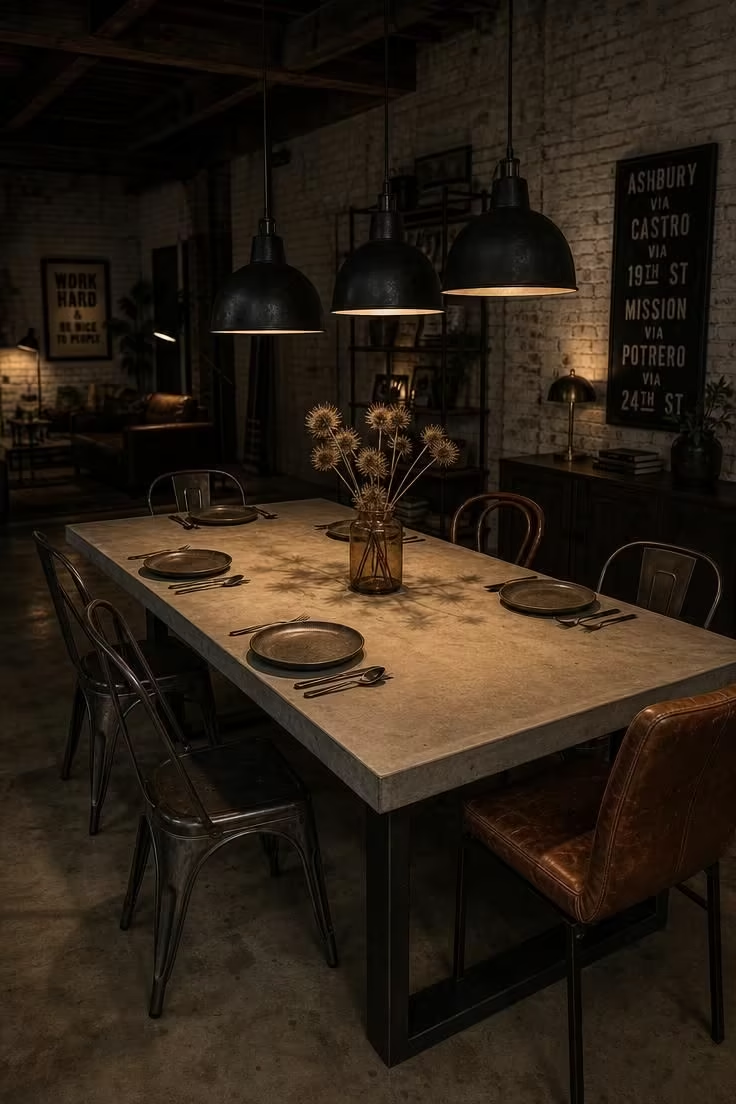
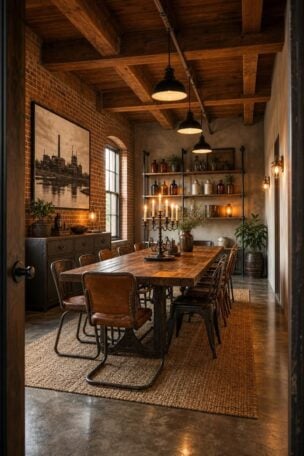
Staggering pendants at different heights is one of the simplest ways to add depth to a dining area without adding a single extra object.
The light pools created by each dome overlap slightly, giving the concrete surface a warm, uneven glow that feels closer to candlelight than to a standard overhead fixture.
Concrete as a tabletop material absorbs and scatters light in a way that wood or glass cannot, softening the brightness and keeping the atmosphere low and calm.
Mismatched seating around the table, a leather chair here, a metal bistro chair there, reinforces the collected-over-time quality that defines the best modern industrial decor dining rooms.
The stoneware and matte black flatware carry the material theme right down to the place settings, so nothing on the table breaks the mood.
Dried thistle in an amber glass vase adds a single organic note without competing with the harder surfaces, and it requires no maintenance.
Style Blueprint:
- Three blackened steel dome pendants with adjustable cord lengths
- Poured concrete dining table on welded steel square-tube legs
- Mismatched seating: metal bistro chairs, cognac leather, bentwood
- Stoneware plates with matte black flatware
- Amber glass vase with dried thistle or similar textural botanicals
Raw Concrete Fireplace Surround With a Reclaimed Timber Mantel
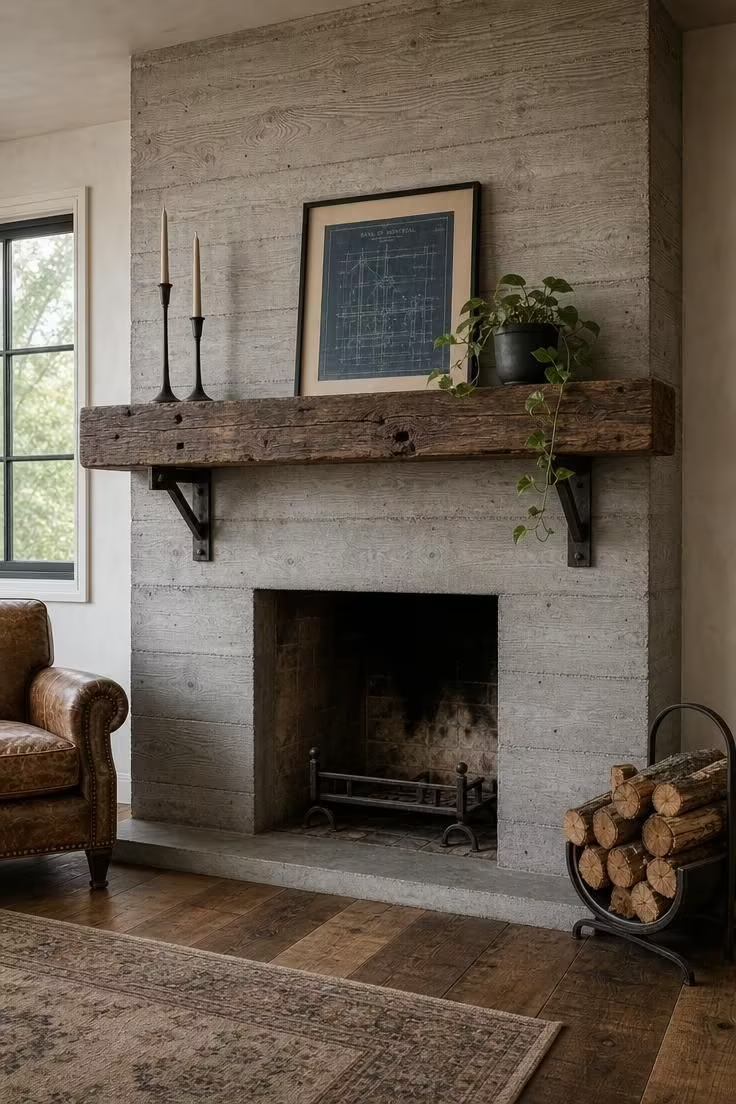
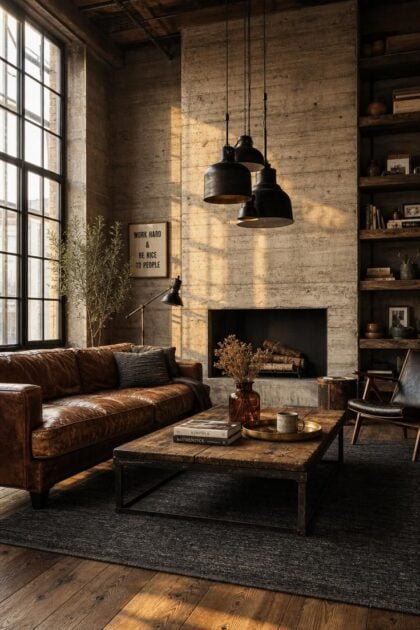
Board-formed concrete picks up the grain pattern of whatever lumber was used to build the mold, so the finished surface carries a record of its own making, which is central to the appeal of modern industrial decor.
That texture reads as something between stone and wood, and it becomes a natural focal wall without needing paint or additional treatment.
A thick reclaimed timber mantel mounted on iron angle brackets introduces a horizontal line of warmth that breaks the verticality of the concrete plane.
The weight of real timber matters here: a thin shelf would look like an afterthought against the mass of the surround, but a beam-scale piece stands up to it visually.
Iron taper holders and a matte black ceramic pot keep the mantel styling within the material family of the fireplace itself, so nothing feels imported from a different room.
A trailing pothos in that ceramic pot adds a living line of green that softens the hard geometry, and it grows without much attention.
The framed vintage blueprint leaning against the wall rather than hung with hardware gives the whole mantel a casual, unfinished quality that suits the concrete accent wall behind it.
Wide-plank hickory on the floor picks up the amber tones in the reclaimed timber, tying the lower half of the room to the mantel above.
Style Blueprint:
- Board-formed concrete fireplace surround with visible wood grain imprints
- Reclaimed timber mantel on iron angle brackets, beam-scale thickness
- Iron taper candle holders and a matte black ceramic pot with trailing plant
- Framed vintage blueprint or technical drawing, leaned rather than hung
- Iron log cradle with stacked firewood beside the hearth
A Matte Black Metal Bookcase Styled With Amber Glass and Aged Leather

Open-frame steel shelving does something that a solid-backed bookcase cannot: it lets you see the wall through the structure, so the piece reads as modern industrial decor architecture rather than furniture.
The angle-iron construction and exposed bolt heads at each joint give it an almost structural quality, like a fragment of a building pulled indoors.
Amber glass bottles grouped together catch side light and throw warm color onto the surrounding surfaces, turning a simple shelf into a light source of its own.
Aged leather journals stacked with their spines facing out introduce a softness that balances the hardness of the steel, and the creased leather gains character rather than looking worn out.
A brass desk clock with a patinated face adds a single point of reflective warmth without competing with the amber glass, because its scale is smaller and its finish is duller.
Trailing pothos draped over the shelf edge breaks the rigid horizontal lines with an organic curve, and it grows slowly enough that you rarely need to trim it.
The shallow depth of field in this composition isolates the two center shelves, making the metal and wood furniture feel like a curated still life rather than a storage unit.
Style Blueprint:
- Tall open-frame steel bookcase in matte black powder coat, angle-iron joints
- Amber glass bottles in varying heights for warm light refraction
- Leather-bound journals or vintage hardcovers with visible wear
- Small brass desk clock or patinated metal accent piece
- Trailing pothos or similar vine for organic shelf draping
Design Pro-Tip: When styling open metal shelving, leave at least one-third of each shelf surface empty. Negative space lets the steel framework read as a design element on its own, and a crowded shelf loses the airy, structural quality that makes industrial shelving worth the investment.
Exposed Brick Archway Framing a Steel-Leg Writing Desk
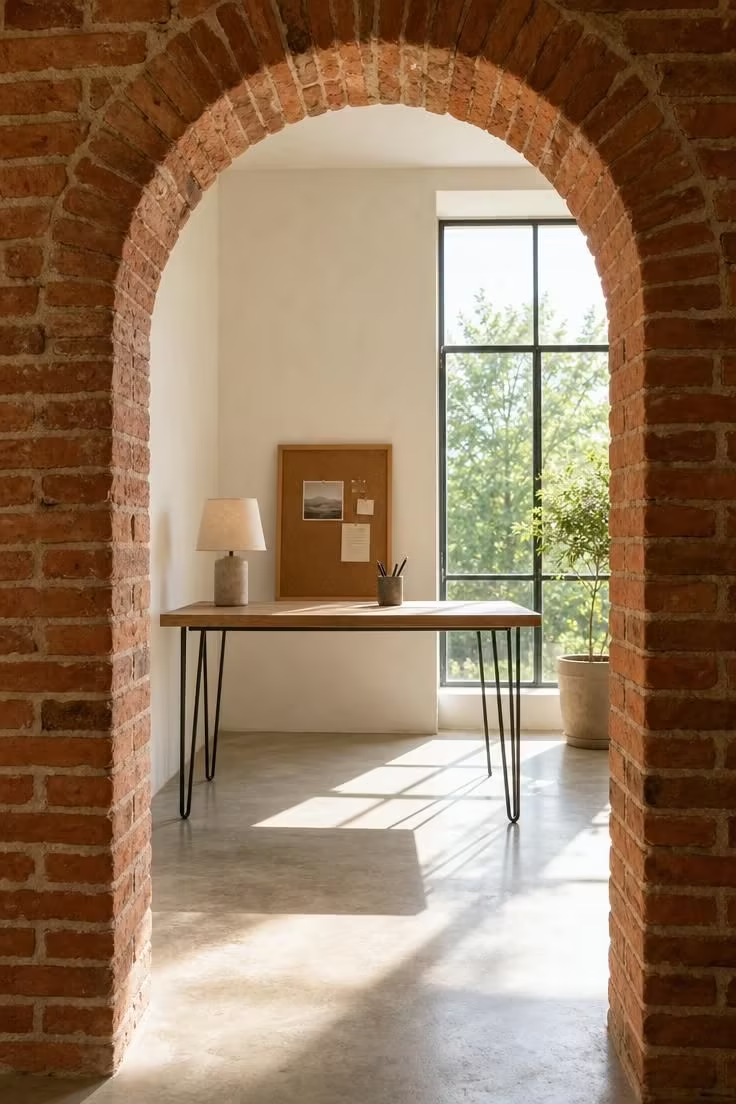
An archway made of exposed brick wall material turns a simple doorway into the strongest visual frame in any modern industrial decor room.
The curved profile of the arch draws the eye inward naturally, and positioning a desk at the focal point makes the workspace feel deliberate rather than squeezed into a leftover corner.
Thin steel rod legs on the writing desk keep the silhouette light, which matters when you want the brick arch to remain the dominant feature.
A sealed elm top adds warmth without competing with the brick tones, because elm sits in a cooler, paler range of wood color.
The concrete desk lamp and iron pencil cup continue the material language of the surrounding architecture, so the desk accessories feel like they belong to the building rather than to a catalog.
A cork pinboard leaned against the wall rather than mounted to it keeps the brick surface unbroken and adds a layer of casual, working utility to the scene.
Style Blueprint:
- Exposed brick archway, original or applied veneer, with visible mortar joints
- Writing desk with thin steel rod legs and a sealed elm or ash top
- Iron pencil cup and concrete desk lamp with linen or paper shade
- Cork pinboard leaned against the wall for working display
- Pale sealed concrete or light hardwood floor to reflect midday light
A Heavy Canvas Curtain on a Wrought Iron Rod As a Room Divider
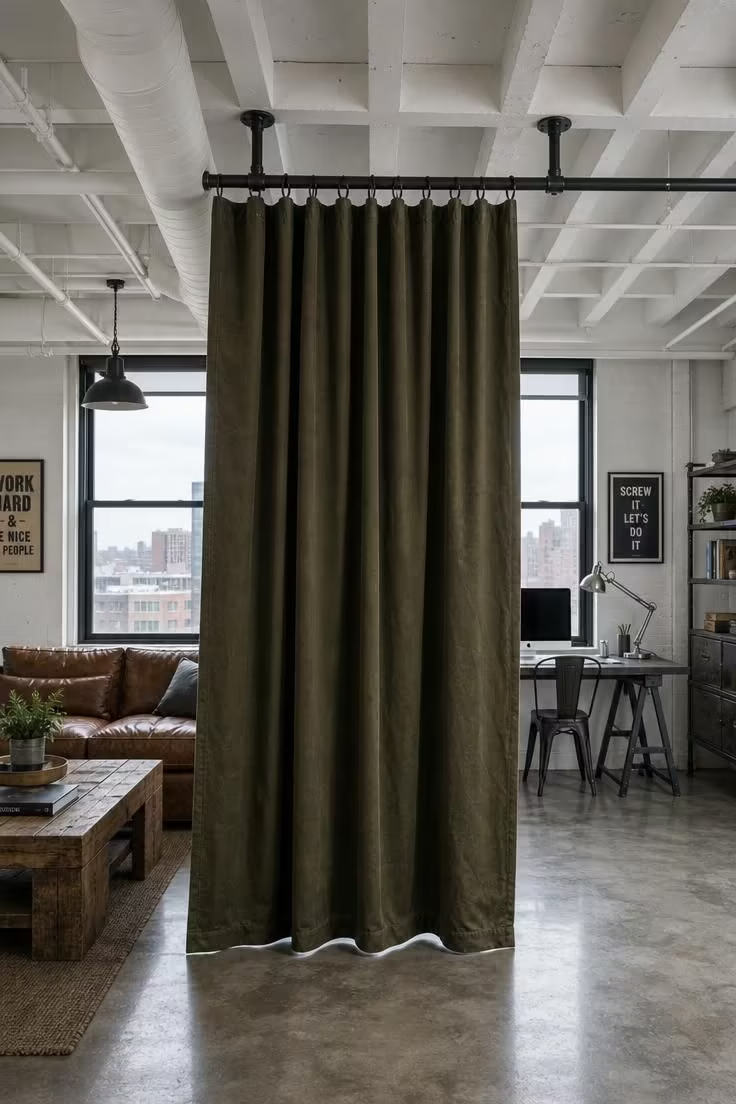
A solid wall kills the open-plan proportion that makes a loft feel like a loft, but a canvas curtain on an iron rod preserves that volume, a move that suits modern industrial decor perfectly, while still giving you the option to close off a zone when you need it.
Waxed canvas has enough weight and body to hang straight without billowing, and the wax treatment gives it a slightly stiff, matte surface that reads as industrial rather than domestic.
The oversized iron ring clips sliding along a thick rod produce a satisfying mechanical sound when you draw the curtain, and that tactile feedback is part of the design.
Visible mounting hardware can become part of the industrial look rather than something to conceal.
For a ceiling-hung divider or heavy decorative panel, use a mounting system designed for the actual panel weight and supporting structure.
Follow the product system or a qualified installer’s requirements rather than relying on generic ceiling-fastener or joist-attachment guidance.
From the living side, the canvas acts as a backdrop that absorbs sound and adds a block of muted color, softening the harder surfaces around it.
From the workspace side, the curtain provides visual separation that helps you concentrate without cutting you off from the rest of the home.
Cool overcast light filling the space evenly is the ideal condition for this setup, because it avoids the strong shadows that would make the curtain look like a barrier rather than a soft boundary.
The polished concrete floor running unbroken beneath the curtain ties both zones together at ground level, maintaining the single-room reading from below.
Style Blueprint:
- Heavyweight waxed canvas curtain panel in olive, charcoal, or natural
- Thick wrought iron rod with oversized iron ring clips
- Visible mounting hardware compatible with the specified curtain system and supporting structure
- Polished concrete or continuous hardwood floor running beneath
- Exposed ductwork or ceiling structure painted matte white or left raw
Corten Steel Planters on a Raw Oak Floating Shelf

Corten steel develops its orange-brown patina through controlled oxidation, and the color deepens over months, making it a standout material in modern industrial decor because each planter looks slightly different depending on how long it has been in the room.
That living surface quality makes it one of the few industrial materials that changes without deteriorating.
Trailing plants spilling over the shelf edge introduce a draping organic line that contrasts with the geometric forms of the planters and the straight edge of the oak.
The raw oak shelf, with its visible grain and pale tone, keeps the composition warm without introducing another heavy material.
Bright midday light is ideal here because it sharpens the shadows of each planter and trailing vine, adding a second layer of visual interest on the wall below.
Style Blueprint:
- Three graduated Corten steel planters with natural rusted patina
- Thick raw oak floating shelf on concealed mounting brackets
- Small trailing plants: string of pearls, creeping fig, pothos
- Smooth white plaster wall for strong shadow contrast
- Clear coat on the oak to preserve natural tone without adding sheen
An Articulating Brass Wall Lamp Over a Concrete Nightstand
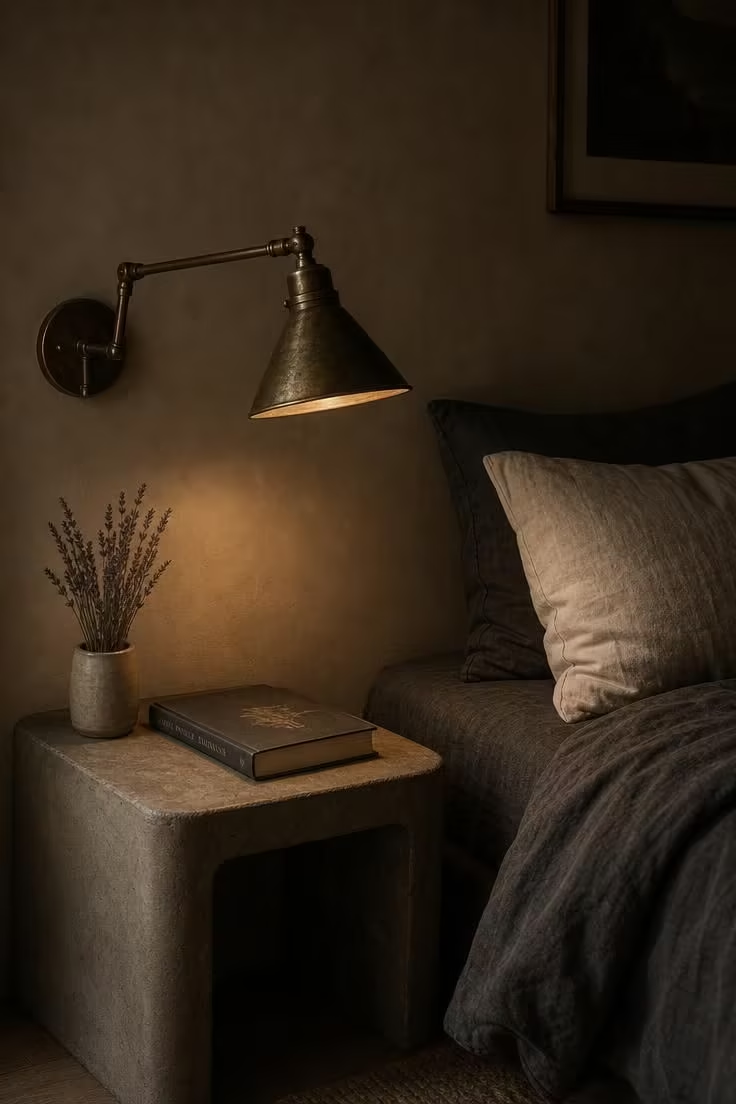
A single directional light source changes the mood of a bedroom more than any other adjustment you can make, and it is one of the simplest modern industrial decor moves to get right.
The articulating arm on this brass lamp lets you angle the beam exactly where you want it, so you can read without lighting the entire wall.
Aged brass carries a warmth that newer finishes lack, and the slight tarnish on the shade and arm gives it a softness that suits the quiet scale of a nightstand vignette.
Poured concrete with rounded edges feels very different from a sharp-cornered concrete cube: the radius at each corner softens the mass and makes it friendlier to reach for in the dark.
Washed charcoal linen on the bed picks up the color of the concrete and folds it into a softer register, so the hard and soft surfaces in the room share a tonal family.
The single hardcover book and dried lavender sprig are enough to style the nightstand without overcrowding a surface that needs to stay functional.
Edison bulb lighting in other parts of the room could pair with this brass lamp, but in this specific composition, the conical shade concentrates the light into a tighter, more private pool.
Style Blueprint:
- Articulating brass wall lamp with conical shade and aged patina
- Poured concrete nightstand with softly rounded edges
- Washed linen bedding in charcoal, slate, or warm stone tones
- Single hardcover book and one small ceramic vessel with dried botanicals
- Warm taupe or putty-toned plaster wall as a backdrop
Design Pro-Tip: In a bedroom with hard industrial surfaces like concrete and metal, use linen in a shade that matches the dominant hard material. When the fabric and the stone share the same color, the room reads as a single unified composition rather than two competing palettes fighting for attention.
Riveted Metal Mirror Frame on a Lime-Washed Brick Wall
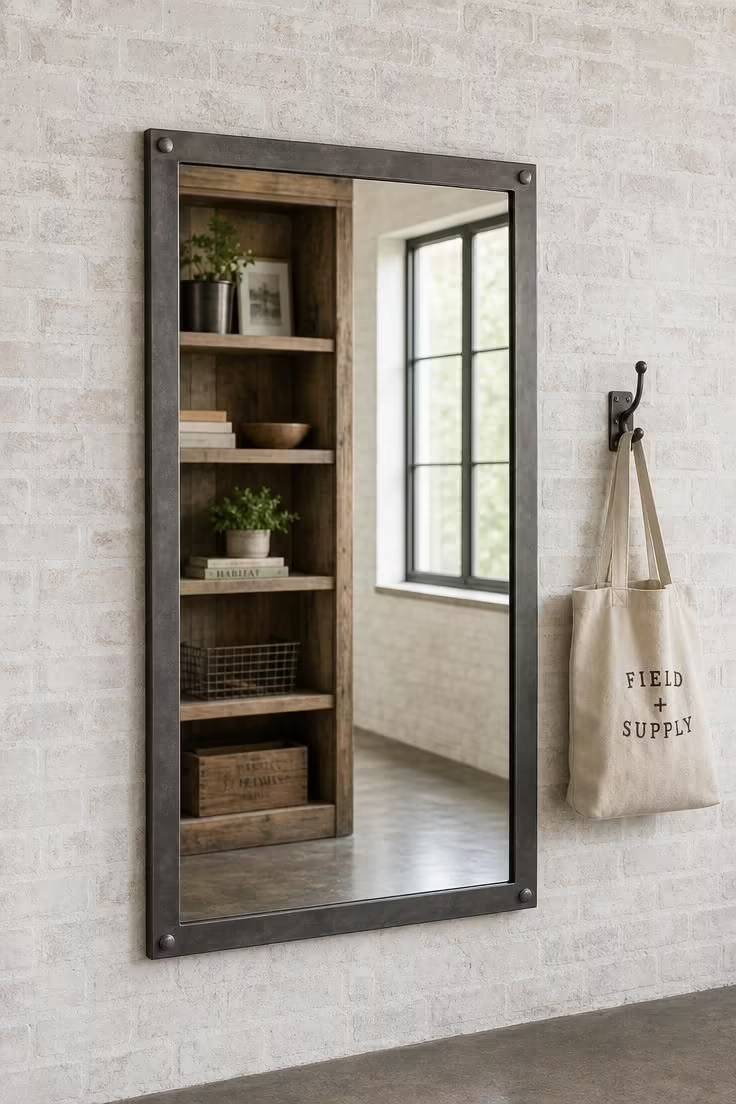
Lime-washing brick does something that white paint cannot: it lets the texture of the masonry show through while shifting the color toward a pale, chalky register that works beautifully as a backdrop for modern industrial decor accents.
The result is a wall that feels lighter without losing its rough, tactile quality, and it becomes the ideal surface for hanging a piece with strong material presence like a riveted iron mirror.
Flat iron bar as a frame material keeps the profile slim, so the mirror reads as a large opening in the wall rather than a heavy decorative object.
Visible rivet heads at each corner add a detail that references the structural fastening methods used in old factory construction, giving the piece a clear origin story.
Positioning the mirror to reflect an opposite wall with reclaimed wood shelving doubles the visual depth of the room and pulls warm wood tones into a space that might otherwise feel too cool and pale.
That reflected warmth is a practical trick for rooms with limited natural light, especially in a north-facing room where direct sun rarely reaches the brick wall.
A small iron wall hook beside the mirror holding a canvas tote bag is a minor detail, but it reinforces the idea that every surface and every fixture in the room has a job to do.
The sealed dark concrete floor beneath the mirror anchors the composition with a grounding horizontal plane, and its cool tone contrasts the warm lime wash above.
Soft diffused light bouncing off the chalky brick surface fills the frame evenly, which is important for a mirror composition because harsh light would create distracting glare spots in the reflection.
Style Blueprint:
- Large rectangular mirror in a flat iron bar frame with visible rivet heads
- Lime-washed exposed brick wall preserving masonry texture
- Reclaimed wood shelving positioned to reflect in the mirror
- Small iron wall hook for a functional accessory like a canvas bag
- Sealed dark concrete floor to ground the lighter wall above
A Waxed Steel Dining Bench With Saddle Leather Cushions
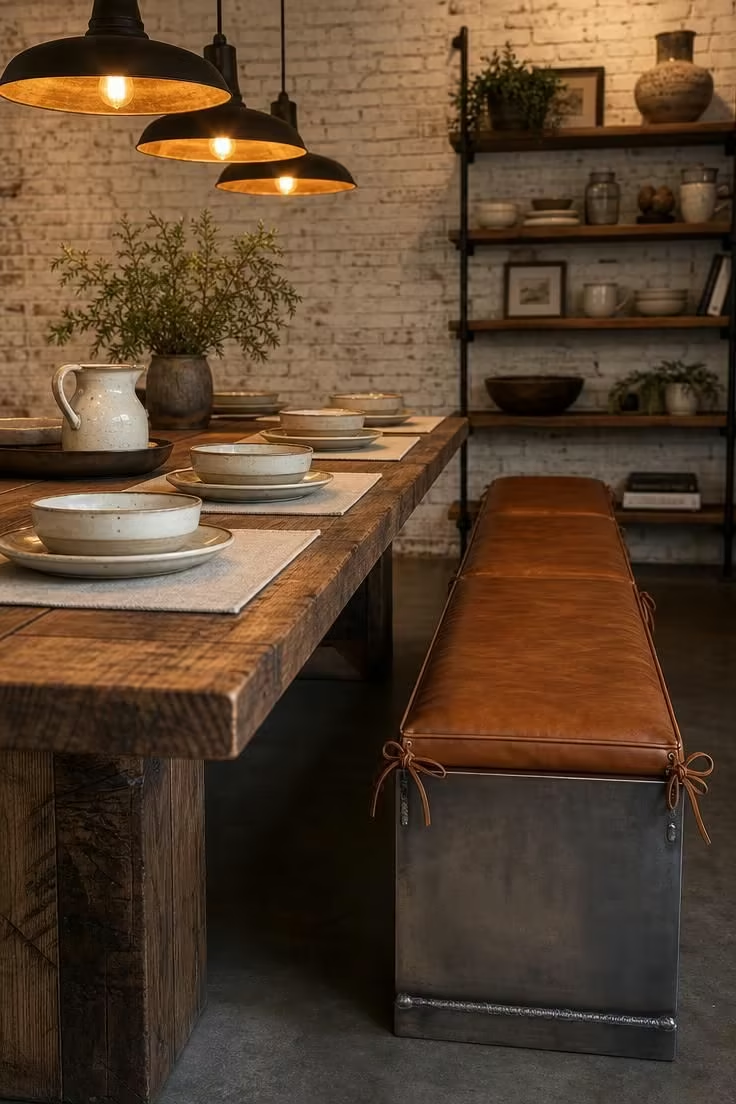
Raw waxed steel has a surface quality that changes under light, a hallmark of modern industrial decor: at some angles it looks almost black, and at others you can see the grain pattern left by the milling process.
A visible weld seam running along the base of the bench is a detail that most manufacturers would grind smooth, but leaving it intact tells you the piece was assembled by a welder, not stamped in a factory.
Saddle leather cushions tied to the legs with simple thong laces add comfort without hiding the steel frame beneath, so you still read the bench as metal and wood furniture at first glance.
The rich tan color of saddle leather deepens with use, developing a patina that mirrors the way the waxed steel surface will shift over time.
Stoneware place settings on linen placemats continue the handmade, slightly imperfect quality of the materials, and the speckled glaze on the ceramics echoes the mottled surface of the waxed steel.
Matte black hardware on the open shelves in the background ties into the dark steel of the bench, anchoring the room’s industrial palette from wall to table level.
Style Blueprint:
- Long backless dining bench in waxed raw steel with visible weld seams
- Removable saddle leather cushions tied at the legs with leather laces
- Reclaimed wood dining table for contrast in material warmth
- Ceramic stoneware place settings with speckled or matte glazes
- Matte black hardware on nearby shelving for palette continuity
Perforated Sheet Metal Stair Railing With Welded Flat Bar Handrail
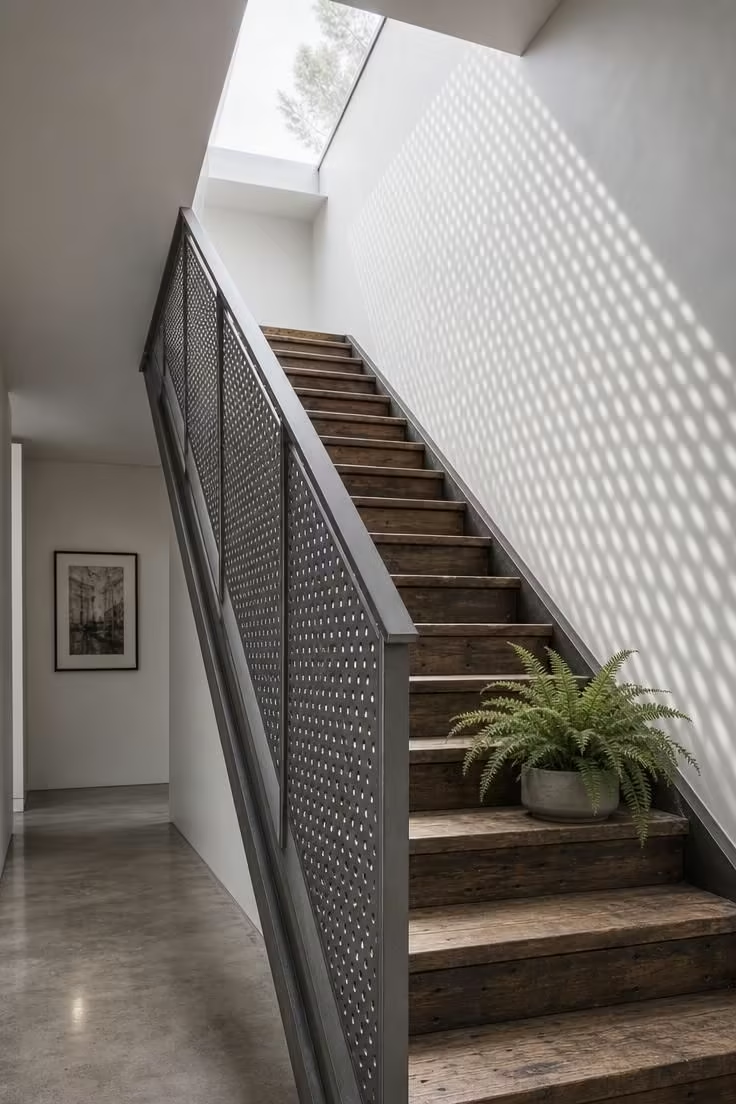
A perforated steel panel does something that neither a glass railing nor a spindle railing can: it lets filtered light through in a pattern that changes throughout the day, a detail that captures what modern industrial decor does best.
On a staircase receiving skylight from above, those tiny perforations project moving dots of light onto the opposite wall, turning the railing into a passive light installation.
The flat bar handrail welded to the top of the panel provides a smooth, warm-to-the-touch surface that contrasts with the textured panel below it, and the weld line between them is visible by design.
Clear-coating the steel rather than painting it preserves the natural color of the metal, a warm bluish tone that pairs well with the pale plaster walls around it.
Reclaimed wood treads with visible nail holes introduce a softer material at the step surface, which is where your hand and foot actually make contact.
That material layering, steel for the eye and wood for the body, is a core principle of modern industrial decor in circulation areas like stairs and hallways.
A single potted fern on one of the lower steps is a small gesture that softens the geometry and adds a note of green against the metal and wood.
The low camera angle looking up the staircase is the right way to photograph a railing like this, because it shows the pattern of perforations at their most graphic and reveals the layered transparency of the panels.
Style Blueprint:
- Perforated steel sheet panels set in a welded flat bar frame
- Smooth welded flat bar handrail, clear-coated to prevent rust
- Reclaimed wood stair treads with visible nail holes or patina
- Skylight or high window to activate the perforation light pattern
- White plaster walls for strong contrast and shadow play
Vintage Factory Gear Mounted As Wall Art Above a Worn Leather Sofa
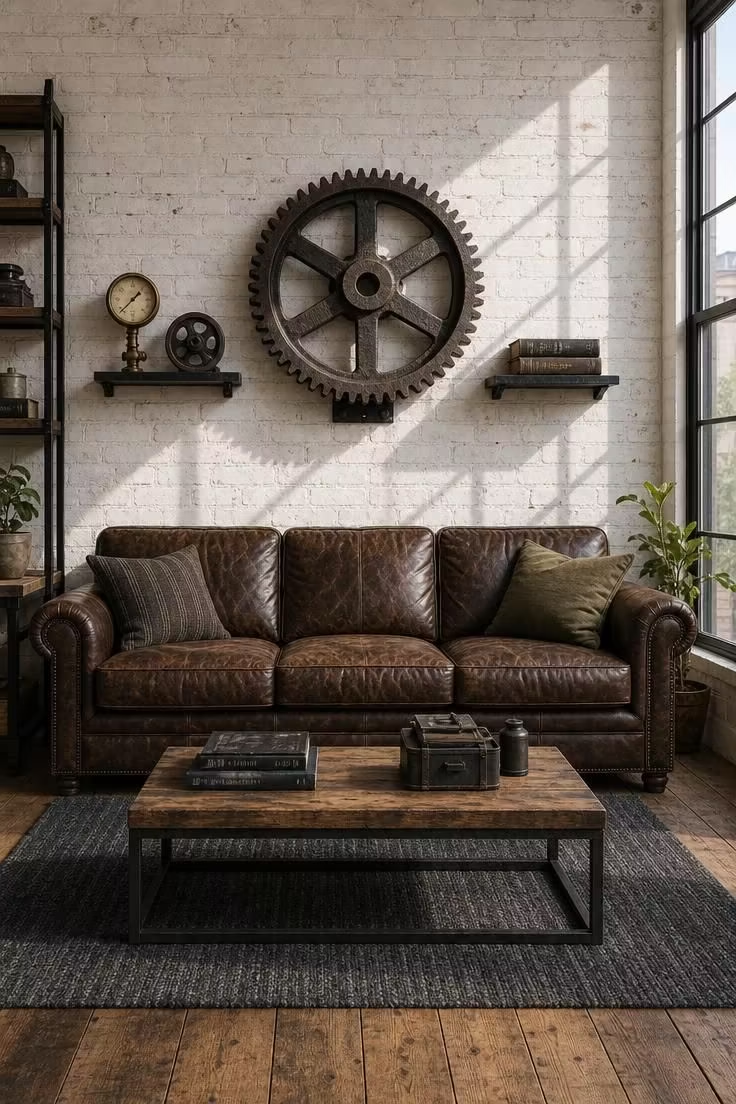
A single oversized industrial object on a wall commands more attention than a gallery arrangement of smaller prints, and it is one of the strongest modern industrial decor statements you can make, because its scale and mass are immediately legible from across the room.
Cast iron factory gears have a sculptural quality that comes from function: every tooth, spoke, and bore hole was shaped to transfer force, and that purpose gives the form a clarity that purely decorative art rarely achieves.
Mounting it on a minimal steel bracket keeps the hardware from competing with the gear itself, and the bracket should sit close to the wall so the piece reads as relief sculpture rather than a hanging object.
The worn leather sofa beneath it shares the same quality of material honesty, because leather that has softened and cracked with use tells its own story of time and contact.
Narrow iron ledge shelves on either side of the gear hold related objects at a smaller scale, building a composition that feels collected over years rather than arranged in an afternoon.
An industrial living room benefits from at least one piece like this that anchors the wall and declares the style without ambiguity.
Bright midday light from a side window sharpens the gear teeth and throws geometric shadows across the whitewashed brick, adding a graphic dimension that disappears after the sun passes.
Style Blueprint:
- Salvaged cast iron factory gear, 18 to 24 inches in diameter
- Minimal steel wall bracket for low-profile mounting
- Worn leather sofa in dark brown with visible patina and softening
- Narrow iron ledge shelves holding smaller industrial objects
- Whitewashed brick or pale plaster wall for shadow contrast
Design Pro-Tip: When sourcing salvaged industrial pieces for wall display, look for objects with visible bolt holes or mounting points from their original installation. Those existing holes make hanging easier and add an authentic layer of history, because you can see where the piece connected to the machine or structure it once belonged to.
A Freestanding Cast Iron Towel Rack in a Concrete-Floored Bathroom
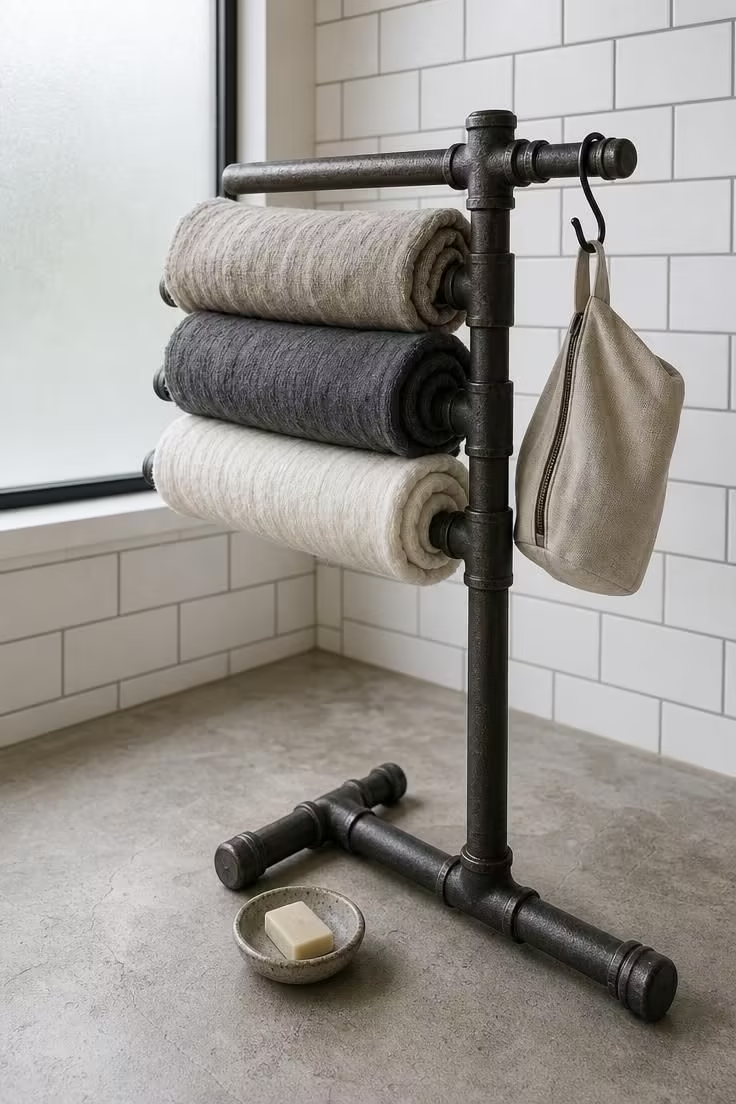
A freestanding towel rack built from cast iron pipe requires no wall drilling, which makes it one of the easiest ways to bring modern industrial decor into a bathroom that otherwise plays it safe with white subway tile.
The iron pipe construction, typically assembled from standard plumbing fittings with threaded joints, has a functional logic that reads as honest rather than decorative.
Rolled linen towels stacked on the bars add a softness that the iron and concrete cannot provide on their own, and the natural, slate, and off-white tones stay within the muted palette of the room.
A canvas wash bag hanging from an iron S-hook at one end is a small practical detail that extends the utility of the rack beyond towel storage.
Sealed concrete flooring with visible trowel marks gives the bathroom a raw, spa-like feel that suits the weight of the iron rack standing on it.
The stoneware soap dish on the floor beside the rack base ties into the handmade quality of the linen and iron, completing a material family that feels considered without feeling overdone.
Style Blueprint:
- Freestanding cast iron pipe towel rack, T-shaped or ladder style
- Rolled linen towels in natural, slate, and off-white tones
- Canvas wash bag on an iron S-hook for added utility
- Sealed concrete floor with visible trowel marks or texture
- White subway tile walls for a clean contrast to the iron
Conclusion
Modern industrial decor holds up because it starts with materials that tell the truth about what they are.
Steel frame furniture and reclaimed wood shelving earn their place through texture, not trend, and the patina they develop only makes them better over time.
The 13 ideas above each describe a specific pairing of material, form, and light that you can rebuild at whatever scale fits your room.
Start with one strong piece, a forged iron console, a riveted mirror frame, a salvaged factory gear, and let it set the tone for everything else that follows.
The best industrial interiors never look finished, and that is exactly what makes them feel right.