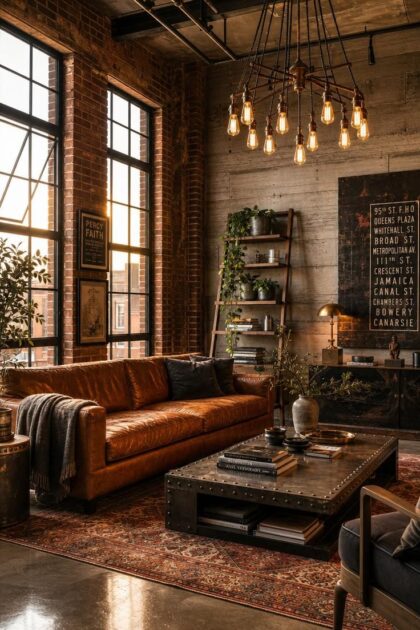
This post may contain affiliate links. If you make a purchase through these links, we may earn a commission at no additional cost to you.
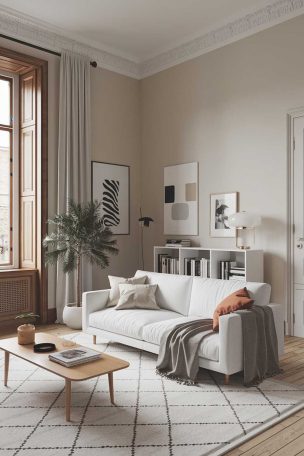
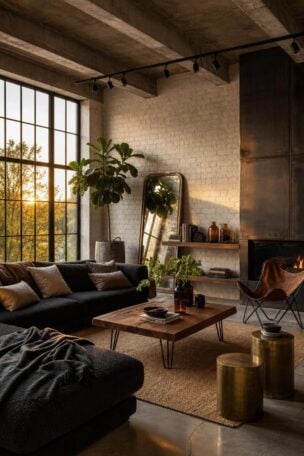
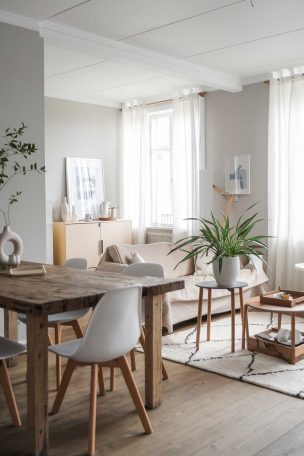
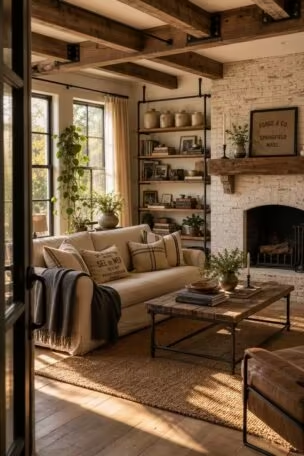
An industrial living room borrows the bones of old factories and warehouses, then fills them with furniture you actually want to sit on.
The style works because it never tries to hide anything: brick stays bare, steel stays visible, and concrete keeps its natural texture.
What follows are 17 distinct ideas, each built around a specific material pairing or fixture, so you can pick the ones that match your space and skip the rest.
Whether your room has original warehouse bones or you are building the look from scratch, every idea here is designed to feel lived-in rather than staged.
A Riveted Steel Coffee Table on Polished Concrete
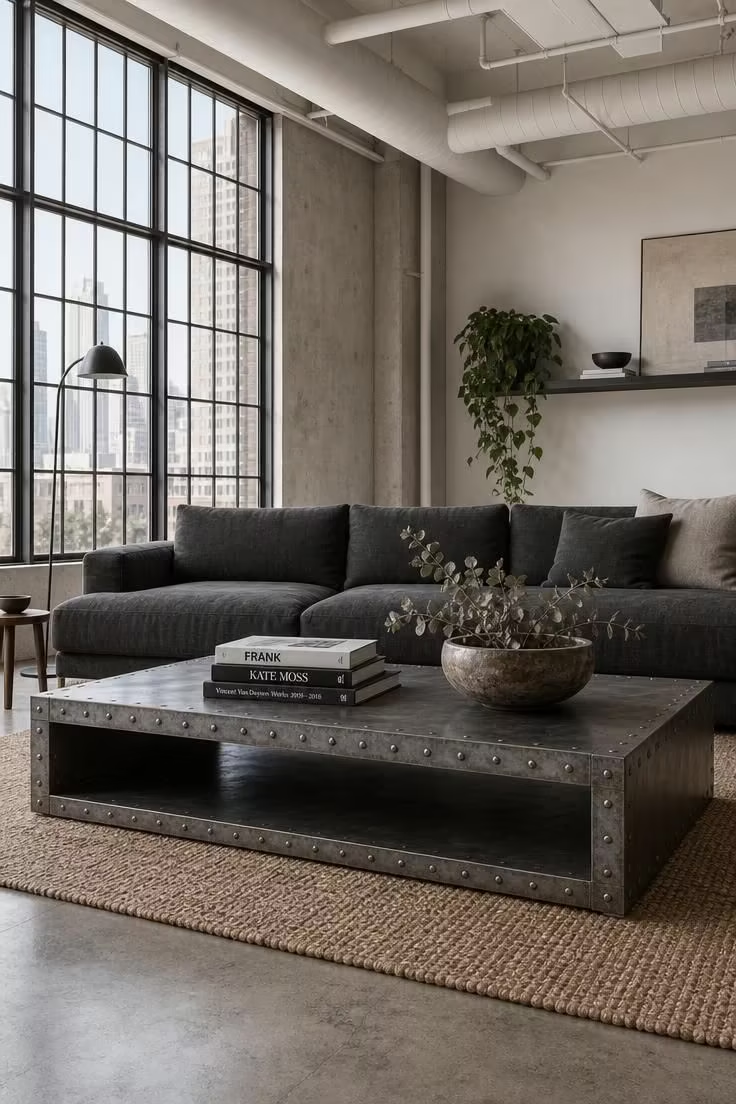
A polished concrete floor sets the tone for the entire room before a single piece of furniture goes in.
The surface catches and scatters midday light across the space, giving even a modest room a sense of openness that carpet or dark wood cannot match.
Placing a riveted steel coffee table directly on that floor creates a material conversation between two hard, honest surfaces.
The rivets along the table’s apron add a row of small shadows that break up the flat plane and give your eye somewhere to rest.
A jute rug layered underneath softens footsteps and sound without hiding the concrete entirely.
Keeping the tabletop styling spare, just a few books and a single stoneware vessel, lets the steel do the talking.
This combination works best in a room with an open floor plan where the concrete can run uninterrupted from one zone to the next.
Style Blueprint:
- Polished concrete floor with matte sealant finish
- Riveted raw steel coffee table with flat-bar legs
- Woven jute area rug in a natural undyed tone
- Low-profile linen sofa in charcoal or slate
- Stoneware bowl with dried eucalyptus for tabletop styling
Exposed Red Brick Behind a Cognac Leather Chesterfield
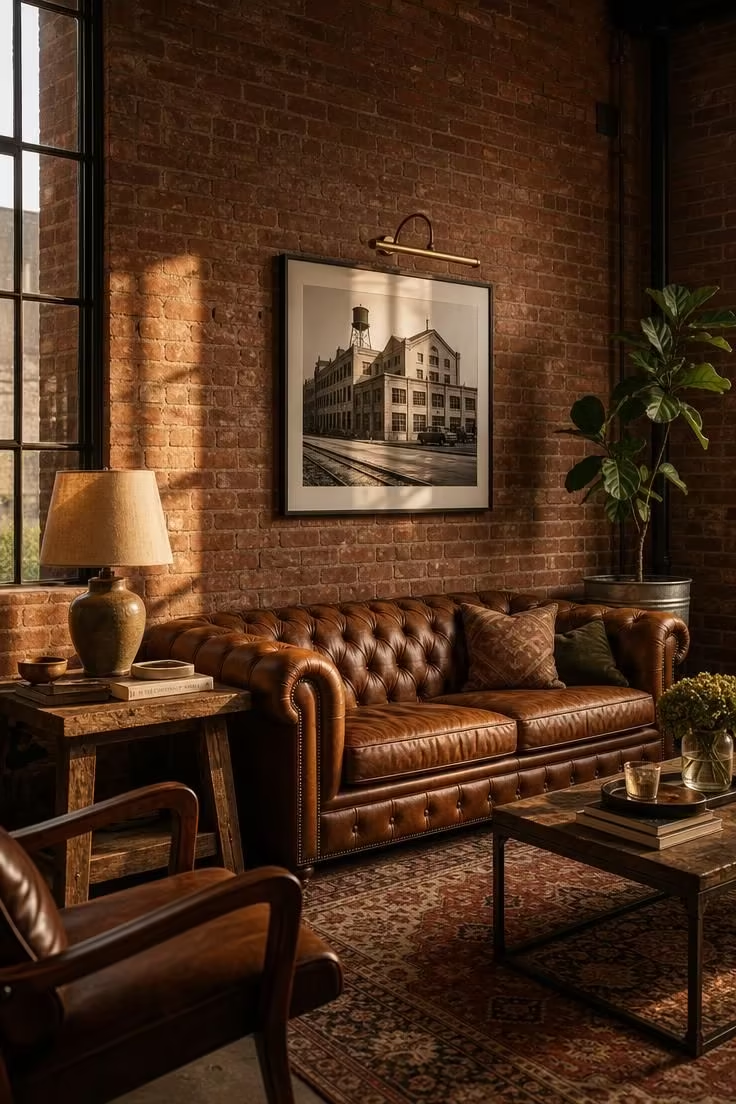
There is a reason the leather sofa against brick pairing has lasted decades without ever feeling dated.
Both materials age in the same direction, growing richer and more textured with every year of use.
A Chesterfield’s deep tufting catches the warm golden light in a pattern of small highlights and soft shadows that flat upholstery simply cannot produce.
The brick wall behind it absorbs sound and adds a layer of warmth that painted drywall never quite achieves.
Choosing cognac over black or brown leather keeps the room from tipping too dark, especially when paired with the natural terra-cotta tones in the brick.
A faded Persian rug underneath ties the warm palette together at floor level and adds a softness that balances all the hard surfaces.
The brass picture light above is a small investment that changes the entire wall after sunset, turning the brick into a textured backdrop instead of a flat dark plane.
One reclaimed wood side table completes the grouping without cluttering the composition.
Style Blueprint:
- Full wall of sealed exposed red brick
- Deep-seated cognac leather Chesterfield sofa
- Faded Persian area rug in muted reds and creams
- Brass picture light mounted above the sofa
- Reclaimed oak side table with ceramic lamp
Blackened Iron Pipe Shelving With Salvaged Oak Planks
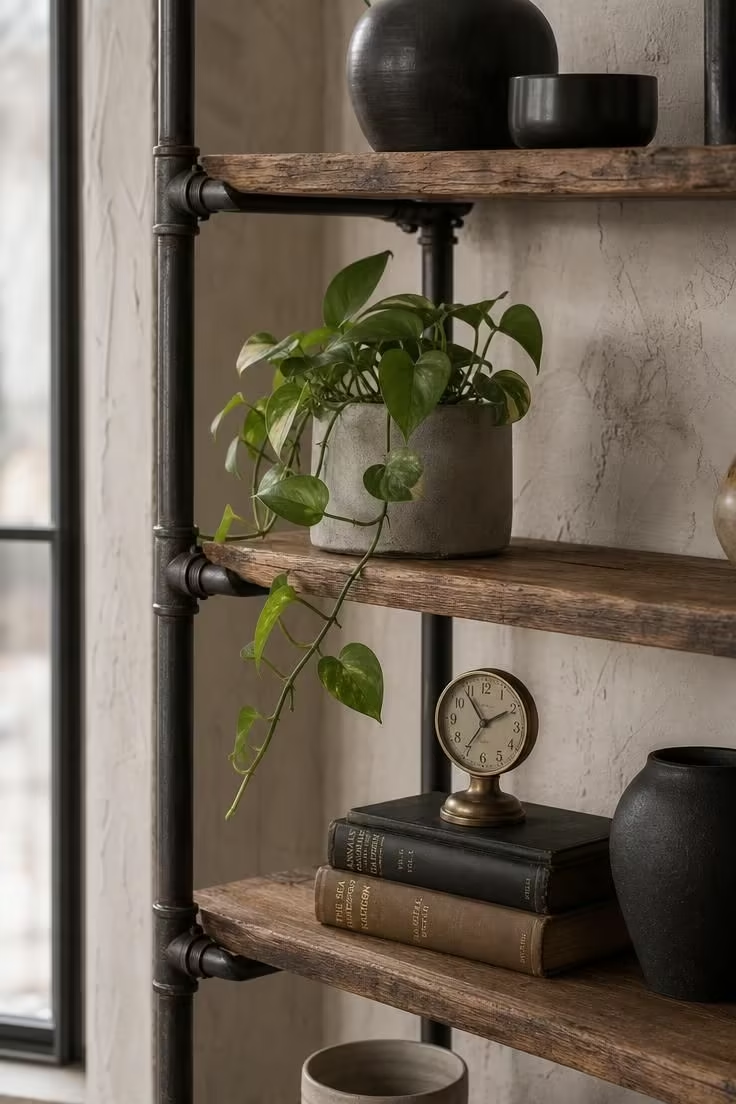
Iron pipe and salvaged oak is one of the most forgiving combinations in industrial design because both materials hide imperfections instead of showing them.
A scratch on the oak just adds to its character, and fingerprints on blackened iron disappear against the dark finish.
The key to making metal shelving look intentional rather than improvised is consistent pipe diameter and uniform fitting style across every joint.
Mixing tee fittings with elbow fittings at random creates a plumbing-project look rather than a furniture look.
Styling the shelves with restraint matters more than what you put on them: leave at least 30 percent of each shelf surface empty so the objects can breathe.
A trailing pothos in a concrete planter adds a living element that keeps the display from feeling like a museum.
Style Blueprint:
- Blackened iron pipe fittings in consistent 3/4-inch diameter
- Salvaged oak planks sanded smooth on top, raw on the underside
- Matte black pottery and a brass desk clock for shelf styling
- Concrete planter with trailing pothos
- Pale plastered wall as a neutral backdrop
An Edison Bulb Chandelier Over a Reclaimed Beam Mantel
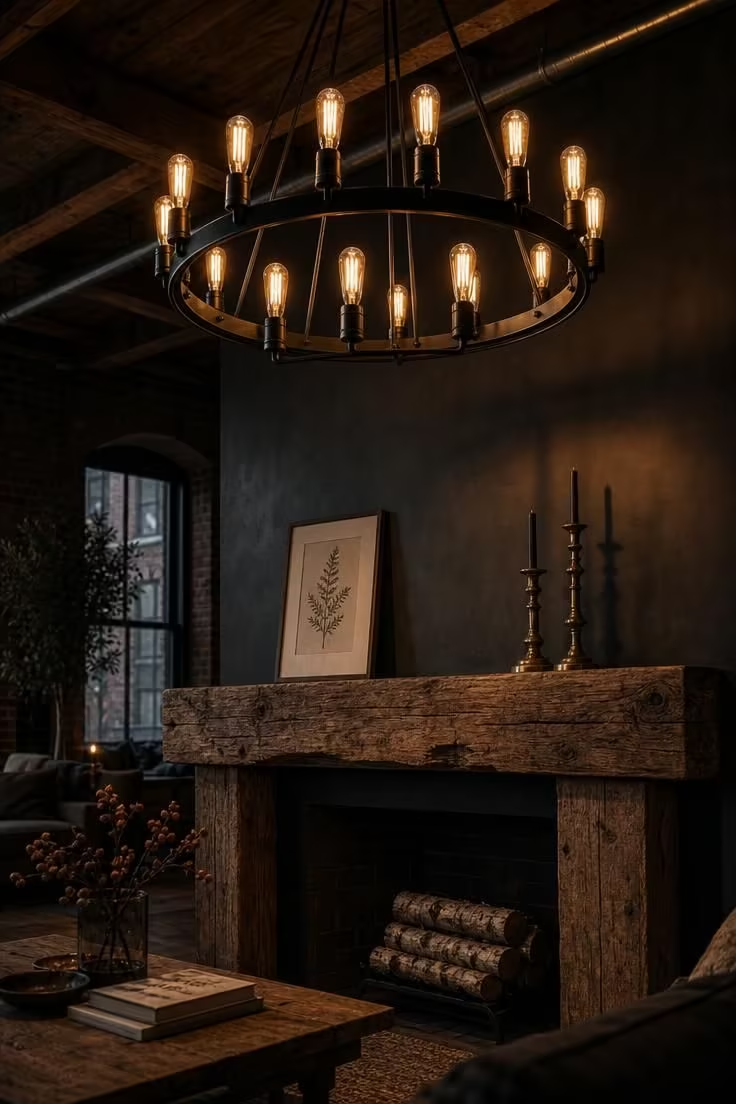
An Edison bulb chandelier is the single fastest way to give an industrial living room a sense of age and atmosphere.
The exposed filaments produce a color temperature around 2200K, which is noticeably warmer and more amber than a standard LED, and that warmth wraps around everything in the room.
Hanging the fixture above a reclaimed beam mantel creates a vertical focal stack: your eye travels up from the firebox to the beam to the chandelier to the ceiling joists, giving the room a sense of height even if the ceilings are only nine feet.
The beam itself should be sturdy enough to anchor the composition, at least six inches deep and spanning the full width of the firebox opening.
Keeping the mantel styling simple, just a pair of brass objects and one small frame, prevents the arrangement from competing with the chandelier above.
Birch logs in the firebox add a pale organic texture that lifts the otherwise dark lower half of the wall.
This setup works in both genuine warehouse conversions and newer homes where the beam and chandelier are added for character rather than structure.
The moody low light means this room photographs best after sunset, which is exactly when you are most likely to be using it.
A dimmer switch on the chandelier lets you adjust the amber glow from bright enough to read by down to a flicker that barely lights the mantel.
Style Blueprint:
- Oversized Edison bulb chandelier with blackened steel frame
- Reclaimed timber beam mantel at least 6 inches deep
- Birch logs stacked inside the firebox
- Aged brass candlestick holders for mantel decor
- Dimmer switch wired to the chandelier circuit
Wire-Cage Pendant Lamps Above a Raw Maple Island
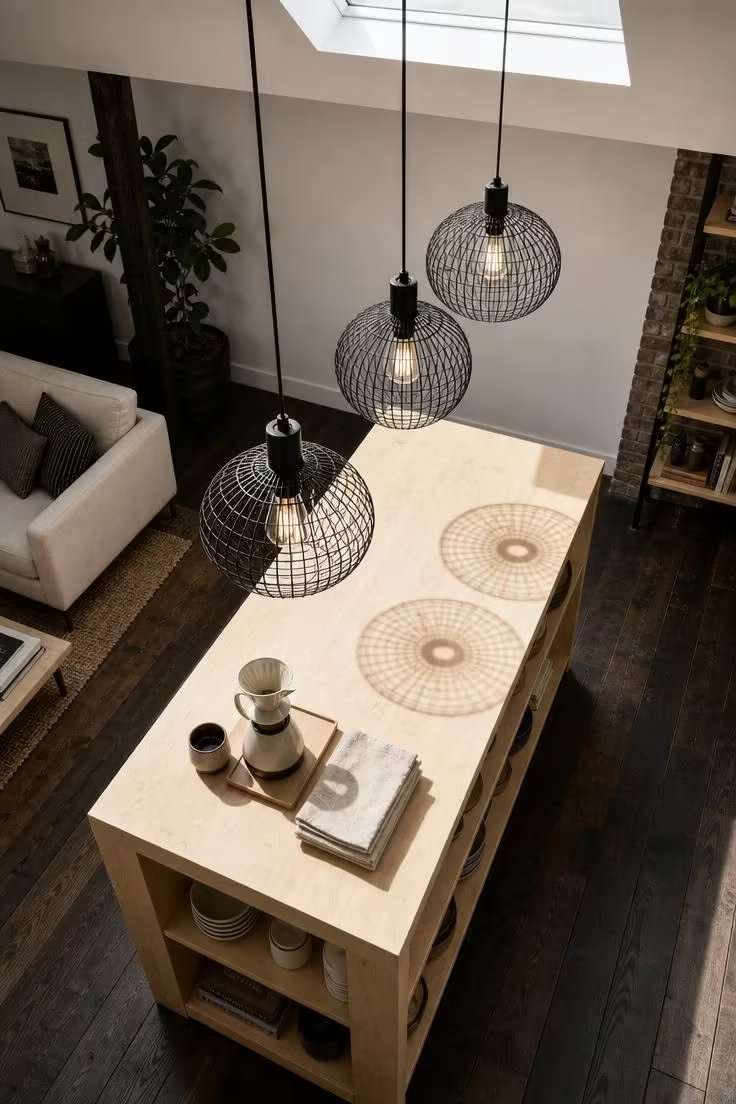
Wire-cage pendants are among the most recognizable industrial lighting fixtures, and grouping three of them in a row over a single surface gives the arrangement a commercial kitchen energy that reads as confident rather than cluttered.
Staggering the hanging heights by four to six inches keeps the line from looking rigid and adds a gentle rhythm to the silhouette.
The raw maple surface beneath provides a warm contrast to the matte black cage wire, and its light color reflects midday light back up toward the fixtures.
Using this island as a living room console rather than a kitchen piece is a move that works well in a loft style living room where the boundaries between cooking, working, and lounging are fluid.
A simple pour-over coffee set and a stack of linen napkins style the surface without overcrowding it.
The overhead perspective reveals the circular cage shadows cast onto the maple, a detail that disappears from any other angle but adds a graphic quality to the scene.
Dark stained wide-plank oak flooring underneath grounds the light tones above and prevents the composition from floating.
Style Blueprint:
- Three wire-cage pendant lamps hung at staggered heights
- Raw maple freestanding island console
- Matte black cage wire against pale wood and cream tones
- Dark stained wide-plank oak flooring
- Minimal countertop styling with ceramic coffee set
A Charcoal Linen Sectional Against Board-Formed Concrete
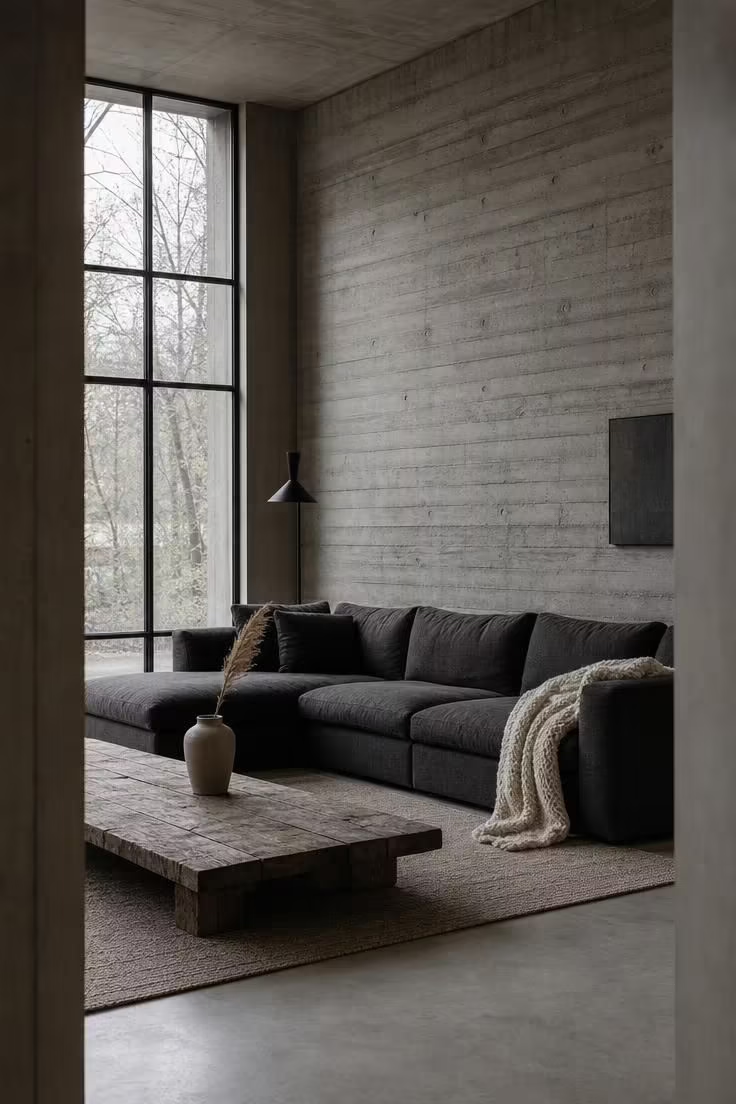
Board-formed concrete is one of those materials that photographs differently every hour of the day because the grain texture catches light at constantly shifting angles.
Under cool overcast morning conditions, the wood-grain imprint in the concrete becomes more visible as the flat light eliminates competing shadows.
A charcoal linen sectional parked against that wall creates a tonal match rather than a contrast, and that deliberate closeness in value is what gives the room its gallery-like quiet.
The cream knit throw draped over one arm is doing more work than it appears: it breaks the charcoal monotone, signals softness, and draws your eye to the seating as the room’s center.
Keeping the coffee table low and the styling minimal, just one vase with a single stem, prevents the horizontal surfaces from cluttering the strong vertical statement of the concrete wall.
This kind of room rewards restraint more than abundance.
A single matte black floor lamp behind the sofa corner provides directed reading light after dark without competing with the architecture.
The concrete floor carries the same cool tone as the wall, making the room feel carved from a single material.
Style Blueprint:
- Board-formed concrete accent wall showing wood-grain imprint
- Large charcoal linen sectional with removable slipcovers
- Chunky cream knit throw for contrast and warmth
- Low reclaimed wood coffee table with stoneware vase
- Matte black floor lamp with adjustable arm
Galvanized Metal Planters on a Walnut Ladder Shelf
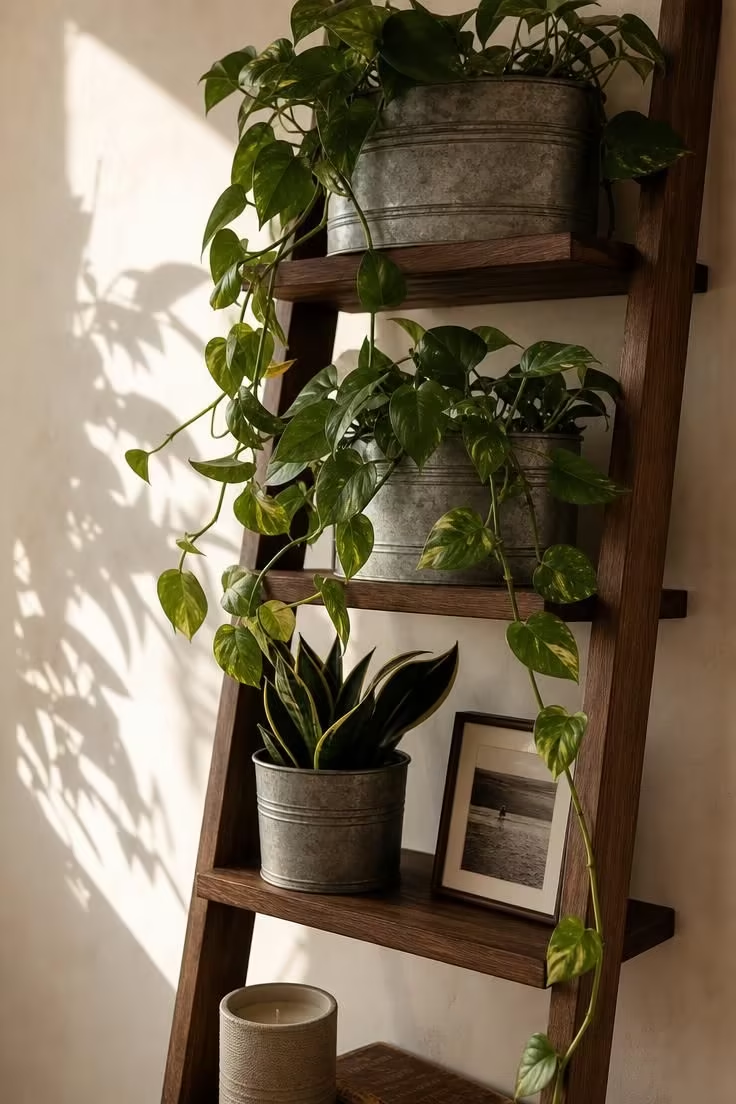
A ladder shelf leans against the wall at about 15 degrees, and that casual angle is what separates it from a standard bookcase and gives it a relaxed, unfussy quality.
Galvanized metal planters on its rungs bring a zinc-silver tone that complements the warm walnut without matching it too closely.
Trailing pothos spilling over the planter edges adds movement and green life to what would otherwise be a still arrangement of rigid lines and flat surfaces.
The warm golden afternoon light stretching across the leaves creates a shadow pattern on the wall behind that changes shape throughout the day.
Placing a small framed photograph and a linen-wrapped object on the lower rungs mixes personal items with plants so the shelf reads as a collected display rather than a garden center rack.
Keeping the number of planters to three prevents the shelf from looking overloaded and allows each plant room to grow outward.
Style Blueprint:
- Leaning walnut ladder shelf with four to five rungs
- Three galvanized metal planters in varied sizes
- Trailing pothos and one upright snake plant
- Small framed black-and-white photograph for personal touch
- Soft warm white plaster wall as backdrop
Factory Window Partition With Matte Black Frames
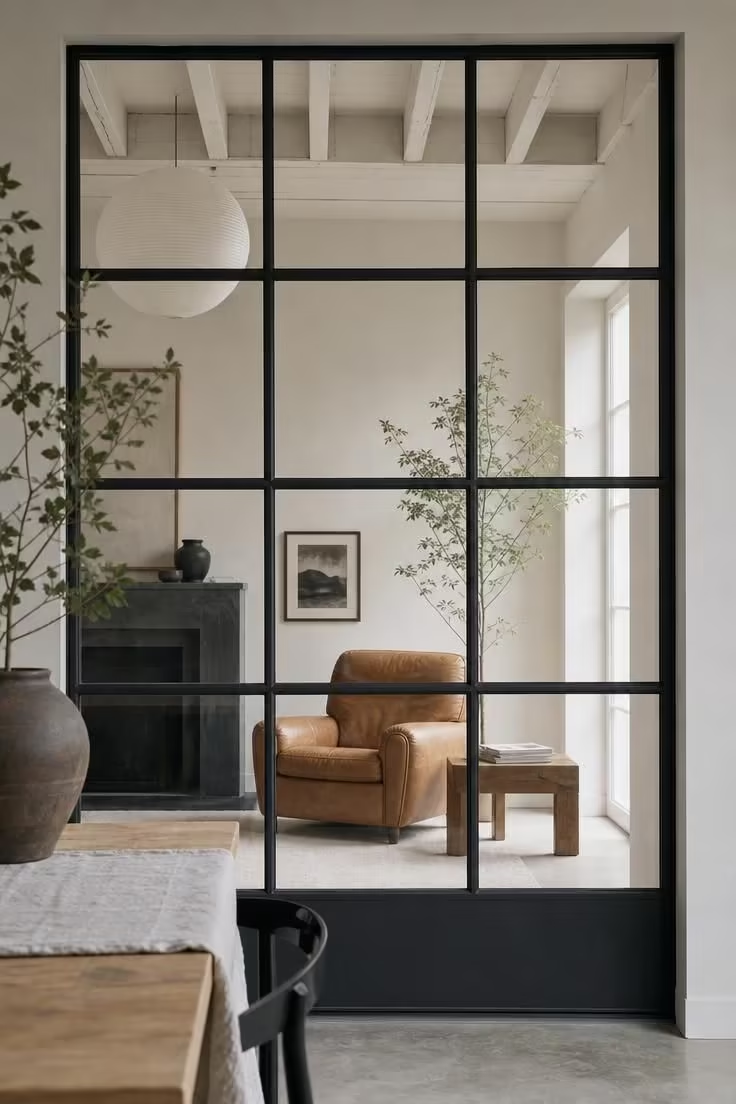
A glass partition with steel frames borrows directly from early 20th-century factory architecture, where interior walls needed to let foremen see the production floor from their offices.
In a residential setting, the same partition solves a common problem: how to define separate zones in an open floor plan without blocking light or sightlines.
The matte black finish on the steel frames gives the partition enough visual weight to feel architectural rather than decorative.
A 3×4 grid of glass panes creates a repeating pattern that your eye reads as orderly, and the grid itself becomes a framing device for whatever sits on the other side.
Placing a camel leather armchair in the living room zone just beyond the partition turns that chair into a focal point, framed neatly within one or two panes.
The soft diffused light passing equally through both sides of the glass means neither room feels darker or secondary.
This is one of the few architectural changes in this list that adds lasting value to a home because it reads as custom millwork rather than temporary decor.
Style Blueprint:
- Interior glass partition with matte black steel frames
- 3×4 grid pane layout for visual rhythm
- Camel leather armchair positioned as focal point beyond the glass
- Pale oak dining table on the near side for zone contrast
- Soft diffused overhead lighting on both sides
Design Pro-Tip: When choosing metal finishes for an industrial living room, commit to no more than two metal tones across the entire space. Blackened iron pairs naturally with aged brass, while brushed nickel works alongside raw steel. Mixing more than two creates visual noise that fights the clean-lined character of the style.
A Distressed Leather Sling Chair Next to a Cast Iron Radiator
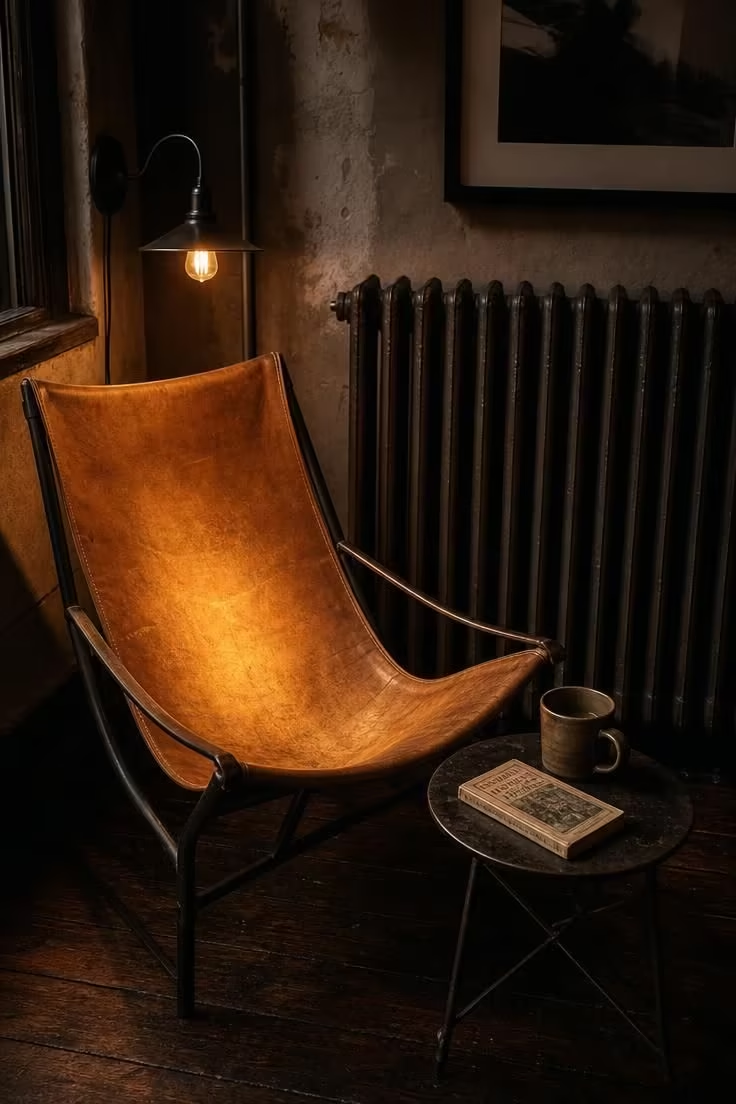
A cast iron radiator is the kind of object most people try to hide behind furniture, but in an industrial living room it deserves the opposite treatment.
Those vertical fins create a repeating pattern that adds texture and rhythm to an otherwise flat wall, and under low light the shadows between them deepen into dark lines that feel almost decorative.
Parking a leather sling chair right next to it makes practical sense too: the radiator warms the seat in colder months, turning the corner into the most comfortable spot in the room.
Butterscotch leather on a blackened frame keeps the chair from disappearing against a dark floor, and the distressed finish means it looks better after a few years of use, not worse.
A small round side table in the same blackened steel as the chair frame ties the grouping together without introducing a new material.
Keeping the table styling to just a ceramic mug and a paperback signals that this is a spot for sitting and reading, not for display.
The single wall sconce above provides directed light for the chair and leaves the rest of the corner in shadow, which is what gives this vignette its moody, private feeling.
A worn paperback on the table adds a human trace that makes the whole arrangement feel occupied rather than arranged for a camera.
Style Blueprint:
- Butterscotch distressed leather sling chair on blackened steel frame
- Vintage cast iron column radiator left exposed and unpainted
- Small round blackened steel side table
- Single amber-toned wall sconce for directed light
- Dark reclaimed plank flooring
Corrugated Metal Accent Wall With a Tufted Velvet Sofa
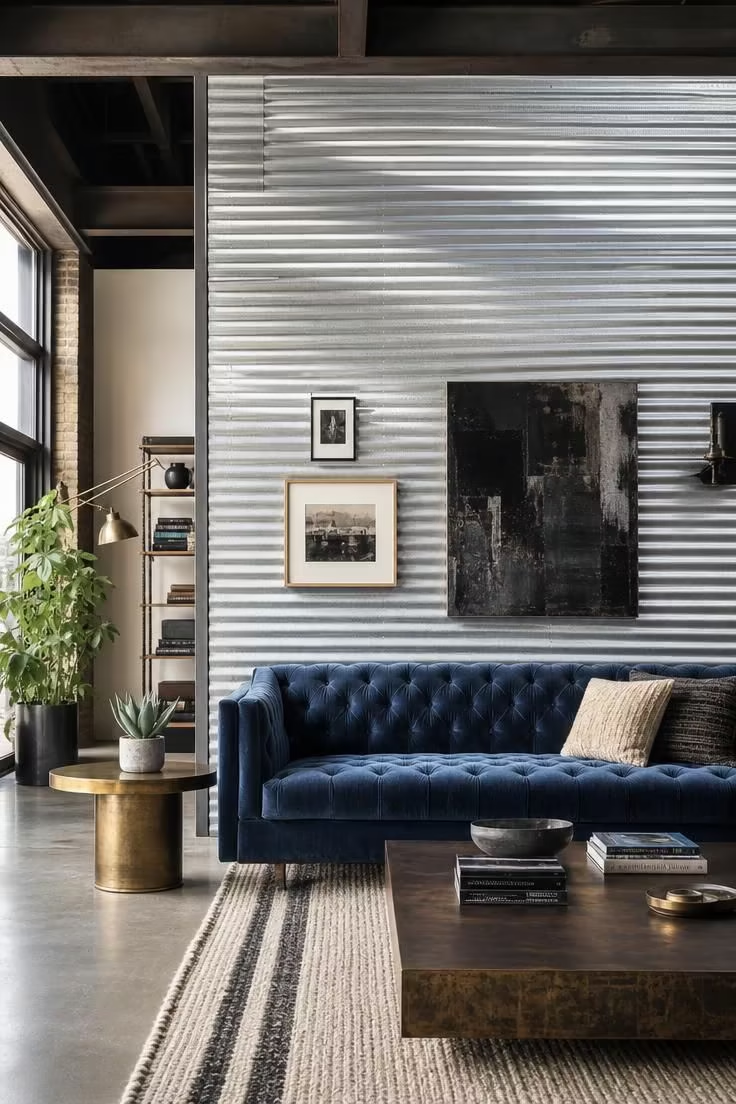
Corrugated metal on a living room wall is a bold choice that rewards confidence because there is no way to make it subtle.
The ridges catch bright midday light and scatter it in horizontal streaks that shift as you move through the room, creating a wall surface that is never visually static.
Pairing that rough, reflective surface with a deep-tufted velvet sofa in slate blue sets up a tension between industrial and formal that keeps the room from feeling one-note.
The velvet absorbs light where the metal reflects it, and that push-pull between soft and hard is what gives the room its energy.
A round brass side table introduces a third material that mediates between the silver metal and the blue fabric.
Keeping the rug pattern simple, just a cream and charcoal stripe, prevents the floor from competing with the already active wall.
Style Blueprint:
- Corrugated galvanized metal wall paneling with horizontal ridges
- Deep-tufted velvet sofa in slate blue
- Round brass side table with concrete planter
- Cream and charcoal striped woven rug
- Exposed steel ceiling beams left in original finish
Oversized Gooseneck Sconces Flanking a Concrete Hearth
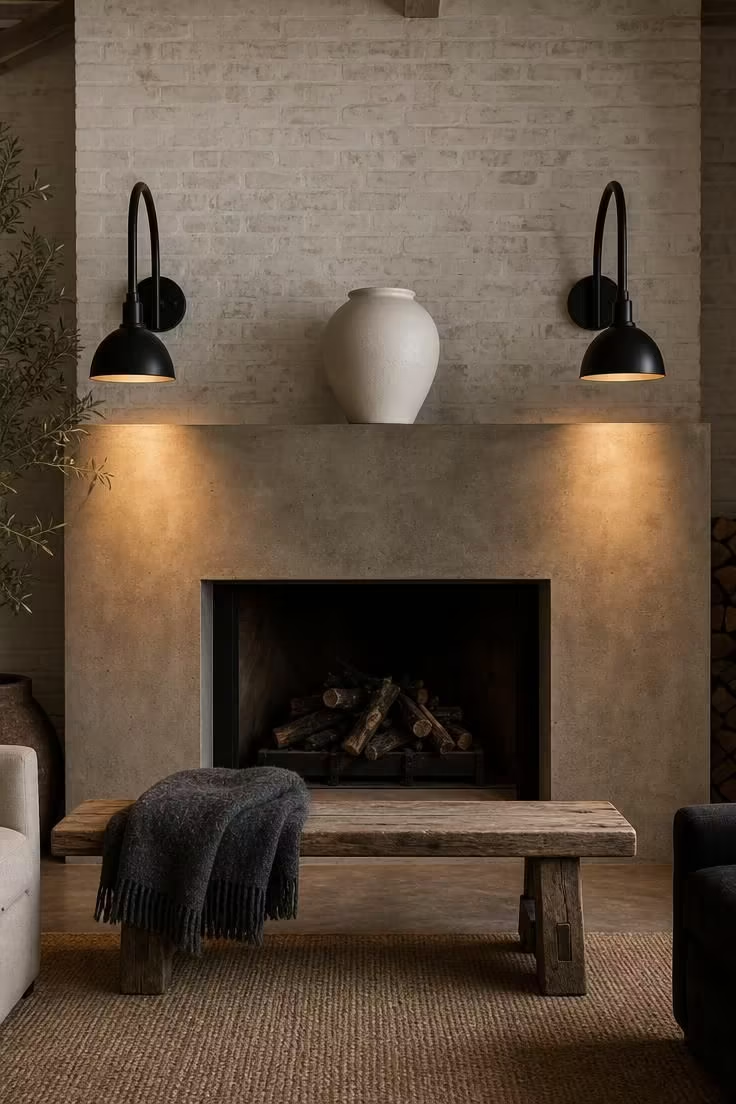
Symmetry is rare in industrial design, which is why a matched pair of oversized gooseneck sconces on either side of a hearth makes such a strong impression.
The two fixtures create a formal anchor that grounds the wall even when the rest of the room is loose and casual.
Gooseneck arms extend far enough from the wall to cast light downward at an angle, and that downward pool illuminates the texture of the raw concrete surround in a way that overhead lighting never could.
Choosing matte black for the sconce finish ties them to the other iron elements in a typical industrial living room without introducing a new color.
The concrete hearth itself needs minimal decoration: a single oversized ceramic vessel in matte white provides a focal point without crowding the surface.
Leaving the rest of the mantel bare lets the sconce light, the concrete texture, and the vessel do all the work.
A low reclaimed wood bench in front of the hearth doubles as extra seating and adds a warm organic layer at floor level.
The lime-washed brick above the mantel softens the wall color compared to raw red brick, keeping the overall palette lighter and preventing the fireplace zone from becoming too heavy.
A folded charcoal wool blanket on the bench invites someone to pull it over their lap, signaling that this is a room for sitting, not just looking.
Style Blueprint:
- Two oversized matte black gooseneck wall sconces
- Raw concrete fireplace hearth surround
- Single oversized matte white ceramic vessel on mantel
- Low reclaimed wood bench with charcoal wool blanket
- Pale lime-washed brick wall above the fireplace
A Kilim Rug Layered Over Wide-Plank Reclaimed Hickory
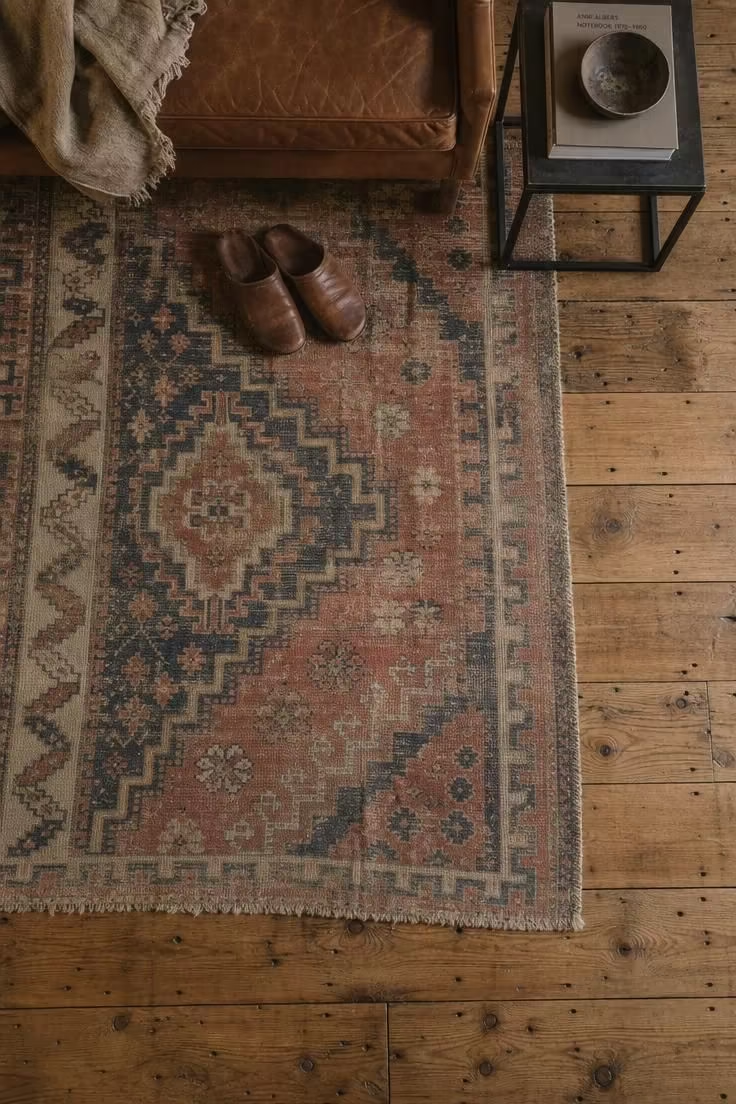
Layering a rug over reclaimed hickory flooring is one of those moves that works on two levels: it softens footsteps and it tells a visual story about age and use.
A faded kilim with visible wear patterns signals that the room has been lived in long enough for things to show their history, and that relaxed imperfection is central to industrial style.
The hickory planks underneath have their own character, with knots and nail holes and a honey patina that only decades of foot traffic can produce.
Keeping the kilim slightly undersized relative to the seating area so the wood shows on all sides creates a frame effect that highlights both surfaces.
The muted terra-cotta and indigo tones in the kilim pull warmth upward from the floor level and give the eye a softer place to rest between the hard surfaces of reclaimed wood furniture and metal frames elsewhere in the room.
A pair of worn leather slippers on the rug near the sofa adds a small human detail that grounds the overhead composition in everyday life.
This is the kind of styling that makes a room feel like it belongs to someone specific rather than to a catalog.
Style Blueprint:
- Faded vintage kilim rug with muted terra-cotta and indigo tones
- Wide-plank reclaimed hickory flooring with visible knots and nail holes
- Rug sized to show 12-18 inches of wood on all sides
- Leather sofa edge visible for scale and context
- One personal object (slippers, book, mug) on the rug for lived-in character
Steel-Frame Media Console With Aged Brass Pulls
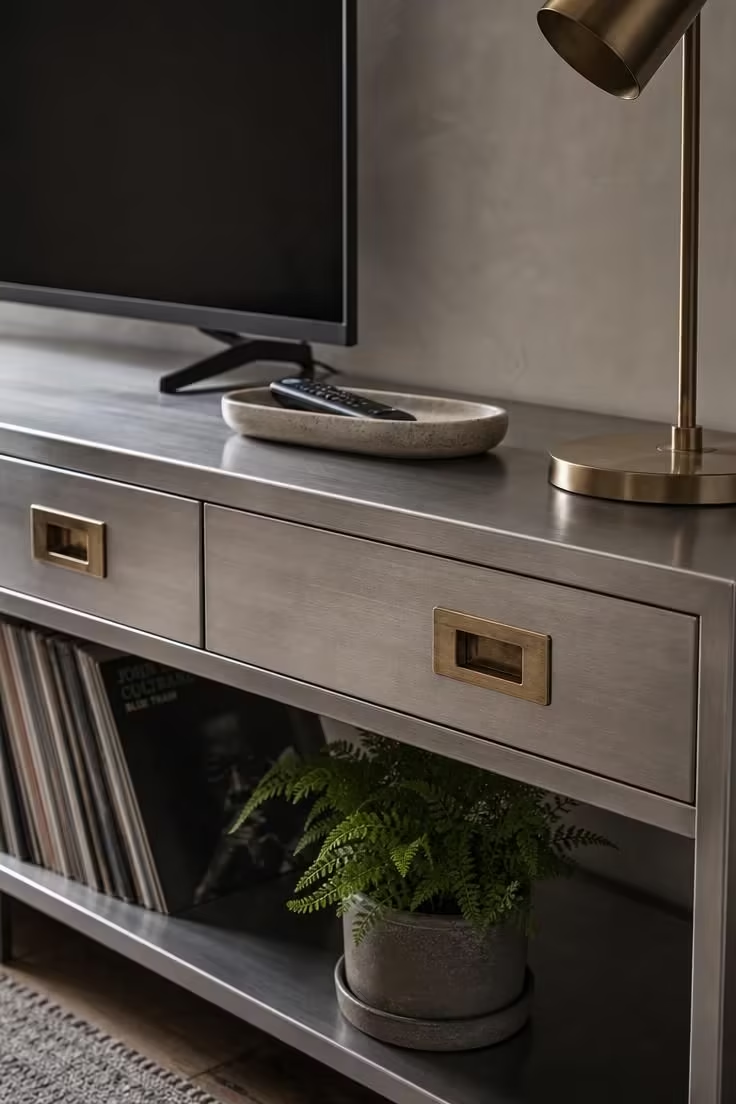
A media console is one of those pieces that sits at eye level in most living rooms, which means every material choice and hardware finish gets noticed daily.
A steel frame with aged brass pulls sets up a two-metal conversation that reads as intentional rather than mismatched because both metals share an industrial lineage.
The brass ages toward a deeper, warmer patina over time, and that gradual shift keeps the console looking a little different each year.
An open lower shelf is a better choice than closed cabinets in an industrial context because it lets you see through to the wall behind, maintaining the visual openness the style depends on.
Vinyl records leaning on the shelf add a cultural reference that feels personal, and the slim vertical spines create a graphic line that breaks up the horizontal frame.
The small potted fern introduces a living green accent at the console’s darkest zone, where most people would leave dead space.
A brass desk lamp on the console top echoes the pull hardware and creates a material link between the drawer fronts and the surface above.
Under cool overcast light, the brushed steel surface takes on a slightly blue cast that keeps the palette feeling crisp and modern.
Style Blueprint:
- Low steel-frame media console with open lower shelf
- Aged brass drawer pulls in a simple bar or knob profile
- Vinyl records or books leaning vertically on the lower shelf
- Small potted fern for organic contrast
- Brass desk lamp for consistent metal tone
Design Pro-Tip: Scale is the quiet difference between an industrial living room that works and one that feels like a furniture showroom. Oversized pendants need tall ceilings to breathe, and a massive steel coffee table demands a sofa with enough visual weight to balance it. Before committing to a statement piece, tape its footprint on your floor and hold a yardstick at its proposed height to test the proportion in your actual room.
Waxed Canvas Curtains on an Exposed Steel Track
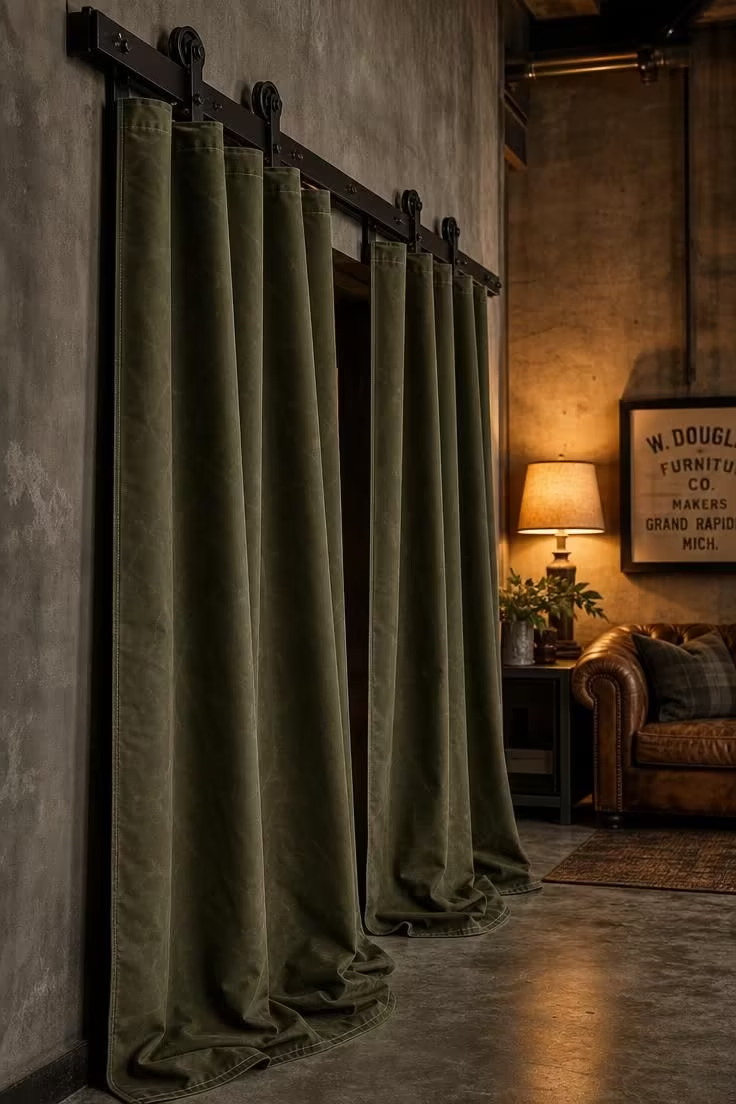
Most curtain rods try to disappear, but an exposed steel track with visible roller wheels makes the hardware part of the design.
The track itself becomes a horizontal line of matte black that anchors the top of the wall and gives the curtains an engineered look.
Waxed canvas is a fabric with enough body and stiffness to hold deep folds without sagging, and its slightly waxy surface catches low light in a way that linen or cotton cannot replicate.
Deep olive green is an uncommon curtain color that reads as sophisticated in an industrial context because it pulls from the palette of military surplus and workwear rather than from home decor conventions.
The visible stitching along the hems signals handmade craft, which contrasts with the machined precision of the steel track above.
Letting the panels pool slightly at the concrete floor adds a relaxed, collected quality.
Style Blueprint:
- Exposed steel barn-door track with industrial roller wheels
- Floor-length waxed canvas curtain panels in deep olive
- Visible topstitching along curtain hems
- Matte black track hardware matching other iron accents
- Curtains pooling 2-3 inches on the floor for a relaxed drape
A Tripod Floor Lamp Beside a Tufted Leather Ottoman
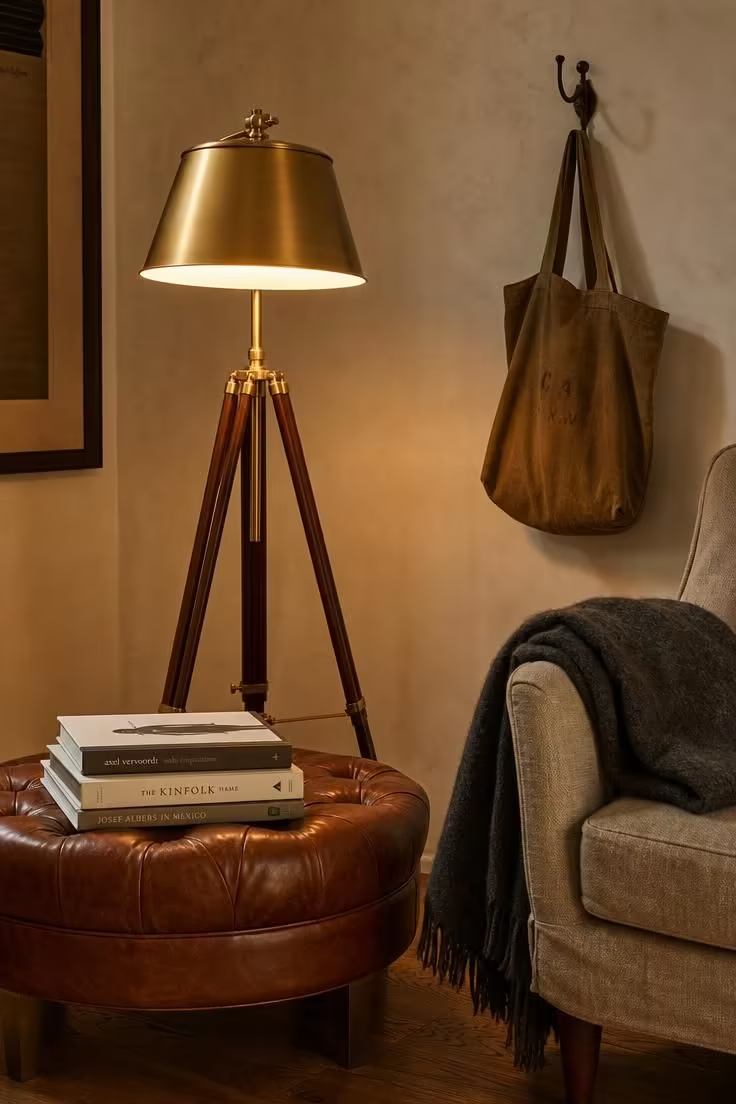
A tripod floor lamp carries a mid-century silhouette, but when the legs are walnut and the fittings are brass, it shifts into industrial territory because those are warehouse-era materials.
The three splayed legs occupy more floor area than a standard lamp base, which means this fixture needs a bit of open space around it to look right.
Placing it beside a tufted leather ottoman creates a pairing where both objects are round and warm-toned, and that repetition of shape and temperature gives the corner a sense of harmony.
The warm golden light pooling on the saddle brown leather deepens the color and brings out the stitching pattern in the tufting.
Using the ottoman as a surface for a small stack of books is more casual than a coffee table and keeps the reading corner feeling personal.
A charcoal wool throw on a nearby armchair adds a cooler note that keeps the warm tones from becoming monotonous.
The single iron coat hook on the wall behind holding a canvas tote is a small functional detail that reinforces the industrial vocabulary without adding another piece of furniture.
Style Blueprint:
- Brass and walnut tripod floor lamp with fabric shade
- Round tufted leather ottoman in saddle brown
- Charcoal wool throw on a nearby armchair
- Small stack of oversized coffee table books on the ottoman
- Single iron coat hook on the wall for functional decor
Raw Plywood Built-In Bench With Steel Hairpin Legs
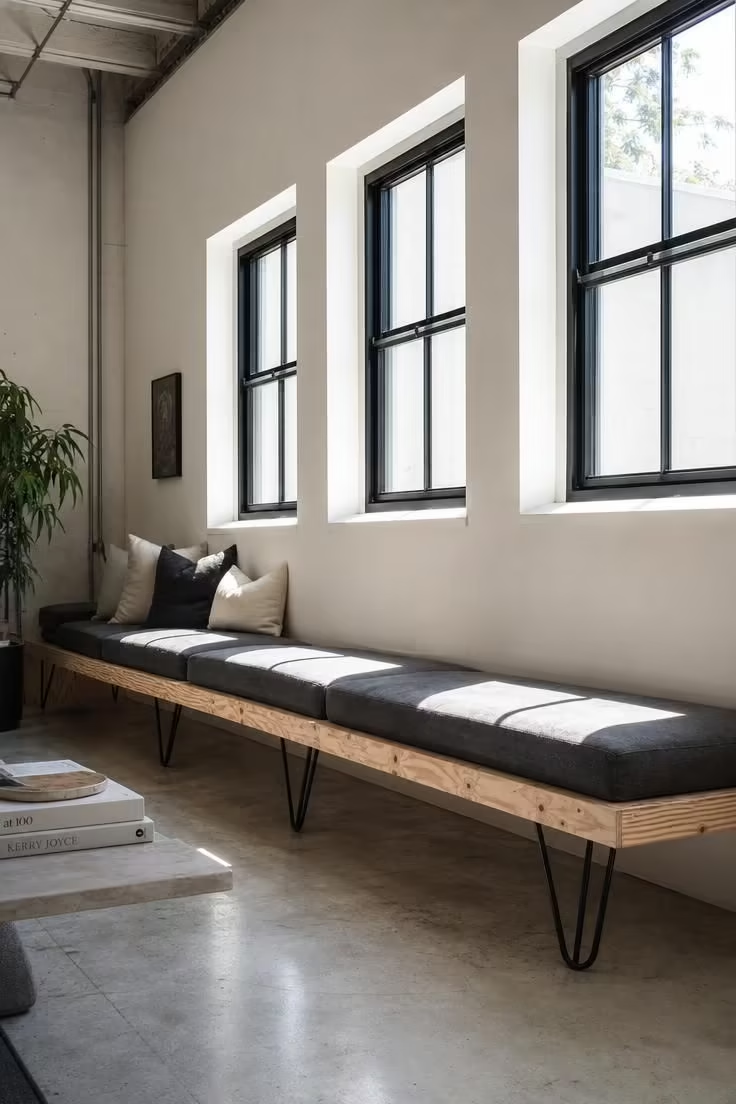
A built-in bench along a window wall does two things at once: it adds seating without taking up walkable floor space, and it turns the window zone into a destination rather than just a light source.
Raw plywood is an honest material that shows its layers at the cut edge, and those visible layers are an industrial detail that stained or painted wood conceals.
Steel hairpin legs are slim enough to let you see the floor beneath the bench, which keeps the piece from reading as heavy even when it runs the full length of a wall.
Bright midday light from the windows above creates rectangular light pools on the charcoal linen cushions, and those shifting patterns change the bench’s look throughout the day.
Loose cushions rather than a built-in upholstered seat allow you to remove and wash the covers and to rearrange the setup for different gatherings.
Stacking a few throw pillows at one end creates a clear invitation to sit and lean, which is more welcoming than a bare bench.
The light polished concrete floor below carries the same cool neutral tone as the plywood, tying the bench to the room rather than making it a standalone object.
This is one of the more practical ideas on this list because it solves a storage problem too: the open space beneath the bench can hold baskets or bins for blankets, magazines, or shoes.
Style Blueprint:
- Raw plywood bench surface with exposed edge layers
- Steel hairpin legs in matte black finish
- Loose charcoal linen seat cushions with removable covers
- Cotton throw pillows in muted cream and slate
- Light polished concrete floor beneath for visual continuity
Vintage Enamel Signage Above a Patinated Copper Bar Cart
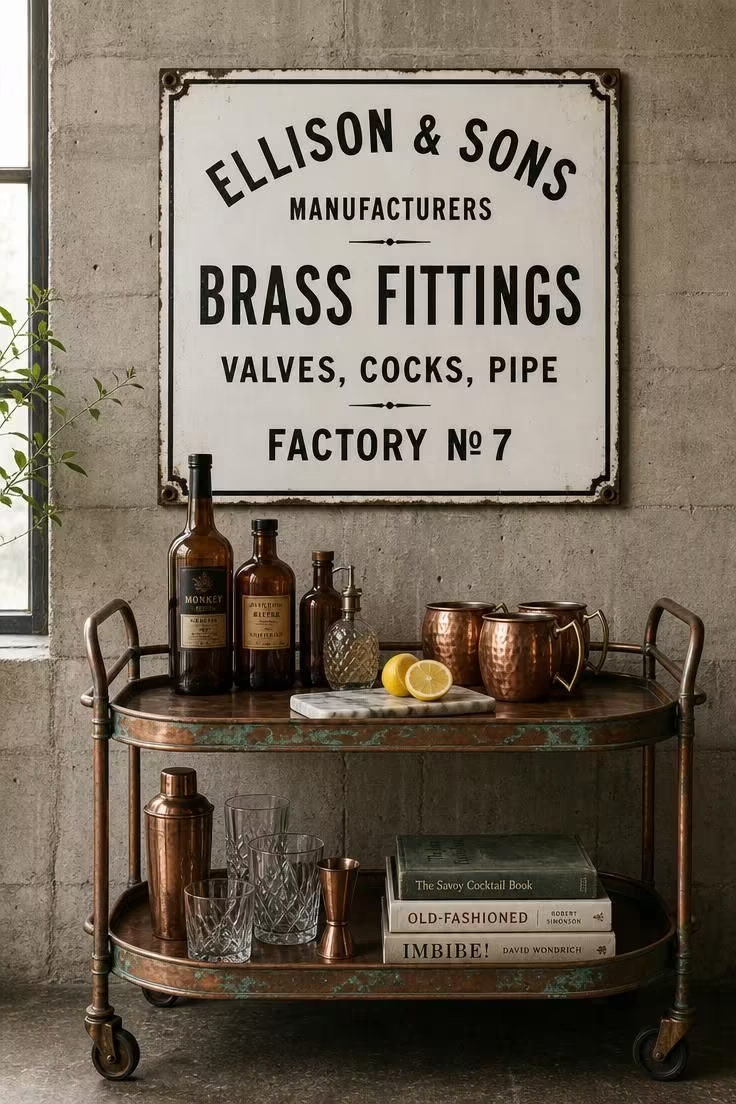
Vintage enamel signage is one of the few wall decor options that feels genuinely native to industrial spaces because these signs originally hung in the factories and warehouses that inspired the whole style.
The glossy white enamel surface with bold black lettering creates a graphic punch that holds its own against heavy materials like concrete and steel.
Mounting the sign directly above a copper bar cart with verdigris patina builds a vertical display that draws the eye from the cart up to the wall.
The green patina on the copper develops over years of oxidation, and that slow chemical change is a living finish that connects the cart to the same philosophy of aging materials that runs through every idea in this article.
Amber glass bottles on the cart pick up and warm the light passing through them, adding a subtle glow to the arrangement.
A small marble cutting board with a sliced lemon introduces a fresh, perishable element that keeps the display from feeling like a museum installation.
This corner works as both functional bar storage and a visual anchor for an otherwise bare wall in a warehouse conversion apartment.
Style Blueprint:
- Vintage white enamel factory sign with bold black lettering
- Copper bar cart with natural verdigris patina
- Amber glass bottles and copper Moscow mule mugs
- Small marble cutting board for fresh styling accents
- Raw concrete wall with visible formwork lines as backdrop
Design Pro-Tip: An industrial living room that feels truly lived-in always has one category of object that breaks the rules. A stack of well-worn paperback novels on a steel shelf, a handmade ceramic mug collection on a factory cart, or a child’s drawing pinned to a reclaimed wood beam reminds visitors that the room belongs to a person, not a photographer. Leave one unpolished, personal moment visible.
Conclusion
Every industrial living room starts with a single honest material, whether that is a concrete floor, an exposed brick wall, or a steel-framed window, and builds outward from there.
The 17 ideas above each pair one raw surface with one piece of furniture or fixture, giving you a focused starting point rather than a full room to recreate at once.
Comfort comes from layering soft textures, like linen, leather, wool, and canvas, over those hard industrial surfaces so the room invites sitting down and staying.
Pick the combination that matches your space, start with the anchor piece, and let the rest collect over time.