This post may contain affiliate links. If you make a purchase through these links, we may earn a commission at no additional cost to you.
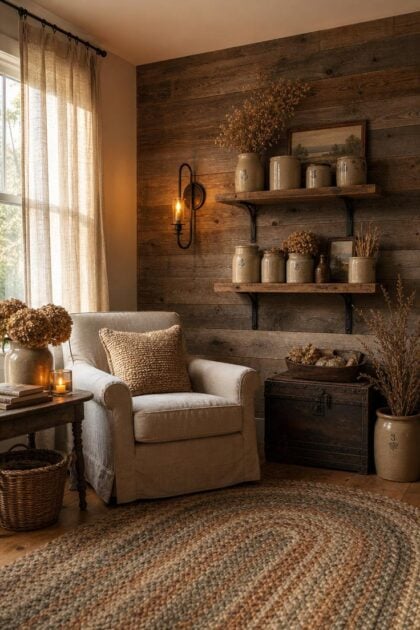
There is something about a wall dressed in rough wood and forged iron that makes a room feel like it has been lived in for decades.
Rustic wall decor works because it grounds a space, giving your eye something honest to land on instead of flat, empty drywall.
These 13 ideas pull from reclaimed wood wall art, wrought iron wall accents, and woven textiles to build walls that look collected over years, not decorated in an afternoon.
Each section pairs a specific combination of materials, finish, and placement so you can picture exactly what belongs on your wall and why it works there.
A Rough-Sawn Cedar Plank Accent Wall Behind a Leather Wingback Chair
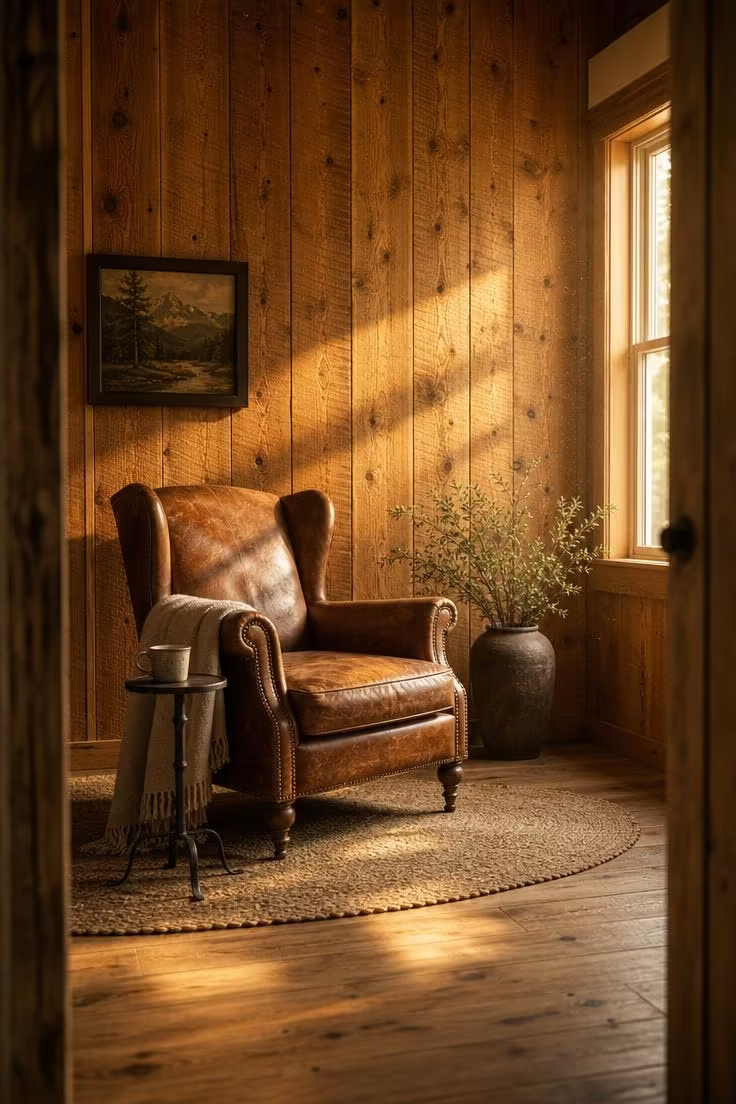
A barn wood accent wall like this one succeeds because the vertical grain draws the eye upward, making a standard eight-foot ceiling feel taller.
The rough-sawn texture catches light in dozens of tiny grooves, creating a surface that shifts from honey to amber as the day moves along.
Cedar holds its color well over time, resisting the gray-out that pine develops without regular sealing.
Pairing it with a leather wingback sets up a contrast between the rigid vertical planks and the chair’s soft, curved silhouette.
The iron side table keeps the metals simple, one finish, one function, no fuss.
That braided jute rug underfoot connects the wall to the floor through texture rather than color, which keeps the room feeling grounded without going dark.
A single mug on the side table tells the story of someone who actually sits here, a small detail that prevents the space from looking like a furniture showroom.
Style Blueprint:
- Rough-sawn cedar planks (matte clear coat, vertical orientation)
- Distressed cognac leather wingback chair
- Hand-forged iron side table in matte black
- Braided jute area rug in natural tan
- Oatmeal wool throw blanket
A Forged Iron Coat Hook Rail With Dried Wheat Bundles on a Whitewashed Brick Wall
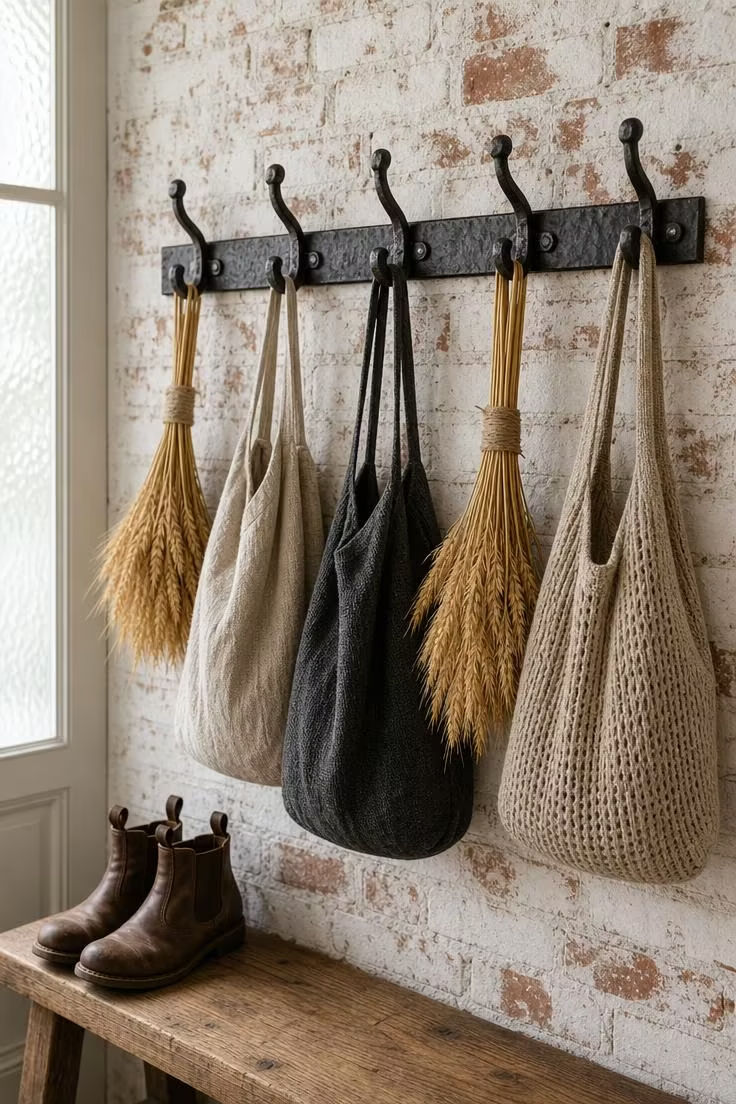
Iron hooks on whitewashed brick give an entryway the kind of character that takes most hallways years to develop.
The hammered texture on each hook means no two are identical, which reads as handmade even from across the room.
Dried wheat brings in a color that sits right between the cream brick and the dark iron, bridging what could otherwise feel like a stark two-tone setup.
Using the hooks for both function and display keeps the arrangement from feeling purely decorative, because someone is actually reaching for those bags on the way out the door.
Whitewashing brick rather than painting it solid lets the original surface telegraph through, adding a layer of visual depth that flat paint never achieves.
The pine bench below ties the farmhouse wall decor back to natural wood without competing with the iron above.
Style Blueprint:
- Hand-forged iron hook rail (five hooks, hammered finish)
- Dried wheat bundles tied with natural twine
- Whitewashed brick wall (thin wash, brick visible beneath)
- Woven linen market bags in natural and charcoal
- Narrow reclaimed pine bench
A Salvaged Tobacco Barn Door Mounted Flat as a Headboard Wall Panel
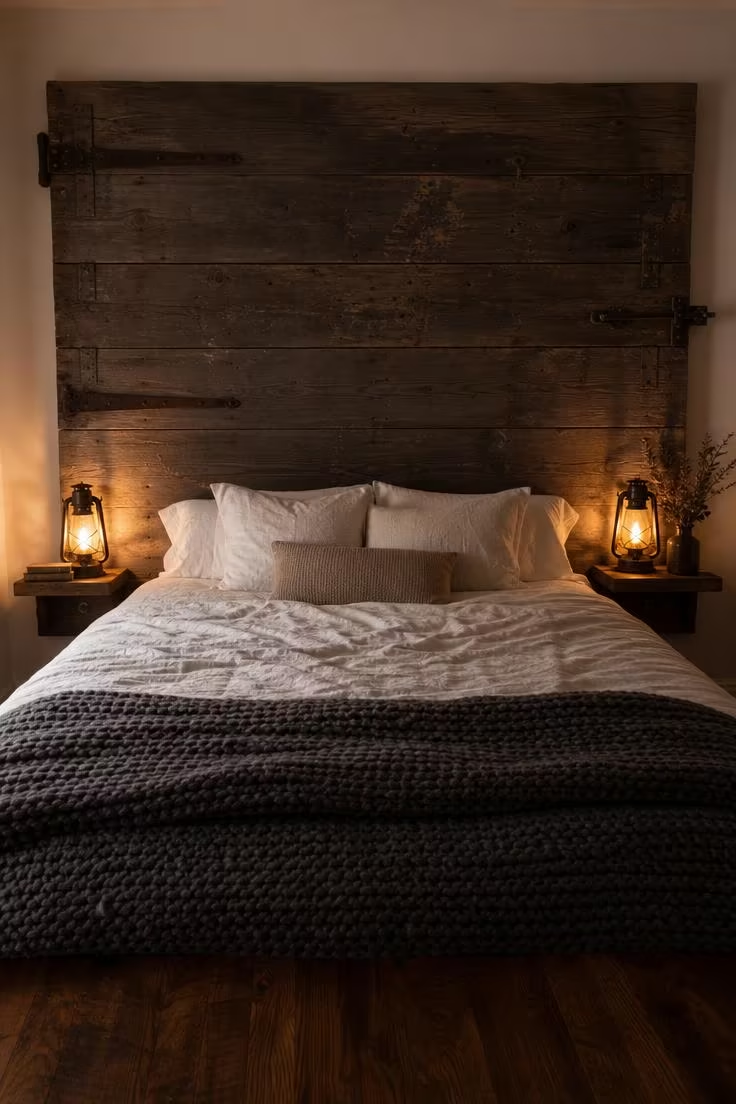
A single reclaimed door panel behind the bed replaces the headboard entirely, which simplifies the room to one focal point instead of three or four competing elements.
Tobacco barn wood carries a distinct gray-brown tone that comes from decades of heat-curing, a patina you cannot replicate with stain.
Leaving the original hardware in place, strap hinges, latches, nail ghosts, turns the door into a piece of history rather than a decorative panel.
The oil lantern reproductions lean into the mood without creating the fire risk of open flame, a practical call that still looks right in context.
White linen bedding against that dark weathered surface creates the kind of high-contrast layering that makes a bedroom feel both restful and dramatic.
Keeping the surrounding walls plain in matte warm white prevents the room from tipping into a barn recreation and lets the door do all the talking.
That charcoal chunky knit at the foot of the bed picks up the cool undertone in the barn wood, stitching the color story together without introducing a new shade.
Reclaimed wood wall art like this works best when you let the material’s own biography, its splits, stains, and wear marks, carry the visual weight.
Style Blueprint:
- Salvaged tobacco barn door panel (original hardware intact)
- Queen bed with white linen bedding
- Oil lantern reproduction wall sconces with amber glass
- Charcoal chunky knit throw blanket
- Dark walnut hardwood flooring
A Row of Copper Ladles and Iron Trivets Hung on a Beadboard Kitchen Wall
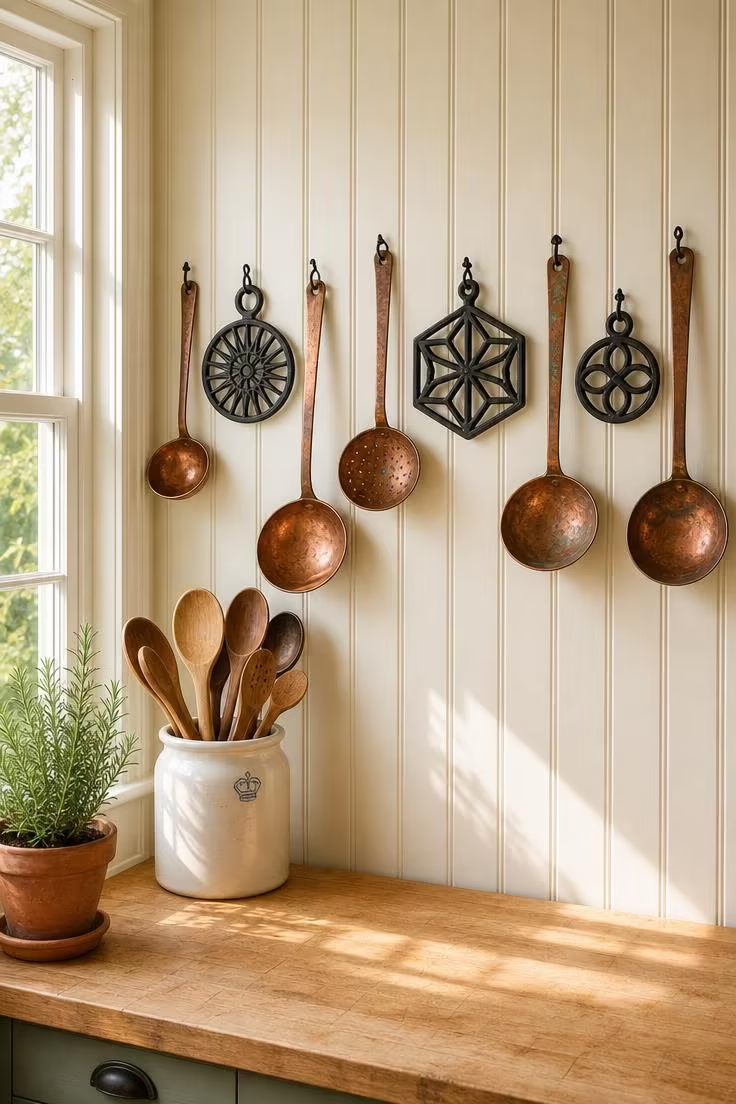
Hanging actual kitchen tools on the wall blurs the line between decoration and function, which is exactly what rustic wall decor does at its best.
Copper develops a patina that changes year over year, so the display will look different in three seasons than it does today.
Mismatched sizes matter here, because a row of identical ladles looks like a retail display while a varied set looks like a collection built from flea market weekends and family hand-me-downs.
Cast iron trivets add a heavier visual weight that anchors the lighter, shinier copper above them.
Beadboard’s vertical grooves create a rhythmic backdrop that keeps the wall from reading as blank space between the hung items.
The bright midday light is doing real work in this scene, pulling out the full range of copper tones from rosy pink to deep verdigris.
That ceramic crock of wooden spoons below ties the display back to daily cooking, reminding anyone walking through that this is a kitchen, not a museum wall.
Design Pro-Tip: When hanging cookware as wall decor, leave at least four inches between each piece so the individual shapes stay readable. Crowding copper and iron together turns a curated row into visual noise.
Style Blueprint:
- Five mismatched copper ladles (different sizes, natural patina)
- Three cast iron trivets (geometric patterns)
- Cream-painted beadboard wall
- Small iron nail hooks
- Butcher block countertop with ceramic crock
A Live-Edge Walnut Shelf Holding Stoneware Crocks and Beeswax Candles
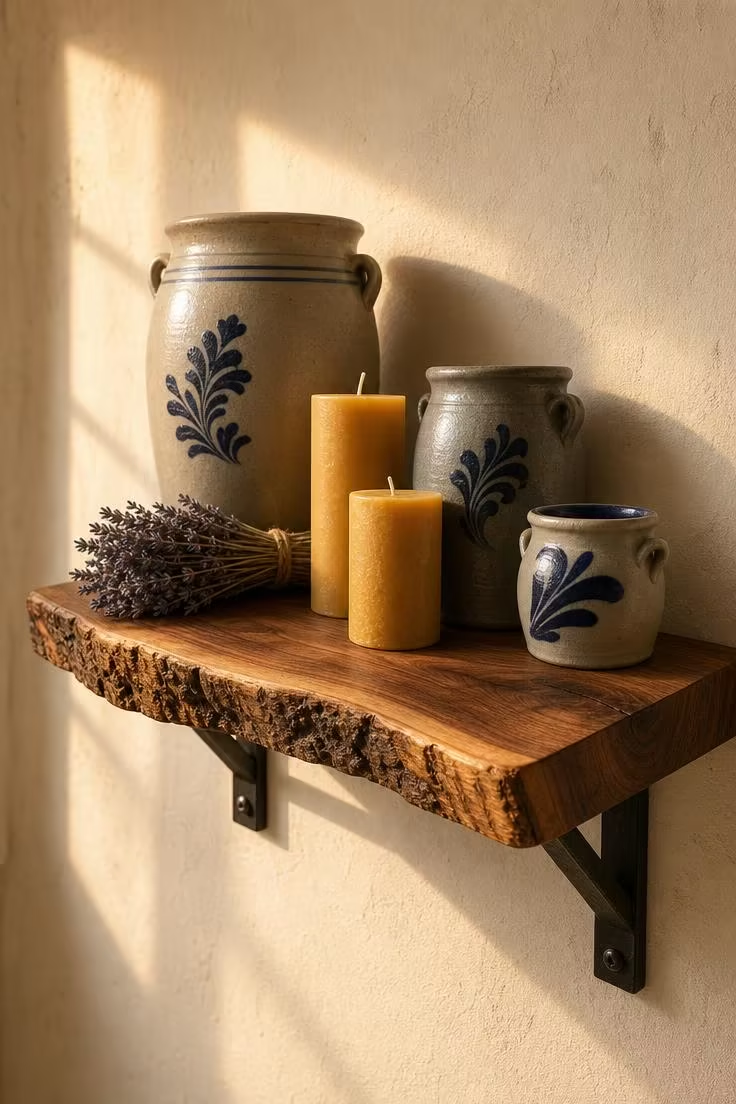
Rustic wood shelves earn their place on a wall by doing double duty, holding objects you care about while serving as a piece of natural wood wall art in their own right.
A live edge keeps the organic shape of the tree visible, which introduces a curve into a room full of straight lines and right angles.
Salt-glazed stoneware carries a handmade quality in its surface, where each crock’s glaze runs slightly different from the next.
Staggering the crock heights, tall in back, short in front, creates depth on a surface that is only twelve inches deep.
Beeswax candles bring a warm golden tone that matches the walnut without competing with the stoneware’s cooler grays and blues.
The dried lavender is a small move, but it softens the arrangement and introduces a gentle scent that complements the beeswax.
Style Blueprint:
- Live-edge walnut slab shelf (bark remnants intact)
- Matte black iron L-bracket shelf supports
- Three salt-glazed stoneware crocks (varied heights)
- Beeswax pillar candles in natural golden-yellow
- Dried lavender bundle
A Burlap-Wrapped Canvas Printed With a Faded Farmstead Map in Sepia
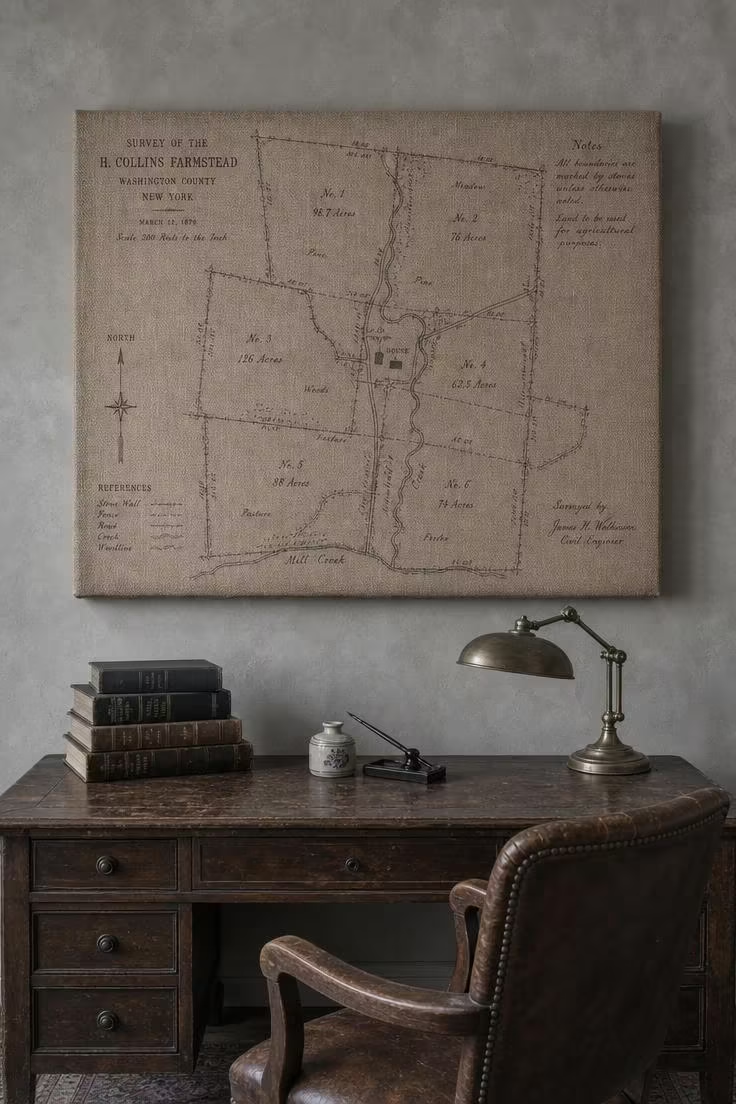
A map on burlap reads differently than a framed print because the textile wrapping gives the whole piece a soft, aged quality that glass and matting strip away.
Sepia ink on burlap creates a nearly monochromatic palette, which lets the piece sit quietly on a wall without demanding attention the way a brightly colored painting would.
Property survey maps carry a specific kind of nostalgia, they suggest land, seasons, and the practical work of measuring what you own.
Mounting it above a writing desk connects the map’s function to the workspace below, as if someone sat here once to plan which field to plow next.
The cool overcast light keeps the sepia warm tones from turning orange, holding the map in a faithful range of browns and tans.
Old hardcover books and a brass desk lamp complete the scene by staying in the same era as the map itself, nothing here breaks the visual timeline.
Burlap fraying slightly at the canvas edge is a feature, not a flaw, because it reinforces the raw, unfinished quality that defines rustic gallery wall arrangements.
This is the kind of vintage wall signs alternative that carries a real story instead of a mass-produced motto.
Style Blueprint:
- Raw burlap-wrapped canvas (large rectangle, visible weave)
- Vintage farmstead survey map print in sepia ink
- Cool gray plaster wall
- Dark oak writing desk with brass desk lamp
- Stack of old hardcover books
A Cluster of Hand-Whittled Wooden Spoons Mounted in a Shadow Box Frame
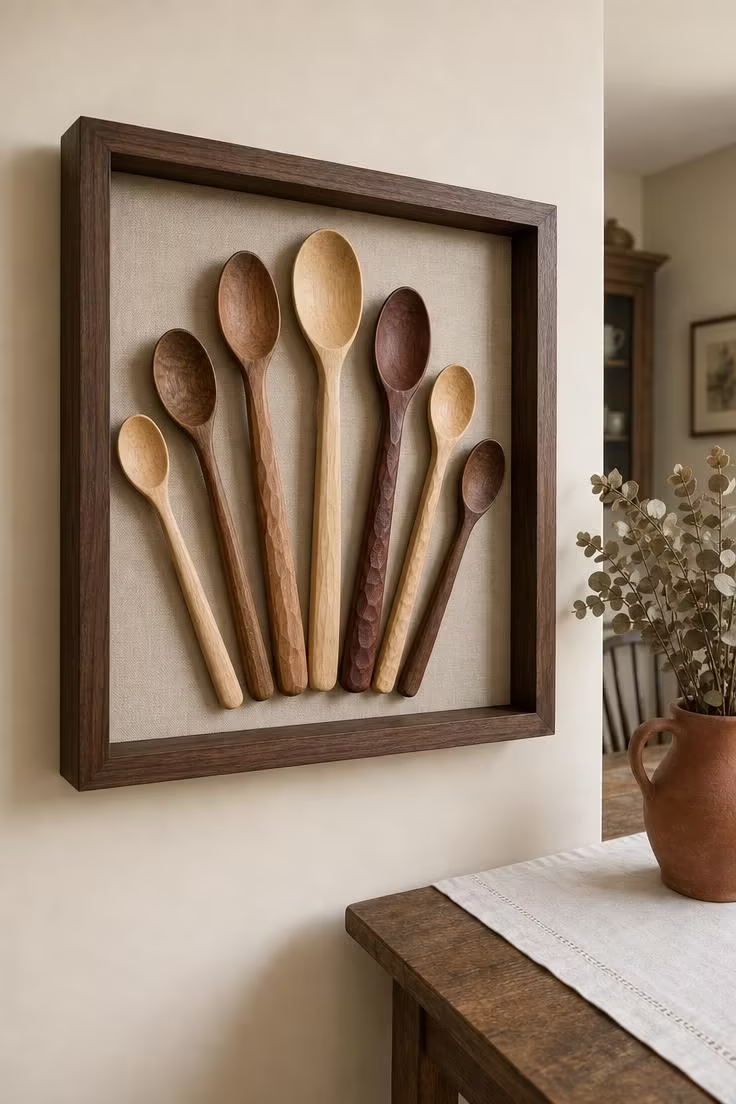
Hand-carved spoons look like folk art when you frame them properly, turning everyday kitchen tools into objects worth studying up close.
The fan arrangement inside the shadow box gives each spoon its own sight line, so the viewer can trace the different handle shapes and bowl depths one at a time.
Using multiple wood species, maple, cherry, oak, walnut, within the same frame creates a gradient of warm tones that moves from pale to dark across the display.
Linen backing adds a soft neutral field that pushes the spoons forward visually without introducing a color that competes with the wood.
Tool marks left visible on each handle signal that a person carved these by hand, which separates them immediately from anything turned on a lathe.
The slight upward camera angle gives the shadow box a sense of presence on the wall, making it feel more like a mounted artwork than a shelf accessory.
Placing it near a dining table keeps the connection to food and cooking alive, which is where wooden spoons belong in the first place.
Style Blueprint:
- Deep walnut shadow box frame with linen backing
- Seven hand-carved wooden spoons (mixed species)
- Fan arrangement, spoons radiating from a shared base point
- Cream wall with soft, even lighting
- Nearby farmhouse dining table for context
An Old Hay Rake Head Repurposed as a Wall-Mounted Wine Glass Holder
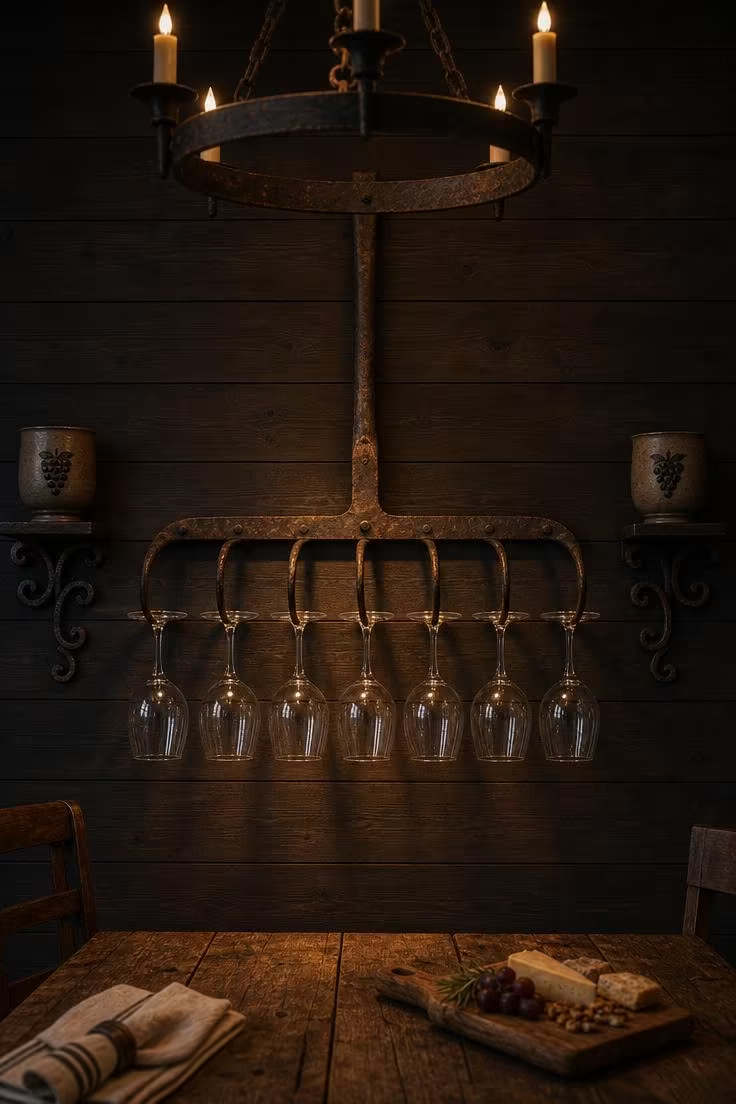
Repurposing a hay rake as a glass holder gives a dining room wall the kind of clever function that guests notice and remember.
The tine spacing on most antique rakes is already close to the width of a wine glass base, so the conversion requires nothing more than two strong screws.
Rust on the iron is part of the appeal here, because a polished rake would lose the agricultural character that makes the piece worth mounting.
Dark-stained shiplap behind the rake creates a tonal match between the wall and the iron, letting the clear glass stand out as the brightest element in the scene.
Moody low light from a candle chandelier overhead wraps the arrangement in warm amber, which flatters both the iron and the wine glasses at the same time.
Flanking the rake with small iron shelf brackets holding stoneware cups builds out the display without crowding the central piece.
Design Pro-Tip: When mounting heavy iron farm tools on a wall, use toggle bolts or lag screws into studs rather than drywall anchors. A hay rake head loaded with six wine glasses can weigh fifteen pounds or more, and standard anchors will pull free within weeks.
Style Blueprint:
- Antique iron hay rake head (original rust patina)
- Dark-stained shiplap wall
- Six clear stemmed wine glasses
- Iron candle chandelier for overhead ambient light
- Pair of small iron shelf brackets with stoneware cups
A Pine Corbel Pair Supporting a Weathered Plank Mantel Shelf
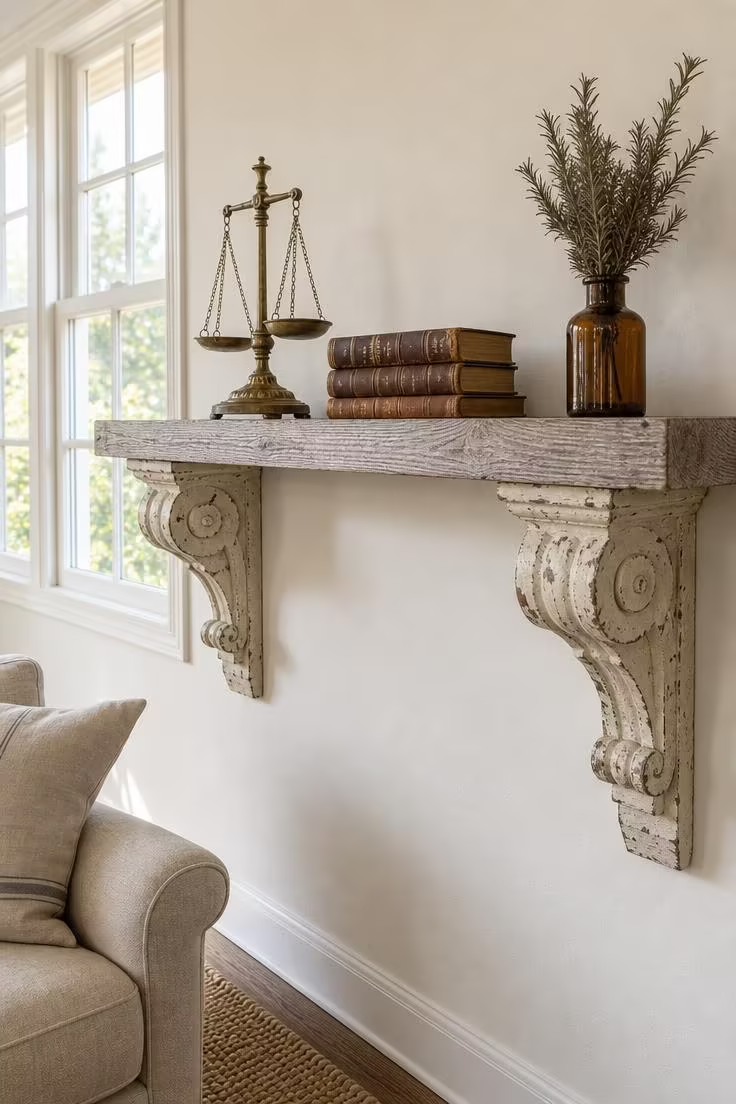
Corbels give a mantel shelf the architectural presence that a simple floating bracket cannot deliver.
Chippy cream paint on carved pine carries more visual information per square inch than any smooth-finished bracket, because every flake of paint reveals the wood beneath and tells a story of age.
The silver wash on the plank shelf tones down the wood’s natural warmth, which creates a deliberate contrast with the warmer cream corbels below.
A vintage brass balance scale on one end of the mantel introduces metal without repeating the iron that appears elsewhere in the room.
Leather-bound books in the center add height and color, their dark spines reading almost like a piece of art between the brass and the glass bottle.
Dried rosemary in a brown glass bottle is the smallest element on the shelf, but it pulls the eye to the far end and completes the left-to-right movement across the mantel.
Bright midday light does the work of a spotlight here, raking across the corbel carvings and the plank grain at a low angle that deepens every shadow and groove.
Leaving the wall bare below the mantel is a deliberate restraint that gives the shelf room to breathe and keeps the arrangement from feeling like it is sliding down the wall.
Style Blueprint:
- Pair of large carved pine corbels (chippy cream paint)
- Thick silver-washed plank mantel shelf
- Vintage brass balance scale
- Leather-bound books with aged spines
- Dried rosemary in a small brown glass bottle
A Woven Jute Rug Panel Stretched Over a Hickory Dowel as a Hallway Hanging
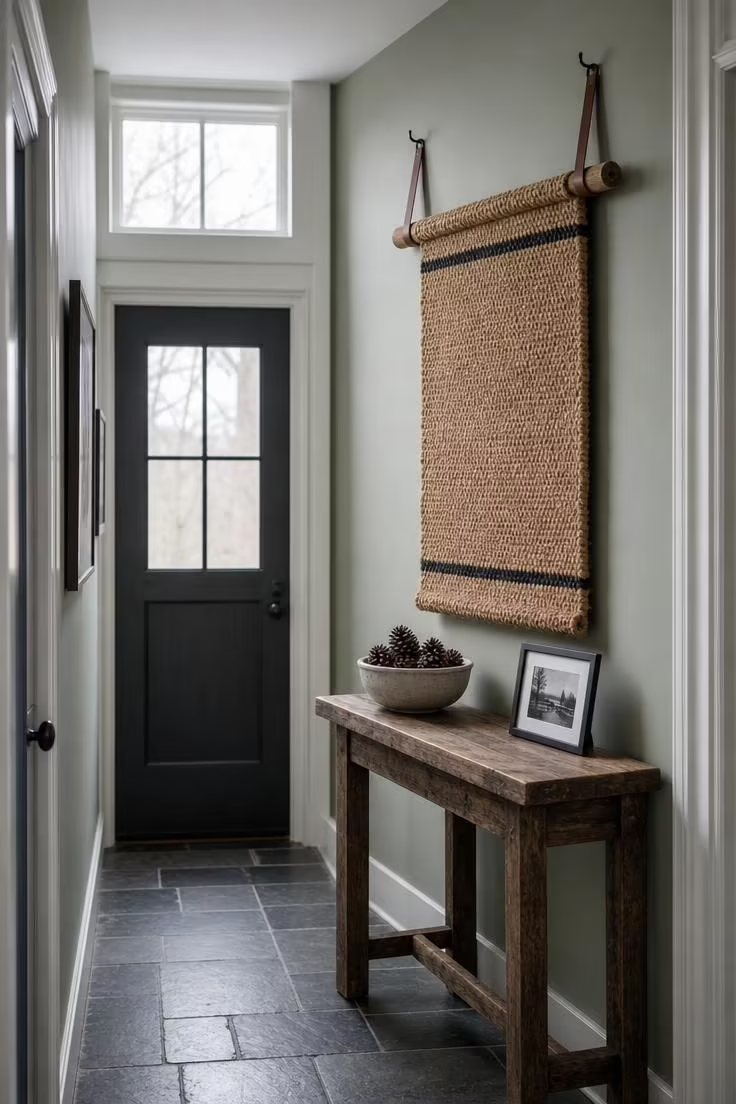
A woven wall hanging made from an actual rug brings a weight and density that lighter macrame and cotton pieces cannot match.
Jute’s coarse texture reads clearly even from the far end of a hallway, giving the narrow space a focal point that stops the eye before it reaches the back wall.
The black stripe near each end of the rug acts as a visual frame, containing the natural tan field and giving the piece a finished, intentional look.
Hickory is a hard, tight-grained wood that holds a dowel shape without warping, which matters when the dowel is carrying the weight of a dense jute rug.
Leather straps on iron nail hooks keep the hanging system visible and honest, no hidden hardware, no pretending the rug floats on its own.
Cool overcast light is ideal here, because it brings out the subtle color variation in the jute weave without washing the sage wall into white.
The pinecone bowl and framed photograph on the console below are small, grounding details that keep the hallway from feeling like a gallery corridor.
Style Blueprint:
- Flat-weave jute rug (natural tan, thin black stripes)
- Thick hickory dowel (natural finish)
- Leather hanging straps on iron nail hooks
- Pale sage painted wall
- Narrow reclaimed wood console table
A Set of Three Bark-On Birch Rounds Displaying Pressed Wildflowers Under Resin
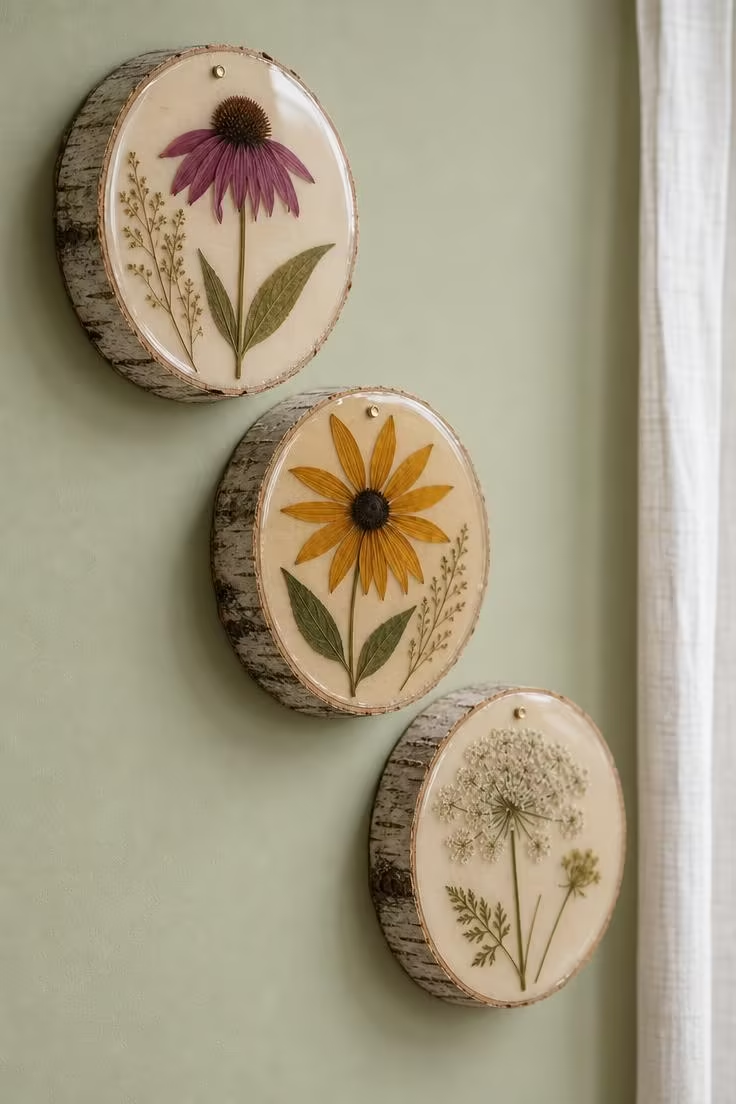
Pressing wildflowers under resin on a birch round creates a piece that sits between botanical illustration and sculpture, flat enough to hang flush but thick enough to cast its own shadow.
Birch bark’s white surface acts as a natural mat, framing each flower with a ring of silver-gray striations that no store-bought frame can replicate.
The resin seal preserves both the color and the dimensional shape of each petal, so the flowers look freshly pressed even after years on the wall.
Arranging three rounds in a diagonal line introduces movement across the wall, drawing the eye from lower left to upper right in a slow climb.
Choosing three distinct wildflowers, purple, gold, and white, gives each round its own identity while keeping them connected through size and material.
This is natural wood wall panels thinking applied at a small scale, where the raw material does the framing and the botanical does the storytelling.
Style Blueprint:
- Three birch wood rounds (bark on, 8-10 inch diameter)
- Pressed wildflowers (coneflower, black-eyed Susan, Queen Anne’s lace)
- Clear resin seal with glass-like finish
- Pale sage green wall
- Small finishing nails for flush mounting
A Reclaimed Fence Picket Frame Holding a Hand-Painted House Number on Slate
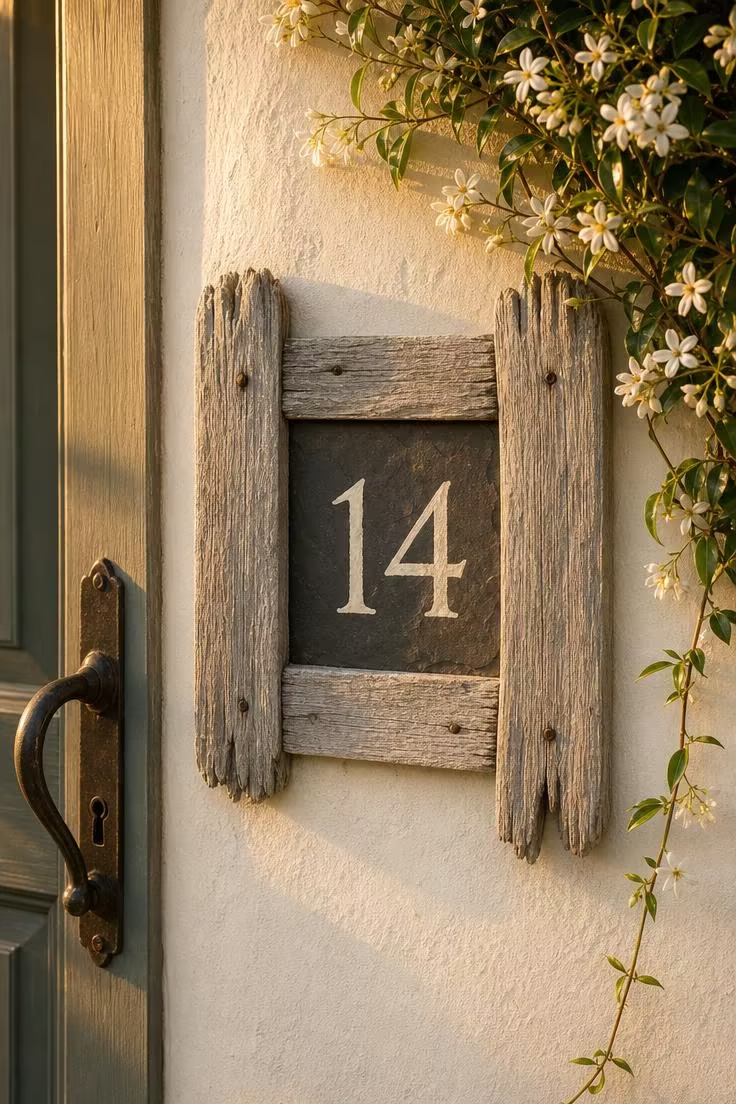
A house number display made from fence pickets and slate gives visitors their first impression of rustic wall decor before they even step inside.
Sun-bleached gray wood carries a silver quality in late afternoon light that no stain or paint can reproduce, because the bleaching happens unevenly across the grain.
Milk paint on slate has a chalky, matte finish that ages well outdoors, slowly wearing at the edges in a way that looks more honest as the years pass.
Old nail holes and split ends in the pickets add the biography of a fence that stood for decades before becoming part of this frame.
Climbing jasmine at the corner of the frame softens the hard rectangle and introduces a living element that changes with the season.
Golden hour light is doing the heavy lifting in this scene, raking across every groove and split in the pickets at such a low angle that even hairline cracks throw visible shadows.
The cream stucco wall behind provides a clean field that makes the frame’s rough texture stand out sharply, a case where a plain background serves the focal piece better than any accent color could.
Rustic mantel decor principles apply outdoors just as well, let one honest material carry the visual weight while everything around it stays quiet.
Design Pro-Tip: When building frames from reclaimed fence pickets, check each board for protruding nails and remove or hammer them flat before mounting. Old galvanized nails can stain surrounding surfaces with rust streaks during rain, so pull or seal them before installation.
Style Blueprint:
- Four reclaimed fence pickets (sun-bleached gray, original wear)
- Natural slate tile (hand-painted house number in milk paint)
- Cream stucco exterior wall
- Climbing jasmine vine for seasonal softness
- Iron mounting hardware (concealed behind pickets)
An Aged Iron Pulley Wheel Hung as a Sculptural Accent on a Raw Plaster Wall
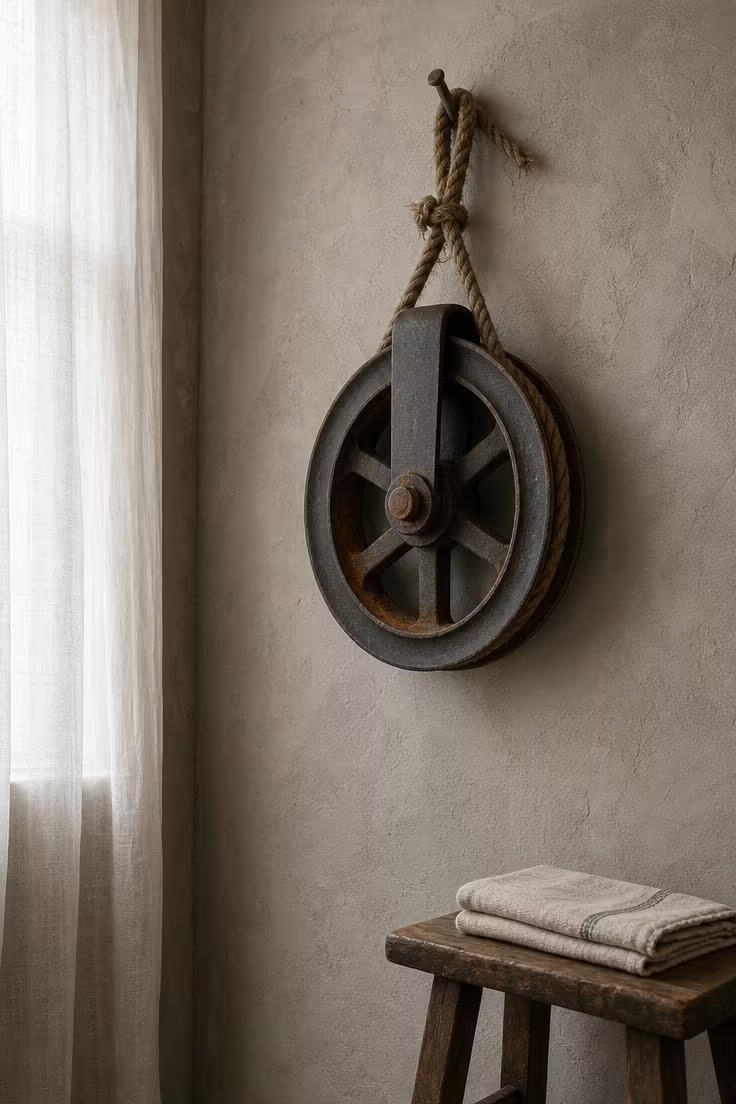
A single iron pulley wheel on an otherwise empty wall makes the case that rustic wall decor does not need to fill every square inch to make an impression.
The wheel’s circular shape breaks the room’s grid of rectangles and straight lines, acting as a visual anchor that draws the eye the way a round mirror would.
Rust tells the story of use, rain, and barn air in a language that anyone can read, and leaving it intact instead of sanding it away preserves that entire history.
The hemp rope loop adds a second texture to the composition, its golden-tan fibers playing against the iron’s dark gray and the rust’s warm orange.
Raw plaster walls carry their own handmade quality in the form of trowel marks and slight surface variation, which pairs naturally with the pulley’s industrial roughness.
Soft diffused light prevents the rust from dominating the color balance, keeping the orange as an accent rather than letting it take over the scene.
The spare composition here, one large object, one simple stool, one folded cloth, proves that restraint can carry more visual weight than a crowded arrangement.
Style Blueprint:
- Aged iron pulley wheel (14-inch diameter, original rust)
- Thick hemp rope for hanging
- Raw plaster wall in warm gray (trowel marks visible)
- Large iron nail as anchor point
- Simple wooden stool with folded linen cloth
Conclusion
Every idea on this list comes back to the same principle: let real materials speak for themselves.
Rough-sawn cedar, forged iron, hand-carved wood, and sun-bleached fence pickets all carry a visual history that manufactured decor cannot fake.
The best rustic wall decor arrangements use restraint, choosing one or two strong pieces per wall rather than covering every surface.
Mix your textures, pair smooth stoneware with rough barn wood, set soft jute against hard iron, and let the contrast do the work that paint colors usually handle.
Start with one wall, one piece, and one honest material, then build from there over months and years until the room feels like it grew on its own.