This post may contain affiliate links. If you make a purchase through these links, we may earn a commission at no additional cost to you.
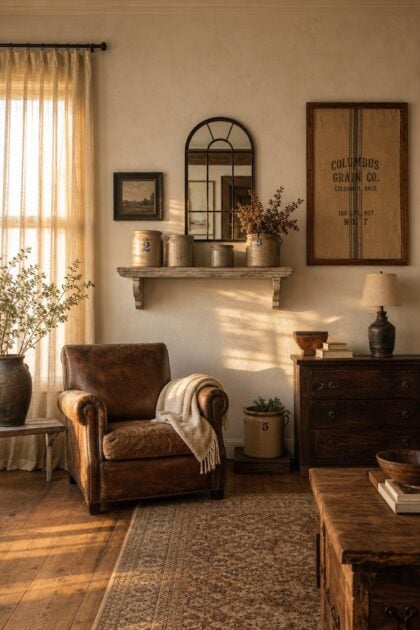
There is something deeply satisfying about a wall that looks like it has been collecting character for decades.
Farmhouse wall decor leans on raw textures, muted tones, and materials that feel pulled from a countryside property rather than a catalog.
The best farmhouse walls mix wood, metal, and fiber in combinations that look unplanned but completely right.
These ten ideas offer specific scenes you can build at home, each one grounded in real materials and honest craftsmanship.
A Whitewashed Cedar Window Frame With Dried Lavender Bundles Tucked Inside
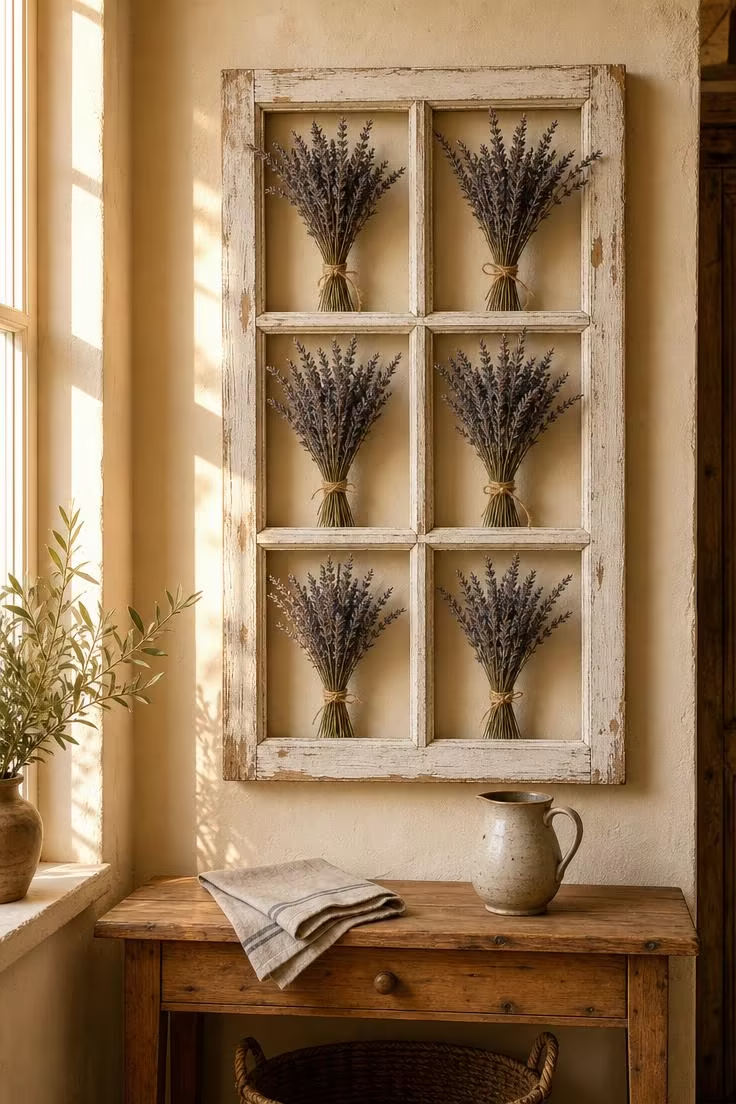
A piece of whitewashed wood like this old window frame does most of the work before you add a single thing to it.
The lime wash softens the cedar without hiding its grain, and the slight cracking in the finish gives it a look that no new product can replicate.
Tucking dried lavender into each pane opening adds color and a faint scent that shifts the space from decorated to actually lived in.
The purple-gray of the flowers against the warm cream wall creates a contrast that stays gentle, never loud.
Hanging this at eye level in an entryway means it catches anyone walking through the door, setting the tone for the rest of the house.
A narrow console underneath with a stoneware pitcher keeps the arrangement grounded without crowding the wall.
This kind of farmhouse wall decor works because it tells a story with materials rather than words.
Style Blueprint:
- Salvaged multi-pane cedar window frame, lime-washed
- Dried French lavender bundles tied with jute twine
- Warm cream or plaster-toned wall paint
- Narrow reclaimed pine console table
- Small stoneware pitcher for grounding
A Cluster of Mismatched Stoneware Crocks on a Rough-Sawn Oak Shelf
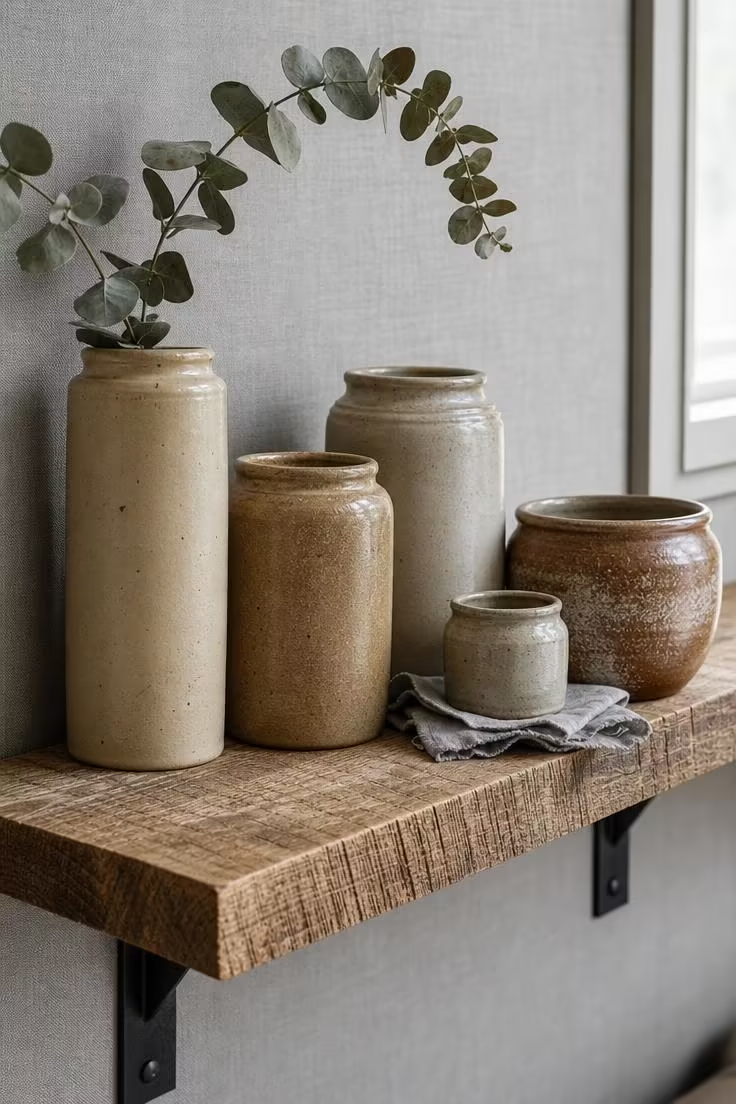
Rustic wall shelves work best when they carry objects that look gathered over years rather than bought in one trip.
The rough-sawn white oak here has visible saw marks that catch light at different angles, giving the shelf itself a visual weight that smooth lumber cannot match.
Mixing crock shapes matters more than matching colors, because the height variation creates a natural skyline across the shelf that the eye follows left to right.
That single eucalyptus sprig in the tallest crock adds just enough organic softness to break up all the hard ceramic surfaces.
The black iron L-brackets do double duty, holding weight while reinforcing the dark metal accents that run through most farmhouse rooms.
Cool morning light is the ideal condition for this arrangement, since it reveals the salt-glaze texture on the brown crock without blowing out the cream tones.
A folded linen cloth under the smallest piece keeps it from looking lost next to its taller neighbors.
This shelf could sit in a kitchen, a hallway, or above a desk, and it would anchor the wall in every case.
Style Blueprint:
- Rough-sawn white oak floating shelf (2 inches thick minimum)
- Black iron L-bracket shelf supports
- Three to five mismatched stoneware crocks in cream and brown tones
- One dried eucalyptus sprig
- Folded linen cloth accent
A Vertical Row of Aged Brass Candle Sconces Along a Board-and-Batten Hallway
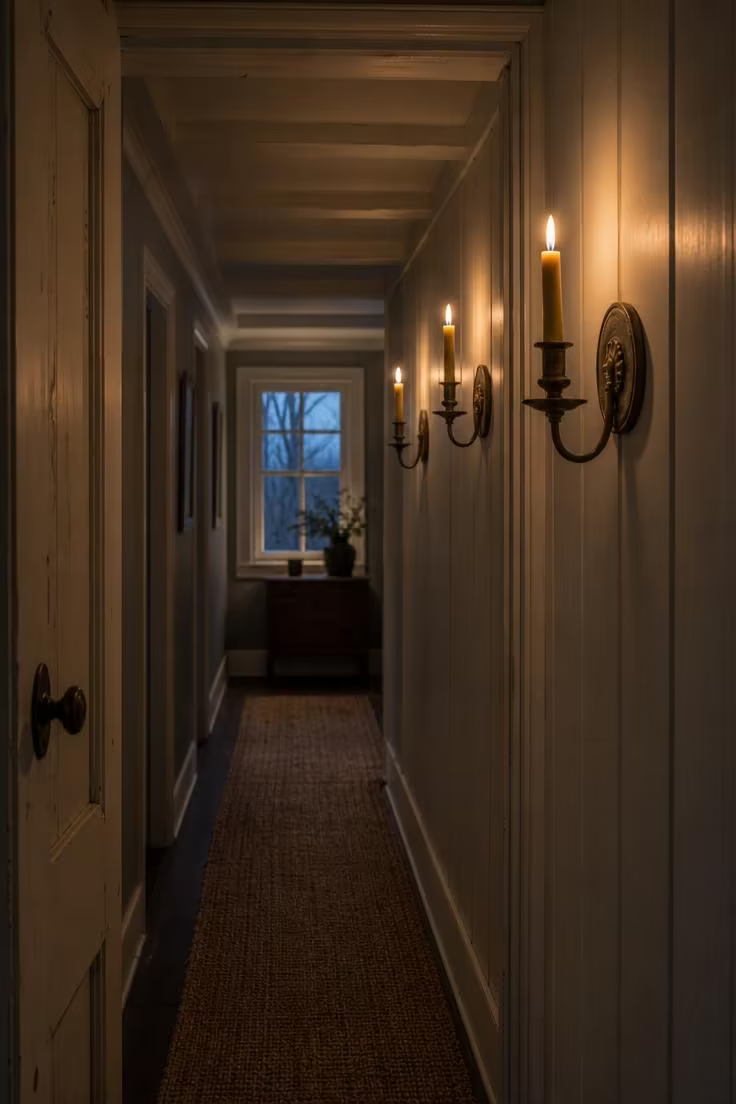
Narrow hallways are often left bare because they feel too cramped for large art, but a vertical row of sconces solves that by working with the height of the wall instead of competing for width.
Brass that has aged into green-brown patina looks completely different from polished brass, and the difference matters here because the worn finish connects to the farmhouse idea of things that improve with use.
Beeswax tapers in a warm honey color give off a light that is softer and warmer than any paraffin alternative, and their slightly irregular shape adds character.
The white board-and-batten paneling behind the sconces creates a clean background that lets the brass and candlelight carry all the visual interest.
A worn jute runner on the floor ties the hallway together from end to end, pulling the earthy palette down from the walls to the ground.
This arrangement works at dusk, when the candlelight fills the hallway with moving shadows that make the space feel alive.
Style Blueprint:
- Three matching aged brass candle sconces with natural patina
- Slim beeswax taper candles in honey tone
- White board-and-batten wall paneling
- Worn jute hallway runner
- Small window at the hallway end for ambient dusk light
A Hand-Lettered Pine Plank Sign With Milk Paint in Faded Black
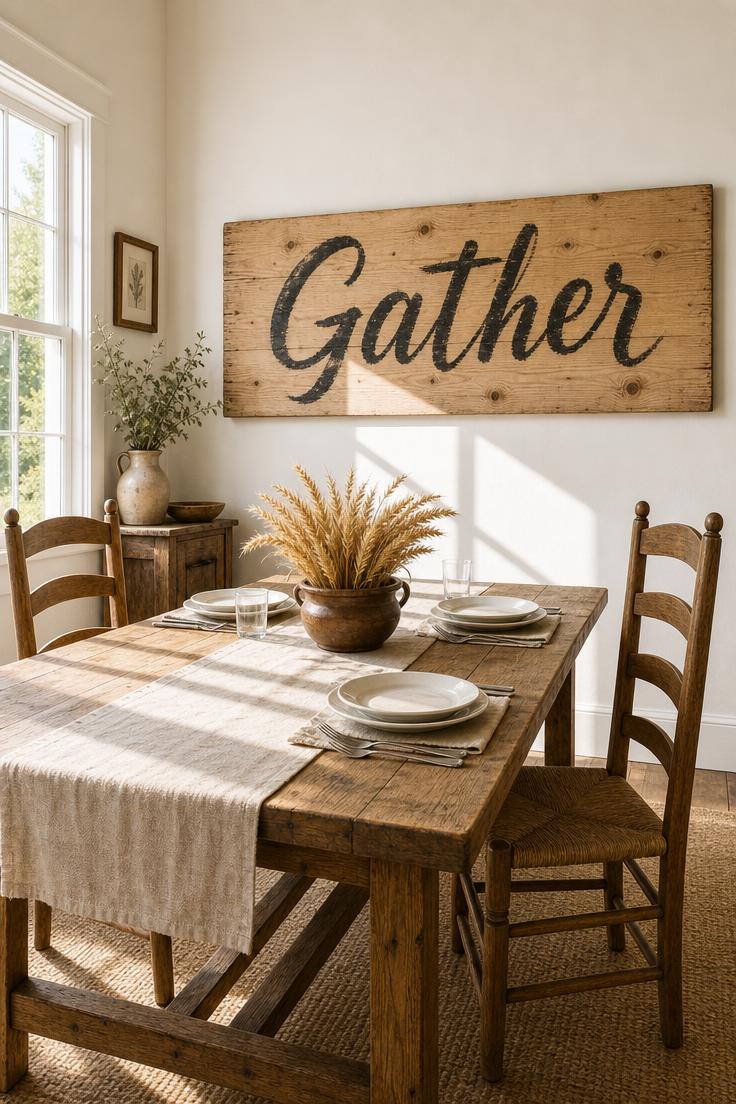
Vintage farmhouse signs have a reputation for looking mass-produced, but a hand-lettered version on raw pine hits differently because the imperfections are the entire point.
Milk paint in faded black has a chalky, matte quality that sinks into wood grain rather than sitting on top of it, and dry-brushing the letters leaves thin spots where the pine shows through.
Mounting this above a dining table creates a focal point that anchors the whole room without needing a second piece of art on the wall.
Bright midday light is the right condition for this kind of sign because it sharpens the contrast between the dark lettering and the pale wood.
The simplicity of a single word keeps the sign from feeling cluttered or overly decorative.
Below, a low arrangement of dried wheat in a brown ceramic bowl echoes the natural material palette of the sign above.
This is reclaimed wood wall art at its most direct, one board, one word, and nothing wasted.
Style Blueprint:
- Wide pine plank (at least 8 inches tall, 30-36 inches long)
- Milk paint in faded black, dry-brush application
- Wall painted in warm white
- Long oak farmhouse dining table
- Dried wheat arrangement in a low ceramic bowl
Design Pro-Tip: When hanging a sign above a table or console, leave 6 to 10 inches of wall space between the top of the furniture and the bottom of the sign. Too close and the pieces merge into a single mass. Too far apart and the sign floats without connection to anything below it.
A Grapevine Wreath Wrapped in Raw Cotton Bolls on a Slate Blue Wall
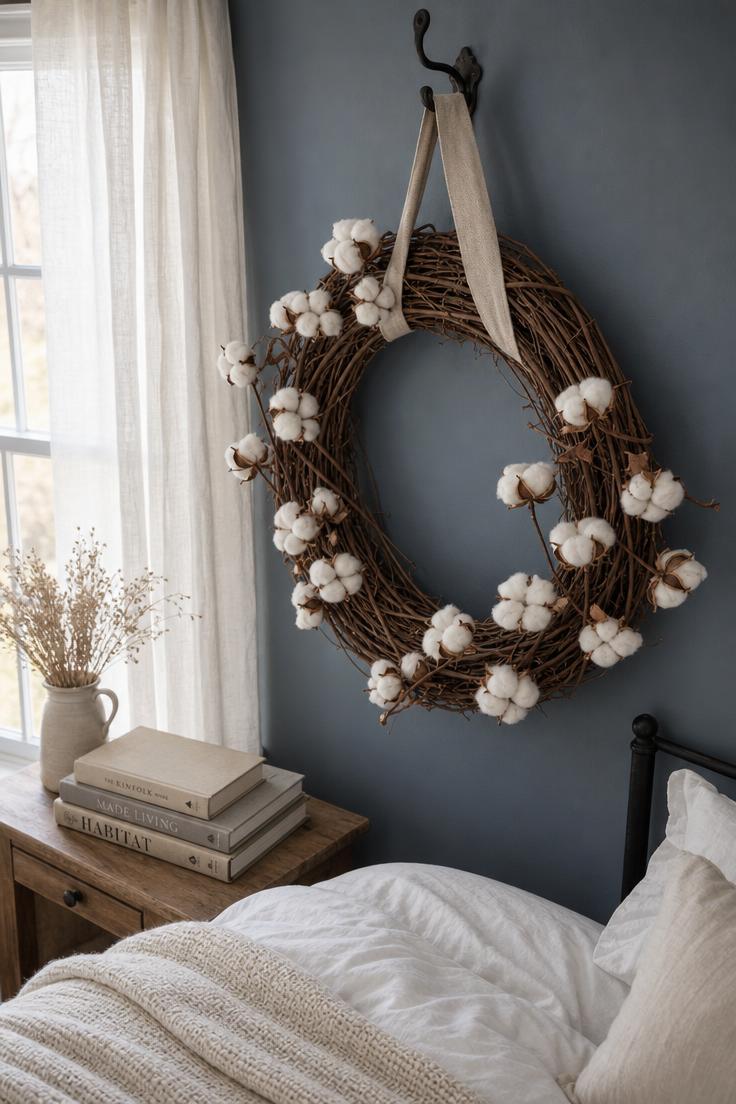
Wreath wall decor often gets limited to front doors and holiday seasons, but a grapevine and cotton wreath on a bedroom wall works year-round because the materials are neutral enough to outlast any trend.
The slate blue wall is a smart choice here because it provides enough contrast to make the white cotton bolls pop without fighting for attention.
Grapevine has a wild, uneven quality that keeps the wreath from looking too polished, and the cotton bolls add soft volume that breaks up the dark lines of the vine.
Hanging it with a wide linen ribbon rather than a wire or hook alone gives the display a finished look that feels intentional.
Soft diffused light is the best condition for a bedroom wreath, since it catches the cotton fibers without creating distracting shadows on the wall behind.
Placing the wreath above the bed at a height where it sits comfortably in the upper third of the wall keeps the room balanced.
The visible texture of the grapevine, the softness of the cotton, and the cool tone of the slate blue wall each contribute a different kind of depth.
This is farmhouse wall decor that asks for no maintenance and never looks out of season.
Style Blueprint:
- Large grapevine wreath base (18-22 inches diameter)
- Raw cotton boll stems for wrapping
- Wide natural linen hanging ribbon
- Small wrought iron wall hook
- Slate blue wall paint (matte finish)
A Pair of Galvanized Steel Milk Jugs Mounted as Wall-Hung Vases
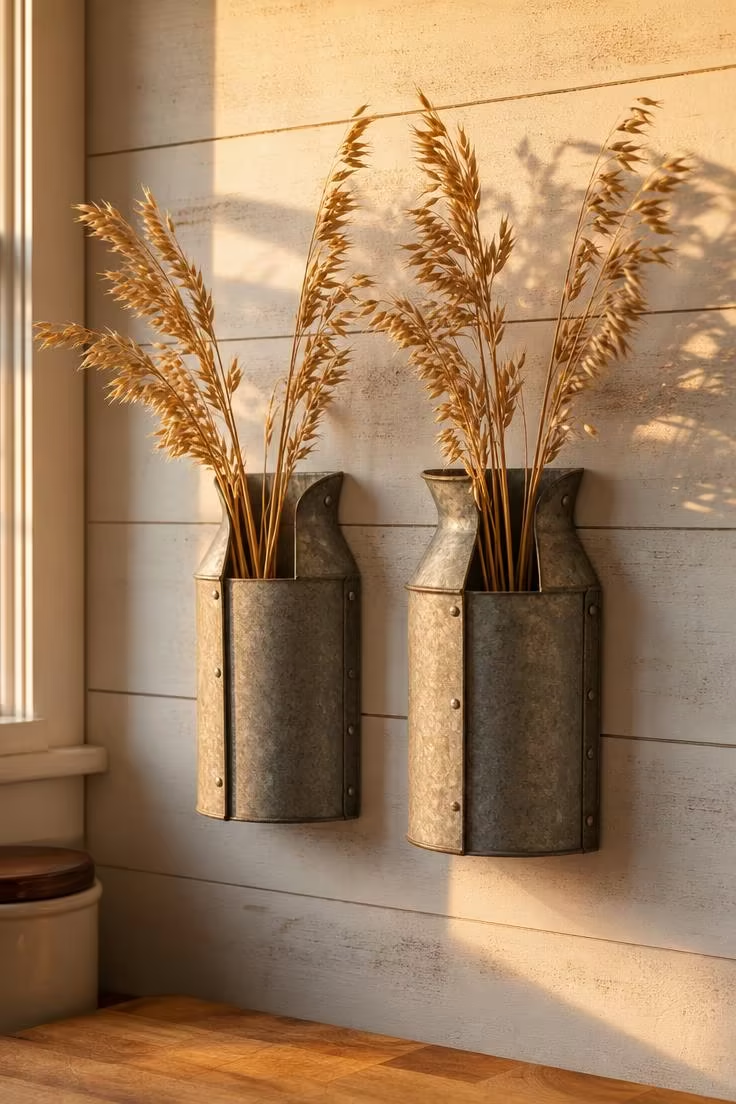
Galvanized metal wall art does not need to be large or complicated to make an impression, and these half-cut milk jugs prove that a small, well-placed piece can anchor a kitchen wall.
The riveted seams and matte gray surface of old galvanized steel carry a texture that works alongside the horizontal lines of the shiplap accent wall.
Dried oat grass is a better choice than wheat here because its finer seed heads create a looser, more delicate silhouette against the flat metal.
Mounting two jugs side by side instead of one creates a pair that frames a small section of wall with symmetry, which feels intentional but not stiff.
Late afternoon light brings out a faint coppery warmth in the galvanized surface that you would never see under fluorescent kitchen fixtures.
This kind of piece takes up very little wall space, making it a good option for the narrow strip between upper cabinets and a countertop.
Style Blueprint:
- Two small galvanized steel milk jugs, halved vertically
- Hidden flat-mount brackets for wall attachment
- Dried oat grass stems (3-4 per jug)
- Whitewashed shiplap accent wall
- Butcher block countertop below for context
A Linen Grain Sack Runner Stretched Over a Hickory Frame as Wall Art
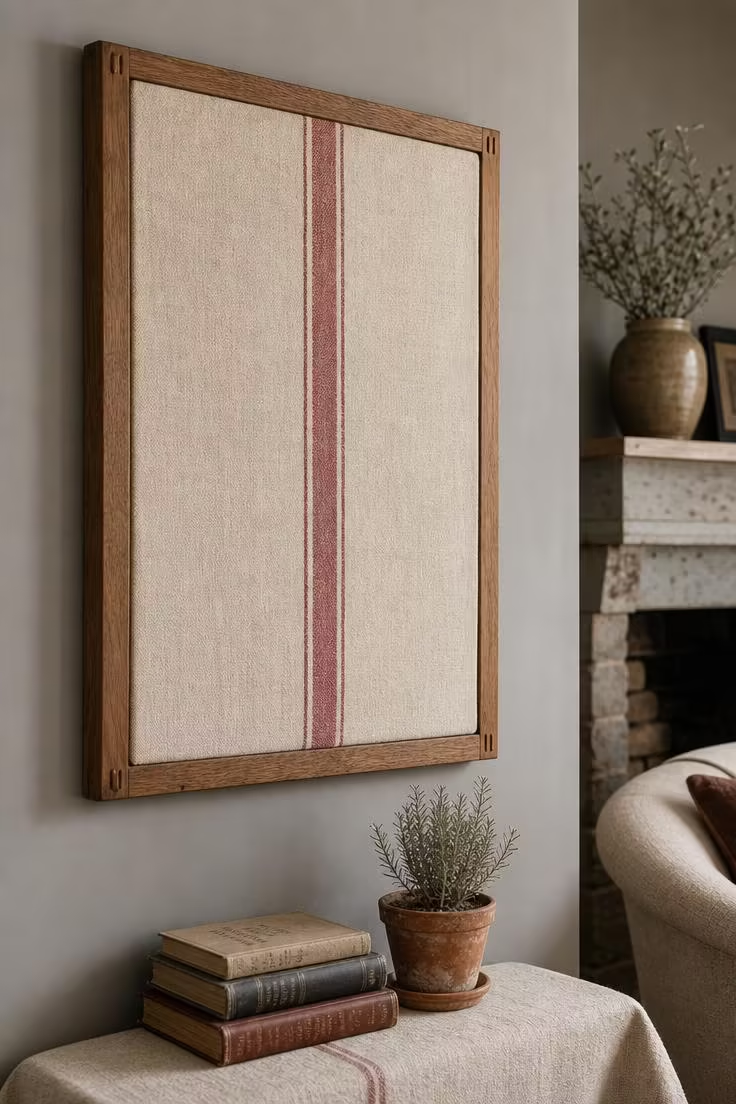
Grain sack fabric has been part of farmhouse interiors for years, but stretching it over a frame and hanging it as wall art lifts it from a craft project into something closer to fine art.
The faded red center stripe on this piece draws the eye straight down the middle, giving the composition a spine that holds everything together.
Hickory is harder and more resilient than pine, and its warm amber tone adds richness without competing with the muted fabric.
Visible dowel joints at the corners are a small detail that separates a handmade barn wood frame from a store-bought one, and they reward closer inspection.
Cool overcast light is ideal here because it reveals the weave of the linen evenly across the surface, without hot spots that wash out the red dye.
Hanging this on a warm gray wall keeps the palette grounded and lets the cream-and-red fabric provide the contrast.
A low bench underneath with old books and a dried rosemary sprig in a terracotta pot extends the color story down from the wall to the floor.
The piece reads as collected and intentional, the kind of thing you might find in a home where every object has a reason for being there.
This is a strong choice for anyone building a farmhouse gallery wall, because it introduces textile texture alongside framed prints and mirrors.
Style Blueprint:
- Antique-style grain sack fabric with center stripe (red or blue)
- Handmade hickory wood frame with dowel joints
- Warm gray wall paint (matte finish)
- Low linen-covered bench for styling below
- Old hardcover books and a small terracotta pot with dried herb
Design Pro-Tip: When mixing textures on a single wall, keep the color range tight and let the materials do the talking. A woven textile, a wood frame, and a ceramic pot in three different textures but similar tones will always look more cohesive than three matching items in three different colors.
A Collection of Round Woven Rattan Trays in Graduated Sizes on a Plaster Wall
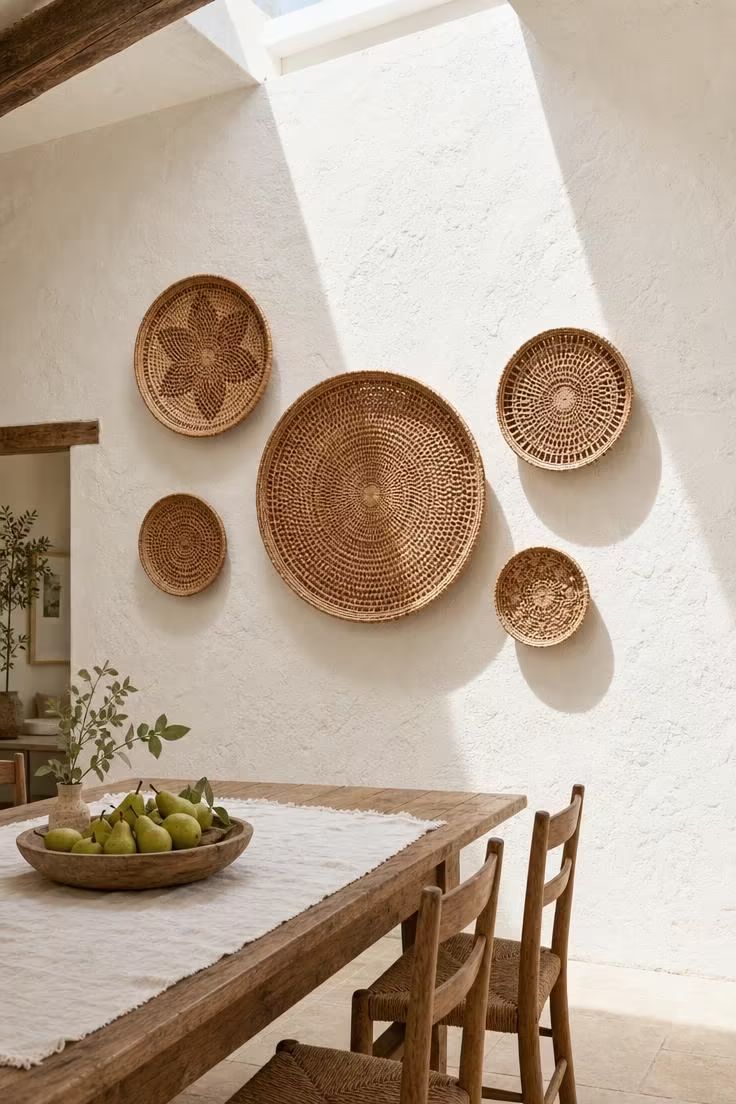
A group of round woven trays on a wall acts like a farmhouse gallery wall that trades framed images for handmade texture.
The graduated sizing creates a natural focal point at the center, where the largest tray anchors the cluster, and the smaller ones orbit around it.
Each tray carrying a slightly different weave pattern prevents the group from reading as a matched set, which is the collected-over-time quality that makes farmhouse decor feel authentic.
Lime plaster walls have a bumpy, imperfect surface that gives the rattan something to play off of, since both materials carry visible handwork.
Bright midday light from a skylight is the best condition for this arrangement because it casts defined circular shadows under each tray that add a second layer of visual depth.
Placing the cluster in a dining room ties it to the idea of shared meals and gathered objects, reinforcing the warmth of the space.
Green pears in a low bowl on the table below bring a single pop of organic color that connects the wall display to the room without overcomplicating it.
Style Blueprint:
- Five round flat woven rattan trays (graduating from 8 to 24 inches)
- Warm white lime plaster wall surface
- Varied weave patterns across the trays (no matching sets)
- Picture-hanging hardware rated for light items
- Low bowl of seasonal fruit on the table below
A Small Arched Iron Mirror Paired With a Single Cotton Stem in a Crock
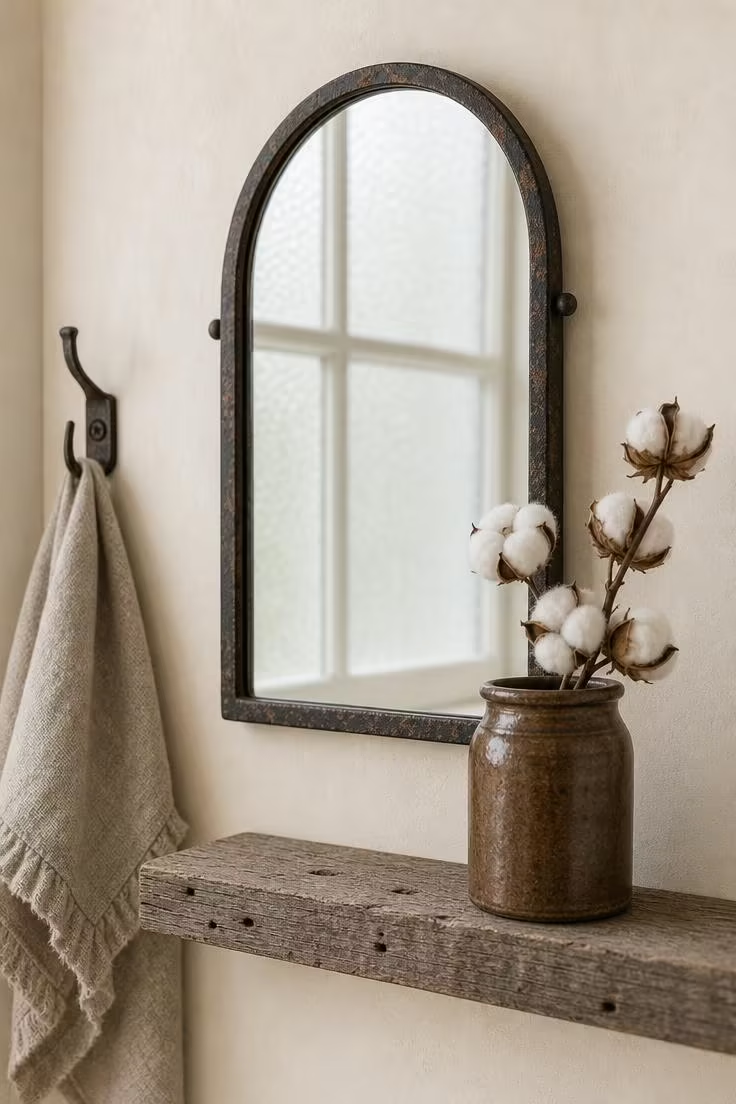
A farmhouse mirror does not need to be oversized to command a wall, and this small arched piece proves that scale can work in your favor when the details are right.
The thin wrought iron frame picks up a few natural rust spots that read as character, not neglect, especially against the warm cream wall.
Pairing the mirror with a single cotton stem in a stoneware crock below it creates a vertical composition that fills a narrow wall or a powder room alcove without overcrowding.
The arched shape of the mirror softens the straight lines of the reclaimed wood shelf beneath it, and that contrast between curves and hard edges keeps the arrangement from flattening out.
Soft diffused light from a frosted window fills the mirror surface with a gentle glow, making the small mirror act as a secondary light source in the room.
Weathered gray wood on the shelf, iron on the frame, stoneware in the crock, and cotton on the stem, four textures in four materials, all within arm’s reach.
A simple linen hand towel on an iron hook to the side completes the space without needing anything more.
This is the kind of arrangement that rewards a second look, because every surface carries its own story.
Style Blueprint:
- Small arched wrought iron mirror (12-16 inches tall)
- Narrow reclaimed wood wall shelf with weathered gray finish
- Small brown stoneware crock
- Single dried cotton stem
- Simple iron hook with linen hand towel
A Row of Tin Ceiling Tile Squares Painted in Soft Cream Above a Mantel
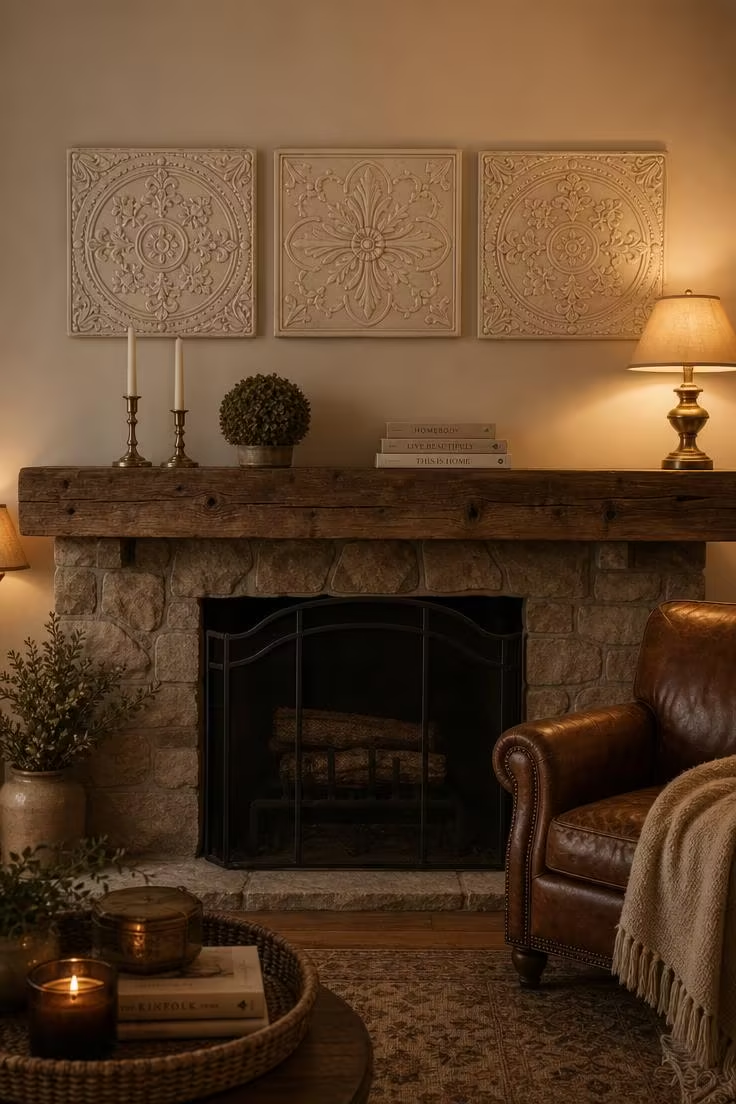
Pressed tin tiles were made for ceilings, but painting them in soft cream and hanging them above a mantel turns architectural salvage into wall art with real presence.
The raised patterns in the tin create their own shadow play under low lamplight, which means this arrangement looks even better at night than during the day.
Three tiles in a row establishes a rhythm that mirrors the horizontal line of the mantel below, tying the two elements together into one composition.
Brass taper holders and a dried boxwood ball on the mantel surface keep the styling grounded in natural materials and muted metals.
Low evening light is the right condition for this wall because it skims across the tin relief and throws soft shadows that reveal every pressed detail.
Leaving the fireplace surround in natural stone and the mantel in raw reclaimed wood lets the painted tin tiles read as the most refined element in the group, which gives the eye a clear focal point.
Style Blueprint:
- Three matching pressed tin ceiling tiles (12×12 inches each)
- Soft cream paint (matte or eggshell finish)
- Wide reclaimed wood mantel
- Two brass taper holders with ivory tapers
- Small dried boxwood ball for organic texture
Design Pro-Tip: Odd numbers create natural focal points, but a row of three works best when the spacing between pieces matches the width of one tile. This keeps the row reading as a group rather than three separate objects floating on the wall.
Conclusion
Farmhouse wall decor comes down to honest materials arranged with care.
Start with one piece that speaks to you, whether it is a whitewashed window frame, a worn grain sack panel, or a cluster of stoneware on a rough shelf.
Build from there slowly, mixing textures and tones rather than matching sets, and your walls will develop the kind of character that no single shopping trip can deliver.