This post may contain affiliate links. If you make a purchase through these links, we may earn a commission at no additional cost to you.
A blank wall is just a missed opportunity wearing white paint.
Butterfly wall decor brings movement, color, and personality to any room without the commitment of a full renovation.
From hammered brass to folded cardstock, the materials are as varied as the butterflies they mimic.
These 10 ideas cover bedrooms, dining rooms, nurseries, and everything in between, with options for every budget and skill level.
Hammered Brass Butterfly Trio Above a Linen Headboard
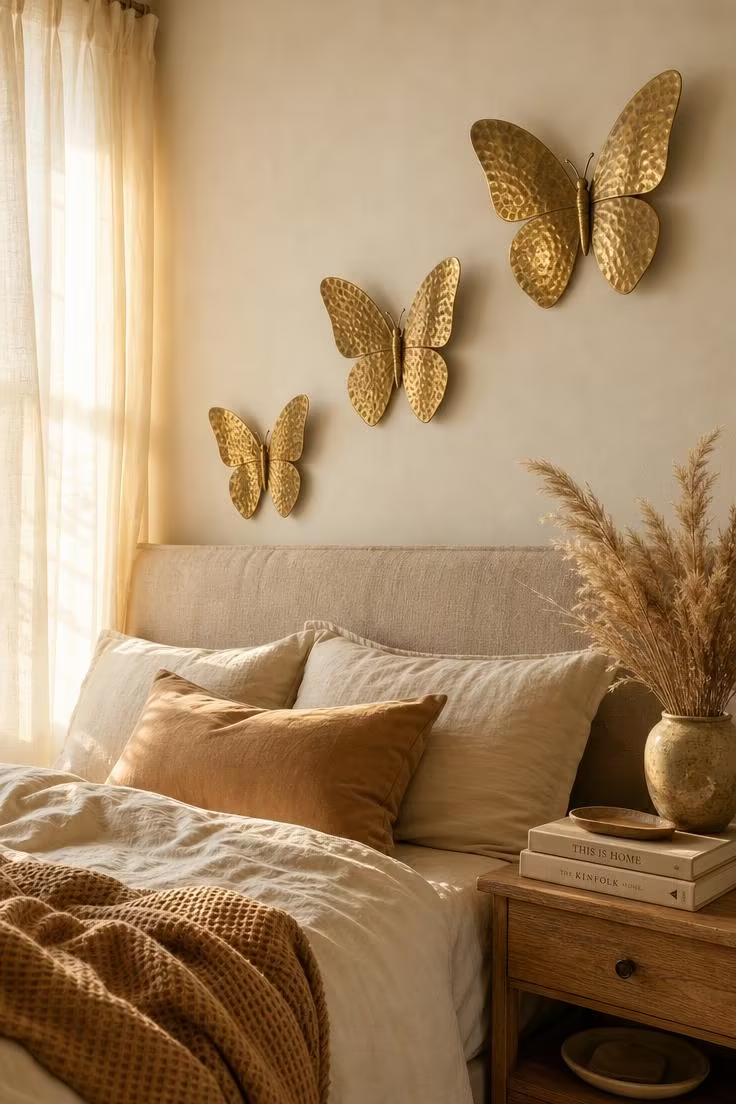
There is something grounding about brass against linen, two textures that feel honest and warm without trying too hard.
The hammered finish on each butterfly catches light differently depending on the angle, so the wall shifts subtly throughout the day as the sun moves.
Mounting them in an ascending diagonal rather than a straight row gives the arrangement a sense of lift, as if the trio is mid-flight off the headboard.
Spacing matters here: keeping 6 to 8 inches between each piece lets the wall breathe while still reading as a cohesive group.
The matte patina of unlacquered brass deepens over months, adding a lived-in quality that polished metals never achieve.
Pair this butterfly wall art with earthy bedroom tones like sand, cream, and soft camel for a palette that feels quiet and deliberate.
A single oversized brass butterfly would work too, but the trio creates a rhythm that one piece alone cannot.
Style Blueprint:
- Three hammered brass butterfly wall sculptures (12, 15, and 18 inches)
- Natural linen upholstered headboard in oatmeal or flax
- Warm white or plaster-toned wall paint
- Oak or walnut nightstand with simple lines
- Waffle-weave cotton throw in cream or sand
Ombre Cardstock Butterfly Cascade Spilling from a Round Mirror
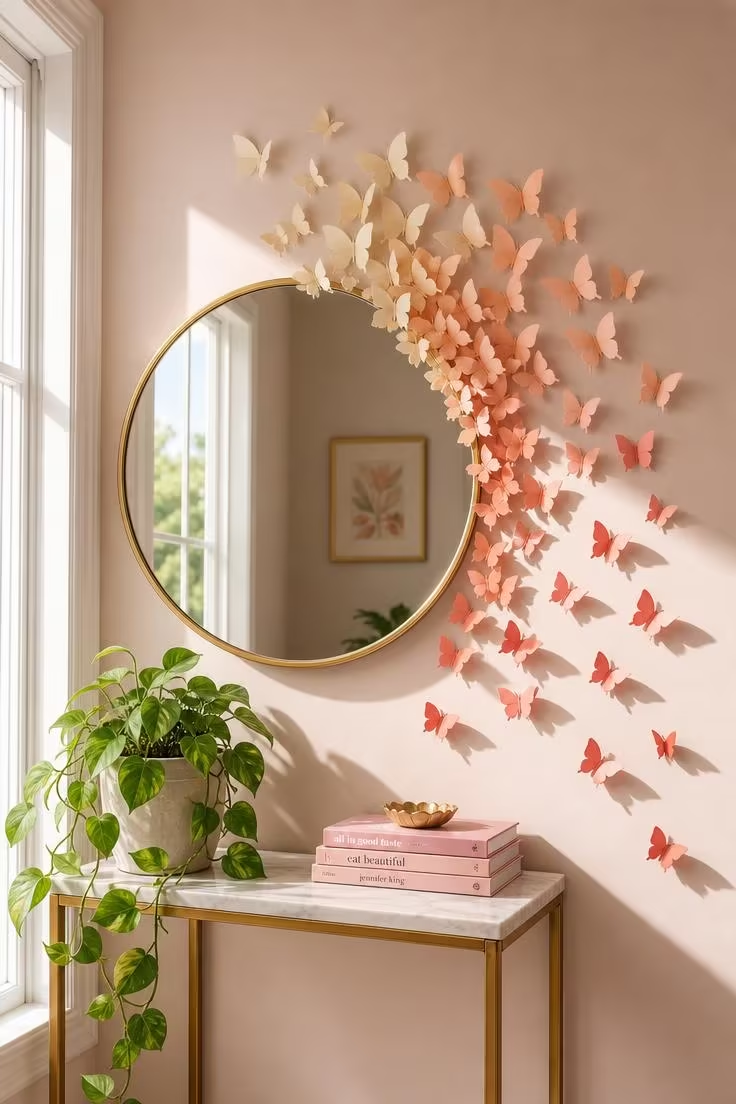
Paper butterflies are the most accessible form of DIY butterfly wall art, and this cascade arrangement proves that simple materials can create a high-impact display.
The ombre effect works because the eye naturally follows the color gradient from light to deep, pulling your gaze along the cascade’s arc.
Folding each butterfly along the center spine creates a 3D wing effect that lifts the whole arrangement off the wall.
Start by clustering the butterflies tightly at the mirror’s edge, then gradually increase the spacing as they fan outward.
This paper butterfly wall art approach costs under twenty dollars in cardstock and an afternoon of cutting with a craft knife or die-cut machine.
The round mirror acts as a visual anchor, giving the cascade a clear origin point that makes the whole arrangement feel purposeful rather than scattered.
Bright midday light is ideal for this setup because it casts sharp, defined shadows behind each folded wing, doubling the visual complexity for free.
Hot glue or removable adhesive dots keep the butterflies in place without damaging the wall, making this a renter-friendly option.
Style Blueprint:
- Cardstock in 5 to 7 ombre shades (ivory through deep coral)
- Round gold-framed mirror (24 inches)
- Butterfly template or die-cut machine
- Removable adhesive dots or poster putty
- Marble-topped or white console table for below the mirror
Matte Black Iron Butterfly Silhouettes on a White Shiplap Accent Wall
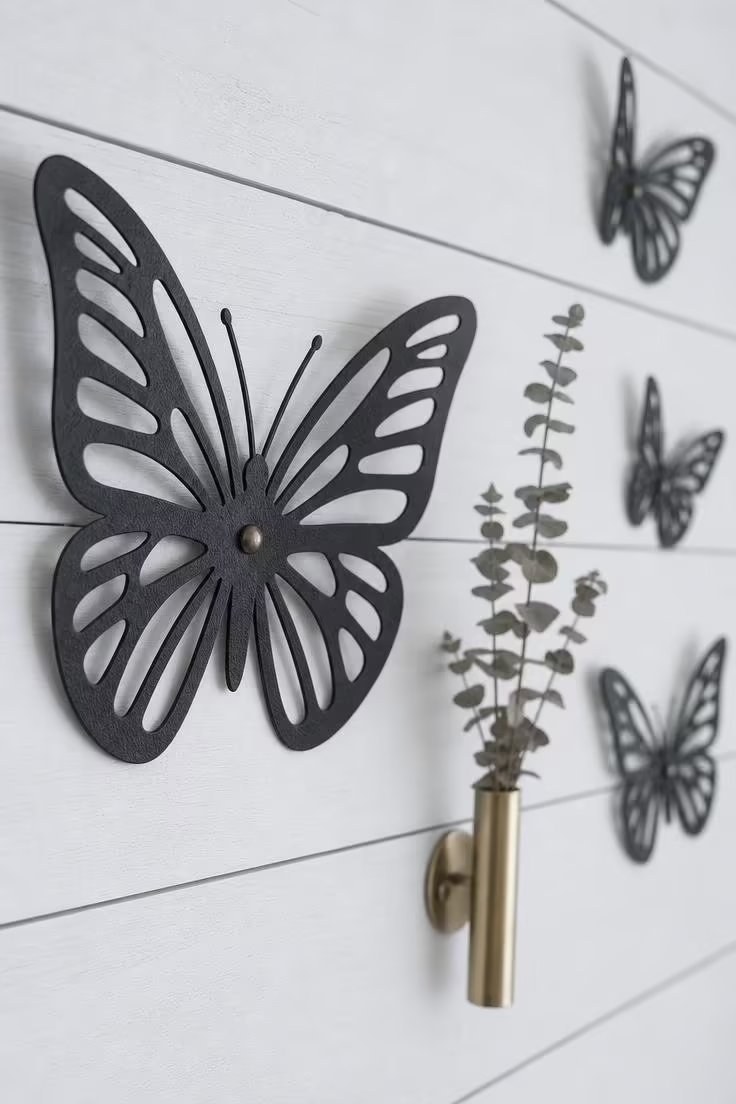
Black on white is a pairing that never wears out its welcome, and flat iron butterflies against shiplap prove the point without a single unnecessary detail.
The laser-cut wing veining on each metal butterfly wall sculpture adds just enough visual interest up close, while from across the room the silhouettes read as bold graphic shapes.
Cool, even light matters here because harsh directional sun would cast shadows that compete with the clean lines of the composition.
Five to seven pieces in graduating sizes create a sense of scale without cluttering the wall.
Pin them directly to the shiplap boards using small finishing nails, letting the butterflies sit flush for a flat, gallery-style look.
This is the kind of butterfly wall decor that works in a modern farmhouse, a Scandinavian living room, or a minimalist hallway with equal ease.
Style Blueprint:
- Five to seven matte black iron butterfly silhouettes in graduated sizes
- White painted horizontal shiplap boards
- Small finishing nails or picture pins
- One small brass wall vase with dried eucalyptus
- North-facing or shaded wall for even lighting
Pressed Flower and Resin Butterfly Specimens in Walnut Shadow Boxes
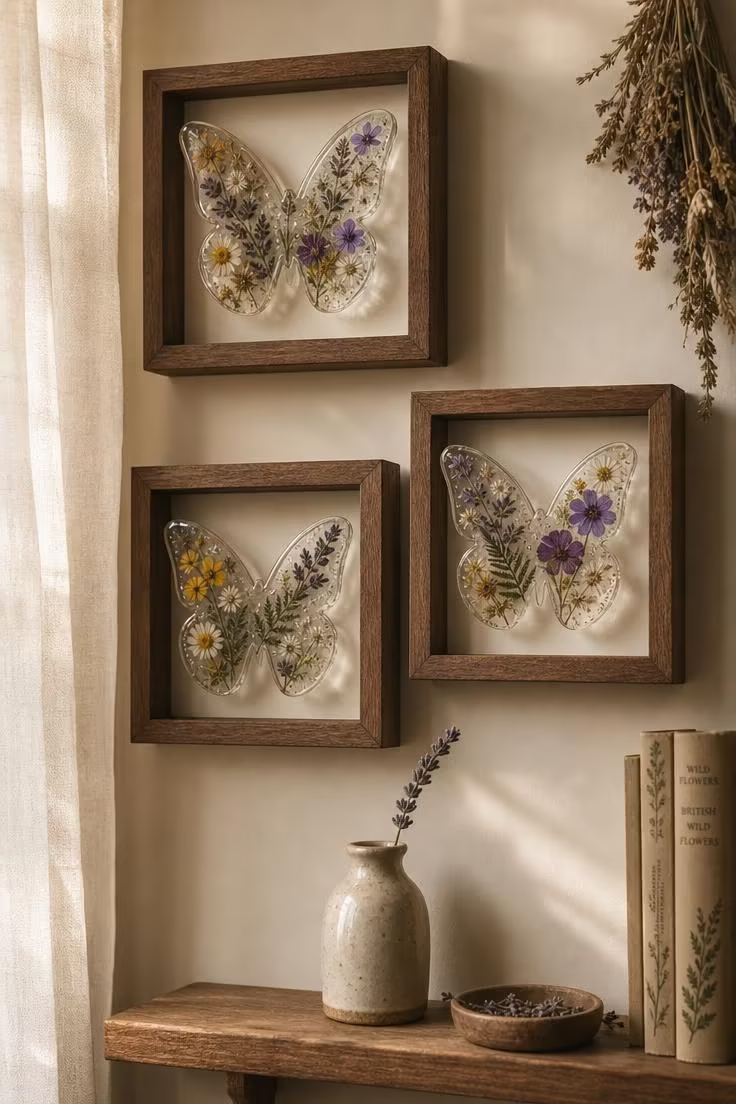
Resin work bridges the gap between craft project and fine art, and these pressed flower butterfly specimens sit firmly on the art side of that line.
The translucent quality of clear resin lets light pass through the petals, so the colors shift depending on the time of day and the angle of viewing.
Walnut frames add warmth without competing with the delicate botanical details inside each shadow box.
Two-part epoxy resin poured in thin layers traps the flowers at different depths, creating a sense of dimension that a flat pressed flower arrangement cannot match.
Silicone butterfly molds in the 6 to 8 inch range work best for this scale, large enough to appreciate the botanical details but small enough to cluster on a wall without overwhelming the space.
Mixing flower types across the three boxes keeps the set from looking repetitive: try lavender and Queen Anne’s lace in one, buttercups and fern fronds in another.
This is butterfly garden wall art in the most literal sense, bringing the meadow indoors and preserving it behind glass and resin.
Hang the shadow boxes in a loose triangular grouping with 3 to 4 inches between frames for a collected-over-time feel.
These pieces make thoughtful gifts, too, especially when the flowers come from a meaningful garden or occasion.
Style Blueprint:
- Three walnut shadow box frames (8×8 inches)
- Two-part clear epoxy resin
- Silicone butterfly molds (6 to 8 inches)
- Assorted pressed wildflowers (lavender, Queen Anne’s lace, buttercups, fern fronds)
- Small ceramic bud vase and dried lavender for shelf styling
Design Pro-Tip: When grouping framed pieces on a wall, cut paper templates to size and tape them up first. Live with the arrangement for a day before drilling a single hole. What looks balanced at arm’s length often needs adjusting once you step back across the room.
Woven Cotton Macrame Butterfly Wall Hanging on a Terracotta-Painted Wall
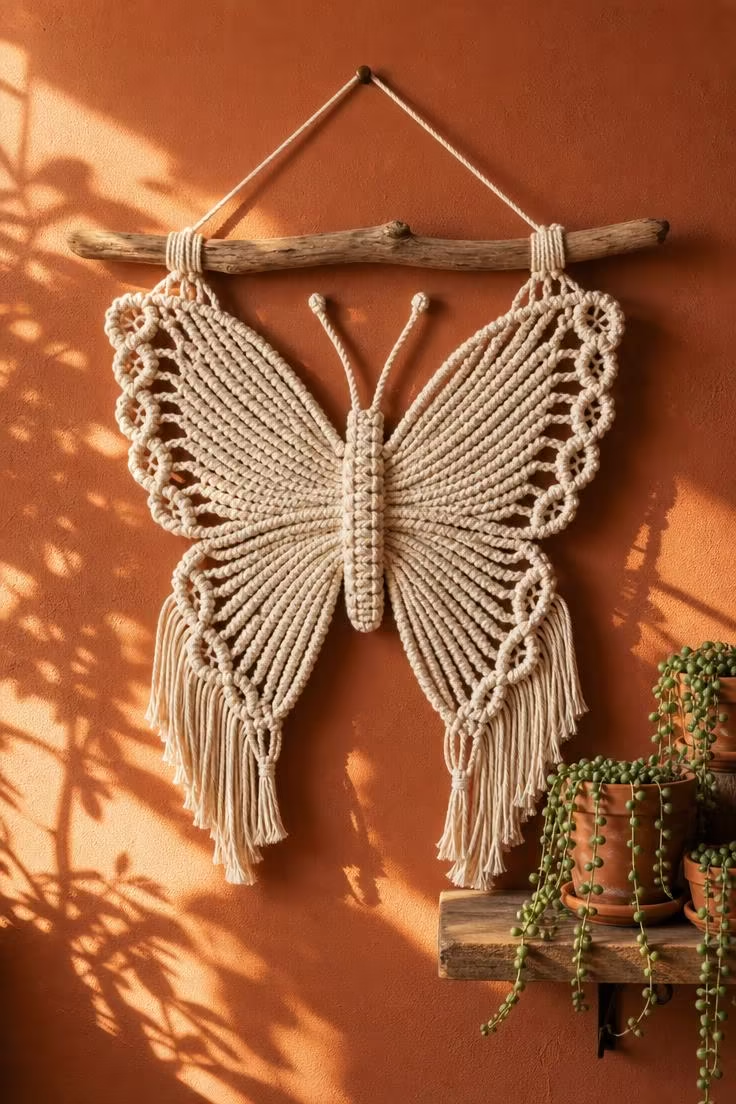
Macrame and terracotta are two textures that belong together, both earthy, both handmade in spirit, both better with age.
This butterfly wall hanging fills a wall the way a painting would, but with a tactile quality that flat art never delivers.
Square knots form the dense butterfly body while diagonal clove hitches create the structured wing outlines, giving the piece a clear shape without losing the organic feel of hand-knotted cord.
The trailing fringe along the lower wing edges adds movement, catching any breeze and swaying slightly.
Terracotta paint deepens the warmth of undyed cotton, and late afternoon light makes both surfaces glow.
A short piece of natural driftwood across the top serves as both the mounting bar and a decorative element, much more interesting than a plain wooden dowel.
Hang this at eye level in a living room, bedroom, or reading nook where the texture can be appreciated up close.
Style Blueprint:
- Natural undyed cotton macrame cord (4mm)
- Driftwood mounting bar (18 to 24 inches)
- Terracotta or rust-toned wall paint
- Brass cup hooks or heavy-duty picture nail for mounting
- Trailing plants on a nearby floating shelf for layered texture
Watercolor Butterfly Print Gallery Grid on a Sage Green Wall
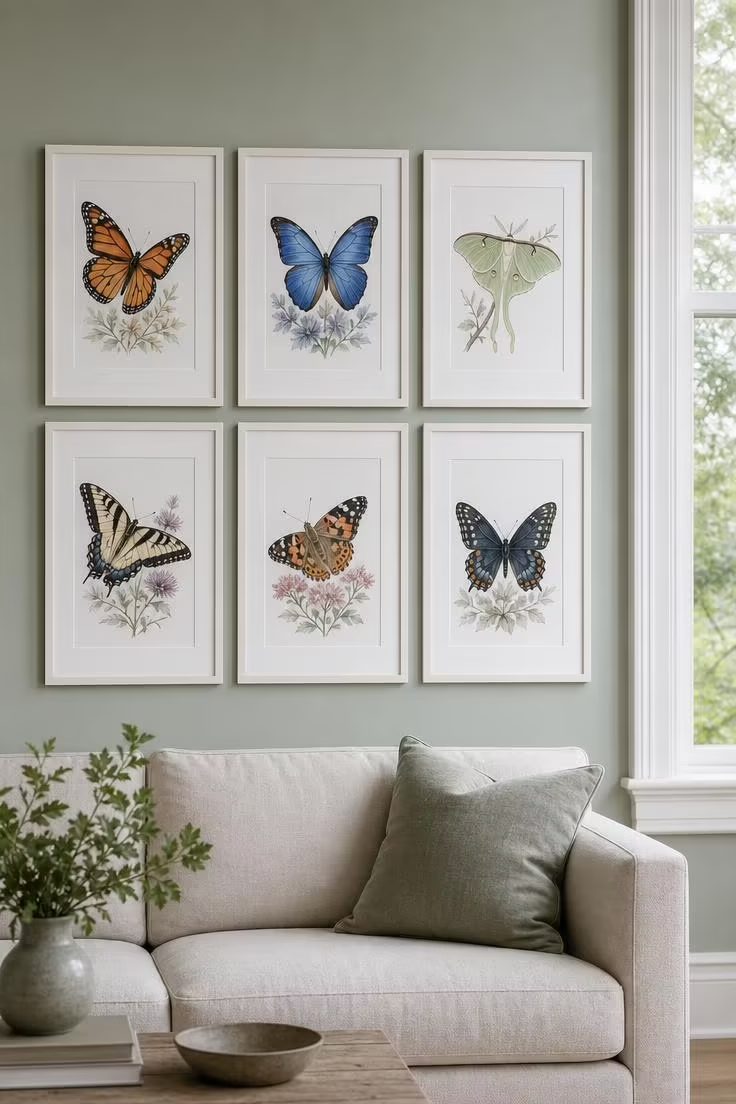
A grid arrangement brings order to something as free-form as watercolor, and that tension between structure and softness is what makes this display work.
Choosing different butterfly species for each print adds visual variety without breaking the cohesion of the matching frames and mats.
Sage green walls act as a natural backdrop for watercolor pigments, cool enough to let warm ambers and corals pop without competing.
Thin white frames with wide mats give each print room to breathe, making the grid feel airy rather than crowded.
This butterfly garden wall art approach doubles as a nature study, the kind of wall that invites closer inspection and quiet conversation about wing patterns.
Keep the spacing tight, around 2 inches between frames, so the grid reads as a single composed unit rather than six separate pieces.
Cool overcast light is your best friend here because it eliminates the glass glare that wrecks framed art in sunny rooms.
Commission a local watercolor artist or source botanical prints from independent illustrators for pieces that feel personal rather than mass-produced.
Style Blueprint:
- Six watercolor butterfly prints (varying species)
- Thin white wood frames with wide white mats (11×14 or 12×16 inches)
- Sage green wall paint (muted, not bright)
- D-ring hangers and a laser level for precise grid alignment
- Low cream or neutral sofa nearby for context
Gold Leaf Butterfly Stencils Climbing a Stairwell Wall
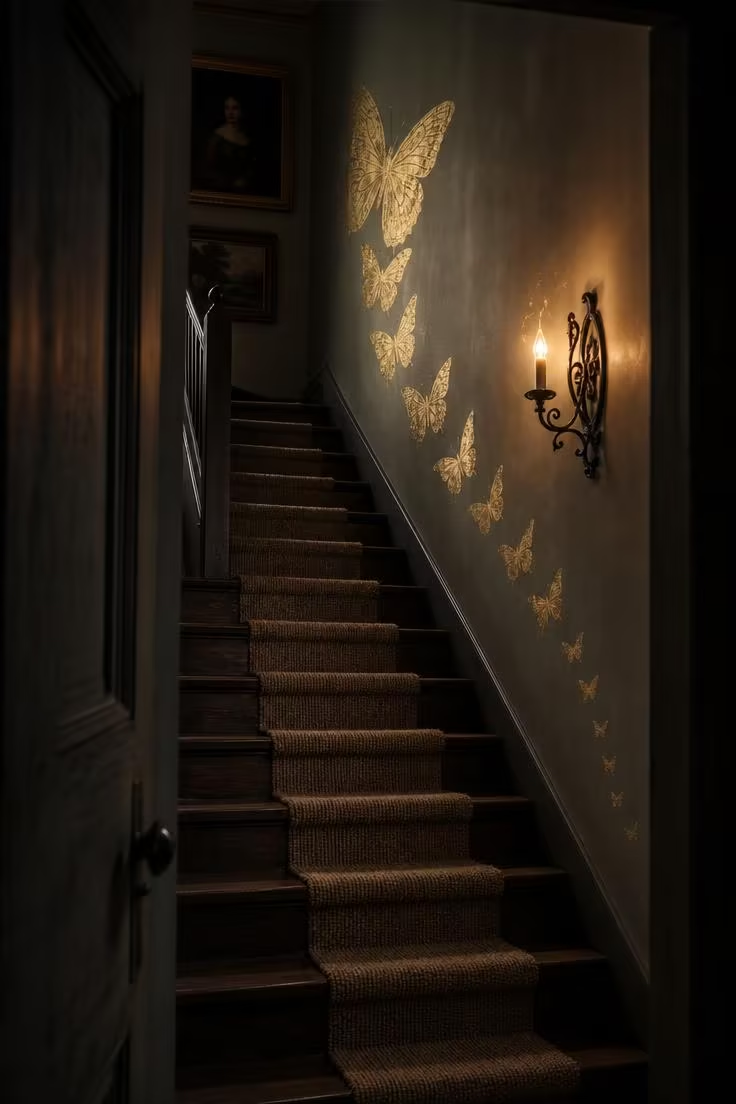
Stairwell walls are notoriously difficult to decorate because the angle changes with every step, but a climbing butterfly pattern turns that challenge into an advantage.
The graduating size creates a natural perspective effect, small at the base where you stand closest and larger near the top where distance would otherwise shrink the detail.
Gold leaf on matte plaster has a quality that metallic paint cannot replicate, a soft shimmer that shifts between matte and reflective depending on the light angle.
Apply the stencils with repositionable adhesive spray, then press gold leaf sheets over a thin layer of gilding adhesive, brushing away the excess with a soft bristle brush.
A wrought iron sconce at the midpoint catches the gold surfaces in low light, turning the stairwell into a visual event during evening hours.
Keep the surrounding wall color understated, putty gray or warm greige lets the gold do all the work.
Style Blueprint:
- Butterfly stencil set in 4 to 5 graduated sizes (3 to 10 inches)
- Imitation gold leaf sheets and gilding adhesive
- Repositionable stencil spray adhesive
- Warm putty gray or greige wall paint
- Wrought iron wall sconce with amber-toned bulb
Porcelain Butterfly Plates in White and Cobalt on a Navy Dining Room Wall
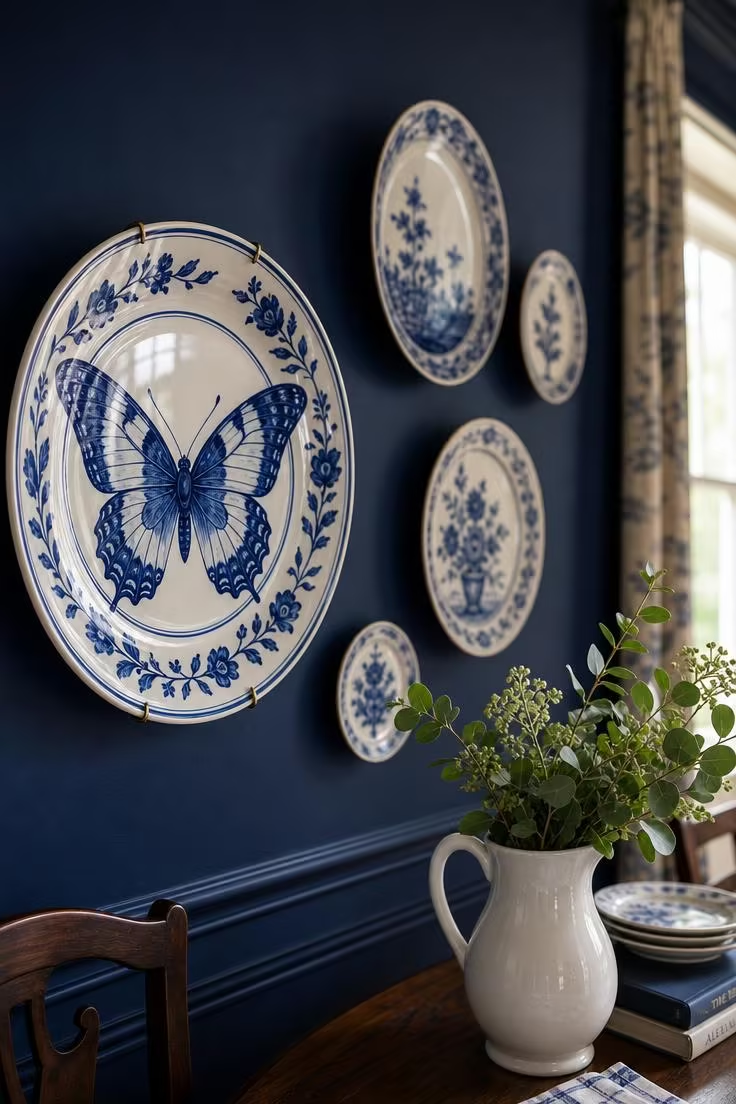
Cobalt on navy sounds like it would disappear, but the white porcelain ground and the glossy glaze create enough contrast to make each plate sing against the dark wall.
Mixing plate sizes, 6, 8, and 10 inches, breaks up the visual rhythm and keeps the arrangement from looking like a catalog display.
Disc plate hangers mounted to the back let each plate sit flush against the wall without visible hardware, and they hold securely enough for daily life.
This is butterfly room decor with a collected-over-time quality, the kind of wall that looks like it came together over years of flea market finds and antique shop visits.
Hand-painted brushstrokes give each plate slight irregularities that machine-printed transfers never achieve, and those small differences are what make the cluster feel alive.
Style Blueprint:
- Five to seven porcelain plates in cobalt blue butterfly motifs (6, 8, and 10 inch sizes)
- Disc plate hangers (adhesive or spring-loaded)
- Deep navy blue wall paint (matte or eggshell finish)
- Dark wood dining table for context
- White ceramic pitcher with fresh or dried greenery
Design Pro-Tip: When hanging plates on a wall, start with the largest piece at the center of your intended cluster and build outward. Use painter’s tape on the wall to mark each plate’s position before committing to any hardware. Step back after every two plates to check the spacing from across the room.
Layered Birch Plywood Butterfly Cutouts With Painted Wing Tips
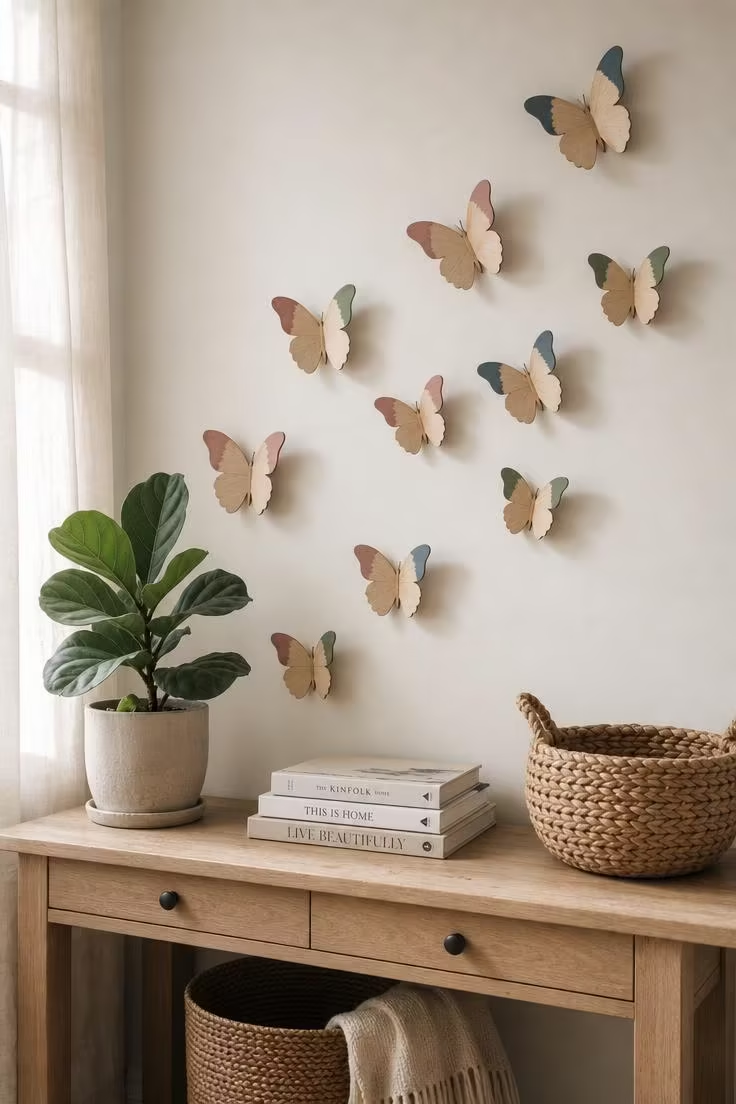
Raw birch plywood has a warmth and grain pattern that painted surfaces cannot match, and dipping just the wing tips in color lets that natural beauty lead the composition.
The muted pastels, dusty rose, sage, and slate blue, feel grown-up and considered, far from the bright neon tones that make butterfly decor skew juvenile.
Mounting each butterfly with a small adhesive foam dot behind the body creates a slight lift off the wall, adding real depth and shadow play in softer light.
This is the kind of butterfly wall arrangement that works above a console table, a desk, or a reading chair, places where the close-up texture rewards a second look.
Varying the sizes from 2 inches to 6 inches and scattering them in a loose flight path feels organic rather than gridded.
For renters, 3D butterfly wall stickers and adhesive-mounted plywood cutouts offer the same layered effect without any wall damage.
The contrast between raw wood and matte-painted tips gives each piece a handcrafted quality that mass-produced metal decor rarely captures.
Style Blueprint:
- Eight to twelve laser-cut birch plywood butterflies (2 to 6 inches)
- Matte chalk paint in dusty rose, sage green, and slate blue
- Adhesive foam mounting dots for 3D lift
- Light oak or natural wood console table
- Small potted plant and woven basket for surface styling
Backlit Frosted Acrylic Butterfly Panel With LED Strip Lighting
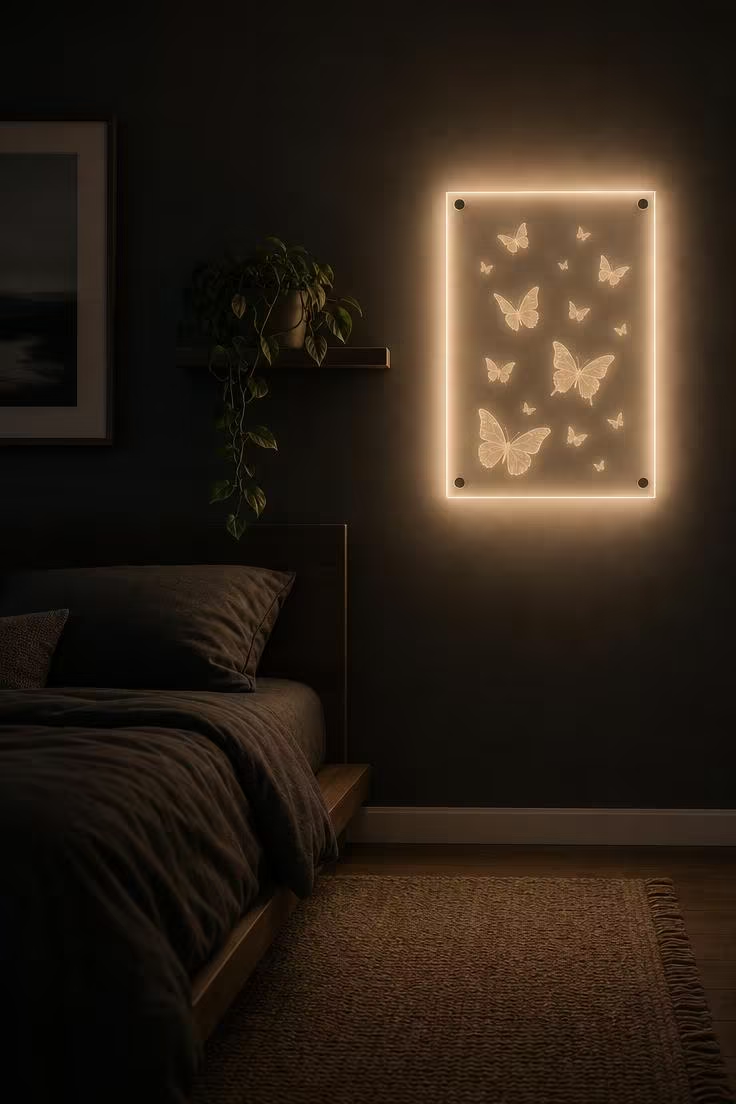
Backlighting changes the entire personality of wall decor, turning a flat surface into a glowing focal point that works around the clock.
The frosted acrylic diffuses the LED light evenly across the panel, so the butterfly silhouettes appear to float in a warm haze rather than sharp-edged spotlight.
Brushed aluminum standoff mounts hold the panel one inch from the wall, and that narrow gap is where the LED strip hides, creating a halo of light around all four edges.
A warm-white LED tape (2700K to 3000K) keeps the glow cozy rather than clinical, and an inline dimmer lets you dial it down for evening hours.
This is butterfly nursery decor waiting to happen, swap the clear frosted acrylic for a pastel-tinted version and you have a night-light that doubles as art.
The laser-etched lines catch the light differently than the surrounding frosted surface, giving each butterfly a subtle outlined definition.
Mount this on a dark charcoal or deep navy wall for maximum contrast between the glowing panel and its surroundings.
Assembly takes about an hour: drill four standoff anchor points, mount the LED strip to the wall inside the anchor pattern, attach the acrylic panel to the standoffs, and plug in.
Style Blueprint:
- Frosted acrylic panel (18×24 inches, 3mm thickness)
- Warm-white adhesive LED strip (2700K to 3000K) with inline dimmer
- Four brushed aluminum standoff mounts (1-inch depth)
- Laser etching service or DIY rotary tool for butterfly silhouettes
- Dark charcoal or deep navy wall paint for contrast
Conclusion
Butterfly wall decor works because it carries meaning without weight, movement without noise, and color without clutter.
These ten ideas span hammered brass to backlit acrylic, and the right one depends on your room, your budget, and whether you own a craft knife.
Start with a single piece that fits the wall you walk past most often.
Once that first butterfly lands, the rest of the wall tends to fill itself.