This post may contain affiliate links. If you make a purchase through these links, we may earn a commission at no additional cost to you.
A bare wall does one thing well: it waits.
It waits for color, for texture, for something that makes you stop and look twice.
Wooden wall decor fills that silence better than almost anything else, because wood carries warmth in its grain, its weight, and the way it catches light differently at every hour of the day.
These ten ideas cover everything from charred cedar to spalted maple, from carved mango wood panels to steam-bent oak sculptures.
Each one is specific enough to picture, and simple enough to pull off.
A Shou Sugi Ban Cedar Plank Accent Behind a Brass-Framed Mirror
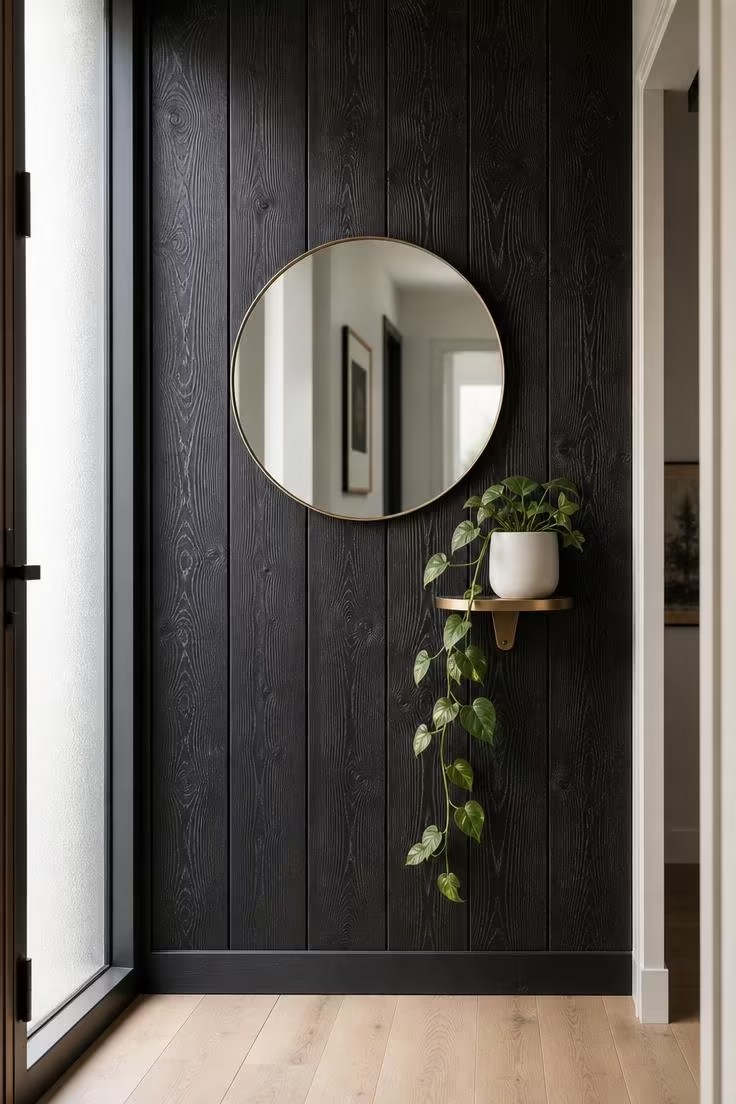
The first thing you notice is the texture.
Shou Sugi Ban — the Japanese method of charring wood with open flame, then brushing and sealing the surface — leaves cedar with a depth that flat paint can never match.
The blackened grain absorbs light in some spots and reflects it in others, so the wall shifts depending on where you stand.
Pairing that darkness with a brushed-brass mirror keeps the space from feeling heavy.
The brass adds a point of warm reflection, and the trailing pothos softens the whole arrangement with a single line of green.
This works best in narrow entryways and powder rooms where you want one wall to do all the talking.
Style Blueprint:
- Vertical charred cedar planks sealed with natural tung oil
- Round brushed-brass mirror (24-30 inch diameter)
- Small wall-mounted brass shelf
- Matte white ceramic pot with trailing pothos
- Pale white oak or light-toned flooring
Stacked Walnut Marquetry Triangles in a Gradient From Honey to Espresso
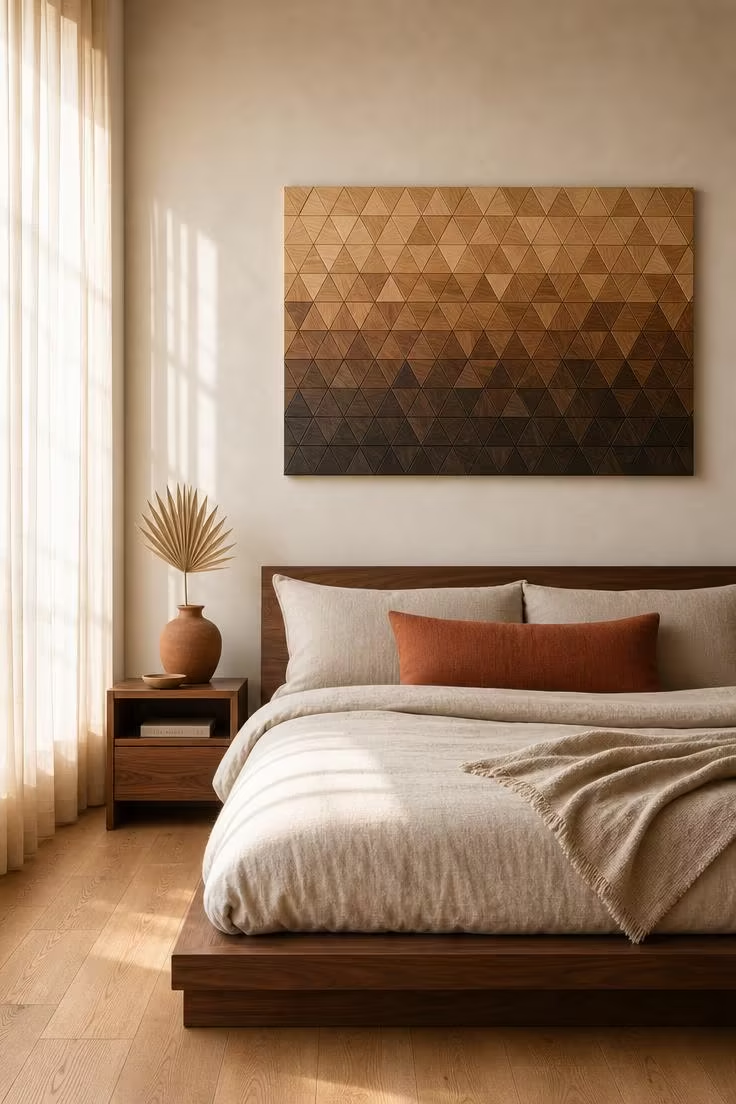
Marquetry turns flat wood into something that feels layered and alive.
The trick here is the gradient — starting with pale, almost blonde walnut at the top and moving to a deep coffee brown at the bottom.
That downward darkening anchors the panel visually and pulls the eye toward the bed, which is exactly where you want attention to settle in a bedroom.
Because every triangle sits at a slightly different grain angle, the surface changes as sunlight moves across it during the day.
What reads as a single warm panel in the morning becomes a patchwork of light and shadow by late afternoon.
It is a piece of wooden wall art that quietly shifts without you having to do anything.
Style Blueprint:
- Walnut veneer triangles in gradient stain (honey to espresso)
- Matte clear coat finish over each piece
- Low-profile walnut bed frame
- Neutral oatmeal linen bedding
- Warm off-white plaster walls
A Single Live-Edge Olive Wood Slab Mounted on a Concrete-Effect Wall
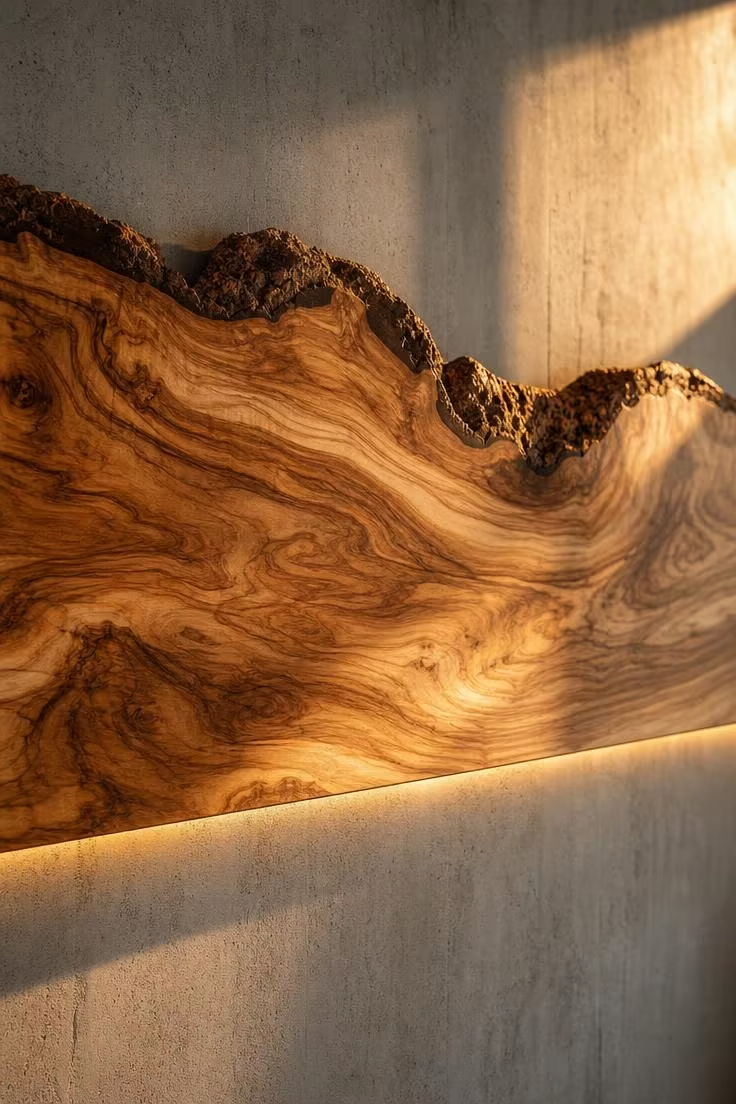
Live-edge wood keeps the tree’s original outline, and that single irregular edge gives a room more character than most full gallery walls.
Olive wood is a strong choice because its grain swirls rather than running in straight lines.
The pale creams and deep ambers create a natural color story without any stain.
Mounting it against a cool grey wall — concrete paint, limewash, or microcement — lets the warm tones push forward.
Add a hidden LED strip behind the bottom edge and the slab appears to float after dark, casting a soft halo of light against the grey surface.
This is live edge wall art at its most direct: one piece of wood, one wall, no filler.
Style Blueprint:
- Olive wood slab (approximately 4 feet wide) with natural bark edge
- French cleat mounting system
- Concrete-effect or microcement wall finish in cool grey
- Recessed LED strip behind the bottom edge
- Clear matte oil finish on the wood
Design Pro-Tip: When mounting heavy wood slabs, always use a French cleat system. The angled interlocking wood strips distribute weight evenly across multiple studs, and they let you level the piece perfectly before stepping back. Toggle bolts alone won’t hold anything over twenty pounds on drywall.
Whitewashed Pine Planks in a Diagonal Chevron Pattern Above a Fireplace
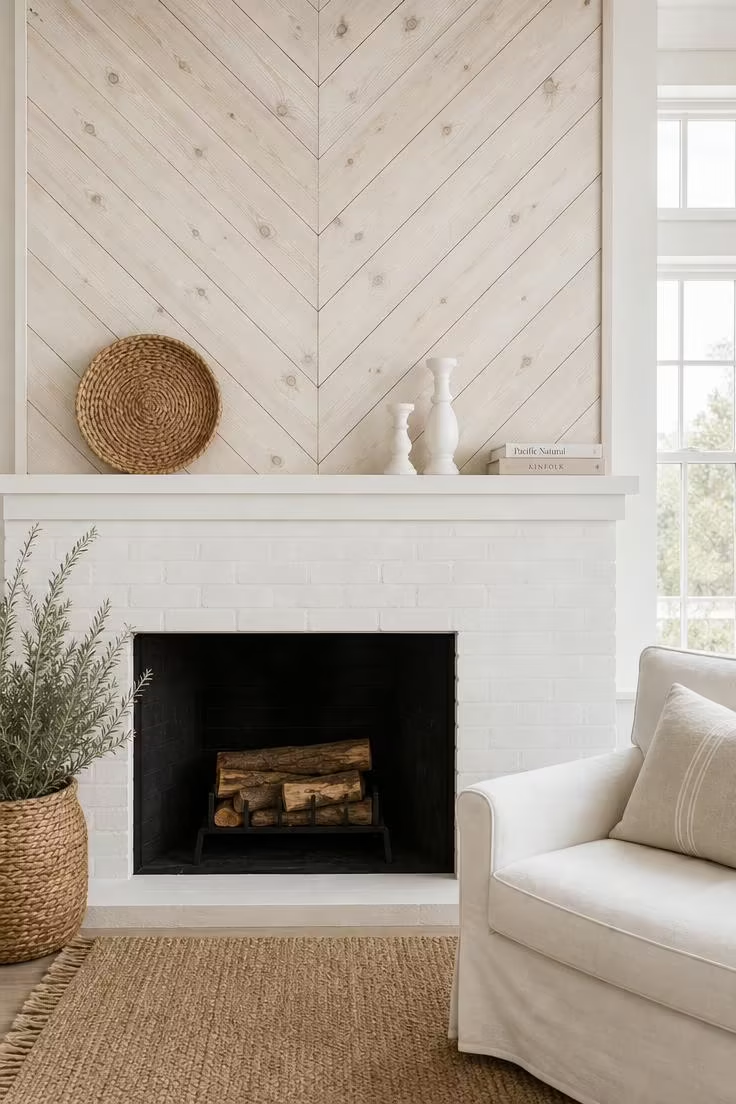
Chevron patterns pull the eye upward, which is exactly what you want above a fireplace where the ceiling height matters.
Whitewashing the pine rather than painting it solid white keeps the wood’s personality intact — the knots, the grain variation, the slight golden undertone beneath the wash.
The diagonal lines add movement to a wall that would otherwise feel static, and pine’s affordability makes this one of the most approachable projects on the list.
A jute rug and linen upholstery below complete the coastal palette without tipping into “beach house” territory.
This is farmhouse wood wall decor that stays on the quiet side.
Style Blueprint:
- Knotty pine boards (1×4 or 1×6) cut at 45-degree angles
- Diluted white paint or lime wash finish
- White-painted brick or stone fireplace surround
- Woven seagrass basket and matte white ceramic accessories
- Natural jute area rug
A Grid of Sixteen Small Teak Blocks With Alternating Grain Directions
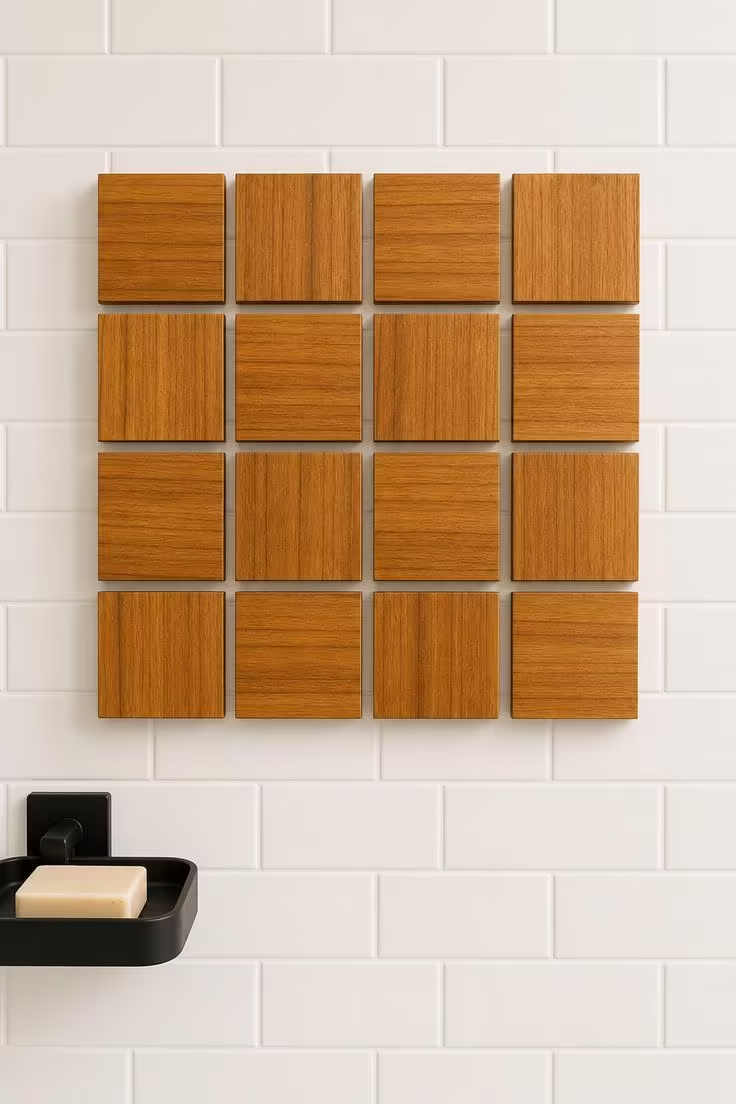
Teak is one of the few woods that belongs on a bathroom wall without hesitation.
Its natural oil content resists moisture, warping, and mildew — the same qualities that make it a standard material for outdoor furniture and boat decking.
Rotating every other block ninety degrees is a small move that makes a real difference.
The grain catches light differently on each square, so the checkerboard pattern appears and disappears depending on where the light source is.
Mounted on white subway tile, the warm honey tone of the teak stands out cleanly.
This is wood panel wall decor that works in wet spaces where most wood would fail.
Style Blueprint:
- Oiled teak blocks (6×6 inches, 3/4 inch thick)
- Stainless steel mounting pins or construction adhesive
- White subway tile wall behind
- Small gaps (1/2 inch) between blocks
- Matte black bathroom hardware
Design Pro-Tip: If you’re placing wood in a bathroom, always leave a gap between pieces. Wood moves — it swells with humidity and contracts when things dry out. Those half-inch spaces between blocks give the teak room to breathe and prevent the grid from buckling after a few months of hot showers.
A Bent-Steam Oak Arch Sculpture Framing a Small Floating Shelf
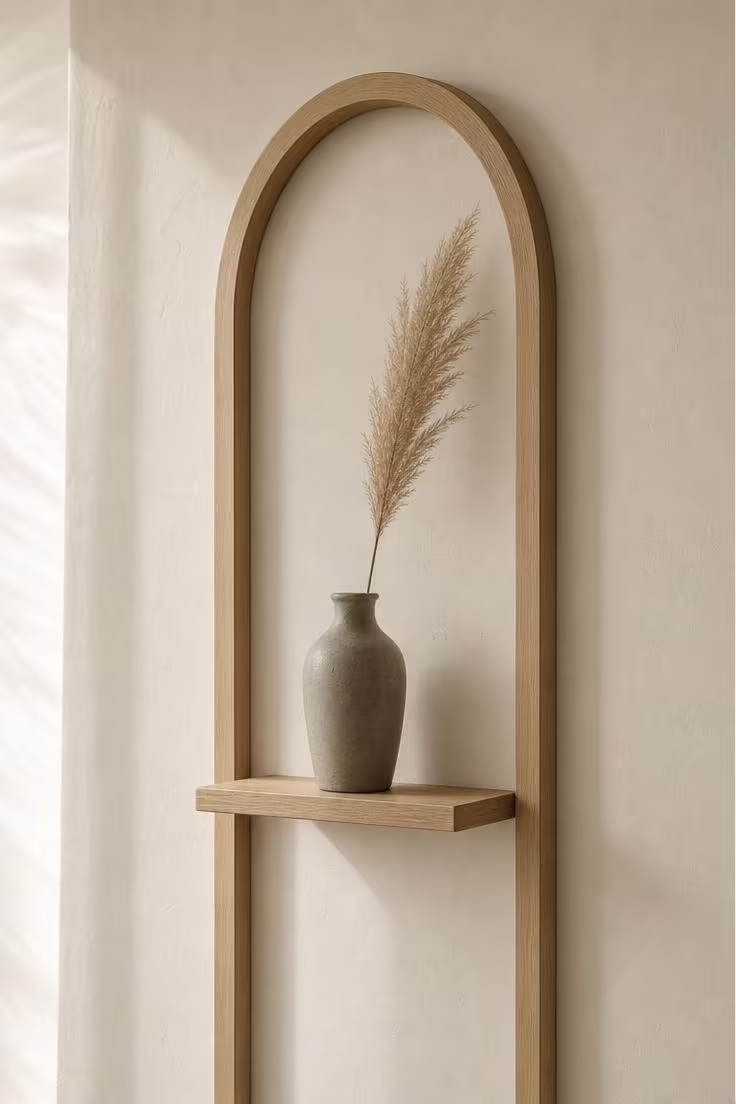
Steam bending forces a straight piece of wood into a curve without cutting or laminating, and the result has a tension to it that carved or assembled arches never quite match.
This piece reads more as sculpture than decoration.
The single continuous strip of white oak sweeps upward in a clean arc, and the small shelf at its center gives the arch a practical reason to exist.
One object is enough — a stoneware vase, a small ceramic figure, a sprig of dried eucalyptus.
The restraint is the point.
Against white plaster, the warm oak and the curved shadow behind it create a moment of quiet focus in whatever room you place it.
Style Blueprint:
- Steam-bent white oak strip (2 inches wide, continuous curve)
- Matte oil finish
- Small white oak floating shelf at the arch midpoint
- Grey stoneware vase with single dried stem
- White plaster or lime-finished wall
Reclaimed Fence Pickets Arranged in Mismatched Widths and Faded Tones
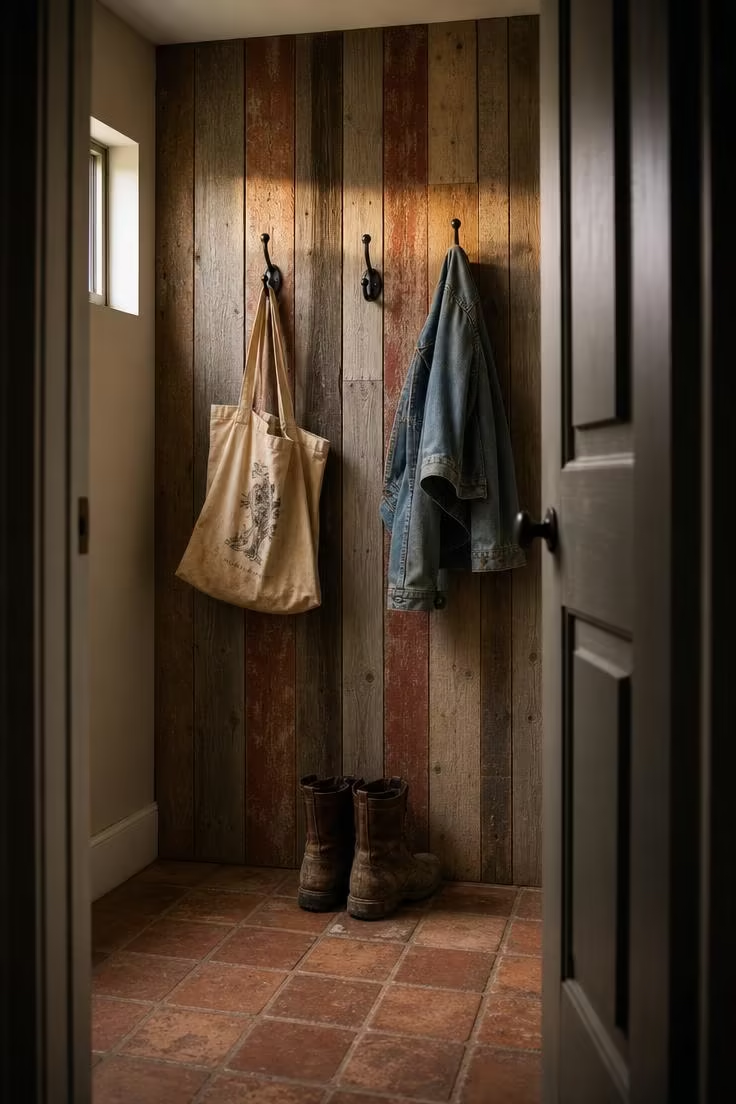
Every board here has already lived one life, and that history shows.
The nail holes, the saw marks, the paint ghosts from old fences and barn walls — none of that can be manufactured with new lumber, no matter how skilled the distressing.
What makes this arrangement work is the randomness.
Mixing widths between three and six inches breaks up the visual rhythm, so the wall never feels like a uniform panel.
The color range — grey, faded red, tan, raw brown — comes naturally from different wood species and decades of sun exposure.
Black iron coat hooks keep the hardware honest, and the terracotta tile underfoot ties the warm and cool tones together.
This is rustic wood wall decor — and reclaimed wood wall art — with actual history behind it, and it belongs in spaces where perfection would feel out of place.
Style Blueprint:
- Reclaimed fence pickets in mixed widths (3-6 inches)
- Raw unsealed finish to preserve natural patina
- Matte black iron coat hooks (staggered heights)
- Worn terracotta floor tile
- Small high-set window for natural light
A Hand-Carved Mango Wood Mandala Panel Stained in Driftwood Grey
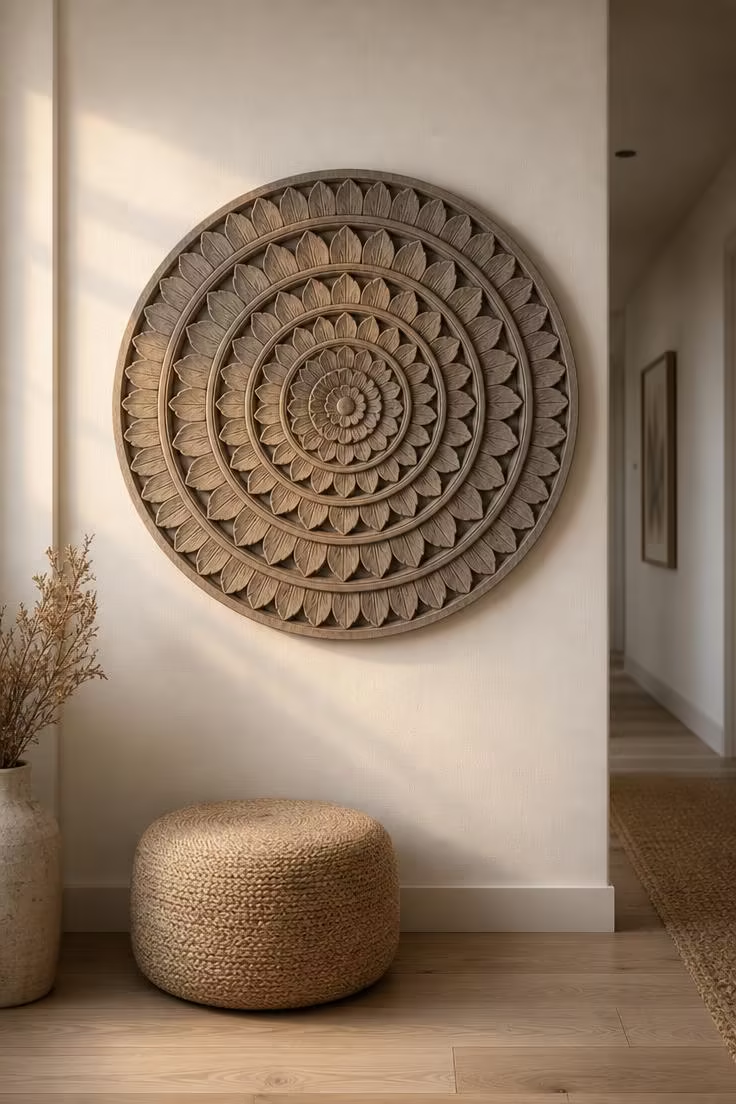
Mango wood is dense enough to hold fine carving detail, and because it comes from trees harvested after their fruit-bearing years, the material has a clean sourcing story.
The driftwood grey stain is what sets this apart from the heavier, darker mandala panels you see in most home goods stores.
Grey lightens the visual weight and lets the carving do the work — the shadows between each petal ring shift as the sun moves, so the pattern looks different at noon than it does at dusk.
At thirty-six inches, the scale is large enough to anchor a hallway or fill the space above a sofa.
The single mandala shape provides a point of focus that a cluster of smaller pieces cannot match.
This is carved wooden wall art that feels collected rather than purchased.
Style Blueprint:
- Mango wood mandala panel (36-inch diameter)
- Driftwood grey wood stain
- White linen-textured wall behind
- Low natural-fiber pouf or woven floor cushion
- Pale oak or light wood flooring
Design Pro-Tip: Grey-stained wood works best against white or off-white walls. If your walls already lean grey or cool, the piece will flatten and lose its shadow depth. Warm the wall color up to cream or soft white before hanging anything carved — the contrast between warm background and cool-toned wood is what makes the texture readable from across the room.
Thin Ash Strips Woven in a Basketweave Pattern Inside a Black Steel Frame
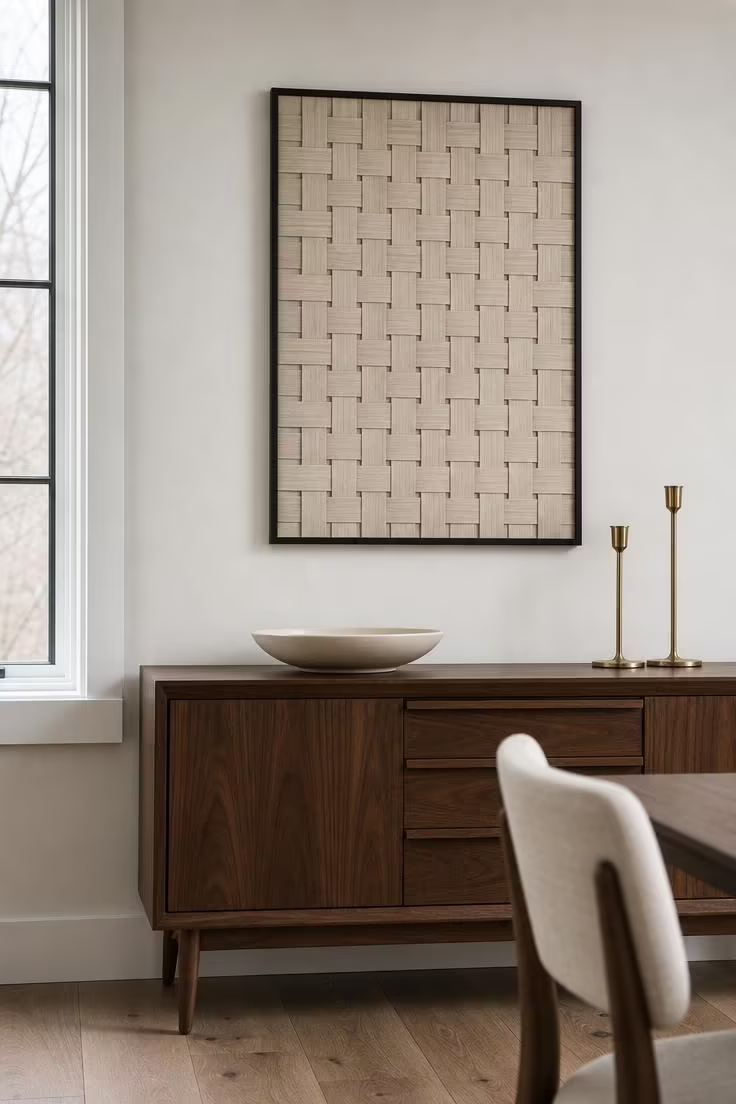
The weave gives this piece a textile quality that straight planks or flat panels cannot deliver.
Ash is a smart choice because it bends without breaking, takes steam well, and has a clean silver-blonde grain that keeps the whole composition feeling light.
The black steel frame does two things at once: it contains the organic weave and adds a line of contrast that reads as modern.
Without the frame, the weave would look like a craft project.
With it, the piece sits somewhere between fine art and furniture — a wooden accent wall in miniature that you can rehang in any room.
Placed above a mid-century credenza, the warm walnut below and cool ash above create a tonal conversation that holds your attention without competing.
Style Blueprint:
- Pale ash wood strips (1 inch wide) woven in basketweave
- Black powder-coated steel frame (24×36 inches)
- Matte oil finish on the ash
- Mid-century walnut credenza
- Warm white wall behind
A Pair of Matching Spalted Maple Rounds Hung Side by Side on Leather Straps
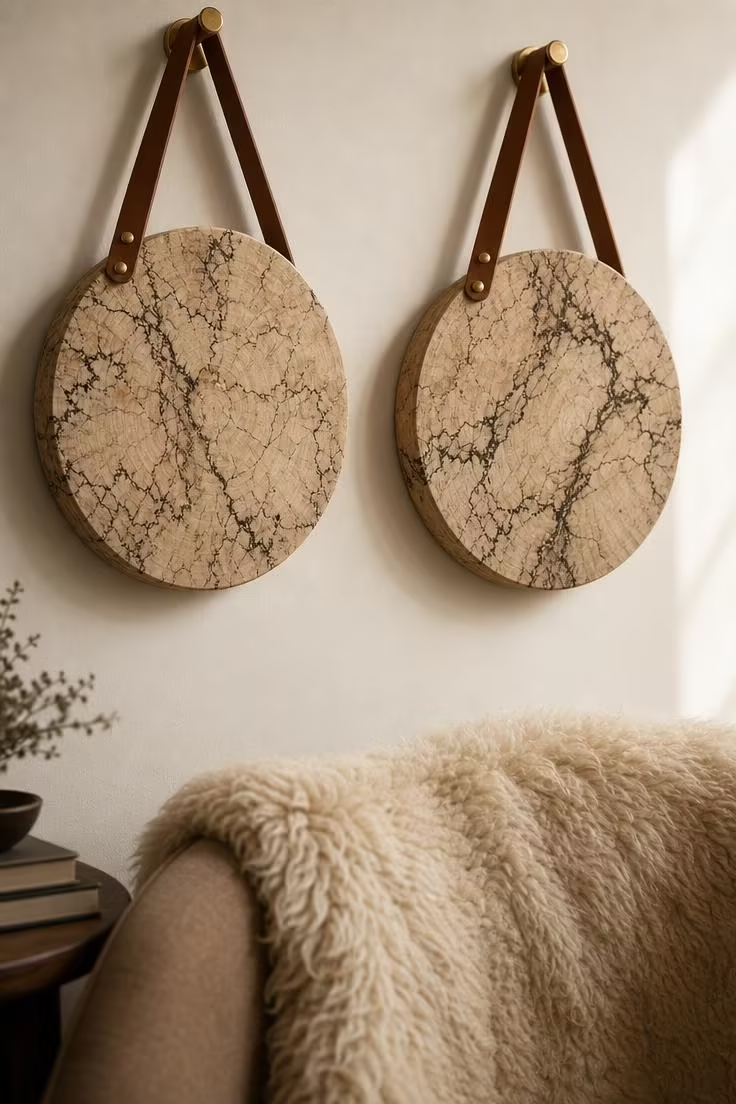
Spalting happens when fungi colonize fallen or dying maple, leaving behind dark lines that look like ink drawings pressed into the wood.
No two rounds carry the same pattern, which is why hanging a pair creates a natural dialogue between pieces rather than an exact match.
The leather straps and brass rivets add a hand-finished feel that a standard picture wire or French cleat would miss.
You see the hardware, and that honesty matters — it tells you this piece was assembled with intention, not mass-produced.
At fourteen to sixteen inches each, the rounds are large enough to hold attention but small enough for bedrooms, reading nooks, and nurseries.
This is natural wood wall hanging at its most personal: two slices of a tree, hung simply, left to speak for themselves.
Style Blueprint:
- Spalted maple cross-cut rounds (14-16 inch diameter)
- Vegetable-tanned leather straps (1.5 inches wide)
- Brass rivets and brass wall hooks
- Cream sheepskin throw on an adjacent chair
- Warm white wall behind
Conclusion
Wood asks for very little once it is on the wall.
No batteries, no updates, no seasonal swaps — just a material that ages the way good materials should, picking up depth and character as the years go by.
These ten ideas range from the raw and salvaged to the polished and geometric — and whether your style leans toward a charred plank accent or a full wood slat wall, they share one thing: each puts the grain, the texture, and the natural tone of the wood at the center of the room’s story.
A charred cedar plank wall and a woven ash panel have almost nothing in common visually, yet both bring the same underlying warmth that painted walls and printed canvases cannot touch.
Pick one idea that fits your space, your light, and the way you live in your rooms.
One wall of well-chosen wooden wall decor is worth more than ten small frames scattered without a plan.