This post may contain affiliate links. If you make a purchase through these links, we may earn a commission at no additional cost to you.
Summer has a way of making every room feel like it needs to breathe.
The heaviest layers come off, the windows open wider, and suddenly that dark throw pillow or thick wool rug feels like it belongs to a different house.
These summer room ideas focus on materials that stay cool, textures that catch the light, and arrangements that make a room feel twice as open as it did in March.
Every idea here names a specific material or finish so you can picture exactly what to look for, not just a mood board of vague “coastal vibes.”
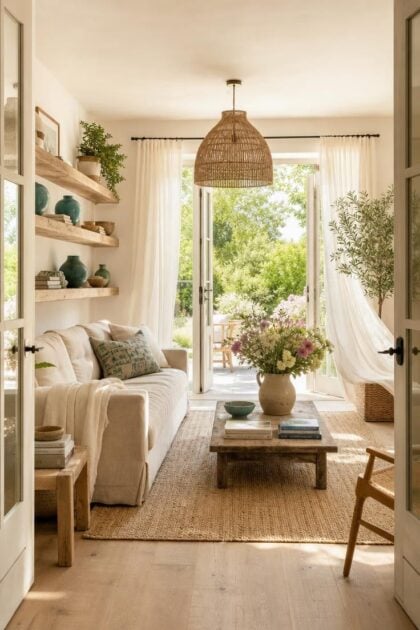
Bleached Pine Floating Shelves Holding Turquoise Pottery and Sun-Faded Linen
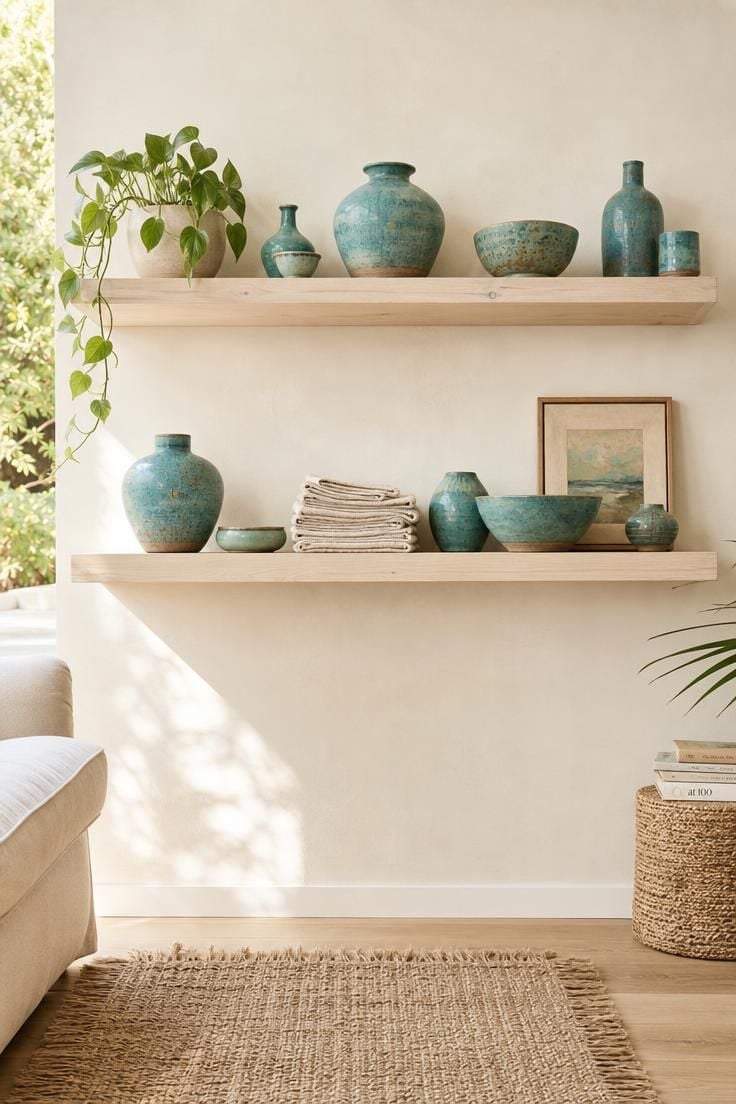
Open shelving does something closed cabinets never will: it turns your belongings into the decor itself.
Bleached pine has a grain that reads almost silver in direct light, and that cool wood tone keeps turquoise pottery from looking too tropical or kitschy.
Stack three or four pieces at different heights, leaving gaps between them so the wall color shows through.
A folded piece of sun-faded linen tucked between two vases adds a soft, textile layer that breaks up all the hard ceramic surfaces.
This kind of summer living room decor works on almost any blank wall, and it takes about twenty minutes to install the shelf brackets.
The trick is restraint: fill about sixty percent of the shelf surface and leave the rest open.
Style Blueprint:
- Two bleached pine floating shelves, 36 inches wide, mounted 12 inches apart
- Three to five handmade turquoise pottery pieces in varied heights
- Folded sun-faded linen napkins or hand towels in pale oat or flax
- A small trailing pothos or string of pearls in a matte cream pot
- Light oak or white oak flooring beneath to continue the pale tone
A Canvas Drop Cloth Curtain Knotted at the Sill of a Whitewashed Frame
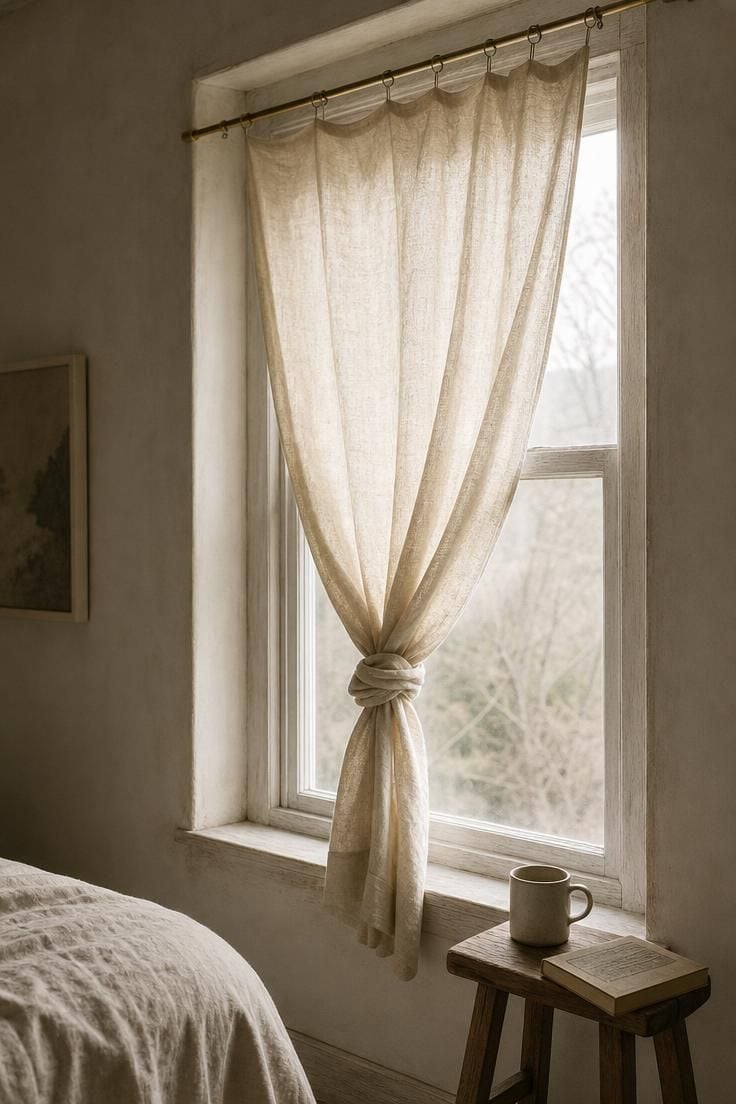
Canvas drop cloth costs a fraction of linen yardage, and it hangs with a similar weight and drape once you wash it twice.
The knotted detail at the sill is practical, not just decorative: it keeps the fabric off the floor while still blocking the lower half of the window for privacy.
After two or three machine washes, the stiff sizing breaks down and the cloth softens into something that looks like it belongs in a French farmhouse.
Pair these with sheer curtain panels on a second rod if you want layered light control without swapping out the drop cloth for heavier fabric.
The whitewashed frame matters because it keeps the whole window area feeling light and unified, rather than creating a dark border around a pale curtain.
This is one of the least expensive summer room ideas on this list, and renters can install a tension rod without drilling a single hole.
Drop cloth curtains also take dye well if you want a muted sage or dusty blue, though the raw off-white is the most summer-forward option.
Style Blueprint:
- A 9-by-12-foot canvas drop cloth, pre-washed twice for softness
- A thin brass curtain rod or tension rod to fit the window width
- Whitewash paint or lime wash for the window frame
- A wooden stool or small side table beside the window
- A second sheer curtain panel on a separate rod for layered light
A Woven Palm Fiber Pendant Lamp Over a Raw Concrete Dining Table
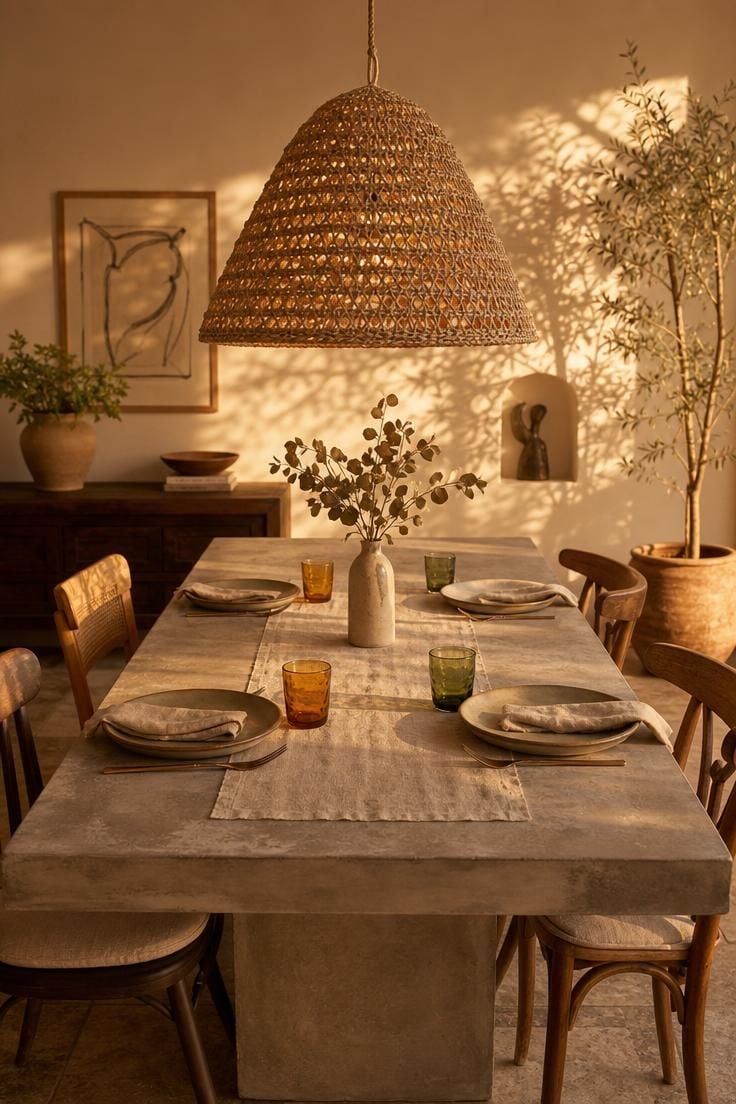
A pendant lamp made from palm fiber does two things at once: it adds organic texture overhead and it filters light into patterns that move across the table like sun through leaves.
Raw concrete as a dining surface stays cool to the touch even in the hottest months, and its neutral grey lets the food and table setting do the visual work.
The shadow play from a woven pendant is something you cannot replicate with a smooth glass or metal fixture, and it changes character as the sun moves through the room.
This pairing leans into the coastal summer style that treats natural materials as the main event rather than a supporting detail.
Set the table with matte stoneware and colored glass tumblers for a look that feels collected over time, not purchased as a matching set.
Scale matters here: the pendant diameter should be about one-half to two-thirds the width of the table so it anchors the space without overwhelming it.
Because the concrete table is heavy and permanent, this setup supports indoor outdoor living well if the table sits near a glass door that opens to a patio.
Fresh flower arrangements in a low ceramic bowl can replace the dried eucalyptus when you want a more saturated centerpiece.
Design Pro-Tip: Hang a pendant lamp so its bottom edge sits 30 to 34 inches above the table surface. Any higher and it floats away from the dining zone. Any lower and your guests will feel like they are eating under an interrogation light.
Style Blueprint:
- A woven palm fiber pendant lamp, 24 to 30 inches in diameter
- A raw concrete dining table, unsealed or lightly waxed
- Four mismatched wooden dining chairs with removable linen seat cushions
- Matte stoneware dinner plates and colored glass tumblers
- A pale linen table runner in natural or oat
Layered Sisal and Cotton Kilim Runners Down a Cool Tile Hallway
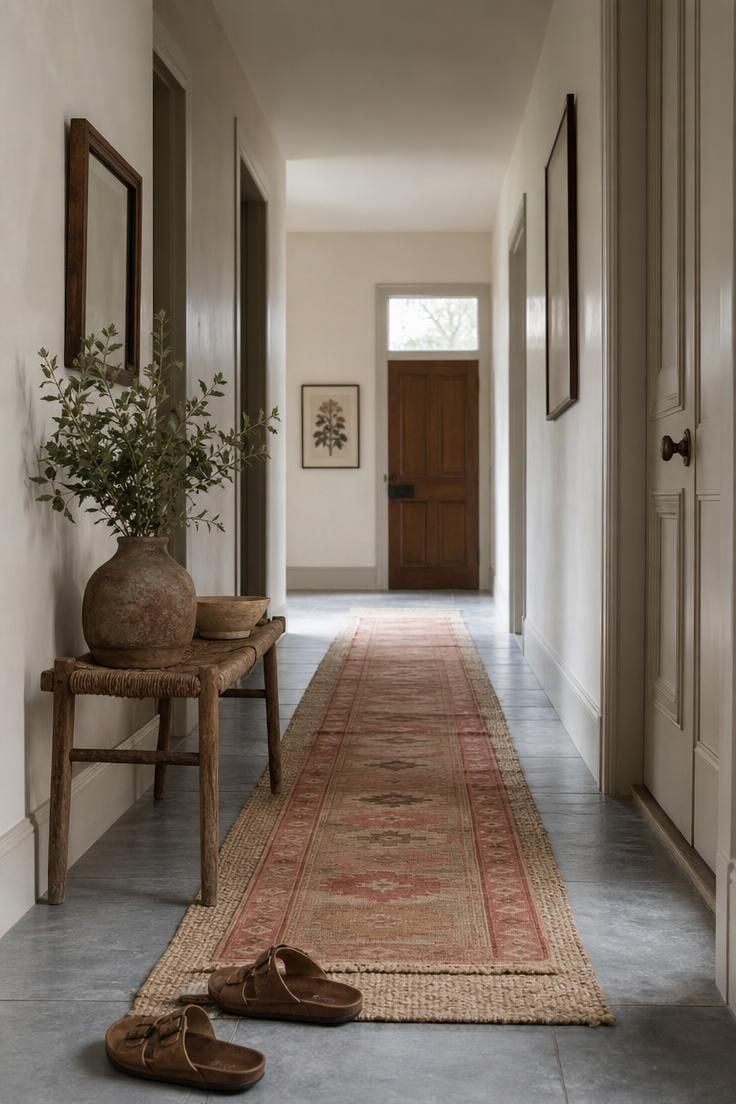
Layering two runners creates depth that a single flat rug never achieves, and it lets you mix textures without committing to an expensive large-format piece.
The sisal base has a coarse, open weave that grips the tile and keeps the kilim from sliding, so you skip the rug pad entirely on smooth floors.
A cotton kilim in faded coral and clay tones adds just enough color to warm up a cool tile hallway without competing with whatever rooms open off each side.
This natural fiber rug combination handles the heavy foot traffic of a summer household, where doors stay open and people move in and out all day.
The imperfect geometry of a handwoven kilim pattern keeps the hallway from feeling like a hotel corridor, which is the risk with any long, straight space.
Pull the runners about six inches short of each doorway so the tile shows at the transitions and the hallway reads as one continuous path.
Style Blueprint:
- A sisal runner, approximately 2.5 by 10 feet, in natural tan
- A cotton kilim runner, approximately 2 by 8 feet, in faded coral and clay
- Pale grey-blue cement tile or similar cool-toned flooring
- A single framed botanical or landscape print at the hallway’s end
- Warm white wall paint in a matte or eggshell finish
A Slatted Teak Plant Stand Holding Citrus Trees in Glazed Cream Pots
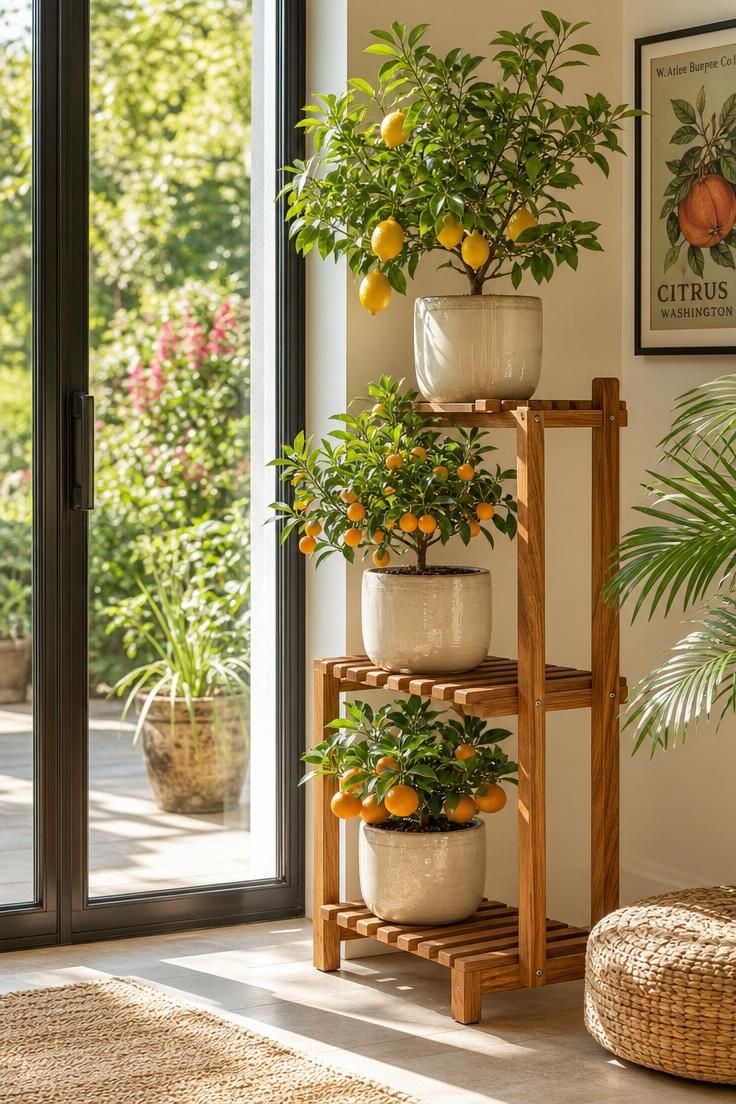
Citrus trees indoors do something no cut flower or dried branch can: they change week to week, budding and fruiting in a slow rhythm that makes the room feel alive.
A slatted teak stand lifts the pots off the floor where they would block sightlines and compete with furniture legs.
The three-tier arrangement lets you group three different citrus varieties at staggered heights, which reads as a collection rather than a random scattering of houseplants.
Glazed cream pots have enough weight to stabilize the trees and enough visual warmth to pair with the honey tone of the teak without introducing another color.
Position the stand within two feet of a south-facing or west-facing window, because citrus needs at least six hours of direct sun to fruit indoors.
This is one of the summer room ideas that bridges indoor outdoor living most naturally, since the entire stand can move to a patio or balcony when temperatures hold above 55 degrees at night.
Meyer lemons are the most forgiving indoor citrus if you are new to growing them, and they perfume the room when they bloom.
Water when the top inch of soil is dry, and rotate each pot a quarter turn every week so the tree grows evenly toward the light.
The stand itself needs only an annual coat of teak oil to maintain its color, though it will silver gracefully if you prefer that weathered look.
Design Pro-Tip: Choose pots that are two inches wider than the nursery container in every direction. Too-large pots hold excess moisture that rots citrus roots, and too-small pots dry out within a day in summer heat.
Style Blueprint:
- A three-tiered slatted teak plant stand, approximately 36 inches tall
- Three glazed cream ceramic pots sized to fit each tier
- One Meyer lemon, one kumquat, and one calamondin tree
- A woven floor cushion or pouf nearby for scale
- Teak oil for annual maintenance
A Navy Linen Sofa With Fringed Ivory Throws in a Candlelit Alcove
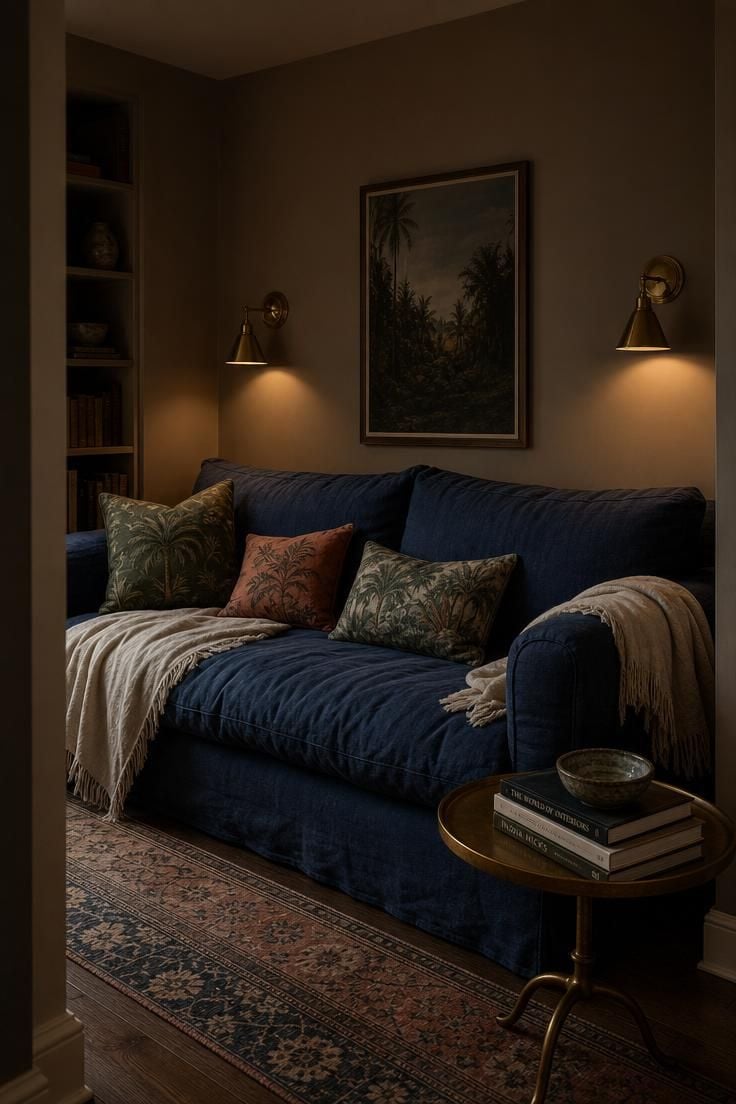
Not every summer room needs to be white and flooded with light.
A navy linen sofa in a small alcove creates the kind of cool, shaded retreat that feels like stepping out of the sun and into a quiet library.
The fringed ivory throws soften the navy without brightening it, keeping the mood deliberate and low-key.
A linen slipcover sofa in this color hides summer stains better than any pale alternative, which is a practical argument that design magazines rarely mention.
Tropical accent pillows in muted palm green and dusty coral bring the season into the space without turning it into a beach house cliche.
Brass sconces throw a warm, directional light that keeps the alcove feeling intimate rather than dark, and they free up surface space that a table lamp would claim.
This kind of darker summer moment gives the eye a place to rest in a home where every other room might be bright and open.
Style Blueprint:
- A deep navy linen sofa or linen slipcover in navy, sized to fit the alcove
- Two fringed ivory cotton throws in a waffle or herringbone weave
- Three tropical accent pillows in muted palm green and dusty coral
- A low round brass side table, approximately 18 inches in diameter
- Two wall-mounted brass sconces with warm-toned bulbs
A Rattan Tray Ceiling With Exposed Blonde Rafters Above a Farmhouse Table
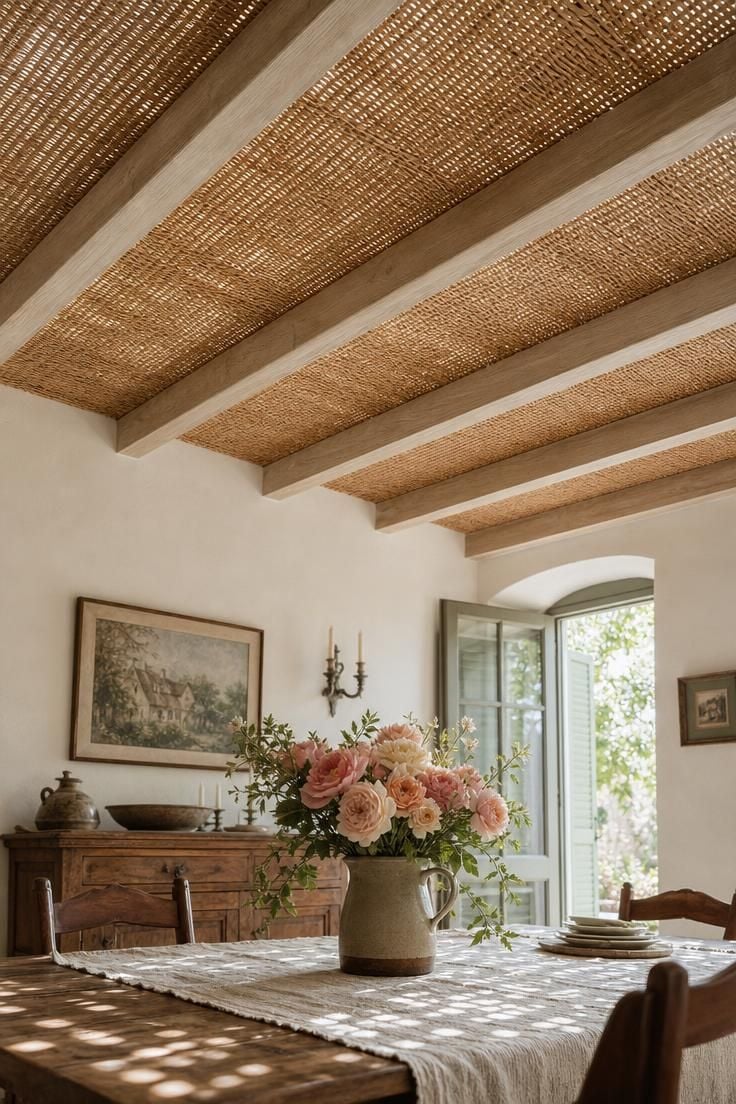
Looking up in most rooms reveals a flat, featureless plane of white paint, which is a missed opportunity the size of the entire floor.
Rattan panels inset between ceiling rafters add texture overhead without lowering the ceiling height or making the room feel heavier.
The weave filters light in a way that mimics a pergola, casting soft dappled shadows across the table and walls that shift as the sun moves.
Rattan furniture is a summer staple, but using the same material on the ceiling is unexpected enough to stop conversation.
A farmhouse table beneath this ceiling grounds the room in something solid and familiar, so the overhead treatment reads as charming rather than fussy.
Peel-and-stick rattan panels exist now at price points that make this a weekend project, not a contractor renovation.
Set fresh flower arrangements on the table below, keeping them low and loose so they do not compete with the ceiling for attention.
The blonde rafter tone should match or sit within two shades of any other exposed wood in the room, including the table, to keep the palette cohesive.
Style Blueprint:
- Woven rattan panels cut to fit between ceiling rafters
- Exposed blonde wood rafters in white oak, ash, or pine
- A reclaimed wood farmhouse table, 72 to 84 inches long
- A low stoneware pitcher holding fresh garden roses or seasonal blooms
- A pale linen table runner in natural or flax
Woven Banana Leaf Storage Boxes Stacked Below an Arched Doorway
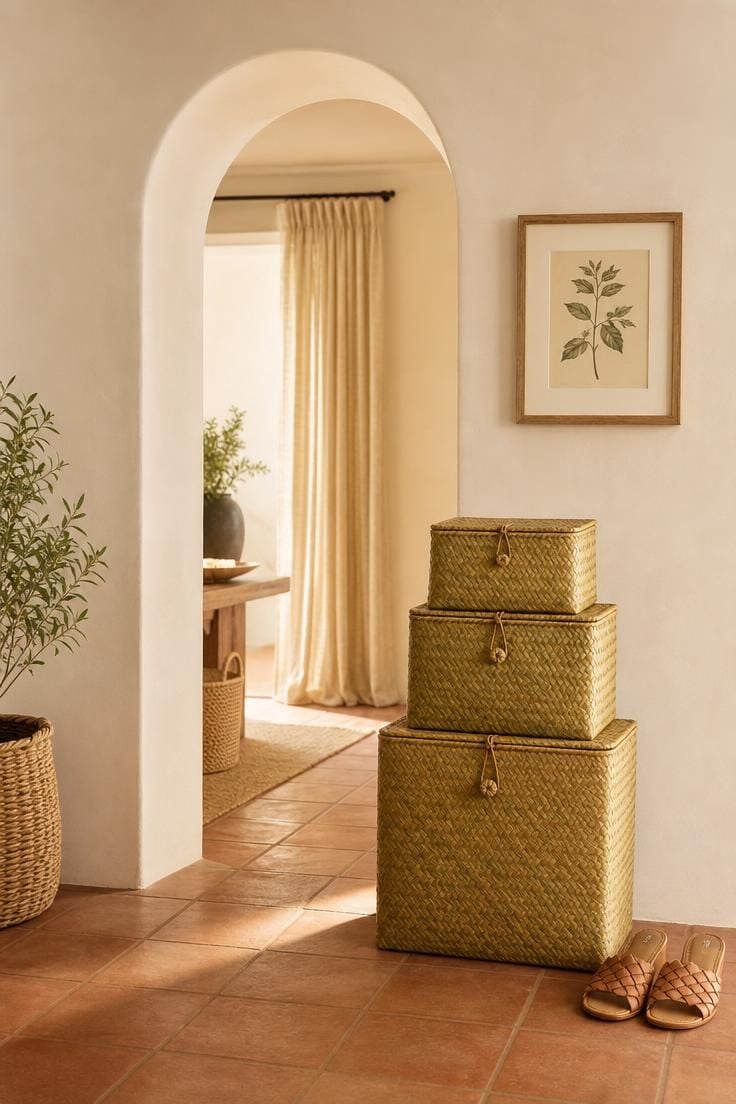
An arched doorway is already a natural frame, and a tidy stack of woven boxes turns it into a functional display instead of dead space.
Banana leaf fiber has a tighter weave than seagrass and a color that sits between golden brown and olive green, which reads richer than a standard basket.
Three graduated sizes stacked largest-to-smallest create a visual pyramid that feels intentional without looking rigid.
Inside, these boxes hold everything a summer household generates: beach towels, lightweight summer bedding in rotation, sun hats, and sandals that multiply near the door.
The golden-green tone of banana leaf catches warm afternoon light in a way that makes the material glow, almost like it is lit from within.
Style Blueprint:
- Three graduated woven banana leaf storage boxes with lids
- An arched plaster or drywall doorway as the framing element
- Warm white wall paint to unify the arch with the surrounding room
- A pair of woven leather sandals or a sun hat nearby for context
- Terracotta or stone tile flooring visible through the archway
A Plaster Fireplace Surround With a Row of Conch Shells and a Bone Inlay Box
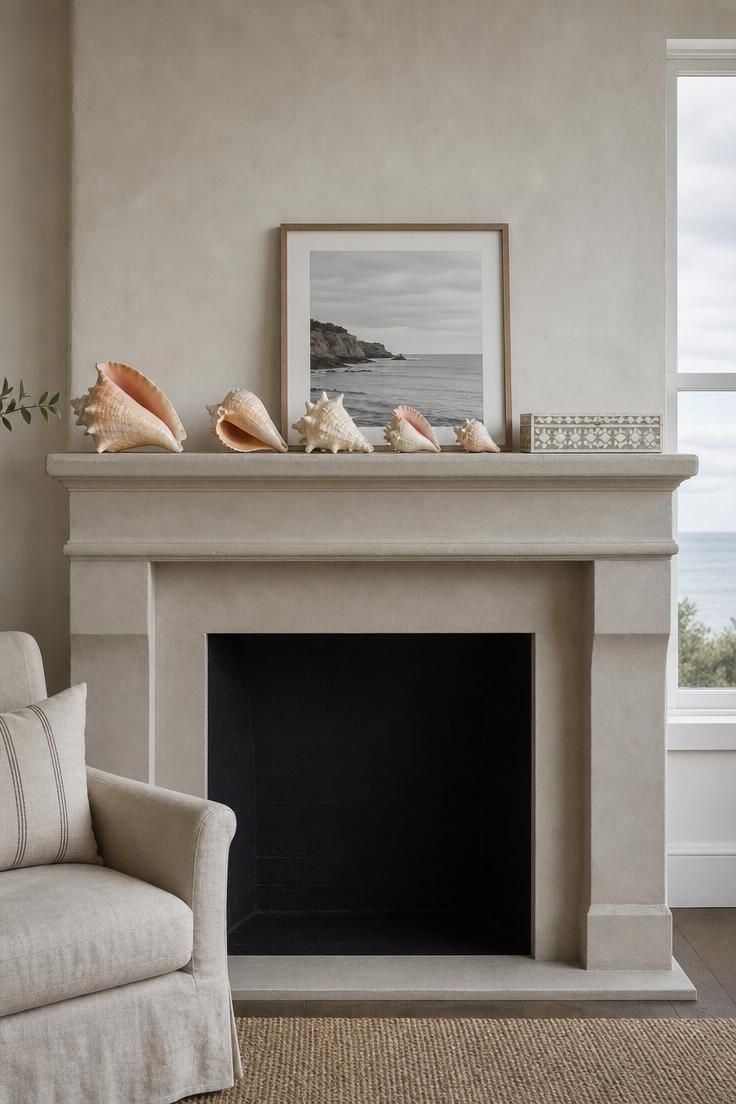
A fireplace that sits unused for four months is a blank canvas waiting for something other than the logs and tools that defined it all winter.
Clearing the hearth and arranging a single row of conch shells across the mantel turns the fireplace into a summer altar, a focal point that earns its wall space even with no flame.
The conch shells work best when they vary in size but share a narrow color range, pale coral fading to cream, so the row reads as a collection rather than a random assortment.
A bone inlay box at one end adds geometric pattern and a cooler grey tone that prevents the arrangement from tipping too far into gift-shop territory.
This approach borrows from the coastal summer style tradition of decorating with found objects, but it edits the collection down to something spare and deliberate.
Keep the firebox itself painted matte black or lined with a dark stone so it reads as a clean shadow behind the mantel display.
Design Pro-Tip: When styling a mantel, leave at least 30 percent of the surface empty. The negative space is what makes the objects you do place there look intentional rather than cluttered.
Style Blueprint:
- A plaster or lime-washed fireplace surround in soft greige
- Five conch shells in graduated sizes, pale coral to cream
- One rectangular bone inlay box in white and grey pattern
- A small framed coastal photograph, 5 by 7 inches, leaned not hung
- Matte black paint inside the firebox
A Floor-to-Ceiling Linen Divider With Brass Grommets and a Bamboo Rail
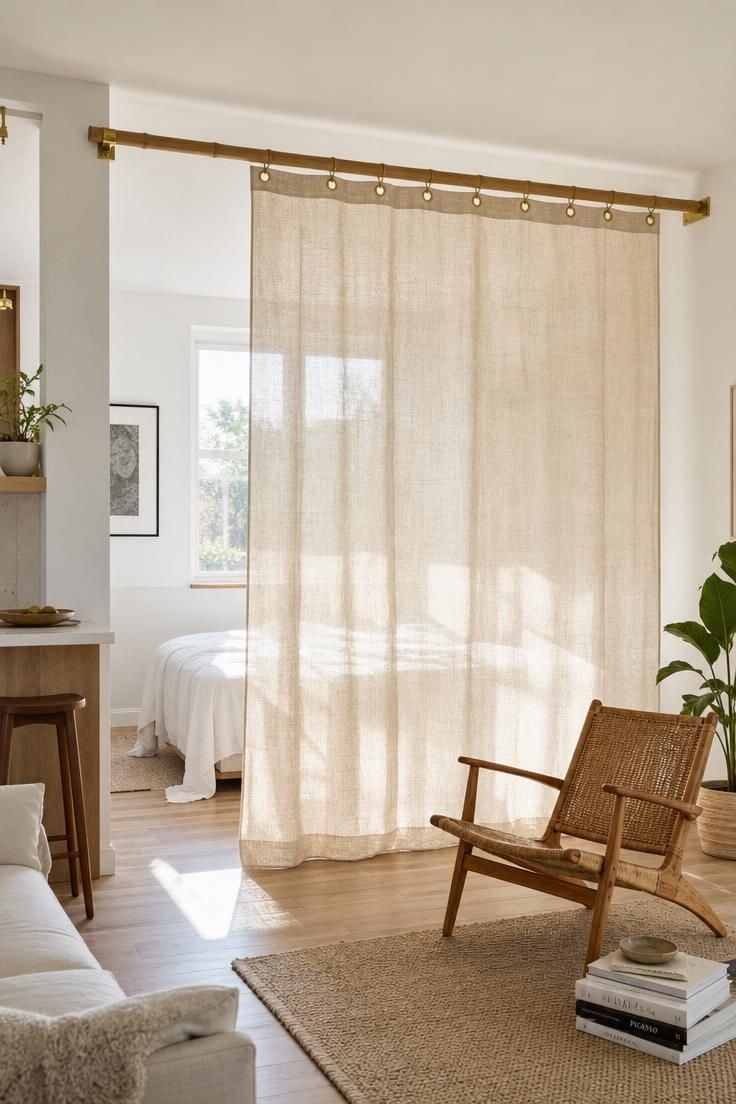
In an open floor plan, summer heat makes walls feel oppressive, but a linen panel divider creates separation without blocking a single cross-breeze.
The brass grommets along the top edge catch and scatter light, adding a small metallic accent that elevates the raw linen from utility fabric to intentional design element.
A bamboo rail is lighter than a steel curtain rod and has a natural warmth that pairs with the linen color, keeping everything in the same tonal family.
When midday sun backlights the panel, the linen turns translucent and the room behind it becomes a soft silhouette, giving privacy without isolation.
This works particularly well in studio apartments or guest rooms where you want to hide a bed during the day but still let air and light circulate.
Lightweight summer bedding visible through the linen creates a layered, dreamy effect that feels more like a resort than a room partition.
No permanent mounting is required if you use ceiling hooks and a friction-fit bamboo pole, making this summer room ideas list entry renter-friendly.
Choose a medium-weight linen, around 7 to 9 ounces per yard, for the right balance between opacity and light filtration.
The panel should puddle about two inches on the floor for a relaxed look, or hang just kissing the surface if you prefer a cleaner line.
Style Blueprint:
- A floor-to-ceiling linen panel in natural or oat, medium weight
- Brass grommets punched along the top edge at 6-inch intervals
- A bamboo rail or pole, wall to wall, with brass end brackets
- A low rattan chair on the sitting side for scale
- White linen sheets and lightweight bedding visible on the sleeping side
A Charcoal Concrete Console With a Single Oversized Palm Frond in a Black Ceramic Vase
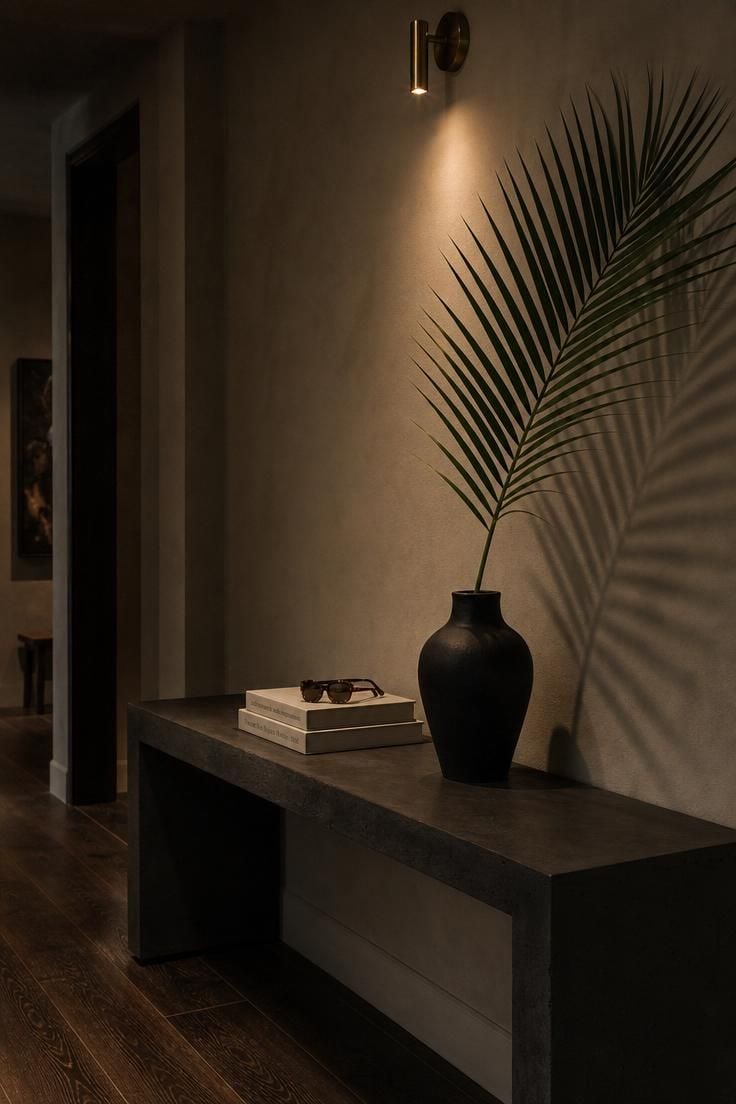
A single oversized leaf in a dark vase on a concrete surface is the opposite of everything else on this list, and that is exactly why it belongs here.
Summer rooms risk becoming one-note when every surface is pale and breezy, so a deliberately dark, minimal entry point gives the home contrast and edge.
Charcoal concrete has a cool, industrial finish that reads sophisticated in an entryway, where guests form their first impression of the house.
The palm frond is the only organic element, and its scale, sometimes three feet tall from stem to leaf tip, commands attention in a way that a bouquet of small stems never could.
A single brass pin light above turns the vase into a focal point after dark, when the shadow of the frond stretches across the wall like a piece of living art.
Keep the rest of the console surface nearly empty: a small stack of books, a key tray, nothing more.
Style Blueprint:
- A charcoal concrete console table, approximately 48 inches long
- A matte black ceramic vase, 14 to 18 inches tall, with a narrow opening
- One oversized palm frond, fresh or preserved
- A wall-mounted brass pin light or adjustable picture light
- Dark stained hardwood flooring in walnut or espresso
Scalloped Edge Cotton Placemats on a Stripped Oak Farmhouse Table
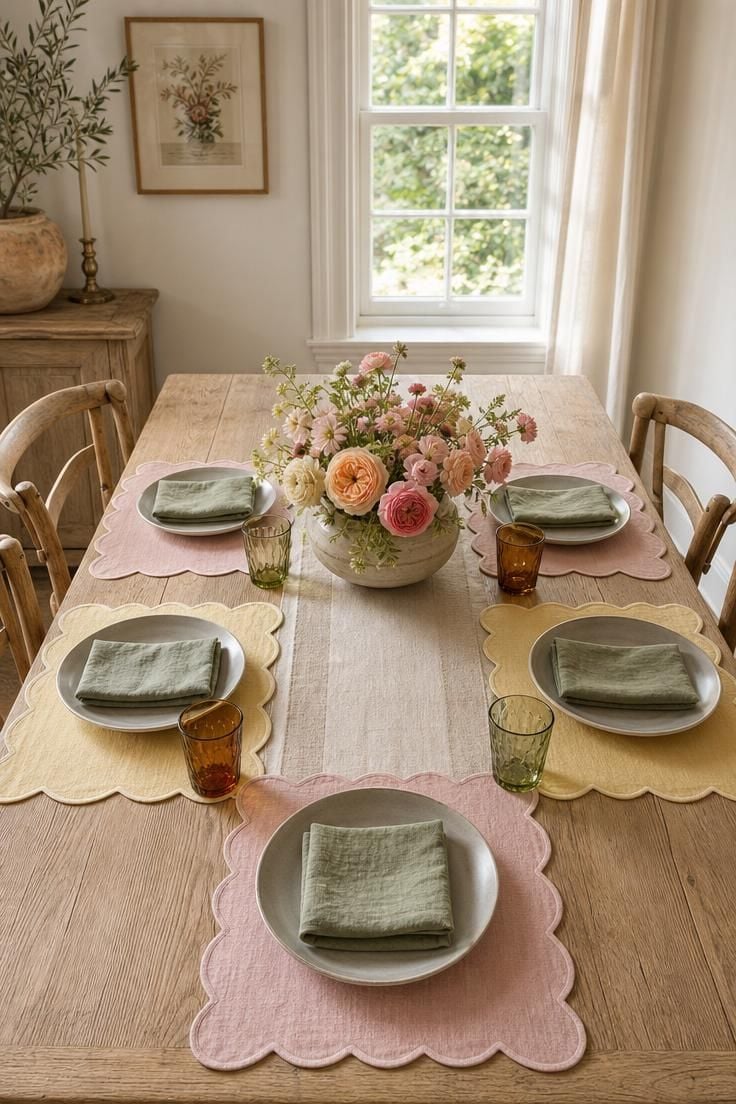
The scalloped edge on a placemat does the same thing a decorative molding does on a wall: it adds a small, rhythmic detail that softens everything around it.
Stripped oak has a pale, raw quality that pairs with cotton better than a lacquered surface does, because both materials share that unfinished, honest character.
Mixing placemat colors at the same table, alternating yellow and blush around the circle, keeps the setting playful without looking mismatched.
Matte stoneware plates in warm grey sit quietly on the scalloped cotton and let the food become the color event, which is exactly what summer produce deserves.
Colored glass tumblers in amber and soft green are the easiest single swap that makes a summer table look completely different from a winter one.
Fresh flower arrangements at the center should stay lower than the tumblers so conversation flows across the table without a floral wall in the middle.
This is the kind of summer room ideas detail that costs very little but changes how a meal feels, because the table is the room’s stage when people gather around it.
Design Pro-Tip: Alternate two placemat colors around the table instead of matching them all. The repetition creates a pattern that looks planned, and it lets you double your table setting variety with the same number of mats.
Cotton placemats go straight into the washing machine after a summer dinner, which is a small luxury that cloth napkins share but tablecloths do not.
Style Blueprint:
- Four to six scalloped edge cotton placemats in two alternating colors
- Matte stoneware dinner plates in warm grey or cream
- Colored glass tumblers in amber and soft green
- A low ceramic bowl for a garden flower centerpiece
- A natural linen table runner in flax or oat
A Hammered Tin Mirror Frame Propped on a Raw Plaster Mantel
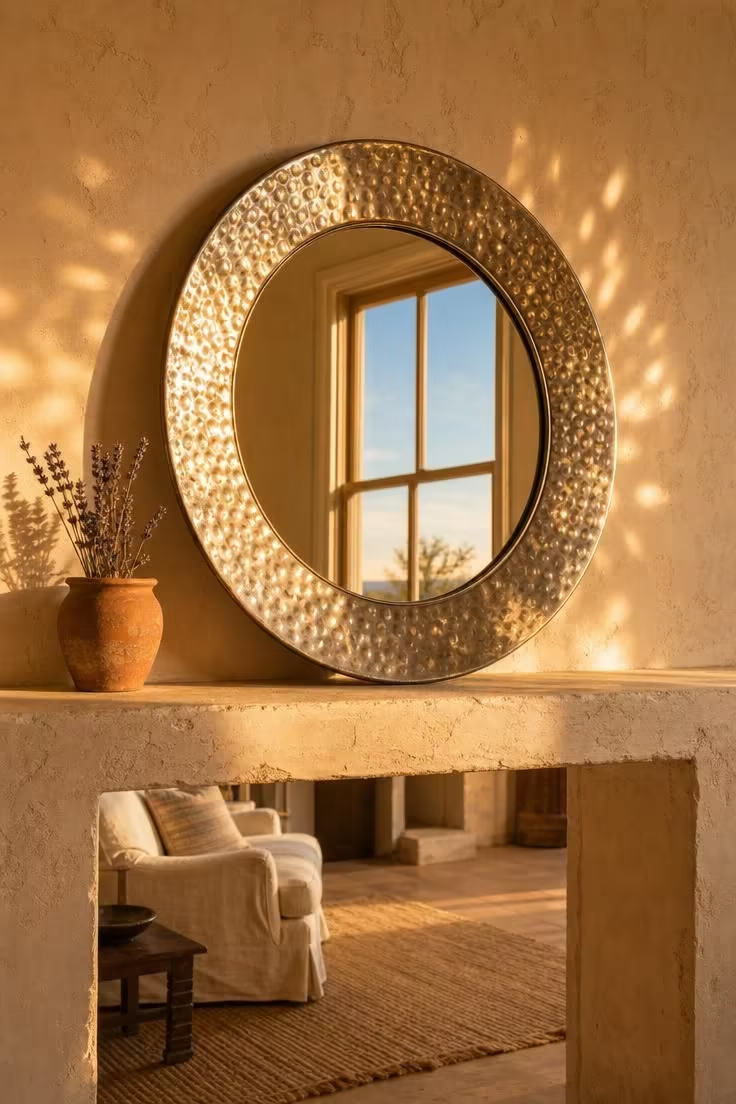
A propped mirror feels entirely different from a hung one, because it suggests the room is still in progress, still being arranged, still alive.
Hammered tin catches light differently at every angle, throwing small bright points across the wall and ceiling that move as you move through the room.
Raw plaster as a mantel surface has an imperfect texture that makes the tin frame look collected rather than purchased, like something found at a flea market and leaned there until it simply stayed.
The mirror itself bounces late-afternoon golden light deeper into the room, which is a trick that professional designers use to make west-facing rooms feel twice as luminous by evening.
Summer living room decor often gravitates toward the predictable, more plants, lighter pillows, a new throw, but a single oversized mirror changes the entire room without adding a single object to any other surface.
Size matters more than anything else here: aim for a mirror at least 30 inches in diameter so it reads as a statement piece, not a bathroom mirror that wandered into the living room.
A single small object beside the base, a terracotta pot, a stone, a short stack of books, anchors the mirror visually so it does not look like it is about to slide off the mantel.
Style Blueprint:
- A hammered tin mirror frame, round, at least 30 inches in diameter
- A raw plaster or lime-washed mantel shelf, at least 8 inches deep
- A pale warm apricot or blush wall color behind the mantel
- A single small terracotta pot with dried lavender or a similar sprig
- A linen-covered armchair visible in the room below for context
Conclusion
These thirteen summer room ideas share a common thread: they name a specific material, a specific finish, a specific arrangement.
That specificity is what separates a room that feels like summer from a room that just has a few lighter pillows swapped in.
Pick two or three ideas that speak to the rooms you use most, and start with the one that requires the least commitment, a set of placemats, a propped mirror, a knotted curtain.
The best summer rooms are the ones that make you want to stay inside even when the weather is pulling you out the door.