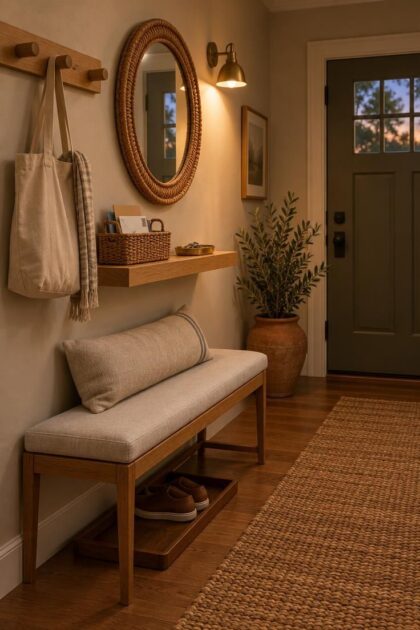
This post may contain affiliate links. If you make a purchase through these links, we may earn a commission at no additional cost to you.
The first few feet inside a home collect more than any other spot: keys, mail, bags, coats, and shoes all land there within seconds of walking in.
A warm entryway command center gives those everyday items a visible, reachable place before they spread into the rest of the house.
The ideas below focus on compact residential entries, where a short wall, a narrow console, or a quiet corner can become a working drop zone without looking staged.
Each arrangement pairs a specific material or layout with the practical needs of coming and going.
The aim is a calmer transition at the door, sized to the hallway you already have.
White Oak Wall Strip With Rounded Peg Hooks and a Floating Inbox Shelf
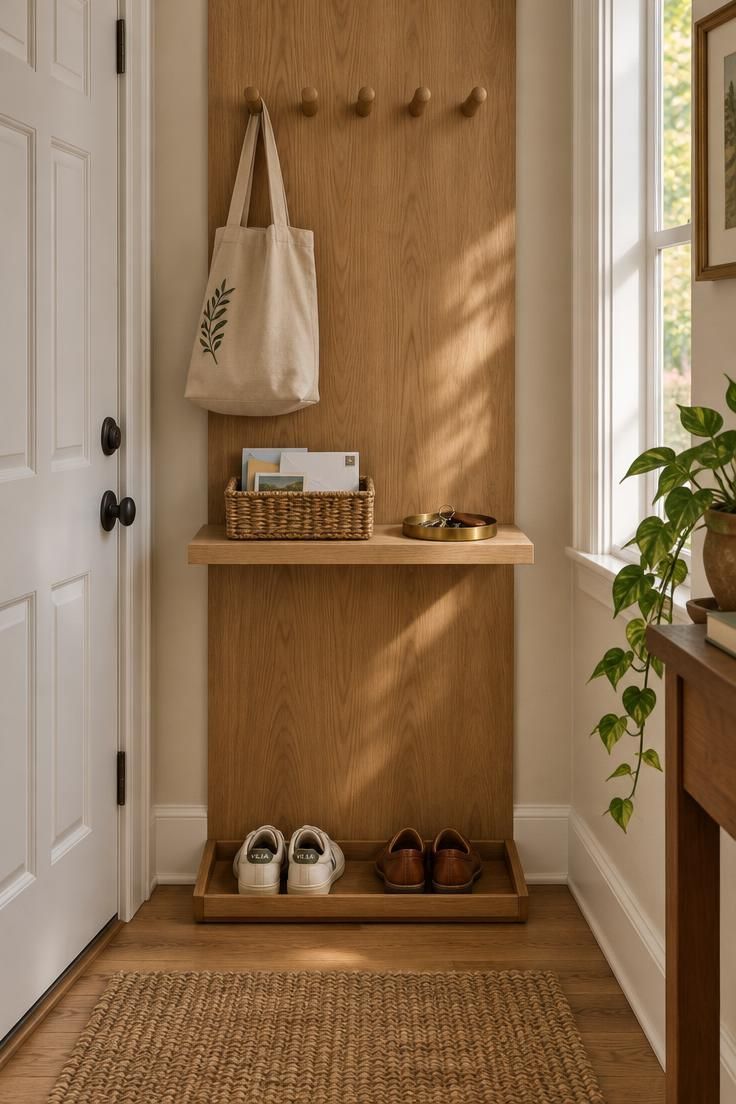
A shallow wall strip keeps the busiest parts of the drop zone off the floor, which also clears the narrow path beside a door swing.
White oak brings warmth to a small entry, and the rounded pegs feel softer than angular metal hooks.
The floating shelf acts as a single landing spot for mail and keys, and that limit is a feature.
When one surface is the only place to set things down, paper stacks have less room to multiply.
A woven basket takes the mail, a small brass tray holds keys, and the shelf top stays mostly open.
Pegs hold a light jacket, a tote, and a leash but fill quickly with heavy coats.
Plan for a floor basket or a second rail nearby during winter.
A wall mounted hook rail with a slightly upward turned peg keeps bags from sliding forward, and the same white oak finish across shelf, pegs, and shoe tray ties the arrangement together.
Choose shelf depth by what will sit on it.
A shallow shelf that holds a mail basket and a tray looks tidy, while a deep shelf invites clutter and crowds the door swing.
Position the peg row above shoulder level so hanging items clear the walkway.
Style Blueprint:
- White oak wall strip with a floating shelf
- Rounded oak pegs with a slight upward turn
- Woven mail basket
- Small brass key tray
- Low white oak shoe tray
Design Pro-Tip: Before settling a peg height, hang an empty tote from a temporary hook and walk past it a few times to check the clearance.
Charcoal Metal Hook Rail Over a Lidded Bench With Felt Storage Bins
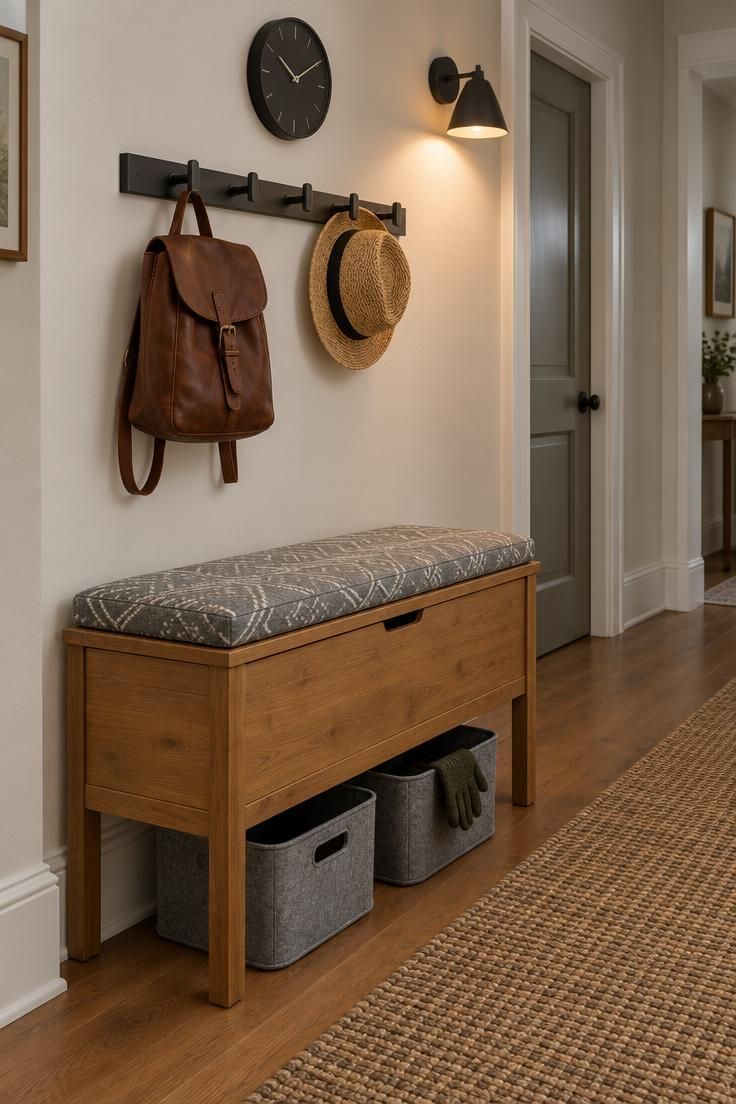
A horizontal metal rail gives coats and bags a clear home, and the charcoal finish adds contrast without making a small hallway feel dark.
The lidded bench below handles the items that are awkward to hang: off-season shoes, gloves, and a folded umbrella.
Together the rail and bench form a small entryway bench with hooks arrangement that fits a narrow wall.
The lift-up lid is the practical centerpiece.
Everything stowed inside disappears from view, so the hallway reads as furniture rather than storage.
A cushion on top makes the bench usable for pulling on shoes, which is the reason seating earns its floor space in the first place.
Depth is the deciding measurement.
A bench deep enough to sit on comfortably also narrows the walking path, so a hallway with a tight clear width may do better with a wall-mounted folding seat or a slim shoe shelf.
Measure the actual floor between bench front and opposite wall before committing.
Felt bins on the floor collect mittens, leashes, and loose small items that would otherwise drift.
Charcoal metal repeated across rail, hooks, and clock frame keeps the parts visually related.
The straw hat and leather bag introduce natural texture against the cool finish.
Style Blueprint:
- Charcoal metal hook rail with three hooks
- Solid wood bench with a lift-up lid
- Gray felt storage bins
- Geometric cotton bench cushion
- Small matte black wall clock
Natural Seagrass Cubby Tower With Brass Label Holders and Wicker Baskets
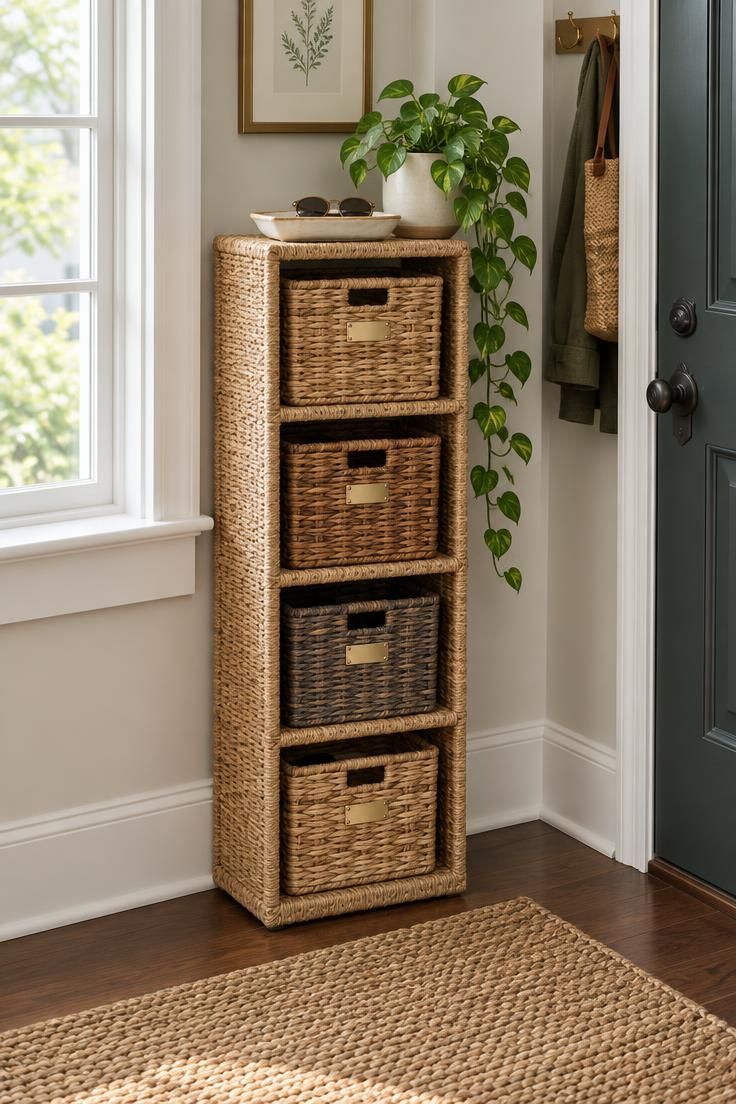
A tall corner unit turns unused wall space into per-person storage.
Brass label holders on each basket front make the division legible, and open-front wicker baskets let a scarf or pair of sunglasses be grabbed without unstacking anything.
Seagrass gives the unit a natural finish that suits both coastal and Scandinavian-leaning entries.
Shallow cubby storage baskets work best when the tower does not project far into the room.
A slim unit with a flat back sits close to the wall and still offers vertical room, while a deeper model can crowd the walkway.
The top surface becomes a small landing spot for a tray and a plant.
Freestanding units need a level floor and enough width to stand without wobble.
Fill lower baskets with heavier items and keep the upper cubbies light to help the tower stay stable.
Natural and white wicker mixed across the cubbies adds variety without breaking the palette.
Label each basket by household member or by category such as mail, gloves, and returns.
Brass plates make the system readable at a glance and can be swapped if the contents change.
Style Blueprint:
- Seagrass cubby tower with a shallow profile
- Wicker baskets in natural and white
- Brass label plates
- Small ceramic tray
- Potted trailing plant
Design Pro-Tip: Write basket labels in pencil first, live with the categories for a couple of weeks, then have the brass plates engraved once the contents settle.
Sage Green Shaker Peg Board With a Slim Console and Woven Mail Bins
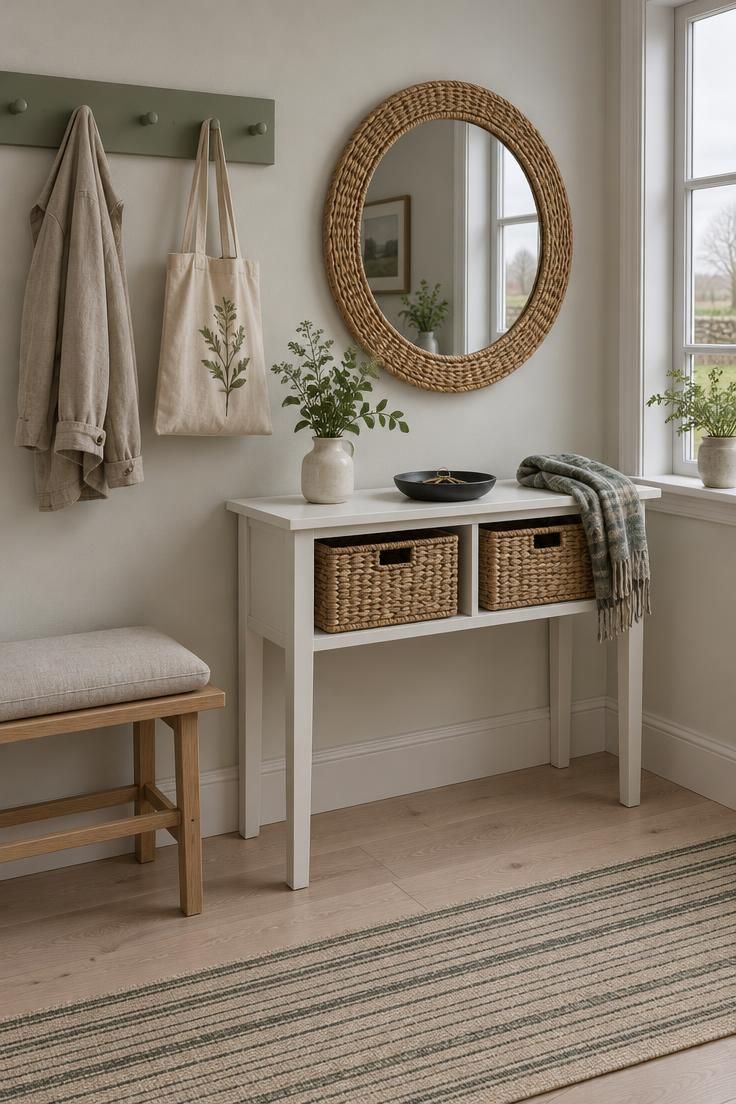
A painted peg board in sage green gives a wall-mounted system a furniture-like presence.
The horizontal rail of Shaker pegs holds light layers, while the white console beneath offers a narrow landing surface for mail and keys.
This pairing suits a narrow console table entryway, where depth is limited and the wall has to carry most of the storage.
Peg spacing matters more than peg count.
Closely spaced pegs crowd heavy winter coats, so reserve the board for lighter layers and let a floor basket take the bulk.
The console top stays intentionally spare: two woven bins and one small bowl, nothing more.
Woven seagrass bins on the console separate incoming mail from outgoing returns.
The round rattan mirror above reflects light from the window, which helps a small entry feel less enclosed.
A linen cushion on the side bench adds a soft landing spot without taking over the walkway.
Keep the console shallow.
A top that holds bins and a bowl leaves the floor open, while a deeper table can block the path between door and hall.
The black ceramic bowl provides a dark accent that echoes the peg board’s painted finish at a smaller scale.
Style Blueprint:
- Sage green Shaker peg board
- Slim white wood console
- Woven seagrass mail bins
- Black ceramic key bowl
- Round rattan mirror
Walnut and Brass Freestanding Hall Tree With a Cane Bench and Upper Shelf
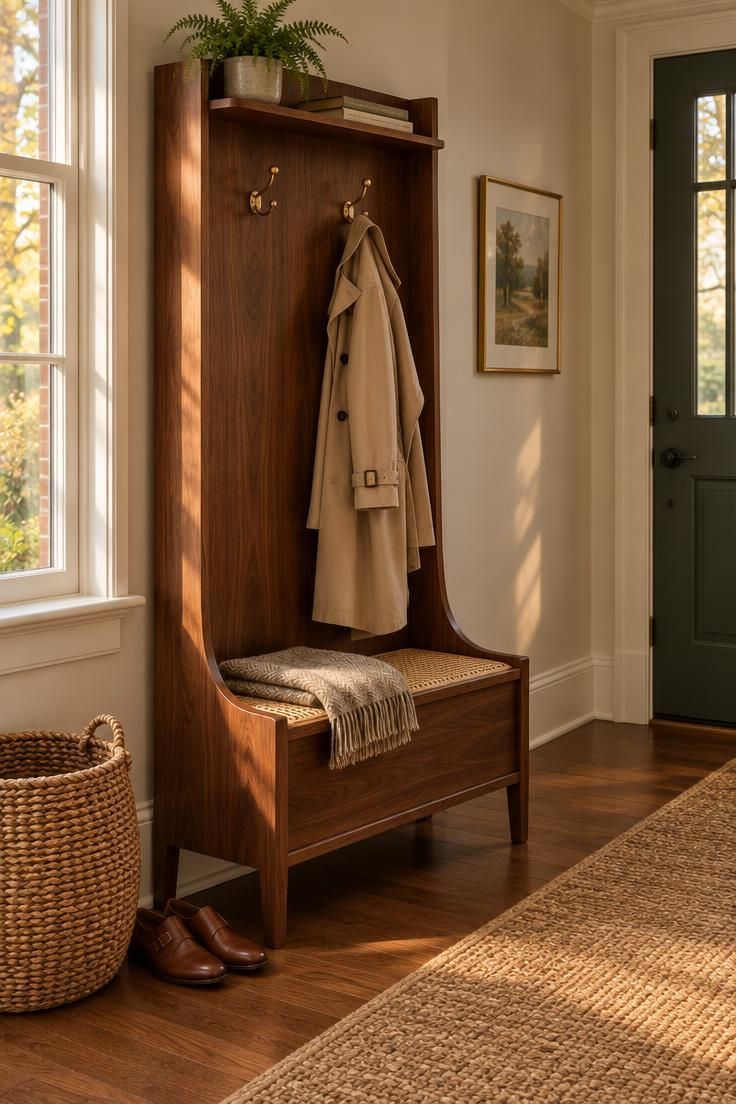
A freestanding hall tree brings hooks, seating, and a shelf into one footprint without touching the wall.
Walnut gives the piece a settled, furniture-grade look, and brass double hooks add a warm metallic accent.
The cane bench panel softens the solid wood and lets light pass through the lower section.
This is the practical choice for a rental or an entry where wall fixing is not an option.
The unit stands on its own, so placement matters: keep it against a wall and set heavier baskets low so the piece stays balanced.
A round woven basket beside it absorbs shoes that would otherwise scatter.
The shallow upper shelf holds a plant, a small tray, or a hat, and that height keeps daily clutter from piling there.
A folded blanket on the cane seat makes the bench feel used rather than staged.
Brass repeated across hooks and any small hardware ties the parts together.
Cane inserts show wear over time where bags and shoes rest against them.
A folded blanket or cushion protects the weave at the seat edge and can be washed or replaced easily.
A soft dry cloth keeps dust and grit from dulling the walnut finish over time.
Style Blueprint:
- Walnut freestanding hall tree
- Brass double hooks
- Cane bench insert
- Round woven floor basket
- Small ceramic planter for the upper shelf
Design Pro-Tip: Place a small basket on the floor at the hall tree’s side for shoes, so the cane seat stays free for sitting and folding.
Muted Blue Built-In Bench With Basket Storage and a Soft Arch Alcove
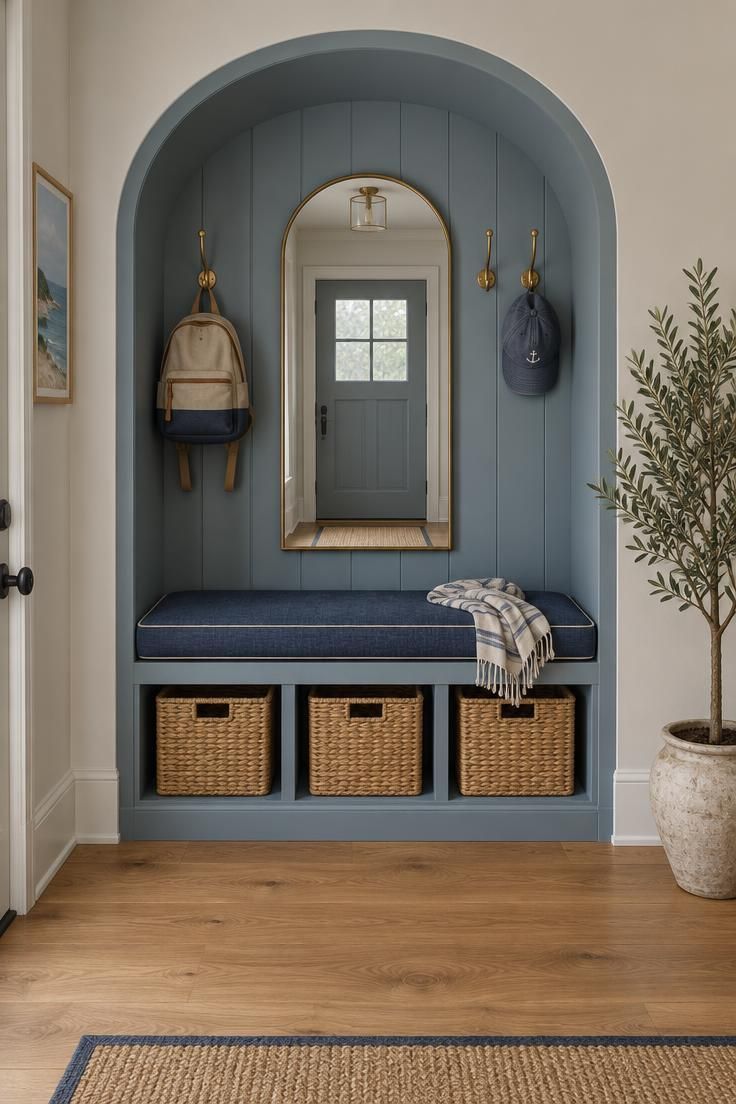
An arched alcove frames the whole entryway command center, so the coats, baskets, and mirror read as one composed unit rather than a collection of separate pieces.
Muted blue paint gives the built-in a calm, furniture-like finish, and the arch softens the wall’s straight lines.
Baskets slid under the bench handle shoes and off-season gear, keeping the seat clear.
Brass hooks sit above at a height that lets a backpack hang without brushing the cushion.
The arched mirror inside the alcove reflects the door and bounces light deeper into the entry.
Built-ins need a niche or carpentry work, which makes this idea best suited to owned homes.
A shallow bench face keeps the walkway usable in a tight hall, and the arch height should clear the tallest household member’s coat without crowding the ceiling line.
Three baskets give each household member a slot, and the open front means shoes go in and out quickly.
A thin cushion adds comfort without adding bulk.
Repeat the blue in a small textile, such as a navy cushion or a folded throw, to keep the palette from feeling flat.
Style Blueprint:
- Muted blue built-in bench in an arch alcove
- Three natural woven baskets
- Brass coat hooks
- Arched mirror
- Thin navy bench cushion
Raw Steel Pegboard System With Wooden Cubbies and Adjustable Hooks
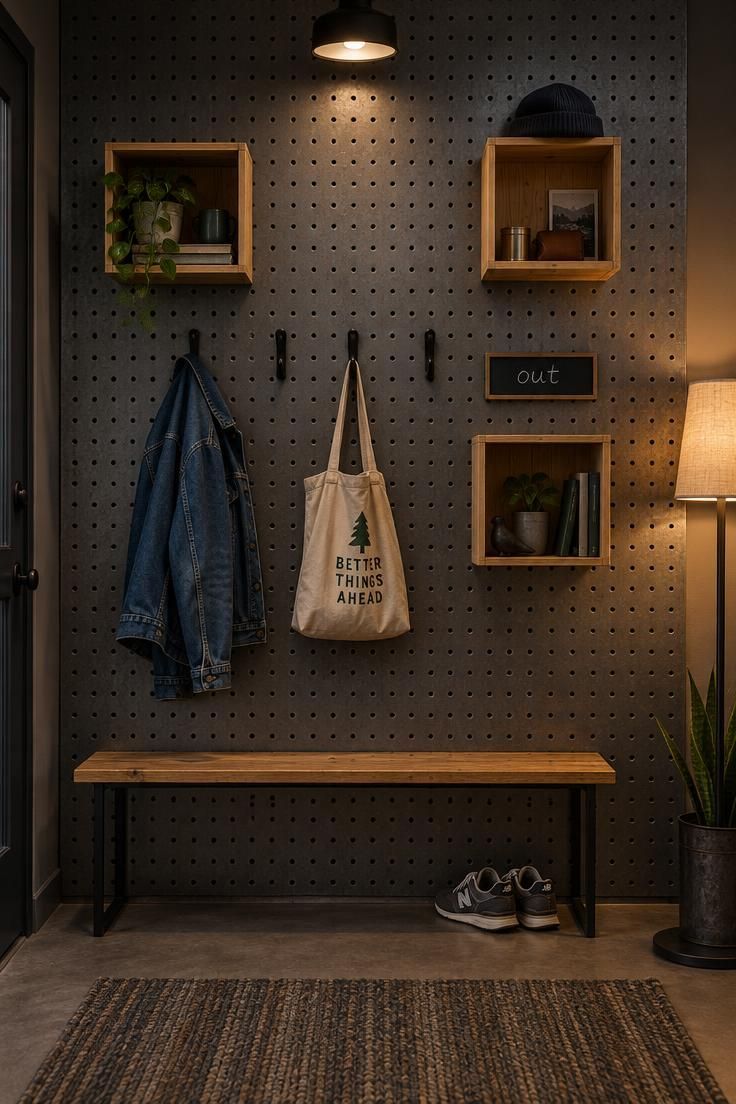
A raw steel pegboard gives the entry a reconfigurable wall.
The grid of holes accepts hooks and small shelves that move as the household’s needs change, so the same wall can favor hooks in winter and cubbies in summer.
Pine boxes bring warmth against the cool steel and keep small items corralled.
A full wall of pegboard reads as intentional rather than improvised when the framing and placement are deliberate.
Grouping the boxes and hooks in a loose grid with breathing room between them keeps the wall from looking busy.
A chalkboard label strip marks the outgoing bag so returns leave the house.
The industrial finish suits some entries better than others.
In a hallway with softer traditional details, a smaller pegboard panel in a lighter finish may blend more easily.
Oiling or painting the pine boxes to echo other entry woodwork helps the system feel part of the room.
A quick wipe keeps the steel grid looking clean between seasonal changes.
Keep the heaviest items in the lower boxes and on hooks near a structural point rather than the top row.
The thin wooden bench beneath gives a place to sit without adding visual weight.
Style Blueprint:
- Raw steel pegboard panel
- Natural pine cubby boxes
- Black metal adjustable hooks
- Chalkboard label strip
- Thin wooden bench
Design Pro-Tip: Keep the current hook layout sketched or noted, then compare it with the wall before repositioning after a seasonal change.
Terracotta Tile Half-Wall With a Floating Oak Mantel Shelf and Wrought Iron Hooks
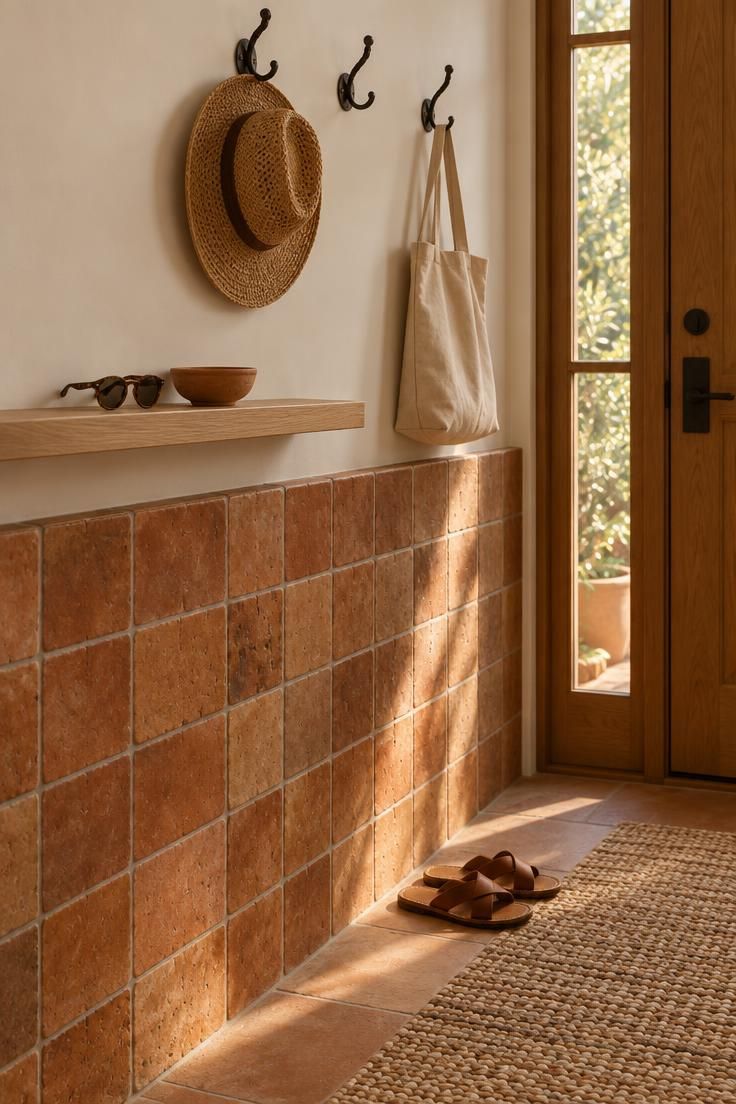
A terracotta half-wall is easy to wipe clean, which suits the grit and damp that come through a front door.
The slender oak mantel shelf running across the top gives the setup a narrow landing strip for keys, sunglasses, and a small bowl.
Wrought iron hooks above hold a hat and a tote with a handmade look.
Tile adds visual weight to the lower half of the wall, so light walls above balance it.
A warm white paint keeps the entry airy and lets the terracotta read as a deliberate accent rather than a dominant surface.
A braided runner on the floor softens the transition from tile to wood.
The shelf needs to stay shallow.
A narrow mantel keeps items from projecting into the walkway and makes the single landing spot do its job.
An earthenware bowl gathers keys and small change; sunglasses sit beside it.
Wrought iron hooks hold light outerwear and heavier items on the sturdiest hook position.
A soft brush along the grout lines keeps the lower wall even where outdoor grit settles.
The oak shelf can be refreshed with a light oil if it starts to look dry.
Wiping the iron hooks helps prevent rust marks on lighter fabrics.
Style Blueprint:
- Terracotta tiled half-wall
- Floating oak mantel shelf
- Wrought iron hooks
- Small earthenware bowl
- Braided cotton runner
Black Framed Wall Grid With Cubbies, Hooks, and a Cork Panel for Notes
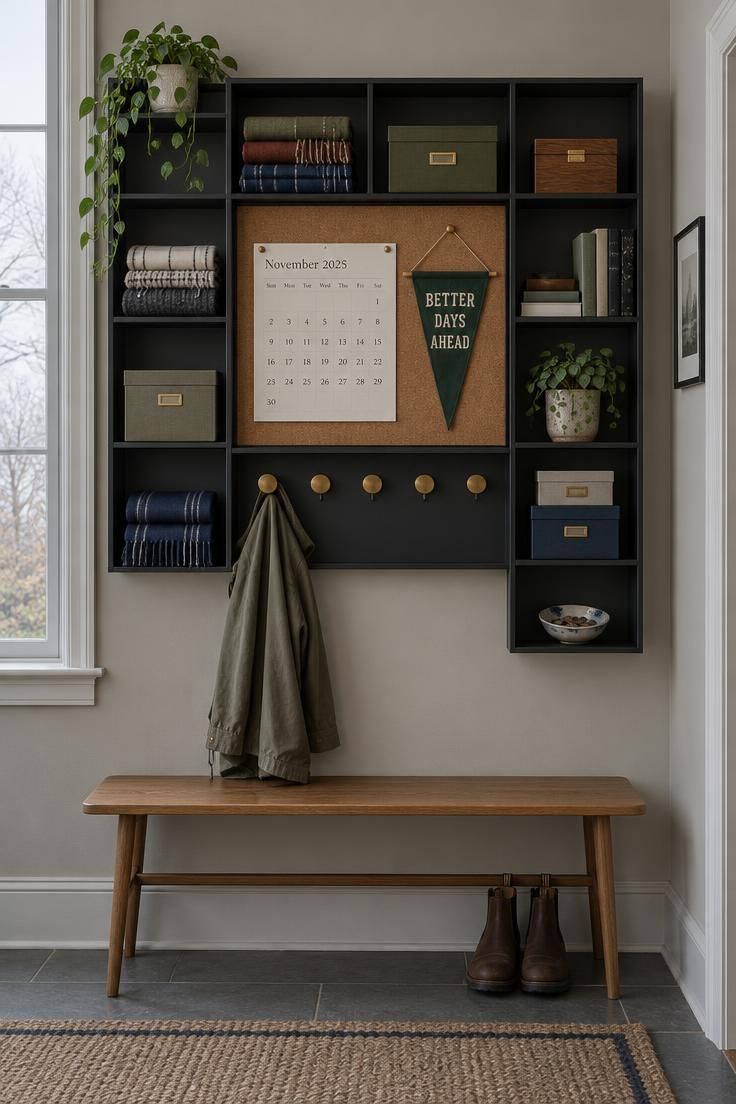
A single black frame binds several functions into one wall feature.
Cubbies hold folded scarves and small boxes, a row of hooks takes light outerwear, and a central cork panel pins notes and invitations.
Everything sits inside one frame line, so a busy wall reads as composition rather than clutter.
The frame’s total width is its main constraint.
A wide grid suits a hall with a generous span, while a narrow entry can use a smaller two-cubby version of the same idea.
Light wood cubby inserts keep the black metal from feeling heavy, and natural fiber baskets hide the untidiest items.
Brass hooks add a warm accent against the dark frame and hold a coat or a bag without crowding the notes area.
The cork center gives paper a place that is not the console top, which helps mail and invitations stay in view instead of piling up.
Cork can shed slightly over time, and pins leave marks, so a magnetic panel is a workable swap where pins are a concern.
A slim bench underneath provides a seat and a spot for boots.
A soft cloth run along the metal frame and cubby edges keeps the corners from collecting dust.
Style Blueprint:
- Black metal grid frame
- Light wood cubby inserts
- Natural fiber baskets
- Round brass hooks
- Rectangular cork panel
Design Pro-Tip: Keep the cork panel under one-third of the frame’s width so notes and invitations stay a focal detail rather than the whole wall.
White Oak Slat Wall With Hidden J-Hooks and a Fold-Down Slim Bench
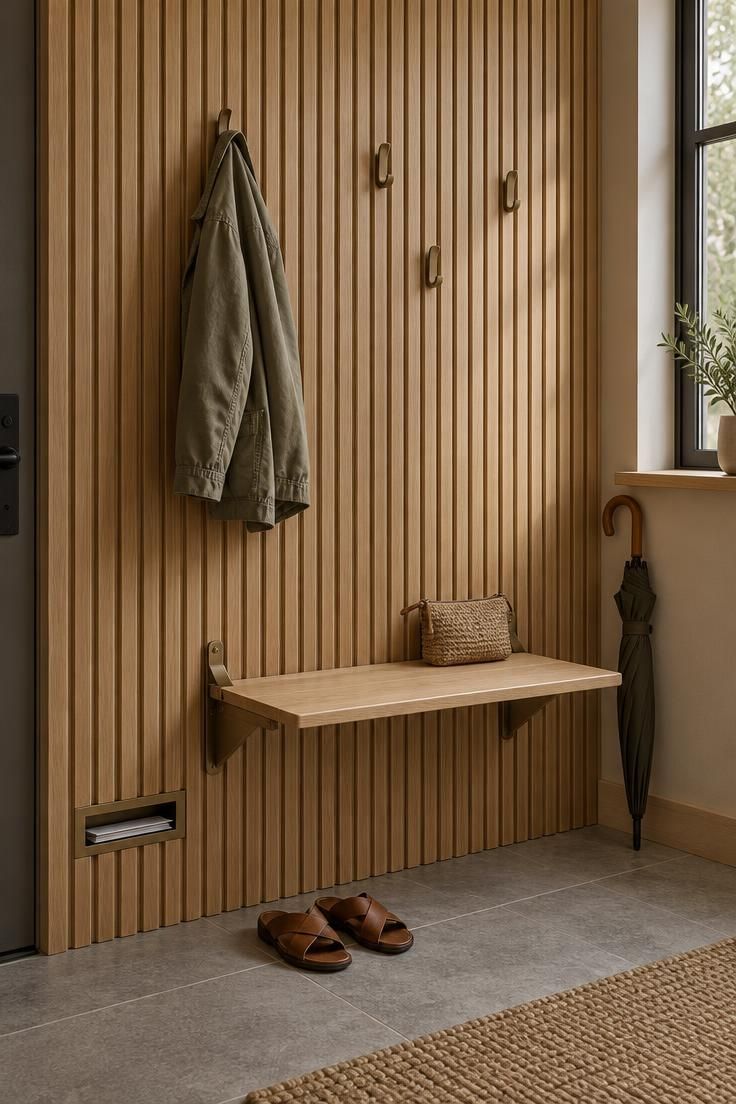
A white oak slat wall brings a clean vertical rhythm to a small entry.
The repeat of narrow slats visually widens a short wall, and the subtle J-hooks fold flat when unused, so the wall looks unbroken between uses.
A slim fold-down bench below stays out of the way when closed.
J-hooks that fold flat suit coats, totes, and light bags.
They tuck away after use, which helps a compact nook stay visually quiet.
A recessed mail slot near the base gives paper a specific destination and supports a practical entryway mail sorting station without adding a surface.
The fold-down bench saves floor space but carries less weight than a fixed seat, so it works best for quick shoe changes rather than storing bags on top.
The bench needs clear floor space when open, so measure the swing area against the door path before choosing its position.
Slat spacing affects how the wall reads.
Wider gaps suggest a bolder rhythm, while narrow, closely set slats feel more refined.
A woven pouch hooked to a slat holds keys and a transit card.
An occasional pass with a soft brush keeps the shadow lines between slats looking crisp.
Style Blueprint:
- White oak slat wall
- Slim fold-down bench
- Folding J-hooks
- Small woven pouch
- Recessed mail slot
Rattan Room Divider Shelf With Built-In Bench and Hanging Basket Hooks
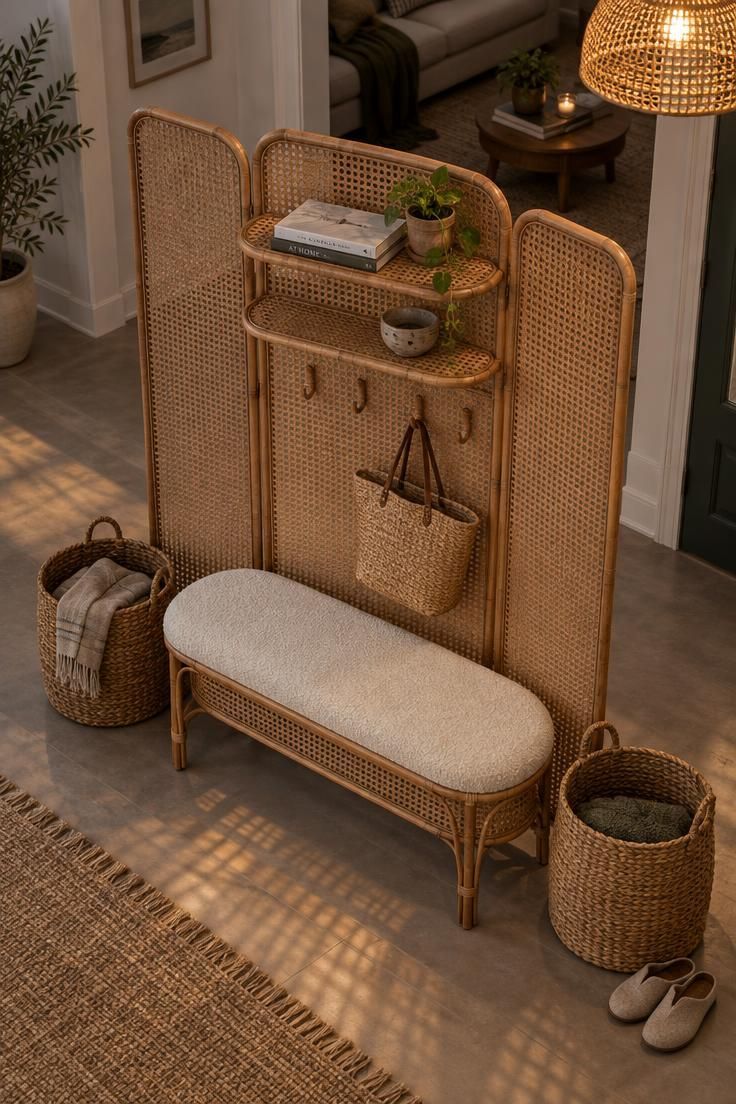
A rattan room divider earns its place in an open foyer by dividing the entry from the living area while keeping both sides visually connected.
The open weave lets light pass through, so the divider does not close off the space the way a solid screen would.
A cane bench with a boucle cushion gives a place to sit, and two shelves hold a few daily items.
Cane-wrapped hooks hold a wicker tote and a light jacket, and the open structure makes grabbing and returning items quick.
The unit is freestanding, so it also suits a rental where the wall cannot take a permanent system.
Floor baskets on either side extend the storage without adding surfaces.
This unit offers no hidden storage, which is its main tradeoff.
Keep only daily items on it, and let larger bags and overflow go to baskets or a closet.
Shelves load unevenly if one side holds books and the other stays empty, so balance the weight across the two.
Rattan can dry out in heated spaces, so keep the divider away from direct heat sources.
Dust settles in the open weave and lifts away with a soft brush.
The cream cushion is a light accent that softens the honey tone of the rattan, and a pair of slippers by a basket finishes the lived-in look.
Style Blueprint:
- Freestanding rattan room divider
- Cane bench insert
- Two rattan shelves
- Cane-wrapped metal hooks
- Cream boucle bench cushion
Design Pro-Tip: Balance the divider with matching floor baskets on both sides so the freestanding unit feels anchored rather than lopsided.
Conclusion
A warm entryway command center does not require a large budget or a dedicated mudroom.
The most useful versions work with a single wall, a slim bench, and storage that matches what the household actually carries through the door.
Choose one material or finish to repeat across hooks, shelves, and baskets, then leave enough open surface for a single landing tray or mail bin.
Edit the arrangement when seasons change, and the entry will stay calm rather than becoming another room to manage.