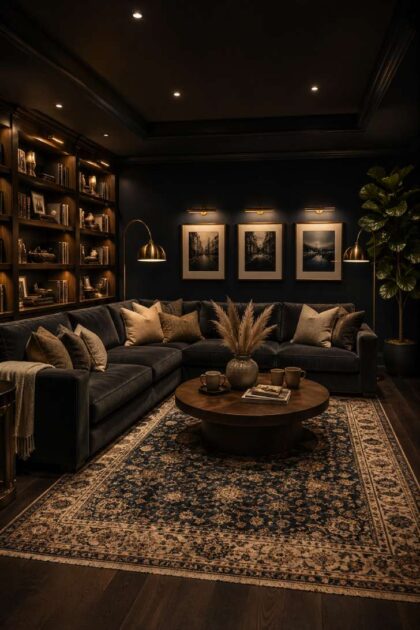
This post may contain affiliate links. If you make a purchase through these links, we may earn a commission at no additional cost to you.
Most homeowners look at their dark basement and see a problem to solve. Not enough windows. Low ceilings. That slightly underground feeling that makes everything seem smaller than it is.
But here’s something worth considering: what if the darkness is the whole point?
A dark basement done well doesn’t fight against its natural conditions. It works with them. Deep paint colors, warm layered lighting, rich textures — these choices turn a forgotten below grade living space into the room you actually want to spend time in. The basement color palette you choose sets everything in motion. And when you lean into what the space already is, the result feels effortless.
These 10 dark basement ideas range from moody lounges to cozy reading nooks to full-on underground cinemas. Each one proves that going dark isn’t about giving up on style. It’s about finding a different kind of it.
The Midnight Lounge
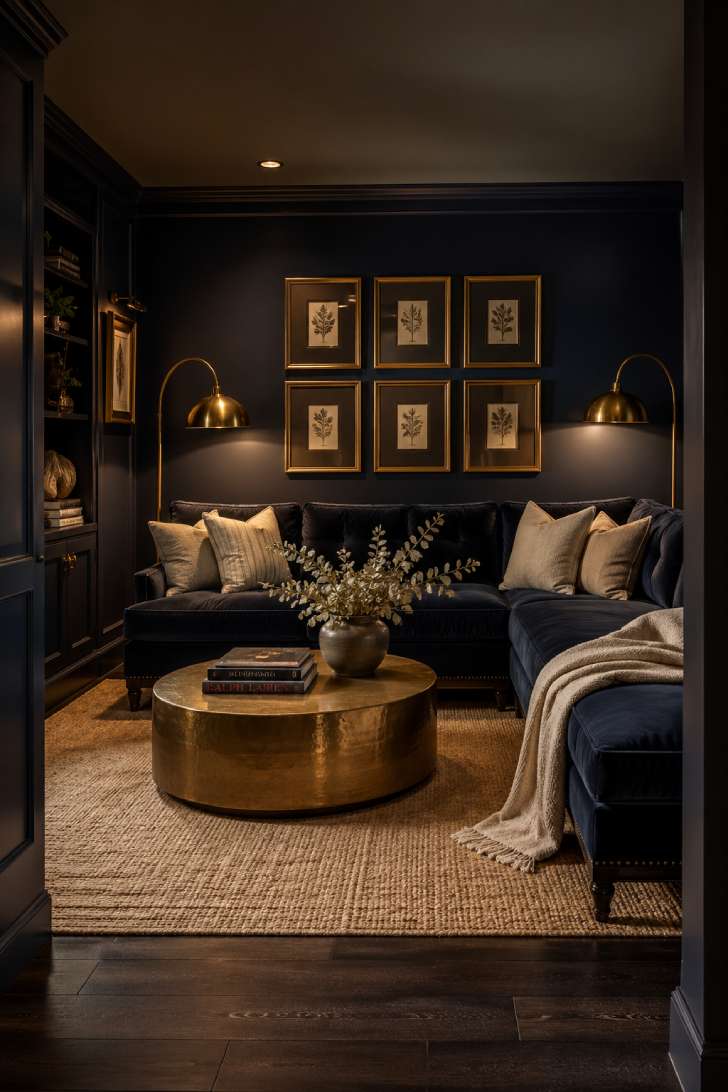
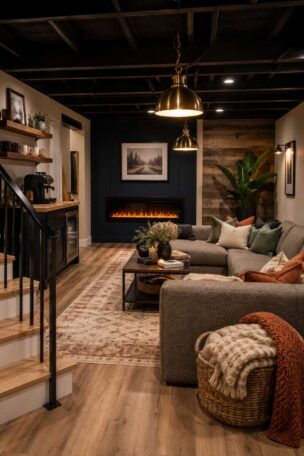
There’s a reason navy shows up in every high-end hotel lobby and private library. It reads as both dark and warm at the same time — a rare combination. In a basement setting, navy walls create a sense of enclosure without heaviness. The color wraps around you without pressing in.
What makes this particular setup work is the contrast between the deep walls and the metallic accents. Brass catches whatever light exists in the room and scatters it in small, warm flashes. Your eye moves from the glow of a lamp to the reflection on a frame to the gleam of a table leg. That movement keeps the space from feeling static or flat, which is the real risk with any dark room.
The cream and oatmeal textiles serve a specific purpose beyond aesthetics. They give your eye a place to rest. Without those lighter moments, a fully dark room can feel exhausting to sit in for long periods. Two or three well-placed light accents — a throw pillow, a blanket, a rug — are all it takes.
Style Blueprint:
- Deep navy wall paint in a matte or eggshell finish
- Velvet sectional in a tonal dark blue
- Brass arc floor lamp with a warm-toned bulb (2700K)
- Cream linen throw pillows and a cashmere blanket
- Large woven jute area rug
The Underground Cinema
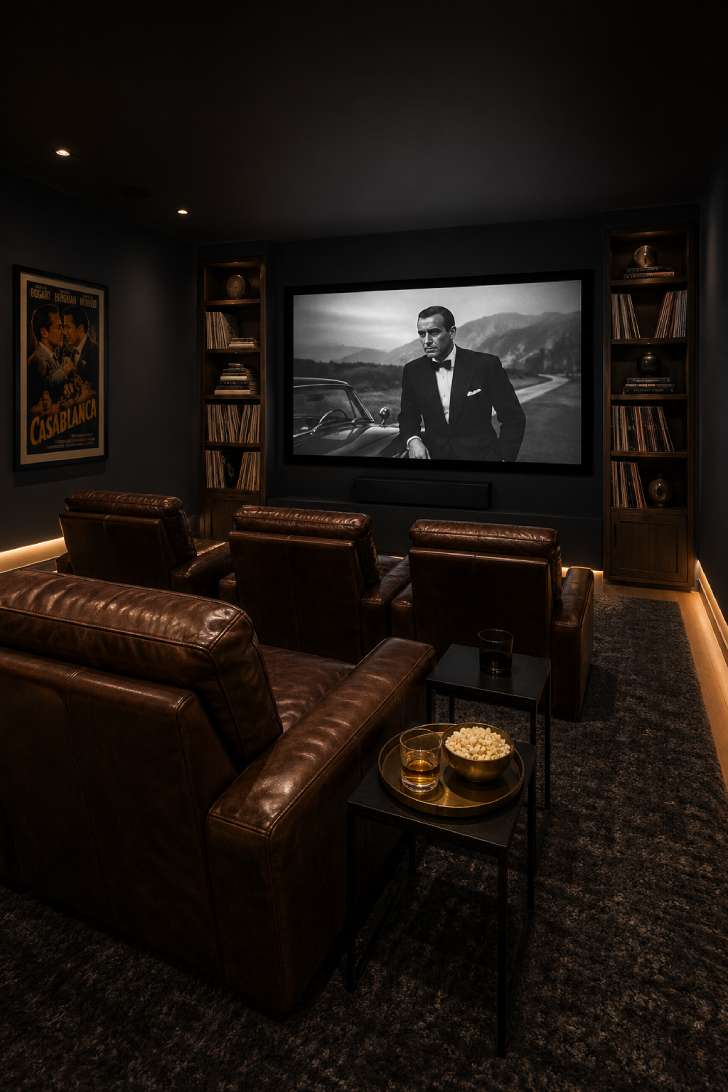
A basement home theater is one of the most natural uses for a dark underground space. The same conditions that make a basement challenging for a family room — no windows, low ambient light, enclosed feel — become genuine advantages when you’re watching a film.
Charcoal walls and ceiling absorb reflected light from the screen, preventing that washed-out look you get in bright rooms. The dark surfaces also reduce eye strain during longer viewing sessions. It’s the same principle commercial cinemas use, just scaled down.
The cognac leather recliners add warmth to what could otherwise feel cold and cave-like. Leather in this tone is forgiving — it ages well, hides wear, and looks better with a few years of use. Paired against charcoal walls, the warm brown pops without screaming for attention.
LED strip lighting along the baseboards is the quiet hero here. It provides enough light to navigate the room safely without pulling focus from the screen. Set it to a warm amber tone and it mimics the glow of candlelight along the room’s perimeter.
Style Blueprint:
- Charcoal matte paint on walls and ceiling (same color, continuous)
- Oversized leather recliners in cognac or dark saddle brown
- LED strip lighting in warm amber (2700K–3000K) along baseboards
- Thick wool area rug in charcoal or slate
- Matte black side tables with brass accent trays
The Forest Retreat
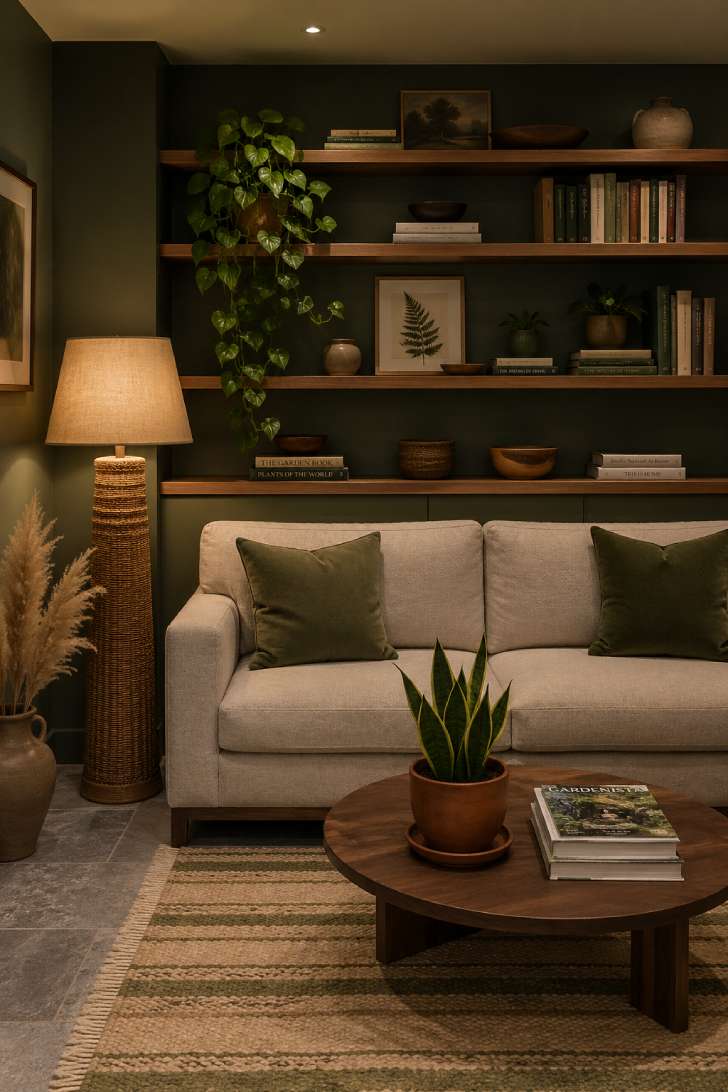
Green has a quality that other dark colors don’t: it connects an interior space to the natural world. In a basement — where you’re literally surrounded by earth on the other side of the walls — that connection makes intuitive sense. Forest green doesn’t feel imposed the way some dark colors can. It feels like it belongs there.
Warm walnut shelving against green walls creates a pairing that looks lifted straight from a woodland cabin. The wood grain adds visual texture and prevents the green from reading as monolithic. Open shelving rather than closed cabinets keeps things airy and lets you introduce smaller organic elements — a trailing plant, a pressed leaf in a frame, ceramic pieces in earthy tones.
The oatmeal linen sofa grounds the room without competing with the wall color. Olive green accents on the pillows create a tonal variation that adds depth. And the rattan lamp brings in another natural material while casting soft upward light that washes the green walls gently from below.
Style Blueprint:
- Deep forest green paint in an eggshell finish
- Open walnut shelving with books and organic accessories
- Low-profile linen sofa in oatmeal or natural
- Rattan floor lamp with a linen shade
- Live low-light plants (pothos, snake plant, ZZ plant)
The Moody Reading Corner
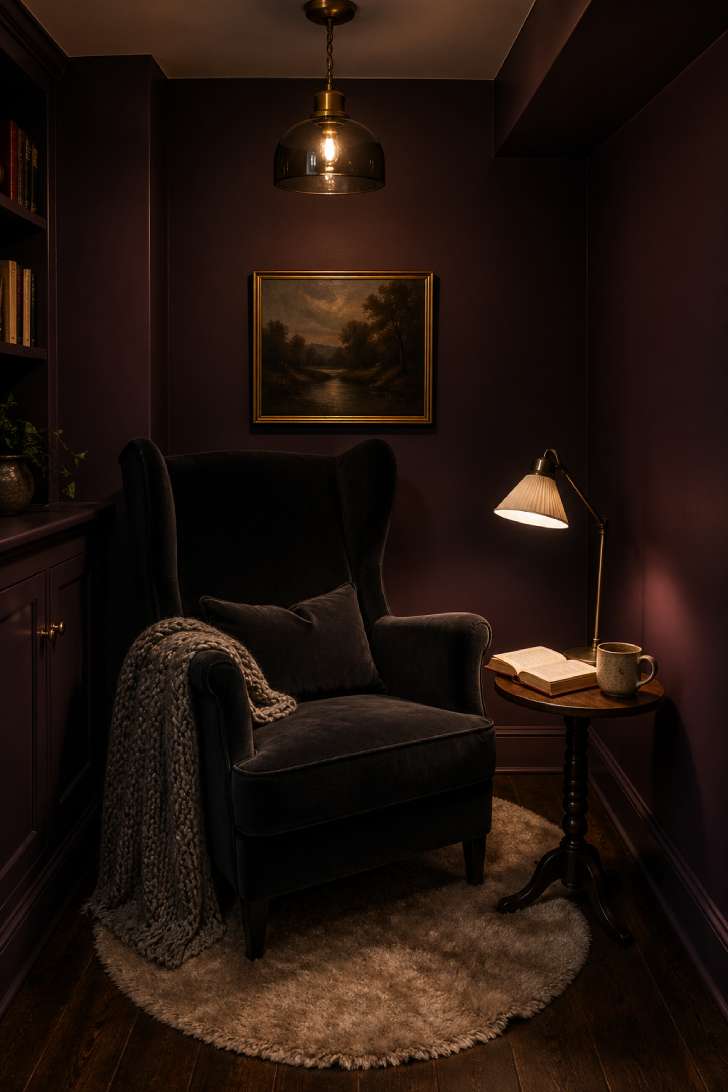
You don’t need an entire room to make dark basement lighting work. A single corner — three or four square feet — can become a destination when the colors and lighting are right.
Plum is an underused color for interiors. It has the depth of black and the warmth of red, landing somewhere between cozy and dramatic. In a small reading nook, plum walls create a cocoon effect. The space wraps around you, blocking out everything else. For reading, that kind of focused enclosure is ideal.
The dual light setup is intentional. The pendant overhead provides ambient warmth — just enough so the corner doesn’t feel like a cave. The reading lamp does the actual work, throwing a tight circle of light exactly where you need it. Two light sources, two purposes, one small space.
A wingback chair is the right choice here because the high sides mirror the enclosure of the dark walls. They block peripheral vision and create a physical boundary that reinforces the psychological one the color creates.
Style Blueprint:
- Deep plum paint in matte finish
- Velvet wingback armchair in charcoal or slate
- Brass pendant with smoked glass shade
- Small reading lamp with a cream shade (warm bulb, 2700K)
- Chunky knit throw in heather gray or cream
Pro Tip: Every dark room needs at least two light sources at different heights. An overhead fixture plus a table or floor lamp prevents the flat, shadowless look that makes dark walls feel oppressive. Vary the height, vary the warmth, and the room comes alive.
The Dark Industrial Bar
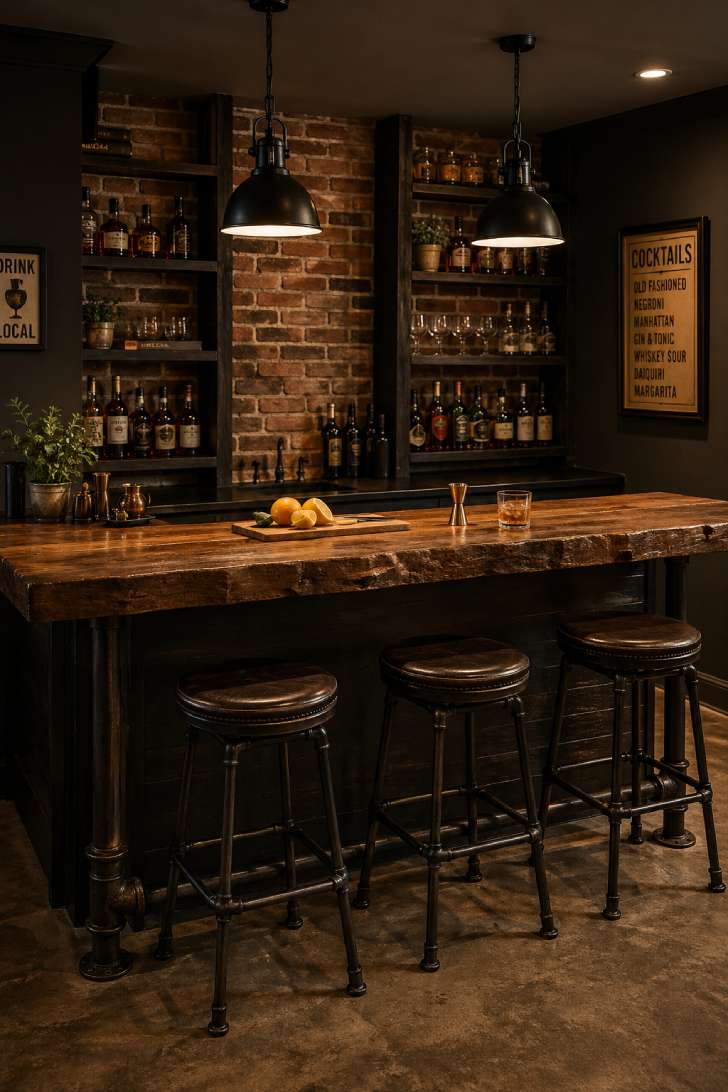
Basements and bars have a long history together, and for good reason. There’s something about being underground that shifts the mood toward evening, toward winding down, toward socializing in a more relaxed way. A dark industrial bar leans into that shift.
Exposed brick does double duty in a dark basement. It adds warmth through its natural red-brown tones while introducing texture that prevents the dark walls from feeling flat. If your basement doesn’t have brick, faux brick panels have come a long way — the better ones are nearly indistinguishable from the real thing.
The live-edge wood counter brings organic irregularity into an otherwise industrial space. That contrast matters. Too much metal and concrete reads as cold and institutional. One warm, imperfect natural element softens the entire room.
Dark basement lighting in a bar space should be theatrical. Pendant lights focused directly over the counter create a spotlight effect that draws people in. The rest of the room stays dim, creating a natural boundary between the bar and the surrounding space.
Style Blueprint:
- Exposed brick or high-quality faux brick panels on the back wall
- Live-edge reclaimed dark wood bar counter on steel pipe legs
- Matte black metal bar stools with leather seats
- Industrial matte black dome pendant lights (warm bulbs)
- Brass bar accessories and small potted herbs for organic contrast
The Charcoal Home Office
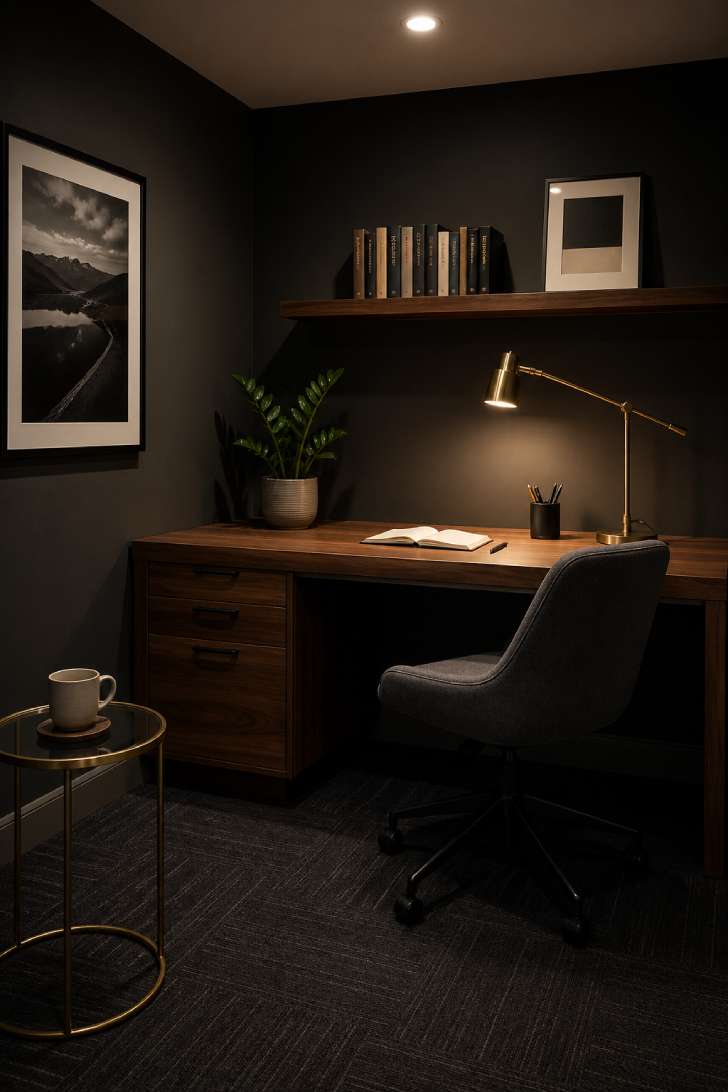
Working from home in a dark basement sounds counterintuitive. Most office design advice pushes white walls, bright overhead lights, maximum natural light. But there’s a case for the opposite approach — and it comes down to how your brain processes visual information.
Dark walls reduce the number of visual distractions competing for your attention. When the periphery of your vision is a uniform dark tone, your eyes naturally focus on the lit area directly in front of you: the desk, the screen, the work. It’s the same principle behind why theaters go dark during a performance.
The key is a strong desk lamp. One good task light with a warm (but not too warm) bulb creates a work zone that feels distinct from the rest of the room. You’re in a pool of productive light surrounded by calm darkness. That boundary helps your brain shift into work mode.
Walnut furniture against charcoal walls is a reliable pairing. The wood’s warm mid-tones prevent the room from feeling sterile, while the dark accent wall basement setup keeps things professional and contained.
Style Blueprint:
- Charcoal gray paint in eggshell or matte finish
- Walnut desk with clean lines
- Adjustable brass desk lamp (3000K–3500K bulb)
- Dark gray carpet tile for sound dampening and comfort
- Floating walnut shelf with minimal accessories
The Velvet Den
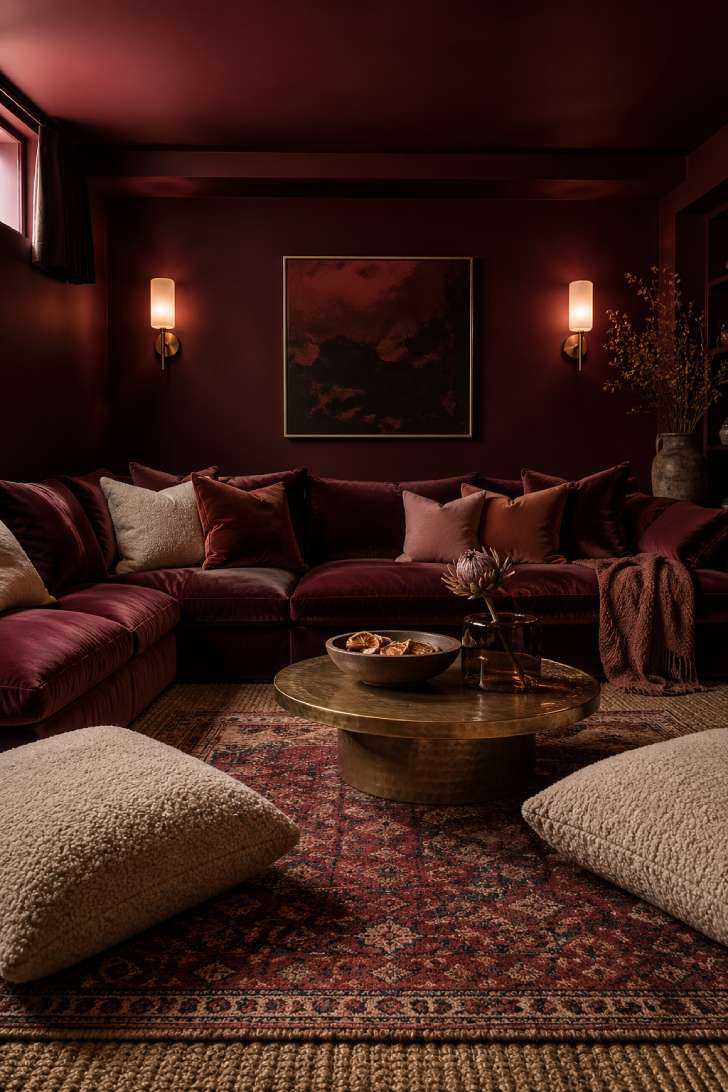
Burgundy is a risk-taking color, and it pays off in a cozy underground room like this. Where navy or charcoal play it safe, burgundy announces itself. It’s warm-toned, saturated, and deeply personal. Not every visitor will love it. That’s part of the point — this isn’t a room designed for open houses. It’s designed for living.
Floor-level seating changes the entire dynamic of a room. Sitting lower to the ground makes a basement’s low ceiling feel proportionally higher. The room opens up. It also shifts the posture of everyone in the space — more relaxed, less formal, oriented toward conversation rather than screens.
Painting the ceiling the same color as the walls (a technique that works in nearly every dark basement) erases the hard line where wall meets ceiling. The room becomes one continuous envelope of color. Your eye can’t pinpoint exactly where the boundary is, so the space feels larger and more immersive than it actually is.
The layered rugs add texture and warmth underfoot, and they solve a practical problem: basements have hard, cold floors. Sisal provides a sturdy base. A vintage Persian on top adds pattern and soul.
Style Blueprint:
- Dark burgundy paint on walls and ceiling (continuous color)
- Low-slung modular velvet sofa in wine or dark berry
- Oversized boucle floor cushions
- Layered rugs — sisal base with vintage Persian on top
- Brass wall sconces with frosted shades (warm dimmable bulbs)
The Gallery Basement
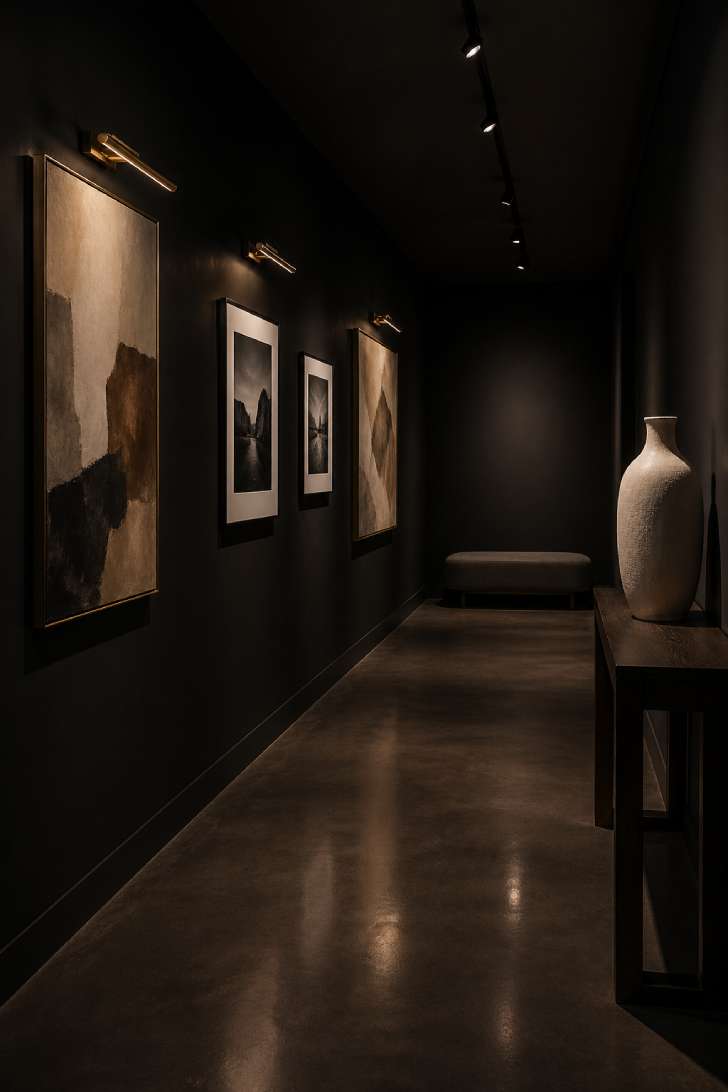
There’s a reason art galleries paint their walls white — it’s neutral, it doesn’t compete. But there’s an equally compelling case for the opposite. Near-black walls make art pop with a drama that white backgrounds can’t match. The dark surround acts as a frame within a frame, isolating each piece and demanding attention.
This approach works especially well for a basement entertainment area that doubles as a gallery. The naturally low light means you control exactly what’s illuminated. Each picture light becomes a stage light, spotlighting its subject while the rest of the room recedes.
Spacing matters more on dark walls than on light ones. Crowded art on dark walls reads as cluttered and heavy. Generous gaps between pieces let each one breathe and give the eye space to move from one to the next. Three or four well-chosen pieces have more impact than a dozen hung salon-style.
The bench at the end of the gallery is a borrowed museum detail. It says: this art is worth sitting with. Stay a minute.
Style Blueprint:
- Near-black paint (look for “soft black” or “off-black” shades)
- Slim brass picture lights above each piece
- Curated selection of 3–5 artworks with generous spacing
- Dark oak console table for sculptural objects
- Polished concrete floors or dark-stained hardwood
Pro Tip: When hanging art on dark walls, go slightly larger than you think you need. Dark backgrounds visually shrink whatever is placed on them. A piece that felt oversized at the store will look perfectly proportioned once it’s mounted against a deep charcoal or near-black wall.
The Spa-Inspired Retreat
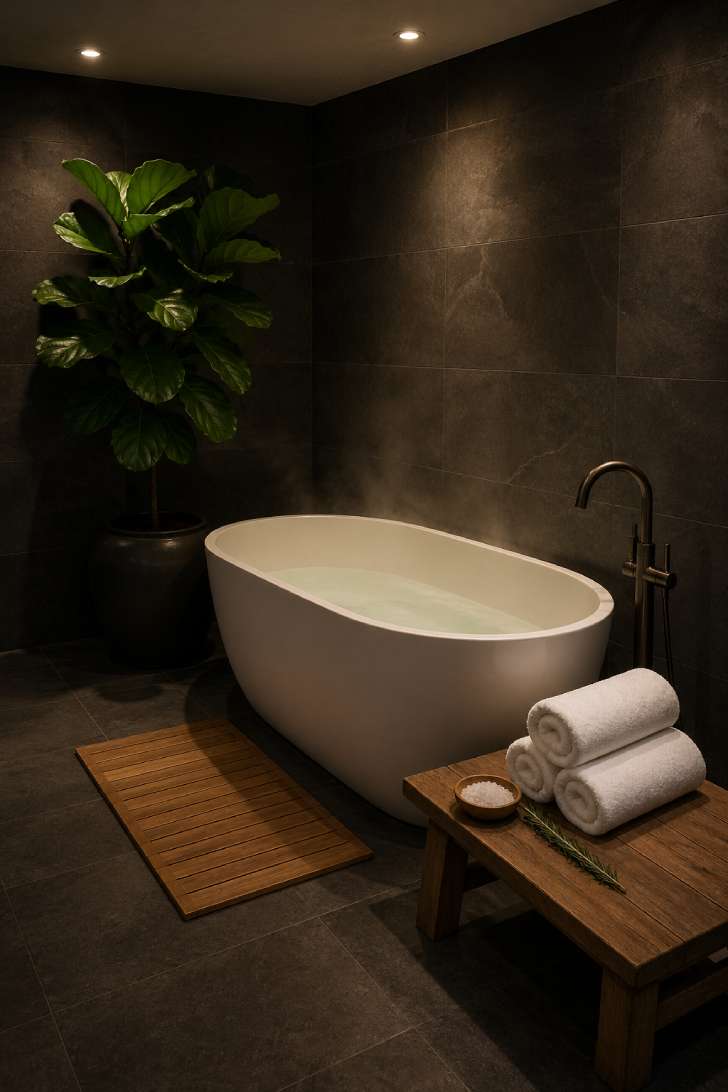
Spas are dark on purpose. They dim the lights, use stone and wood, keep colors muted. That’s not just aesthetic — it’s functional. Low light triggers your parasympathetic nervous system. Your shoulders drop. Your breathing slows. Your body recognizes the signal to rest.
A basement already has the bones for this. The lack of natural light is an advantage, not something to overcome. Slate-look tile on the walls and floors creates a seamless grotto-like envelope. The dark surfaces absorb sound, too, making the room quieter than any room upstairs.
A freestanding soaking tub in matte white becomes the clear focal point against all that darkness. The contrast is stark and intentional — one bright object drawing every line of sight in the room. Everything else stays in the background where it belongs.
Teak is the right wood for a wet space. It resists moisture naturally and develops a silvery patina over time that looks even better against dark tile. A teak bench and bath mat bring warmth and organic texture without introducing anything that doesn’t belong in a wet environment.
Style Blueprint:
- Dark slate-look porcelain tile on walls and floors
- Matte white freestanding soaking tub
- Low teak bench and teak bath mat
- Large potted fiddle-leaf fig or other statement plant
- Recessed warm dimmable ceiling lights (2700K)
The Japandi Basement
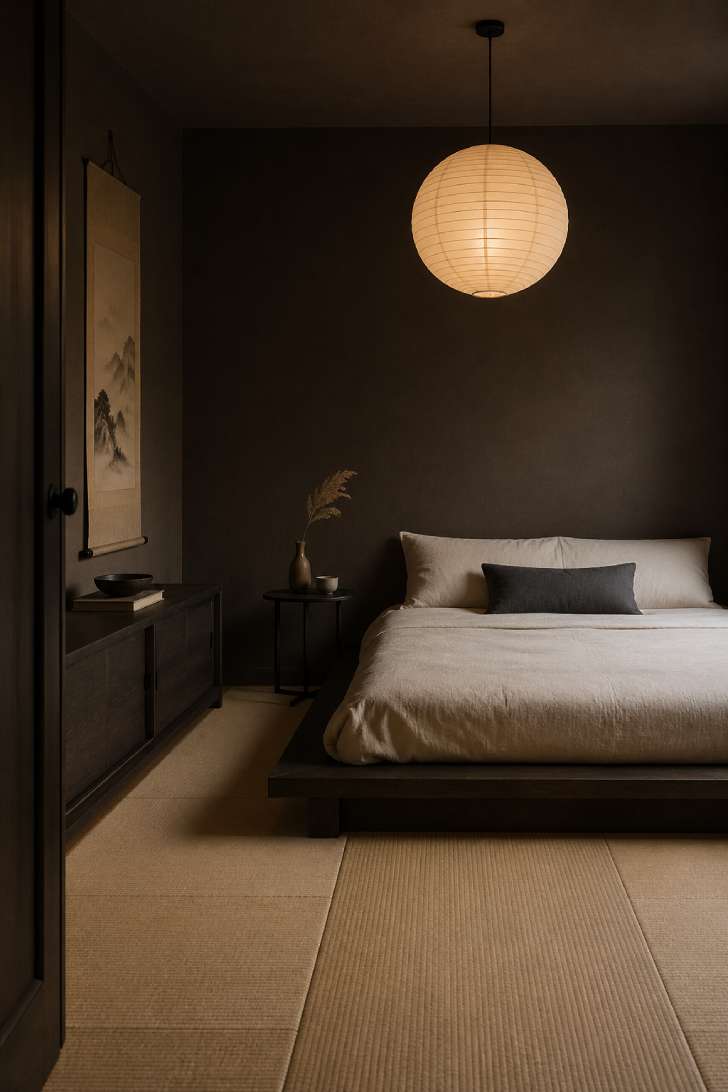
Japandi works in basements because both traditions share a respect for shadow. Japanese interiors have long valued the interplay of light and dark — what writer Jun’ichirō Tanizaki called the beauty of shadow. Scandinavian design, born from long dark winters, learned to make spaces feel warm and livable without abundant sunlight. Together, they’re practically designed for underground living.
The color here — a muted charcoal-brown — sits between warm and cool. It’s not as dramatic as pure black or as assertive as navy. It fades into the background, which is exactly the intention. In Japandi spaces, the room itself shouldn’t demand attention. The individual objects within it should.
Dark paint on basement walls doesn’t require much furniture to feel complete. In fact, fewer pieces make a stronger statement. A low platform bed, a side table, a credenza, a pendant light. That’s the entire room. Each piece earns its place.
The paper lantern pendant provides the perfect quality of light for this space — soft, diffused, warm, with no harsh shadows. It glows rather than illuminates, filling the room with an even warmth that makes the dark walls feel protective rather than oppressive.
Style Blueprint:
- Muted charcoal-brown paint (look for warm undertones)
- Low dark ash platform bed frame with cream linen bedding
- Paper lantern pendant light (warm LED bulb inside)
- Slim dark oak credenza with sliding panel doors
- Woven tatami-style floor mat or natural fiber rug
Make the Darkness Work for You
The thread connecting all 10 of these moody basement decor ideas is intention. A dark basement that happens by neglect feels depressing. A dark basement that happens by choice feels like a destination.
Start wherever feels right. Maybe it’s painting one wall in deep navy and pulling a chair in front of it with a good lamp. Maybe it’s hanging a single piece of art on a dark backdrop with a picture light above it. You don’t need to commit to an entire room renovation to see how darkness changes a space.
The basement is the one room in your house where you get to break all the rules. No one’s going to tell you it needs more windows or brighter paint. It’s already underground. It’s already dark. Work with what’s there, and you might end up with the most interesting room in the house.