This post may contain affiliate links. If you make a purchase through these links, we may earn a commission at no additional cost to you.
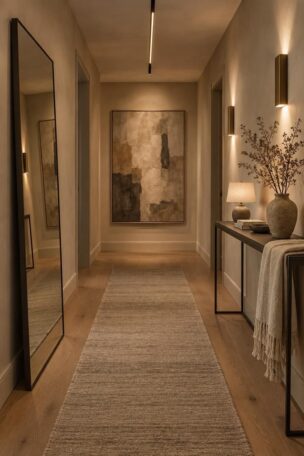
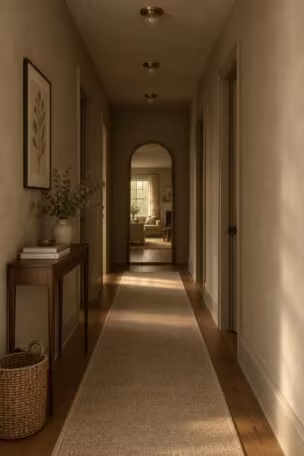
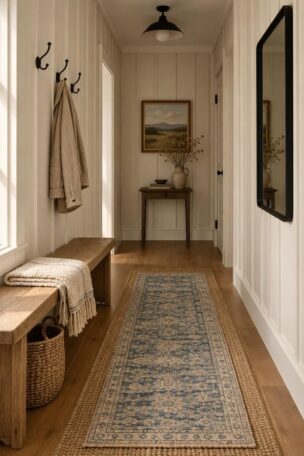
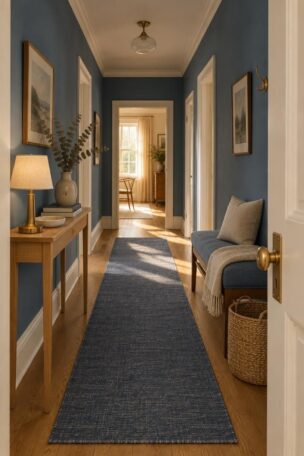
Hallways are the most awkward rooms in a house: usually narrow, often windowless, and used mainly as a route between rooms that actually get lived in.
Brown suits that kind of space because it carries depth and shadow instead of asking for brightness the corridor may not have.
The catch is that brown is not one color.
Chocolate, cognac, taupe, and walnut each behave differently under the same bulb, so the same hallway can read cocoa-warm in one treatment and walnut-cool in another.
Each idea below leads with a specific visual composition, whether that is paint, millwork, textile, furniture, wallcovering, or an architectural detail, rather than a mood to chase.
Tradeoffs around finish, reversibility, and light conditions appear where they matter, and the point is to borrow what fits your corridor rather than replicate a whole scheme.
An All-Wall Chocolate That Wraps Walls, Trim, and Ceiling in One Deep Tone
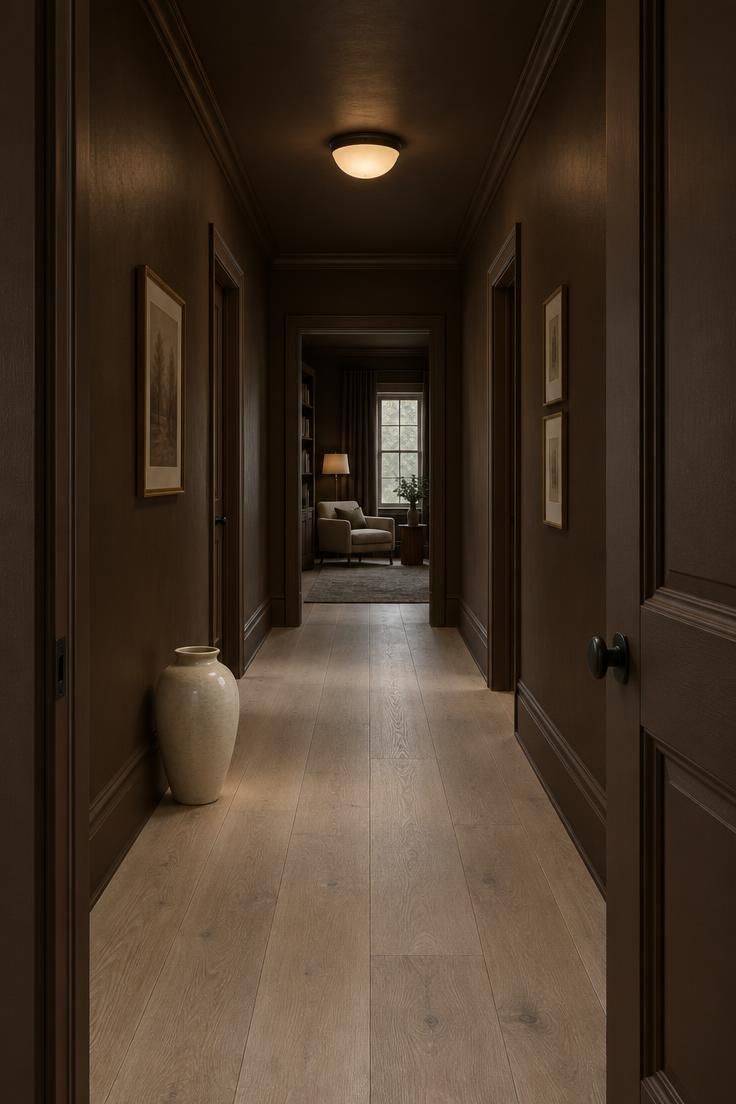
A single chocolate tone across every plane turns the corridor into one continuous envelope, with no white trim slicing the walls into bands.
That pale floor is doing the real work here: it gives the eye a bright value to rest on, so the brown reads deliberate rather than dim.
Finish becomes the second design decision after color, because matte walls absorb and soften while a satin or semi-gloss door face catches a thin line of light and reads as a separate object.
A dark envelope shows scuffs, fingerprints, and dust more readily than a light one, and flat paint is harder to spot-clean than eggshell or satin, so traffic-heavy corridors usually benefit from a wipeable sheen even at the cost of some softness.
Because this treatment is paint, it stays one of the more reversible ways to try a deep brown, unlike wrapping the same tone in tile or brick.
Rooms opening off the corridor also change how the envelope reads, since a bright kitchen or living room at one end pulls the brown toward warmth while a closed door leaves it flat.
Keep the decoration minimal and the composition stays calm; add too many objects and the corridor starts to feel like storage.
A brown hallway finished in one deep chocolate tone from baseboard to ceiling reads as a single calm volume rather than a corridor chopped into separate panels.
Plain baseboards and door casings in that same dark brown hallway paint let the color read as one unbroken surface from floor to ceiling, though the lower edges will collect dust and scuffs faster than a lighter scheme would show them.
Style Blueprint:
- One deep chocolate or espresso tone, undercooled rather than red-leaning
- Pale or whitewashed wide-plank floor as the light anchor
- Trim and doors in the same wall tone, with no contrast trim
- A single ceiling fixture rather than layered lighting, to keep the composition quiet
- One cream or ivory object on the floor plane, such as a ceramic vessel or a paper shade, to give the eye a bright stop
Stained Oak Wainscoting Beneath a Warm Brown Upper Wall
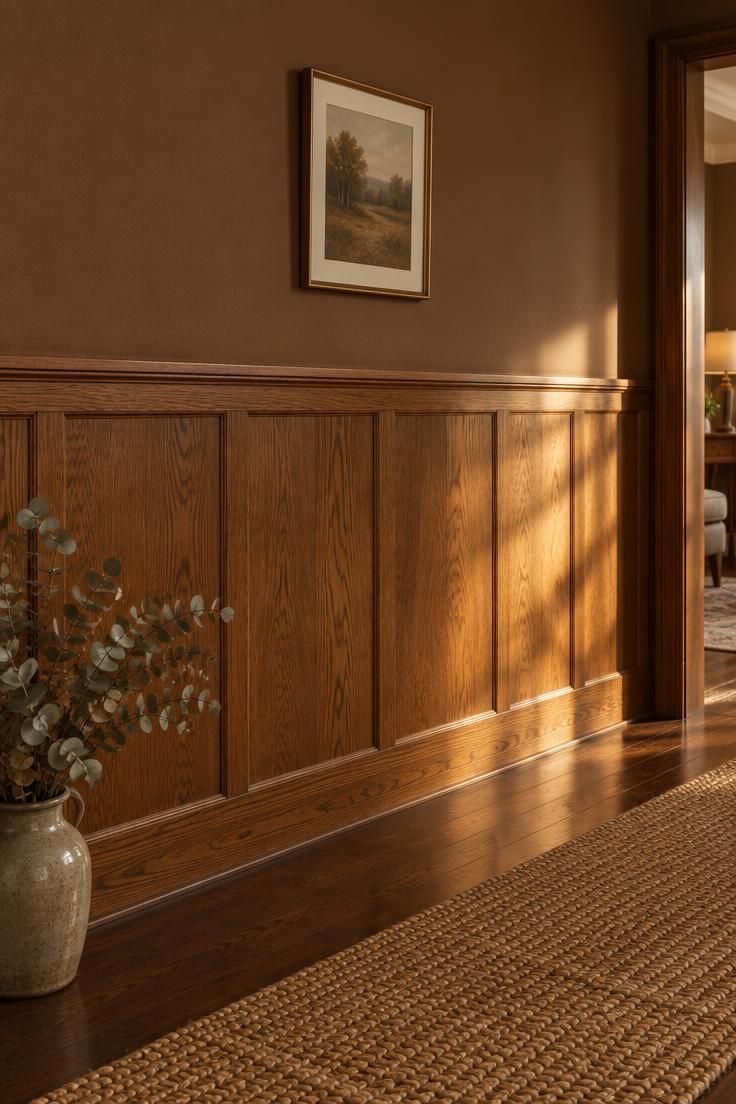
Wood below and paint above splits the wall into two browns that share an undertone, which keeps the pairing from looking accidental.
That horizontal cap rail draws the eye down the length of the corridor in a low, wide band, and low horizontal elements tend to make a narrow hallway read wider than it is.
The layered tones matter more than the individual colors: oak’s amber grain against a painted mid-brown reads intentional, while a cool walnut against orange oak tends to look unresolved.
Stained wainscoting is a more permanent commitment than painted millwork, since reversing it means sanding and refinishing rather than a coat of primer.
At chair height, this band sits exactly where hands, bags, and shoes brush past, so the wood needs occasional cleaning and rewaxing in a busy corridor.
If the floor is also wood, matching it to the wainscot tone or covering it with a runner in the same family pulls the composition together.
Brown hallway wainscoting in stained oak adds a second, deeper brown tone that grounds the lower wall without competing with the softer paint above it.
Style Blueprint:
- Stained oak or ash wainscoting at a comfortable horizontal line
- A painted wall above in a warm mid-brown that shares the wood’s undertone
- A slim cap rail rather than a bulky one, to keep the corridor feeling open
- One small framed artwork centered on the upper wall as the only decoration
- Dark wood flooring below, or a runner that picks up the wainscot tone
A Brown-Painted Paneled Front Door as the Corridor’s Hero
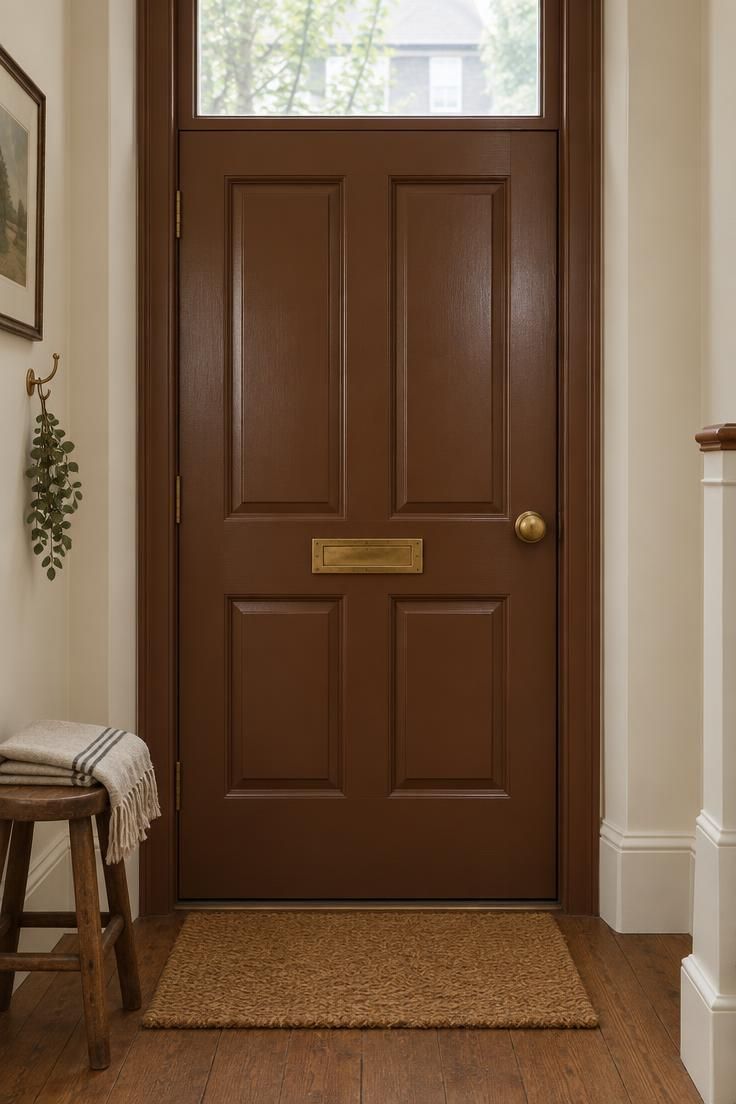
Painting the inside face of the front door, panels and edges included, gives the corridor a single brown event without committing the walls.
Doors and trim are the easiest place to audition brown, because the surface area is small, the color reads clearly in relation to the surrounding walls, and the decision is easy to reverse.
Cognac brown against unlacquered brass reads warm and lived-in rather than rustic, and the brass develops its own patina over time.
Door edges and panel reveals collect handling marks and grease in a deeper color, so a wipeable sheen helps more here than it would on a matte wall.
Stripping a previously painted wood door later is real work even though the original paint job was quick, which is worth weighing before the brush comes out.
Leaving the surrounding trim cream keeps the door legible as a single object rather than one colored line among many.
Style Blueprint:
- One deep cognac or chestnut on the inside face, edges, and panels
- Pale cream or off-white walls to make the door a clear visual event
- Unlacquered brass or aged bronze hardware as the metal accent
- A simple floor mat or small stool in a warm natural fiber
- Adjacent trim kept white or cream so the door reads as a deliberate single object
Design Pro-Tip: Bring the door’s paint color and a small brass sample into the hallway itself before deciding, since the corridor’s own light will shift both warmer or cooler than they look in a store.
A Patterned Brown Runner Over a Pale Floor, Stopping Short of Each Door
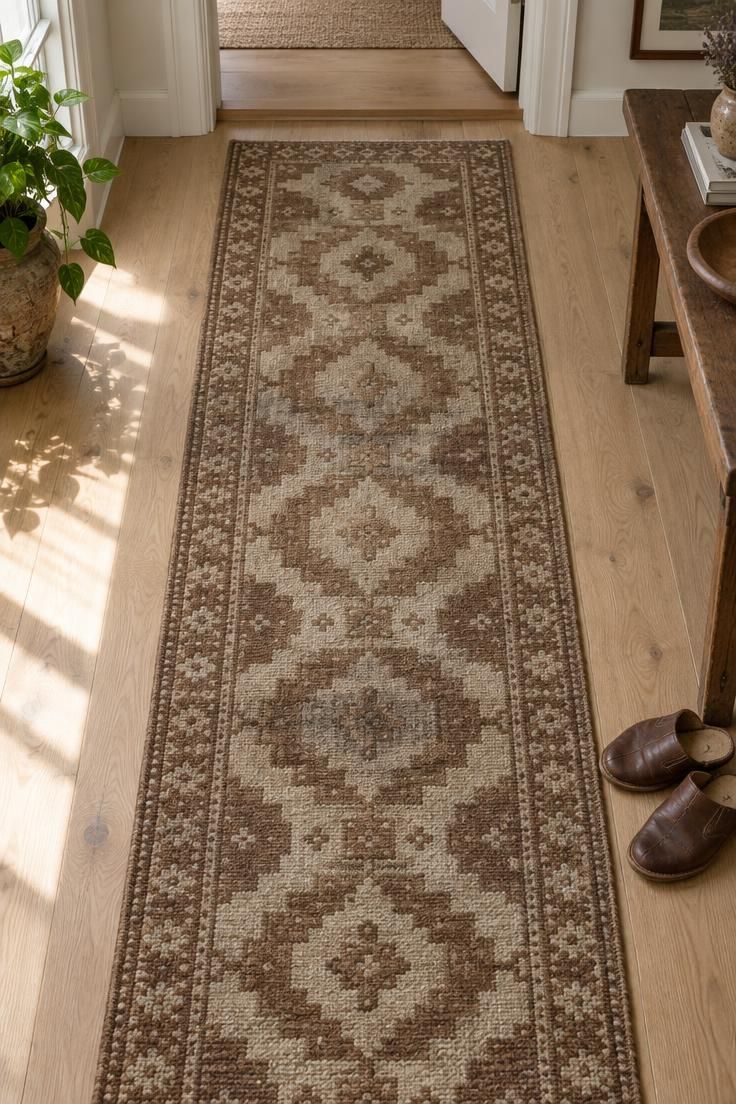
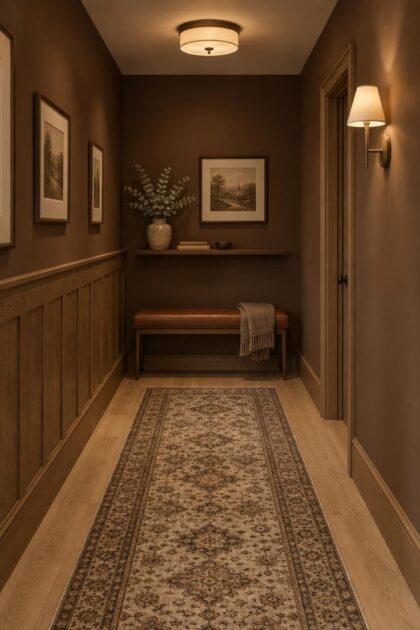
A patterned brown runner makes the floor the corridor’s main color event while the walls stay pale and quiet.
Stopping a few inches short of each threshold keeps the textile reading as a rug rather than wall-to-wall carpet, and it shows the floor as a deliberate frame on either side.
Pattern scale matters more than color here: a small busy traditional repeat can feel restless in a tight corridor, while an open geometric or faded vintage pattern holds interest without competing.
A runner that stops short also leaves the floor edges visible, which looks generous in a wide corridor and slightly mean in a very narrow one, so the proportion between runner and floor is the decision to weigh.
High-traffic hallways wear runners in the center path first, so periodic rotation and a slip-resistant underlay extend the life of the textile.
Above the runner, keep the palette warm and restrained with cream, soft taupe, or muted sage so the floor does the talking.
A brown hallway runner earns its keep when the pattern is chosen for the corridor’s proportions rather than for a trend, and an open geometric repeat usually holds a long view better than a dense small-scale motif.
Style Blueprint:
- A brown-patterned wool runner with a cream or faded ground
- Pale oak or whitewashed floor beneath, visible on both sides
- A runner width that leaves a small margin of floor at each side
- A low-pile or flat-weave construction that lies flat underfoot
- A room-temperature palette above: cream, soft taupe, or muted sage
A Single Arched Opening or Niche Rendered Entirely in Brown Plaster
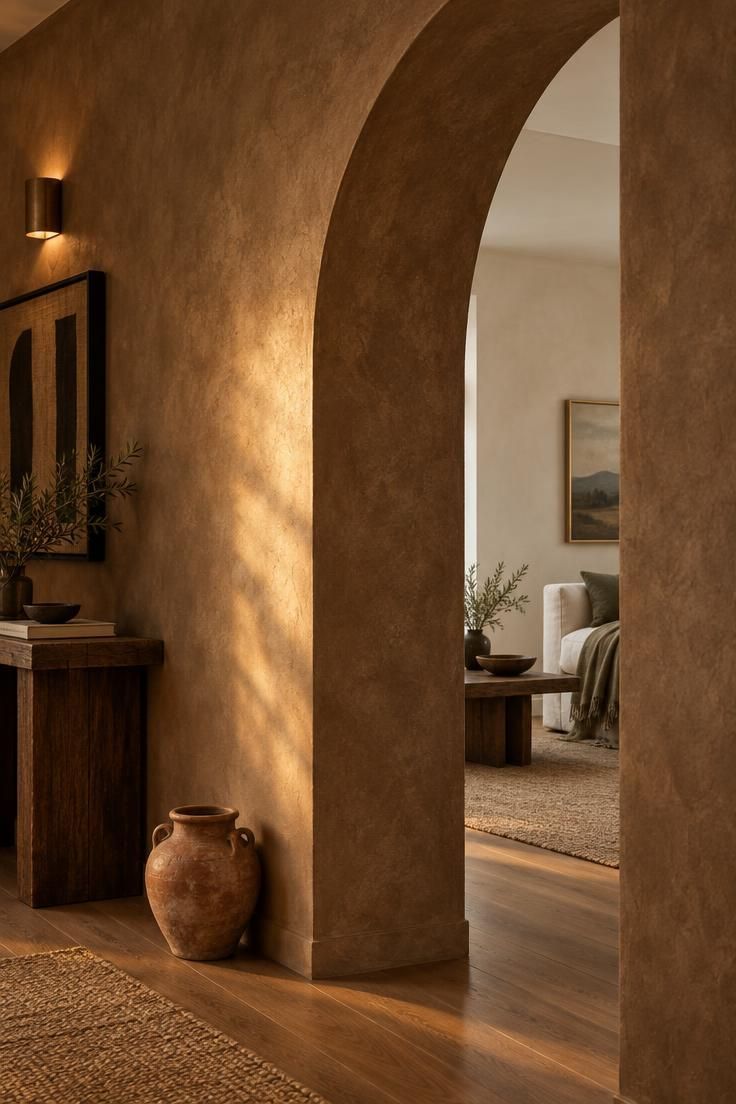
Brown concentrated on an arch rather than the whole corridor reads as an architectural moment, which is a different category of idea from painting every wall, and limewash or Roman clay carry texture that flat paint cannot.
That texture is what makes the color look chosen instead of applied.
The softness of a rounded profile against a straight-lined corridor gives the eye something to follow at the end of a walk.
Because the arch is the only brown element, the walls on either side can stay light, which keeps the corridor from compressing.
Troweled finishes are less uniform than paint by nature, and in a low-light hallway they can read patchy unless some light grazes across the curve.
This is a surface and shape idea rather than a structural one, so the composition works with the opening that already exists in the wall.
Style Blueprint:
- A brown limewash or plaster finish on the arch and its reveal
- A simple rounded profile rather than a sharp-cornered opening
- Lighter walls on either side so the arch is the single brown event
- A warm low-glow fixture washing across the curve, if a light already sits nearby
- One small brass or terracotta object placed near the arch’s foot to warm the palette further
Brown Grasscloth Wallpaper on the Long Uninterrupted Wall
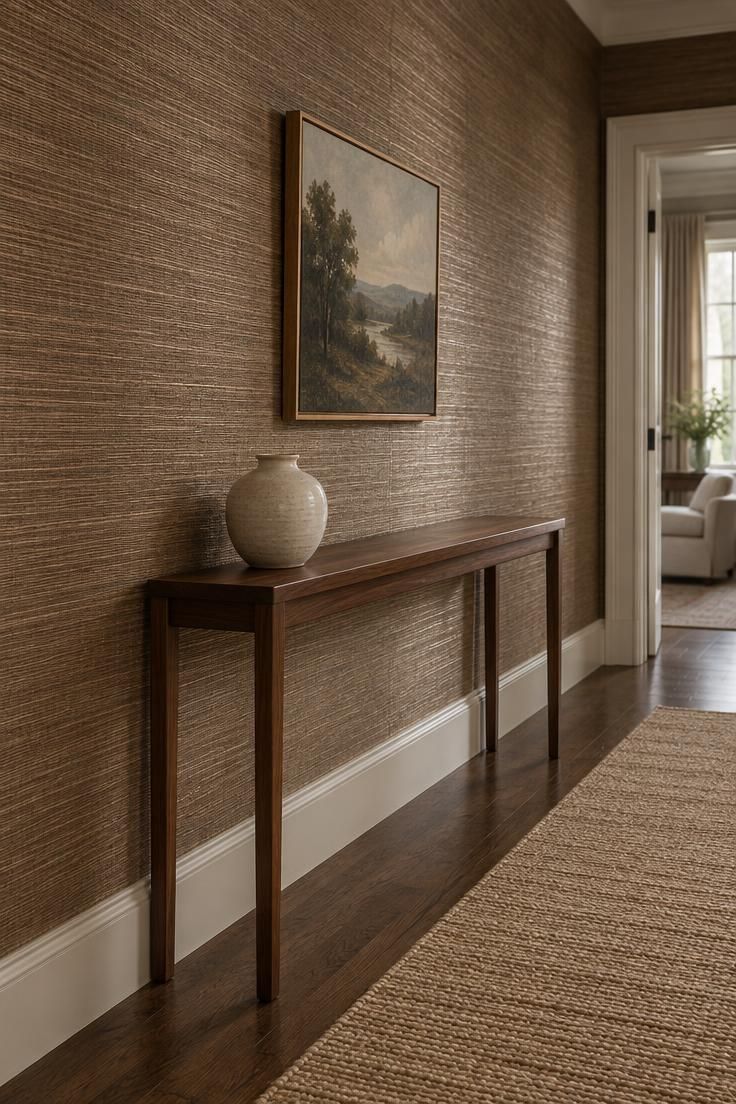
Grasscloth delivers brown as texture rather than pigment, so the wall stays warm and quiet without competing with the corridor’s proportions.
The horizontal fibers run parallel to the hallway’s length, and that alignment reinforces the sense of a long walk.
Pairing grasscloth with natural wood furniture and stone or ceramic accents keeps the surface the main event rather than the objects.
Cleaning is the practical catch: grasscloth is harder to wipe than paint and shows water marks, so it suits hallways where hands rarely brush the wall.
Removing and re-prepping a wallcovering later is a bigger job than repainting, which matters if the brown is an experiment.
The trim and ceiling benefit from staying pale so the corridor keeps a light frame around the textured wall.
Brown hallway wallpaper in a grasscloth weave keeps the corridor’s long wall reading as one continuous, softly textured surface.
Style Blueprint:
- A brown or taupe grasscloth with visible horizontal weave
- Simple natural wood furniture with no glossy finishes, so the texture stays the star
- A pale or cream trim and ceiling to lift the corridor
- One ceramic or stone vessel as the only styled object
- A flat-weave or jute runner on the floor, kept plain so the wall texture isn’t doubled
Design Pro-Tip: Order an extra roll of grasscloth beyond what you expect to need, since seams in a long hallway are hard to hide and matching dye lots later is unreliable.
Brown-Painted Vertical Board-and-Batten Below, Pale Wall Above
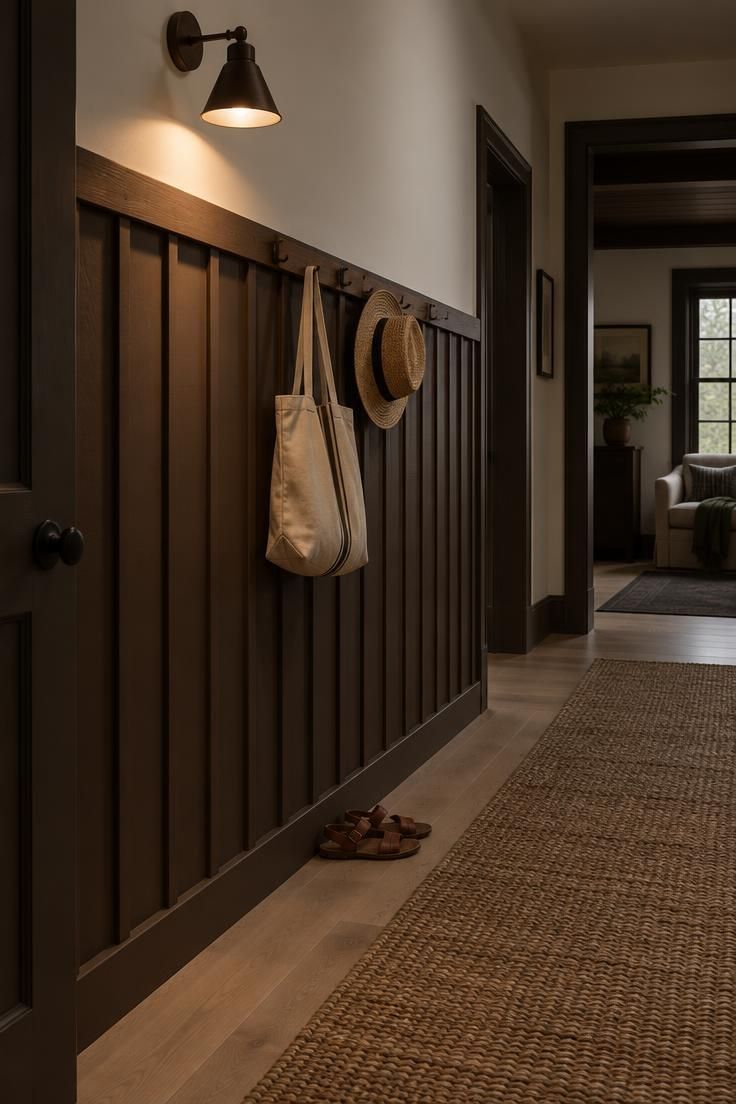
Vertical battens in brown below a pale upper wall draw the eye upward, which is the opposite effect of horizontal wainscoting and changes how the corridor’s proportions read.
The pale wall above keeps the corridor from compressing even when the lower band is dark, so a deep brown can work in a narrow hallway if the ceiling height is generous.
A hook rail integrated into the battens gives the treatment a practical job, turning the lower band into a working surface rather than a decorative one.
Battens in a deep color do make a narrow corridor’s walls feel closer, so this idea is best suited to hallways with good ceiling height and adequate light.
Deciding between tone-on-tone paint and clear contrast is the main visual fork; a matched tone reads as a single textured wall, while a strong contrast turns the treatment into a graphic statement.
Leave the upper wall mostly bare, with at most one small artwork over the rail, so the vertical rhythm stays the focus.
Style Blueprint:
- Vertical battens painted in a deep chocolate or walnut brown
- An upper wall in a soft cream, ivory, or warm off-white
- A simple stained wood hook rail integrated into the battens
- A natural-fiber or plain wool runner in a light tone
- One small artwork above the rail as the only wall decoration
Brown-Upholstered Bench and Low Shelf as the Corridor’s Landing Moment
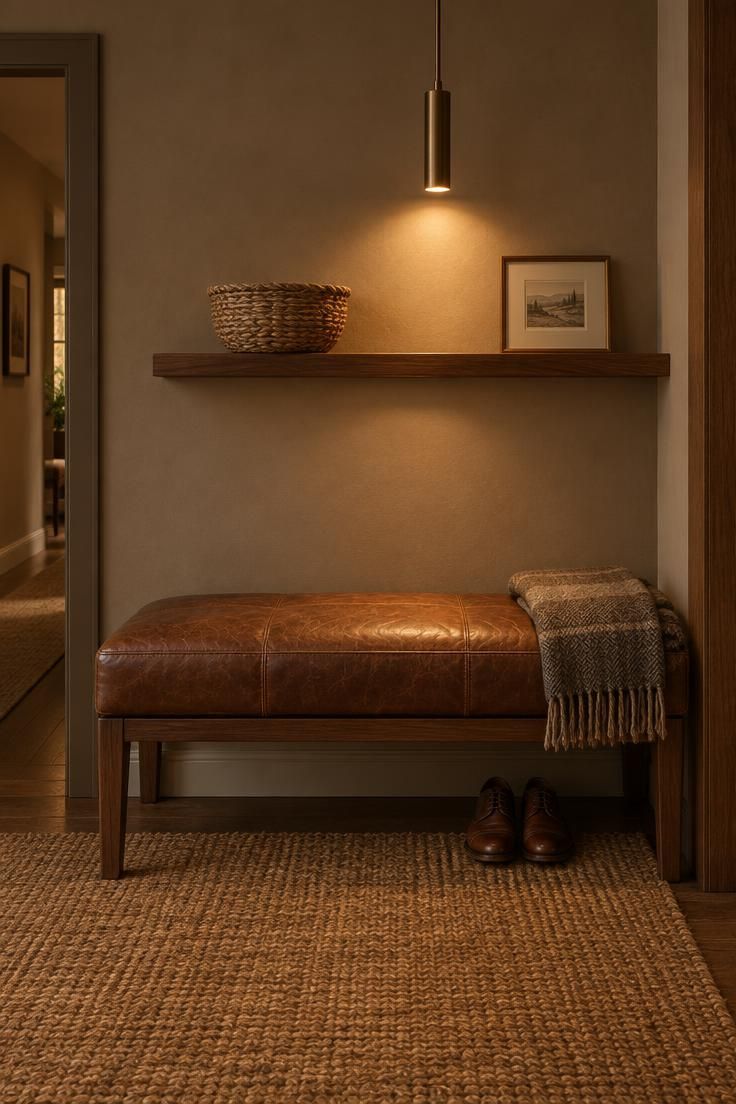
A bench paired with a shelf turns the corridor from a pass-through into a pause point, which changes how the space gets used rather than just how it looks.
A bench in a hallway has a real job: a place to set a bag, pull on shoes, or drop a coat without adding visual weight to the corridor.
Cognac and chestnut leathers are the natural choice for this kind of piece because they take on patina rather than reading worn.
Shallow depth is the key proportion here, since a bench in a narrow corridor needs to leave clear walking space without becoming a trip hazard.
The shelf above should hold one or two objects rather than a collection, so the vignette stays composed instead of crowded.
A single pendant or downlight positioned over the bench gives the leather a top-lit glow and makes the vignette read at the end of the corridor.
A brown hallway bench and a low shelf share the same wall without crowding the walkway, giving bags and shoes a place to land near the door.
Leather tones sit well against wood trim, so the brown upholstery reads as part of the corridor rather than a separate piece of furniture.
Style Blueprint:
- A shallow bench in cognac or chestnut leather, or a brown-stained wood frame with a leather cushion
- A slim wood shelf above, holding only one basket and one framed piece
- A single pendant or downlight positioned over the bench
- A plain warm neutral wall behind
- A natural-fiber floor covering beneath to soften the hard surfaces
Brown Tile Laid in a Herringbone Across a Small Hallway Floor
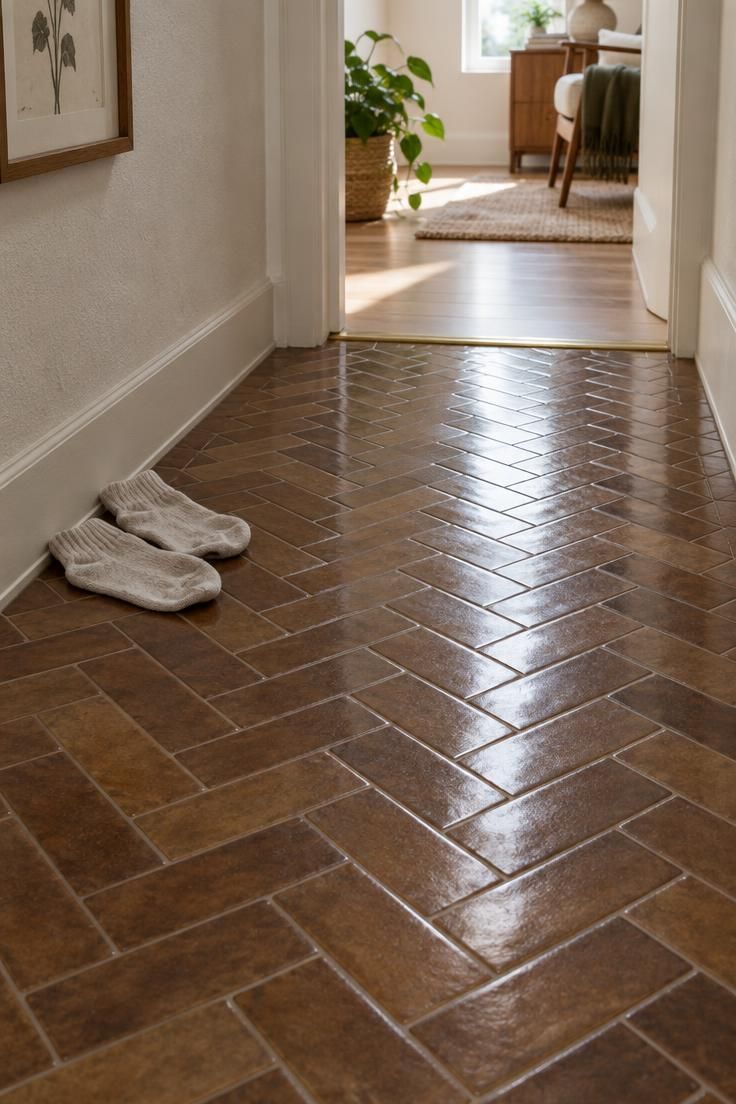
Moving brown to the floor plane as tile lets the walls stay quiet and pale, which is a different balance from any treatment that puts brown at eye level, and a herringbone or other diagonal layout breaks up a long narrow floor and gives it depth without changing a single tile.
The glaze on brown tile catches reflections that matte floors do not, so the surface holds a soft sheen under even small amounts of light.
Glazed tile is easier to wipe than painted floorboards in a busy hallway, which is the practical case for this treatment over stained wood.
The tradeoff is that tiled floors feel cold underfoot and reflect sound, so a wool or cotton runner makes the walking experience gentler in winter.
Pairing the tile with plain plaster walls and simple brass or bronze hardware keeps the brown from becoming visually heavy.
Style Blueprint:
- Small brown glazed tiles laid in herringbone or another diagonal pattern
- A grout tone matched to the tile rather than contrasting
- Pale plaster or warm off-white walls above
- Simple brass or bronze door hardware to warm the palette
- One wool or cotton runner over the tile if softness is wanted
Design Pro-Tip: Orient a diagonal tile pattern along the walk direction so the floor reads as a path rather than breaking the corridor into squares.
Brown-Painted Trim, Doors, and Baseboards Against Soft Cream Walls
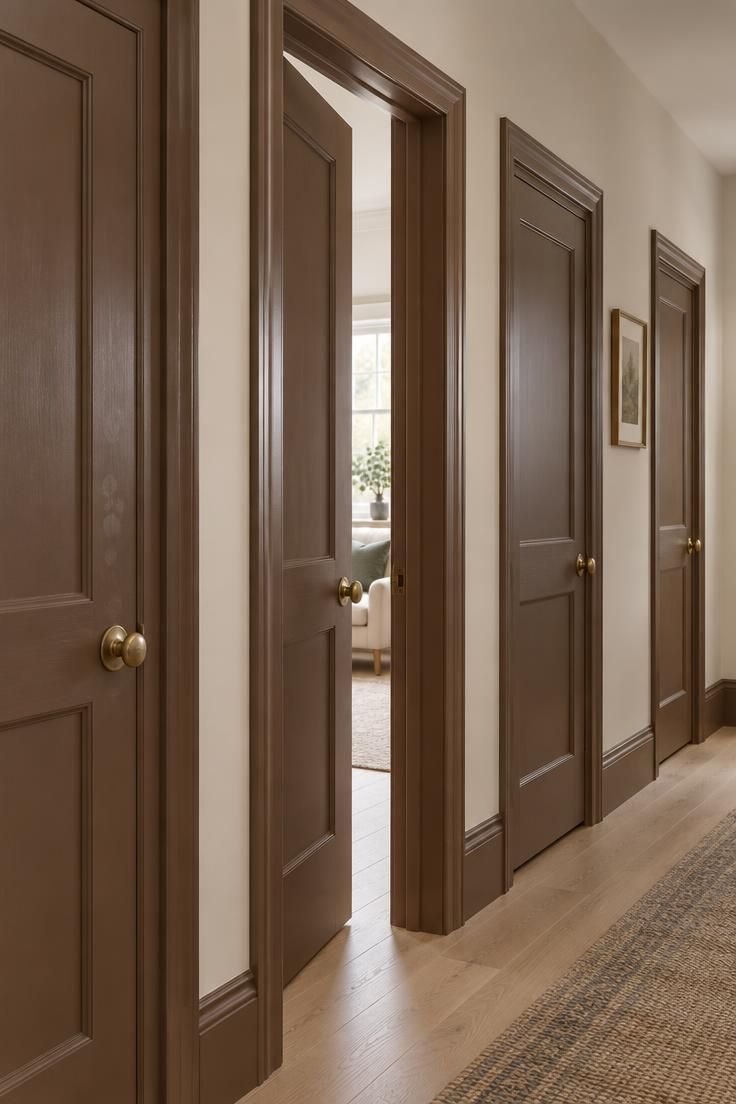
Brown used only on the hard lines, doors, casings, and baseboards, makes the corridor read as outlined rather than colored.
The composition puts the architecture forward: the trim profiles, panel edges, and door reveals all read clearly because the surrounding walls step back into cream.
This is one of the lowest-commitment ways to test brown in a hallway, since the surface area is limited to trim and doors and reversing the decision later is straightforward.
Tone choice decides whether the scheme reads current or dated, since an orange-leaning 1990s brown and a gray-leaning taupe or deep chocolate produce completely different corridors from the same layout.
Brown trim does highlight any waviness or unevenness in a wall’s straightness more than white trim does, so the profile of the carpentry matters here.
Hardware should sit in brass, bronze, or matte black rather than chrome, and wall art can stay minimal because the doors carry the visual interest.
Style Blueprint:
- All trim, doors, and baseboards in one warm brown, matched tone-on-tone
- Walls in a soft cream or warm off-white that lifts the corridor
- Hardware in brass, bronze, or matte black rather than chrome
- A neutral floor covering that recedes
- No wall art, or one small piece, since the doors are the composition
A Brown Gallery Wall on a Pale Wall, Frames and Matting in Tonal Browns
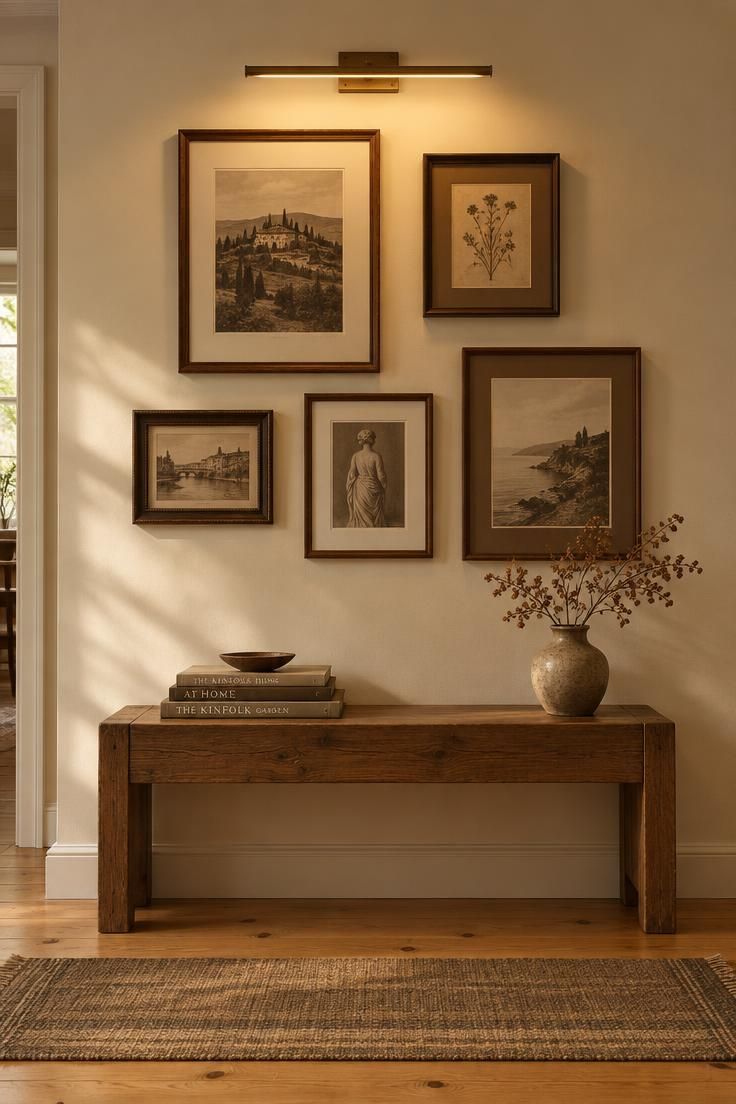
A gallery wall lets brown enter the corridor through frames, matting, and imagery rather than through the walls themselves.
Sepia and monochrome prints carry brown tonal range that color photography does not, so the group reads cohesively even when the subjects differ.
Mixing frame profiles and depths keeps the grid from looking like a set, while holding every frame within the same brown family ties it together.
Picture lights are the practical partner here, since a pale wall with a dim artwork group goes flat in a windowless corridor.
Hanging heights and grid spacing take time to get right, and paper or frames near a high-traffic path will pick up scuffs, so a hallway wall that avoids brushing traffic works best.
The console beneath should stay low and spare with just two or three objects, so the wall remains the focus.
Style Blueprint:
- Five framed prints in brown frames, brown matting, or both
- Sepia or monochrome imagery rather than color photography
- A pale cream or warm off-white wall as the ground
- A slim picture light or wall-mounted fixture above the group
- A low console beneath with two or three simple objects
Conclusion
Brown has range in a hallway: it can be an envelope across every plane, a trim-only outline, a textured wall, a floor, a runner, or a single piece of furniture.
What should drive the decision is how much light the corridor actually gets, which surface the brown is going on, and how reversible the choice is if the result does not sit right.
The most cautious starting points are the runner, the front door, and the trim, since each one can be moved, repainted, or replaced without touching the architecture around it.
Live with one of those before committing a deep tone to every wall, and the corridor will tell you fairly quickly whether it wants more brown or less.