This post may contain affiliate links. If you make a purchase through these links, we may earn a commission at no additional cost to you.
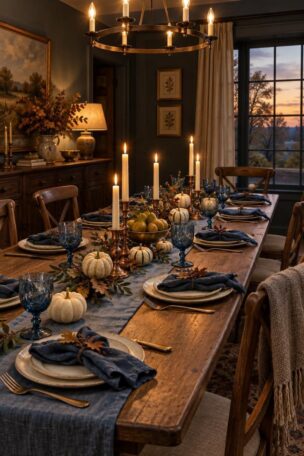
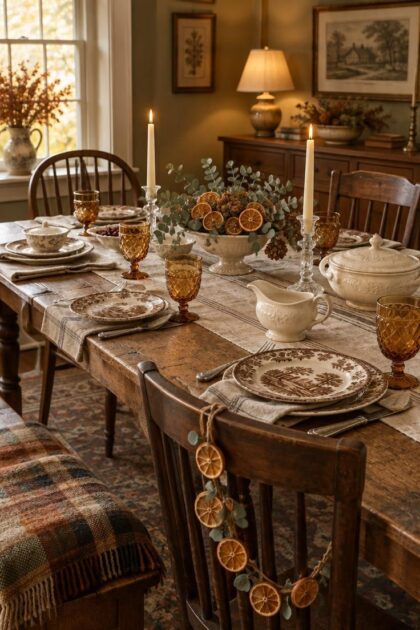
A collected Thanksgiving table starts with pieces that look handed down rather than bought as a matching set.
Warm, muted colors such as amber, cream, faded orange, and olive soften the look compared with bright modern harvest decor.
Surfaces with visible wear, from tarnished silver to crazed ironstone, give a home table a lived-in, personal feel.
The ideas ahead focus on concrete objects, practical groupings, and small tradeoffs that keep a vintage thanksgiving look readable instead of cluttered.
Brown Transferware Place Settings
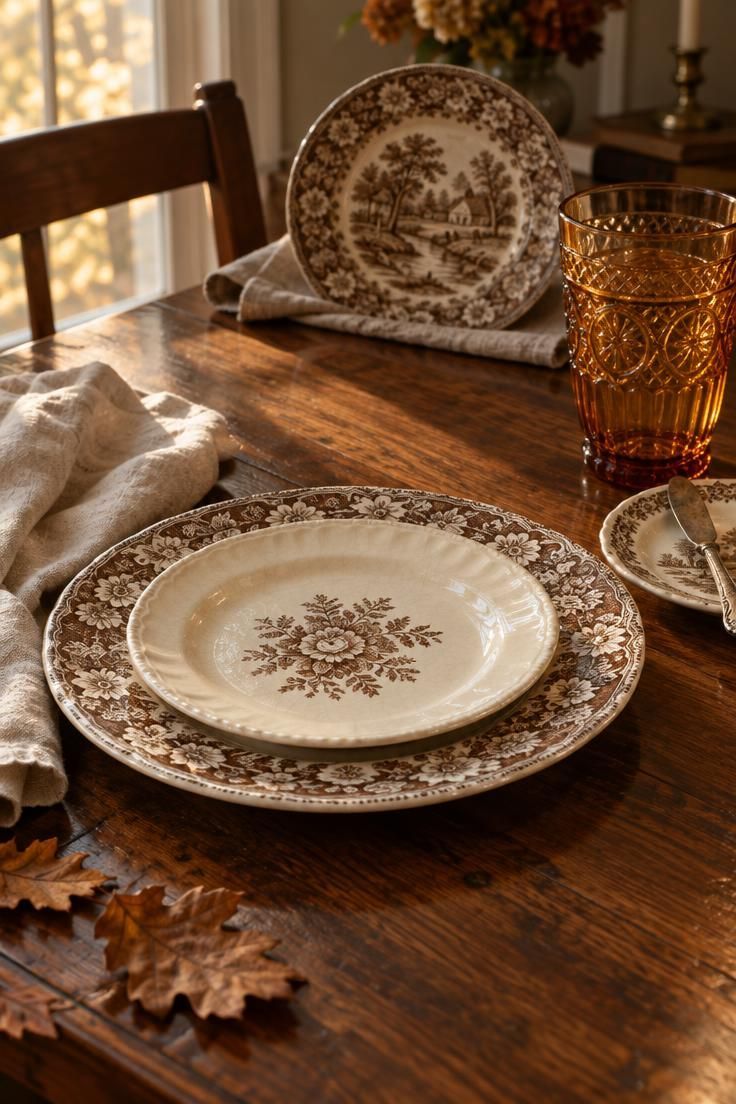
Start with a stack of mismatched brown transferware plates in different patterns.
For a vintage linen table runner, the brown transferware place settings carry the vintage mood on their own, so the surrounding pieces should stay quiet.
Keep the palette tight with cream linen napkins and simple amber glassware so the mixed plates remain the focus.
Place one pattern repeated at each seat for rhythm, then add a small tarnished silver butter knife on the bread plate.
Plate sizes will vary from piece to piece.
Checking that each setting has a usable dinner plate and salad plate helps the table work during the meal.
Aim for two or three pattern families rather than a free-for-all.
When every plate is different, the eye has nowhere to rest, and the collected look tips into clutter.
Style Blueprint:
- Brown transferware dinner plates in two or three different patterns
- Cream ironstone salad plates as a quiet layer
- Cream or flax linen napkins, softly folded
- Simple amber glass goblets
- Small tarnished silver butter knives
Design Pro-Tip: Repeat one brown-and-cream motif three times across the table to make the mix feel intentional.
Ironstone Compote Centerpiece
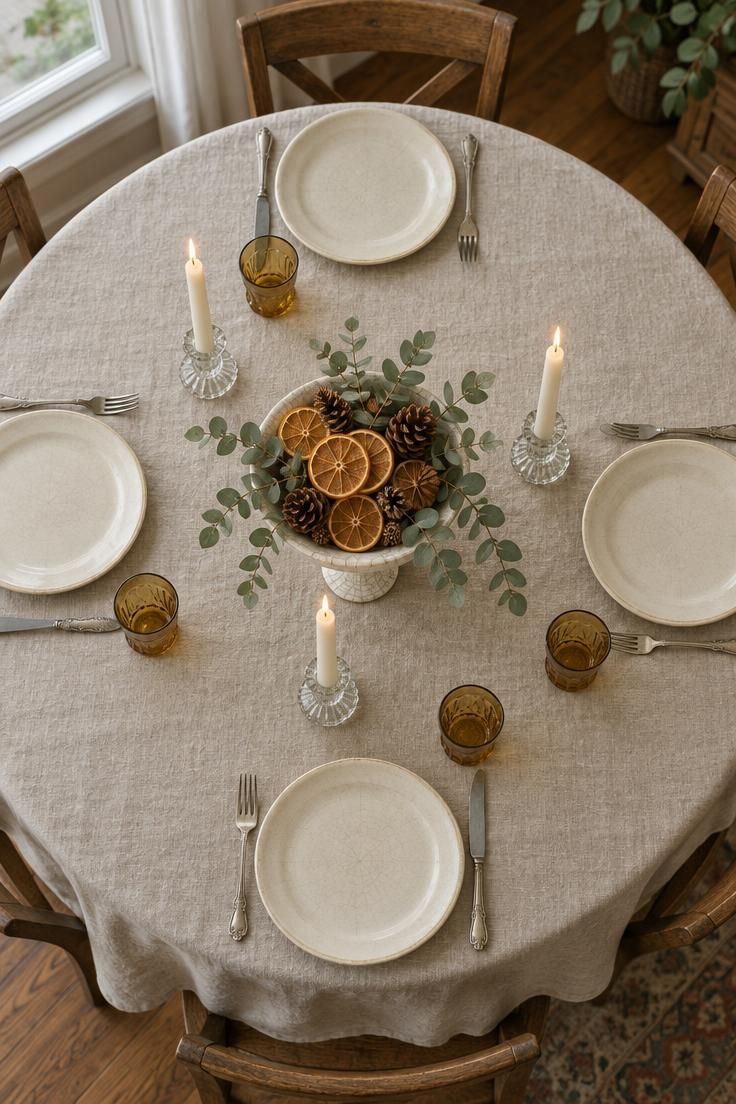
Set a low ironstone compote in the table's center instead of a tall arrangement.
An ironstone compote centerpiece anchors the table while keeping sightlines open from seat to seat.
For a dried orange slice garland, fill the compote with a loose cluster of dried orange slices, small pinecones, and a few sprigs of eucalyptus so the top stays below eye level.
Surround the base with three short pressed glass candle holders for a soft reflected glow.
This works best on a smaller table or as one anchor on a longer table.
On a long table, a single compote can look lost, so give it a tray or a pair of small bowls nearby to extend its visual weight.
Dried orange slices may drop a bit over the course of the meal, so a tray underneath catches stray pieces.
The compote earns its place through proportion: low, wide, and generous, it reads as collected rather than styled.
Style Blueprint:
- Low white ironstone compote with a pedestal foot
- Dried orange slices and small pinecones
- Two or three eucalyptus sprigs
- Pressed glass candle holders in cream
- A shallow tray beneath to catch dried pieces
Pumpkin-Shaped Tureens as Place Card Anchors
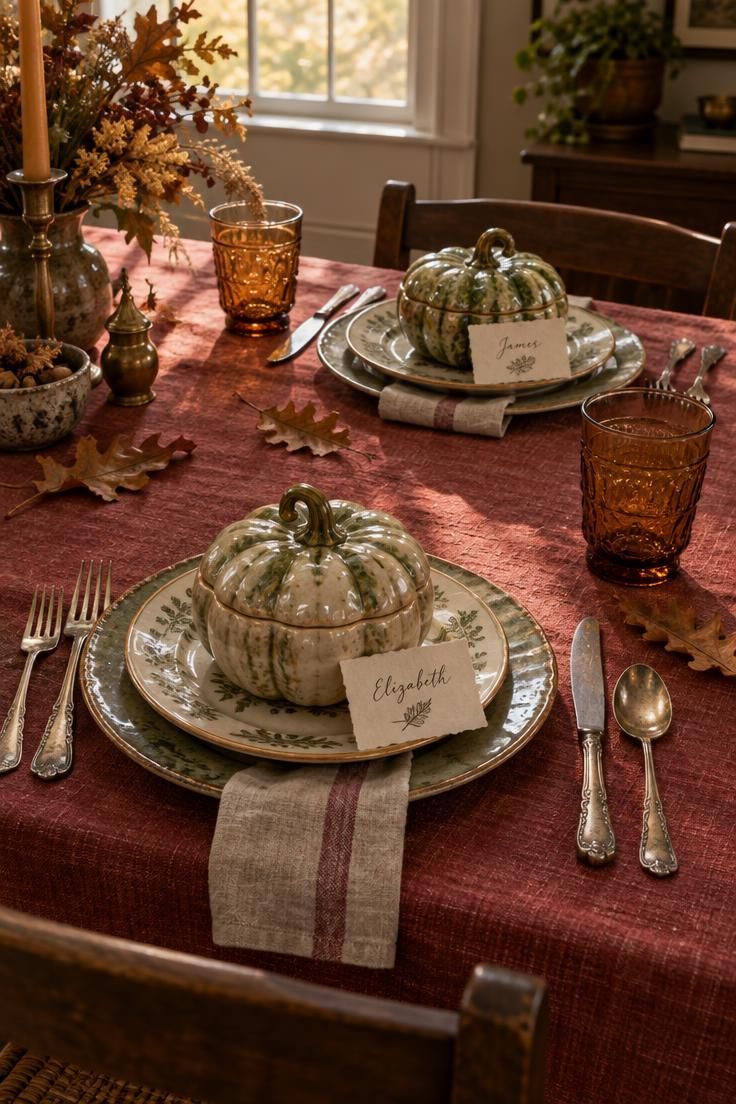
Small pumpkin-shaped tureens can work as place card anchors instead of holding soup on the table.
A folded card leaning against each lid gives guests a clear seat marker and adds a quiet ceramic detail near the rim of every plate.
Use tureens with soft glaze variation rather than bright orange pumpkins so they read as collected pieces, not seasonal novelty items.
Mottled cream, sage green, and buttery yellow finishes mix well with brown transferware and tarnished silver.
Keep lids in place and tuck the card between the stem handle and the tureen body.
This keeps the table relaxed and avoids anything that blocks sightlines during conversation.
Tureens in different sizes still work at the same table, though keeping them roughly similar in height prevents the place settings from feeling uneven.
A slightly undersized tureen reads better than one that crowds the plate and flatware.
Style Blueprint:
- Ceramic pumpkin tureens in cream, sage, or soft yellow
- Handwritten place cards leaned against each lid
- One tureen centered above each plate
- Small tureens that leave room for flatware
- Glaze variation rather than glossy bright orange
Wheat Sheaf Runner with Applied Dried Stems
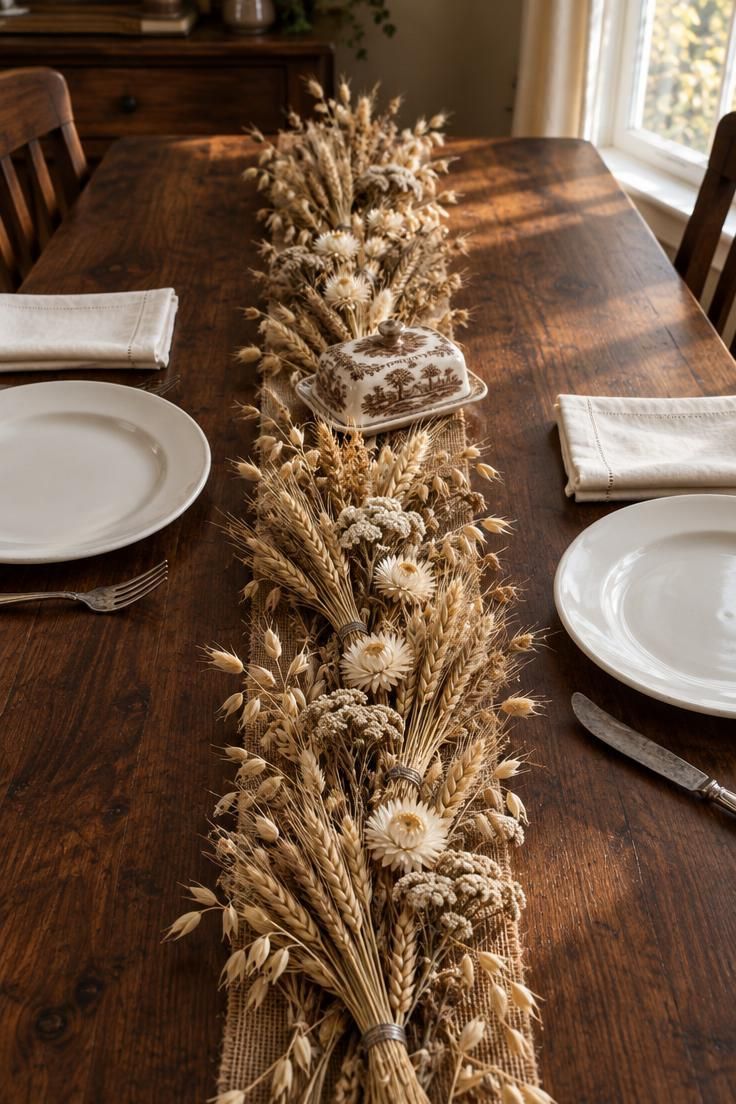
Build a narrow foundation from burlap or another open-weave fabric, then attach short bundles of dried wheat, oats, yarrow, and strawflowers along its length.
A wheat sheaf runner reads as gathered from a field instead of sewn from a bolt, giving the table a more rustic vintage character than crisp linen.
Vary the stem lengths and rotate the bundles slightly as you attach them so the runner looks hand-gathered rather than evenly trimmed.
Leave the burlap edges rough and partially visible between the bundles for a softer transition onto the table.
A dry stem runner works best on a table where diners will not be reaching across it often, because loose pieces can shift or shed.
Keep a small brush nearby to gather fallen bits after the meal.
Style Blueprint:
- Pale dried wheat, oats, and bleached grasses
- Cream yarrow and strawflowers tucked between bundles
- Narrow burlap foundation with raw edges showing
- Dark walnut table beneath for strong contrast
- Small brown transferware butter dish as a low anchor
Cranberry and Bay Leaf Chair Sash
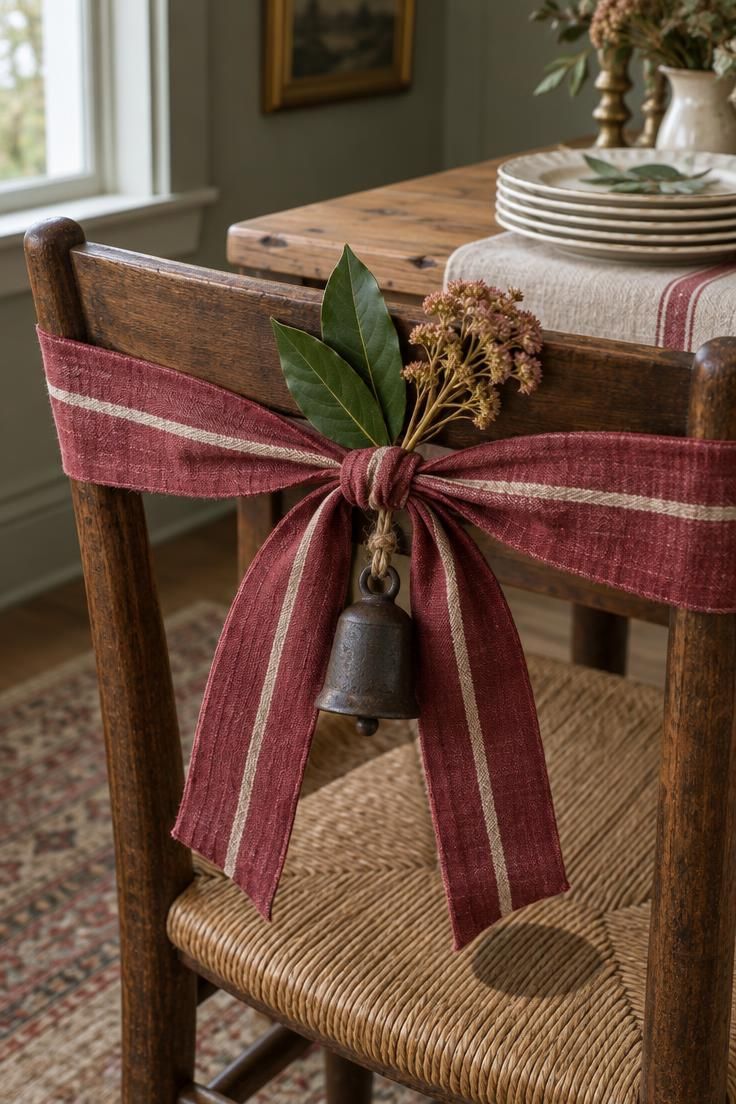
Tie a length of faded cranberry ribbon around the back of each dining chair instead of using a formal chair cover.
The sash adds color at the chair line and softens the edge of the table without competing with the centerpiece.
Tuck a dried sedum stem and two bay leaves under the knot so the sash becomes a small botanical accent.
The bay leaves stay flat and smooth, while the sedum adds a slightly wild shape.
A small iron bell threaded on jute gives the setting a quiet old-house character.
It rests against the chair rail and moves only if someone brushes the chair.
Style Blueprint:
- Faded cranberry striped cotton ribbon tied at the chair back
- Fresh bay leaves tucked under the knot
- One dried sedum stem for height and irregular shape
- Small iron bell on jute twine for a collected accent
Tarnished Silver Serving Tray
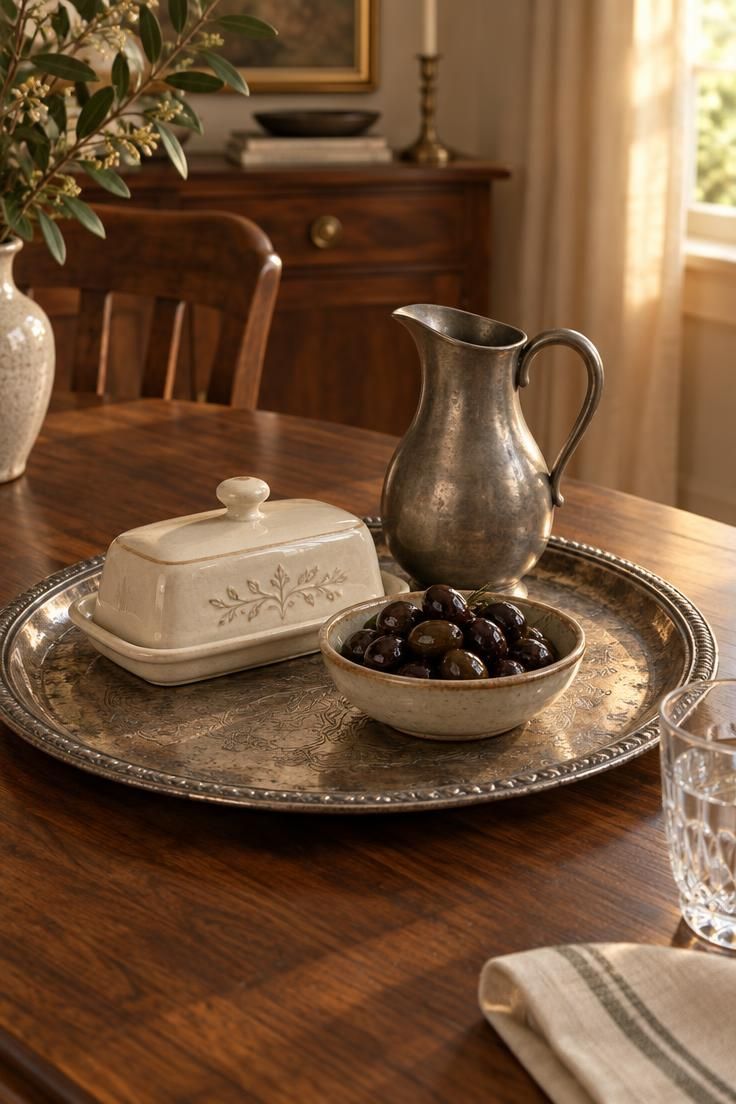
Use a tarnished silver tray as a low riser for smaller serving bowls and a small pewter pitcher.
Placed near one end of the table, the tray keeps the center compote unobstructed.
Group three items of different heights on the tray, such as a butter dish, a small gravy boat, and a squat bowl of olives, to give the serving area a composed look.
Different heights make the tray read as a small still life rather than a parking spot for dishes.
Silver tarnishes again after polishing, so a lightly tarnished tray may be easier to maintain than a fully polished one.
Pewter can dent with handling, and that softness suits the collected mood.
Keep the tray within reach of the seats that will use it most.
A serving piece placed at the far end of a long table becomes a decoration instead of a tool.
Style Blueprint:
- Tarnished silver tray with visible engraved detail
- Small pewter pitcher
- Cream ceramic butter dish
- Low bowl of olives
- Placement near one table end, clear of the centerpiece
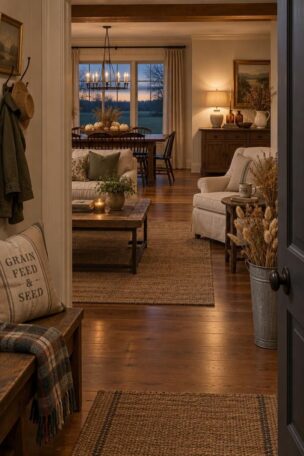
Wool Plaid Blanket as a Bench Cover
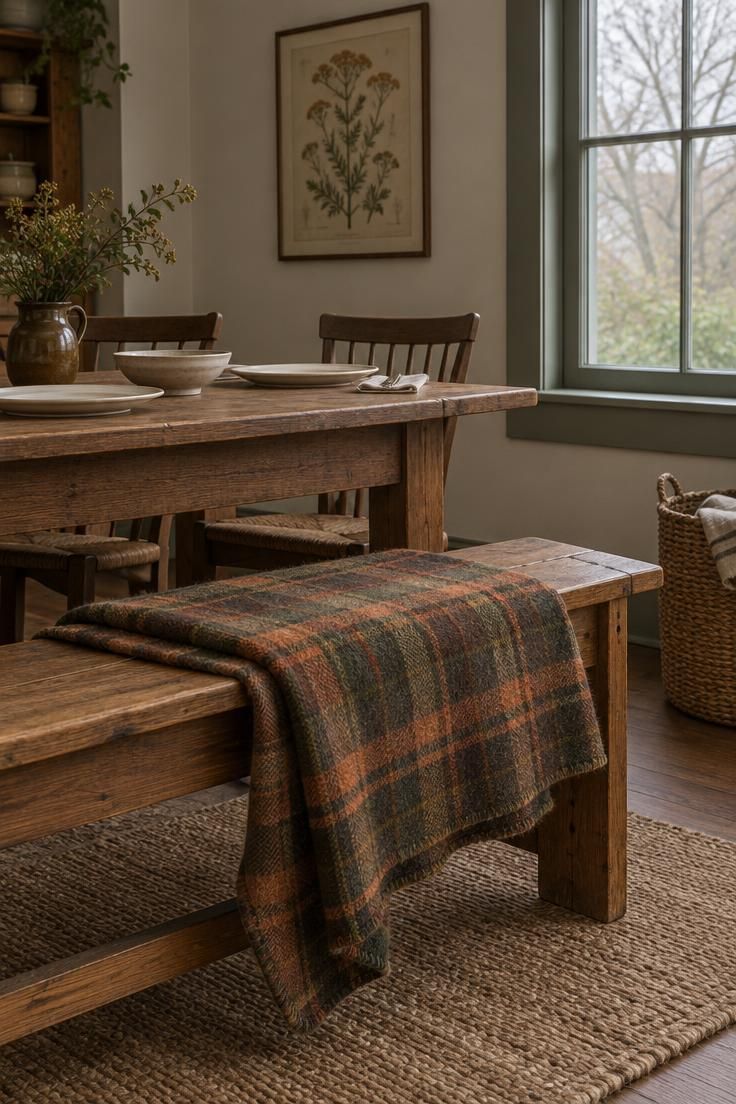
Fold a vintage wool camp blanket in a muted plaid over a dining bench or the back of a long settee.
A plaid blanket softens a hard bench and ties the seating to the table palette.
Choose a plaid with warm brown, faded orange, and a bit of olive to echo the table colors.
Keep the blanket edges loose rather than tucked for a more collected look.
This works well in cooler weather and can be pulled onto laps after the meal.
Choose a blanket without moth holes if the bench will be used during dinner, since a hole tends to grow with handling.
The blanket also solves a practical problem: a bare wood bench can feel cold and stiff over a long meal.
A folded layer at the back adds a little cushioning without changing the bench itself.
Style Blueprint:
- Vintage wool camp blanket in brown, faded orange, and olive plaid
- Folded loosely over a wood bench
- Edges left untucked
- A woven basket nearby for texture
Vintage Postcard Place Cards
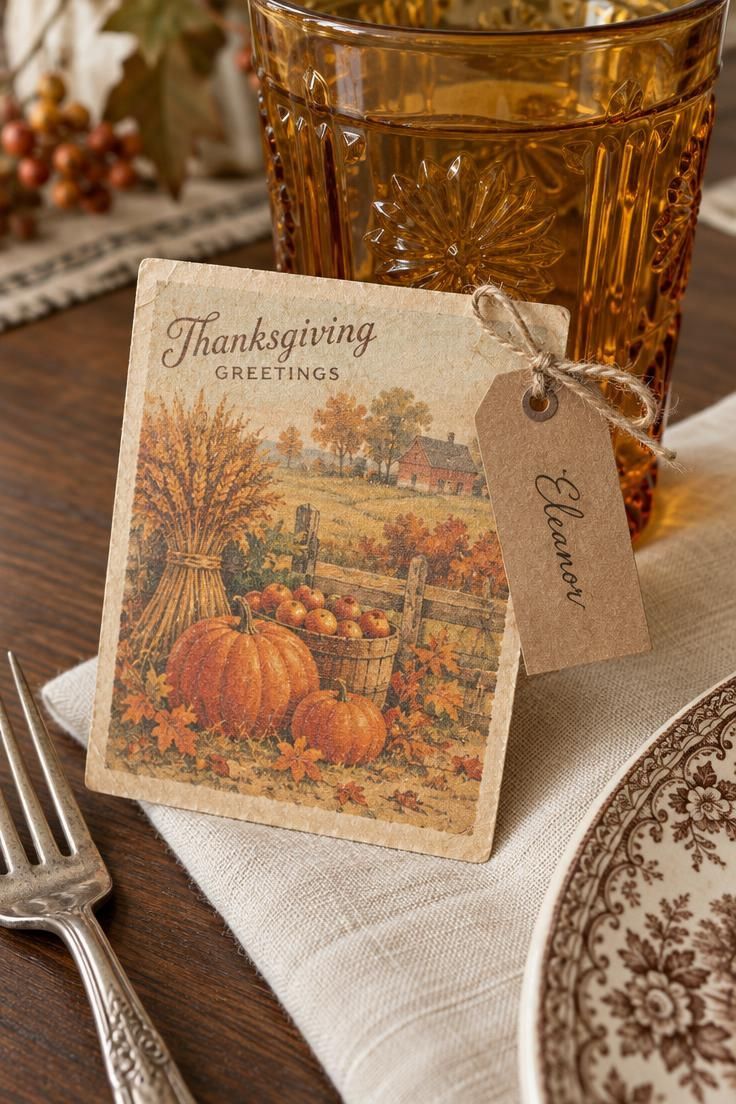
Prop a small vintage Thanksgiving postcard against each water glass or folded napkin as a place card.
A postcard does the work of a name card and a small piece of art at once.
Choose postcards with harvest scenes or printed greetings, and write each guest's name on a small kraft paper tag tied to the postcard with twine.
Use a different postcard image for each seat so the table feels collected.
Old postcards fade in strong light, so this idea works best for an evening meal or a table away from direct sun.
Keep the tags small so they do not cover the printed image.
Guests often want to take their postcard home, which makes this an easy favor.
Expect a few to go missing from the table over the years, and treat that as part of the fun.
Style Blueprint:
- Vintage Thanksgiving postcards, one per seat
- Small kraft paper tags with handwritten names
- Natural twine for tying
- Amber pressed glass water glasses
- Cream linen napkins underneath
Design Pro-Tip: Keep the kraft tags small enough that the postcard image still reads from across the table.
Milk Glass Bud Vases with Dried Bittersweet
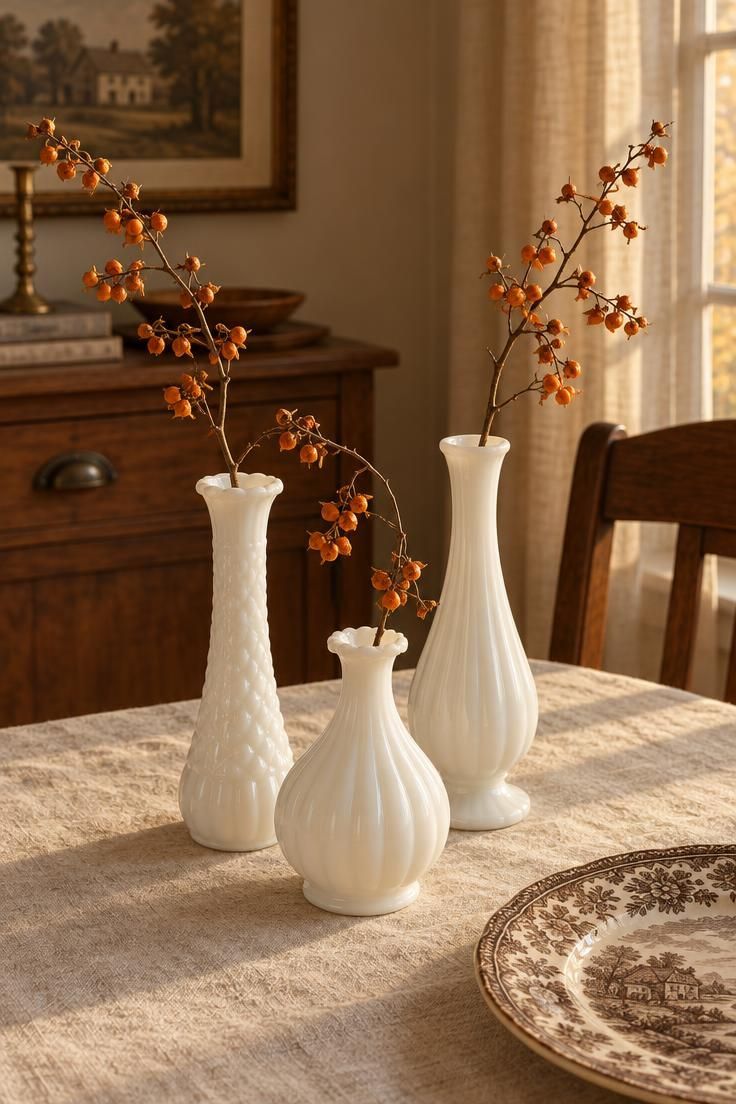
Set a single small milk glass bud vase at each place, or group three in the center for a lower arrangement.
Milk glass lightens the table against the darker browns and ambers that vintage settings tend to carry.
Fill each vase with one stem of dried bittersweet or a few dried wheat stalks so the look stays airy.
One stem per vase is often enough; a full bunch hides the shape of the glass.
Bittersweet drops small berries, so place vases on a small saucer or away from the dinner plate.
A saucer under each vase catches the loose berries and keeps the cloth clean.
Style Blueprint:
- Milk glass bud vases in assorted shapes
- One dried bittersweet stem per vase
- Small saucers beneath the vases
- Cream linen tablecloth
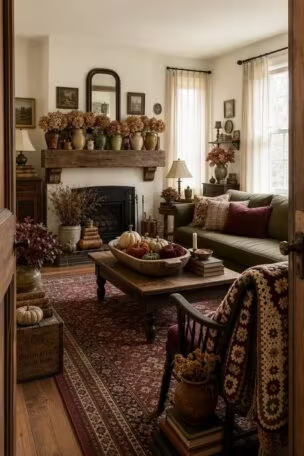
Copper Pot with Dried Hydrangeas on a Sideboard
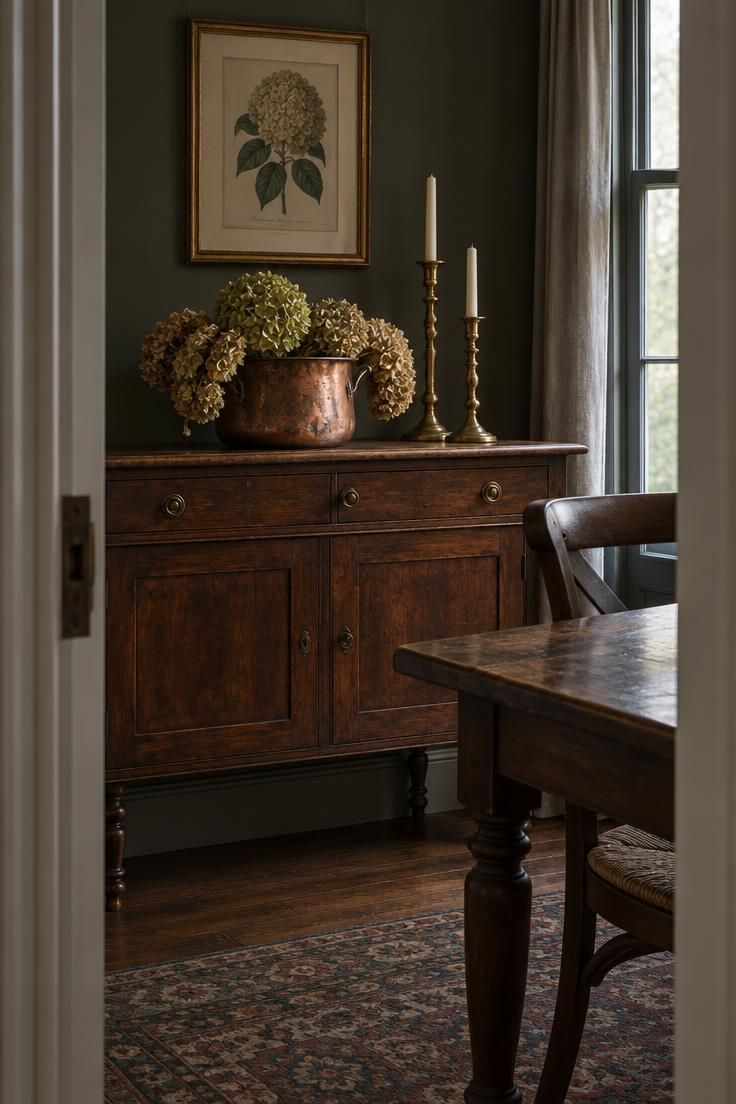
Place a worn copper pot or small cauldron on a sideboard or console, filled with dried hydrangeas in faded green and cream.
A copper pot brings warmth and a bit of weight to a sideboard that might otherwise hold only small objects.
Let the hydrangea heads droop over the pot's rim instead of standing straight.
Add two brass candlesticks of different heights behind the arrangement for warm metallic contrast.
Dried hydrangeas drop small petals, so this piece belongs on a sideboard rather than the dining table itself.
A sideboard also lets the arrangement be seen from across the room, which suits its height.
Copper and brass together can tip toward cluttered if other metals crowd the same surface.
Keep the rest of the sideboard quiet so the pot and candlesticks carry the vignette.
Style Blueprint:
- Worn copper pot or small cauldron
- Dried hydrangeas in faded green and cream
- Two brass candlesticks in different heights
- A framed botanical print above the sideboard
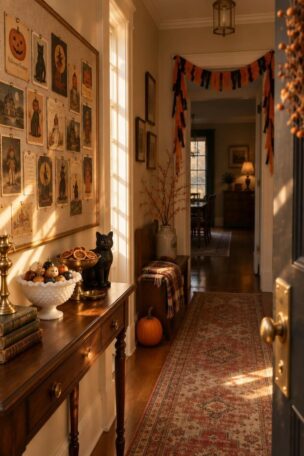
Ironstone Pitcher with Dried Wheat on an Entry Console
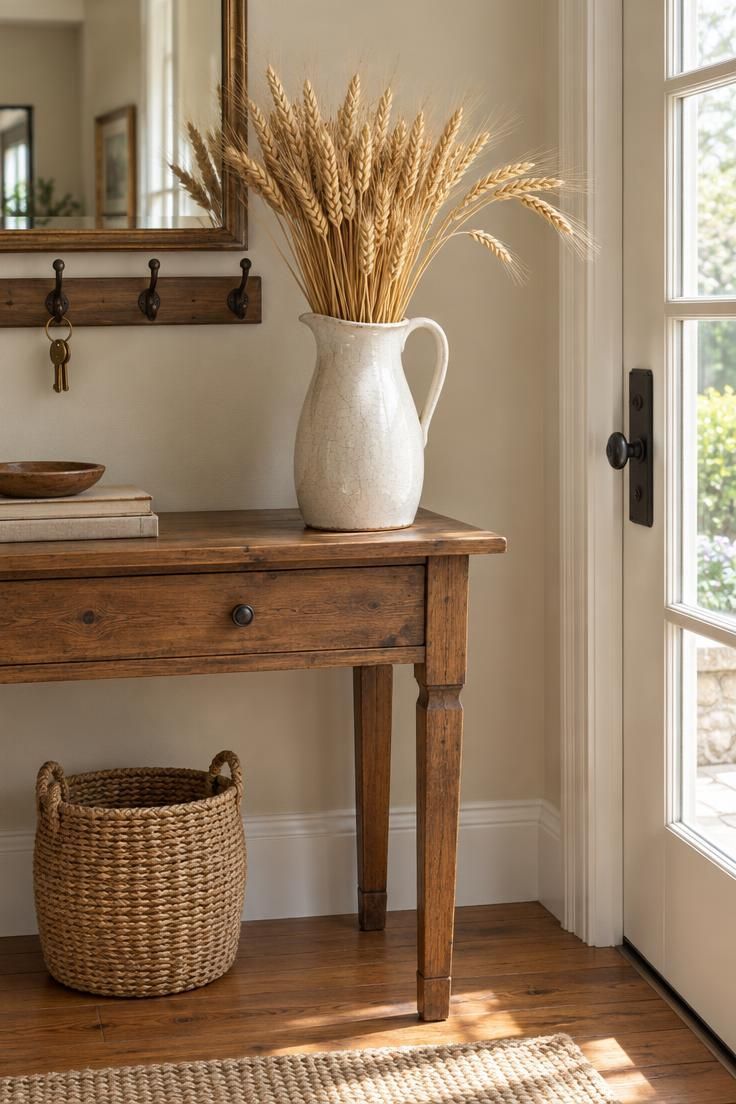
Fill a tall ironstone pitcher with long dried wheat stalks and set it on an entry console or a low cabinet near the dining area.
An ironstone pitcher with dried wheat acts as a visual bridge between the front door and the table.
Let a few stalks lean to one side for a more natural shape.
Place a small woven basket underneath to catch any loose wheat bits.
This works as a visual bridge between the front door and the dining table without taking up table space.
On a narrow console, keep the pitcher toward one end so it does not crowd keys or mail.
Style Blueprint:
- Tall white ironstone pitcher
- Long dried wheat stalks, loosely arranged
- Small woven basket beneath
- Placement at one end of the console
Design Pro-Tip: Lean a few wheat stalks past the pitcher's rim so the arrangement keeps a loose, gathered shape.
Conclusion
A collected vintage Thanksgiving table comes together over time rather than in a single shopping trip.
Mixing a few eras and materials works when one dominant palette or material repeats in at least three places, which gives the eye a thread to follow.
Start with the pieces already on hand, such as an ironstone bowl, a linen runner, or a pair of brass candlesticks, and add one or two new-to-you items each year.
The result reads as personal rather than coordinated, and the same table can shift for a smaller dinner or a larger gathering with only small changes to the centerpiece and seating.