This post may contain affiliate links. If you make a purchase through these links, we may earn a commission at no additional cost to you.
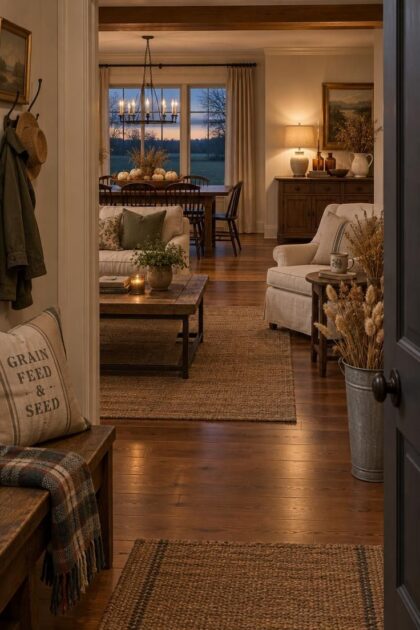
Farmhouse Thanksgiving decor brings the season indoors with practical materials and harvest textures familiar in a country home.
The look pairs neutral wood, ironstone, and woven linen with muted autumn color from dried stems and amber glass.
Each of the ideas below moves through a key surface in the house, from the dining table to the entry.
Every plan focuses on a visual setup that can be adapted with objects already on hand or gathered locally.
The goal is a house that feels dressed for the holiday without losing its everyday ease.
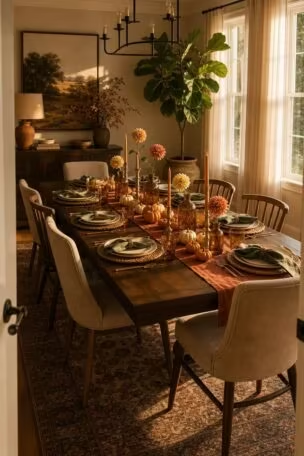
Dough Bowl Centerpiece for the Table
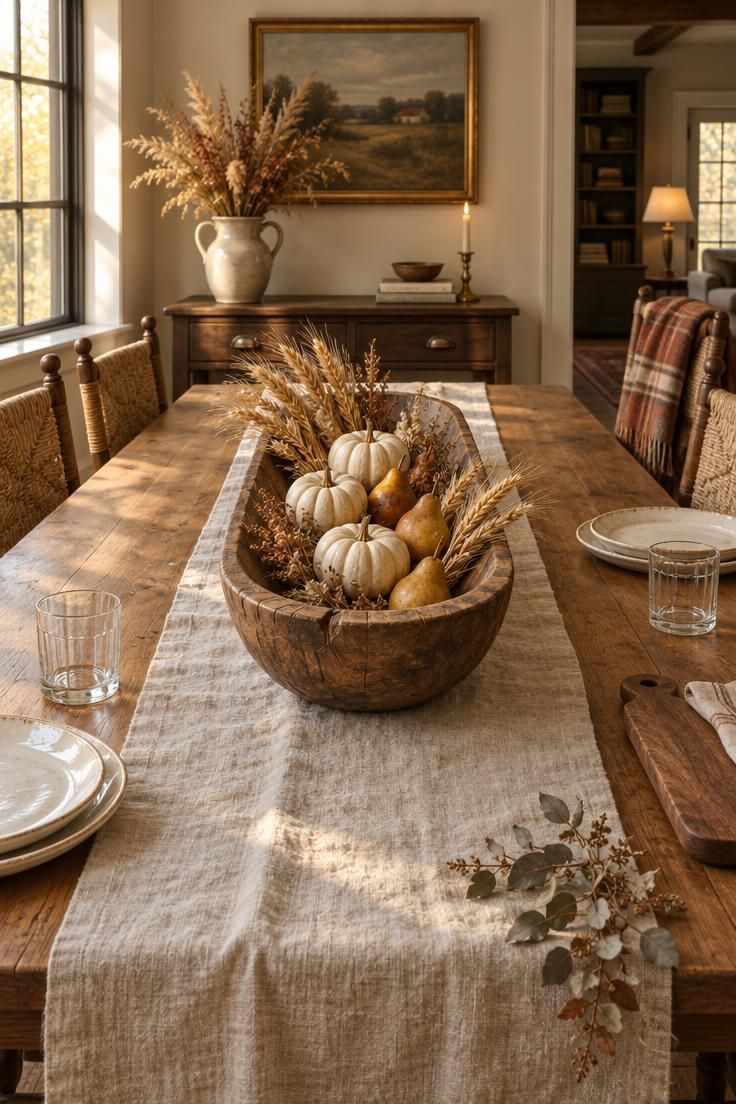
A dough bowl earns its place at the center of the Thanksgiving table because its shallow, wide shape holds a full harvest mix without walling off the view across the table.
White mini pumpkins give the arrangement rounded forms and pale contrast, dried wheat adds vertical texture, and a few pears bring a soft green that keeps the palette from turning purely brown.
The bowl itself carries the room's wood tones, so the centerpiece reads as part of the house rather than a store-bought display.
The foundation matters as much as the filling.
A washed linen runner cut narrower than the tabletop leaves bare wood showing along both long edges, which frames the arrangement and keeps the table from looking fully carpeted.
When the centerpiece sits on that runner, it can be slid aside or lifted in one piece when serving dishes arrive, so the table shifts easily between display and meal.
Scale is the practical decision here.
A bowl that spans roughly a third of the table's center leaves comfortable room on each side for platters and plates, and a low profile keeps sightlines open between seated guests.
Mini pumpkins rather than full-size gourds preserve that low silhouette while still giving the arrangement volume.
Between uses, dried wheat sheds a little each time it is handled, and the bowl's interior can collect dust.
A quick lift and wipe of the wood keeps it presentable, and the dried stems can be pulled out and stored flat once the holiday passes.
Real pears ripen and should be swapped out after a few days, which also gives the arrangement a natural refresh point.
Set this dough bowl centerpiece out at the start of the hosting week rather than the morning of the meal.
It settles the room early, photographs well in late afternoon light, and asks nothing more than a glance before guests arrive.
Style Blueprint:
- A wide wooden or ceramic dough bowl as the anchor
- Small white pumpkins, dried wheat stems, and two or three pears
- A washed linen runner narrower than the tabletop
- A stoneware pitcher of dried grasses on a nearby side table
Layered Mantel with Dried Garland and Ironstone
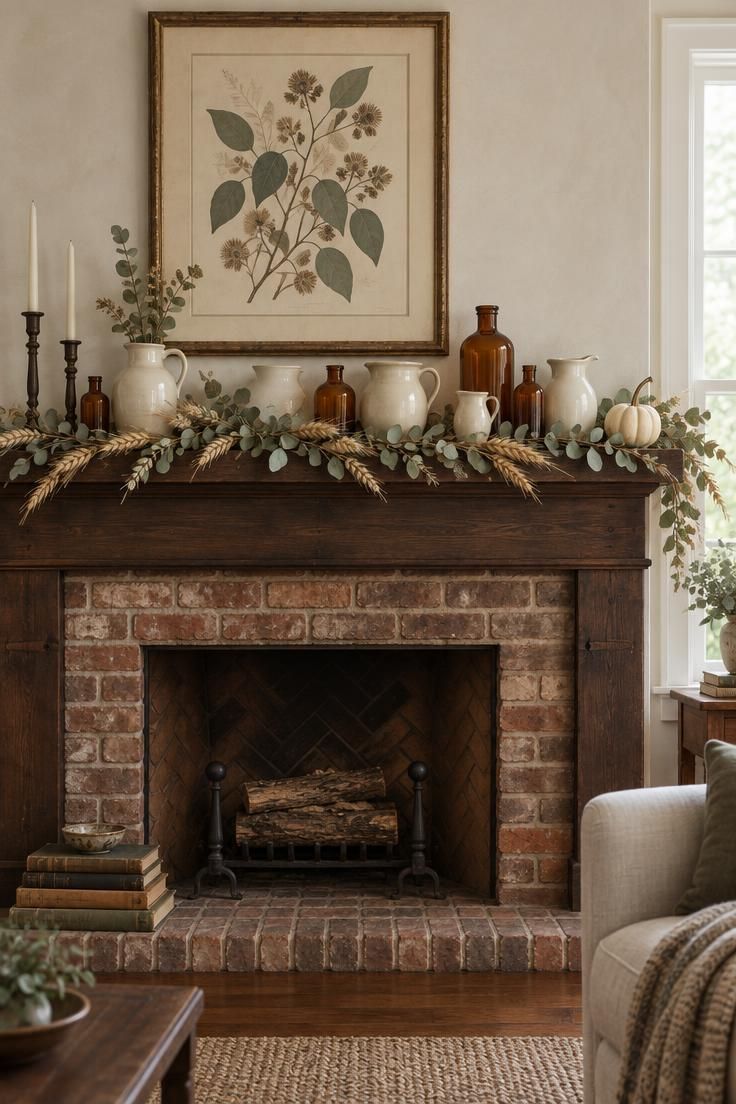
A mantel carries a lot of visual weight in a farmhouse room, and three layers keep it from reading as one flat shelf of objects.
The dried garland runs closest to the shelf line, cream ironstone jugs and amber bottles rise behind it in varied heights, and a single large botanical print or antique mirror anchors the wall above.
Each layer answers a different question: texture at the base, shape in the middle, focus at the top.
Gaps are part of the composition.
Leaving stretches of the stone or brick surround visible between objects prevents the shelf from turning into a solid band of decor, and it lets the fireplace's own material share in the look.
Two jugs with clear space beside them will read better than five crowded together.
The color logic is simple.
Cream ironstone brightens the shelf, amber glass warms it, and the dried green of eucalyptus keeps the whole arrangement from tipping into pure brown.
Muted harvest tones look deliberate against these neutral pieces, and the message of the display stays calm rather than festive in a busy way.
Dried wheat bundles and eucalyptus garlands shed as they settle, so expect a few loose stems each time the mantel is dusted.
Shaking the garland outdoors before it goes up cuts down on the mess.
Amber bottles collect dust quickly and benefit from a rinse and dry before the season starts.
The tradeoff is maintenance against impact.
The three-layer arrangement needs occasional pruning to stay composed, and a fire in the fireplace below calls for keeping the garland back from the opening so the display survives the evening.
A mantel this full rewards a light hand: when one element starts to crowd another, removing a piece restores the whole composition.
Style Blueprint:
- A garland of dried eucalyptus and wheat stems along the shelf
- Cream ironstone jugs and amber bottles in varied heights
- One large botanical print or antique mirror above
- Visible gaps that let the fireplace surround show through
- Iron candlesticks and a small white pumpkin for a second, quieter layer
Wooden Ladder Display in a Corner
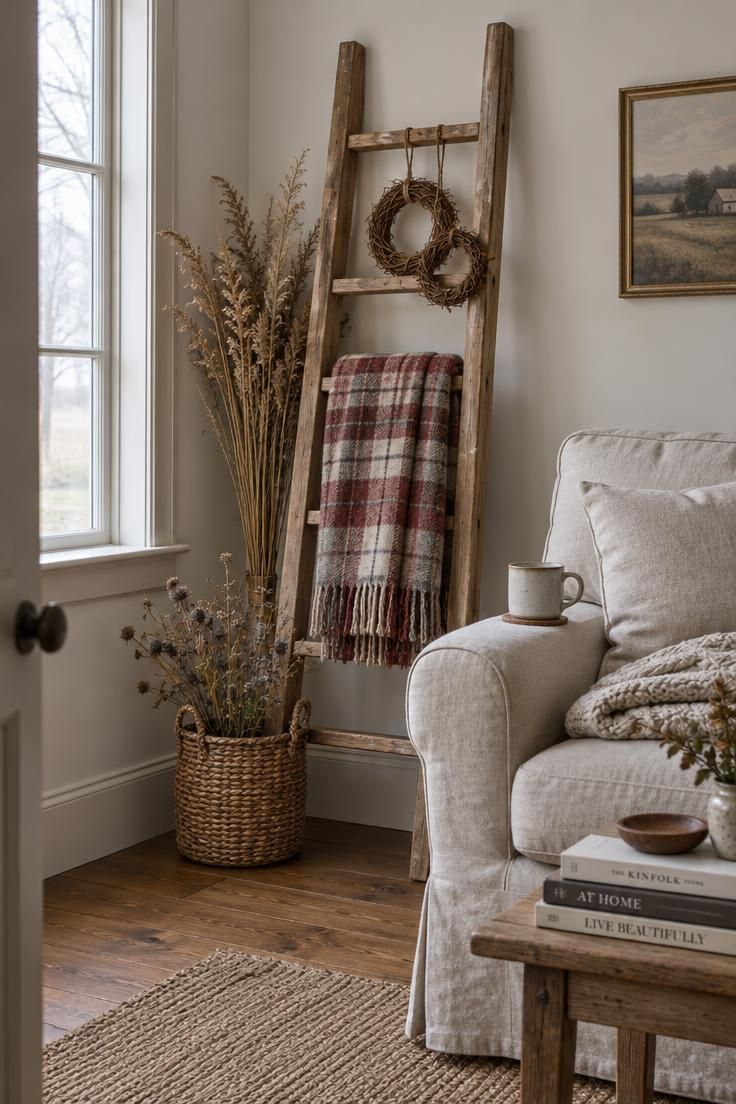
A leaning ladder turns a dead corner into a display wall without adding furniture weight.
The unpainted or lightly distressed wood brings the farmhouse material story into the room, and hanging objects from different rungs gives the corner layers at several heights.
Two small grapevine wreaths arranged asymmetrically keep the ladder from looking like a matched set, and the plaid throw softens the hard wooden frame.
Dried grasses tucked behind the ladder are the quietest part of the arrangement and often the most effective.
Their stems rise above the rungs and give the corner a soft vertical edge, while the base stays clear of clutter.
That gap between the grass bundle and the ladder lets both objects breathe and keeps the floor edge easy to sweep.
The plaid throw contributes the only strong color in this corner, and a muted red or charcoal check suits the harvest palette better than a bright tartan.
A folded wool throw also packs flat after the holiday, which makes this idea a low-commitment seasonal change.
The practical tradeoff is handling.
Wreaths and throws that come off the ladder for daily use will shift the composition, so place the pieces that stay put at the top and the throw on a low rung where it can be lifted without disturbing the rest.
Dust gathers in grapevine wreaths and between ladder rungs, and a soft brush handles both.
This corner arrangement suits a living room or a hallway with a wall long enough to hold the ladder's lean.
Keep the base area clear so the corner stays comfortable to walk past, and the display will hold its shape all season.
Style Blueprint:
- An unpainted or lightly distressed wooden ladder, leaning
- A plaid wool throw over one rung
- Two small grapevine wreaths at differing heights
- A bundle of dried grasses rising behind the ladder
Ironstone Plate Display on Hutch or Wall
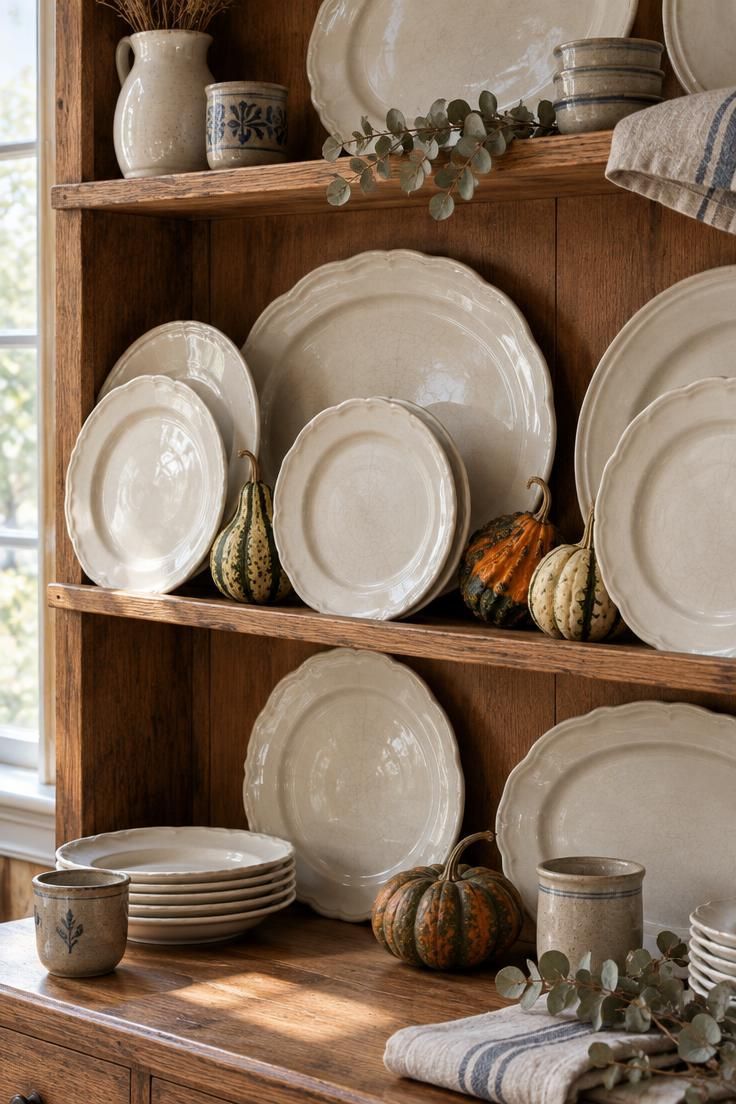
An ironstone plate display trades color for quiet.
Cream plates and platters set against warm wood read as a pale, textured field, and the different sizes and shapes give the arrangement rhythm without asking for additional objects.
The look depends on layering rather than matching: a large platter behind two smaller plates, an oval dish beside round ones, and slight overlaps that suggest the collection grew over time.
The gourds do specific work here.
Tucked between a few plates, they introduce the harvest palette in small doses and give the eye a place to land within the cream field.
A hutch back full of plates can feel formal, and a few heirloom gourds loosen it without disturbing the calm.
A dedicated plate display also frees the dining table.
When the wall or hutch carries the seasonal moment, the table can hold a simpler centerpiece and still feel dressed for the holiday.
That division of labor is worth planning before the plates go up.
Arrangement is the main decision.
Plates can stand on edge in a plate rack, lean against the hutch back, or hang in a loose grid on the wall.
Each method changes the density: leaning plates overlap and feel casual, while a hanging grid reads more collected.
Leaving open space at the edges keeps either version from looking like inventory.
Ironstone is heavy, so a wall arrangement for a full set of platters is best planned with the pieces you already own rather than a new collection.
Dust settles on the horizontal rims, and a soft cloth wipes both plate faces and the hutch shelves.
Handled with care, the display can carry from Thanksgiving into winter with only the gourds swapped out.
Style Blueprint:
- Cream ironstone plates and platters in mixed sizes and shapes
- A few small heirloom gourds tucked between plates
- A hutch back or wall area with visible open edges
- A folded linen cloth and dried eucalyptus sprig for softness
Bench and Pillow Entry Arrangement
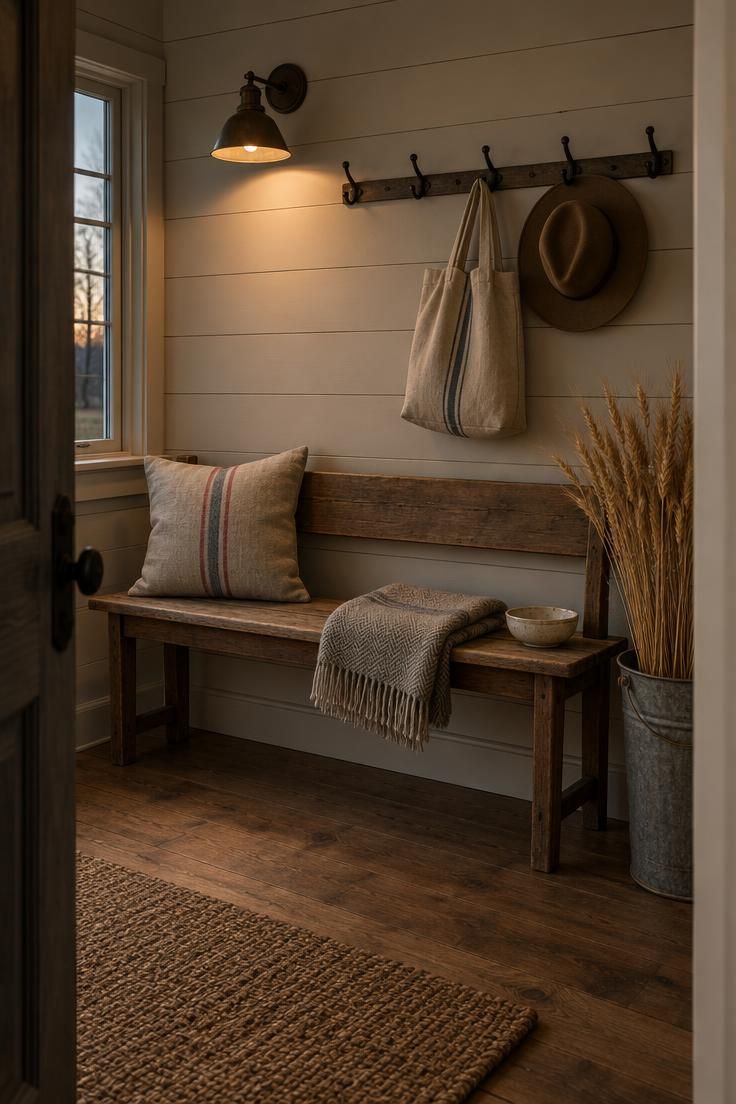
The entry is where the holiday season meets daily life, and a bench arrangement gives guests a place to pause without requiring a full refresh of the hall.
A simple wooden bench holds one grain-sack pillow with faded stripes, a folded wool throw, and open space beside them.
The pillow's loose weave and printed stripes bring the farmhouse textile story to eye level right where people arrive.
The bucket of dried wheat stems beside the bench gives the entry its height and its seasonal cue.
Because the arrangement lives in a container rather than spread across the bench, it stays narrow and movable, and the seat keeps its function for bags or a moment of rest.
Restraint is the deciding factor in an entry.
Hooks, a doormat, and one bench arrangement cover the space well, and adding a second display can render the welcome cluttered.
If the entry is small, the bucket can move to the porch while the bench holds only the textiles.
Moody, low light suits this corner because the arrangement is built from soft materials that look rich in shadow.
A wall sconce or a nearby window keeps the linen weave, the metal of the bucket, and the wood grain readable, so the entry feels hushed rather than dim.
Linens in an entry pick up outdoor wear quickly, and a grain-sack pillow benefits from a regular shake and airing.
The galvanized bucket shows water marks easily, so moving dried stems in and out with a dry hand keeps the finish even.
The wheat sheds a little with handling, and emptying the bucket outdoors before the season starts limits the mess indoors.
This setup is also the easiest of the group to change after Thanksgiving.
Swap the wheat for a bundle of winter branches, pull the throw for a heavier one, and the bench carries into the next season.
Style Blueprint:
- A simple wooden bench with open seat space
- One grain-sack pillow with faded stripes
- A folded wool throw in a muted check or solid
- A galvanized bucket of dried wheat stems beside the bench
Amber Glass Candle Grouping on a Sideboard
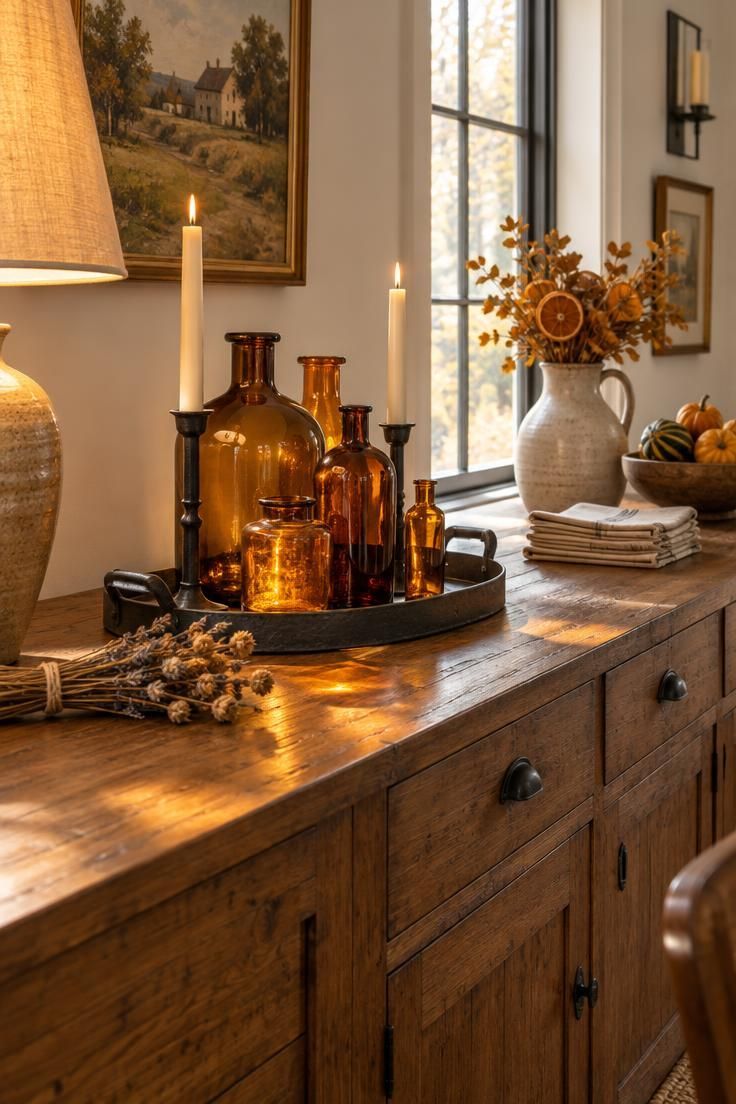
An amber glass candle grouping brings the harvest palette to a sideboard or console in a form that stays on display all season.
A wooden or black metal tray holds bottles and jars in different heights, two or three simple tapers in iron holders sit among them, and the whole arrangement repeats the warm glow of candlelight through colored glass.
Because the pieces live on a tray, the look can be lifted to the dining table or carried to another room when the evening moves.
The amber glass does the color work in this idea.
Two or three tones of amber, from pale honey to deep brown, give the grouping depth, and the clear verticals of taper candles keep it from reading as a single mass.
Blackened iron holders ground the warm glass with a darker note, and a small bundle of dried stems beside the tray ties the arrangement to the rest of the room.
Height variety is what makes the tray composition hold together.
A short jar in front, a tall bottle at the back, and a taper that lifts above both create a silhouette at three levels.
Keeping the tray slightly narrower than the sideboard surface leaves the wood edge visible and keeps the display from crowding anything else on top.
One tradeoff is how the grouping reads in daylight versus lamplight.
The amber glass catches warm light beautifully in the evening, and by day it depends on the color of the bottles rather than on any glow.
Mixed tones and iron accents keep the tray composed in both conditions.
Amber glass shows dust and fingerprints more than clear glass, so a soft cloth before guests arrive makes a difference.
Stems placed near the tray expect light handling, and the dried material should be kept dry.
Tapers reduce as they burn, so the arrangement benefits from a spare pair stored nearby to keep the height relationship intact.
This grouping suits a sideboard, console, or kitchen counter where a compact vignette has room to itself.
It is one of the most repeatable of the bunch: the tray stays, and only the candles and stems change as the season turns.
Style Blueprint:
- A wooden or black metal tray as the group's boundary
- Amber glass bottles and jars in varied heights and tones
- Two or three taper candles in black iron holders
- A small bundle of dried stems beside the tray
Open Shelf Harvest Vignette with Crocks
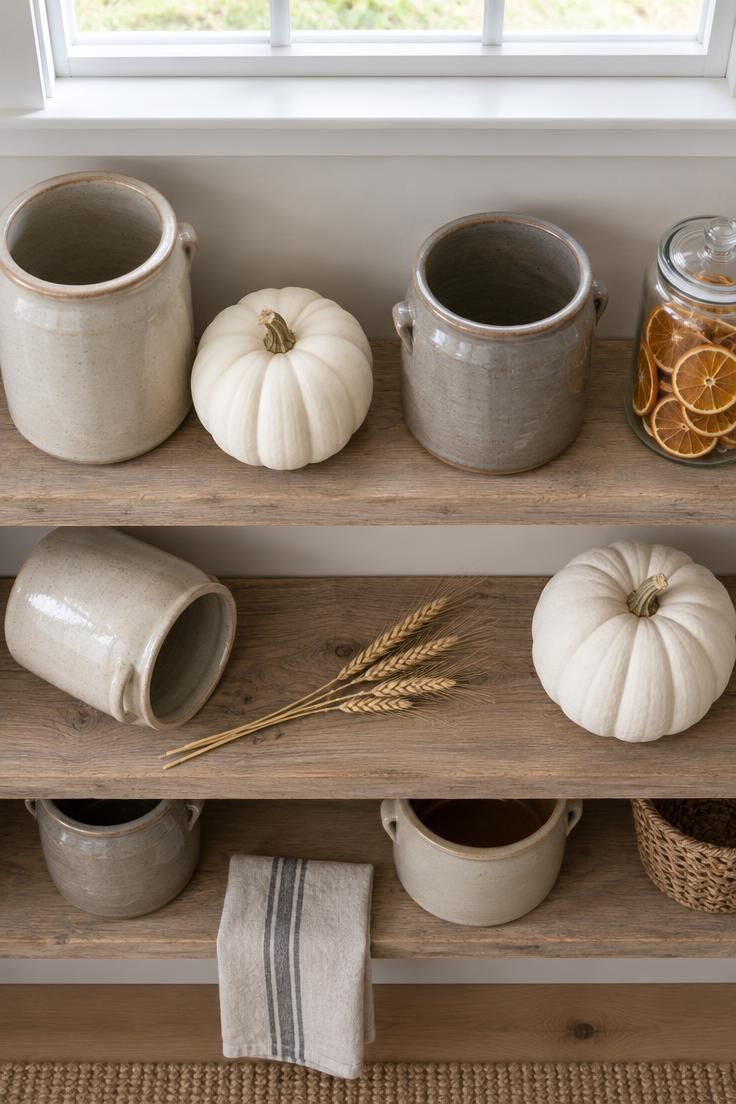
Open kitchen shelves offer a small, contained place to launch the harvest palette, and spacing is the whole idea.
Stoneware crocks in oatmeal and warm grey set the base tone, two white pumpkins bring rounded forms and pale color, and a glass jar of dried orange slices adds a warm amber note that echoes the sideboard grouping elsewhere in the house.
Mixing heights keeps a short shelf from reading flat.
Laying one crock on its side introduces a horizontal shape, standing crocks give verticals, and a jar of orange slices nests in the space between.
Clear gaps at the ends of the shelf let the wall behind show through, which keeps the display from looking like storage and keeps the shelf feeling open.
The overhead view of this setup shows why the gaps matter so much.
From above, open space and object use become equally visible, and a shelf with breathing room reads as styled rather than filled.
A small sprig of dried wheat laid diagonally across one shelf breaks the grid of upright objects and adds a gathered, unfussy note.
Dried orange slices work hard in a small space.
They hold their color well, pack into a jar without bulk, and let the shelf carry seasonal warmth without adding another surface to dust.
The jar also protects the slices from kitchen moisture, which is a useful advantage in a working kitchen.
Crock glazes vary in tone, so a mix of warm grey and oatmeal feels collected while a set of identical crocks feels like a store display.
The tradeoff is maintenance: open shelves collect kitchen dust, and a monthly wipe of the crock surfaces keeps the display looking deliberate.
Crocks that are used for actual storage should stay within reach, so the top shelf works best for the decorative pieces while the lower one holds the everyday crocks.
This vignette also swaps out easily.
Change the pumpkins to dried pears or a small bowl of nuts after Thanksgiving, and the shelf carries into winter with the same crock and jar arrangement.
Style Blueprint:
- Stoneware crocks in warm grey and oatmeal
- Two white pumpkins, one placed on its side
- A glass jar of dried orange slices
- Visible gaps at the shelf ends and between objects
Twine-Tied Napkin Place Setting
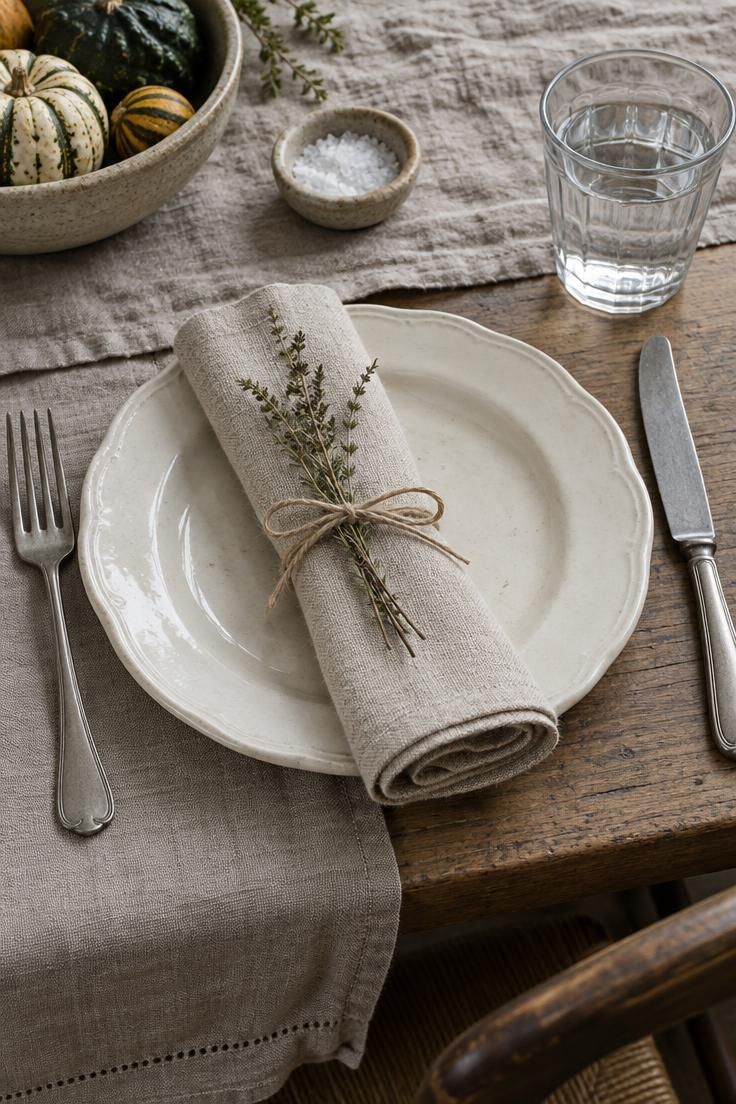
The twine-tied napkin is the smallest idea in this collection and the one guests handle most directly.
A plain linen napkin rolled into a loose cylinder and tied once with natural twine holds a single dried herb sprig or cinnamon stick under the band.
The result is a place setting that reads as handmade without becoming a craft project.
Its restraint is the point.
On an ironstone plate with simple flatware beside it, the napkin roll adds texture and a hint of scent-friendly greenery at each seat without competing with a larger centerpiece.
When the table already carries a dough bowl, the place setting stays quiet; when the table is bare, the napkin gives it enough detail on its own.
Twine behaves differently depending on how tightly it is tied.
A single loop with a small knot keeps the roll secure while leaving the napkin soft enough to unroll without pressing, and a band that sits slightly off-center reads more relaxed than one cinched in the middle.
Cinnamon sticks break easily when handled, so tucking one loose behind the roll rather than binding it tight allows for reuse.
Linen wrinkles, and in this setting that is part of the charm.
Napkins folded tightly in a drawer will show crease lines, so a quick press before guests arrive gives them a softer line.
Twine can be rewound for the next meal, and the herb sprigs dry in place between uses.
The effort here is small but repetitive: each seat needs its own roll, band, and sprig.
A household planning for a crowd can set the rolls up the day before and add the herb sprigs at the table.
It is the kind of detail that stays special because it does not appear at every meal.
Style Blueprint:
- Plain linen napkins rolled into loose cylinders
- Natural twine tied in a single, slightly off-center loop
- A dried herb sprig or cinnamon stick tucked under the band
- Ironstone plates and simple flatware as the quiet base
Market Basket Garden Flat on the Floor
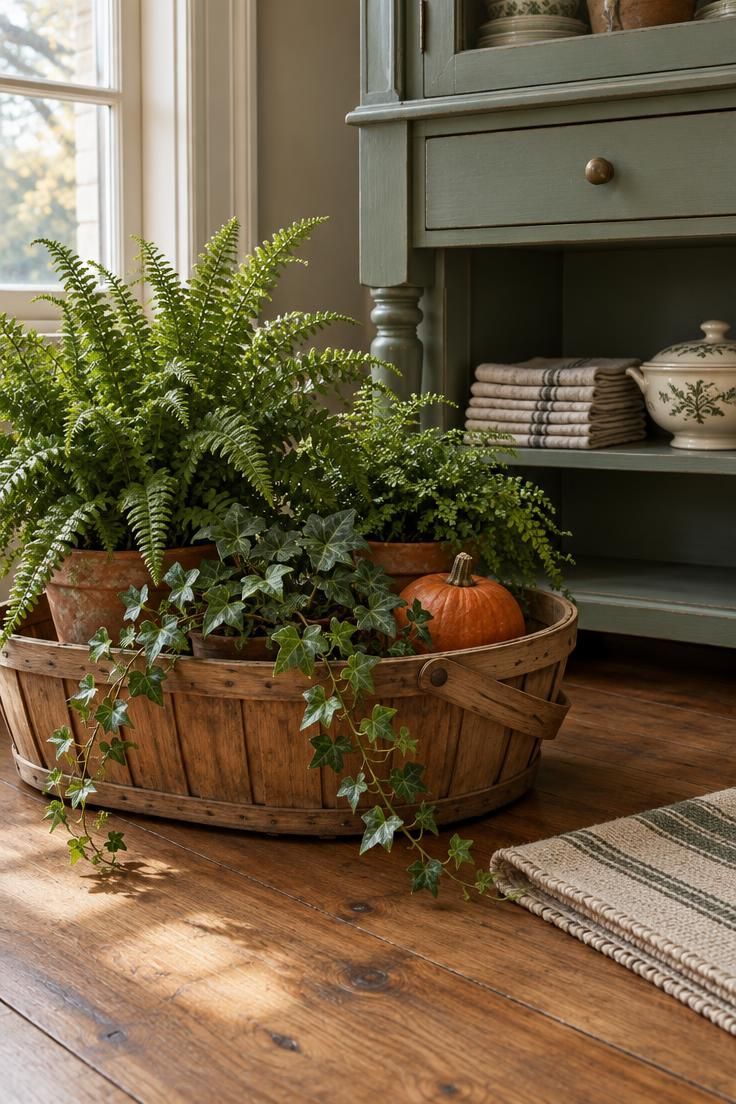
A low wooden market basket laid on the floor works as harvest decor because it borrows the structure of the market stall and scales it down for a private room.
The basket itself acts as a tray, holding several small pots without letting the arrangement spread across the boards.
Potted ferns and trailing ivy offer a fresher contrast to the dried stems and wheat used elsewhere in the house.
The small pumpkin inside the basket changes the reading from houseplant to autumn grouping.
One pumpkin is enough, and placing it among the green leaves keeps the orange from turning the display into a porch cliché.
The painted hutch behind the basket gives the arrangement a back and makes the low grouping feel deliberate instead of temporary.
Plant care shapes the design more than the basket color does.
Ferns like steady moisture and indirect light, while ivy trails quickly and may need trimming to keep the basket from looking overgrown.
Using separate pots rather than filling the basket with loose soil allows each plant to be lifted out for watering and cleanup.
Trailing stems that touch the floor help the basket settle into the room.
A woven cotton runner folded nearby can remain on the floor as a soft partner for the wood grain, or it can be unfolded as a casual mat under the basket.
The aged pine picks up the warmer wood tones of the dining room while the dark green leaves add depth without covering the pumpkin.
This grouping suits a narrow space against a wall or under a window where no table surface is available.
It keeps the harvest theme at floor level while introducing living plants, which makes the room feel less like a stage set and more like a home that carries the season in stages.
Keep the pot count low so the basket reads as an object, not as a small greenhouse.
Three or four pots with one trailing variety and one upright fern will fill the rectangle without hiding its outline.
Style Blueprint:
- A low-sided wooden market basket in aged pine
- Three or four separate pots of fern and trailing ivy
- One small pumpkin tucked among the leaves
- A spot on the dining room floor near a painted hutch or window
- A folded linen or cotton runner beside the basket
Woven Wheat Sheaf Tied to a Cabinet Door
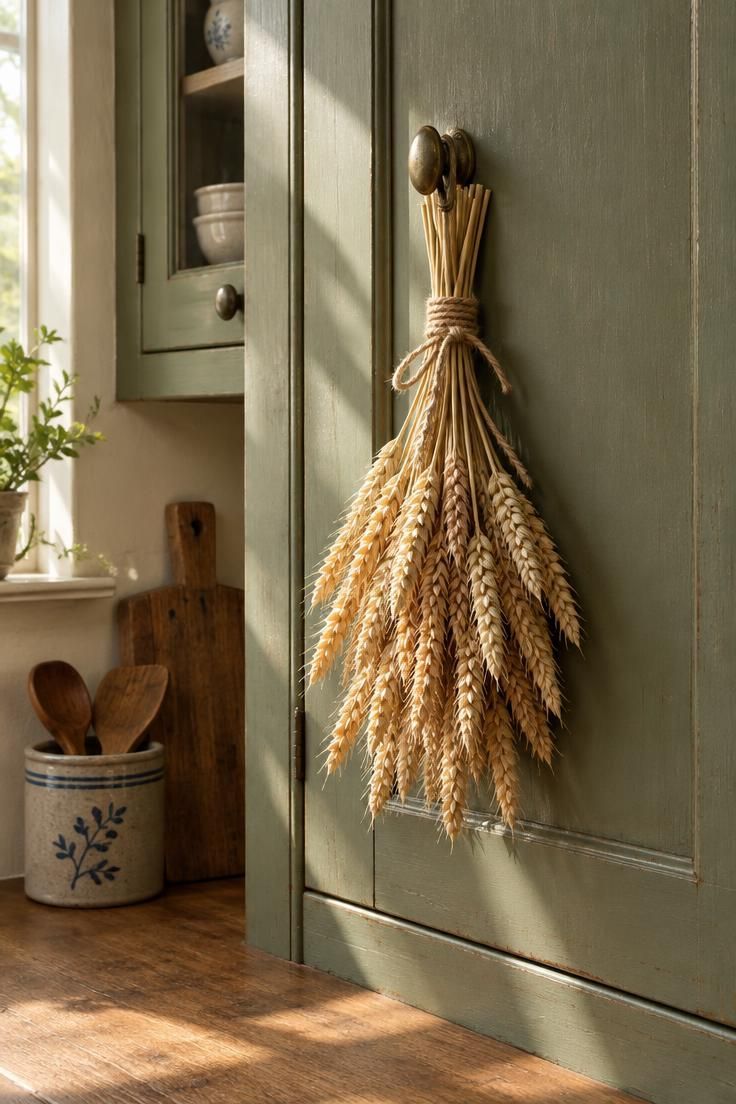
A woven wheat sheaf hanging from a cabinet door turns an overlooked vertical surface into a soft harvest mark.
The bundle hangs from a knob or pull and moves slightly with the door, so the arrangement feels lived in rather than placed.
A length of twine tied in a loose bow gives the sheaf enough drape to read as a decorative gesture without becoming a loose pile.
This version of the idea works best where there is little extra floor or counter space.
A cabinet door already exists and needs no shelf, no tabletop, and no additional storage footprint.
The wheat adds height at eye level and draws attention to a surface that usually disappears into the kitchen wall.
The color story depends on the cabinet face.
A faded sage-green or muted blue door gives the pale gold wheat a quiet contrast, while a natural wood cabinet keeps the arrangement more tone-on-tone.
Either direction keeps the farmhouse palette intact because the wheat, twine, and cabinetry share warm, muted color and visible texture.
Scale should stay modest here.
A hand-tied bundle roughly the size of a dinner plate is enough to hold attention above a counter without interfering with the door's daily use.
Keeping the sheaf narrow also prevents it from catching on nearby cabinet edges or becoming tangled as the door opens and closes during normal kitchen tasks.
The wheat bundle is a dried material, so it needs a spot away from direct steam and repeated moisture near the sink or range.
Turning the bundle occasionally or shifting the bow can keep the arrangement looking intentional as the weeks pass.
When the harvest season ends, the wheat can tuck into a crock on a pantry shelf and the door returns to its plain everyday face.
This idea has the smallest physical footprint on the list because it borrows a surface that already exists.
It adds a harvest note without asking the kitchen to surrender counter space or wall space, and it brings texture into a spot most decorating plans ignore.
Style Blueprint:
- A small hand-tied bundle of wheat or oat sheaves
- Twine in a loose bow that hangs from a cabinet pull
- A faded sage, muted blue, or natural wood cabinet door
- A stoneware crock or wooden board on the counter below for balance
Harvest Crate Boot Tray by the Door
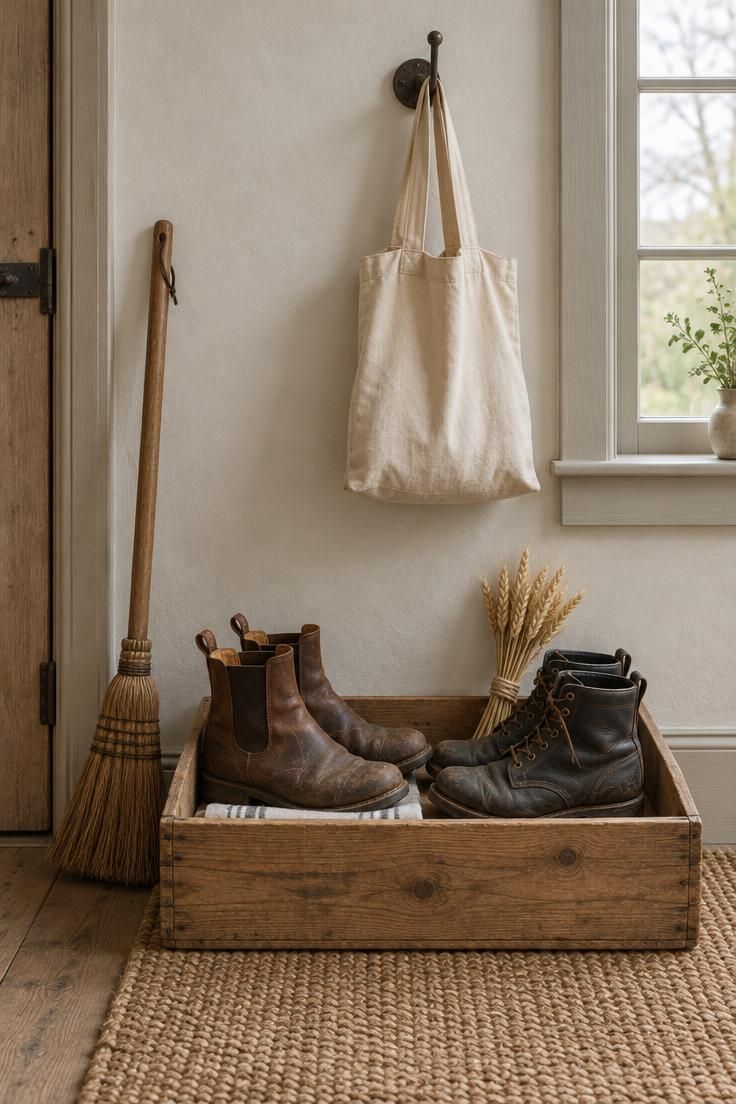
A shallow wooden harvest crate can shift from produce holder to boot tray in a farmhouse entry, giving the doorway a Thanksgiving task instead of another purely decorative vignette.
Set the crate on a low woven mat beside the door, line the bottom with a folded cotton dish towel, and place two pairs of house shoes or boots inside with the toes facing opposite directions.
A hand broom leaning against the wall with its bristles resting on the floor keeps the arrangement useful.
The crate's rough plank sides and visible nail heads bring grain and age to the entry without requiring a tabletop.
Inside the crate, small seasonal details make the boot tray feel considered rather than accidental.
Tuck a single bundle of dried wheat or millet behind one boot, its stems below the crate rim so the boots remain the main visual.
A small stoneware crock can sit at the opposite end holding a folded plaid scarf or a spare set of house slippers.
Because the crate stays open, each item remains reachable from the doorway, and nothing requires moving before guests arrive.
This entry idea works best when the surrounding surfaces stay restrained.
A wall hook holding one canvas tote or a utility jacket above the crate gives the boot tray an occupied, lived-in look.
White or warm plaster walls keep the wood tones from competing, while a faded runner or jute mat anchors the floor zone.
The main tradeoff is moisture.
Wet boots placed in a raw wood crate will leave marks over time, so the towel liner is doing practical work rather than acting only as visual filler.
For households in wet autumn climates, swapping the towel for a shallow metal liner hidden under the boots keeps the wood dry while preserving the harvest look.
Style Blueprint:
- Shallow wooden harvest crate with visible plank texture
- Folded cotton towel or hidden metal liner across the bottom
- Two pairs of boots or house shoes facing opposite directions
- One dried wheat or millet bundle tucked behind a boot
- A small stoneware crock holding a plaid scarf or slippers
Design Pro-Tip: Make the boot tray look like it belongs to the room by using only one boot pair that actually gets worn. A too-clean arrangement of unused shoes reads as display, while scuffed soles and worn leather give the entry a calmer, more settled feel.
Conclusion
Farmhouse Thanksgiving decor works best when each surface gets one focused arrangement rather than a full room overhaul.
The mix of dried stems, ironstone, wood, and neutral textiles keeps the house feeling tied together without becoming fragile.
Choose two or three ideas that fit existing storage, since dried grasses, linen, and plates pack away more easily than large arrangements.
A home that stays comfortable in the room is the real goal, and the harvest palette can be gathered a little at a time.