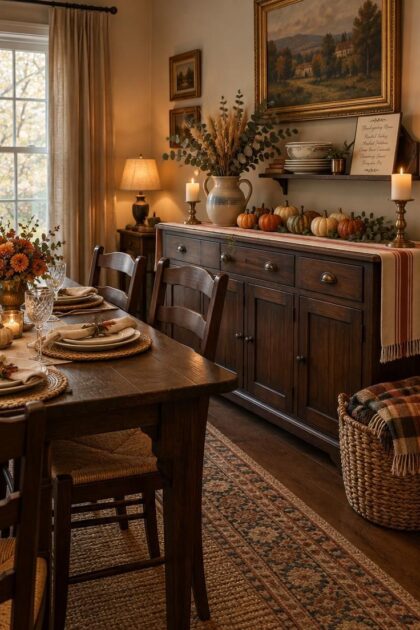
This post may contain affiliate links. If you make a purchase through these links, we may earn a commission at no additional cost to you.
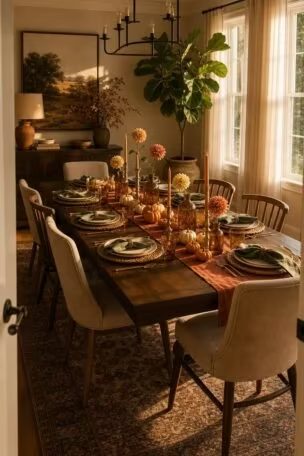
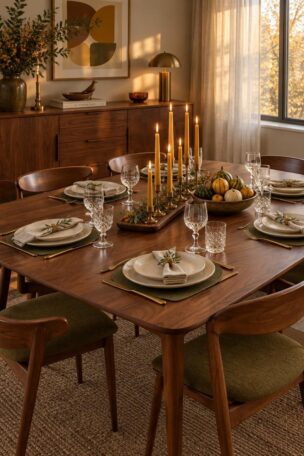
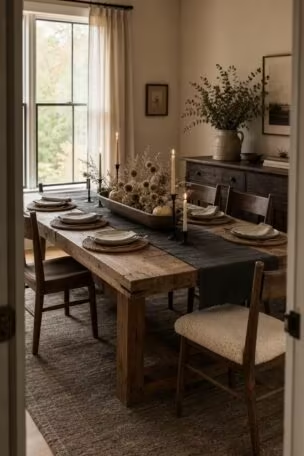
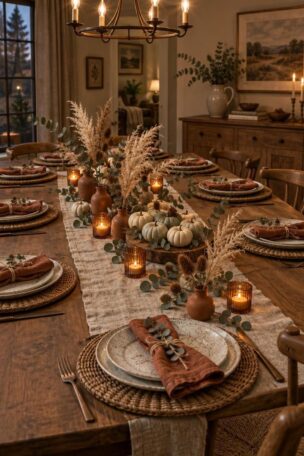
A Thanksgiving buffet asks for a different kind of decorating than a seated dinner table.
The surface has to hold hot platters, serving spoons, and plates while guests reach across the front third to serve themselves.
The strongest arrangements work the back row, the two ends, and raised tiers, leaving the front serving strip clear.
Natural textures, muted harvest color, and practical serveware carry the seasonal look through the whole meal.
A runner, a few small gourds, and one tall background piece can reshape an ordinary sideboard, console, or kitchen counter.
The ideas below move from simple perimeter styling to fuller displays, and each one keeps the front edge open for guests.
Striped Linen Runner With Mixed Mini Pumpkins
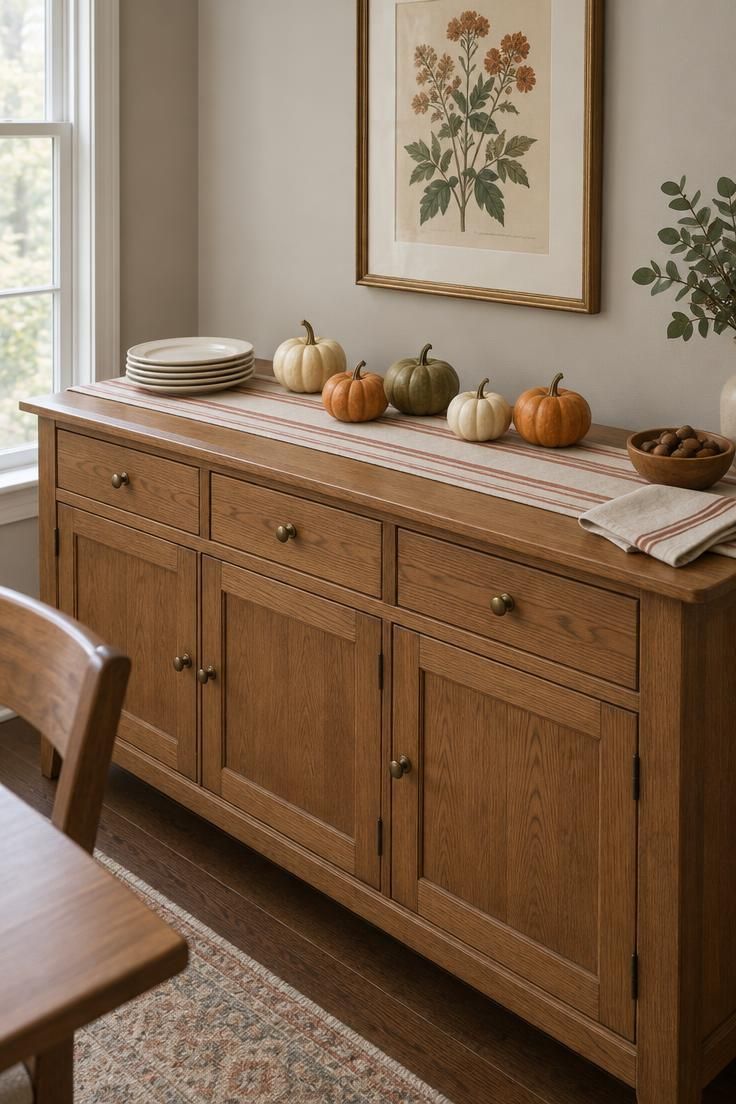
A striped runner does quiet structural work: it marks the decor zone down the centerline and tells the eye where the serving strip begins.
Cream and muted rust keep the stripes soft enough to sit under busy platters without competing.
Leaving the front third of the table bare matters more than any single object on top.
Mini pumpkins in cream, soft orange, and olive spaced in an irregular rhythm read as gathered rather than placed.
Grouping them toward the back of the runner keeps them out of the path of reaching arms and serving spoons.
A short stack of ironstone plates at one end gives the composition a visual anchor and doubles as a plate station for guests.
Real pumpkins suit a table used for one long afternoon and hold their color without attention.
Faux versions cost more upfront and store flat, which helps if the same look will return next year.
Either choice works on a narrow sideboard or kitchen island because everything sits on the runner and can slide aside when a casserole needs the space.
A tiered stand with small gourds can join the same runner later in the day without restyling the base layer.
Style Blueprint:
- Cream and rust striped linen runner, long enough to drape slightly over both ends
- Five or six mini pumpkins in cream, soft orange, and olive
- A stack of four to six cream ironstone plates at one end
Rustic Dried Eucalyptus and Wheat Bundles in a Stoneware Pitcher
Height at the back of a buffet comes most cheaply from stems.
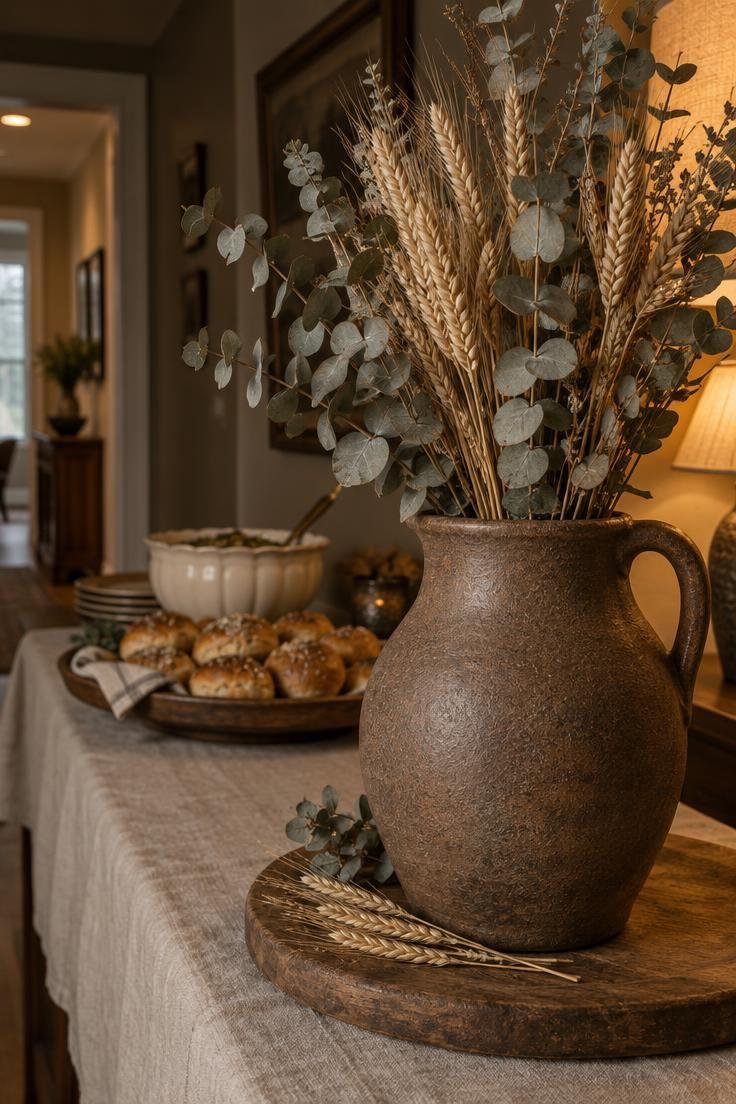
Dried eucalyptus and wheat bundles give a tall, loose silhouette that frames the food line without taking flat counter space, especially when the pitcher sits on a raised shelf or a shallow tray against the wall.
A wide stoneware base keeps the bundle from tipping at the end of the table, where a reaching arm is less likely to catch it.
Mixing golden wheat with silvery eucalyptus balances warm and cool tones so the arrangement does not turn into a single block of beige.
Placing the pitcher on a stack of two wood boards lifts the stems above the platter line and adds a second material under the ceramic.
Small touches like a few loose wheat heads on the board suggest the bundle was gathered rather than ordered.
Dried stems shed fine material onto nearby surfaces, so keep the vessel at the back or on its own tray, away from open platters.
Fresh eucalyptus wilts over a long afternoon and needs water; dried versions hold their shape with no maintenance at all.
The same tradeoff applies to any bundle of dried stems used as a back-row accent.
Style Blueprint:
- Wide matte stoneware pitcher in brown or cream
- A bundle of cream wheat mixed with gray-green dried eucalyptus
- Two wood boards stacked to lift the vessel above the food line
- A small round tray to catch fallen stems
Three-Tier Wood Stand With Small Gourds and Dessert Plates
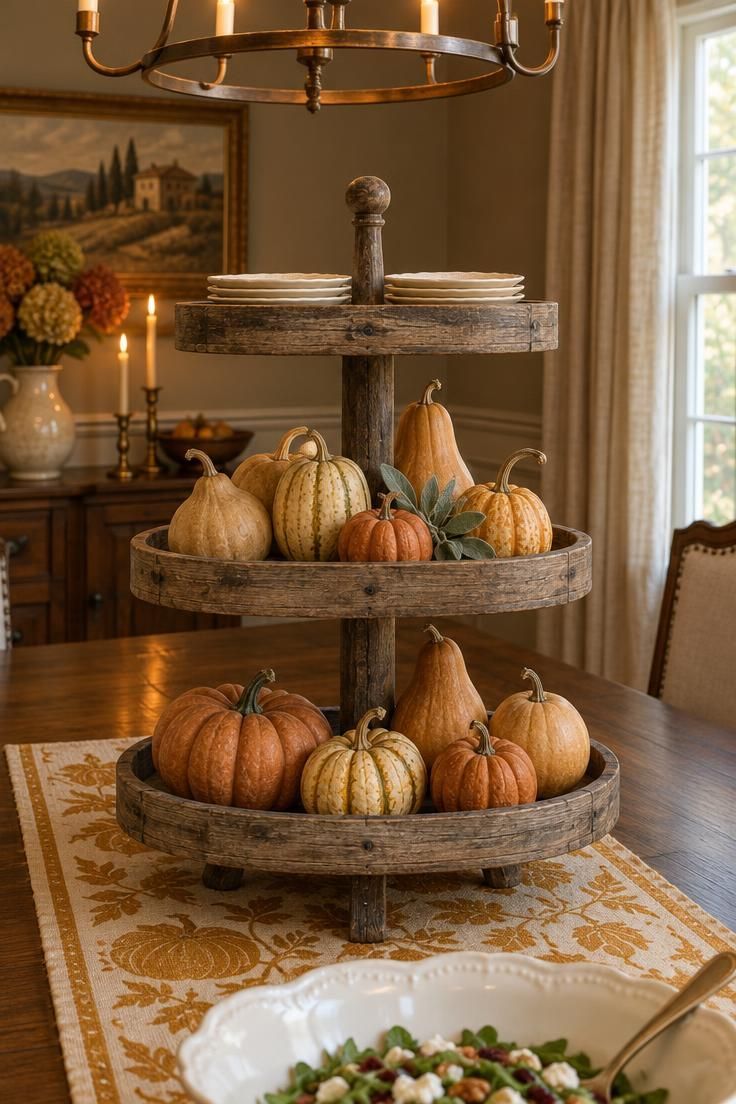
A tiered stand earns its footprint twice: it lifts decoration above the platter line and holds real food while doing it.
Small desserts or bread rolls on the top tier, small gourds and sage sprigs on the lower tiers, and the main platters stay on the flat surface below.
Weathered wood or matte stoneware fits the harvest palette better than polished metal, which can look bright against linen and ironstone.
Repeating the same gourd color on two tiers creates rhythm without adding objects.
A harvest runner for a buffet table in ochre and cream ties the stand to the rest of the surface and gives the wood a warmer ground.
The whole arrangement reads as one considered object rather than three stacked plates.
Clearance is the limiting factor.
A tall stand placed mid-table forces guests to reach around it, so position it at the wall side or one end where arms pass beside rather than through.
Check the height against the tallest platter: the top tier should sit above the food line without blocking the view of the dishes behind it.
Style Blueprint:
- Three-tier stand in weathered wood or matte stoneware
- Six to eight small gourds in tan and terracotta
- Small cream dessert plates for the top tier
- An ochre and cream harvest runner beneath
Design Pro-Tip: Set the tiered stand in place before the food arrives and reach across the table from both long sides. If the stand sits in the path of a serving arm, move it to an end before the platters land.
Brass Candlesticks and Cream Pillar Candles at the Table Ends
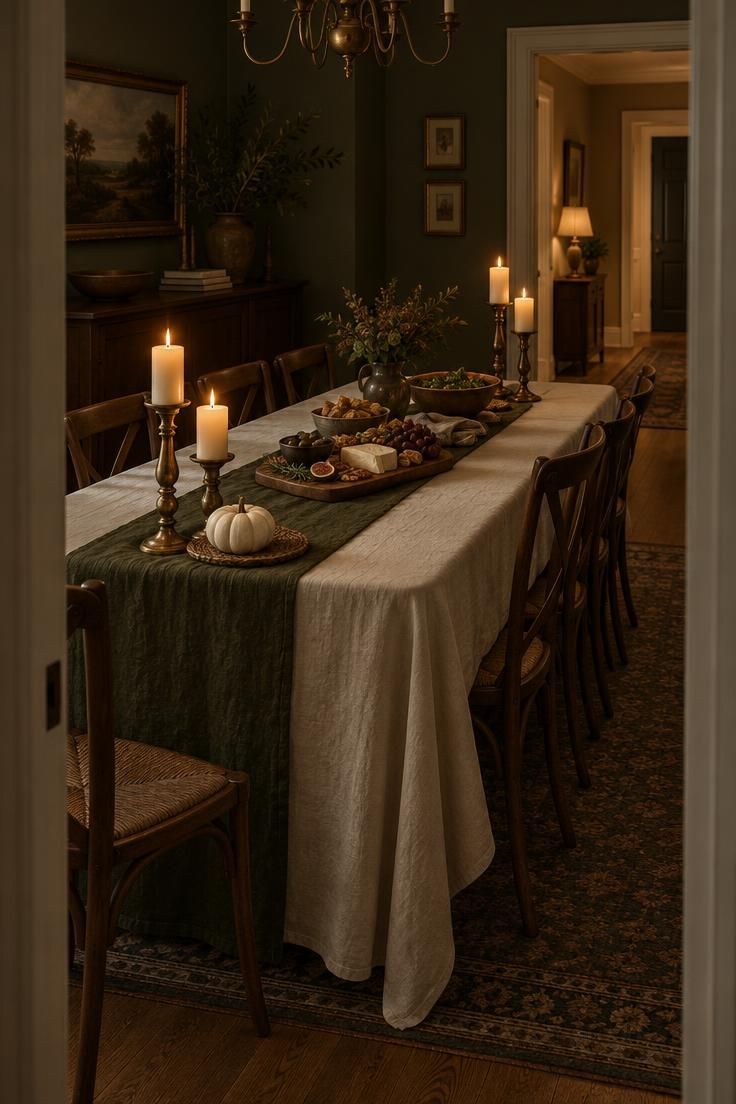
Candlesticks at the two ends give a buffet a clear start and stop, framing the food line between two matched vignettes.
The ends are the calmest visual zones because guests reach through the front of the table rather than across it, so taller pieces survive the meal with less risk of being bumped.
Two heights on each end keep the pairs from looking stiff.
Cream pillar candles in aged brass sit well against almost any harvest palette, from cream ironstone to deep burgundy linen.
A single small white pumpkin or a eucalyptus sprig on a small tray contains the vignette and protects the tablecloth underneath.
Thanksgiving buffet table decor works best when the tallest pieces live at the edges, and this pairing proves the point.
Dripless or battery candles suit a gathering that runs past dark, and a woven trivet under each candlestick keeps wax off the linen.
Judge the final height so the flame sits above the food line but below eye level, which keeps conversation open across the table.
Move one pair to a side surface if the table is short and the ends are needed for plates.
Style Blueprint:
- Two pairs of aged brass candlesticks in mixed heights
- Cream or ivory pillar candles
- Woven trivets under each candlestick
Woven Charger and Burlap Placecard Bundle at the Start of the Buffet
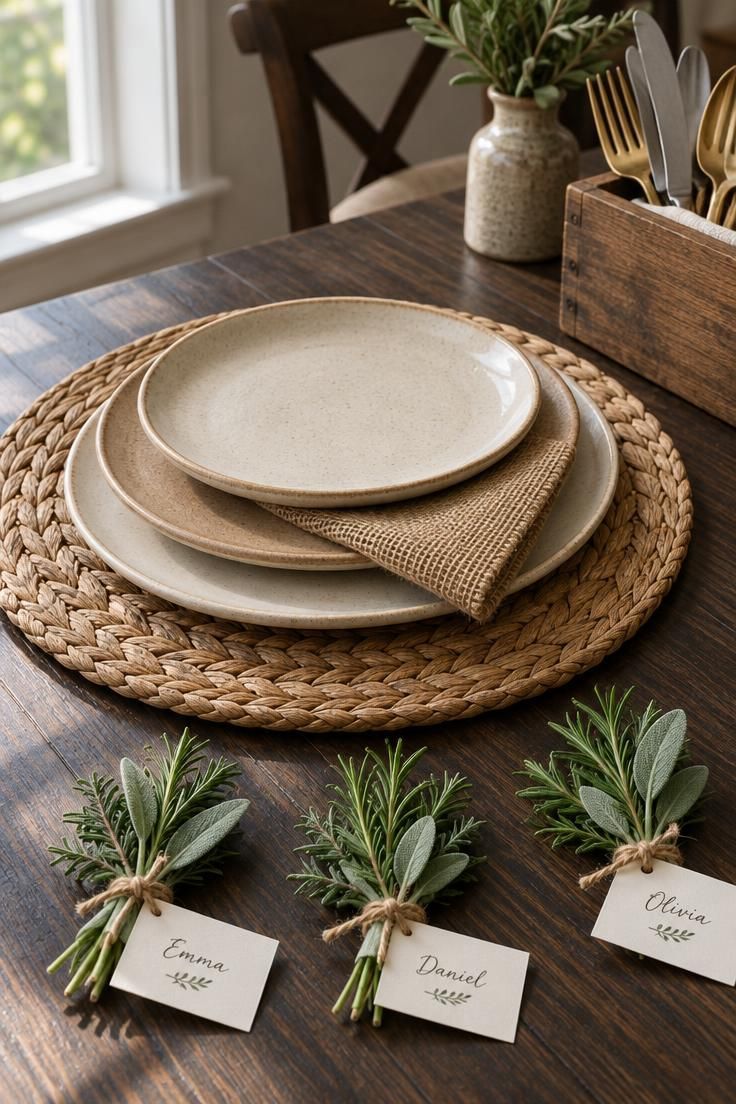
The start of a buffet needs a signal, and a woven charger under a plate stack provides one.
Mixed cream and tan stoneware on a large natural charger gives the left end a focal point, while a folded burlap napkin tucked between the second and third plates softens the stack and adds a rough texture next to smooth glaze.
Three tied bundles of dried sage and rosemary with small cards turn the charger into a labeling station for a potluck.
Guests can see where the line begins and which dish belongs to whom without a separate sign.
A small wooden crate beside the charger corrals used napkin rings or extra flatware as the meal progresses.
Paper cards near a plate stack can look busy, so clip them to a small branch or loop of twine on the charger rather than laying them loose.
Keeping the cards dry matters more than perfect placement once gravy and cranberry sauce start moving around the table.
Style Blueprint:
- One large round woven charger
- Four to six mixed cream and tan stoneware plates
- A burlap napkin folded into the stack
- Three sage and rosemary bundles tied with twine and small cards
Ochre Taper Candles in Stoneware Holders Along the Back Shelf
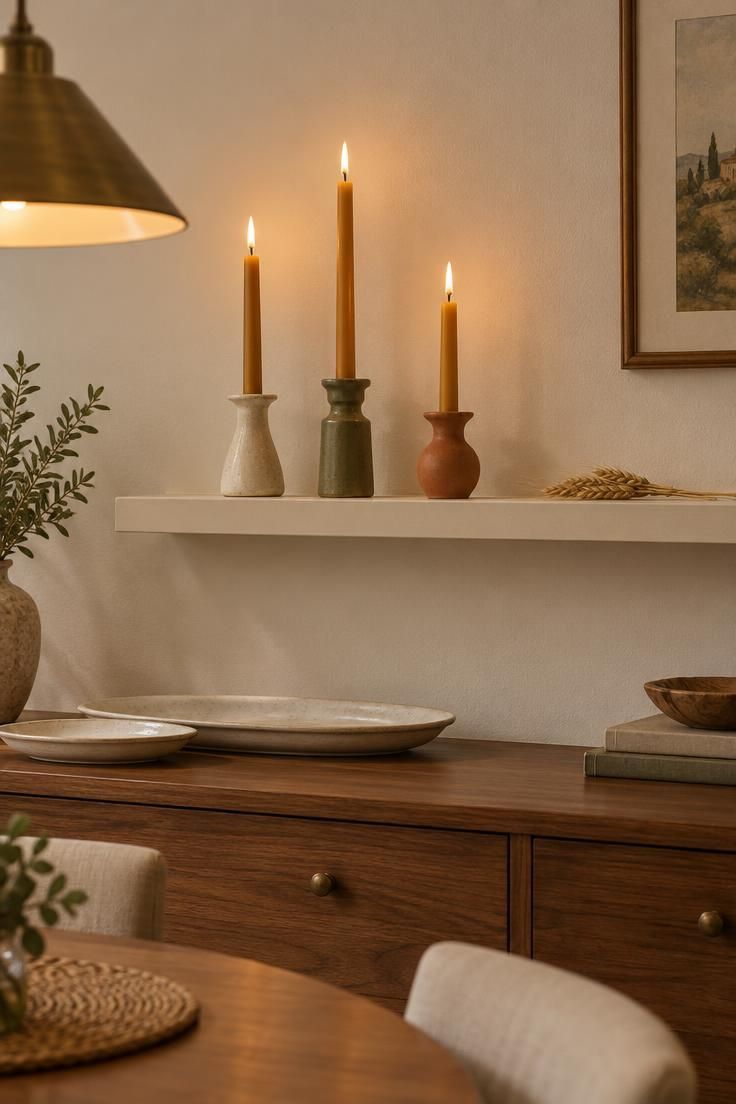
A shallow shelf behind the buffet moves light and color upward without touching the work surface.
Three stoneware taper holders in cream, olive, and terracotta with slender ochre candles, spaced unevenly, give the wall a warm rhythm that reads from across the room.
The tabletop below stays free for platters and gravy boats.
Painting a shelf the same cream as the wall makes the candles appear to float, which keeps the arrangement light above a busy table.
What brass candlesticks at the table ends do for the horizontal spread, this shelf does vertically: it frames the food without crowding it.
A dried wheat sprig laid flat on the shelf ties the wall arrangement to the table below.
Position the shelf above the back serving edge so drips and warmth stay away from the front strip where guests reach.
For a kitchen counter buffet, a row of holders on a deep backsplash ledge can create the same layered look.
Without a shelf, a decorative plank on two small risers at the back row delivers a similar effect with no wall work at all.
Style Blueprint:
- Three stoneware taper holders in cream, olive, and terracotta
- Slender ochre taper candles
- A shallow shelf painted to match the wall
Copper and Wood Serving Tray as a Decor Base for Gravy and Spoons
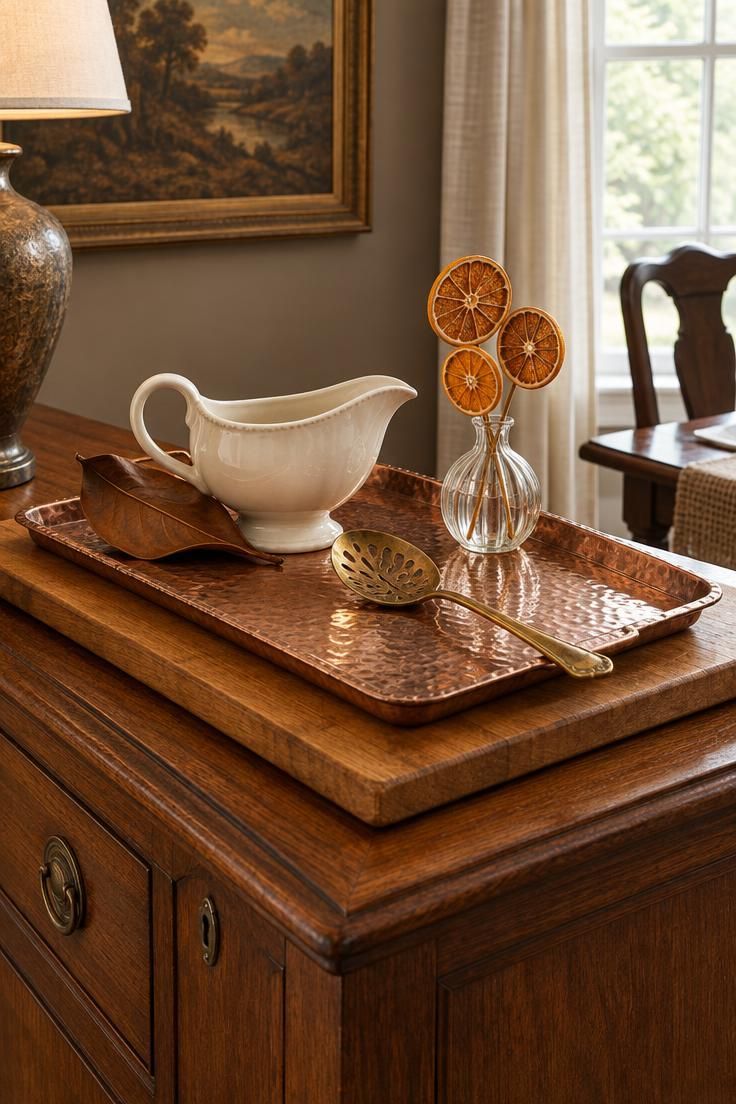
A tray groups the moving parts of a buffet into one handled zone.
A rectangular wood board with a hammered copper tray at one corner holds the gravy boat, a slotted spoon, and a tiny vase of dried orange slices, containing drips and condensation while giving the serving corner a finished look.
The copper catches light without adding another color family.
A dried magnolia leaf tucked under the gravy boat repeats the harvest browns without adding an object.
The thick wood base also insulates the table from the warmth of dishes set down straight from the oven.
Keeping the tray slightly away from casseroles protects the copper finish and keeps the corner from feeling crowded.
This setup suits a household where the serving corner must also act as the drink station.
Moving the tray between courses is easy because everything lifts at once.
Choose a board with enough overhang on each side to grab comfortably when it is full.
Style Blueprint:
- Rectangular honey-toned wood board
- Hammered copper tray
- Cream gravy boat and a brass slotted spoon
- A small glass vase with dried orange slices
Pressed Leaf Vellum Menu Card on a Small Back Shelf
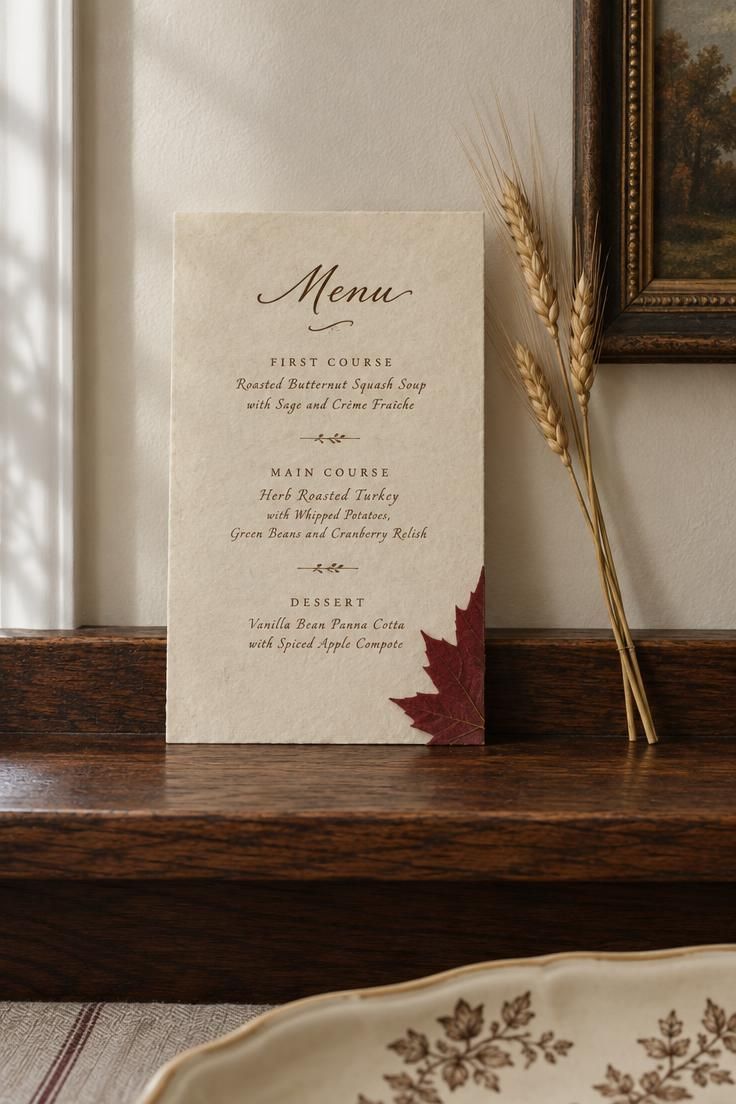
A handwritten menu card on a back shelf lets guests read the spread without reaching over platters.
A rectangular vellum or thick watercolor paper card with hand-lettering lists dishes or potluck assignments, and a pressed maple or oak leaf behind the paper edge adds a seasonal border without covering the writing.
The card stays at eye height above the food line.
Charcoal or dark brown ink reads clearly under candlelight, while orange or rust lettering fades into the harvest palette.
Choose a card size that fits the shelf without blocking the wall or backsplash.
If no shelf exists, a small unfinished wood easel at the far end props the card at a similar height.
The card also solves a practical problem: guests can find the vegetarian dish or the nut-free platter without asking.
Swap the leaf through the season, from maple in early autumn to oak closer to the holiday.
Change the menu between courses by sliding a second card behind the first.
Style Blueprint:
- Cream vellum or thick watercolor paper card
- Dark brown or charcoal ink for hand-lettering
- A pressed maple or oak leaf at the bottom corner
- A small wood easel if no shelf is available
Floor Basket of Plaid Throws and Extra Linens by the Buffet Feet
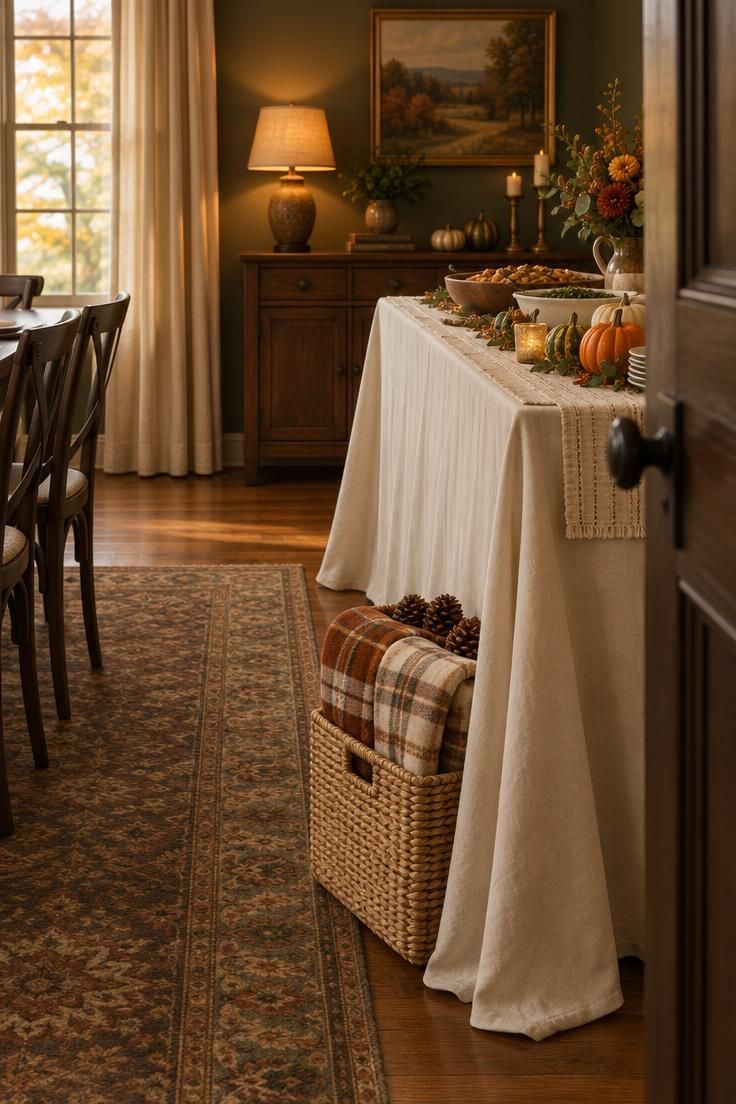
The floor below a buffet is unused space that can carry texture and overflow storage without touching the serving surface.
A wide seagrass or water hyacinth basket to one side of the table, filled with two folded plaid throws and a stack of spare napkins, adds a harvest layer at a new height.
A handful of pinecones at the top gives the basket a seasonal finish.
A floor basket narrows the walking path in a small dining room, so choose a flat-sided style and keep the handle turned toward the wall or the side of the table.
Shopping by the gap between the table leg and the wall works better than guessing at depth.
In a kitchen island setup with no table legs nearby, the same basket sits well against a base cabinet.
Throws in amber and cream echo the table palette without adding another pattern to the surface, and spare linens within reach reduce trips to a closet mid-meal.
After the holiday, the basket can hold everyday throws in the living room, which makes it one of the more reusable pieces in this list.
Style Blueprint:
- Flat-sided seagrass or water hyacinth basket
- Two folded plaid throws in amber and cream
- A stack of spare linen napkins
- A handful of pinecones at the top
Design Pro-Tip: Before guests arrive, walk the buffet line with an empty plate in hand. Any spot where the plate cannot rest flat marks decoration that needs to move to the back row or an end.
Conclusion
A Thanksgiving buffet looks best when the decoration follows the path guests take: clear space in front, layered height behind, and a few warm accents at the ends.
Natural runners, dried stems, candlelight, and practical serveware carry the table without fighting the food.
Every idea here shares one working rule.
Decorative pieces sit at the back, on the ends, or above the surface, never in the serving strip.
Choose one simple base, add a single tall element, and stop before the surface feels crowded.
After the meal, the most usable pieces, from wood boards to stoneware pitchers to brass candlesticks to baskets, can move back into everyday kitchen or pantry storage.