This post may contain affiliate links. If you make a purchase through these links, we may earn a commission at no additional cost to you.
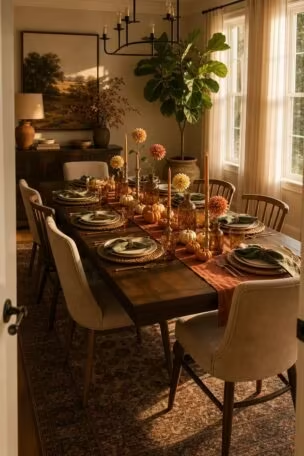
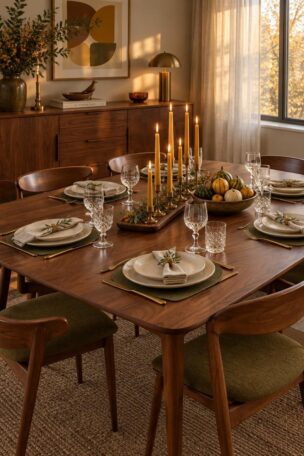
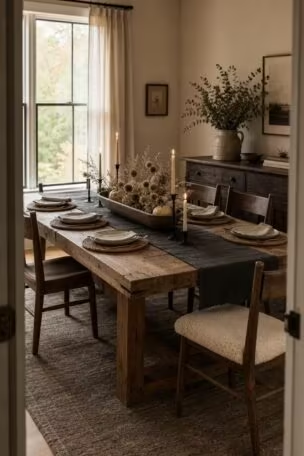
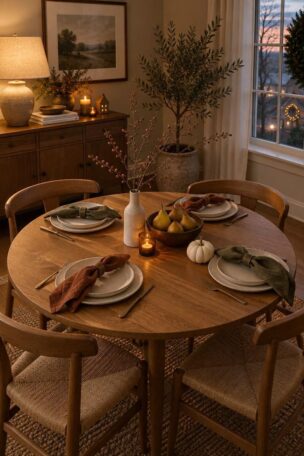
A Thanksgiving table holds its warmth through contrast, not coordination.
Heirloom china sits beside secondhand stoneware, brass catches the light next to matte ceramic, and a few stems from the yard fill a tarnished pitcher.
The pleasure comes from pieces that look collected over time, arranged with enough structure that the mix feels chosen rather than accidental.
These ideas focus on layering decisions for a residential dining room, with practical notes on sightlines, serving space, and upkeep so the table works as well as it looks.
Mismatched Vintage Dinnerware in a Warm Cream and Ochre Stack
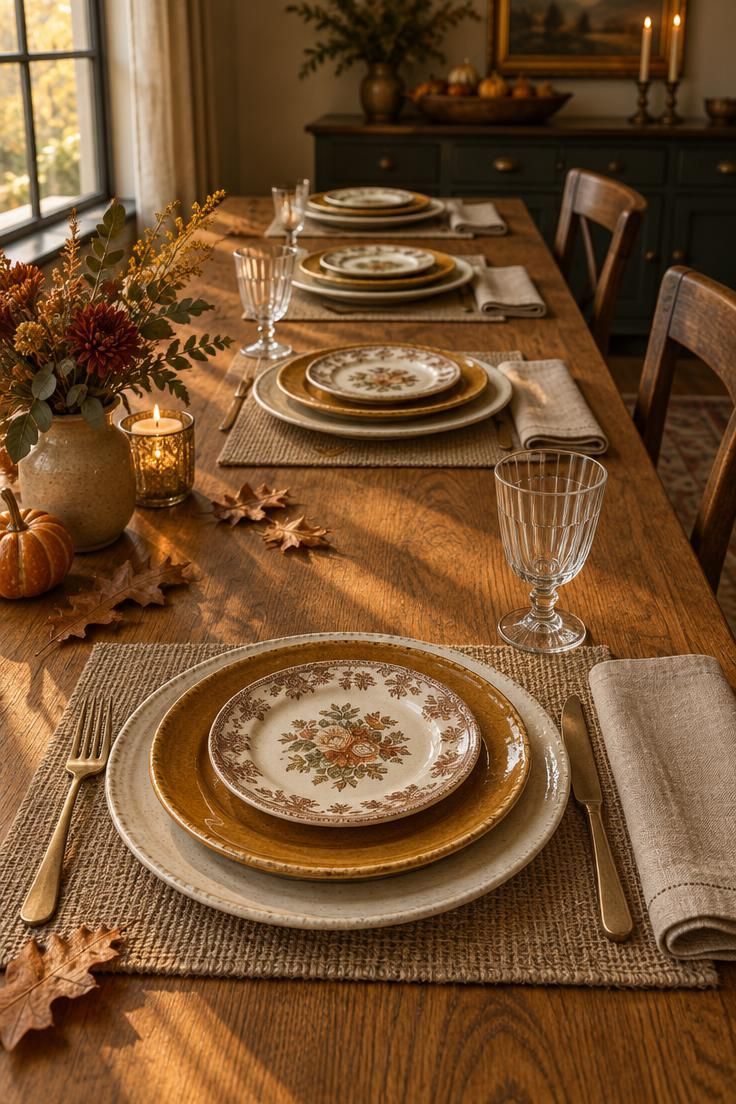
Cream stoneware as the base keeps the table from feeling busy, so the ochre glaze and floral transferware can carry the pattern.
Limiting each setting to one patterned piece preserves that balance, and repeating the cream neutral across every seat ties the whole eclectic thanksgiving table setting together without demanding matching sets.
Keeping the count of pieces the same from setting to setting matters more than matching the pieces themselves, since uneven stack heights read as clutter rather than variety.
A plain woven placemat or simple charger under each stack gives the eye a resting point at the table's edge.
Serving pieces work best in plain finishes, because platters and bowls in strong patterns compete with the plates already doing the visual work.
If the household owns only a few vintage pieces, use them as the top layer and let the cream base repeat across all settings.
Style Blueprint:
- Cream stoneware dinner plates as the repeating neutral
- One ochre or transferware accent plate per setting
- Woven placemats to ground each stack
- Plain serving pieces in cream or white
Layered Table Runner with Velvet, Linen, and a Strip of Burlap
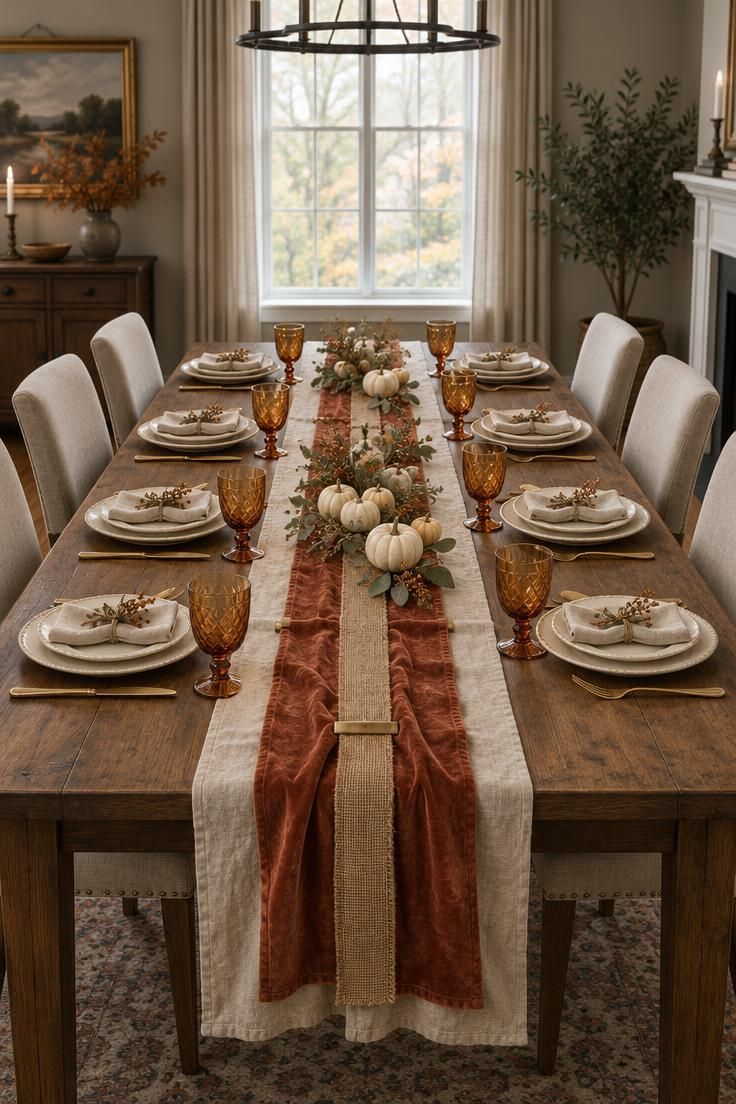
Each layer adds a distinct surface: linen for a matte base, velvet for a soft sheen, burlap for coarse texture.
Letting the edges sit unevenly gives the assembled runner a hand-gathered quality rather than a neatly finished one.
The center stays low, which keeps seated guests able to see across the table during the meal.
Small brass clips can hold the layers in place at a few points without interrupting the fabric.
Burlap sheds, so lifting that top strip after the meal keeps crumbs from working into the velvet beneath.
A layered table runner suits a long rectangular table especially well, where a single narrow band down the middle still leaves room for platters on either side.
Style Blueprint:
- Neutral linen runner as the wide base layer
- Shorter velvet panel in rust or olive
- Narrow burlap strip down the center
- Two or three small brass clips
Mixing Flatware Metals with a Single Brass Candle Pairing
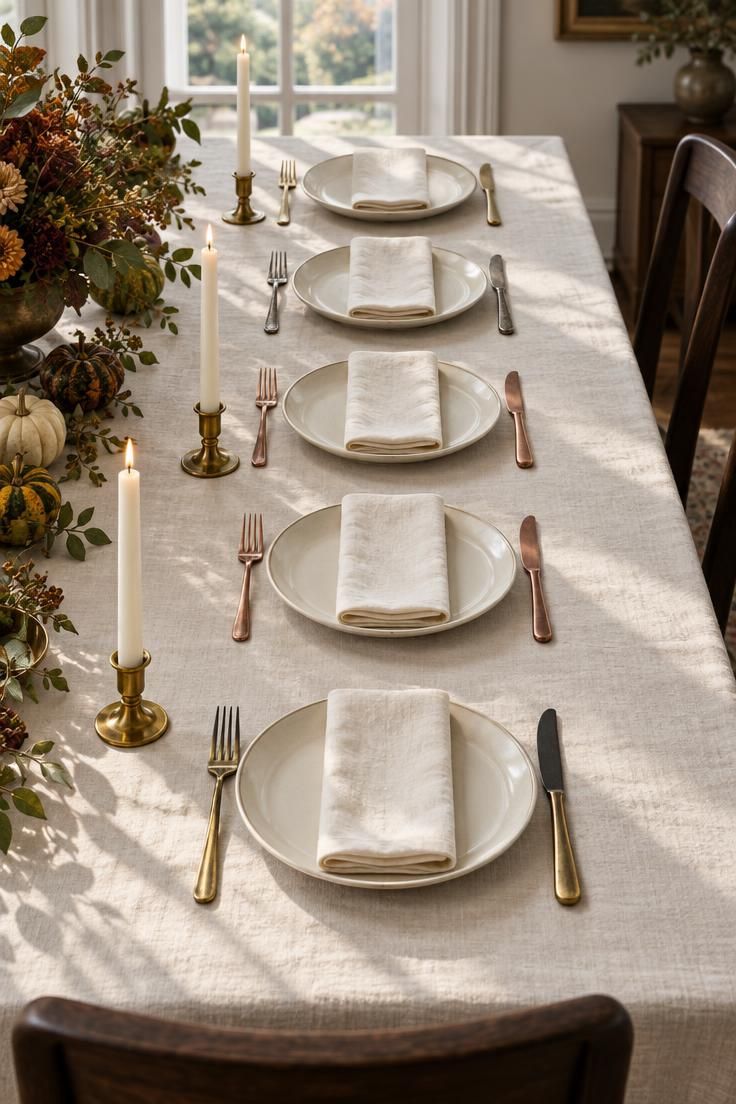
Keeping the fork and knife from the same set protects the practical feel of the place setting, while varying the metal from seat to seat supplies the contrast.
Brass repeated only in the taper holders or a small napkin ring gives the scheme one common thread.
Cream or pale linen keeps the mixture from looking heavy, and it lets the metal finishes register clearly.
Mixing flatware metals is one of the simpler places to introduce variety, since flatware occupies little visual area and can shift the table's character without disrupting its order.
Resist adding more metallic accents elsewhere, which would dilute the flatware's role as the main punctuation.
Style Blueprint:
- Forks and knives paired from matching sets
- Four metal finishes distributed across seats
- Brass taper holders as the repeating accent
- Ivory linen napkins and tablecloth
- Cream plates that let the metals stand out
Low Centerpiece with Gourds and Tarnished Silver Pitchers
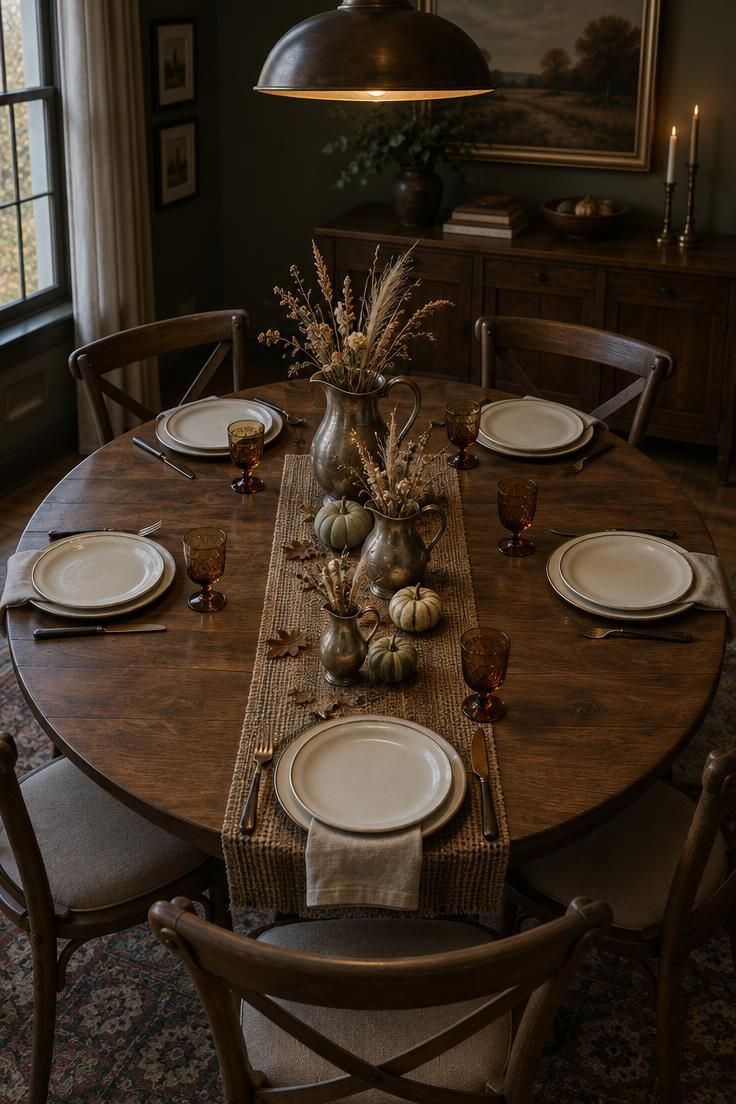
Tarnished silver brings a soft gray tone that sits comfortably between sage gourds and cream plates.
Placing the largest pitcher at the middle and smaller ones toward the ends balances the composition without requiring a symmetrical line.
Keeping the whole group low preserves sightlines, which matters most on a round table where guests face each other across the center.
A low centerpiece with gourds works as a practical anchor because the gourds can be rearranged between courses and the pitchers can hold fresh greenery if dried stems feel too brittle.
Silver tarnish is part of the look, so polishing is optional; a quick wipe after the meal keeps dust from settling into the crevices.
Style Blueprint:
- Three tarnished silver pitchers in graduated sizes
- Dried grasses or fresh stems for each vessel
- Small gourds in sage and cream at the bases
- A woven runner to unify the group
Mismatched Napkins in Dried-Herb Tones
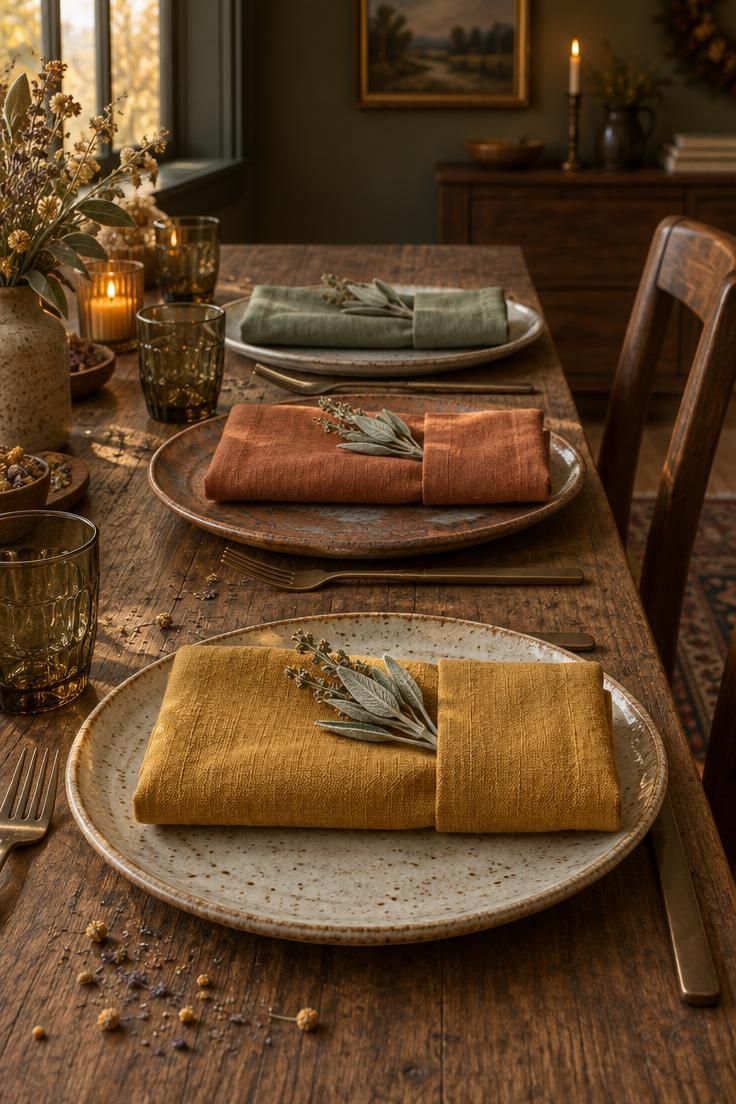
Four earth tones distributed without a strict alternating pattern give the table a relaxed rhythm, while consistent size and fabric weight keep the variation looking deliberate.
A simple fold and a tucked sprig replace the napkin ring, and the dried herb echoes the season without repeating the plate colors exactly.
Mismatched napkins in this tone range read as a family of colors rather than a random assortment.
Cloth napkins in mixed tones can be laundered together after the meal, which keeps them feeling like a working set rather than isolated finds.
A household starting from scratch can build the group from remnants or secondhand linens in the same weight, adding one tone at a time.
Style Blueprint:
- Four napkins in mustard, terracotta, sage, and oat
- A consistent fold and fabric weight across all
- Dried sage or thyme sprigs instead of rings
- Mismatched ceramic plates beneath
Glassware Mixed by Color with Amber and Smoke Stems
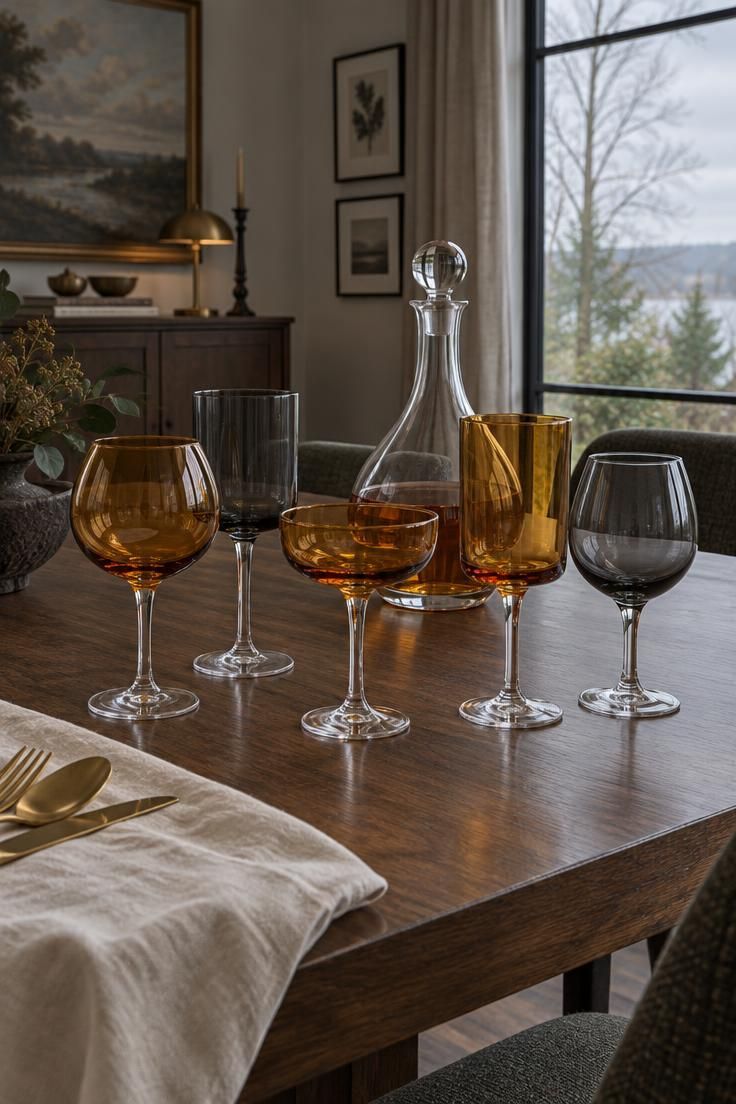
Coordinating glasses by color family rather than by shape lets the drinkware contribute variety without looking like a shelf of unrelated pieces.
Keeping all stems clear ties the group together, and avoiding adjacent duplicates keeps the arrangement from reading as pairs.
Amber and smoke sit well against cream, wood, and brass, so the glasses can shift the table's temperature with little else changed.
A household with only a few colored glasses can cluster them near the decanter and let plain clear glasses fill the remaining seats, since comfort at the table matters more than assigning a specific shape to water and another to wine.
Style Blueprint:
- Three amber and two smoke stemmed glasses
- Mixed bowl shapes with clear stems
- A glass decanter as the cluster's anchor
- Cream linen to set off the glass colors
Cake Stand and Footed Bowl Centerpiece with Dried Ornamental Corn
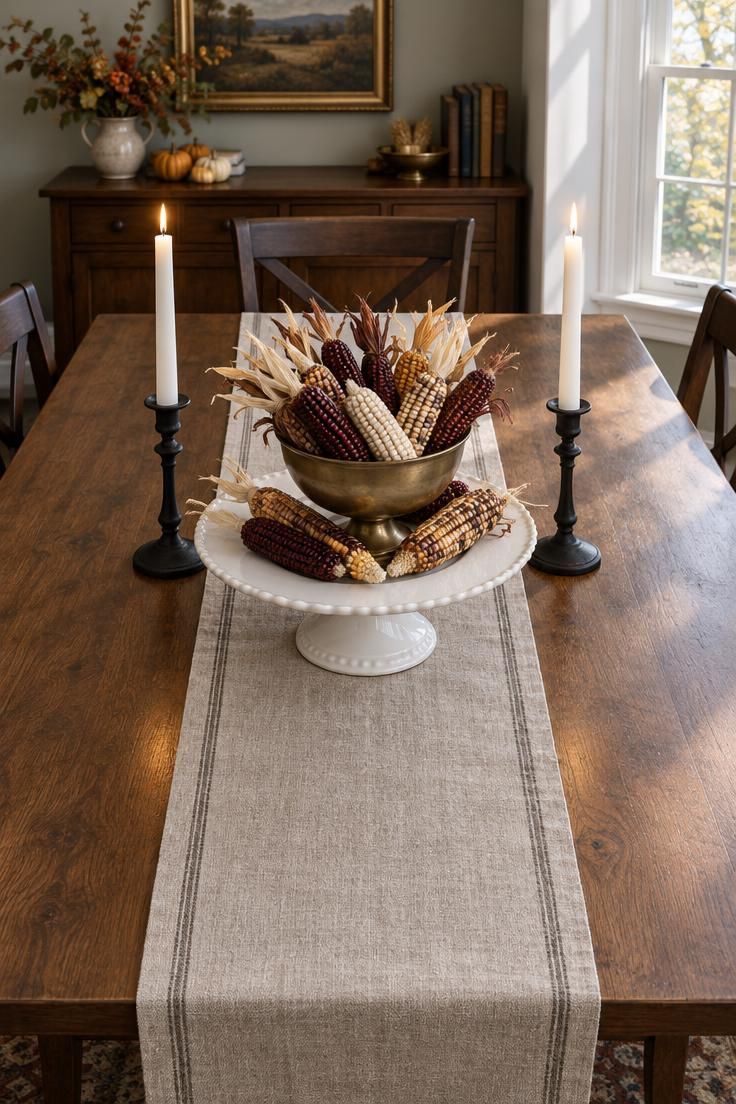
Stacking a footed bowl on a cake stand gives the centerpiece height in a narrow footprint, which suits a long table where wide arrangements crowd the platters.
Dried ornamental corn supplies deep color and a sculptural texture that holds up across the meal.
Two low candle holders beside the stand extend the composition without widening it much.
Dried corn should be fully dry before it rests on painted or polished wood, since moisture can leave marks on those finishes.
The cake stand and bowl can move to a sideboard after dessert, freeing the center for a serving tray.
Style Blueprint:
- White ceramic cake stand as the base
- Small footed brass bowl on top
- Dried ornamental corn in reds, creams, and browns
- Two black candle holders with white tapers
Painted Ceramic Goblets as a Cool Counterpoint to Brass and Wood
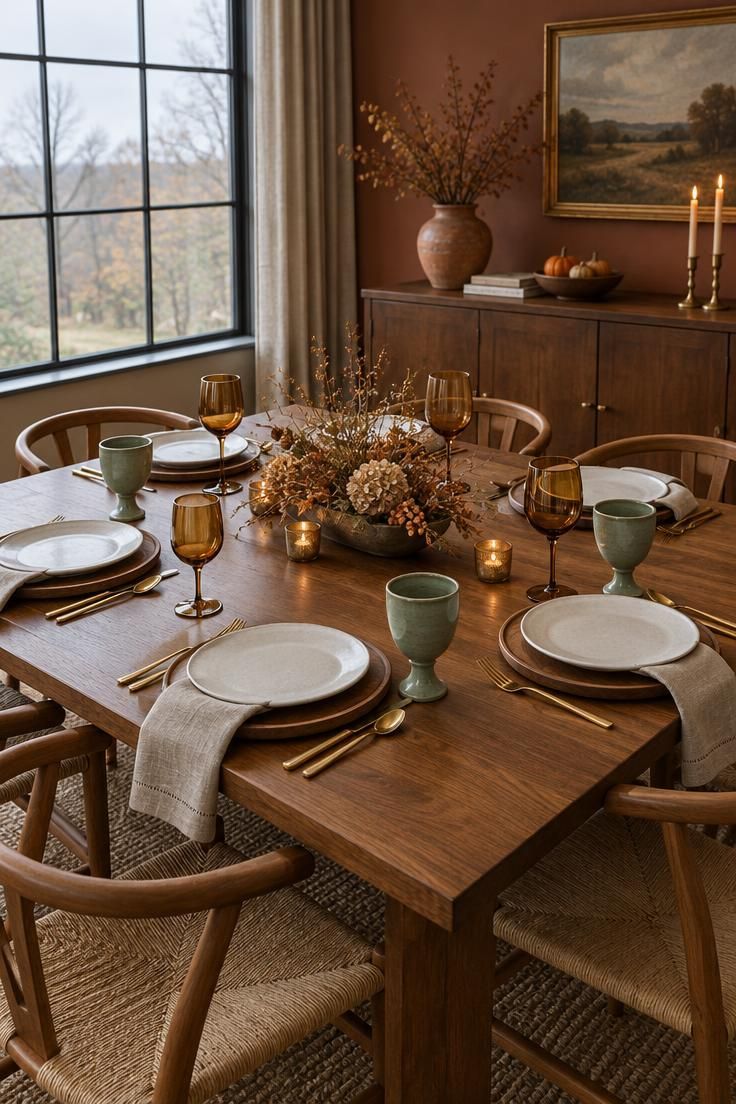
Four glazed goblets in muted sage or slate interrupt a warm field of brass, wood, and terracotta.
Distributing them at alternating seats rather than grouping them on one side keeps the contrast reading as an accent rather than a separate scheme.
The matte ceramic finish lowers the visual temperature without overtaking the table.
Two pairs in the same cool family work when four matching goblets are not on hand.
Keep the remaining drinkware warm-toned so the cool pieces stay distinct.
These goblets suit a household that wants a small, deliberate jolt of color against an otherwise earthy table.
Style Blueprint:
- Two pairs of sage or slate ceramic goblets
- Wooden chargers and white plates as the base
- Brass flatware kept consistent
- Amber glasses for the remaining seats
- Oat linen napkins to soften the contrast
Vintage Plates as Wall and Table Duet
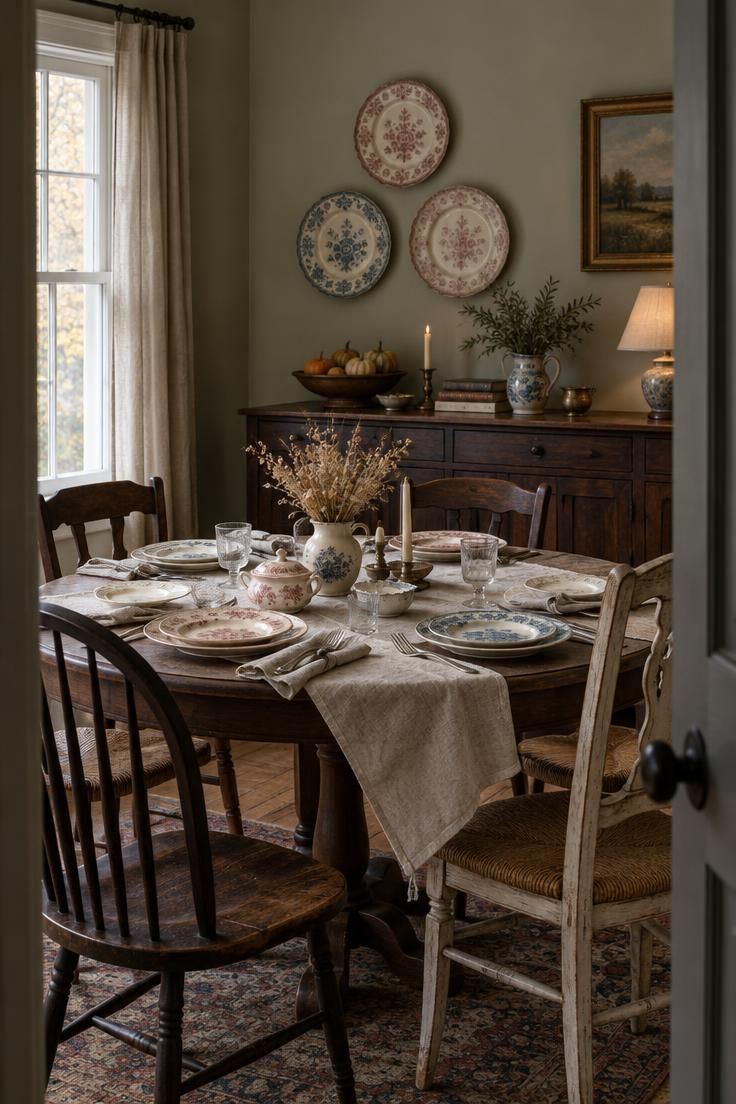
A shared palette of cream, rose, and washed blue links the plates on the table to the cluster on the wall, so the two displays read as one collection.
Keeping the wall grouping above a sideboard or on the nearest wall leaves the tabletop free for place settings and serving pieces.
The overlap gives the room a considered quality without requiring a full matched set.
Mismatched vintage dinnerware can rotate between wall and table as the household chooses, which keeps the collection useful rather than purely decorative.
Plate hangers that grip the rim without adhesive let pieces move back to the table for meals.
A small household collection can start with three plates on the wall and grow as finds turn up.
Style Blueprint:
- Vintage plates with a shared cream, rose, and blue palette
- A cluster of three plates on the wall nearby
- Simple glassware and a small dried arrangement
- Rim-grip plate hangers that allow rotation
Dried Magnolia and Eucalyptus Garland as a Curved Runner
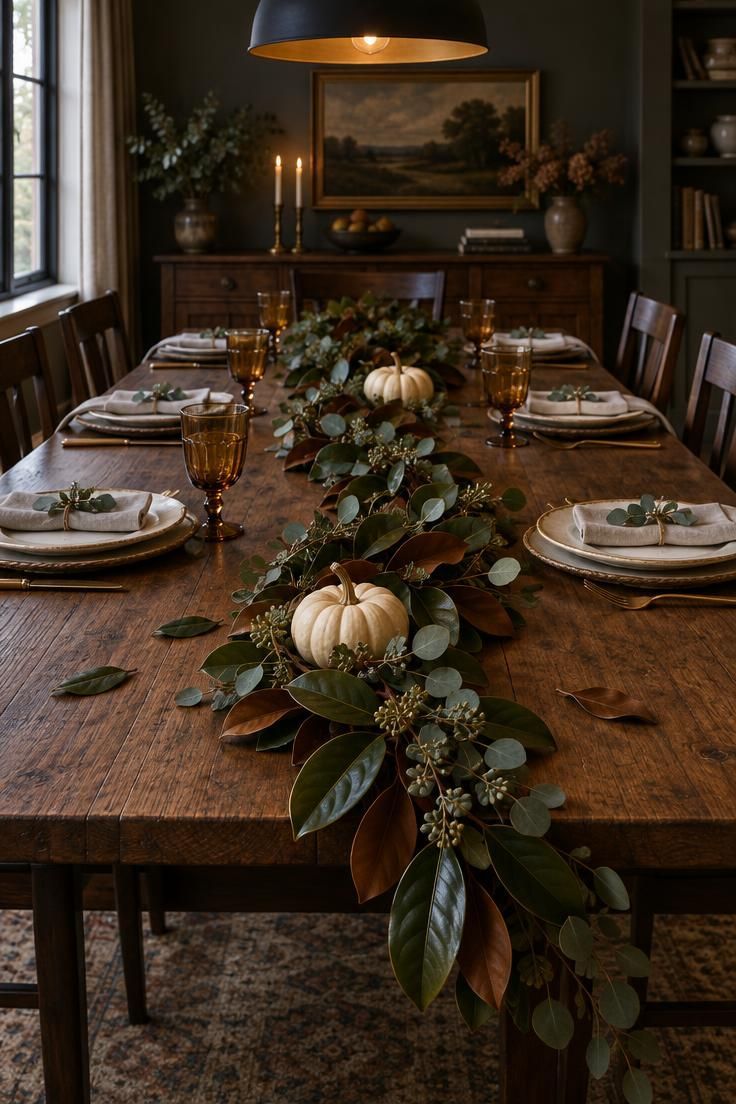
A curved garland replaces the straight line of a runner with a softer path down the table.
Magnolia leaves bring a glossy, leathery surface that contrasts with the narrower eucalyptus, and letting the ends trail over the edges keeps the arrangement from looking staged.
Small gourds or pomegranates set where the garland bends give the curve visual anchors.
The garland needs to stay low and narrow enough that platters can sit near the center, so a single winding band works better than a wide mat of greenery.
Preserved magnolia and eucalyptus hold their shape longer than fresh stems, and storing the garland flat in a box after the meal keeps it usable for another year when the leaves remain intact.
Style Blueprint:
- Preserved magnolia and eucalyptus garland
- A curved path rather than a straight line
- Two small gourds at the bends
- Cream plates and amber glasses around it
Patchwork Placemats from Vintage Quilt Scraps
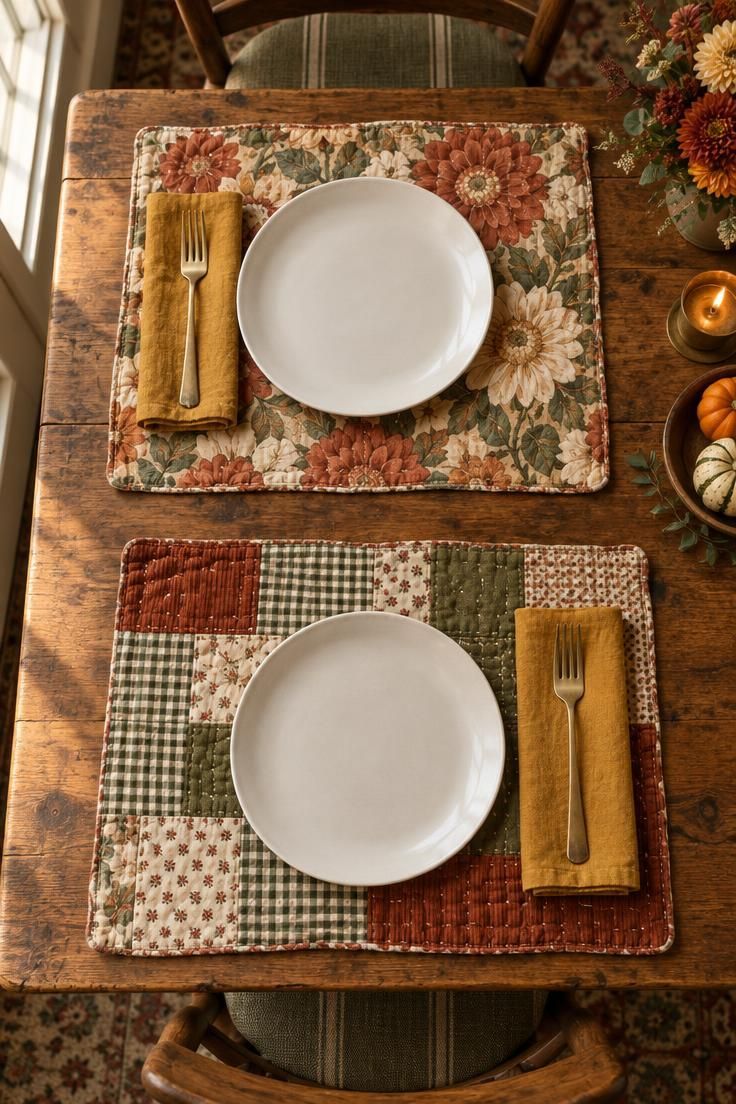
Varying the scale of the prints, from large florals to tiny checks to solid corduroy, gives each placemat its own character while the shared rust, cream, and faded green range holds them together.
Slightly irregular edges reinforce the handmade quality.
Plain white plates let the mats remain the dominant visual layer at each setting.
These placemats take wear better with spot cleaning than frequent washing, since quilt scraps and corduroy can fray at cut edges.
Shaking crumbs off outdoors after the meal is a simple routine.
A household with a worn quilt beyond repair can cut placemats from the sturdiest sections as a way to keep the fabric in use.
Style Blueprint:
- Six placemats cut from quilt scraps or heavy linen
- Mixed print scales within one color range
- Plain white plates on top
- Mustard napkins and brass flatware
Carved Wood Candle Holders at Uneven Heights
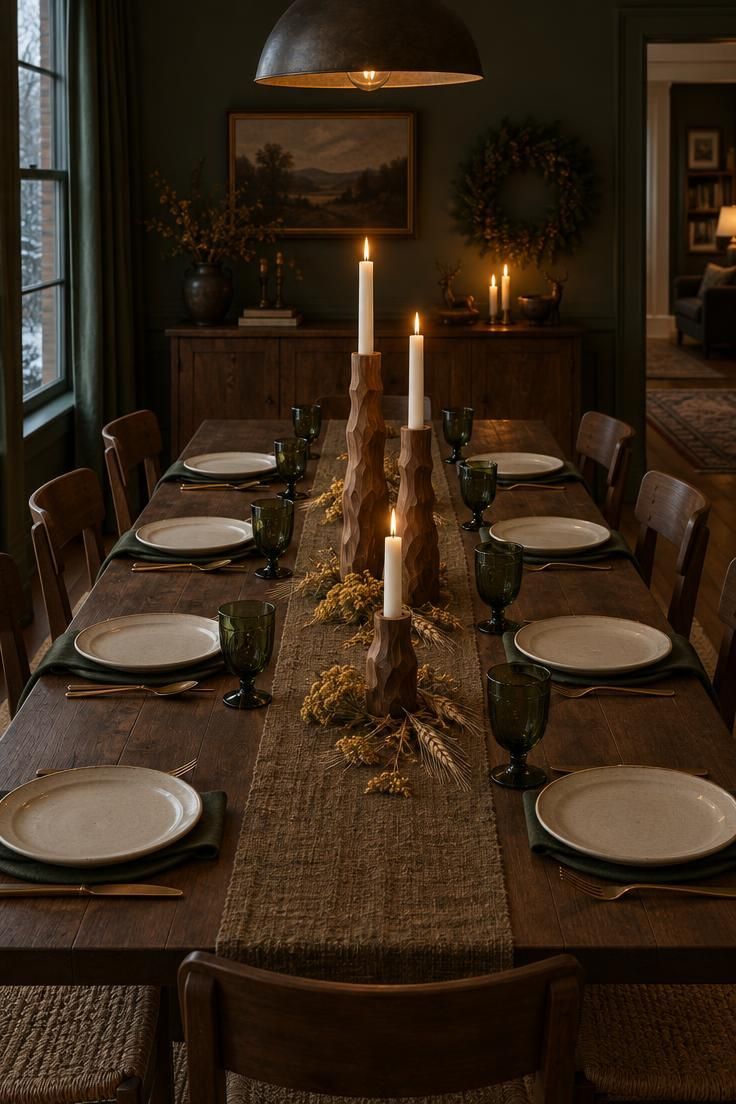
Uneven heights give the center line movement, and offsetting the tallest holder toward the middle rather than spacing the group evenly avoids a rigid row.
Carved wood brings a tactile texture that contrasts with smooth plates and glass.
Sprigs of dried yarrow or wheat around the bases soften the transition between the wood and the table.
Keeping the holders modest in height preserves sightlines across the table.
Place the candles away from an overhanging light fixture and clear of paper decorations or loose dried material near the flames, and set them where a reach across the table will not pass over an open flame.
Style Blueprint:
- Three hand-carved wood candle holders
- White or beeswax tapers
- Uneven heights with the tallest near the middle
- Dried yarrow or wheat at the bases
Brass Charger Under a Single Wildflower Stem
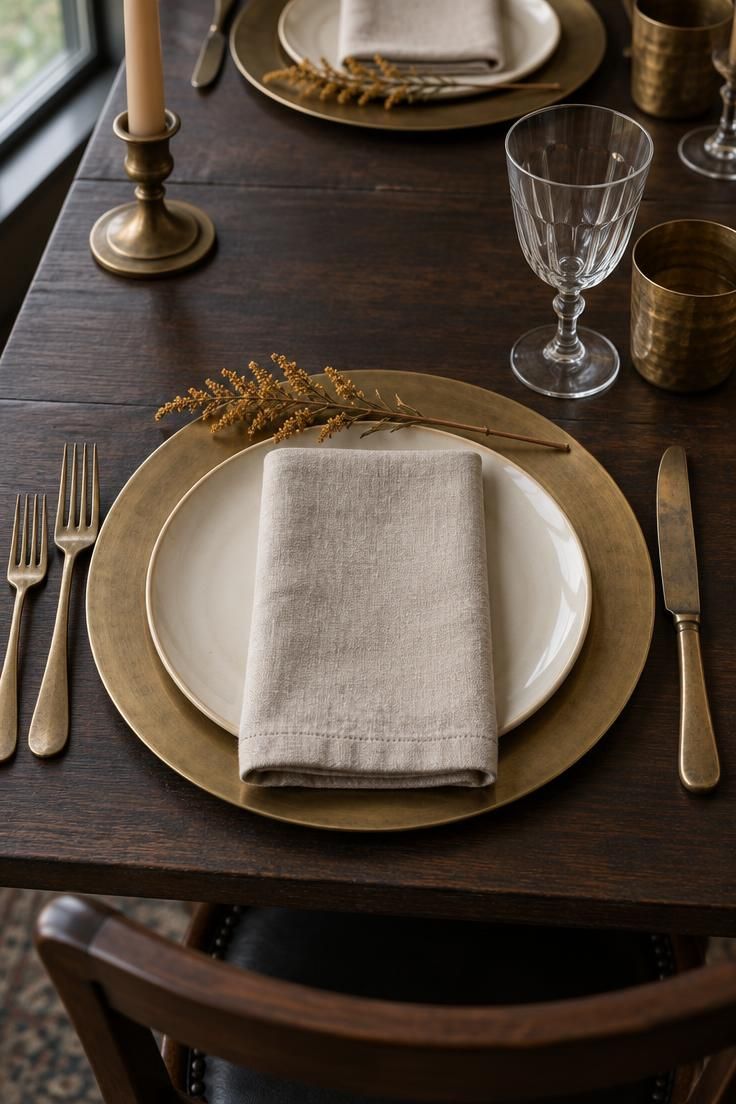
One dried stem laid across the top edge of each charger creates a quiet rhythm around the table.
Varying the charger finish between polished and aged brass adds subtle variety at each place without introducing another pattern.
Keeping the rest of the table free of floral arrangements lets this small detail stay noticeable.
This idea suits a table where the dinnerware is already varied, since a single stem and a simple charger add texture without competing.
The chargers can remain in place during serving, and lifting the stems once guests sit keeps the place settings tidy.
Goldenrod and statice hold their color well when dried, which makes them easy to reuse.
Style Blueprint:
- Round brass chargers in polished and aged finishes
- Cream dinner plates on top
- One dried goldenrod or statice stem per setting
- Folded linen napkins
Design Pro-Tip: Choose one or two through-lines, such as a cream neutral, a brass accent, or an earth-tone range, before mixing anything else, then edit out any piece that does not connect to them.
Conclusion
Character at a Thanksgiving table comes from the way materials, eras, and personal pieces are combined inside a clear visual frame.
Repeating one color, metal, or texture keeps variety from sliding into disorder, and a low centerpiece with reserved serving space keeps the meal practical.
Start with what the household already owns, add a few seasonal elements from the yard or a secondhand shop, and remove any layer that has no reason to stay.
The table that results belongs to the home around it.