This post may contain affiliate links. If you make a purchase through these links, we may earn a commission at no additional cost to you.
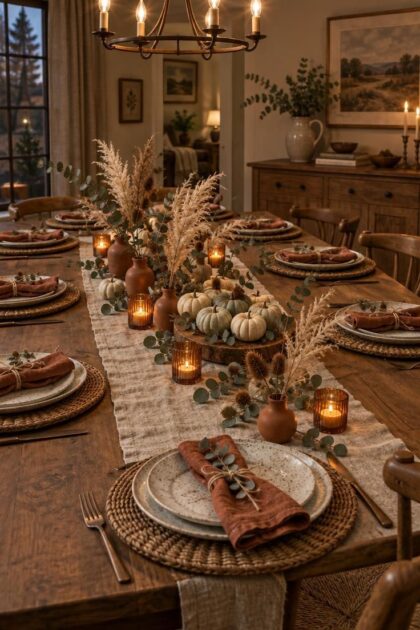
A boho Thanksgiving table starts with restraint: keep the centerpiece low, let materials look collected rather than matched, and build richness from texture instead of gloss.
Dried grasses, handcrafted ceramics, woven fibers, and soft candlelight carry the autumn palette without a single glossy accent.
Each idea here begins with one concrete material or object, then shows how to build a layered setting around it while leaving room for serving dishes and relaxed conversation.
Most pieces move easily into the rest of the season or work alongside tableware already in the cupboard, which matters on a day built around a real meal.
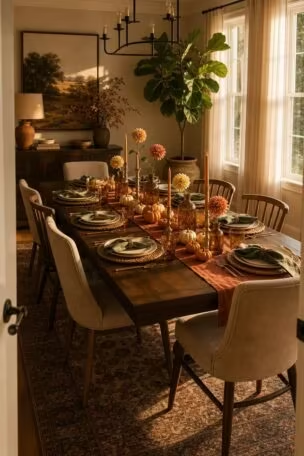
Dried Botanical Centerpiece Run the Length of the Table
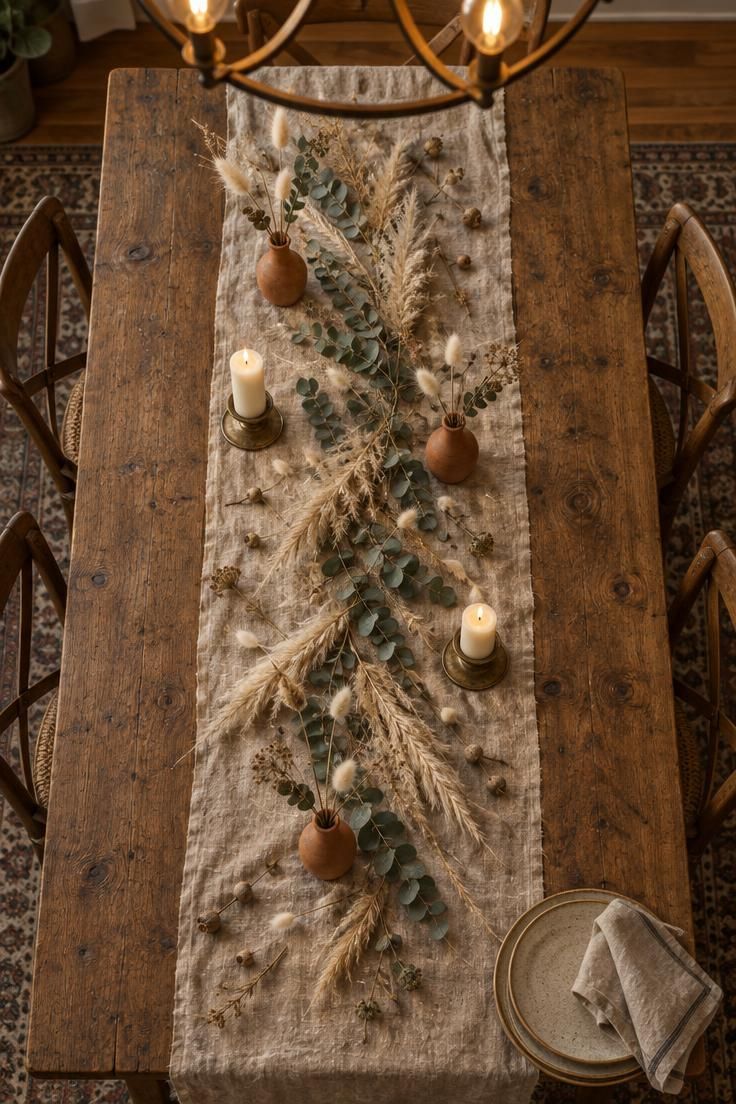
Laid end to end rather than gathered into one bouquet, a dried botanical centerpiece reads as part of the table itself.
The horizontal spread keeps the middle low, so people across from one another still have a clear view and a place to set down a glass.
Height comes from small stoneware bud vases dotted along the line, each holding two or three stems, which adds rhythm without blocking sightlines.
Dried material does shed a little, and pods can crumble.
Concentrating the stems in a narrow middle zone leaves the perimeter clear for plates and makes the table easier to wipe between courses.
Keeping loose stems off the place settings also means crumbs and stems do not mix.
Lift the vases and shake the cloth outdoors after the meal, then store the stems in a lidded bin for the next gathering.
A loose, slightly uneven line looks better than a tightly ruled one, so resist straightening every stem.
Style Blueprint:
- A natural linen runner, left softly wrinkled rather than pressed
- A mix of pampas grass, dried eucalyptus, bunny tails, and a few seed pods
- Three or four small stoneware or terracotta bud vases
- Two low ivory pillar candles in weathered brass holders
Design Pro-Tip: Use unscented candles near dried material, and keep flames clear of loose stems.
Rattan Chargers and Woven Placemats for a Textured Base
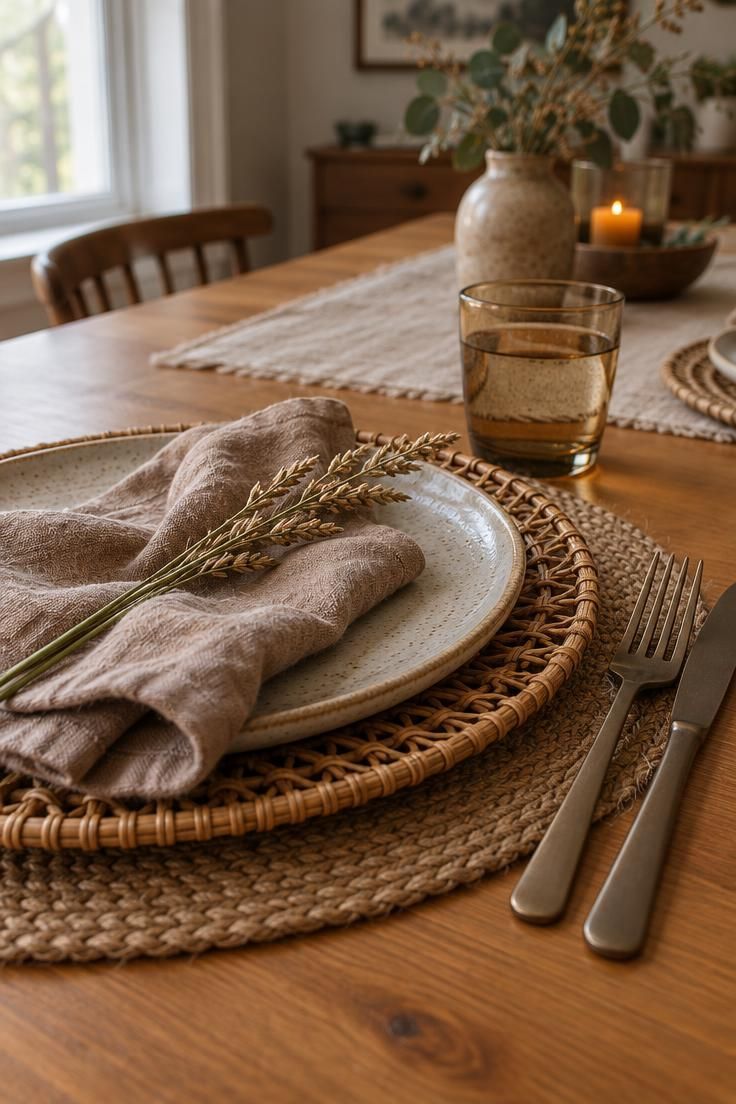
Texture is the first thing a guest touches at a boho table, and rattan chargers and woven placemats handle that job before a single plate arrives.
The weave catches light in small shadow lines, and against bare wood it gives the setting a grounded, handmade feel.
Build the stack in a steady order: jute placemat, then the rattan charger, then a dinner plate, then a smaller bowl if the menu calls for one.
Keep the charger sitting just proud of the placemat so both weaves stay visible.
Woven surfaces hide crumbs well and can be shaken out over the sink after the meal, though they prefer to stay dry.
A quick wipe with a damp cloth handles most spills, and the pieces stack flat in a cupboard between uses.
Style Blueprint:
- Round woven jute placemats in a natural tan
- Rattan chargers with an open, visible weave
- Speckled stoneware dinner plates in cream
- Linen napkins in a clay or rust tone
Design Pro-Tip: Set the charger slightly over the table edge so plates sit centered and the weave remains visible.
Mismatched Vintage Stoneware Plates in One Earthy Palette
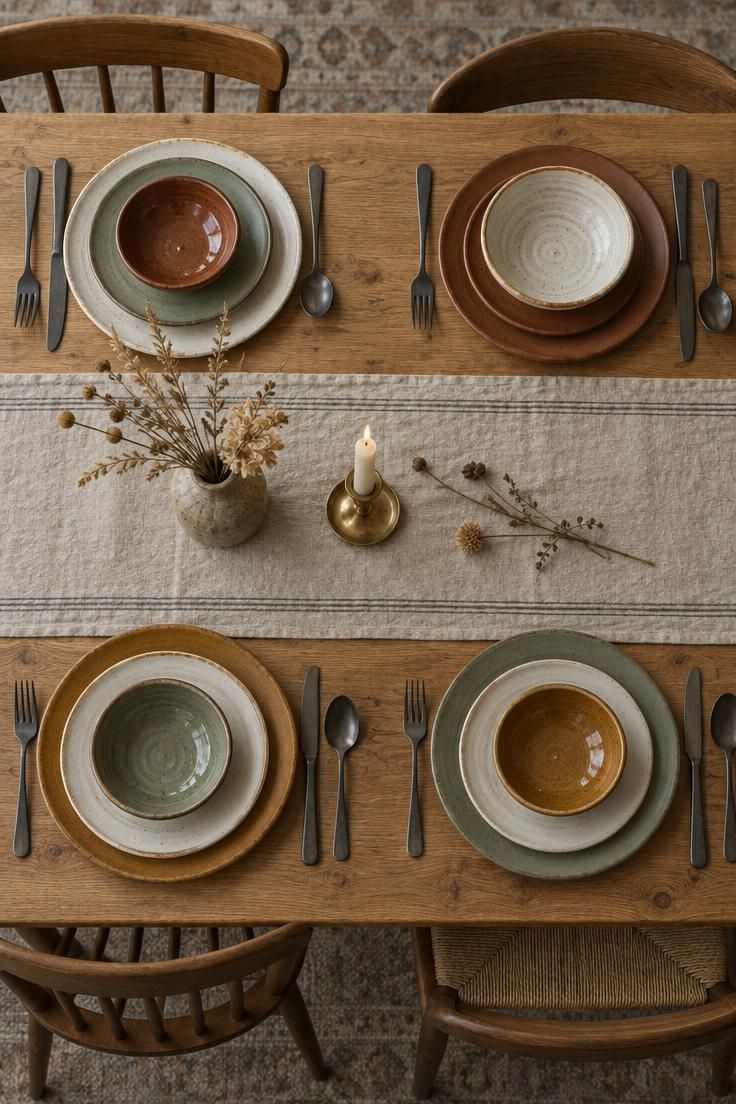
A collected set of plates is the heart of relaxed holiday styling, and mismatched vintage stoneware gives every place setting its own character.
The trick to keeping it from looking accidental is a fixed palette: cream, rust, sage, and ochre, with glazed and unglazed pieces allowed to sit together.
Mix by material family rather than exact color.
A glazed dinner plate under an unglazed salad plate, topped with a smaller terracotta bowl, creates depth through finish rather than pattern.
Four different settings can share one palette and still feel like one table.
Care differs across the mix.
Glazed pieces generally prefer hand washing to keep their surface clear, and unglazed bottoms benefit from mild soap and thorough drying.
Thrifted plates also vary in size, so stack them loosely and let slight differences show.
Style Blueprint:
- Thrifted stoneware dinner plates in cream and rust
- Unglazed salad plates in sage or clay
- Small terracotta bowls for sides or soup
- Simple darkened metal flatware
- A linen runner in a neutral sand tone
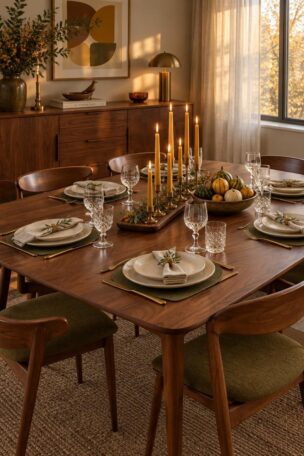
Amber Glass Candle Holders at Different Heights
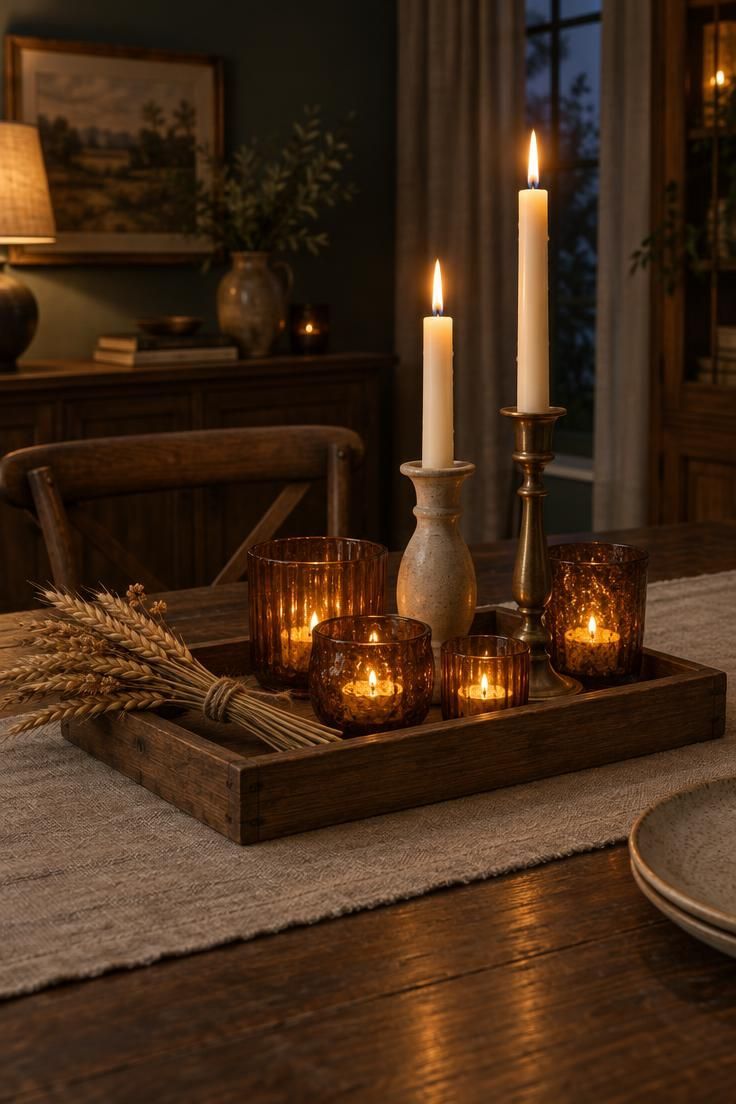
A line of small flames at staggered heights gives a table its evening warmth without a bright center that flattens everything around it.
Amber glass candle holders soften the light and blur the flame, and the tinted glass hides wax smudges and dust better than clear glass does.
Cluster three or four holders on a small wood board or tray so drips and ash stay contained.
Mix votives with tapers in brass, ceramic, or wood candlesticks, letting some sit low and others rise a little above the plates.
Keep the group to one area rather than scattering candles across the whole table.
Amber glass works with ivory or cream tapers, while darker tapers can disappear against a dim room.
Dried material nearby calls for care: keep loose stems and grasses well away from open flames, and favor glass votives or hurricane-style holders when dried botanicals share the table.
Choose unscented candles when the meal is the main event, since fragrance and food compete.
Trim tapers before each use and wipe the inside of the glass once the wax cools.
Style Blueprint:
- Amber glass votive holders in two or three sizes
- Taper candles in aged brass candlesticks
- A matte ceramic candlestick for contrast
- A low wood tray to corral drips
- Ivory or cream taper candles
Design Pro-Tip: Use unscented candles if the table will have food, and keep dried botanicals at least a few inches from any open flame.
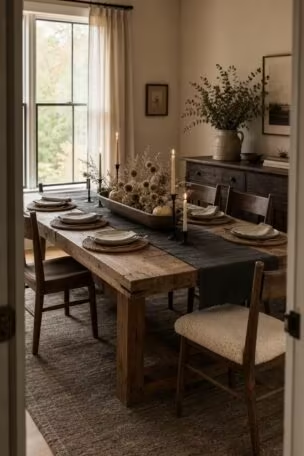
Linen Table Runner with a Loose Drawn Edge
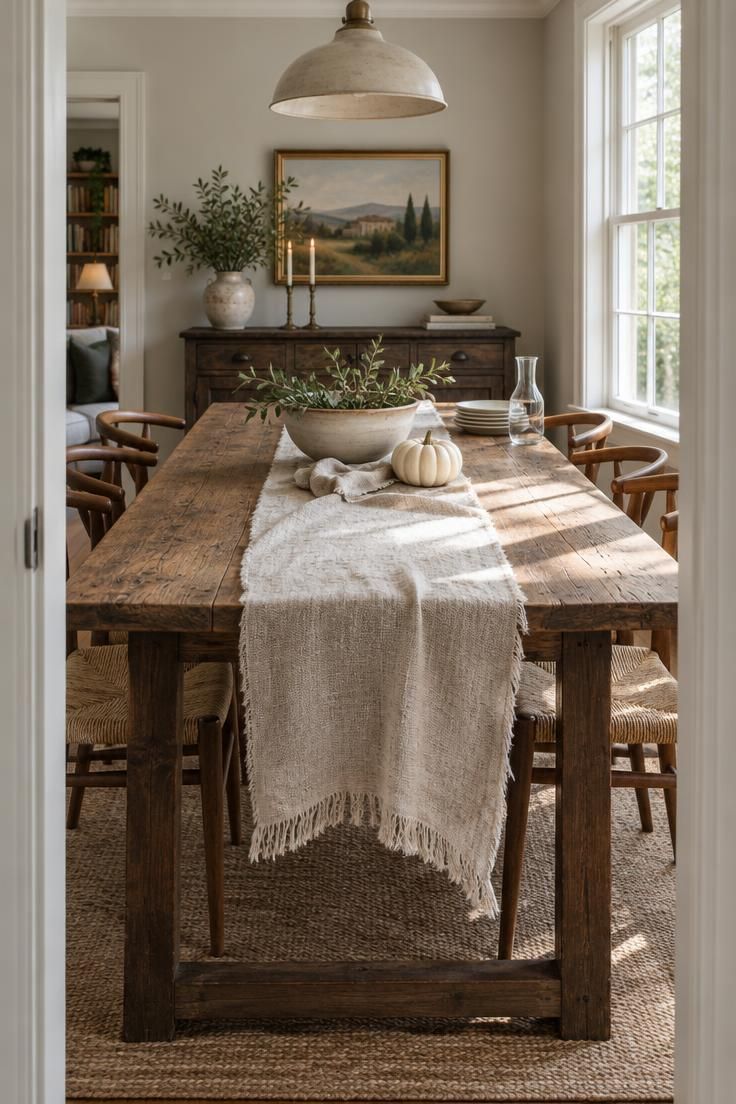
The runner is the quiet foundation of boho thanksgiving table decor, and a natural linen piece with a visible slub and fringed ends does more work than a pressed cloth.
Draped loosely rather than ironed flat, it brings softness and a little irregularity that suits the gathered look.
Anchor the cloth with a few heavier objects, a wood board, a wide bowl, or a small pumpkin, so it stays in place as plates come and go.
On a wood table, a runner often works better than a full tablecloth because the exposed grain adds contrast and warmth on either side.
Fringed ends can tangle in a wash, so shake the runner out and spot clean where possible, or choose a washable linen blend for a busy holiday.
The relaxed drape is the point, so a few creases are welcome.
Style Blueprint:
- A natural or oatmeal linen runner with fringed ends
- A wide ceramic bowl as an anchor
- Simple cloth napkins folded in a soft roll
Wooden Board with Mini Pumpkins and Foraged Branches
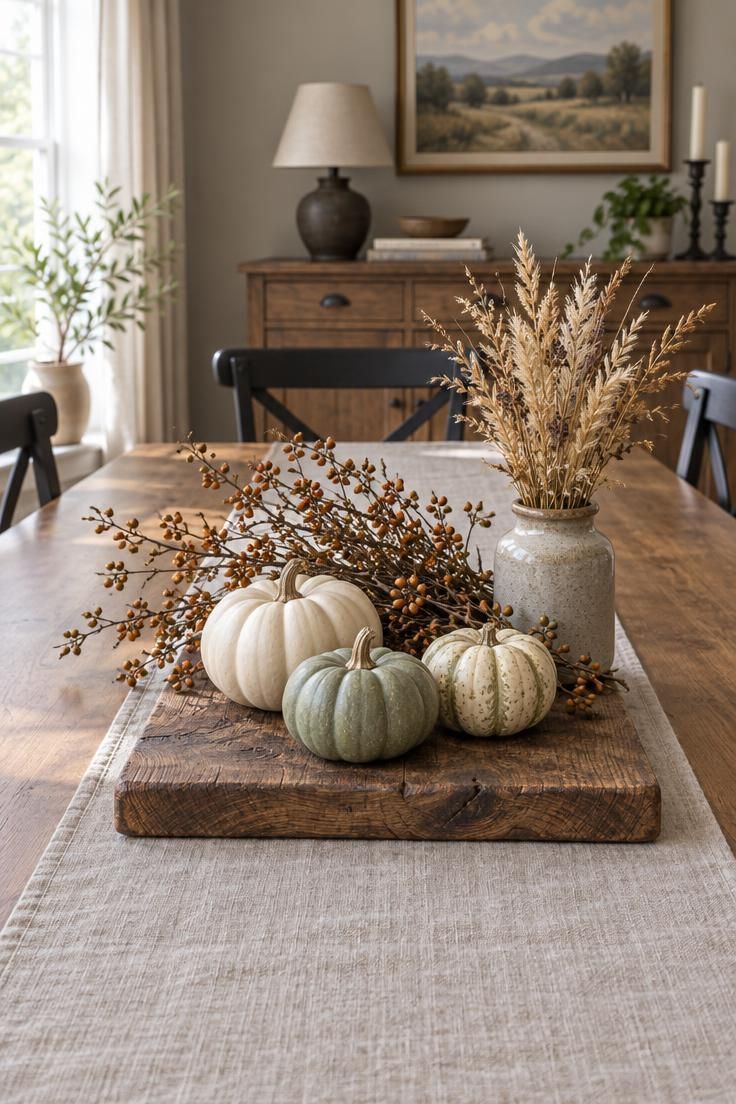
A long wood board or shallow tray corrals a small harvest into a defined zone, which keeps the arrangement from drifting into clutter.
Three mini pumpkins in cream and sage anchor the board, while a bundle of dried branches with berries and a jar of dried grasses add height and fine texture at the ends.
Because the cluster lives on the board, the rest of the runner stays clear for serving dishes.
When it is time to carve or pass platters, the whole composition lifts off in one move and returns afterward, which is a real advantage on a table that has to work for a meal.
Choose pumpkins that feel firm and dry, and set the board where it will not be nudged by elbows.
The branches can be shaken out and stored flat, and the board itself moves easily to a sideboard once dessert arrives.
Style Blueprint:
- A long rectangular wood serving board
- Mini pumpkins in cream, sage, and dusty orange
- A bundle of dried branches with small berries
- A small stoneware jar of dried grasses
Dried Orange Slices and Star Anise in Small Ceramic Bowls
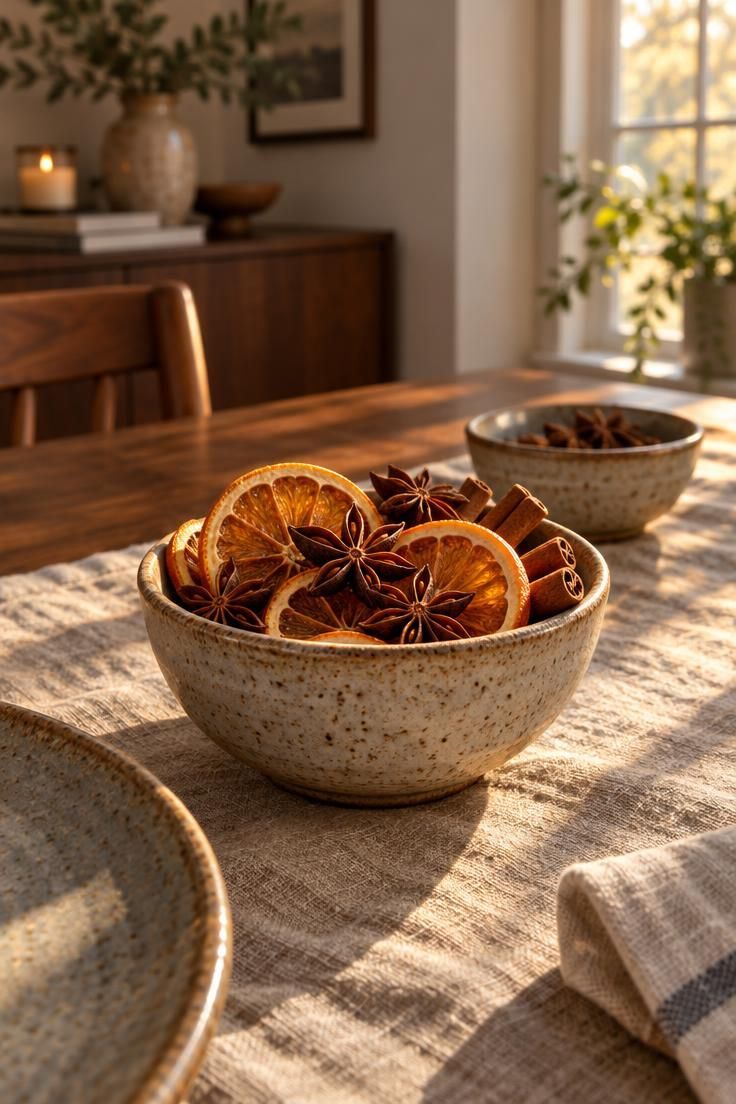
Small bowls of dried orange slices, star anise, and cinnamon sticks bring warm color to the table and a faint natural scent that rises as people lean in.
They work as tiny still lifes: one at every other place setting, or two tucked among the candles and grasses in the center.
The fruit and spices stay tidy in a way that loose stems do not, so they are easy to leave out through the whole meal.
A shallow bowl shows the contents best, and a mix of orange, deep brown, and star shapes keeps each bowl visually interesting on its own.
Store the contents in a dry jar between seasons, and they will return next year.
Handle the orange slices gently, since they become brittle, and refresh the cinnamon sticks if their scent fades.
Style Blueprint:
- Small speckled ceramic bowls in cream or clay
- Dried orange slices
- Whole star anise pods
- Short cinnamon sticks
One Woven Basket as a Low Harvest Bowl
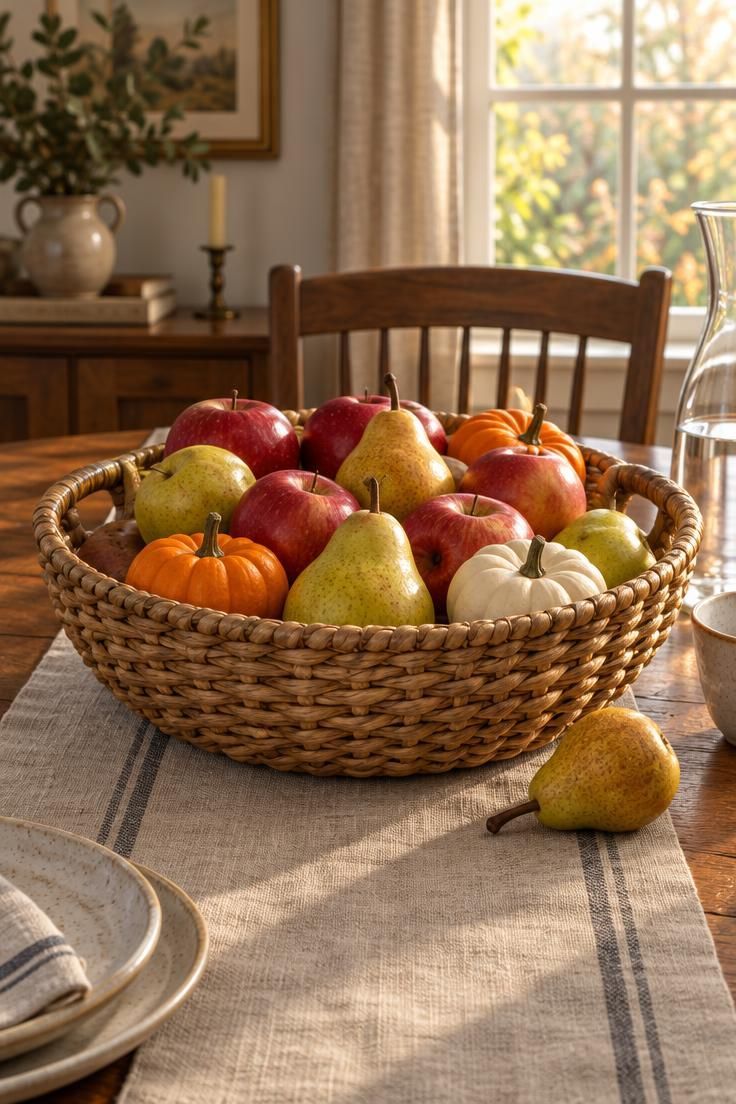
One generous woven basket can serve as the whole centerpiece when table space is tight.
Filled with small pears, apples, or persimmons, it becomes a low harvest anchor whose chunky weave plays against the smooth curve of the fruit.
A single large bowl usually reads calmer than several small ones competing for the same middle ground, and the fruit does double duty as an informal snack or a simple dessert on a day of grazing.
Keep the fruit piled slightly above the rim for abundance, then let one pear or apple rest on the cloth beside it to loosen the composition.
Check the basket after a few days and remove any fruit that softens, and wipe the weave dry if juice marks appear.
Style Blueprint:
- A wide, shallow woven rattan basket
- Small pears and red apples
- Two or three miniature pumpkins
- A linen runner in oatmeal
Twine-Tied Napkins with a Sprig of Dried Eucalyptus
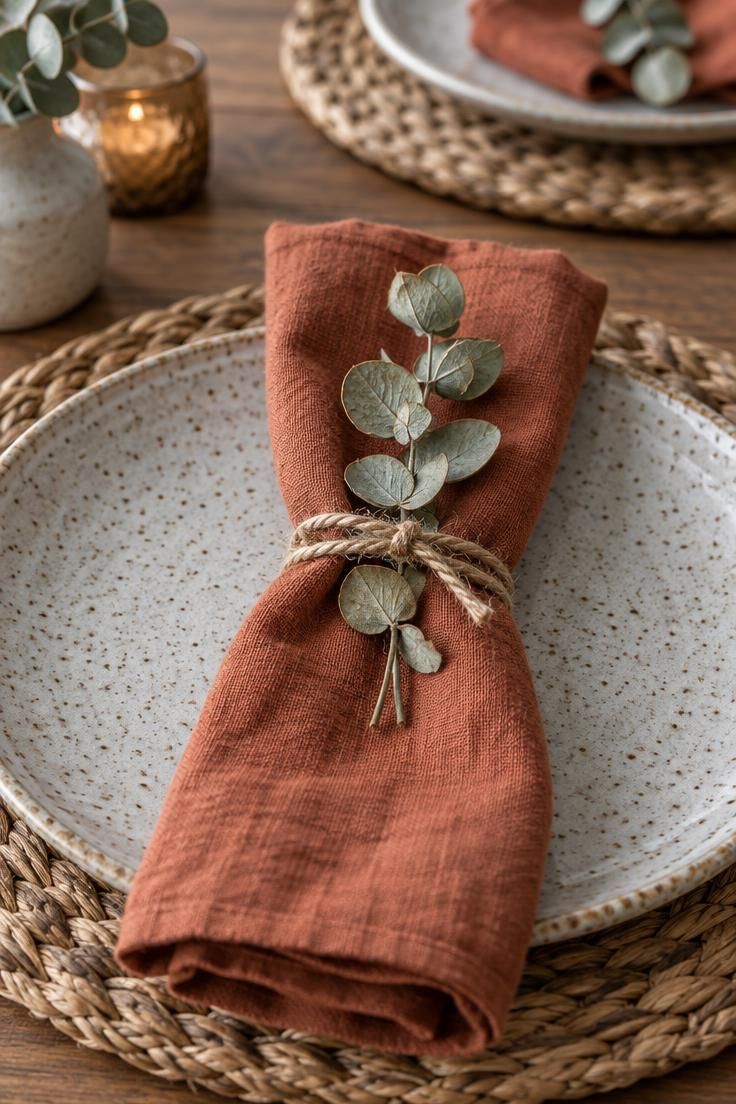
A cloth napkin tied with twine turns a plain place setting into something that feels put together.
Fold the napkin into a simple rectangle, wrap jute or twine around its middle twice, and tuck a short stem of dried eucalyptus or a cinnamon stick under the knot.
The detail works with any earth-toned napkin, from rust and clay to olive and oat, and costs little beyond what is already in the drawer.
Keep the fold soft and the knot loose so the napkin still looks like fabric rather than a parcel.
Guests can untie the napkin in seconds, and the sprig can rest on the plate or move to the side.
Linen napkins can be shaken out and washed after the meal, and the dried stems can be reused if they stay intact.
Style Blueprint:
- Linen napkins in rust, clay, or olive
- Jute or cotton twine
- Short stems of dried eucalyptus or cinnamon sticks
Kraft Paper Place Cards with a Dried Leaf Tucked Under the Twine
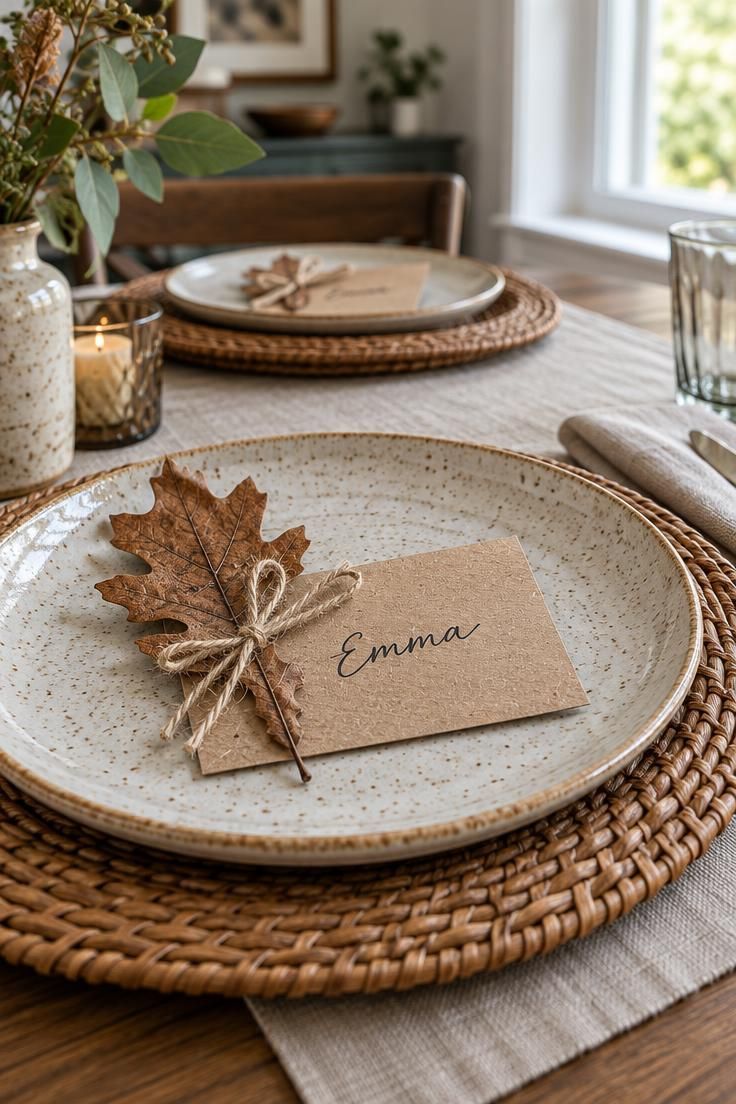
Simple place cards made from kraft paper or cardstock can fold tent-style or tie to a napkin with twine.
A small pressed leaf or grass stem tucked under the twine or into the fold gives each name a natural marker that fits the gathered look.
Handwritten names carry a warmth that printed cards rarely match, and the slight unevenness of the lettering suits a relaxed table.
Cut the cards small so they do not cover the plate or compete with the food.
The paper and dried leaf can go into the compost or recycling after the meal, which keeps cleanup simple.
Press leaves ahead of time between heavy books so they lie flat, and write names with a fine dark pen that will not smudge.
Style Blueprint:
- Small kraft paper or cardstock cards
- Jute twine
- Pressed dried leaves or grass stems
- A fine-tipped dark pen
Layer a Thrifted Kilim or Block-Printed Textile as a Runner
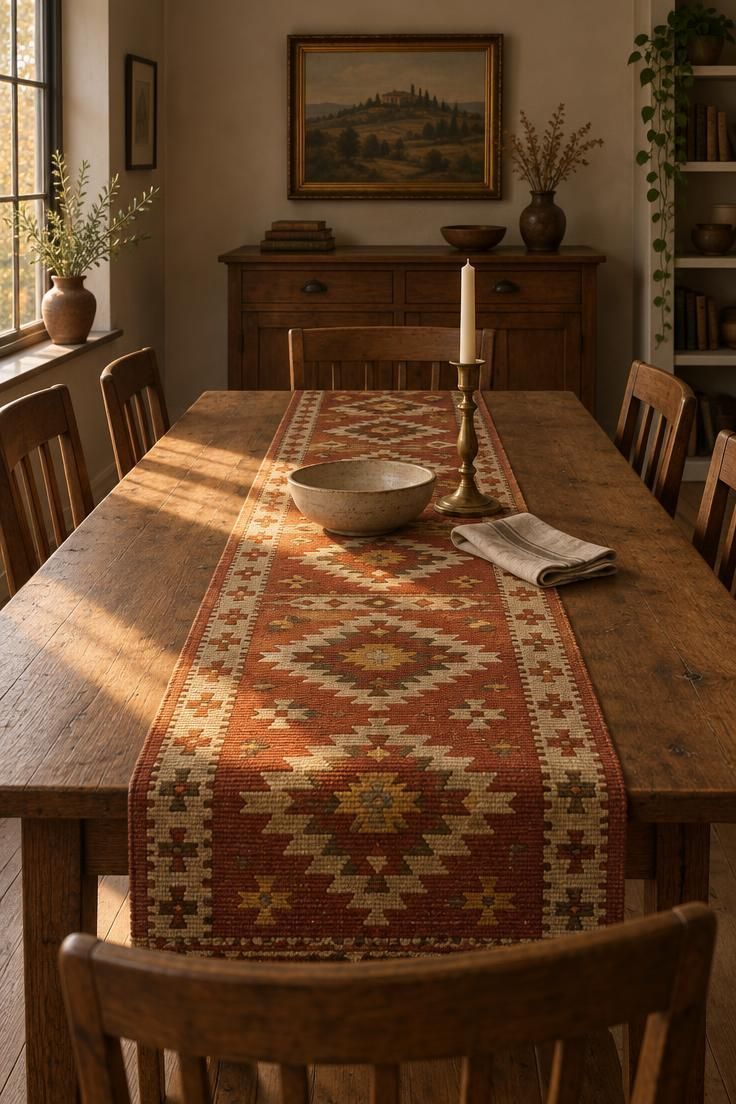
A patterned textile changes the whole mood of the table, and a vintage kilim-style fabric, block-printed cotton, or mudcloth strip can replace the plain linen table runner entirely.
Global patterns bring color and story, and the flat weave sits neatly on wood without much slipping.
The key is restraint elsewhere.
Keep plates in plain stoneware, leave the wood bare, and choose simple glassware so the print carries the table.
A muted palette in the cloth lets the rest of the earthy scheme stay calm rather than busy.
Patterned fabric hides small spills better than solid linen, though wool and block-printed cotton may need a quick spot-clean or a trip to a dry cleaner depending on the fiber.
Check the care label before the holiday and plan a backup in case of a spill.
Style Blueprint:
- A flat-weave kilim-style runner in rust, ochre, and cream
- Plain stoneware bowls and plates
- A single brass candlestick
- Simple clear or smoke glassware
- Linen napkins in a coordinating tone
Conclusion
The strongest boho Thanksgiving tables treat the centerpiece as a low, collected landscape rather than one statement piece.
Dried botanicals, woven chargers, stoneware in a single palette, and warm candlelight in amber or brass let the table feel abundant while dishes still pass easily across it.
Start with one base layer, a linen or printed runner, then add one or two ideas from this list rather than every layer at once.
Building the woven and ceramic foundation now and swapping in seasonal stems and mini pumpkins for the holiday means the same table can carry through the rest of autumn.