This post may contain affiliate links. If you make a purchase through these links, we may earn a commission at no additional cost to you.
The front door is the first thing anyone sees, and in summer it carries more visual weight than at any other time of year.
Long daylight hours, bright skies, and the way porches become outdoor living rooms turn that narrow strip of architecture into a small stage for the season.
A wreath that felt right in March can read tired by July, and a planter that looked full in April can shrink against the strong summer sun.
The eleven ideas below focus on summer front door decor that feels intentional rather than decorated, with specific materials, plant pairings, and small staging tricks that hold up through humidity, pollen, and the long late-evening light.
Pick one, layer two, or commit to a full porch styling refresh.
A Faux Hydrangea Half-Wreath on a Whitewashed Rattan Hoop
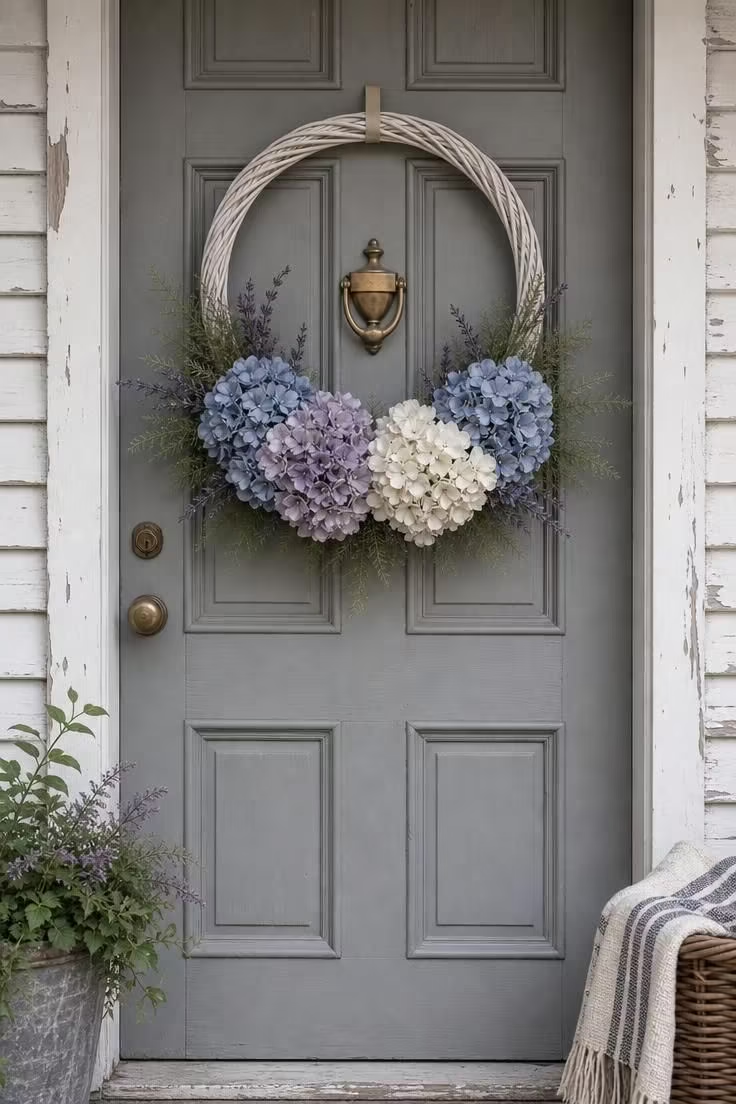
The half-wreath is one of the few door pieces that gets stronger with restraint.
By leaving the top of the hoop bare, the eye climbs the negative space and lands on the door hardware, which makes a brass knocker or a vintage door pull read like jewelry.
Hydrangea is doing real work here because the mophead shape mimics a cloud cluster, and three slightly different blue-to-cream tones keep the arrangement from going flat under bright sun.
A standard round summer wreath can swallow a narrow door, but the half profile lengthens the door visually and lets the paint color show.
Whitewashed rattan reads softer than raw rattan and pulls cooler under summer light, which keeps the piece from competing with the door color.
If your door faces south or west, a UV-resistant faux floral is worth the upcharge because bright purples and pinks fade fastest in direct sun.
Hang it with a clear over-the-door hook rather than a nail so you can swap it out by Labor Day.
Style Blueprint:
- 24-26 inch whitewashed rattan hoop
- UV-resistant faux hydrangea stems in three tonal blues and creams
- Dried lavender bundles and asparagus fern accents
- Clear over-the-door wreath hanger
- Unlacquered brass door knocker as a focal point
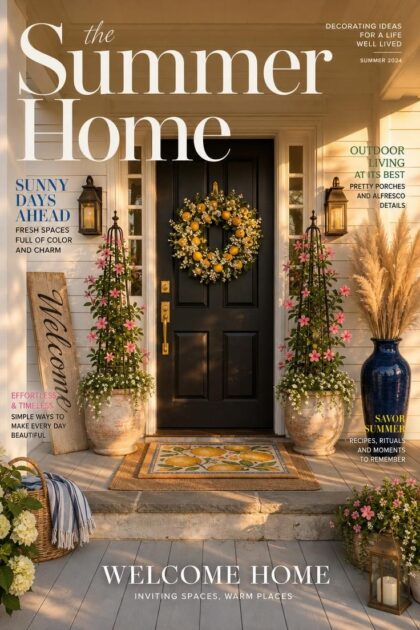
Whitewashed Terracotta Urns With Mandevilla on Iron Obelisks
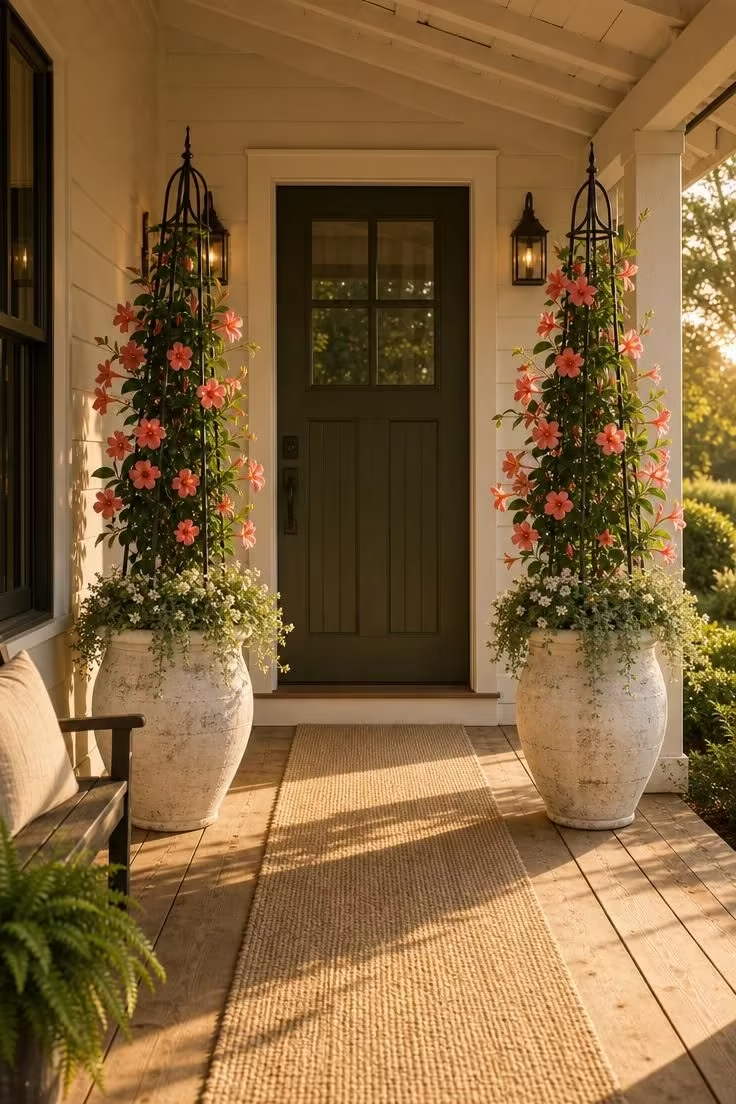
These summer planters work because they build height without bulk.
A pair of obelisks pulls the eye upward and adds an architectural line that most porches are missing, especially modest single-story ones where the door looks short against the roofline.
Mandevilla is one of the few flowering vines that loves direct heat and keeps blooming through August, which is when most spring annuals start to look stressed.
The coral against olive green is a deliberate complementary pairing, warm and cool in the same frame, and it photographs well in any light.
Bacopa and silver dichondra at the base soften the rim of the terracotta and prevent the “stick in a pot” look that bare obelisks fall into.
Whitewashing terracotta yourself with diluted white latex paint is a one-afternoon project that ages naturally over a season.
Style Blueprint:
- Matched pair of whitewashed terracotta urns, 24-28 inches tall
- 5-foot black wrought iron obelisks
- Mandevilla vines in coral or deep pink
- Ivory bacopa and silver dichondra “Silver Falls” as spillers
- Saucer trays underneath to protect porch wood
A Scalloped Citrus-Print Coir Mat Layered Over Chunky Jute
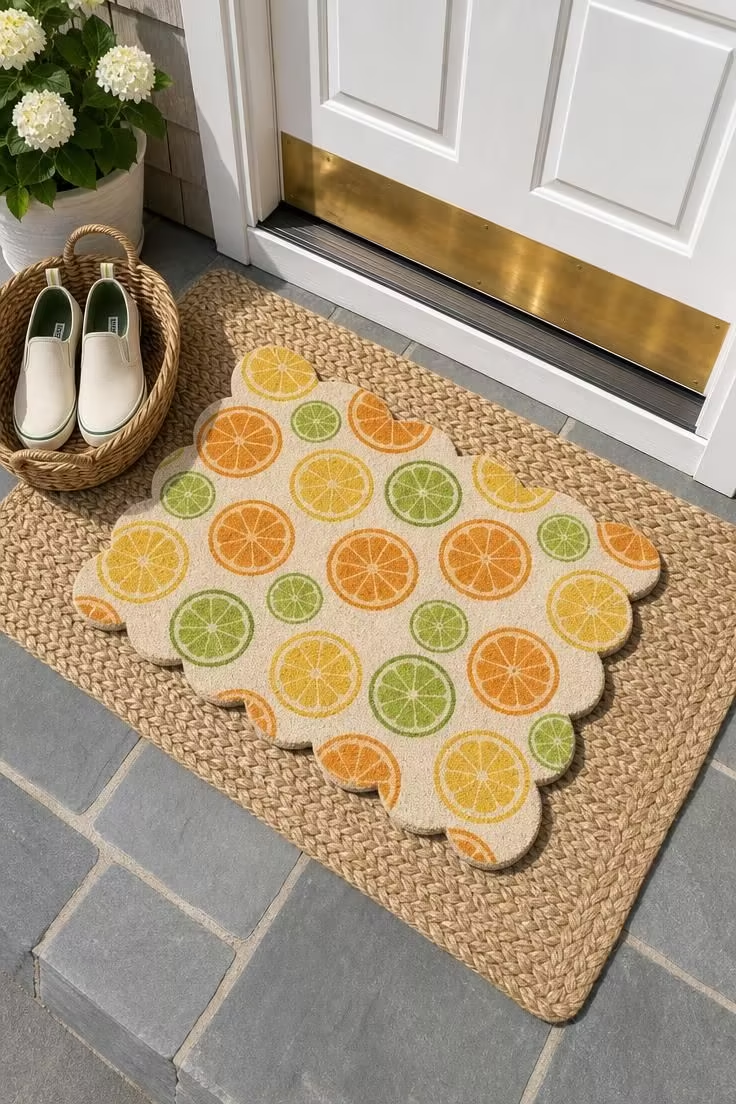
Layering mats is the single fastest summer move because it requires no plants, no painting, and no shopping for hardware.
The scale shift between the wide jute base and the smaller coir top adds depth that a single mat never has.
Citrus prints feel summer-specific without tipping into cliché the way pineapple or palm motifs sometimes do, and they sit comfortably on porches of almost any style from cottage to modern coastal.
Coir is the right top layer because it holds up to wet flip-flops, sandy feet, and afternoon thunderstorm rain in a way that cotton or wool never could.
Jute can mildew on uncovered porches, so this layering works best under a roof or deep overhang.
A scalloped edge does something subtle that straight-edge mats cannot, it softens the rectangular geometry of the door and step and gives the eye somewhere curved to land.
Replacing both mats together each season costs less than a single decorative wreath and refreshes the entire front entryway.
The basket of clogs in the shot is a styling cue, not a requirement, but small lived-in props read better in photos than empty space.
Style Blueprint:
- 3-by-5-foot chunky natural jute base rug
- Scalloped-edge coir mat with citrus print, 18 by 30 inches
- Optional small sea grass basket for styling
- Rubber rug pad underneath to keep both mats flat
- Outdoor broom kept nearby for daily sweep-offs
An Unlacquered Brass Pineapple Knocker on a Matte Black Door
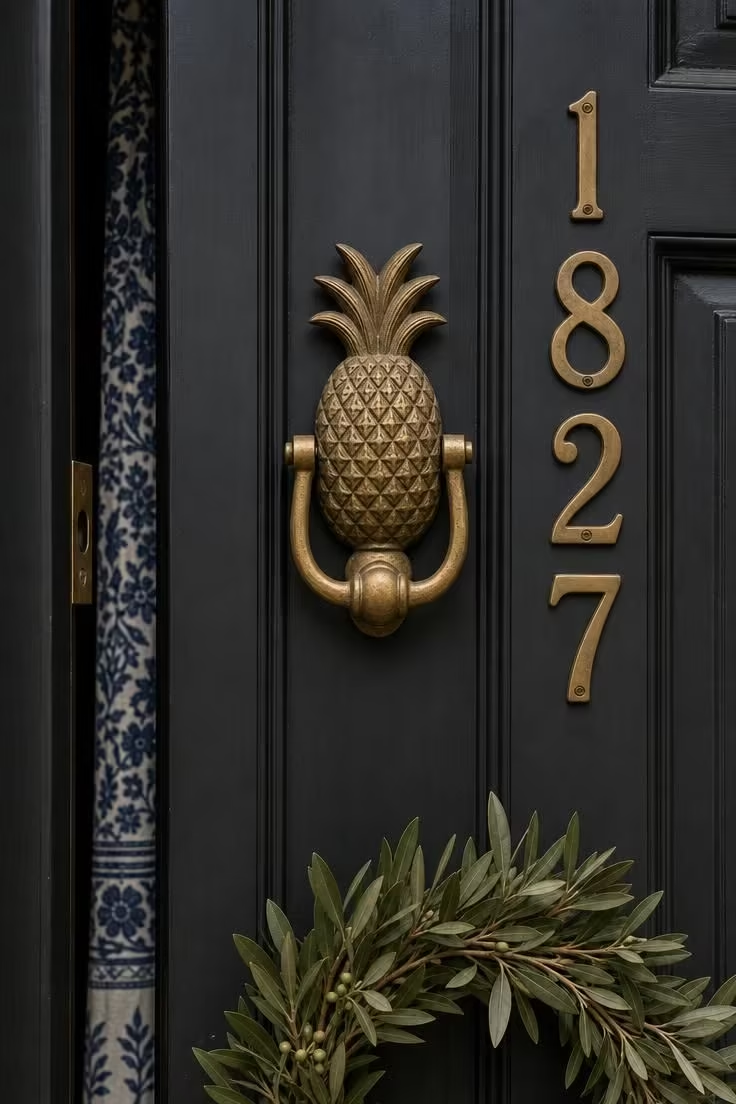
The door knocker is the most overlooked piece of summer front door decor and arguably the highest-impact upgrade for the dollar.
Brass against matte black is a near-universal combination that reads classic without being stiff, and unlacquered brass develops a living patina that improves every year.
A pineapple has been the colonial American symbol of welcome for three centuries, which gives the piece historical weight that pure ornamentation never carries.
Mounting it at chest height rather than the standard low position puts it in the natural sightline of an arriving guest.
Pairing the knocker with vertical brass house numbers in the same finish builds a small composition rather than two unrelated accessories.
Skip the temptation to polish unlacquered brass, the dull glow is the whole point.
Style Blueprint:
- Solid unlacquered brass pineapple door knocker, 6-8 inches tall
- 5-inch unlacquered brass house numbers, mounted vertically
- Matte black door paint (Benjamin Moore Black Beauty or similar)
- Tucked olive branch wreath at lower position
- Black powder-coated mailbox to repeat the matte finish
A Vintage Galvanized Milk Can Spilling Cosmos and Queen Anne’s Lace
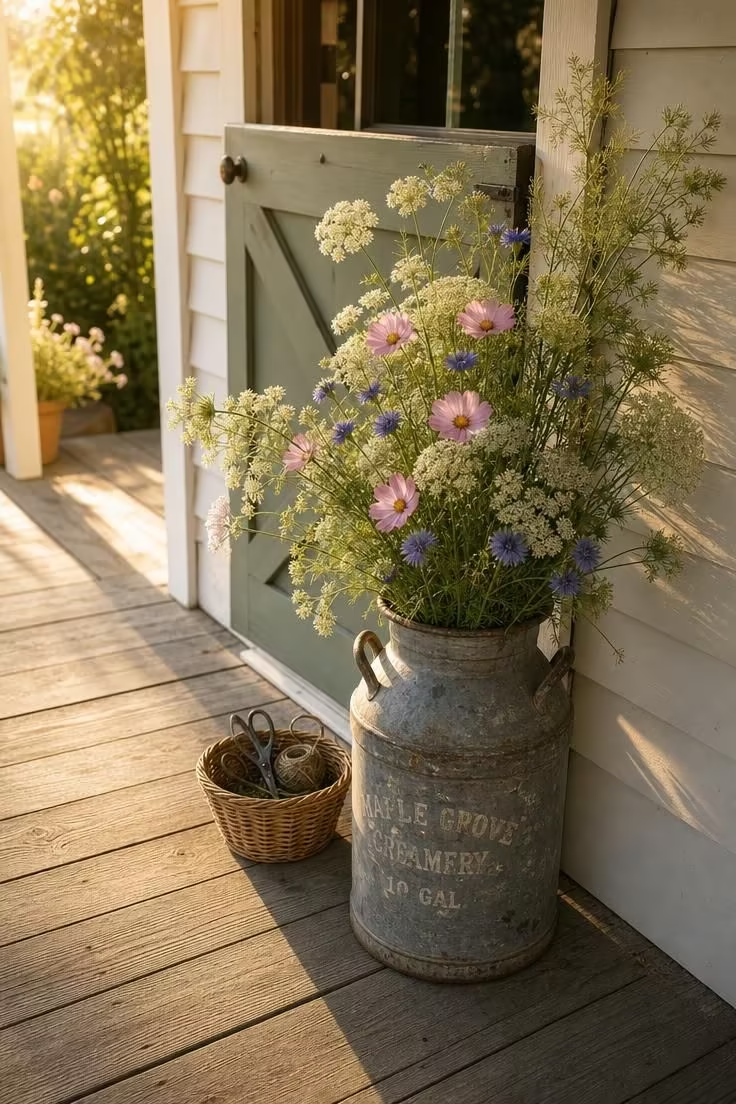
This is the floor-level alternative to a planter pair, and it works on porches too narrow for matched urns.
The milk can shape, wide-shouldered, tapered to the lip, holds a loose arrangement upright the way a vase cannot, with no floral foam or wiring needed.
Queen anne’s lace and cosmos are both cottage garden staples that bloom continuously through July and August, and either can be grown in a small backyard plot or bought as cut stems at most farmers’ markets.
The visual trick is the height-to-base ratio: an arrangement nearly as tall as the door reads dramatic, while anything shorter looks like a forgotten umbrella stand.
Asymmetry matters here too, a tight, symmetrical bouquet looks formal, while a loose one-shoulder lean looks like someone just came in from cutting flowers.
A vintage milk can with original patina costs less at estate sales and farm auctions than a reproduction at most home stores.
If real summer flowers feel like too much upkeep, the same shape works with a single tall branch of preserved eucalyptus and faux cosmos.
The trick is to keep the arrangement loose and slightly wild, tight, florist-style arrangements fight the rustic vessel.
Refresh the water every two days or the stems will lean, and dill smells extraordinary in summer heat.
Style Blueprint:
- Authentic vintage galvanized milk can, 10-15 gallon
- Mixed summer flowers in white, soft pink, and blue
- Feathery green filler such as dill, fennel, or sweet annie
- Floral water pick or simple plastic insert if the can leaks
- Small basket of garden shears as a styling prop
Design Pro-Tip: When pairing flowers with a colored door, pull one bloom color from the door paint and one from its complement on the color wheel. A sage door with white queen anne’s lace and soft pink cosmos works because pink is sage’s warm complement, the pairing reads designed even when the arrangement looks casual.
A Magnolia-Leaf Swag Cascading Down a Butter-Yellow Trimmed Door
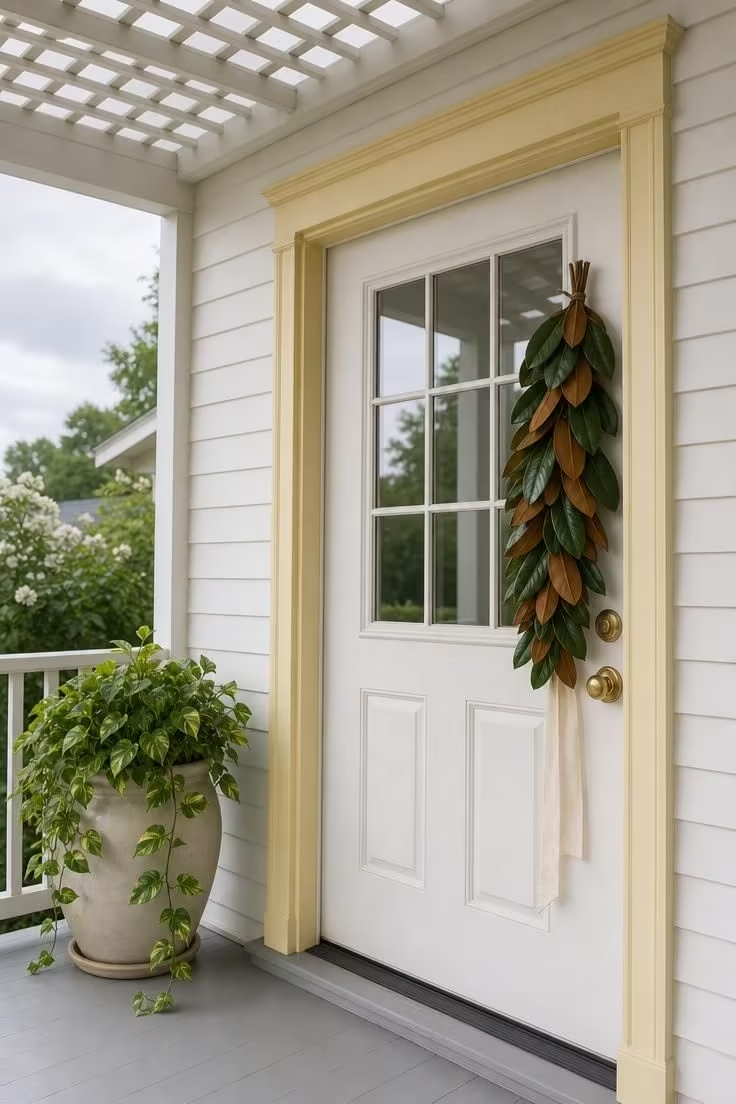
A vertical swag is the right move for a door that already has too much hardware competing for attention.
Magnolia is the rare leaf that looks intentional in every season because the two-tone face is dramatic on its own, no flowers required.
Butter-yellow trim is the unexpected color story here, it warms the cool magnolia tones the same way a candle warms a stone room.
Vertical compositions also draw the eye up, which makes a standard 80-inch door appear taller and the porch ceiling appear higher.
A traditional round wreath would fight a busy door, while a swag lets the door breathe and adds one strong line of texture instead.
Preserved magnolia stems hold their color and shape for two to three seasons if kept under a covered porch and out of direct rain.
A simple cream silk ribbon at the bottom is the only embellishment needed, anything more reads holiday.
Style Blueprint:
- 36-inch preserved magnolia leaf swag
- Cream silk ribbon, 2 inches wide
- Single decorative hook or 3M outdoor adhesive hook
- Butter-yellow trim paint (Benjamin Moore Hawthorne Yellow as a starting point)
- One contrasting planter to balance the asymmetry
A Faux Lemon Wreath on a Slate-Blue Dutch Door
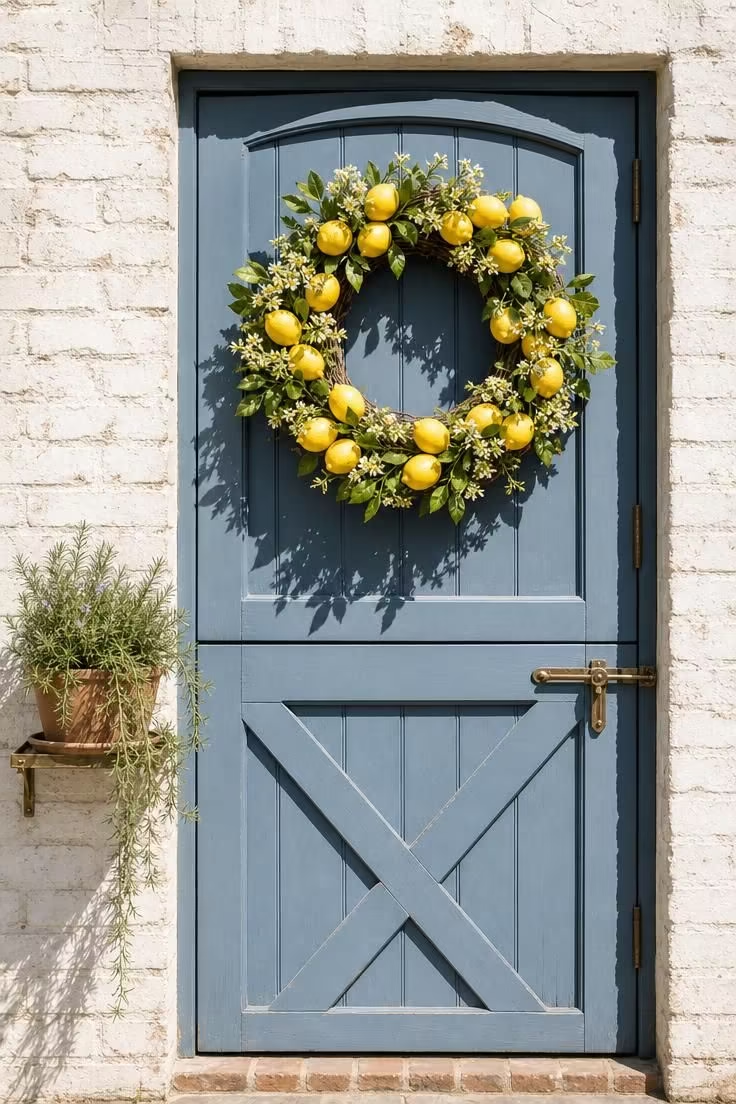
The lemon wreath is the strongest single-fruit choice for summer because lemons read seasonal without committing to a specific month.
Yellow on slate blue is a built-in winner, they sit opposite each other on the color wheel and brighten each other on sight.
A Dutch door is its own visual event, and putting the wreath only on the upper half preserves the door’s character instead of swallowing it.
The grapevine base matters more than people expect; it adds the rough texture that prevents an all-fruit wreath from looking plastic or candy-like.
White waxflower or tiny faux daisies tucked between the lemons break up the yellow and add a third color that reads luminous in strong sun.
A small clay pot on the Dutch door’s brass shelf is a styling detail almost no one uses, rosemary, trailing thyme, or oregano all work and all smell wonderful when a guest leans in.
Lemon wreaths show their plastic origins under harsh light if the lemons are too uniform, so look for sets with slight color variation, mottled skin texture, and small green stem caps.
Two seasons is the realistic lifespan for sun-exposed faux fruit before the yellows turn chalky.
Style Blueprint:
- 24-inch natural grapevine wreath base
- 18-24 realistic faux lemons with stems and varied color
- Faux lemon leaf stems and white waxflower clusters
- Slate-blue door paint (Sherwin-Williams Granite Peak or Benjamin Moore Newburyport Blue)
- Small clay pot of fresh herbs on the Dutch door shelf
Concrete Sphere Planters Holding Tight Rosemary Topiaries
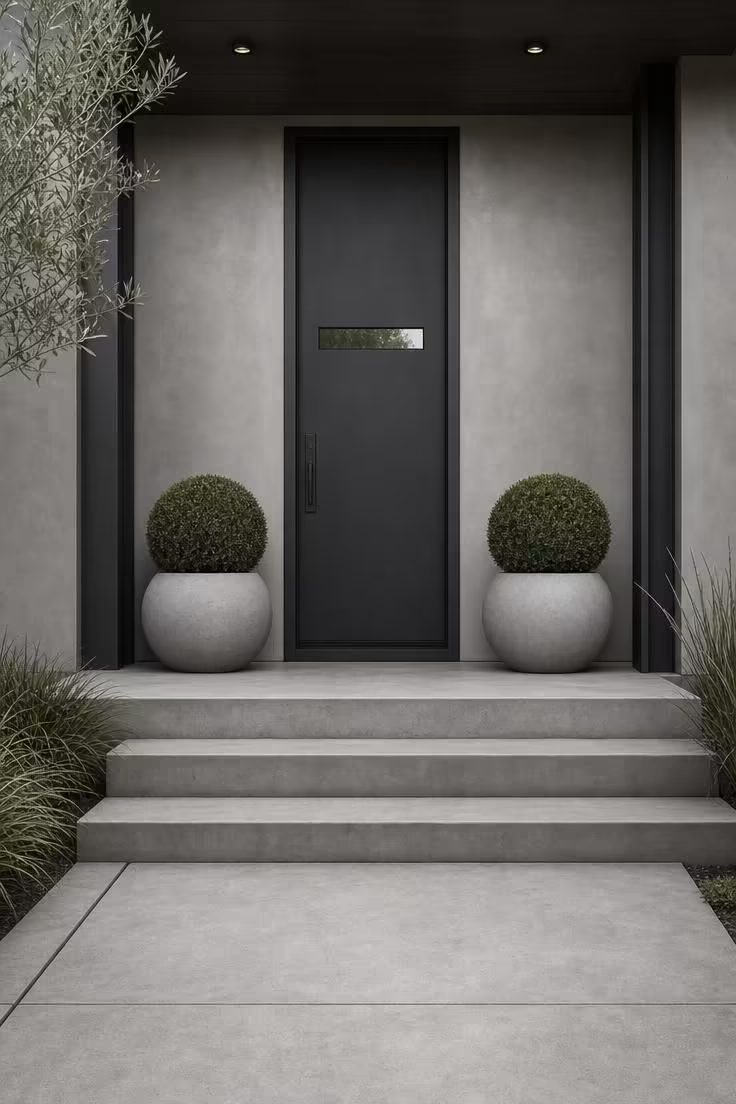
Spheres are the most under-used planter shape, and they pair beautifully with rectangular modern doors because the contrast in geometry sharpens both.
Concrete planters anchor a porch the way no lightweight resin ever can, there is a physical weight that reads on camera and in person.
Rosemary as a topiary is a Mediterranean tradition that handles full sun, drought stretches, and porch-pot conditions far better than the more common boxwood.
The smell alone is reason enough, every time a guest brushes past, the porch releases that warm pine-citrus scent.
Tight clipping is the whole project; an unkempt rosemary sphere looks like a forgotten houseplant, but a sharp one looks like architecture.
Style Blueprint:
- Two matched matte concrete sphere planters, 18-22 inches
- Pre-clipped rosemary topiary spheres, 24-30 inches tall
- Saucer drainage trays underneath
- Sharp pruning shears for monthly touch-up trims
- Slow-release organic fertilizer pellets for the growing season
Black Birdcage Lanterns on Iron Hooks Flanking a Coral Door
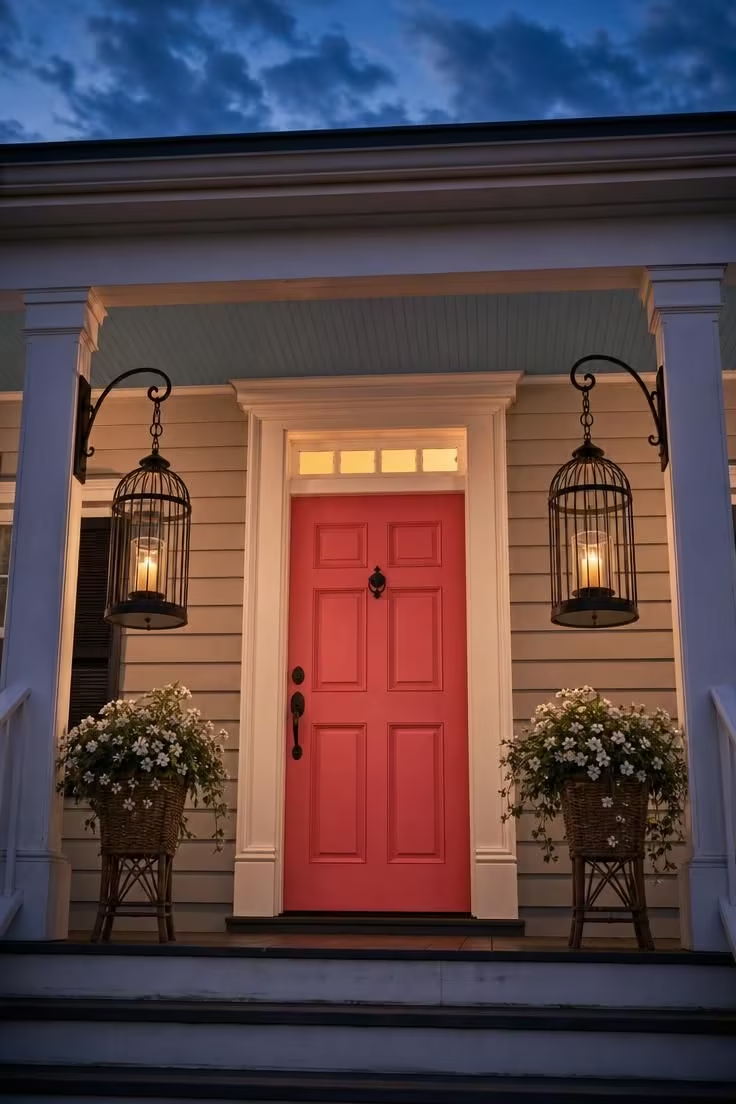
Lighting is the part of summer porch decor most homeowners skip, and it costs the porch hours of usable evening time.
Birdcage lanterns work because they read sculptural during the day and functional at night, doing double duty that pure decor pieces never manage.
Hanging them from shepherds-hook brackets rather than sitting them on the floor opens the porch visually and keeps the path to the door clear.
Coral against haint blue is a true Southern porch pairing, coral pulls warmth from the sun and haint blue cools it back down overhead.
Battery-operated LED flame bulbs have improved enormously and now flicker convincingly without the fire risk of real candles.
The trailing white impatiens beneath each lantern catch the dim glow at night and effectively serve as a second tier of low light.
For unscreened porches in mosquito country, citronella oil inserts work inside open-bottom lanterns; for screened porches, skip them.
Style Blueprint:
- Two matched black metal birdcage lanterns, 24-30 inches tall
- Black iron shepherds-hook wall brackets or post brackets
- Large battery-operated LED flame pillar bulbs with timer function
- Footed rattan planters with white impatiens beneath
- Coral door paint (Sherwin-Williams Coral Reef or Benjamin Moore Coral Spice)
Design Pro-Tip: Hang any porch light fixture so the bottom of the lantern sits between 60 and 66 inches from the floor. Lower and tall guests duck under it; higher and the glow lights only the ceiling instead of the path to the door.
A Bleached Driftwood Welcome Sign Leaning Against Clapboard
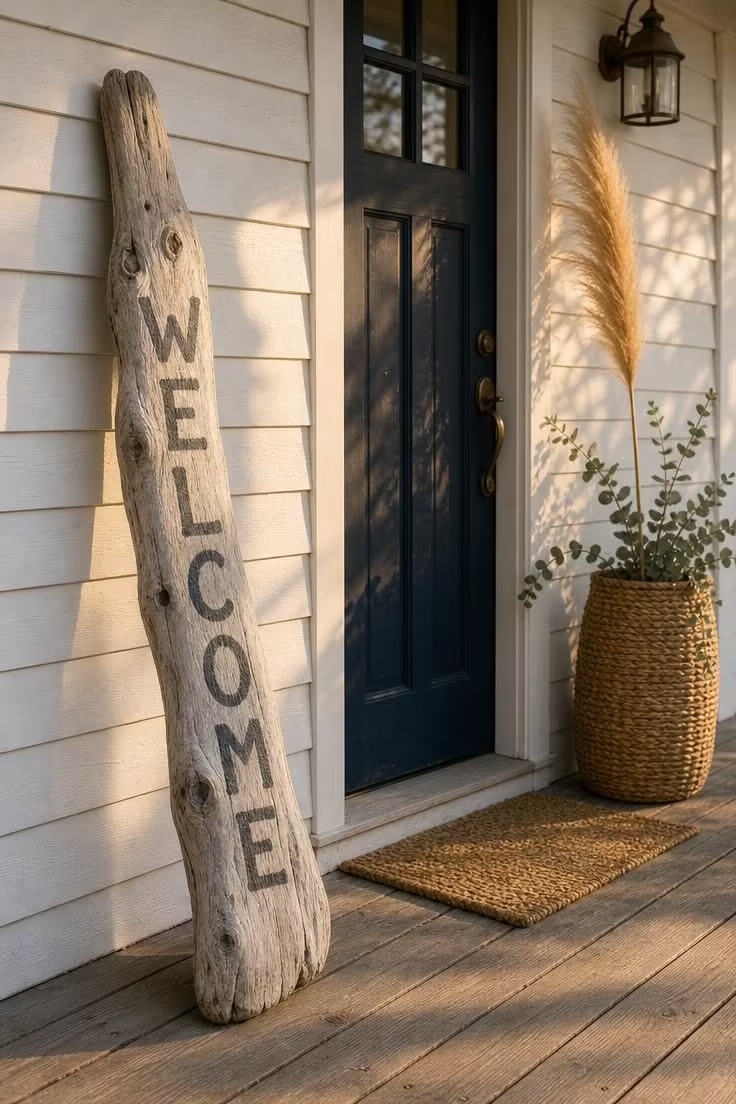
The leaning sign is one of the easiest ways to add height and personality without committing to a permanent wall mount.
Driftwood specifically reads coastal without crossing into theme-park kitsch the way starfish and ship wheels do.
The natural curve of the wood is the entire point, straight, milled lumber would feel staged, while organic shape reads found and meaningful.
Hand-painted lettering matters because vinyl decals are immediately readable as commercial product even from across a yard.
Block lettering in faded charcoal looks aged on day one, which is the trick.
Pairing the sign with one tall textural element on the other side of the door, pampas grass, eucalyptus, or a tall single olive branch, creates an asymmetric balance that feels intentional.
Driftwood from a beach is the ideal source if you live coastal, but bleached fence boards or sandblasted reclaimed timber from a lumberyard can be substituted with similar results.
Two coats of matte exterior polyurethane on the back side of the painted face will hold up to summer rain and humidity without yellowing the natural wood color.
The combination here is the strongest summer outdoor decor move for coastal and farmhouse homes alike.
Style Blueprint:
- 4-6 foot piece of bleached driftwood or sandblasted reclaimed timber
- Charcoal exterior paint pen or fine brush for lettering
- Matte exterior polyurethane sealer
- Tall seagrass floor basket on opposite side of door
- Single dramatic plant stem such as pampas grass or eucalyptus
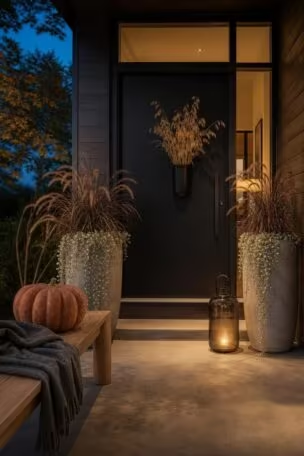
Pampas Grass and Bunny Tails in a Cobalt Glazed Floor Vase
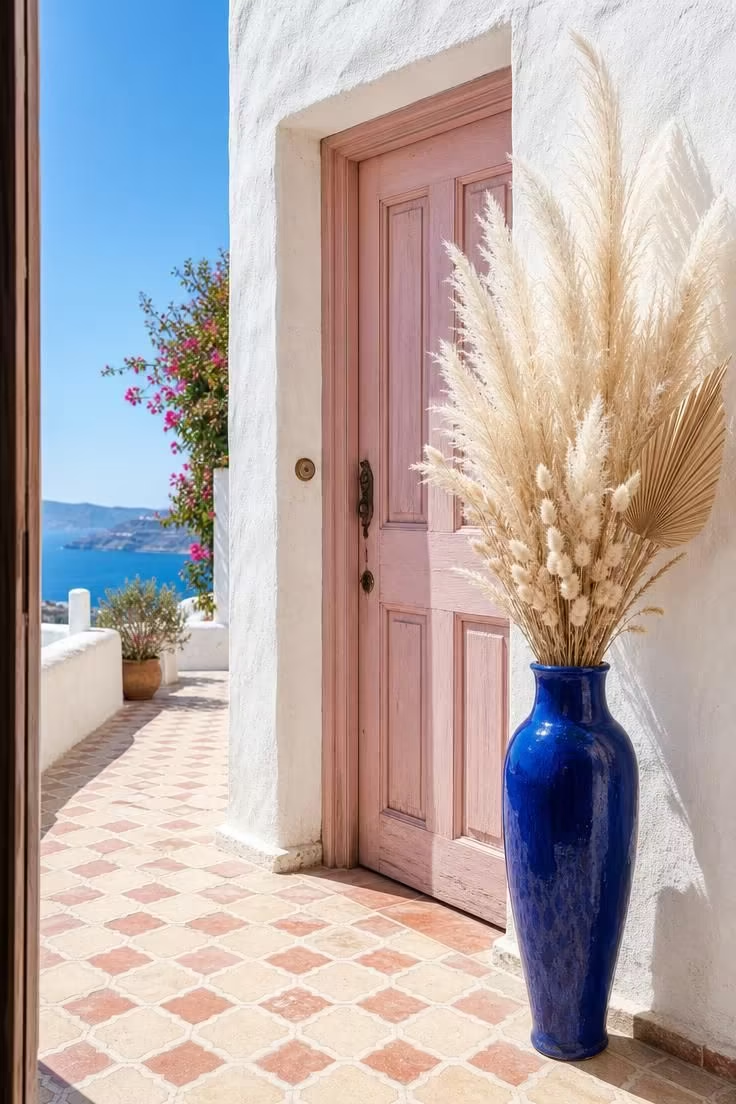
Dried grasses are the summer cheat code because they look fuller in summer light than they ever do in fall.
A single tall floor vase is more architectural than any pair of small planters, and it leaves the porch floor open for traffic.
Cobalt blue is a difficult color to place indoors but a natural outdoors, where the sky and the strong sun give it context.
Pampas plus bunny tails is a deliberate scale shift, the wispy big-and-small contrast keeps the arrangement from reading like a single plant.
A dried palm frond as a single accent line breaks the soft texture with one hard, dramatic shape and prevents the bouquet from looking precious.
Dried grasses last 12-18 months under a covered porch, and a quick burst of hairspray makes them shed less.
Style Blueprint:
- Tall narrow cobalt or indigo glazed ceramic floor vase, 24-30 inches
- Three to five large cream pampas grass plumes
- Bunch of beige or natural bunny tail grasses
- Single dried palm frond or large monstera leaf
- Hairspray to seal the dried plumes against shedding
Conclusion
Summer front door decor works when the pieces share a clear color story and at least one strong vertical line, whether that comes from a tall planter, a leaning sign, or a hanging lantern.
The fastest moves are the ones layered on top of existing architecture, a fresh summer doormat, a swapped wreath, a new pair of summer planters, or a hanging door basket overflowing with hydrangea, because they refresh the front entryway without committing to permanent change.
The deeper moves involve repainting the door, adding hardware, or building a front porch decor routine that turns over every June.
Pick the angle that suits your porch’s existing bones and the light it gets, and trust that one strong, specific idea always reads better than five competing ones.
The reward is small but real: every arrival, every package drop, every quiet evening on the porch becomes a little more inviting for the entire summer.