This post may contain affiliate links. If you make a purchase through these links, we may earn a commission at no additional cost to you.
A sloped backyard asks you to think in layers, not just in square footage.
The grade that feels like a headache is actually a built-in framework for terraced gardens, sunken gathering spots, and stone pathways that would look forced on flat ground.
These 11 sloped backyard landscaping ideas pair real materials with the natural rise and fall of the land, giving you scenes you can plan around this season.
Whether you are dealing with a gentle roll or a steep hillside garden, every idea here is something you can picture, price out, and build.
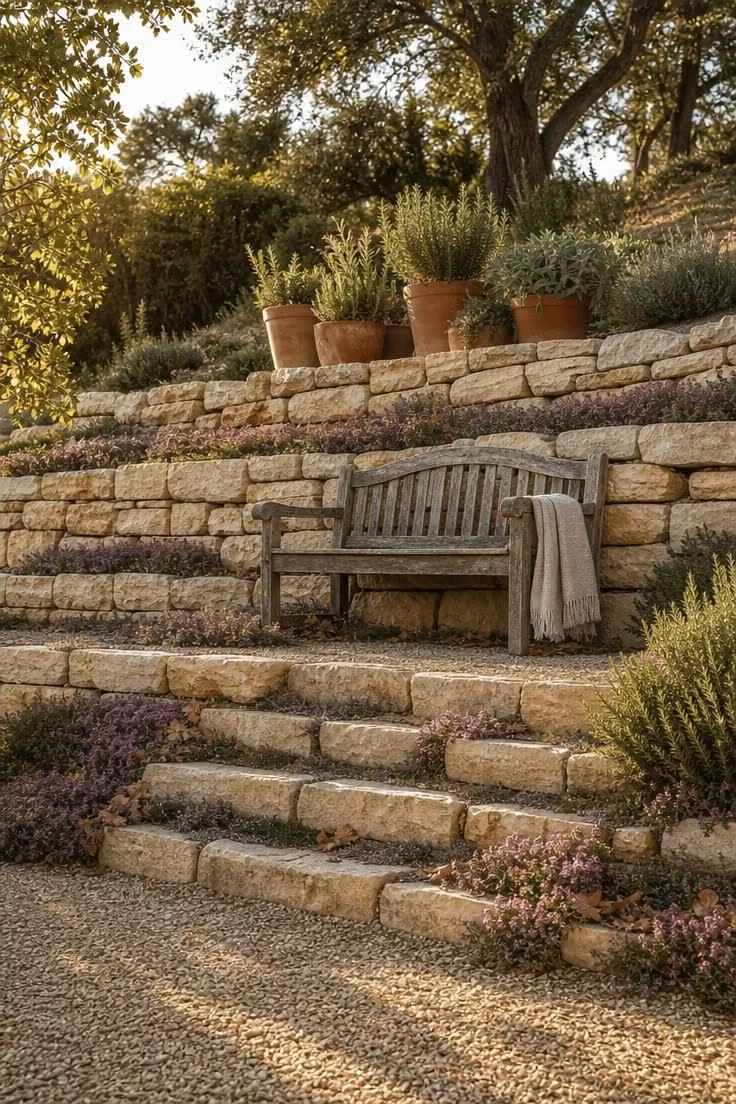
Stacked Limestone Terraces With Creeping Thyme Treads
The first thing you notice is the smell, not the stonework.
Creeping thyme releases fragrance every time someone steps on it, which turns a simple set of garden steps into something sensory.
Dry-stacked limestone does not need mortar, so water drains straight through the wall face instead of building pressure behind it, a practical choice among drainage solutions that also happens to look weathered and honest from day one.
Each terrace only needs to be about two feet tall on a moderate slope, which keeps the project in the range of a confident weekend builder.
The pale honey tone of limestone catches late light in a way that darker stone cannot, warming the entire slope during the last hour before dusk.
Planting aromatic herbs on the top tier adds a kitchen-garden purpose to what might otherwise feel like pure decoration.
This is one of those sloped backyard landscaping approaches that gets better every year as the thyme fills in and the stone develops a patina.
Style Blueprint:
- Dry-stacked pale limestone blocks, roughly 6 by 12 inches each
- Creeping thyme plugs planted 6 inches apart in step joints
- Crushed gravel landing pad at the slope base
- Terra-cotta pots with rosemary and sage on the top terrace
- Weathered oak bench with a linen throw
A Dry-Laid Flagstone Staircase Flanked by Dwarf Blue Fescue
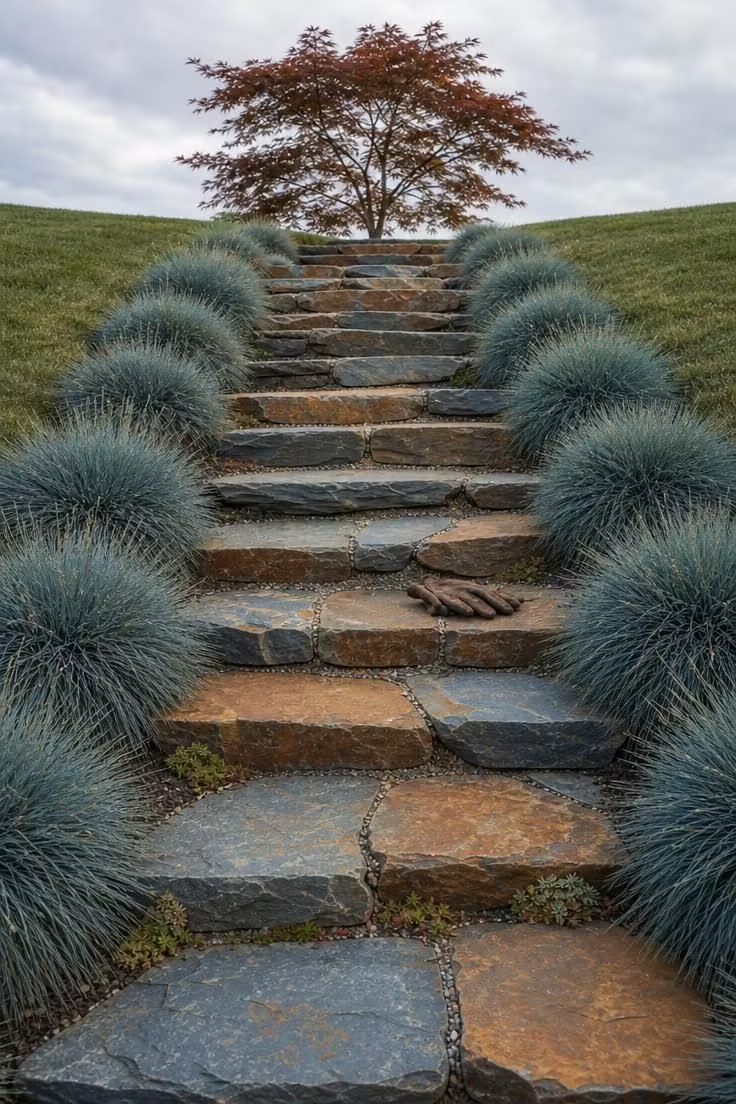
Flagstone laid without mortar moves with the ground through freeze-thaw cycles instead of cracking against it.
The irregular slab sizes make each step feel discovered rather than engineered, which suits a hillside garden better than poured concrete treads.
Dwarf blue fescue stays compact at about ten inches tall, so it never flops over the stone edges or blocks the path.
Its steel-blue color reads as cool even on warm days, pulling the eye along the corridor and up the slope.
Setting the slabs at slightly varying widths slows the climb, making the staircase feel more like a stroll than a workout.
One Japanese maple at the top gives you a destination, a reason to walk up beyond just getting to the other side of the yard.
Style Blueprint:
- Irregular Pennsylvania bluestone flagstone slabs, 2 to 3 inches thick
- Fine crushed gravel swept into slab joints
- Dwarf blue fescue plugs in staggered clusters flanking each side
- Single Japanese maple at the top landing
- Low sedum groundcover in lower tread cracks
Split-Level Pea Gravel Patio With a Corten Steel Fire Ring
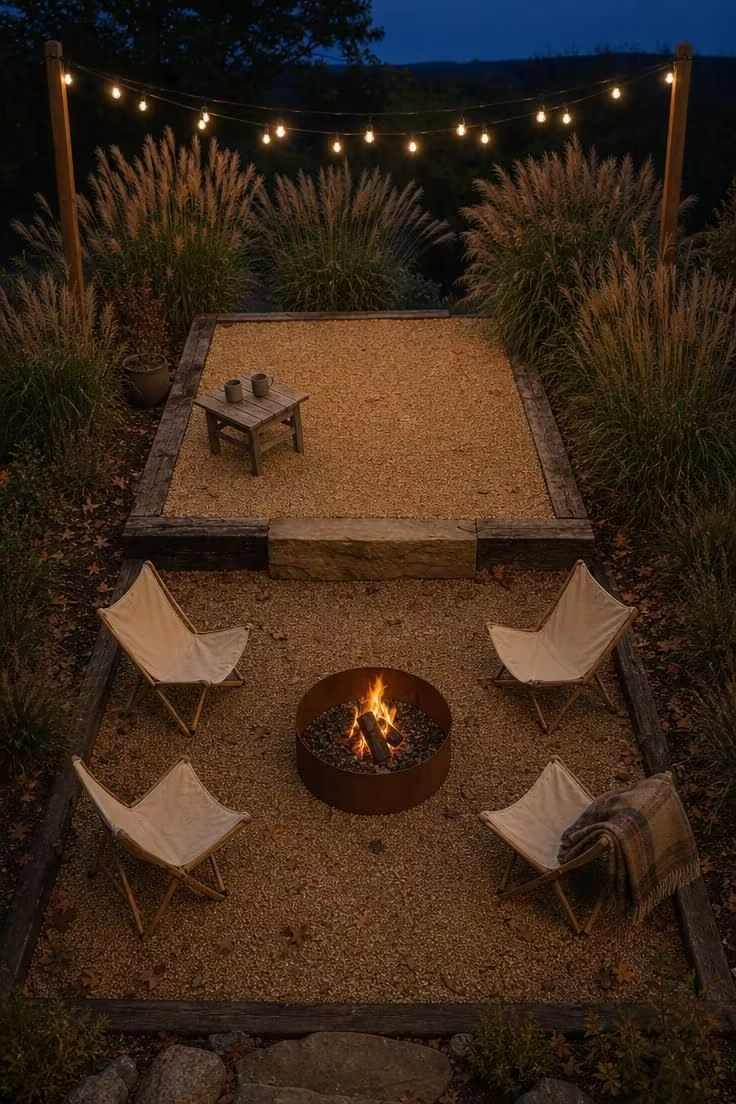
Splitting a patio into two levels on a slope costs less than building a single large retaining wall to create one flat plane.
The eighteen-inch drop between levels creates a natural separation, giving the lower fire area a sense of enclosure that a flat backyard patio cannot match.
Corten steel develops its protective rust layer within a few months outdoors, so the fire ring actually improves with weather rather than fighting it.
Pea gravel drains instantly, which matters on a slope where water runs fast after a storm, making this a low-maintenance drainage solution.
The railroad-tie border keeps the gravel contained without looking overly manicured.
Canvas camp chairs sit well on gravel because their wide feet do not sink the way narrow metal legs would.
Stringing lights between two cedar posts is a ten-minute job that changes the entire feel of the space after dark.
This kind of outdoor living space works on slopes that would otherwise sit unused between the house and the fence line.
Style Blueprint:
- Warm tan pea gravel, 3/8-inch diameter, compacted and raked
- Corten steel fire ring, 30-inch diameter
- Weathered railroad-tie border edging
- Low canvas camp chairs with wide feet
- Incandescent string lights on cedar posts
Pressure-Treated Timber Retaining Walls Backed by Knockout Roses
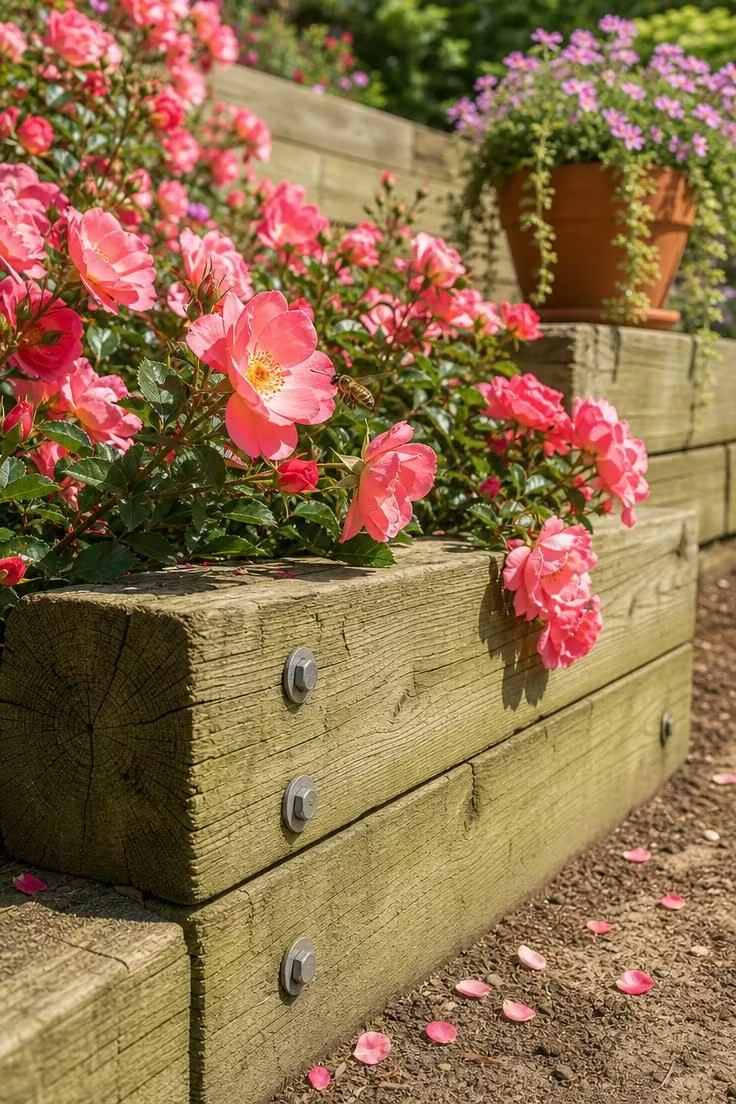
Pressure-treated 6×6 timbers are the most affordable retaining wall material you can buy at a home center, and they stack fast with landscape spikes.
A three-tier timber wall on a moderate slope can go up in a single weekend with two people and a level.
Knockout roses are nearly impossible to kill, which matters on a slope where irrigation can be inconsistent and soil dries unevenly.
Planting them directly behind the top timber means their blooms cascade forward over the wall face, softening the industrial look of treated lumber.
The slight green tint of new treated wood fades to a warm silvery tone within one season, blending better with the garden as it ages.
Bolt heads left exposed on the face add an honest, utilitarian texture that reads as intentional rather than unfinished.
This is the budget entry point for sloped backyard landscaping, proof that a retaining wall does not need to be limestone or fieldstone to look good.
Style Blueprint:
- Pressure-treated 6×6 landscape timbers, stacked and bolted
- Knockout roses in coral pink, planted 24 inches apart behind the top tier
- Compacted soil base with landscape fabric behind the wall
- Terracotta accent pot with trailing verbena
- Landscape spikes or timber screws for structural fastening
Design Pro-Tip: On any slope steeper than a 3:1 ratio (three feet of horizontal run for every one foot of vertical rise), a retaining wall taller than two feet should have a perforated drain pipe behind it, bedded in gravel. Without that drainage layer, water pressure builds behind the wall after heavy rain and can push even heavy stone out of alignment within a few seasons.
A Meandering Crushed Granite Path Through Switchback Lavender Rows
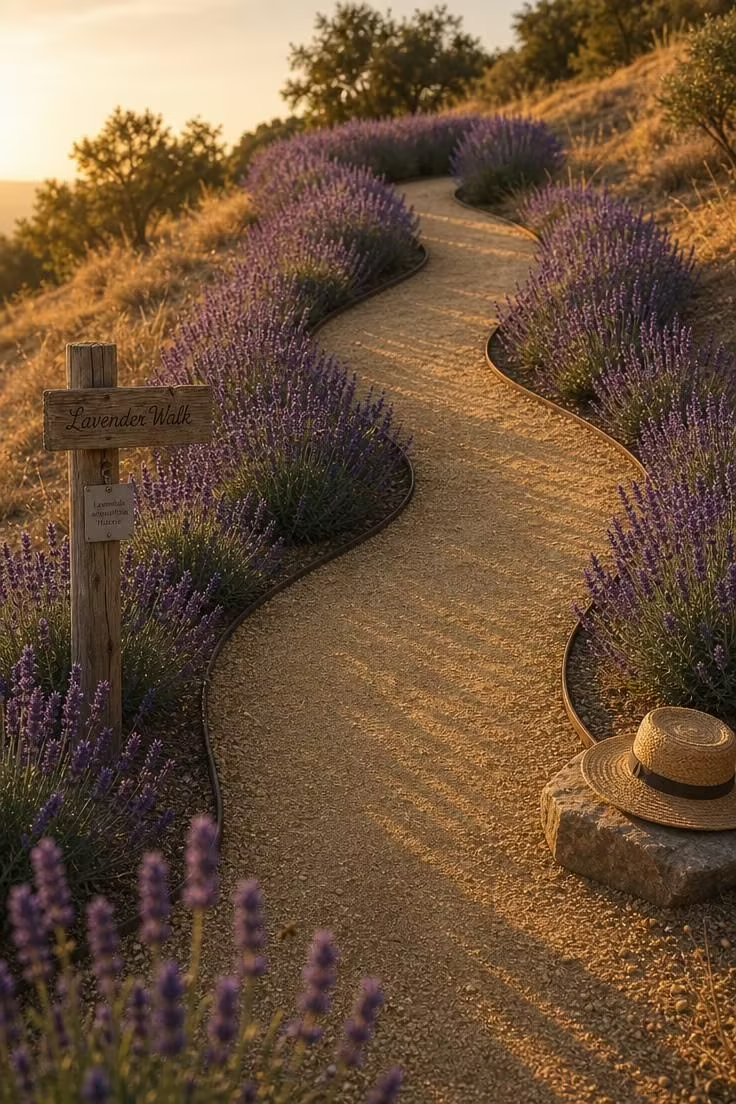
Switchbacks do something straight paths cannot: they slow you down enough to notice what is growing on either side.
On a gentle slope, a meandering path also reduces the perceived grade, making the climb feel easy for older visitors or anyone carrying a drink.
Decomposed granite compacts firmly underfoot but still drains well, which makes it a practical surface for a hillside stone pathway alternative.
Lavender rows on both sides of each turn create a hedge effect that guides foot traffic without fencing.
The purple-against-gold color combination works because it sits on opposite sides of the color wheel, producing contrast without clashing.
Style Blueprint:
- Decomposed granite path, 3 feet wide, with steel landscape edging
- English lavender planted 18 inches apart in double rows along each switchback
- Weathered wood signpost or zinc plant markers at turns
- Flat stepping stones at rest points along the path
Concrete Block Seat Wall Carved Into the Hillside With Cushion Pads
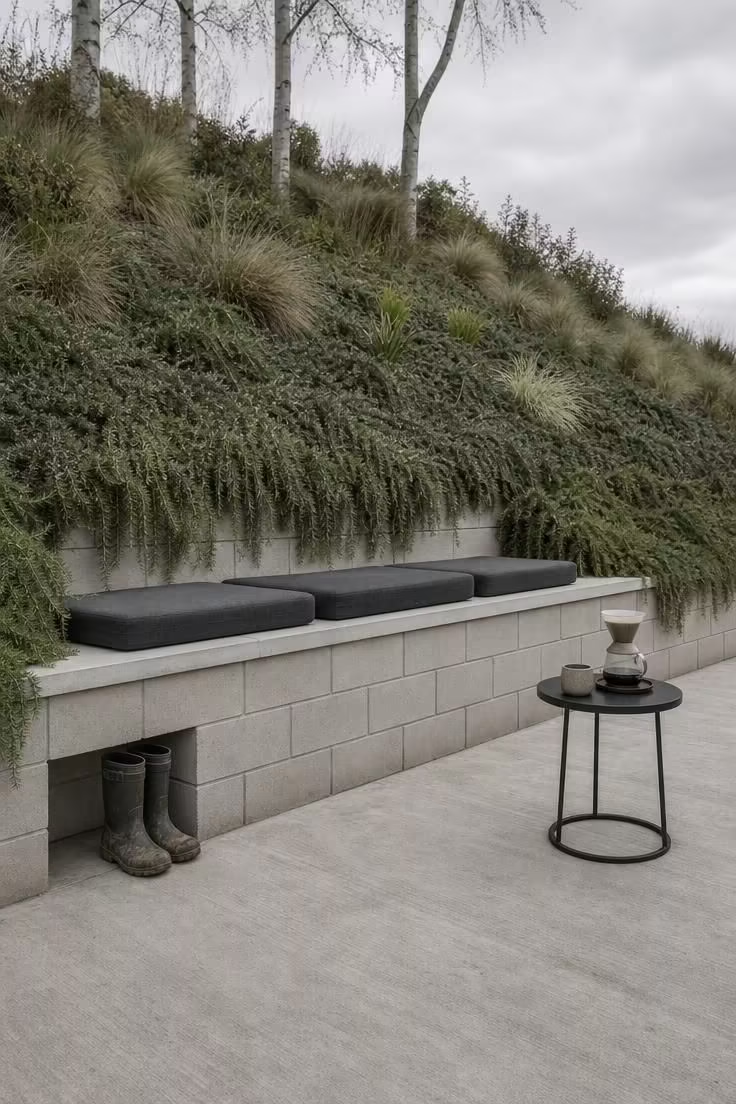
A seat wall built into the slope does two jobs at once: it holds back the earth and it gives people somewhere to sit without dragging furniture onto a hill.
Concrete masonry units cost a fraction of natural stone and lay up fast because they are uniform, which keeps labor time low on a project where access can be difficult.
The flat concrete cap on top creates a smooth surface that makes cushion pads practical, turning a structural wall into a comfortable perch.
Creeping rosemary trailing down the slope face behind the wall softens the hard edge and releases scent when brushed.
The level pad in front of the wall needs to be at least eight feet deep so people can stretch their legs without sliding down the grade.
Charcoal linen cushion covers in an outdoor-rated fabric hold up through rain and sun, and the dark tone hides dirt from garden use.
This is a terraced garden approach that trades planting beds for gathering space, a better fit for households that entertain more than they garden.
On steep grades, this kind of seat wall can replace an entire retaining wall system while adding a function that stone alone cannot offer.
Style Blueprint:
- Smooth-faced concrete masonry units in pale dove tone, stacked and capped
- Flat poured concrete cap for seating surface
- Charcoal linen outdoor cushion pads, 24 inches deep
- Brushed concrete pad at the wall base, 8 feet minimum depth
- Creeping rosemary planted along the slope face behind the wall
Cedar Post Railing Along a Gravel-and-Timber Stepped Walkway
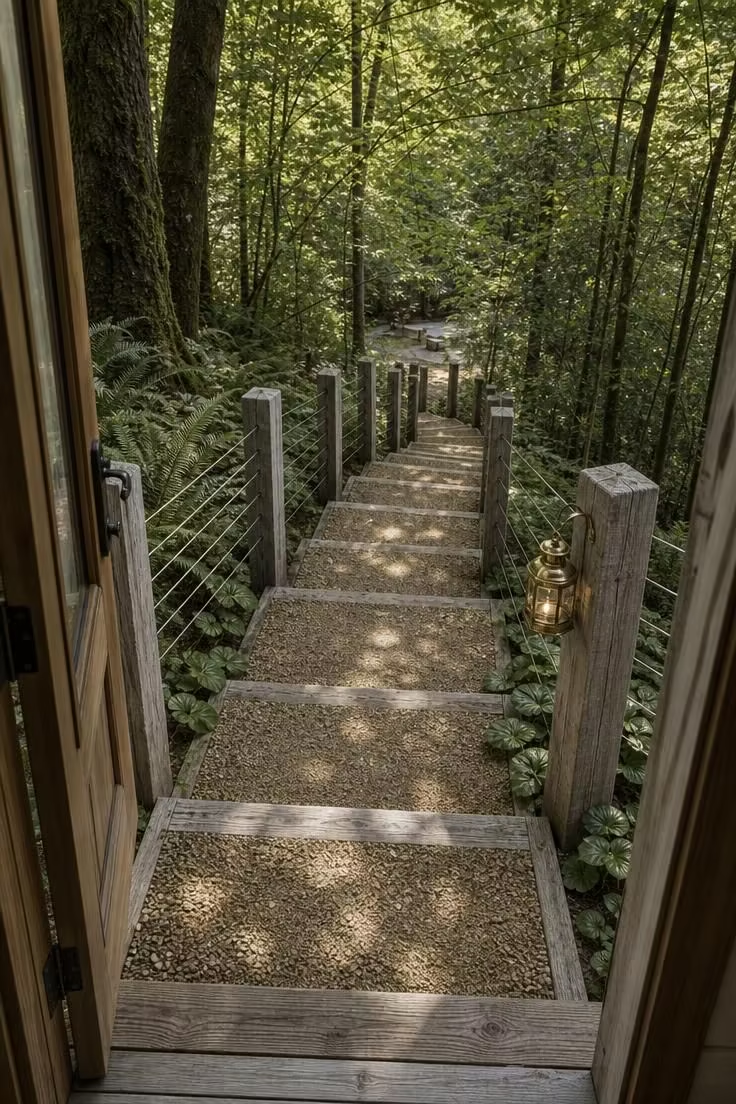
Running a walkway diagonally across a slope instead of straight down it cuts the effective grade in half, making each step shallow enough to take without gripping a rail.
The cedar posts serve a visual purpose as much as a safety one, giving the path a sense of structure that loose gravel alone would lack.
Stainless steel cable between posts keeps sightlines open, so the walkway feels like it floats through the forest floor rather than walling it off.
Landscape timber risers hold the gravel treads in place on each step, preventing washout during heavy rain.
Sword ferns along the edges grow tall enough to frame the path without encroaching on the walking surface.
A single brass lantern on a post marks the entrance and catches light well into the evening, making these garden steps safe after dark.
Style Blueprint:
- Rough-hewn cedar posts, 4 inches square, aged to silver tone
- Horizontal stainless steel cable railing between posts
- Landscape timber risers with compacted crushed gravel treads
- Sword ferns and wild ginger planted along the slope edges
- Brass lantern hung from the top post
A Sunken Conversation Pit at the Base of a Boulder-Edged Slope
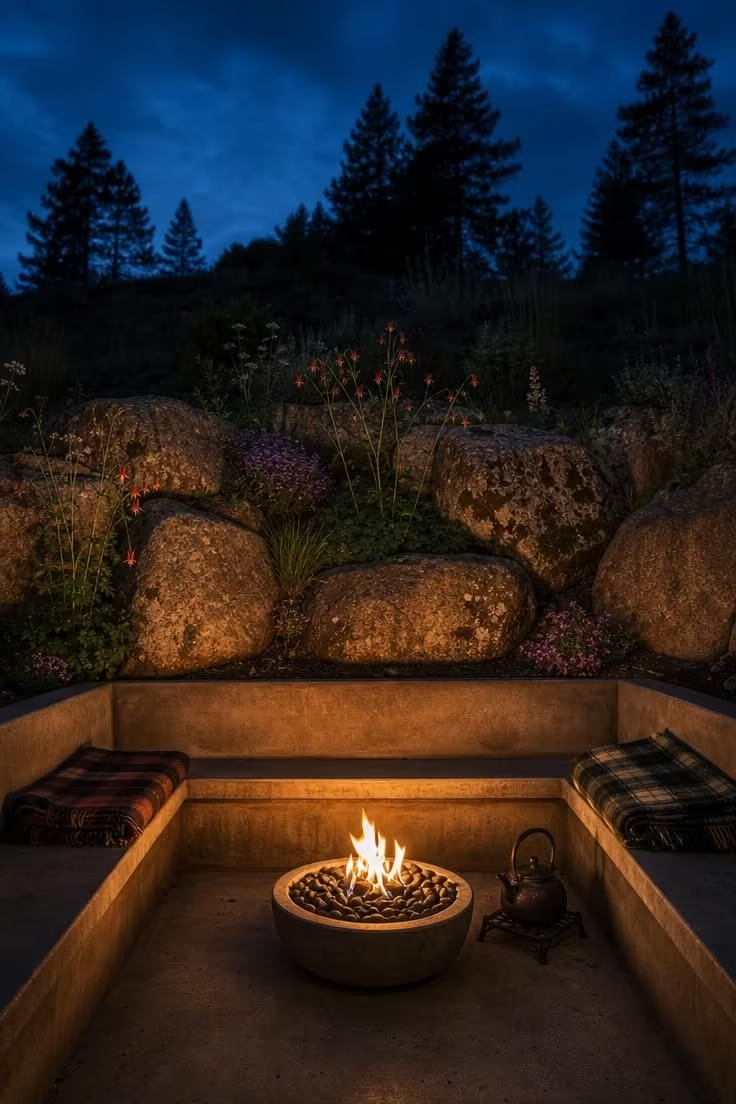
Sinking a seating area two feet below the surrounding grade at the base of a slope produces shelter from wind that no fence or wall can match.
The boulders along the rim do structural work, holding back the slope face while looking like they have always been there.
A gas fire feature at the center keeps the pit usable from early spring through late fall without the ash and smoke management of a wood-burning setup.
Poured concrete benches built into the excavation walls cost less than freestanding furniture and never blow over in a storm.
The U-shaped bench layout faces everyone inward, which makes conversation natural even in a group of six or eight.
Native plants tucked between boulders root into the slope soil and help stabilize the edge without formal planting beds.
Wild columbine and creeping phlox both handle partial shade and lean soil, exactly the conditions found at the base of most hillside gardens.
The two-foot drop below grade also means the fire glow stays contained within the pit, creating a lantern effect visible from the house above.
Wool blankets stored on the bench signal that this is a space meant for lingering, not just passing through on the way to another part of the outdoor living space.
Style Blueprint:
- Round gas fire feature, 20 inches diameter, with black river stones
- Large irregular granite boulders, 18 to 30 inches tall, along the pit rim
- Native plantings (wild columbine, creeping phlox) between boulders
- Wool plaid blankets and cast iron trivet as lifestyle props
Design Pro-Tip: When placing boulders on a slope, bury at least one-third of each stone below grade so it looks rooted rather than perched. A boulder sitting on the surface reads as decoration. A boulder sunk into the earth reads as geology, and that difference changes how the entire slope feels.
Mortared Fieldstone Retaining Wall With Integrated Planter Pockets
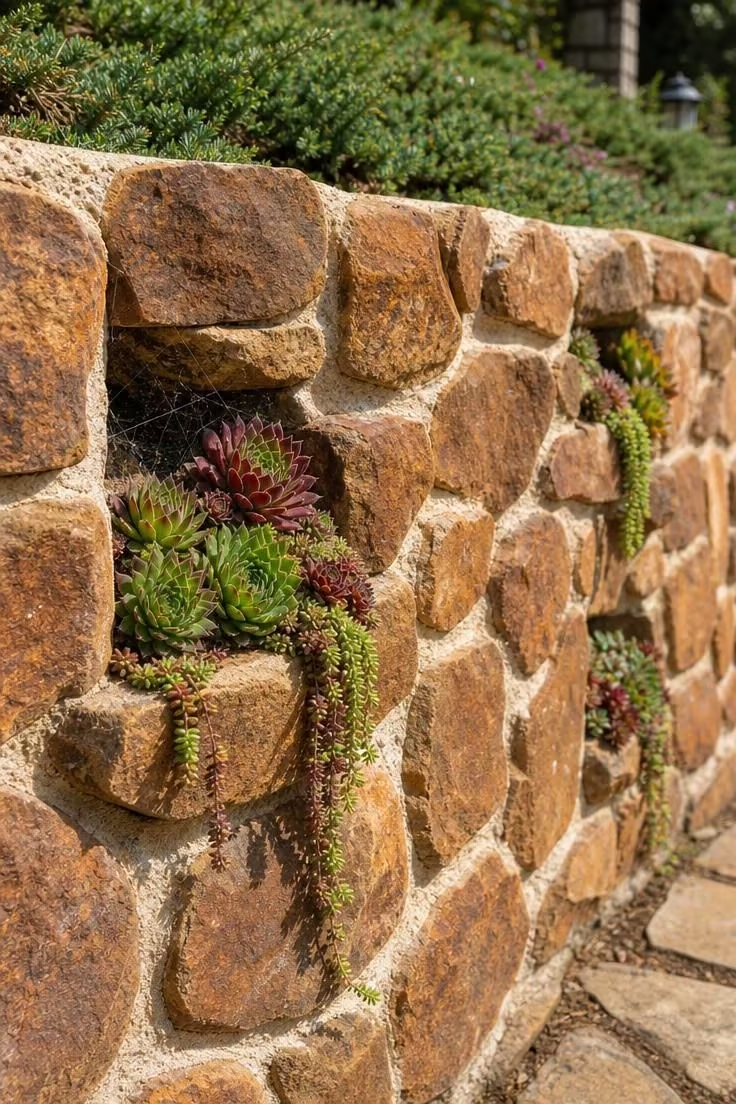
Leaving intentional gaps in a fieldstone wall during construction takes no extra time, but it turns a plain retaining structure into a vertical garden.
Hens-and-chicks root in almost no soil, so a pocket just six inches deep gives them everything they need to spread and multiply.
The mortar between stones makes this wall stronger than a dry-stack version, which matters on slopes where soil pressure increases with every heavy rain.
Warm brown and rust-toned fieldstone pulls color from the surrounding soil, helping the wall read as part of the landscape rather than something imposed on it.
Staggering the planter pockets at different heights across the wall face creates visual rhythm without a repeating pattern.
Trailing sedums spilling downward over the stone soften the hard horizontal line of each course and add movement to a static surface.
Ground cover plants like low juniper above the wall knit the top of the slope into the structure, blurring the line between built and grown.
Style Blueprint:
- Irregularly shaped fieldstone in warm brown and rust tones, mortared
- Planter pockets 8 inches wide and 6 inches deep, left open during construction
- Hens-and-chicks and trailing sedum in each pocket
- Low juniper ground cover planted above the wall
- Pale mortar joints for contrast against dark stone
Native Fern and Moss Ground Cover Beneath a Canopy of Redbuds
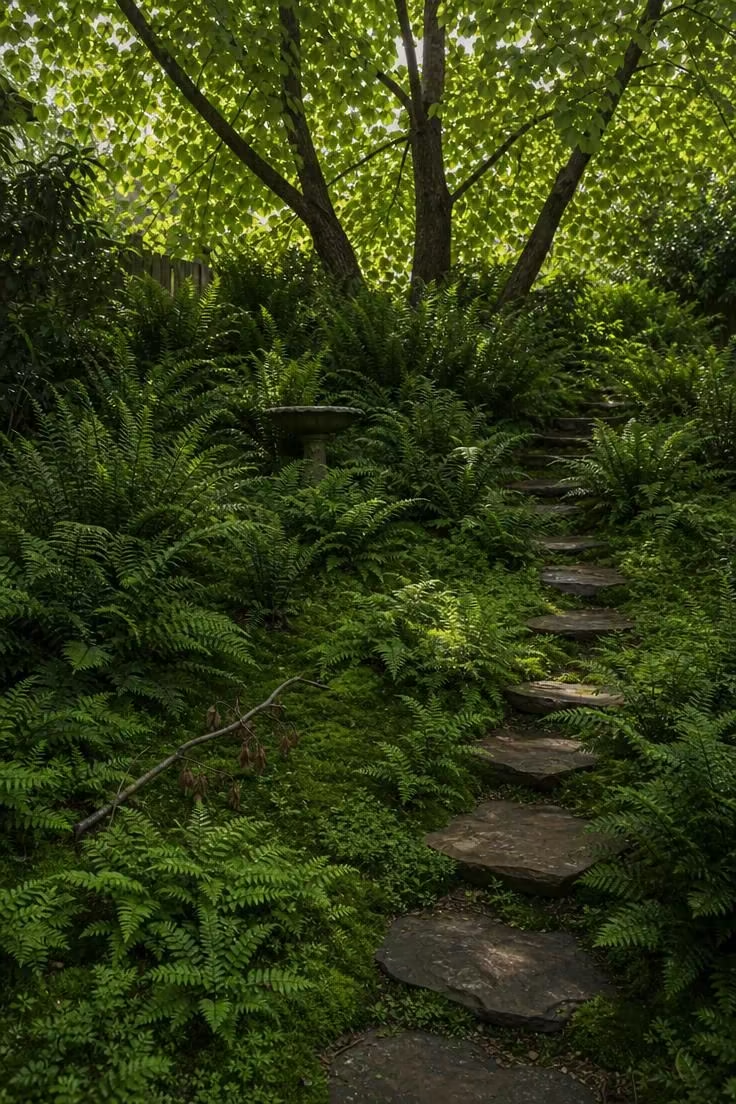
A shaded slope planted entirely in native ferns and moss never needs mowing, feeding, or supplemental water once it fills in.
The combination of sword fern for height and maidenhair fern for texture creates layers that mimic a natural forest floor, which is exactly what a shaded hillside wants to become.
Cushion moss between fern clusters holds moisture in the soil and prevents erosion on the slope surface, doing the work of landscape fabric without the plastic.
Eastern redbuds at the top of the slope provide the filtered shade that ferns and moss require, while their heart-shaped leaves add a second layer of texture overhead.
Flat slate stepping stones let you walk through the planting without compacting the moss, and their dark tone disappears into the green palette.
This is a native plants approach that works with the conditions a shaded slope already provides, shade, moisture, and acidic leaf litter, rather than fighting them.
Style Blueprint:
- Sword fern and maidenhair fern in layered heights
- Thick cushion moss as ground cover between fern clusters
- Eastern redbud trees at the slope crest for filtered canopy shade
- Flat slate stepping stones set flush with the moss surface
- Cast stone bird bath as a mid-slope focal point
Design Pro-Tip: When covering a slope in ground cover plants, plant in triangular grids rather than straight rows. Triangular spacing closes gaps faster because each plant’s spread overlaps its neighbors from three directions instead of two, giving you full coverage in roughly one-third less time.
A Floating Composite Deck Cantilevered Over a Steep Grade With Steel Posts
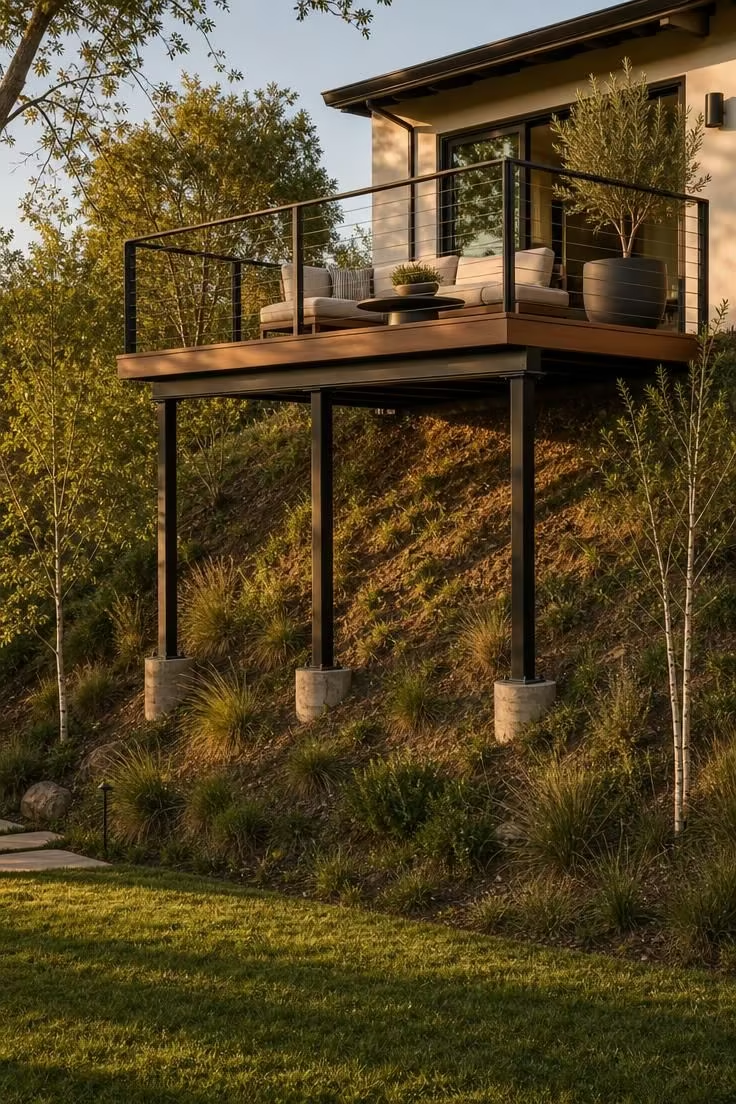
A cantilevered deck solves the steepest slopes by ignoring the grade entirely and building above it.
Steel posts anchored in concrete footings on the slope face carry the load without disturbing the hillside soil, so the natural drainage patterns stay intact.
Composite decking in a teak tone resists moisture, insects, and UV fade, all of which hit harder on an exposed elevated platform than on a ground-level backyard patio.
The open space beneath the deck stays natural, which means the slope continues to absorb rainwater and support root systems as if the structure were not there.
Horizontal cable railing preserves the view from the deck down to the lower yard, keeping the connection between the two levels visual even when the elevation change is steep.
A potted olive tree at the corner anchors the deck to a garden context, preventing the platform from feeling like a bare stage floating in the air.
This approach works best when the slope is too steep for terracing, typically anything beyond a 2:1 grade where the cost of retaining walls would exceed the cost of steel and composite.
Sliding glass doors from the house to the deck surface create a level transition that makes the outdoor living space feel like an extension of the interior rather than a separate destination.
Style Blueprint:
- Teak-toned composite decking boards, running lengthwise
- Powder-coated black steel support posts in concrete footings
- Horizontal black steel cable railing system
- Low modern sectional in oatmeal linen with round steel coffee table
- Large charcoal fiberglass planter with potted olive tree
Conclusion
A sloped backyard is not a problem to fix but a starting point to build from.
Every one of these ideas works with the existing grade instead of hauling in fill dirt to flatten it, and that makes a real difference in cost, drainage, and long-term stability.
Limestone terraces, timber walls, gravel pathways, and cantilevered decks each address a different slope condition, so the right choice depends on your grade, your budget, and how you want to use the space.
Start with one section of the slope, build it out, and let it settle for a season before expanding.
The hillside will tell you what it wants next.