This post may contain affiliate links. If you make a purchase through these links, we may earn a commission at no additional cost to you.
A patio used to be a flat slab of concrete where you parked a rusty grill and two folding chairs.
Not anymore.
The best backyard patio ideas right now treat the outdoor space like an actual room, with defined zones, layered textures, real furniture and lighting that keeps you outside long after the sun drops.
Whether you’ve got a sprawling lawn or a narrow strip behind a townhouse, this list covers 17 ways to turn your patio into a space you’ll use every single day.
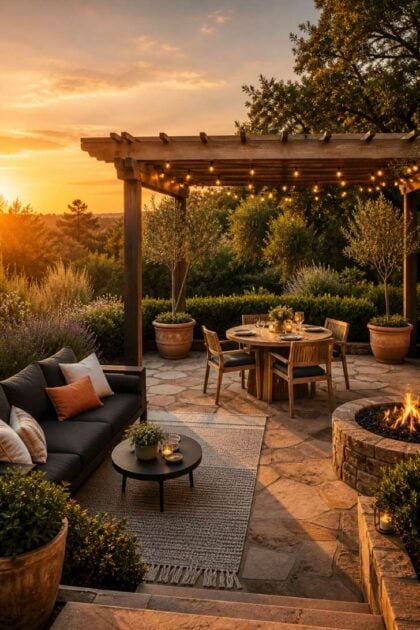
A Stone Fire Pit Ringed by Built-In Benches
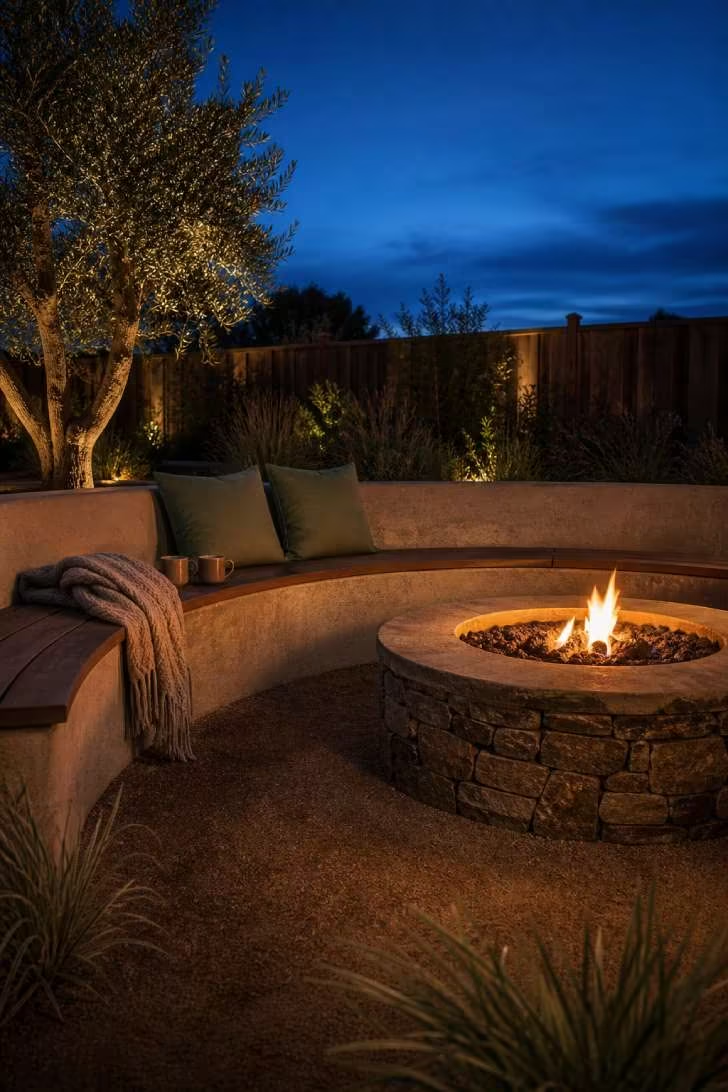
There’s a reason this setup appears on every outdoor living space wish list.
A built-in bench wrapping around a fire pit removes the constant rearranging of chairs and gives the whole area a permanent, grounded feeling.
The circular shape pulls people inward, face to face, which is why campfire conversations always feel different from ones held across a dining table.
Stone or concrete block works best for the pit itself, and topping the bench with teak or ipe slats keeps the seating warm to the touch even on cool nights.
Gas-burning inserts cost more upfront but eliminate the ash cleanup and smoke-in-your-face problem that makes some people avoid fire pits altogether.
This is one of those concrete patio ideas that works on a plain slab too — you don’t need fancy pavers underneath when the fire pit is the star.
Style Blueprint:
- Natural stone or concrete block fire pit kit (36-inch diameter minimum)
- Curved bench with weather-resistant wood slat top
- Outdoor cushions in a neutral or muted earth tone
- Decomposed granite or gravel surround
- Gas burner insert with lava rock fill
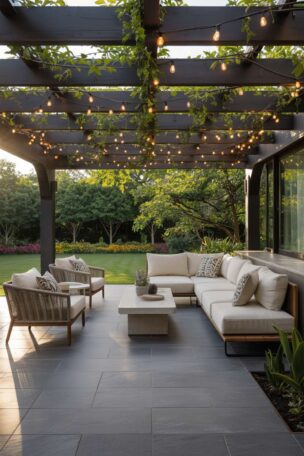
A Pergola Lounge Wrapped in Warm Light
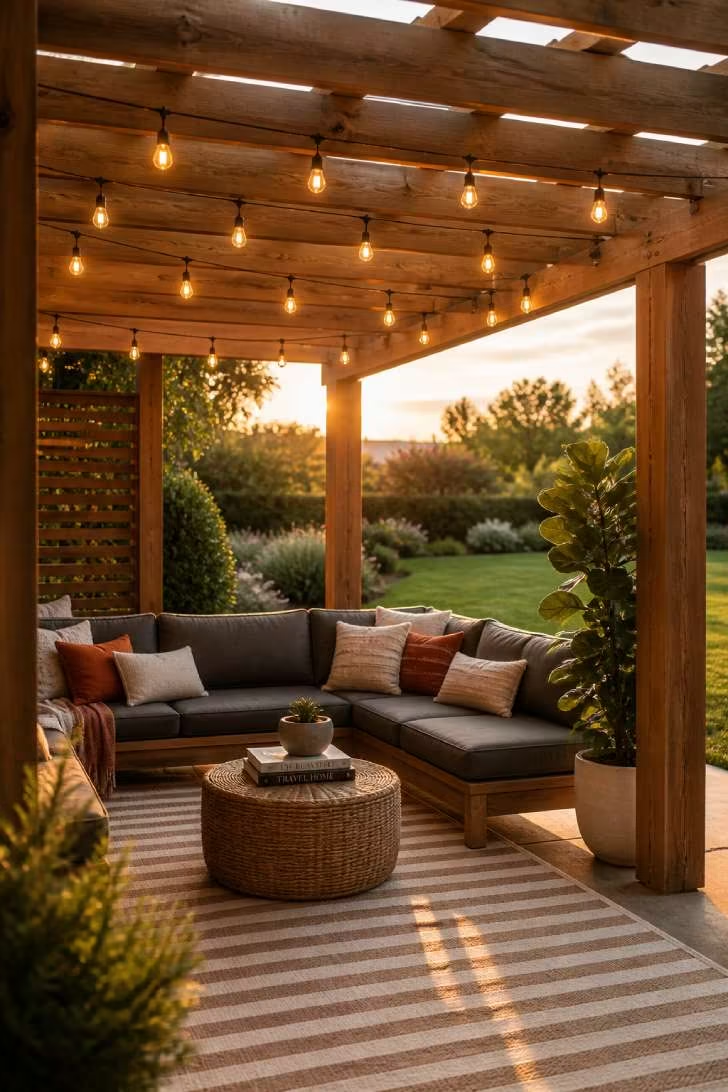
String lights on a pergola are a cliché for a reason — they work.
The combination of partial shade during the day and a soft glow at night makes a pergola lounge one of the most versatile patio furniture layout ideas you can build.
What makes this setup feel like a room rather than a yard is the rug.
A weather-resistant outdoor rug underneath the seating group tells your brain that this is a defined space with boundaries, the same way a rug anchors a living room indoors.
The pergola itself filters sun without blocking it completely, which keeps the area bright enough to read in but cool enough to sit comfortably at 2 p.m. in July.
Cedar and redwood are the go-to lumber choices because they resist rot without chemical treatment.
Aluminum pergolas cost less and need zero maintenance, but they don’t have the same warmth.
Style Blueprint:
- Cedar or redwood pergola (10×12 feet minimum for a sectional)
- Warm-white Edison bulb string lights patio rated for outdoor use
- L-shaped outdoor sectional with solution-dyed acrylic cushions
- Large outdoor area rug (8×10 feet)
- One oversized potted plant for vertical interest
A Modern Grid of Oversized Pavers and Gravel
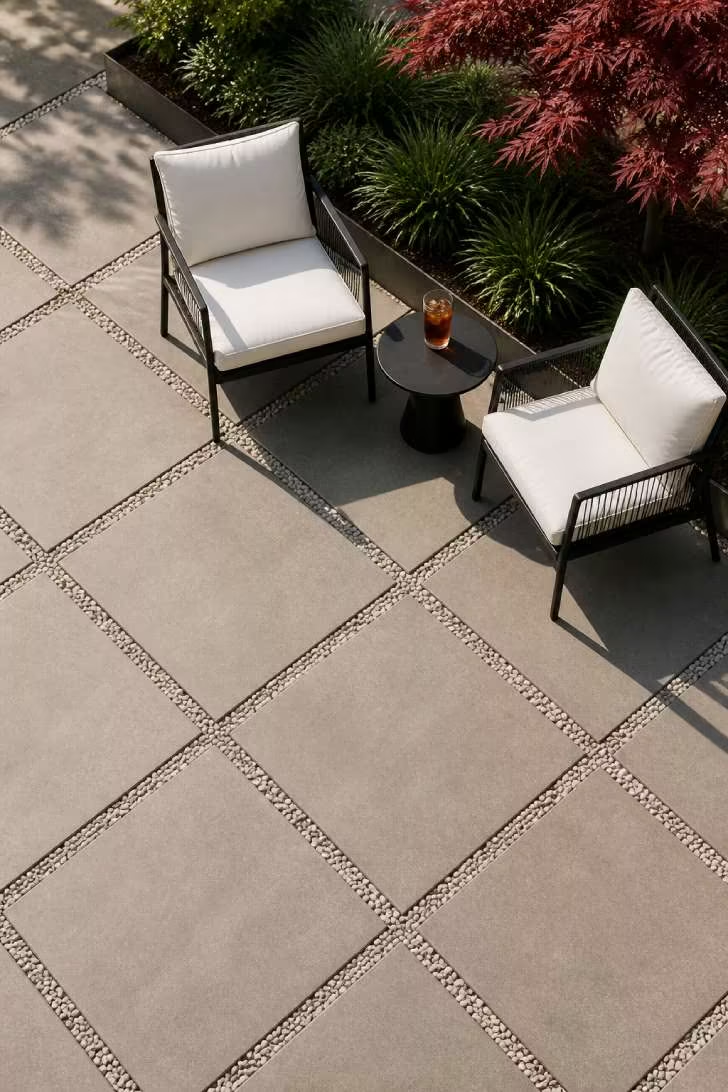
Fewer joints, cleaner look.
That’s the whole idea behind oversized patio pavers set in a grid with gravel filling the gaps.
The wide spacing lets water drain straight through instead of pooling on the surface, which is a practical bonus that happens to look good too.
This approach works best in yards with a modern or minimalist feel.
The large-format slabs — 24×24 inches or bigger — read as one continuous plane rather than a patchwork, and the gravel joints add just enough texture to keep it from looking sterile.
Pea gravel, crushed granite and white marble chips are the most common fill choices.
Keep the furniture simple here.
Anything too ornate fights with the clean geometry of the grid.
Style Blueprint:
- Large-format concrete pavers (24×24 or 30×30 inches)
- Crushed gravel or decomposed granite for joints
- Steel landscape edging to contain the gravel border
- Minimal-profile metal outdoor chairs
- Low ornamental grasses along one edge
A Grill Island Where the Cook Faces the Crowd
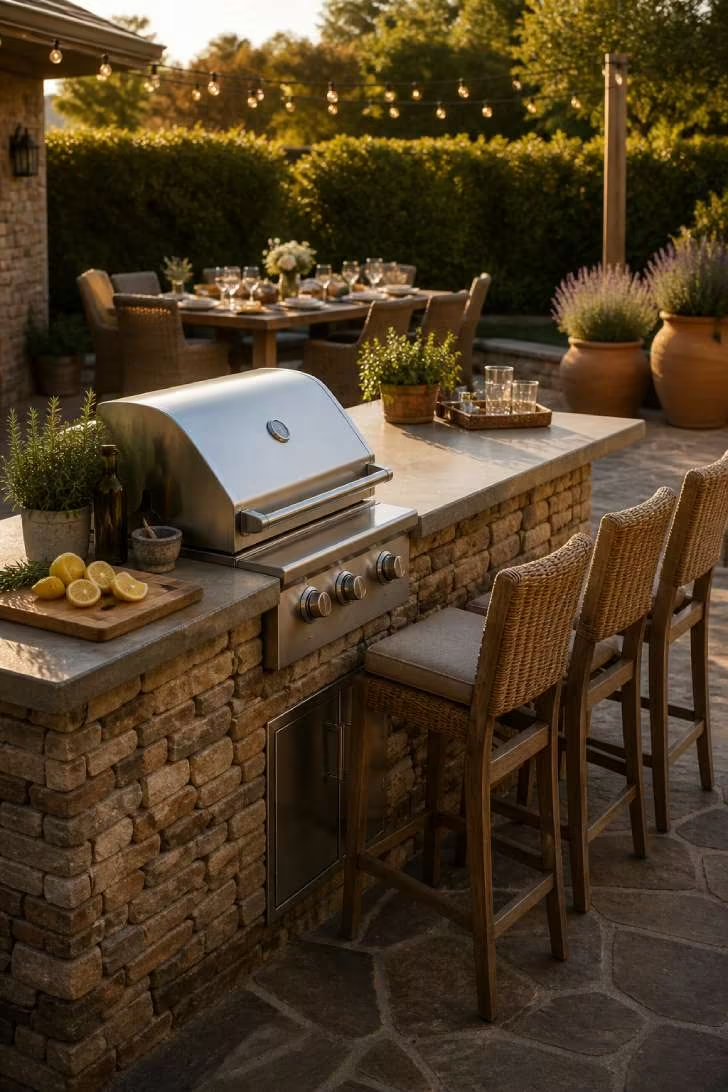
The worst spot for a grill is facing a wall or a fence.
You end up with your back to everyone, flipping burgers in isolation while the conversation happens behind you.
An outdoor kitchen island with bar stools on the guest side solves that problem completely.
The cook stays part of the group.
If budget allows, adding a small sink and an under-counter fridge means fewer trips inside, which is the whole point of cooking outdoors.
Even without those extras, a well-placed grill island with counter space and a couple of stools turns a basic patio into something that feels like a real outdoor kitchen.
Stone veneer over a concrete block frame is the most common construction method, and a poured concrete or granite countertop handles the heat and weather.
Style Blueprint:
- Concrete block island frame with natural stone veneer
- Built-in stainless steel grill (minimum 30 inches)
- Polished or honed concrete countertop with overhang for bar seating
- Three to four weather-resistant bar stools
- Under-counter mini fridge (if budget allows)
Design Pro-Tip: Position your grill island so the prevailing wind blows smoke away from the main seating area, not into it. Check which direction your afternoon breeze comes from before you pour the foundation — moving a built-in island later isn’t an option.
A Sunken Patio That Shelters Itself
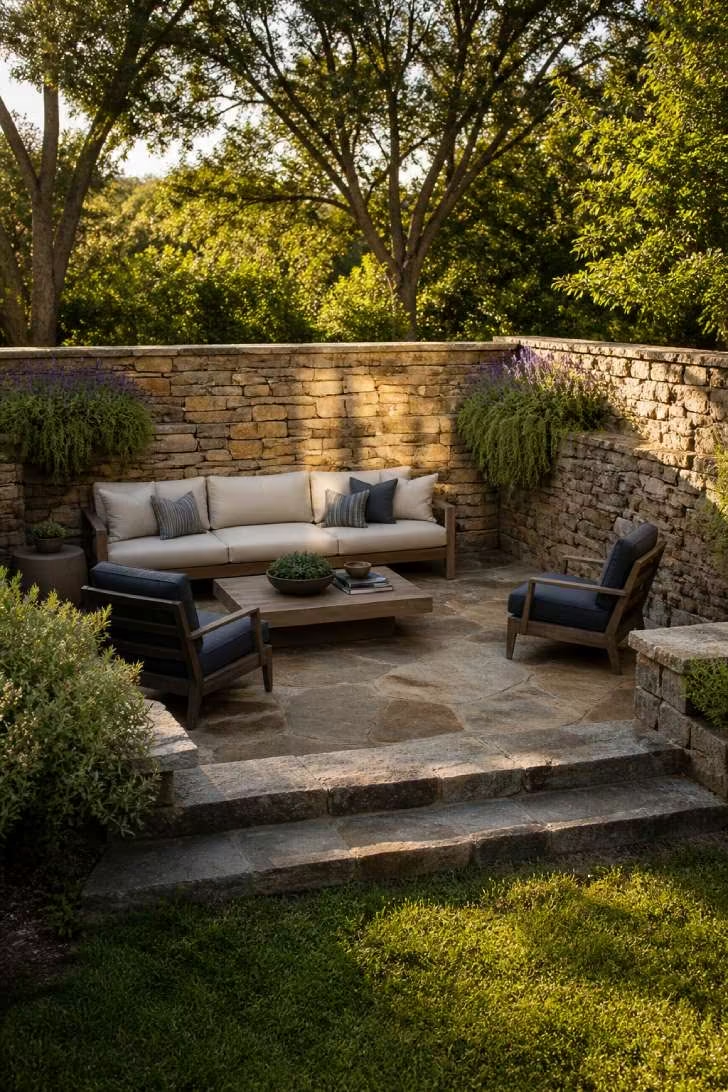
Dropping the patio even one step below the surrounding lawn changes how the space feels completely.
The retaining walls created by the grade change act as a visual boundary, and the lower position naturally blocks wind without needing a screen or a fence.
It’s the same principle that makes a sunken living room feel cozier than a flat open-plan layout.
Your sightline shifts when you step down.
The sky opens up overhead, the walls hug you on the sides, and the lawn disappears from view.
This is a great small patio design trick too, because the sense of enclosure makes even a compact area feel deliberate and defined.
The retaining wall doubles as overflow seating during a party — throw a few cushions on top and you’ve got room for extra guests without adding more chairs.
Style Blueprint:
- Flagstone or paver patio floor set 12 to 18 inches below grade
- Natural stone or poured concrete retaining wall on three sides
- Deep-seated outdoor sofa and two accent chairs
- Built-in planter pockets along the retaining wall
- Broad stone or concrete entry steps (minimum 36 inches wide)
A Boho Patio Layered With Rugs and Floor Cushions
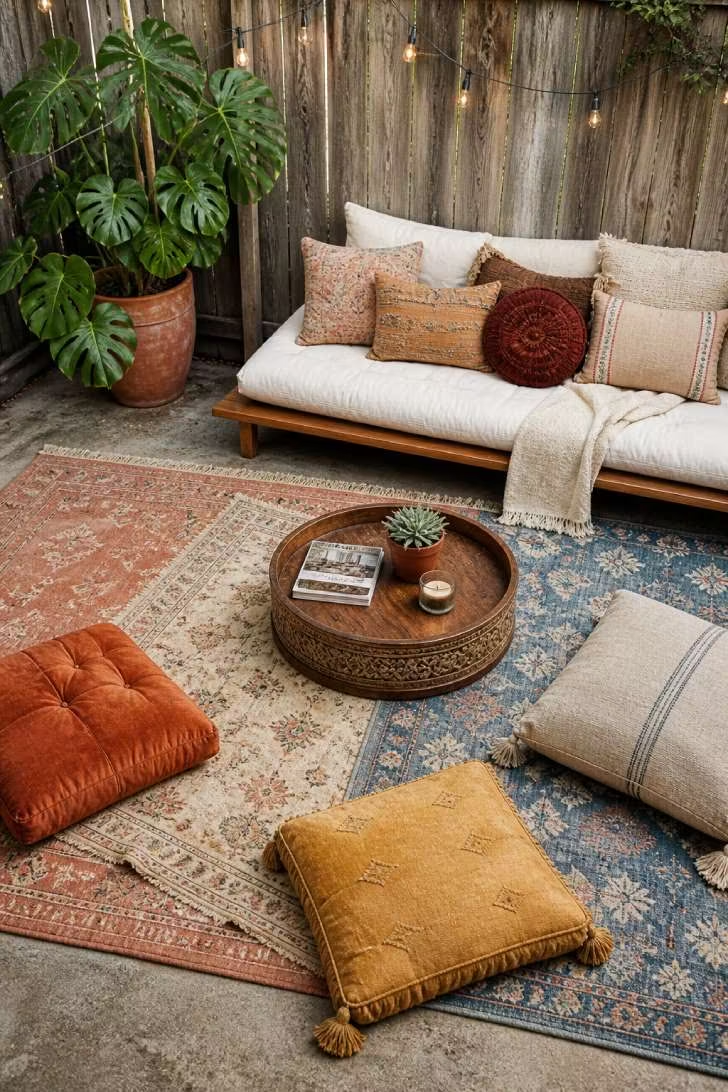
You don’t need to pour a single cubic yard of concrete to pull this off.
A boho layered patio works on top of any existing surface — an old concrete slab, a worn deck, even packed dirt.
The rugs do the work of defining the space, and the low seating changes the whole posture of the experience.
When you sit closer to the ground, the area feels bigger, the sky feels higher, and the pace slows down.
That’s not a decorating opinion — it’s how spatial proportion works on your perception.
Low furniture and floor cushions signal informality, which is why this style feels so inviting to guests who might hesitate to sit on a stiff patio chair.
Mix textures freely here.
Woven baskets, rough terracotta, linen, jute and faded cotton all belong together.
The key is keeping the color palette to three or four related tones so the layering reads as intentional rather than chaotic.
Style Blueprint:
- Two to three overlapping outdoor rugs in coordinating faded tones
- Low wooden daybed or platform frame with thick outdoor mattress cushion
- Four to six oversized floor cushions in mixed fabrics
- Round carved wood or woven tray table
- One large potted plant (monstera, bird of paradise or banana leaf)
Flagstone and Creeping Thyme Underfoot
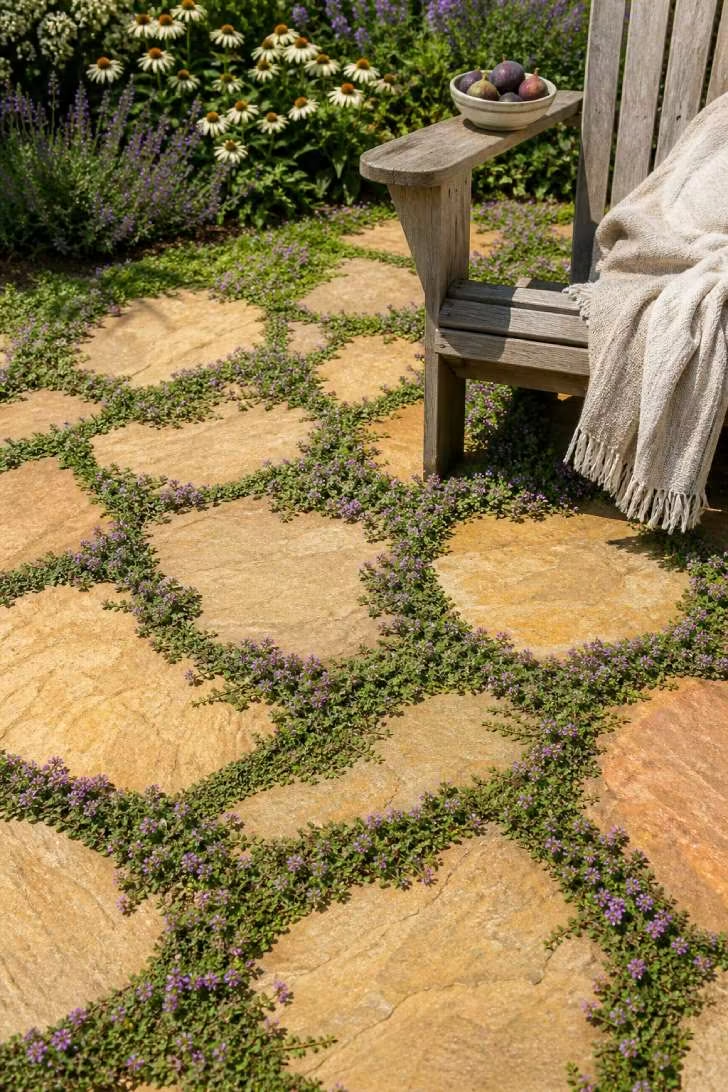
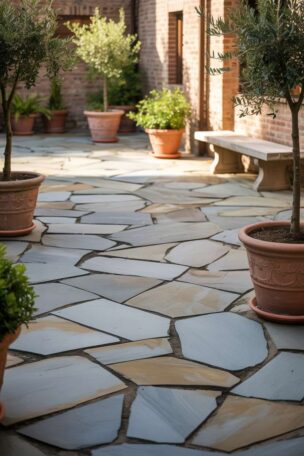
Flagstone with living joints is one of the oldest patio ideas still worth copying.
The plants growing between the stones soften everything.
Walk across it and the thyme releases a faint herbal scent underfoot, which is a sensory detail that no hardscape alone can replicate.
Creeping thyme, Irish moss and dwarf mondo grass are the three most common options for planting in flagstone joints.
Thyme handles foot traffic and full sun.
Moss prefers shade and moisture.
Mondo grass works in partial shade and stays green year-round in mild climates.
The stone itself should be dry-laid on a compacted sand base rather than mortared, so the plant roots have room to spread and water can drain naturally.
Irregular flagstone — meaning the pieces aren’t cut into uniform shapes — gives the patio a hand-placed, organic look that feels connected to the garden around it.
Style Blueprint:
- Irregular flagstone in sandstone or bluestone tones
- Creeping thyme, Irish moss or dwarf mondo grass plugs for joints
- Compacted sand-and-gravel base (no mortar)
- Weathered teak or cedar seating
- Cottage-style border planting along at least one edge
Design Pro-Tip: When laying flagstone, set your largest, flattest pieces where chairs and tables will go. Save the smaller, more irregular ones for edges and low-traffic spots. Furniture legs wobble on uneven stone, and nobody wants to eat dinner on a rocking table.
A Covered Patio Built Around a Stone Fireplace
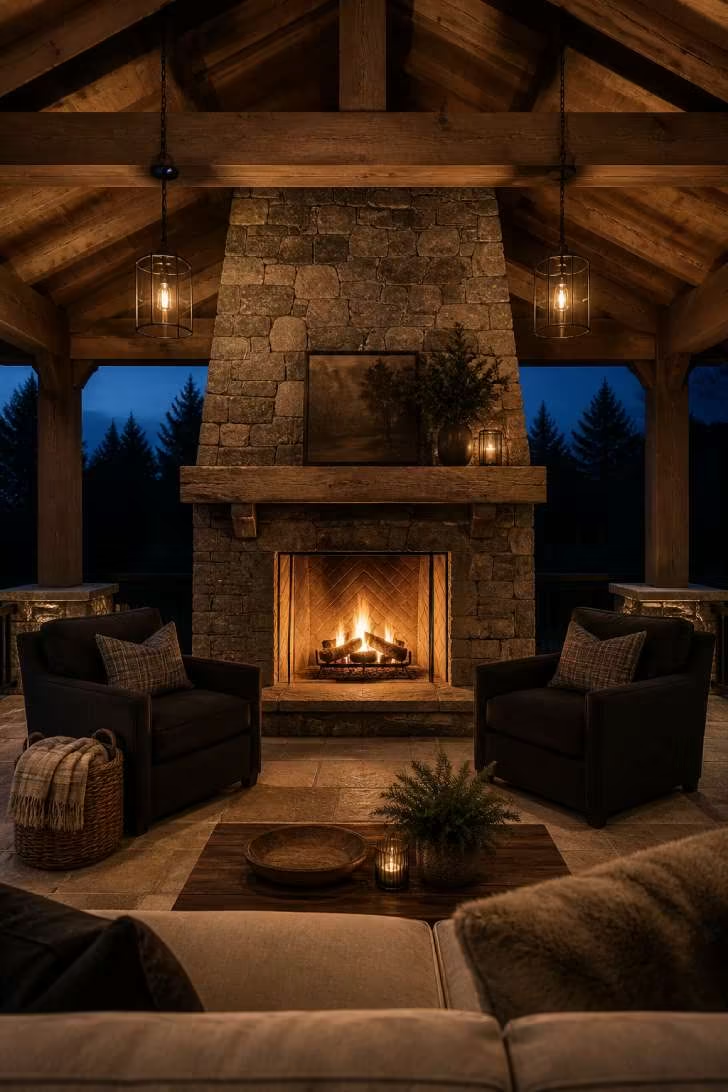
This is the investment-level version of an outdoor living space, and it delivers accordingly.
A stone fireplace under a solid roof turns a patio into a three-season (or four-season, depending on your climate) room that feels closer to a mountain lodge than a backyard.
The fireplace becomes the anchor.
Arrange everything to face it, the same way you’d orient a living room around a hearth indoors, and the space organizes itself.
A wood-burning fireplace with a proper chimney draws smoke upward and out, which is why it works under a roof where a fire pit wouldn’t.
Gas inserts are another option if your local code restricts open-flame wood burning.
The cost here is real — outdoor fireplaces start around $7,500 for a basic build and climb fast with custom stonework, so this is a project to plan carefully and build once.
The payoff is a patio that gets used twelve months a year instead of five.
Style Blueprint:
- Stacked natural stone fireplace with reclaimed wood mantel
- Covered pavilion or solid-roof patio structure with exposed wood beams
- Two deep-cushioned armchairs in performance fabric
- Large-format travertine or stone tile flooring
- Simple iron or matte black pendant lights
A Tiny Bistro Setup That Punches Above Its Size
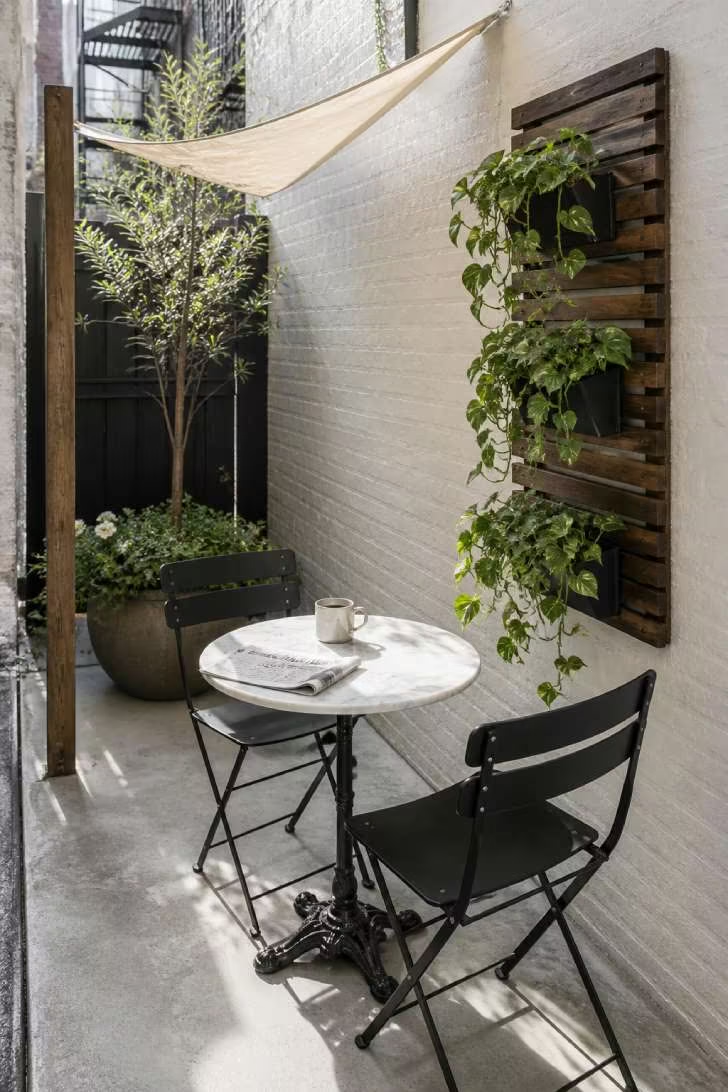
You don’t need 400 square feet to make a patio feel intentional.
A round bistro table and two chairs on a 5×5-foot patch of concrete can be the best seat in your house if you place it right.
The trick is picking the spot that gets the best morning light or the best shade at 5 p.m. — whichever matters more to how you’ll actually use it.
A vertical wall planter or a few railing-mounted pots add greenery without taking up any floor space, which is the only real constraint you’re working with.
This kind of small patio design is perfect for renters or anyone who wants a functional outdoor space without committing to construction.
Everything here is moveable, replaceable and affordable.
Style Blueprint:
- Round bistro table (28 to 30 inches diameter) in marble, stone or metal
- Two folding or stackable metal chairs
- Vertical wall planter or railing-mounted pots
- Small shade sail or patio umbrella
- One weather-resistant stoneware mug (for the photo, and for actual use)
A Curved Walkway That Draws You Into the Garden
A straight path creates a direct visual line from one part of the yard to another.
A curved path creates a softer composition and lets the landscaping unfold gradually.
The bend breaks up the view and partially screens the seating area, so the patio appears as a distinct destination within the overall layout rather than as an exposed surface near the fence.
Use paver colors that contrast with the surrounding mulch or planting beds.
Warm brown or sandstone pavers against dark mulch create a defined edge that emphasizes the shape of each curve.
Border the path with low plantings such as lavender, catmint, or compact boxwood to reinforce the curved outline and connect the walkway visually with the surrounding beds.
If drainage or permeability is part of the design goal, use a complete paving system intended for that purpose, including the appropriate pavers, joints, base materials, subgrade preparation, and installation method.
Wide joints alone do not make a conventional paver assembly permeable.
Style Blueprint:
- Concrete pavers in warm brown or sandstone tones, running bond pattern
- Dark mulch borders on both sides of the path
- Low plantings such as lavender, catmint, or compact boxwood
- Circular patio pad at the terminus, 8 to 10 feet in diameter
- Two Adirondack chairs or a simple bench at the destination
Design Pro-Tip: Never make a curved path curve for no reason. Each bend should go around something — a planting bed, a boulder, a tree. A curve with nothing motivating it reads as forced rather than natural.
A Stepped Patio With a Zone for Everything
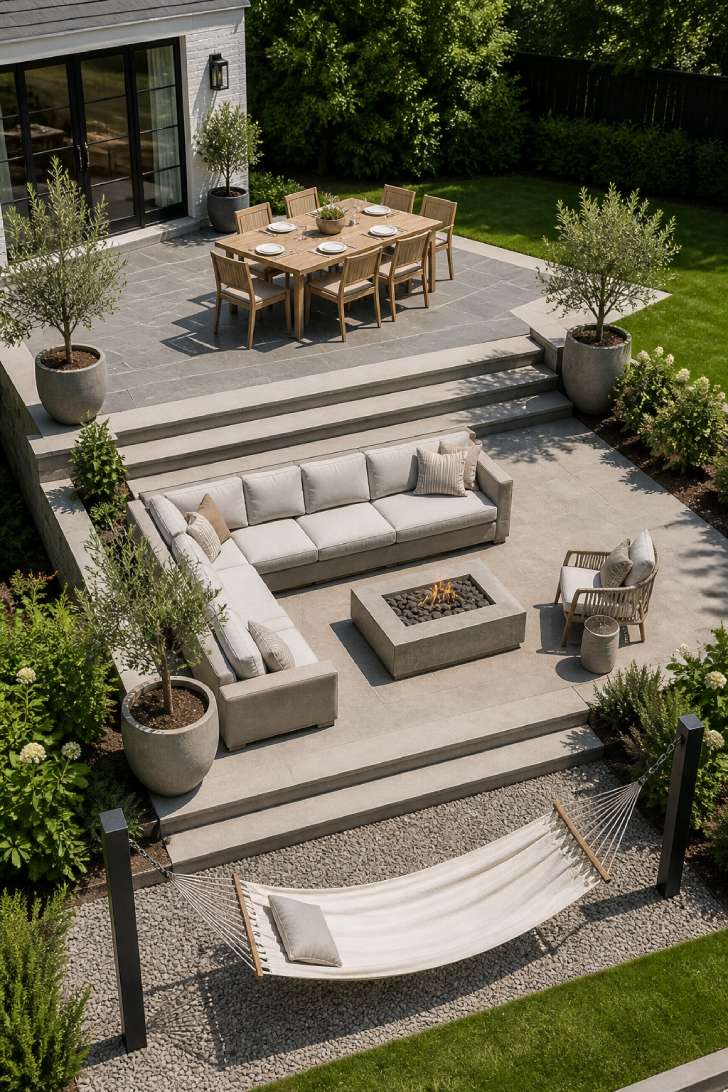
Level changes do the work of walls without blocking your view.
A patio that steps down from the house to the yard can hold three different zones — dining, lounging and relaxing — on the same footprint, and each one feels separate because of the altitude shift.
The dining table goes on the top level, closest to the kitchen door, so carrying plates is a short trip.
The lounge area sits one step below.
And the lowest level, closest to the garden, can be a hammock, a reading chair or a fire pit seating area.
Using different materials on each level reinforces the separation.
Bluestone on the dining level, concrete pavers on the lounge level and gravel on the lowest pad makes each zone read as its own room.
Potted trees or tall planters at each step transition act like doorways between the spaces.
Style Blueprint:
- Three patio levels with 6- to 8-inch step-downs between each
- Different paver or surface material on each level
- Rectangular dining table on the upper (closest to house) level
- Sectional or lounge seating with fire table on the middle level
- Hammock or single accent chair on the lowest level
A Privacy Screen Made of Plants and Lattice
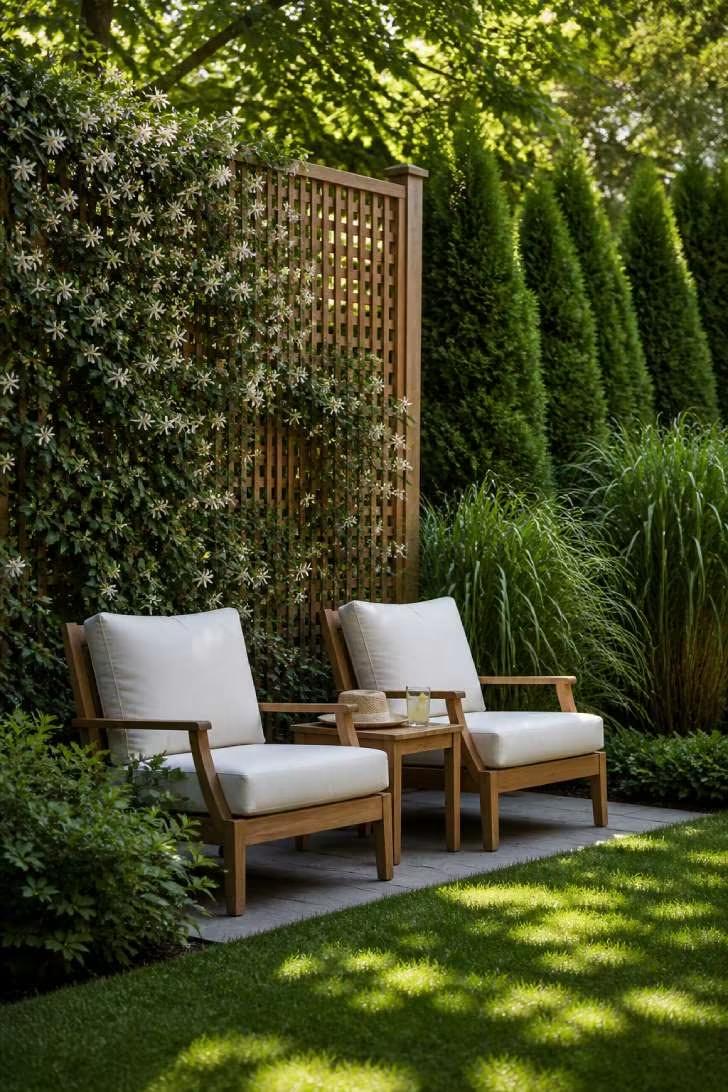
A six-foot privacy fence solves the neighbor problem, but it can also make a patio feel like a cage.
Layering a lattice panel with climbing plants and tall narrow evergreens gives you the same screening without the boxed-in feeling.
The lattice lets air and fragmented light through.
The climbers fill the gaps over time.
And the arborvitae or ornamental grasses add height beyond the fence line, which is useful if your neighbor’s second-story windows look into your yard.
Star jasmine and clematis are the two best climbers for a patio privacy screen because they grow fast, stay dense and bloom.
Stagger your tall plants rather than planting them in a straight line — this fills in the gaps between trunks faster and looks less like a military formation.
Bamboo works too, but plant it in containers.
Bamboo in the ground will send runners into your lawn, your neighbor’s lawn and possibly into the next zip code.
Style Blueprint:
- Cedar or treated-wood lattice panels (6 to 7 feet tall)
- Star jasmine or clematis vines planted at the base of each panel
- Three to five arborvitae or tall ornamental grasses behind the lattice
- Containers for any bamboo (never plant it directly in the ground)
- Teak or eucalyptus lounge chairs positioned to face away from the screened side
A Fire Table That Doubles as Dinner
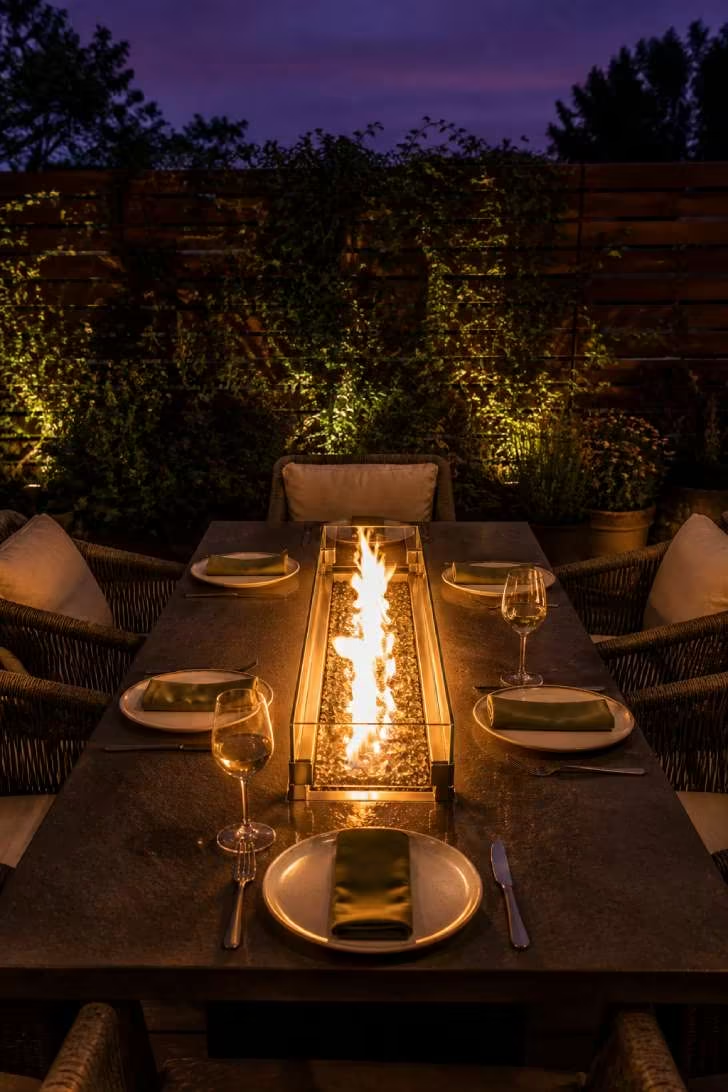
A fire table eliminates the need for both a dining table and a separate fire pit, which makes it one of the smartest moves for a mid-size patio.
The flame channel running down the center provides warmth and light while leaving plenty of usable table surface on both sides for plates and glasses.
When the flame is off, it’s just a good-looking outdoor dining table.
Most fire tables run on propane with the tank hidden inside the base, and the setup takes about 20 minutes out of the box.
Rectangular fire tables seat six comfortably.
Round ones work better for four.
The glass wind guard around the flame isn’t optional — it keeps the fire steady on breezy evenings and prevents napkins from meeting an unfortunate end.
Style Blueprint:
- Rectangular concrete or stone fire table with gas burner insert
- Glass wind guard panels
- Six woven or metal outdoor dining chairs with cushions
- Propane tank (hidden inside the table base)
- Simple stoneware dinnerware that can handle outdoor use
Design Pro-Tip: Place your fire table far enough from the house that the heat doesn’t affect siding or windows — a minimum of 10 feet is a safe rule. Check your local fire code too, because some municipalities have specific setback requirements for open-flame features on patios.
A Gravel Pad With Adirondack Chairs and a Fire Bowl
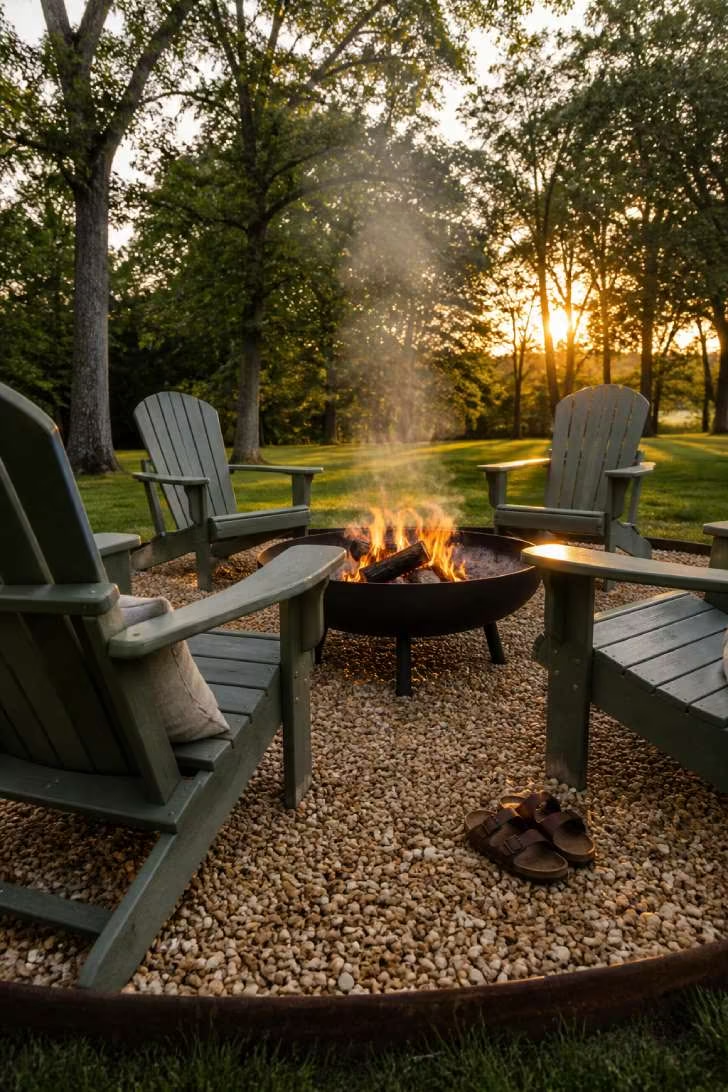
This is the most budget-friendly setup on the entire list.
A load of pea gravel, a steel landscape edge to contain it, four Adirondack chairs and a portable fire bowl — total cost can land under $500 if you do the labor yourself.
That’s the definition of backyard patio ideas on a budget.
The gravel handles drainage on its own, compresses underfoot into a stable-enough surface, and looks good with zero maintenance beyond an occasional raking.
Steel edging holds the gravel in a clean circle or rectangle and keeps it from migrating into the lawn.
Adirondack chairs work here because their wide, flat arms double as side tables for a drink.
And the leaned-back angle of the seat practically forces you to relax.
Paint them all one color for a clean look, or go mismatched if that suits your personality better.
Style Blueprint:
- Pea gravel or crushed stone, 3 to 4 inches deep
- Steel landscape edging to define the pad perimeter
- Four Adirondack chairs (cedar, recycled plastic or painted pine)
- Portable steel fire bowl (28 to 36 inches)
- Firewood storage rack nearby (even a simple crate works)
A Minimal Concrete Slab With Bold, Colorful Furniture
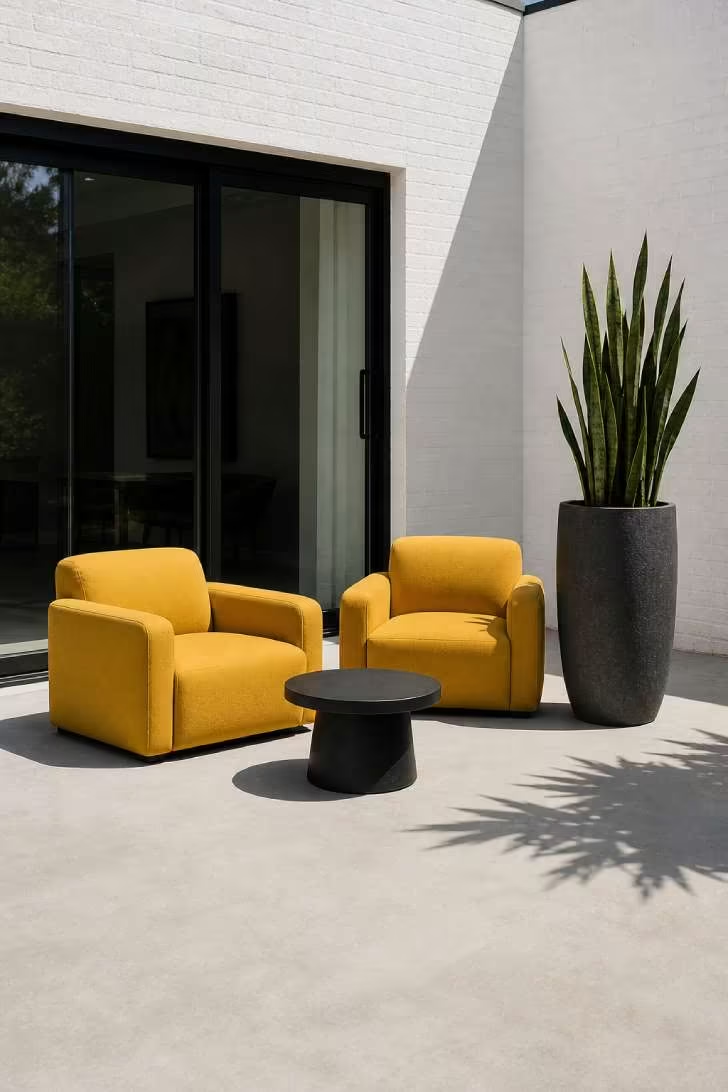
Sometimes the best patio design is the one that spends nothing on the ground and everything on what sits on top of it.
A plain concrete slab kept clean and minimal becomes a neutral canvas.
The furniture carries the entire personality of the space.
Bold color — a deep mustard, a saturated navy, a burnt orange — on just the seating is enough to make the patio feel designed.
You don’t need ten accessories to make this work.
One large planter, two chairs and a side table.
That’s it.
The restraint itself is the style.
This approach keeps the hardscape cost as low as it can go, and the budget shifts entirely to one or two pieces of quality furniture worth sitting in.
Style Blueprint:
- Plain poured concrete slab (smooth broom finish)
- Two statement lounge chairs in a saturated color
- Low matte black or charcoal side table
- One oversized concrete or ceramic planter with a single tall plant
- Nothing else (seriously, resist the urge to add more)
A Dining Pergola With a Living Ceiling of Hanging Plants
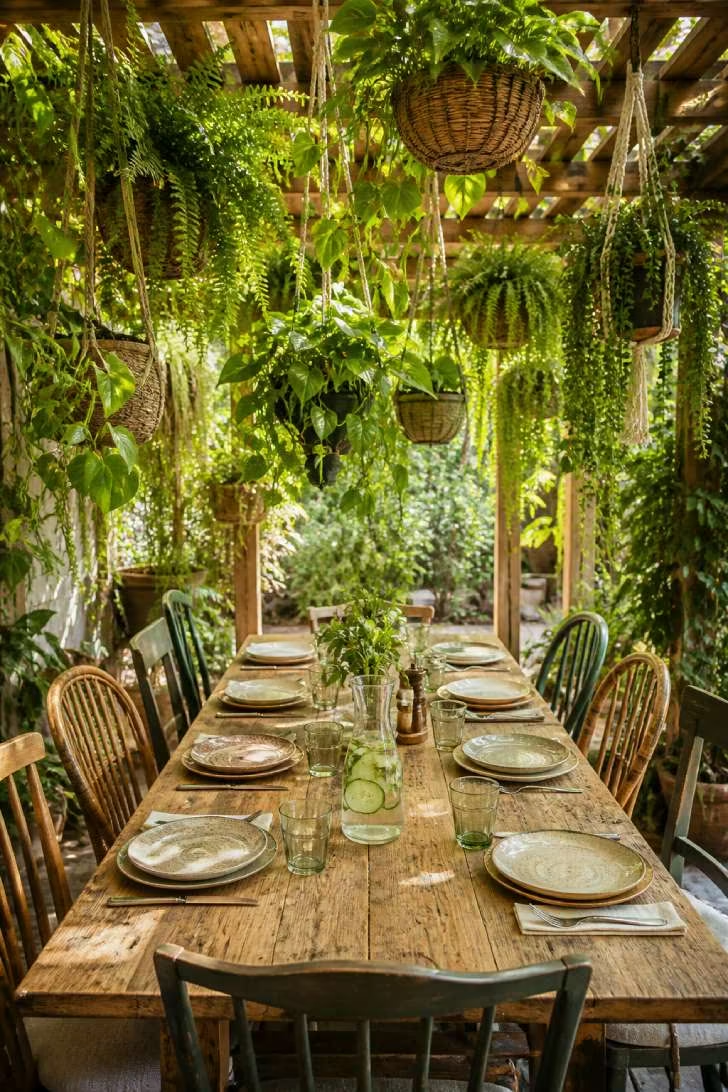
A pergola shade structure with nothing on it is just lumber in the sky.
Hang plants from it and the whole thing comes alive.
Boston ferns, trailing pothos and string-of-pearls in macramé or woven basket holders create a canopy that moves in the breeze, filters light through the leaves and makes the space feel like you’re eating inside a garden.
Vary the hanging heights — some baskets at the beam line, some dropping two or three feet below — so the ceiling has depth rather than a flat row of identical pots.
This setup rewards a long table.
The plant canopy frames the length of the dining surface and pulls the group together under a shared enclosure.
Mixed seating — rattan chairs, painted wood chairs, even a bench on one side — suits the informal mood.
Style Blueprint:
- Wood pergola with beams spaced 12 to 16 inches apart
- Eight to twelve hanging baskets and macramé plant holders
- Trailing plants: Boston fern, pothos, string-of-pearls
- Reclaimed teak or farmhouse-style long dining table
- Mixed seating (rattan, wood, bench) for eight or more
Design Pro-Tip: Water hanging plants over the dining table before the guests arrive, not during dinner. Dripping baskets and a plated meal are a bad combination. Use a long-reach watering wand in the morning and let everything dry by evening.
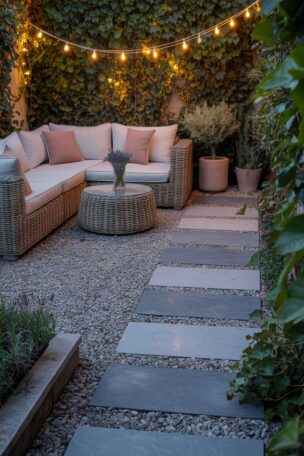
Floating Stones in a Green Garden Floor
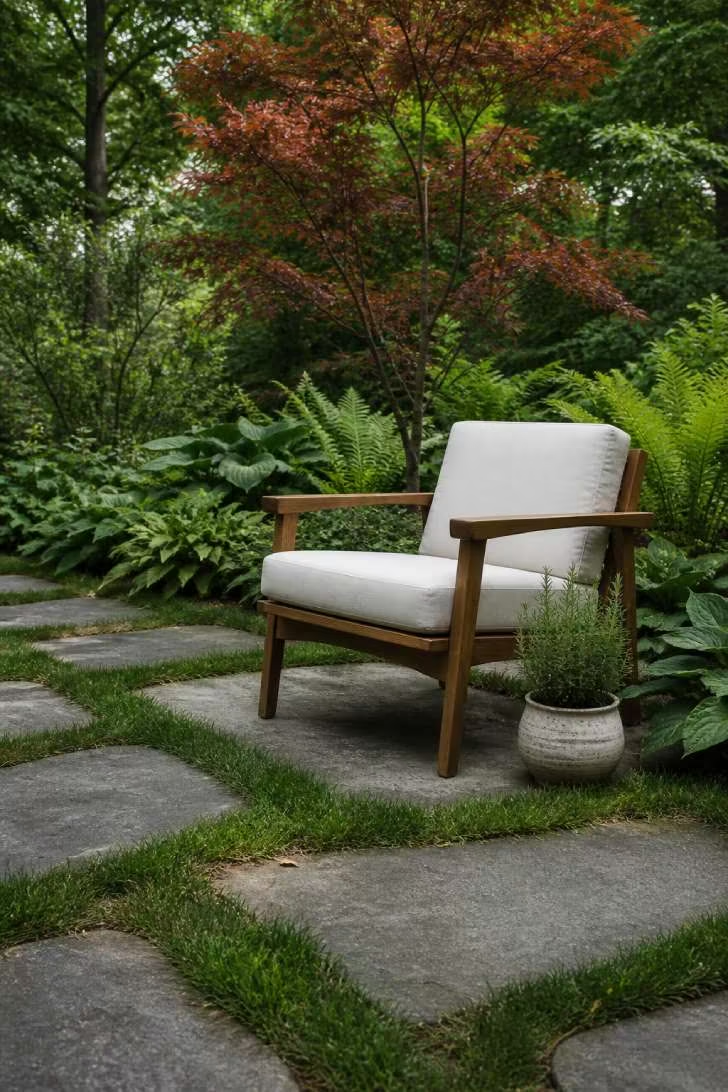
Not every patio needs to cover the whole ground.
Individual stone slabs placed into a lawn or garden bed create a sitting area that still feels connected to the planted landscape around it.
The grass or ground cover growing between the stones keeps the space alive, literally.
It breathes, it changes with the seasons, and it softens the hard edges that a solid-surface patio can’t avoid.
This approach suits people who want a place to sit and read without paving over half the yard.
Choose slabs large enough to hold the footprint of a chair — at least 24×36 inches — and set them level with the soil surface so a mower can pass over the gaps.
Bluestone, limestone and large-format concrete slabs all work.
The surrounding planting does most of the decorating for you.
Hostas, ferns and low ornamental grasses fill in around the stones and turn the patio into a garden feature rather than a separate zone.
Style Blueprint:
- Large bluestone or limestone slabs (24×36 inches minimum)
- Level installation flush with soil surface for mower clearance
- Established lawn grass or ground cover between slabs
- One quality outdoor lounge chair (wood frame, removable cushion)
- Surrounding shade-tolerant planting (hostas, ferns, Japanese maple)
Conclusion
A patio doesn’t have to be complicated or expensive to change how you use your yard.
Start with the one idea on this list that fits your space and your budget.
Build it.
Use it.
Then figure out what you want to add next, because the best outdoor room is the one that grows with you over time rather than trying to be everything on day one.