This post may contain affiliate links. If you make a purchase through these links, we may earn a commission at no additional cost to you.
A small patio is not a limitation.
It’s an invitation to get specific, to get personal, to build something that a sprawling backyard never could: a space that feels entirely yours.
Whether you’re working with a 6×8 concrete slab behind a townhouse or a narrow balcony off a second-floor apartment, the ideas ahead will show you exactly how to turn that tight footprint into something worth lingering in.
Grab your coffee, save the ones that speak to you, and let’s get into it.
The Bistro Morning Corner
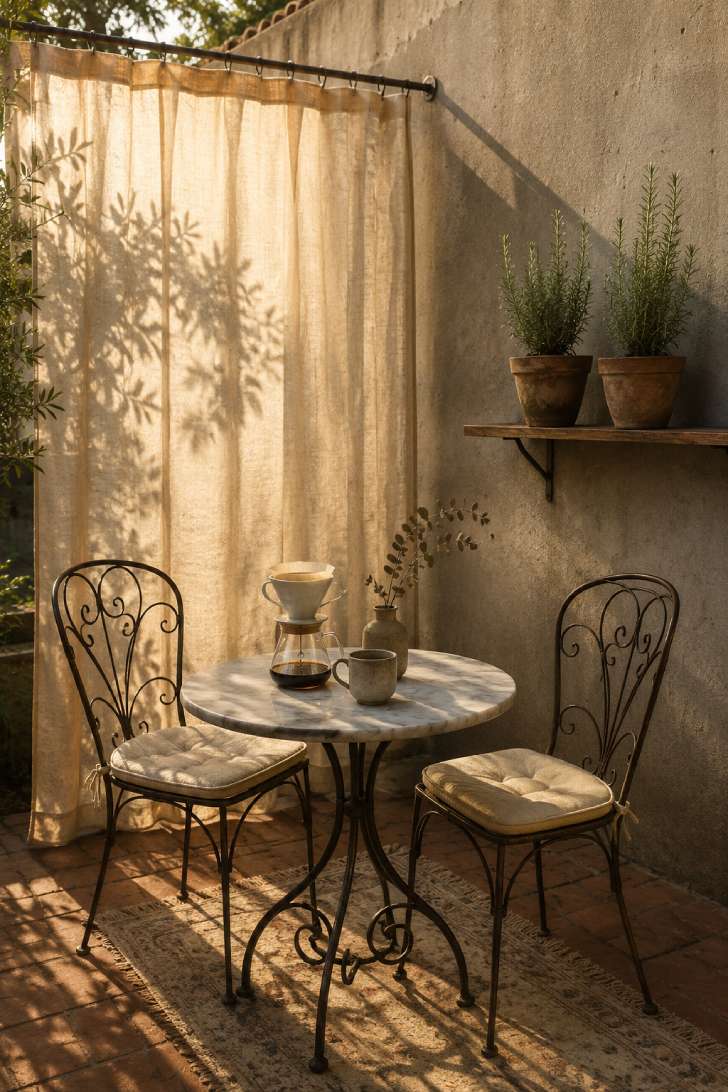
There’s something about a bistro set that turns even the tiniest patio into a Parisian side street.
The key is scale — a 24-inch round table fits into corners that would swallow a full dining set.
Wrought iron or powder-coated aluminum keeps the visual weight low, and that matters when you’re working with fewer than 80 square feet.
Pair it with linen cushions in a neutral tone and you’ve built a morning ritual spot that pulls you outside before you’ve finished your first cup.
The reason this arrangement works so well comes down to sightlines — when you sit at a small round table tucked into a corner, your eye naturally moves outward toward the open space of the patio rather than toward walls.
That outward pull tricks your brain into reading the area as larger than it is.
Style Blueprint:
- Wrought iron or aluminum bistro set with a 24-inch round top
- Natural linen seat cushions in cream or oatmeal
- One small shelf-mounted herb planter
- A cotton flat-weave rug in a light, faded tone
- A single ceramic vase with dried botanicals
Vertical Herb Wall
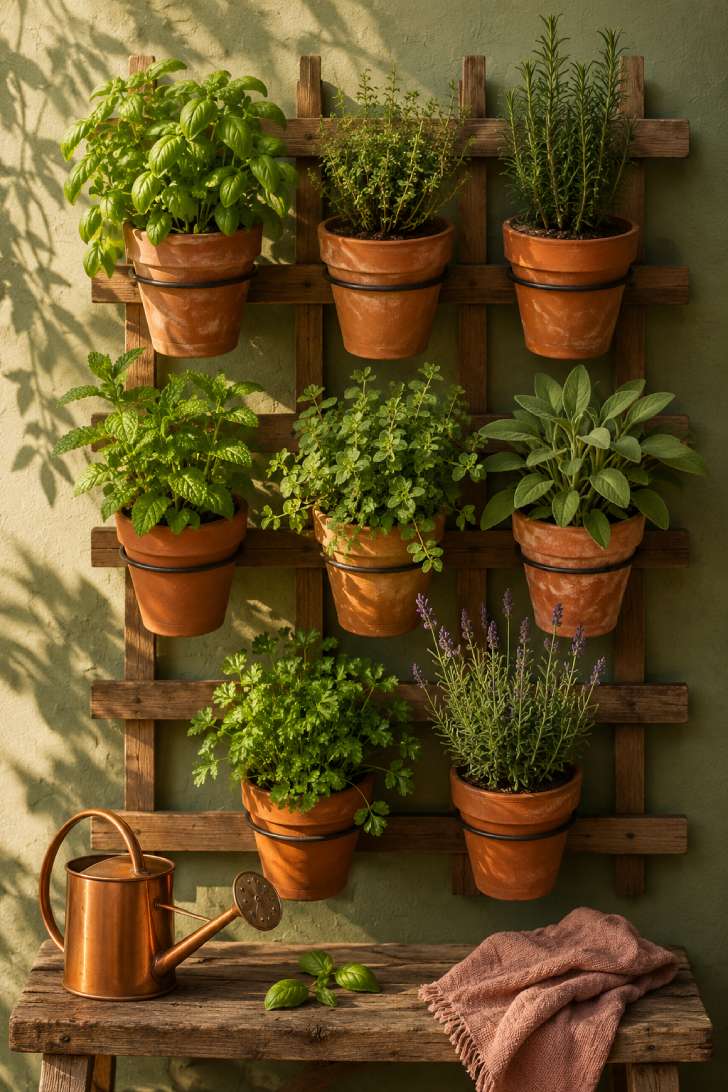
Growing up instead of out is the oldest trick in the small patio decorating ideas playbook, and it still works better than almost anything else.
A simple wall-mounted grid — you can build one from cedar strips for under thirty dollars — holds six to ten pots without touching your floor space.
Fill it with herbs you’ll actually cook with and the wall becomes functional art.
The scent alone changes the experience of stepping outside.
Rosemary and lavender near the seating area, basil and mint closer to the door for kitchen access — that kind of placement turns a decorative gesture into daily convenience.
From a sensory standpoint, living plants on vertical surfaces at eye level create a biophilic response: your nervous system reads the space as sheltered and alive, which lowers stress hormones even during a five-minute break between meetings.
Style Blueprint:
- Cedar or pine slat wall grid (DIY or purchased)
- 6-10 terra cotta pots in mixed sizes
- Culinary herb varieties suited to your sun exposure
- A brushed copper or galvanized steel watering can
- One narrow bench or shelf below for tools
Layered Outdoor Rug Lounge
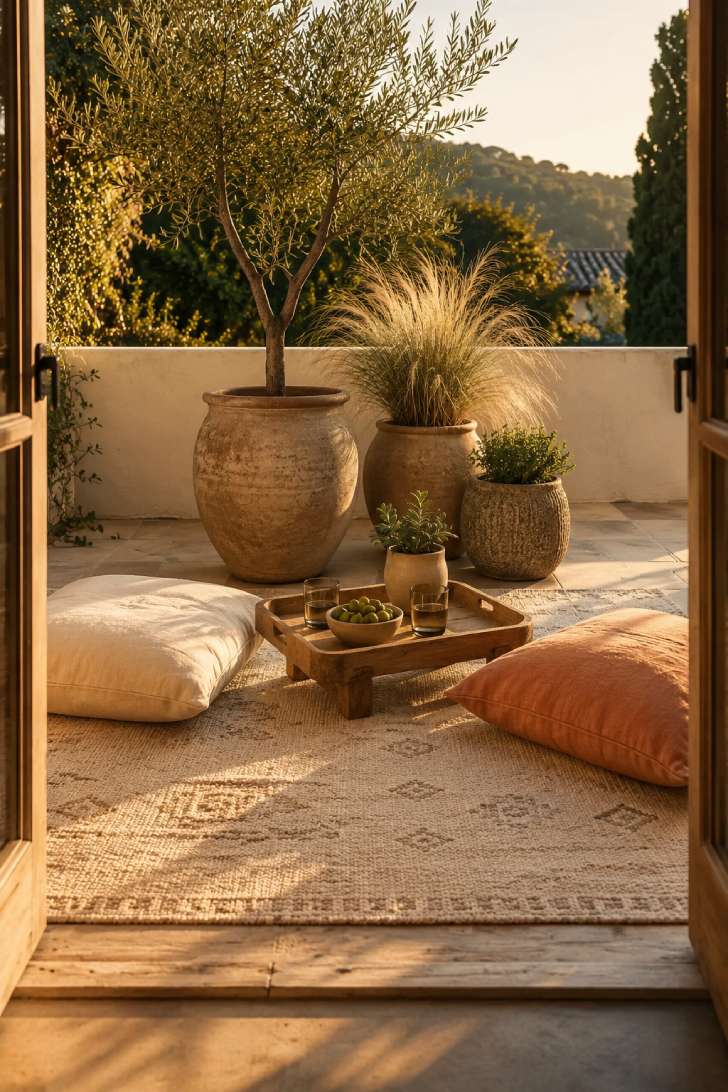
Skip the chairs entirely.
A thick outdoor rug with oversized floor cushions creates a lounge zone that sits low enough to make your patio feel twice its height.
The visual trick here is proportion — low furniture against high walls or fences opens up the vertical space above, and your eye reads that openness as room.
A small tray table at the center holds everything you need without the bulk of a traditional coffee table.
This setup is ideal for patios under 60 square feet.
It’s also one of the most budget-friendly small patio decorating ideas on this list — a good polypropylene rug runs about forty dollars, and floor cushions are half the cost of outdoor chairs.
Light colors on the ground plane reflect sunlight upward, which brightens shadows and makes enclosed patios feel airier.
Dark ground coverings absorb light and shrink the space visually.
Style Blueprint:
- A polypropylene outdoor rug in sand, cream, or light gray
- Two to three oversized floor cushions with removable covers
- A low reclaimed wood tray table (under 14 inches tall)
- Three ceramic planters at staggered heights
- One potted olive tree or ornamental grass
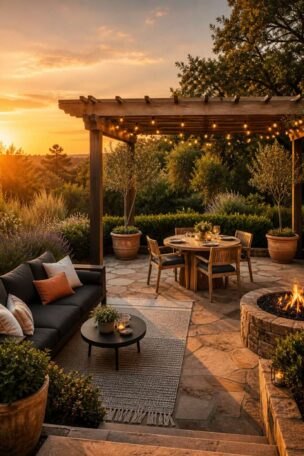
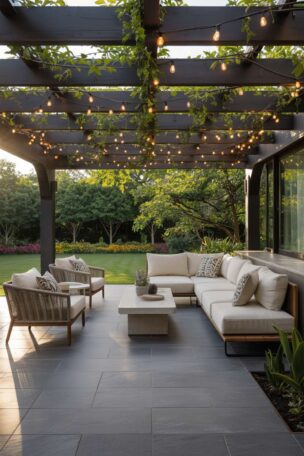
String Light Canopy
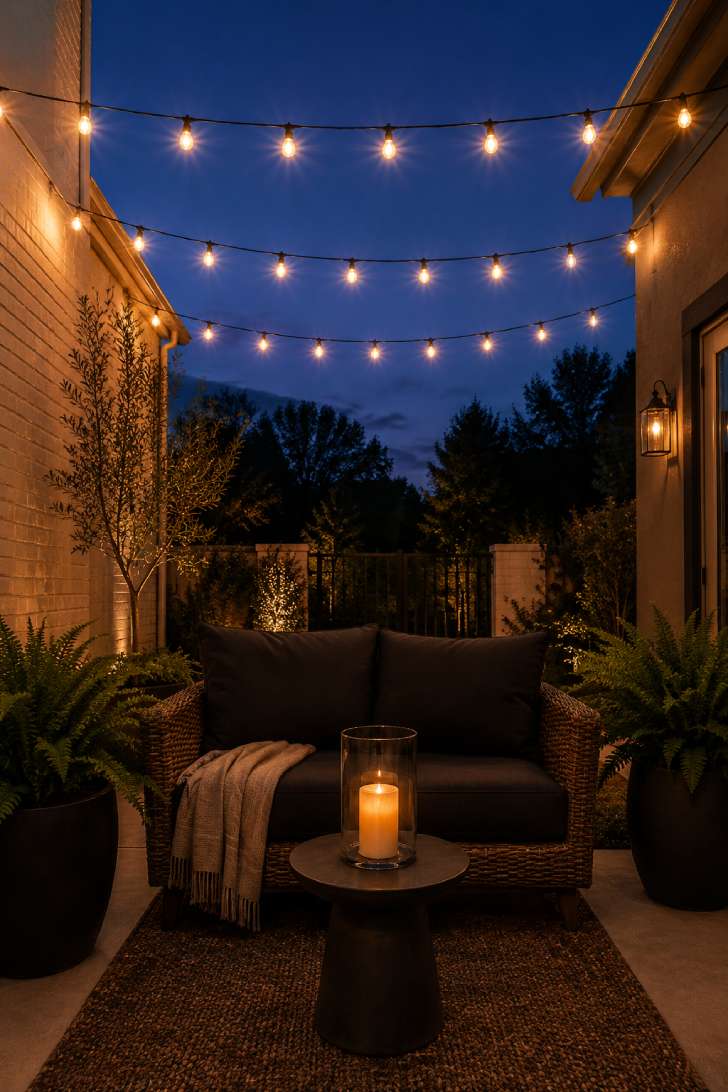
Patio string lights are not a new idea.
But most people hang them wrong.
The trick is height and density: mount them at least seven feet up, run three to four parallel lines rather than a single strand, and use warm-toned bulbs (2200K to 2700K).
That creates a canopy effect — a glowing ceiling that defines the space from above and draws the eye up rather than toward the boundaries.
Layer in one or two hurricane lanterns at ground or table level and you’ve built three planes of light: overhead, eye level, and below.
That layered lighting mimics the way indoor rooms feel designed, and it’s the fastest way to make a small outdoor living space feel intentional rather than random.
The warm color temperature matters more than brightness here — lower Kelvin numbers produce the amber glow that signals “evening” and “rest” to your brain, reducing alertness and encouraging you to actually sit and stay.
Style Blueprint:
- Warm-toned bistro string lights (2200K-2700K), 3-4 parallel strands
- Mounting hooks or eye bolts rated for exterior use
- A glass hurricane lantern with an LED pillar
- A compact wicker or rattan loveseat with thick cushions
- Two matte-finish ceramic planters with ferns
The Container Garden Patio
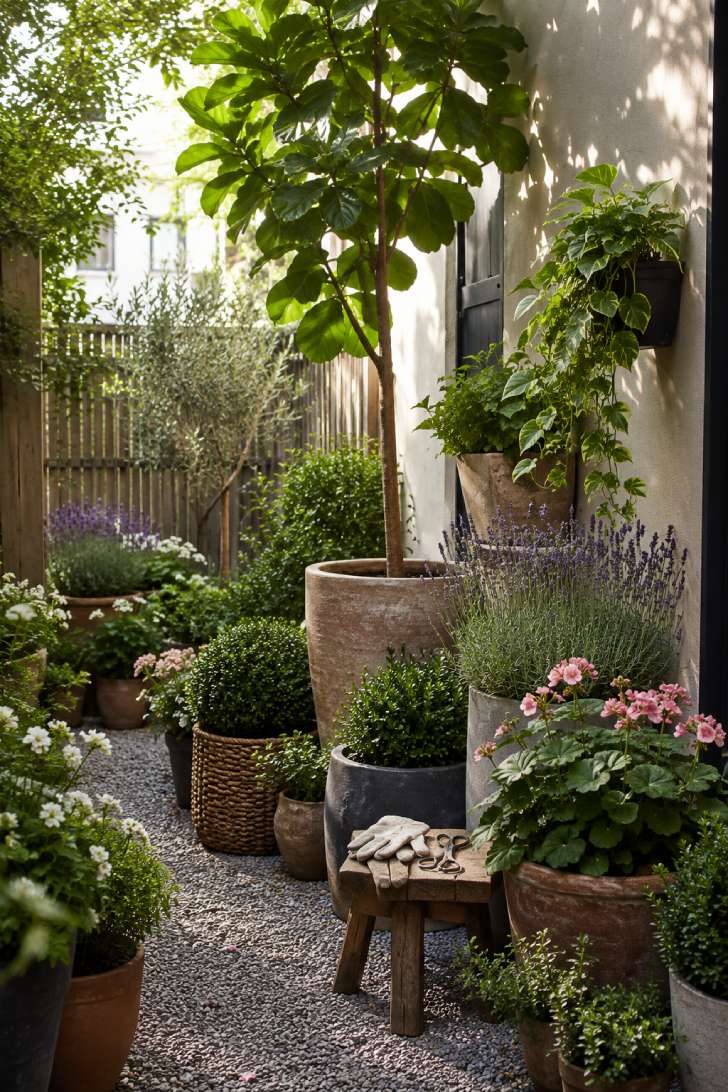
More plants. Fewer things.
That’s the formula for a container garden patio, and it works because greenery does what furniture can’t: it softens hard surfaces, absorbs sound, and makes a concrete rectangle feel like it belongs to the earth.
Group containers in clusters of three or five at staggered heights — a tall fiddle leaf fig or Japanese maple at the back, medium shrubs and blooming plants in the middle, trailing varieties spilling from the front.
Mixing pot materials (terra cotta, concrete, matte ceramic, woven baskets) adds texture without costing extra square footage.
This approach to small patio decorating ideas is especially effective for renters who can’t modify walls or floors — every single element is portable.
Plants grouped tightly together also create their own microclimate, trapping humidity and reducing the hot, dry feeling that bare concrete patios radiate in summer.
Style Blueprint:
- 15-20 containers in mixed materials and sizes
- One statement plant over 4 feet tall
- Trailing plants for wall-mounted or railing planters
- A narrow gravel or pebble section between groupings
- A small wooden stool or stand for height variation
Design Pro-Tip: The “thriller, filler, spiller” rule from container gardening applies to your entire patio layout too. Place one tall statement piece (a large plant, a lantern, a piece of art) as the thriller, surround it with mid-height furnishings and pots as fillers, and let trailing plants or a ground-level rug act as the spiller. That three-tier approach gives even a 5×7 patio the visual depth of a much larger space.
Mirror Illusion Wall
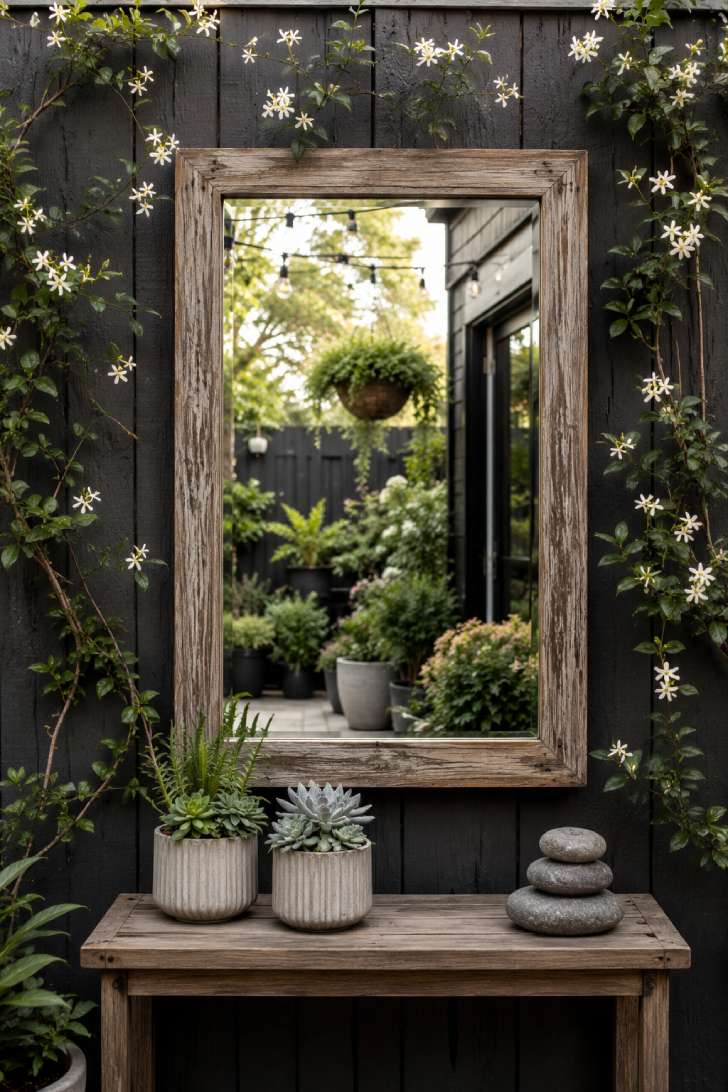
Interior designers have used mirrors to expand small rooms for centuries.
The same principle works outdoors, and almost nobody does it.
Mount a weatherproof mirror — or even a salvaged frame with mirror panels — on your fence or wall at seated eye level.
It reflects the greenery and lighting you’ve already installed, effectively doubling the perceived depth of the space.
Position it across from your most planted area for maximum impact.
The brain processes reflected space as real space for about a half-second before correcting itself, and that half-second is enough to shift your overall perception of the patio’s size.
Frame the mirror with climbing plants so the edges blend into the surroundings rather than looking like you hung a bathroom mirror on a fence.
Style Blueprint:
- One large weatherproof mirror (at least 20×30 inches)
- A distressed wood or metal frame that weathers naturally
- Climbing jasmine or ivy around the mirror edges
- A narrow console table or shelf below
- Two to three small pots on the shelf for layered reflection
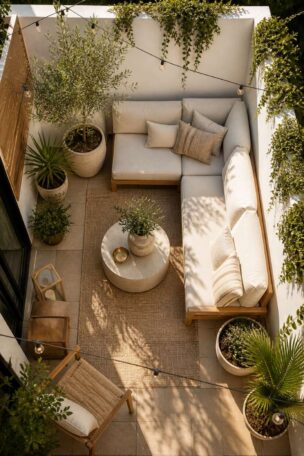
Modular Sectional Nook
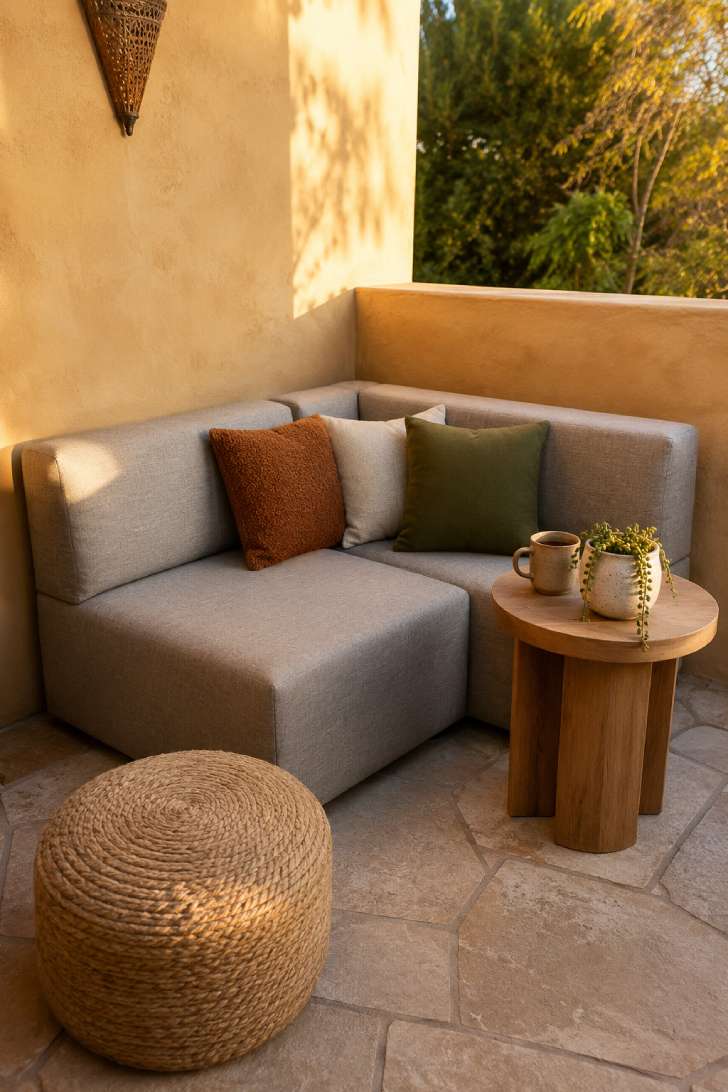
A modular sectional sounds like it belongs in a large living room.
But compact two-piece versions designed for outdoor use fit into corner spaces as small as 5×5 feet and create more seating than any pair of chairs could.
The L-shape tucks into the architecture of the patio itself, using the walls as a built-in backdrop.
Choose performance fabric in a neutral tone — warm gray, taupe, or oatmeal — so the piece blends with the surroundings rather than dominating them.
Add textured pillows in two or three complementary tones for color without clutter.
Corner seating creates what environmental psychologists call a “refuge” position — your back is protected by walls on two sides, and your view opens outward.
That arrangement triggers a deep sense of comfort and relaxation, which is why you’ll find yourself staying outside longer than you planned.
Style Blueprint:
- A compact two-piece modular outdoor sectional (weatherproof)
- Three textured throw pillows in warm, earthy tones
- A round acacia or teak side table (under 18 inches diameter)
- One woven jute or seagrass pouf
- A trailing plant on the wall above for vertical softness
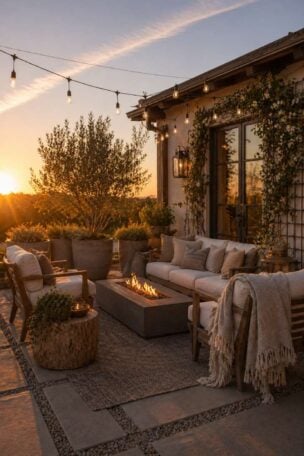
Fire Pit Gathering Spot
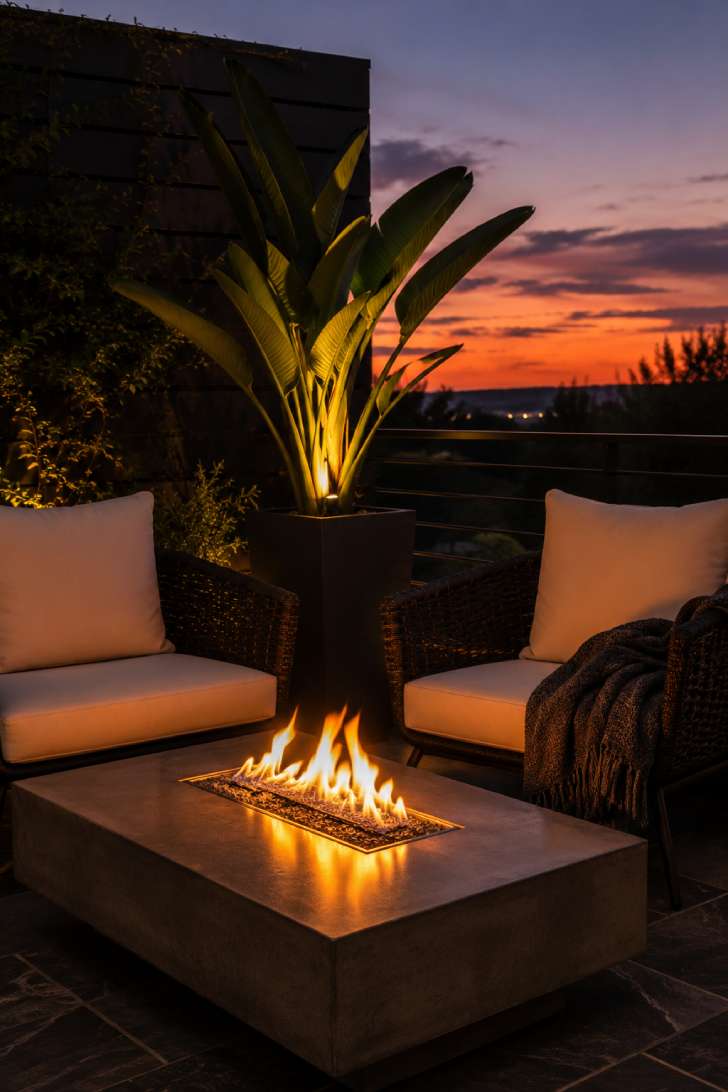
Fire changes everything on a patio.
Even a small tabletop version — ethanol or gel-fueled, smokeless, no gas line required — creates a focal point that draws people in and holds them there.
Place it on a low coffee table between two chairs and you’ve built a gathering spot that works from spring through late fall.
The semicircular chair arrangement around the flame mimics the oldest human social configuration — the campfire circle — and it triggers a communal, settled feeling that no other furniture layout replicates.
Smokeless fuel options mean you can use this on enclosed patios, apartment balconies, and spaces where traditional fire pits would be impossible.
Style Blueprint:
- A rectangular or round tabletop fire pit (ethanol or gel fuel)
- A low concrete or stone coffee table as the base
- Two low-profile lounge chairs with deep cushions
- One wool or acrylic outdoor throw blanket
- A tall statement plant behind the seating
Outdoor Curtain Room
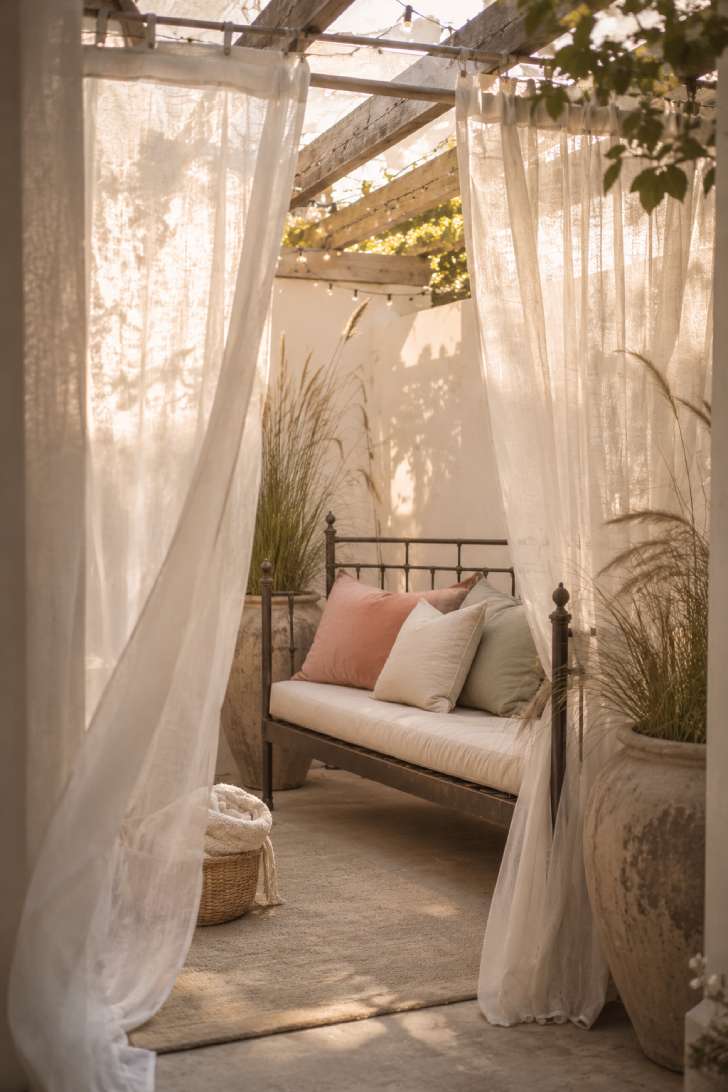
Hanging outdoor curtains on a small patio does two things at once: it creates privacy from neighbors or passersby, and it makes the space feel like a room rather than an afterthought.
Sheer fabric is the move here — it filters light without blocking it, billows in the breeze to add movement, and adds a softness that hard surfaces (concrete, metal, wood) desperately need.
A tension rod between two walls, or simple curtain wire attached to a pergola frame, is all you need for installation.
The semi-transparent barrier tells your brain you’ve crossed a threshold into a separate space, and that psychological boundary is what transforms “stepping onto the patio” into “entering your outdoor room.”
Full blackout curtains on a small patio would feel heavy and claustrophobic — sheer fabric gives you enclosure without entrapment.
Style Blueprint:
- Sheer weatherproof outdoor curtain panels in white or ivory
- A tension rod, curtain wire, or pergola-mounted rod
- One strand of micro fairy lights along the curtain line
- Two tall planters with ornamental grasses for framing
- A woven basket for blanket storage
Design Pro-Tip: When arranging furniture on a small patio, resist the urge to push everything against the walls. Pulling your main seating piece even six inches away from the perimeter creates a shadow gap that adds visual depth and makes the space feel less cramped. The wall behind becomes a backdrop rather than a boundary, and you gain room for trailing plants or a narrow shelf in that gap.
The Reading Retreat
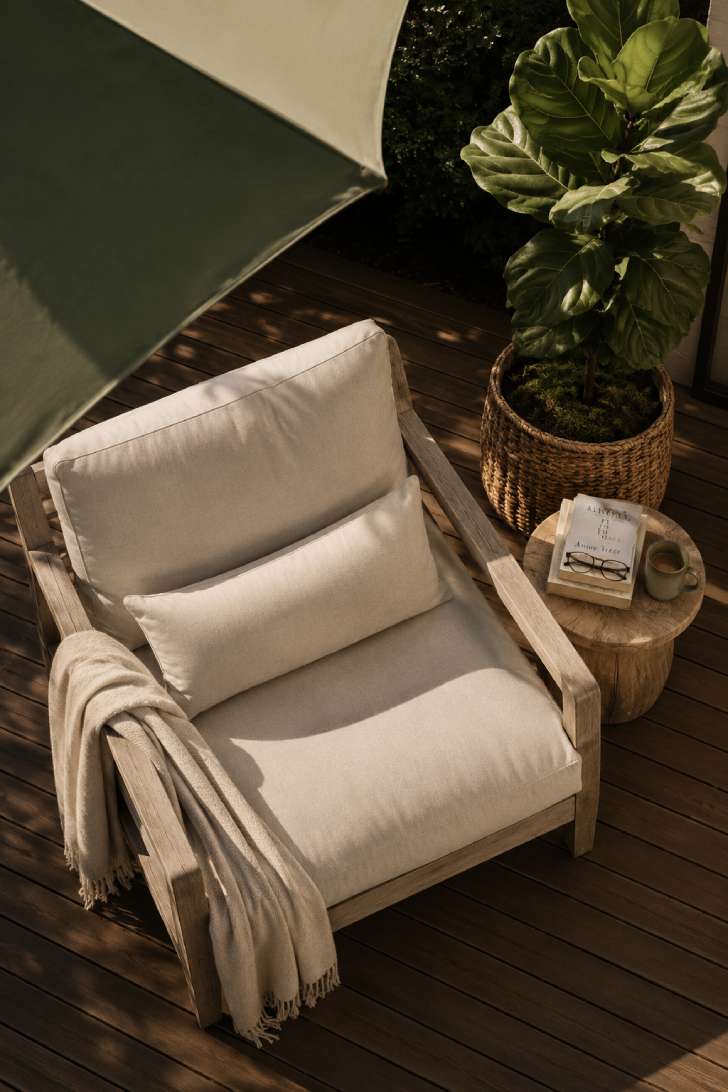
Not every small patio needs to seat four.
If you live alone or simply want an outdoor space that’s yours and yours alone, a single deep lounge chair with a cantilevered umbrella for shade is all you need.
A small side table holds your drink and your book.
A potted plant fills the other corner.
Done.
This is the most space-efficient of all the small patio decorating ideas here because it requires exactly three pieces: a chair, a table, and a shade solution.
Single-purpose spaces feel more intentional than multi-use ones because every object in sight has a clear reason to be there — nothing competes for your attention, and your mind settles faster.
Style Blueprint:
- One oversized outdoor lounge chair with a thick cushion
- A cantilevered or wall-mounted half umbrella
- A small round teak or acacia side table
- One statement potted plant in a textured basket
- A lightweight cotton or linen throw
Japanese-Inspired Zen Corner
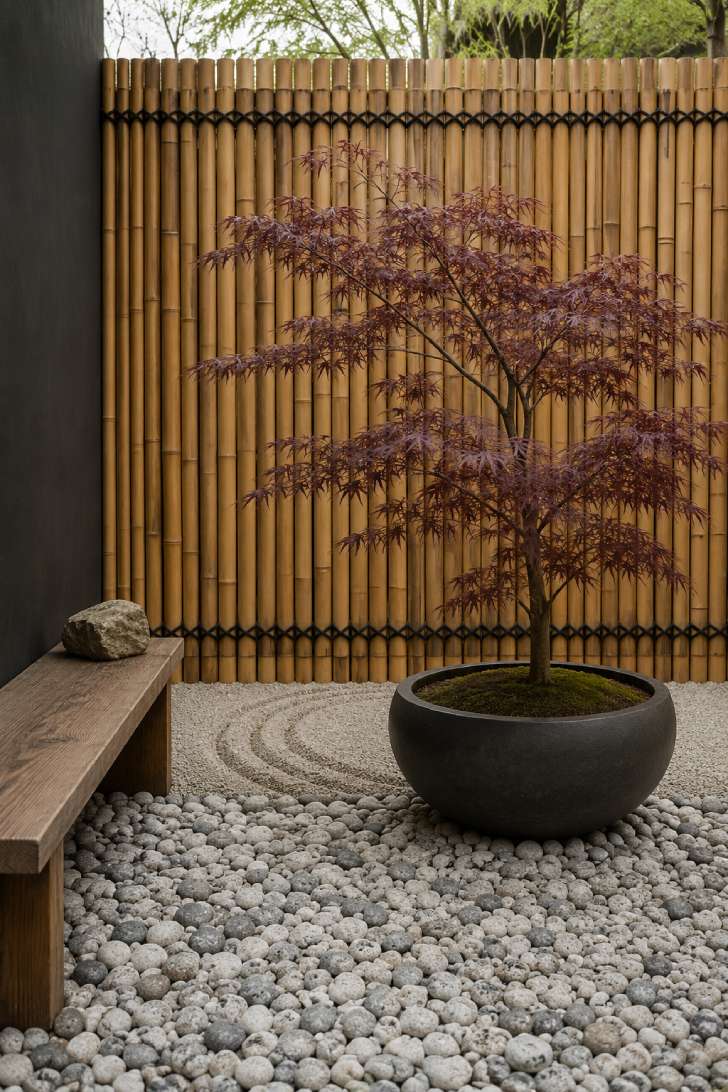
Strip everything away.
A zen-inspired patio corner uses five elements or fewer and lets the negative space between them do the work.
Pebble or gravel ground cover replaces furniture-heavy arrangements, a single potted Japanese maple or bonsai becomes the focal point, and a bamboo screen provides the backdrop.
This approach works particularly well on patios where the architecture is plain or the surroundings are visually noisy — the simplicity of the zen arrangement creates a pocket of calm that contrasts with everything around it.
In Japanese garden philosophy, empty space (“ma”) is not wasted space — it’s the pause between notes that makes the music.
A patio designed with this principle feels spacious not because it has more room, but because each object has enough breathing space around it to be fully noticed.
Style Blueprint:
- Pale gray or white pebble ground cover
- One statement tree or plant in a low ceramic bowl
- A natural bamboo privacy screen
- A simple cedar or teak bench, unadorned
- A small section of fine raked gravel (optional)
Boho Textured Haven
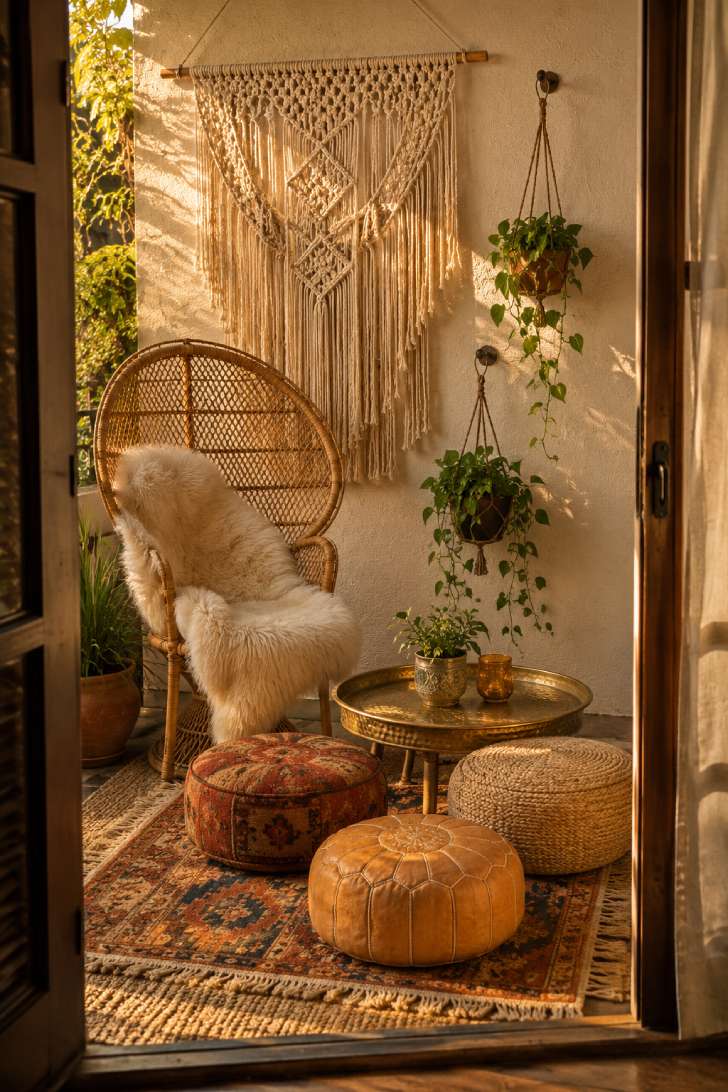
Boho style is practically made for small patio decorating ideas because it relies on texture and layering rather than large furniture pieces.
A rattan peacock chair is the statement piece — it takes up a 3×3 foot footprint and fills a corner with sculptural shape.
Around it, pile on the layers: a jute rug under a kilim, woven poufs for flexible seating, macrame on the wall, trailing plants from above.
The magic here is density of detail at a small scale.
Every surface has something tactile — a nubby weave, a braided cord, a rough ceramic, a soft sheepskin.
That sensory richness makes the brain register the space as full and complete, even though the actual furniture count is low.
Warm, earthy tones (mustard, terracotta, rust, olive) keep the layering cohesive rather than chaotic.
Style Blueprint:
- A rattan peacock chair or papasan chair
- One large macrame wall hanging
- Two layered rugs (jute base, patterned kilim on top)
- Two to three woven or textile poufs in warm tones
- Trailing plants in hanging planters at varying heights
Bar-Height Rail Counter
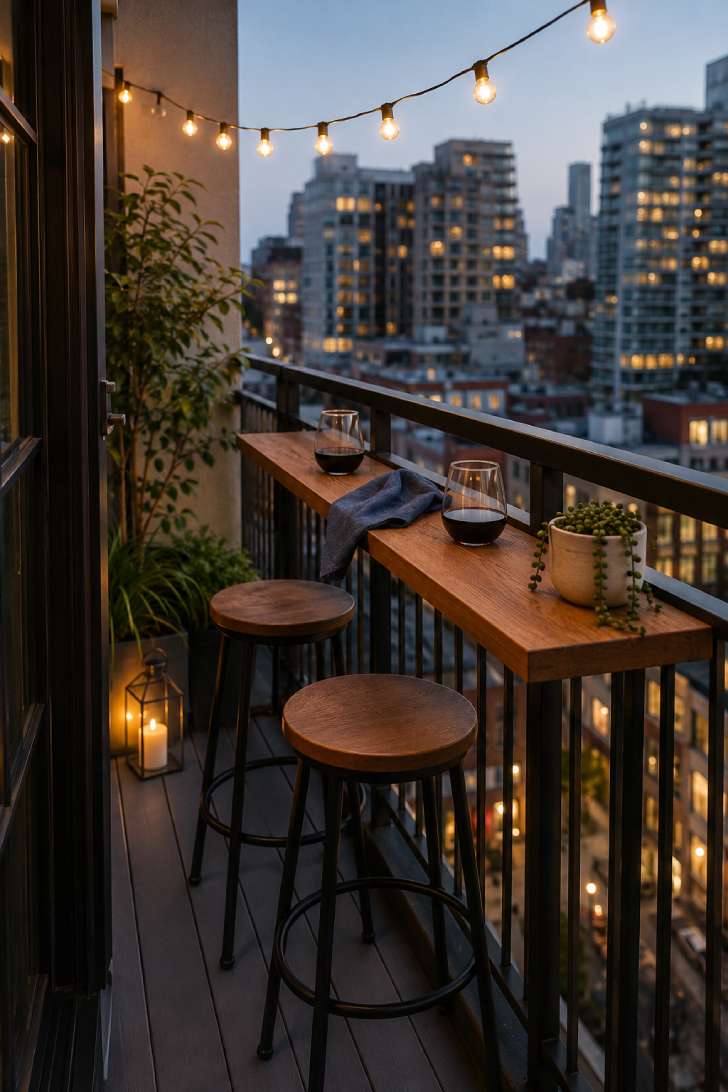
When your patio is really a balcony — narrow, rectangular, with a railing on one side — a bar-height counter along that rail is the smartest use of space you’ll find.
A 12-inch-deep ledge is all you need for plates, glasses, and a small plant.
Backless stools tuck completely underneath when you’re not using them, freeing the entire floor for standing, stretching, or adding a yoga mat.
This setup turns the railing itself into a feature rather than a barrier.
You eat facing the view instead of staring at your apartment wall, and the standing-height position keeps the patio feeling open and active.
For renters who can’t mount anything to walls, a freestanding bar table that braces against the railing is a no-drill option.
Style Blueprint:
- A narrow bar-height table (12-16 inches deep, 40-42 inches tall)
- Two backless bar stools that tuck under the counter
- A small trailing plant in a compact planter
- One strand of bistro lights overhead
- A set of outdoor-rated placemats or a narrow runner
Design Pro-Tip: Color consistency is the easiest way to make a small patio feel pulled-together. Pick two main tones (one light, one warm) and one accent, then repeat them across every element — furniture, pots, textiles, even the watering can. That visual rhythm prevents the “yard sale” look that happens when too many unrelated objects compete for attention in a tiny space.
Water Feature Focal Point
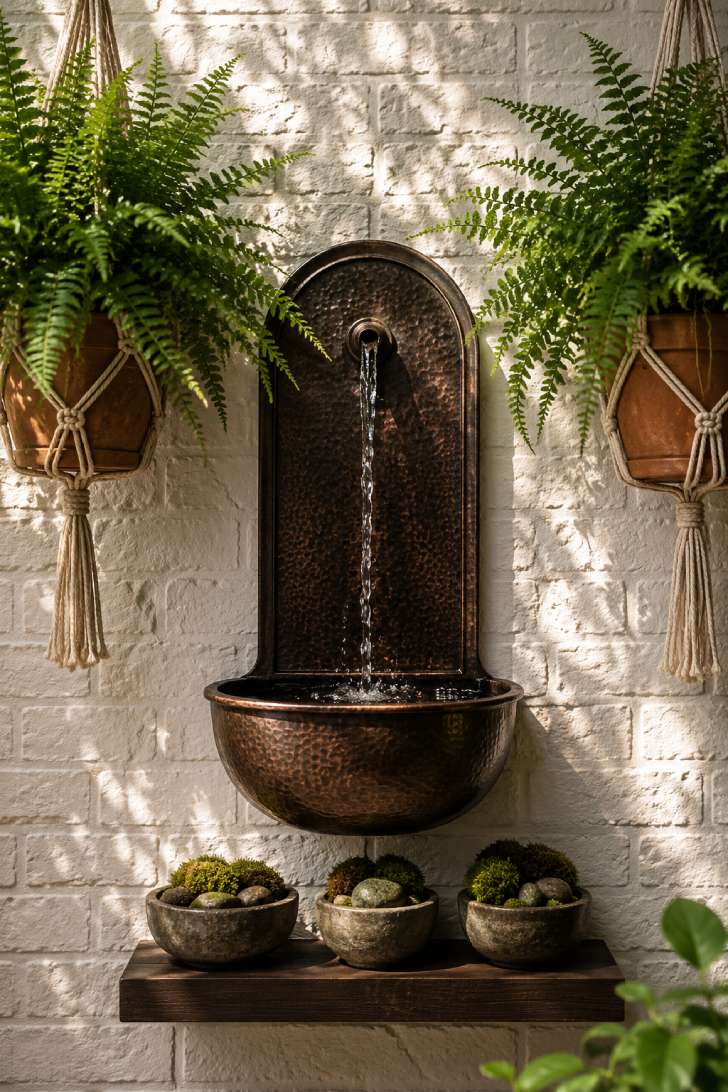
Sound is an underused tool in small patio decorating ideas.
A wall-mounted water fountain — copper, stone, or ceramic — introduces the sound of moving water, which masks street noise, neighbor conversations, and the general hum of a busy neighborhood.
The fountain itself takes up zero floor space since it mounts directly to the wall.
Pair it with ferns and moss-covered pots at the base to create a self-contained vignette that feels like a garden grotto.
Moving water has a well-documented effect on the nervous system: the irregular, rhythmic sound pattern pulls attention away from repetitive thought loops and promotes a meditative state.
Even a small tabletop fountain on a shelf achieves this — the volume of water matters less than its presence.
Style Blueprint:
- A wall-mounted or tabletop water fountain
- Two hanging ferns in terra cotta or ceramic pots
- Three small pots with moss, pebbles, or succulents
- A narrow floating shelf or ledge for the display
- Waterproof backing material if mounting on wood
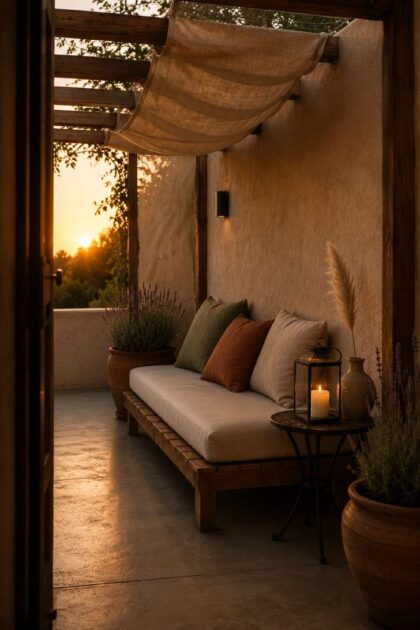
The Daybed Escape
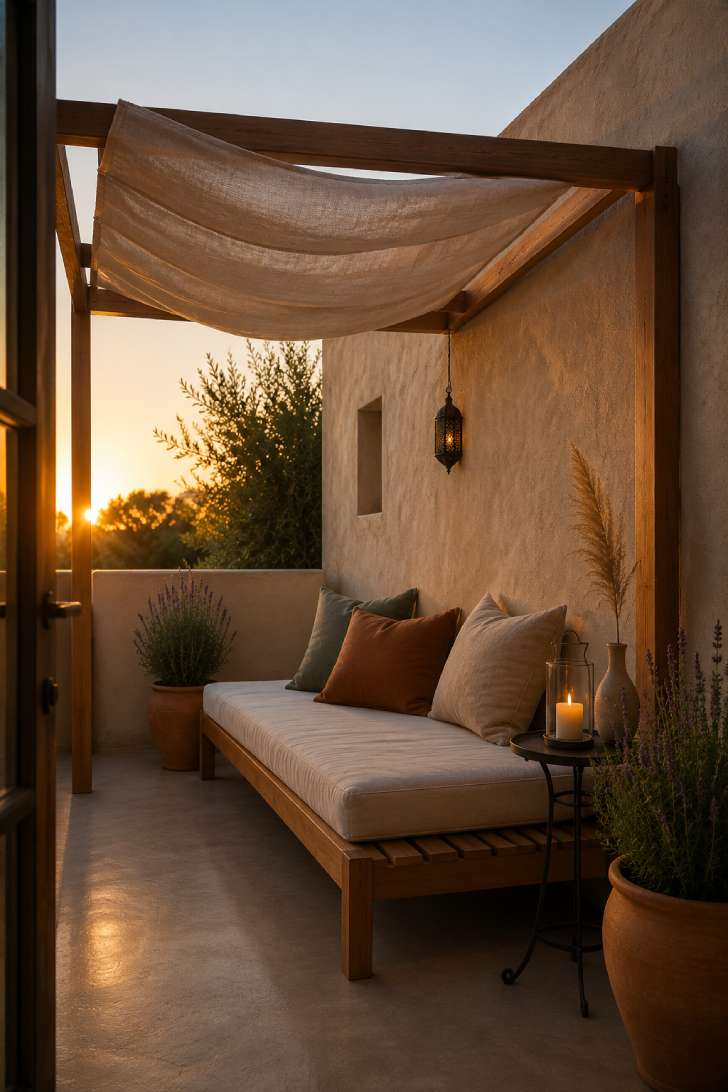
This is the indulgent one.
An outdoor daybed sounds like a luxury reserved for resort terraces, but a narrow version (30-36 inches wide) fits against any wall and takes up less floor space than a loveseat-and-table combination.
The daybed turns a patio into a destination rather than a pass-through — you don’t just sit here, you settle in.
A simple overhead canopy in linen or cotton adds shade and creates a tent-like enclosure that feels private and cozy.
The horizontal position changes your relationship to the outdoor space entirely.
Lying down on a patio instead of sitting upright in a chair shifts your gaze from eye level (where you see fences and walls) to upward (where you see sky, leaves, and lights overhead).
That shift in perspective makes small patios feel boundless.
Style Blueprint:
- A narrow outdoor daybed with a teak or metal frame (30-36 inches wide)
- A thick outdoor mattress pad in off-white or natural linen
- Three oversized pillows in coordinating earth tones
- A simple overhead canopy or draped linen panel
- Two tall planters with lavender or ornamental grasses
Your Small Patio, Your Rules
Fifteen ideas is a lot.
You don’t need all of them — you need one or two that match your patio’s shape, your budget, and the way you actually want to spend time outside.
Start with the piece that excites you most, whether that’s a bistro set, a string of lights, or a single oversized lounge chair.
Build around it.
Small patios have an advantage that big backyards never will: every single inch gets your attention, your intention, and your personality.
That’s what makes them worth decorating in the first place.