This post may contain affiliate links. If you make a booking or purchase through these links, we may earn a commission at no additional cost to you.
A bare garden wall is wasted square footage.
The right combination of weatherproof metals, living greenery, and handcrafted tile can turn that blank surface into the most photographed corner of your yard.
These 13 garden wall decor ideas cover everything from a rust-finished corten steel panel to a pocket planter grid overflowing with succulents, each one built to survive rain, sun, and frost while looking better with every passing season.
Whether you have a small patio wall or a long fence line, you will find at least one idea here worth copying this weekend.
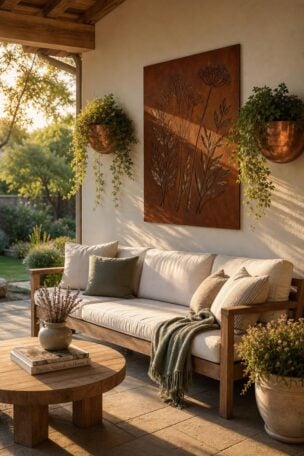
Corten Steel Leaf Silhouette Panel Against a White Stucco Wall
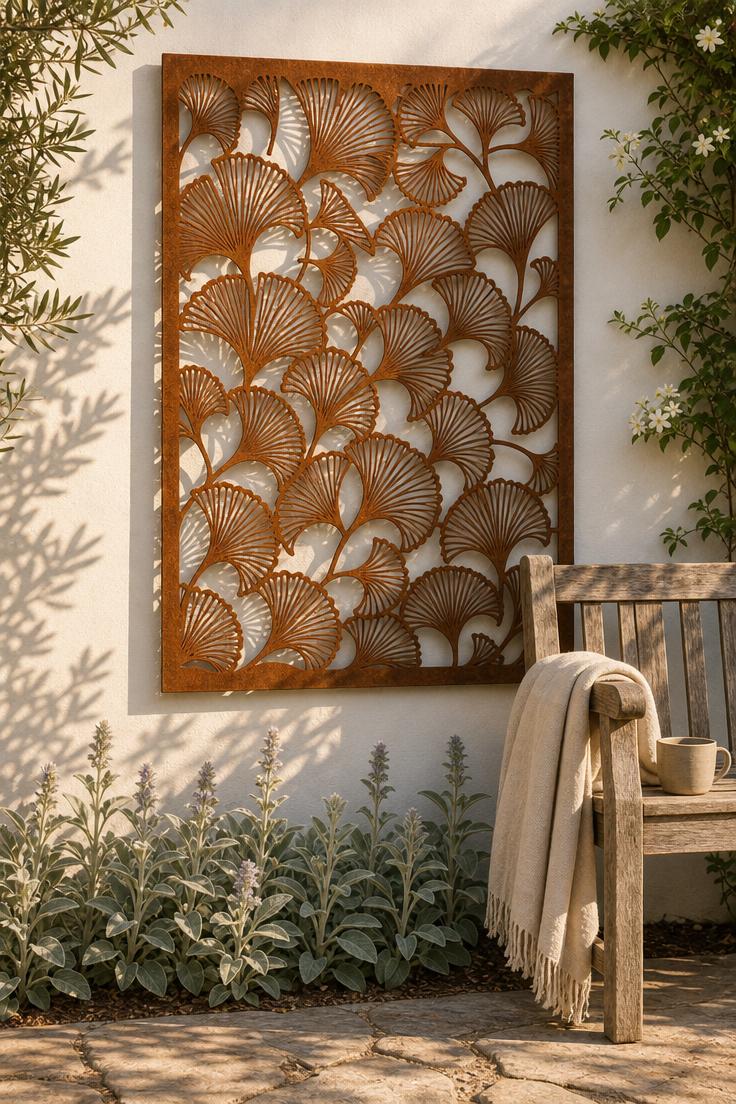
There is something deeply calming about the contrast between raw, oxidized metal and a clean white wall.
The corten steel develops its protective rust layer over months, meaning the color deepens and shifts with each season.
Those leaf-shaped cutouts do double duty: they let light pass through during the day, painting moving shadows on the stucco as the sun tracks across the sky.
At night, a small uplight behind the panel reverses the effect and throws leaf silhouettes onto the ceiling of a covered patio.
The warm orange tone of the rust pairs naturally with silver and grey-green foliage planted below.
Lamb’s ear, dusty miller, or artemisia all work well because their muted leaves let the metal stay the clear focal point.
A single large panel reads stronger than a cluster of small pieces on an outdoor wall art display.
Style Blueprint:
- One laser-cut corten steel panel (ginkgo, fern, or monstera motif), 90 cm x 120 cm minimum
- Stainless steel standoff mounts to create a 3 cm gap between the panel and the wall
- Low border planting of silver-green foliage (lamb’s ear or artemisia)
- One low-voltage LED uplight rated IP65 for outdoor use
- A weathered teak bench or stool placed to one side for scale
Succulent Pocket Planter Grid on a Cedar Fence
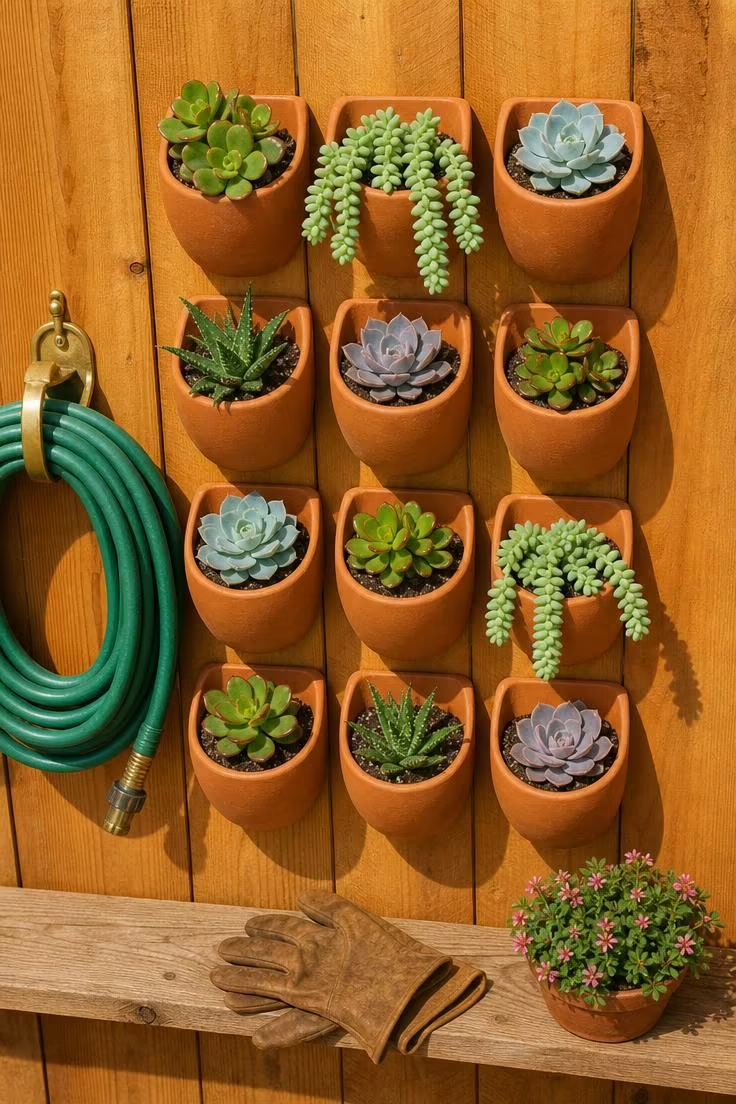
Succulents ask for almost nothing and give back year-round color and texture.
A grid arrangement on a fence turns a flat surface into a living wall planter that changes slowly over time as each plant grows and spills past its rim.
The terracotta pots breathe well, which keeps roots from sitting in water after a heavy rain.
Spacing the pots in a strict grid rather than a random scatter gives the display a calm, organized look that reads well from across a yard.
Cedar ages to a silvery grey over time, and that cool tone makes the warm orange pots and green leaves pop even more.
This is one of the most affordable garden wall decor projects on this list, since small succulents and terracotta pots cost very little.
Style Blueprint:
- Twelve small terracotta pocket planters with drainage holes and flat backs for mounting
- Stainless steel screws and wall anchors rated for exterior wood
- A mix of at least four succulent varieties for color and shape contrast
- One brass utility hook for a hose or tool
- A narrow cedar shelf mounted below the grid for gloves and hand tools
Antique Wrought Iron Window Grate Repurposed as Outdoor Wall Art
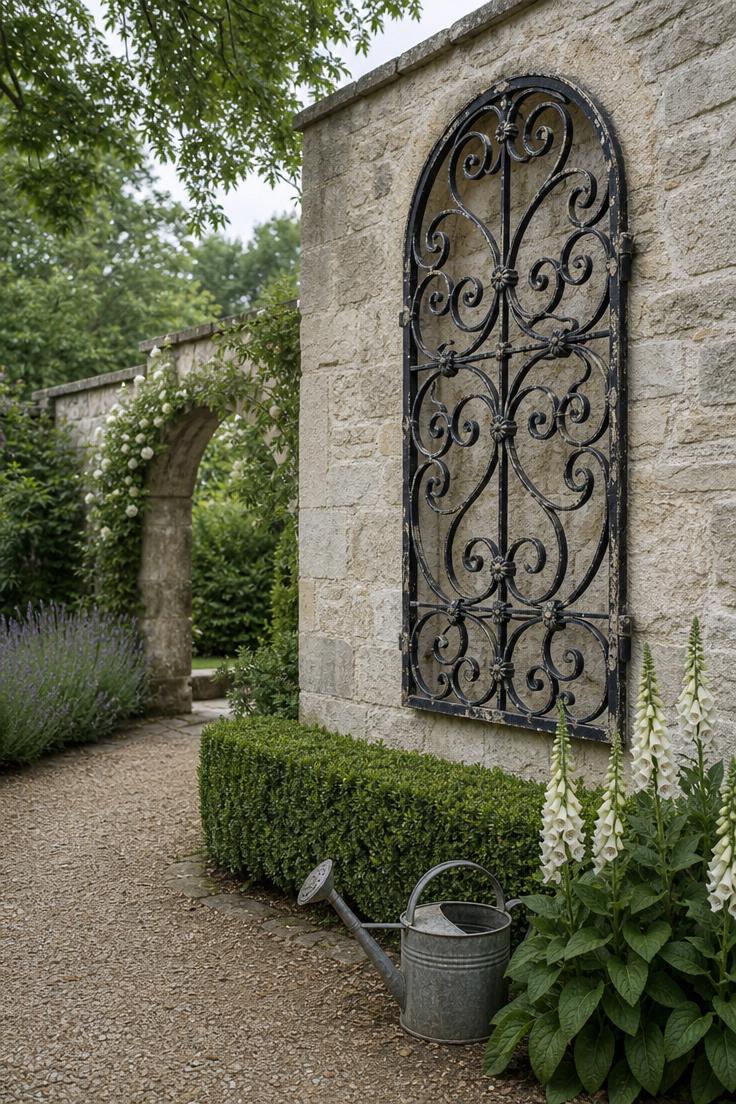
A single architectural salvage piece can anchor an entire garden fence decor scheme without needing anything else around it.
The beauty of an old window grate is its history: the chipped paint, the slight bend in one scroll where someone forced it open decades ago, the uneven patina that no factory reproduction can match.
Mounting it flat against a stone or plaster wall gives it a second life as a framed sculpture.
The arched top draws the eye upward, which makes a low garden wall feel taller than it actually is.
Wrought iron weathers well outdoors, especially if you give it a yearly coat of paste wax rather than repainting it.
Leave the imperfections visible, because they add character that reads as collected rather than purchased.
Keeping the planting below simple, a single species like boxwood or lavender, lets the ironwork remain the star.
If you have a metal wall sculpture already, grouping it near a salvaged grate creates an informal gallery that still feels intentional.
Style Blueprint:
- One antique or reproduction wrought iron window grate, arched top, at least 60 cm wide
- Heavy-duty masonry anchors for stone or brick walls
- A low clipped hedge (boxwood, lavender, or rosemary) running along the wall base
- Gravel or decomposed granite pathway in front for clean sightlines
- One zinc or galvanized watering can as a styling prop
Glazed Talavera Tile Mosaic Framing a Garden Spigot
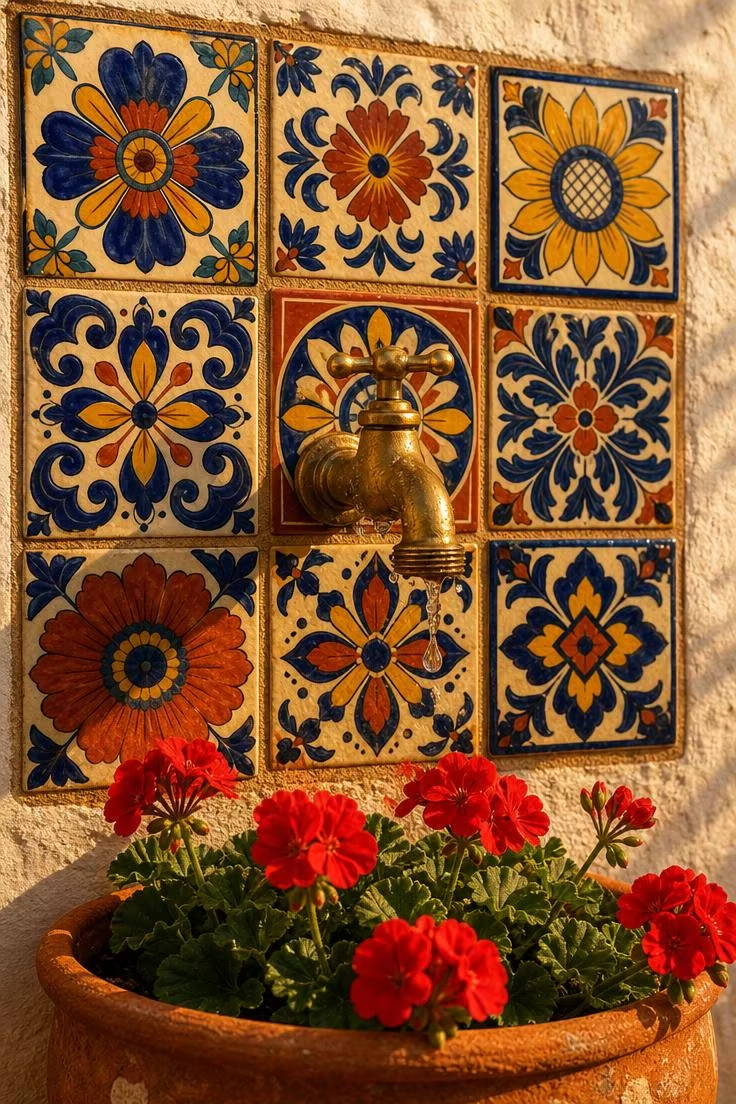
Color is the first thing you notice, and these hand-painted tiles deliver it without apology.
The traditional Talavera palette of cobalt, yellow, and terracotta brings a warmth that most outdoor walls lack.
Framing a functional element like a spigot with decorative tile turns an overlooked utility corner into a deliberate design moment.
Each tile is slightly different because they are painted by hand, and that imperfection gives the mosaic wall art a quality that printed ceramic cannot match.
The glossy glaze sheds water easily, making cleanup simple after a muddy afternoon of planting.
A small cluster of tiles, maybe twelve to sixteen pieces in a square, is enough to make a strong statement without overwhelming the wall.
Style Blueprint:
- Twelve to sixteen hand-painted Talavera tiles (10 cm x 10 cm each) in a traditional floral pattern
- Exterior-rated thin-set mortar and sand-colored grout
- One brass garden spigot with a cross-handle design
- A single terracotta pot with bright annuals (geraniums, marigolds, or zinnias) placed below
- UV-stable grout sealer applied annually to prevent fading
Design Pro-Tip: When mixing patterned tiles, pick one dominant color (like cobalt blue) that appears in at least half the tiles. This shared thread ties the randomness together and keeps the mosaic from looking chaotic from a distance.
Copper Sheet Water Spout Mounted on a Stacked Stone Column
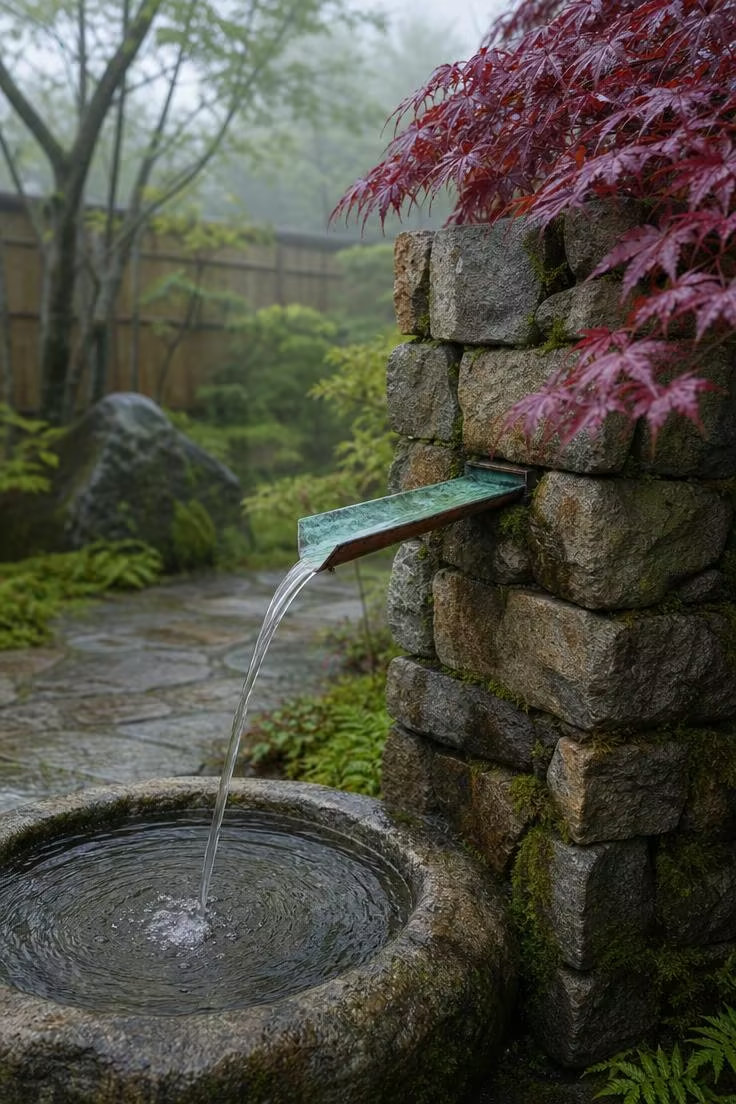
The sound of moving water changes how a garden feels more than almost any visual element.
A wall-mounted fountain does not need to be large or complicated to have that effect.
This copper spout is a simple bent sheet, maybe thirty centimeters long, and the water recirculates through a hidden pump in the basin below.
The verdigris patina that develops over months gives copper a color that no paint can replicate: a soft sea-green that shifts depending on the mineral content of your local water.
Stacked fieldstone around the spout anchors it visually and hides the plumbing line running up from the basin.
Pairing the setup with a single specimen tree, like a Japanese maple, keeps the focus on the water feature rather than spreading attention across competing plants.
The steady trickle also masks street noise, which is especially useful for a small patio wall decor arrangement close to a road.
Style Blueprint:
- One hand-bent copper sheet spout (16-gauge copper, approximately 30 cm long)
- A round natural stone basin (50 cm diameter minimum) with a drilled outlet for the pump line
- A small submersible recirculating pump (rated for outdoor use, 200-400 liters per hour)
- Dry-stacked fieldstone or river rock to build up the column face
- One specimen tree or large shrub (Japanese maple, dwarf magnolia, or camellia) for an overhead canopy
Weathered Teak Lattice Panel With Star Jasmine Climbing Through
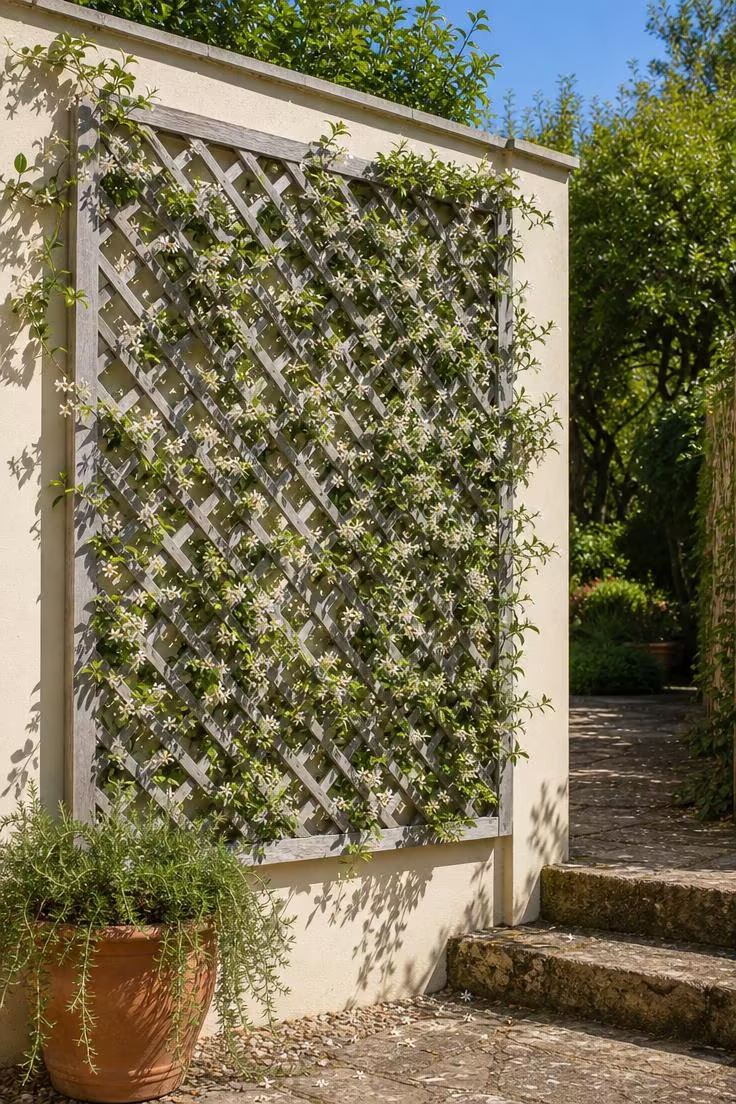
A climbing plants trellis works twice: it decorates the wall on day one with its structure, then fills in over weeks as the vine takes hold.
Star jasmine is one of the best choices because it blooms white, smells incredible from several feet away, and stays evergreen in mild climates.
The silvery grey of aged teak has a quiet beauty that does not compete with the flowers or leaves growing through it.
Mounting the lattice a few inches off the wall gives the vine room to wrap around the crosspieces rather than pressing flat against the surface.
That air gap also helps with ventilation, which keeps the wall dry and discourages mold or mildew behind the panel.
Over two or three growing seasons, the jasmine will cover most of the lattice, creating a vertical garden that blooms every spring.
You can train new growth by gently weaving young shoots through open sections each month during the growing season.
Pruning after the bloom period keeps the shape tidy without removing next year’s flower buds.
The fragrance alone is reason enough to place this near a seating area or along a path you walk daily.
Style Blueprint:
- One teak lattice panel (diamond pattern, approximately 120 cm x 180 cm) with stainless steel wall brackets
- Two to three star jasmine plants (Trachelospermum jasminoides) in 3-gallon pots, planted at the base
- Spacer blocks (5 cm) between the lattice and the wall for airflow and vine growth
- A drip irrigation line run along the base if rainfall is unreliable
- Annual application of teak oil is optional; many gardeners prefer the natural silver patina
Salvaged Stained Glass Transom Hung on a Brick Garden Wall
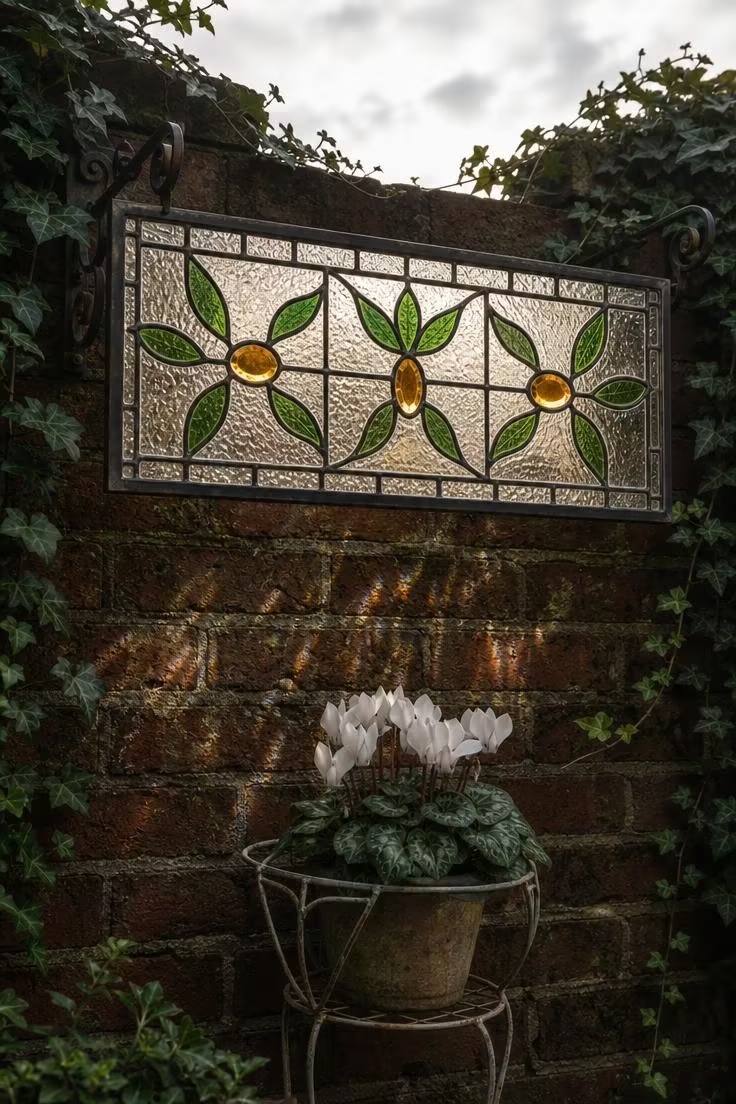
Stained glass belongs outdoors as much as it belongs in a church or a Victorian hallway.
A salvaged transom panel is already framed by its zinc or lead came, so it needs no additional border.
Hanging it on a solid wall rather than in a window means the light passes through only when the sun is at the right angle, creating a surprise moment of color that shifts throughout the day.
The Arts and Crafts style, with its simple leaf and geometric patterns, pairs naturally with a brick wall and green plantings.
Brick provides enough visual weight to keep the delicate glass from looking out of place, and the dark red tone warms the amber and green panes.
This is one of those outdoor wall art pieces that people walk past three times before noticing, then cannot stop looking at once they do.
Style Blueprint:
- One salvaged stained glass transom panel (Arts and Crafts, Art Nouveau, or geometric pattern)
- Two wrought iron L-brackets with rubber padding to protect the glass edges
- Heavy-gauge picture wire or stainless steel cable as a safety tether
- Trailing ivy or Virginia creeper trained to frame the panel without covering it
- One low planter or wire stand with white or pale flowers below for contrast
Design Pro-Tip: When hanging glass or mirrors on an outdoor wall, always position them where they will not catch direct afternoon sun for more than two hours. Extended direct heat on dark-colored glass can stress solder joints over years. A north-facing or east-facing wall is ideal.
Cast Concrete Planter Shelf With Trailing String of Pearls
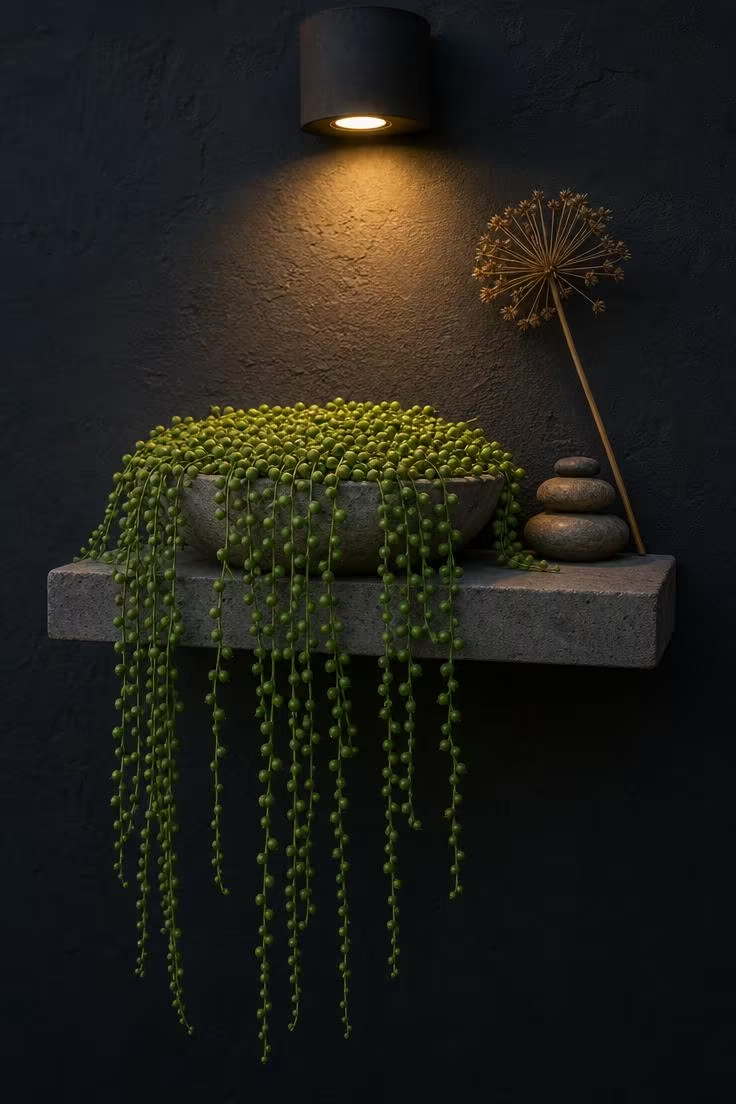
Dark walls make everything placed against them stand out with dramatic clarity.
A charcoal or near-black paint color on an exterior wall creates a backdrop that works the way a shadow box does for a museum object.
The pale green beads of the string of pearls plant almost seem to float against that dark surface, especially when lit from above by a single warm sconce.
Concrete as a shelf material matches the weight of an outdoor setting in a way that wood or glass shelving sometimes cannot.
The thick slab has a raw, industrial quality that contrasts well with the delicate, organic drape of the trailing plant.
Keeping the shelf sparse, just one bowl and a few stones, prevents the arrangement from becoming cluttered.
A single trailing species makes a cleaner statement than a mixed planter on a dark background.
This setup works well in a covered patio or under an eave where the plant gets bright indirect light but stays dry during storms.
Style Blueprint:
- One cast concrete floating shelf (60 cm x 15 cm x 5 cm thick) with hidden steel bracket
- A wide, shallow concrete or stone bowl (30 cm diameter) for the planter
- One mature string of pearls plant (or string of dolphins as an alternative)
- One wall-mounted sconce rated IP44 or higher, with a warm-white LED bulb (2700K)
- A few river stones or a single dried botanical stem for minimal shelf styling
Laser-Cut Aluminum Geometric Screen Backed by LED Rope Light
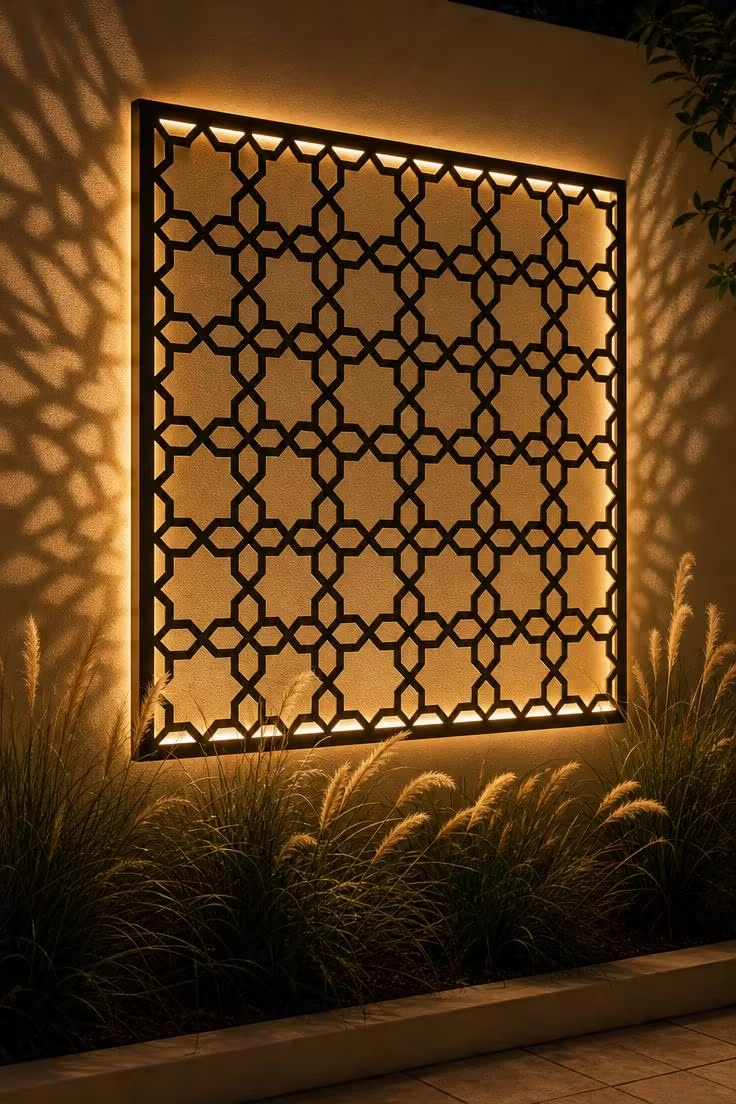
This piece does most of its work after sunset.
During the day, the matte black screen reads as a bold graphic panel against a light wall, simple and modern.
Once the LED rope light behind it switches on, the entire wall becomes a projection surface covered in repeating star and octagon shadows.
The effect is similar to a Moroccan lantern scaled up to architecture size.
Aluminum is an ideal material because it will not rust, weighs far less than steel, and holds a powder-coat finish for years without chipping.
Style Blueprint:
- One laser-cut aluminum panel (90 cm x 90 cm minimum) in matte black powder coat with a Moroccan or geometric pattern
- Warm-white LED rope light (IP65 rated, 2700K) adhered to the back perimeter of the panel
- Standoff mounts (5-8 cm) to create enough depth for the light to spread behind the panel
- A timer or smart plug to automate the lights at sunset
- Low ornamental grasses planted at the base to soften the hard geometry
Hand-Painted Trompe l’Oeil Garden Gate Mural on a Flat Fence
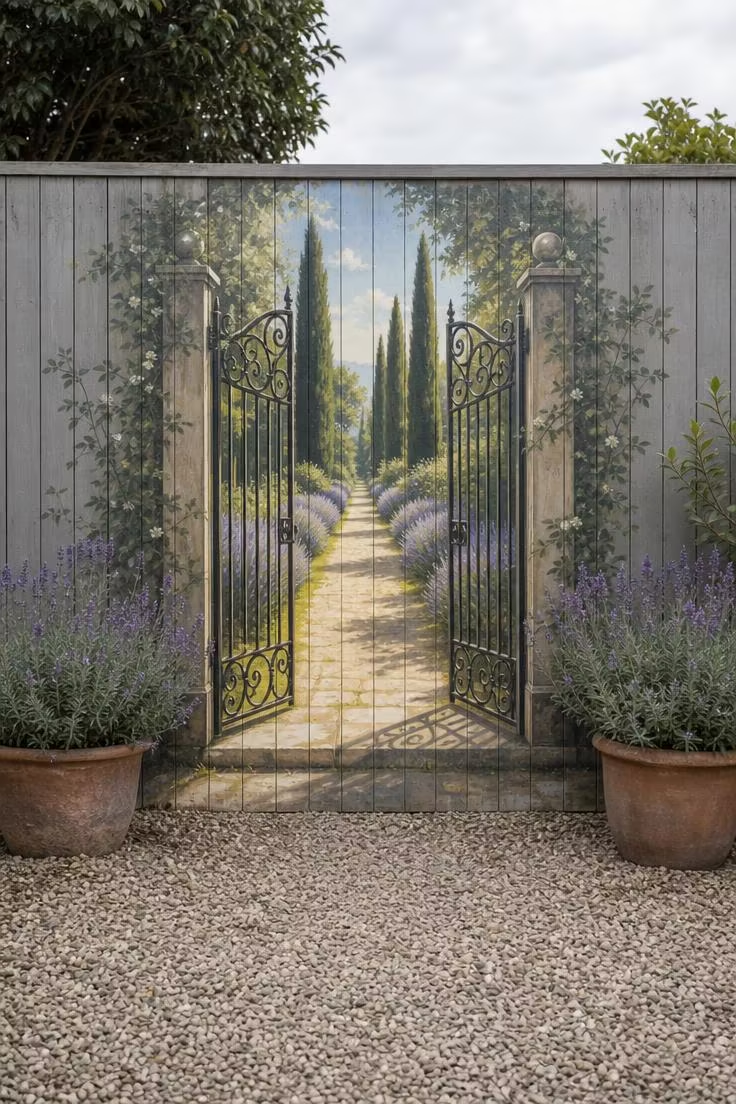
A painted mural can add depth to a garden that has none.
This technique works best on a flat fence or wall at the end of a short path, where the perspective trick has the longest sightline to sell the illusion.
Hiring a mural artist is one option, but stencil kits and projector tracing methods bring this within reach of a confident DIY painter.
The key to a convincing trompe l’oeil is matching the vanishing point of the painted scene to the viewer’s actual eye height when standing on the path.
Placing real plants at the base of the mural, especially the same species shown in the painting, blurs the line between the flat surface and the imagined space behind it.
Exterior-grade acrylic paint sealed with a UV-resistant clear coat can last five or more years on a wooden fence before needing a touch-up.
This is garden wall decor that stops every visitor in their tracks and starts a conversation.
Style Blueprint:
- Exterior-grade acrylic paint in a full palette (at least 12 colors for realistic depth)
- A flat, smooth fence section or rendered wall (minimum 120 cm x 180 cm) as the canvas
- A UV-resistant matte or satin clear coat sealer (marine-grade polyurethane works well)
- Real potted plants matching species shown in the mural (lavender, rosemary, or boxwood)
- A gravel or stone path leading directly toward the mural for maximum perspective effect
Design Pro-Tip: If you want a mural but cannot paint, consider a large-format UV-printed aluminum panel mounted on the fence. These are made from a photograph or digital illustration, printed directly onto aluminum composite at a sign shop, and they are fully weatherproof.
Galvanized Steel Birdhouse Row on a Whitewashed Pallet Board
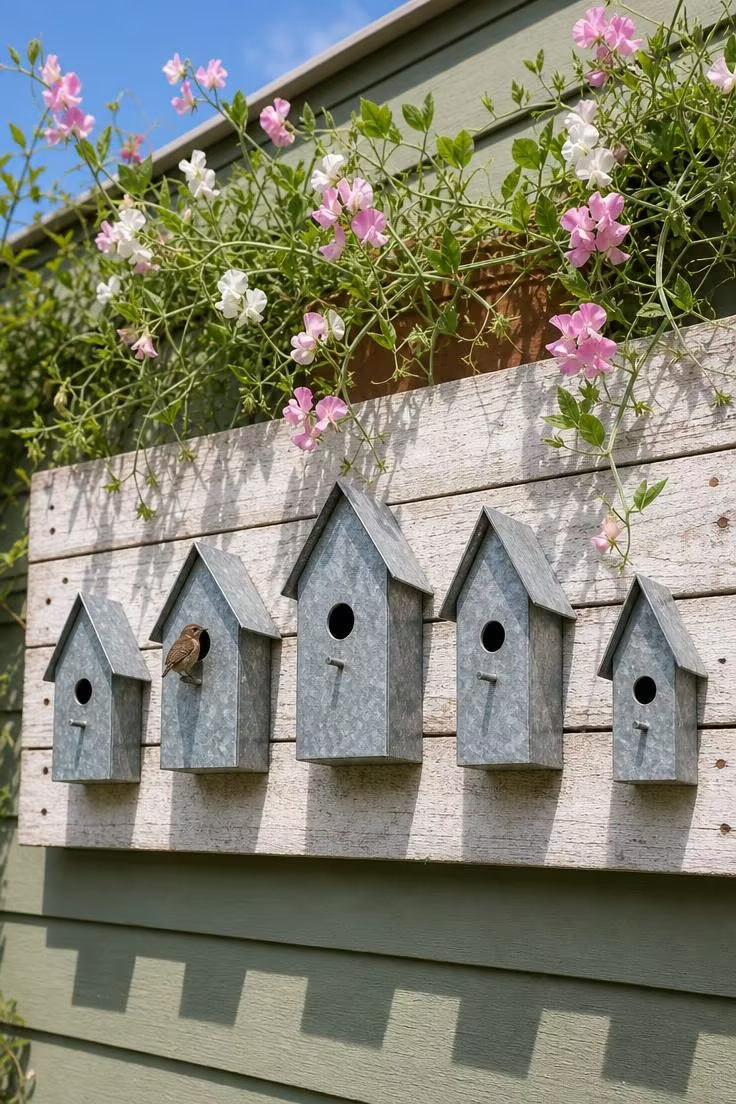
Birdhouses are one of the oldest forms of garden wall decor, and they still work because they invite life into the design.
A row of matched-material houses in graduated sizes reads as intentional art rather than scattered hobby projects.
Galvanized steel gives the houses a clean, modern look that ages well outdoors without rusting or peeling.
The whitewashed pallet board behind them adds a layer of texture and keeps the metal from looking cold against a painted wall.
Mounting all five on one board also makes installation simple: one board, two screws, done.
If wrens or chickadees actually move in, the design becomes a living piece that changes through nesting season.
Style Blueprint:
- Five galvanized steel birdhouses in graduated sizes (entry hole 28-32 mm for small songbirds)
- One whitewashed pallet wood board (approximately 120 cm x 25 cm) as a mounting plank
- Exterior wood screws and wall plugs appropriate for the wall material
- A trailing flowering vine (sweet pea, clematis, or morning glory) trained along the top edge
- A small dish of water or birdbath placed nearby to attract nesting birds
Round Convex Garden Mirror in a Verdigris Bronze Frame
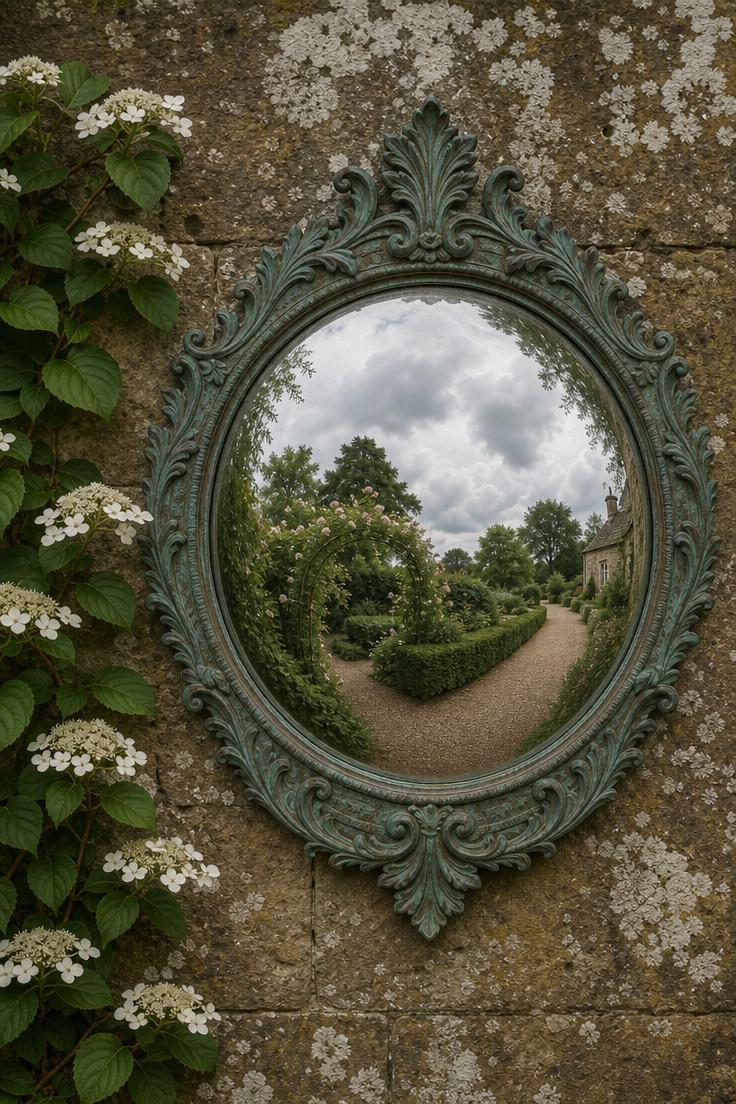
A garden mirror is a trick borrowed from 17th-century French garden design, and it still works in a modern setting.
The convex shape captures a wider reflection than a flat mirror, which means even a small courtyard appears to double in size when you stand in front of it.
Verdigris bronze has that blue-green tone that blends into a garden setting more naturally than polished chrome or plain black iron would.
Placing the mirror on a textured wall, especially one with lichen or moss, anchors it in its surroundings so it looks grown-in rather than recently hung.
The reflected image shifts constantly with the seasons: bare branches in winter, green leaves in summer, fall color in October.
Position the mirror so it reflects the best part of your garden, even if that means angling it slightly off-center on the wall.
A hydrangea or climbing rose growing near, but not over, the frame adds a living border that softens the hard circle.
Outdoor mirrors should be made with safety-backed glass or acrylic, especially in areas where children play or heavy winds are common.
Style Blueprint:
- One round convex mirror (60-80 cm diameter) with a bronze or iron frame rated for outdoor use
- Safety-backed glass or shatterproof acrylic mirror panel
- Heavy-duty wall anchor and French cleat mounting system for stone or brick
- A climbing hydrangea, rose, or jasmine planted to one side for a living frame
- Placement facing the garden’s strongest view line, angled slightly downward for the best reflection
Woven Willow Hurdle Panel Backed by Dwarf Bamboo
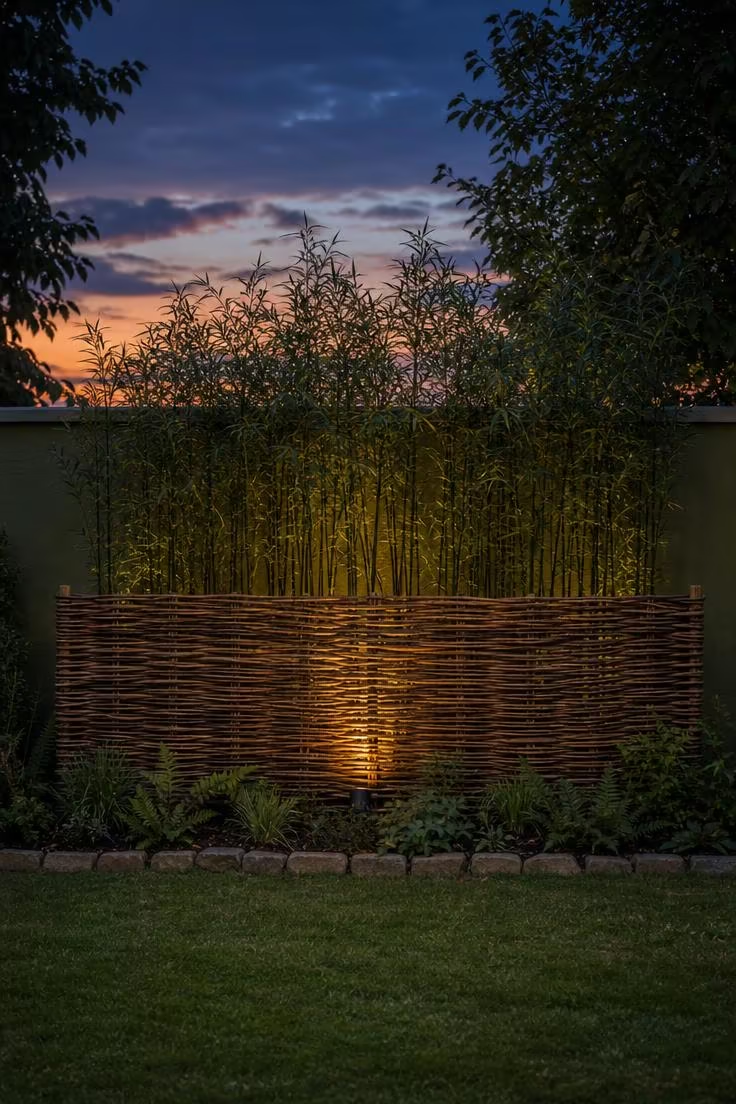
Willow hurdles have been used as garden boundaries for centuries, and their woven texture adds a warmth that no manufactured fence panel can match.
The natural variation in the willow rods, some thick, some thin, some pale, some dark, gives each panel a one-of-a-kind pattern.
Backing the hurdle with dwarf bamboo creates a layered effect: the solid weave at ground level for privacy, and the airy bamboo stems above for filtered light and gentle movement in a breeze.
Phyllostachys nigra, or black bamboo, has dark stems that contrast well against the honey-brown willow.
Choosing a clumping variety rather than a running one keeps the bamboo from spreading beyond its intended spot.
This pairing works as both a patio wall decor accent and a practical screen, blocking a neighbor’s view while still letting air circulate.
At dusk, a single uplight behind the bamboo turns the stems into a shadow play against the fading sky.
Style Blueprint:
- One or more woven willow hurdle panels (180 cm x 120 cm is a standard size)
- Dwarf clumping bamboo (Phyllostachys nigra or Bambusa multiplex) planted in a contained bed behind the panel
- A root barrier (HDPE, 60 cm deep) if using any bamboo that could spread
- Solar-powered stake lights (warm white, 2700K) placed at the base of the bamboo
- Low stone or steel edging to define the planting bed
Conclusion
Every blank wall in your garden is an invitation.
Whether you start with a single corten steel panel, a grid of succulent pocket planters, or a trompe l’oeil mural at the end of a path, the point is the same: give that surface a reason to be noticed.
Mix materials freely, because metal, clay, glass, and living plants all belong together in an outdoor setting.
Layer your heights so the eye travels up from ground-level pots to mid-wall panels to overhead climbing plants trellis structures.
Rotate smaller pieces with the seasons, swapping a dried allium arrangement for a fresh herb planter as the weather shifts.
The best garden wall decor is the kind that makes you slow down, look twice, and feel glad you stepped outside.