This post may contain affiliate links. If you make a purchase through these links, we may earn a commission at no additional cost to you.
A front yard fence does more than mark where your property begins.
It sets the entire mood of your home before anyone reaches the front door.
The right fence style, material, and color can turn a plain lawn into a space that feels intentional and welcoming, lifting your curb appeal in a single weekend project.
These 13 front yard fence ideas cover everything from rustic wood rails to polished iron, giving you a starting point no matter your budget or home style.
White Scalloped Picket Fence With Climbing Pink Roses
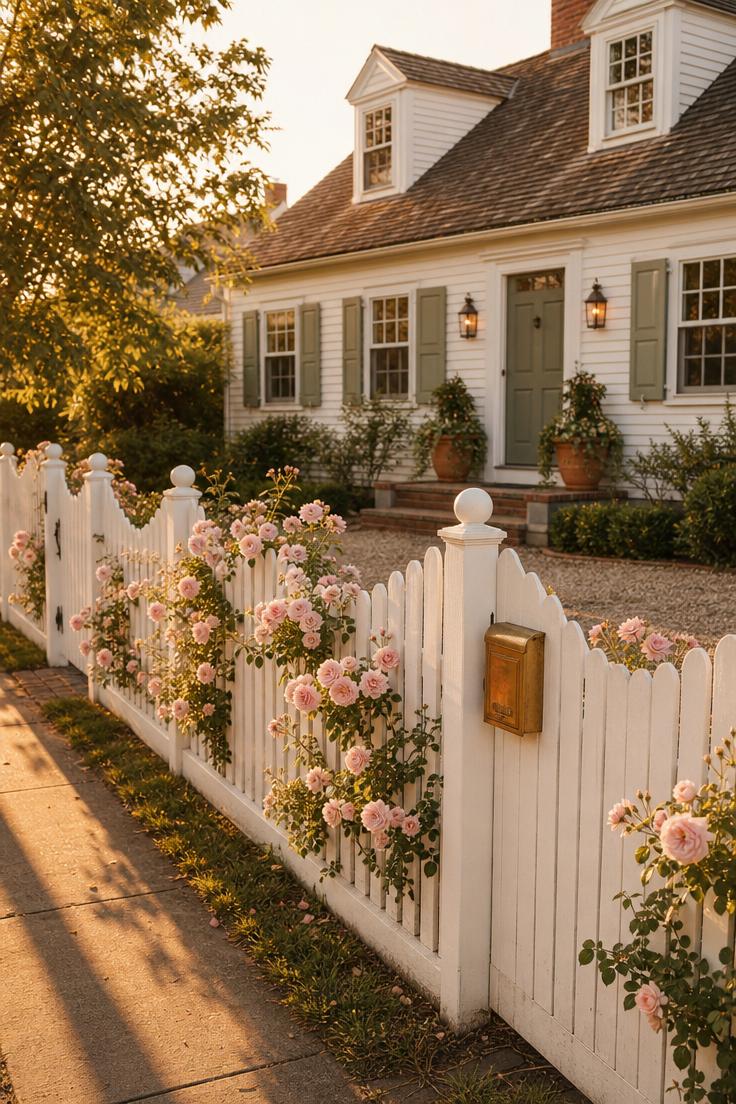
There is something about a scalloped picket fence that feels like it belongs on a street where neighbors wave from their porches.
The gentle arched profile between each post gives the fenceline a softer rhythm than a flat-top cut, and it catches light differently throughout the day as shadows shift along the curves.
Cedar works best here because it holds paint well and resists moisture without the chemical treatment that pine requires.
Keeping the height at three feet respects most front yard code limits and maintains an open, neighborly feel rather than a closed-off barrier.
The climbing roses are what push this from ordinary to memorable, their canes weaving through the pickets and softening every straight line.
Pink Eden roses are a strong choice because they bloom repeatedly through summer and tolerate the partial shade that a north-facing fence might create.
This picket fence style pairs naturally with cottage gardens, gravel paths, and homes that lean into a relaxed, lived-in character.
Style Blueprint:
- Cedar picket boards with a scalloped top cut, painted matte chalk white
- Climbing pink Eden roses planted at every third post
- Brass or aged bronze gate latch and hinges
- Gravel or brick chip path running parallel inside the fence
- Terracotta pots at the gate entrance with trailing greenery
Raw Cedar Horizontal Slat Fence With Matte Black Steel Posts
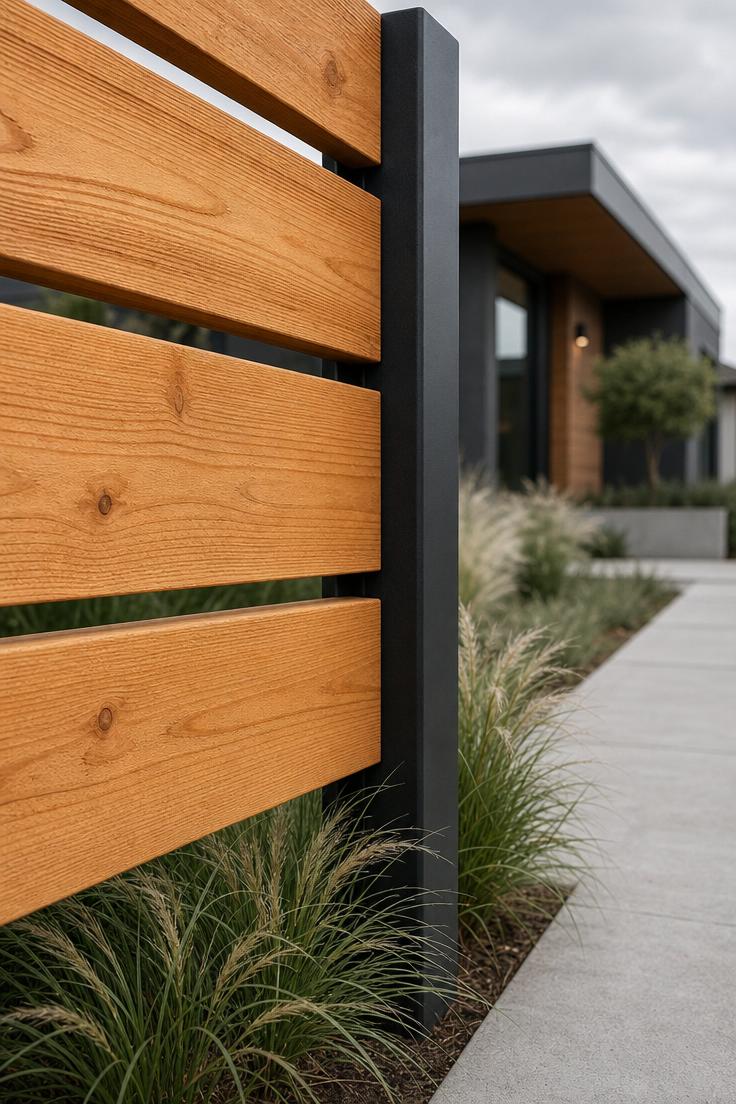
Horizontal slat fences have become one of the defining looks of contemporary front yard landscaping over the last decade.
The lines run parallel to the ground instead of vertical, which stretches the visual width of a yard and makes even a compact lot feel more expansive.
Raw cedar left unsealed will start honey-gold and weather over months into a silvery driftwood tone, giving the horizontal slat fence a look that deepens with age rather than fading.
Matte black steel posts anchor the design and create a deliberate contrast, the dark metal framing each wood panel like a picture border.
Spacing the slats with a half-inch gap lets air pass through and prevents the fence from feeling like a solid wall, which matters in neighborhoods where openness is expected.
This modern fence approach works best alongside clean landscaping: low mounding grasses, gravel mulch, or a simple concrete path rather than fussy flower beds.
Sealing is optional, but if you prefer to hold the golden tone longer, a clear UV-protective oil applied once a year will slow the graying process.
The overall effect reads calm, intentional, and just modern enough to stand out without clashing with more traditional homes nearby.
Style Blueprint:
- Rough-sawn cedar planks, 1×6, left unsealed or treated with clear oil
- Slim matte black powder-coated steel posts at 6-foot intervals
- Half-inch spacing between horizontal slats
- Low ornamental grasses (blue fescue or Mexican feather grass) at the base
- Polished or broom-finished concrete walkway alongside
Dry-Stacked Fieldstone Wall With a Weathered Oak Rail Cap
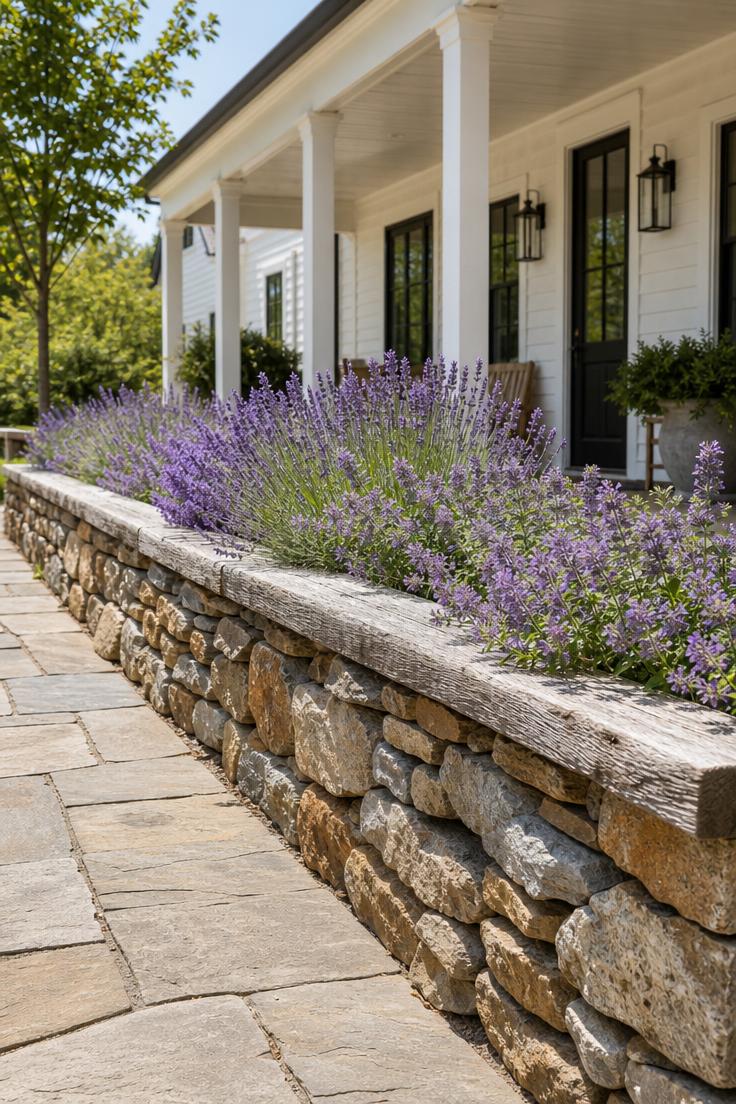
A fieldstone wall carries a sense of permanence that no wood fence can match.
Dry-stacking, where stones lock together by weight and friction rather than mortar, allows rainwater to drain straight through and prevents the cracking that freeze-thaw cycles cause in mortared walls.
Keeping the wall at knee height, around 24 inches, meets most front yard regulations and feels like a boundary without a barrier.
The weathered oak rail cap along the top gives the eye a clean horizontal line to follow and protects the upper stones from shifting.
Choosing fieldstone local to your region ties the wall into the surrounding landscape, making it look like it grew out of the ground rather than being placed there.
Lavender or catmint planted along the base brings color without competing with the texture of the stone.
Style Blueprint:
- Locally sourced fieldstone in mixed gray, tan, and rust tones
- Rough-hewn oak cap rail, 4×6 dimension, left to weather naturally
- Lavender or catmint border plantings along the wall base
- Flagstone or stepping stone walkway connecting to the front entry
- No mortar, relying on careful stone fitting and gravity
Matte Black Wrought Iron Fence With Spear-Top Finials
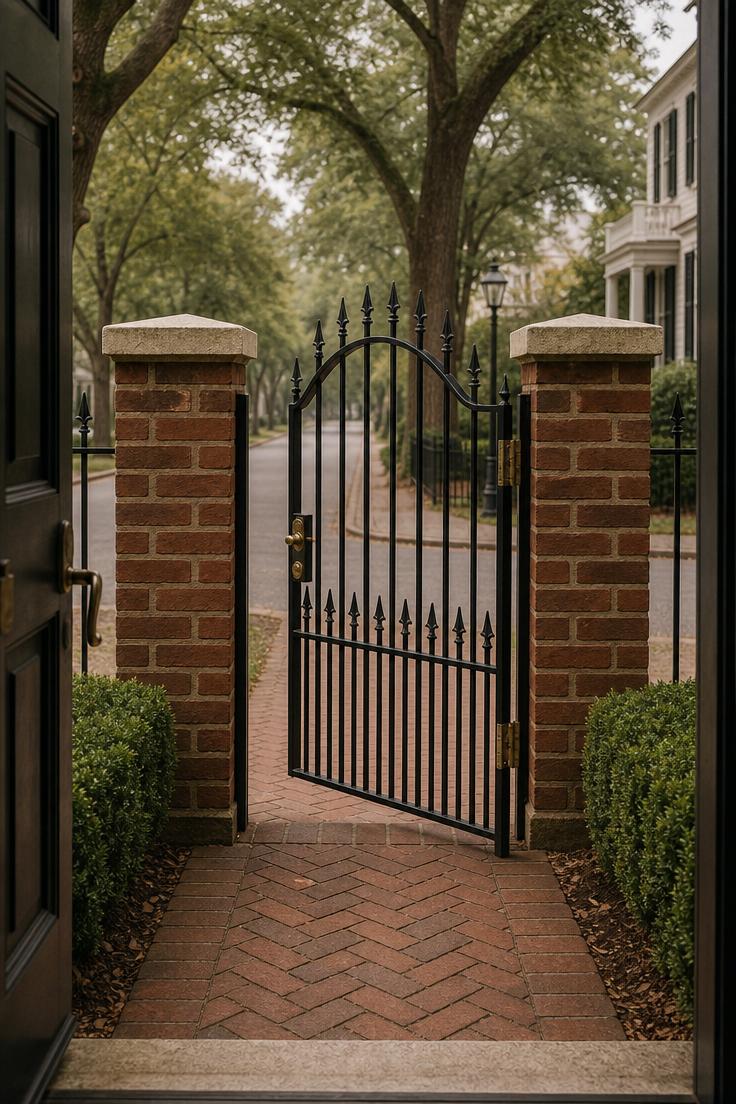
A wrought iron fence has a visual authority that quieter materials simply lack, and in a front yard that authority reads as confidence rather than aggression.
The narrow vertical bars keep sightlines completely open, which preserves the sense of connection between house and street that makes a neighborhood feel safe.
Spear-top finials add a layer of formality, their pointed shapes casting small diamond shadows on the path below when the sun is low.
Brick piers at regular intervals ground the fence visually, their warm red tones balancing the cool austerity of the iron.
Modern powder-coating in matte black has replaced the constant rust battle that older wrought iron fence installations demanded, extending the finish life to 15 or 20 years between touch-ups.
The fence gate design here is worth extra attention: an arched top on the gate frame echoes the finial points and creates a graceful entry moment that a flat-topped gate cannot replicate.
Choosing aged brass hardware for the latch and hinges ties the metalwork together and adds a warmth that all-black hardware misses.
Clipped boxwood hedges just inside the fence soften the base without hiding the ironwork.
This style suits Colonial, Georgian, and traditional brick homes best, though it also reads well against painted clapboard when the proportions are kept slim.
Style Blueprint:
- Tubular steel or wrought iron fence, 42 inches tall, matte black powder-coated
- Spear-top finials on each vertical bar
- Low red brick piers with limestone cap stones at 8-foot intervals
- Arched gate frame with aged brass latch and hinges
- Clipped boxwood hedges along the interior side
Design Pro-Tip: When mixing metal and masonry in a front yard fence, keep the metal finish matte rather than glossy. Gloss reflects light unevenly and competes with the texture of brick or stone, while a matte finish recedes just enough to let both materials share the spotlight equally.
Whitewashed Split Rail Fence With Wildflower Border
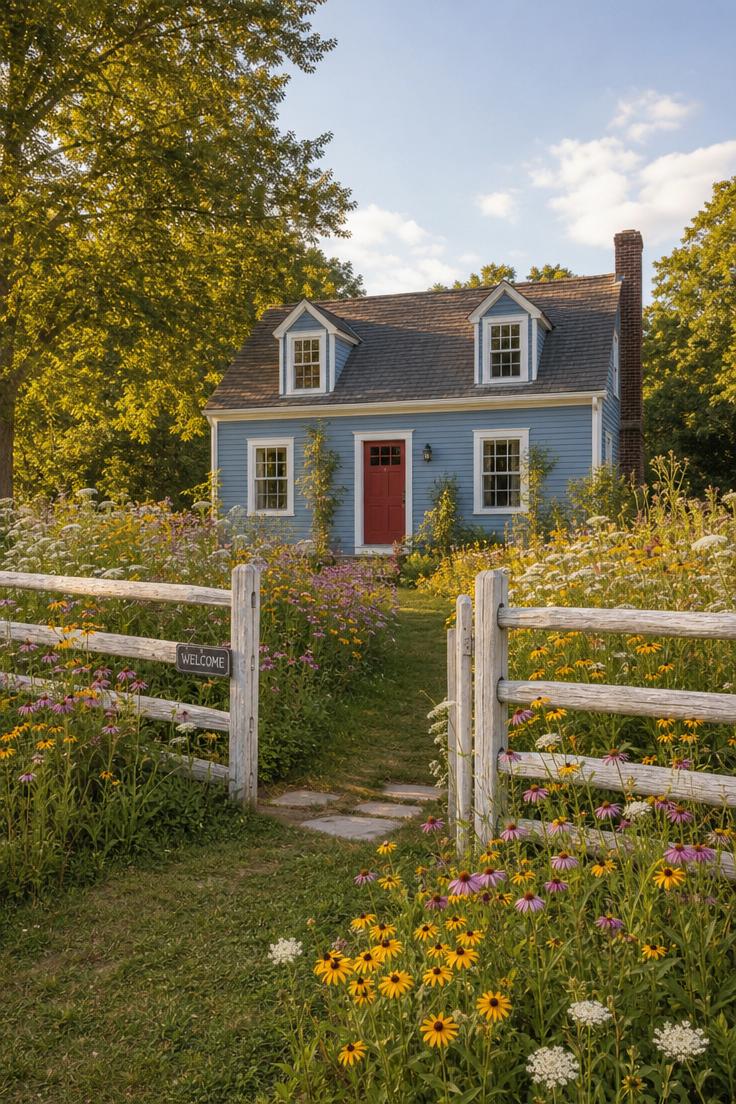
A split rail fence tells anyone passing by that this yard values openness over enclosure.
The three-rail design in locust wood, one of the most naturally rot-resistant timbers available, can last 20 years or more without chemical treatment.
Adding a whitewash rather than a solid paint finish lets the wood grain and rough split texture remain visible, creating a look that feels handmade rather than manufactured.
The wildflower meadow strip behind the rails does the heavy lifting visually, filling in the open gaps with color and movement that change week by week through the growing season.
Black-eyed Susans and purple coneflowers are low-maintenance native choices that self-seed each year and attract pollinators, keeping the border lively without constant replanting.
A mown grass path between the wildflowers and the house prevents the meadow from feeling overgrown and gives the split rail fence a deliberate frame.
This combination works beautifully on larger lots, rural properties, or any home that leans toward a farmhouse or cottage identity.
Style Blueprint:
- Three-rail split rail fence in locust or black locust wood
- Light whitewash finish applied with a diluted latex mix
- Wildflower seed mix of black-eyed Susans, coneflowers, and Queen Anne’s lace
- Mown grass path between the meadow strip and the house
- No gate hardware, just a simple post opening for the walkway
Hog Wire Panels in Cedar Frames With Potted Meyer Lemon Trees
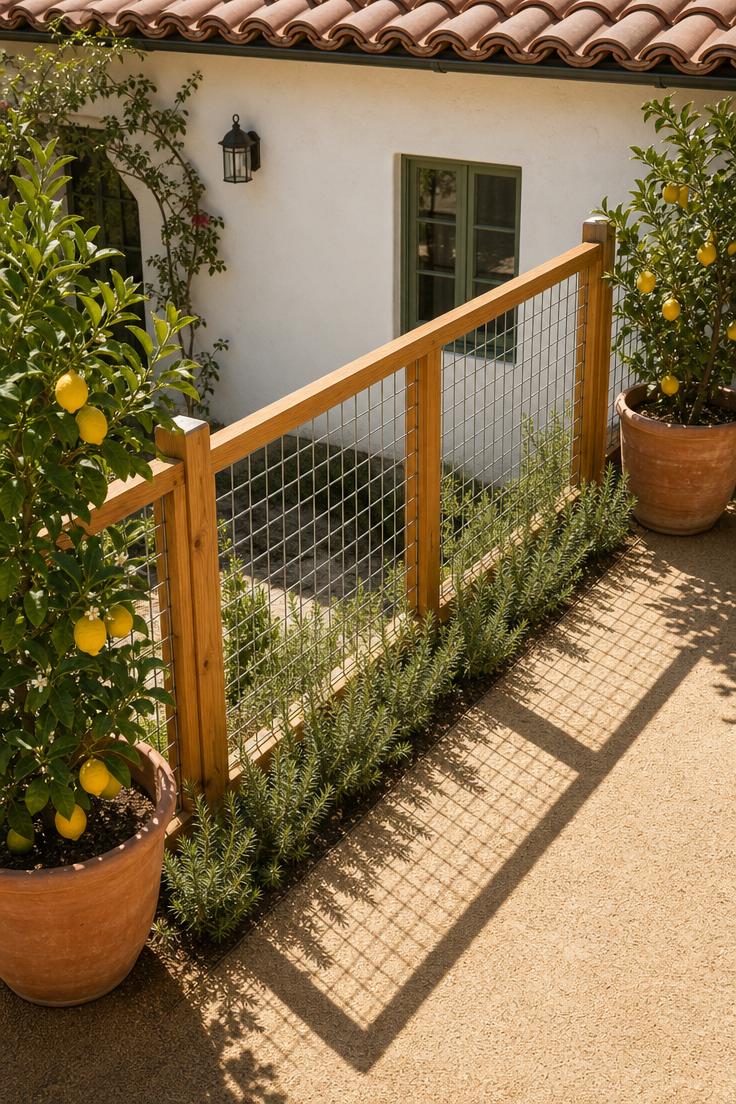
Hog wire panels have a straightforward honesty that works in their favor, their open grid saying “this fence is here for structure, not to hide anything.”
Framing the panels in cedar gives the utilitarian wire a finished look, the warm wood softening what would otherwise feel purely agricultural.
The grid pattern keeps full visibility across the front yard, which satisfies neighborhoods that discourage solid barriers along the street.
Meyer lemon trees in oversized terra cotta pots anchor each end of the fence and bring a Mediterranean warmth that pairs naturally with stucco, clay tile, and decomposed granite.
A low rosemary border at the base adds fragrance and a soft green texture that fills the visual gap between ground and fence frame.
This modern fence option is one of the most affordable to build, with hog wire panels costing a fraction of solid wood or metal fencing per linear foot.
Style Blueprint:
- 4×4 welded hog wire panels in galvanized steel
- Cedar frame surround, 4×4 posts with 2×4 top and bottom rails
- Oversized terra cotta pots (18-inch diameter minimum) with Meyer lemon trees
- Decomposed granite ground surface along the fenceline
- Low rosemary hedge at the fence base
Charcoal-Stained Board-on-Board Fence With Brass Cap Lights
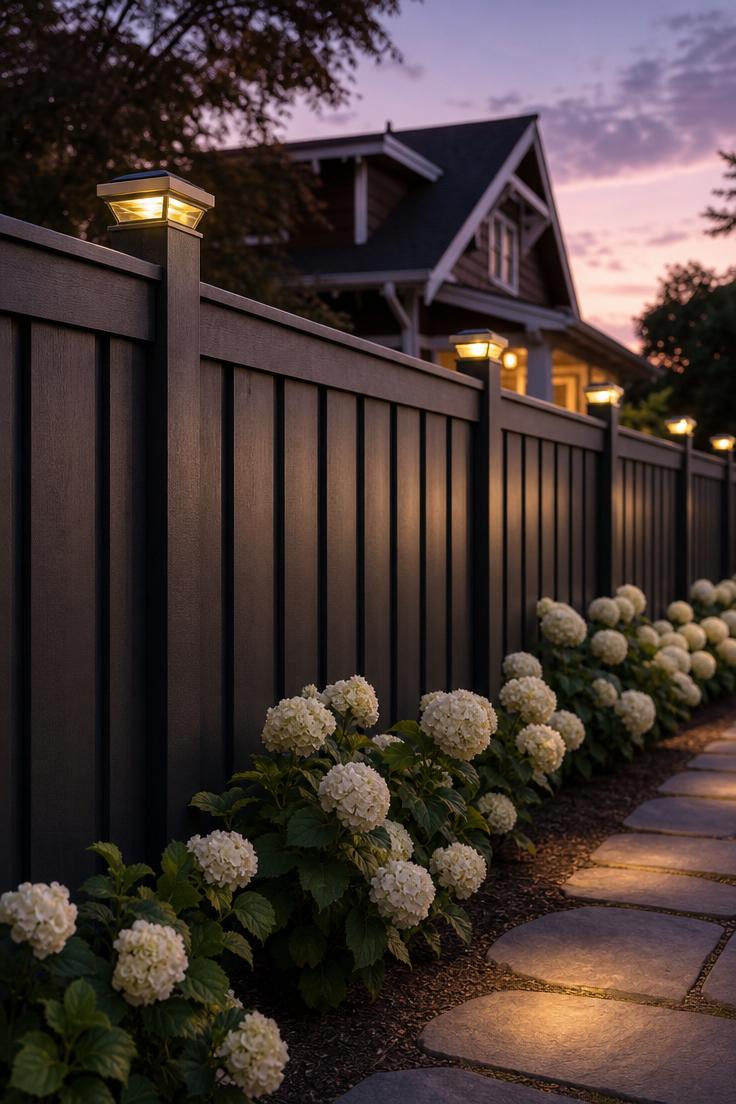
A charcoal stain on wood reads as decisively modern without the maintenance burden of black paint, which shows every scuff and water mark.
Board-on-board construction alternates the planks on opposite sides of the rail, creating a fence that looks finished from both the street and the yard, a detail that matters when your neighbor sees the back side daily.
This privacy fence approach stays within the typical 42 to 48 inch front yard height limit while still providing a real sense of screening from passing foot traffic.
The brass solar cap lights on alternating posts bring this fence to life after dark, extending the curb appeal into evening hours when most fences simply disappear.
Warm amber light from the caps pools softly onto the path and picks up the charcoal undertones in the stain, creating a layered glow that overhead porch lights cannot replicate from a distance.
White hydrangeas along the base play against the dark backdrop beautifully, their full rounded blooms creating a strong contrast that draws the eye even in low light.
Spacing the lights on every other post rather than every post keeps the effect subtle and avoids a runway-strip look.
The overall mood is quiet sophistication, the kind of fence that makes someone slow their walk on the sidewalk.
Style Blueprint:
- Board-on-board fence in pressure-treated pine or cedar, stained charcoal gray
- Brass solar-powered post cap lights on alternating posts
- Bluestone or flagstone stepping path along the fence base
- White hydrangea border (Annabelle or Incrediball varieties)
- Stainless steel or dark bronze hidden fasteners
Design Pro-Tip: When staining a front yard fence a dark color like charcoal, always apply the stain to a test board first and view it in full sun, overcast light, and at dusk. Dark stains shift dramatically across lighting conditions, and a shade that looks refined at noon can read almost black at twilight.
Painted Navy Picket Fence With a Copper-Roofed Arbor Gate
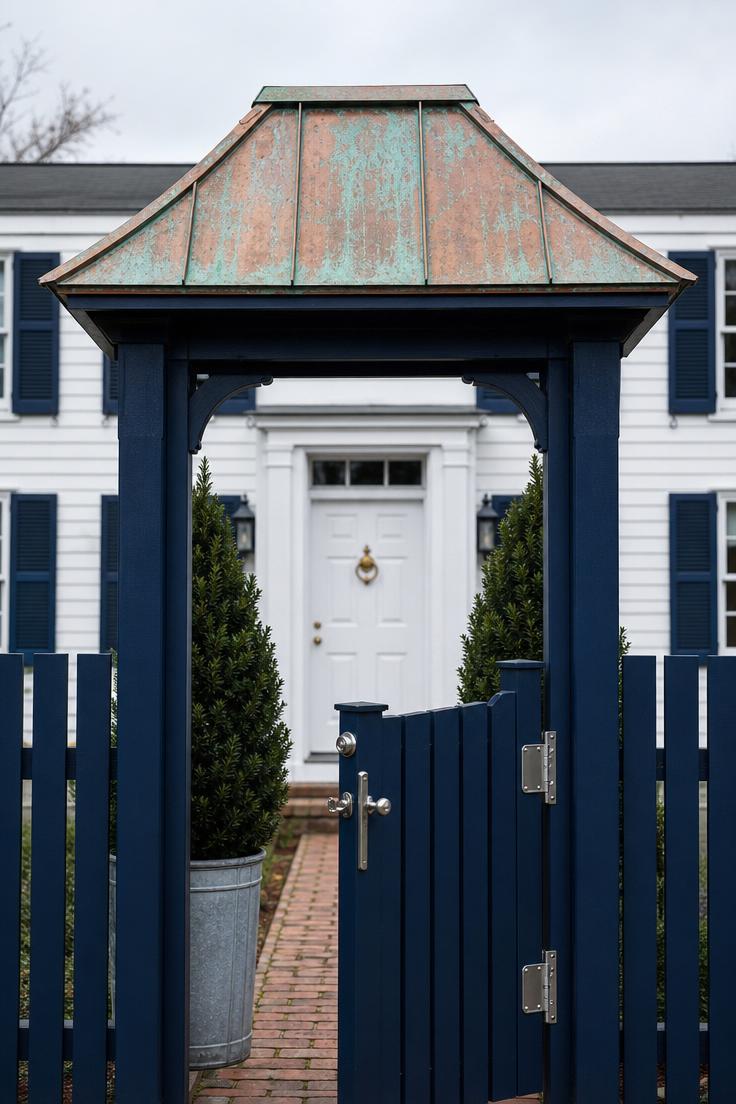
Navy paint on a picket fence is a small departure that creates a completely different first impression than the expected white.
The deep blue reads as deliberate and confident, holding its richness especially well under overcast skies where white can look flat and gray.
A copper-roofed arbor over the gate lifts this fence gate design from functional to architectural, the small pitched roof giving the entrance a sense of arrival that a bare gate post cannot match.
Copper develops its green verdigris patina naturally over two to three years of outdoor exposure, meaning the fence actually improves in character with time.
Flat-topped pickets at 30 inches keep the fence low and approachable while the arbor rises above to create vertical interest.
Style Blueprint:
- Flat-topped cedar picket fence painted in deep navy exterior latex
- Copper-roofed arbor gate with brushed nickel latch hardware
- Tall boxwood topiaries in zinc or galvanized planters flanking the gate
- Brick path through the gate to the front entry
- Simple flat picket profile, no decorative cuts
Gabion Column Fence With Reclaimed Redwood Infill Panels
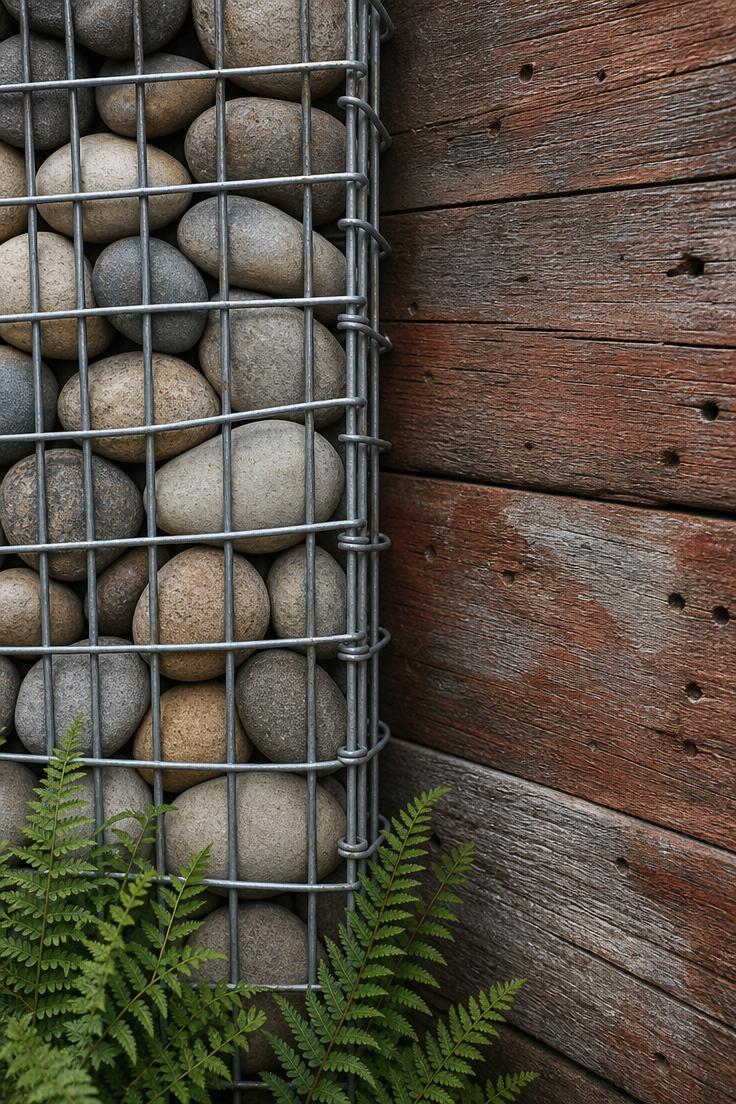
Gabion columns bring a raw, geological weight to a front yard fence that lighter materials simply cannot deliver.
The wire cages filled with river rock create a column that feels both industrial and organic, a pairing that works because both materials are pulled from the earth.
Reclaimed redwood infill panels connect the columns with warmth, their nail holes, saw marks, and weathered grain telling a story that new lumber cannot replicate.
Choosing smooth river rock rather than angular crushed stone softens the gabion’s appearance and catches light in rounder, gentler highlights.
The reclaimed wood will need a clear sealant if you want to slow further weathering, though many homeowners prefer to let it continue its silver-gray drift for a more relaxed effect.
Front yard landscaping around gabion fences benefits from simple, low plantings: ferns, mosses, or creeping thyme that echo the earthy palette without competing for attention.
This combination suits modern farmhouse, industrial, and Pacific Northwest styles particularly well.
Style Blueprint:
- Gabion columns, 12×12 inches, filled with smooth river rock in gray and tan tones
- Heavy-gauge galvanized steel wire cage with 2×2-inch grid openings
- Reclaimed redwood planks, 1×6, mounted horizontally between columns
- Low fern or moss groundcover at the column bases
- Clear penetrating sealant on the redwood (optional)
Design Pro-Tip: When filling gabion columns, place the most visually appealing stones against the outer faces of the cage and use smaller or less attractive fill in the center. The front face is a display window, and hand-placing those first two inches makes a noticeable difference in the finished look.
Low Limestone Block Wall With Black Aluminum Railing
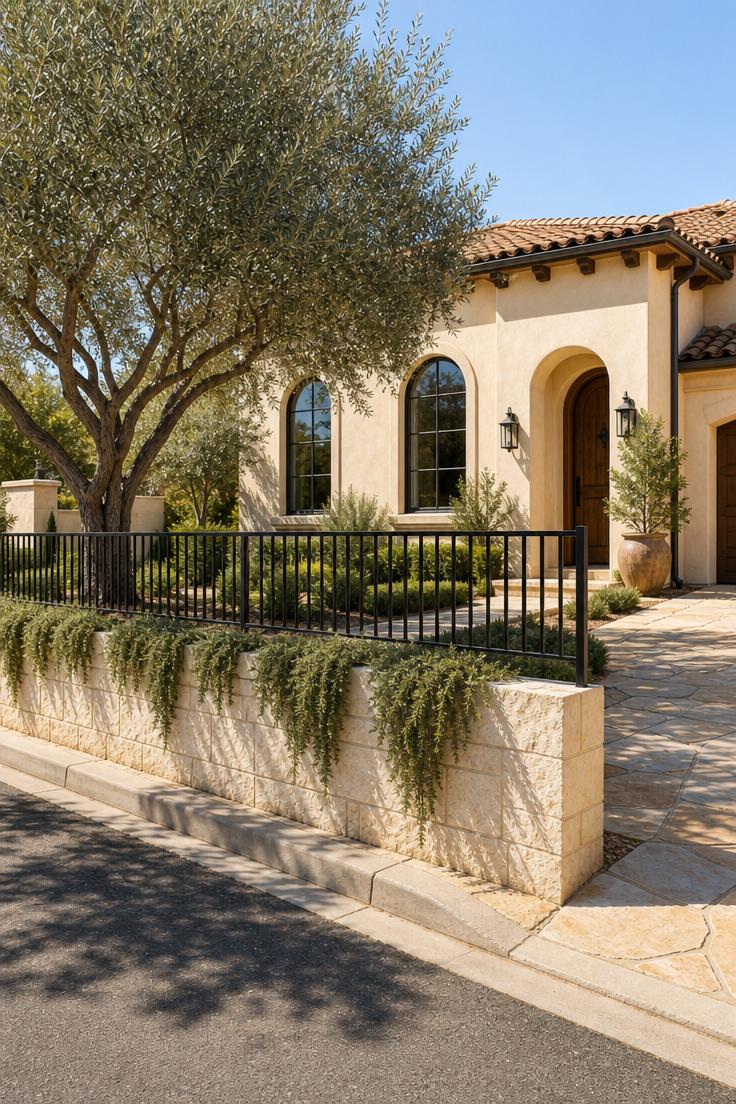
A limestone block wall at two feet tall gives a front yard a sense of definition without any feeling of enclosure, its solid mass communicating permanence while the low height keeps the street view wide open.
The warm cream tone of natural limestone pairs with nearly every home exterior, from white stucco to red brick to painted wood, making it one of the most adaptable base materials for a front yard fence.
Black aluminum railing on top of the wall adds another two feet of visual presence at a fraction of the weight and cost of true iron.
Thin vertical balusters, spaced three to four inches apart, maintain transparency and keep the railing feeling light rather than heavy.
The aluminum requires almost no maintenance: no rust, no repainting, just an occasional wash with soap and water.
Trailing rosemary planted along the top of the wall spills over the street side and softens the hard limestone edge while adding fragrance for anyone walking past.
An olive tree in the foreground provides dappled shade that breaks up the midday brightness and creates movement on the wall surface below.
Front yard landscaping here should stay Mediterranean in spirit: gravel mulch, drought-tolerant shrubs, and maybe a single ornamental tree rather than thirsty lawn grass.
This fence style reads especially well in warm climates and neighborhoods with Spanish, Mediterranean, or modern ranch architecture.
Style Blueprint:
- Limestone block wall, 24 inches tall, with a smooth cap stone
- Black aluminum railing, 24 inches tall, with thin vertical balusters
- Trailing rosemary planted at the wall top for a cascading edge
- Olive tree or similar drought-tolerant specimen tree in the yard
- Flagstone or decomposed granite ground surface along the wall
Woven Willow Hurdle Panels Between Cedar Posts
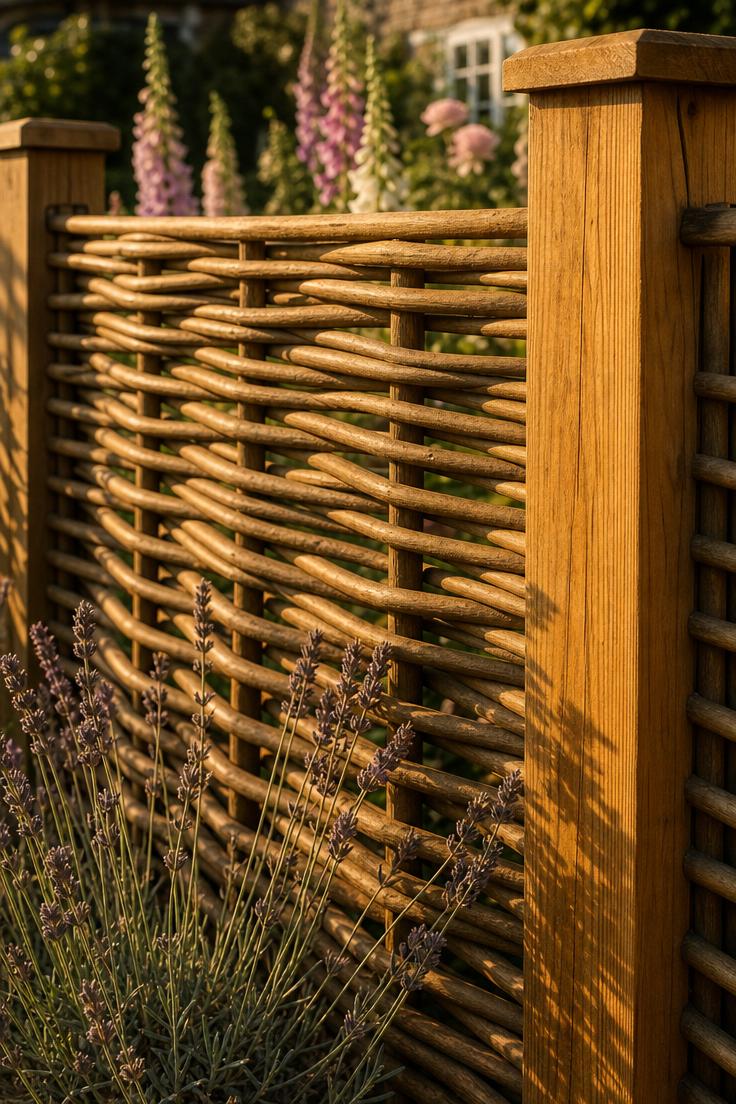
Woven willow hurdle panels have been used as garden boundaries in the British Isles for centuries, and they carry that history into any front yard they border.
The interlacing pattern of willow rods creates a surface that is dense enough for screening but still breathes, allowing air and dappled light to pass through the weave.
Each panel is typically about six feet wide and comes in heights from three to five feet, making them easy to fit between cedar fence posts without custom cutting.
The warm tan tone of dried willow complements cedar posts beautifully, both materials sharing an organic warmth that synthetic alternatives cannot replicate.
Willow hurdles last four to seven years before needing replacement, which sounds short but makes them surprisingly practical since swapping a panel takes about 15 minutes with basic tools.
Pairing them with a cottage garden of foxgloves, roses, and tall grasses plays directly into their old-world character and creates a front yard that feels like it belongs in the English countryside.
Style Blueprint:
- Hand-woven willow hurdle panels, 3 to 4 feet tall, in natural tan
- Squared cedar posts with flat cap tops at 6-foot intervals
- Cottage garden planting of foxgloves, climbing roses, and ornamental grasses behind the fence
- Dried lavender or herb border at the panel base
- No hardware visible, panels wired to posts from the back side
Corrugated Metal Half-Wall With Raw Steel Frame
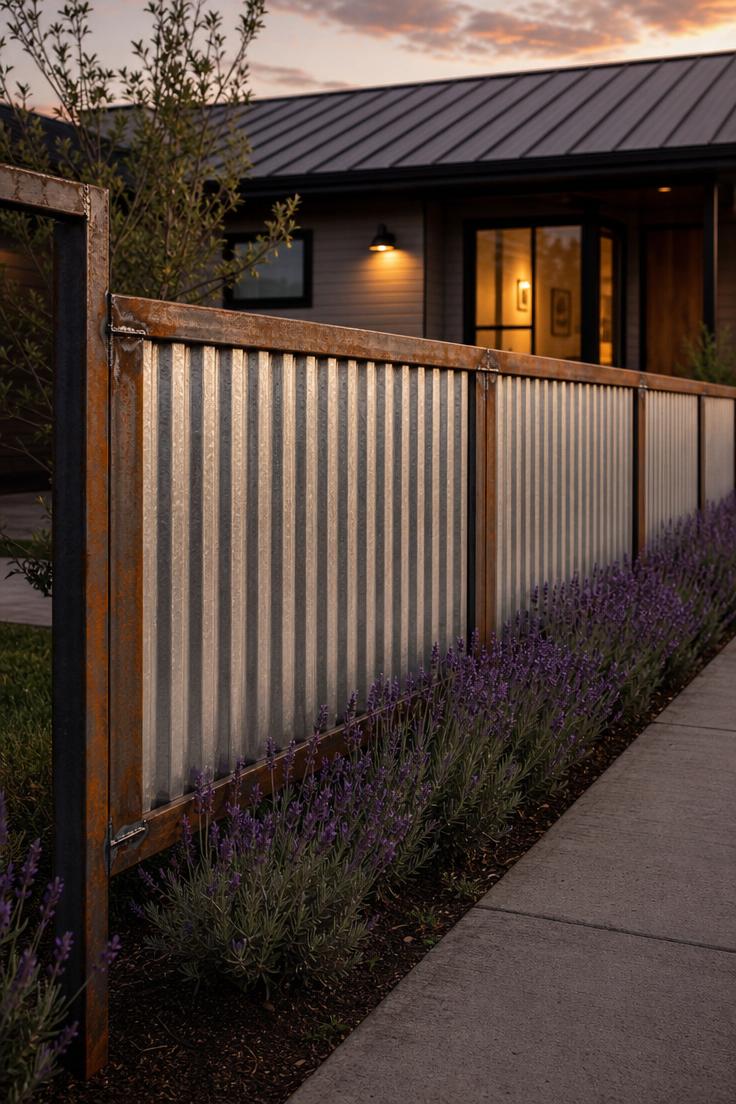
Corrugated metal in a front yard fence makes a statement that is unapologetically modern, its industrial roots now fully embraced by contemporary residential design.
The galvanized finish weathers slowly over years, developing a matte patina that softens the initial factory brightness without losing the material’s structural character.
A raw steel angle-iron frame holds the corrugated panels and intentionally shows its welds and rust, treating the construction details as decoration rather than hiding them.
Keeping the wall at 30 to 36 inches puts it in the half-wall range, which feels like a deliberate design choice rather than a privacy barrier.
Lavender planted along the base bridges the gap between hard industrial metal and the softer residential landscape, its purple blooms and gray-green foliage reading as a natural counterpoint to the silver and rust.
Front yard landscaping around corrugated metal benefits from restraint: gravel, concrete, and a few sculptural plants look better than a busy cottage garden here.
This style pairs most naturally with mid-century modern, industrial, and minimalist homes, though a well-executed version can add edge to a bungalow or ranch home too.
At dusk, when porch light catches the corrugated ridges, the fence takes on a completely different personality, the alternating bright and shadowed stripes almost glowing.
Style Blueprint:
- Corrugated galvanized steel panels, 30 to 36 inches tall
- Raw steel angle-iron frame with visible welds, left to develop natural patina
- Purple lavender border along the fence base on the yard side
- Concrete or gravel ground surface along the street side
- Standing-seam metal roof on the home to echo the corrugated material
Design Pro-Tip: If your neighborhood leans traditional and you want to use corrugated metal, keep the fence height under 30 inches and pair it with warm-toned wood or masonry columns rather than raw steel. The shorter height and mixed materials read as “interesting accent” rather than “industrial intrusion,” and neighbors will be far more receptive.
Cedar Lattice Privacy Screen With Potted Jasmine Vines
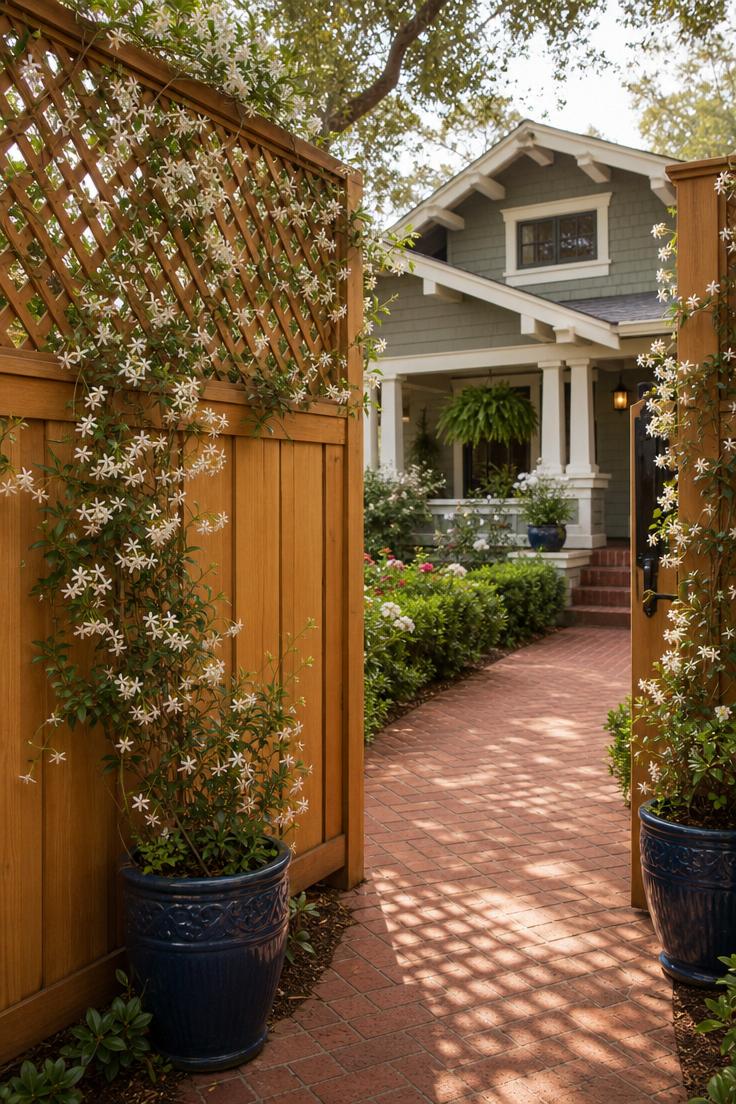
A cedar fence topped with lattice solves one of the most common front yard dilemmas: wanting more height for privacy without exceeding the local code limit for solid fencing.
Many municipalities allow lattice extensions above the maximum solid fence height because the open grid still permits airflow and visibility, effectively buying you an extra 18 to 24 inches of screening.
Star jasmine trained up the lattice fills in the grid with glossy green leaves and clusters of small white flowers that release a sweet fragrance strongest on warm evenings.
Planting the jasmine in decorative pots rather than directly in the ground gives you control over its spread and makes it simple to replace or reposition vines without disturbing the cedar fence structure.
Cedar is the natural choice for lattice because it holds up against moisture and resists warping, which matters when thin lattice strips are exposed to weather on all sides.
The diamond pattern of the lattice casts shifting shadows onto the path and yard throughout the day, adding a layer of visual texture that a solid panel cannot offer.
From the street, the jasmine-covered lattice reads as a living green screen rather than a fence extension, blending the boundary into the garden itself.
Style Blueprint:
- Tongue-and-groove cedar fence panels, 4 feet tall, in natural honey tone
- Cedar lattice extension, 2 feet tall, with diagonal grid pattern
- Star jasmine vines planted in large decorative ceramic pots at the lattice base
- Brick herringbone path along the interior side of the fence
- Stainless steel vine ties (not plastic zip ties) to train jasmine canes
Conclusion
The best front yard fence ideas start with a clear understanding of what you want the fence to do, whether that is framing the view, adding privacy, keeping children or pets safe, or simply giving your home a stronger presence from the street.
Mixing materials often produces the most memorable results: stone columns with wood infill, metal posts with cedar slats, or masonry bases with aluminum railing on top.
Local building codes and neighborhood character should guide your height, material, and placement decisions before you commit to a design.
Maintenance matters too, so match your material choice to the level of upkeep you are willing to give, from near-zero with aluminum to a yearly routine with raw wood.
Whatever direction you choose, a well-designed front yard fence pays back in curb appeal, daily satisfaction, and the quiet pleasure of a home that looks finished from every angle.