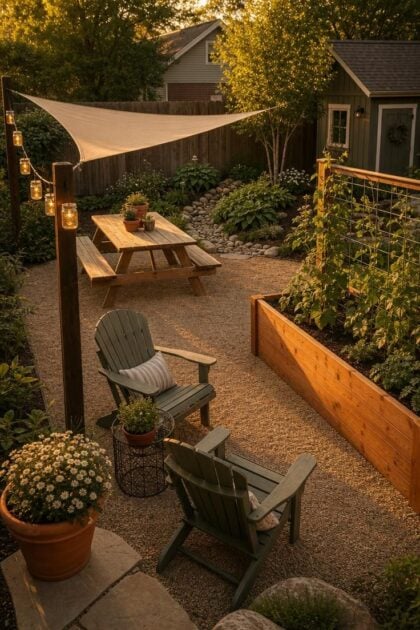
This post may contain affiliate links. If you make a purchase through these links, we may earn a commission at no additional cost to you.
A polished backyard does not require a contractor or a five-figure spending plan.
Most of these projects rely on materials from the hardware store, the salvage yard, or your own property line.
The goal is creating defined spaces that look deliberate, not leftover.
Each idea here costs less than you would expect and delivers more than you would guess, turning bare grass and worn concrete into something worth sitting in.
Crushed Granite Sitting Area With Salvaged Railroad Tie Borders
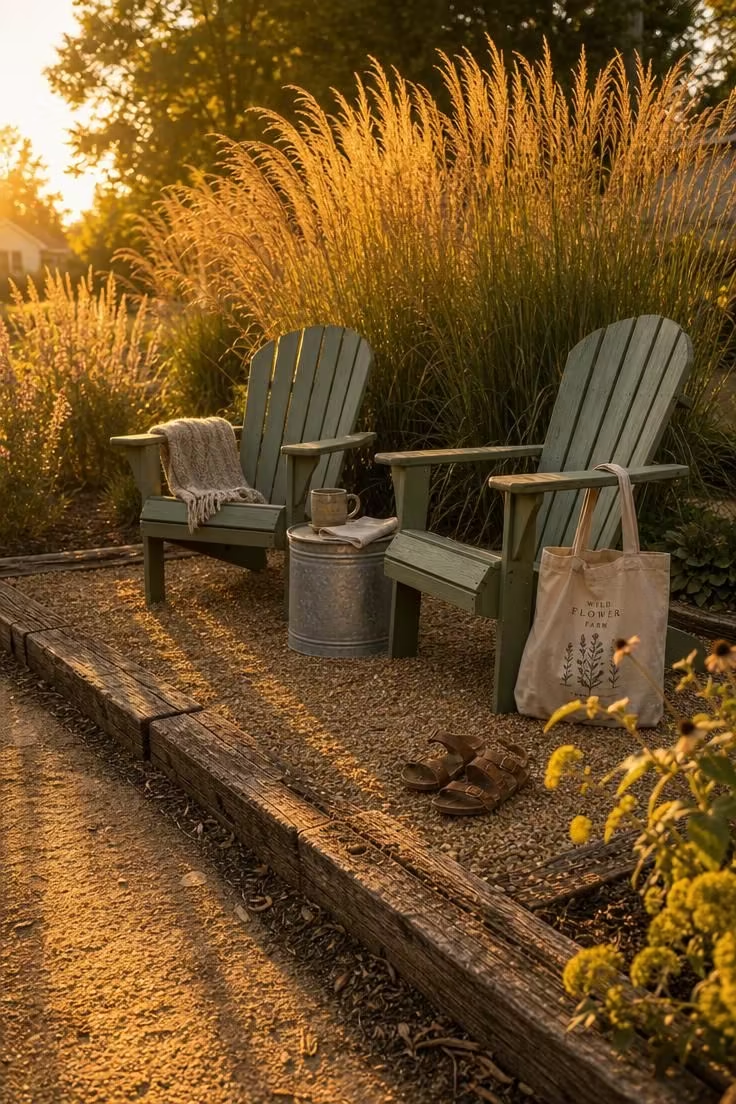
Crushed granite is one of the least expensive hardscaping materials you can buy, and it looks far more considered than bare dirt or patchy grass.
A few inches of compacted stone over landscape fabric gives you a flat, stable surface that drains well and stays put through rain.
Salvaged railroad ties along the perimeter hold the gravel in place and add a rugged, grounded frame to the whole area.
The warm tones of the granite pick up late-afternoon light in a way that poured concrete never manages, turning an inexpensive ground cover into something that looks intentional.
Two chairs angled toward each other, rather than lined up side by side, make the space feel conversational and lived-in.
This kind of budget backyard makeover costs a fraction of a paver patio and takes a single weekend to complete.
- Style Blueprint:
- Crushed granite or decomposed granite, 3 inches deep, in a warm tan or gold tone
- Salvaged railroad ties or landscape timbers as border edging
- Two weathered Adirondack chairs in a muted color
- A small galvanized metal side table
- One tall ornamental grass planted behind the seating area
A Cinderblock and Pine Plank Bench Along a Painted Fence
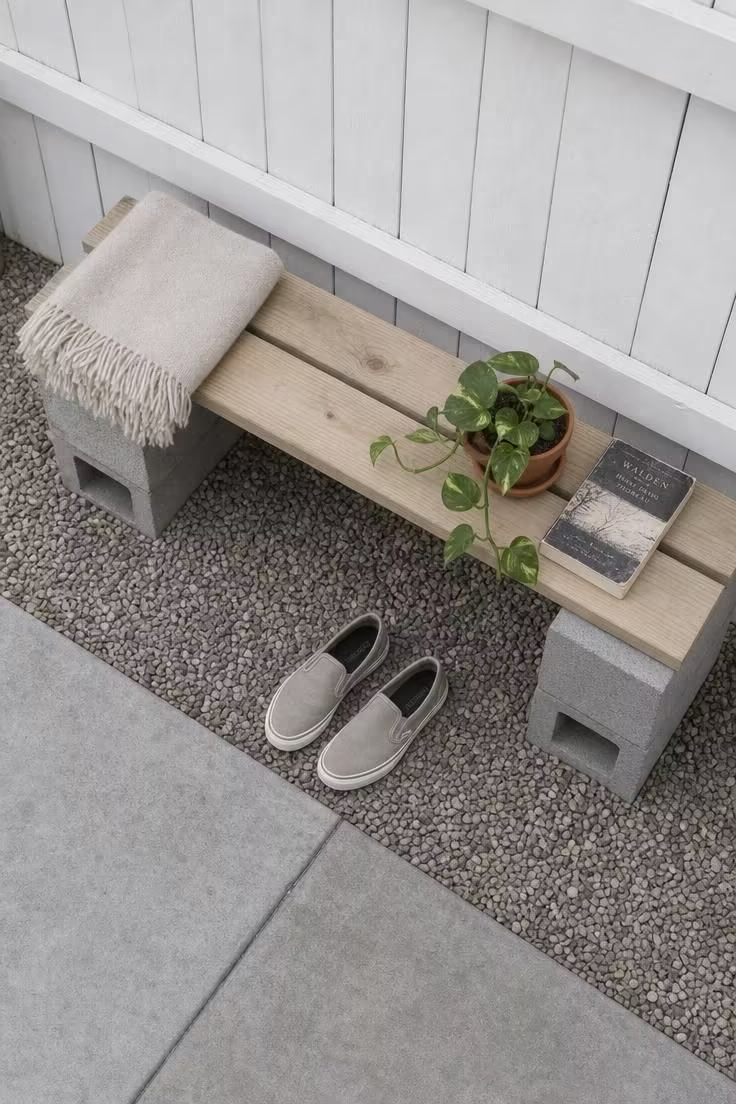
Cinderblocks stacked two or three high with pine planks laid across the openings make a bench that costs less than a decent lunch.
The weight of the blocks keeps everything stable without glue, mortar, or brackets.
Untreated pine weathers to a silver-grey over a season or two, which pairs well with the neutral concrete tone underneath.
A painted fence behind the bench acts as a clean backdrop, giving the whole arrangement a gallery-like quality that belies its price.
Adding a folded throw and a single potted plant takes the bench from construction site leftover to something that looks styled on purpose.
The proportions work best when the seat height lands around eighteen inches, which means two standard cinderblocks stacked on their sides.
This is the kind of project that takes thirty minutes to build and looks like it belongs in a design magazine crop.
- Style Blueprint:
- Standard grey cinderblocks, 6 total, stacked in pairs
- Two untreated pine or cedar planks, 8 feet long
- Oatmeal or natural-tone wool throw blanket
- One small terracotta pot with trailing greenery
- Pea gravel strip along the fence base
Cedar Raised Garden Bed With Wire Trellis for Climbing Beans
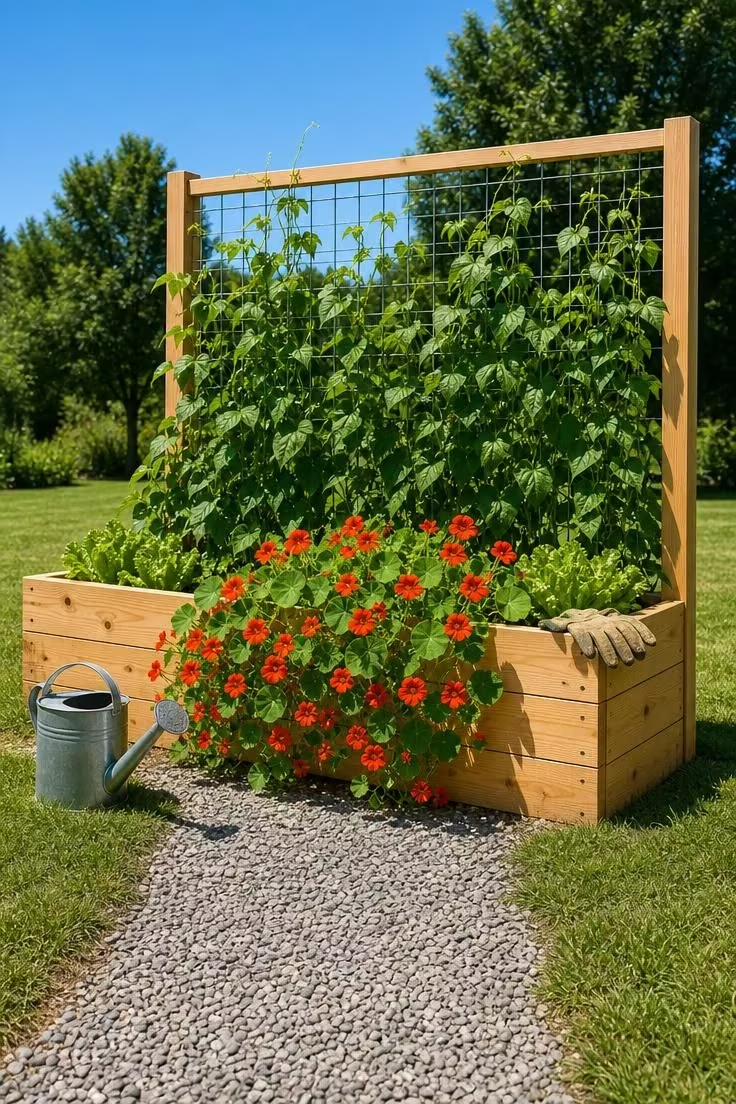
A raised garden bed built from cedar boards does double duty as a planting area and a visual anchor in an otherwise flat yard.
The vertical wire trellis mounted along the back edge adds height without the cost or permanence of a built structure.
Climbing beans are the ideal trellis plant here because they grow fast, fill in thick, and produce food while they screen.
Nasturtiums trailing over the front edge soften the hard lines of the cedar frame and bring a pop of warm color into all that green.
The whole setup costs less than fifty dollars in lumber and hardware, and it goes together with a drill and a handful of screws.
Cedar weathers gracefully without stain or sealant, turning silver over time in a way that looks deliberate rather than neglected.
A raised garden bed like this one works in small yards and large ones because it creates a self-contained scene with clear boundaries.
The wire mesh behind the plants catches midday light and casts a grid of thin shadows across the soil, adding one more layer of visual interest.
- Style Blueprint:
- Untreated cedar boards, 4×8 foot frame, 12 inches tall
- Galvanized wire mesh or cattle panel trellis, 6 feet tall
- Climbing bean seeds and trailing nasturtium starts
- Loose leaf lettuce for the corners
- Galvanized watering can as a styling prop
Solar Jar Lanterns Hung From a Clothesline Wire Between Posts
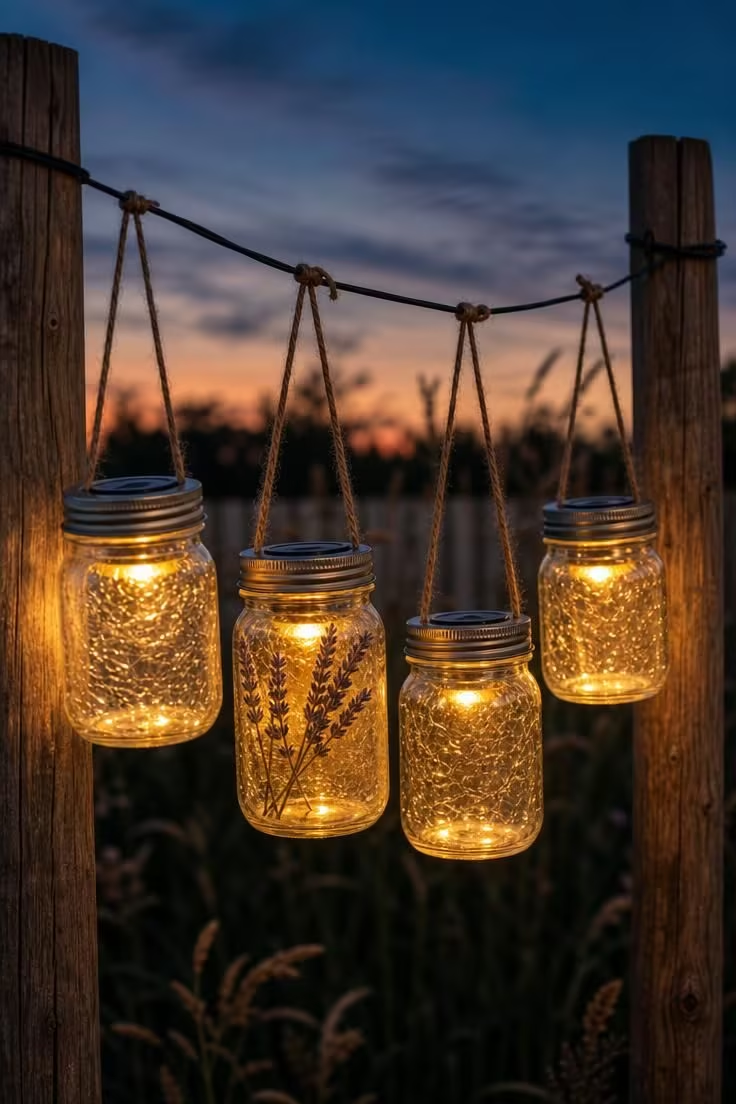
String lights get all the attention, but solar jar lanterns have a handmade warmth that a strand of plastic bulbs cannot match.
Each jar holds a small solar-powered LED insert that charges during the day and glows for hours after dark.
Hanging them from a simple clothesline wire strung between two posts gives the whole arrangement a relaxed, farmstand quality.
The jars swing slightly in a breeze, which moves the light around and keeps the effect from feeling static.
A wire strung at about seven feet keeps the lanterns above head height while keeping them close enough to cast usable light on a table or seating area below.
This is one of those DIY backyard projects that costs almost nothing, takes an hour to assemble, and changes the entire feeling of a yard after dark.
- Style Blueprint:
- Quart-sized mason jars, 6 to 8 total
- Solar-powered LED jar lid inserts in warm white
- Coated wire or clothesline strung between two posts
- Twine loops for hanging at varied heights
- One dried herb sprig per jar for added character
Design Pro-Tip: When you hang lights or lanterns outdoors, keep the line height between seven and eight feet. Lower than that and tall guests bump their heads. Higher than that and the light spreads too thin to feel cozy. The sweet spot is just above arm’s reach, where the glow pools on the table and faces below.
A Stacked Retaining Wall Block Fire Ring on a Pea Gravel Clearing
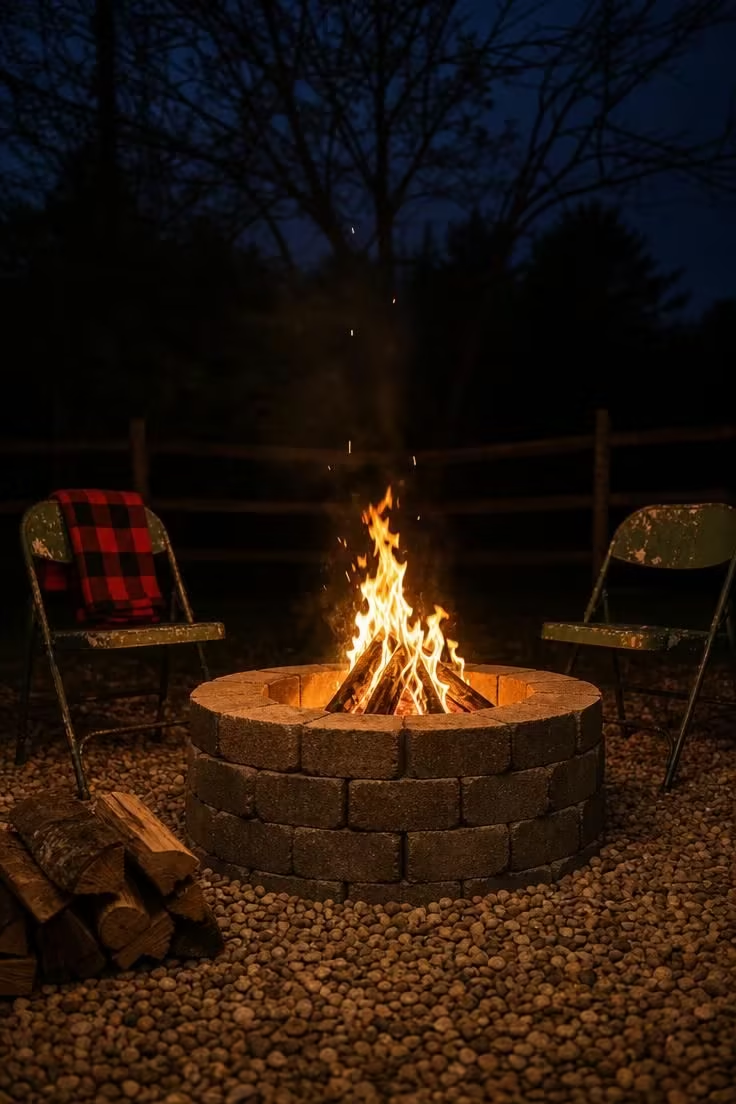
A fire pit built from stacked retaining wall blocks is one of the most satisfying budget projects you can finish in a single afternoon.
The blocks lock together under their own weight, so you need no mortar, no adhesive, and no special tools beyond a shovel and a level.
Pea gravel underneath the ring serves three purposes at once: it drains rainwater away from the pit, it keeps the fire off bare soil, and it gives the whole area a clean, defined edge.
Three feet across is the right diameter for a backyard ring because it fits enough wood for a solid fire without overwhelming a small yard.
The rough texture of the concrete blocks picks up firelight in a way that smooth stone does not, creating flickering shadows across every surface joint.
Seating around a fire pit like this one does not need to be expensive or matched, and mismatched thrifted chairs actually look better than a coordinated set.
The cost for the full build, blocks and gravel included, usually lands under one hundred dollars.
Clear at least ten feet between the ring and any structure, fence, or overhanging branch before you light the first fire.
This is the kind of outdoor seating area that people gather around long after the food is gone and the conversation has turned quiet.
- Style Blueprint:
- Retaining wall blocks, 12-inch size, stacked two courses high
- Pea gravel base, 4 inches deep, extending 2 feet beyond the ring
- Two vintage or thrifted metal folding chairs
- A stack of split hardwood firewood
- Wool camp blanket in a plaid pattern
Repurposed Pallet Daybed With Canvas Cushions on a Mulch Pad
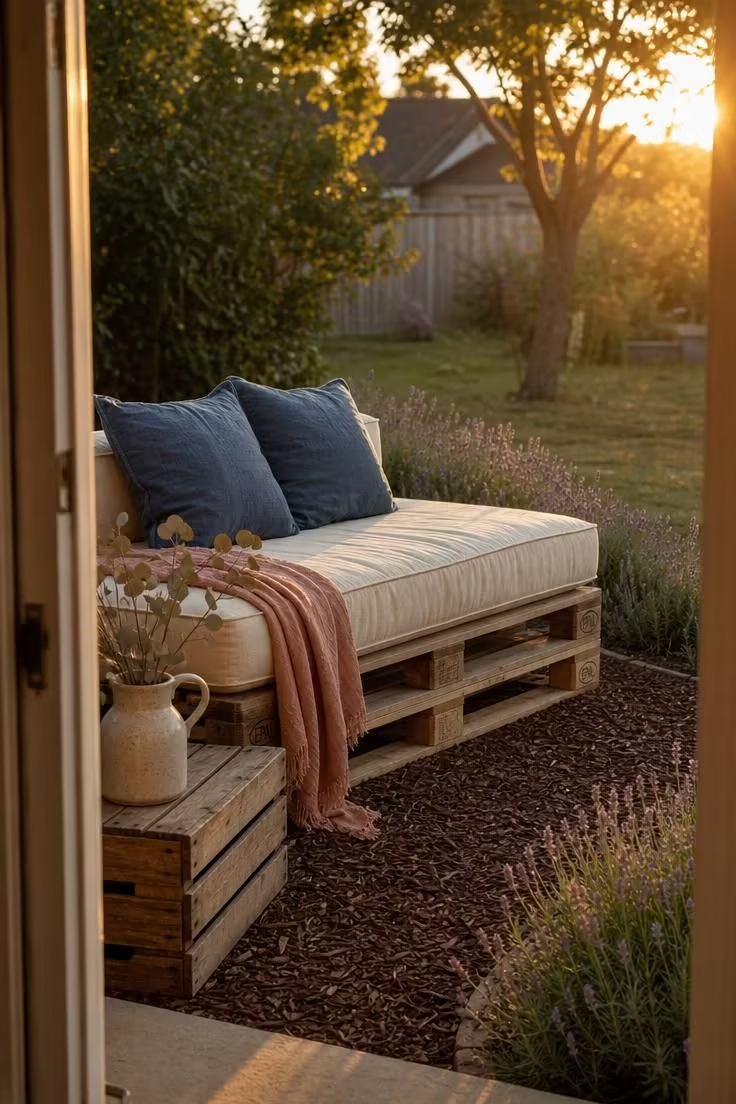
Pallet furniture has a reputation for looking rough, but a sanded and sealed pallet topped with real cushions reads as intentional rather than improvised.
Two pallets stacked and screwed together give you the right seat height without any complicated joinery.
Canvas drop cloth, the kind painters use, makes a surprisingly durable and good-looking cushion cover when sewn into simple envelope cases.
The oatmeal tone of raw canvas pairs well with the warm wood of the pallet and keeps the whole piece from looking too busy.
A mulch pad underneath defines the zone the way a rug defines a living room, keeping the daybed from floating aimlessly on the lawn.
Styling with a lightweight throw and two contrasting pillows takes about thirty seconds and moves the piece from DIY project to something that could appear in an outdoor catalog.
The total cost, assuming free pallets and a drop cloth from the hardware store, usually stays under forty dollars.
- Style Blueprint:
- Two standard pallets, sanded smooth and sealed with exterior polyurethane
- Canvas drop cloth cushion covers in natural oatmeal
- A lightweight linen throw in a muted accent color
- Two square throw pillows in a contrasting tone
- Dark hardwood mulch pad, 6 inches deep, as a base layer
A Triangle Shade Sail in Natural Canvas Over a Picnic Table
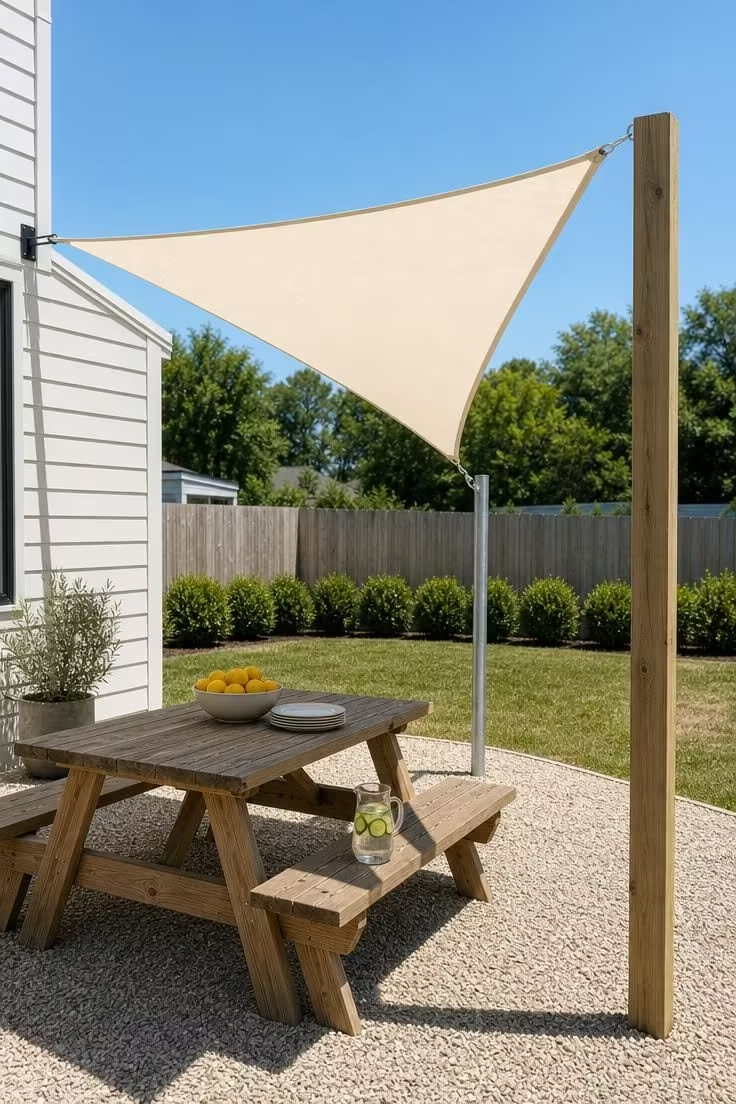
A shade sail costs a fraction of what a built pergola demands, and it goes up in an afternoon with basic hardware and a drill.
The triangle shape works better than a rectangle for most backyards because it creates visual interest and allows air to move freely underneath.
Three mounting points are all you need: one on the house wall, one on a fence post or tree, and one on a freestanding pole set in a buried concrete footer.
Turnbuckles at each corner let you dial in the tension so the sail sits flat without sagging or flapping in the wind.
Natural canvas in an off-white tone filters sunlight without blocking it completely, giving the shaded area a soft, diffused quality rather than a dark cave effect.
The picnic table below becomes the anchor of a budget backyard makeover, a gathering spot that works for weeknight dinners and weekend lunches without any additional furniture.
A shade sail defines an outdoor room as clearly as four walls would, giving the yard a sense of structure it probably lacked before.
Position the sail so the lowest corner faces the direction of the afternoon sun, which angles the shade where you need it most during the hottest hours.
- Style Blueprint:
- Triangle shade sail in natural canvas or off-white, 12-foot sides
- Three mounting points with stainless steel turnbuckles and carabiners
- Wooden picnic table, unstained or lightly oiled
- One freestanding steel or wood post set in a concrete footer
- A ceramic bowl of fruit as a table styling accent
Bamboo Roll Screen Lashed to a Chain Link Fence for Privacy
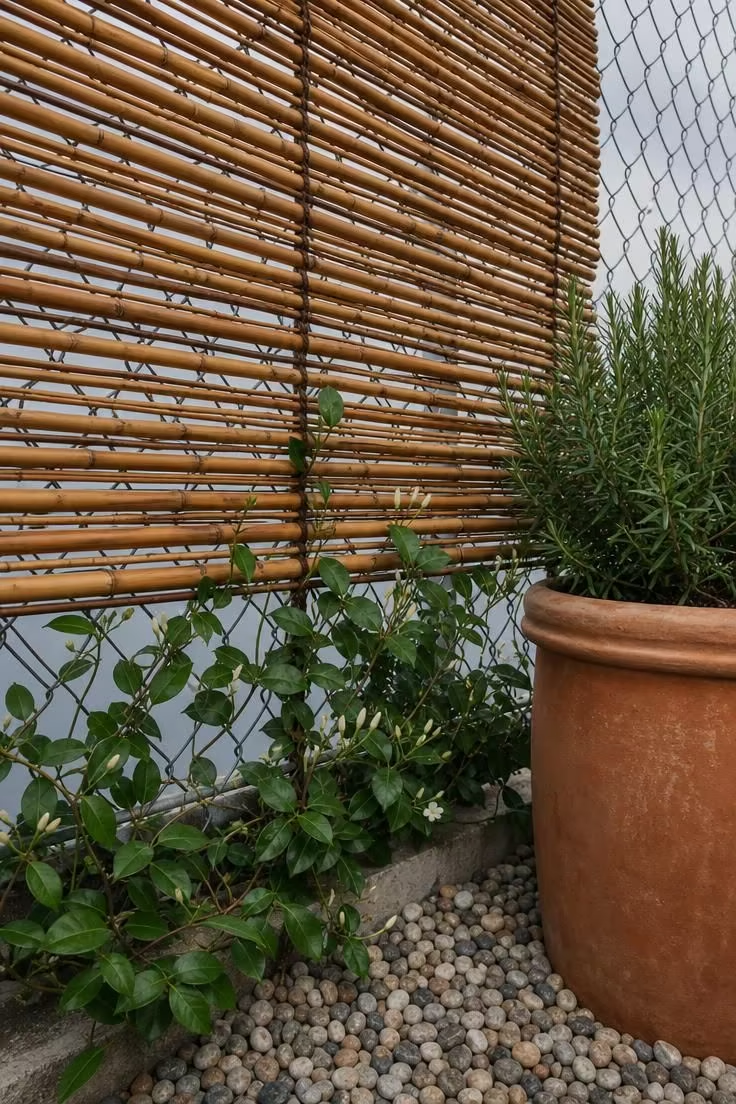
Bamboo roll fencing is the fastest way to turn a chain link fence from an eyesore into a privacy screen with actual character.
A single roll covers eight feet of fence and attaches with nothing more than zip ties or short lengths of galvanized wire threaded through the chain link.
The warm golden tone of the bamboo adds a material richness that the bare metal fence never had, and it softens the industrial look immediately.
Planting a trailing vine at the base, something like jasmine or sweet autumn clematis, gives the screen a living layer that fills in over one growing season.
A terracotta pot with rosemary or another upright herb at the base of the fence anchors the composition and adds a Mediterranean quality to the whole corner.
- Style Blueprint:
- Bamboo roll fencing, 6 feet tall, in a natural golden-brown tone
- Zip ties or galvanized wire for attachment to chain link
- One trailing vine planted at the base, such as jasmine or clematis
- A tall terracotta pot with an upright herb like rosemary
- Pea gravel strip along the fence line for drainage
Design Pro-Tip: When you layer a screen with a planted vine, put the vine on the inside face of the fence where it gets more water from your sprinkler or hose. The vine will push through the gaps on its own, and within a year the bamboo and greenery will blend into a single wall that looks grown rather than installed.
A Painted Concrete Stencil Patio in a Terracotta Tile Pattern
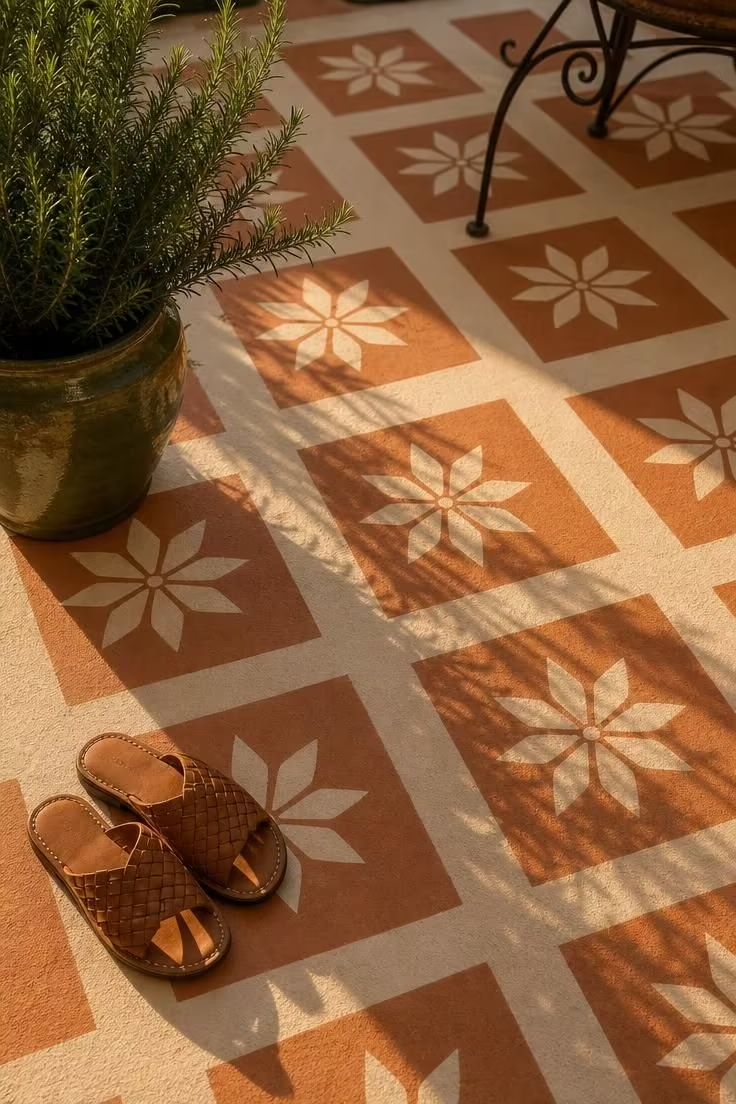
A plain grey concrete slab is one of the most underused surfaces in backyard design, and a stencil and two cans of porch paint can change it completely.
The terracotta tile pattern gives the concrete a Mediterranean warmth that reads as expensive tile from a distance and holds up to foot traffic for years with a clear sealer on top.
Surface prep is the part that matters most: power wash the concrete, let it dry for a full day, then apply a concrete primer before you start painting.
The stencil goes down with painter’s tape at the edges, and you roll the paint on with a dense foam roller for the cleanest lines.
Two colors are all you need, a warm terracotta and an off-white, and alternating them in a checkerboard or tile grid keeps the pattern simple enough to execute without perfectionist stress.
The finished surface catches late-afternoon light in a way that bare concrete never does, warming up the whole gravel patio area around it.
This project runs under fifty dollars in materials and delivers one of the highest visual returns of anything on this list.
- Style Blueprint:
- Exterior porch and patio paint in warm terracotta and off-white
- Large tile stencil, 12-inch squares, designed for concrete
- Concrete primer and clear exterior sealer
- Dense foam paint roller for clean stencil lines
- A glazed ceramic pot with rosemary as a styling accent
Gutter Planters Mounted on a Fence With Trailing Strawberries
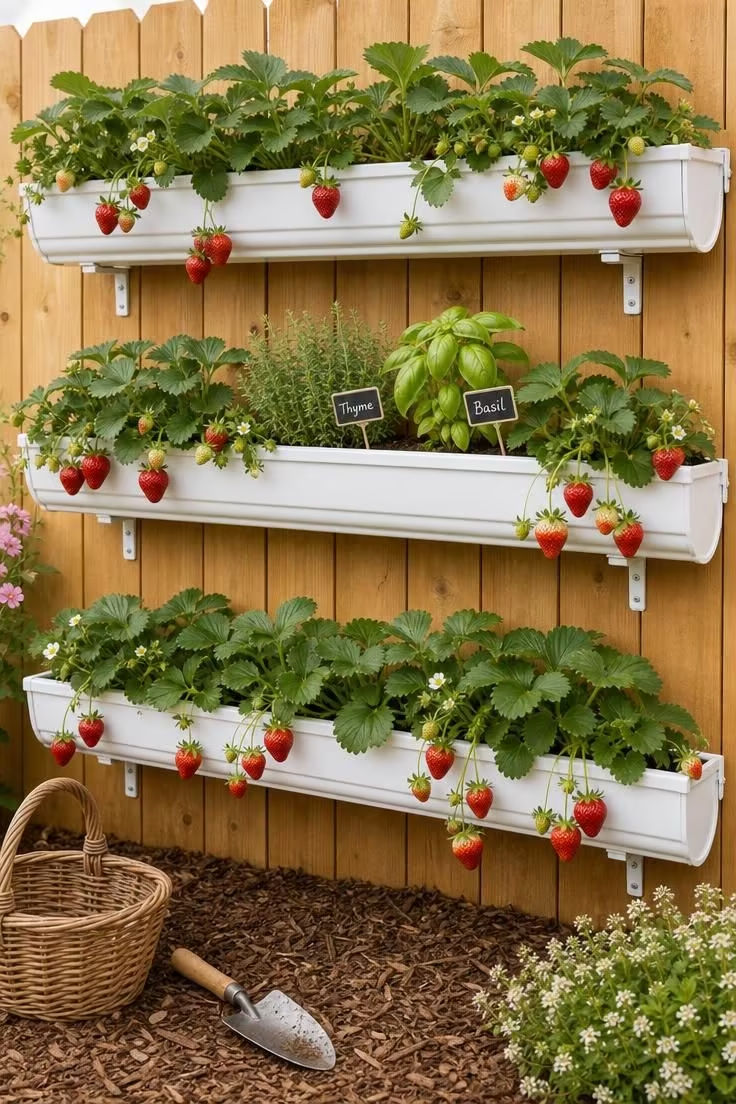
Vinyl rain gutters cut to length and capped at each end make surprisingly effective planters that cost almost nothing and mount flush to any fence.
Drilling a small drainage hole every six inches along the bottom keeps the soil from waterlogging after a heavy rain.
Strawberries are the ideal crop for these shallow containers because their roots stay compact and their runners trail over the edge in a way that softens the industrial look of the gutter.
Tucking herbs like thyme and basil between the strawberry plants adds variety and makes the whole fence line feel like a working kitchen garden.
Three gutters stacked at different heights on the same section of fence create a vertical garden effect that saves ground space in a small yard.
Lightweight potting mix rather than garden soil keeps the weight manageable and prevents the brackets from pulling away from the fence boards.
The white vinyl against honey-toned fence boards gives the planter wall a clean, graphic quality that looks planned rather than scrappy.
A raised garden bed takes up floor space, but a gutter planter wall adds growing area without shrinking the yard at all.
The whole setup, gutters, brackets, caps, and soil, costs less than twenty dollars per row.
- Style Blueprint:
- White vinyl rain gutters, 10-foot lengths, cut to fit the fence
- End caps and gutter brackets for mounting
- Lightweight potting mix with perlite for drainage
- Everbearing strawberry plants and compact herb starts
- Small drainage holes drilled every 6 inches along the bottom
A Reclaimed Shutter Panel Leaning Against a Shed as a Garden Accent
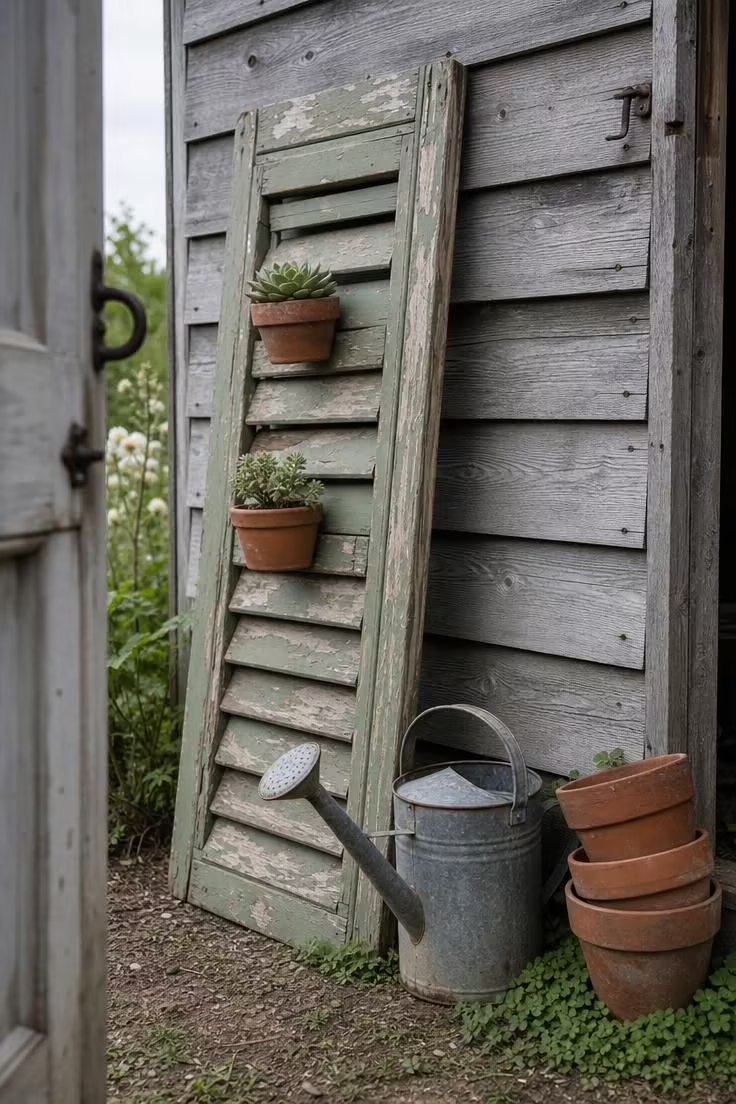
A single reclaimed shutter leaned against a shed or fence wall does the work of an expensive piece of garden art for the cost of a weekend salvage run.
The chipped paint and weathered wood carry a history that brand-new decor cannot replicate, and the louver pattern adds geometric interest to a flat surface.
Tucking small pots into the slat openings turns the shutter into a vertical planter that holds succulents, herbs, or trailing ivy without any permanent modification.
Leaning rather than mounting keeps the piece movable and protects the shed siding from screw holes.
Grouping the shutter with a galvanized watering can and a stack of aged clay pots creates a collected vignette that looks like it accumulated over years, not minutes.
This is the kind of accent that gives a DIY backyard its personality, the piece that visitors notice and ask about.
- Style Blueprint:
- One reclaimed wooden shutter with original paint patina
- Two to three small terracotta pots with succulents
- A galvanized watering can with visible age
- A stack of mismatched clay pots nearby
- Low groundcover or clover at the base for a natural setting
River Rock Dry Creek Bed Winding Through Hostas and Fern Fronds
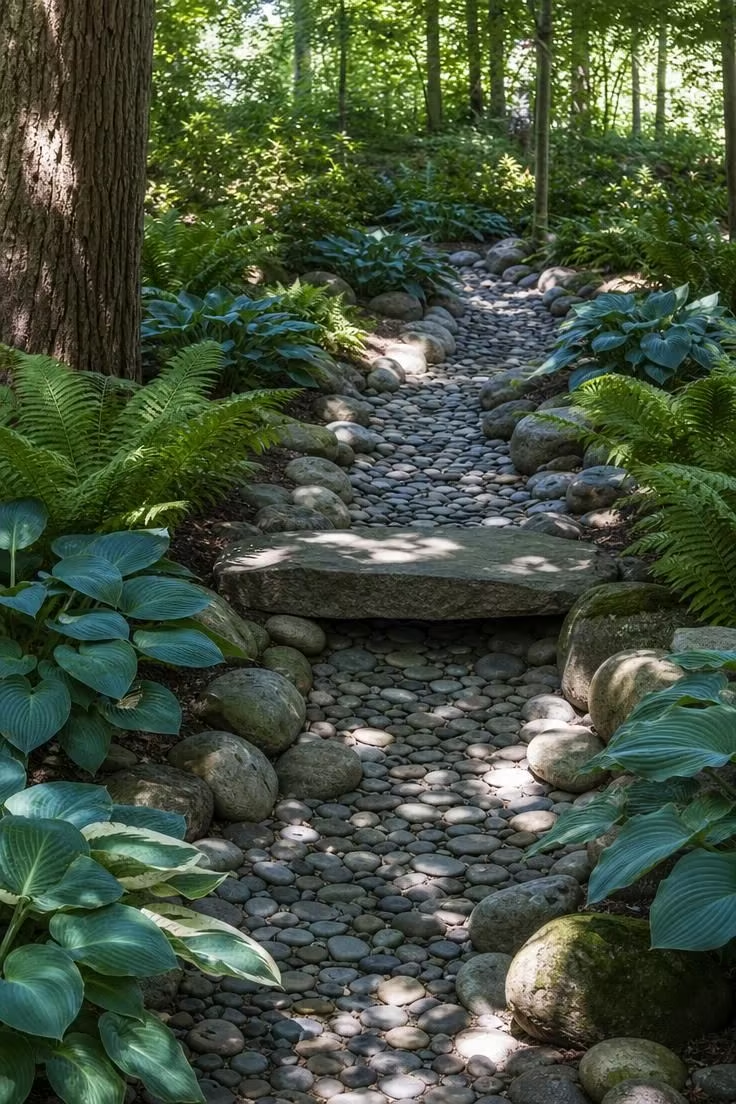
A dry creek bed solves two problems at once: it moves water away from the house during heavy rain, and it fills a bare or muddy stretch of yard with a feature that looks like it has always been there.
River rocks sourced from a landscape supply yard cost far less than you might expect, and a single load fills a surprising length of shallow channel.
Lining the trench with landscape fabric before adding stone keeps weeds from pushing through and holds the gravel in place for years without maintenance.
The visual trick is using larger stones along the edges and smaller, flatter pebbles in the center, which mimics the way a real stream sorts its rocks through water flow.
Hostas and ferns planted along both banks fill in quickly in shade and create a lush, layered border that hides the cut edge of the fabric.
A single flat stepping stone across the widest point turns a decorative feature into a functional path crossing.
The creek bed reads as intentional landscaping rather than a budget fix, which is exactly the kind of result that makes backyard ideas on a budget feel like they belong.
Stone is a one-time purchase with no seasonal upkeep, no mowing, no replanting, and no watering, which makes it one of the lowest-maintenance features you can add to a yard.
- Style Blueprint:
- Smooth river rocks in mixed sizes, larger at the edges, smaller in the center
- Landscape fabric lining the full trench before stone placement
- Blue-green hostas and sword ferns planted along both banks
- One flat stepping stone at the widest crossing point
- Shallow trench, 4 to 6 inches deep, with a gentle curve
Design Pro-Tip: When laying a dry creek bed, resist the urge to make it perfectly straight. A natural stream never runs in a line. Curve the channel gently, widen it at one or two points, and narrow it in between. That variation is what makes the finished creek look like geology, not construction.
A Hypertufa Bowl Planter Trio on a Gravel Patio Corner
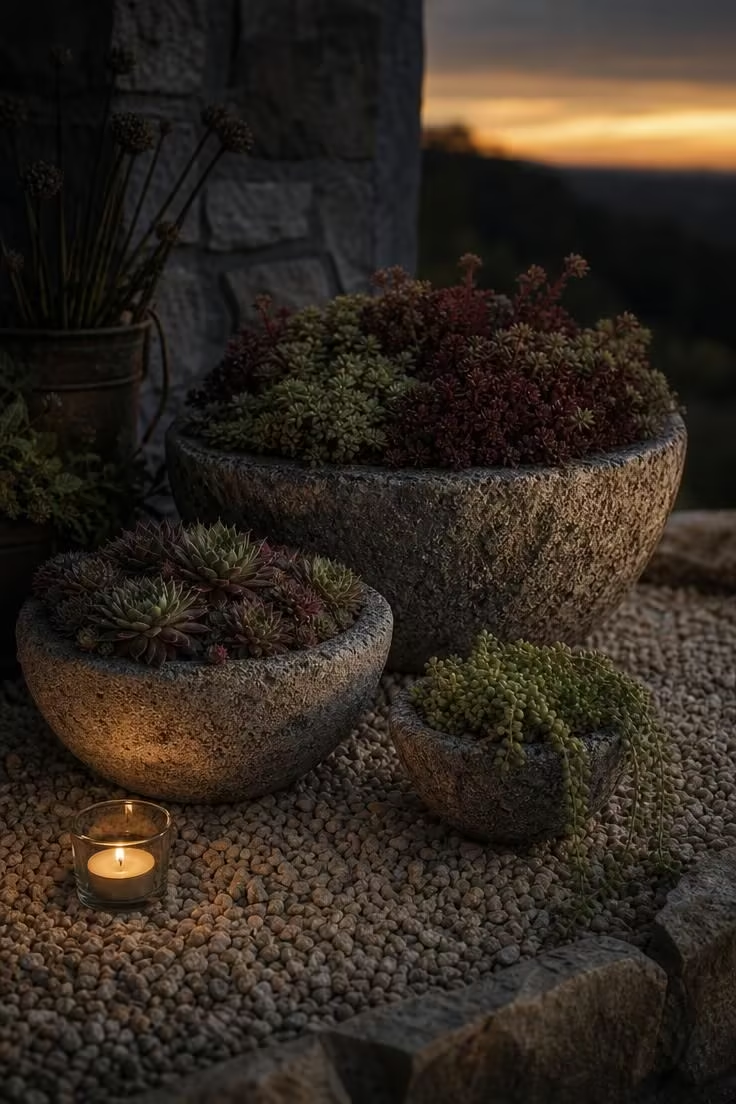
Hypertufa is a mix of Portland cement, perlite, and peat moss that cures into a rough, stone-like material for almost no money.
Any plastic bowl, mixing container, or cardboard box works as a mold, and the mix sets overnight.
The finished surface has an aged, hand-carved quality that looks like something pulled from a European garden wall, not something mixed in a five-gallon bucket last Saturday.
Grouping three bowls of different sizes creates visual weight in a corner of a gravel patio that might otherwise feel empty and forgotten.
Sedums and hens-and-chicks are the right plants for hypertufa because they do well in shallow soil, tolerate drought, and stay compact enough to match the scale of the bowl.
A trailing sedum variety in the smallest bowl lets a few stems spill over the rim, softening the hard edge of the concrete.
The trio works as a focal point on its own or as an anchor beside a bench, a fire pit, or a garden path entrance.
- Style Blueprint:
- Hypertufa mix: equal parts Portland cement, perlite, and peat moss
- Three molds in different sizes, such as mixing bowls or plastic containers
- Sedum varieties and hens-and-chicks succulents for planting
- Pale buff pea gravel as the base surface
- A small glass tea light holder as an accent
Conclusion
These thirteen projects share a common thread: they use inexpensive materials, basic tools, and a few hours of focused effort to create outdoor spaces that feel considered and complete.
A crushed granite sitting area, a cinderblock bench, a painted patio, a dry creek bed, none of these costs much, but each one changes the way you use and see your yard.
The best backyard ideas on a budget work because they borrow from the same principles that expensive landscaping uses, defined zones, varied textures, intentional lighting, and applied them with cheaper materials.
Start with one project, the one that solves the problem you notice most, and build outward as time and budget allow.
A finished corner is worth more than a half-started overhaul, and each completed project raises the baseline for the next one.