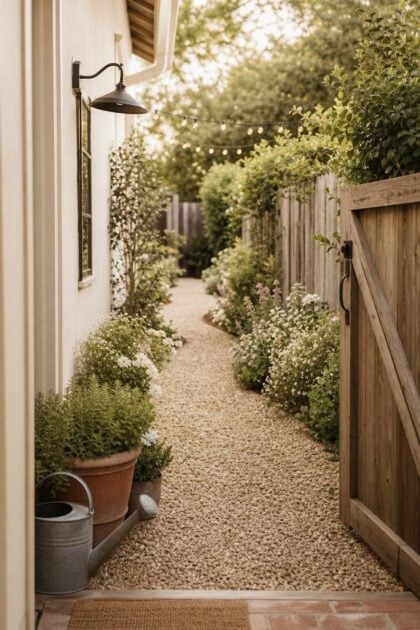
This post may contain affiliate links. If you make a purchase through these links, we may earn a commission at no additional cost to you.
Side yards sit in a strange middle ground between the manicured front lawn and the well-loved backyard.
Most homeowners walk past their side yard every day without seeing the potential tucked into that narrow strip of land.
A few smart material choices and a clear plan can turn any forgotten corridor into a space worth lingering in.
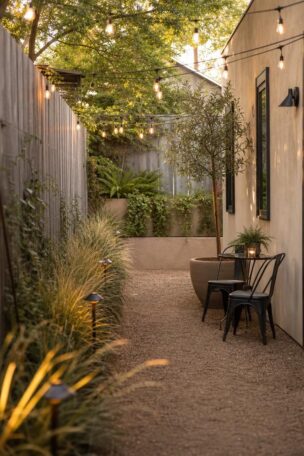
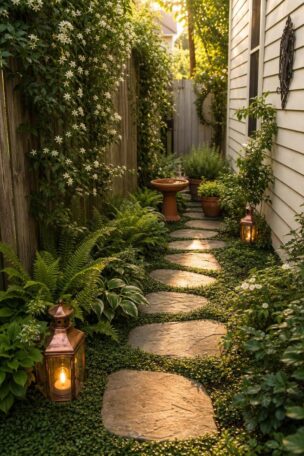
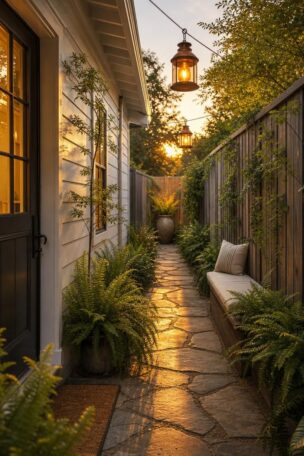
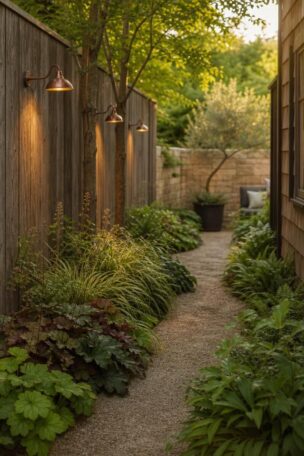
These fifteen side yard landscaping ideas cover everything from brick paths and rain gardens to lantern-lit bamboo tunnels, and every one of them is worth copying.
Herringbone Red Brick Path With Cast Iron Boot Scrapers
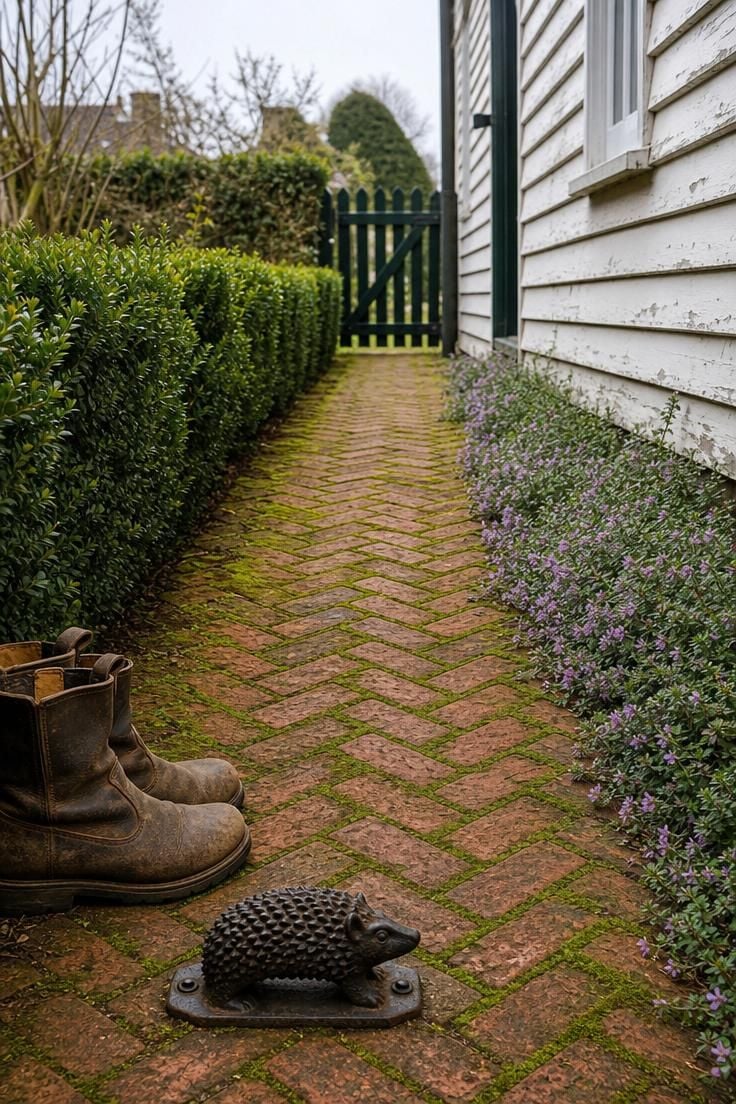
A herringbone brick path does more for a side yard than simply covering the ground.
The diagonal pattern pulls your eye forward along the corridor, making even a narrow space feel longer and more intentional.
Red clay brick absorbs and holds warmth, so the path feels a few degrees warmer underfoot on chilly mornings compared to concrete or stone.
Moss creeping between the joints adds a layer of texture that no freshly laid surface can replicate, and it softens the rigid geometry of the brickwork.
Cast iron boot scrapers at each entry point serve a real purpose, but they also signal that this path is part of the home’s daily rhythm, not just a leftover corridor.
The combination of living green edges and weathered brick gives the space an age and gravity that vinyl fencing and poured concrete never quite match.
Style Blueprint:
- Red clay brick in herringbone bond pattern
- Vintage cast iron boot scrapers at entry and exit points
- Creeping thyme ground cover along one path edge
- Clipped boxwood hedge along the opposite edge
- Moss-filled mortar joints for aged character
Whitewashed Concrete Stepping Pads Over Creeping Jenny
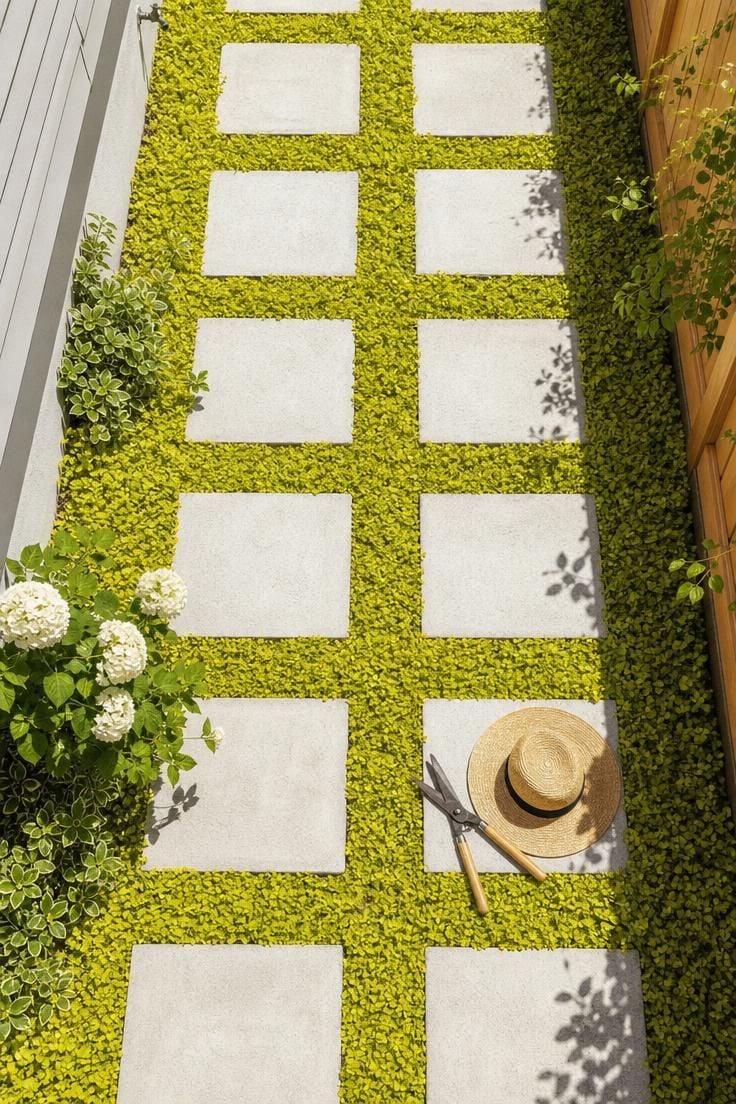
Large stepping pads give a side yard a clean, modern structure without the rigidity of a wall-to-wall paved surface.
The whitewash finish brightens what would otherwise be plain grey concrete, bouncing light back into a corridor that may sit in shadow for much of the day.
Creeping Jenny fills in fast, sometimes covering bare soil within a single growing season, and its chartreuse color reads as almost neon against the pale white pads.
That color contrast is doing real work here, because it tricks the eye into seeing more space than actually exists.
The soft mat of leaves also absorbs sound, making footsteps quieter and the whole side yard pathway feel more private.
Maintenance is low: one edge trim per month in the growing season keeps the creeping Jenny from swallowing the pads entirely.
This side yard garden approach works in sun or partial shade, since creeping Jenny tolerates both without losing its color intensity.
Style Blueprint:
- Large square whitewashed concrete stepping pads
- Creeping Jenny (Lysimachia nummularia) as gap filler
- Grid layout with even spacing between pads
- Warm grey foundation paint on the house wall
- Cedar fence along the opposite boundary
Corrugated Corten Steel Raised Planters With Trailing Rosemary
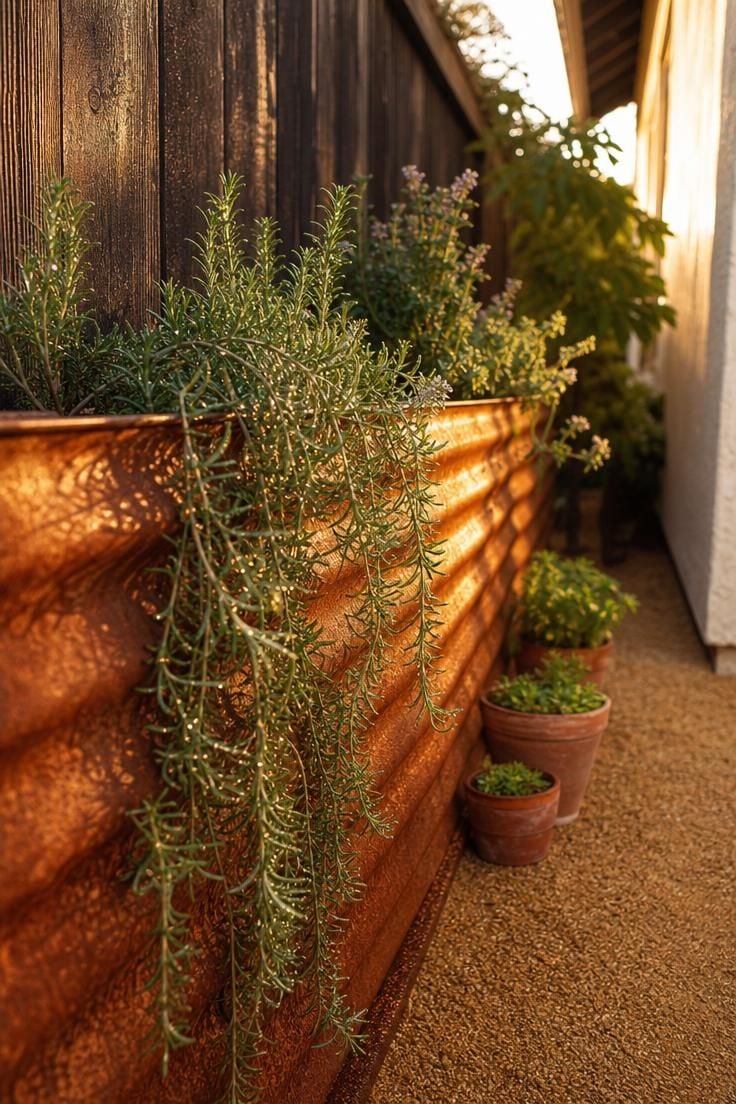
Corten steel was originally an industrial material, and that origin story is part of its appeal in a residential side yard.
The rust patina develops gradually over months, meaning the planter looks different in its first summer than it does in its third, and that built-in aging process gives the space a sense of time passing.
Rosemary is one of the few herbs that looks as good trailing over an edge as it does standing upright in a pot.
Its woody stems drape without going limp, and the grey-green needles create a color bridge between the warm orange of the steel and the neutral tones of decomposed granite below.
Running your hand along the trailing branches as you walk past releases a hit of fragrance that no candle or diffuser can match.
A raised garden bed like this keeps planting soil above the compacted clay that plagues many side yards, improving drainage and root health at the same time.
The narrow profile, only 12 to 16 inches deep, means you keep almost all of your walkway width while still getting a full planting surface.
Because corten steel is self-sealing, you never have to repaint or refinish the planters, which is a genuine advantage in a spot you might otherwise ignore for years at a stretch.
Style Blueprint:
- Corrugated corten steel raised planter (12-16 inches deep)
- Trailing rosemary over the planter lip
- Decomposed granite ground surface in honey tone
- Dark-stained cedar fence behind the planter
- Small terracotta accent pots at the planter base
Tumbled Travertine Walkway Under a Copper Pipe Pergola
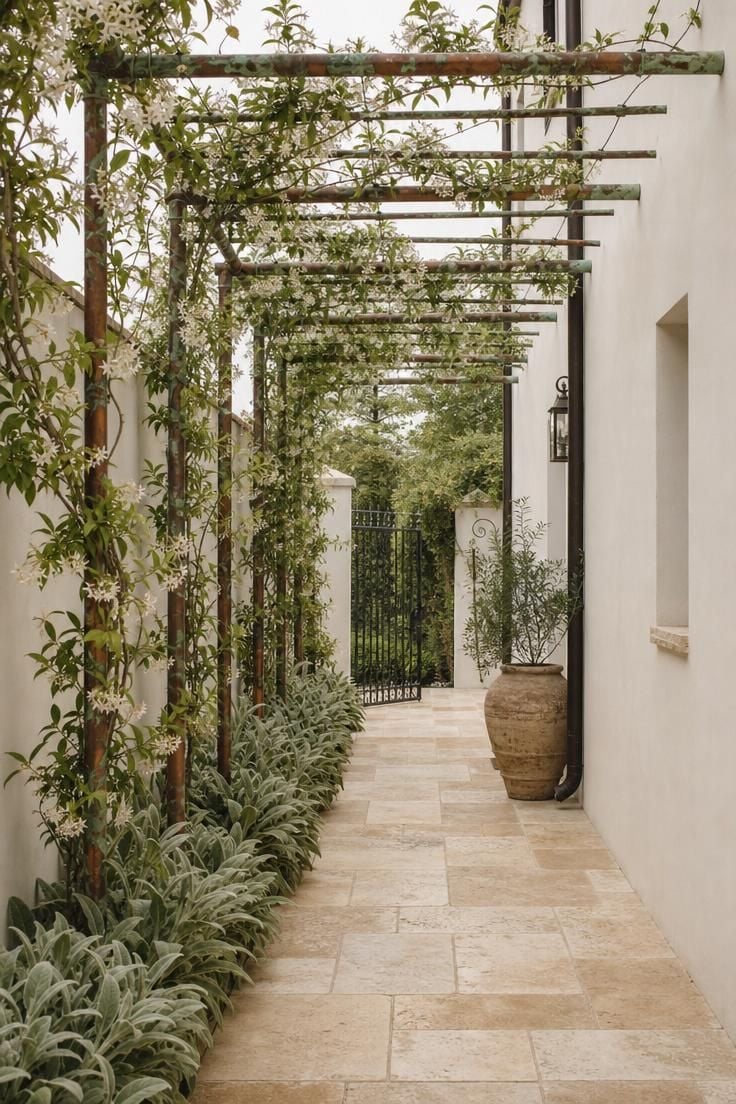
Travertine is a limestone with natural pits and color variation, and those imperfections are exactly what make it look right in a garden setting.
A polished tile would feel too formal for a side yard, but the tumbled finish has soft edges and a matte surface that reads as old-world without trying too hard.
The copper pipe pergola overhead is the element that turns a walkway into a room.
Even a slim framework of pipes, just two inches in diameter, changes how you perceive the height and enclosure of the corridor.
Over a few seasons, the copper oxidizes to a blue-green patina that pairs beautifully with the warm cream tones of the stone below.
Star jasmine climbing the frame adds fragrance on warm evenings, making this a side yard pathway you actually want to linger on rather than rush through.
Style Blueprint:
- Tumbled travertine tiles in French pattern layout
- Copper pipe pergola frame (2-inch diameter pipes)
- Star jasmine vines trained along crossbars
- Lamb’s ear border plantings on one side
- Wrought iron garden gate at the far end
Design Pro-Tip: When choosing a pergola for a narrow side yard, keep the posts within 6 inches of the fence line and house wall so the walkable width stays at least 30 inches clear. A pergola that pinches the path feels more like an obstacle than an invitation.
Slatted Ipe Wood Privacy Wall With a Built-In Cedar Bench
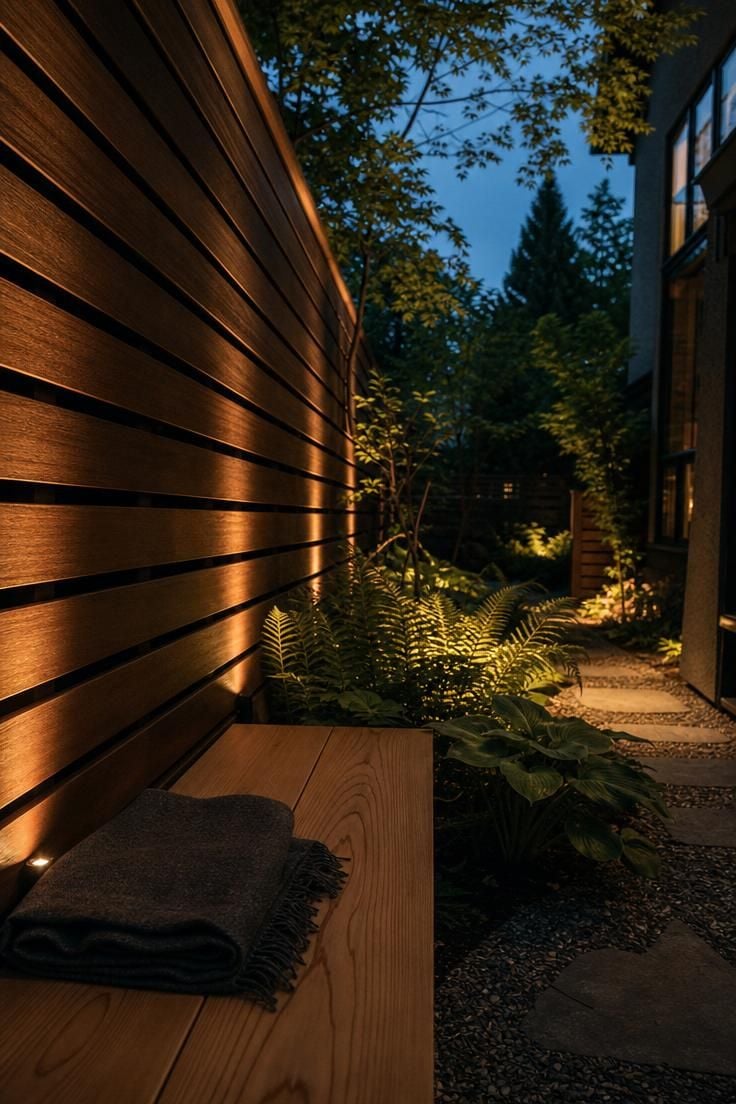
Side yard privacy is one of the most common reasons people invest in landscaping their narrow corridors, and this approach solves the problem without building a fortress.
The slatted design lets air pass through, which matters in a tight corridor where solid walls can trap humidity and stale air.
The gaps between the ipe slats also create a layered visual effect, blurring the view of whatever sits behind, whether that is a neighbor’s window or a row of garbage bins.
Building a bench directly into the wall turns a pass-through zone into a destination.
The seat sits at standard chair height, roughly 17 inches, and the depth of the bench can be as narrow as 14 inches and still be comfortable for one person.
Low-voltage wall washers mounted at the foot of the screen graze light upward across the wood grain, adding warmth after sunset without flooding the space with brightness.
Ipe is one of the hardest tropical hardwoods available, and it can handle decades of rain, sun, and freeze-thaw cycles without rotting or splitting.
The cedar bench ages to a silver-grey over time if left unsealed, which contrasts nicely with the darker ipe once both materials have weathered.
This is a place to sit with a cup of coffee in the morning before the rest of the house wakes up, and that kind of small private ritual is exactly what makes a side yard worth caring about.
Style Blueprint:
- Horizontal slatted ipe wood screen with narrow gaps
- Built-in floating cedar bench at 17-inch seat height
- Low-voltage wall wash lights at the screen base
- Fern and hosta planting bed opposite the wall
- Charcoal wool blanket as a lifestyle prop
Black Polished River Rock Dry Stream With Sword Fern Banks
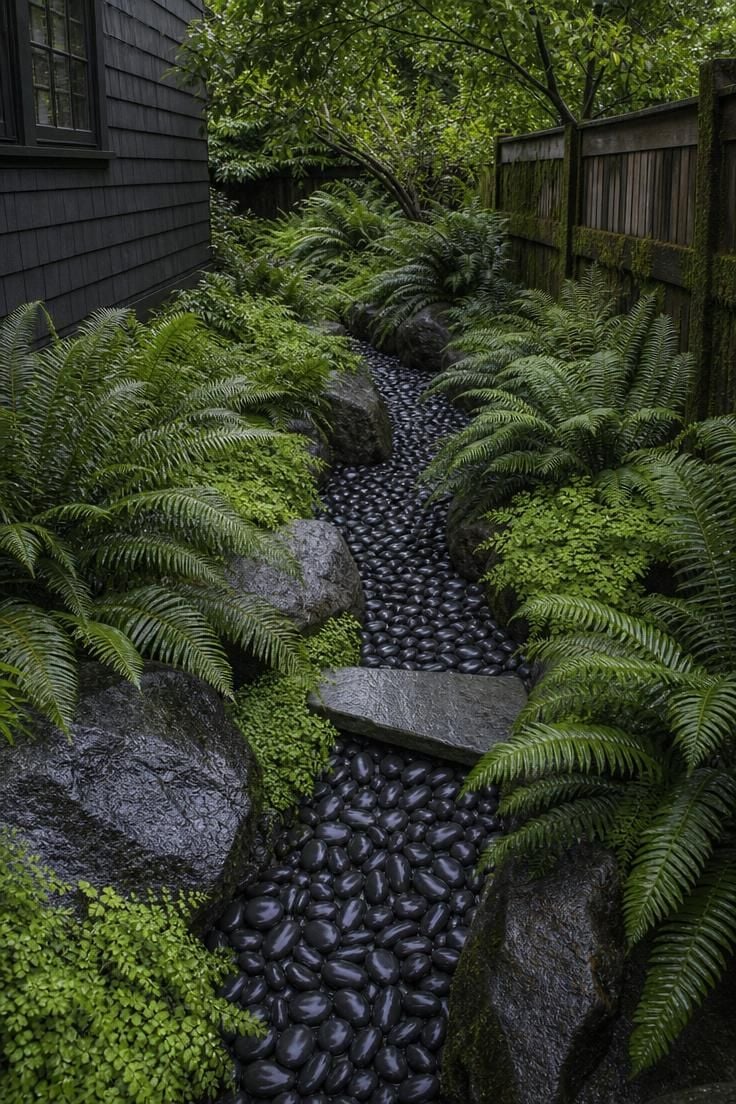
A dry stream bed solves two problems at once in a narrow side yard: it handles water drainage during storms, and it creates a focal point in a space that otherwise has none.
Black polished river rock reads as more deliberate than the usual grey or tan gravel because the dark color absorbs light and creates visual depth in the center of the corridor.
Sword ferns are the right scale for this application, with fronds long enough to arch over the stream edge without flopping across the path.
Maidenhair ferns, tucked lower along the banks, add a finer texture that keeps the planting from looking like a single green mass.
During heavy rain, water actually flows through this channel, and watching the stream come alive during a downpour is one of those unexpected pleasures that makes a side yard garden feel connected to the weather rather than sealed off from it.
The larger anchor boulders serve a structural purpose, slowing water velocity at the curves so the rock bed does not wash out.
A single stepping stone at the narrowest point of the stream gives you a way to cross from one side to the other, which is a small practical detail that prevents the stream from becoming a barrier.
Style Blueprint:
- Black polished river rock as the stream bed fill
- Sword fern and maidenhair fern bank plantings
- Dark grey granite anchor boulders at stream curves
- Single natural stepping stone crossing point
- Dark charcoal painted shingles on the house wall
Reclaimed Railroad Tie Steps Into a Sloped Gravel Terrace
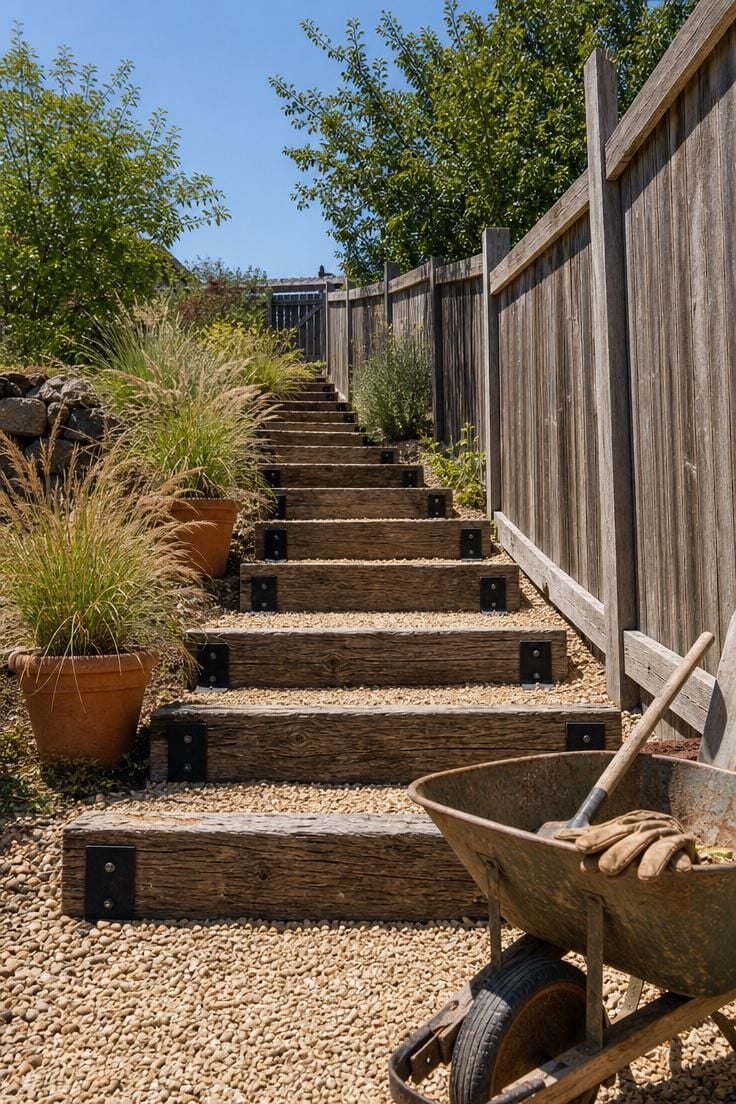
A sloped side yard is one of the trickiest conditions to landscape because every material choice has to account for gravity pulling water and soil downhill.
Railroad ties are dense, heavy, and resistant to rot, which makes them ideal risers for terraced steps in a gravel walkway system.
Each tie acts as a small retaining wall, holding back the gravel terrace behind it and creating a flat landing every 6 to 8 inches of elevation change.
The weathered surface of reclaimed ties has a texture and color that new lumber cannot replicate, with deep grey grain patterns, old bolt holes, and a roughness that grips boot soles in wet weather.
Steel angle brackets at each corner keep the ties from shifting over time, and painting them matte black makes them disappear against the dark wood.
Pea gravel between the risers drains freely, which prevents puddles from forming on the flat terraces and keeps the path usable even during steady rain.
The whole assembly is forgiving of imperfect ground conditions, because you can shim and level each tie independently rather than trying to pour a single monolithic slab across an uneven slope.
This is a gravel walkway solution that works as hard as it looks, and its rough character suits a side yard where polish would feel out of place.
Style Blueprint:
- Reclaimed railroad ties as step risers
- Warm tan pea gravel for terraced flat areas
- Matte black steel angle brackets at each corner
- Rough-sawn cedar fence with grey patina
- Ornamental grasses in terracotta pots as accents
Porcelain Tile Runner With LED Strip Edging
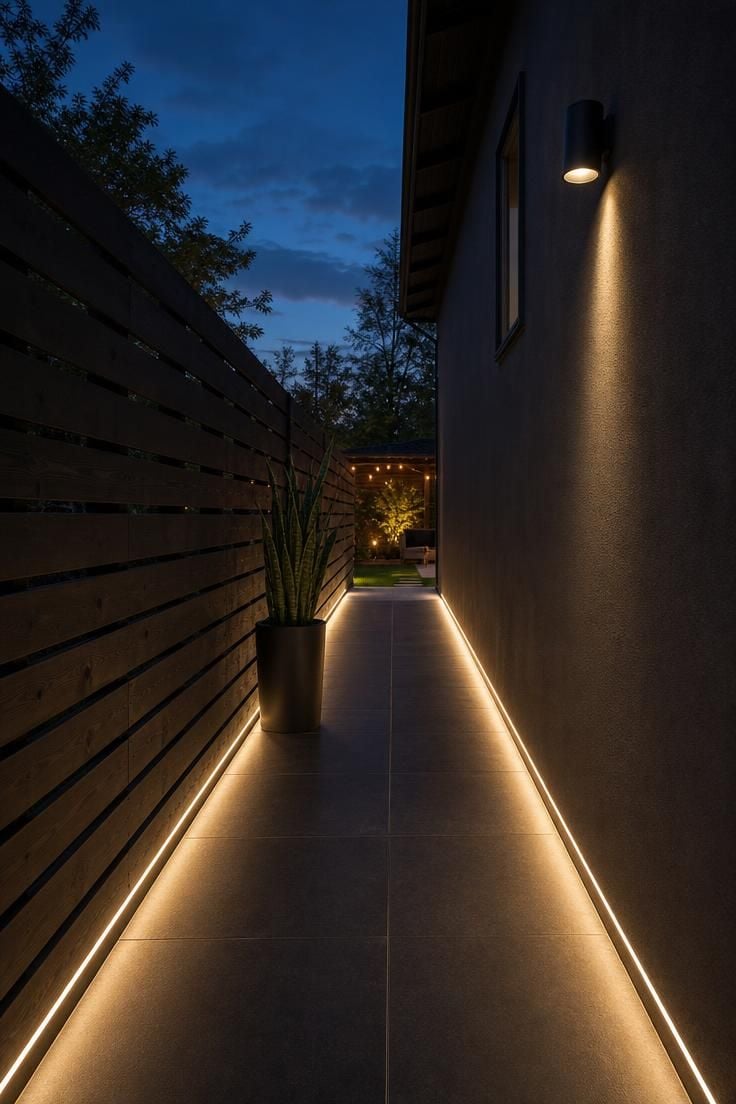
Large-format porcelain tiles laid as a single runner strip make a narrow side yard feel like an intentional architectural corridor rather than an afterthought.
The matte charcoal finish absorbs rather than reflects ambient light during the day, keeping the surface from feeling glaring in direct sun.
At dusk, the recessed LED strips take over, outlining the path in warm white light that serves as both outdoor lighting and a design statement.
The light sits at ground level, so it illuminates your footing without casting upward glare into neighboring windows.
This is one of the cleanest approaches to a side yard pathway because the material palette is so restrained: one tile, one light source, and very few plants to maintain.
Style Blueprint:
- Large-format matte charcoal porcelain tiles (24×48 inch)
- Recessed warm white LED strip lighting along both edges
- Black-stained cedar horizontal slat fence
- Dark grey smooth stucco house wall
- Matte black cylinder planter with a snake plant accent
Design Pro-Tip: When installing LED strips along a side yard path, choose a color temperature of 2700K to 3000K. Anything cooler than 3500K reads as commercial or sterile, and it fights with the warm tones of wood fencing and natural plantings nearby.
Pressed Concrete Pavers With a Dwarf Lavender Border
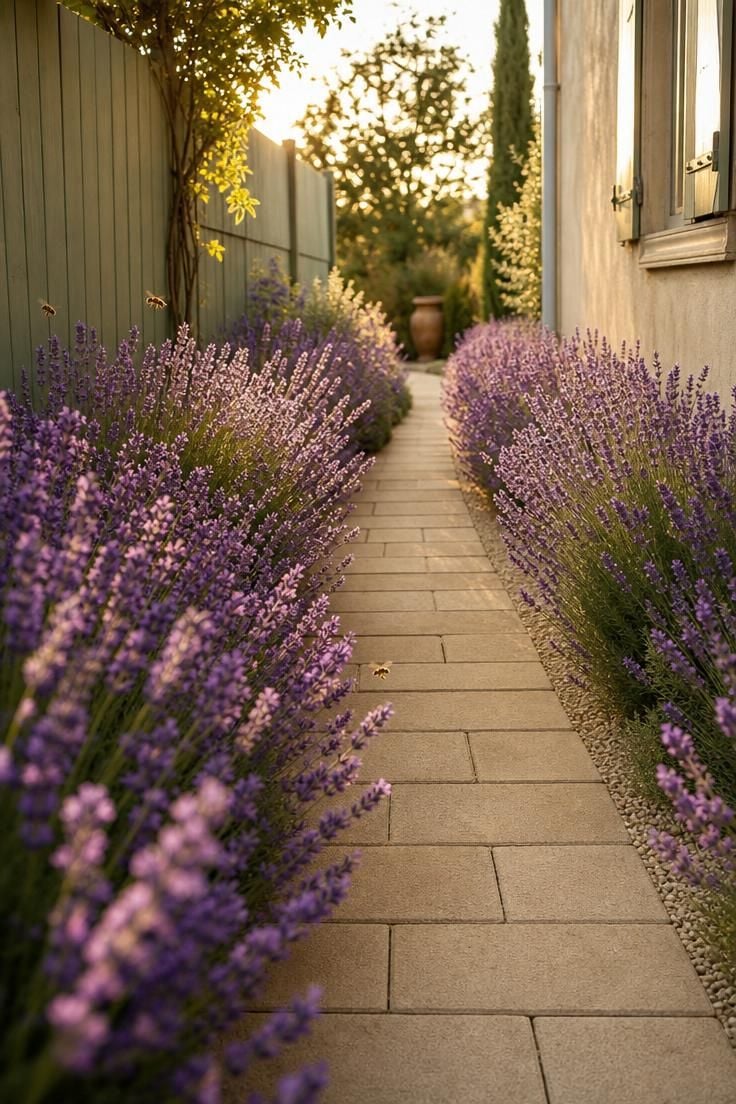
Lavender and warm-toned pavers belong together, and a side yard is one of the best places to prove it.
The running bond pattern staggers each paver by half a unit, which adds subtle visual rhythm to an otherwise straight path.
Dwarf lavender varieties like Hidcote top out at 12 to 18 inches, which is the perfect height to line a narrow side yard without encroaching on the walkway.
The purple flower spikes stand upright above the grey-green foliage, and when backlit by low afternoon sun, they practically glow.
Lavender is also one of the most drought-tolerant border plants available, meaning this side yard landscaping approach does not demand a sprinkler system or frequent watering.
The scent is the real payoff here: walking this path on a warm evening, brushing the foliage with your ankles, releases a wave of fragrance that makes a 30-foot corridor feel like a garden in the south of France.
A buff gravel strip between the lavender and the house foundation keeps root systems away from the wall and doubles as a drainage buffer.
Style Blueprint:
- Pressed concrete pavers in warm sand tone, running bond layout
- Dwarf lavender (Hidcote) border on both sides of the path
- Buff gravel drainage strip along the house foundation
- Sage green painted fence along the opposite boundary
- Low afternoon golden light for the best visual effect
Cedar Plank Boardwalk Over a Rain Garden Swale
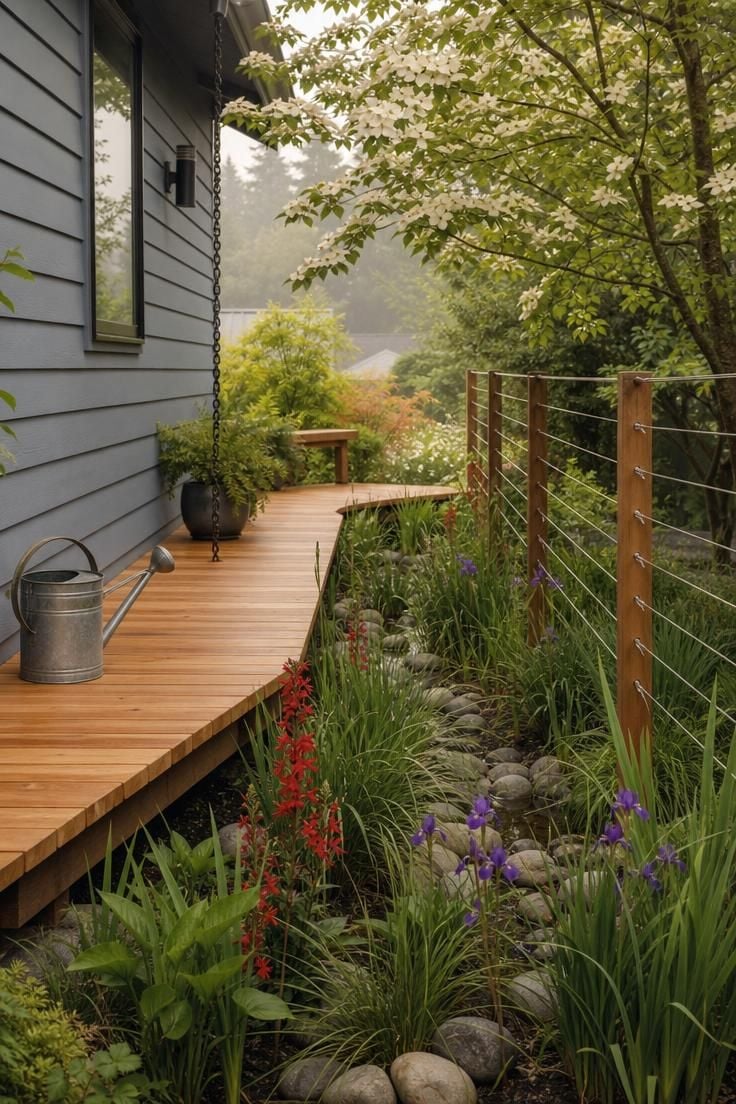
A rain garden swale in a narrow side yard does the job of a French drain with none of the buried infrastructure and all of the visual reward.
The planted depression collects roof runoff, filters it through layers of soil and root systems, and slowly releases it into the ground rather than sending it down the street.
Building a cedar boardwalk over the swale gives you a dry, stable walking surface while letting the garden do its work underneath.
The 4 to 6 inches of elevation is enough to clear the swale during a heavy rain event, and the gaps between the planks let water pass through rather than pooling on the surface.
Sedges are the backbone planting here because their dense root mats hold soil in place and tolerate both wet and dry cycles without complaint.
Blue flag iris adds vertical punctuation with its sword-shaped leaves, and the purple flowers are a bonus in late spring.
Cardinal flower brings a shot of vivid red that attracts hummingbirds, giving the space a sense of active wildlife that most side yards never experience.
A stainless steel cable railing along the deeper side of the swale is a safety measure that doubles as a modern design element, catching light and adding a horizontal line that stretches the corridor visually.
This is a side yard landscaping strategy that performs a genuine environmental function while looking like it belongs in a botanical garden.
Style Blueprint:
- Cedar plank boardwalk elevated 4-6 inches above grade
- Rain garden swale with sedges, blue flag iris, and cardinal flower
- River rock lining the swale base for drainage
- Stainless steel cable railing on the deep side
- Grey-blue painted wood siding on the house wall
Painted Cinder Block Planter Wall With Succulents and Sedum
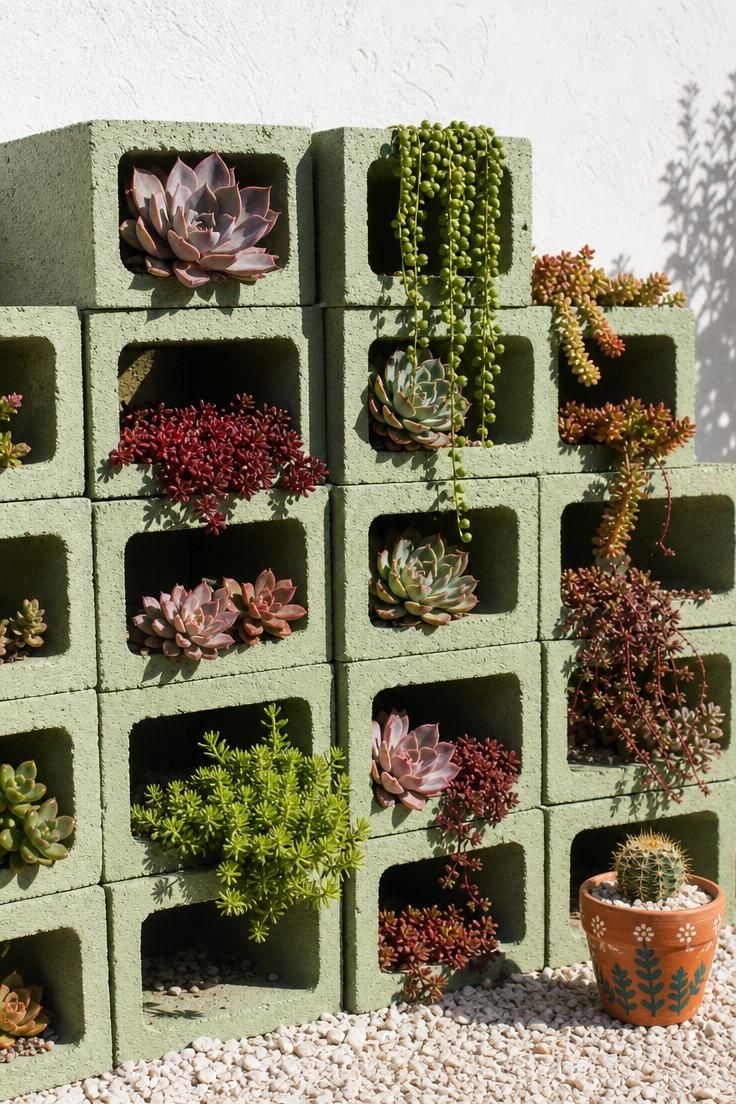
A cinder block planter wall costs a fraction of a modular living wall system, and it has a handmade quality that prefabricated panels never quite achieve.
Each block, turned on its side, creates a pocket roughly 4 by 8 inches deep, which is exactly the right volume for a small succulent or sedum plant to root and fill.
Painting the blocks a single color unifies what would otherwise look like a pile of construction materials and turns it into a vertical garden with clear intention.
Sage green works particularly well because it sits between the warm tones of terracotta and the cool tones of concrete, bridging both palettes.
This is one of the most budget-friendly ways to add greenery to a side yard without giving up any ground-level walking space.
The succulents in each pocket need almost no water in most climates, making maintenance about as simple as it gets for a living installation.
Style Blueprint:
- Cinder blocks turned on their sides, stacked 3-4 rows high
- Sage green paint on all block surfaces
- Mixed succulent and sedum varieties in each pocket
- Crushed white gravel ground cover at the base
- White stucco house wall as the backdrop
Design Pro-Tip: Seal the interior of each cinder block pocket with a coat of waterproof masonry sealant before planting. This prevents water from wicking through the concrete and staining the painted exterior face of the block.
Natural Flagstone Patio Nook With a Chiminea and Two Bistro Chairs
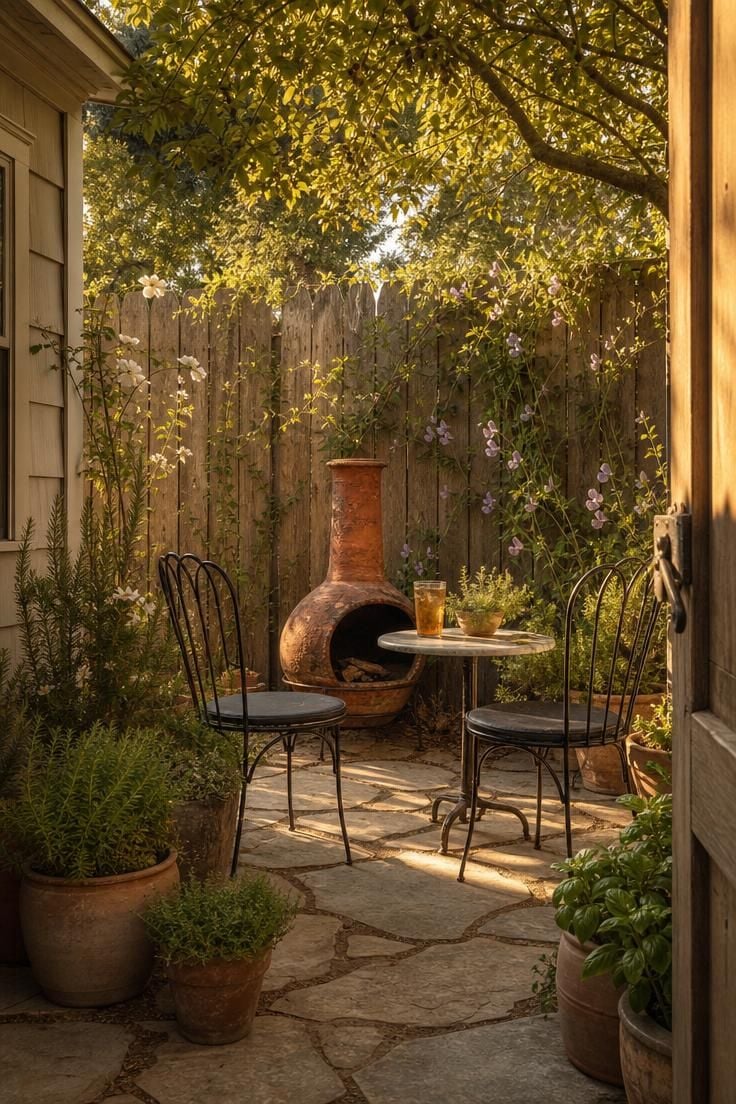
Every side yard has one wider spot, usually where the house jogs or the fence angles, and that wider spot is where you put a patio nook.
Flagstone works well here because its irregular shapes can accommodate an awkward footprint without requiring a strict grid layout.
A chiminea can provide warmth on cool evenings and give the seating area a focal point.
Do not position a chiminea or other fire feature against a fence, wall, vegetation, stored materials, or another combustible surface.
Follow the specific appliance manufacturer’s required clearances and local fire restrictions.
Two bistro chairs and a small table are enough, because this is not a space for entertaining a crowd.
It is a space for two people and a conversation, or one person and a book, and that smallness is the whole point.
Surrounding the patio with potted herbs brings fragrance into the seating zone and gives you something to pick and carry into the kitchen on your way back inside.
A channel drain can collect surface runoff, but its lawful outlet, capacity, pipe size, slope, and discharge location depend on the site, foundation conditions, soil, municipal stormwater rules, and neighboring properties.
Do not prescribe a universal outlet or slope without those conditions being evaluated.
The flagstone can also retain some warmth after sun exposure, which can make the surface feel less cool as temperatures begin to drop in the evening.
This is the kind of side yard garden space that can turn an otherwise transitional area into a small, purposeful place to sit.
Style Blueprint:
- Irregular natural flagstone with sand-filled joints
- Clay chiminea positioned with manufacturer-required clearance from the fence and other combustible materials
- Two black metal bistro chairs with a round marble-top table
- Potted rosemary, basil, and thyme in mismatched clay pots
- Weathered cedar fence with climbing sweet pea vines
Bamboo Screen Tunnel With Hanging Glass Lanterns
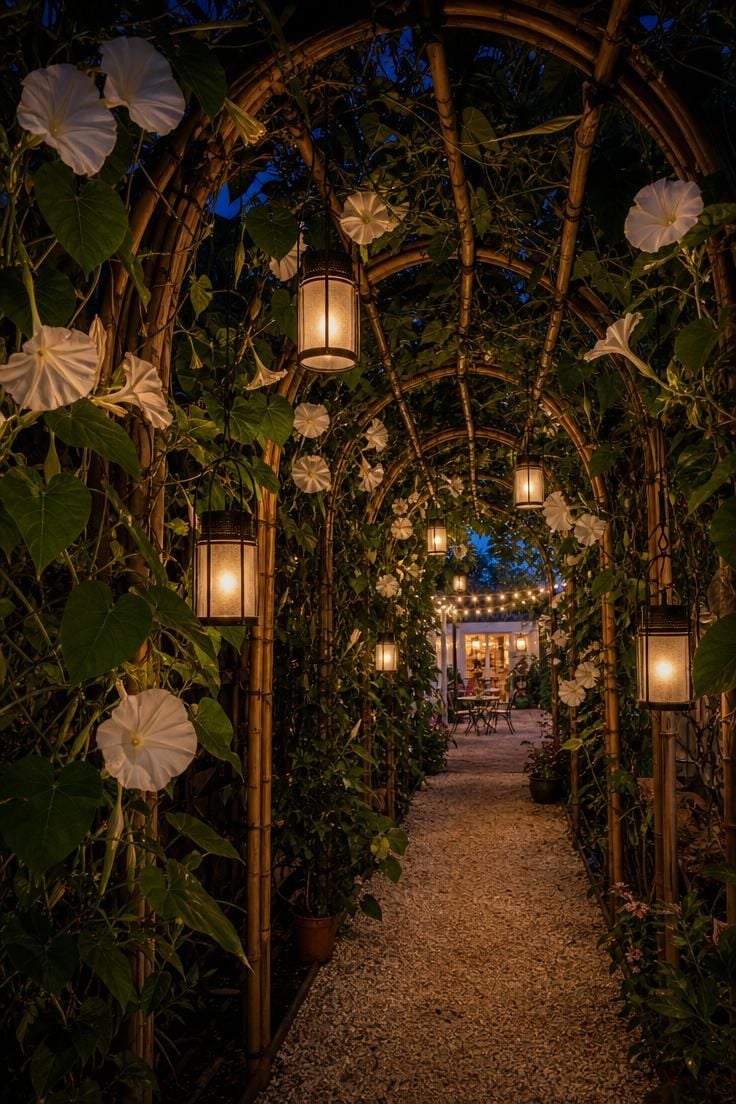
A bamboo tunnel does something no other side yard structure can do: it turns a corridor into an experience.
The repeating arches create a rhythm of enclosure and release as you walk through, and the staggered lanterns overhead pull your attention upward into the vine canopy.
Bamboo poles are inexpensive, lightweight, and strong enough to support the weight of climbing vines once the vines mature.
Moonflower is the right climber for this application because its large white trumpet blooms open at dusk, exactly when the lanterns come on and the tunnel is at its most atmospheric.
The frosted glass diffuses the lantern light into soft halos rather than sharp points, which keeps the corridor feeling gentle rather than spotlit.
Walking through this space at night feels like passing through a garden room that only exists after dark, and that sense of discovery is what makes it memorable.
This kind of outdoor lighting approach turns a simple narrow side yard into the most talked-about feature of the entire property.
Style Blueprint:
- Arched bamboo poles forming a repeating tunnel frame
- Frosted glass lanterns at staggered hanging heights
- Moonflower vines climbing the bamboo arches
- Pale cream gravel path beneath the tunnel
- Warm glow lantern light for evening atmosphere
Poured Concrete Channel Drain With a Polished Aggregate Finish
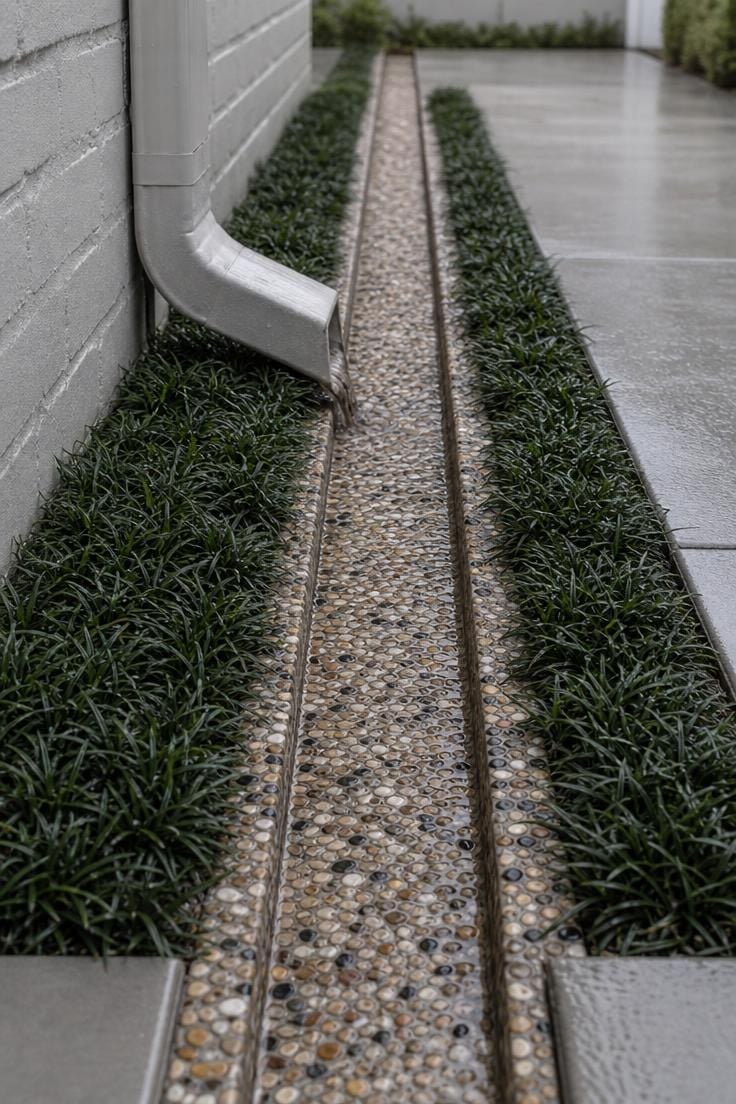
Drainage is the least glamorous part of side yard landscaping, but ignoring it is the fastest way to end up with a cracked foundation and standing water after every storm.
A poured concrete channel drain handles the problem directly, collecting roof runoff and directing it toward the backyard or a dry well.
The polished aggregate finish lifts this from a purely utilitarian element into something worth looking at, with exposed pebbles in three or four natural tones giving the surface texture and visual interest.
Dwarf mondo grass flanking both sides of the channel softens the hard edges and adds a year-round green frame that requires almost no mowing or trimming.
The channel itself acts as a natural dividing line, giving structure to a corridor that might otherwise feel shapeless.
Ground cover plants like mondo grass do well in the consistent moisture near a drainage channel, turning what could be a problem zone into one of the healthiest planting areas in the yard.
Style Blueprint:
- Poured concrete channel drain with polished aggregate finish
- Exposed pebbles in cream, tan, and charcoal tones
- Dwarf mondo grass borders on both sides of the channel
- Grey painted brick house wall as backdrop
- Gutter downspout integration at the channel head
Design Pro-Tip: Slope the channel at a minimum of 1 percent grade toward the outlet point. A laser level is worth renting for a day to get this right, because even a small low spot in the channel will collect standing water and breed mosquitoes.
Ornamental Grass Alley With Bluestone Steppers and Solar Bollards
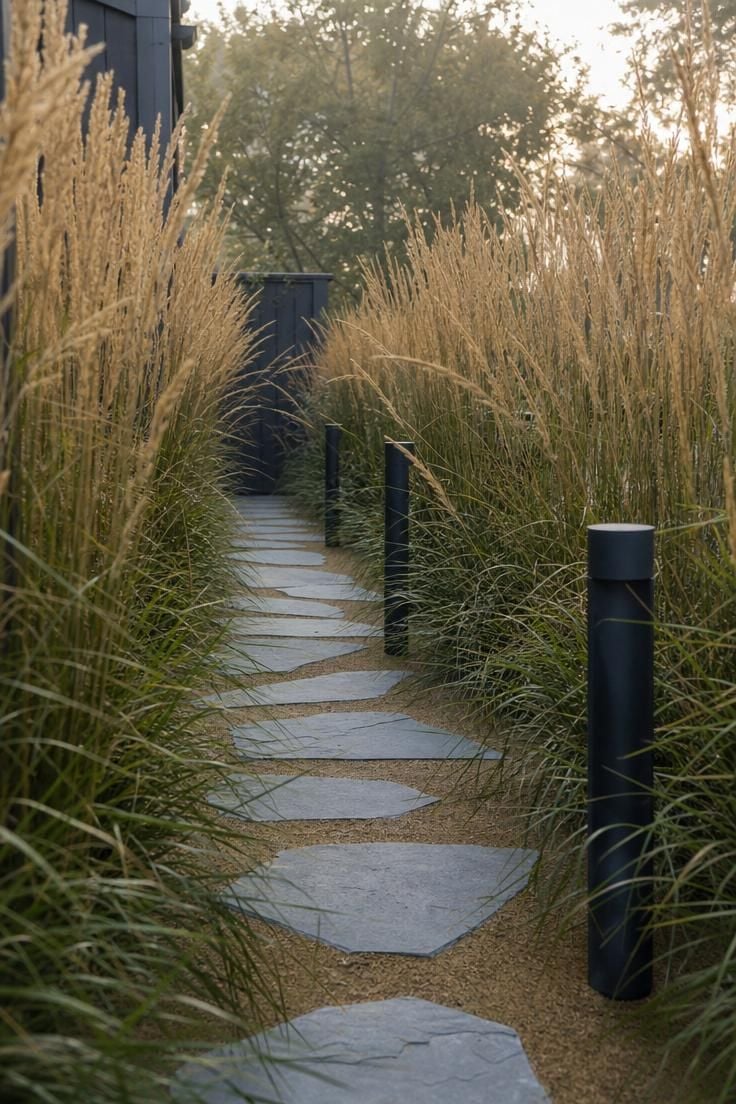
Walking through a corridor of ornamental grass is one of those sensory experiences that no amount of paving or fencing can replicate.
The feather reed grass grows 4 to 5 feet tall, which is enough to create a genuine sense of enclosure in a narrow side yard without feeling oppressive.
Karl Foerster is a clumping variety, meaning it stays in its designated bed rather than sending runners across the path, which is an important distinction when your walking surface is only 30 inches wide.
The buff-colored seed heads appear in midsummer and last through winter, catching light and moving in even the slightest breeze.
Bluestone stepping stones set in decomposed granite give you a stable footing through the grass corridor without imposing a rigid paved look.
The irregular shapes and natural cleft surface of bluestone feel like they belong in a meadow setting, which reinforces the immersive quality of the grass plantings.
Solar bollards in matte black are the right outdoor lighting choice here because they need no wiring, no trenching, and no electrician.
They charge during the day and switch on at dusk, marking the path with small pools of warm light that guide your feet without overpowering the soft, wild mood of the space.
Style Blueprint:
- Karl Foerster feather reed grass on both sides of the path
- Irregular bluestone stepping stones in decomposed granite
- Matte black solar-powered bollard lights every 6-8 feet
- Warm gold decomposed granite ground surface
- Garden gate partially visible at the far end of the corridor
Conclusion
A narrow side yard is a blank page that most homeowners never think to write on.
Every idea here starts with the same small commitment: picking one material, one plant, or one structure and giving that forgotten corridor a reason to exist.
Some of these side yard landscaping projects take a weekend and a few bags of gravel, and others ask for a longer timeline and a bigger investment.
The size of the project matters less than the decision to start.
Walk your side yard tomorrow morning with fresh eyes, measure the width, check where the sun hits, and pick the idea that fits the space you actually have.