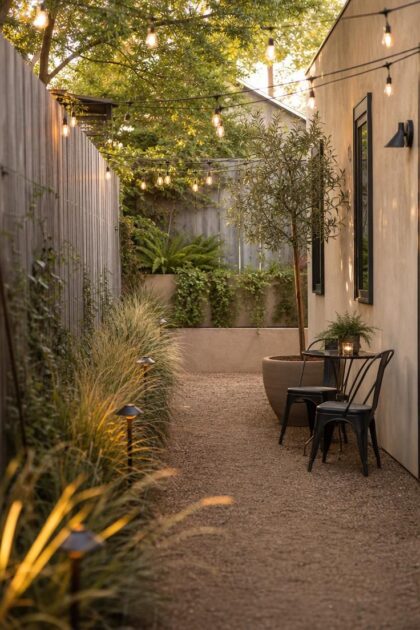
This post may contain affiliate links. If you make a purchase through these links, we may earn a commission at no additional cost to you.
That narrow corridor between your house and the fence line probably holds a few trash cans, a coiled hose, and not much else.
Most homeowners walk past their side yard every day without considering what it could become.
Even a strip barely four feet wide has room for a gravel path, a row of potted herbs, and a light fixture that changes everything after dark.
These 15 side yard ideas turn the most overlooked stretch of your property into a space worth visiting on purpose.
Decomposed Granite Runner With Weathered Teak Stepping Rounds
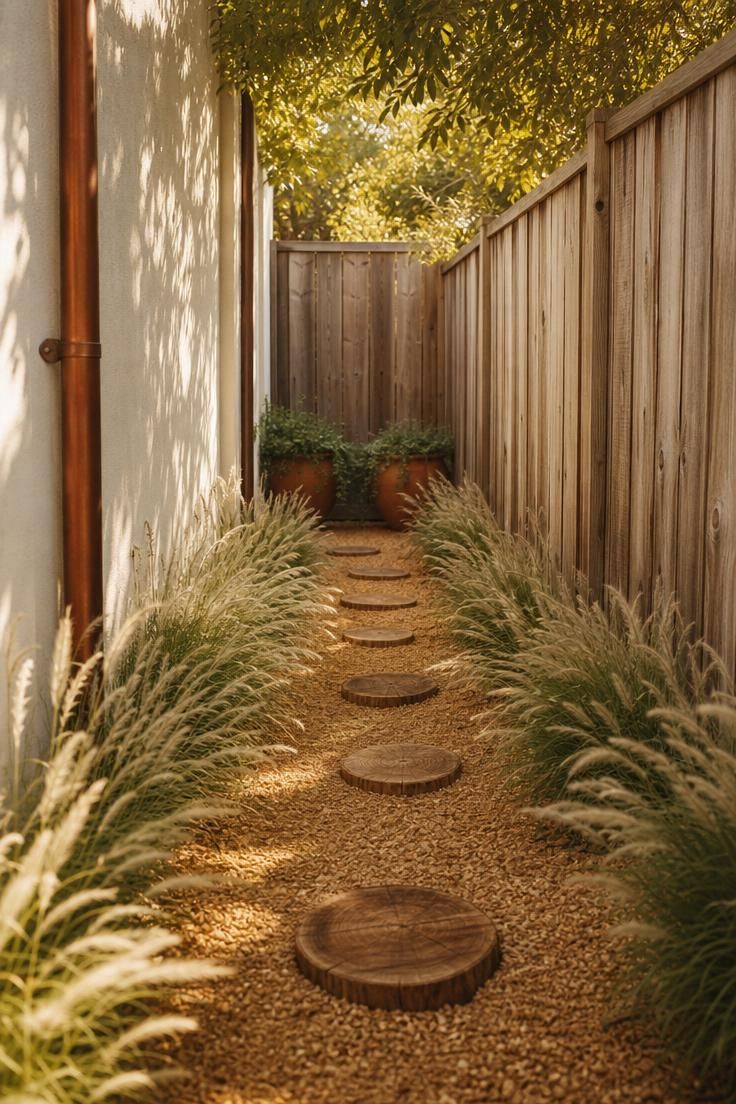
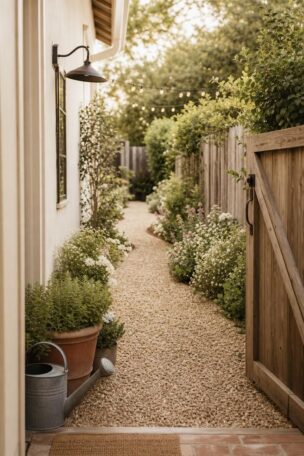
A decomposed granite runner is one of the most forgiving ways to start any side yard landscaping project because the material compacts well and costs a fraction of poured concrete.
Decomposed granite can form a compacted, informal walking surface, but drainage performance and maintenance depend on aggregate gradation, stabilizer, base preparation, underlying soil, slope, rainfall, edging, and installation.
The teak rounds interrupt the uniformity of the gravel with circles of dark, oiled wood that feel almost sculptural underfoot.
Reclaimed rounds from old dock pilings or fallen trees carry the kind of grain patterns and hairline cracks that new lumber cannot replicate.
Mexican feather grass planted along the edges keeps the look soft without demanding much water or maintenance once established.
That honey-colored DG pairs well with warm stucco and aged cedar, pulling both surfaces into a single palette.
Walking this path in bare feet after dinner, with the gravel still holding a little warmth from the sun, turns a utility corridor into a sensory experience.
A single copper downspout becomes an accent piece when everything around it is this deliberately simple.
Style Blueprint:
- Decomposed granite in a warm gold or amber tone, compacted to a firm surface
- Reclaimed teak rounds, fourteen inches across, sealed with a matte outdoor finish
- Mexican feather grass (Nassella tenuissima) planted in staggered drifts along both edges
- Weathered cedar fence left untreated or finished with a clear UV-protective oil
- One or two low terracotta pots with trailing rosemary at the far end
Stacked Dry-Stone Edging Along a Pea Gravel Side Yard Pathway
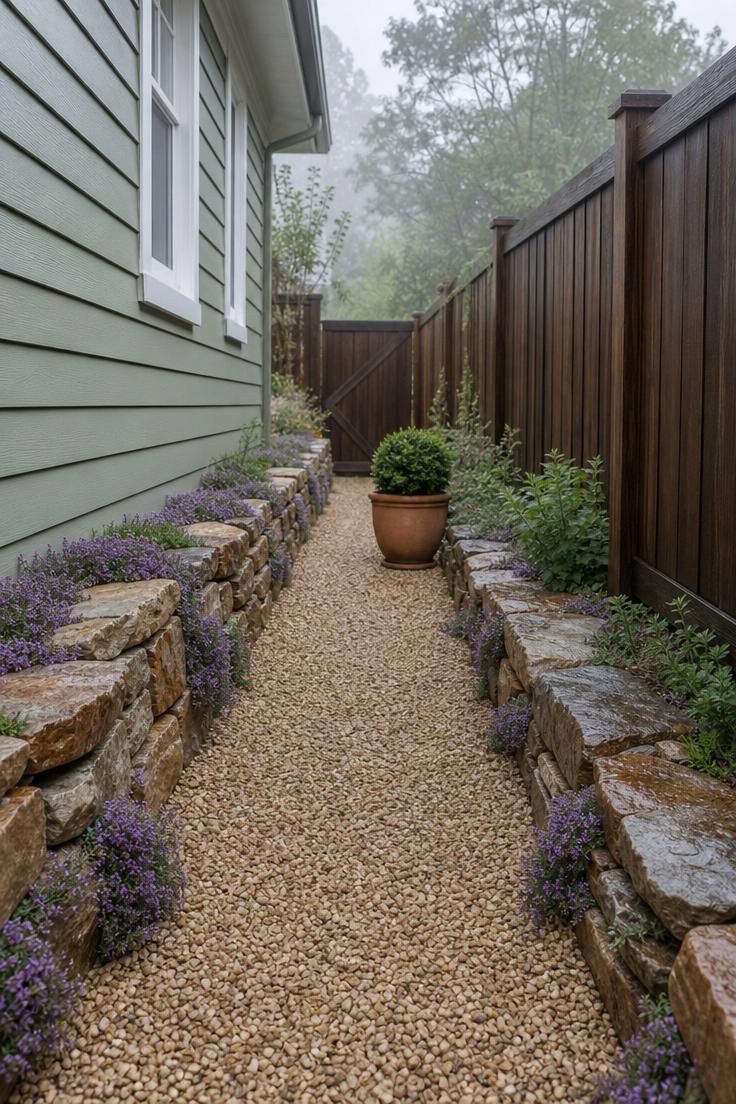
Dry-stacked fieldstone needs no mortar, no footer, and no permit in most municipalities, which makes it one of the easiest side yard pathway borders to build in a single afternoon.
The stones lock together through gravity and friction, and their irregular faces catch light and shadow in ways that machined pavers never will.
Pea gravel between the borders keeps rainwater from pooling against the foundation, a persistent concern in any narrow side yard where drainage runs toward the house.
Creeping thyme colonizing the joints is not just decorative, it releases fragrance when stepped on and suppresses weed growth in the gaps.
On an overcast morning, the muted tones of stone and gravel come forward without competing with bright sun, and every texture reads clearly.
This kind of side yard gravel path looks like it has been here for decades even when you laid it last weekend.
Style Blueprint:
- Irregular fieldstone in tan, rust, and pale silver tones, stacked two to three courses high
- Pea gravel in a warm beige, raked level between the stone borders
- Creeping thyme (Thymus serpyllum) planted in stone joints for fragrance and color
- Dark-stained cedar fence to frame the opposite side
- A single boxwood in a clay pot as a midpoint accent
A Slatted Cedar Gate Opening Into a Hidden Fern Garden
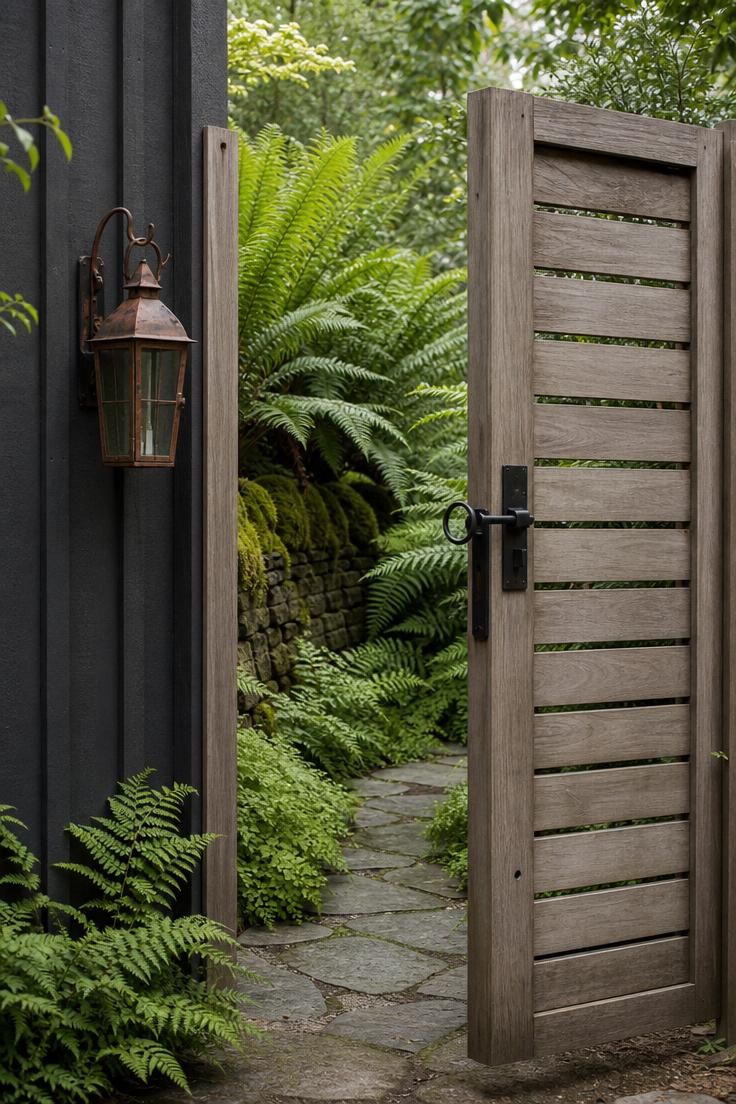
A gate changes the psychology of a side yard from passageway to destination.
The moment you add a latch and a threshold, the space behind it becomes a room you enter on purpose rather than a corridor you walk through.
Sword ferns and maidenhair ferns are ideal side yard plants for these shaded corridors because they spread readily in low light and poor soil without constant feeding.
Moss on stone is the kind of detail that money cannot buy quickly, but a north-facing side yard garden with consistent moisture will grow it within a season or two.
The bluestone stepping path curving out of sight creates anticipation, pulling the eye forward even in a space that might be only twenty feet deep.
Charcoal board-and-batten siding behind all that green intensifies the foliage by contrast, making every frond appear more saturated.
A copper lantern with a blue-green patina feels right here because it shares the organic aging process of the cedar and the stone.
This is the kind of small side yard project that makes visitors stop and ask what is behind the gate.
Style Blueprint:
- Horizontal slatted cedar gate, unfinished and allowed to silver naturally
- Matte black iron latch and strap hinges
- Dense planting of sword ferns and maidenhair ferns in the ground bed beyond the gate
- Irregular bluestone stepping stones set into moss and fern groundcover
- A copper lantern with natural patina mounted beside the gate
Galvanized Steel Trough Planters With Herbs Along the House Wall
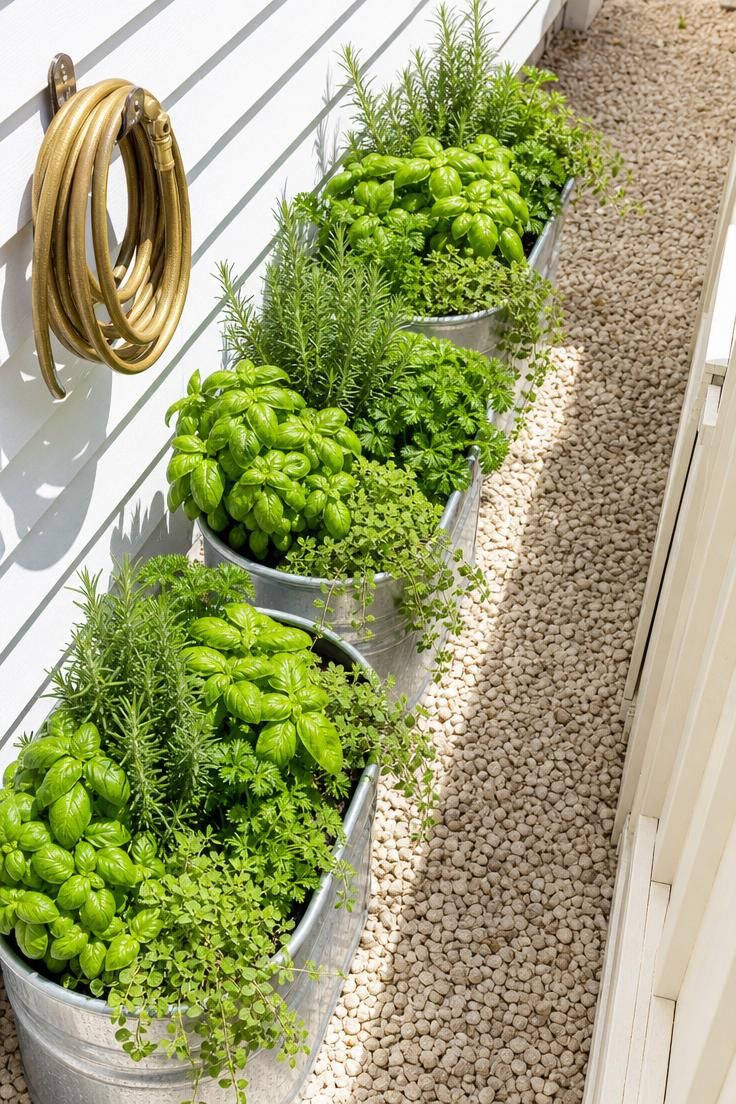
Galvanized troughs solve the biggest problem in a narrow side yard, which is that traditional garden beds eat up floor space you cannot spare.
These steel containers sit against the house wall and leave the full width of the corridor open for walking.
Herbs are the right crop for this setup because you harvest a handful at a time, which means you visit the side yard daily and actually maintain the space instead of forgetting it.
Basil, oregano, rosemary, and parsley all tolerate the reflected heat that bounces off siding and gravel on a bright afternoon.
The galvanized finish adds a utilitarian character that suits an outdoor side yard better than glazed ceramic or painted wood would.
A brass hose coiled on the wall nearby keeps watering easy and adds one more warm metallic tone to the composition.
Overhead midday light is usually harsh, but on a scene this simple it just makes everything look honest and alive.
Style Blueprint:
- Three galvanized steel troughs, roughly thirty-six inches long and ten inches deep
- A planting mix of basil, oregano, rosemary, and flat-leaf parsley
- Pale pea gravel beneath the troughs for drainage and a clean base
- A wall-mounted brass hose holder with a coiled garden hose
- White or off-white clapboard siding as the backdrop
Design Pro-Tip: In a side yard under five feet wide, mount planters on a ledge shelf at waist height instead of setting them on the ground. You gain floor space for walking, the herbs stay within easy reach, and the green foliage sits at eye level where you actually notice it every time you pass through.
White String Lights Strung Between the Roofline and a Wooden Fence
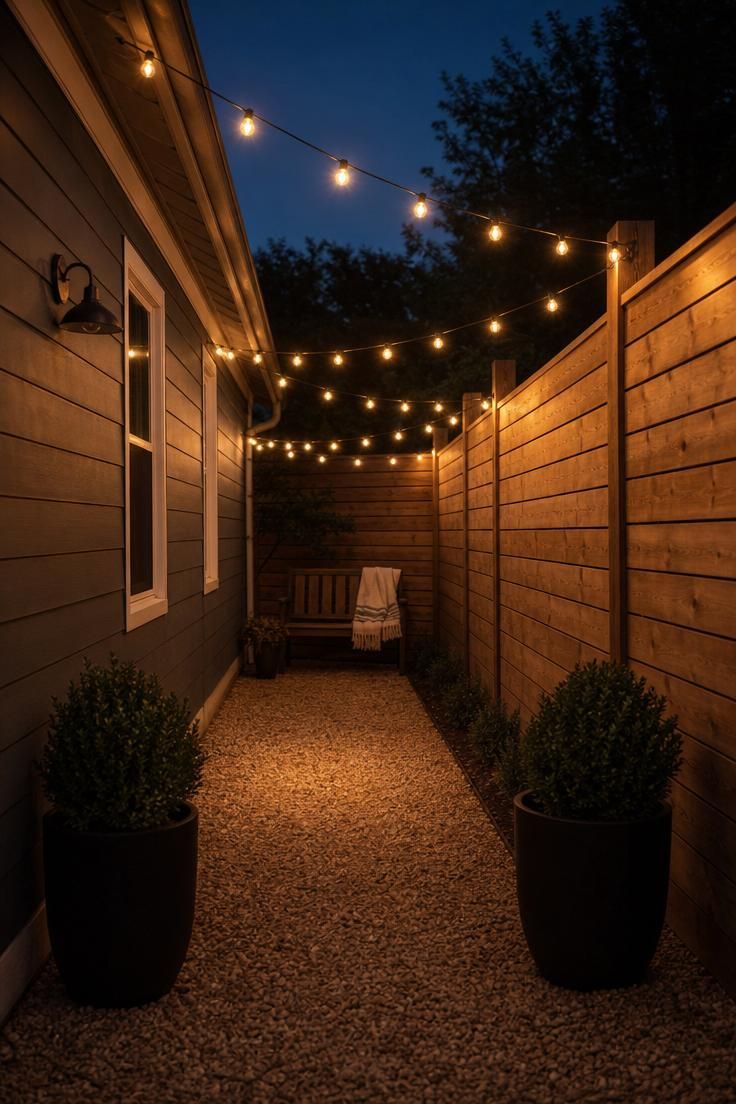
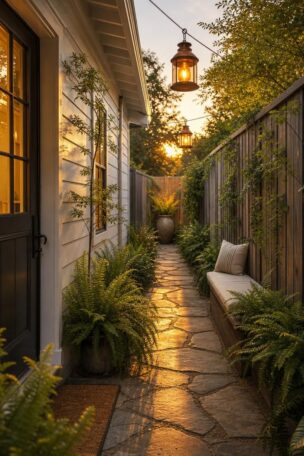
Side yard lighting does more for this space than any other single change because a dark, narrow corridor feels unwelcoming regardless of how well you landscape it.
String lights overhead eliminate that closed-in feeling by drawing the eye upward and expanding the perceived height of the passage.
The zigzag pattern matters: a single straight line looks utilitarian, but angled runs between anchor points create a casual canopy that reads as intentional.
Warm white bulbs on dark cord disappear during the day and come alive at dusk, giving you two completely different experiences of the same space.
A small bench at the far end provides a reason to walk the full length and sit down, turning the side yard into an actual destination after dinner.
That folded wool blanket is a signal that someone uses this spot regularly, which is exactly the feeling you want a narrow side yard to communicate.
Style Blueprint:
- Warm white string lights (2700K) on dark green or black cord
- Cup hooks or screw-in eye bolts at the roofline and fence top for anchoring
- Two matte black planters with shaped boxwoods at the entry
- A small wooden bench in teak or cedar at the far end
- A folded wool or cotton throw left on the bench
An Outdoor Shower Screened by Vertical Cedar Planks
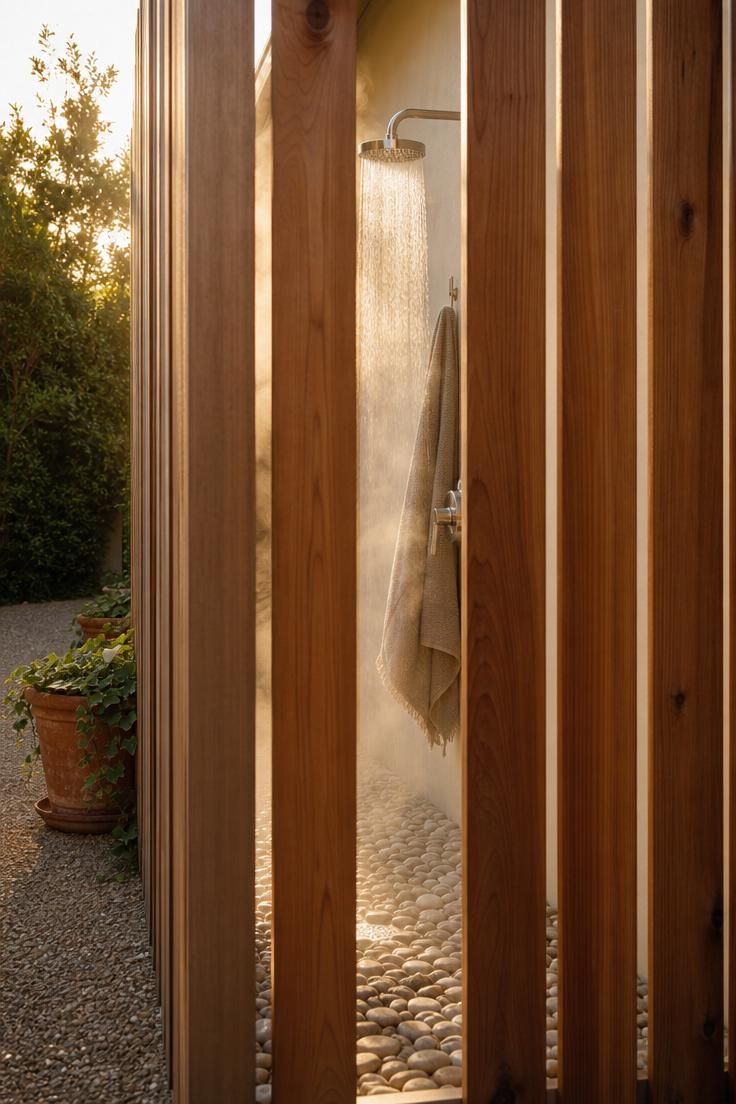
An outdoor shower in a side yard works because the space is already enclosed, semi-private, and close to a water supply line running along the exterior wall.
Vertical cedar planks with narrow gaps let air circulate and light filter through without exposing the bather to the neighbor’s second-floor windows.
River pebbles on the shower floor massage the soles of your feet and drain naturally, removing the need for a traditional tiled pan with complex waterproofing.
Stainless steel fixtures hold up to constant water exposure and outdoor temperature swings better than brass or chrome-plated alternatives.
The steam catching golden afternoon sun is the kind of accidental beauty that makes this outdoor side yard feature feel worth every dollar of the plumbing hookup.
A linen towel on a chrome hook, not a terry cloth towel on a plastic rack, sets the tone for a space that feels deliberate rather than improvised.
Keep the plumbing simple: a single mixing valve tied into an existing hose bib line is enough for a seasonal shower that runs spring through fall.
This shower will become the most used feature in your yard by the second week after installation.
Style Blueprint:
- Vertical cedar planks, roughly one inch by four inches, spaced with half-inch gaps
- Brushed stainless steel shower head and single-handle mixing valve
- Smooth river pebbles in white and gray over a hidden linear drain
- A chrome robe hook mounted on the interior side of the screen
- A terra cotta pot with trailing ivy placed outside the screen entry
A Narrow Rill Running the Length of a Concrete Side Yard
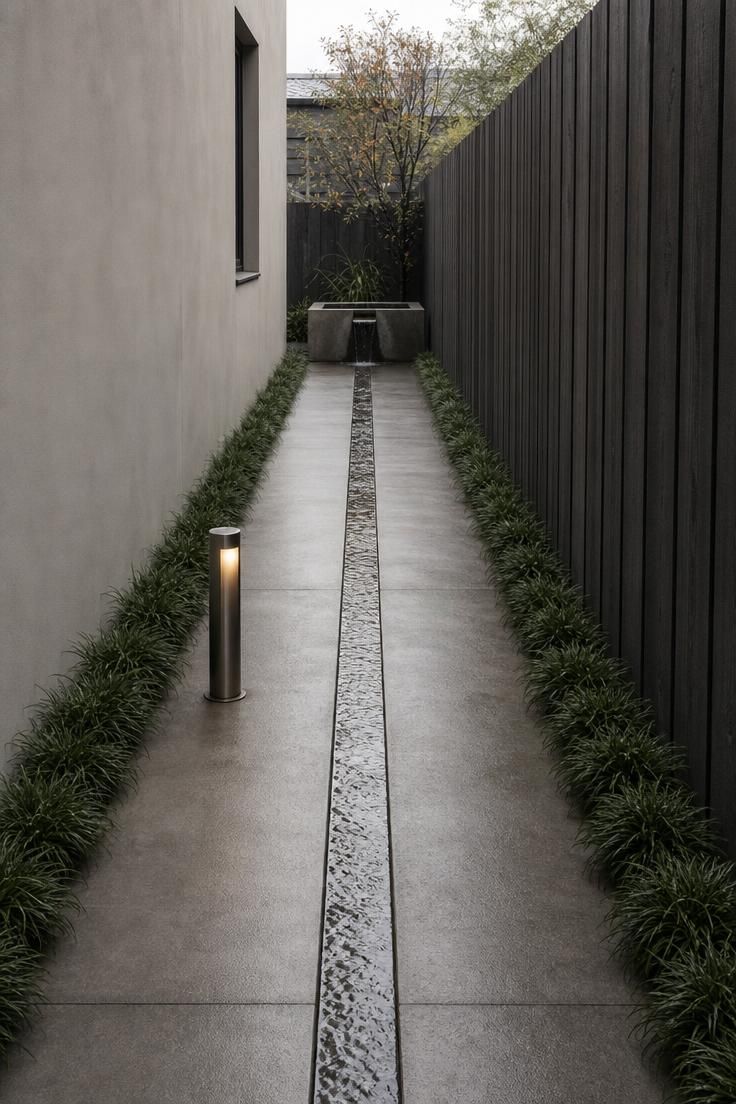
Moving water changes the character of a narrow side yard more than any static element because it introduces sound, reflection, and motion to a space that otherwise has none.
A rill this narrow, just four inches across, takes up almost no usable width but creates a visual spine that organizes the entire corridor.
Sedge grass clipped low along both sides frames the water channel with soft green texture and keeps the planting in proportion with the scale of the feature.
The recirculating pump hidden in the collection basin at the far end uses less electricity than a desk lamp and runs silently enough to let the water sound dominate.
Brushed concrete gives the floor a subtle grip underfoot and echoes the tonal range of the overcast sky above.
A charcoal-stained side yard fence on one side and pale rendered concrete on the other create a tonal sandwich that makes the silver water stand out.
This is a feature that photographs well, but the real value is the sound you hear from inside the house when the windows are open.
Style Blueprint:
- A shallow concrete rill channel, four inches wide, set flush with the surrounding surface
- A recirculating basin with a submersible pump at the terminal end
- Low-clipped sedge grass (Carex) planted in neat rows along both sides of the rill
- Brushed concrete paving for the surrounding floor surface
- A single stainless steel bollard light at the midpoint
Espaliered Citrus Trees Flat Against a Painted Block Wall
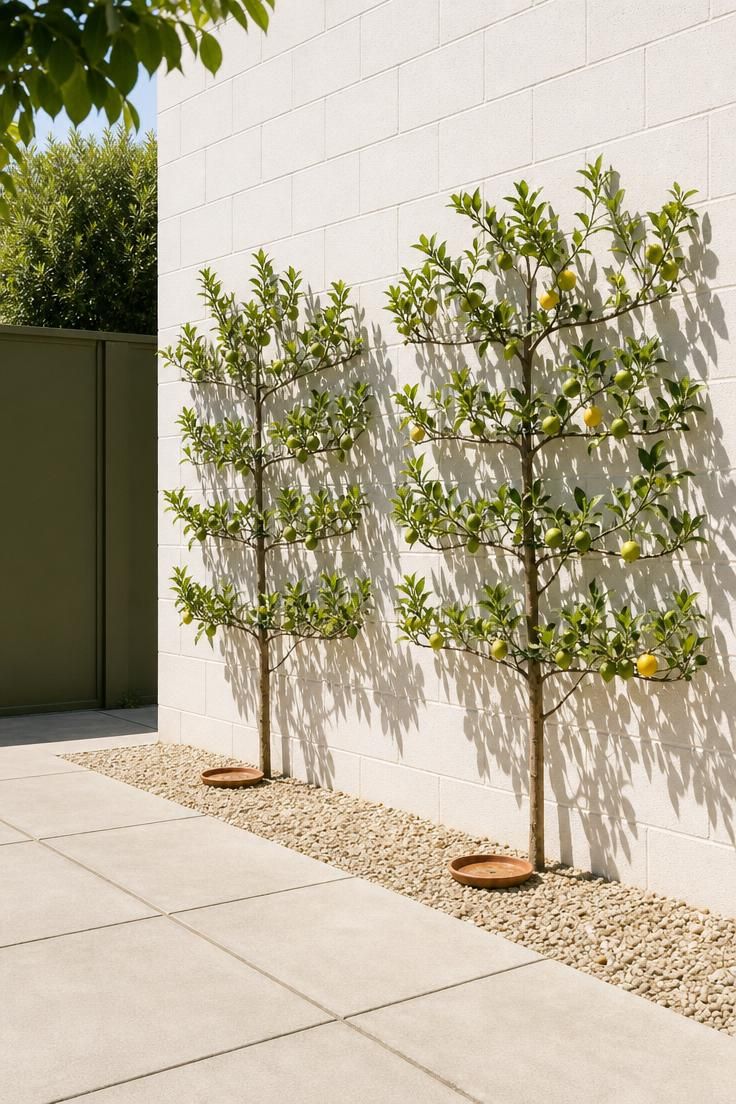
Espalier is the oldest trick for getting fruit trees into a space where a full canopy would never fit, and a side yard is the perfect laboratory for it.
Trained flat against a painted wall, a citrus tree takes up less than six inches of depth but still produces a full crop of lemons or limes.
The candelabra pattern, with a central trunk and symmetrical horizontal arms, creates a living architectural element that looks intentional and almost sculptural.
Bright midday sun on a pale wall reflects light back onto the fruit and foliage from both sides, which citrus trees need to ripen properly.
Gravel mulch at the base keeps moisture from splashing onto the trunk and reduces the risk of fungal problems in a tight corridor with limited airflow.
Those small terracotta saucers are a low-tech irrigation trick: fill them once a day and the water seeps slowly into the root zone without runoff.
Style Blueprint:
- Two citrus trees (Meyer lemon, Bearss lime, or similar) trained in candelabra espalier against the wall
- A cinder block wall painted pale warm white as the support surface
- Light-colored gravel mulch spread at the base of each tree
- Small terracotta saucers placed under each tree for slow watering
- Scored concrete flooring in a simple grid pattern
Design Pro-Tip: When training espaliered trees in a side yard, mount horizontal galvanized wire guides six inches off the wall surface using standoff brackets. The gap lets air circulate behind the branches, prevents moisture from getting trapped against the siding, and makes future pruning much easier because you can reach behind the limbs.
A Built-In Firewood Rack of Raw Steel and Pressure-Treated Timber
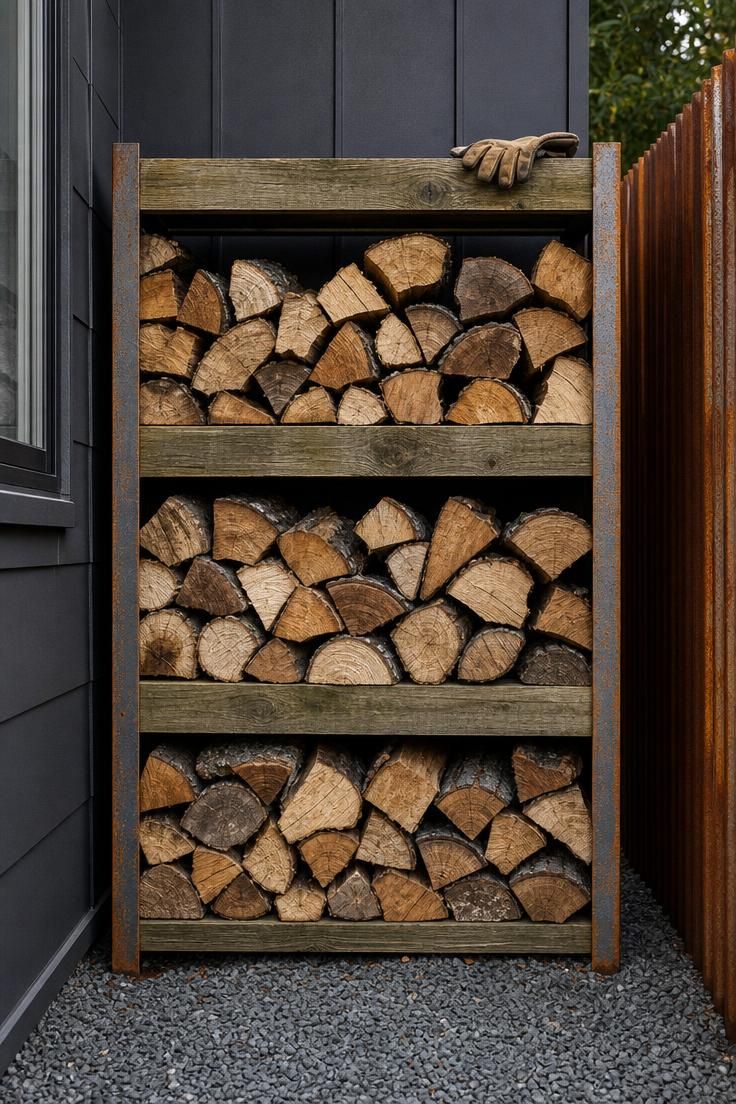
A firewood rack built into a side yard nook turns a storage chore into something that actually looks good from across the yard.
Raw steel angle iron develops a surface patina over time that matches the bark and wood tones of the stacked splits inside.
Pressure-treated timber for the shelves resists ground moisture and insect damage without the need for annual sealing.
Stacking the wood with cut faces forward creates a pattern of concentric rings and radial cracks that reads like a textured wall panel.
Crushed gravel beneath the rack drains freely and keeps the bottom row of logs elevated above standing water after rain.
This is the kind of outdoor side yard storage project that takes one afternoon with a welder and a chop saw, or a few hours with pre-cut steel brackets and lag bolts.
The leather work gloves on the top beam are a small detail, but they signal that this rack gets used regularly, not just photographed.
Corrugated metal fencing beside the rack amplifies the industrial palette without competing with the warmth of the stacked wood.
Style Blueprint:
- Raw steel angle iron frame, welded or bolted, with a developing rust patina
- Pressure-treated timber beams as horizontal shelf supports
- Split hardwood logs stacked with cut faces forward for visual texture
- Crushed gravel base beneath the rack for drainage
- Corrugated metal fence section adjacent to the rack for industrial context
Artificial Turf Dog Run With a Cedar-Framed Entry Arch
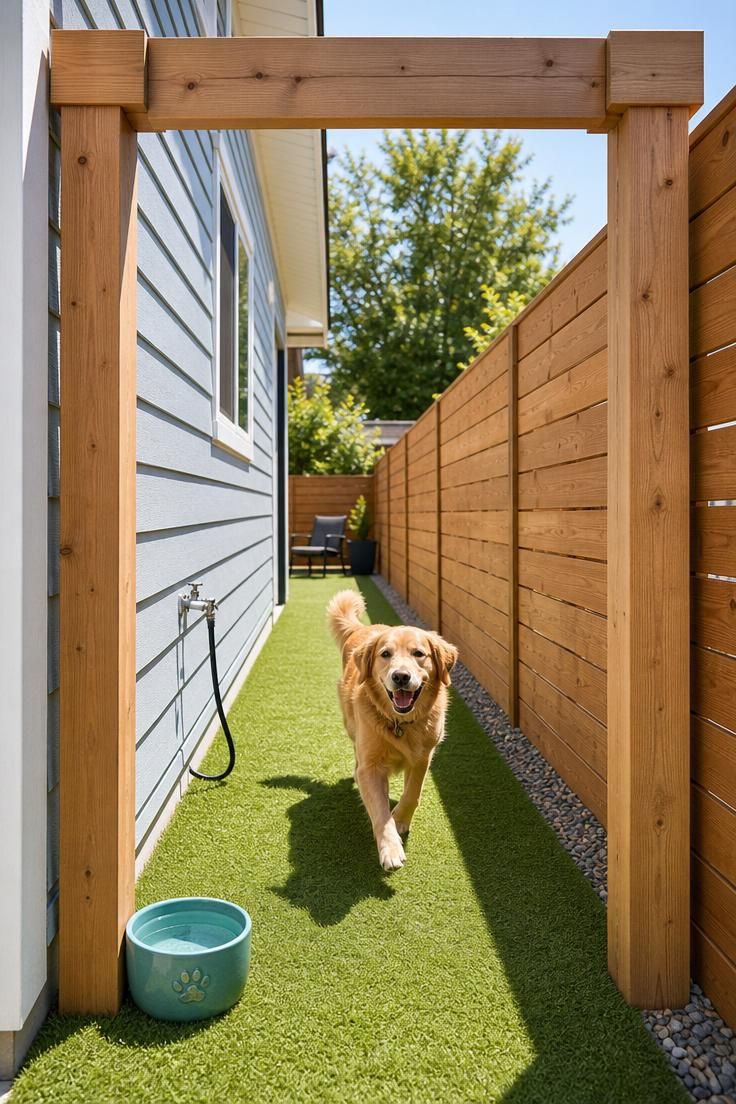
A dedicated dog run in the side yard keeps the rest of your outdoor space free from wear paths, brown spots, and scattered toys.
Artificial turf with a drainage-backed substrate handles heavy paw traffic without turning to mud, and it rinses clean with the hose bib mounted right there on the wall.
The cedar arch at the entry does more than look pleasant: it creates a clear boundary that helps the dog understand where the run begins.
A gravel drainage strip along the side yard fence line wicks moisture away from the turf edge and prevents the synthetic surface from sitting in standing water.
Light blue-gray paint on the house wall reflects brightness into the corridor and makes the narrow run feel less boxed in.
A ceramic water bowl in a muted color is a better long-term choice than plastic because it stays cooler, resists tipping, and does not leach chemicals into the water.
This setup works for any narrow side yard wider than three feet, which covers the majority of suburban lot configurations.
Style Blueprint:
- Artificial turf with drainage-backed substrate, closely cropped pile
- Cedar post-and-beam entry arch, unfinished with squared timbers
- A gravel drainage strip along the fence line, four to six inches wide
- Wall-mounted stainless steel hose bib with a short flexible hose
- A ceramic water bowl in a muted teal or clay tone
Recessed LED Step Lights Embedded in a Side Yard Gravel Path
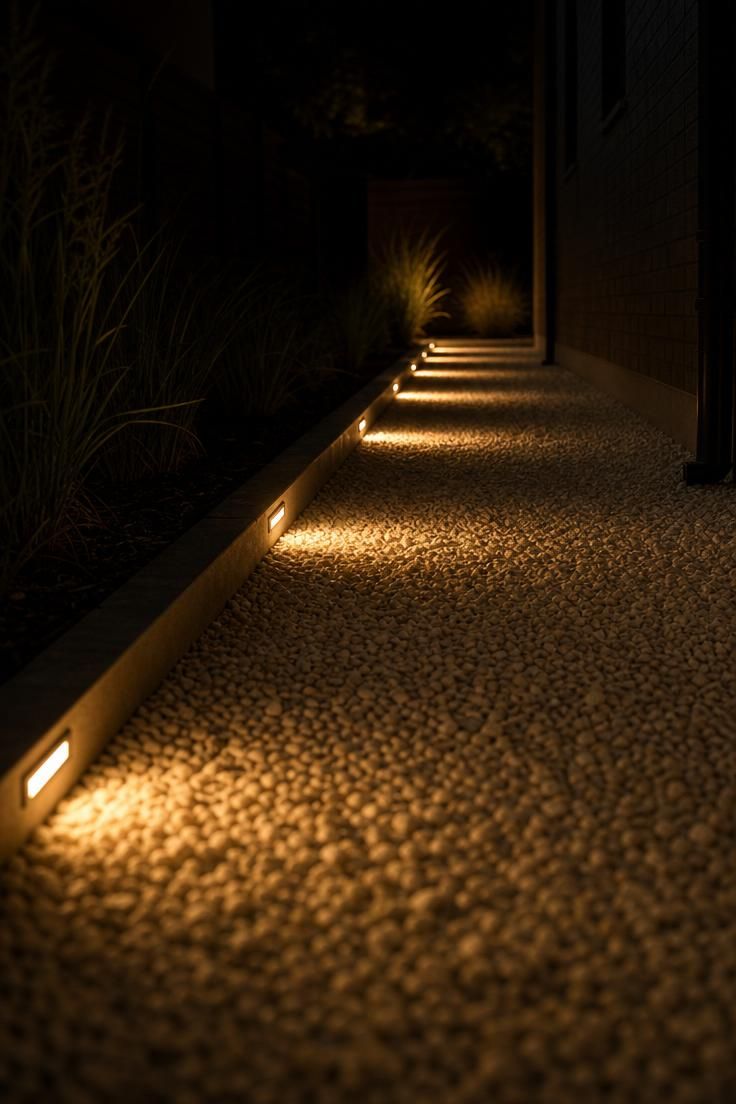
Recessed step lights do what overhead fixtures cannot in a narrow side yard: they mark the path without spilling glare into bedroom windows or the neighbor’s yard.
Mounted flush in concrete edging, these LED pucks disappear during the day and leave the clean gravel surface completely uninterrupted.
The amber color temperature, around 2200K, avoids the cold blue cast that cheaper LED path lights tend to produce.
Spacing the lights at five-foot intervals creates a cadence of glow and shadow that makes walking the path at night feel deliberate and almost ceremonial.
Low ornamental grasses at the far end catch the edge of the light and glow from within, adding a living element to the nighttime composition.
This is one of the most affordable side yard lighting upgrades available because low-voltage LED systems run on a simple transformer plugged into an outdoor outlet.
Style Blueprint:
- Recessed LED step lights in warm amber (2200K), mounted flush in concrete edging
- Pale crushed gravel, raked level, as the path surface
- Concrete curb edging on both sides to contain the gravel and house the light fixtures
- Low-voltage transformer connected to an existing outdoor GFCI outlet
- Low ornamental grasses planted near the far end of the path for nighttime texture
Design Pro-Tip: When installing recessed path lights, angle each fixture two degrees toward the center of the path rather than pointing them straight up. That slight tilt concentrates the light pool on the walking surface instead of scattering it sideways, which gives you better visibility with fewer fixtures and keeps the side yard fence and house wall in softer shadow.
A Pocket Seating Nook With Two Metal Chairs and a Mosaic Bistro Table
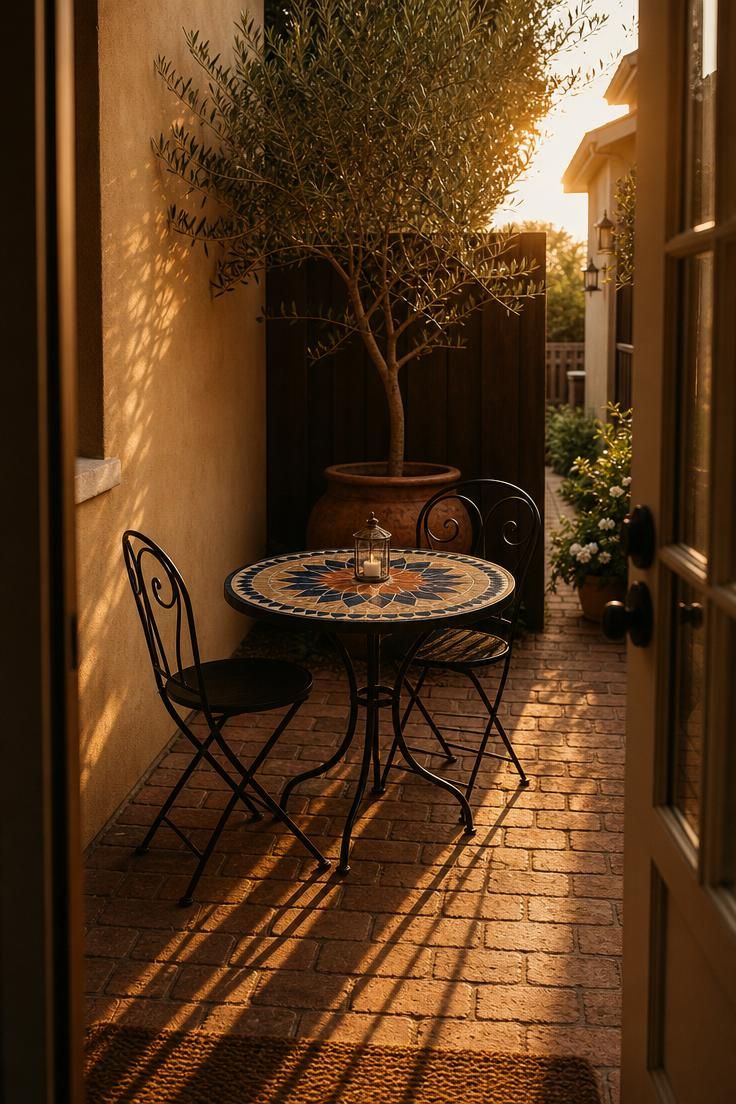
Every side yard has at least one spot where the corridor widens by a foot or two, usually near a bump-out, a chimney, or a jog in the fence line.
That extra square footage is enough for two chairs and a small table, which is all you need to create a seating nook that feels like a secret found by accident.
A mosaic bistro table in blues and terra cotta brings color and craft into a space that tends toward monochrome gravel and wood tones.
Powder-coated metal chairs survive rain, sun, and frost without cushions or covers, which matters in a spot where you will not fuss over furniture maintenance.
The potted olive tree behind the seating provides filtered shade and a vertical element that prevents the nook from feeling flat.
Long afternoon shadows cutting across the brick pavers add a graphic layer that changes by the minute as the sun drops.
A glass lantern with a tea light extends the usability of the nook past sunset without requiring a permanent electrical fixture.
This is the side yard feature that makes people say they had no idea this space was even back here.
Style Blueprint:
- Two powder-coated matte black metal bistro chairs with curved backs
- A round mosaic-topped bistro table in deep blue, terra cotta, and cream tiles
- A square pad of laid brick pavers as the seating surface
- A tall potted olive tree in a terracotta or concrete planter behind the chairs
- A small glass lantern for evening ambiance
Vertical Succulent Panels Mounted on a Narrow Side Yard Fence
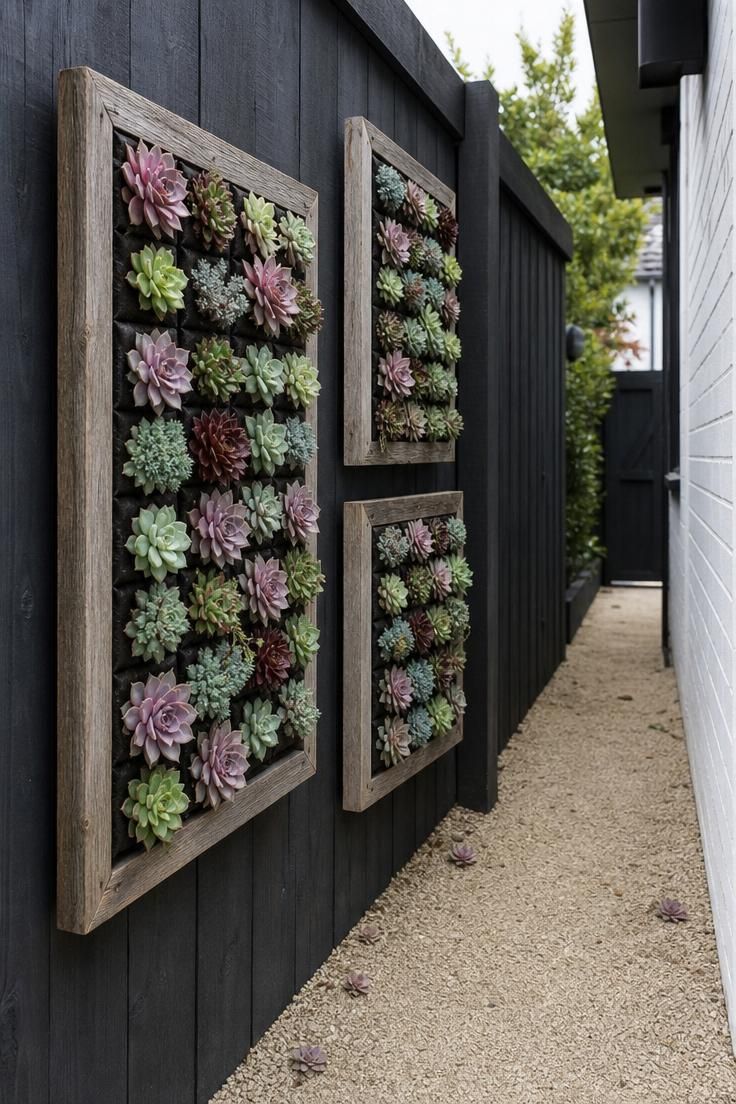
Vertical succulent panels put greenery on the fence face instead of the ground, which is the right approach when floor space in a narrow side yard is too precious to fill with planting beds.
Each panel holds a grid of individual succulents, and the beauty of this arrangement is that each rosette looks like a small jewel set in a wooden frame.
Dusty rose, blue-green, pale jade, and deep burgundy, the color range of common succulents rivals any flower border without the seasonal die-back.
Reclaimed wood frames age in tone alongside the fence, eventually blending into the backdrop so only the living plants stand forward.
Cool overcast light is the ideal condition for photographing and appreciating succulents because direct sun washes out the subtle color shifts between varieties.
Fallen rosettes on the gravel below are not a problem: they root themselves where they land, which means the display slowly expands on its own.
This is a side yard fence treatment that adds life and texture to the tallest, blankest surface in the corridor.
Style Blueprint:
- Framed succulent panels in reclaimed wood, roughly eighteen by twenty-four inches each
- A mix of echeveria, sedum, crassula, and sempervivum in varied colors
- Dark charcoal-stained cedar fence as the mounting surface
- Pale decomposed granite on the ground for drainage and clean visual contrast
- Staggered panel placement on the fence for a gallery-wall effect
A Retractable Clothesline Hidden Behind a Painted Lattice Screen
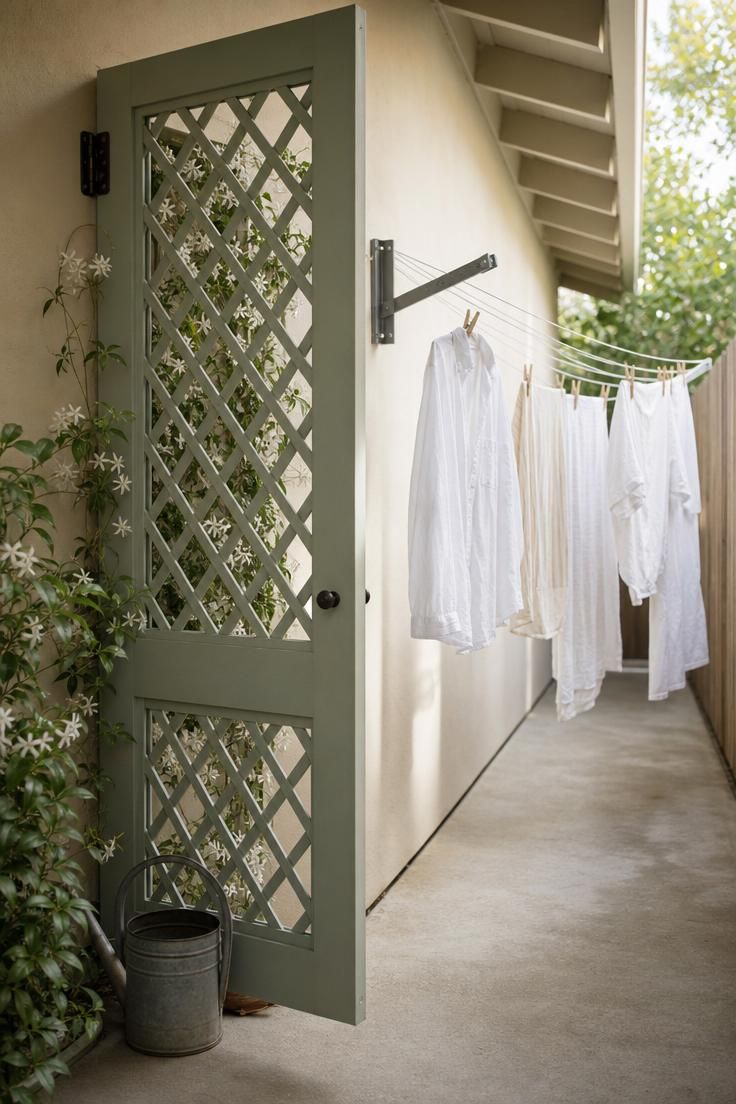
A retractable clothesline in a side yard takes advantage of the natural airflow that funnels between the house and the fence, which dries laundry faster than any backyard location.
The lattice screen hiding the line is the detail that separates a practical setup from a beautiful one.
Painted sage green and covered in star jasmine, the screen reads as a garden feature rather than a laundry utility when the line is retracted and the panel is closed.
Side yard plants like star jasmine and sweet pea love the support structure that lattice provides, so the screen does double duty as a trellis.
White linens on the line are not just functional: they catch the diffused light and sway gently, adding movement to a space that is otherwise still.
A retractable reel mounted on the house wall extends to a hook on the fence and retracts flat when not in use, leaving no permanent visual clutter.
Style Blueprint:
- A hinged lattice screen painted in a soft sage green, mounted on a post-and-rail frame
- A retractable clothesline reel mounted on the house wall, extending to a fence-mounted hook
- Star jasmine or sweet pea climbing the lattice panel for seasonal cover
- Smooth poured concrete or pavers as the floor surface beneath the line
- A small watering can or garden tool basket at the base of the screen
Crushed Black Basalt Mulch Beds With Potted Agave and Uplighting
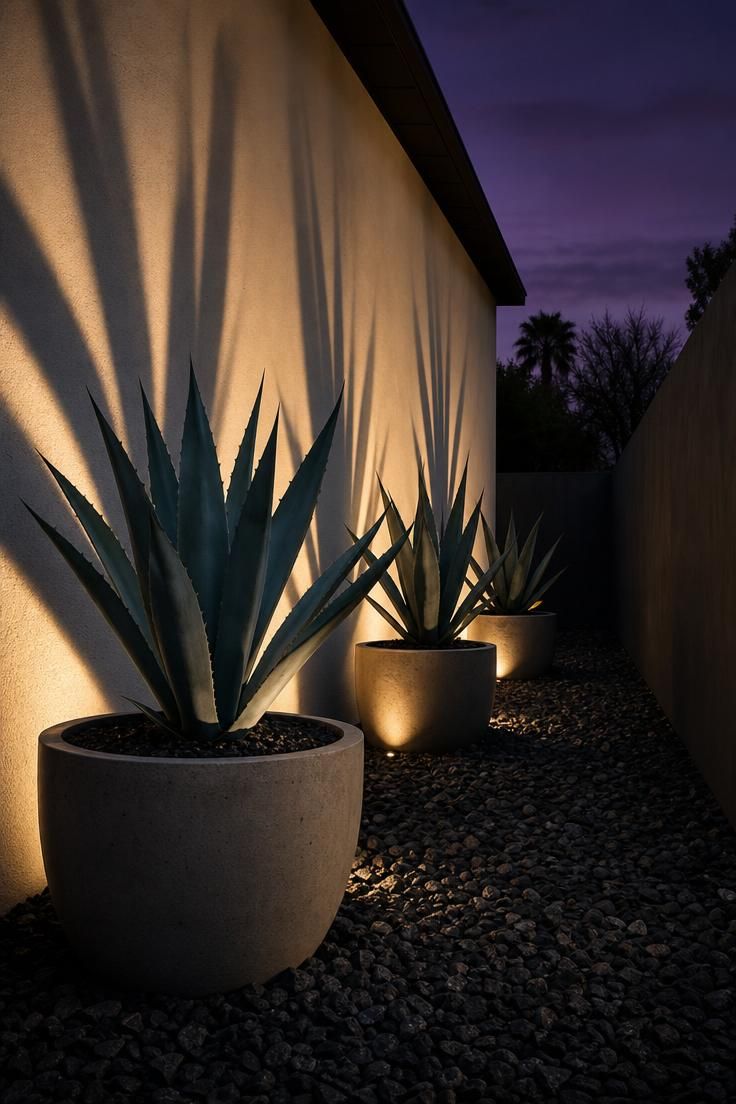
Dark volcanic mulch against a pale wall creates the highest-contrast ground plane you can build in a side yard, and contrast is what makes a narrow space feel deliberate rather than accidental.
Blue agave in concrete pots brings architectural form to a corridor that otherwise reads as flat and linear.
The fan-shaped shadows thrown by uplights behind each pot are arguably more beautiful than the plants themselves, stretching and shifting as the light angle changes through the evening.
This is a side yard landscaping approach that works in arid and temperate climates alike because potted agave can be moved indoors or under cover before the first freeze.
Crushed basalt suppresses weeds, retains soil moisture around the pot bases, and never fades or decomposes the way organic mulch does.
The charcoal rendered fence opposite the pale stucco wall creates a dark frame that pushes the lit agave display forward.
Three pots at staggered intervals is enough to fill a twenty-foot corridor without crowding the walking path.
This setup photographs so well at dusk that it will become the image your friends associate with your house.
Style Blueprint:
- Crushed black basalt volcanic mulch spread two inches deep over weed barrier fabric
- Three large blue agave plants in matte concrete cylinder pots
- Warm-tone LED uplights (2700K) positioned behind each pot, angled upward at the wall
- Pale stucco or rendered concrete house wall as the projection surface for shadows
- Charcoal-rendered concrete or dark timber fence on the opposite side
Conclusion
A side yard does not need to become a complicated project that takes over your weekends.
Start with the ground surface, a simple gravel path or a row of stepping stones, and see how differently you feel about the space once it has a clean base.
Add one layer at a time: a plant, a light, a gate, a chair.
The best outdoor spaces are the ones that grow slowly and reflect what you actually use.
Your forgotten strip is just one good idea away from becoming the part of the yard you visit first.