This post may contain affiliate links. If you make a purchase through these links, we may earn a commission at no additional cost to you.
Most front yards that look quietly pulled together are not actually empty.
They are restrained.
The owner picked three plants, repeated them in clean groups, edged the beds with one sharp line, and then stopped.
That restraint is what reads as curb appeal from across the street, and it is the through line in every one of these simple front yard landscaping ideas.
Globe Boxwoods Marching Along a Bluestone Walk
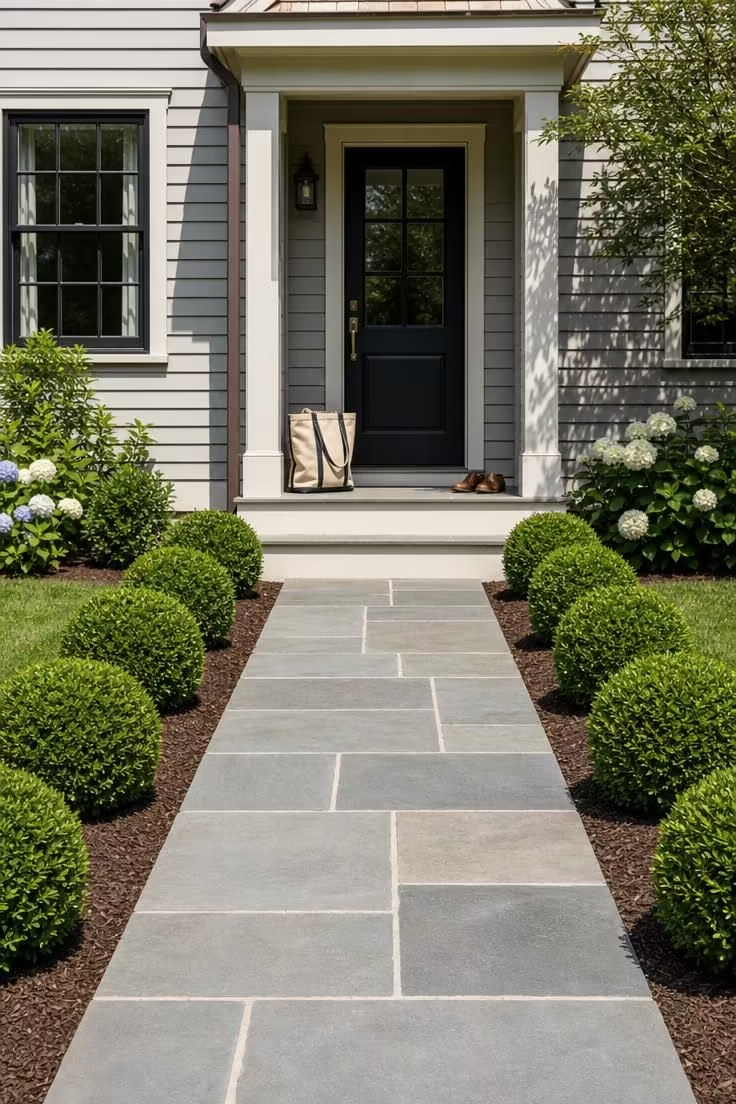
A row of identical forms creates a quiet, controlled rhythm along the path.
The repeated shapes make the layout feel orderly and intentional, with a clear visual sequence from one end of the walk to the other.
Boxwood hedges trained as clipped globes create a stronger, more consistent structure than a busy mixed border, and with regular annual shearing they can maintain that form for decades.
The bluestone underfoot introduces a cool grey tone that contrasts with the green foliage and keeps the planting from looking too dense.
Spacing matters as much as plant choice because boxwoods planted too closely can merge into one continuous mass and erase the repeated pattern.
Set them so that, at maturity, the outer foliage of one shrub just meets the next.
A clean two-foot-wide mulch bed on either side of the walk frames the composition, sharpens the edge between planting and lawn, and gives the path a more finished appearance.
Style Blueprint:
- Six to eight identical globe boxwoods, ideally the ‘Green Velvet’ or ‘Winter Gem’ variety
- Wide-plank bluestone walkway with thin mortar joints
- Dark shredded hardwood mulch refreshed in spring
- Spade-cut or steel edging between bed and lawn
- One annual late-winter shearing to keep the globe shape
White Hydrangea Hedge Underneath the Front Bay Window
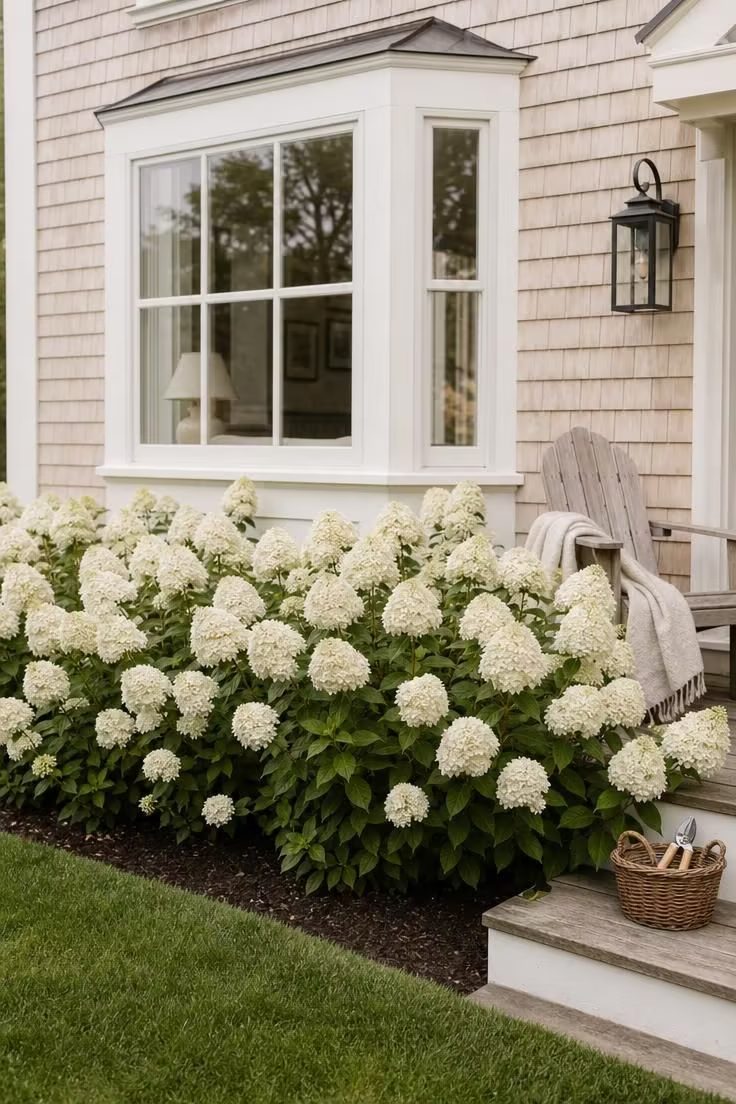
A single hedge of one flowering shrub is the gentlest piece of curb appeal there is.
You plant six or seven ‘Limelight’ or ‘Annabelle’ hydrangeas in a straight line, let them touch at maturity, and forget about decisions for a decade.
They bloom from midsummer well into the fall, and the dried flower heads carry through winter for visual interest.
Choose a variety whose mature height stays under the window sill, otherwise the hedge starts climbing the glass and the look unravels.
The white blossoms read as quiet even on a bright day, which is why this idea works so well for homes with strong architectural color.
A single shrub repeated is one of the most reliable front yard ideas in the entire simple-landscape toolkit.
Style Blueprint:
- Six or seven matched white-blooming panicle or smooth hydrangeas
- A continuous bed with no plant variation beneath the window
- Thin two-inch mulch layer in dark brown
- A spring hard prune to control height
- One color story (all white) inside the bed
Crushed Limestone Path With Hairline Steel Edging
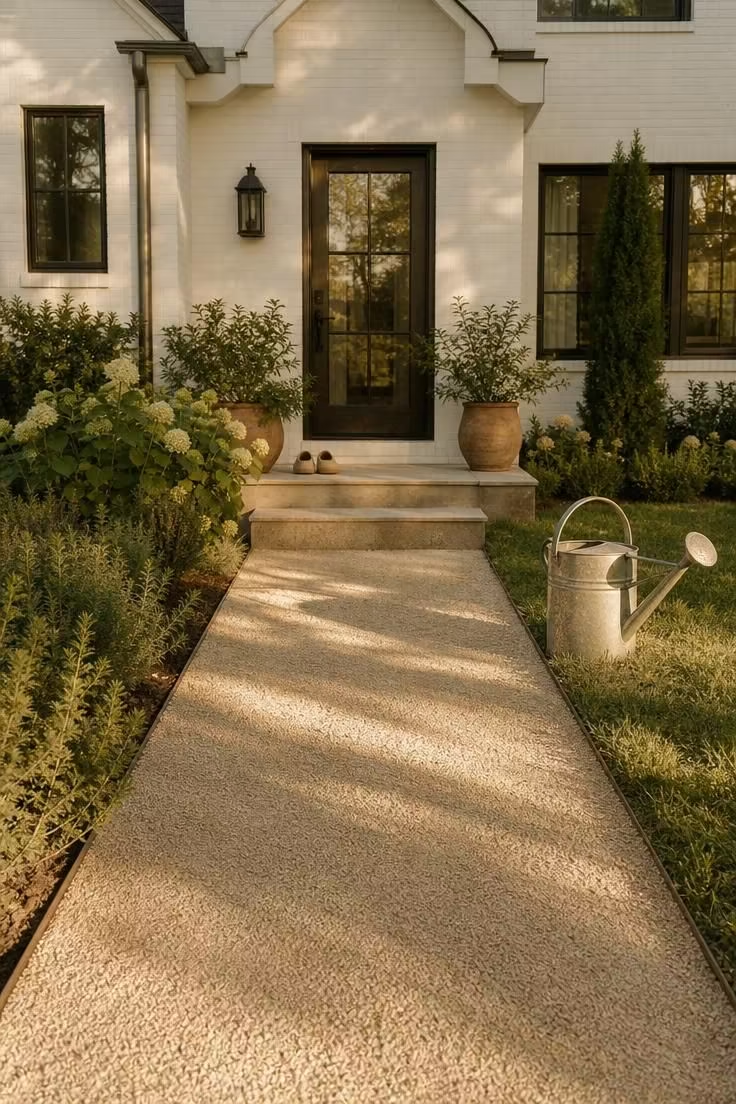
Crushed stone is the most underrated walkway material on the simple-landscape menu.
It costs a fraction of bluestone, drains beautifully, and turns the front walkway into a single calm ribbon when you keep the color story consistent.
The trick is the edge.
Without a defined edge the stone migrates into the lawn within a season, and the whole effect comes apart.
Hairline raw steel landscape edging, set just below the surface, is what holds the line.
You barely see it from a standing height, but you feel its presence in how clean the path stays after rain.
Choose pale buff or oyster colored stone, never the orange-toned decorative gravels, because the cool neutral tones flatter every house color from white to charcoal.
Compact the base properly during installation and rake the surface flat once a season; that is the entire maintenance contract.
Style Blueprint:
- Pale buff or oyster crushed limestone, 3/8 inch screening size
- Raw steel landscape edging on both sides of the path
- A compacted crushed-stone base layer beneath
- Path width of four to five feet, never narrower
- A single rake refresh once or twice a year
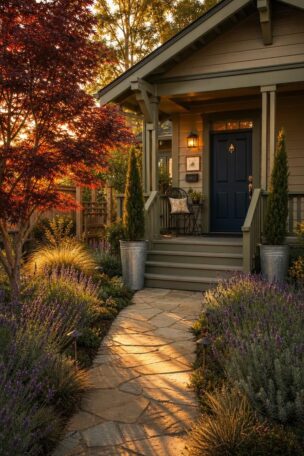
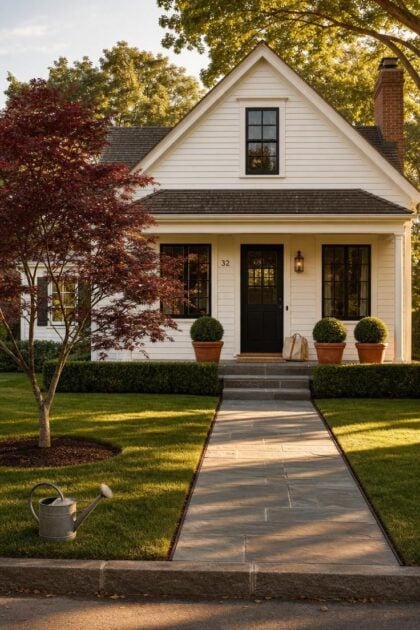
A Single Japanese Maple as the Front Yard Anchor
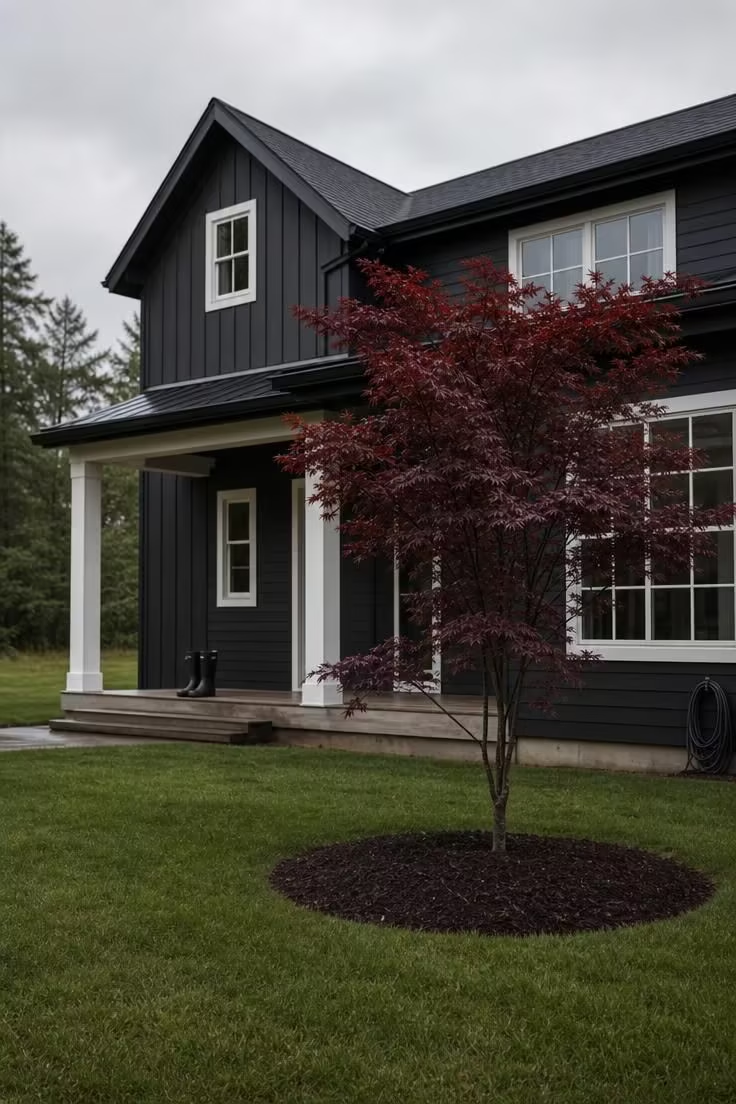
One tree, placed correctly, can carry an entire front yard.
The ‘Bloodgood’ Japanese maple is the workhorse here because it stays under twenty feet at maturity, holds its burgundy color from spring through fall, and never overwhelms a small front yard.
Place it off-center, never centered on the walkway and never directly in front of a window, so the architecture and the tree get to stay separate compositions.
Surround it with a clean round mulch bed about four feet across, with crisp edges and nothing else planted underneath.
The empty mulch is part of the design, not a flaw to fix.
Foundation plantings around the rest of the house can stay sparse, because the maple is doing all of the visual work.
Style Blueprint:
- One mature Japanese maple, ‘Bloodgood’ or ‘Crimson Queen’
- A round mulch bed four to five feet across at the base
- Placement off-center from the front door, never directly in front of a window
- No companion plants inside the mulch ring
- Dark cocoa shredded bark refreshed yearly
Design Pro-Tip: When in doubt, subtract. Take a phone photo of your front yard, then mentally remove one element at a time until the composition gets stronger. The first thing you remove is almost always the right thing to leave out.
Catmint Drift Softening a Brick Foundation Bed
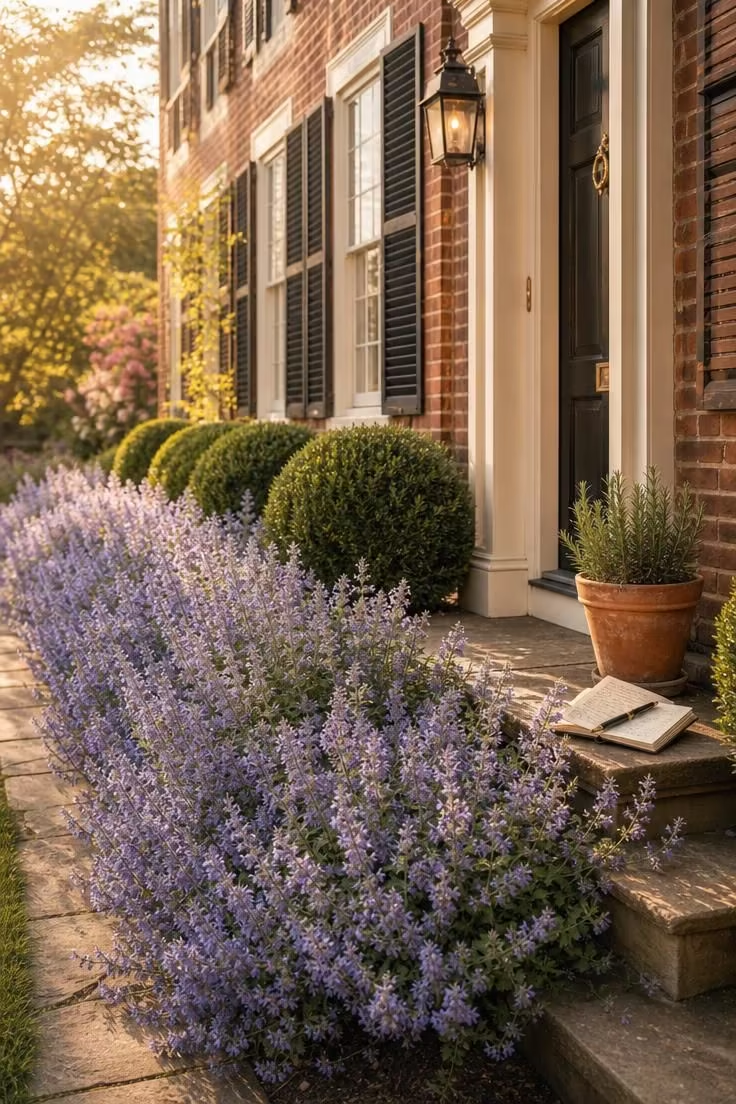
The foundation bed is the busiest piece of real estate in a front yard, which is exactly why it benefits most from simplification.
A long unbroken drift of one perennial, run from one end of the house to the other, takes a fussy mixed planting and turns it into a single calm gesture.
Catmint is the best plant for this job in most temperate climates.
It blooms for nearly three months, holds a soft mounded shape without staking, and the silver-green foliage flatters every brick or siding color.
Set it in front of a back row of clipped boxwoods, and you have foundation plantings that read as one composition rather than a collection.
The catmint hides the seam where mulch meets lawn, which is the seam your eye keeps catching on in less-edited yards.
Cut it back hard in late summer if it sprawls open, and it will rebloom by early fall.
For homes with red brick, the lavender-blue catmint is the single most flattering pairing in the perennial world.
It is also genuinely low maintenance landscaping, asking for one cutback a season and not much else.
Style Blueprint:
- A continuous front-row planting of ‘Walker’s Low’ catmint
- A back row of clipped boxwood balls or hedge
- A clean spade-cut edge between bed and lawn
- One late-summer hard cutback for a rebloom
- A single perennial repeated, not mixed with annuals
Spade-Cut Bed Edge Against a Fine Fescue Lawn

A spade-cut edge is the cheapest upgrade in landscape design.
It costs nothing but twenty minutes with a flat shovel or a half-moon edger, and it does more for the read of a front yard than a thousand dollars of new plants ever will.
The trench should be cut at a clean ninety-degree angle on the lawn side, dropping straight down about four inches, with the soil on the bed side sloped gently back into the mulch.
That sharp shadow line is what your eye reads as “kept” from the curb.
This is the secret weapon of every well-edited front yard you have ever admired in a magazine.
It is also the most direct form of landscape edging, with no plastic, no metal, and nothing to replace in five years.
Re-cut the line twice a year, once in spring and once in late summer, and the front yard will look professionally tended even when the rest of the planting is dormant.
Style Blueprint:
- A sharp flat shovel or a half-moon edger
- A clean ninety-degree vertical cut on the lawn side
- A trench depth of three to four inches
- Two re-cuts per year, spring and late summer
- No plastic or rubber edging strips
Three Matching Terracotta Pots Flanking the Front Steps
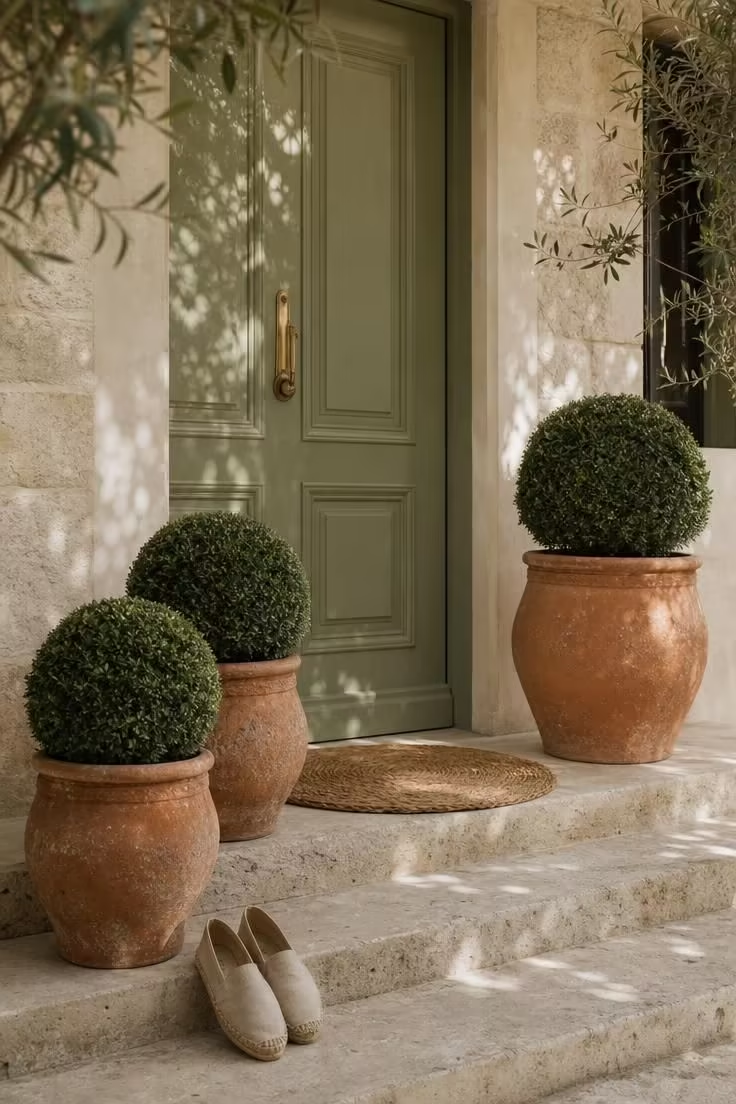
Symmetry at the entry is a shortcut to curb appeal.
The eye reads paired or repeated objects as intentional, and the front door immediately gets framed as the focal point.
The mistake most people make is matching the wrong way.
Two identical small pots on either side of a generous front door look undersized, and the proportion fails.
Instead, use three matching pots in one composition: two on the wider step and one on the narrower, all the same shape, all the same plant.
Aged terracotta is the most forgiving pot material for a simple landscape, because it flatters every paint color, every brick, and every stone.
Plant them with one thing each: a clipped myrtle topiary, a single rosemary sphere, a boxwood ball, or a clipped olive.
Mixed plantings inside pots break the calm, so keep each pot to a single specimen and let repetition do the visual work.
Style Blueprint:
- Three matching aged terracotta pots, two larger and one slightly smaller
- One identical clipped topiary plant per pot
- Placement on the front steps, not on the lawn flanking the walk
- No mixed planting inside any of the pots
- A natural fiber doormat in jute or coir
Pea Gravel Skirt Around a Limestone Stoop
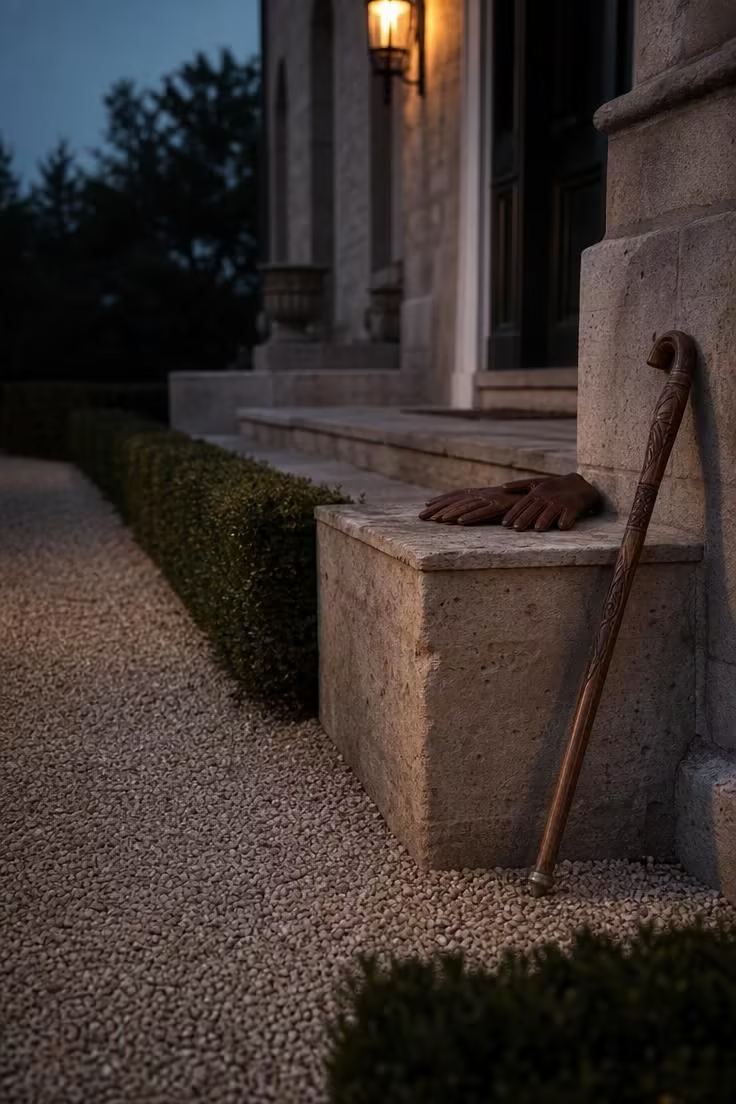
Foundation plantings up against the base of a porch step almost never do well.
The soil is compacted, the drainage is questionable, and the foot traffic eventually shreds anything you plant there.
The simplest fix is to take the planting out entirely and replace it with a clean pea gravel skirt.
Three feet of buff or oyster colored pea gravel, raked flat and held in place with a single line of steel edging, gives the stoop a clean visual base without asking anything to grow where it does not want to.
The gravel also doubles as drainage, which protects the masonry over time.
Style Blueprint:
- Buff or oyster colored pea gravel, 3/8 inch round
- A three-foot skirt width on all visible sides of the stoop
- Steel edging at the outer perimeter
- A compacted base layer beneath
- No plantings inside the gravel zone
Design Pro-Tip: Foundation plantings live or die by what you do not plant. The space between shrubs and the space between bed and lawn carries half the visual weight. Leave thirty percent of every bed empty at planting time, and let the plants grow into the negative space over two seasons.
Russian Sage Lining a Long Concrete Driveway
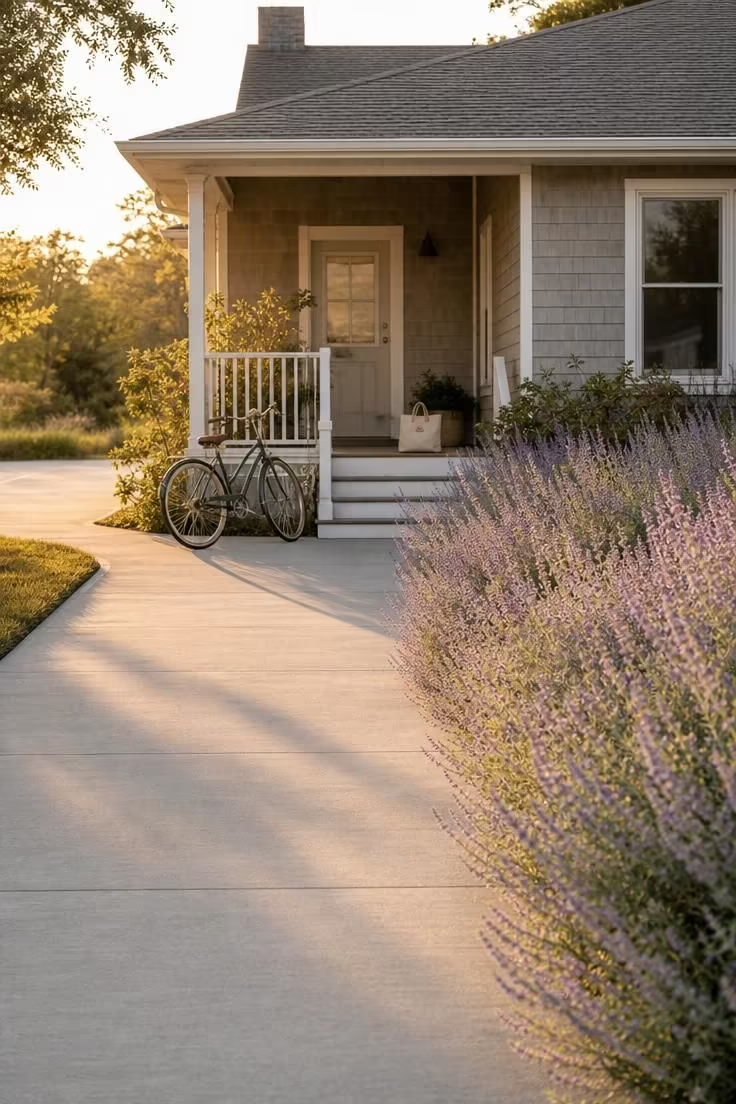
A long blank driveway is one of the hardest things to make look intentional in a small front yard.
The slab is wide, pale, and hard, and any plant placed near it has to stand up to reflected heat and the occasional tire roll.
Russian sage is one of the few perennials that holds up in that exact set of conditions.
It grows three to four feet tall, blooms for nearly three months in late summer, and the silvery foliage holds visual interest even when the flowers fade.
Plant it as a continuous run on one side of the driveway, with each plant set about thirty inches apart so the mature canopy reads as one drift.
Skip plantings on both sides; a single asymmetrical planted edge looks deliberate, while a planted strip on each side looks fussy.
Cut everything down to six inches in early spring, and let the new growth come up clean.
Style Blueprint:
- A continuous one-sided drift of Russian sage
- Thirty inch spacing for a connected mass at maturity
- Plantings on only one side of the driveway
- One late-winter hard cutback to six inches
- Mulch around the base in dark shredded bark
Mass Planted Feather Reed Grass Against Red Brick
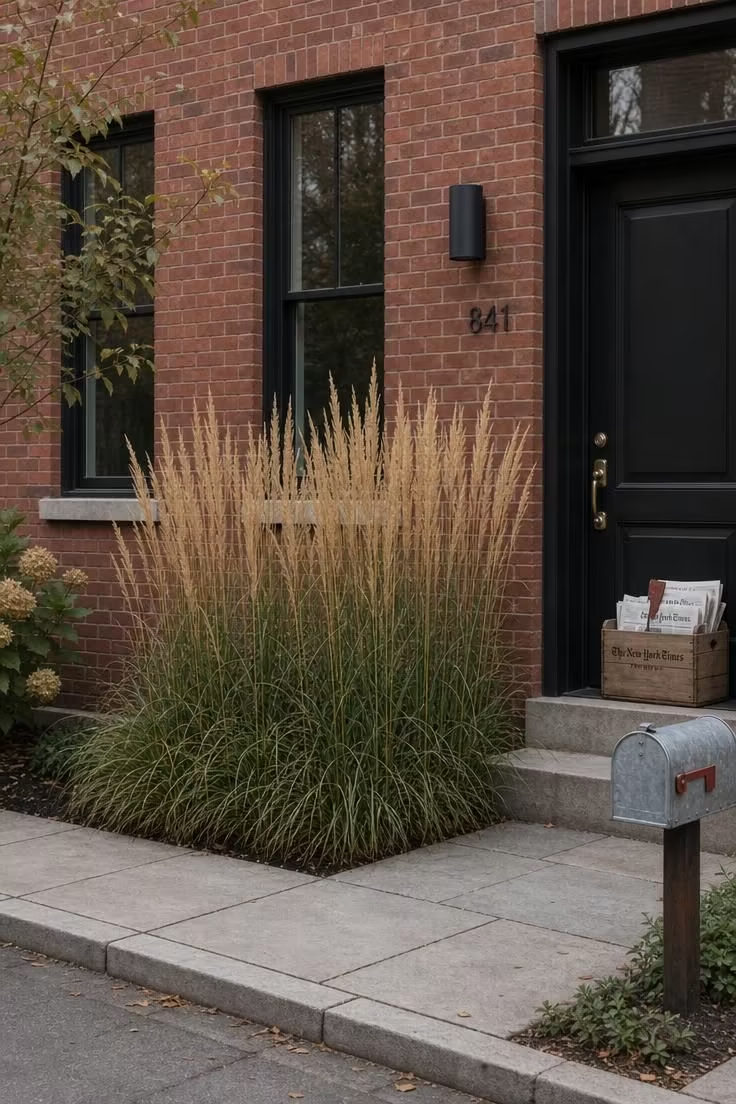
Ornamental grasses do something no shrub can do.
They move.
In any breath of wind, a planting of feather reed grass turns from a static composition into a slow-moving sculpture, and the change is what catches the eye from across the street.
‘Karl Foerster’ is the most reliable variety for this job because it stays narrow and upright rather than flopping outward, which is exactly what you want against the flat wall of a townhouse.
Plant a tight rectangular block, not a scattered cluster, because the geometry of the planting is what sets it apart from a typical yard.
The seed heads emerge tan in early summer and hold their color through winter, which means the planting works as evergreen shrubs do for four-season interest.
In late February or early March, cut every stem to six inches above the ground, and within six weeks the new growth begins.
Against deep red brick, the warm-tan seed heads are exceptionally flattering, and the cool grey of an overcast day pulls every tone forward.
This is also one of the easiest mulch beds to maintain, because the dense grass shades out almost every weed.
Style Blueprint:
- A tight rectangular block of ‘Karl Foerster’ feather reed grass
- Spacing of eighteen inches on center for a connected mass
- A clean spade-cut edge framing the rectangle
- One late-winter cutback to six inches
- Dark shredded mulch beneath the planting
Hellebore Groundcover Pooled Under an Existing Maple
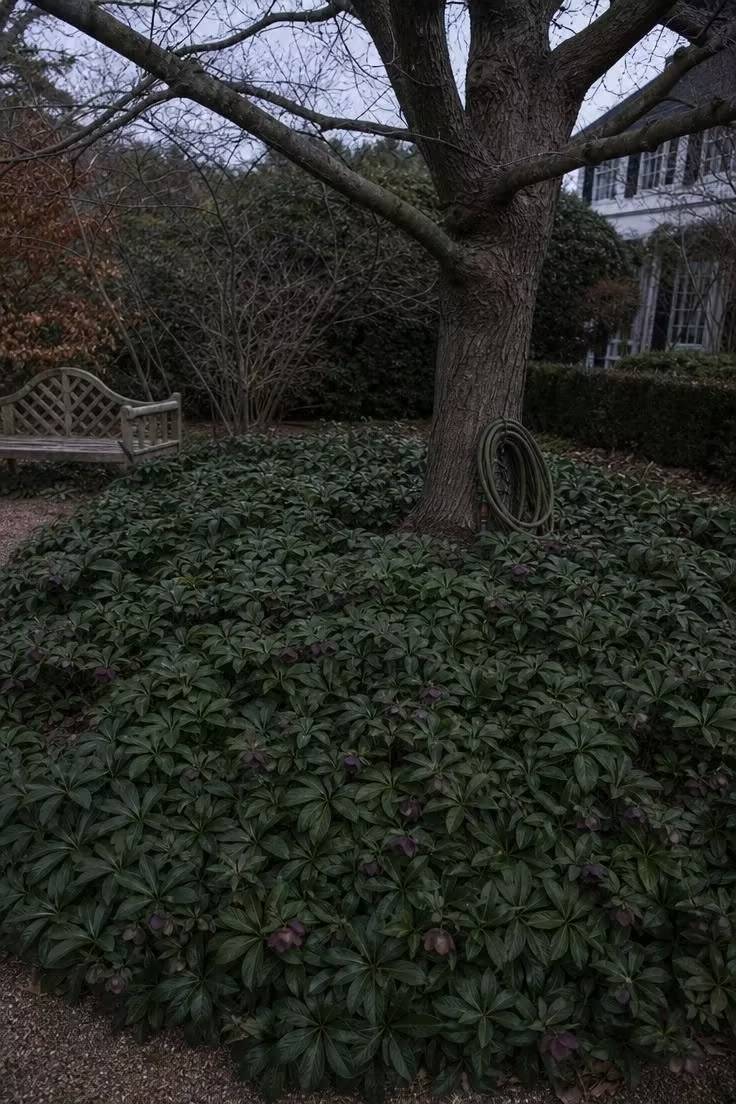
The ground beneath a mature shade tree is the hardest piece of any front yard to plant.
Grass struggles, most perennials sulk, and the roots make digging a real chore.
Hellebore solves the entire problem with one species choice.
The leathery evergreen leaves stay handsome all year, the late-winter blooms arrive when nothing else is up, and the plant tolerates dry shade better than nearly anything else.
Plant a large connected pool, not a scattered handful, with plants set fifteen inches apart so the canopy closes in two seasons.
A single species pooled at the base of an existing tree is one of the most overlooked front yard ideas, and it makes the tree itself feel more intentional.
Style Blueprint:
- Hellebore in a connected pool beneath the tree canopy
- Spacing of fifteen inches on center for a closed cover
- A round or oval bed shape, never a rectangle, beneath the tree
- A single species, never mixed with hostas or astilbe
- A single shredded leaf mulch refresh in late fall
A Brick Paver Landing Pad Around the Mailbox Post
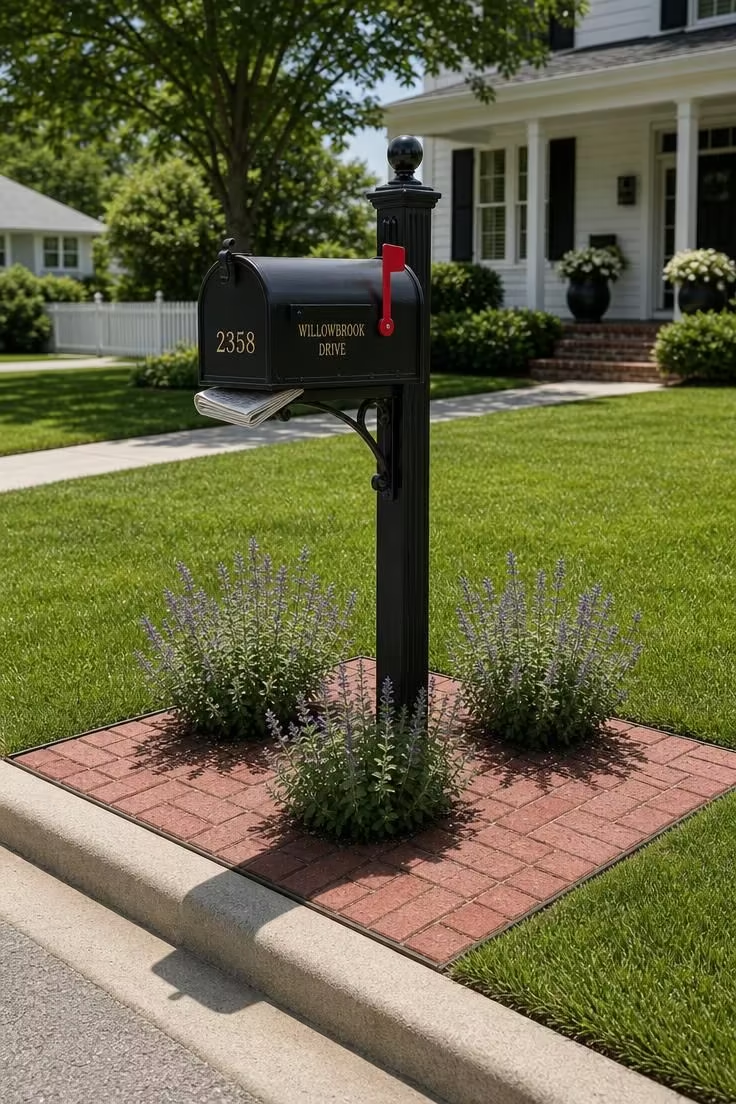
The mailbox is the single most-photographed object on a curb, and almost nobody styles it.
The grass around the post gets trampled by the postal carrier, dies back, and turns into a worn dirt patch that pulls the whole yard down.
A small brick paver landing pad, set flush with the lawn, fixes the dirt patch forever.
A running-bond pattern reads as classic without being fussy, and a four-by-four square is large enough to give the post a presence while still feeling proportional to the curb.
Edge the perimeter with hairline steel so the lawn cannot creep over the brick.
Plant three matching dwarf perennials at the post base, set in a neat triangle, never in a ring around the post.
A ring of marigolds reads as fussy, while three identical plants read as intentional.
Repeat this same plant somewhere else in the yard, like in the foundation bed or near the front door, to tie the mailbox visually back to the rest of the property.
Style Blueprint:
- A four-by-four-foot square of running-bond brick pavers
- Pavers set flush with the lawn, not raised
- Steel edging around the perimeter
- Three matching dwarf perennials at the post base, planted in a triangle
- A repeat of the same perennial elsewhere in the yard
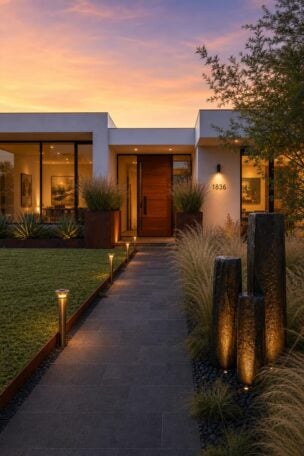
Copper Path Lights Along a Straight Concrete Walk
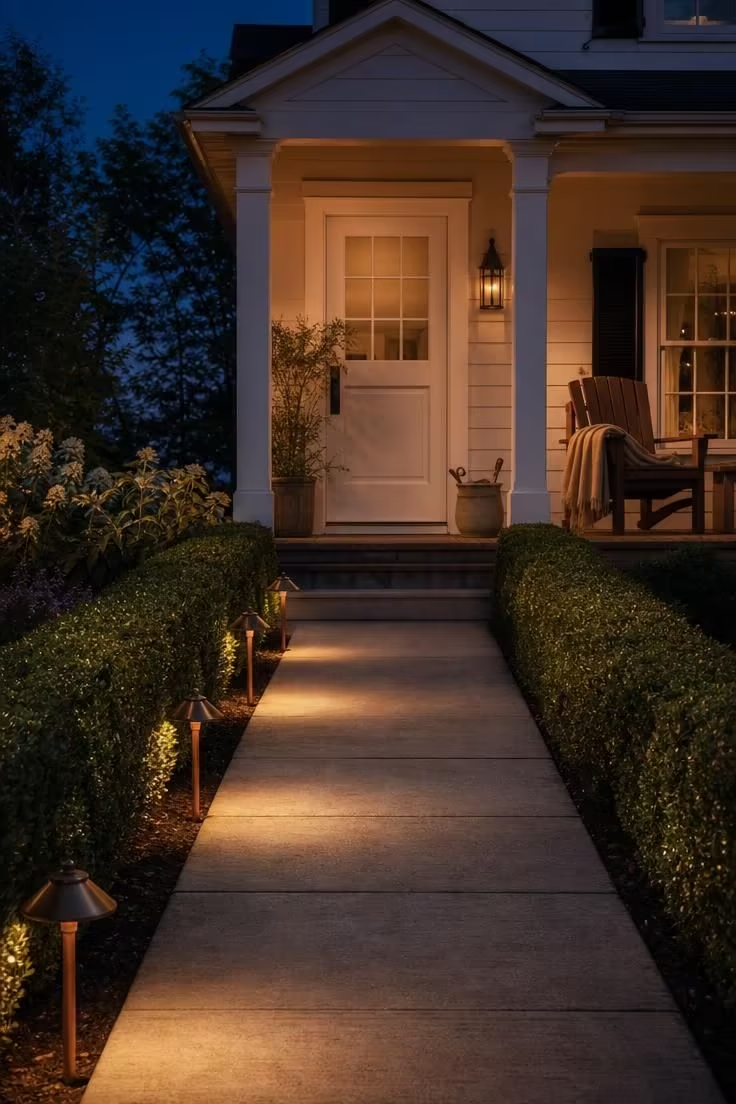
A front yard has two looks, day and night.
Most people only design for the daytime view, and the front of the house disappears the moment the sun sets.
Path lighting is the single highest-return upgrade for the night view.
Solid copper fixtures, the kind that develop a soft green patina over five years, are worth the price difference over plastic and aluminum.
Space them every six to eight feet, never closer, because evenly spaced lights at a comfortable distance read as restrained while clusters read as a runway.
Point every fixture downward, so the light pools on the walk rather than blasting into a passerby’s face.
This is the moment when a simple front yard quietly outperforms a busy one, because nothing competes with the geometry of a single lit walkway at dusk.
Style Blueprint:
- Solid copper low-voltage path lights, fifteen to twenty inches tall
- Spacing of six to eight feet between fixtures
- Lights placed on only one side of the walk, never both
- Downward-facing shielded bulbs in warm white, 2700K
- A photocell or timer on a low-voltage transformer
Conclusion
A simple front yard landscaping plan is not a smaller version of a busy one.
It is a different idea entirely.
You pick three plants instead of fifteen, you cut one clean edge instead of three different borders, and you let restraint do the visual work that variety was supposed to do.
The ideas above are not a checklist; pick one, finish it well, then move on to the next.
A single boxwood hedge planted correctly will do more for your home’s curb appeal than three half-finished projects ever will.