This post may contain affiliate links. If you make a purchase through these links, we may earn a commission at no additional cost to you.
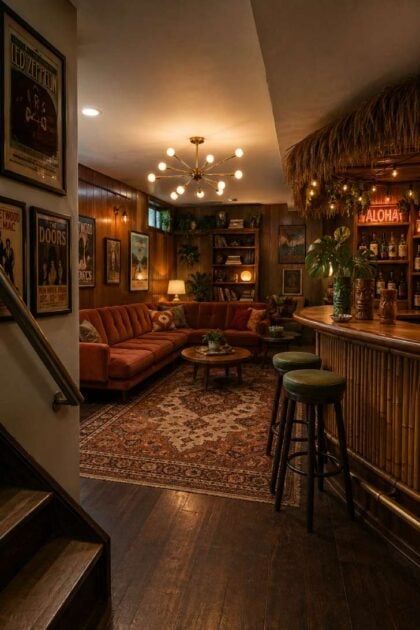
There’s something about a retro basement that just gets it right.
Maybe it’s the warm wood tones against a mustard yellow accent wall, or the way a vintage jukebox hums in the corner while you sink into a velvet sectional.
Whatever the pull, basements styled with a nod to the past carry a kind of comfort that sleek modern spaces rarely match.
These 11 retro basement ideas will walk you through everything from 70s basement decor throwbacks to mid century modern basement setups that feel right at home in today’s world.
The Vinyl Lounge Corner
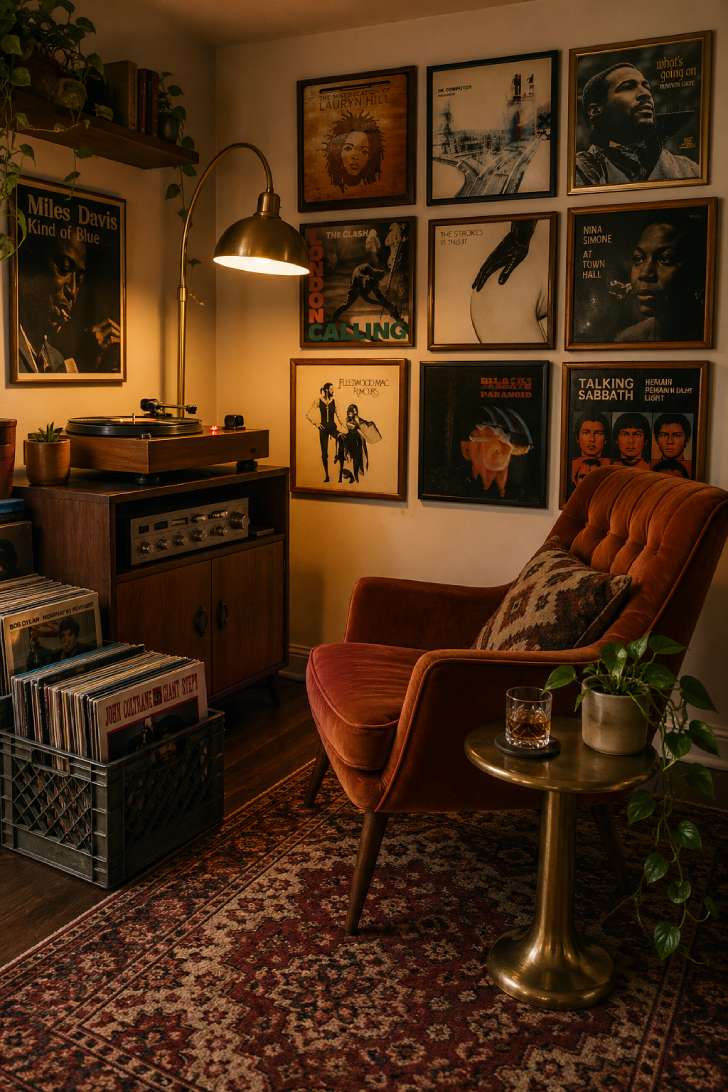
Something happens in a room when you can see the music. Not tucked away in a phone or hidden behind a Bluetooth speaker, but out in the open — sleeves you can flip through, a needle you drop yourself.
A vinyl lounge corner works because the ritual slows you down. You pick an album, you commit to it. That act of choosing changes how you sit in the room. Your posture shifts. Your breathing follows.
The burnt orange velvet and warm brass light reinforce that downshift. Warm-toned lighting tells your nervous system the day is done, and textured fabrics like velvet give your hands something to rest against that feels grounded rather than sterile.
Pair a restored turntable on a low walnut credenza with a comfortable lounge chair angled toward the speakers. Frame a few album covers you actually love — not just ones that look cool — and hang them at seated eye level so they become part of the view when you’re settled in.
Style Blueprint:
- Walnut or teak credenza with tapered legs (low profile, 28-32 inches tall)
- Restored or new belt-drive turntable with built-in preamp
- Burnt orange or mustard velvet lounge chair with wood frame
- Brass arc floor lamp with warm-tone bulb (2700K)
- 6-8 framed album covers in mismatched vintage frames
The Conversation Pit Reimagined
Conversation pits disappeared from most homes by the mid-1980s, and that’s a loss worth correcting.
The sunken seating concept worked for a straightforward visual reason.
Stepping down creates a clearly defined zone within the larger room, with the change in floor level separating the seating area from its surroundings.
The lowered sightline reduces how much of the rest of the room competes for attention, while inward-facing seating naturally centers the composition on the people gathered there rather than on a screen.
Recreating this in a basement doesn’t require jackhammering your slab.
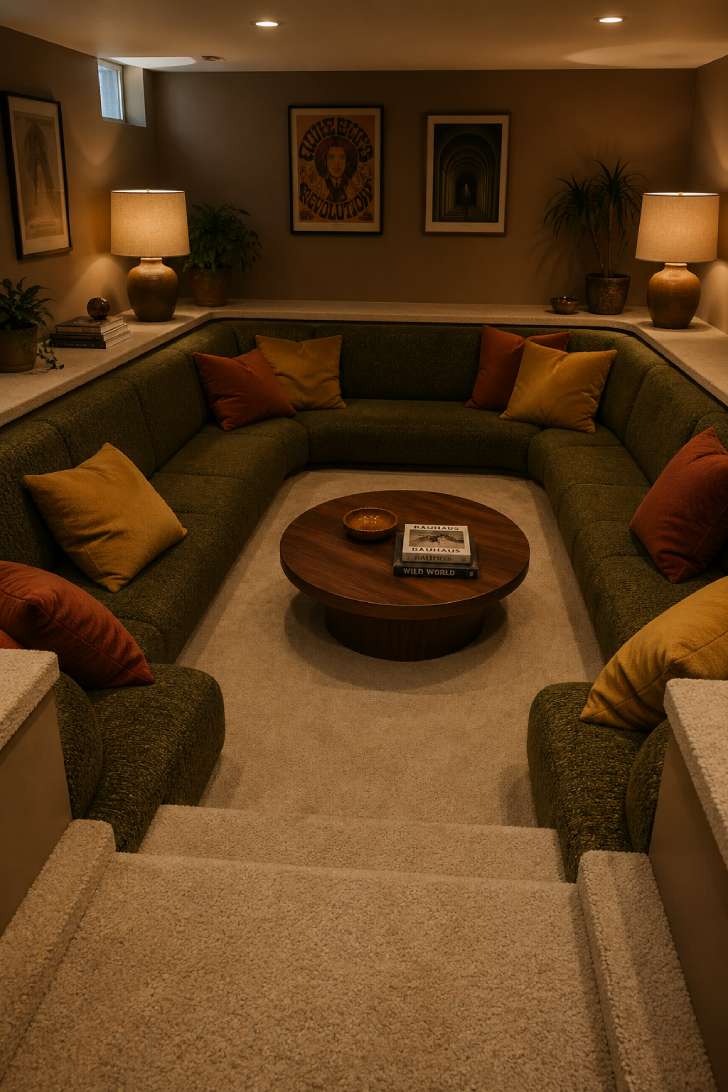
A built-up platform around the perimeter with two or three steps down into the center seating area creates the same sense of visual separation and enclosure.
Use deep boucle upholstery in a color like olive green or cognac, something with enough texture and visual weight to anchor the seating area without making it feel overly formal.
Keep the coffee table low and round.
The curved shape works naturally with inward-facing seating and keeps the center of the arrangement visually open, without introducing a dominant end or “head” to the composition.
Style Blueprint:
- Built-in U-shaped bench with deep olive or cognac boucle upholstery
- Round walnut coffee table, 14-16 inches tall
- Oversized floor cushions in mustard and rust tones
- Ceramic table lamps with linen drum shades
- Short-pile wool area rug or carpet in warm cream
The Tiki Basement Bar
Every good retro basement needs a spot to pour drinks, and a tiki bar turns that spot into a destination.
The tiki aesthetic works underground for a simple reason — basements are already enclosed and windowless, which is exactly the kind of environment a tiki bar thrives in. You’re not fighting the architecture. You’re leaning into it.
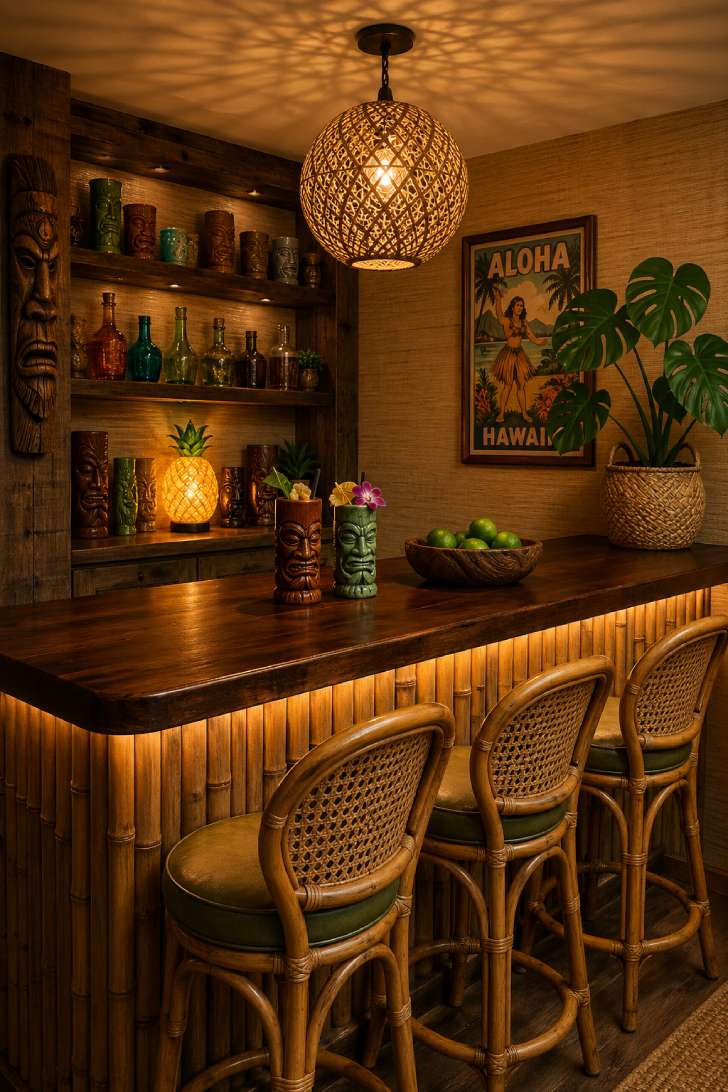
The bamboo wrapping, the woven pendant light throwing shadow patterns across the ceiling, the warm amber glow from beneath the bar top — all of it replaces the absence of natural light with something more atmospheric than a window could have offered anyway.
Grasscloth wallpaper behind the shelving adds texture without making the space feel small. It absorbs sound, too, which means conversations stay at the bar instead of bouncing off drywall.
Stock the shelves with personality. Vintage tiki mugs you’ve collected from thrift stores and flea markets tell a better story than a matching set from a home goods chain. Mix in colored glass bottles and a few plants — a monstera, a pothos, something with big leaves that plays into the tropical feel without needing much light.
Style Blueprint:
- Bar top in dark wood with bamboo-wrapped front panel
- Rattan bar stools with woven cane backs (set of 3)
- Open reclaimed wood shelving for display
- Woven globe pendant light (rattan or bamboo)
- Grasscloth wallpaper in sand or warm tan
Design Pro-Tip: When building a basement bar, mount your shelving 6-8 inches lower than you would upstairs. Basement ceilings sit closer, and standard shelf heights can make the back bar feel cramped and top-heavy. Dropping everything slightly creates breathing room and keeps bottles within easy reach.
The Retro Arcade Den
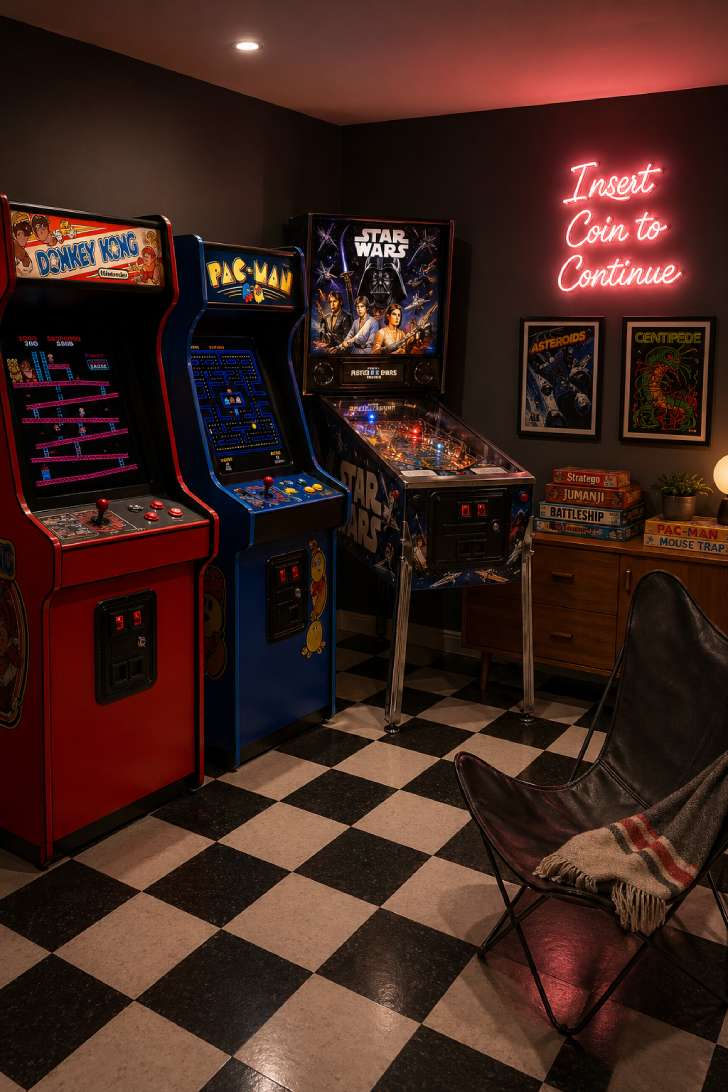
Arcade cabinets belong in basements the way bookshelves belong in studies. It just makes sense.
The checkered vinyl floor beneath them isn’t just a style choice — it’s a spatial anchor.
Black-and-white patterns on the floor draw your eye downward and make a room feel wider than it is, a useful trick in a basement where square footage is usually tight.
The pattern also references the original arcades and roller rinks of the late 1970s, connecting the space to a specific time without having to explain itself.
Restored vintage cabinets have more character than modern reproductions, but either works.
What matters is the glow. In a room painted charcoal gray, the screens and any neon signage become the light sources, and the space takes on the feel of an actual arcade after dark.
Your eyes adjust.
The room shrinks around you in a good way — it becomes a world rather than a room.
Pair the game area with a butterfly chair and a stack of board games on a credenza for the moments between rounds. Not everything needs to be plugged in.
Style Blueprint:
- 1-2 restored vintage arcade cabinets or quality reproductions
- Vintage pinball machine (or modern retro-styled model)
- Black-and-white checkered vinyl tile flooring
- Charcoal gray wall paint (matte finish)
- Neon sign in warm pink or amber tones
The 70s Sunken Living Room
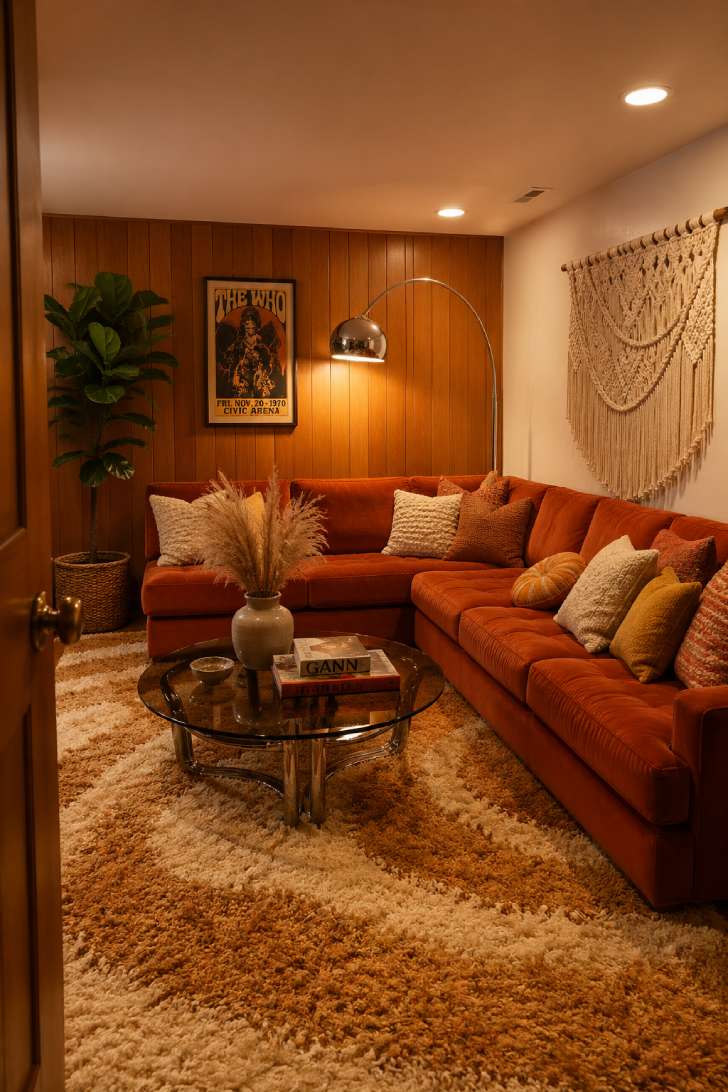
Wood paneling gets dismissed as dated, but that reaction misses the point.
A wall of honey oak paneling in a basement brings warmth, grain, and vertical rhythm that plain drywall cannot match.
The repeated lines of the boards give the walls structure, while the golden wood tone makes the room feel more connected to cabin and midcentury interiors than to a typical unfinished basement.
Pair the paneling with a rust velvet sectional big enough to sprawl across.
The deep orange-brown upholstery sits naturally against the honey oak, creating a warm tonal palette with enough contrast to keep the furniture from disappearing into the walls.
The smoked glass coffee table is a period-correct choice that earns its place functionally, too.
Its transparent surface keeps the center of the room visually open, while the darker glass adds just enough contrast against the rug and surrounding upholstery.
A shaggy rug underfoot introduces another texture and helps break up the harder surfaces around it.
Against wood paneling, glass, and velvet, the long pile adds softness to the composition and makes the seating area feel more layered and intentional.
Style Blueprint:
- Honey oak vertical wood paneling (floor to ceiling on one accent wall)
- L-shaped sectional sofa in rust or burnt orange velvet
- Round smoked glass coffee table with chrome base
- Chrome arc floor lamp with dome shade
- Thick shaggy area rug in caramel or cream tones
Design Pro-Tip: If you’re installing wood paneling in a basement, leave a half-inch air gap between the paneling and the concrete wall behind it. This gap acts as a thermal buffer that keeps the wood from absorbing moisture directly, and it improves the acoustic dampening effect by creating a resonant cavity.
The Mid-Century Mod Lounge
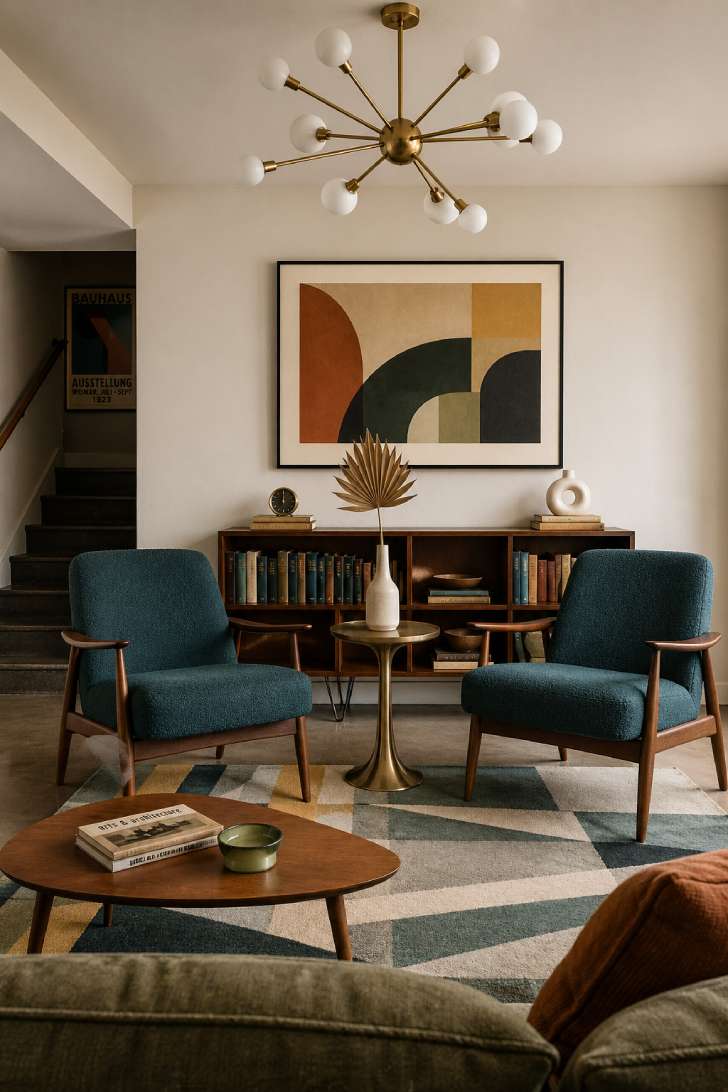
Mid century modern basement design has staying power because it solves a real problem — how to make an underground space feel intentional without overdecorating.
The style relies on clean lines, exposed wood grain, and a handful of statement pieces rather than filling every surface. In a basement where ceiling height is already limited, this restraint matters.
A Sputnik chandelier, for example, draws the eye upward without hanging low enough to crowd the room. Its radiating arms create a sense of expansion, making the ceiling feel taller than it is.
Teal boucle chairs against a warm white wall create contrast without competing. The texture of the boucle catches light differently from every angle, which adds visual interest in a space that lacks the changing natural light of an above-ground room.
A polished concrete floor — which many basements already have beneath their existing flooring — becomes an asset rather than something to cover up entirely.
A geometric rug grounds the seating area and introduces pattern at floor level, where it works hardest without overwhelming.
Style Blueprint:
- Pair of teal or olive boucle lounge chairs with walnut frames
- Slender brass side table with tapered legs
- Low walnut bookcase with hairpin legs
- Sputnik-style chandelier in brass with frosted globe bulbs
- Geometric-patterned area rug in muted tones
The Retro Home Theater
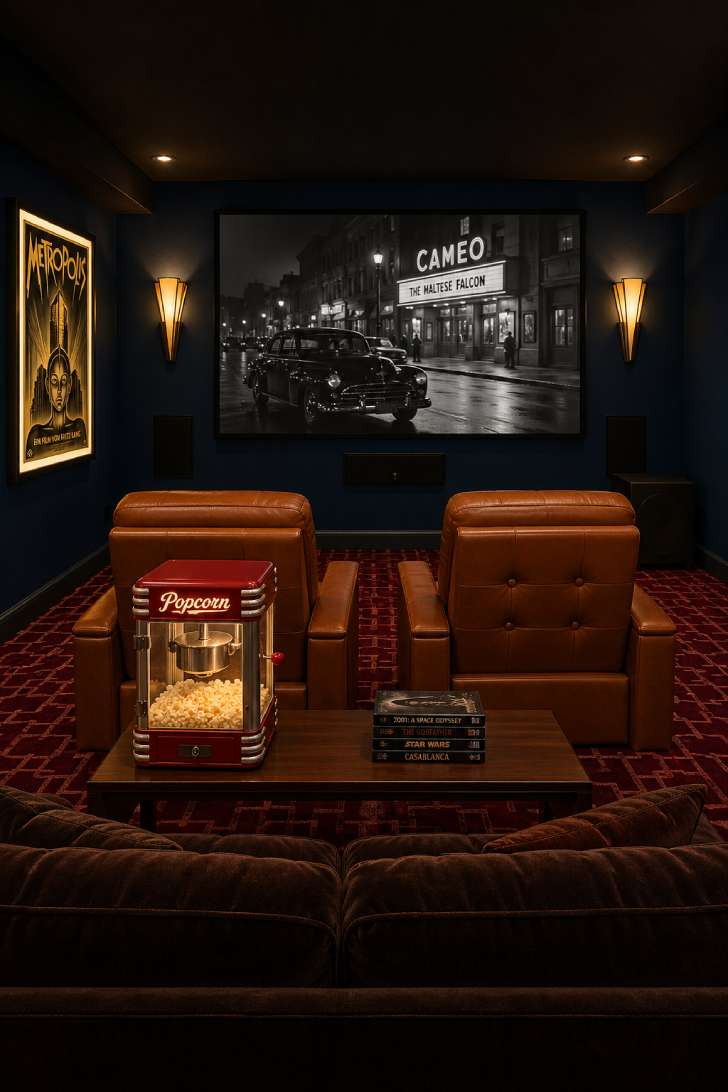
Painting the ceiling matte black is one of the strongest visual choices you can make in a basement theater room.
It can seem counterintuitive because dark colors are often avoided in rooms with low ceilings.
In this setting, however, the black ceiling visually recedes and draws less attention to its height.
The walls, seating, and screen become the dominant boundaries of the room, which gives the theater a more immersive and cohesive appearance.
Cognac leather seating works especially well in a media room because the rich brown tone complements darker finishes and can develop a natural patina over time.
Button-tufted backs introduce a subtle mid-century reference without making the room feel overly themed, and the leather adds another smooth, substantial texture alongside the darker walls and ceiling.
Art deco-style wall sconces flanking the screen serve two visual purposes.
They add low-level ambient illumination for moving around the room, and their upward-casting glow creates soft pools of light across the wall without competing visually with the screen.
A warm amber light also complements cognac leather, black finishes, and other deep tones, helping the lighting feel integrated into the overall palette rather than standing apart from it.
Style Blueprint:
- Cognac leather recliners with button-tufted backs (pair)
- Deep chocolate brown velvet sofa for back row
- Matte black ceiling paint
- Art deco torch-style wall sconces in brass or antique bronze
- Deep navy blue accent wall behind the screen
Design Pro-Tip: Run your speaker wire and power cables before you install carpet in a basement theater. Routing cables under carpet pad is invisible, eliminates trip hazards, and avoids the chunky cable management boxes that ruin the clean lines of a retro-styled room.
The Vintage Game Table Room
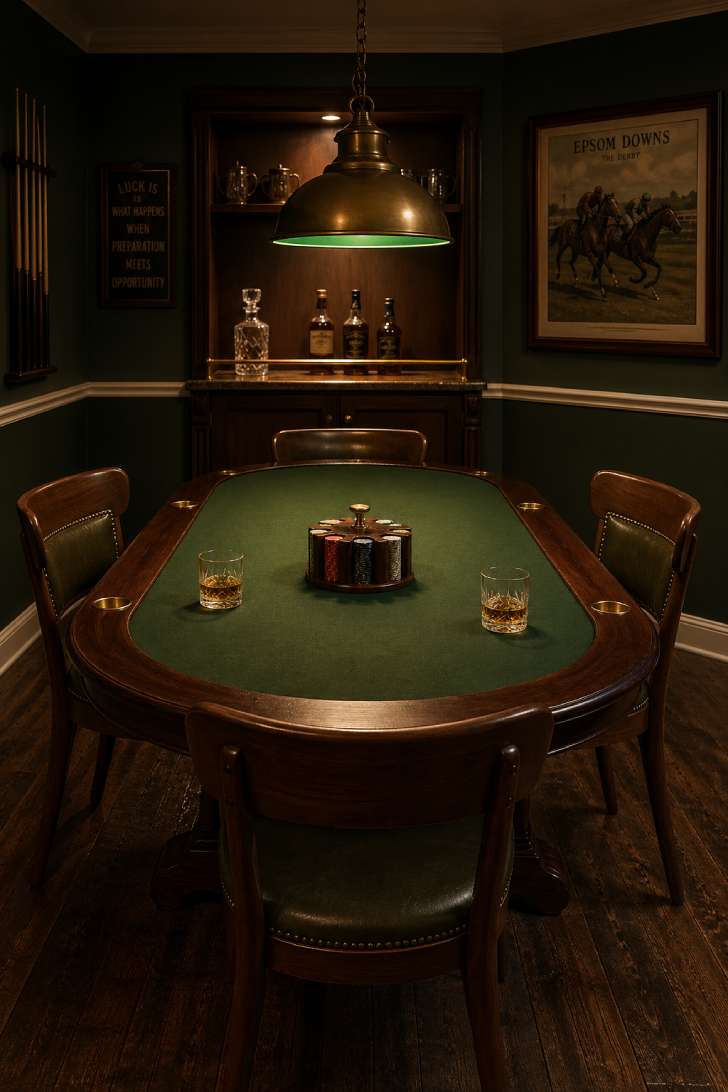
A dedicated game table room does something that a multi-purpose space cannot — it creates a sense of occasion.
When you walk into a room and the table is already set up, the pendant light already low over the felt, the chips already in their carousel, there’s an unspoken invitation. You don’t have to clear the dining table or drag folding chairs from a closet. The room says: sit down, we’re playing.
The brass dome pendant hanging low over the table is borrowed straight from pool halls and gentlemen’s clubs of the 1940s and 50s.
It creates a cone of warm light that contains the game — everything inside the cone is the world, everything outside fades to periphery.
That focused lighting reduces visual distraction and helps players concentrate, which is why every serious card room and billiards hall uses this setup.
Forest green below a chair rail grounds the room and references the felt on the table, tying the whole palette together without being heavy. Above the rail, white or cream opens the upper wall and keeps the ceiling from pressing down.
Style Blueprint:
- Restored poker or game table with green felt and mahogany rails
- Mid-century wooden chairs with leather cushioned seats (set of 4)
- Aged brass dome pendant with green glass interior
- Built-in bar nook with brass rail and crystal decanter
- Dark-stained hardwood flooring
The Retro Laundry and Craft Room
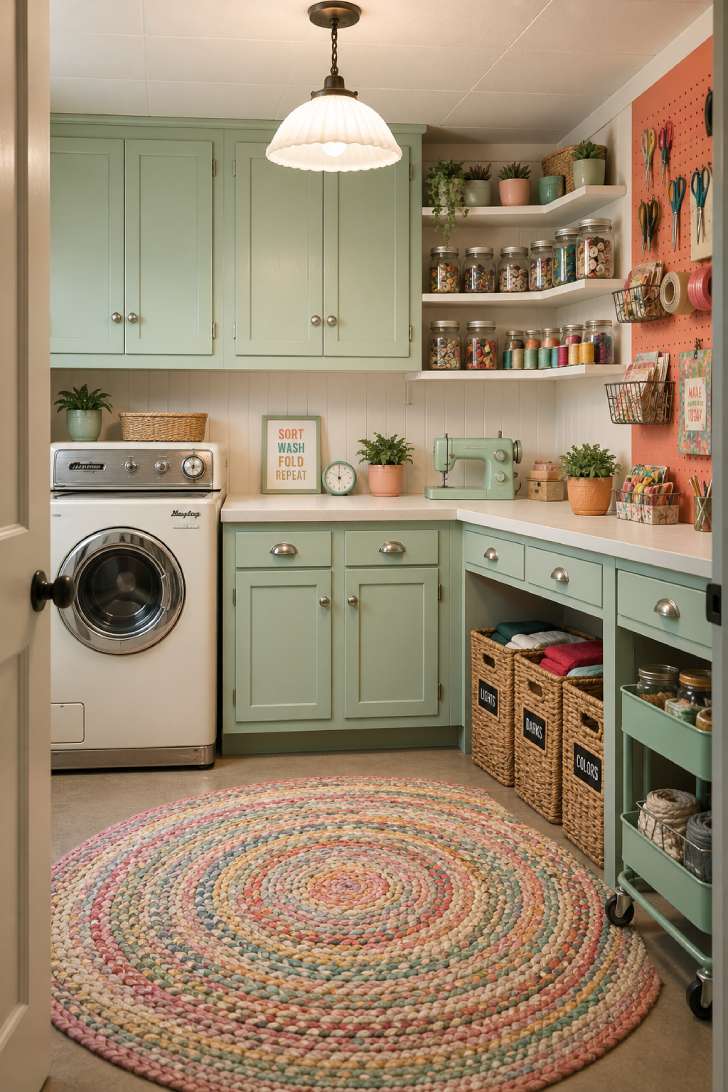
Basements that only serve as lounging spaces miss half their potential. A retro-styled laundry and craft room turns a chore into something you don’t dread walking toward.
Mint green cabinets with chrome cup-pull hardware reference 1950s kitchens — an era when utility rooms were designed with as much care as living spaces. The color itself has a measurable calming effect.
Cool greens slow your heart rate slightly and reduce feelings of anxiety, which is exactly the shift you want when you’re facing a pile of laundry on a Sunday morning.
Open shelving with mason jars isn’t just charming — it’s functional. You see everything at a glance. No digging through drawers for the right thread color or the label maker.
The pegboard on the side wall follows the same principle: tools visible, tools accessible, tools returned to their outline when you’re done.
The braided rag rug softens the concrete floor and adds warmth underfoot. Braided rugs are washable, which matters in a laundry room more than anywhere else in the house.
Style Blueprint:
- Mint green painted cabinets with chrome cup-pull hardware
- White butcher-block countertop
- Open shelving with mason jars for supply storage
- Coral-painted pegboard for tool organization
- Fluted milk glass pendant light
The Record Bar Listening Room
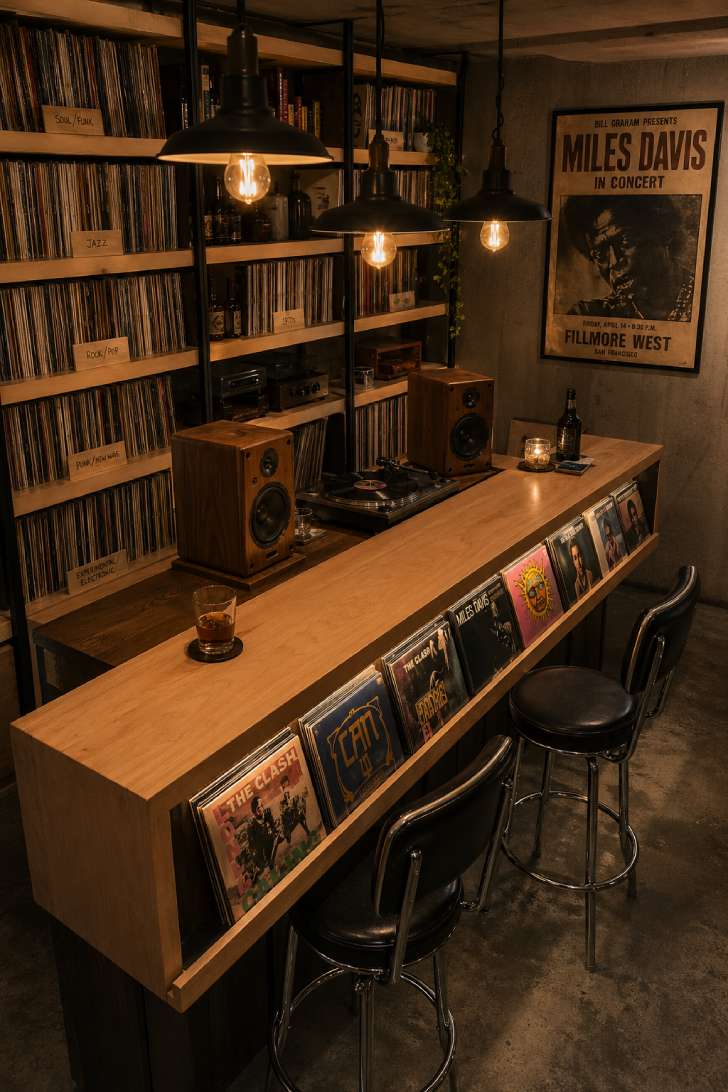
If the vinyl lounge corner is about the ritual of listening, the record bar listening room is about the ritual of choosing.
Floor-to-ceiling record shelving turns a collection into architecture. The spines become color and texture on the wall, shifting every time you add something new or rearrange a section.
Hand-written divider cards between genres or decades add a personal, analog touch that makes the space feel curated rather than accumulated.
The bar-height counter changes how you interact with the music. Standing or perched on a stool, you’re active — flipping through records, pulling one out, holding it up to the light.
The posture is engaged rather than passive. A built-in display slot angled toward the seating shows off whatever’s currently spinning, turning the album cover into rotating art.
Industrial pendants at staggered heights break the horizontal line of the shelving and create depth. Edison bulbs emit that amber warmth that flatters everything — vinyl spines, wood surfaces, the amber in a glass of bourbon.
Style Blueprint:
- Custom maple record bar counter with built-in display slot
- Floor-to-ceiling black metal shelving with maple shelves
- Chrome and black leather bar stools (pair)
- Industrial matte black pendant lights with Edison bulbs (3, staggered)
- Walnut veneer bookshelf speakers
Design Pro-Tip: Store records vertically and never stack them flat — even a small stack creates enough weight to warp the bottom records over time. Keep your shelves snug enough that records stand upright without leaning, but loose enough to slide in and out without friction on the sleeves.
The Nostalgic Hangout Basement
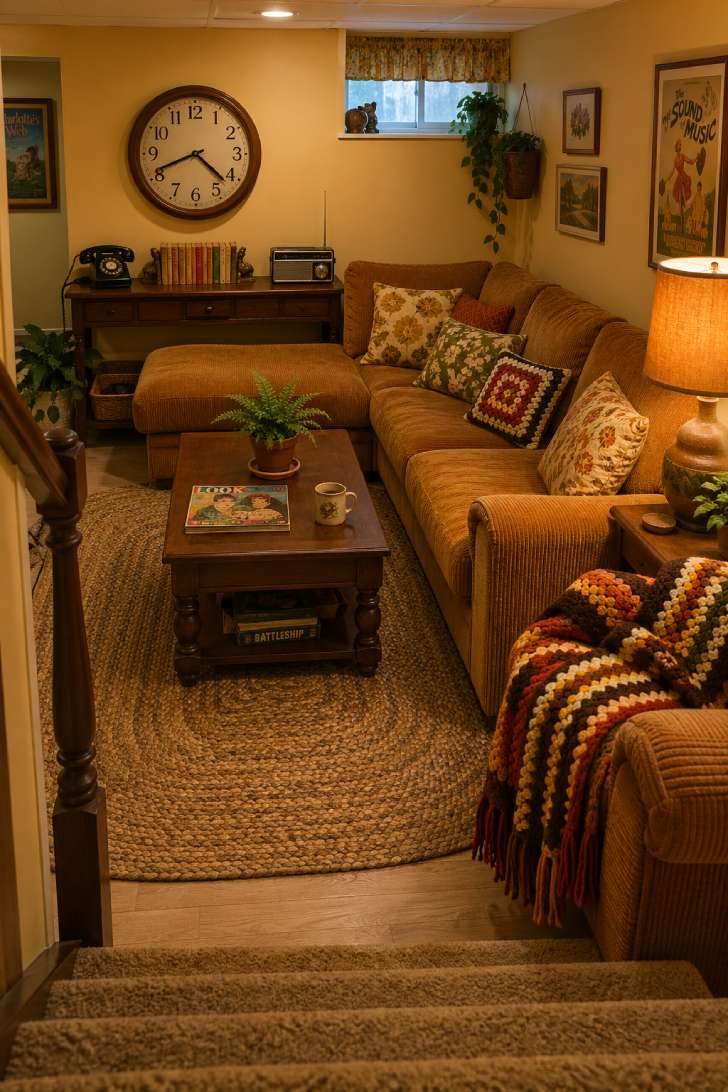
Some retro basements are about style. This one is about atmosphere.
Butterscotch walls do something unexpected.
They soften artificial light and give the room a warmer, more unified color palette.
Basement lighting can easily lean too cool under fluorescent fixtures or too amber under warm LEDs, but this wall color helps bridge those extremes.
The result is a glow that resembles late-afternoon light, making the basement feel brighter and less enclosed.
Corduroy upholstery is an underrated choice for nostalgic home decor.
The ribbed texture catches light and shadow across the surface, adding depth to an otherwise solid color.
Its directional pile also creates subtle variations in tone depending on how the fabric is brushed.
That texture gives the seating more visual presence and keeps the room from feeling flat.
The vintage accessories on the console, including a rotary phone, a transistor radio, and sun-faded paperbacks, work less as functional objects and more as period details.
Each one reinforces the retro setting through its shape, materials, and signs of age.
Together, they create a layered, collected look that feels familiar without turning the room into a themed display.
Nobody is pretending these things still work.
They are there because they help define the room’s character.
Style Blueprint:
- Large corduroy sectional in camel or warm tan
- Square wooden coffee table with turned legs
- Vintage console table with curated nostalgic objects
- Butterscotch wall paint (warm, mid-tone yellow-orange)
- Crochet or knitted throw blanket in autumn tones