This post may contain affiliate links. If you make a purchase through these links, we may earn a commission at no additional cost to you.
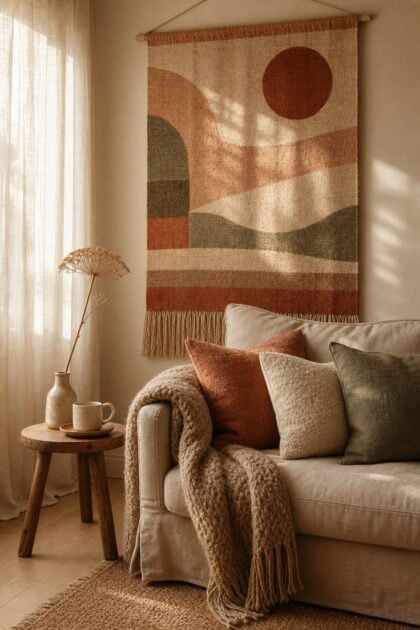
A bare wall asks for something soft.
It wants texture, weight, a material that catches afternoon light and holds it differently than paint or plaster ever could.
Fabric wall decor does what framed prints cannot: it absorbs sound, moves with air currents, and shifts a room from decorated to truly lived-in.
These ten wall textile ideas offer a starting point for anyone ready to trade blank surfaces for something with warmth, story, and handmade character.
A Mud Cloth Strip Triptych on a Whitewashed Brick Wall
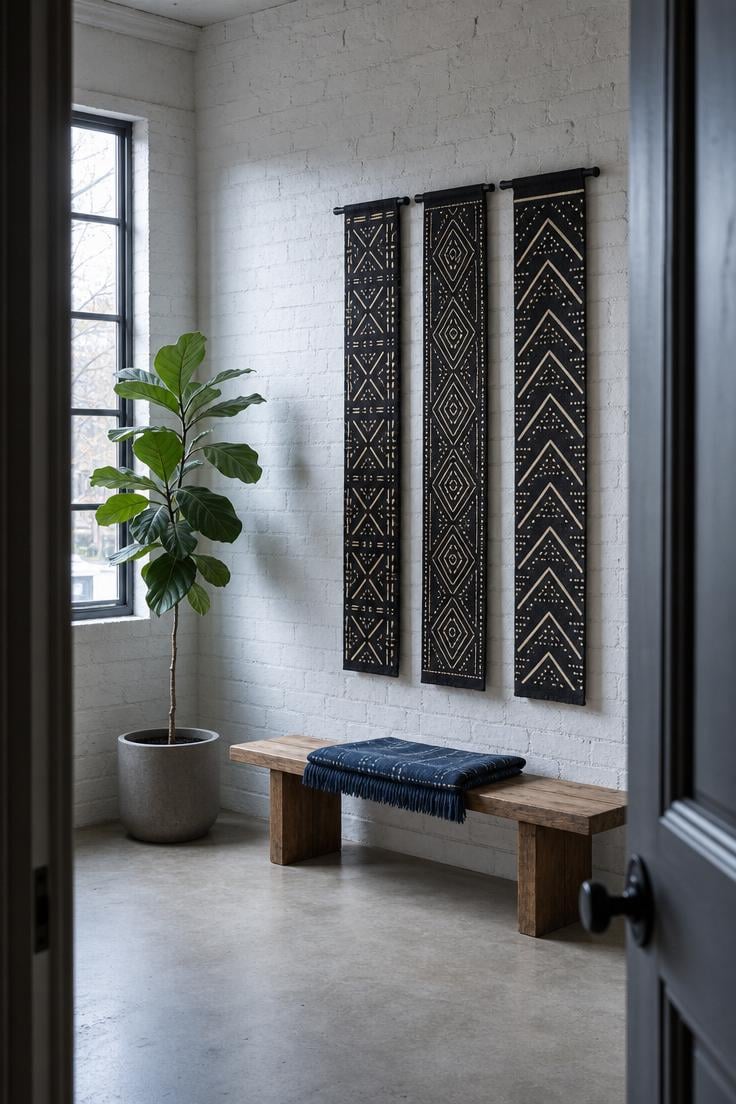
Bògòlanfini mud cloth is made by hand in Mali, using fermented mud painted onto cotton that has been soaked in tree-leaf dye.
The process can take weeks, and no two pieces look the same.
Hanging three narrow strips rather than one wide panel lets you play with pattern variation while keeping the overall display clean and readable.
On a whitewashed brick wall, the rough weave of the cotton picks up the masonry texture behind it, creating a quiet dialogue between surface and fabric wall decor.
The neutral palette, charcoal on ivory, works in nearly any room without competing with existing furniture.
A triptych format also solves a common problem: large textile pieces can sag or buckle, but narrow strips hang straight from a single rod without fuss.
This is one of the simplest setups here, and one of the most striking.
- Style Blueprint:
- Authentic bògòlanfini mud cloth strips (3 panels, 14″ x 48″ each)
- Slim matte black curtain rods with minimal brackets
- Whitewashed or light-colored brick or plaster wall
- Low bench or console beneath for grounding
- Neutral-toned room with minimal competing patterns
An Indigo Shibori Linen Panel Stretched Over a Cedar Frame
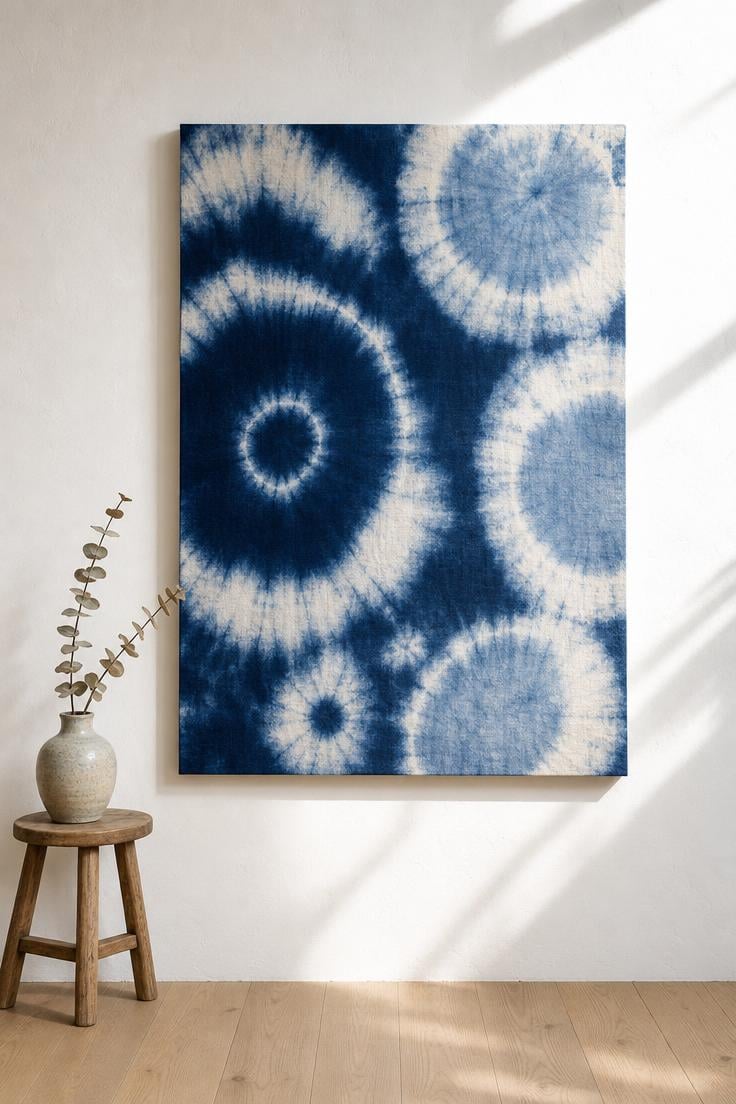
Shibori is a Japanese resist-dyeing method that dates back over a thousand years.
The technique involves binding, folding, or twisting fabric before submerging it in indigo dye, and the results are always slightly unpredictable.
Stretching shibori linen over a cedar frame gives the piece a polished, gallery-worthy presence without the cost of professional framing.
The cedar shows at the edges, adding a thin line of warm wood tone that keeps the indigo from feeling cold.
What makes this approach effective as fabric wall decor is how the organic dye patterns mimic the irregularity of natural forms, clouds, ripples, tree rings.
Indigo pairs with almost any color scheme because it reads as a deep neutral rather than a bold accent.
One panel of this size can anchor a hallway, a bedroom wall above a headboard, or the space beside a staircase.
- Style Blueprint:
- Hand-dyed indigo shibori linen (at least 3′ x 5′)
- Cedar or pine stretcher bars (canvas stretcher frame kit)
- Staple gun for stretching fabric taut
- Warm white or off-white wall as backdrop
- Simple furniture nearby to avoid visual competition
Design Pro-Tip: When stretching fabric over a frame, start by stapling the center of each side first, then work outward toward the corners. This prevents puckering and keeps the pattern straight. Pull firmly but not so tight that the weave distorts, you want taut, not drum-tight.
A Cluster of Vintage Kantha Squares in Mismatched Embroidery Hoops
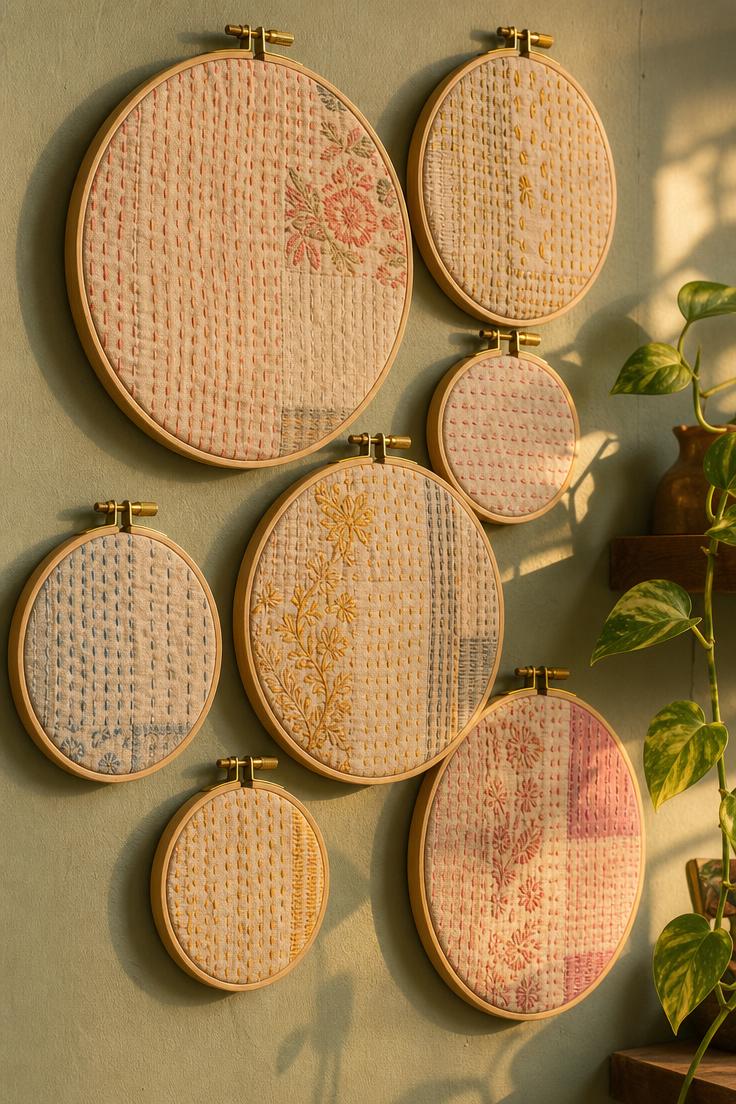
Kantha is a centuries-old form of embroidery from Bengal, where worn saris and fabric scraps are layered and stitched together with simple running stitches.
Vintage pieces carry a particular softness, the cotton is already broken in, the colors mellowed by years of washing and sun.
Framing kantha scraps in embroidery hoop art groupings is an approachable first project for anyone new to textile displays.
The mismatched sizes keep the arrangement from looking like a store display or a grid that demands precision.
On a sage green wall, the warm tones of the kantha fabric, coral, turmeric, faded pink, sit in gentle contrast without clashing.
Each hoop can be hung with a single nail, and the whole cluster can be rearranged in minutes whenever it starts to feel stale.
What makes this bohemian wall decor approach work is its imperfection: no two pieces match, and that is the point.
- Style Blueprint:
- Vintage kantha fabric scraps (6-8 pieces in varied colors)
- Wooden or bamboo embroidery hoops in assorted sizes (5″ to 12″)
- Sage, olive, or muted green wall color
- Single nails or small adhesive hooks for hanging
- Trailing plant nearby to soften the grouping
A Floor-Length Raw Silk Ombré Banner on a Brass Rod
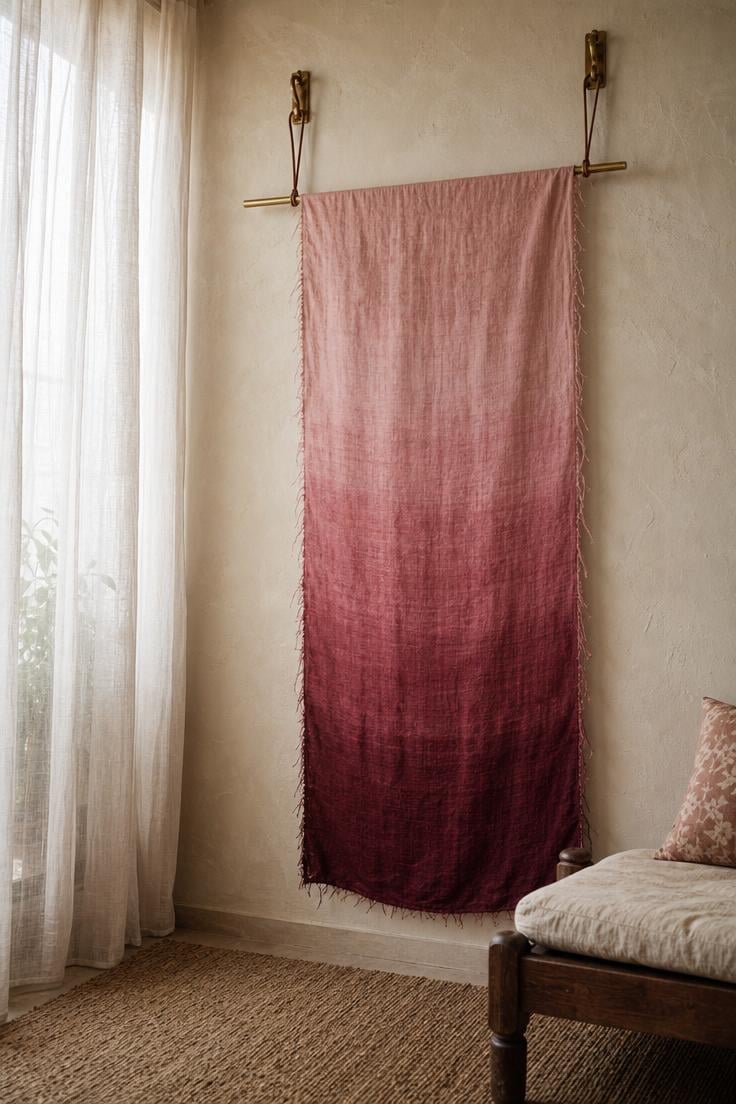
A single vertical textile piece changes how a room reads its own height.
The eye follows the color gradient downward, and the wall suddenly feels taller, more deliberate.
Raw silk has a nubby, irregular surface that polished silk does not, it catches light in small uneven patches rather than reflecting it in a flat sheet.
Leaving the edges unhemmed adds to this roughness, giving the piece a maker’s-hand quality that finished textiles often lack.
The ombré dye gradient from dusty rose to deep burgundy works because the shift is tonal rather than between unrelated colors.
Brass rods and leather cord loops keep the hanging hardware simple and warm, complementing the silk’s organic surface.
This is a textile wall hanging that works best alone, it does not need a gallery wall around it to justify the space.
A corner near a daybed or reading spot is the right home for it.
- Style Blueprint:
- Hand-dyed raw silk panel (approximately 24″ x 72″) in ombré gradient
- Thin brass rod (28-30″ wide)
- Leather cord or suede loops for hanging
- Warm off-white or plaster wall
- Minimal surrounding decor to let the textile breathe
A Woven Wool Textile in Terracotta and Cream on a Dark Plaster Wall
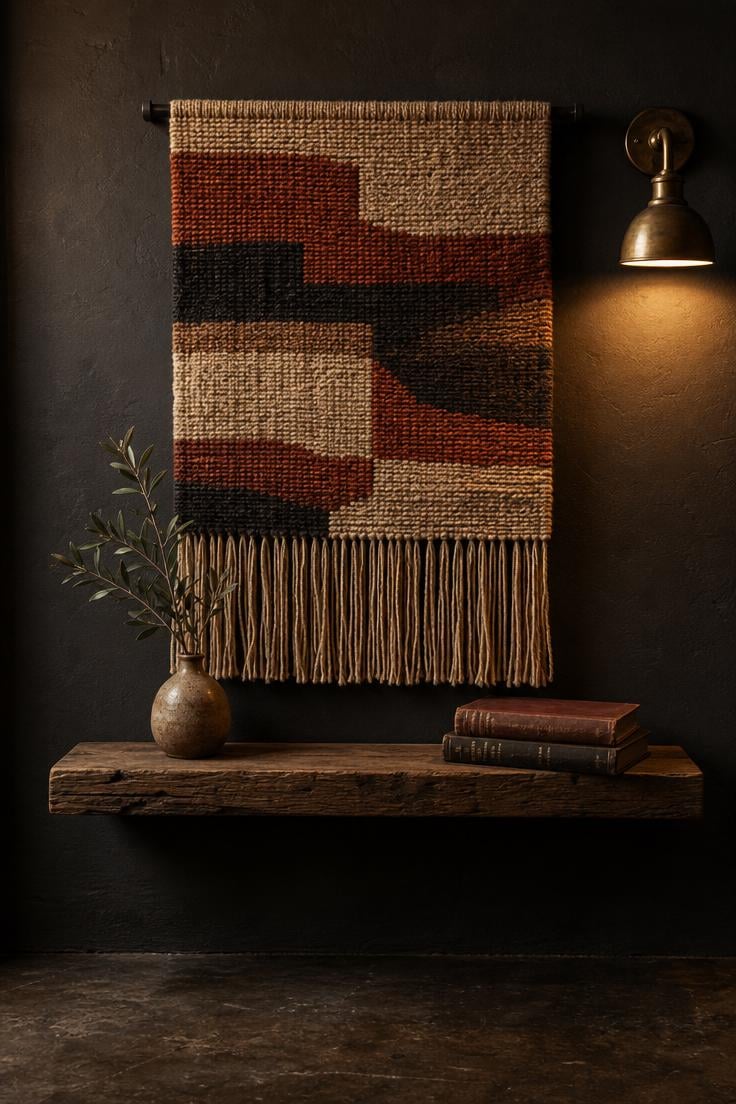
Wool on a wall does two things that lighter fabrics cannot.
It absorbs sound, a real benefit in rooms with hard floors and high ceilings where voices and footsteps bounce.
And it holds color with a richness that cotton and linen struggle to match, particularly in warm earth tones like terracotta and burnt sienna.
Against a dark charcoal wall, those warm colors come forward rather than receding, making the woven tapestry the clear focal point of the room.
The fringe at the bottom adds movement and a sense of gravity, the piece feels weighted, grounded, like it belongs where it hangs.
Handwoven textiles carry slight imperfections in tension and color that machine-made reproductions smooth away, and those imperfections are exactly what the eye finds interesting.
Pairing wool with a simple olive branch and weathered books below keeps the scene from tipping into anything overly styled.
- Style Blueprint:
- Handwoven wool woven tapestry panel (approximately 30″ x 40″) in earth tones
- Dark plaster or deeply painted wall (charcoal, slate, deep navy)
- Reclaimed wood floating shelf below the woven tapestry
- Ceramic bud vase with a single dried or fresh branch
- Warm-toned directional lighting (sconce or picture light)
Design Pro-Tip: When hanging a heavy woven tapestry made from wool, skip the single nail. Use a wooden batten screwed into studs, with the top edge sewn into a fabric sleeve that slides over the batten. This distributes weight evenly and prevents the center from sagging over time.
Layered Gauze Panels in Oat and Blush Behind a Reading Chair
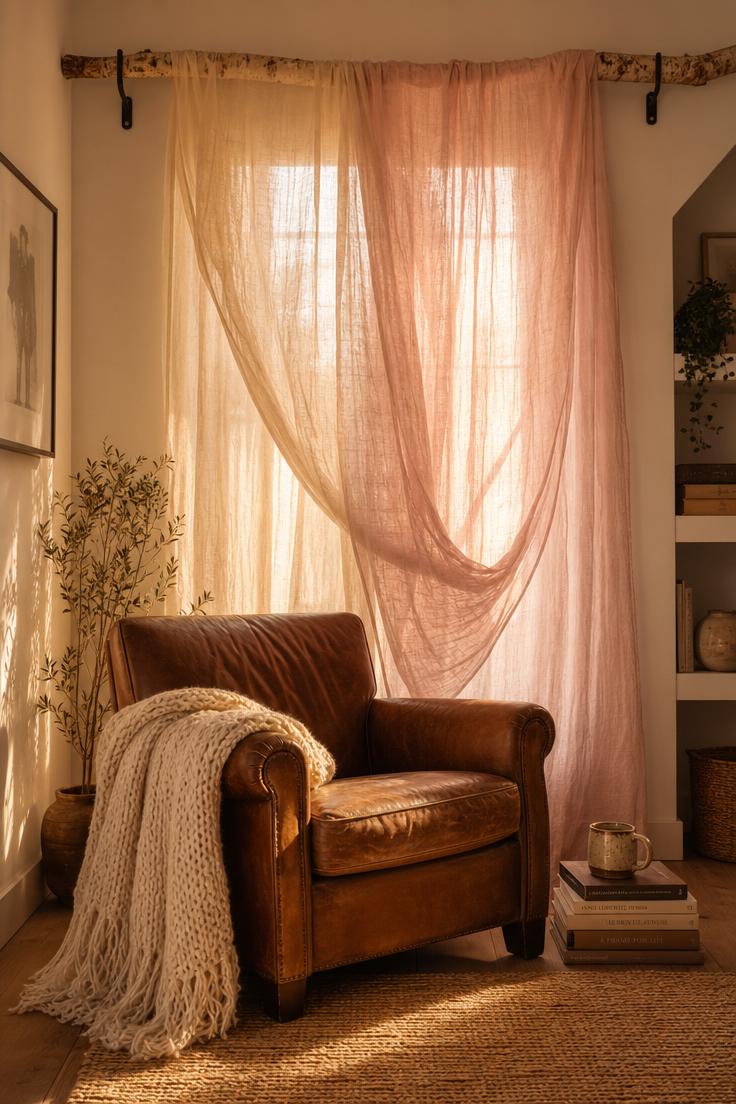
Two layers of gauze do more than one thick panel ever could.
Where the oat and blush overlap, a third color appears, a quiet mauve that neither fabric holds on its own.
Cotton gauze is light enough to move with air currents from a window or a passing body, and that movement gives the wall a quality that no static hanging matches.
The raw birch branch used as a hanging rod brings an outdoor element indoors without the polished driftwood look that has been overused in recent years.
This setup belongs behind a reading chair or beside a bed, somewhere you sit still long enough to notice the light shifting through the layers.
Installation is forgiving: the gauze does not need to be stretched or measured precisely, just draped with enough length to pool slightly at the bottom or hang a few inches above the floor.
It is also one of the most affordable approaches on this list, since cotton gauze costs a fraction of silk or wool by the yard.
The fiber art wall piece that results feels collected rather than purchased.
- Style Blueprint:
- Lightweight cotton gauze panels (2 panels, each approximately 4′ x 7′) in coordinating tones
- Raw birch branch or natural wood rod (wider than the panel span)
- Simple matte iron or black metal brackets
- Comfortable reading chair beneath for context
- Warm, light-filled wall or window-adjacent position
A Grid of Hand-Block-Printed Cotton Squares in Walnut Float Frames
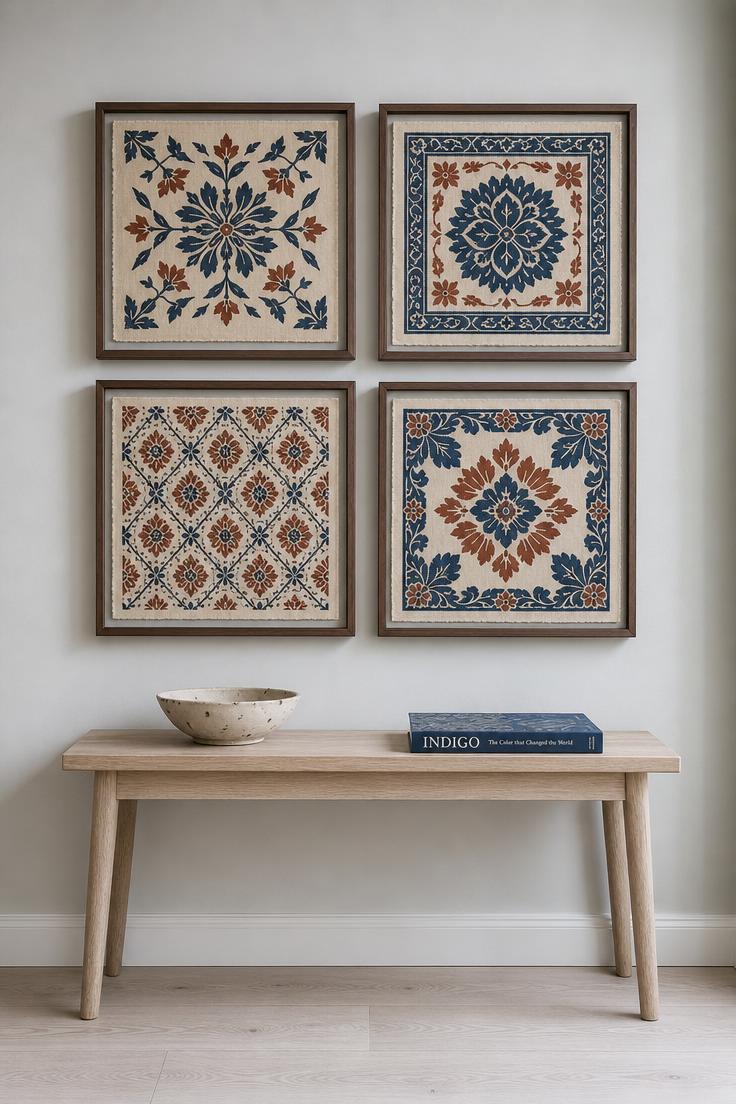
Hand-block printing is a living craft tradition in Rajasthan and Gujarat, where carved wooden blocks are dipped in natural dyes and pressed into cotton by hand.
The slight irregularities, a line that wavers, a petal that prints unevenly, are the proof that a human hand made each mark.
Float frames are the right choice here because they show the raw edge of the cotton, the rough cut border that a standard frame would hide, and that visible edge tells you this is fabric, not paper, not a photograph.
Arranging four squares in a grid gives the display structure that a salon-style hang would not, and the clean geometry pairs well with the organic imperfection of the block prints.
These fabric wall panels bring pattern into a minimal room without the visual weight of wallpaper or a large-scale mural.
Indigo and rust on unbleached cotton is a color combination with centuries of precedent, and it reads as classic rather than trendy.
Swapping out one or two squares seasonally keeps the wall textile ideas fresh without replacing the entire display.
- Style Blueprint:
- Hand-block-printed cotton squares (4 panels, 16″ x 16″ each)
- Slim walnut float frames with visible gap around fabric edge
- Pale gray, warm white, or cream wall
- Precise 2×2 grid arrangement with even spacing
- Slim console or shelf below to anchor the display
Design Pro-Tip: When framing fabric in float frames, iron the textile first on the reverse side, then use acid-free linen tape to attach it to the backing board. Avoid glue, it yellows cotton over time and makes the piece impossible to remove or replace without damage.
A Quilted Wall Hanging in Muted Pastels With Visible Hand Stitching
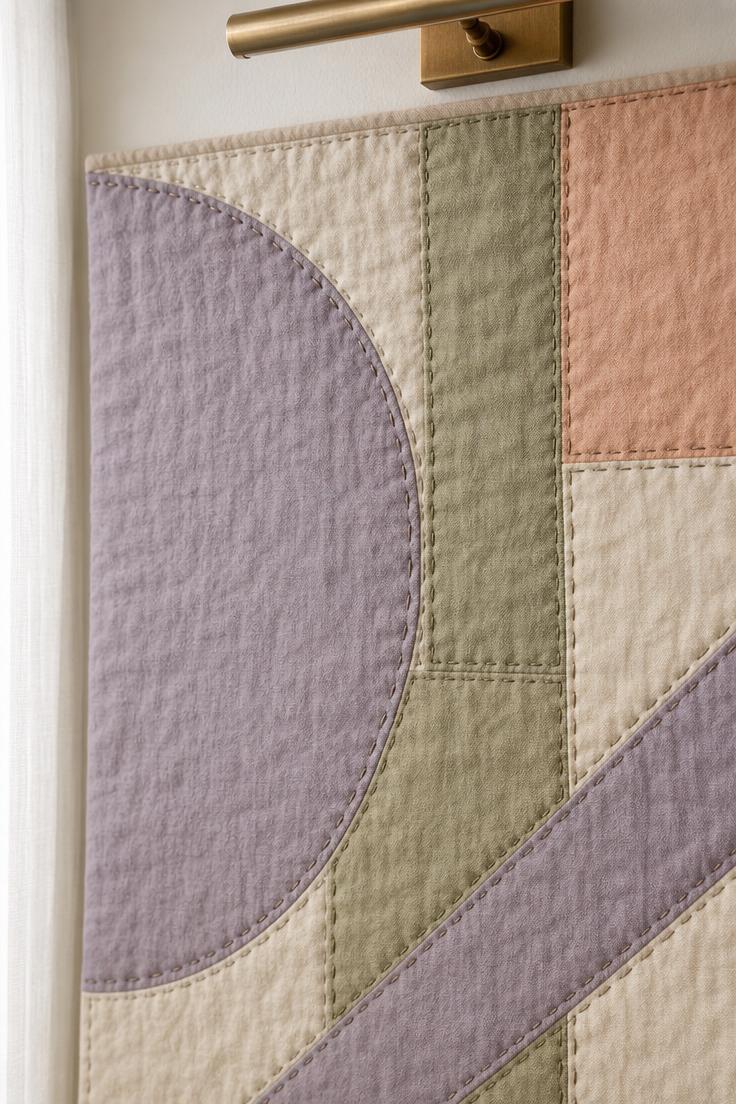
The line between a quilted wall hanging and a painting blurs when the stitching becomes the subject.
Visible hand-quilting in contrasting thread turns the surface into a topographic map of labor, each stitch a small decision, each line a path the maker’s hand followed.
Machine quilting is precise and fast, but it flattens the fabric into uniformity.
Hand stitching creates puckers, slight gathers, tiny shadows that change as the light moves through the day.
Muted pastels keep the piece from reading as folk art or farmhouse, dusty lavender and sage green belong in a modern apartment as comfortably as a country home.
The geometric shapes, half circles, overlapping rectangles, a diagonal stripe, give the composition an abstract quality that references modern painting without imitating it.
This is a quilted wall hanging that invites close looking, and it rewards it.
A brass picture light mounted above brings out the texture after dark, when overhead room lighting would flatten it.
Hang it where people pass slowly: a hallway, a landing, beside a bathroom mirror.
- Style Blueprint:
- Modern art quilt (approximately 36″ x 48″) in muted pastels
- Visible hand-quilting in contrasting thread color
- Concealed wooden batten or quilt hanger for mounting
- White or very pale wall to let colors speak
- Optional brass picture light above for evening viewing
A Macramé Arch With Dip-Dyed Cotton Cord on a Limewashed Wall
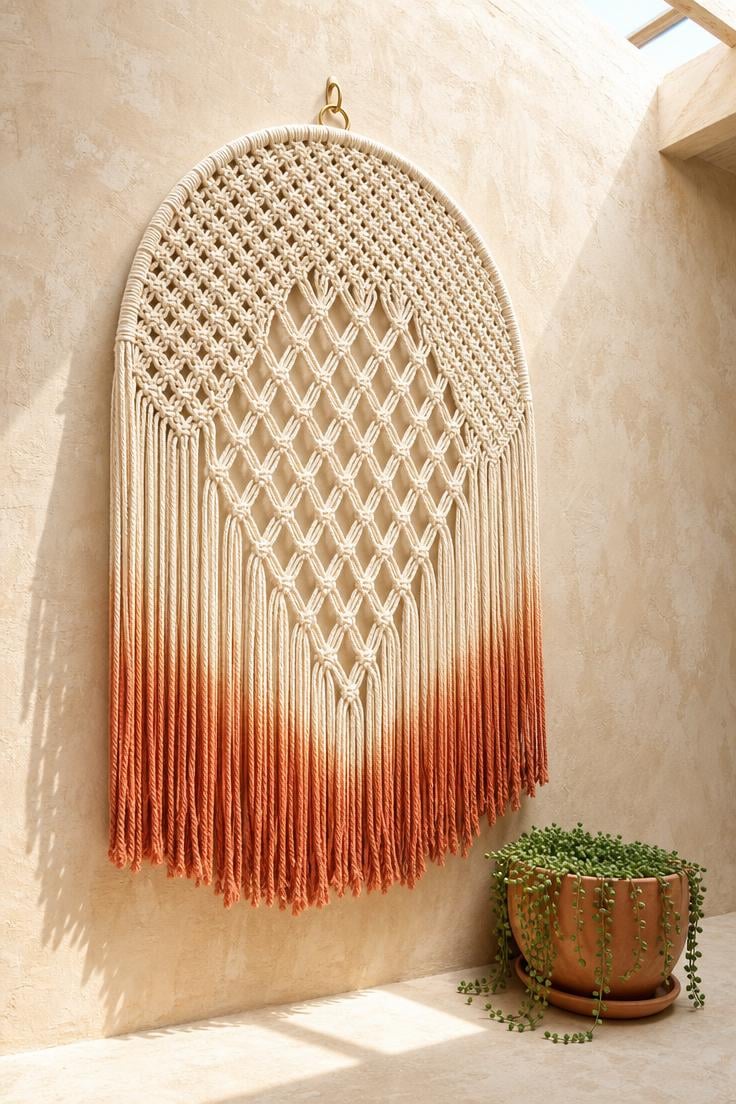
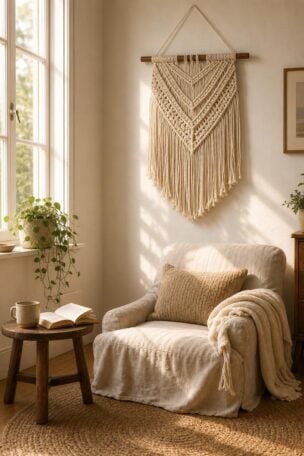
The arch shape changes everything about how macramé wall art reads on a wall.
Rectangular macramé pieces are everywhere, they have become a default, almost a cliché.
An arch introduces a softness at the top that mirrors doorways, windows, and the curves of the body, making the piece feel architectural rather than just decorative.
Dip-dyeing the lower third in terra-cotta adds color without covering up the natural cream cord that gives macramé its warmth.
The transition zone where dye meets undyed fiber is the most visually interesting part, it mimics the way watercolor bleeds on wet paper.
Alternating between tight square knots at the top and open diamond patterns in the center creates textural contrast you can read from across a room.
On a limewashed wall, the organic quality of handmade cord and hand-applied lime plaster speak the same visual language: imperfect, warm, made by hand.
This linen wall hanging approach works in living rooms, entryways, and above headboards where a single statement piece is all the wall needs.
- Style Blueprint:
- Thick natural cotton macramé cord (4-5mm) with dip-dyed lower section
- Arch-shaped knotwork pattern (approximately 3′ wide x 4′ tall)
- Single large brass hook or wall mount
- Limewashed, plaster, or warm-toned matte wall
- Low planter or simple floor element beneath
Vintage Grain Sack Strips Sewn Onto a Linen Runner and Hung From Iron Hooks
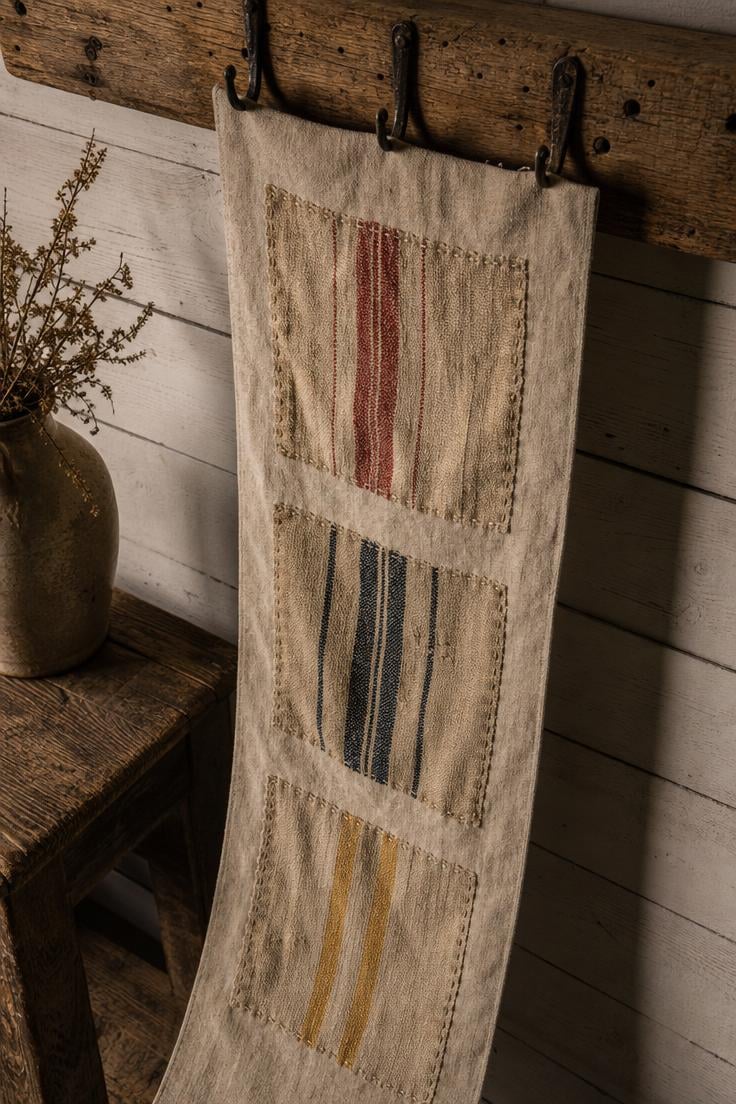
European grain sacks from the 19th and early 20th century were built to carry weight, and you can feel that purpose in the weave.
The hemp-and-linen blend is dense, rough, and carries the stripe patterns that identified different farms and mills.
Combining three fragments on a single linen backing turns what might otherwise be small, disconnected scraps into a cohesive composition.
The visible stitching is part of the design, it does not try to hide itself, and the rough linen thread matches the grain sack aesthetic.
Forged iron hooks on a reclaimed beam complete the material story: wood, iron, and old cloth, all bearing marks of previous use.
This approach works in kitchens, mudrooms, and hallways where the rustic quality feels appropriate rather than forced.
Each grain sack strip carries its own history, the red-striped one might be French, the navy one Flemish, the ochre one Hungarian, and that layered provenance gives the piece a depth no new textile can replicate.
A linen wall hanging built from salvaged materials is, by definition, one of a kind.
- Style Blueprint:
- Vintage European grain sack fragments (3 pieces with different stripe patterns)
- Natural linen backing fabric (approximately 18″ x 60″)
- Forged iron hooks (3) mounted on reclaimed wood beam
- Whitewashed, plaster, or natural wood wall behind
- Strong hand-sewing thread in natural linen or hemp
Design Pro-Tip: When shopping for vintage grain sacks, check for moth damage by holding the fabric up to light, tiny holes will show immediately. A few small holes add character, but large patches of damage weaken the fabric enough that it may not hold stitching. Wash gently in cold water before sewing; hot water can shrink century-old fibers unevenly.
Conclusion
Fabric on a wall changes what a room sounds like, feels like, and asks of the people inside it.
It softens hard surfaces, absorbs the sharp edges of echo, and introduces a warmth that paint and plaster alone cannot provide.
The ten fabric wall decor ideas here range from a single silk banner on a brass rod to a patchwork of vintage grain sack fragments stitched onto linen, and every one of them starts with a material you can touch, fold, and carry home under your arm.
Start with one piece.
Hang it where you will see it every day, in the light that makes it look its best.
The wall will tell you what it needs next.