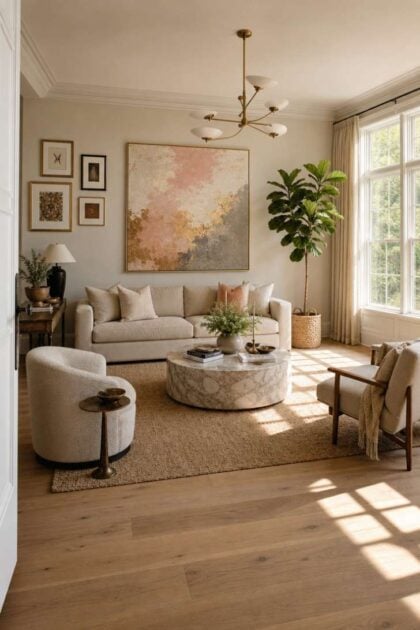
This post may contain affiliate links. If you make a purchase through these links, we may earn a commission at no additional cost to you.
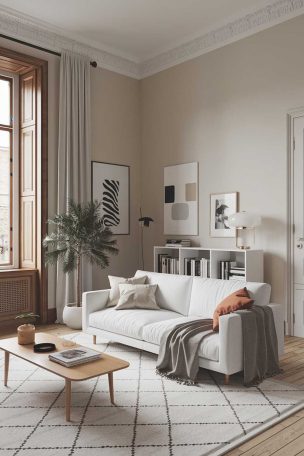
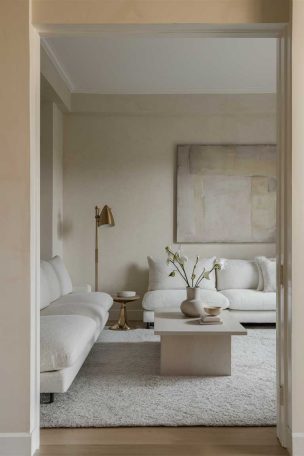
Your living room walls are the biggest design opportunity most people overlook.
Whether you’re drawn to a single bold canvas, a curated gallery wall, or something more unexpected like textured plaster or hanging planters, the right wall decor can completely transform how a space looks and feels.
These 19 ideas cover a range of styles and commitment levels — from no-drill leaning art stacks to architectural panel molding — so you can find something that fits your room, your budget, and your personality.
A Living Room That Speaks Without Saying a Word
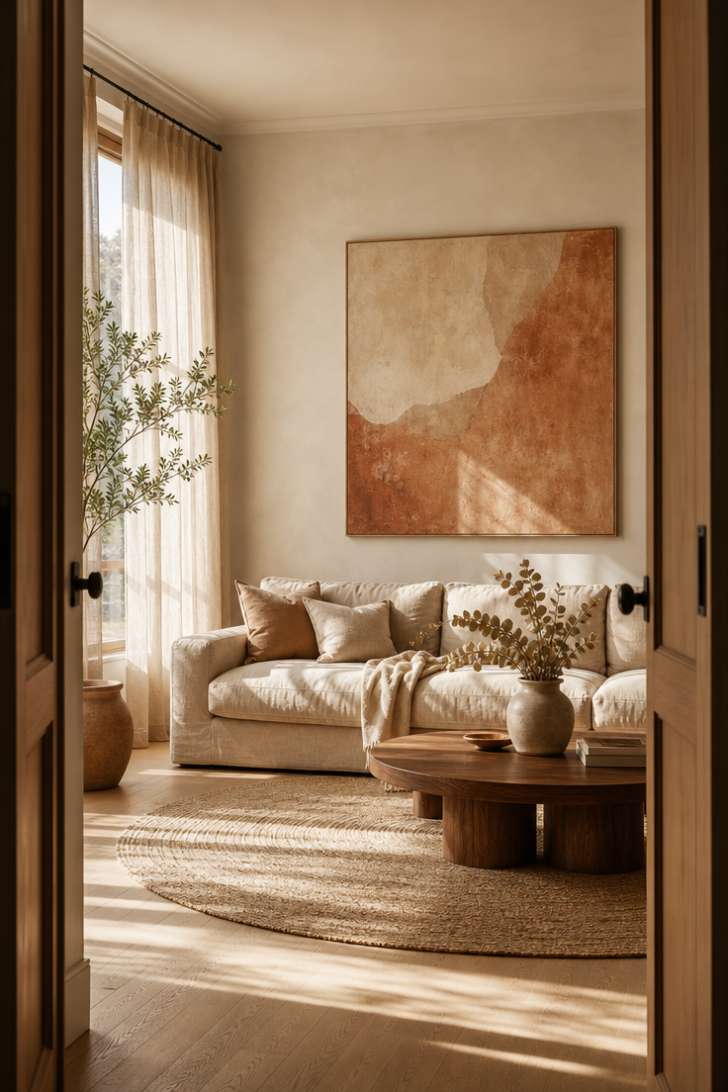
Your walls are talking — or at least, they should be.
A blank wall in a living room feels unfinished the same way an unset table does before dinner guests arrive.
The right wall decor for living room spaces does more than fill empty space; it anchors the furniture below it, reflects who actually lives there and shifts the entire energy of a room without touching a single piece of furniture.
These 19 living room wall decor ideas range from gallery walls that tell a personal story to single statement pieces that stop conversations mid-sentence.
Grab what speaks to you, skip what doesn’t, and remember — your walls are the largest unused real estate in your home.
Oversized Abstract Canvas
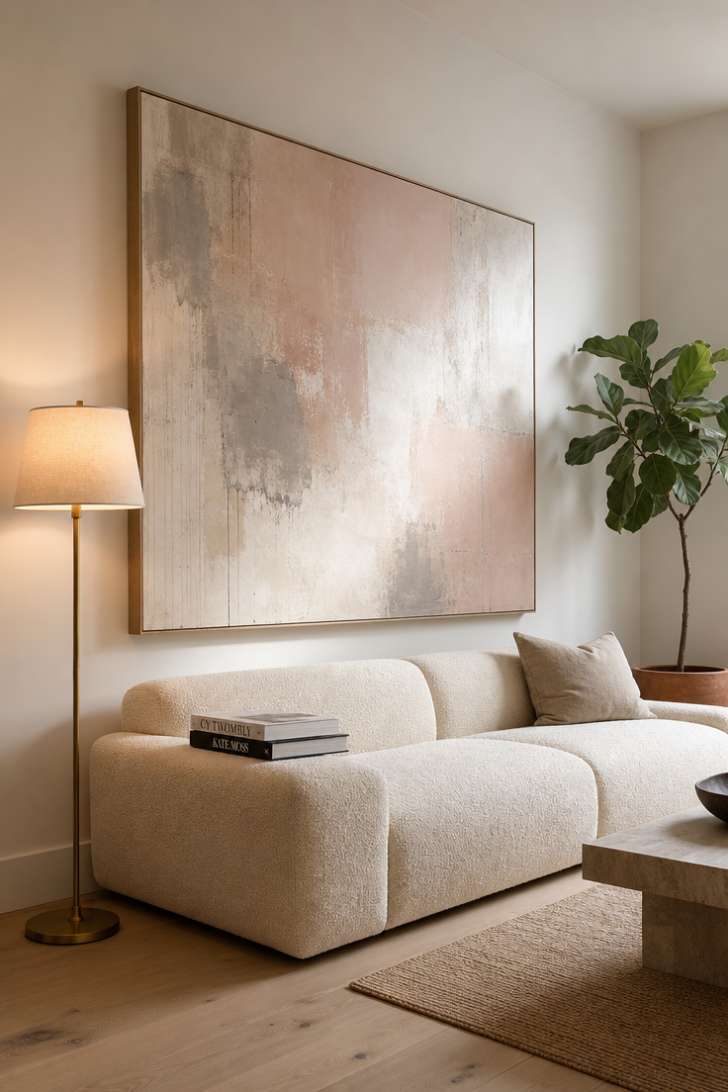
One piece, one wall, done.
An oversized abstract canvas removes every decision about spacing, grouping and arrangement — and replaces it with pure visual impact.
The psychology behind this works because a single large artwork creates a clear focal point, which reduces visual noise and allows the brain to relax in the space.
When your eye enters a room and lands on one confident statement rather than twenty competing elements, the whole space feels calmer and more intentional.
Choose something that fills at least two-thirds of the wall width above your sofa.
Style Blueprint:
- Abstract canvas, minimum 48×60 inches
- Low-profile sofa in a neutral tone beneath it
- Slim brass or matte black picture light mounted above
- Minimal surrounding decor to let the piece breathe
- Warm white wall paint as backdrop
Collected Gallery Wall
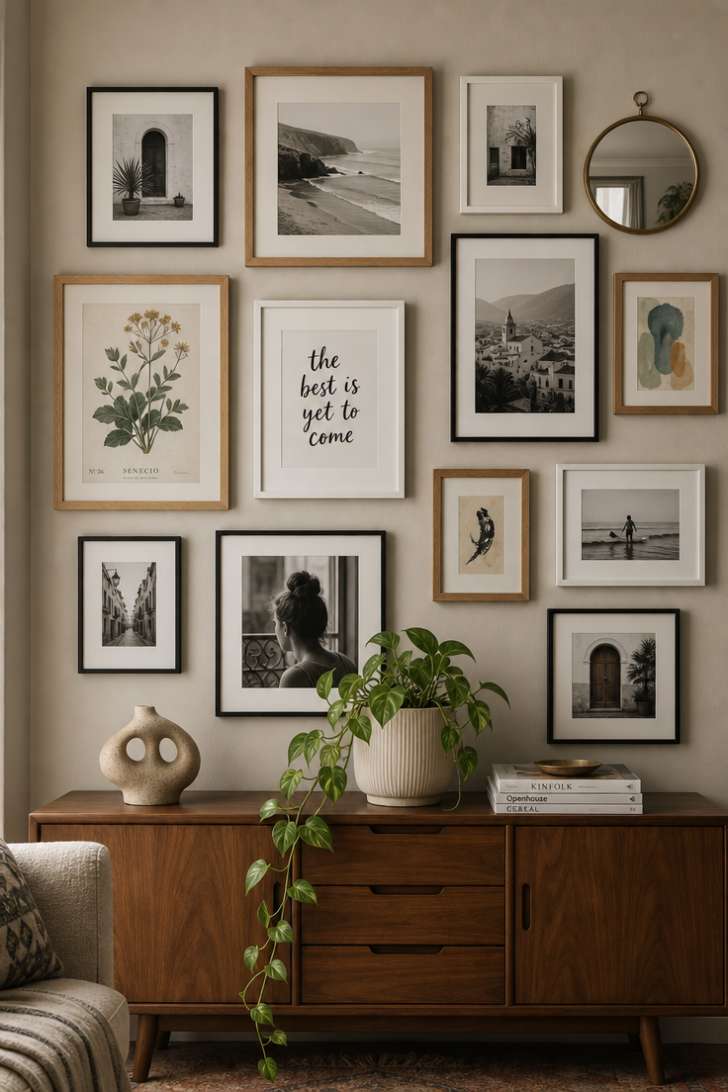
Gallery wall ideas that actually look collected rather than purchased in a single afternoon require one thing: variety.
Mix frame materials — a thin black metal beside a chunky oak beside a frameless canvas.
Vary the content too: a personal photograph next to an abstract print next to a vintage map next to a small mirror.
The reason this arrangement feels so emotionally satisfying has everything to do with how our brains process visual rhythm.
Uniform spacing creates predictability, and predictability reads as impersonal.
A slightly looser arrangement with 2.5 to 3 inches between pieces signals that these objects arrived at different times — which they should have.
Start with your largest piece slightly off-center, then build outward in a roughly organic shape.
Style Blueprint:
- 10–15 frames in mixed materials and sizes
- At least one mirror or 3D object within the arrangement
- Walnut or oak credenza below as an anchor
- Warm greige or soft sage wall color behind
- One trailing plant on the surface below to soften the transition
Oversized Round Mirror
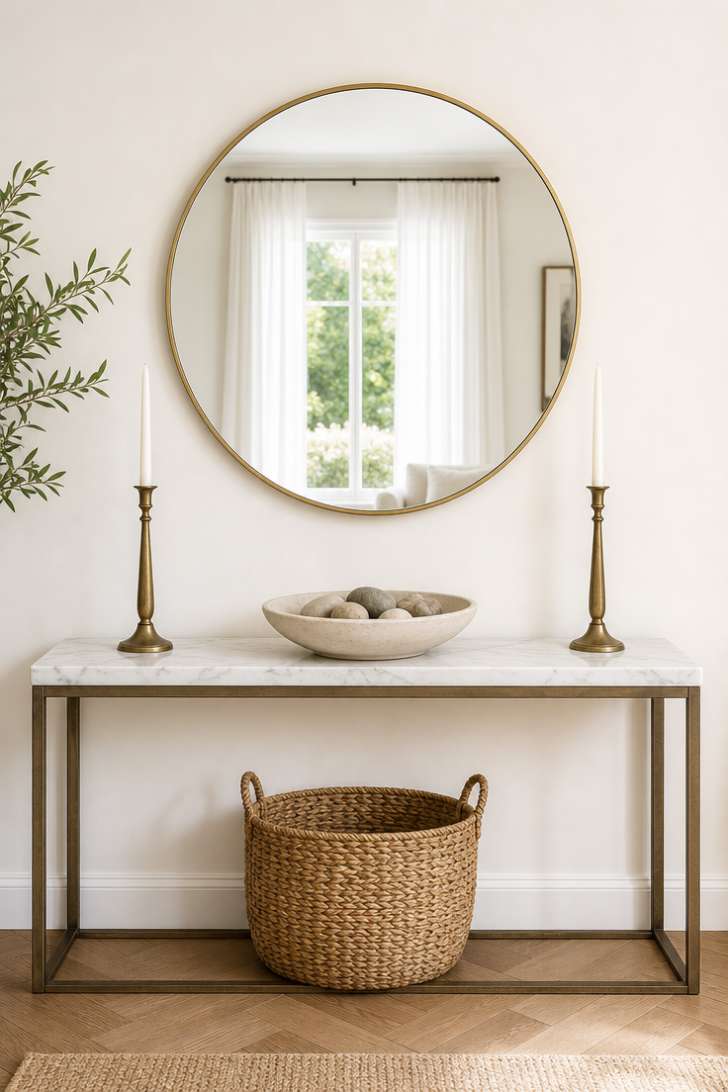
A statement mirror in a living room does double duty — it decorates the wall and physically expands the room by bouncing light into dark corners.
Position it directly across from your largest window.
The reflection acts as a second light source once the sun drops in the afternoon, extending golden hour deeper into the space.
Round shapes soften rooms dominated by rectangular furniture, too.
That contrast between angular sofas, square coffee tables and one generous circle creates a visual rest point that the eye returns to again and again.
Style Blueprint:
- Round mirror, 36–48 inch diameter
- Thin brass or matte black frame
- Console table or credenza below
- Positioned opposite the room’s primary light source
- Clean wall space around it — no competing pieces within 12 inches
Design Pro-Tip: Hang mirrors so their center sits at 57 inches from the floor — average standing eye level. This placement ensures anyone walking past catches their reflection naturally, which makes the room feel alive even when empty.
Woven Textile Wall Hanging
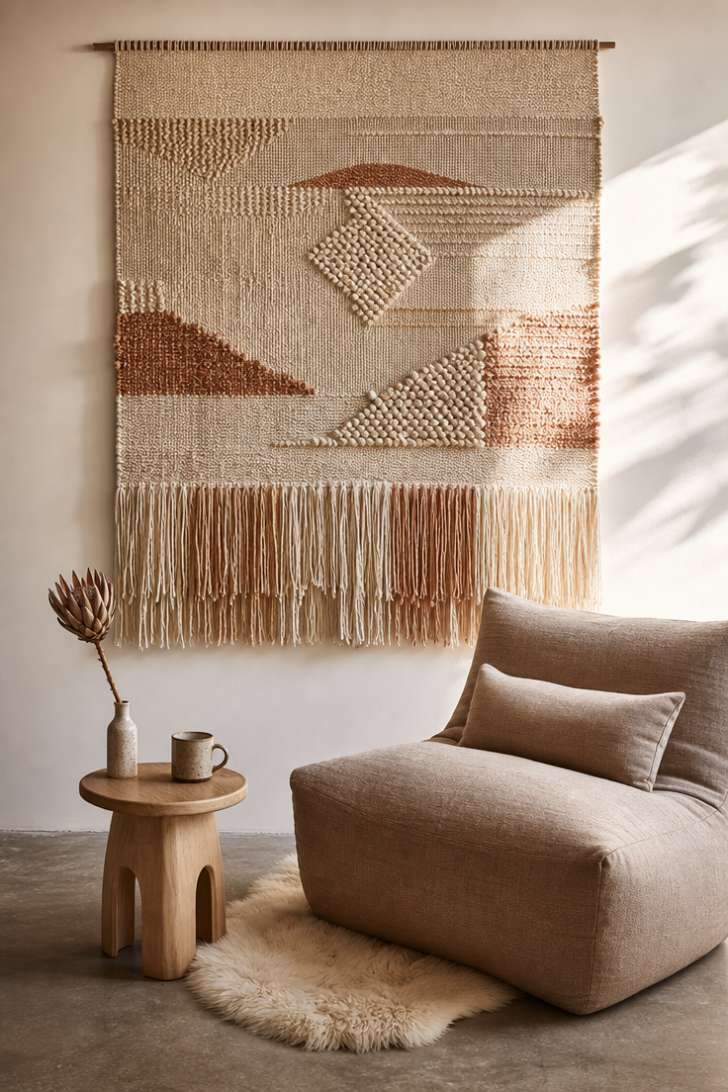
Fiber art absorbs sound.
That’s not just aesthetic philosophy — it’s physics.
In living rooms with hard floors, large windows and minimal soft furnishings, a woven wall hanging actually reduces echo and makes conversation feel more intimate.
The textural depth of woven fibers catches light differently throughout the day, creating shifting shadows that a flat printed canvas simply cannot replicate.
This is modern wall decor that engages more than just your eyes.
Choose a piece with varied weave densities — some tight, some loose, with fringe or tassels adding movement.
Style Blueprint:
- Hand-woven textile, minimum 30×40 inches
- Neutral palette with one warm accent tone
- Hung on a simple dowel or driftwood rod
- Low-profile furniture beneath to give it visual height
- Hard floor surface nearby to maximize the acoustic benefit
Floating Shelf Art Ledge
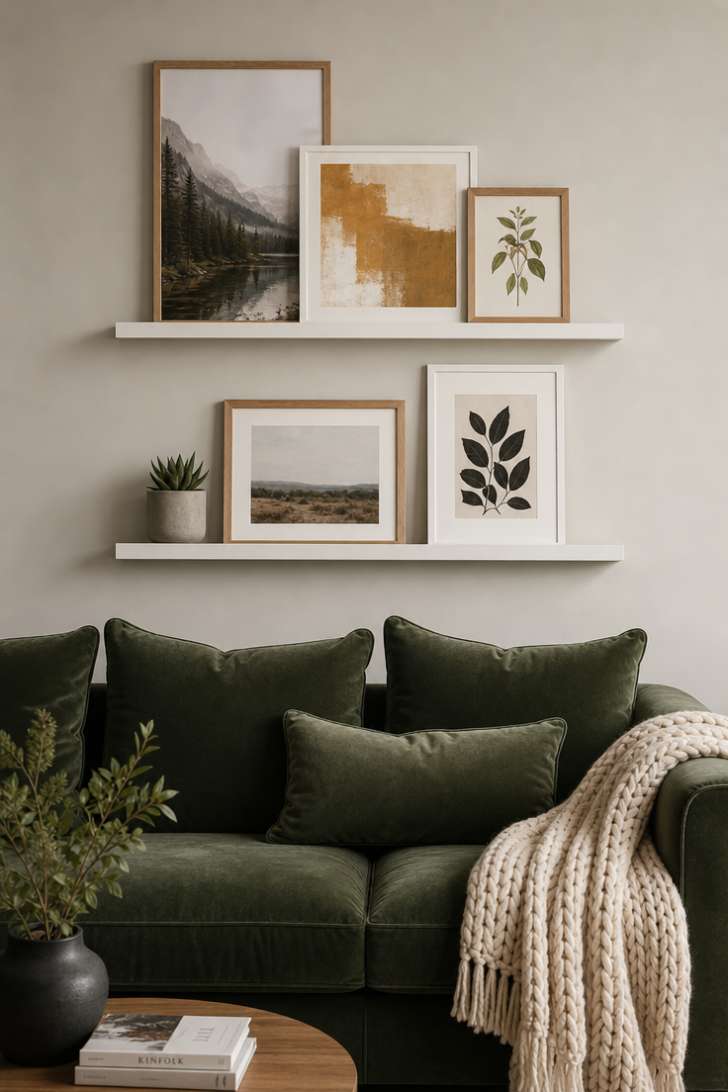
Floating shelf styling removes the commitment of nail holes for every single frame.
Swap prints seasonally, rotate in new finds from weekend markets, lean a postcard from your last trip beside a favorite photograph.
The beauty of ledges is their flexibility — and the subtle depth they create when frames overlap slightly from front to back.
Two shelves stacked with 10–14 inches between them creates a dynamic display that reads as intentional without feeling rigid.
Keep the heaviest or tallest piece toward the back of each shelf, then layer smaller pieces forward.
Style Blueprint:
- Two floating ledges, 36–48 inches wide
- 3–5 frames per ledge in mixed sizes
- Overlapping placement for depth
- One non-frame object per shelf (plant, small sculpture, clock)
- Matte wall color behind — avoid gloss finishes that compete with frame glass
Architectural Panel Molding
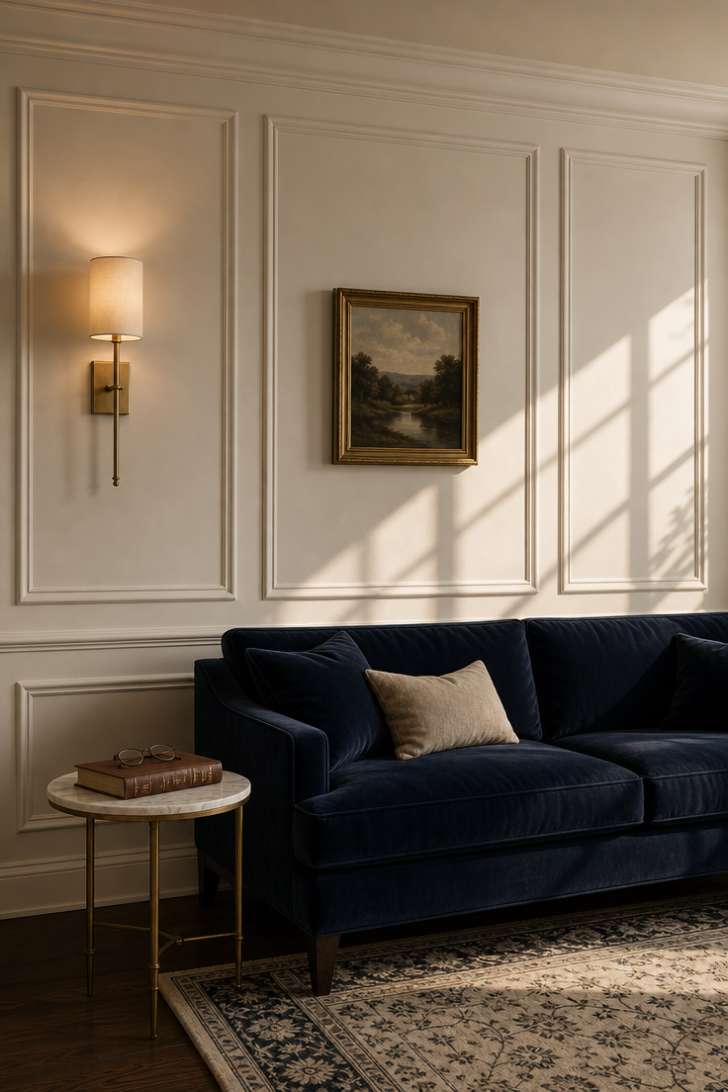
Sometimes the best wall decor isn’t something you hang — it’s something you build into the wall itself.
Panel molding (also called picture frame molding or wainscoting) adds architectural character to flat drywall without expensive renovation.
The shadow lines created by even shallow molding profiles change throughout the day as light shifts, giving walls a living quality that paint alone never achieves.
This works as a living room accent wall treatment when applied to the wall behind your primary seating area.
Paint the molding the same color as the wall for a sophisticated tonal effect, or use a contrasting shade for more drama.
Style Blueprint:
- Panel molding in a classical or shaker profile
- Same-tone paint for subtle texture, or contrast for boldness
- One small artwork or sconce centered within a panel
- Crown molding at top to complete the frame
- Works best on walls at least 9 feet tall
Design Pro-Tip: Paint your panel molding in the exact same color and sheen as the surrounding wall. The molding itself creates all the visual interest through shadow — adding a different color actually reduces the sophisticated effect and makes the room feel busier than intended.
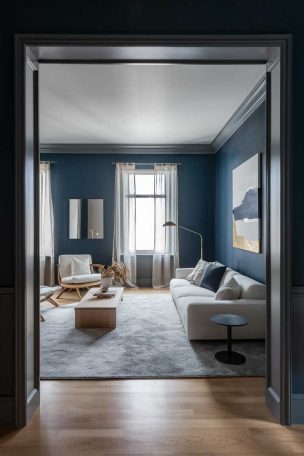
Dramatic Dark Accent Wall with Light Art
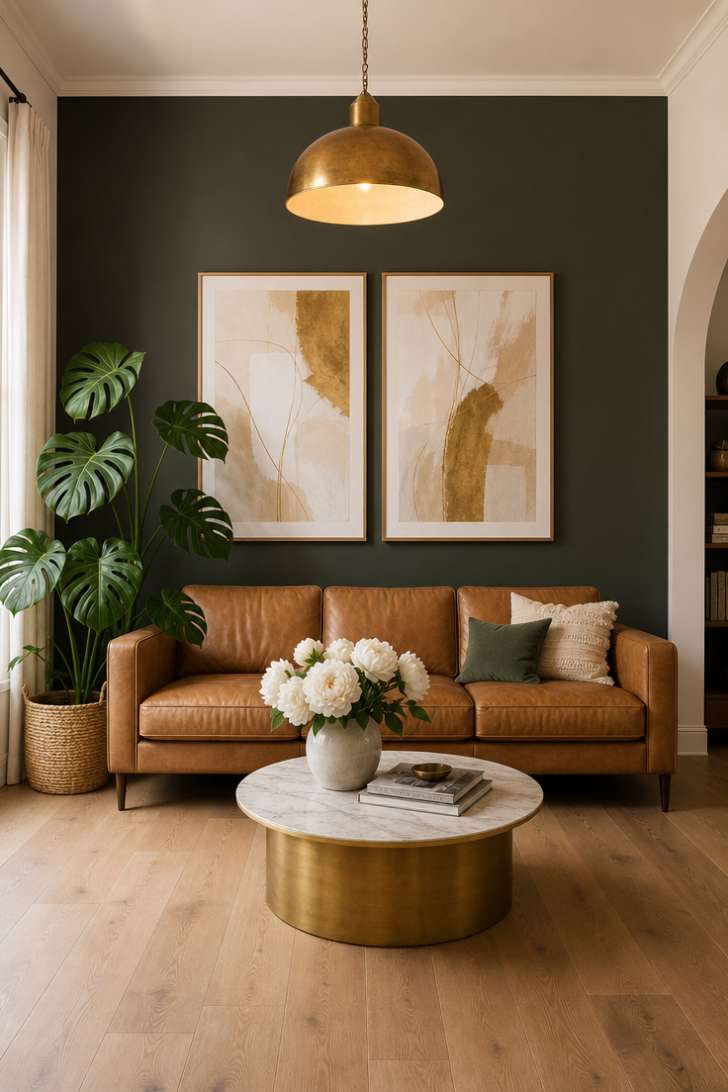
A dark wall makes light-colored art practically glow.
This is the same principle galleries use — that deep background recedes visually, pushing whatever hangs on it forward toward the viewer.
The color contrast between a charcoal, deep navy or forest green wall and warm-toned artwork creates depth that makes the room feel larger, not smaller, despite what many people assume about dark paint.
The trick is limiting the dark color to one wall only (the one behind your main seating) and choosing art in cream, gold, soft white or pale blush to maximize that push-pull effect.
Style Blueprint:
- One accent wall in charcoal, deep navy or dark green
- 2–3 large framed prints in light neutral tones
- Natural wood or brass frames to warm the palette
- Remaining walls in warm off-white for contrast
- Picture light or directional overhead to spotlight the art
Minimalist Line Art Series
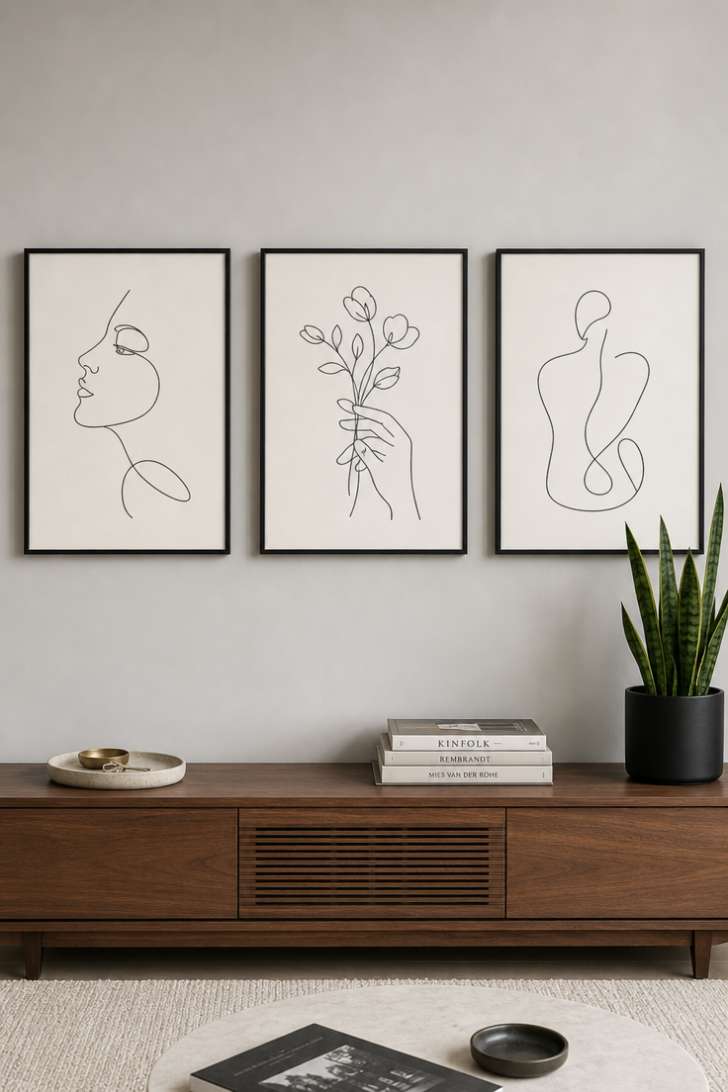
Three pieces in a row.
Same frame, same mat, same spacing — but each image slightly different in subject.
Minimalist wall art works because the simplicity of the content lets the composition itself become the statement.
When individual images are visually quiet, the grouping and the rhythm between them does the talking.
Line art specifically reads as modern without trying too hard, and the continuous single-line style popular right now has an almost meditative quality that calms a busy living room.
Space them 3–4 inches apart, and hang the set so the center frame’s midpoint hits 57 inches from the floor.
Style Blueprint:
- Three matching frames in slim black or brass
- Consistent mat width (2–3 inches)
- Line art or simple ink illustrations
- Horizontal row with 3–4 inch spacing
- Clean wall at least 6 inches of space on either side of the grouping
Vintage Plate Wall Arrangement
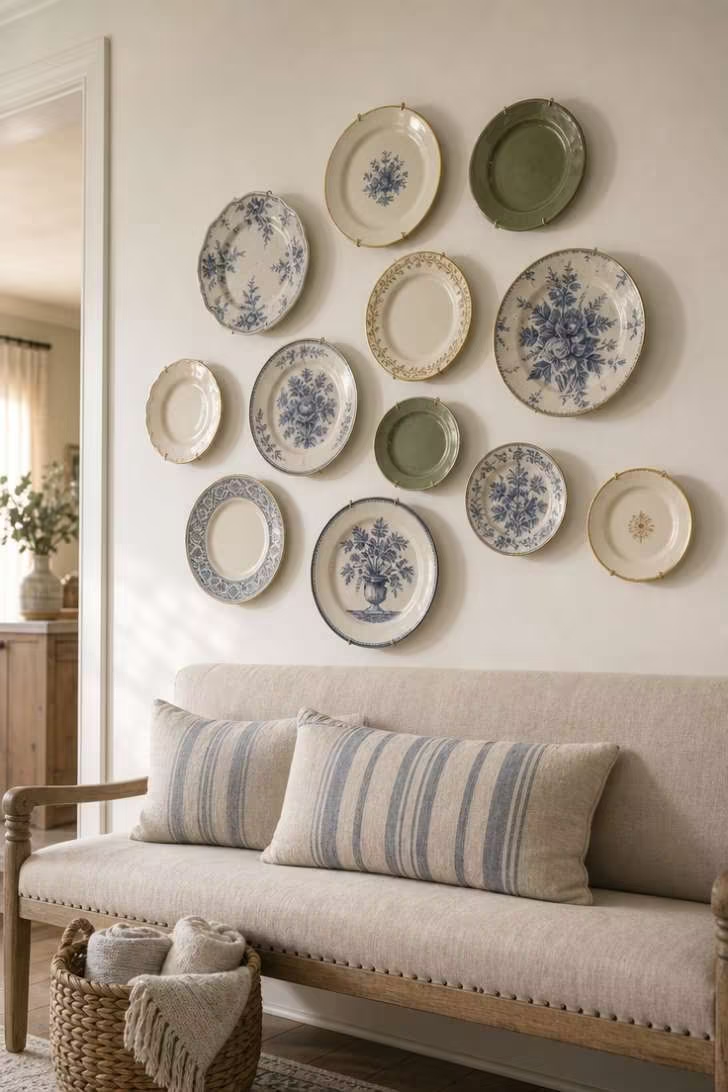
Plates on walls existed long before Pinterest — but the modern version feels curated rather than cluttered.
Choose plates that share one connecting thread (a color, an era, a pattern family) while varying in size and exact design.
The slight projection of each plate off the wall surface creates real shadow and depth that framed prints cannot match, which makes this type of above sofa decor surprisingly dimensional.
Start with your largest plate at roughly the center of where you want the arrangement to land, then orbit smaller pieces outward in a loose oval shape.
Style Blueprint:
- 8–14 vintage or collected plates
- One unifying element (color family, era, pattern style)
- Varied sizes from 6-inch saucers to 12-inch dinner plates
- Brass spring-style plate hangers
- Organic oval or diamond shape rather than grid
Design Pro-Tip: Before committing to nail holes, trace each plate onto craft paper, cut out the shapes, and tape them to the wall. Rearrange the paper shapes until you love the composition — then replace each paper circle with the real plate. This five-minute step saves fifteen holes in the wrong places.
Oversized Botanical Print
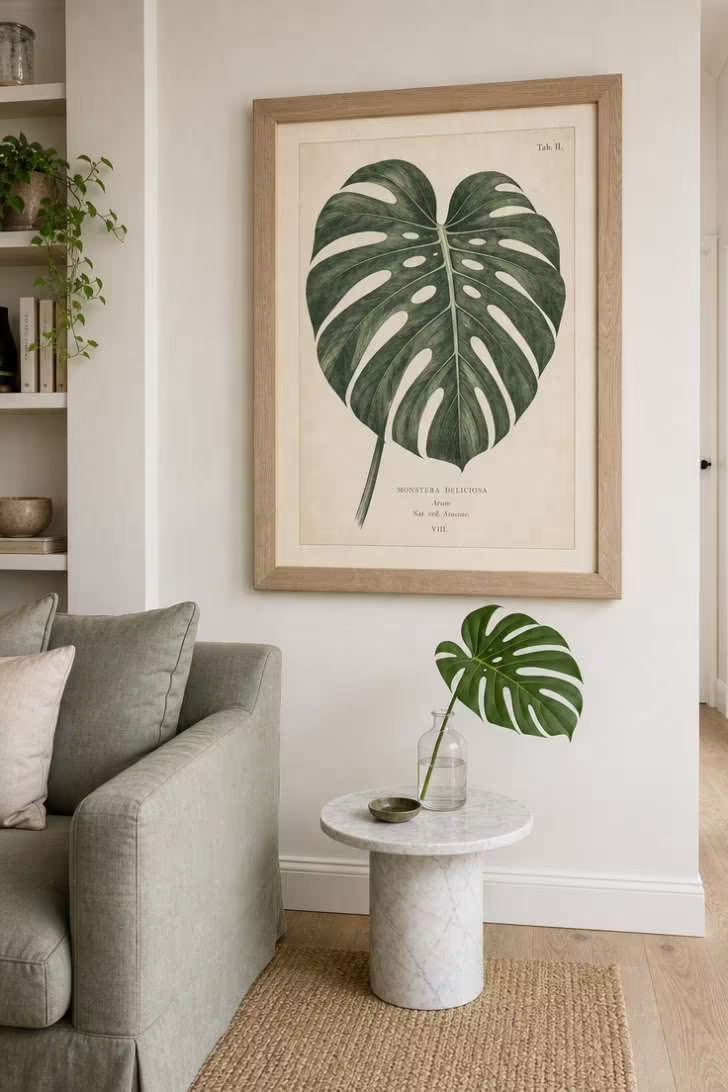
Botanical prints connect a living room to the natural world even when the nearest park is twenty blocks away.
A single oversized botanical illustration — 24×36 inches minimum — gives you the visual weight of a painting with the precision of scientific illustration.
The best ones feel like pages torn from an antique reference book, with slightly yellowed paper and hand-rendered detail that no photograph can replicate.
Echo the subject with a real plant nearby. One fresh monstera leaf in a clear vase beneath a monstera print creates a layered moment that visitors always notice and comment on.
Style Blueprint:
- Botanical print, minimum 24×36 inches
- Wide natural wood frame (ash, oak or maple)
- Aged or cream paper rather than bright white
- One matching live plant nearby as an echo
- Clean wall space around — treat it as a solo piece
Sculptural Metal Wall Art
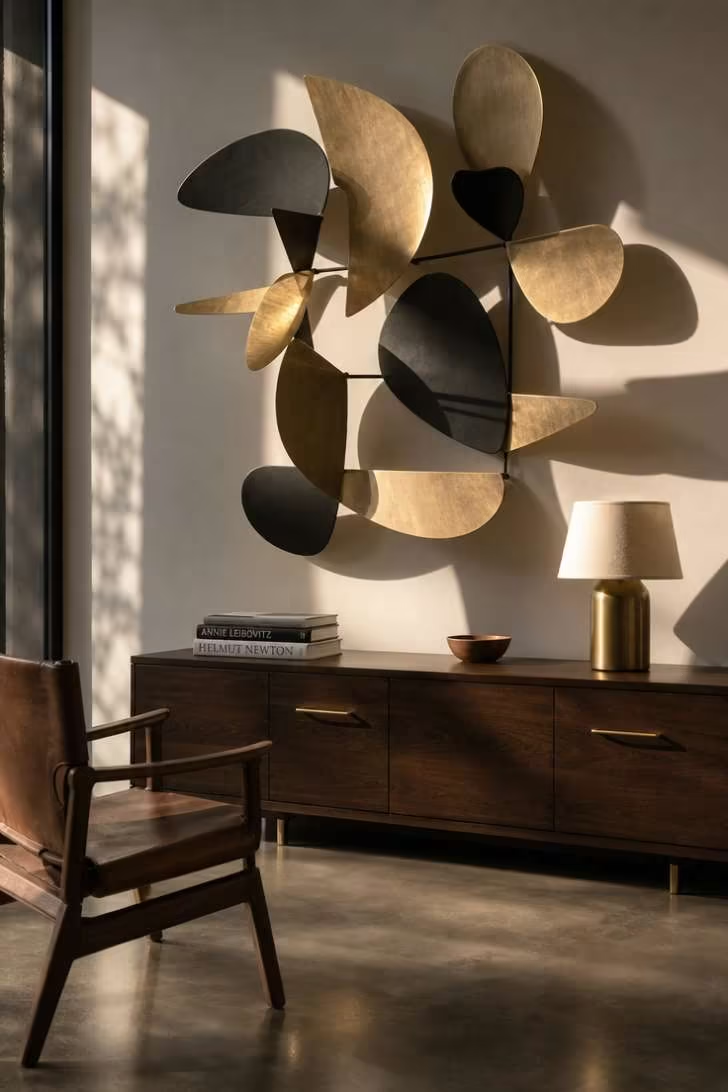
Flat art hangs on a wall. Sculptural pieces come off it.
That physical projection into the room creates real shadows that shift as daylight moves, which means your wall decor literally changes appearance from morning to evening.
Metal sculptures in brass, iron or mixed finishes catch light differently across their surfaces — polished areas reflect, matte areas absorb, and textured areas scatter.
This interplay turns a single piece into a lighting event, especially when positioned where afternoon sun hits directly.
The wall behind becomes part of the artwork through shadow.
Style Blueprint:
- Metal wall sculpture, 30–40 inches in largest dimension
- Mixed finish (combine brushed, matte and polished)
- Position where natural light creates shadow play
- Minimal surrounding decor — let shadows be the companion
- Dark furniture below grounds the metallic tones
Wainscoting with Wallpaper Above
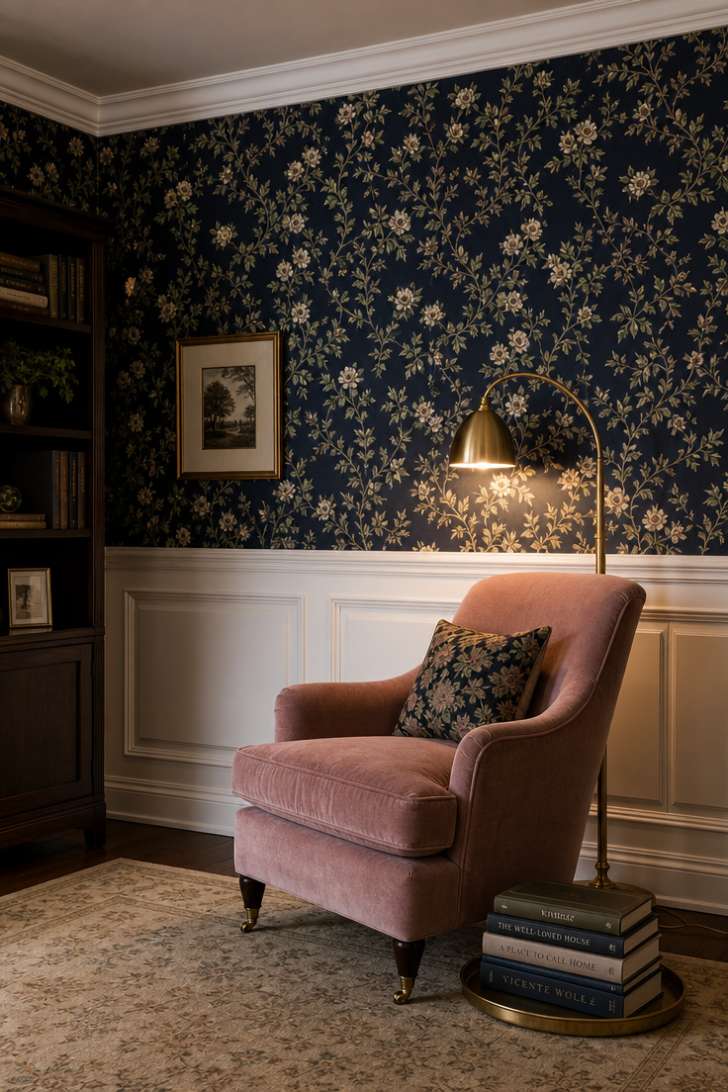
Two treatments on one wall create visual rhythm without a single hung piece.
The wainscoting anchors the lower portion with clean architectural lines while wallpaper above introduces pattern, color and movement.
This combination works because your eye processes the lower solid section as “ground” and the patterned upper portion as “sky” — a subtle orientation that makes the ceiling feel higher.
Choose wallpaper with a dark background for drama, or a light background for softness, but keep the wainscoting in a clean white or off-white to provide that essential visual break.
Style Blueprint:
- Wainscoting to 32–36 inches from the floor
- Wallpaper above in a botanical, geometric or abstract pattern
- White-painted wainscoting regardless of wallpaper color
- Crown molding at the ceiling to frame the top edge
- Minimal hung art — the wallpaper is the decoration
Design Pro-Tip: The ideal split point for wainscoting sits at one-third of the total wall height. In a room with 9-foot ceilings, that means 36 inches of wainscoting. This ratio feels balanced to the eye because it follows the same proportional system that Renaissance painters used to divide their canvases.
Asymmetrical Diptych
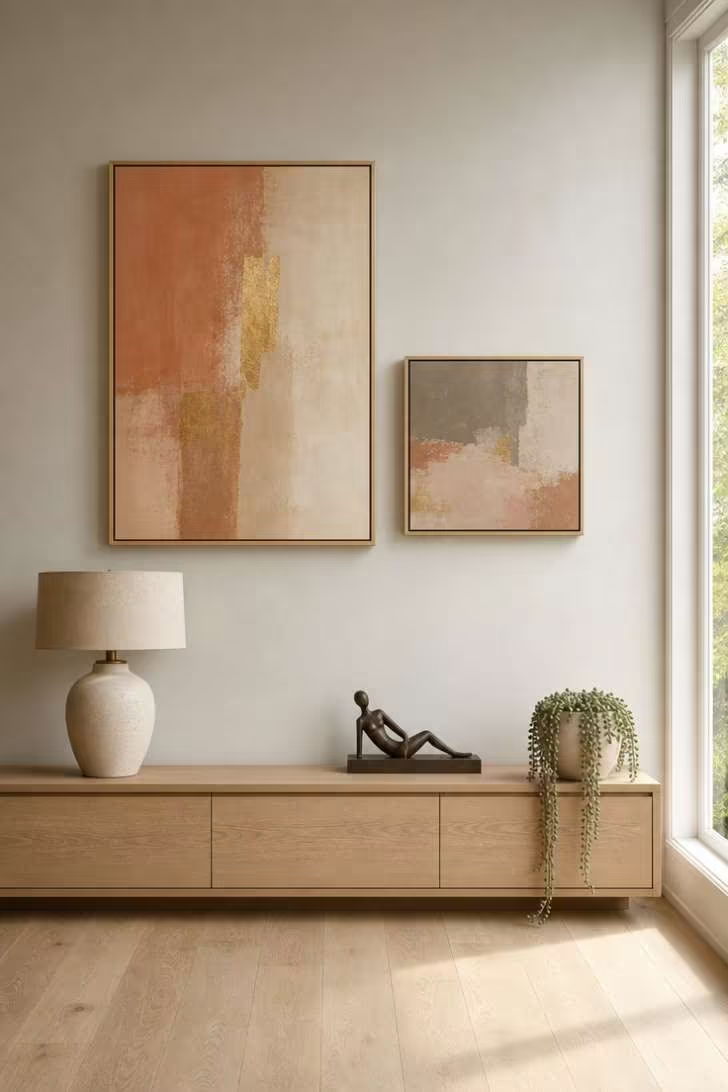
Perfect symmetry reads as purchased. Intentional asymmetry reads as curated.
Two pieces that relate in color palette but differ in size and proportion create a visual conversation between them — and that conversation activates the wall space between and around them.
Hang the larger piece with its center at eye level, then position the smaller piece lower and offset so their edges don’t align on any side.
The gap between them should feel intentional but slightly unexpected — 5 to 8 inches works well.
This approach fills an above sofa decor space without the symmetrical formality of matched pieces or the complexity of a full gallery wall.
Style Blueprint:
- Two pieces from the same artist or color family
- Different sizes (one at least 50% larger than the other)
- Asymmetrical placement — no aligned edges
- 5–8 inch gap between pieces
- Simple matching frames to unify despite size difference
Textured Wall Panels (Plaster or Limewash Effect)
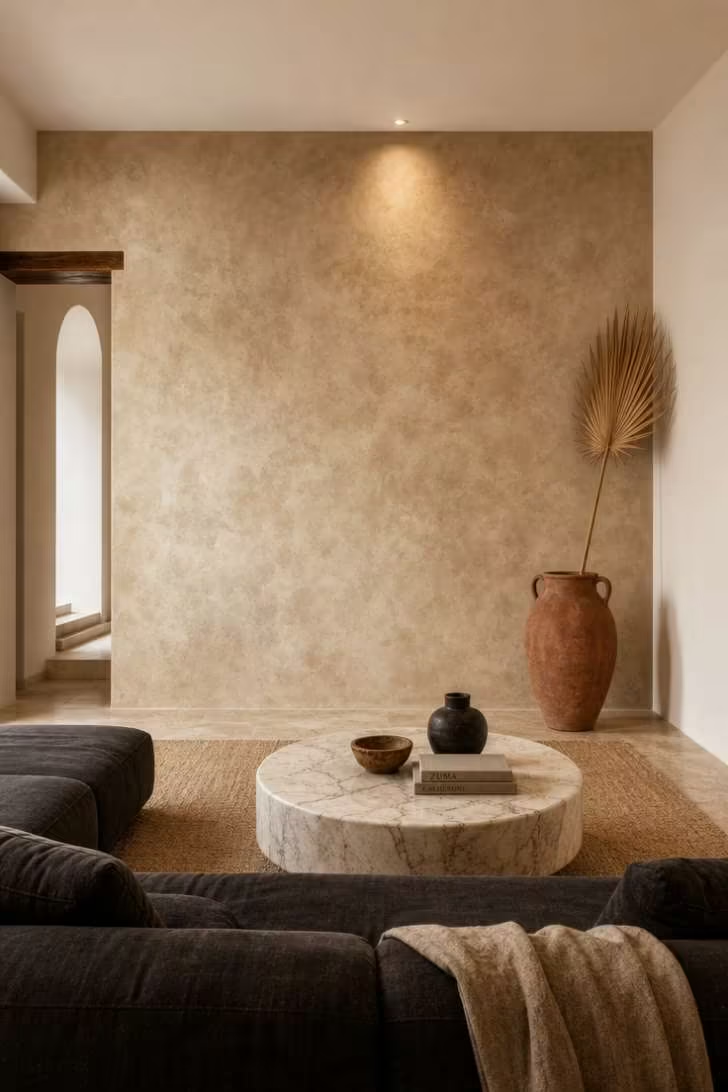
Sometimes the wall itself is the decor.
Limewash paint, Venetian plaster, Roman clay and textured wall panels create surfaces with such visual depth that hanging art on top of them feels like over-gilding.
The variation in a hand-applied finish means no two square inches look identical, which gives the eye something new to discover each time it travels across the surface.
Light reveals textured walls differently throughout the day — flat and subtle at noon, dramatic and shadowed at golden hour.
This is a living room accent wall approach that requires confidence in restraint, because the instinct to “add something” will pull hard.
Resist it.
Style Blueprint:
- Limewash, Roman clay or venetian plaster finish
- Warm neutral tone (sand, terracotta, warm grey)
- No hung artwork on the textured wall
- One tall floor object (vase, plant, sculpture) for scale
- Adjacent smooth walls in warm white for contrast
Oversized Photography Print
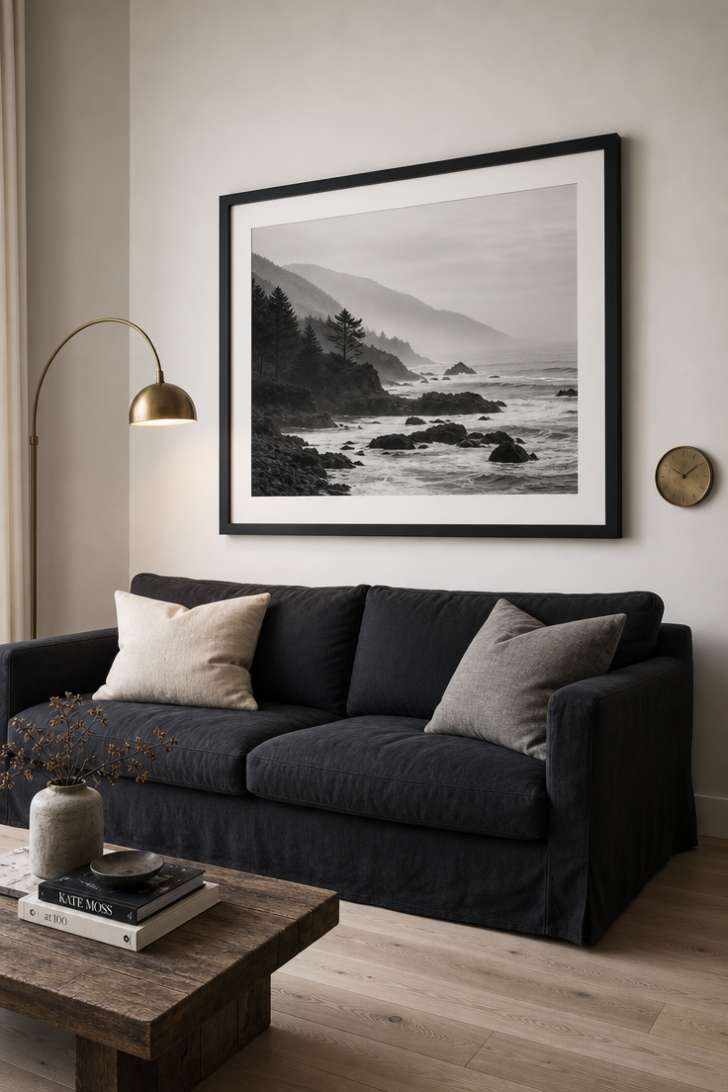
Photography on walls carries narrative weight that abstract art often doesn’t.
A landscape photograph contains a real place, a real moment, a real quality of light — and that specificity invites the viewer to project themselves into the scene.
Black-and-white photography works especially well in living rooms because it never competes with the room’s color palette.
It occupies its own visual lane — tonal, dramatic, timeless — regardless of what colors surround it.
Scale it up. A 40×60-inch photographic print commands the same presence as a painting, and museum-quality printing on archival paper has made large-format photography more accessible than original artwork at a fraction of the cost.
Style Blueprint:
- Black-and-white or muted-tone photograph, minimum 40×60 inches
- Wide frame with generous mat (3+ inches)
- One subject — landscape, architecture or abstract nature
- Picture light or arc lamp for directional illumination
- No competing artwork on the same wall
Design Pro-Tip: When choosing a large photographic print, look for images with a strong horizontal or vertical element (a horizon line, a tree trunk, a building edge). That internal geometry echoes the lines of your furniture below and creates visual cohesion between the art and the room without needing to match colors at all.
Hanging Planter Wall
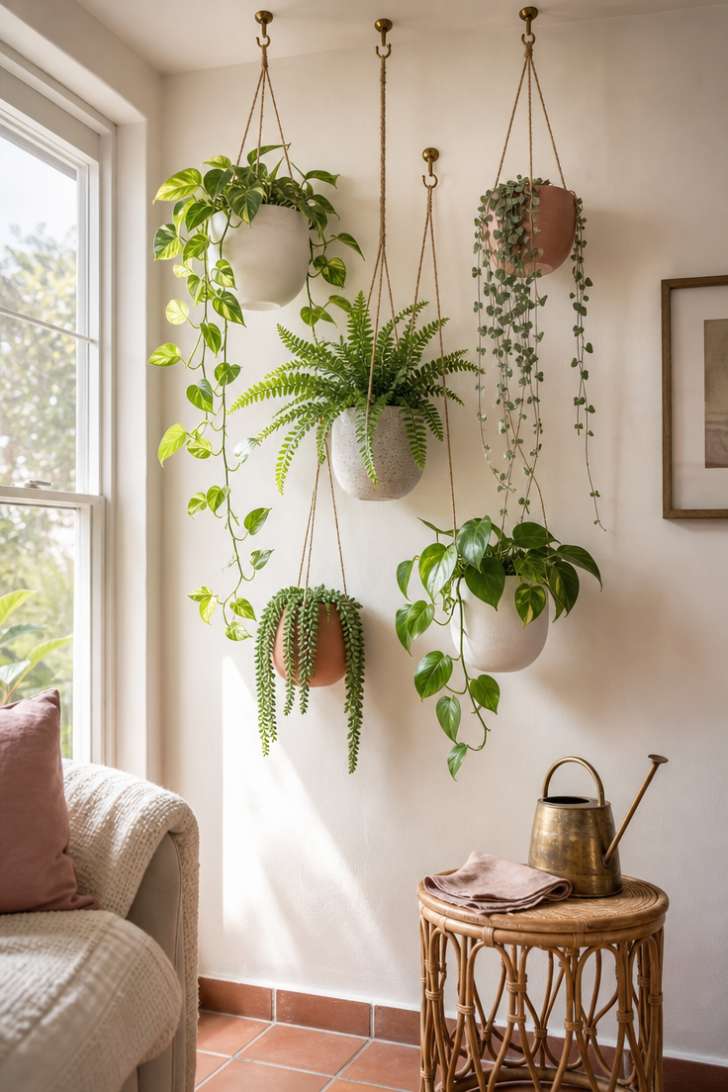
Living walls don’t require expensive hydroponic systems.
Five hanging planters at staggered heights create a wall garden that grows and changes with time — something no static piece of art will ever do.
The constant subtle movement of trailing plants responds to air currents in the room, catching light through translucent leaf edges and shifting position slightly from morning to evening.
This is wall art for living room spaces that breathes.
Choose a mix of trailing plants (pothos, string of hearts) and sculptural ones (small ferns, philodendrons) to vary the silhouette at each hanging point.
Style Blueprint:
- 5–7 hanging planters at different heights
- Mix of trailing and upright plants
- Ceramic planters in neutral tones (white, terracotta, grey)
- Brass or matte black ceiling hooks with natural rope
- Position near a window for adequate plant light
Layered Leaning Art Stack
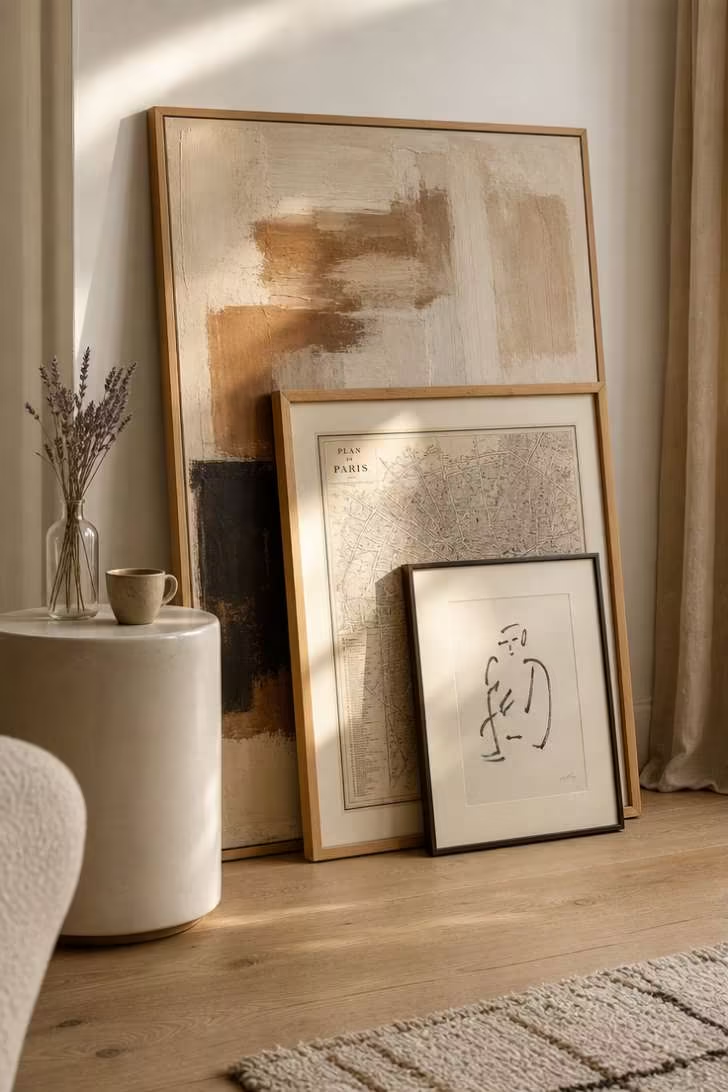
No hammer, no level, no measuring tape.
Leaning art on the floor against a wall is the most uncommitted and easily changeable wall decor approach — and it reads as intentionally casual rather than unfinished.
The layered overlap creates depth that hung art cannot replicate, because you’re seeing partial edges and frames disappearing behind one another, which mimics the way art stacks in a studio or gallery back room.
Place your largest piece in the back, medium in the middle, smallest in front.
Let the top edge of the back piece hit no higher than 4–5 feet to keep the composition grounded.
Style Blueprint:
- 3 framed pieces in descending sizes (back to front)
- Mixed content — abstract, vintage, minimal
- Floor placement against the wall (no hanging required)
- One small object beside the stack (stool, plant, vase)
- Works best in corners or beside larger furniture
Geometric Wooden Wall Art
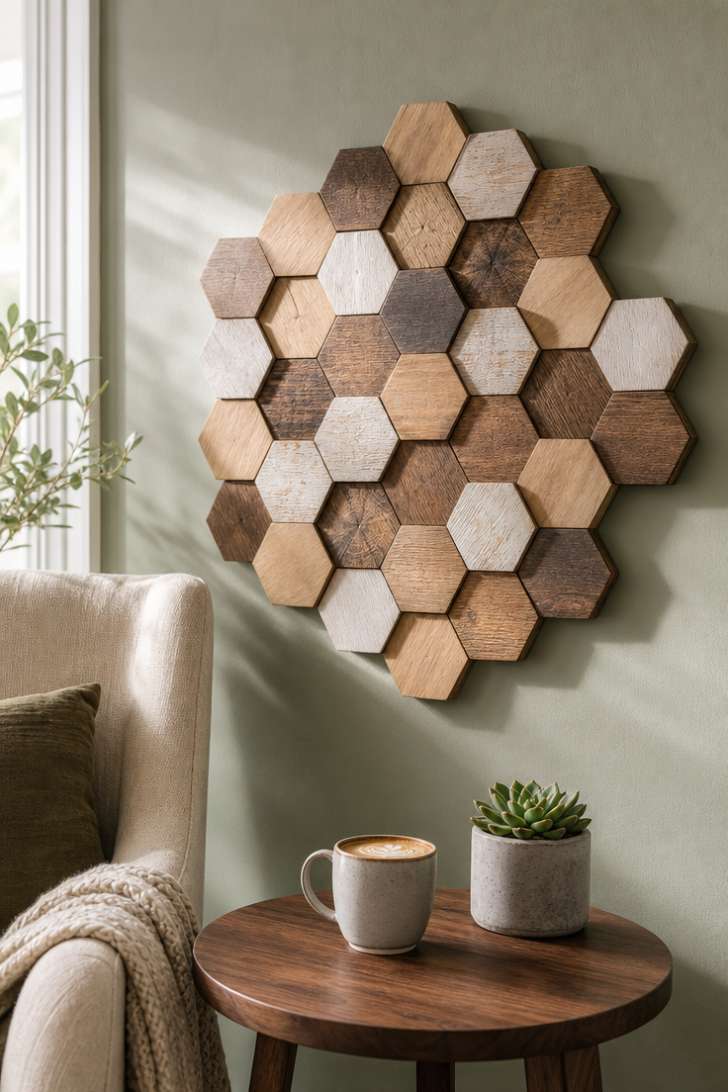
Wood on walls brings warmth that no amount of warm-toned paint can match.
The reason is texture. Real wood grain has micro-variations — knots, grain direction changes, tonal shifts — that our brains register as organic and therefore calming.
A geometric wooden wall piece combines that natural material warmth with structured form, creating a bridge between rustic and modern that fits most living room styles.
Multiple wood tones within one piece (natural, stained, whitewashed) add visual complexity without color competition.
The slight depth variation between segments means each wooden section catches light at its own angle, creating a constantly shifting shadow map.
Style Blueprint:
- Geometric wooden wall piece, 28–36 inches in diameter or width
- Mixed wood tones within the piece
- Muted wall color behind (sage, soft grey, warm white)
- Positioned where side light hits to maximize shadow
- No nearby competing wall decor within 18 inches
Design Pro-Tip: When mixing wood tones between wall art and furniture, choose pieces that share at least one tone. A wooden wall sculpture with a whitewashed section pairs naturally with light oak furniture below, while its darker stained sections echo a walnut coffee table across the room. This threading creates cohesion without matching.
Conclusion
Walls tell the story of a room before anyone sits down in it.
Whether you lean toward a single oversized canvas that stops time or a collected gallery wall that unfolds like a visual diary, the right living room wall decor ideas turn blank space into personality.
Start with the one approach that made you pause longest while reading — that reaction is your instinct talking, and instinct rarely steers wrong in matters of personal space.
Measure your wall, consider your light, and trust that what draws you in will draw others in too.
Your living room walls are waiting.
Before you choose your final piece, try our wall art size calculator to find artwork dimensions that feel balanced on your wall.