This post may contain affiliate links. If you make a purchase through these links, we may earn a commission at no additional cost to you.
Playroom walls hold more creative potential than any toy bin or bookshelf in the room.
The right playroom wall decor turns a plain surface into something that invites play, organizes the chaos, and makes the whole space feel like it was built with your child in mind.
These 11 playroom ideas focus on specific materials and setups you can picture clearly, from chalkboard accent walls framed in pine to cork grids pinned with brass tacks.
Each one is designed to work in real homes where toys get scattered, art supplies multiply, and kids actually use the room every day.
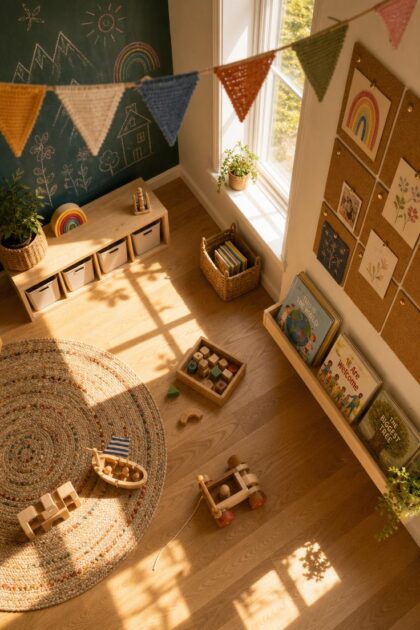
Chalk-Painted Accent Wall With a Pine Frame Border

A playroom chalkboard wall removes the anxiety around drawing on surfaces that are supposed to stay clean.
The dark green paint gives the space depth without feeling heavy, and the pine frame around it signals that this section of wall is the designated canvas.
Kids gravitate toward it because the boundaries are clear, and because chalk feels different from markers or crayons.
The pine ledge below doubles as storage for chalk sticks, which means fewer broken pieces rolling across the floor.
Over time the surface develops a patina of erased drawings that adds character rather than mess.
One coat of chalkboard paint and a few lengths of pine trim are all this project requires.
Style Blueprint:
- Dark green or classic black chalkboard paint (matte finish)
- Pine molding frame with honey or natural stain
- Narrow pine ledge tray for chalk and markers
- Colored chalk sticks and liquid chalk markers
- Soft-bristle eraser or felt pad for easy cleanup
Peel-and-Stick Woodland Mural Behind Low Oak Cubbies
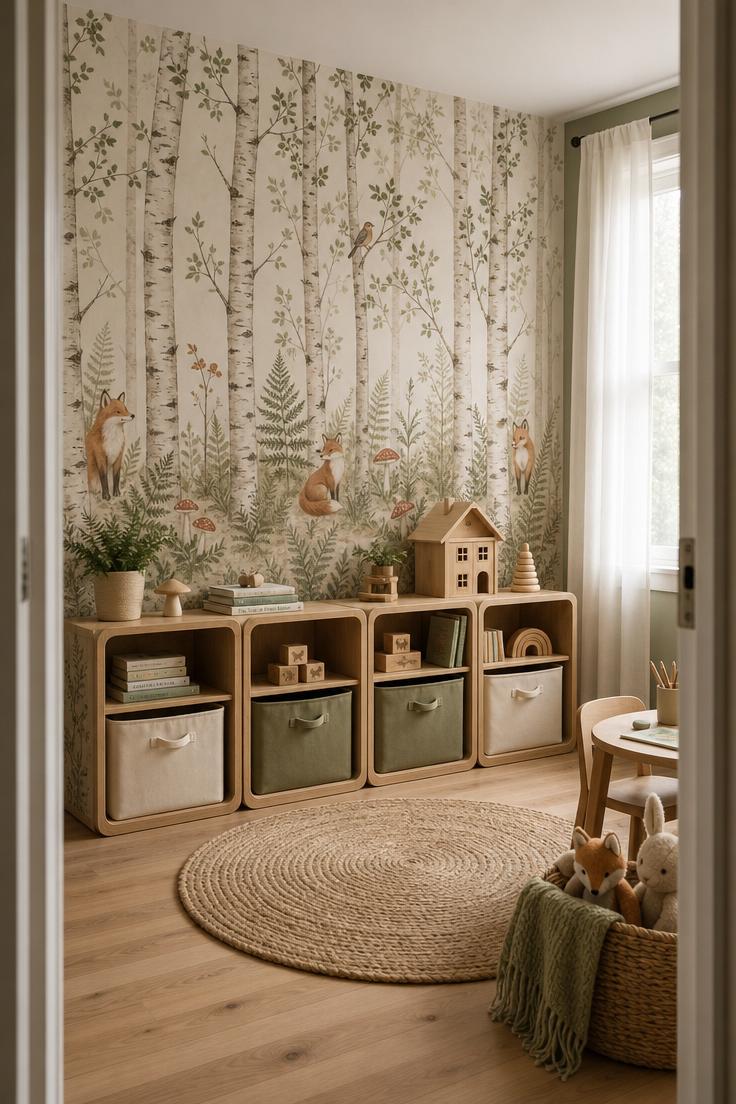
The woodland mural sets a story-like mood the moment you walk into the room.
Peel-and-stick material means this is not a permanent decision, which matters when children’s interests shift every few years.
Placing low oak cubbies in front of the mural does two things at once: it hides the bottom edge where adhesive might lift, and it creates a layered look where the forest scene appears to extend behind the furniture.
The muted color palette keeps the mural from competing with the bright toys stored in the bins.
Oak cubbies at toddler height encourage self-directed cleanup, turning playroom organization into a habit rather than a chore.
Swapping the mural later takes an afternoon, not a renovation.
This is one of the simplest wall decals for kids setups that still makes a real visual impact.
Style Blueprint:
- Peel-and-stick woodland mural in muted greens and tans
- Low oak cubby units (4 across, toddler height)
- Canvas storage bins in cream and olive
- Braided jute rug for floor softness
- Sheer white curtains on adjacent windows for diffused light
Cork Tile Grid With Brass Push Pins at Child Height
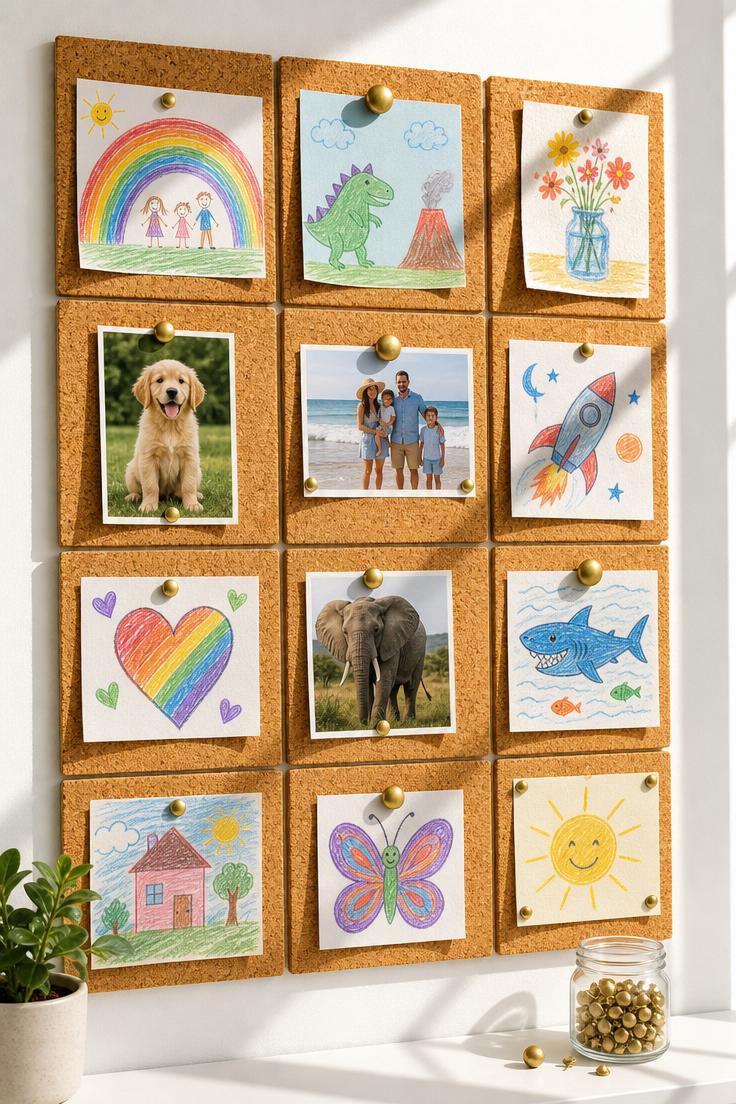
Cork tiles at child height put the decision-making power in small hands.
A three-by-four grid gives enough space for a rotating collection without overwhelming the wall.
Brass push pins look intentional rather than temporary, and they catch light in a way that plastic thumbtacks never will.
The cork surface accepts pins without crumbling when you choose tiles that are at least a quarter inch thick.
Mounting the grid low enough for a four-year-old to reach means artwork goes up and comes down without adult help.
The white wall surrounding the grid frames it like a gallery installation, giving the children’s art display a sense of purpose.
Replacing a single damaged tile takes five minutes and a tube of adhesive.
This setup bridges the gap between function and decoration in a way that grows with your child.
Style Blueprint:
- Natural cork tiles, 12×12 inches, minimum 1/4-inch thickness
- Brass push pins in assorted sizes
- Wall-mounted small shelf for pin storage
- Adhesive strips or construction adhesive for tile mounting
- Clean white wall as surrounding frame
Design Pro-Tip: Mount any child-height display element so the center sits at your kid’s eye level, not yours. Most adults default to hanging things at 57 inches, but a four-year-old’s eye level is closer to 36 inches. Lowering the center point by two feet changes who actually interacts with the wall.
Floating Birch Ledge Shelves Holding Board Book Covers
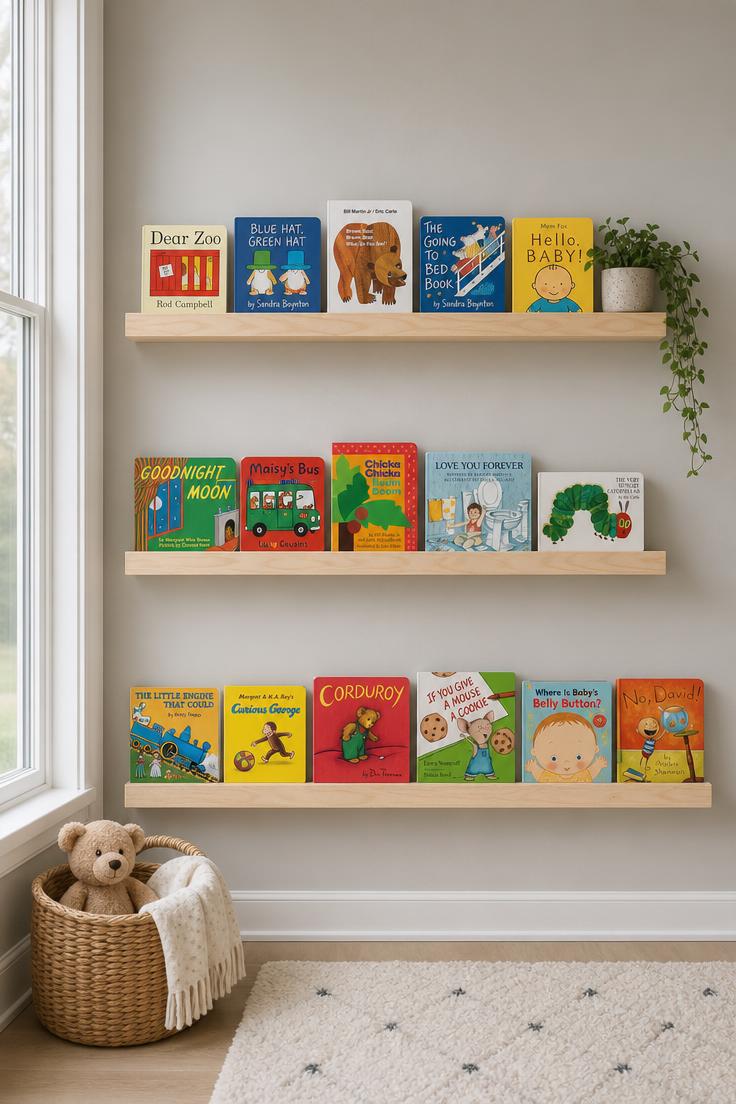
Playroom shelves that display book covers outward turn reading material into wall art without any extra effort.
The birch ledges are shallow enough that books cannot get shoved behind each other and forgotten.
Children who see covers rather than spines are more likely to reach for a book on their own, which is the whole point.
Three shelves stacked vertically use a narrow wall section that might otherwise sit empty between a window and a door.
The warm gray wall behind the blonde birch creates a quiet contrast that lets the book colors do all the visual work.
Swapping books in and out each week keeps the display fresh and gives old favorites a rest.
Style Blueprint:
- Narrow floating birch ledge shelves (3-inch depth)
- Soft warm gray wall paint (eggshell finish)
- Board books with covers facing outward
- Small trailing potted plant for the top shelf
- Plush cream area rug below
Magnetic Whiteboard Paint Panel Between Two Windows
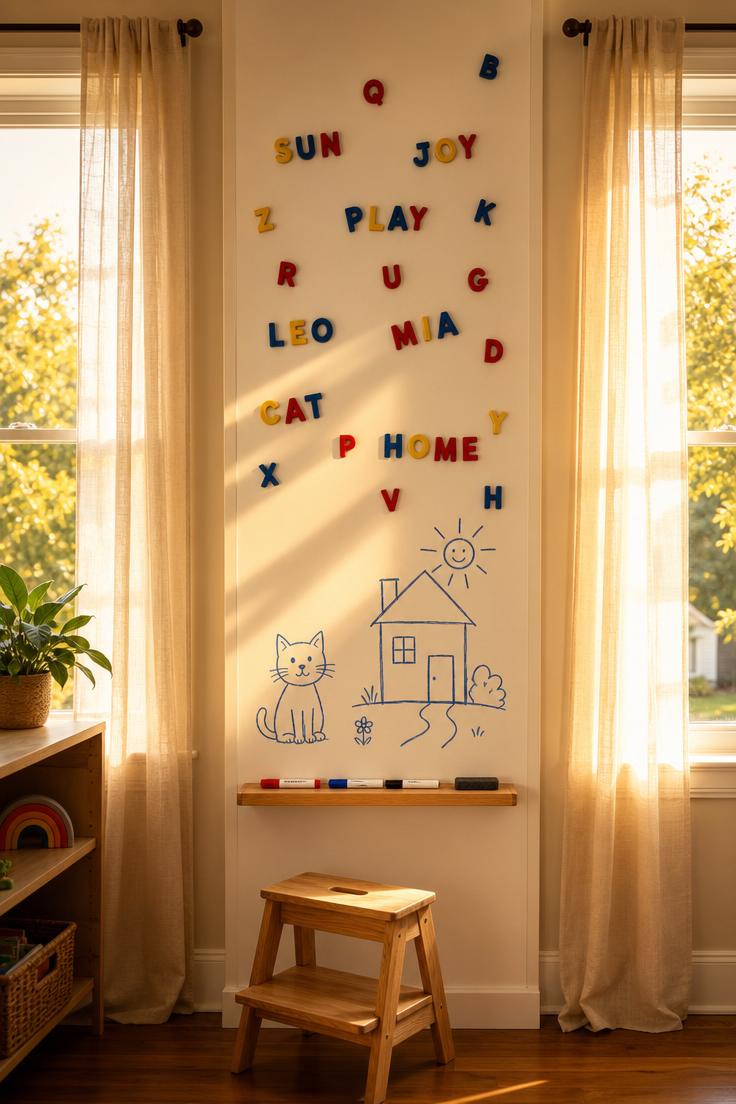
The narrow strip between two windows is a spot most people ignore, but it is exactly the right width for a magnetic whiteboard panel.
Magnetic paint beneath a whiteboard topcoat means letters and small magnets stick anywhere on the surface, turning spelling practice into a physical activity.
The afternoon light pouring in from both sides makes this the brightest wall in the room, which draws kids toward it naturally.
A pine tray at the base keeps markers corralled without needing a separate organizer.
Dry-erase surfaces wipe clean in seconds, so the content changes daily without any trace of yesterday’s drawings.
The wooden step stool below lets younger children reach the upper portion when they are ready.
This setup combines a writing surface, a magnetic play area, and a light-filled focal point into a single narrow strip of wall.
Alphabet magnets scattered across the panel reinforce letter recognition without feeling like a lesson.
It is one of those playroom ideas that looks simple but earns its place through constant daily use.
Style Blueprint:
- Magnetic primer topped with whiteboard paint
- Slim pine tray for markers and eraser
- Magnetic alphabet letter set in primary colors
- Dry-erase markers in 3-4 colors
- Wooden step stool for younger children
Woven Cotton Banner Garland Over a Half-Painted Navy Wall
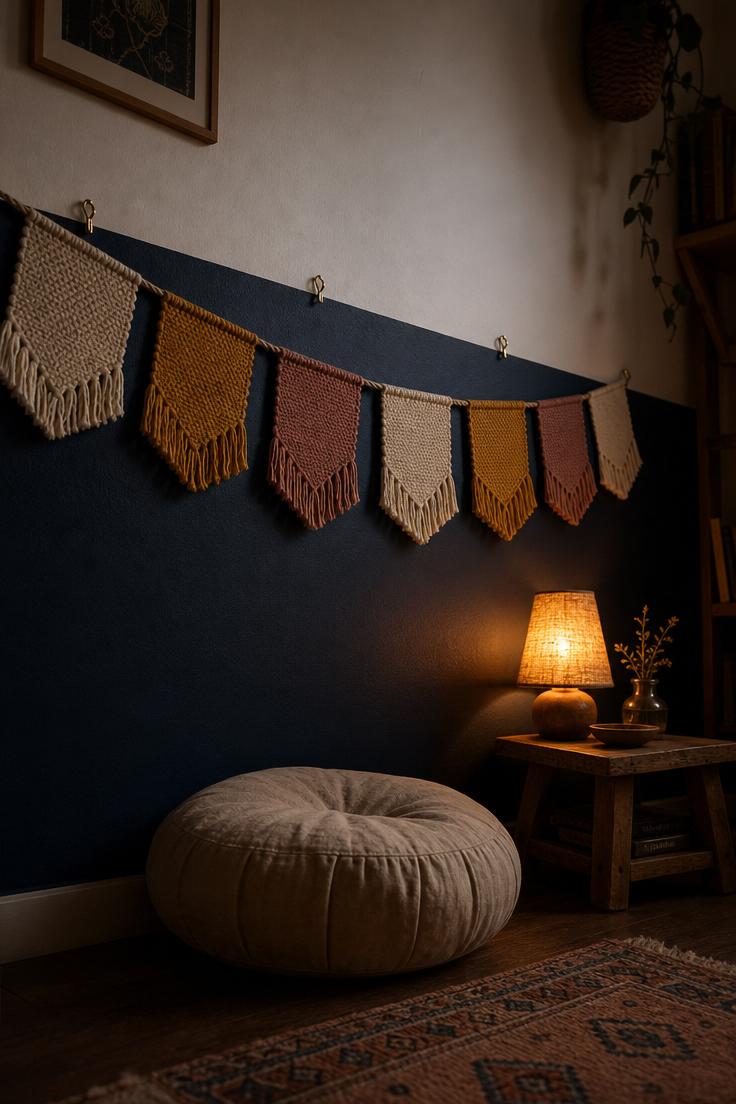
A half-painted wall is one of the fastest ways to set a playroom color scheme without committing every surface to a single bold shade.
Navy on the lower half absorbs scuffs and fingerprints far better than white ever will.
The garland draped along the color line softens the transition and adds a handmade quality that feels personal.
Cotton pennants in cream, mustard, and dusty rose introduce warmth without brightness, which is useful for a corner meant to feel quieter than the rest of the room.
The floor cushion against the navy wall creates a small retreat for reading or resting between bursts of active play.
Brass cup hooks are easy to install and subtle enough that the garland appears to float.
Evening lamplight hitting the navy paint gives this corner a completely different mood than the rest of the room, which is the point.
Style Blueprint:
- Navy blue paint (satin finish) on the lower wall half
- Handmade woven cotton pennant banners (cream, mustard, dusty rose)
- Small brass cup hooks for garland mounting
- Round linen floor cushion
- Low wooden side table with a warm-toned lamp
Design Pro-Tip: A half-painted wall works best when the color break falls between 36 and 44 inches from the floor. Lower than that and the effect looks accidental. Higher than that and the bold color starts to dominate the room. Tape a level line before painting, step back, and check from the doorway before committing.
Pegboard Organizer With Maple Dowel Hooks and Canvas Bins
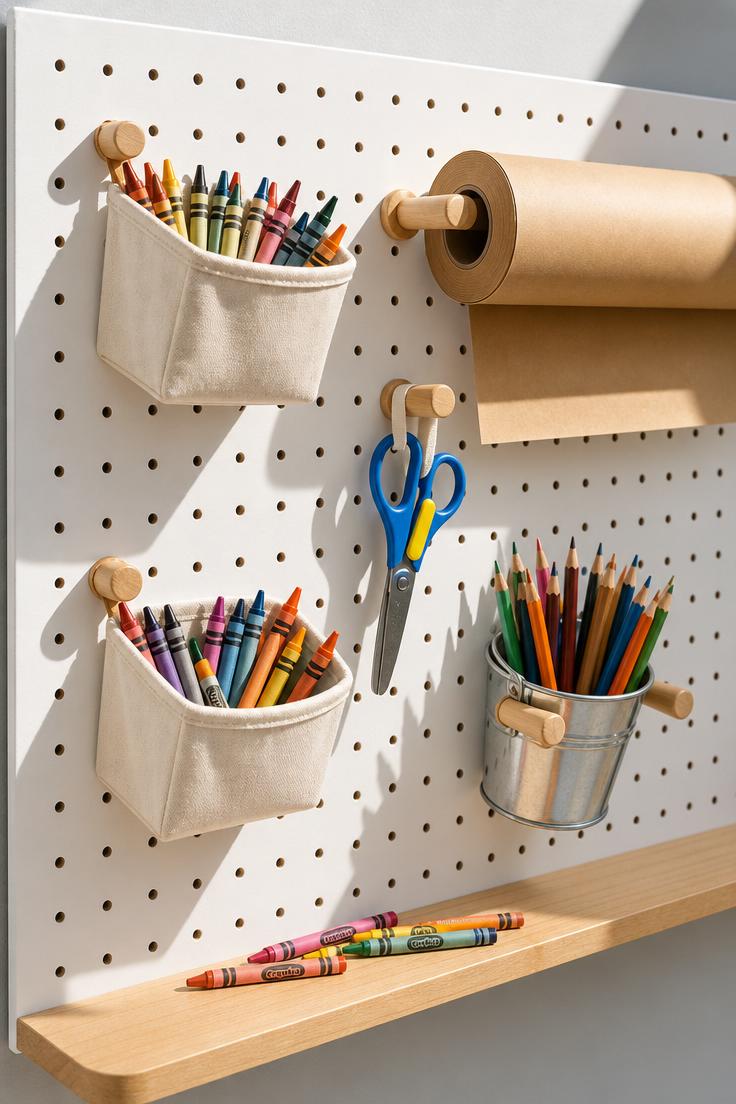
Pegboard brings a workshop mentality into a playroom, and kids respond to the visible logic of a place for everything.
The maple dowel hooks are warmer and sturdier than metal alternatives, and they match the natural wood tones found in most children’s furniture.
Canvas bins clipped onto the dowels hold supplies upright so nothing spills when a child pulls one down.
Playroom storage ideas often focus on floor-level bins, but wall-mounted pegboard lifts supplies off surfaces and opens up table space for actual projects.
The grid pattern of the board means you can rearrange hooks and bins any time a new supply enters the rotation.
A skylight or overhead fixture makes the contents easy to see, which reduces the frustrated rummaging that leads to dumped bins.
Kraft paper on a dowel-mounted roll feeds directly into a desktop or floor workspace below.
This is playroom organization that teaches sorting habits without any lecturing.
Style Blueprint:
- Large white pegboard panel (at least 2×4 feet)
- Maple dowel pegs in assorted lengths
- Small canvas bins with metal clips
- Kraft paper roll on a dowel holder
- Child-safe scissors, crayons, and colored pencils
Watercolor Cloud Mural on a Pale Blue Ceiling Border
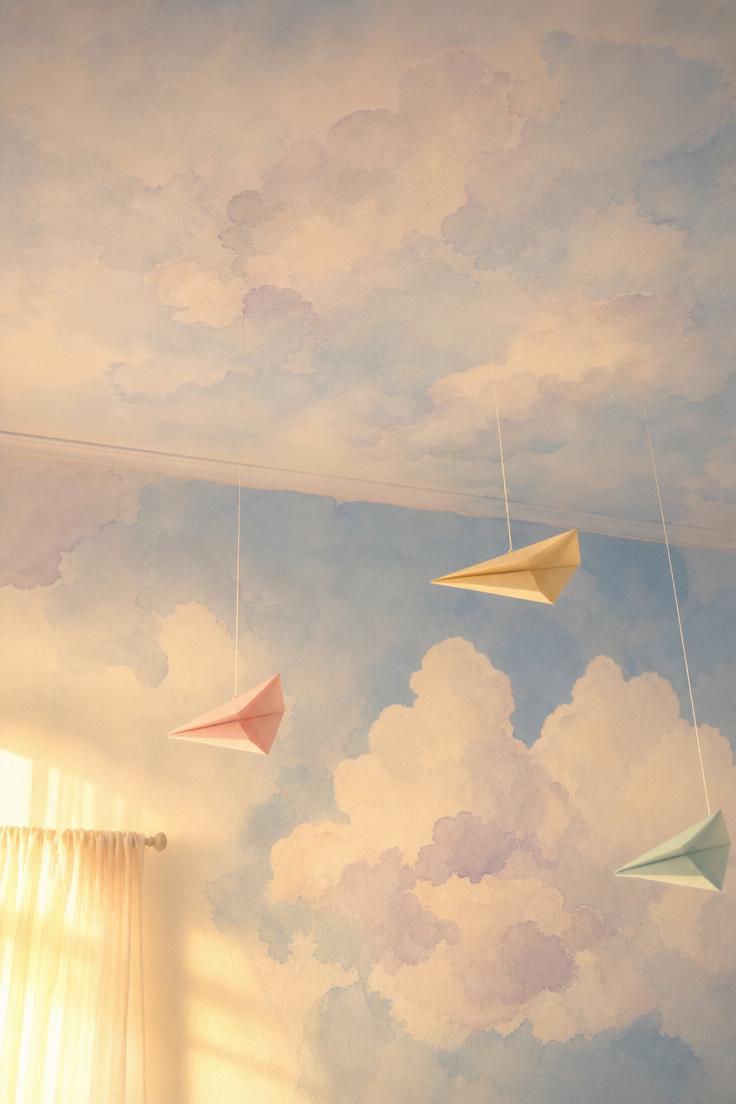
Painting clouds onto the wall-ceiling seam erases the hard line between surfaces and makes the room feel taller than it is.
Watercolor-style brush strokes keep the mural from looking like a commercial decal, and the imperfections are what give it personality.
Hanging paper airplanes from fishing line adds a three-dimensional layer that moves slightly with air currents from a vent or open window.
This is a children’s art display approach that treats the ceiling as part of the decorating surface rather than ignoring it.
The soft blue and white palette works in almost any room regardless of existing furniture colors.
Style Blueprint:
- Pale sky blue base paint (flat finish) on wall and ceiling border
- Artist-grade acrylic or latex paint in white, pale gray, and lavender for clouds
- Wide flat brushes and sea sponges for watercolor effect
- Pastel paper airplanes on fishing line for hanging details
- Sheer curtains on windows to maintain diffused light
Clothesline Wire Display With Mini Wooden Clips for Kid Art
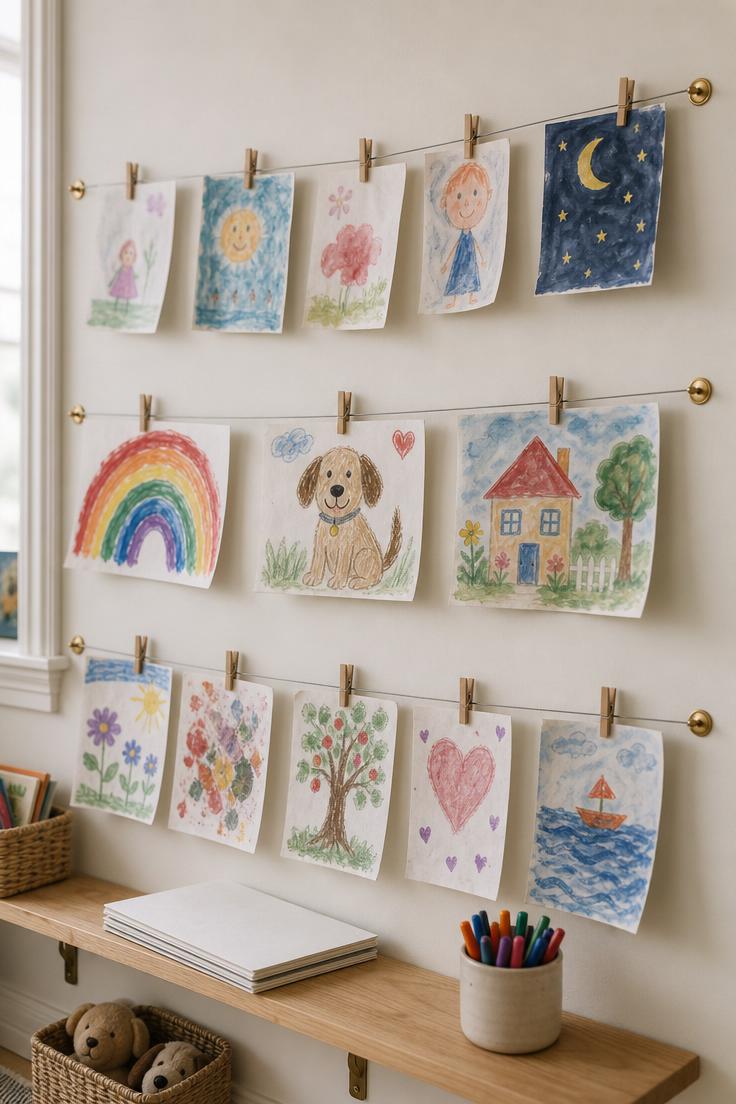
Wire lines strung across a wall turn every new drawing into an instant gallery addition without needing a frame or a nail.
The wooden clothespins are part of the look, adding a handmade quality that metal binder clips would not provide.
Three rows give enough room to display a full week of artwork before rotating older pieces into a portfolio box or the recycling bin.
The system encourages volume over preciousness, which matters for young children who produce several drawings a day.
Kids room wall art displayed this way changes constantly, so the wall never looks stale or frozen in time.
Cool north-facing light keeps colors accurate, which is a small detail that makes the artwork look better than it would under warm yellow bulbs.
A shelf below the lowest wire keeps blank paper and markers within arm’s reach, closing the loop between making art and displaying it.
Style Blueprint:
- Thin stainless steel wire (picture-hanging gauge)
- Small brass cup hooks for wire anchoring
- Mini natural wooden clothespins
- Pale warm white wall paint
- Slim wooden shelf for supplies below the display
Design Pro-Tip: Rotate displayed artwork every Friday. A weekly swap keeps the wall feeling alive and gives kids a reason to create new pieces throughout the week. Store retired drawings in a simple portfolio box or photograph them before recycling, so nothing sentimental is lost.
Stenciled Polka Dot Wall in Terracotta and Cream
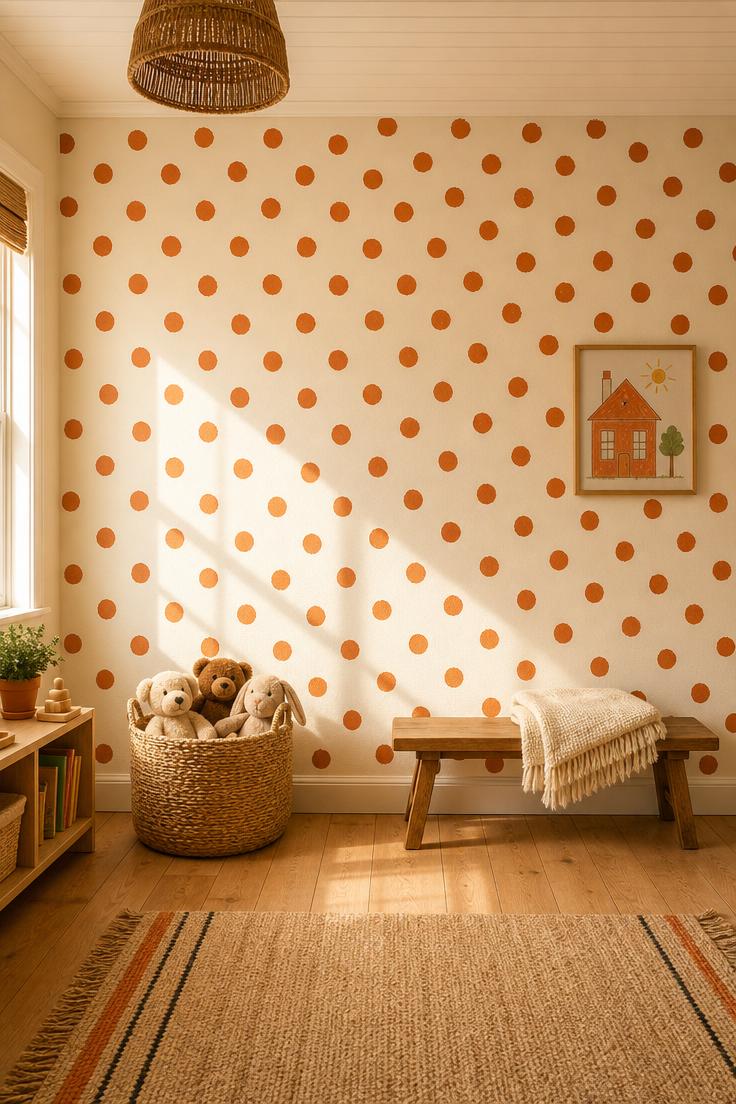
Terracotta dots on a cream wall bring warmth into a playroom without relying on the usual primary color palette.
The imperfect edges of each stenciled circle are what make this look handmade rather than wallpapered, and that distinction matters when the goal is a relaxed, personal space.
A 4-inch dot size reads clearly from across the room but does not overwhelm small furniture placed against the wall.
This playroom color scheme works particularly well in spaces that receive warm afternoon light, where the terracotta picks up the golden tones naturally.
The stencil method is forgiving enough for a weekend project, and mistakes blend into the intentionally irregular pattern.
Pairing the warm wall with a seagrass basket and natural wood keeps the room grounded in earthy tones that do not clash with brightly colored toys.
Style Blueprint:
- Terracotta orange paint and a 4-inch circle stencil
- Cream base wall paint (eggshell finish)
- Woven seagrass basket for toy storage
- Low natural wood bench
- Cream wool throw blanket for texture
Felt Letter Board Rail Beside a Small Wooden Desk
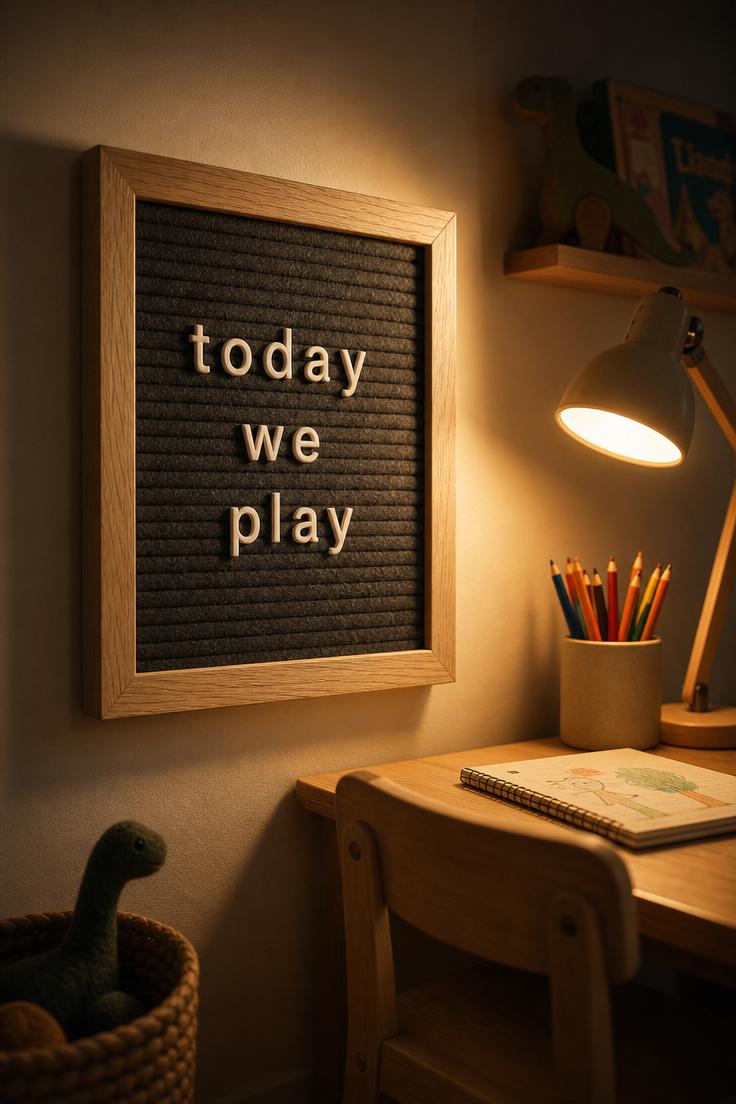
A felt letter board beside a desk gives children a surface where words are physical objects they can pick up and arrange.
The charcoal gray felt makes white letters stand out sharply, and the dark background adds a grown-up quality that keeps this corner from feeling babyish.
Placing the board at child eye level means the daily message or word game is the first thing they see when they sit down at the desk.
This kind of toy room decor works for a wide age range, since toddlers can practice letter recognition and older kids can leave messages or spell vocabulary words.
The reading lamp creates a pool of warm light that separates this corner psychologically from the more active parts of the room.
A single focused light source also reduces visual clutter, drawing attention to the board and the desk rather than the wider wall.
White oak frames age well and match most other wood furniture in a children’s space without needing to be painted.
Changing the letters takes less than a minute, so the board stays relevant through every phase of childhood.
Style Blueprint:
- Framed felt letter board (charcoal gray felt, white oak frame)
- White plastic letter set (multiple fonts optional)
- Small wooden desk and matching chair at child height
- Warm-toned reading lamp with adjustable arm
- Cup of colored pencils and a small sketchpad
Conclusion
Each of these 11 playroom wall decor ideas starts with a specific material or setup rather than an abstract concept, which makes them easier to plan and execute.
A chalkboard framed in pine, a cork grid pinned with brass, a pegboard loaded with maple hooks: these are projects with clear supply lists and visible results.
The best playroom walls do more than look good in a photograph.
They invite small hands to draw, pin, spell, rearrange, and claim the space as their own.
Pick one or two ideas that match your room’s size and your child’s current stage, and let the wall do the rest of the work.