This post may contain affiliate links. If you make a purchase through these links, we may earn a commission at no additional cost to you.
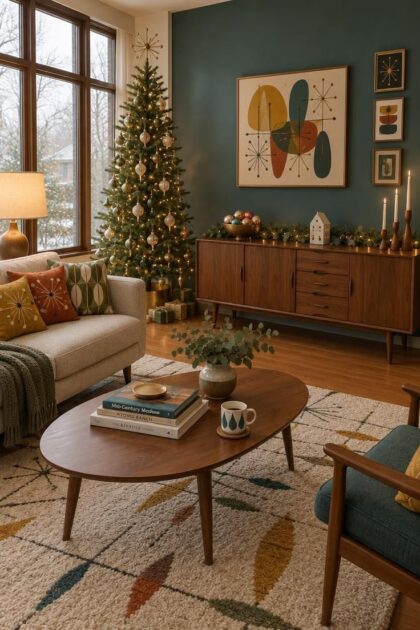
Mid century modern Christmas decor brings the clean lines and warm materials of the postwar era into a home's holiday display.
Sculptural trees, brass accents, glass ornaments, and a palette that moves beyond traditional red and green define the look.
This style rewards editing and thoughtful placement, which makes it a fresh way to approach seasonal decorating in a private home.
The ideas below translate the visual language of mid century design into practical decor for living rooms, dining rooms, entries, and front doors.
Slim Pencil Tree with Sputnik Starburst Topper
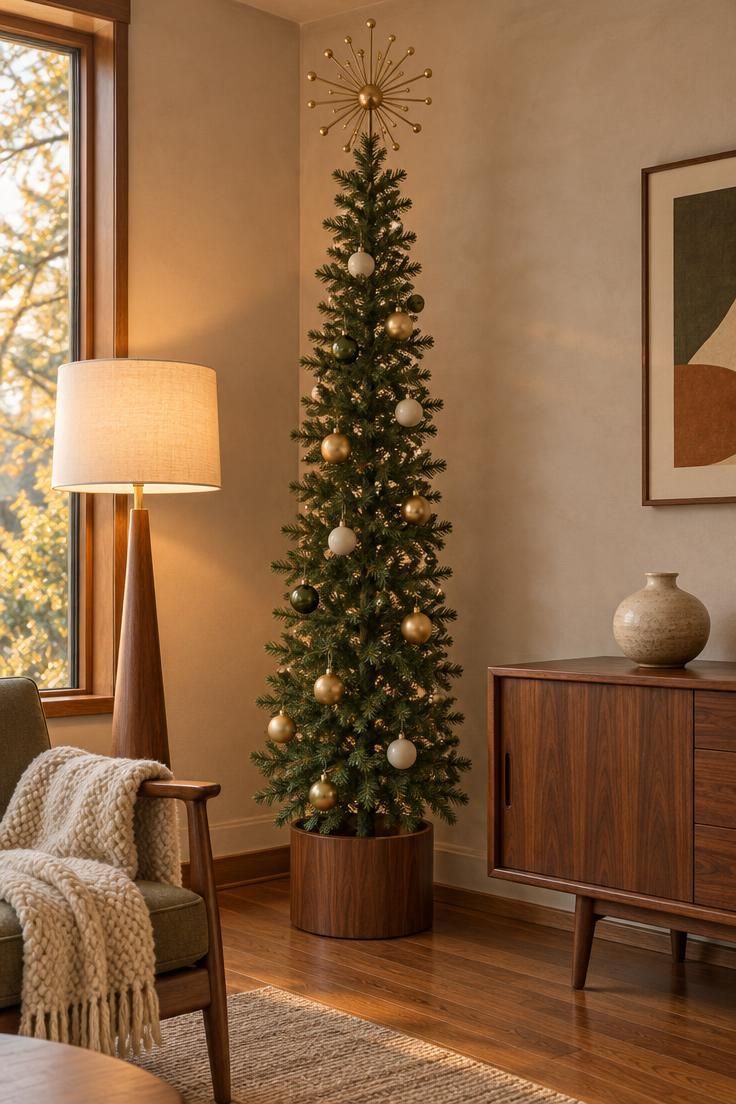
A slim profile suits a corner that cannot spare much floor space, and the tapered shape echoes the angled legs of nearby furniture.
Keeping the ornament count low lets each glass ball read as a deliberate choice rather than part of a dense layer.
A sputnik starburst tree topper anchors the atomic-age reference at the highest point of the display, where it draws the eye upward without adding visual weight lower down.
Solid-color glass balls in olive, cream, and brass hold the palette in check, and the open spacing between them lets the tree's own shape stay part of the composition.
Choosing a slim tree means accepting a smaller canvas.
Fewer branches hold fewer ornaments, so this format favors an edited collection of favorite pieces over a large heirloom set that needs room to spread out.
A wood collar or low woven basket at the base replaces a ruffled skirt and keeps the line of the trunk clean.
The result is a tree that feels intentional from topper to floor rather than dressed in layers.
Style Blueprint:
- A narrow pencil tree with a visible tapered silhouette
- A brass or wood sputnik starburst topper as the single focal ornament
- Glass balls limited to three colors with open space between them
- A walnut collar or low basket at the base instead of a fabric skirt
- A warm floor lamp nearby to bring out the metallic finishes
Walnut Credenza Display with Vintage Glass Ornaments
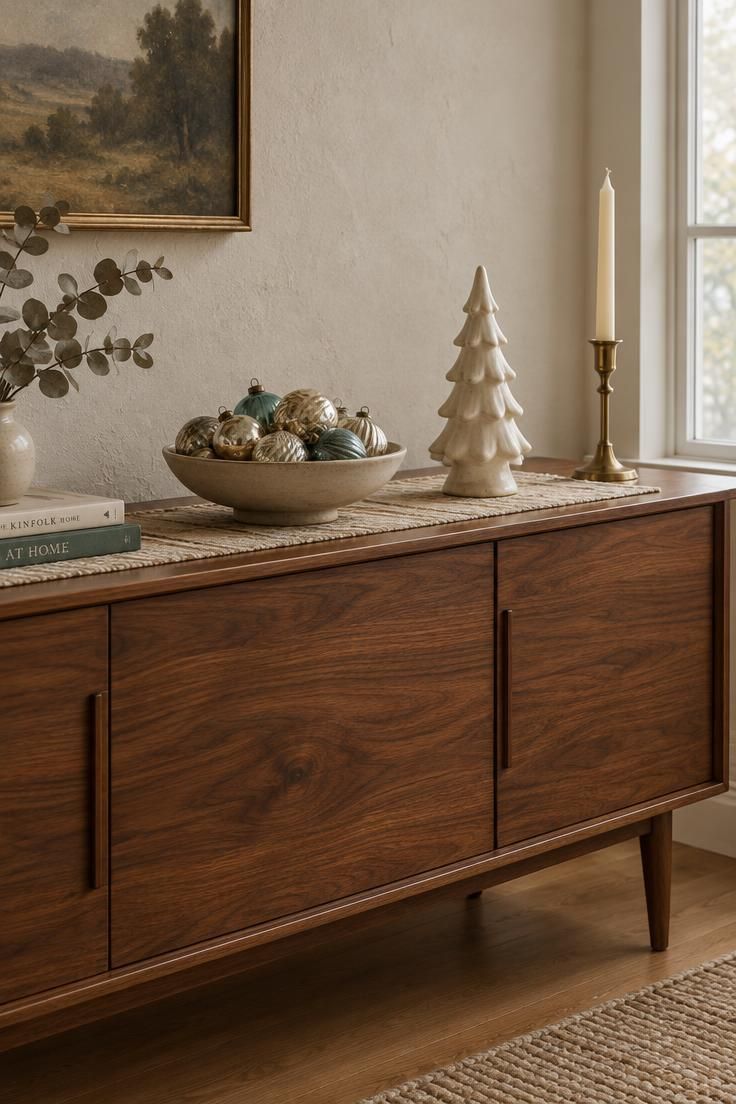
A long credenza offers a horizontal stage that matches the low proportions of mid century furniture, and treating the top as a composed row keeps the display from feeling scattered.
Varying the heights of the bowl, tree, and candleholder gives the eye a path to follow.
Vintage glass ornaments bring a period texture that new plastic pieces rarely match, and grouping them in a bowl lets their reflective surfaces play off one another.
A limited palette of silver, brass, and muted teal keeps the collection cohesive even when the individual ornaments differ in age and pattern.
Fragile glass deserves a spot away from the front edge of the credenza, where bags and elbows tend to land.
Placing the bowl slightly back also lets the wood surface show in front of it, which keeps the furniture itself part of the display.
The credenza anchors the arrangement year round, and only the objects on top change with the season.
That makes this approach easy to refresh: swap the bowl's contents, change the small tree for a different sculptural piece, and the stage is set again.
Style Blueprint:
- A long walnut credenza with tapered legs as the display surface
- A low bowl filled with vintage glass ornaments in a three-color mix
- A small ceramic tabletop tree for height variation
- One simple brass candleholder with a cream taper
- Generous gaps between objects so each piece reads on its own
Retro Christmas Color Palette with Teal and Brass
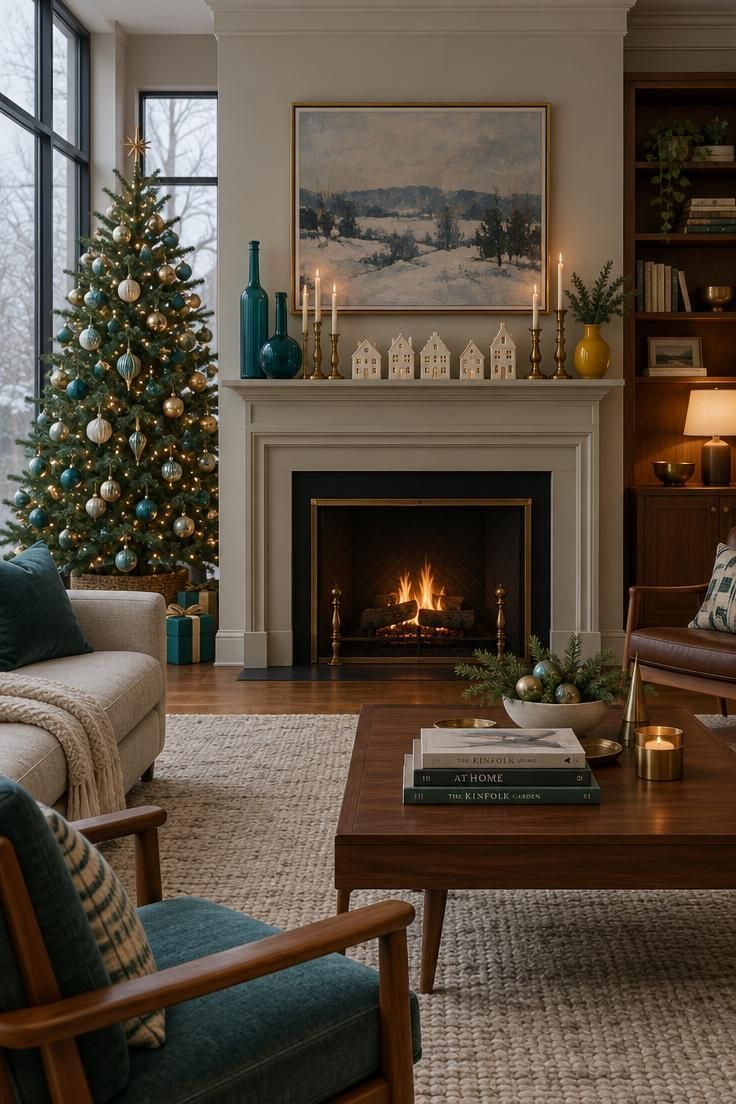
Shifting the palette toward teal, brass, and cream signals the period without relying on red, and repeating the same three tones across the mantel and the tree ties the room together.
A small amount of mustard at one end keeps the scheme from feeling flat.
This is where mid century modern christmas decor rewards discipline: one palette carried through every surface reads as a decision, while scattered colors read as accident.
Wrapping or painting plain ornaments in the chosen tones is an affordable way to build the look from existing pieces.
Mid century furniture already in the room tends to sit comfortably with teal and brass, since those tones appear often in period ceramics and metalwork.
The palette works with the furniture rather than competing against it.
Multicolor string lights can pull the eye away from a controlled scheme, so warm white lights keep the focus on the glass and metal surfaces.
The restraint is the point.
Style Blueprint:
- Teal, brass, and cream as the repeating three-tone scheme
- Teal glass bottles grouped at varied heights
- Brass candlesticks with slim cream tapers
- Warm white string lights rather than multicolor
- One mustard accent piece to add depth
Atomic Starburst Wall Piece Above a Console
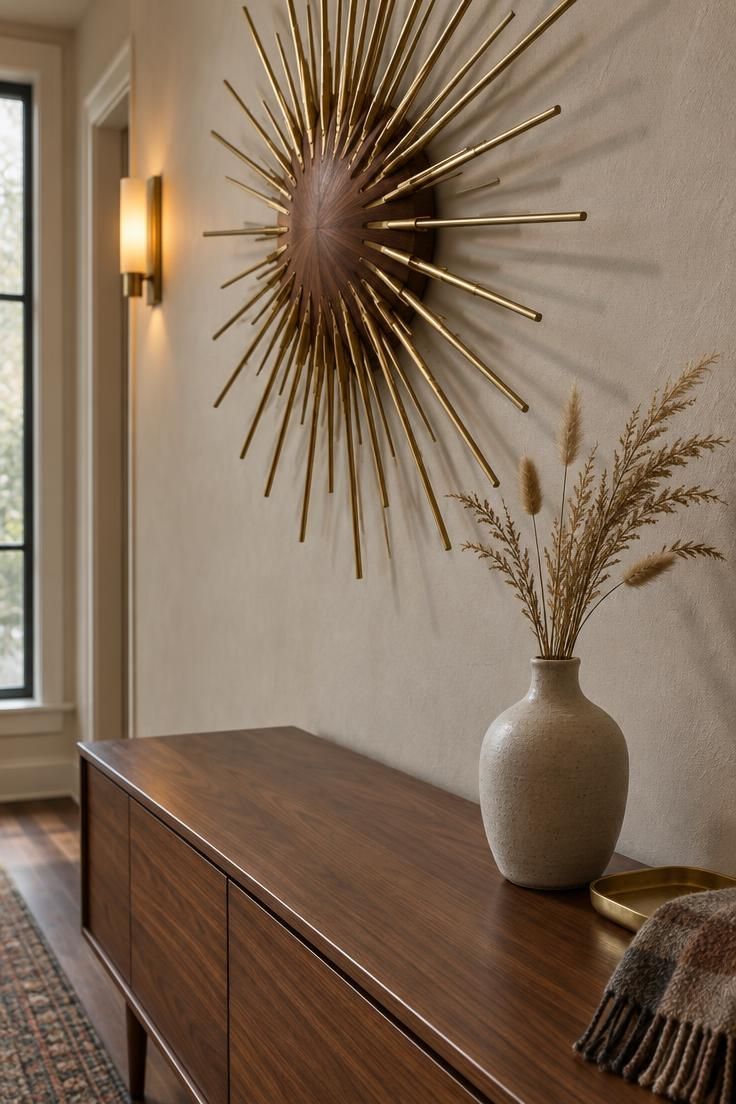
A starburst wall piece turns empty vertical space into a focal point, and hanging it above a low console gives the hallway a deliberate composition without using up surface area.
The radiating arms draw the eye outward from a single center, while the warm wood in the sculpture ties it to nearby furniture so the wall piece reads as part of the room rather than a seasonal addition.
Keeping the console below nearly bare lets the sculpture carry the arrangement.
Asymmetry does most of the work here: a vase placed slightly off-center leaves one side of the console open, and that emptiness is what makes the grouping feel composed rather than crowded.
Since the starburst is already sculptural, extra objects on the console would compete with it.
A hallway arrangement like this asks for dusting more than decorating, because the open arms of the sculpture collect dust on their upward faces.
A soft brush now and then keeps the brass and wood looking sharp.
Style Blueprint:
- A wood and brass starburst wall sculpture as the single focal point
- A low walnut console beneath it
- One ceramic vase with dried grasses placed off-center
- An open, uncrowded console surface
- A small brass tray for keys and everyday items
Minimal Geometric Wreath on a Front Door
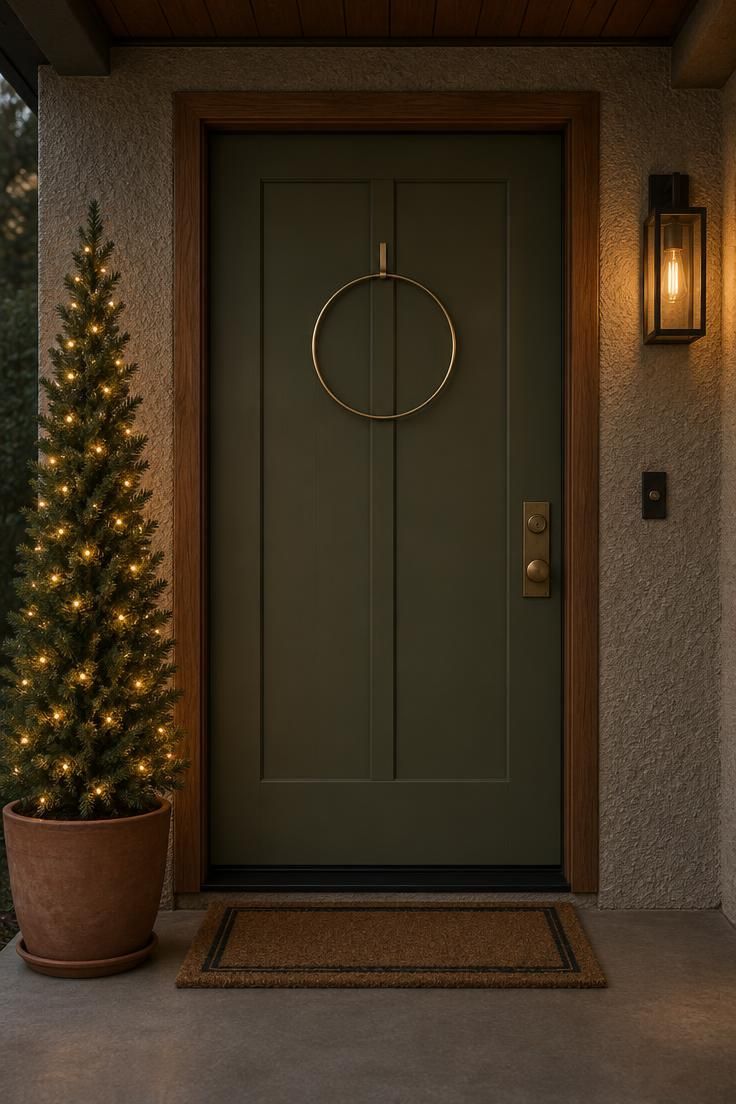
A geometric ring replaces the traditional evergreen wreath with a form that matches the straight lines of mid century architecture.
Brass or blackened steel keeps the look crisp, and a solid-color door in olive or a muted shade gives the ring a calm backdrop.
Pairing the wreath with a slim pencil Christmas tree in a planter echoes the vertical line of the door and carries the sparse approach to the porch.
Warm white lights on the tree provide the only glow, which suits an entry that stays restrained.
The minimal wreath requires no watering and no needle cleanup, which makes it a low-maintenance choice through the season.
The tradeoff is that it may not read as festive to everyone who expects dense evergreen at the door.
One string of warm lights on the nearby tree bridges that gap.
Style Blueprint:
- A brass or blackened steel geometric ring wreath
- A front door in a solid muted shade
- A slim lit pencil tree in a simple planter beside the door
- Warm white lights as the only exterior glow
- A clean-lined lantern and plain mat to finish the entry
Tapered Wood Candle Holders on a Mantel
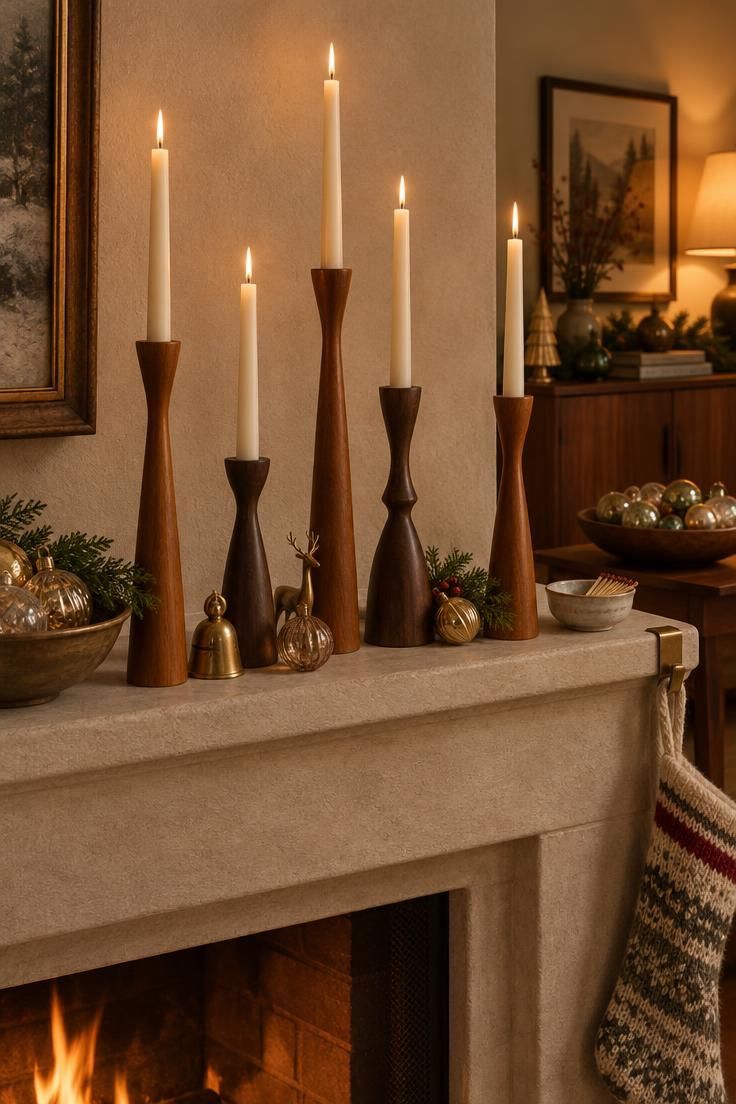
A row of tapered wood candle holders gives the mantel a linear rhythm that suits the horizontal emphasis of the room.
Varying the heights keeps the line from going flat, and slightly uneven spacing avoids a rigid, mirror-image arrangement.
Teak and walnut holders pair naturally with cream or brass candlesticks, and the wood tones carry warmth through the season even after the ornaments come down.
For a walnut credenza holiday display, a few small glass ornaments tucked at the bases add a holiday note without turning the mantel into a full display.
The year-round base makes this arrangement easy to adapt: add the ornaments in December, remove them in January, and the candles stay.
Any open flame needs supervision and distance from nearby greenery or paper decorations.
Style Blueprint:
- Tapered teak or walnut candle holders in three to five heights
- Cream or brass candlesticks
- Slightly uneven spacing along the mantel
- A few small glass ornaments tucked at the bases
- A nearby lamp or low fire for warm reflected light
Open-Branch Tabletop Tree in a Stoneware Pot
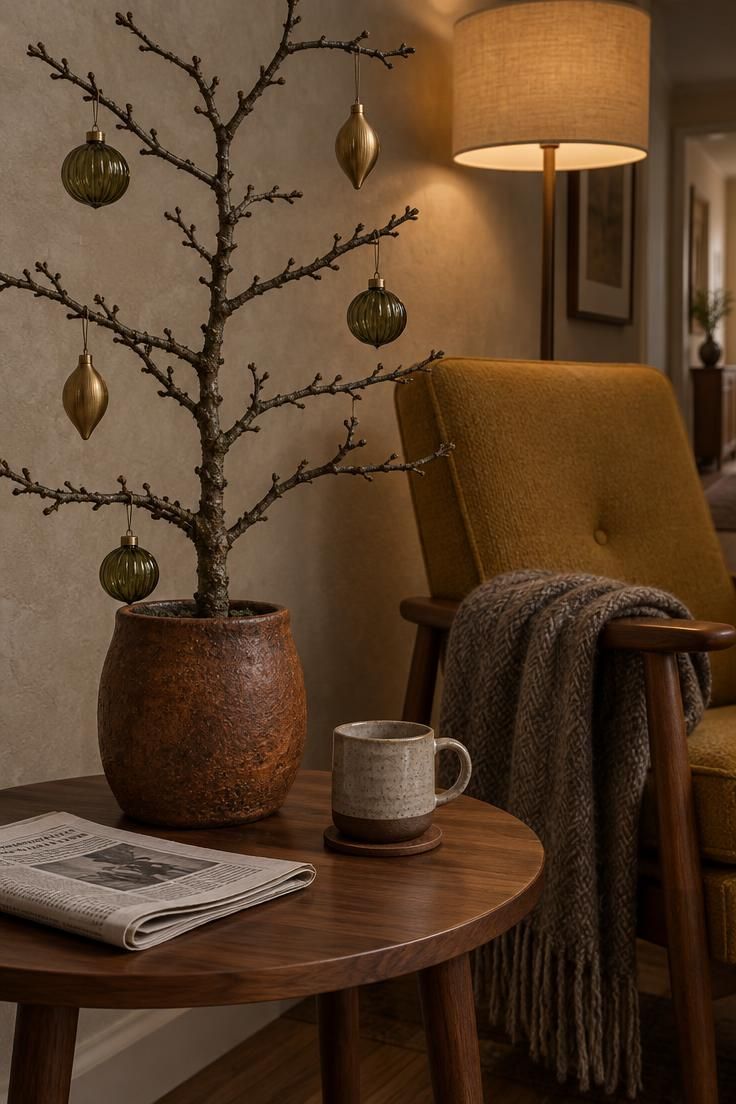
An open, sculptural branch structure reads as a piece of decor rather than a miniature version of a full tree.
The visible negative space around the branches is the point, so the arrangement needs a spot where that openness can be seen from a few feet back.
A matte stoneware pot in rust or olive grounds the small tree in the earthy side of the palette.
Limiting the ornaments to fewer than a dozen in two or three shapes and a single metal finish keeps the piece from tipping into clutter.
Placing the tree on a sideboard or end table lets it act as an accent rather than the main tree, which suits a room that already carries strong mid century furniture.
The furniture does part of the decorating work, and the small tree adds a seasonal note without competing.
Style Blueprint:
- A small tabletop tree with open, visible branching
- A matte stoneware pot in rust or olive
- Fewer than a dozen glass ornaments in two shapes
- A single metal finish across the ornaments
- A side table or sideboard with room around the tree
Shiny Brite Glass Ornaments in a Low Bowl
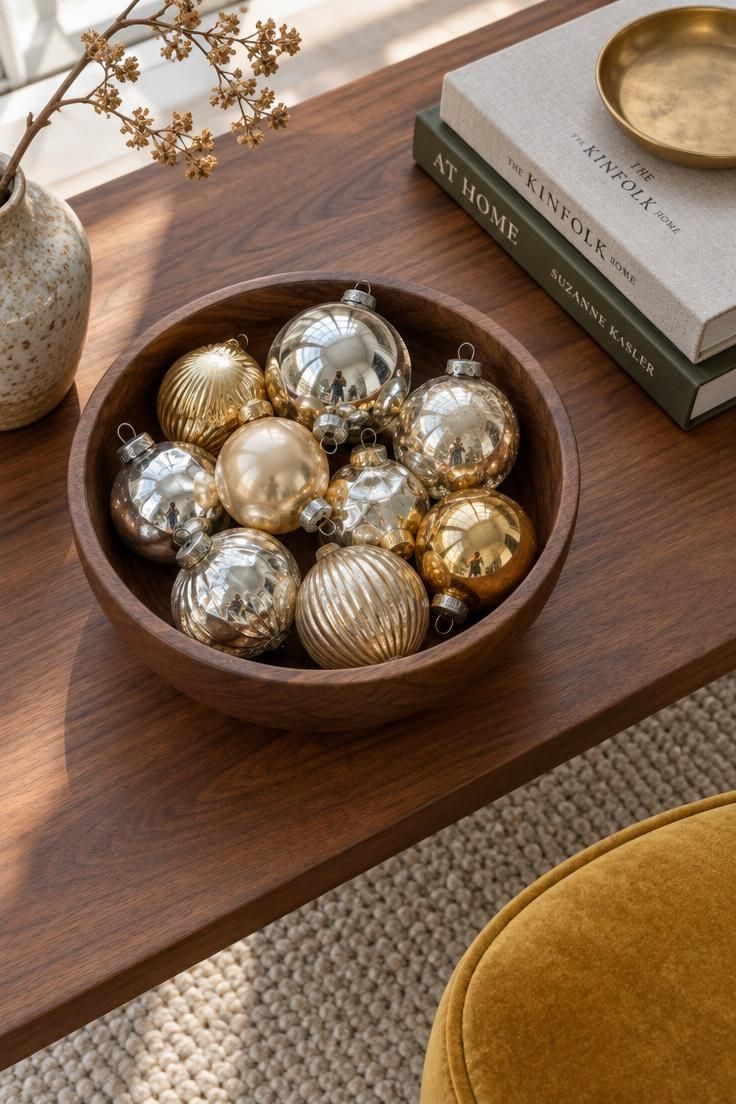
A low bowl of Shiny Brite-style ornaments turns a collection into a single centerpiece.
The rounded shapes and metallic caps catch warm light from lamps and candles, and the shallow depth means the arrangement stays low enough for conversation across the table.
Choosing one color family, such as silver, champagne, and soft gold, keeps a mix of sizes and cap styles from feeling random.
The look also suits a retro Christmas color palette built around metallic neutrals rather than red and green, so it can carry from the coffee table to the tree without a jarring shift.
Storage matters with these ornaments: individual wrapping prevents scratches on the metallic finish and keeps the caps from snagging one another.
The display itself is easy to assemble and easy to change, which makes it a good starting point for a collection that may grow year to year.
Style Blueprint:
- A low, wide bowl in walnut or matte ceramic
- Shiny Brite-style glass ornaments in one metallic family
- A mix of ornament sizes for visual depth
- A coffee table or dining table as the setting
- Individual wrapping for storage between seasons
Atomic Pattern Throw Pillows in Holiday Hues
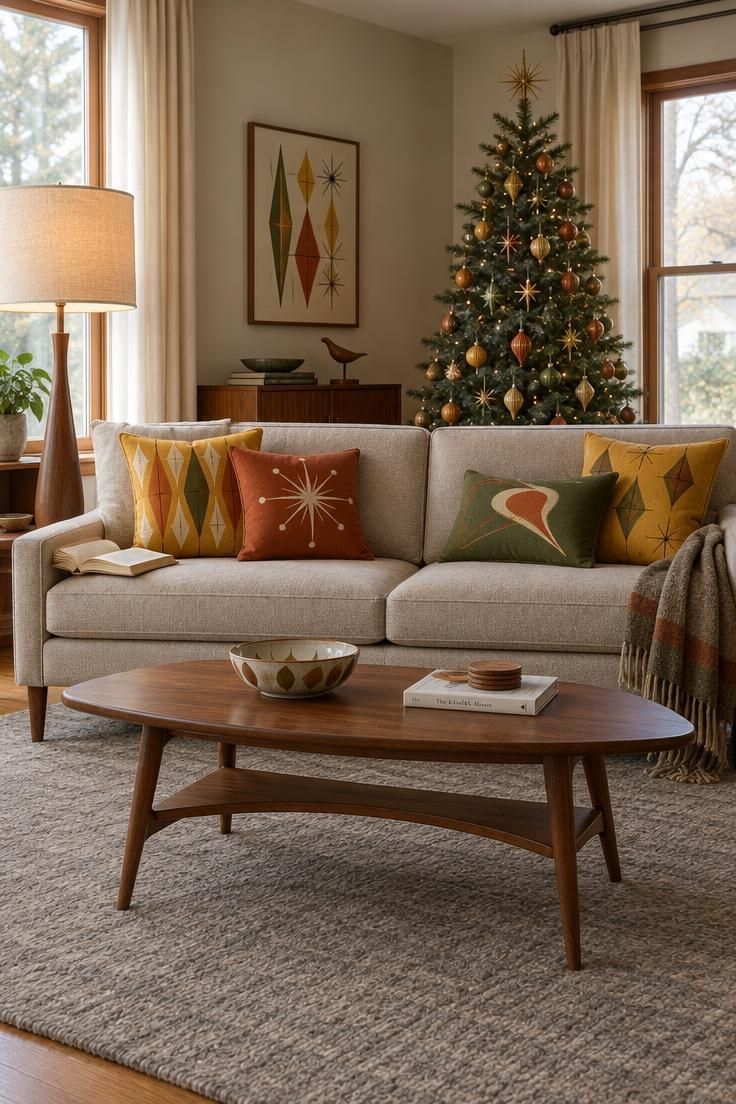
Throw pillows bring seasonal color into a living room without adding objects to every surface.
Patterns built from diamonds, starbursts, or boomerangs echo the shapes used elsewhere in the room and keep the fabric from reading as generic holiday decor.
Mixing two or three pillow sizes and patterns against a neutral sofa keeps the arrangement lively, and holding the colors to muted mustard, rust, and olive ties the room to the rest of the seasonal scheme.
Removable covers make the seasonal swap simple, and a durable fabric holds up to daily use on a sofa.
This is one of the easier ideas to reverse after the holidays, which helps in homes where the decor changes often.
Style Blueprint:
- Two or three pillow sizes against a neutral sofa
- Atomic or geometric patterns in mustard, rust, and olive
- A matching tone repeated on the tree behind
- Removable, durable covers for easy seasonal swaps
- A wool throw and rug to soften the seating area
Terrazzo and Brass Tabletop Village
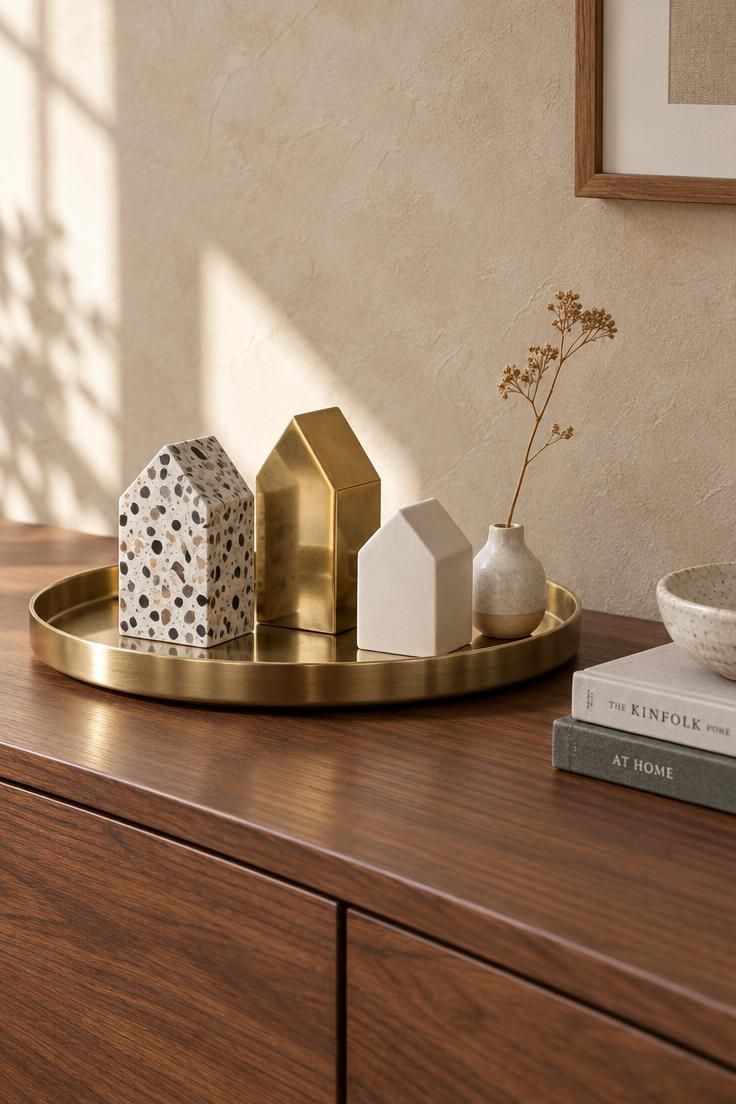
A small village of geometric houses keeps the holiday reference while moving away from craft-fair styling.
Simple forms such as low rectangles, small pyramids, and one taller house read as architecture rather than figurines, and the terrazzo and brass finishes fit the mid century palette.
Arranging three or five pieces on a tray gives the display a boundary, which keeps it from spreading across the console.
One small stem in a tiny vase adds contrast without turning the group into a full vignette.
Dust shows readily on matte terrazzo and polished brass, so a quick wipe between seasons keeps the pieces looking sharp.
The tray also simplifies that task by gathering everything into one liftable group.
Style Blueprint:
- Three to five geometric tabletop houses in simple forms
- Terrazzo, brass, and cream finishes as the material mix
- A shallow brass tray to contain the group
- One tiny vase with a dried stem for contrast
- A matte surface nearby for visual contrast
Low Horizontal Garland Across a Credenza
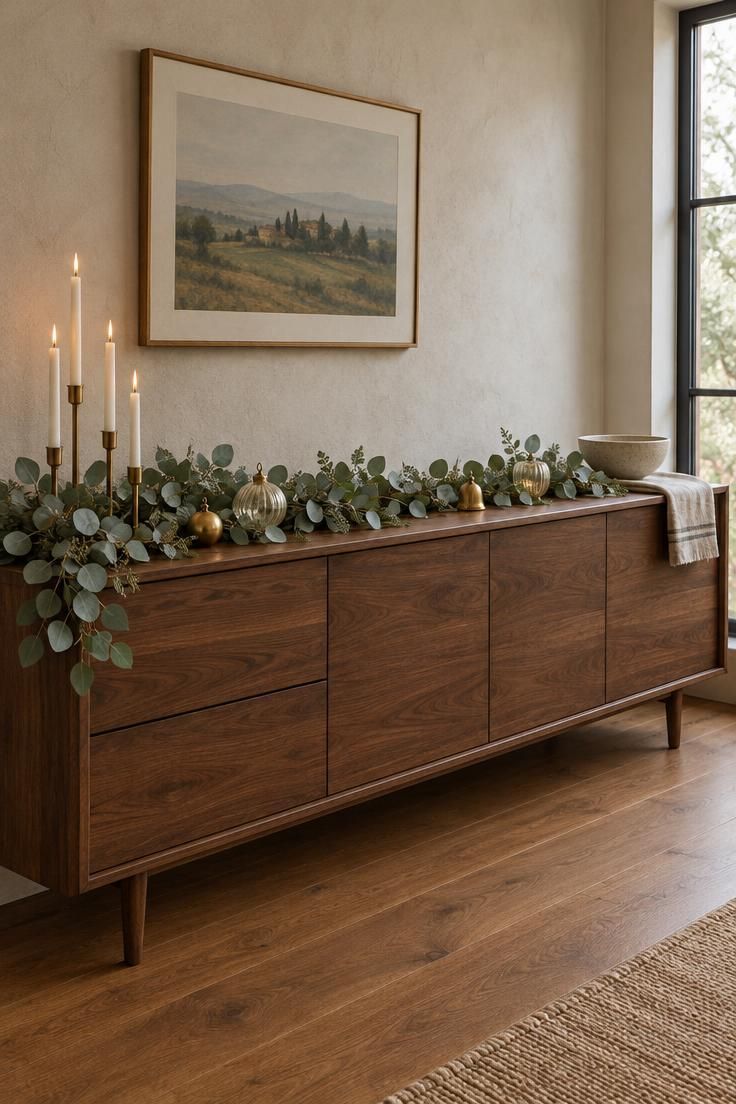
A low, linear garland follows the top edge of a credenza and reinforces its horizontal line rather than hiding it under a pile of greenery.
Eucalyptus, olive branches, or even a chain of small brass rings can carry the look, and keeping the garland close to the surface lets the furniture stay visible.
Tucking small glass ornaments or ceramic stars at intervals gives the greens a holiday role without covering them.
Letting one end sit slightly heavier than the other keeps the arrangement from looking mechanical.
Natural greenery dries and drops over time, so it needs replacing partway through the season; faux material stays put but needs dusting.
Either way, the garland is a base for a few candleholders or one sculptural piece rather than a full display on its own.
Style Blueprint:
- A long walnut credenza as the horizontal base
- A low garland of eucalyptus, olive, or brass rings
- Small glass ornaments tucked in at uneven intervals
- Three candles on simple holders at one end
- Deliberate asymmetry with one heavier side
Atomic Mobile Ornaments Hanging in a Stairwell
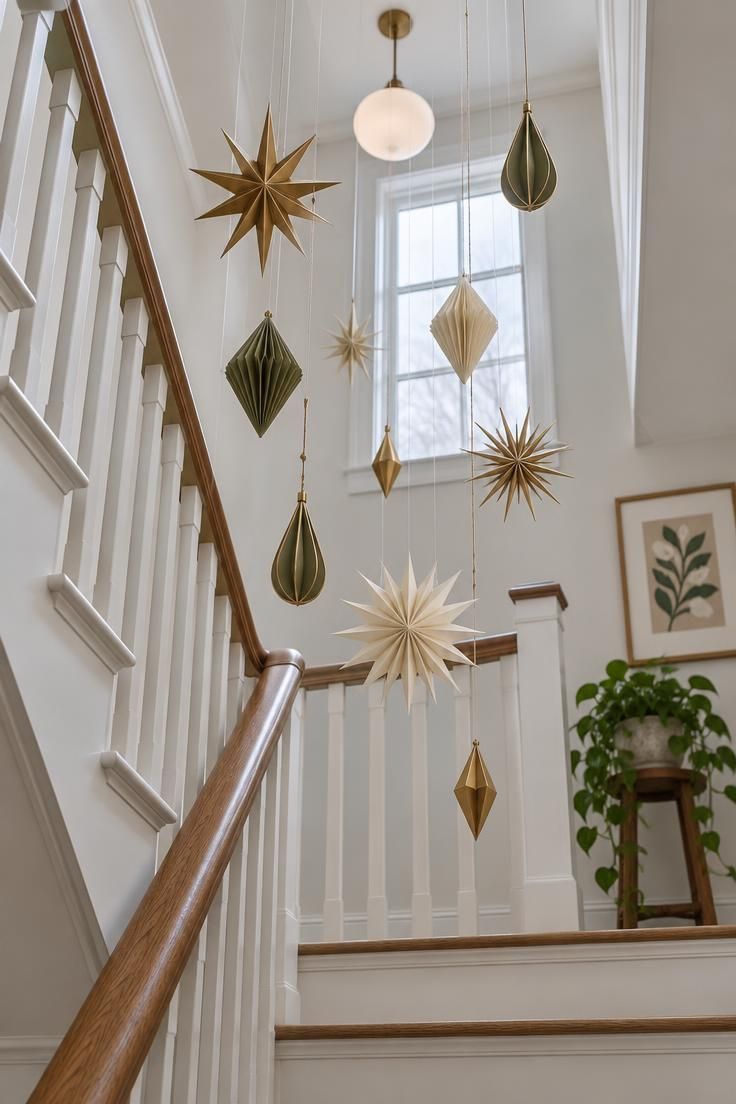
Hanging ornaments at varying heights in a stairwell or tall entry uses vertical space that would otherwise sit empty, and the movement catches light as people pass.
Lightweight materials such as painted wood, paper, or thin brass keep the pieces easy to handle and to store.
Suspending the ornaments on clear fishing line or fine twine lets them appear to float.
Repeating a palette of brass, cream, and olive from the rest of the home keeps the floating group tied to the larger scheme rather than reading as a separate display.
This idea works best where there is genuine height, such as a stairwell or an open two-story entry.
In a room with a standard ceiling, the same pieces can hang over a table or in a window instead, where they still catch light.
Style Blueprint:
- Lightweight ornaments in starburst, diamond, and teardrop shapes
- Painted wood, paper, and thin brass as the materials
- Clear line and fine twine for an almost floating effect
- A palette repeating brass, cream, and olive
- A tall space such as a stairwell or open entry
Terracotta and Olive Edible Centerpiece

An edible centerpiece in terracotta and olive tones keeps the table natural and abundant without relying on glitter or plastic.
Whole citrus and unshelled nuts bring the warm earth tones of the palette to the table, while a few rosemary or bay sprigs add green contrast and fragrance.
Keeping the arrangement low means guests can see across the table, and a shallow bowl or wooden tray contains the spread.
Fruit spoils faster in direct sunlight or near a heat source, so a spot with even indirect light serves the arrangement best, and any pieces that soften can be eaten or composted before the next gathering.
The plates and linens around it should stay simple so the bowl remains the focus.
Style Blueprint:
- A low terracotta or wooden bowl as the base
- Whole oranges, clementines, and unshelled walnuts
- Rosemary or bay sprigs for green contrast and scent
- A low profile so guests can see across the table
- Simple cream plates and olive linen napkins
Conclusion
Mid century modern Christmas decor comes down to editing and material choices more than filling every surface.
Repeating a few motifs, such as starbursts, slim profiles, glass, brass, and warm woods, across a tree, credenza, mantel, and table lets a home carry the style through the whole season.
These pieces tend to sit naturally alongside existing mid century furniture, which makes the seasonal transition feel less like a takeover and more like a shift in emphasis.
Starting with one or two ideas, a sputnik topper or a bowl of glass ornaments, gives a collection room to grow over the years.
The result is a holiday look that feels considered, warm, and distinct from the traditional red-and-green approach.