This post may contain affiliate links. If you make a purchase through these links, we may earn a commission at no additional cost to you.
The all-white kitchen had its run, and it looked gorgeous in every magazine spread that nobody actually cooked in.
Stainless steel became the default because it felt “safe,” but safe and warm are not the same thing.
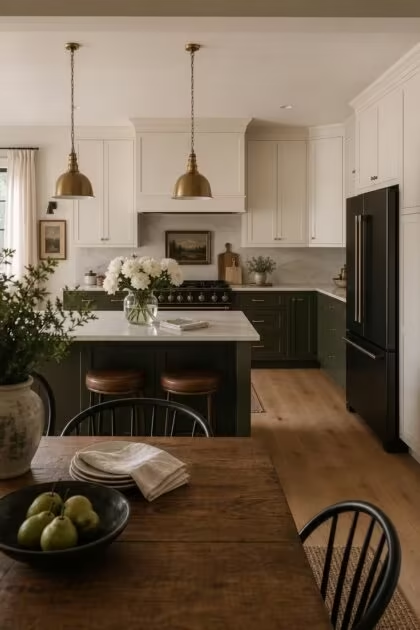
A kitchen with black appliances introduces a different kind of comfort, one that comes from surfaces that absorb light instead of bouncing it around the room like a hall of mirrors.
The shift is quieter than a trend and more practical than a statement, and understanding why it works changes the way you think about every surface in the room.
The Data Behind the Stainless Steel Backlash
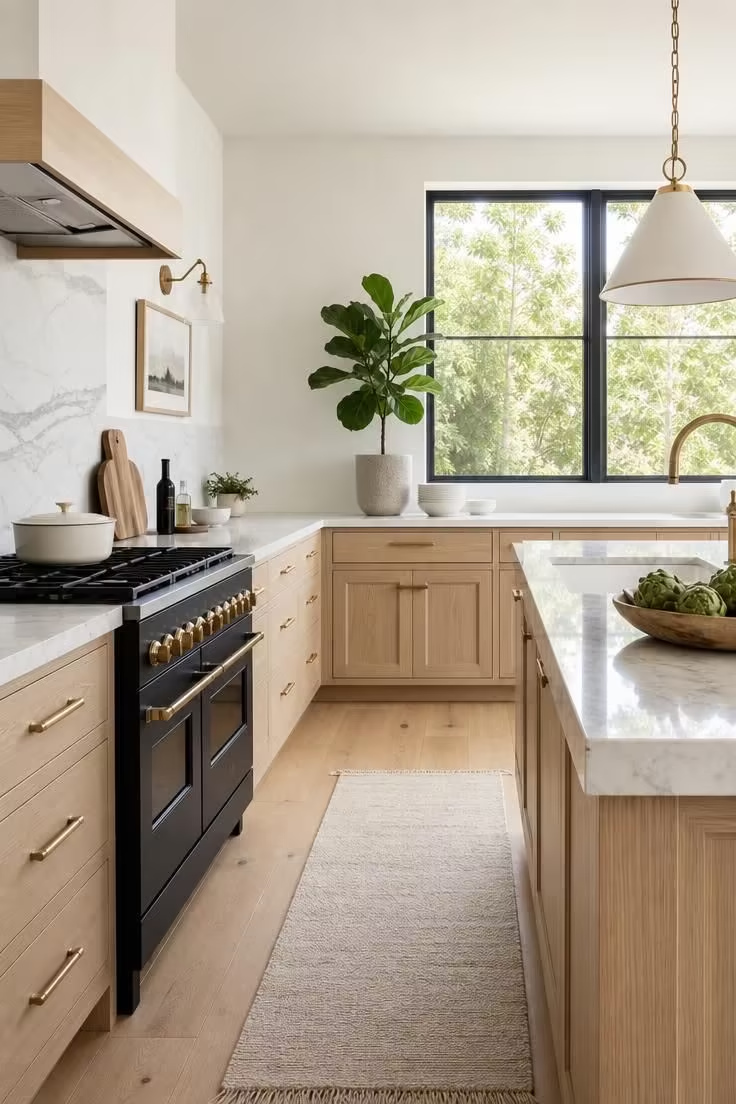
The Houzz 2026 Kitchen Trends Report confirmed what designers had been sensing for years: stainless steel still holds the lead at 72% of renovating homeowners, but its grip is loosening.
Black stainless steel claimed 6% of the market, and true black finishes accounted for another 5%, with both categories growing faster than any other appliance color.
Those numbers may look small on paper, but they represent a meaningful crack in what had been an unchallenged default for nearly two decades.
AJ Madison, one of the largest specialty appliance retailers in the United States, reported that “matte black kitchen appliances” became a top-searched upgrade term in early 2026, with sustained growth through the spring.
Café by GE leaned into the movement hard, building its entire brand identity around customizable matte black finishes paired with interchangeable hardware in brushed bronze, copper, and stainless.
The gap between what sells in volume and what generates design excitement tells a useful story: stainless is what people choose when they are not thinking about it, and black is what people choose when they are.
Why a Kitchen With Black Appliances Feels Warmer Than One With Stainless
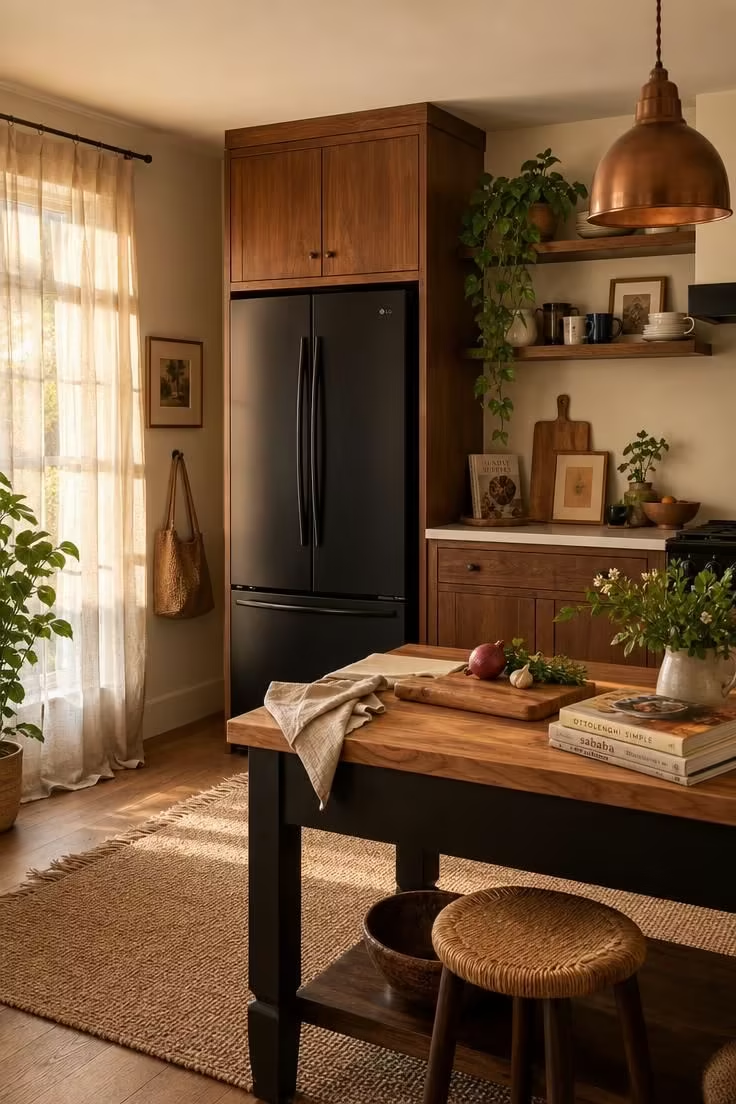
The answer starts with physics, not aesthetics.
Stainless steel is a mirror: it reflects the light sources in your kitchen back at you from every angle, creating a bright, clinical quality that reads as “showroom” rather than “home.”
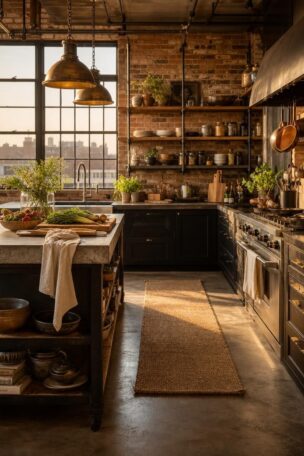
Black absorbs that light instead, which means the surrounding materials, your wood cabinets, your stone countertop, your brass hardware, become the things your eye lands on first.
Matte black finishes go further because their satiny, non-reflective surface has a tactile quality that makes the appliance feel like a piece of furniture rather than a piece of equipment.
In open-plan layouts where the kitchen is visible from the living and dining areas, this distinction matters even more: stainless steel creates visual noise from multiple sightlines, and black settles into the background like a well-placed anchor.
Designers who have made the switch in client projects report that rooms with black appliances feel “lived in” faster, partly because the eye naturally moves past the appliances and toward the more personal elements of the space.
The difference between “dramatic” and “warm” is about proportion: a kitchen with black appliances on every wall would feel like a cave, but as an appliance finish occupying a small percentage of the room’s total surface area, black acts as a grounding force that lifts everything around it.
Matte, Black Stainless, or Glossy: Picking the Right Dark Finish
Not all black finishes are created equal, and choosing the wrong one is the fastest way to end up with a kitchen that feels dated instead of deliberate.
Glossy black, the original dark appliance finish, is high-shine and formal, and it shows every fingerprint, water spot, and cooking splatter with unforgiving clarity.
It fell out of favor around 2015 for exactly that reason and has not recovered, though it still has a place in contemporary kitchens with lacquered cabinets where the reflective surfaces are part of a cohesive design language.
Black stainless steel is the middle ground: a polymer or PVD (Physical Vapor Deposition) coating applied over traditional stainless steel, giving it a dark finish with a slight metallic sheen.
Nearly every major manufacturer offers it now, including LG, Samsung, GE, KitchenAid, and Bosch, making it the most widely available black option on the market.
The catch is durability: the coating can scratch with everyday use, and when it does, the silver stainless steel underneath shows through in a way that cannot be buffed out.
Matte black sits at the top of both the aesthetic and price ladder, with a soft, light-absorbing surface that reads as the warmest and most refined of all three categories.
Bosch took a different manufacturing approach entirely, mixing the black color directly into the stainless steel during production rather than applying a coating afterward, which makes their finish more resistant to scratching than polymer-based alternatives.
Design Pro-Tip: If you are replacing appliances in stages rather than all at once, commit to a single black finish type from the start. Mixing matte black and black stainless steel across different brands creates subtle color mismatches that become more obvious over time as the finishes age differently.
The Color Pairing That Separates a Good Kitchen With Black Appliances From a Great One
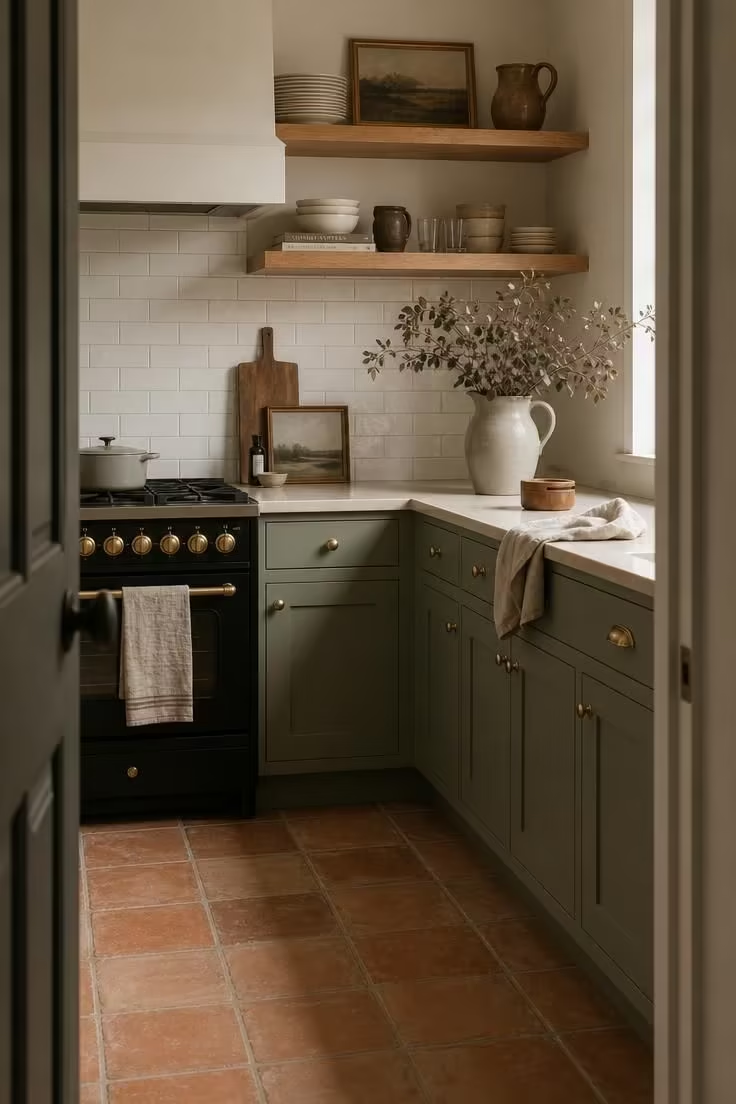
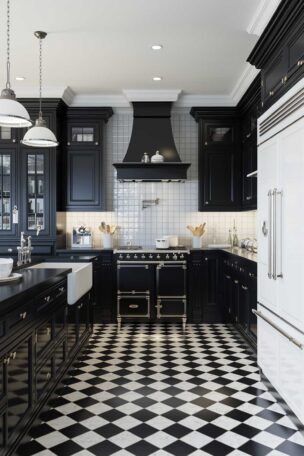
White and cream cabinets remain the most popular pairing, and the combination of black appliances with white cabinets endures because the high countertop contrast makes the appliances pop without overwhelming the room.
White shaker cabinets paired with matte black create a warm, traditional feeling, and flat-panel white cabinets with the same black finish push the look toward clean modernism, which means the cabinet style, not the appliance color, sets the tone.
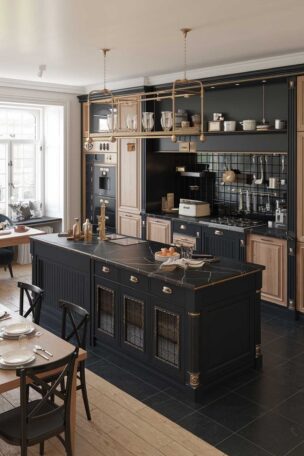
Warm wood tones in walnut, oak, or maple are what designers recommend most often because the natural grain and color of the wood balance the coolness of the black without competing for visual attention.
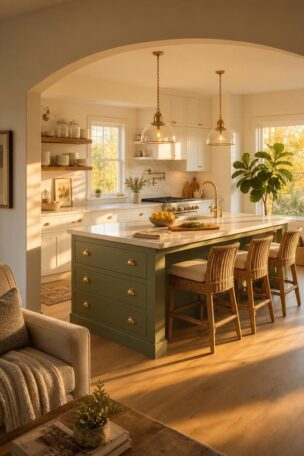
Bold cabinet colors like navy, forest green, sage, and teal paired with black appliances create a designer-level kitchen color palette, but they come with a rule: you need a large neutral surface, a marble backsplash or white countertop, to act as a visual rest point between the strong colors.
A two-tone kitchen with dark lower cabinets and lighter uppers grounds the room while keeping the upper half open and airy, and the black appliances integrate naturally with the darker lower zone.
Off-white and greige cabinets offer a softer version of the white pairing, reducing the boldness of the contrast and making the room feel more relaxed, which works particularly well in cottages, bungalows, and older homes where crisp white can feel out of place.
Getting the Hardware Right in a Kitchen With Black Appliances
Hardware is the place where kitchen color schemes with black appliances most frequently fall apart, because people either overthink the metal coordination or ignore it entirely.
Satin brass hardware is the most popular finish alongside black appliances right now, and it works because the warm metallic tone creates separation between the dark appliance surfaces and the lighter cabinets, adding a layer of warmth the room would otherwise lack.
Brushed nickel is a cooler, more restrained alternative that works well in transitional and contemporary spaces where brass hardware might feel too warm or too decorative.
Matching matte black hardware to matte black appliances sounds logical, but it carries a risk: if the appliance finish is black stainless steel, which has a faint metallic sheen, and the hardware is true matte, the mismatch is subtle but noticeable under kitchen lighting.
The through-line principle matters more than any single hardware choice: whatever metal you select for cabinet pulls, echo it in your pendant lights, faucet, and range hood trim, because a brass faucet next to chrome pendants next to matte black pulls creates visual chaos.
Café by GE built their entire brand around this idea, offering matte black appliance bases with interchangeable handles in brushed bronze, brushed copper, or brushed stainless, so homeowners can control exactly how much warmth the hardware brings to the room.
Before committing to a full set, buy one handle and request one appliance finish sample, then hold them side by side under your kitchen’s actual lighting conditions, because what looks like a perfect match in a showroom can read as two different colors under warm LEDs.
Why This Shift Away From Stainless Is Happening Now
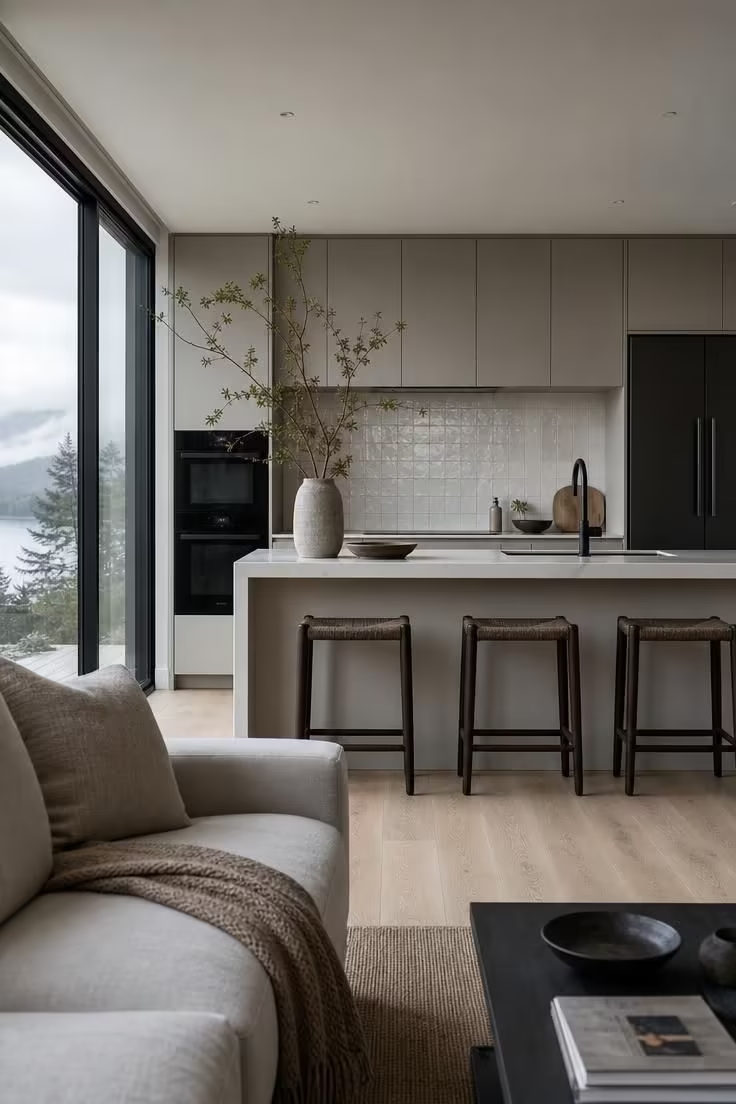
After more than a decade of white-on-white dominating Pinterest boards and renovation shows, homeowners reached a breaking point: their kitchens were beautiful in photographs and lifeless in person.
The rise of open-concept living accelerated the shift, because a kitchen visible from the dining table and the living room sofa needs to read as a furnished room with personality, not a utilitarian workspace that happens to have nice countertops.
Matte black finishes hide wear better than stainless, and as homeowners keep their kitchens longer between renovations, the appeal of a fingerprint-resistant finish that ages gracefully without constant polishing has become a practical selling point, not just an aesthetic one.
Smart home integration pushed the trend further: WiFi-connected appliances from Café, GE Profile, and Bosch include touch screens and digital displays that look cleaner on dark backgrounds, which means the technology itself performs better visually in black.
A countertrend worth noting is the rise of colorful appliances, retro greens, soft pinks, and bold reds, but black remains the dominant alternative to stainless because it pairs with every other color in the room rather than dictating a specific palette the way a mint-green refrigerator does.
Design Pro-Tip: If your kitchen gets limited natural light, pair black appliances with reflective backsplash materials like polished marble, metallic tile, or glossy ceramic rather than matte surfaces. The backsplash bounces light around the room while the appliances absorb it, and the contrast between reflective and non-reflective surfaces prevents the space from feeling closed in.
The Maintenance Reality: Fingerprints, Scratches, and Daily Life
The fingerprint question is the first thing people ask about, and the answer depends entirely on which black finish you choose.
Matte black is the clear winner here: its non-reflective surface hides fingerprints and smudges almost entirely, which is why families with young children gravitate toward it.
Black stainless steel is moderately better than traditional stainless at hiding prints, but it still shows them under direct light, especially on refrigerator doors and dishwasher panels.
Glossy black is the worst performer of all three, showing every touch, every water drop, and every cooking splatter with the same unforgiving honesty as a car’s piano-black dashboard.
Cleaning matte black is straightforward: a damp microfiber cloth handles daily messes, and no special polishes or stainless-specific cleaners are required, which is a relief for anyone who has spent Sunday mornings trying to streak-proof a stainless refrigerator door.
The scratch issue is real and worth understanding before you commit: both matte black and black stainless coatings can scratch, and unlike traditional stainless where a scratch can be buffed in the direction of the grain, a scratch on a coated black surface is permanent and will show the lighter material underneath.
Cost sits about 10 to 15 percent higher for matte black compared to equivalent stainless steel models, though the premium has been shrinking as more manufacturers add the finish to their standard lineups rather than reserving it for premium tiers.
For homes heading to market in the near future, stainless steel remains the safer bet for broad buyer appeal, but for homeowners planning to stay, the lower daily maintenance of a fingerprint-resistant finish makes the upfront premium easy to justify.
A Room-by-Room Plan for Moving to Black
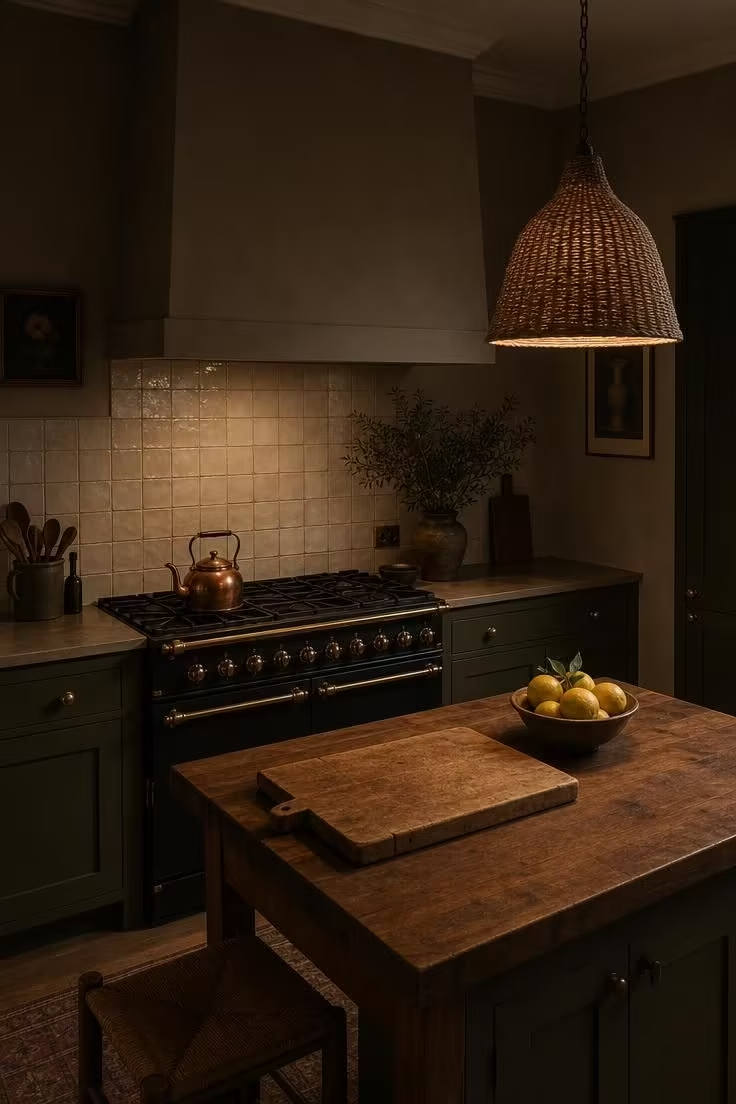
Start with the black range or cooktop, because it is the visual anchor of the kitchen and the single appliance that most defines the room’s character.
A matte black range with brass knobs immediately shifts the personality of the space, even if every other appliance is still stainless, because the cooking zone is where the eye naturally goes first.
Add the dishwasher next: a panel-ready model with a black front or a matte black freestanding unit extends the dark finish along the lower cabinet line without touching the upper half of the room, which keeps the transition gradual and low-risk.
The refrigerator is the biggest surface area commitment, so if a fully black refrigerator feels too aggressive, consider a panel-ready model that matches your cabinetry instead, letting the range carry the black appliance statement on its own.
Small appliances like a matte black toaster, kettle, or stand mixer are useful bridge pieces that let you test whether the aesthetic feels right in your kitchen before investing in major replacements.
A staged approach over two to three years, starting with the range and working outward, keeps costs manageable and gives you time to adjust your cabinet paint, hardware metals, and countertop contrast as each new piece arrives.
Conclusion
A kitchen with black appliances is not about chasing a trend or making a dramatic style statement.
It is about choosing a finish that steps back and lets the rest of the room, the wood grain, the stone veining, the brass hardware, the natural light, do the talking.
The warmth that people notice in these kitchens does not come from the black itself: it comes from the fact that black absorbs light instead of reflecting it, which makes every warm material around it look richer and more present.
Whether you start with a single matte black range paired with your existing cabinets or commit to a full suite of matched appliances, the principle is the same: give the eye something to rest on rather than something to bounce off of.
Pick one finish, match your hardware metals to a single through-line, and let the surrounding materials carry the personality.
The result is a kitchen that feels less like a showroom and more like a room someone actually lives in, which is what a kitchen was supposed to be in the first place.