This post may contain affiliate links. If you make a purchase through these links, we may earn a commission at no additional cost to you.
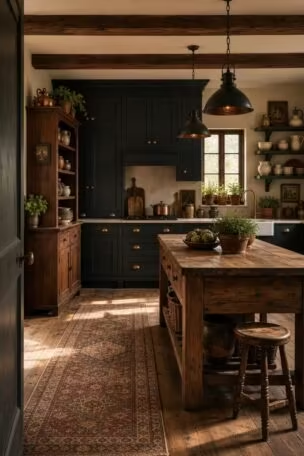
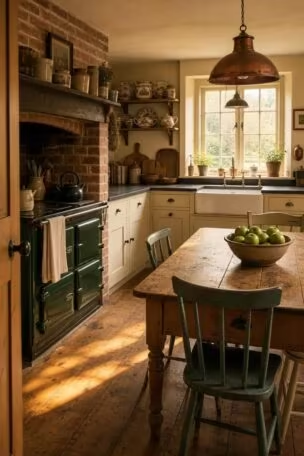
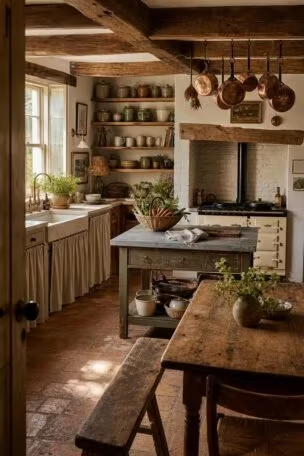
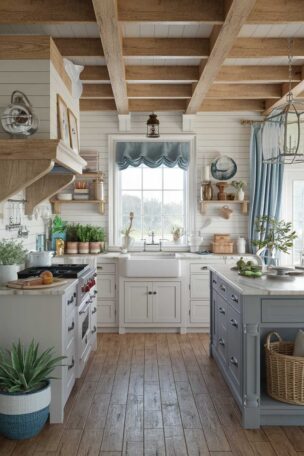
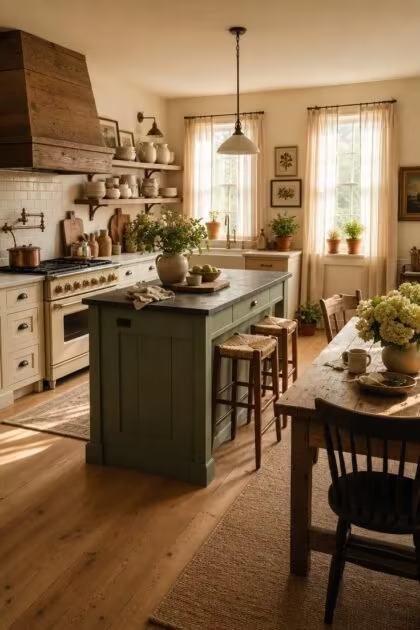
A cottage farmhouse kitchen is the kind of room that looks like it was assembled over years, not ordered from a catalog.
Every surface carries a story, from a worn countertop to a cabinet door that latches with an iron hook instead of a soft-close hinge.
That layered, collected feeling is what sets this style apart from cleaner farmhouse or modern cottage approaches.
The 10 ideas here break down specific material and styling choices you can bring into your own space, whether you are starting from scratch or reworking a kitchen that already has good bones.
Each one pairs a focal material with the supporting details that make it work.
A Sage-Painted Shaker Island With a Honed Soapstone Top
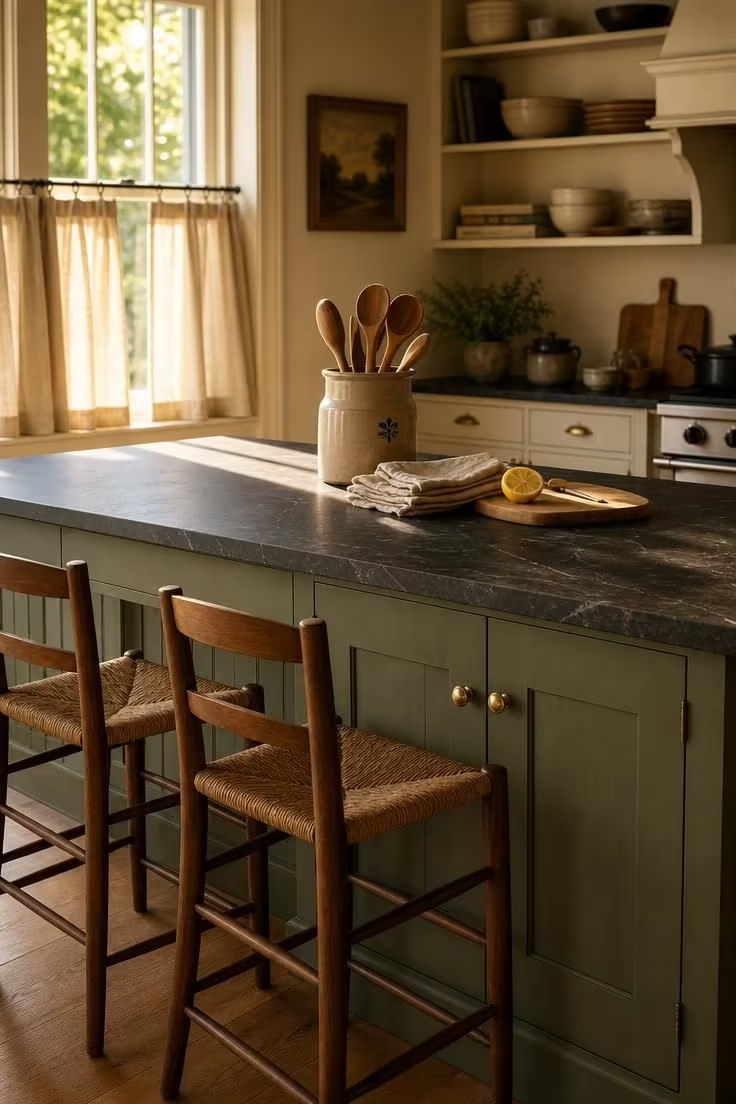
Sage green sits in a sweet spot between neutral and colorful, grounding the island without making it compete with everything else in the room.
Honed soapstone develops a patina over months of use, and that slow change gives the surface a character that polished granite or quartz cannot replicate.
The matte finish of the stone against the matte paint creates a tone-on-tone effect that reads as rich without being heavy.
Rush-seat stools keep the seating honest and lightweight, pulling from a cottage tradition that predates modern farmhouse kitchen decor by more than a century.
Small brass knobs instead of bar pulls reinforce the scale of a cottage, where everything feels slightly more delicate than in a full-size farmhouse.
The combination of one painted piece with natural-finish perimeter cabinets is what makes a cottage kitchen ideas layout feel collected rather than matched.
Soapstone also stays cool to the touch, which makes it a practical surface for rolling dough or resting hot pans with a trivet.
Style Blueprint:
- Matte sage green paint on Shaker-profile island base
- Honed soapstone countertop with natural veining
- Rush-seat counter stools in natural or honey-toned wood
- Unlacquered brass knob pulls (small scale, 1 to 1.25 inch)
- Stoneware crock and wooden utensils as countertop styling
Handmade Zellige Tile Backsplash Behind a Fireclay Apron Sink
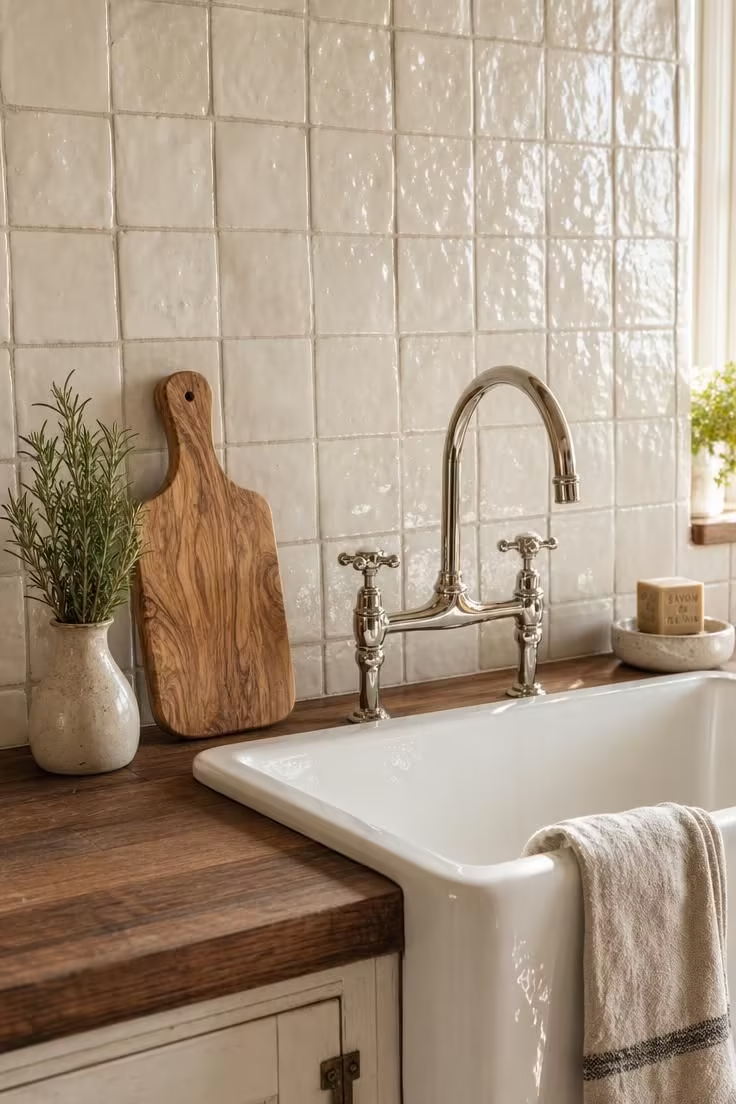
Zellige tiles carry an imperfection that machine-made subway tile simply cannot match.
Each piece fires at a slightly different temperature, so the glaze pools and cracks in ways that give the wall a watercolor-like depth when you stand close.
That handmade quality pairs naturally with a fireclay apron front sink, which has its own subtle undulations in the surface.
A bridge faucet with porcelain cross handles adds another layer of cottage character because the exposed bridge bar recalls a plumbing era before single-hole mixers took over.
Butcher block countertops in a medium walnut tone warm up the palette and keep the look from tipping too clinical, even with all that white tile above.
The grout color matters more than most people realize, and a soft warm gray sits far better than bright white against zellige because it follows the tile’s own tonal range.
Style Blueprint:
- Handmade zellige tiles in off-white or cream glaze (3×3 or 4×4 inch)
- Soft warm gray grout to complement the tile variation
- Fireclay apron front sink with rounded front edge
- Bridge faucet in polished nickel with porcelain cross handles
- Butcher block countertop in medium walnut tone
Ceiling Rafters in Whitewashed Oak Over a Slate Floor
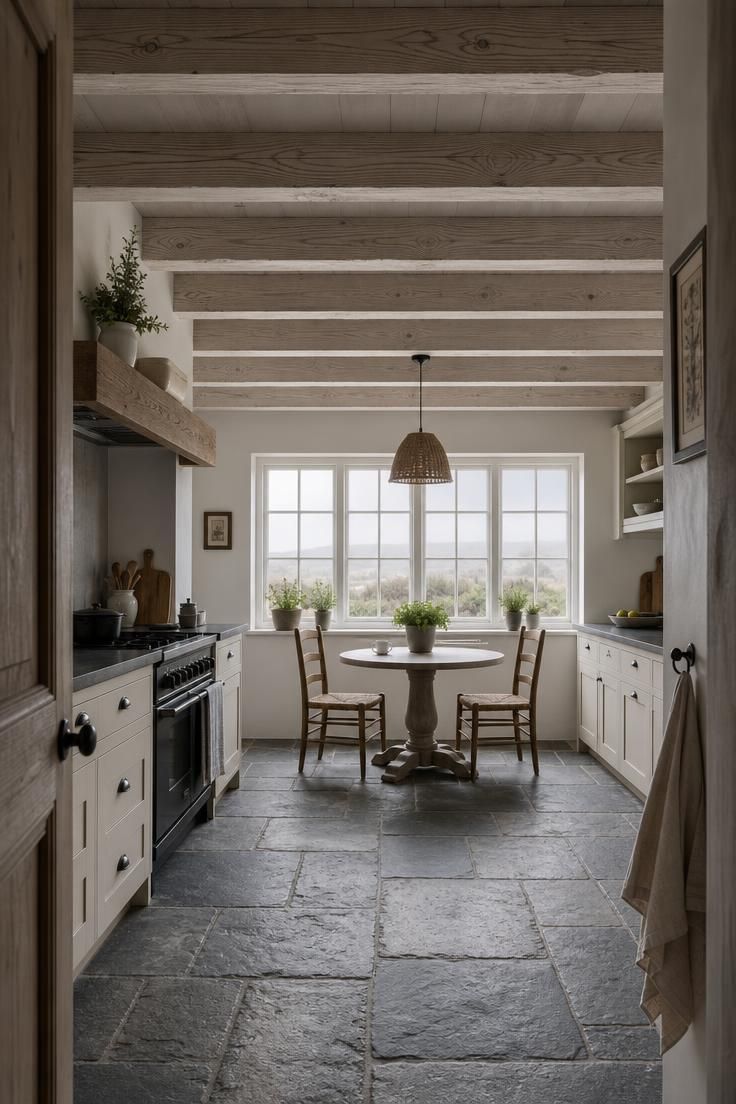
Whitewashing oak rafters instead of leaving them raw or painting them solid keeps the wood grain present without darkening the ceiling plane.
The effect reads as aged rather than new, which is exactly the look a cottage farmhouse kitchen needs overhead.
Pairing those pale rafters with a dark slate floor creates a visual anchor that pulls the eye downward while the ceiling stays light and airy.
Natural cleft slate has a surface texture that hides crumbs and water spots better than smooth tile, which makes it forgiving in a kitchen that gets heavy daily use.
The running bond layout adds a subtle horizontal rhythm to the floor without the formality of a herringbone or basketweave pattern.
Cool overcast light is the most honest lighting condition for this palette because it shows the true undertones of both the slate and the wash without any warm color cast.
A single woven pendant hanging from a rafter bay adds warmth to the overhead plane without cluttering it with multiple fixtures, and it is exactly the kind of understated detail that defines a cottage farmhouse kitchen ceiling.
The restraint in this setup is what gives it a rustic kitchen design quality that feels authentic rather than overdone.
Style Blueprint:
- Whitewashed oak ceiling rafters with visible grain
- Natural cleft slate floor in charcoal and dove tones, running bond layout
- Cream-painted base cabinets with brass or iron cup pulls
- Divided-lite windows for a cottage-appropriate mullion pattern
- Single woven pendant light suspended from a rafter bay
A Worn Pine Hutch Displaying Ironstone and Stoneware
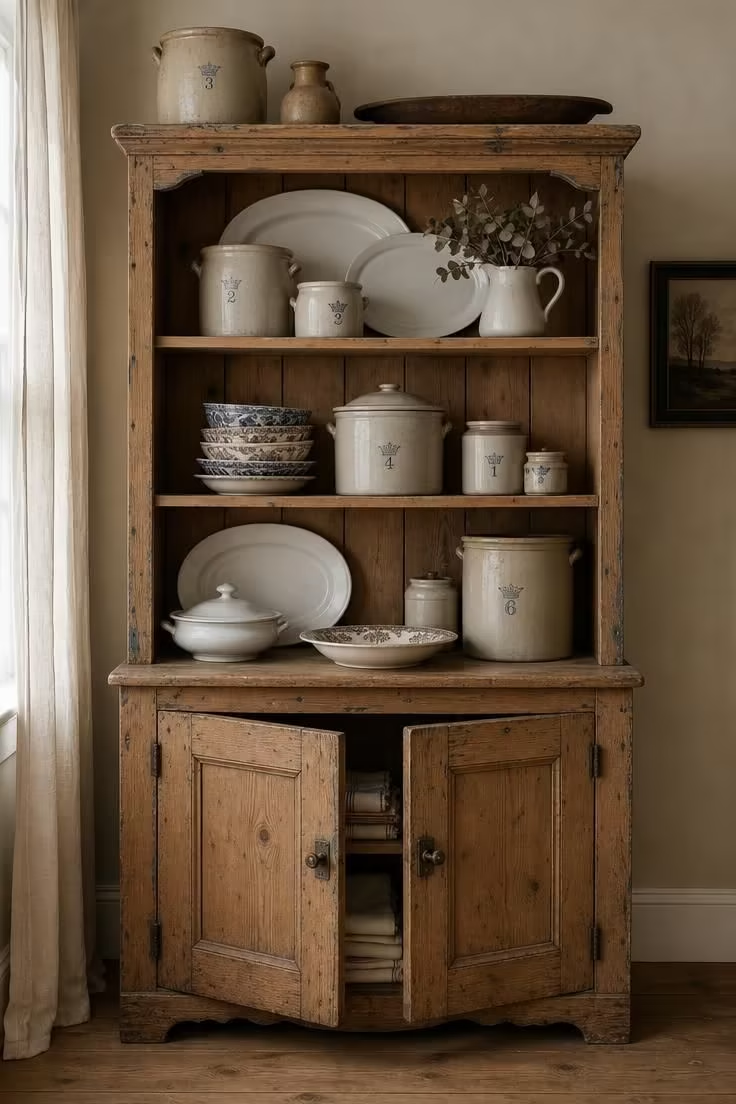
A freestanding hutch introduces a vertical storage moment that wall-mounted cabinets cannot replicate because it stands apart from the room as its own piece of furniture.
The open shelves become a display wall for collected dishware, and the fact that nothing matches is part of the appeal.
Ironstone has a weight and thickness that modern porcelain lacks, and stacking it on open shelves gives the hutch a sense of substance.
Stoneware crocks in varying heights fill the gaps between platters and bowls, creating a composition that looks arranged but not fussy.
The wear on an old pine hutch, the softened corners and faded paint remnants, tells a story that a new reproduction piece simply cannot.
Iron turn latches on the lower doors add a hardware detail that feels period-correct without drawing too much attention to itself.
Style Blueprint:
- Antique or vintage pine hutch with open upper shelves and paneled lower doors
- White ironstone platters and serving pieces in mixed sizes
- Stoneware crocks in cream and brown tones for vertical variety
- Iron turn latches and original or reproduction brass nail heads
- Faded paint remnants left visible as patina, not stripped
Design Pro-Tip: A freestanding hutch does more for a cottage farmhouse kitchen than a full wall of upper cabinets. It breaks the built-in uniformity and gives you one piece that feels like it traveled from another room, which is exactly the collected quality this style depends on.
An Oil-Rubbed Bronze Pot Filler Mounted on Shiplap Paneling
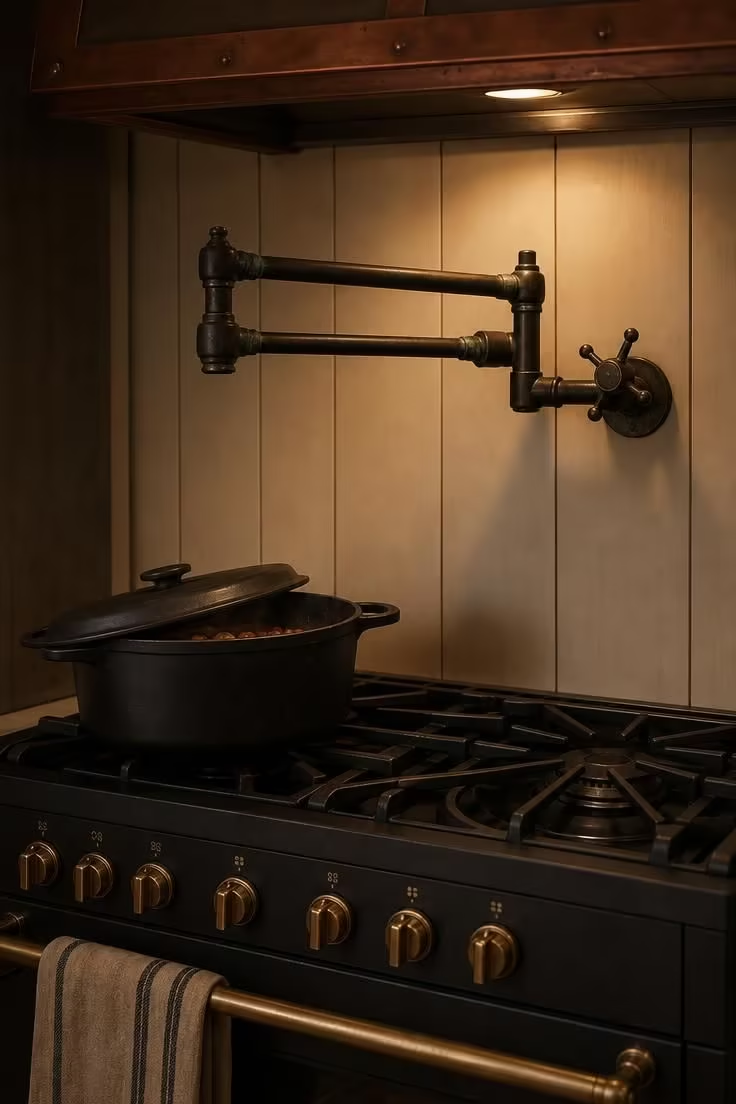
A pot filler is one of those details that signals a kitchen built for actual cooking rather than just looking at.
Mounting it on shiplap paneling instead of tile gives the wall a softer, more textured backdrop that absorbs the fixture’s dark finish without reflecting it.
Oil-rubbed bronze develops a living patina over time, and the slight green oxidation at joints and seams is a feature, not a flaw, in a cottage farmhouse kitchen.
The swing arm design lets you fill a stockpot directly on the burner, which saves carrying water across the room, but it also adds a visual layer of hardware that reads as professional and purposeful.
Pairing the dark fixture with a copper-banded range hood creates a warm metal story that ties the upper and lower zones of the cooking wall together.
Cream-painted shiplap keeps the wall from going too dark, and the joint lines add just enough linear texture to prevent the surface from feeling flat.
A matte black range with brass knobs picks up both the bronze of the pot filler and the copper of the hood, linking all three metals without forcing a single finish across every piece of vintage kitchen accessories in the room.
Style Blueprint:
- Oil-rubbed bronze pot filler with cross handles and swing arm
- Vertical shiplap paneling in warm cream behind the range
- Copper-banded custom range hood (ventilated, not decorative only)
- Matte black range with brass knobs (six-burner or similar)
- Cast-iron cookware as functional styling on the stovetop
A Distressed Cream Cabinet Run With Black Iron Strap Hinges
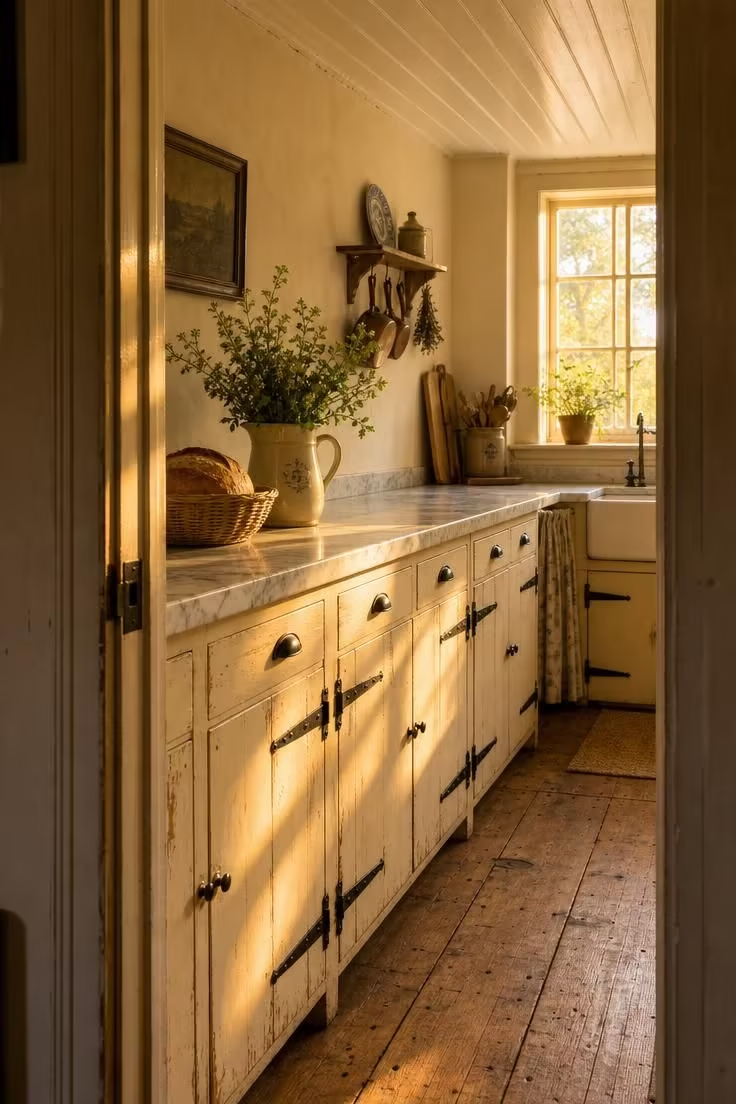
Iron strap hinges are a hardware choice that immediately dates a kitchen to a pre-industrial aesthetic, even on brand-new cabinetry.
The long horizontal bar of a strap hinge draws the eye across the door face and gives each cabinet a presence that a concealed hinge never could.
Distressing the cream paint at corners and edges is most convincing when you sand down to bare wood rather than to a contrasting paint color beneath.
The raw pine showing through at wear points tells the eye that these cabinets have been opened and closed thousands of times, which is the whole point of the technique.
Pairing iron hinges with iron bin pulls creates a unified hardware language that reads as deliberate and period-correct.
Honed Carrara marble on the countertop adds a layer of refinement that keeps the distressed cabinets from reading as neglected.
Beadboard paneling on the ceiling is a classic cottage move that adds texture overhead without the cost or structural commitment of exposed beams.
A reclaimed wood kitchen floor with visible nail heads repeats the patina theme at ground level, connecting the cabinet wear to the floor wear in one continuous story.
Style Blueprint:
- Distressed cream paint on flat-panel or Shaker cabinets, sanded to bare pine at edges
- Black iron strap hinges (surface-mounted, 6 to 8 inch)
- Iron bin pulls in a matching matte black finish
- Honed Carrara marble countertop with soft gray veining
- Beadboard paneling ceiling in white
Woven Pendant Shades Hanging Over a Plank-Top Farm Table
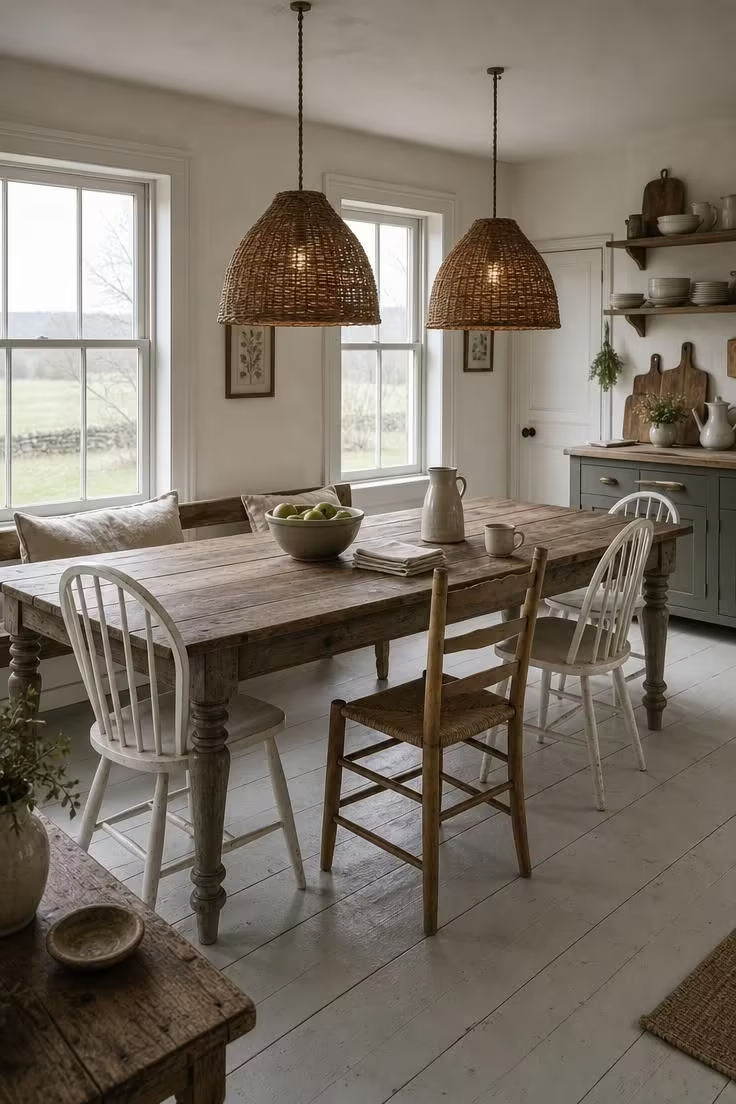
Woven pendant shades filter light in a way that hard-shelled fixtures cannot, breaking it into small warm patterns on the table and walls below.
Rattan or seagrass weave introduces an organic texture overhead that softens the harder surfaces of wood and plaster in the room.
Hanging two pendants instead of one centers the light over the full length of the table and creates a visual rhythm that a single fixture would miss.
The farm table itself works best when made from thick planks rather than a veneer top, because the edge thickness is what sells the piece as genuinely old or hand-built.
Mismatched chairs are a cottage tradition that keeps a dining area from looking like a furniture showroom set, and alternating between painted and natural wood finishes adds depth.
A linen bench cushion on one side softens the seating and invites longer, slower meals, which matches the pace a cottage kitchen ideas layout is built around.
Style Blueprint:
- Woven rattan or seagrass pendant shades (open-bottom, 14 to 18 inch diameter)
- Plank-top farm table in weathered gray-brown reclaimed wood with turned legs
- Mismatched seating: painted Windsors, ladder-backs, and a bench with linen cushion
- Stoneware and ceramic tabletop styling (no glass or metal)
- Painted wood plank floor in pale gray
A Butler’s Pantry Lined With Glass-Front Cabinets and Brass Knobs
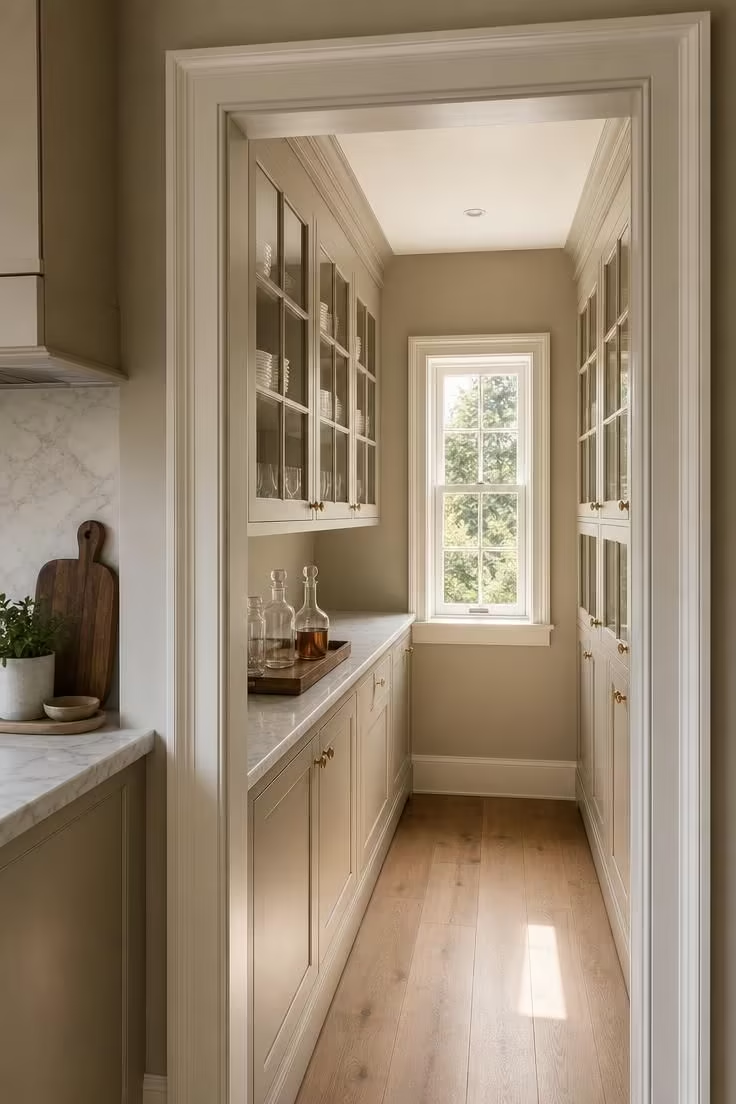
A butler’s pantry works as a pressure valve for the main kitchen, giving you a separate zone to store serving pieces, barware, and overflow without crowding your everyday workspace.
Glass-front doors with divided-lite panes add a cottage-appropriate detail that a single sheet of glass would miss, and the mullion pattern echoes the window style used throughout the house.
Brass knobs in a warm unlacquered finish age alongside the rest of the room, developing a dark honey patina that cold polished nickel never achieves.
Soft putty paint on the lower cabinets grounds the pantry without going as dark as a charcoal or navy, and the slightly deeper wall color above adds subtle depth to a narrow corridor.
Marble countertops in a butler’s pantry see less daily wear than the main kitchen surfaces, so you can choose a more delicate stone here without worrying about heavy use.
Keeping the floor continuous from the main kitchen into the pantry makes the whole space feel like one connected room rather than an afterthought tucked behind a door.
Open shelving kitchen storage in the main room paired with closed storage in the pantry gives you the best of both: display in one zone, organization in the other.
Style Blueprint:
- Glass-front upper cabinets with divided-lite panes (four per door)
- Small round unlacquered brass knobs (1 inch)
- Flat-panel lower cabinets in soft putty paint
- Marble countertop in cool white with faint gray veining
- Continuous wide-plank oak floor matching the main kitchen
Design Pro-Tip: A butler’s pantry lets you keep the main kitchen minimal and clean while storing everything you actually use for cooking and serving behind a separate doorway. Even a narrow closet-depth space can work if you run shallow shelving on both walls.
A Reclaimed Barnwood Range Hood With Iron Banding
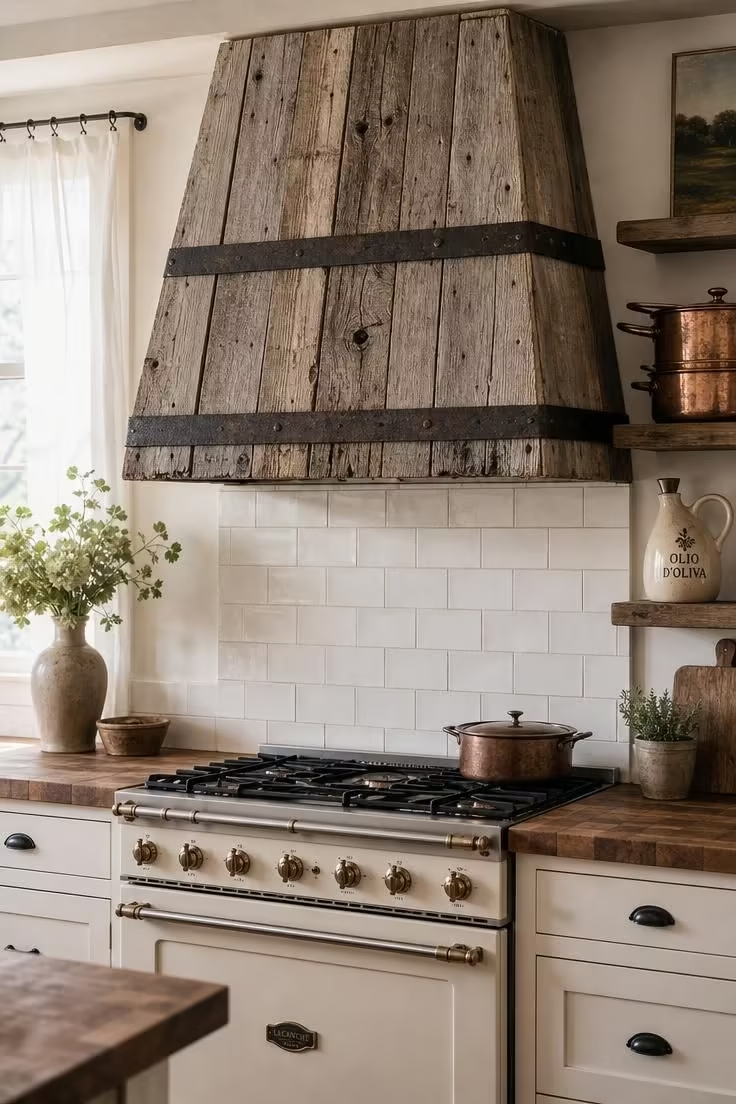
A range hood built from reclaimed barnwood turns the most utilitarian fixture in the kitchen into its strongest character piece.
The silvered grain and old nail holes in weathered planks carry a visual weight that painted drywall or stainless steel hoods cannot approach.
Iron banding wrapped horizontally around the hood’s body adds structural detail and references the barrel-hoop joinery found in old agricultural buildings.
The tapered shape of a custom hood gives it an architectural presence that a flat box enclosure lacks, drawing the eye upward and centering the cooking zone.
Pairing reclaimed wood overhead with handmade ceramic tiles on the backsplash creates a textural conversation between two surfaces that are both imperfect in complementary ways.
End-grain butcher block countertop below the cooking zone gives you the most durable cutting surface available in natural wood, and the checkerboard pattern of the end grain adds its own visual interest.
A cream-finish range sitting between white shaker cabinets keeps the base of the wall quiet so the barnwood hood can command attention, and that contrast between rough and refined is what makes a cottage farmhouse kitchen feel layered.
Stacked copper pots on a nearby shelf connect back to the iron banding through a shared warm-metal tone, tying the accessories to the architecture.
Style Blueprint:
- Reclaimed barnwood planks on a tapered custom range hood frame
- Horizontal iron banding (two bands, flat bar stock, matte finish)
- Matte white handmade ceramic tile backsplash in running bond
- End-grain butcher block countertop at the cooking zone
- Cream-finish professional-style range with simple controls
An Herb Garden Window Shelf Built Into a Deep Stone Sill
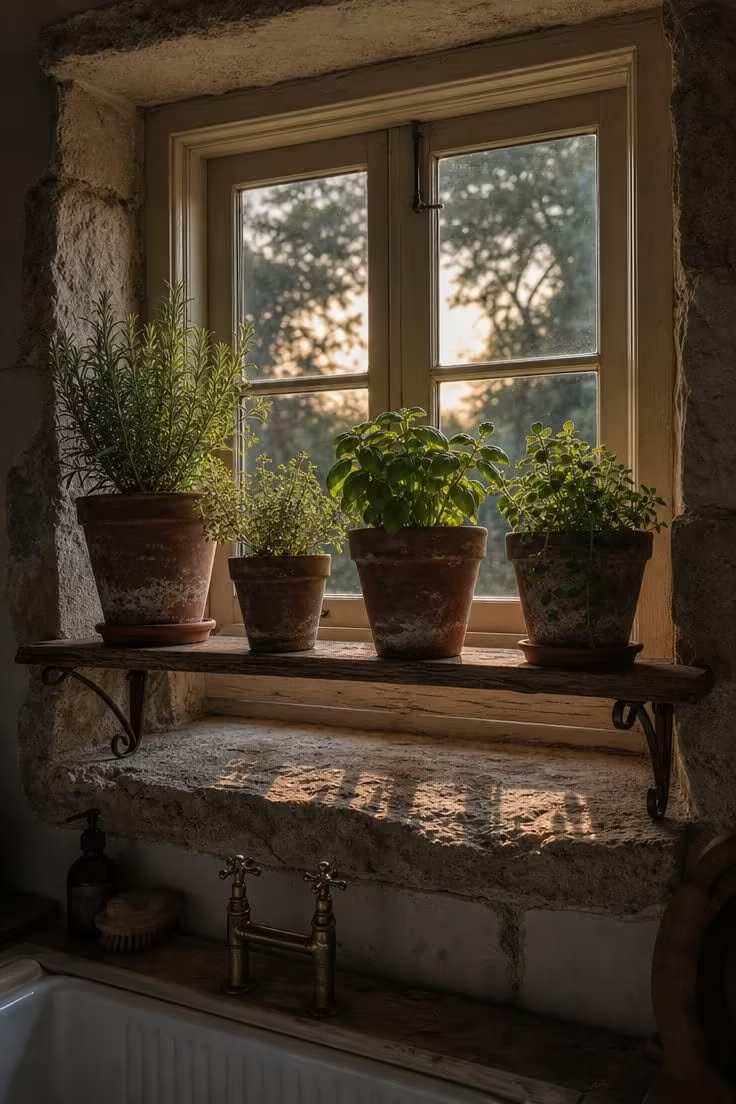
Growing herbs on a kitchen windowsill is one of the oldest domestic traditions, and building a proper shelf into a deep stone sill gives the practice a permanent home rather than treating it as an afterthought.
Limestone sills have a rough surface that holds moisture without showing water rings the way marble or wood would.
Terra-cotta pots with mineral deposits on the outside look like they have been through several growing seasons, and that aged quality makes them feel right in a cottage setting.
Wrought-iron angle brackets bolted into the stone add a hardware detail that connects this small moment to the larger iron accents used throughout a farmhouse kitchen decor scheme.
Backlighting herbs with evening light turns the window into a living piece of art, with leaf shapes and stem outlines casting patterns onto the sill surface.
Placing the herb shelf directly above the sink puts fresh seasoning within arm’s reach of the prep zone, which is the kind of practical layout choice that separates a working cottage kitchen from a decorative one.
Style Blueprint:
- Deep stone windowsill in natural limestone with rough-hewn edge
- Reclaimed wood shelf plank on wrought-iron angle brackets
- Weathered terra-cotta pots in mixed sizes with visible mineral deposits
- Fresh culinary herbs: rosemary, thyme, basil, oregano
- Faded cream paint on window frame with visible brush strokes
Conclusion
A cottage farmhouse kitchen earns its character through the specific materials you choose and the way you let them age together.
Every idea here comes back to one principle: pair something handmade or reclaimed with something practical, and let time do the rest.
Sage paint on an island, zellige tile behind a sink, iron hinges on a cabinet door, these are not trend-driven choices but material-driven ones that will look better five years from now than they do today.
Start with the piece that matters most to you, whether that is a barnwood range hood or a pine hutch full of ironstone, and build outward from there.
The best cottage farmhouse kitchen ideas are the ones that feel collected, and that starts with picking one thing you love and giving it room to breathe.