This post may contain affiliate links. If you make a purchase through these links, we may earn a commission at no additional cost to you.
An industrial kitchen earns its character through honest materials, not decoration.
Steel, concrete, raw brick, and reclaimed timber do the talking in these spaces, and every surface tells you exactly what it is made of.
The best industrial kitchen design treats the cooking space like a workshop, where function shapes the look and wear only makes things better.
These 15 ideas show how to build an industrial kitchen that feels grounded, warm, and ready for daily life.
1. Blackened Steel Range Hood Over a Professional Cooktop With Riveted Seams
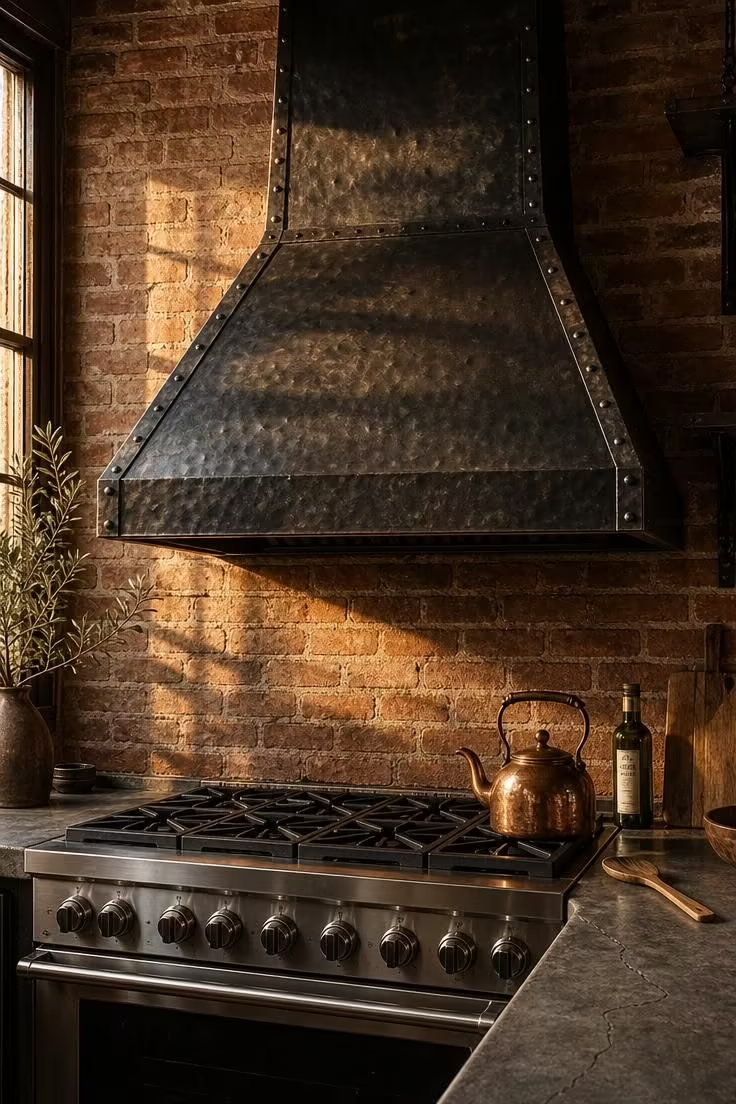
The hammered steel hood becomes the room’s anchor, pulling your eye up and holding it there.
Every rivet along the seams tells you this piece was shaped by hand, not stamped from a factory mold.
Warm light catches the uneven surface and throws soft amber reflections across the ceiling and adjacent brick.
The professional cooktop beneath feels right at home under something this heavy and deliberate.
A honed concrete counter beside the burners picks up that same honest, unfinished quality without competing for attention.
This is the kind of industrial kitchen detail that ages well, developing a deeper patina year after year.
Style Blueprint:
- Custom blackened steel range hood with visible riveted seam construction
- Professional six-burner cooktop with cast iron grate burners
- Honed concrete countertop with a natural matte finish
- Raw red brick wall as the backsplash backdrop
- Copper or brass accent piece near the cooking zone
2. Poured Concrete Waterfall Island With Welded Hairpin Legs
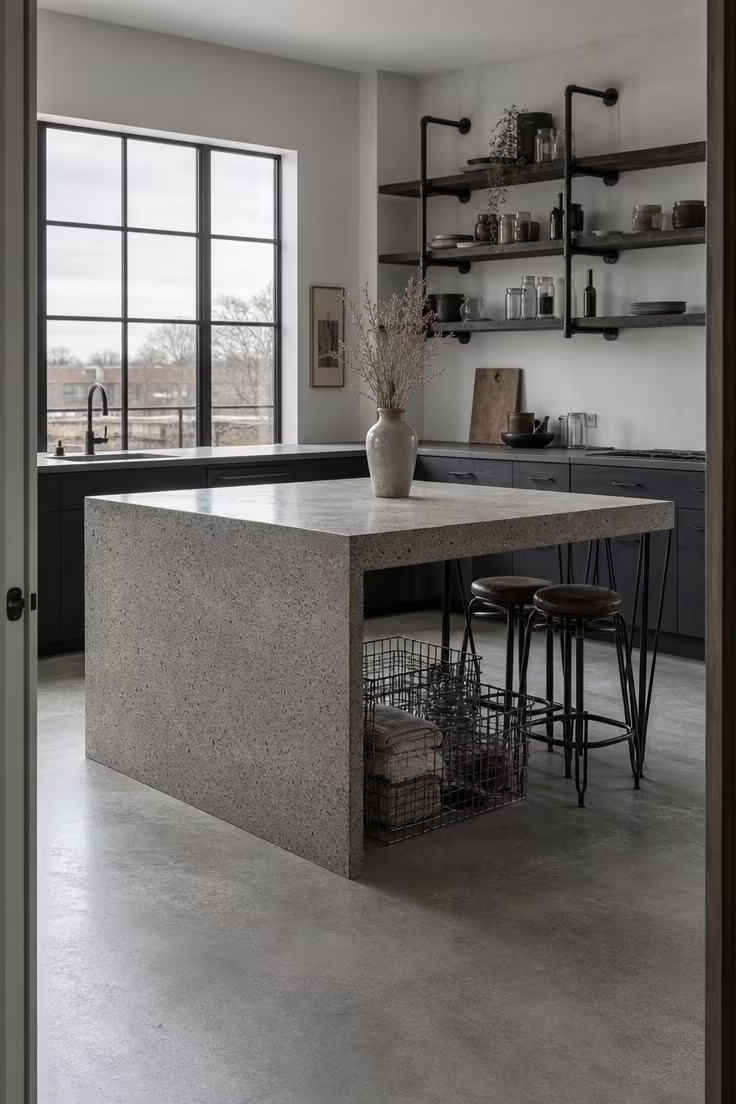
Concrete countertops command a room the moment you notice the aggregate flecks inside the polished surface.
The waterfall edge on this island drops straight to the floor like a slab cut from a larger mass, and the weight of it grounds everything around it.
Hairpin legs on the opposite end keep the silhouette from looking too heavy, letting light pass underneath.
Wire baskets below hold everyday items in plain view, which is exactly how an industrial kitchen should handle storage.
The cool morning light evens out the concrete’s color and prevents the grey from reading as cold or sterile.
Two leather-topped stools slide under the overhang, turning the island into a casual spot for morning coffee or quick meals.
This kind of piece rewards patience, as the concrete develops subtle staining and character over months of daily use.
Style Blueprint:
- Poured concrete waterfall countertop with exposed aggregate finish
- Welded black steel hairpin legs for structural support
- Wire storage baskets underneath for visible organization
- Matte black metal stools with worn leather seats
- Ceramic vase with dried grasses as a natural accent
3. Raw Red Brick Accent Wall Behind Floating Pipe-Mounted Shelves
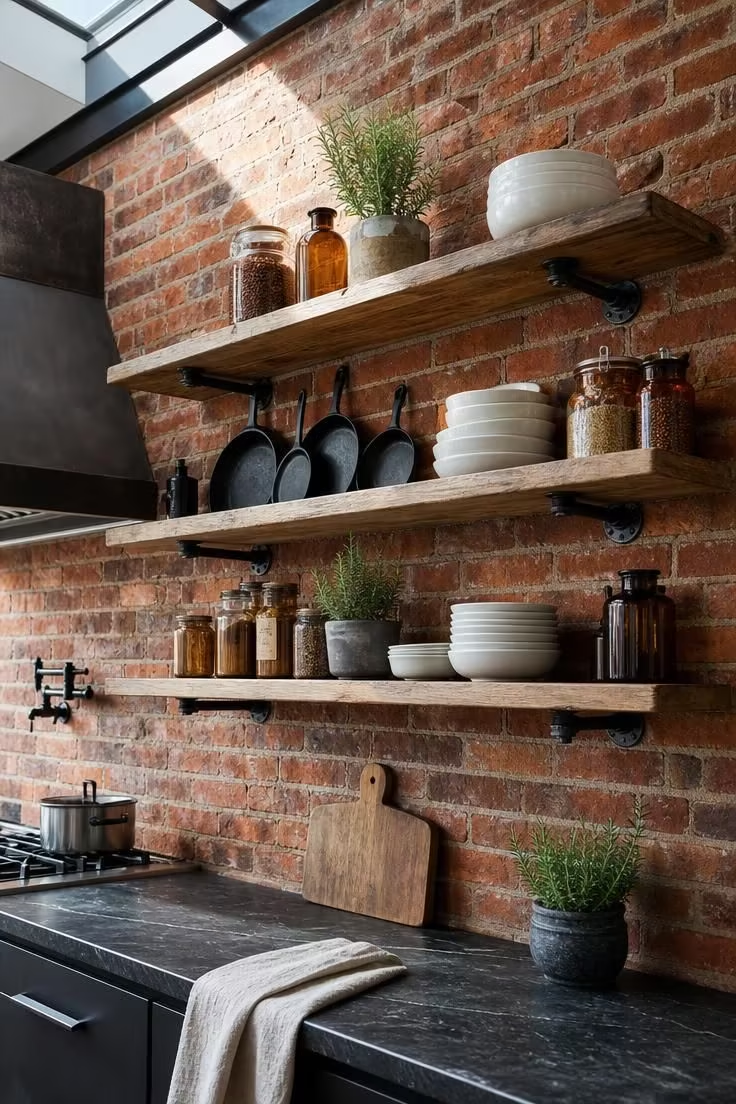
An exposed brick kitchen wall carries decades of texture in every uneven surface and mortar line.
Iron pipe brackets bolted directly into the brick look structural, as if the shelves were always part of the building’s bones.
Stacked stoneware and standing cast iron skillets fill the shelves with objects that feel purposeful rather than decorative.
The midday light from above rakes across the brick at an angle, and every bump and groove casts its own small shadow.
Amber glass jars catch that light and scatter it in warm tones across the surrounding surfaces.
A sprig of rosemary in a small clay pot adds the only living green on the entire wall, and that single plant does enough.
Metal kitchen shelving like this works best when the objects on display are things you actually reach for while cooking.
The soapstone counter below ties the warm brick tones to the cooler workspace without a jarring shift.
Style Blueprint:
- Raw red brick wall with visible mortar joints and tonal variation
- Threaded iron pipe brackets supporting reclaimed oak plank shelves
- Cast iron skillets and white stoneware as functional shelf styling
- Amber glass jars for spice storage and warm color accents
- Small potted herb plant for a single living green element
4. Matte Black Flat-Panel Cabinets With Exposed Bolt-Head Drawer Pulls
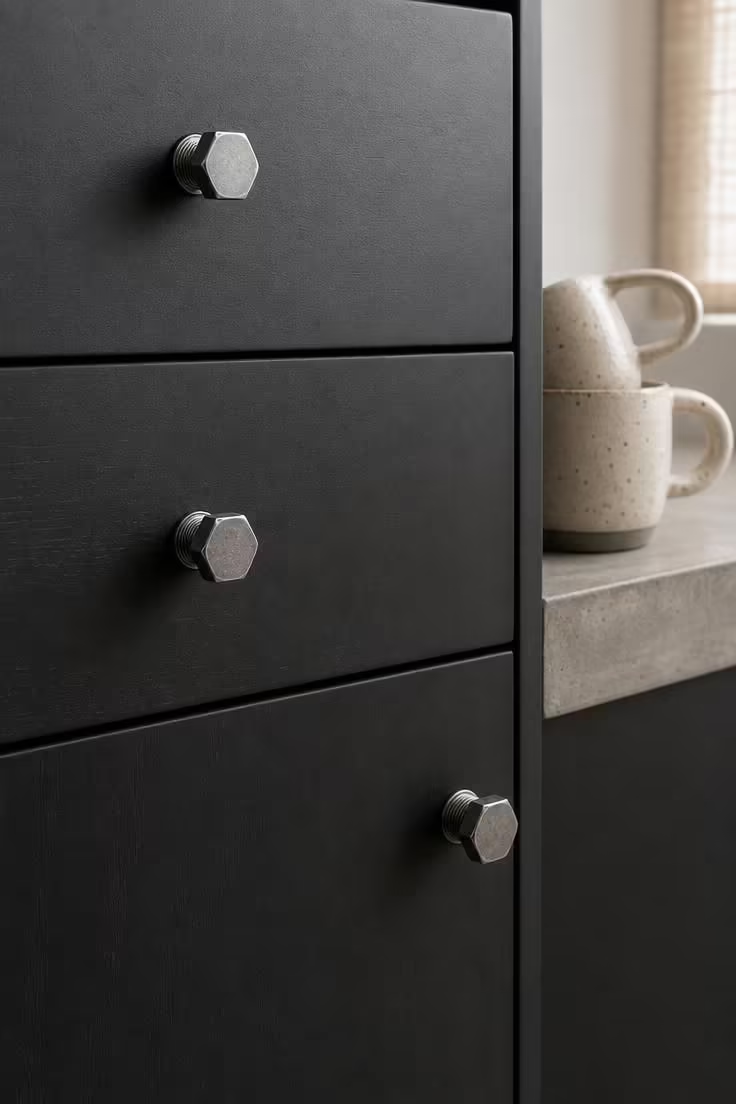
A matte black kitchen cabinet surface absorbs light instead of bouncing it, which makes the entire wall feel quieter.
The bolt-head pulls add the only relief on these flat-panel doors, and their raw steel finish reads as found rather than chosen.
Up close, you can see the slight texture of the powdercoat and the faintest wood grain pressing through from beneath.
Each hex head sits flush with visible threading, a small detail that says the kitchen was assembled with intention.
There is nothing decorative about this hardware, and that restraint is exactly what makes it interesting.
The concrete countertop visible at the edge of the frame reinforces the idea that every material here earns its place.
Style Blueprint:
- Flat-panel cabinet doors in matte black powdercoat finish
- Oversized hex bolt-head drawer pulls in raw steel
- Concrete countertop as the adjacent work surface
- Minimal hardware placement with generous spacing between pulls
- No visible cabinet hinges for a clean front profile
5. Aged Brass Gooseneck Sconces Flanking a Fireclay Apron Sink
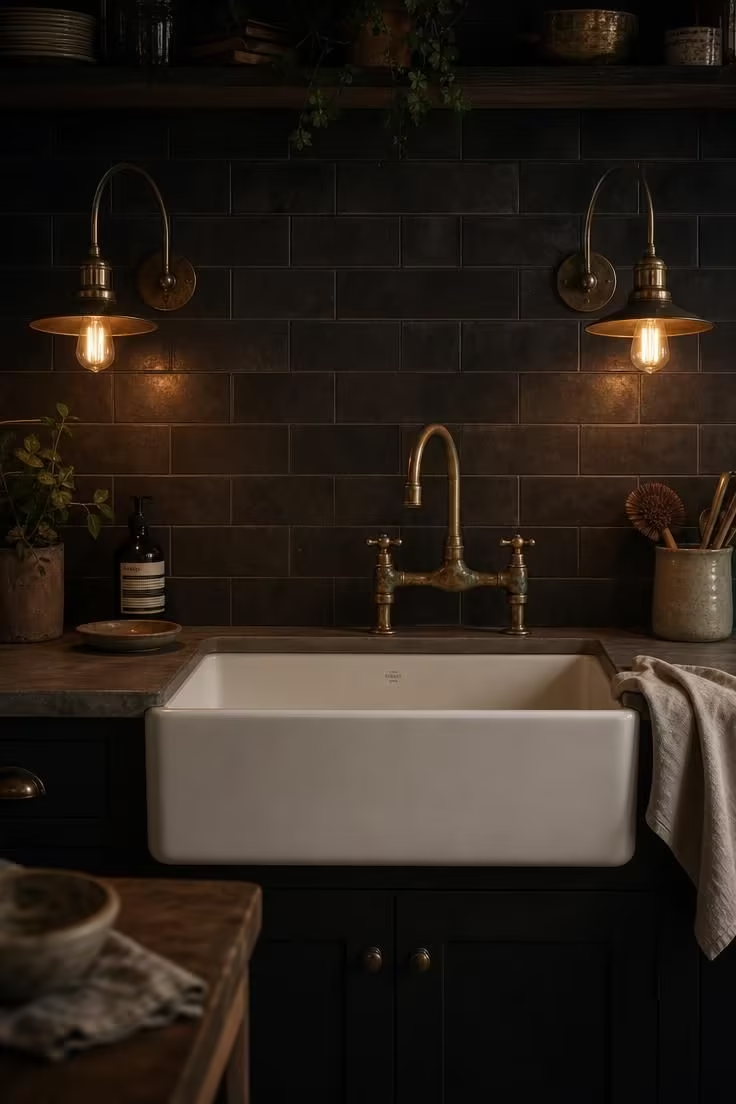
The twin sconces throw warm pools of light directly onto the sink basin, leaving the rest of the room in a comfortable half-shadow.
That focused pendant lighting kitchen approach turns a utility zone into something worth looking at, even while you scrub pots.
Unlacquered brass develops its own tarnish pattern over time, and the green oxidation spots on these fixtures prove they have been here a while.
The fireclay apron sink holds its own against the aged metal with a matte white finish that glows warm under the amber filament bulbs.
Dark charcoal subway tile behind the sink absorbs the sconce light rather than reflecting it, which deepens the moody atmosphere.
A bridge faucet in the same patinated brass ties the fixtures together as a single material family.
The stoneware soap dish and linen towel are the only accessories, and they feel placed by habit rather than arrangement.
This corner of the kitchen proves that low light does not mean dark, just deliberate.
Every surface here responds to the warm glow differently, and that variation is what makes the moment feel real.
Design Pro-Tip: When choosing metals for an industrial kitchen, pick one finish family (aged brass, raw steel, or matte black) and let it repeat on fixtures, hardware, and lighting. Mixing too many metal finishes breaks the unified, workshop feel that makes the style work.
Style Blueprint:
- Aged brass gooseneck sconces with exposed Edison-style filament bulbs
- Deep fireclay apron-front sink in matte white
- Unlacquered brass bridge faucet with natural patina development
- Dark charcoal subway tile backsplash with matching grout
- Hand-thrown stoneware soap dish and oatmeal linen hand towel
6. Polished Concrete Floor With Exposed Aggregate and a Jute Runner
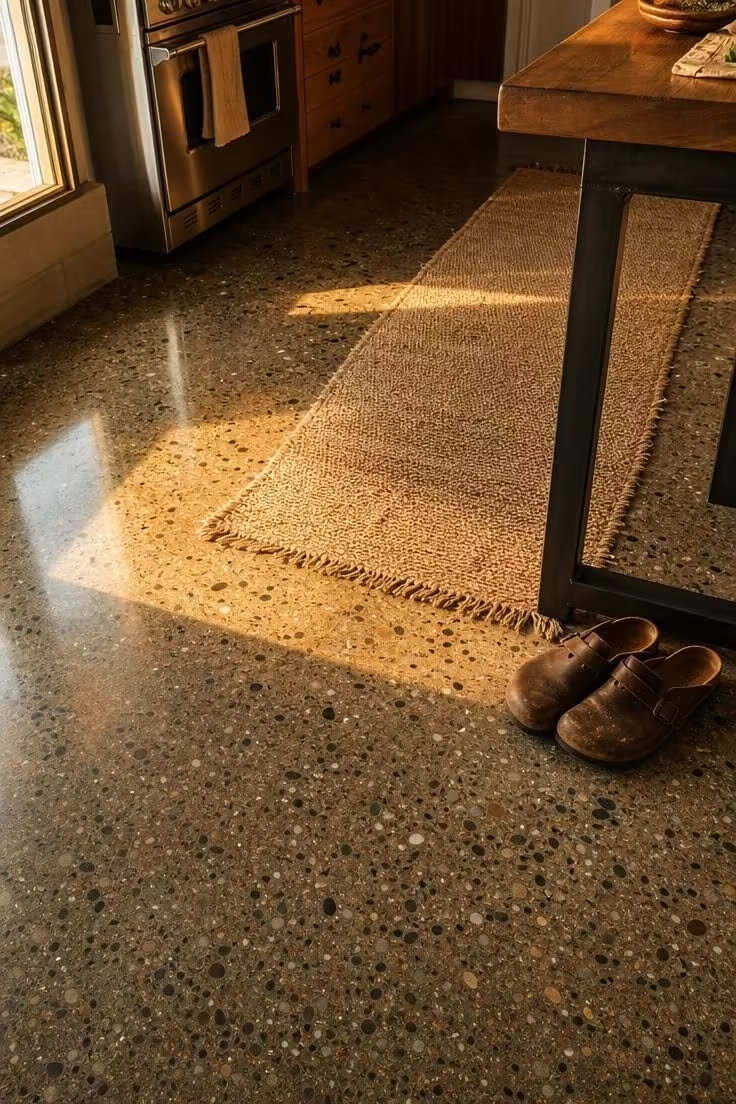
Looking down at this floor, you can count the pebbles and quartz chips suspended inside the polished concrete like a cross-section of a riverbed.
The aggregate adds a speckled warmth that plain grey concrete cannot match on its own.
A jute runner softens the path between island and stove, absorbing the footfall and breaking up the hard reflective surface.
Industrial kitchen design often ignores floors, but the floor is the largest single surface in the room, and it sets the entire tone.
Late afternoon light stretches a golden band across the concrete, turning the cool grey into something almost amber.
Worn leather clogs left at the island’s base are the kind of everyday detail that makes a styled photograph feel honest.
This floor will look better in five years than it does today, and that is the whole point.
Style Blueprint:
- Polished concrete floor with exposed river pebble and quartz aggregate
- Clear matte sealer for low-sheen protection and easy cleanup
- Natural jute runner with raw fraying edges along the main traffic path
- Welded steel island legs anchored into the concrete slab
- Warm-toned accessories like leather or linen near the floor plane
7. Corrugated Metal Backsplash Under Steel-Frame Glass Upper Cabinets
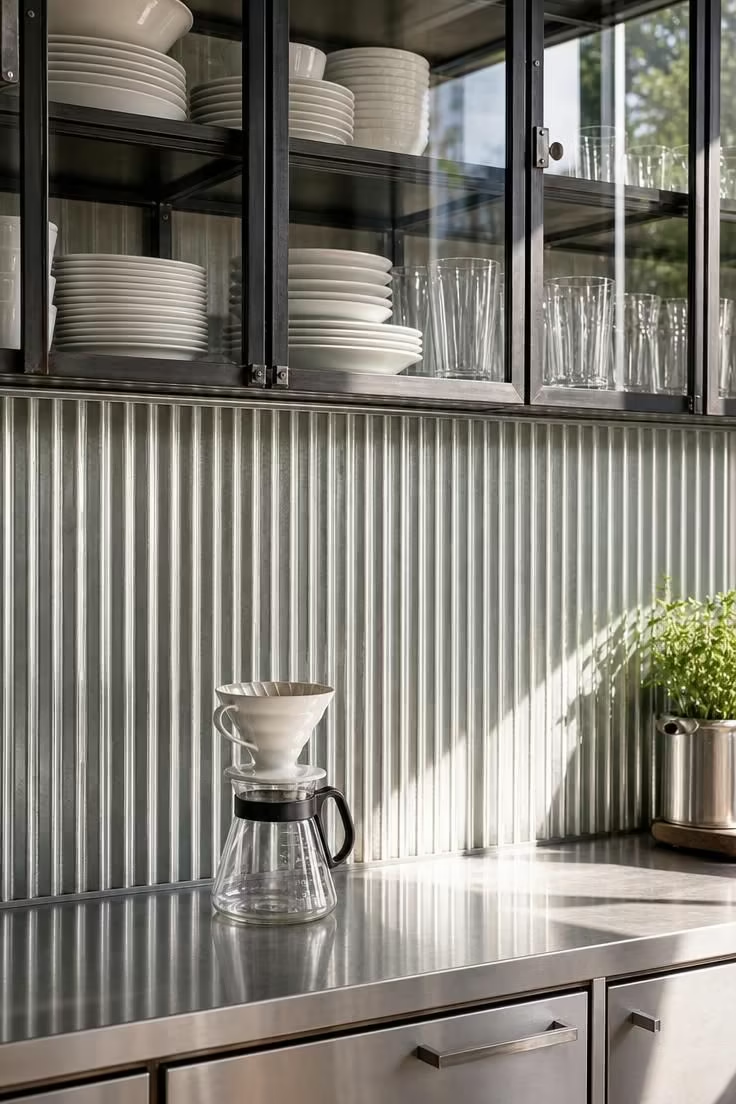
Corrugated metal catches light along every ridge, creating a ripple of highlight and shadow that makes a flat wall feel three-dimensional.
The vertical lines draw the eye upward toward the steel-frame glass cabinets, where stacked white plates glow behind the single-pane doors.
An open shelving kitchen approach works well, but these glass-front cabinets offer the same visibility with protection from grease and dust.
The stainless steel kitchen counter below mirrors the backsplash tone without matching it exactly, creating a tonal range within one material family.
Midday light from the side rakes across every corrugated ridge and casts thin parallel shadows that shift as the sun moves.
A ceramic pour-over dripper on the counter is the only warm-toned object in the frame, and its matte clay finish stands out against all that metal.
This combination works best in a kitchen that gets strong natural light, where the reflective surfaces multiply brightness rather than creating glare.
Keeping the cabinet interiors simple lets the architecture of the frames speak for itself.
Style Blueprint:
- Galvanized corrugated steel backsplash panels mounted vertically
- Black steel-frame single-pane glass upper cabinet doors
- Stainless steel countertop for a continuous metal tone
- White ceramic dishware visible through the glass for clean contrast
- Clear glass tumblers and simple ceramics as counter accessories
8. Reclaimed Oak Beam Ceiling With a Hanging Edison Bulb Cluster
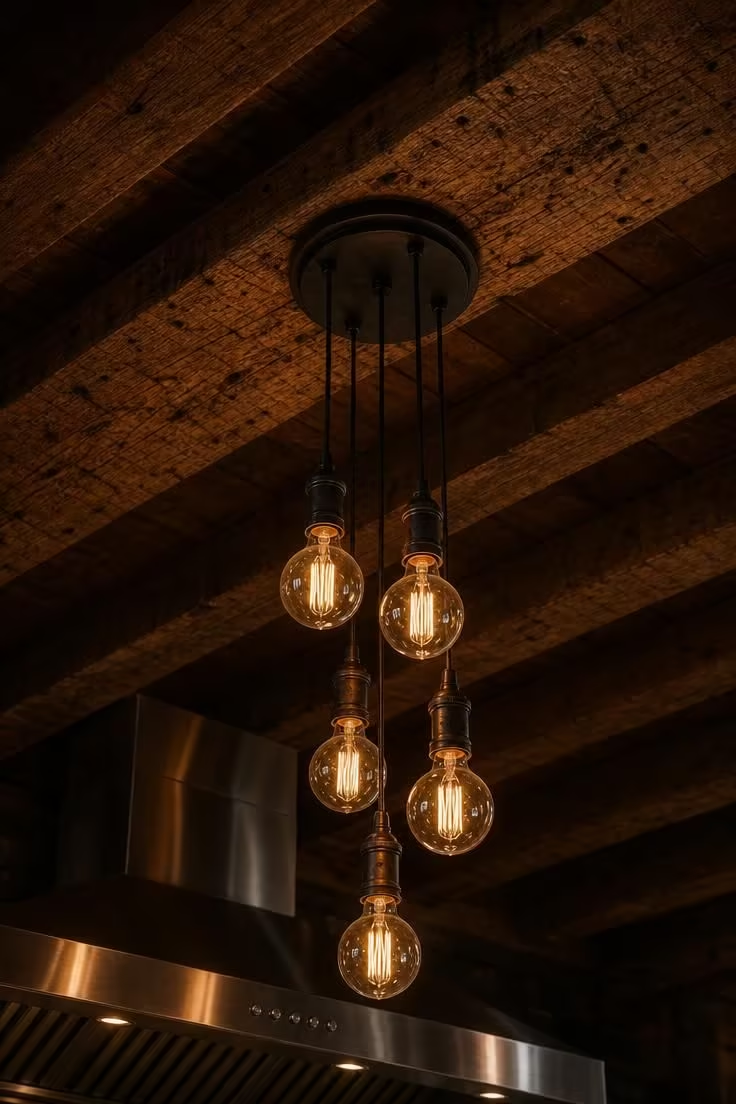
A reclaimed wood kitchen ceiling carries history that new lumber cannot replicate, from saw marks to nail holes to the grey-brown patina of weathered grain.
The Edison bulb cluster drops from a single iron plate bolted into the beam’s underside, each bulb hanging at a different height like notes on a page.
Amber filaments glow through clear glass, throwing soft circles of warm light across the surrounding wood and leaving the joist bays above in shadow.
Black cloth cords disappear against the dark ceiling, making the bulbs look almost suspended by nothing.
This is a ceiling worth looking up at, and in a kitchen, that kind of overhead interest changes how the whole room feels.
Style Blueprint:
- Reclaimed oak ceiling beams with visible saw marks and nail holes
- Cluster of five Edison bulbs at staggered heights on black cloth cords
- Single iron ceiling plate as the mounting base
- Exposed joist bays between beams for additional depth
- Clear glass bulbs with visible amber filaments
9. Freestanding Stainless Steel Prep Table With Lower Wire Baskets
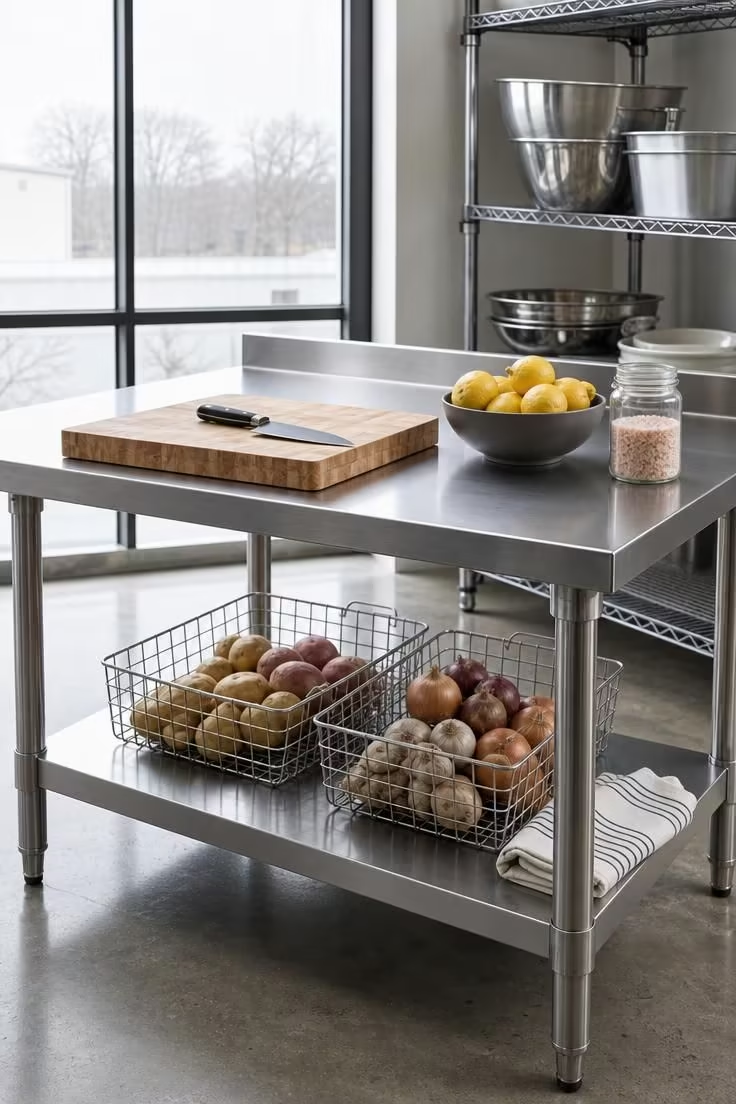
A freestanding prep table changes the way a kitchen works because it can move, and that flexibility matters more than most people expect.
The brushed stainless surface resists staining, handles heat, and cleans with a single wipe, which is why commercial kitchens have used them for decades.
Wire baskets on the lower shelf keep root vegetables visible and ventilated, removing the need for a separate produce drawer.
The slight upturn at the back edge prevents spills from running off the table and onto the floor during prep.
An end-grain maple cutting board sits on top and adds the one warm surface in an otherwise all-metal frame.
Open metal kitchen shelving behind the table extends the same storage philosophy: keep things you use often within arm’s reach and in plain view.
This piece costs less than a custom island and does more of the actual work.
Design Pro-Tip: A stainless steel prep table on locking casters gives you a movable island that can shift against a wall when you need floor space, then roll back into the center for cooking. Look for commercial restaurant supply tables, which are built heavier and priced lower than home kitchen versions.
Style Blueprint:
- Commercial-grade brushed stainless steel prep table with tubular legs
- Large wire storage baskets on the lower shelf
- End-grain maple cutting board as the primary prep surface
- Locking casters for mobility (or fixed feet for stability)
- Simple functional props: chef’s knife, coarse salt, fresh produce
10. Perforated Steel Pantry Doors With Soft-Close Hinges
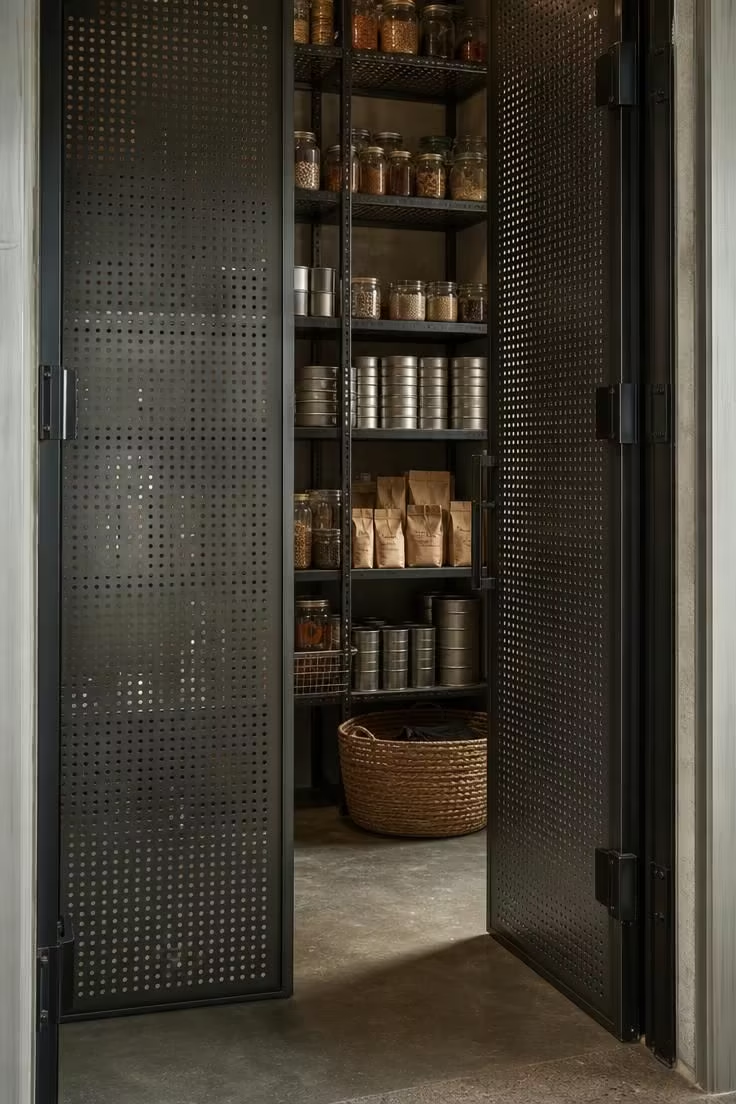
Perforated steel doors let you see what is inside the pantry without opening them, which saves a step every time you check what you need.
The small round holes create a uniform grid that reads as texture from a distance and becomes functional up close.
Light from the kitchen passes through the perforations and casts a constellation of bright dots across the interior shelves and floor.
Glass canning jars lined up behind the steel filter into soft shapes, almost like looking through a screen door on a summer porch.
Heavy-duty hinges in matte black hold the steel panels securely and give the doors a satisfying weight when they swing.
Soft-close mechanisms keep the doors from slamming, which matters when the surfaces are all hard metal and concrete.
The pantry floor matches the kitchen’s polished concrete, keeping the two spaces connected as one continuous room.
A woven basket just inside the door softens the threshold and gives you a landing spot for bags straight from the market.
This approach treats the pantry not as a hidden closet but as a visible part of the industrial kitchen design.
Style Blueprint:
- Cold-rolled steel pantry door panels with uniform round perforations
- Heavy-duty matte black steel hinges with soft-close mechanisms
- Glass canning jars and tin containers for visible, organized storage
- Polished concrete floor continuous from kitchen into pantry
- Woven basket at the threshold for a natural texture accent
11. A Cast Iron Pot Rack Suspended From Exposed Ceiling Joists
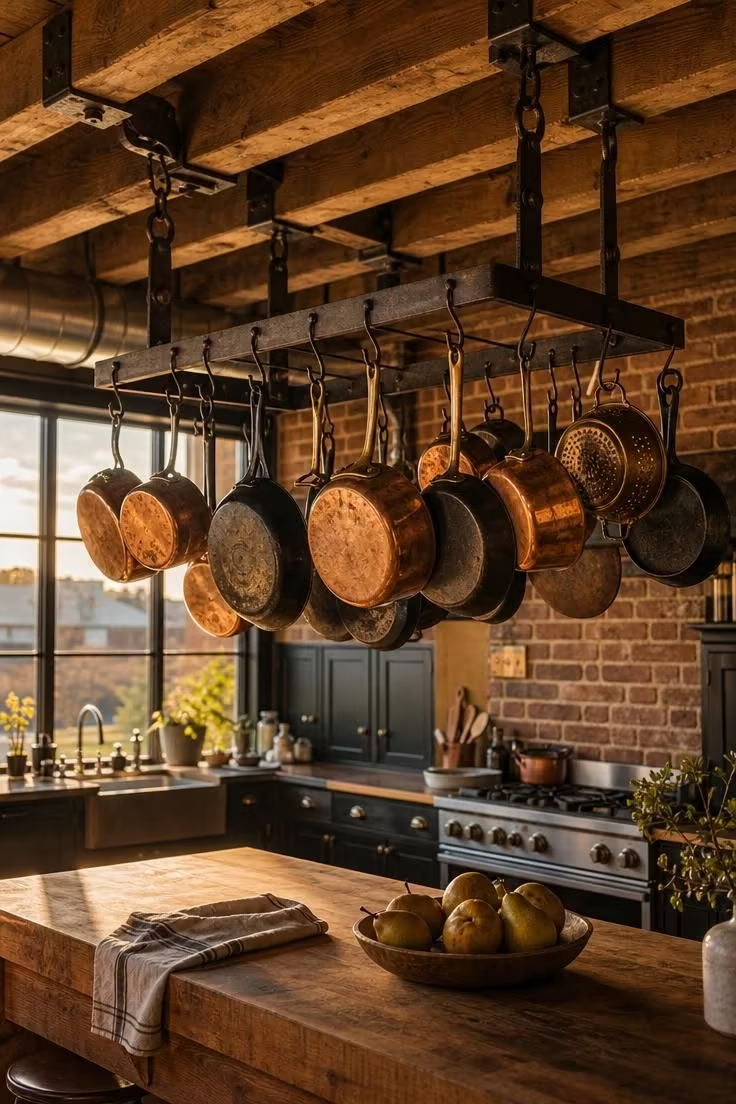
Hanging cookware from the ceiling is the oldest form of kitchen storage, and in an industrial kitchen, it looks like it belongs there.
The forged iron S-hooks grip each pot handle with visible curve and weight, and the slight swing when you pull one free feels satisfying.
Copper pots catch the golden-hour light and scatter it in warm reflections across the ceiling joists above.
A cast iron skillet next to a colander next to a saucepan tells you exactly how this kitchen cooks, without opening a single drawer.
The rough-sawn joists overhead give the rack something honest to hang from, and the iron brackets at each connection point echo the rack’s own material.
A butcher block island below anchors the composition and provides the warm wood tone that keeps all that metal from feeling cold.
Style Blueprint:
- Rectangular cast iron pot rack with forged S-hooks
- Mixed cookware display: copper pots, cast iron skillets, colander
- Rough-sawn exposed timber ceiling joists with iron bracket connections
- Butcher block island surface beneath the rack for a warm anchor
- Fresh fruit or produce on the island for a lived-in accent
12. Zinc-Wrapped Countertops on Dark Walnut Base Cabinets
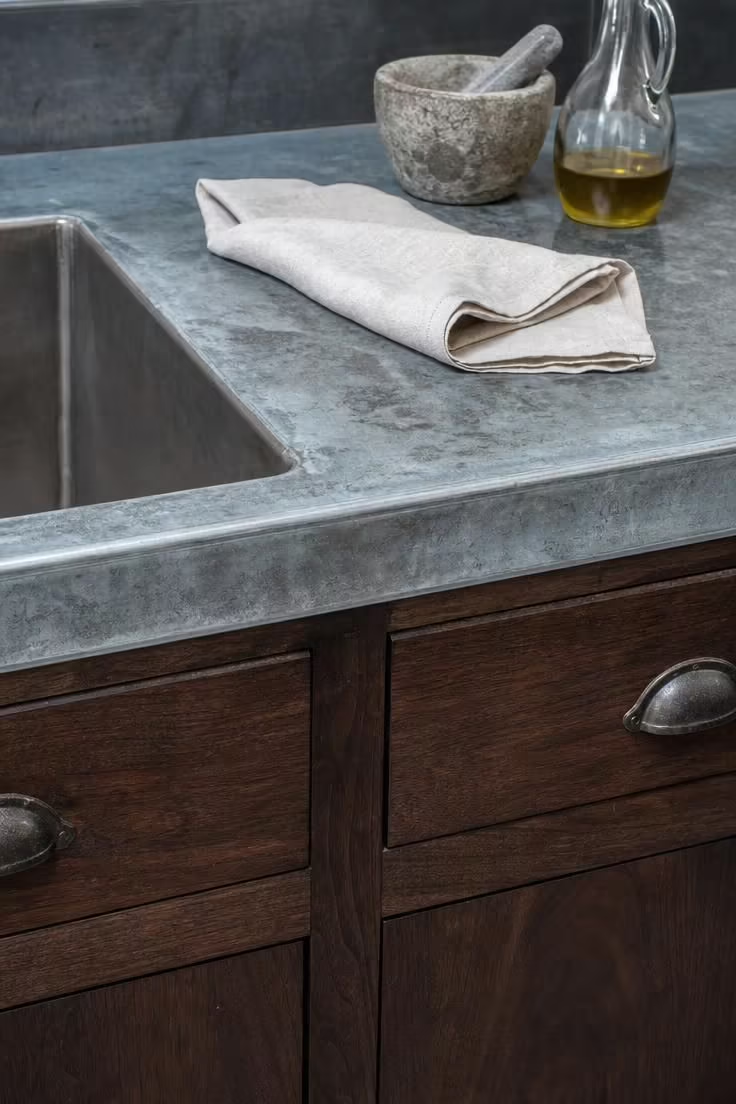
Zinc develops a patina that no other countertop material can match, shifting from bright silver to mottled blue-grey within weeks of installation.
Near the sink, lighter oxidation marks show where water sits most often, mapping your daily habits directly onto the surface.
The front edge wraps over and tucks under in a clean fold, giving the counter a finished look without the fussiness of a decorative edge profile.
Dark walnut cabinets below provide the warmth that zinc needs, and the contrast between the cool metal and rich wood grain is striking without being forced.
Iron bin pulls on the cabinet doors connect the hardware to the zinc’s industrial tone while keeping the walnut’s warmth in view.
A stone mortar and pestle on the counter adds another heavy, natural-material object that feels at home next to zinc.
This pairing works as an alternative to a butcher block island when you want a cooler overall palette with the same material honesty.
Zinc is softer than stainless steel, which means it scratches and dents, and those marks become part of its ongoing story.
Style Blueprint:
- Zinc-wrapped countertop with folded front edge and natural patina
- Dark walnut flat-panel base cabinets with visible grain
- Iron bin pull cabinet hardware in a dark aged finish
- Stone mortar and pestle as a functional counter accessory
- White linen napkin for a soft contrast against the metal surface
13. Charcoal Glazed Subway Tile With a Soapstone Basin Sink
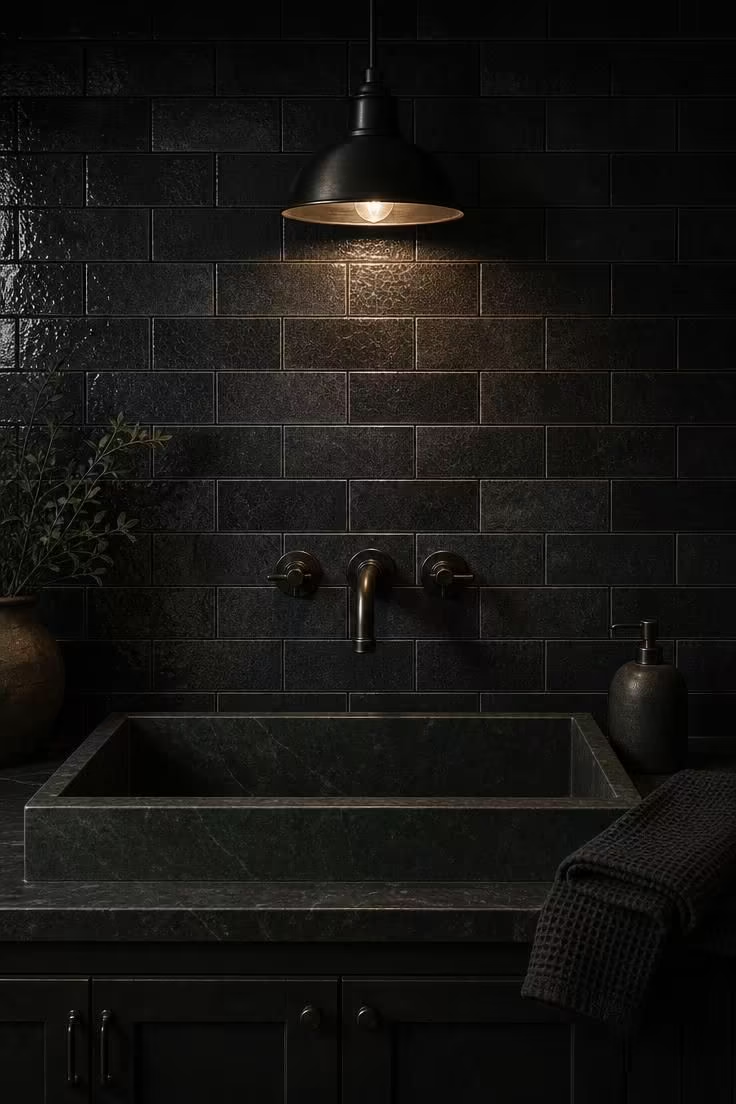
The crackle glaze on each tile creates subtle variation, so no two tiles read as exactly the same shade of charcoal.
That inconsistency gives the backsplash a depth that flat matte tile cannot achieve, catching low light in unpredictable ways.
A soapstone basin sink sits heavy and deep below the tile, its dark charcoal-green surface smooth to the touch and nearly indestructible.
The wall-mounted oil-rubbed bronze faucet clears the counter entirely, keeping the workspace open and the sight lines clean.
Dark surfaces risk feeling oppressive, but under a single focused pendant, every material glows with its own tonal warmth.
The thin grey grout lines between the tiles add just enough contrast to define each brick-laid rectangle without breaking the dark plane.
A dark ceramic soap pump and charcoal waffle-weave towel complete the tonal palette, proving that a one-color approach can feel rich rather than flat.
Design Pro-Tip: When committing to dark surfaces in an industrial kitchen, layer at least three different dark textures (glazed tile, matte stone, brushed metal) to prevent the space from reading as a single flat color. Each material reflects light differently, creating depth even in a tight palette.
Style Blueprint:
- Charcoal glazed subway tile with crackle finish in standard brick pattern
- Deep single-basin soapstone sink in dark charcoal-green
- Wall-mounted oil-rubbed bronze faucet for a clear counter
- Dark ceramic soap pump and waffle-weave hand towel
- Single focused pendant light above the sink for directed illumination
14. Factory Window Partition Separating Kitchen From Dining Area
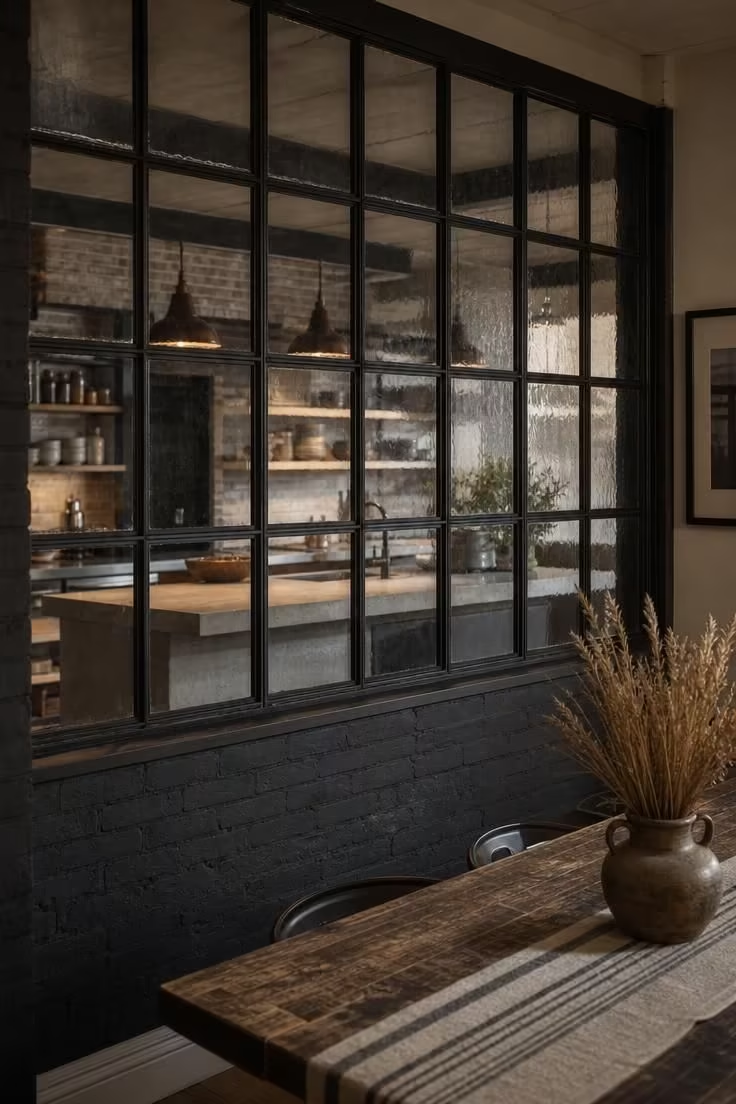
This partition does what a solid wall cannot, defining two rooms while keeping them in constant conversation.
Thick steel mullions in a six-over-six grid give the glass a structural presence, making it feel like part of the building’s framework rather than a decoration.
Wavy antique-style panes distort the kitchen view just enough to add character, softening the pendant lights into gentle blurs from the dining side.
The dark charcoal painted brick half-wall below the glass anchors the partition and gives it the mass it needs to look original to the space.
Afternoon light passes through and illuminates dust motes between the two rooms, connecting the zones with a shared atmosphere.
This is industrial kitchen design at its most architectural, using structure itself as the defining feature.
Style Blueprint:
- Black steel mullion partition in a six-over-six grid pattern
- Antique-style wavy glass panes for subtle visual distortion
- Dark charcoal painted brick half-wall as the partition base
- Reclaimed wood dining furniture visible on the opposite side
- Clay pitcher with dried wheat stalks for a natural dining-side accent
15. Copper Pendant Trio Over a Butcher Block Island With Iron Legs
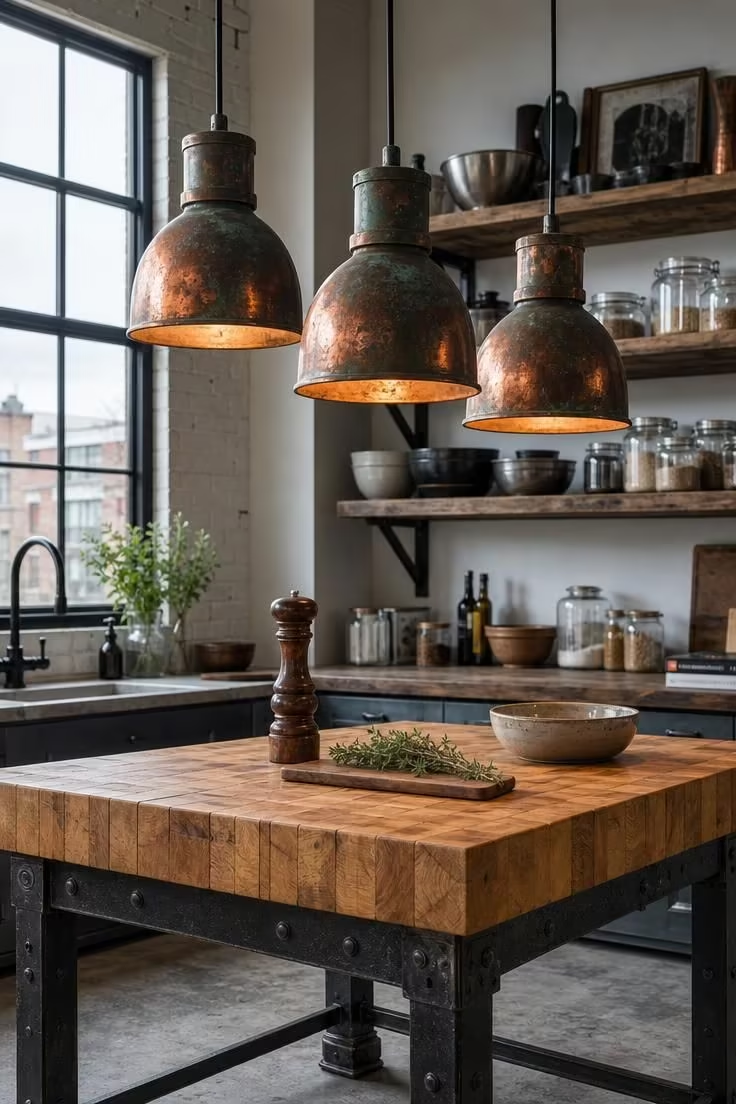
A copper pendant lighting kitchen setup pulls warmth out of even the flattest overcast sky, and three shades in a row multiply that effect across the full island length.
The deep green-brown patina on these shades tells you they have been here for years, with brighter orange spots where someone habitually reaches up to adjust them.
Hanging at slightly staggered heights, the trio avoids the rigid uniformity that would feel out of place in a space built on imperfection.
The butcher block island below is thick end-grain maple, and the golden honey surface glows under the copper light like a second source of warmth.
Heavy iron legs with riveted details hold the block securely and connect the island’s base material to the broader industrial vocabulary.
Fresh thyme sprigs on a small cutting board bring a quiet green note to the warm wood and metal palette.
A reclaimed wood kitchen shelf on the far wall extends the material story, linking the island’s butcher block to the room’s other wood surfaces.
This pairing of copper overhead and butcher block below creates the kind of warm industrial kitchen that people want to linger in after the meal is done.
Style Blueprint:
- Aged copper pendant shades with natural green-brown patina, set of three
- Thick end-grain maple butcher block island top with visible block pattern
- Heavy iron island legs with decorative rivet details
- Fresh herbs on a small cutting board for a natural countertop accent
- Reclaimed wood shelf on a nearby wall to extend the wood tone
Conclusion
An industrial kitchen works best when every material has a reason to be there.
Steel, concrete, brick, reclaimed wood, and aged metal each carry their own weight in these spaces, and the less you dress them up, the better they look.
The 15 industrial kitchen ideas above show that raw surfaces and warm finishes can share a room without compromise.
Start with one strong material choice, whether it is a concrete island or a copper pendant, and let the rest of the kitchen respond to it.
The spaces that feel the most lived in are the ones where nothing is trying too hard.