This post may contain affiliate links. If you make a purchase through these links, we may earn a commission at no additional cost to you.
Minimalism is often pictured as white walls, bare floors, and almost nothing else, which makes the whole idea seem cold or impractical for a room meant for rest.
A comfortable minimalist bedroom begins with a different question: which pieces stay because they earn their place, and which ones leave because they distract from what the room is for?
Comfort here is a design material, built from texture, light, and a few deliberate choices rather than from adding more objects.
The approach below treats minimalism as a way of editing a real bedroom, not a way of emptying one.
Distinctive Bedroom Plans Start With Your Most-Used Surface
Understanding how to have a minimalist bedroom starts with noticing which surface gathers your phone, a half-read book, or the shirt you changed out of before choosing any new furniture.
Almost every room has one surface that collects everything: the nightstand, the top of a dresser, or a bench under the window.
That surface is the best place to test whether minimalism can survive contact with real habits.
The most-used surface works as a small, low-stakes experiment for the rest of the room because it reveals which items arrive there every day without a plan.
A two-question filter is worth using: does this need to be on show, and does it really have a use?
A reading lamp passes both.
A stack of unopened mail fails the first and often the second.
Items that clear the filter can stay visible, while everything else needs a spot inside a drawer or a lidded basket nearby.
Apply the same logic to secondary surfaces once the first one holds steady for a week.
A bench, a windowsill, or the top of a low bookcase can each be edited with the same pair of questions, which is much more manageable than attempting to overhaul the whole room in one weekend.
Design Pro-Tip: Start with the nightstand for one week before expanding to the dresser or the bench. A single surface that stays clear is proof the system works.
Bring Order to Open Shelving Before It Becomes Visual Clutter
Open shelves promise easy access, yet they quickly turn into ledges for everything that lacks a drawer.
A shelving unit only reads as minimalist when each shelf is treated as a surface with a defined job, not as overflow storage wearing a tidy disguise.
Use the same most-used logic from the nightstand and give each shelf a narrow purpose.
Bedtime books on one level, a covered box for chargers on another, and perhaps a small tray for glasses and a water glass.
When a shelf’s job is vague, objects pile up to fill the gap.
If a shelf is holding a stack of unworn clothes or a jumble of papers, that content belongs behind a door rather than on display.
Open storage should hold what you want to see and reach daily; everything else is asking the shelf to do a closet’s work.
A towel bar mounted inside the closet can hold tomorrow’s outfit, keeping it off the floor and out of sight without adding another piece of furniture to the room.
This move keeps the visible shelves lighter and gives the daily clothing decision a discreet home.
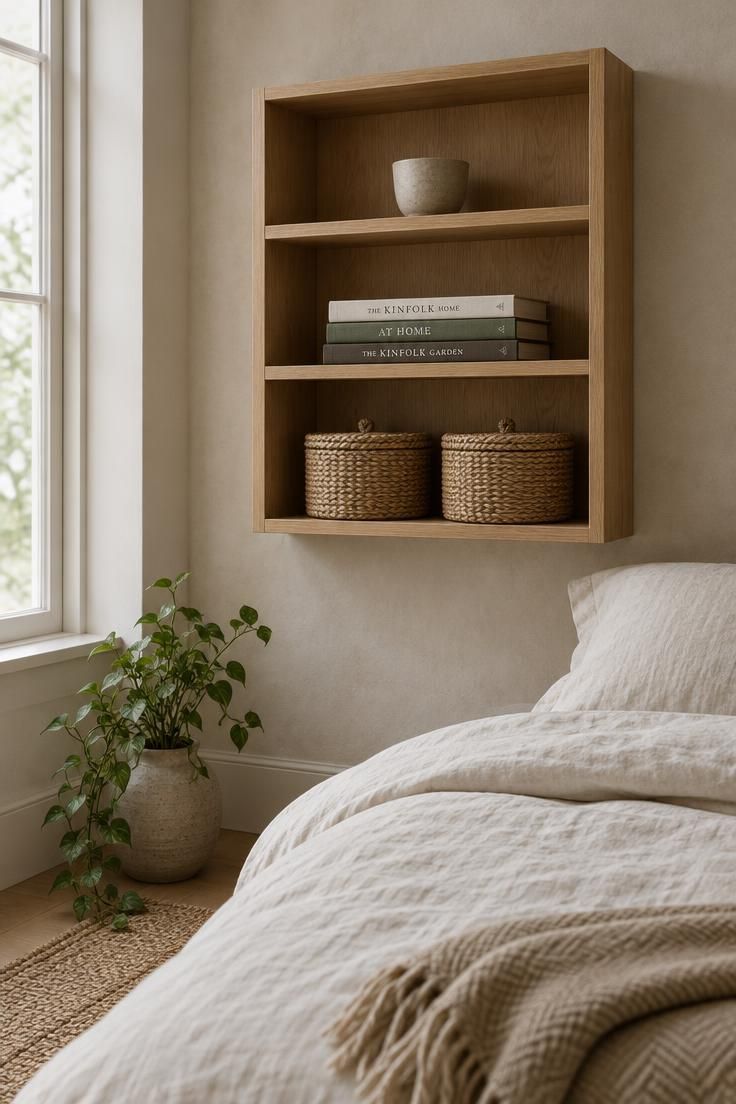
When open storage starts to fail, the quickest correction is a covered basket or a lidded box placed on the same shelf.
Concealment often does more for the room than adding another shelving unit would.
Make Storage Disappear by Giving Every Category a Hidden Home
Hidden storage only works when it matches how the room is genuinely used.
A chest of drawers too deep for folded sweaters becomes a pile of unsorted fabric, and a lidded box placed far from where items accumulate becomes a distant drop zone nobody visits.
Assign one hidden home per recurring category instead.
Laundry goes in a lidded hamper near where clothes come off.
Next-day accessories go in a wall-hung canvas pocket.
Cables and reading glasses go in a small lidded basket on the dresser.
Each category gets a destination, and the destination gets used.
The room’s visual balance comes from combining a few carefully chosen decorative objects with storage that keeps everyday essentials out of sight.
Closed drawers, woven baskets, and small decorative boxes help maintain clean surfaces, while visible accents add warmth and personality without making the space feel crowded.
A single decorative box on a nightstand can swallow the small loose items that appear daily, letting the visible layer stay composed without pretending clutter does not exist.
The principle is blunt: if a category has no home, it will find one on a visible surface.
Choosing the home yourself means it lands somewhere designed for it instead of on the floor or the nearest flat top.
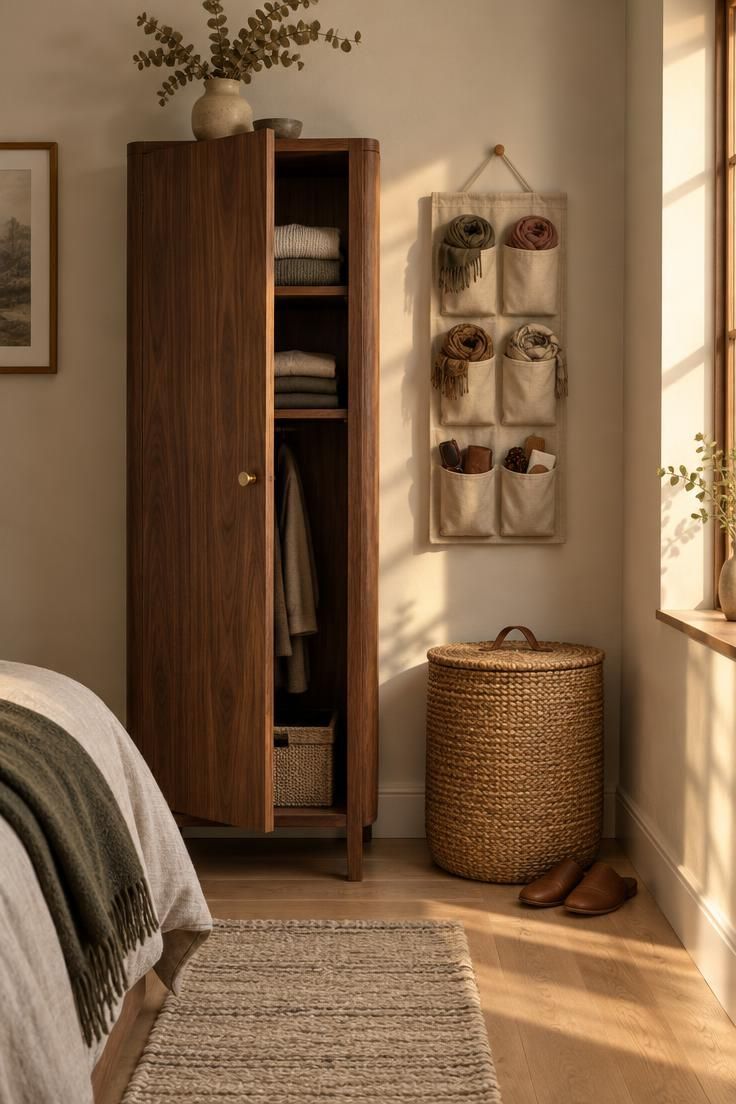
Keep Drawers Usable With a No-New-Purchases Reorganization Day
Drawer interiors are frequently the real clutter problem in a minimalist room, hidden from view but quietly sabotaging the visible surfaces above.
One focused afternoon can change how the whole room works without buying a single item.
Empty one drawer at a time onto the bed and sort the contents into keep, belongs elsewhere, and donate.
Cardboard shoe boxes or cut-down packaging work as temporary dividers, which avoids the expense and volume of dedicated drawer-organizer sets while still giving small items a defined spot.
Under-bed drawers benefit from the same pass.
Fold seasonal clothing vertically and group it by category so the drawer reads as a set of visible columns rather than a deep pile you have to excavate.
The aim is not perfect folding; it is a drawer where you can see every category at a glance.
Once one drawer is reorganized, keep the habit on a rotating schedule: one drawer a week or one category a month.
This keeps progress steady without turning the bedroom upside down every time you open a cabinet.
The reward is subtle but real.
When drawers are usable, the visible surfaces stop acting as overflow parking, and the minimalist look begins to hold on its own.
Use a Closet Door as Unused Wall Space Instead of a Blank Wall
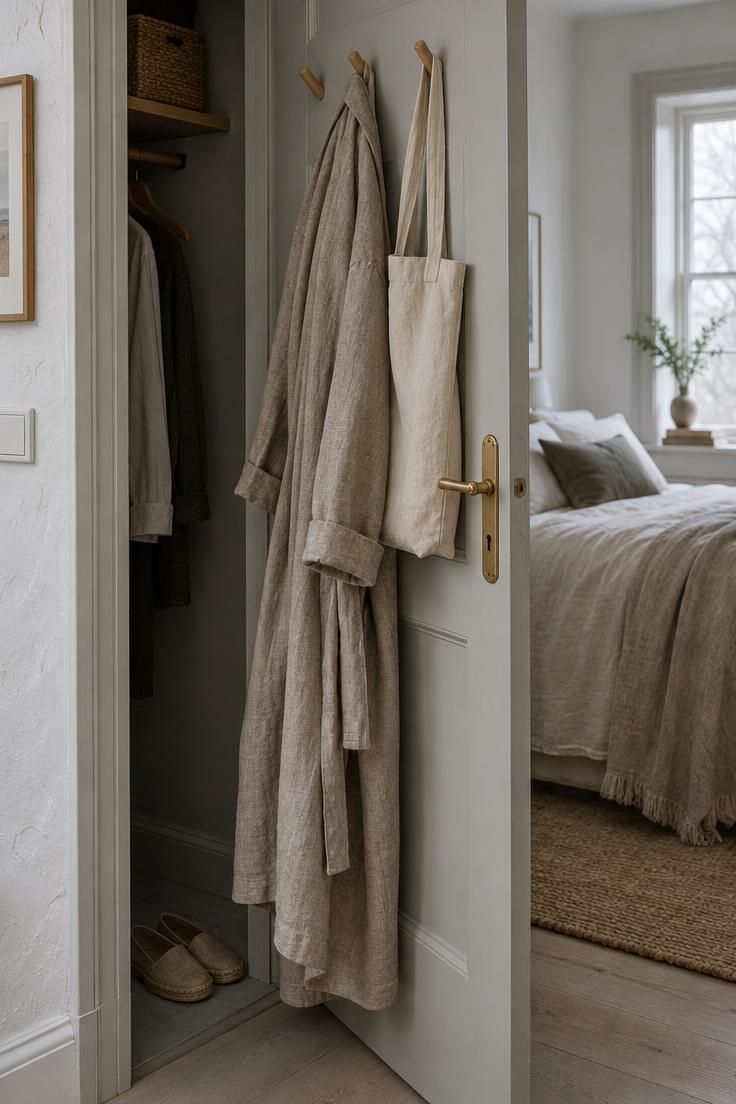
The inside face of a closet door rarely appears in photographs of pared-back bedrooms, which is exactly why it works so well.
It offers storage capacity that costs no floor space and adds no visual weight to the room.
A row of narrow hooks at varying heights can hold a robe, a tote bag, or tomorrow’s clothes without introducing another piece of wall furniture.
An over-the-door clear pocket organizer keeps small accessories visible only when the closet is open, so the closed door reads as a clean plane.
This strategy suits small rooms, yet it also helps larger bedrooms where clear sightlines matter.
A robe slung over a chair draws the eye; the same robe on a hidden hook inside a closet does not.
If the door opens into the room and the hardware bothers you, choose low-profile hooks in a color close to the door itself.
Small visual choices like this keep the approach from announcing itself.
The result is an uncluttered wall and a daily item with a home that is genuinely reachable.
Storage that hides well earns its keep precisely because it is convenient enough to use.
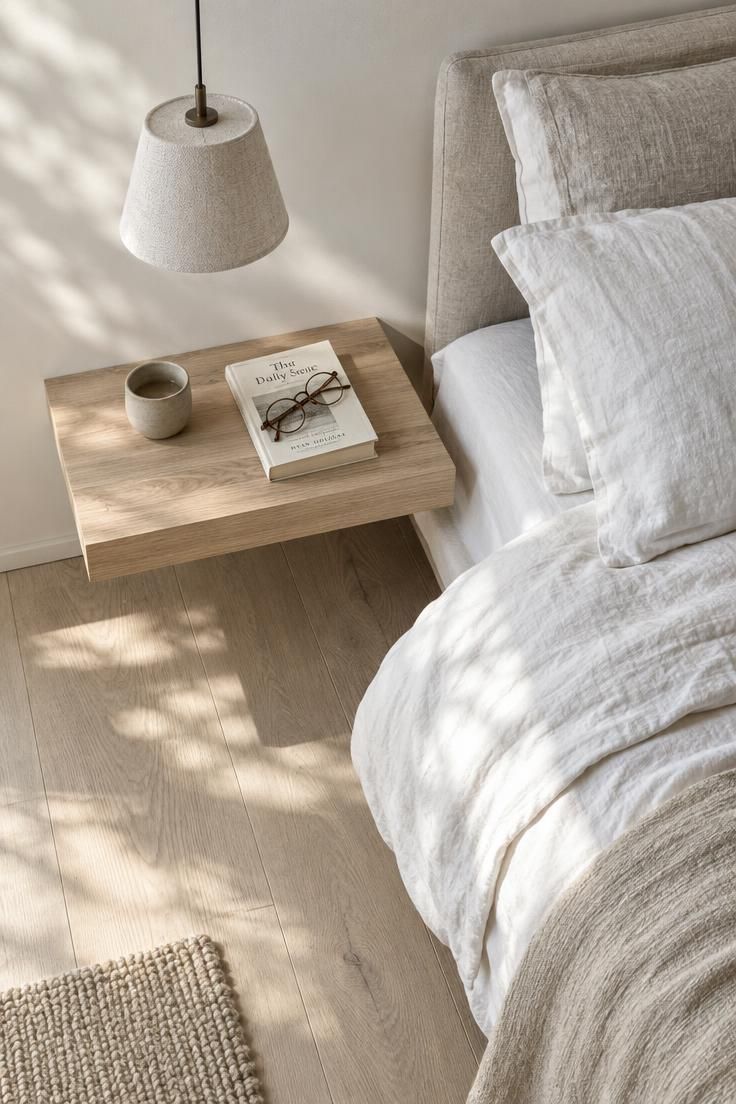
Bedside Storage Ideas That Help Minimalist Bedrooms Stay Clear
The strip beside the bed is where minimalism most often breaks down, because it is the surface closest to where you spend the most passive hours.
A single nightstand with a small drawer and a clear top covers most needs, yet some rooms benefit from removing the tabletop altogether.
Wall-mounted bedside storage creates a lighter, more open look by keeping the floor beneath it visible.
Paired with a hanging pendant light, the arrangement eliminates the need for a traditional bedside lamp and gives the sleeping area a clean, uncluttered appearance.
The combination keeps the floor and the wall low zone open, which matters most in tight rooms.
For couples, two chests of drawers placed side by side can double as a long shared surface for a plant and a stack of books.
Under-bed storage with a lid keeps out-of-season clothing out of the way, though it suits items you rarely need rather than daily essentials.
A small bench at the foot of the bed serves as a substitute night table and a place to set clothes for the next morning.
These minimalist bedroom storage ideas work because each one replaces a freestanding piece with something that also performs another job.
The test for any bedside solution is whether it holds what you actually use at night without becoming a shelf for everything else.
If the answer is yes, the surface stays clear and the room keeps its calm.
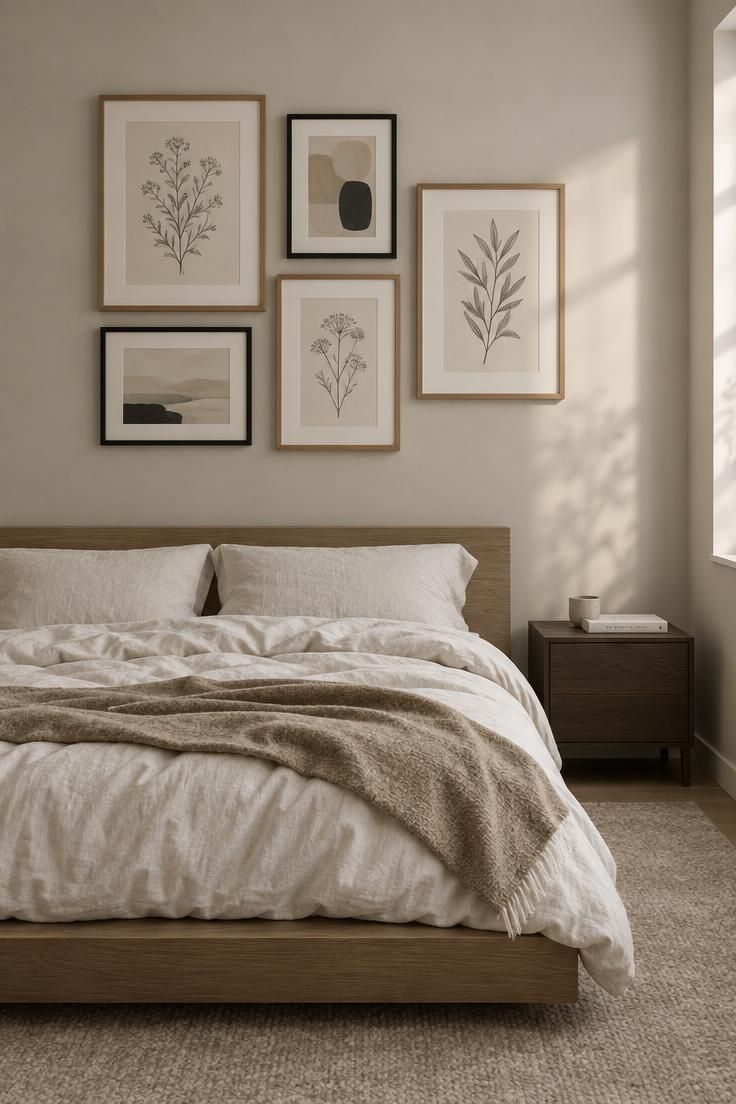
A Muted Gallery Wall That Gives the Eye One Focal Point
For a neutral bedroom color palette, a minimalist bedroom does not need bare walls.
A small group of framed pieces hung close together can anchor the room and draw attention away from the furniture that tends to accumulate around the bed.
The trick is to treat the grouping as one object rather than as many separate decisions.
Choose frames in the same finish or two closely related finishes, then keep the mat widths similar so the wall reads as a calm rectangle even when the art itself varies.
Restraint shows up in the subject matter too.
Soft botanical prints, simple line drawings, or abstract pieces in matte neutrals work better than a loud mix of colors and styles.
Leave wide blank space around the grouping instead of filling every wall with additional objects.
Position the arrangement above the bed or on the wall opposite it, depending on which view feels busier when the room is in daily use.
A gallery wall placed where you look after waking can become the dominant visual element, which helps a small room feel composed rather than crowded.
Design Pro-Tip: Lay the frames on the floor first and step back before putting anything on the wall. Rearrange until the outside edge of the grouping makes a simple shape, then transfer that arrangement with the same spacing.
Layer Bedding Without Letting Pillows Take Over the Bed
Layered bedding ideas usually translate into more pillows, yet a comfortable minimalist bed needs fewer and better ones.
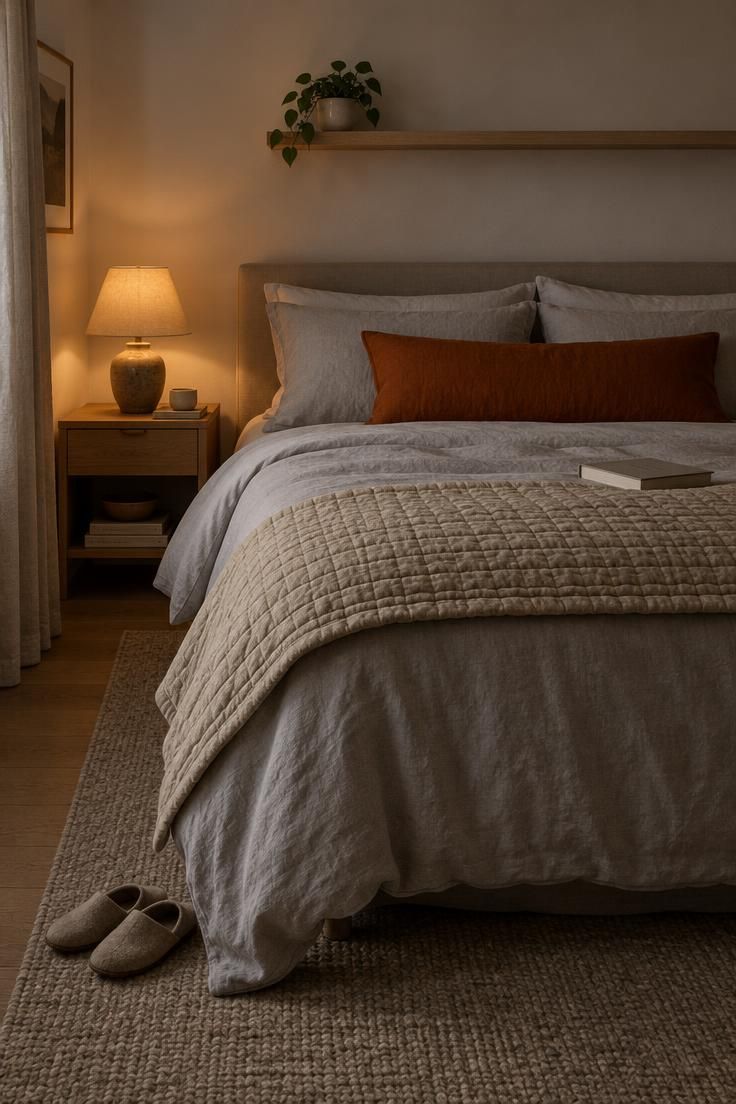
The look works best when a single elongated lumbar pillow creates a subtle focal point against simple, neatly arranged bedding.
Its horizontal shape adds visual interest without interrupting the bed’s clean lines or overwhelming the composition.
A long lumbar cushion spanning the bed’s width offers the same layered look without adding a nightly pillow-removal routine.
People can sit or lie down without clearing a pile first, which keeps the bed useful rather than ceremonial.
For extra warmth, fold a quilt or coverlet at the foot of the bed in a tone from the same family as the duvet.
If two standard pillows and two shams appeal, keep the shams in the same fabric as the duvet so the group reads as one block rather than four competing shapes.
Multiple pillow covers let you change the look without replacing bedding, a practical swap that keeps storage light.
A single accent cover in a deeper tone can shift the room’s mood for a season without adding bulk to a closet.
The measure of success is simple: the bed should look finished when made and require no separate unmaking ceremony before sleep.
If getting into bed means moving a small mountain, the styling has outgrown the room.
Small Minimalist Bedroom Layout Choices That Reduce Visual Weight
A small room gets cluttered fast, and the culprit is often visual weight rather than actual stuff.
A bulky footboard, a tall dresser, and a heavy nightstand can crowd a compact space even when every surface is clear.
Choose a bed with a low profile or a simple frame without a bulky footboard.
Place it against the longest wall and build outward with the fewest possible pieces, so the eye travels along one clean line rather than zigzagging between furniture.
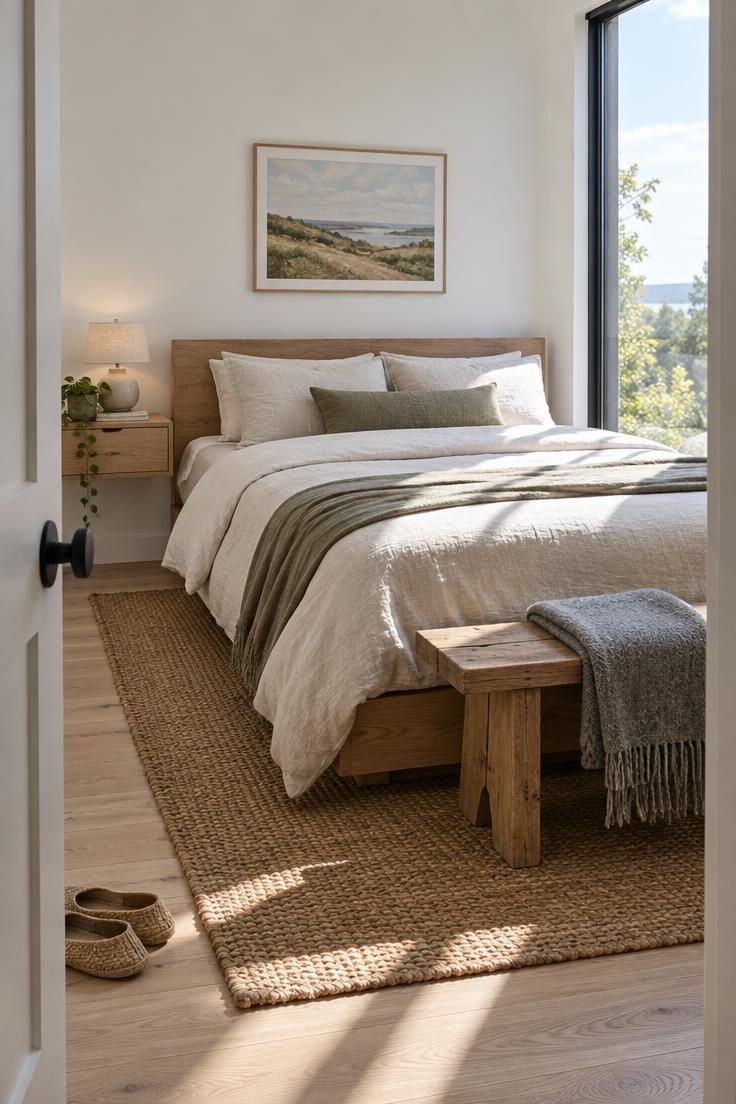
A wall-mounted nightstand leaves floor space open and makes the room feel wider than a freestanding table would.
In a narrow room, a bench at the foot takes up less visual space than one pushed against the side wall, since it continues the bed’s line instead of interrupting it.
Keep the floor as clear as possible except for one small rug under the bed, and use wall hooks for robes instead of a standing rack.
When arranging furniture, note where windows fall; a bed pushed into a corner may block the only good light source, and window placement shapes which walls can hold furniture at all.
Small minimalist bedroom layout decisions come down to choosing one clear path and keeping most furniture below eye level.
A room that reads as low and open feels larger than its measurements suggest.
Let the Bedside Rug Carry the Room’s Only Pattern
A minimalist bedroom can keep bedding and walls quiet while the floor supplies one soft visual interruption.
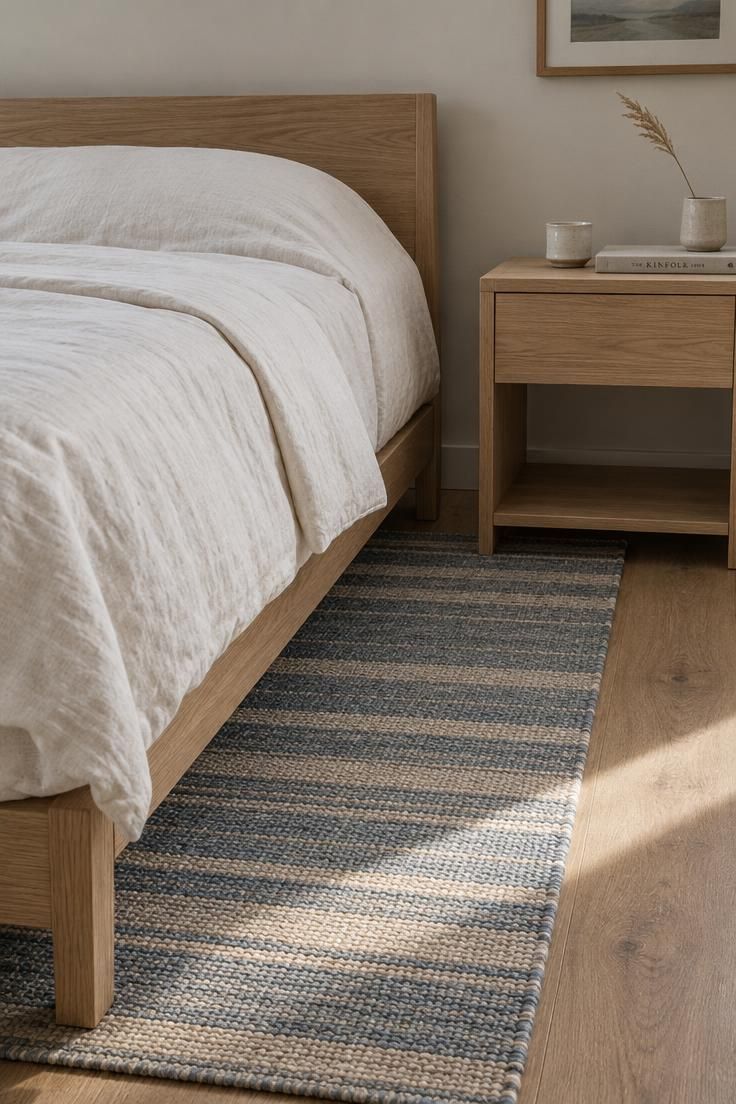
Choose a small bedside runner or a low-pile rug with a single restrained motif, such as narrow ticking stripes, a sparse grid, or a faded geometric repeat.
Place the rug so it runs along the side of the bed where bare feet land first.
That placement makes the pattern feel purposeful rather than decorative surplus.
Keep the rug within the same color temperature as the floor and bedding.
A cool charcoal stripe beside warm oak reads like a borrowed layer, while a slate, flax, or oatmeal tone settles into the room.
Let the rug absorb the room’s texture budget.
If the bed already carries a quilted coverlet or boucle throw, choose a flatwoven or tightly looped rug so the two surfaces do not compete.
A patterned floor layer works best when everything above knee height remains solid.
One motif near the floor gives the eye a landing spot without pulling attention away from the bed, the window, or the clear bedside surface.
Where Minimalist Bedrooms Go Wrong and How to Recover
The most common mistake is reducing a room until it feels empty rather than restful.
A stripped space with no texture and no personal object reads as cold, not calm, and the fix is rarely more furniture.
One tactile layer, such as a wool throw, a linen lampshade, or a wood stool, often restores the warmth that was missing.
A second mistake is having too many focal points.
A gallery wall, a patterned rug, and a statement chair each demand attention, which is the opposite of visual order.
Choose one anchor and let everything else recede into a supporting role.
A third pattern is clearing surfaces without assigning a hidden home for daily items, which all but guarantees the clutter returns.
Before removing another object, decide where its next failure point will be; if the answer is the same nightstand, the system is not finished.
If the room already looks good but feels slightly off, check the lighting.
A single overhead fixture is rarely enough, and one warm bedside lamp can shift the character of the space more than a new piece of furniture would.
Recovery usually means adding one thing rather than taking more away.
The discipline of minimalism is knowing which single addition repairs the room and which additions merely refill it.
Design Pro-Tip: When a pared-back room feels too sparse, add one curved shape before adding any color. Softness often fixes what more objects cannot.
Borrow the Japandi Logic Without Copying the Trend
A minimalist bedroom can feel orderly without looking like a showroom.
Japandi interiors offer a useful reference because they combine soft edges, natural materials, and muted contrast in a way that feels lived-in rather than sparse.
The same effect comes from using what the room already holds.
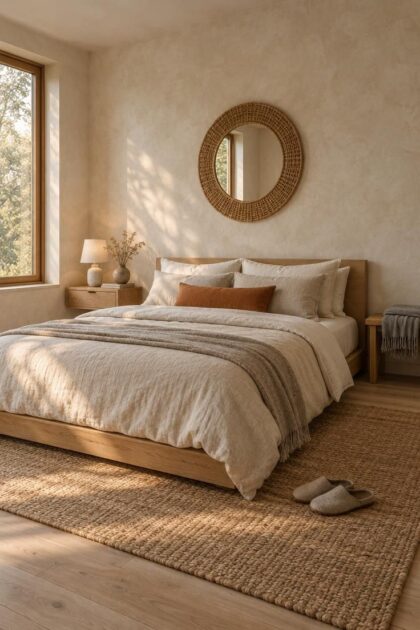
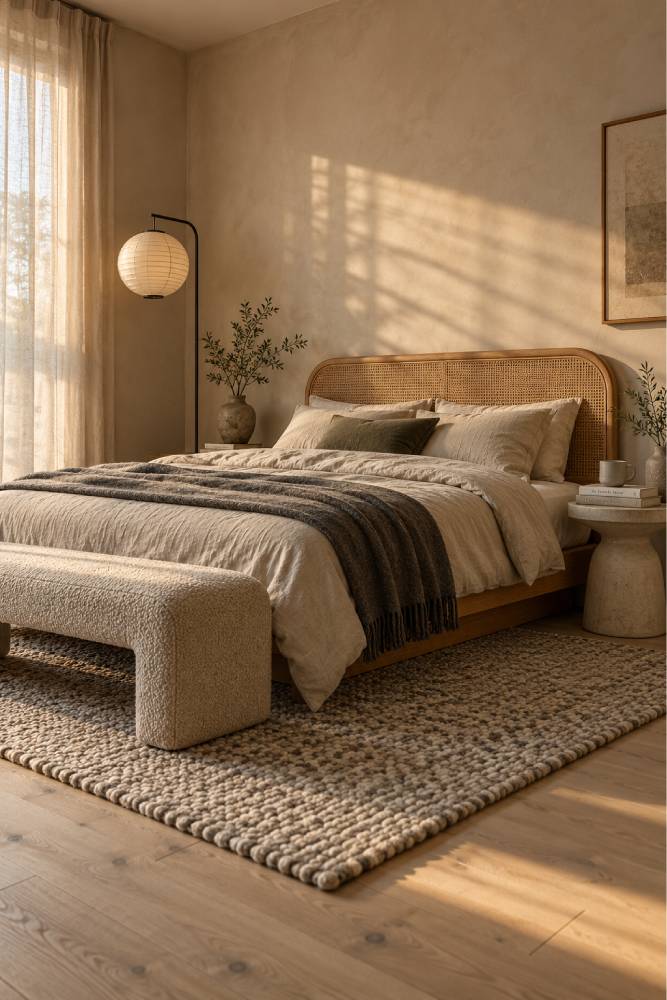
A low bed frame with a woven headboard, a plaster-toned wall, and a single linen-covered blanket create the quiet relationship between wood, clay, and cloth that makes the style work.
Texture should take the place of ornament.
Try a boucle bench at the foot of the bed, a ceramic tray on the dresser, or a nubby wool rug in warm oat and gray.
Keep the palette limited to three values of the same neutral family so the eye moves around the room without stopping on clutter.
If a fourth tone appears, repeat it in at least two spots: a lampshade and a folded throw, or a frame and a stone catchall.
The mistake to avoid is collecting many small Japandi-style accessories.
One generously scaled textured object often does more than five delicate pieces.
Design Pro-Tip: Match one wood tone, one fabric texture, and one ceramic finish to an existing bulky item such as a bed or wardrobe. Then repeat those three materials only where the room needs visual balance.
Conclusion
Start with one most-used surface and one hidden-home rule for daily clutter, then let the rest of the room follow.
A minimalist bedroom stays comfortable when every texture and object has a purpose you can name out loud.
Choose one focal point, keep storage behind doors or in baskets, and check that the palette holds the same temperature throughout.
A linen quilt, a wooden bench, and one warm lamp are comfort choices, not clutter, and they belong in the room.
Revisit the space every few months and ask whether each remaining item still earns its place.
The goal is not to never buy another thing, but to never default to buying instead of deciding.