This post may contain affiliate links. If you make a purchase through these links, we may earn a commission at no additional cost to you.
An entryway with a bench should feel resolved the moment you walk in, yet many read as unfinished.
The bench often sits there like a stray chair, holding a pile of bags and a lonely shoe.
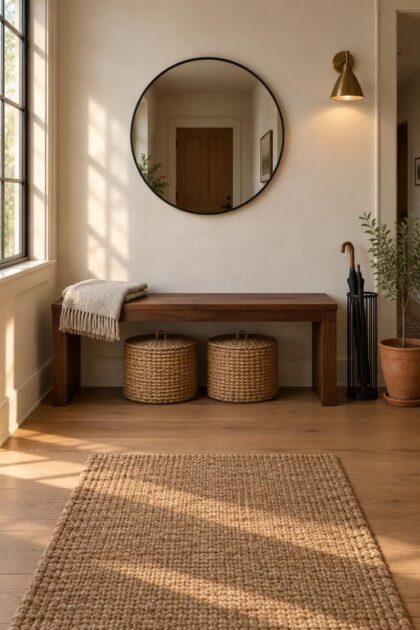
Treat it instead as the anchor of a small system with four jobs: what hangs above, what rests on the seat, what tucks beneath, and what stands beside.
That shift in thinking turns a catch-all into the most useful and composed spot in the house.
Why the Bench Became the Entry’s Anchor
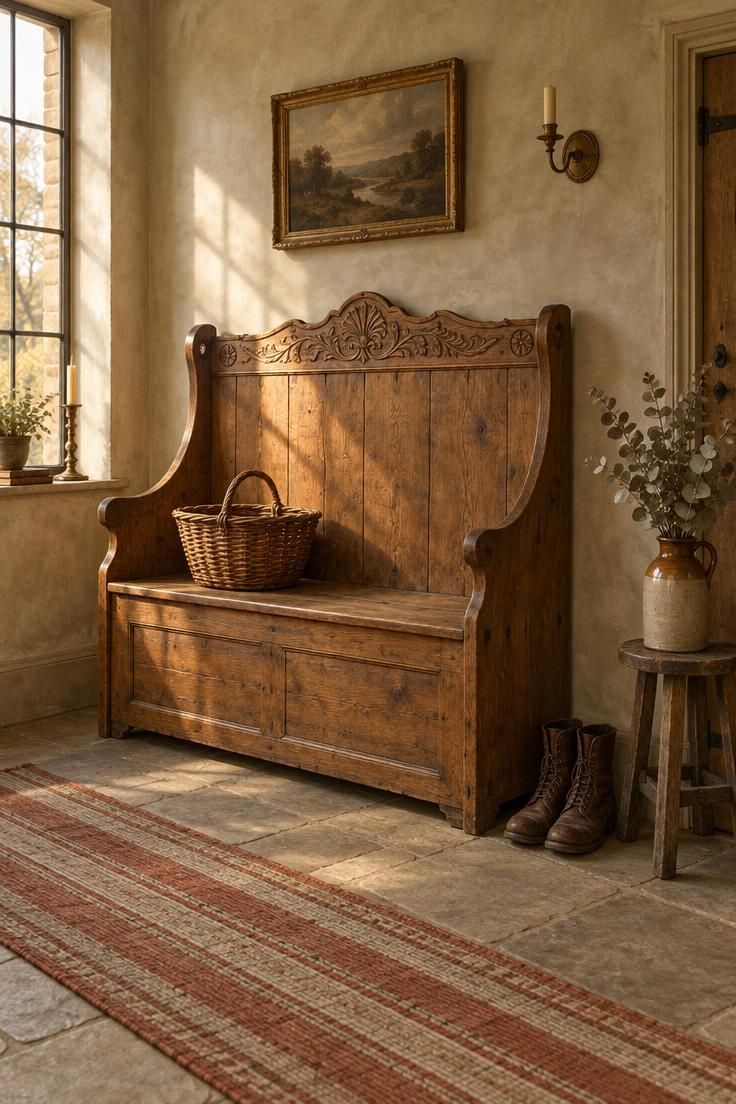
Long before mudrooms and coat closets, the hall settle did double duty as seating and architecture.
A Fitzwilliam Museum example from roughly 1730 to 1740 measures nearly six feet wide, with a tall carved back and arms that made it read as part of the room rather than a loose piece of furniture.
By the nineteenth century, entrance furniture had specialized, and a hall bench with storage beneath the seat kept gloves, hats, and umbrellas within reach while offering a carved, upholstered presence near the door.
Shaker makers later stripped the form to clean lines and honest joinery, showing that a practical object could carry visual weight through proportion alone.
That dual identity, useful and architectural at once, explains why the bench still holds an entry together today, and why Houzz coverage now treats built-in and storage benches as part of the surrounding architecture rather than added furniture.
A bench reads as an anchor only when the space around it is composed with the same care: the wall above, the floor below, and the objects beside it all participate.
What the Bench Is For: Seating, Storage, or Statement
Before choosing a cushion or a basket, settle the bench’s primary job, because that answer shapes everything else.
If the main use is putting on shoes, prioritize a comfortable seat height and a surface that stays mostly clear, and treat the space beneath as secondary.
If holding daily gear matters more, look toward closed storage or a lidded compartment so the entry stays calm while bags and shoes disappear.
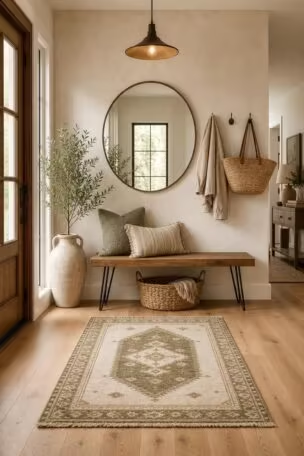
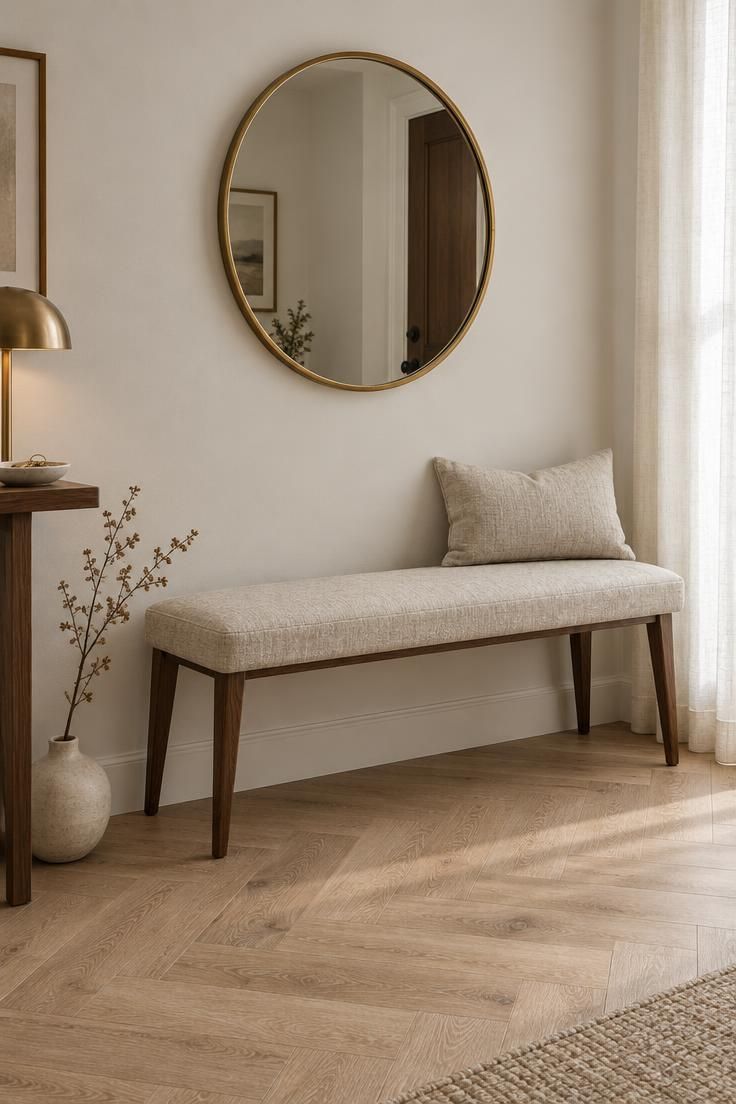
If the bench exists to give a bare wall a focal point, a slim upholstered entry bench with tapered legs, a fitted seat cushion, and a round mirror above can carry the composition with very little else.
For a family entry where shoes, sports gear, and backpacks land at once, a mudroom bench with cubbies keeps categories visible and accessible without turning the seat into a shelf.
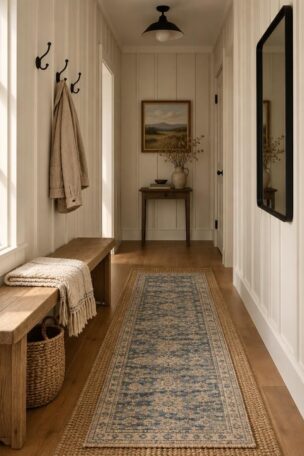
In a tight passage, a narrow hallway bench with open legs and a single basket underneath preserves the walking path while still offering a place to sit.
Storage-led benches draw more design attention than purely decorative ones, and the numbers hint at why: mudrooms ranked as the most popular special-function room among 4% of surveyed residential architects in AIA’s Q3 2025 survey, and 30% of more than 300 architecture firms reported mudroom popularity growing in 2026, up from 21% in 2025.
Combining roles works when one job clearly leads: a storage bench used mainly for sitting keeps its lid clear, and a seating bench used for gear gets its basket at the end rather than across the whole seat.
One Bench, One Vertical, One Storage, One Organic
A reliable way to compose the bench area is to give it four elements and stop there: the bench itself, one vertical focal point, one storage gesture, and one organic accent.
Limiting each category to a single expression keeps the arrangement readable from the doorway, where the eye needs a clear place to land.
The vertical element should relate to the bench’s width rather than the full wall, so a mirror or framed print sits centered over the seat instead of drifting off toward the ceiling line.
Storage takes one form: two matching baskets, a pair of drawers, or one large lidded box, not a collection of unrelated containers.
The organic accent can be a potted plant, a bundle of dried branches, a woven texture, or a strong wood tone that warms the composition.
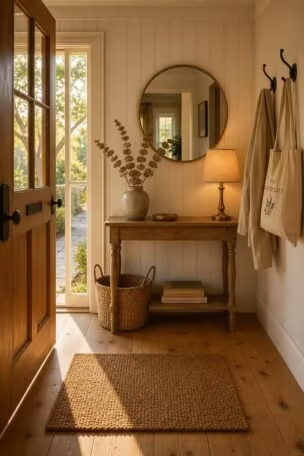
A built-in entryway bench with closed cabinets below and a simple hook rail above follows the same logic, with the cabinetry serving as storage, the hooks as the vertical gesture, and a single plant or ceramic vessel softening the hard lines.
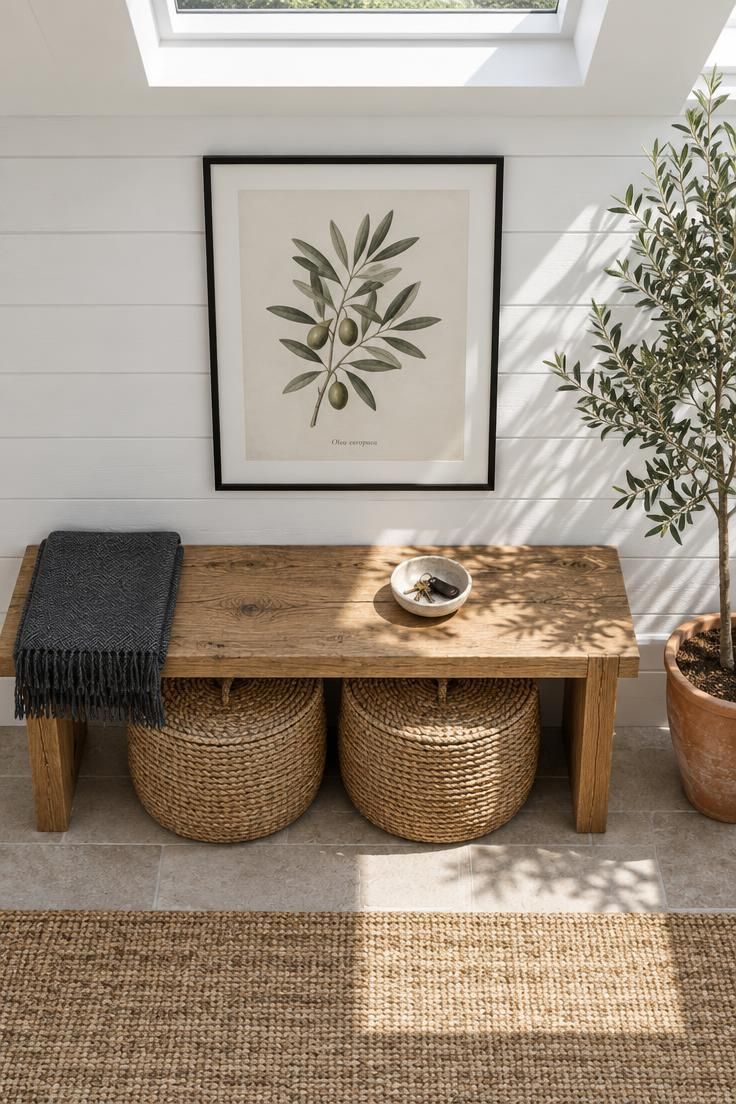
A freestanding bench adapts just as easily: two seagrass baskets beneath, one large botanical print above, and a potted olive tree beside.
Design Pro-Tip: Choose the vertical element first, then style everything else to support it, so the composition has one clear focal point rather than several competing ones.
Above, On, Under, Beside: Styling Each Zone
Breaking the bench area into four zones makes the styling decisions manageable, because each zone has a different job.
Above the bench, choose one dominant element: a mirror, a single artwork, or a hook rail with a slim shelf when storage matters more than reflection.
Center that element on the bench itself, which usually means ignoring the midpoint of the wall if the bench sits off-center in the room.
On the bench, protect the seat.
Leave enough clear space for one person to sit down without moving anything, and add only a folded throw at one end or a single small pillow.
Under the bench, aim for two or three coordinated containers, such as matching lidded baskets or a low boot tray, rather than a row of mismatched bins that read as clutter.
Beside the bench, a narrow umbrella stand, a small stool, or a single tall plant can finish the composition, provided the walking path stays open.
The most common failure is turning the seat into a display shelf, where pillows, trays, and baskets fill every inch and the bench stops being furniture you can use.
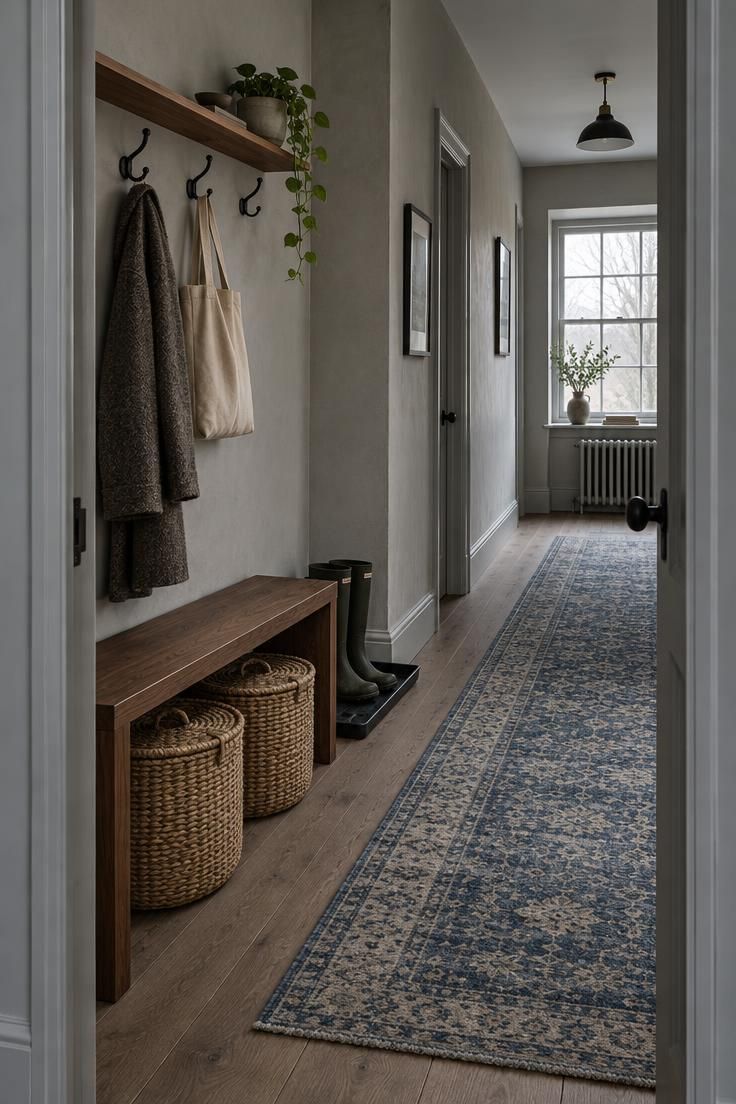
Style Directions from Traditional to Contemporary
The four zones stay the same across styles, but the vocabulary changes, and choosing a coherent vocabulary is what makes the bench look intentional.
Traditional styling leans on dark or medium wood, brass hooks, a framed print or an ornate mirror, and a patterned cushion, which suits a carved hall bench or an antique settle with visible wear.
Shaker-inspired styling favors simple painted or natural wood, peg rails, linen or canvas cushions, and woven baskets, reflecting the Shaker principles of utility, order, and restrained ornament described by the National Park Service.
Arts and Crafts styling brings in oak or walnut, leather or wool upholstery, and visible joinery, an approach exemplified by the Gustav Stickley inglenook settle at Craftsman Farms.
Contemporary styling works with bouclé, leather, or performance fabric, concealed storage below, one oversized artwork above, and very few accessories, letting restraint do the work.
Across all four directions, the fixtures and materials should relate to the trim, flooring, and adjacent rooms, so the entry feels like part of the house rather than a separate project.
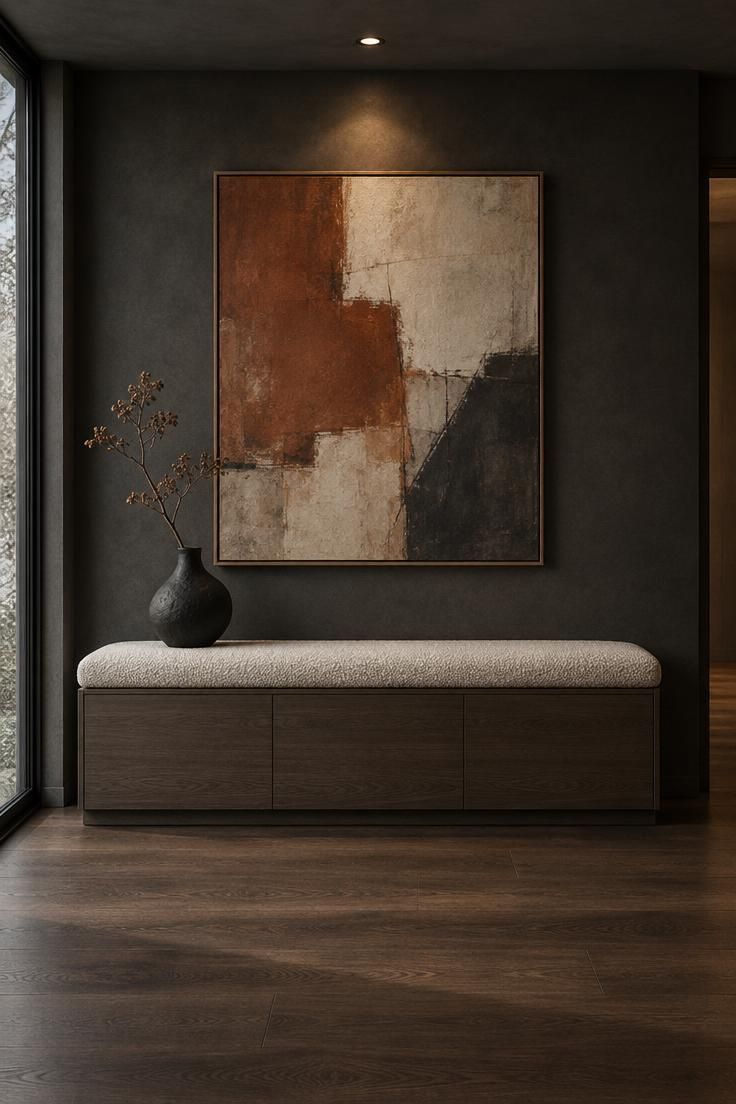
One Bench, Two Households: Sharing the Same Wall
Two-person homes rarely leave at the same time or return at the same moment, so the bench area works better when each side has its own assignment.
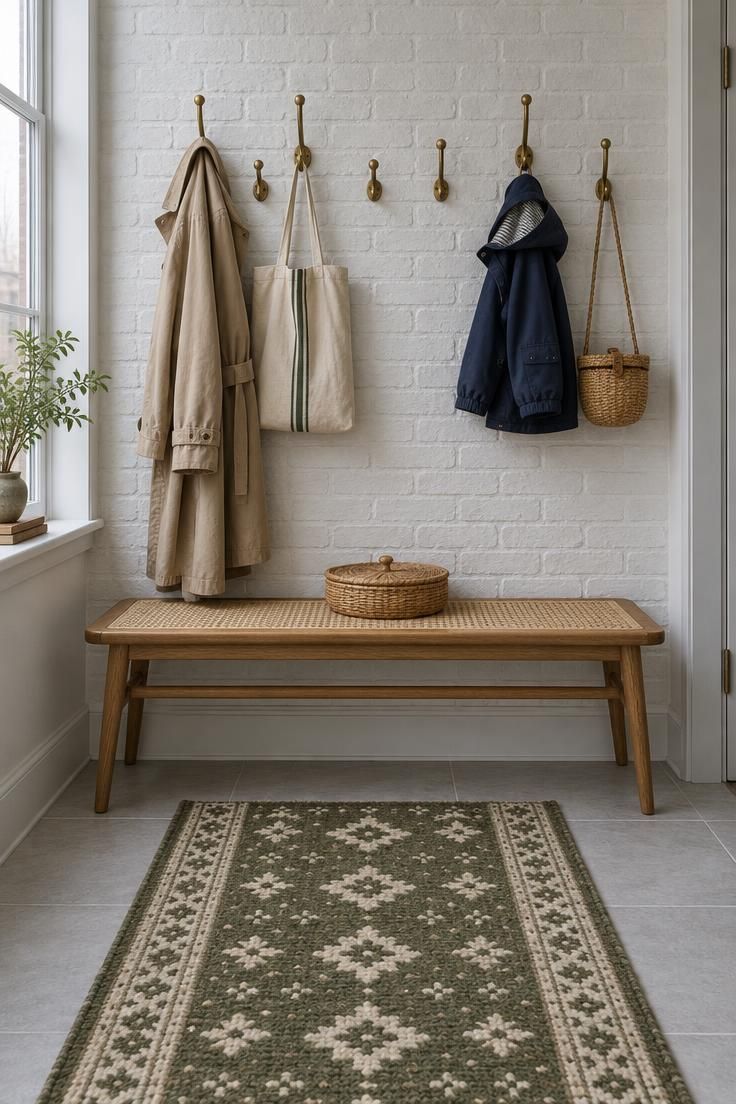
Place one long bench or two matching seats along a short wall, then split the surface with a visible midpoint cue such as a lidded tray on one side and a low stack of books on the other.
Above the bench, keep hooks uneven.
One hook sits high for a long coat, while two lower hooks hold keys, a tote, and a small umbrella without crowding the seating zone.
The shared wall still reads as one composition because the bench, hook finish, and floor mat repeat a common color, yet each half functions independently through the objects left there.
This arrangement suits roommates, partners, or a parent and child more than a strict his-and-hers formula, and it avoids assigning a whole piece of furniture to one person.
Style Blueprint:
- One continuous bench or two matching seats in the same finish, paired with hooks in one metal tone
- A visual midpoint on the seat such as a tray, folded throw, or low ceramic bowl
- Uneven hook heights that reflect different coat lengths and reach preferences
- One shared floor mat or runner that anchors both halves
- A limited object count per side so the surface never becomes a joint dumping zone
The limitation is independence: each side gets less total surface than a solo bench owner, so tall boots and large bags need an alternate home elsewhere.
Materials, Maintenance, and Tradeoffs
Material choice shapes how the bench ages and how much upkeep the entry demands, so it deserves a deliberate decision.
Wood and stone-like tops appear frequently in popular entryway and mudroom projects, with Houzz coverage noting walnut, white oak, ash, and stained hardwood as recurring directions, though that reflects observed design coverage rather than a performance guarantee.
A boot tray beneath the bench limits what outdoor footwear leaves behind, which protects the seat surface and the floor without changing the composition.
Performance or washable fabrics make sense where children, pets, or wet shoes are part of the daily routine, and a removable cushion cover simplifies cleaning.
A mudroom bench with cubbies keeps everything visible and accessible, which suits households that need to grab and go, while closed cabinets calm the view and hide the mess.
Open storage always displays whatever it holds, so seasonal editing matters more with cubbies than with doors.
Maintenance stays simple: keep the seat clear, rotate or empty under-bench baskets each season, and use a defined drop zone like a runner or boot tray to contain daily debris.
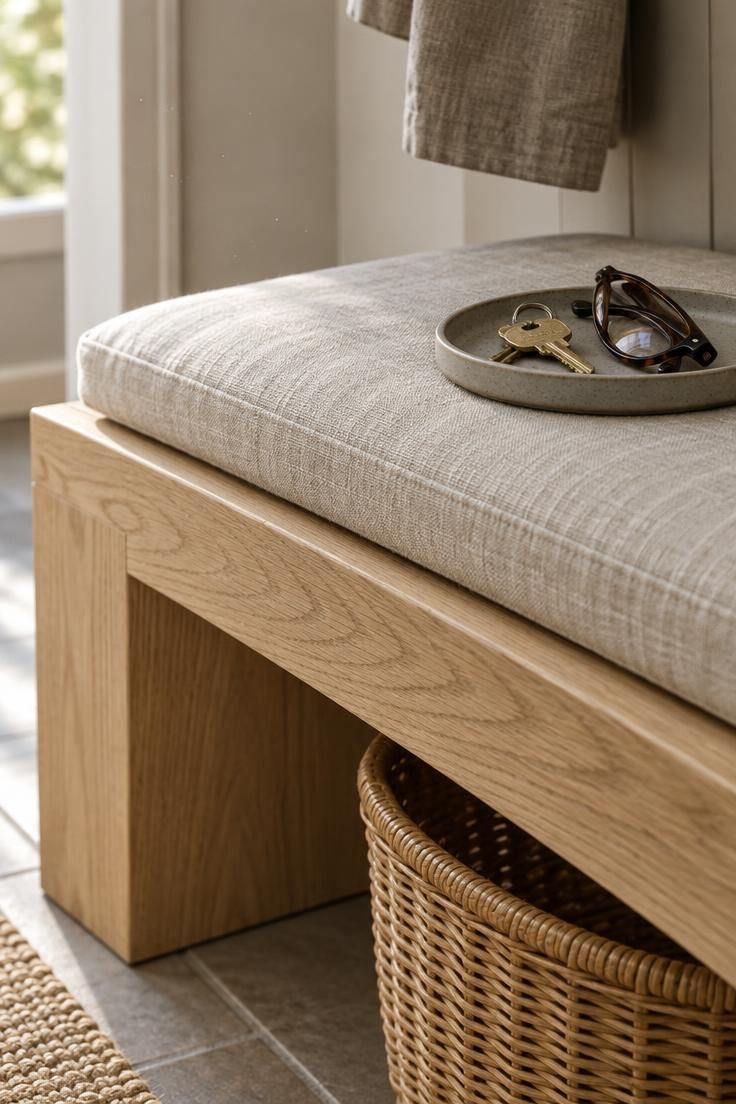
Design Pro-Tip: Choose one material for the containers under the bench and repeat it, so baskets, trays, and boxes read as a set rather than a collection.
What’s Fading and What’s Working
Design coverage shifts over time, and the entry bench has moved away from a few habits that once dominated.
Overfilled seats covered with pillows, baskets, and decorative objects are losing ground, because they stop the bench from doing its primary job.
Matching hall trees and all-white cabinetry without texture or contrast appear less often in current coverage, while mixed open-and-closed storage, natural wood, earthy color, and one fitted cushion show up more.
Small-space solutions, including slim benches and storage ottomans that provide seating without blocking circulation, keep appearing in trend coverage as compact living shapes new priorities.
The figures behind the shift are directional rather than definitive: AIA’s survey found 4% of residential architects naming mudrooms as the most popular special-function room, and NAR reported 30% of firms seeing mudroom popularity grow in 2026, compared with 21% in 2025.
Broader buyer data points the same direction: 13% of buyers named a two-story foyer as a wanted feature, while 32% said they would likely reject a home with one, which suggests a preference for useful entry space over dramatic volume.
Read these as design-media and industry observations, not as representative consumer research, and let the practical takeaway guide the work: the bench stays a place to sit first.
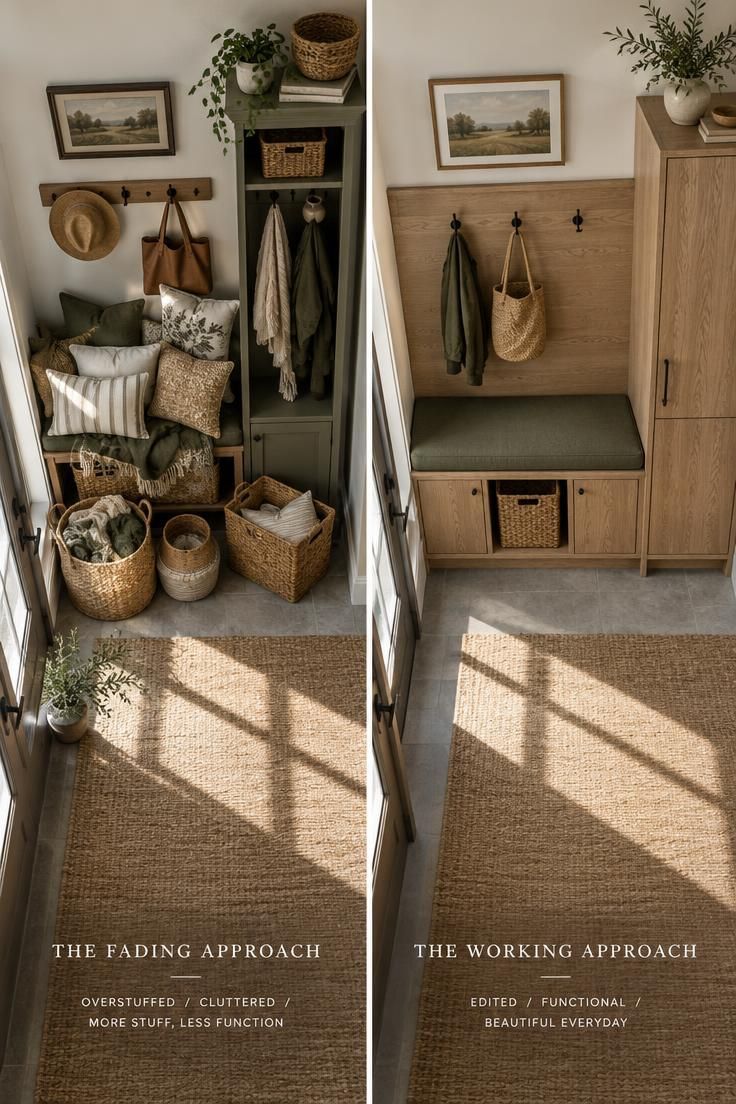
Editing the Arrival Moment
Entryway bench styling works best as an editing process, where adding less and removing more lets the composition settle into a practical arrival point.
Start by confirming the bench’s primary purpose, then walk through the four zones in order: above, on, under, and beside.
Keep the seat clear enough that sitting down requires no rearranging, limit the vertical elements to one or two, and contain shoes and bags in matching storage so the floor stays legible.
Decision criteria for your own entry include the measured depth of the bench against the walking path, the household’s daily habits around shoes and bags, and materials that tolerate weather and grit.
A boot tray or runner defines the drop zone, which keeps the mess concentrated and the rest of the entry composed.
The final test costs nothing: stand in the entry after styling and check whether you can sit, hang a coat, and walk through without moving a single object.
If any of those three needs adjustment, the composition is overfilled, and removing one item will usually solve it.
Removing one item will usually solve it.
Conclusion
The bench becomes an anchor when it is arranged as a functional system rather than decorated as a surface, and the four-element framework of one bench, one vertical, one storage, and one organic accent keeps the composition honest.
Three habits cause most of the trouble: overcrowding the seat until it cannot be sat on, scattering small baskets that never read as a set, and ignoring circulation so the entry becomes a bottleneck.
After styling, the entry should allow sitting, hanging a coat, and walking through without stepping over anything, and that single standard settles most disagreements about what to keep.
Start with what the bench is for, clear the seat, and place one vertical element above it before adding anything else.
The bench’s first job is to be used, and every styling decision should protect that use.