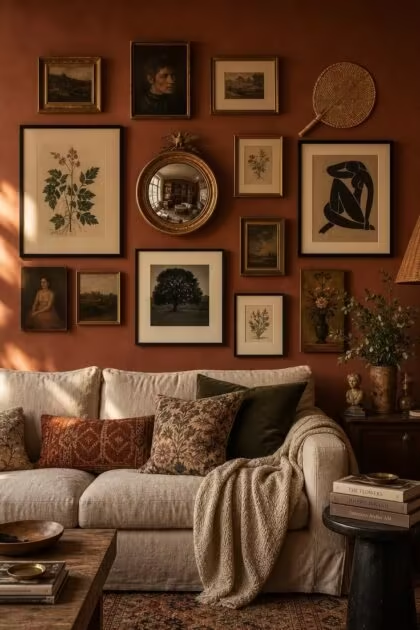
This post may contain affiliate links. If you make a purchase through these links, we may earn a commission at no additional cost to you.
A gallery wall built from matching frame sets can look nice for about a week.
An eclectic gallery wall is different.
It reads like a collection built over years, even if you hung it all on a Saturday afternoon.
The trick lies in mixing frame finishes, art styles, and even a few dimensional objects while keeping one or two threads tying everything together.
Ahead are 13 specific combinations you can borrow, each one built around a real material, finish, or layout so you know exactly what to shop for.
An Eclectic Gallery Wall Layered Floor to Cornice on a Stairwell
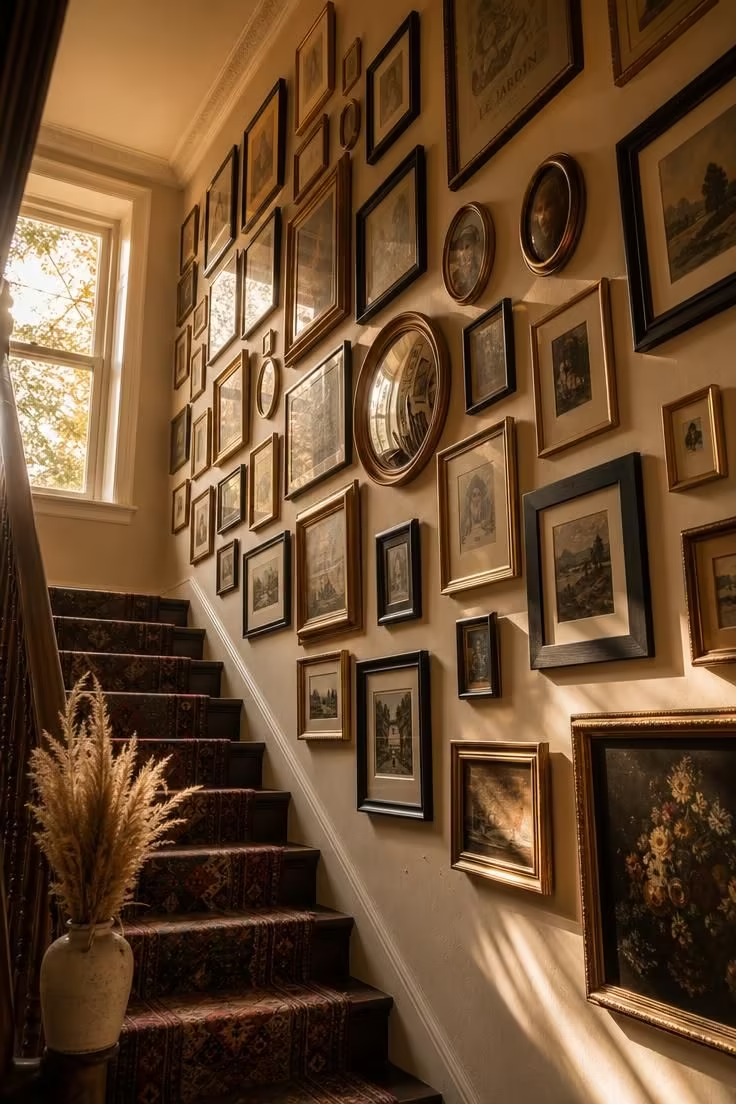
Climbing a gallery wall alongside a staircase gives you more vertical real estate than almost any other spot in the house.
The eye naturally travels upward as you climb the stairs, so a floor-to-cornice arrangement of salon style wall art turns a walk to the second floor into a small moment of discovery.
Warm light in the late afternoon hits a stairwell at a raking angle, which makes textured mats and slightly uneven vintage glass catch highlights that a flat overhead fixture never would.
Start the layout at the lowest point of the stair rake and let it climb in loose diagonal bands rather than strict horizontal rows.
That diagonal rhythm mirrors the line of the staircase itself, so the wall feels built for the space instead of applied to it.
Keep one recurring finish, gold or brass works especially well here, so your eye has an anchor point at every landing.
Style Blueprint:
- Kraft paper for tracing frame templates before hanging
- A mix of gold, matte black, and pale oak frames
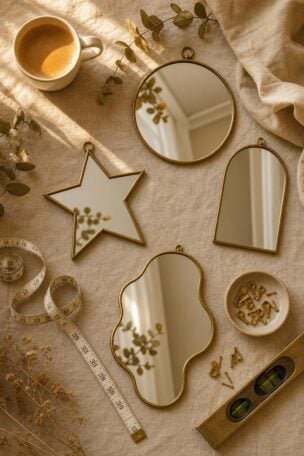
- One round convex mirror for light bounce
- Removable picture-hanging strips for the lightest pieces
- A woven stair runner in a muted pattern
Round Convex Mirrors Paired with Square Ink Sketches in Walnut Frames
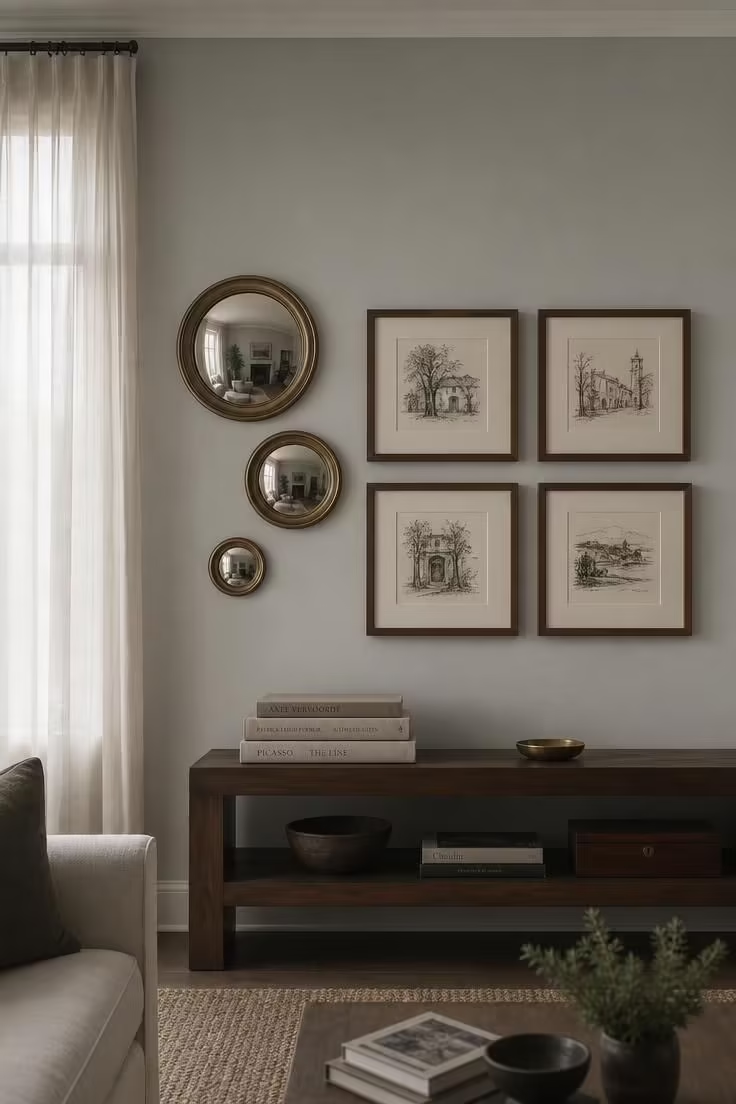
Round and square shapes rarely get paired on purpose, which is exactly why the combination reads as intentional here.
A convex mirror adds curve and reflected light, while a square ink sketch grounds the eye with a hard, quiet edge.
Mismatched picture frames work best when the shapes contrast but the finishes rhyme, so keeping every frame in a warm walnut tone lets the round-versus-square tension do the visual work.
Convex glass distorts the room slightly, which makes the mirrors feel more like art objects than functional mirrors, so you can cluster several without the wall feeling like a vanity display.
Hang the mirrors slightly higher than the sketches to keep the sightline moving instead of settling into one flat band.
A console beneath the arrangement gives the eye a resting point before it travels back up the wall.
Layer a small brass dish or stack of books on the console so the vignette feels used, not staged for a single photograph.
Style Blueprint:
- Three brass convex mirrors in graduating sizes
- Four square ink sketches in matching walnut frames
- A low console table for a grounding surface
- A small brass catchall dish
- Linen-bound books for texture on the console
A Woven Rattan Fan Cluster Beside Framed Botanical Line Drawings
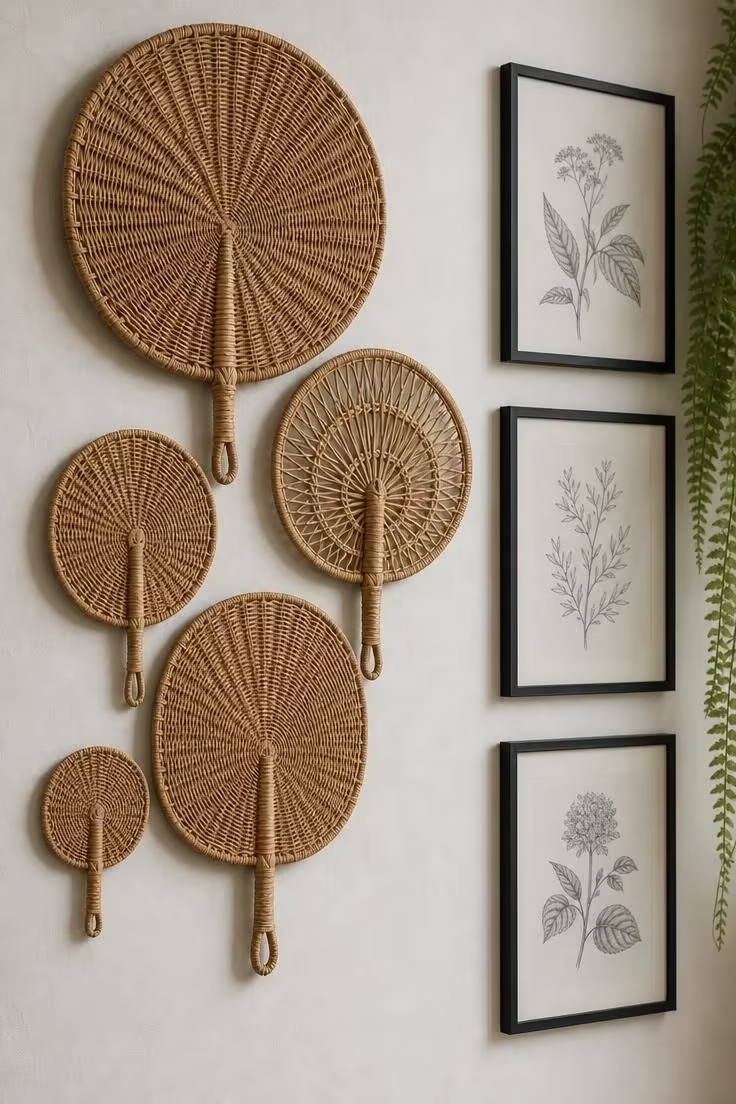
Dimensional objects change how a flat gallery wall behaves in a room.
A woven rattan fan throws a small shadow onto the wall behind it, so the arrangement shifts subtly as the light moves through the day.
That shifting shadow is part of what separates eclectic wall decor from a static print collection, since the wall keeps changing in small ways hour to hour.
Pairing the fans with botanical line drawings keeps the palette calm even though the shapes and materials vary widely.
Cool overcast light flattens color but sharpens texture, which is exactly the light condition that makes woven rattan look its best on camera and in person.
Source the fans from secondhand shops or basket weavers rather than mass retailers, since slightly irregular weaving reads as more handmade.
Leave more breathing room around the dimensional pieces than you would around flat frames, since they visually weigh more than their footprint suggests.
Group the botanical drawings in a tight cluster of three so they read as one unit next to the looser fan arrangement.
Style Blueprint:
- Five woven rattan fans in varied sizes
- Three botanical line drawings in slim black frames
- Removable adhesive hooks rated for lightweight woven pieces
- A small trailing fern or pothos nearby
- Warm plaster white paint on the wall itself
Vintage Postcards Pinned to a Cork-Backed Linen Board Beside Brass Frames
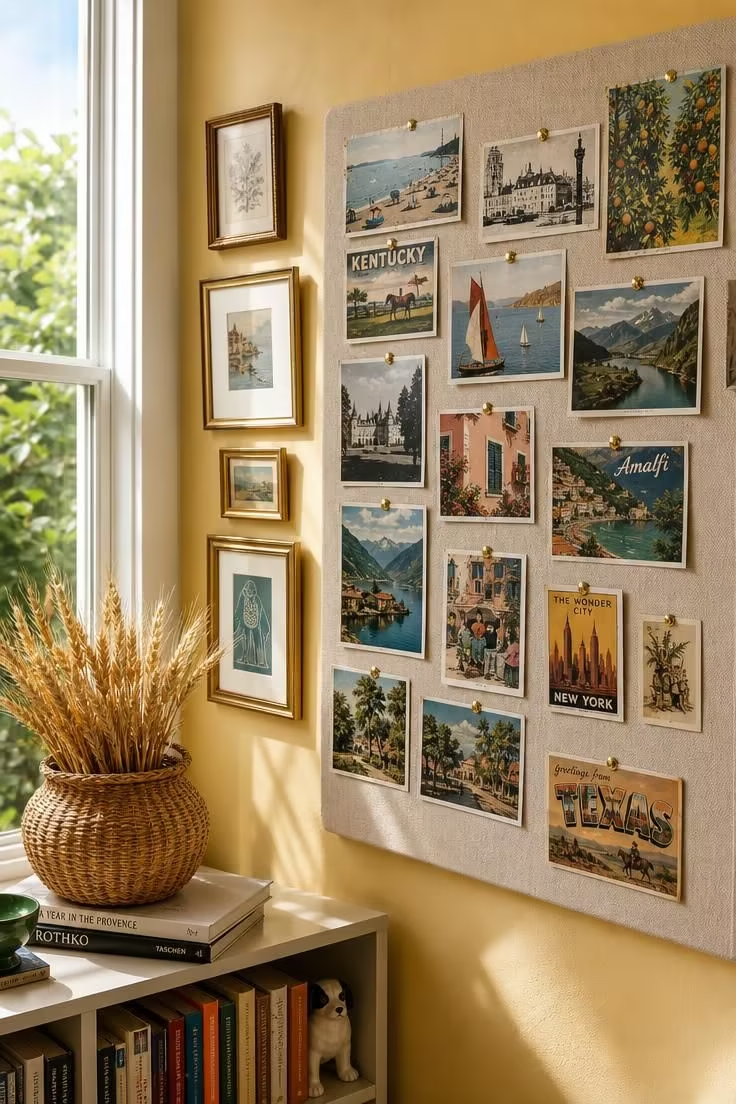
A pinboard earns its place on a gallery wall by doing something frames cannot, letting you swap pieces on a whim without a single new nail hole.
Vintage postcards work especially well here because they carry handwriting, stamps, and travel history that a printed poster never will.
This is one of the few spots on a vintage frame gallery wall built for change rather than permanence, so treat it as a rotating gallery within the larger arrangement.
Pair the pinboard with a handful of brass frames holding your more permanent pieces, so the wall has both a fixed anchor and a flexible corner.
Bright midday light through a window will bleach paper over months, so rotate the postcards seasonally if the wall gets direct sun.
Butter yellow paint behind the arrangement keeps the mixed materials feeling warm instead of cluttered.
Style Blueprint:
- A linen-wrapped cork pinboard
- Brass push pins in a matching finish
- A small collection of vintage postcards
- Four brass frames of varied sizes
- A woven basket for a textural accent nearby
A Terracotta Plate Rack Mixed with Charcoal Portrait Sketches
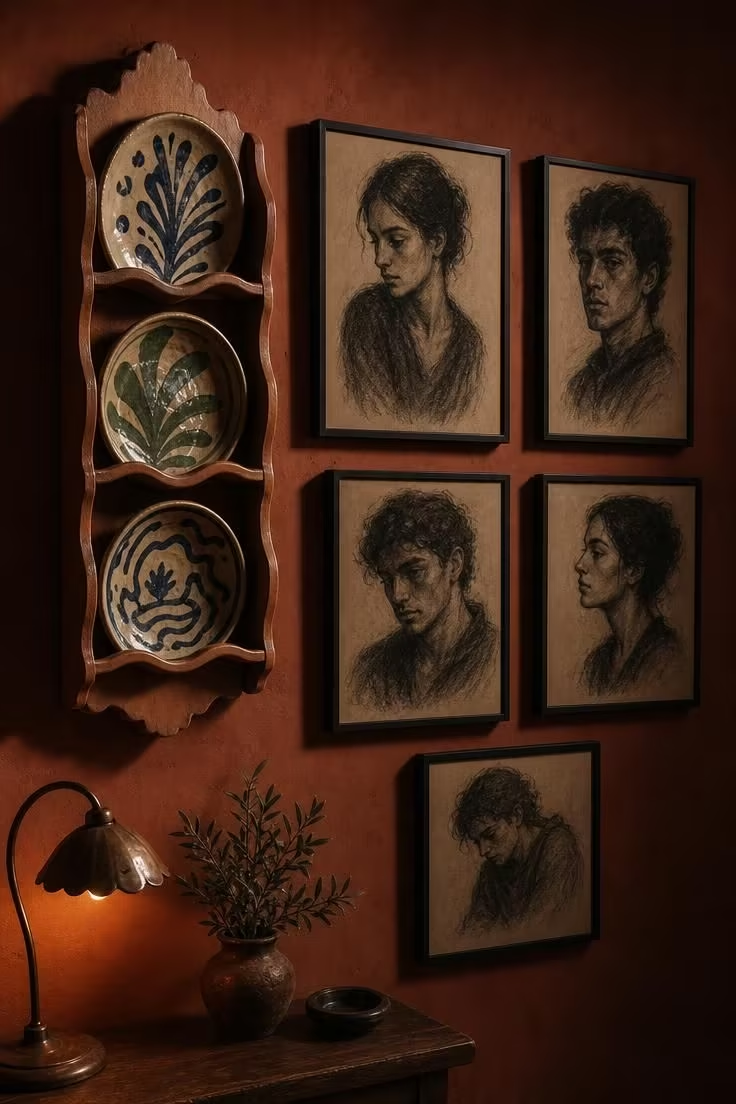
Plates rarely make it onto a gallery wall, which is part of what makes a plate rack such an effective outlier here.
The dimensional curve of ceramic plates against flat charcoal sketches creates a rhythm that a wall of frames alone cannot replicate.
Moody low light exaggerates the glaze on hand-thrown plates, so this combination photographs and lives best in a room with warm lamp light rather than cool overhead fixtures.
Charcoal sketches bring a quieter, more serious note that keeps the terracotta plates from tipping the wall into a purely kitschy look.
One of the clearest gallery wall layout ideas for a dining or kitchen-adjacent wall is exactly this pairing of function-adjacent objects with fine art.
Deep clay red paint behind the arrangement lets both the terracotta and the charcoal read as part of one warm story rather than two competing displays.
Space the plates slightly wider apart than the sketches, since their dimensional shadow needs more visual room than a flat frame does.
Anchor the whole cluster with one larger sketch positioned slightly off-center rather than dead middle.
Choose plates with some variation in glaze tone so the rack itself has depth before you even add the sketches.
Design Pro-Tip: When mixing dimensional objects with flat art, give the dimensional pieces at least 25 percent more spacing than you would a frame of the same width. Their cast shadows read as part of their footprint, and crowding them flattens the effect you are trying to create.
An Asymmetric Column of Black-and-White Film Stills Beside a Brass Sunburst Mirror
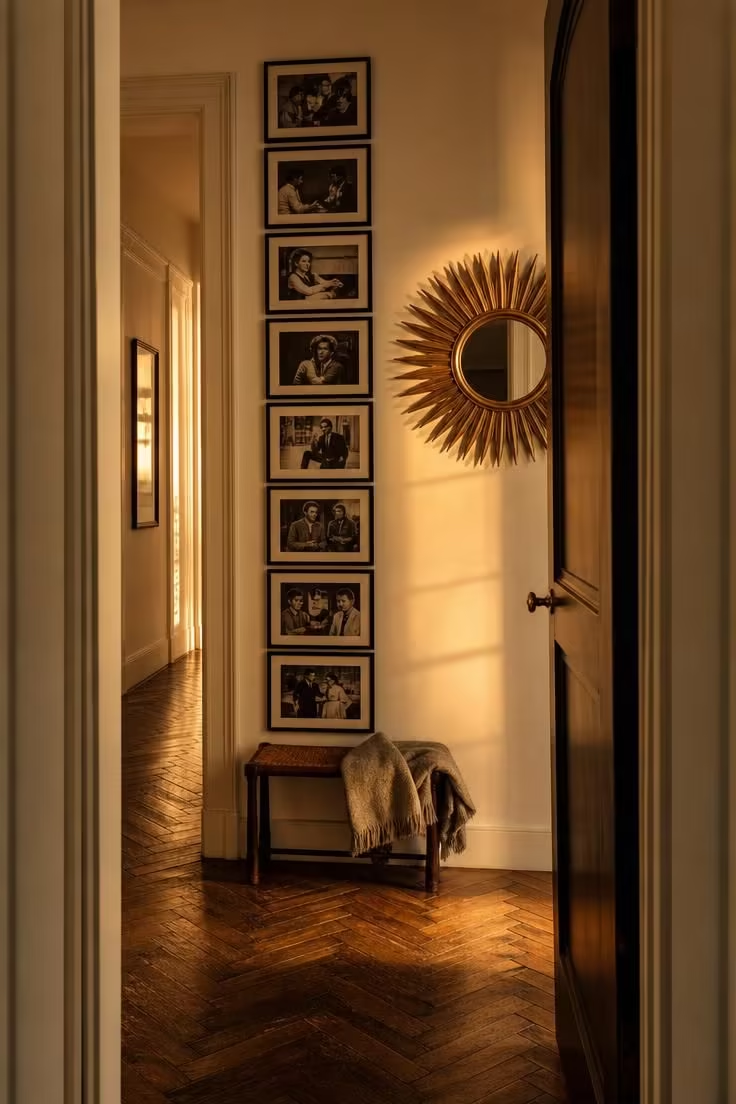
Narrow hallways rarely get enough gallery wall attention, but a single vertical column solves the width problem entirely.
Stacking black-and-white prints in an asymmetric column, some frames flush left and others offset slightly right, keeps a strict grid from feeling rigid in a tight space.
A mixed frame gallery wall does not require every frame to differ, so here the frames stay uniform while the sunburst mirror becomes the one loud outlier.
That single brass sunburst does double duty, bouncing warm hallway light further down the corridor while giving the eye a bright resting point after the black-and-white column.
Golden hour light raking down a hallway picks up the mirror’s rays and throws small glints across the adjacent frames.
A bench at the base of the column gives the wall a sense of scale and turns the hallway into a spot worth pausing in.
Style Blueprint:
- Seven black-and-white film still prints in matching black frames
- One large brass sunburst mirror
- A narrow bench for scale at the base
- A folded wool throw for texture
- Museum-glass framing to reduce hallway glare
A Floating Ledge Trio That Extends an Eclectic Gallery Wall
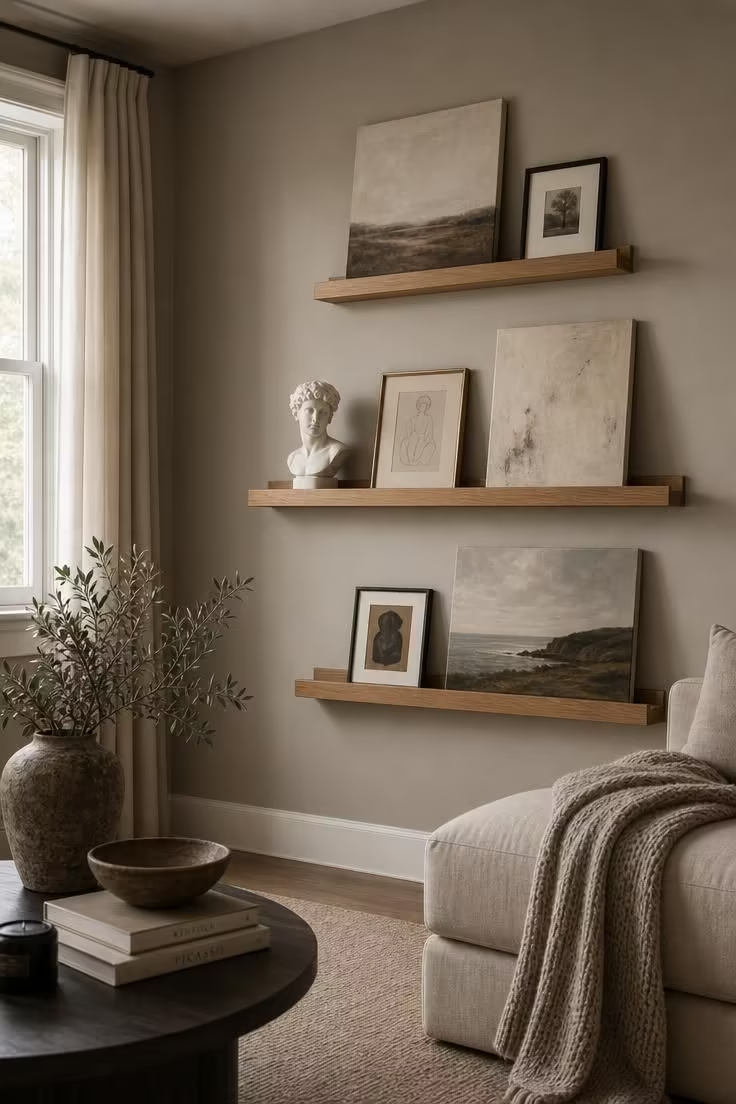
Floating ledges solve the biggest complaint people have about gallery walls, which is the fear of committing to a permanent nail pattern.
Leaning art on a ledge instead of hanging it outright means you can swap pieces seasonally without patching a single hole.
This ledge trio effectively becomes its own eclectic gallery wall within the room, since the leaning arrangement can shift and grow the way a hung wall rarely does.
Stagger the ledge heights rather than lining them up level, since the offset creates the same diagonal energy as a salon-style hang.
A small ceramic bust or object among the leaning canvases breaks up what could otherwise become a flat row of rectangles.
Soft diffused light is forgiving here, since it minimizes glare on the leaning canvases without a hard directional shadow crossing the frames.
Leave enough ledge depth, at least four inches, so pieces can lean at a slight angle rather than lying flat against the wall.
Group two or three pieces per ledge rather than lining up a single piece on each, so the arrangement feels collected instead of evenly spaced.
A ledge trio like this is one of the easiest ways to build a layered art wall without committing to a single permanent layout.
Style Blueprint:
- Three oak floating ledges at staggered heights
- A mix of leaning canvases in varied sizes
- One small ceramic or plaster bust
- A framed print for a flat anchor
- Museum putty to keep leaning pieces stable
Hand-Painted Tile Fragments Framed Beside Abstract Ink Wash Art
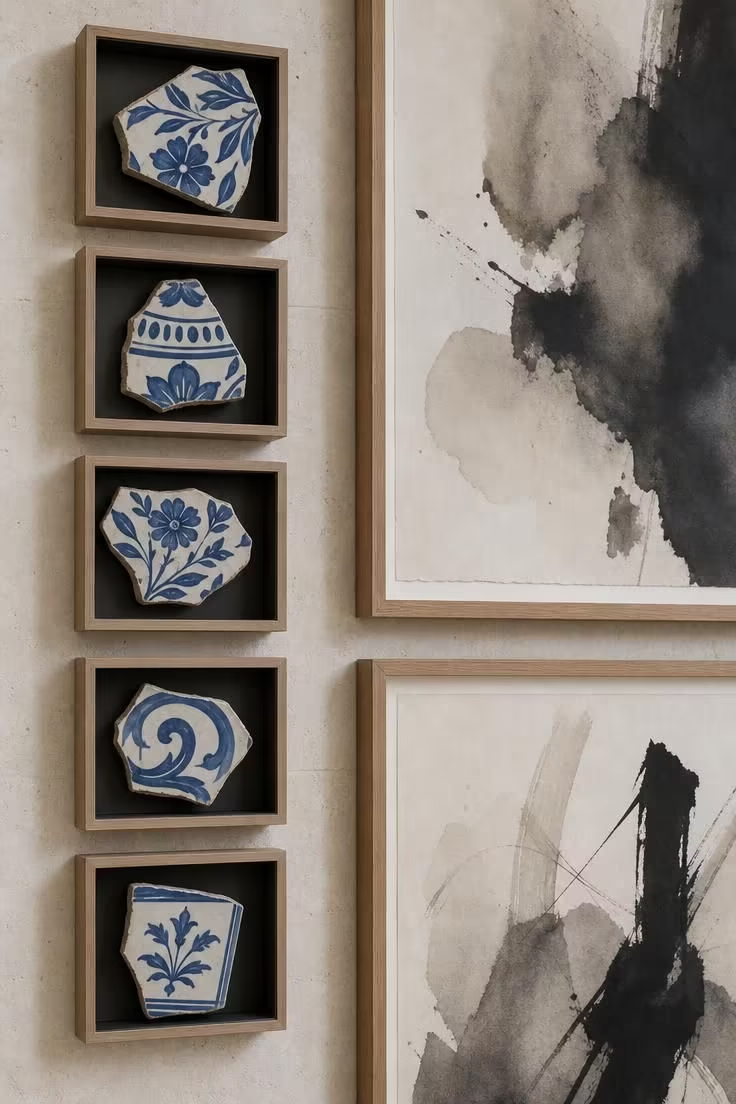
Broken or reclaimed tile fragments carry a history that a printed art piece cannot fake.
Framing them in a shallow shadow box protects the glaze while letting the dimensional edge of each fragment cast a small shadow.
A thrifted frame art wall built around salvaged materials like this tends to age better visually than one built entirely from new prints, since the patina only deepens over time.
Pairing the tiles with large-scale abstract ink wash paintings gives the eye a big, quiet space to rest between the smaller, busier tile pieces.
Cool overcast light is ideal for photographing glazed ceramic, since it avoids the hot reflections that direct sun creates on glossy surfaces.
Limestone-toned paint behind the arrangement keeps the palette neutral enough that both the colorful tile and the monochrome ink wash pieces read as part of one story.
Style Blueprint:
- Five hand-painted or reclaimed tile fragments
- Shallow shadow-box frames for the tile pieces
- Two large abstract ink wash paintings
- Raw wood frames for the ink wash pieces
- Pale limestone or greige wall paint
A Cluster of Vintage Needlepoint Panels Beside Modern Photography Prints
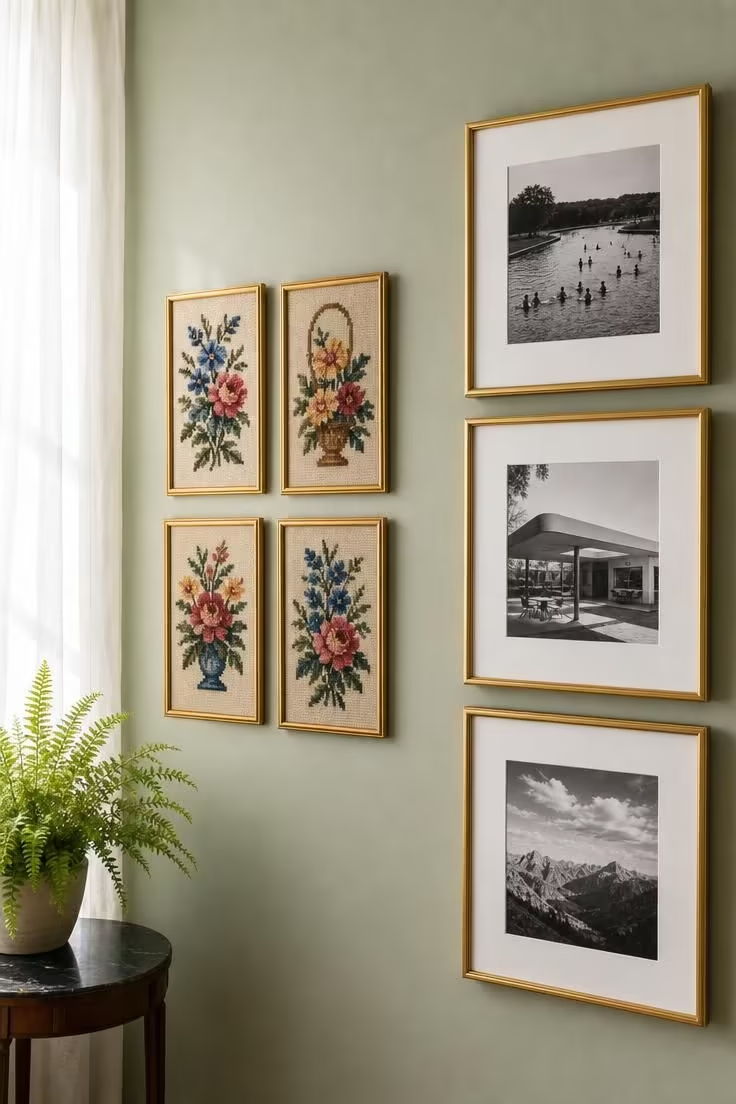
Needlepoint panels carry a handmade texture that photography simply cannot replicate, which is exactly why the pairing works.
Keeping every frame in the same gold finish is what allows genuinely different mediums, stitched textile and modern photography, to sit together without competing.
This kind of maximalist wall art pairing proves that variety does not require chaos, since one repeated frame finish holds the whole arrangement together.
Sage green paint behind the cluster cools down the warm gold frames just enough to keep the wall from feeling too heavy.
Bright midday light shows off the stitched texture of the needlepoint in a way that flatter lighting conditions would miss entirely.
Balance the softer, more ornate needlepoint pieces with the crisp black-and-white photography so neither medium dominates the cluster.
A small potted fern nearby softens the geometry of all those rectangular frames.
Style Blueprint:
- Four vintage needlepoint panels
- Three black-and-white modern photography prints
- Matching gold frames across every piece
- A small potted fern or trailing plant
- Sage green wall paint for contrast
Design Pro-Tip: A single repeated frame finish, whether gold, black, or natural wood, can hold together almost any mix of mediums. When in doubt about whether two pieces belong on the same wall, check the frame first before you second-guess the art.
Oversized Pressed Botanical Specimens in Slim Glass Frames Beside a Rattan Mirror
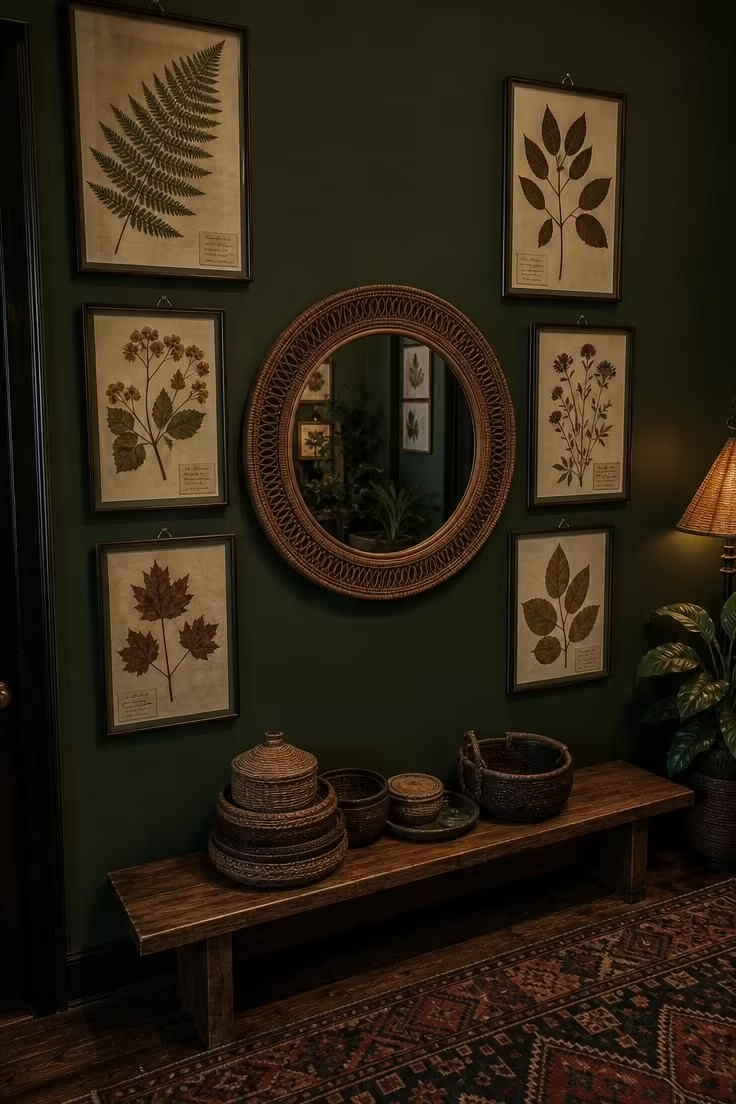
Pressed botanicals bring an unexpected scale to a gallery wall when they are framed oversized rather than kept small and delicate.
The glass frames let light pass through the specimens themselves, so the pieces glow slightly rather than sitting flat against the wall.
This particular gallery wall arrangement works because the rattan mirror’s warm, woven texture contrasts directly against the crisp glass and delicate pressed botanicals.
Deep forest green paint intensifies both the mirror’s warmth and the pale, papery botanicals, pulling the whole cluster together.
Moody low light in the evening makes the glass-framed specimens catch a warm lamp glow, which softens what could otherwise feel like a clinical botanical collection.
Center the rattan mirror slightly off from true center, letting the botanical frames outnumber it on one side for asymmetric balance.
A low wood bench beneath the arrangement gives the eye a place to land and adds a practical surface for baskets or books.
Source pressed specimens from botanical print shops or press your own from a home garden for a more personal touch.
Keep at least two inches of negative space around the mirror itself so it does not feel crowded by the surrounding frames.
Style Blueprint:
- Six oversized pressed botanical specimens in glass frames
- One large round rattan-framed mirror
- A low wood bench for scale
- Woven baskets for texture beneath the wall
- Deep forest green wall paint
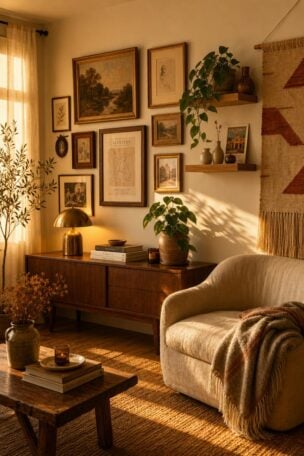
A Wall of Mismatched Oval and Rectangular Frames Anchored by a Gilt Mirror
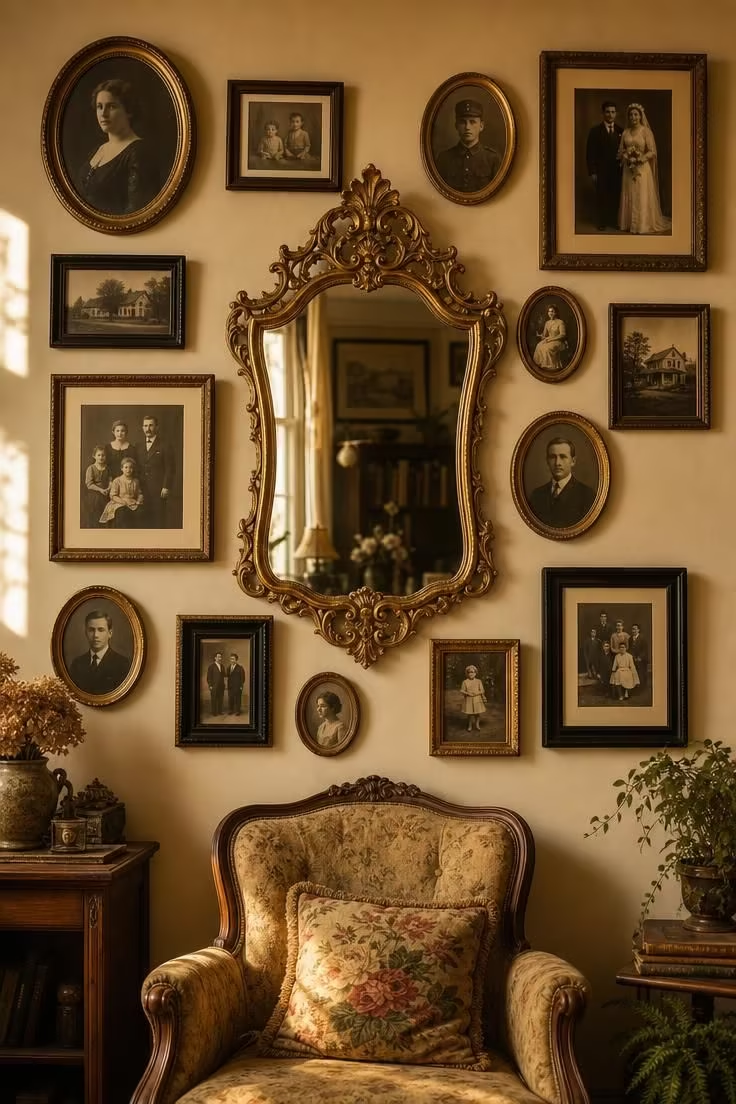
Mixing oval and rectangular frames in one dense cluster is one of the fastest ways to make a wall feel like it grew over time rather than arrived in a single shipment.
The gilt mirror at the center acts as a visual pause, its ornate detail giving the eye somewhere to rest before continuing around the denser frame cluster.
Keep the finishes limited to two tones, gold and black work especially well, so twelve different frames still read as one cohesive wall.
Warm golden light in late afternoon catches the gilt detailing on the mirror and throws soft highlights across the surrounding glass.
Cream paint behind the cluster keeps the wall from feeling heavy despite the density of frames.
A vintage armchair nearby grounds the wall in a lived-in room rather than letting it feel like a stand-alone art installation.
Style Blueprint:
- Twelve mismatched oval and rectangular frames
- One ornate gilt mirror as the anchor
- A limited two-tone frame palette of gold and black
- A vintage armchair for scale beneath the wall
- Warm cream wall paint
Layered Fabric Swatches and Small Oil Studies on a Painted Plaster Wall
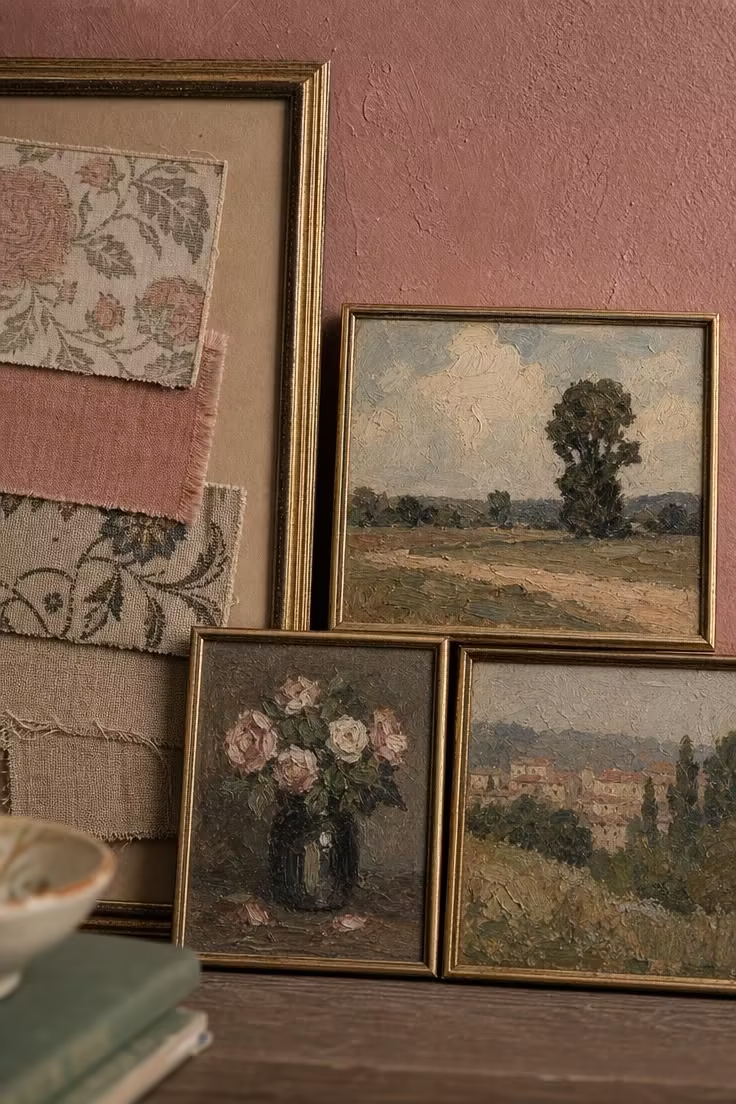
Fabric rarely gets framed on its own, which makes a small cluster of vintage swatches feel unexpectedly fresh next to traditional paintings.
Mounting the swatches behind glass protects delicate or antique textiles while letting their weave and pattern read almost like abstract art.
Textured plaster behind the arrangement adds a third layer of tactility beyond the framed fabric and the painted oil studies.
Soft diffused morning light is gentle enough not to fade antique textiles, which matters if the swatches are genuinely vintage rather than reproduction.
Miniature oil studies, the kind artists once used as quick color sketches, bring a loose, painterly energy that balances the more structured fabric swatches.
Dusty rose paint on the plaster wall warms the whole cluster without competing with the fabric’s own pattern and color.
Group the oil studies in an uneven row above the fabric swatches so the eye moves naturally from texture to brushwork.
Keep frames thin and understated here, since the plaster texture and fabric pattern are doing most of the visual work already.
Style Blueprint:
- A small cluster of framed vintage fabric swatches
- Three miniature oil study paintings
- Thin gold frames throughout
- Textured plaster wall finish
- Dusty rose paint for warmth
A Ladder-Style Leaning Gallery with Stacked Frames on a Picture Rail
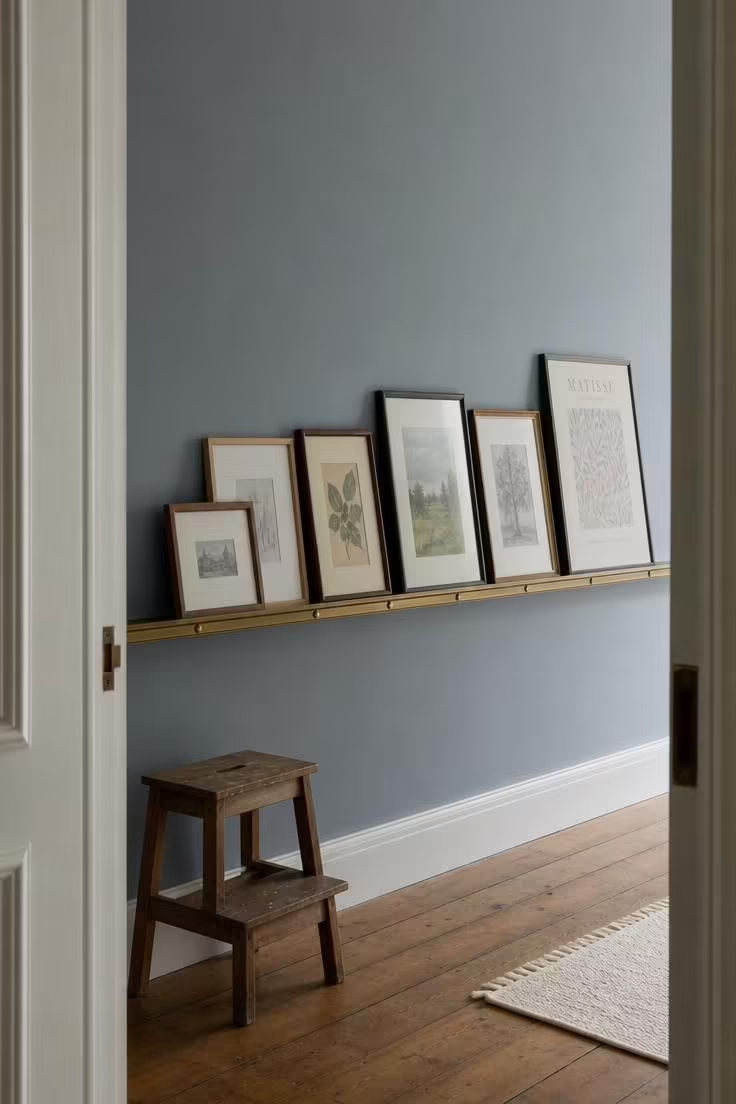
A picture rail solves the biggest obstacle renters face when building an eclectic gallery wall, which is a lease that forbids nail holes.
Stacking frames at a gentle lean rather than hanging them flat gives the wall a relaxed, gallery-opening energy instead of a rigid grid.
Cool overcast light keeps glare off the leaning glass fronts, which matters more here than in a flat-hung arrangement since the angle catches more window light.
Slate blue paint behind the rail cools down whatever warm-toned frames you lean against it, giving the whole wall a calmer overall mood.
Overlap the frames slightly as they lean, letting the front pieces partially cover the ones behind for depth.
A small step stool nearby makes the practical case that this is a wall meant to be rearranged often, not set once and forgotten.
Choose a rail finish, brass or matte black both work, that echoes at least one other metal already used elsewhere in the room.
Style Blueprint:
- A brass or matte black picture rail
- Six frames in varied sizes for stacking
- A small step stool for easy rearranging
- Slate blue or another cool wall paint
- Museum putty to keep leaning frames from sliding
Conclusion
Every eclectic gallery wall on this list shares one quiet rule, a repeated finish, color, or shape that keeps a genuinely mixed collection from tipping into clutter.
Start with a single anchor piece, whether that is a mirror, a plate rack, or one oversized print, and build outward from there rather than trying to plan the whole wall at once.
The rest tends to fall into place once that first piece is on the wall.