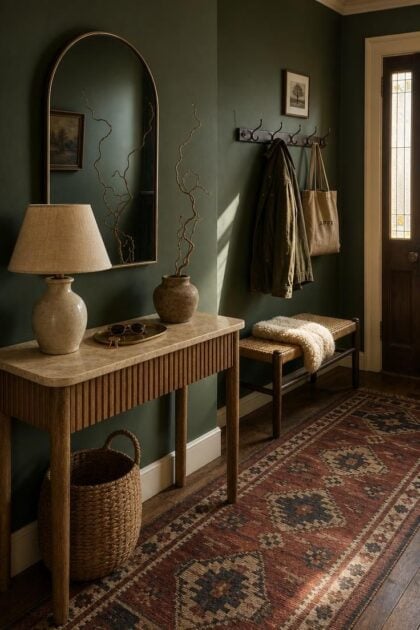
This post may contain affiliate links. If you make a booking or purchase through these links, we may earn a commission at no additional cost to you.
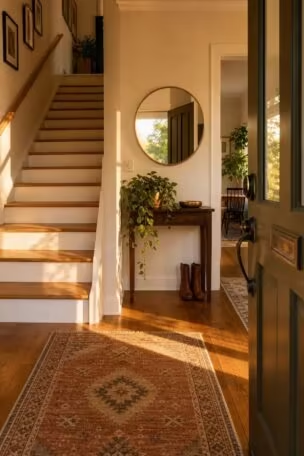
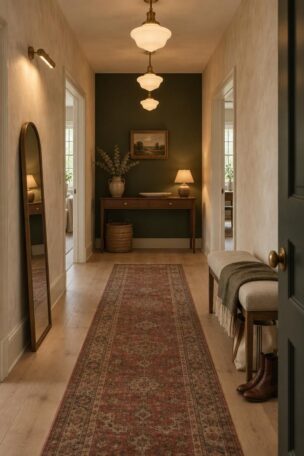
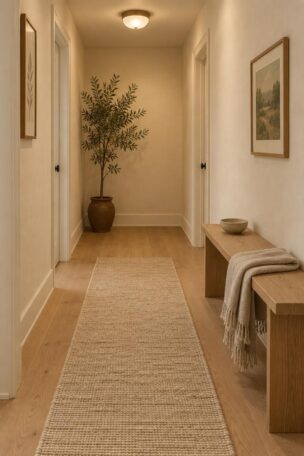
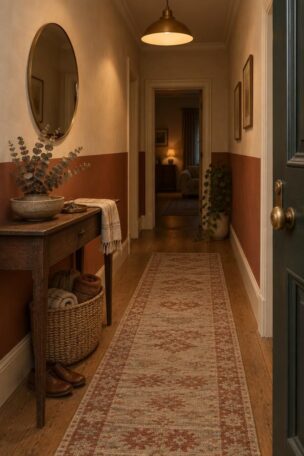
An eclectic entryway performs a small miracle: it compresses the personality of an entire home into the first 40 square feet a guest encounters.
This compressed gallery rewards close viewing, tactile contrast, and objects that carry a story rather than match a set.
The sections below treat each image as the primary lesson, with text as a supporting guide to the materials, proportions, and daily-use logic that make the room work beyond the photograph.
Together they build a vocabulary of thresholds that feel collected, not decorated.
The Travertine Console With Unlacquered Brass and a Smoked-Glass Mirror
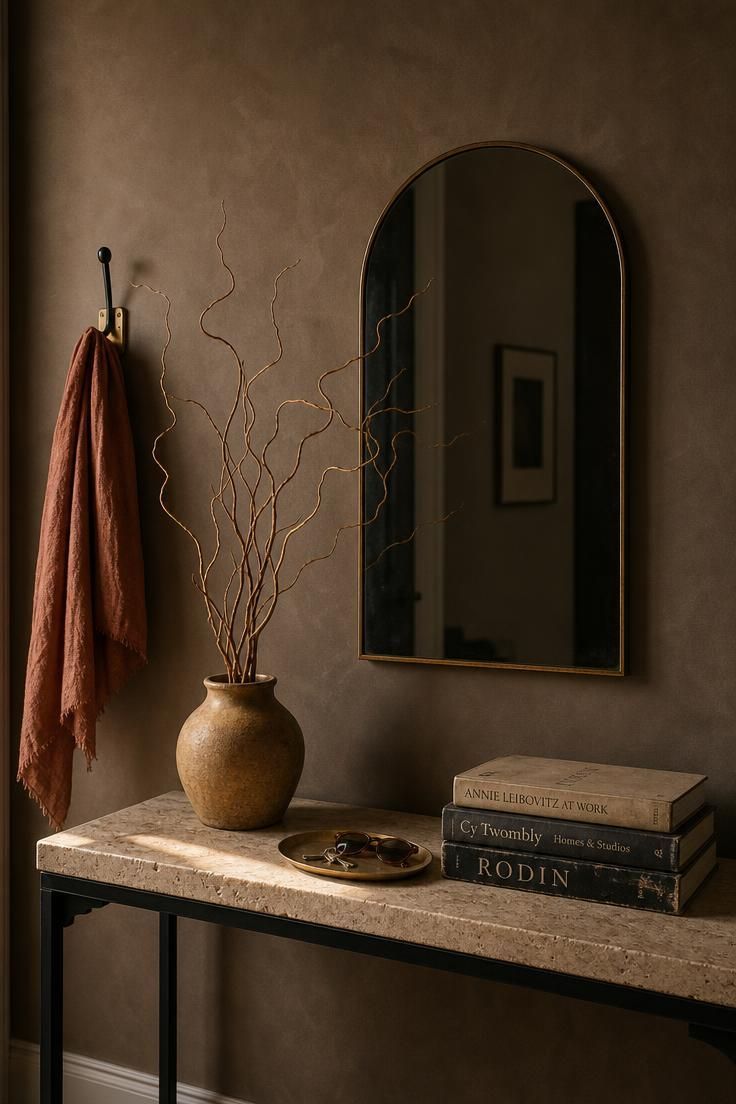
The travertine console top supplies a honed, matte stone surface that absorbs fingerprints and keys without showing every smudge, unlike polished marble.
Unlacquered brass repeated in the mirror rim, a small tray, and a single hook creates a metallic through-line that will patina unevenly and gain character with use.
Smoked glass in the mirror softens the reflection and keeps the narrow wall from feeling like a harsh check-in point; the arched shape adds a quiet architectural gesture.
A single sculptural branch in a heavy ceramic vessel gives vertical lift without the maintenance burden of a living plant in a light-starved vestibule.
The composition stays lean: one tall object, one horizontal stack, one mirror, one tray.
Negative space on the console surface is what keeps the mix intentional.
A quiet wall lets the materials speak.
Style Blueprint:
- Honed travertine slab on a matte black steel or iron base
- Unlacquered brass in at least two functional objects: tray, hook, mirror rim, lamp base
- Arched or cathedral-shaped mirror with smoked, antiqued, or lightly foxed glass
- One oversized ceramic or stoneware vessel with a dried branch or single sculptural stem
- A stack of two to four large-format art or architecture books with visibly worn jackets
A Blackened Steel Hook Rail Above a Worn Kilim Runner and Cane Bench
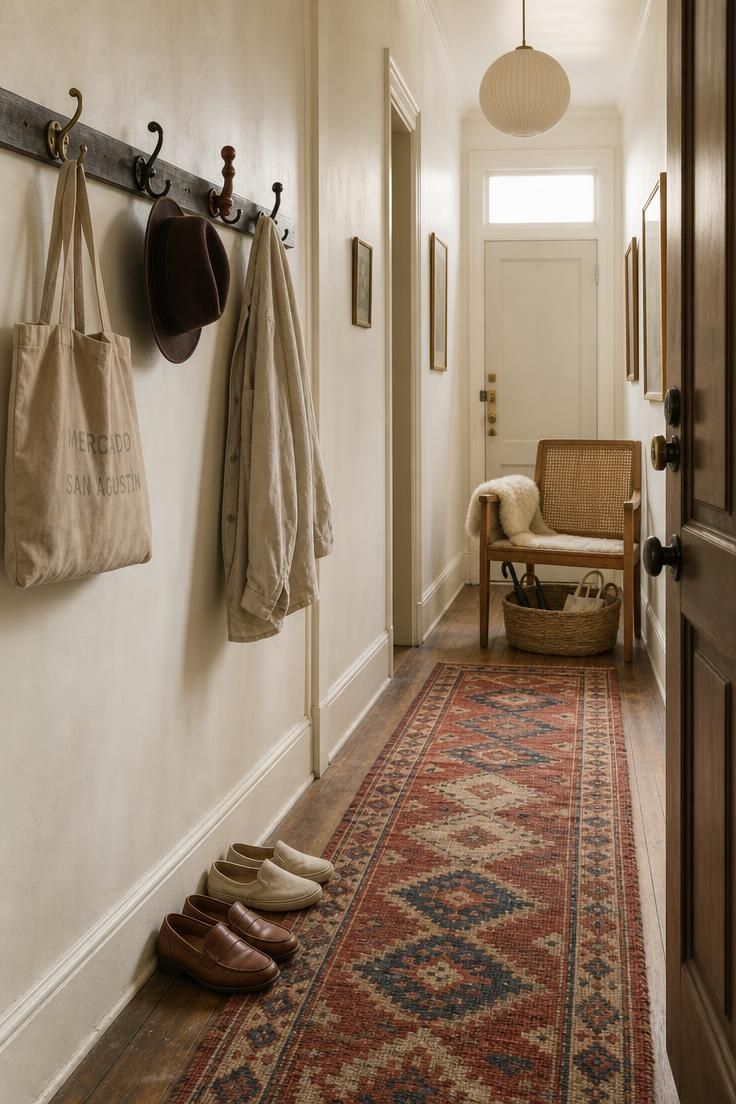
The hook rail solves the narrow-entry problem by keeping storage on the wall and off the floor, but the mismatched hooks prevent the solution from reading as hardware-store generic.
A vintage kilim runner in a flatweave construction handles heavy foot traffic and hides the grit that falls off shoes, while its faded palette introduces pattern without overwhelming the close walls.
Cane on the bench back and seat allows the bench to dry quickly when wet coats or umbrellas rest against it, and it adds a woven texture layer distinct from the rug.
The shearling or wool throw draped across one end of the eclectic entryway bench works as both a decorative and practical layer for cold-morning shoe changes.
Keeping the upper walls bare except for the rail preserves a visual rest zone.
The eclectic entryway hooks on the rail also keep the narrow hall from feeling crowded.
Style Blueprint:
- Wall-mounted steel, iron, or solid brass rail with individually chosen hooks in two to three finishes
- Vintage flatweave kilim, dhurrie, or Anatolian runner in a faded, low-contrast palette
- Cane-backed or cane-seated bench in a warm wood frame
- A sheepskin, shearling, or heavy wool throw in a solid tone
- A woven basket tucked beneath the bench for shoes or umbrellas
Design Pro-Tip: When mounting hooks in an entry, anchor into studs or use heavy-duty wall anchors rated for at least 50 pounds. A loaded coat plus a wet umbrella exerts far more force than the hook's own weight, and small plastic anchors will pull out of drywall within months.
A Checkerboard Encaustic Tile Floor Under a Pale Plaster Arch
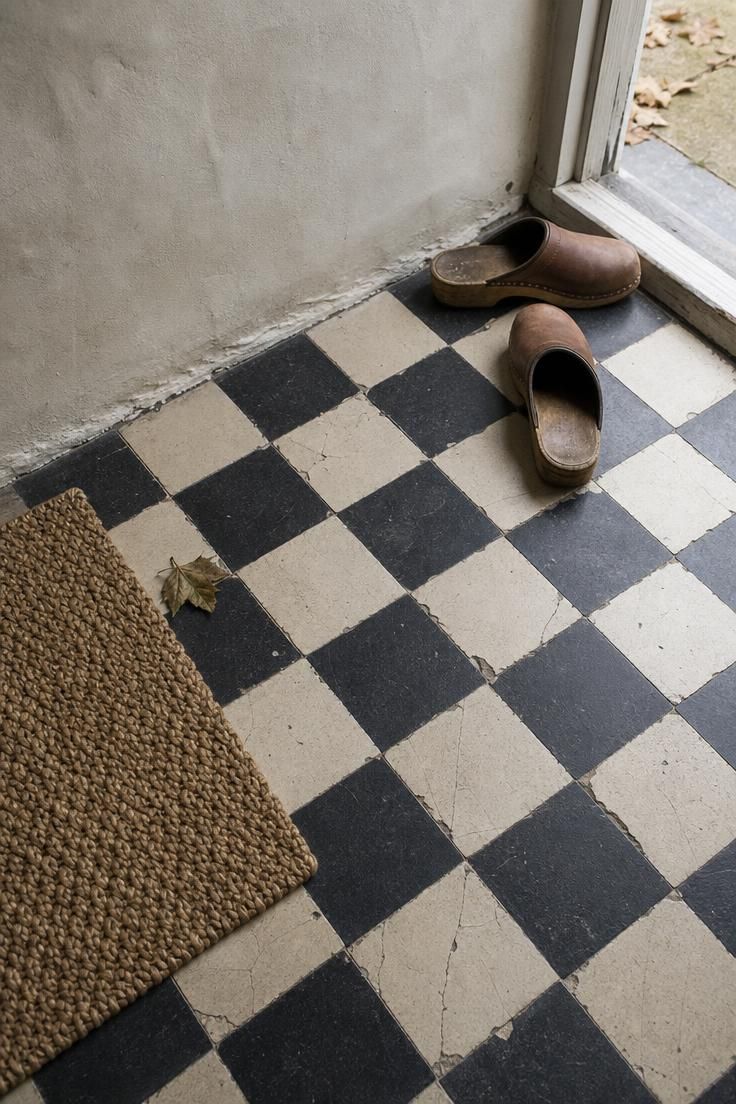
Encaustic cement tiles bring a durable, matte surface that improves with wear; the pattern is embedded through the tile body rather than printed on top, so chips and scuffs read as age.
A black-and-cream checkerboard or low-contrast geometric tile anchors the entry with pattern underfoot, allowing walls and furniture to stay quieter.
The pale limewashed or plastered wall near the floor creates a soft, slightly irregular surface that makes the crisp tile geometry feel more collected and less clinical.
A woven jute or coir mat placed just inside the door catches grit before it reaches the tile and defines the threshold as a distinct zone.
Limiting wall color and object count lets the floor function as the primary visual event, which suits very small foyers where wall decor would feel crowded.
This use of an eclectic entryway rug keeps the small vestibule from feeling bare.
Style Blueprint:
- Encaustic cement tile in a worn two-tone checkerboard or low-contrast geometric pattern
- Limewash, clay plaster, or soft matte paint on the lower walls in a warm off-white
- Interior jute or coir doormat in a rectangular or oval shape
- One or two pairs of shoes left visible as functional still-life objects
- A single wall-mounted light or sconce kept visually quiet to let the floor dominate
A Fluted Walnut Console With a Single Swing-Arm Sconce and a Gallery Ledge
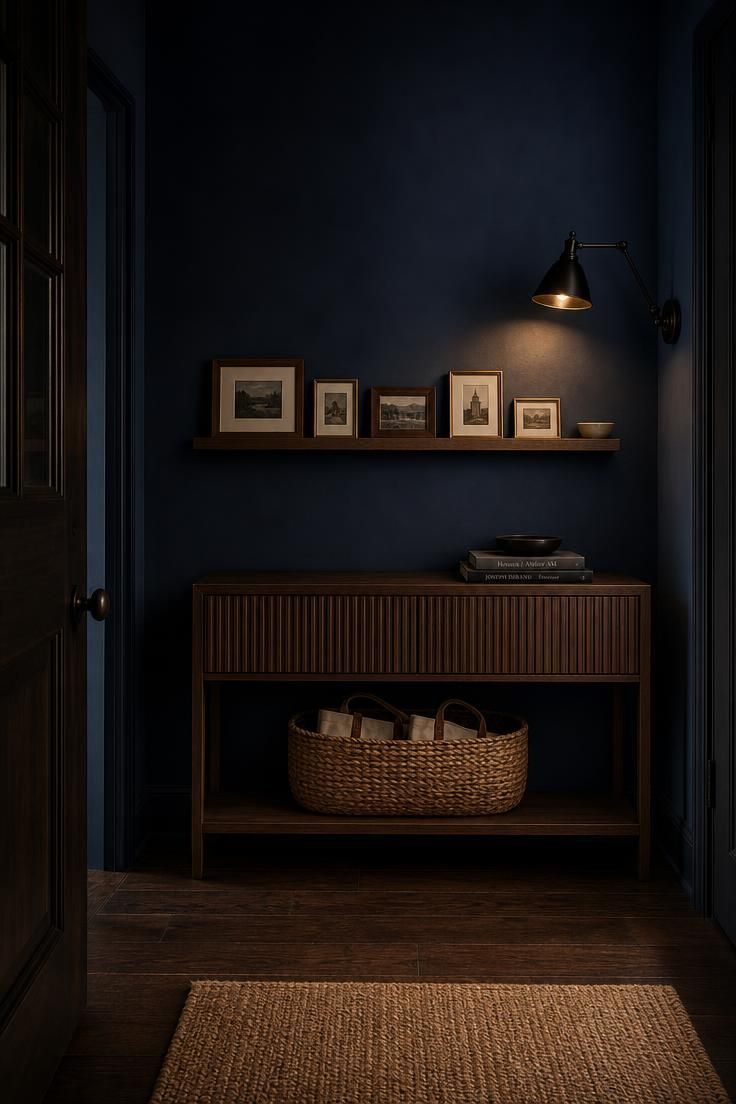
The fluted walnut front delivers texture at close range and gives a simple, shallow console enough presence to anchor the wall without visual bulk.
A deep indigo or ink-blue wall recedes visually in the low light of a windowless entry, while the walnut and brass pop forward.
The swing-arm sconce, mounted at roughly 60 to 66 inches, provides the face-height light that a single overhead fixture cannot, and its adjustable arm lets it double as task light near the ledge.
A narrow picture ledge rather than a full gallery wall allows the small objects on it to be rotated without patching holes repeatedly.
The open lower shelf holds one wide woven basket, keeping daily clutter contained while still exposing the wood grain of the console's interior.
This kind of eclectic entryway decor balances storage and display without letting either function dominate.
The deep wall color works because the room is small enough to feel enclosed rather than cavernous.
Style Blueprint:
- Fluted or reeded walnut console with two shallow drawers and an open base shelf
- Deep matte wall color: indigo, ink, charcoal, or forest green
- Black swing-arm wall sconce with a warm metal interior shade, mounted near face height
- One narrow floating picture ledge with a tightly edited group of five to seven small items
- One large woven basket on the lower shelf for hidden storage
A Bullnose Terracotta Arch With a Turned-Wood Stool and Straw Hat
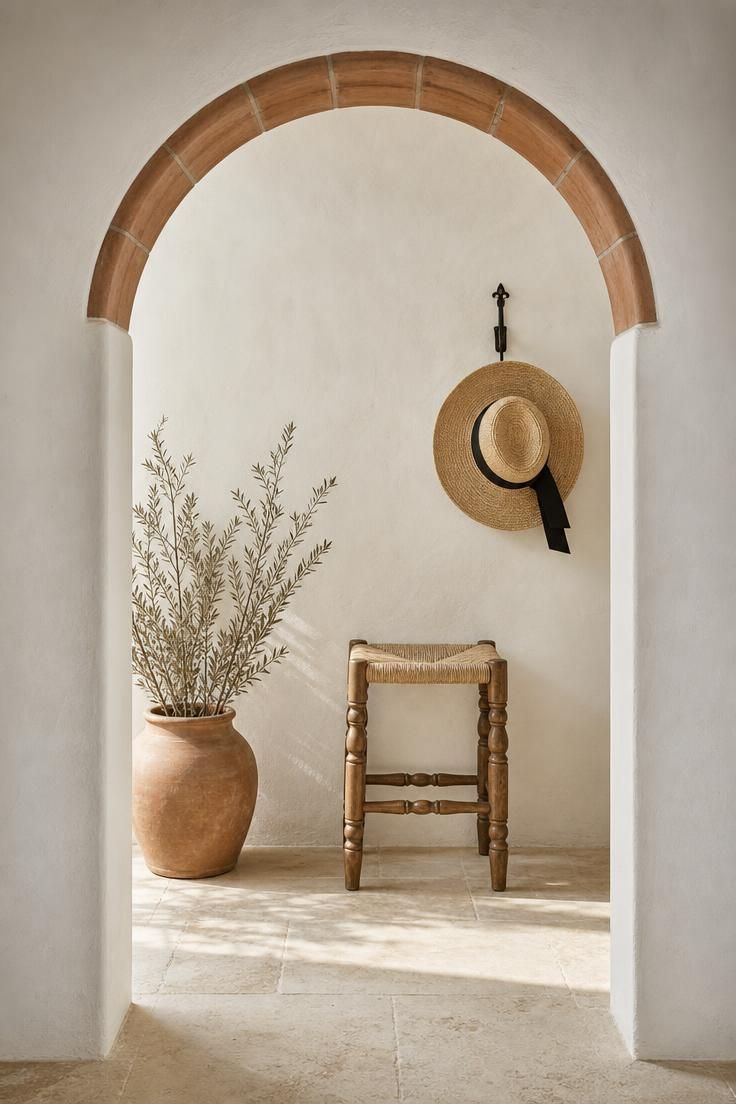
The bullnose terracotta arch softens the threshold itself, making the entry feel like a distinct architectural room even when it is only a shallow vestibule.
A turned-wood stool with a rush or cane seat works as a small bench, a landing spot for a bag, and a sculptural object at the same time.
The straw hat hanging from a single iron hook is a functional object that also introduces a woven, sun-faded texture against the plaster wall.
Dried olive, eucalyptus, or bay branches in a terracotta pot bring an evergreen gesture that needs no water and tolerates the heat or cold near an exterior door.
Keeping the wall nearly bare creates the negative space that makes the arch itself read as the main design move.
This approach to eclectic entryway ideas lets the arch carry the composition.
Style Blueprint:
- Bullnose or soft-radius terracotta arch at the entry threshold
- Turned-wood stool or small bench with a woven rush or cane seat
- A single hand-forged iron or blackened steel hook for one hat or one coat
- One unglazed terracotta vessel with dried olive, bay, or eucalyptus branches
- Warm white limewash or flat plaster on the walls
A Tiled Half-Wall With Ornate Gilt Mirror and Lacquered Red Console
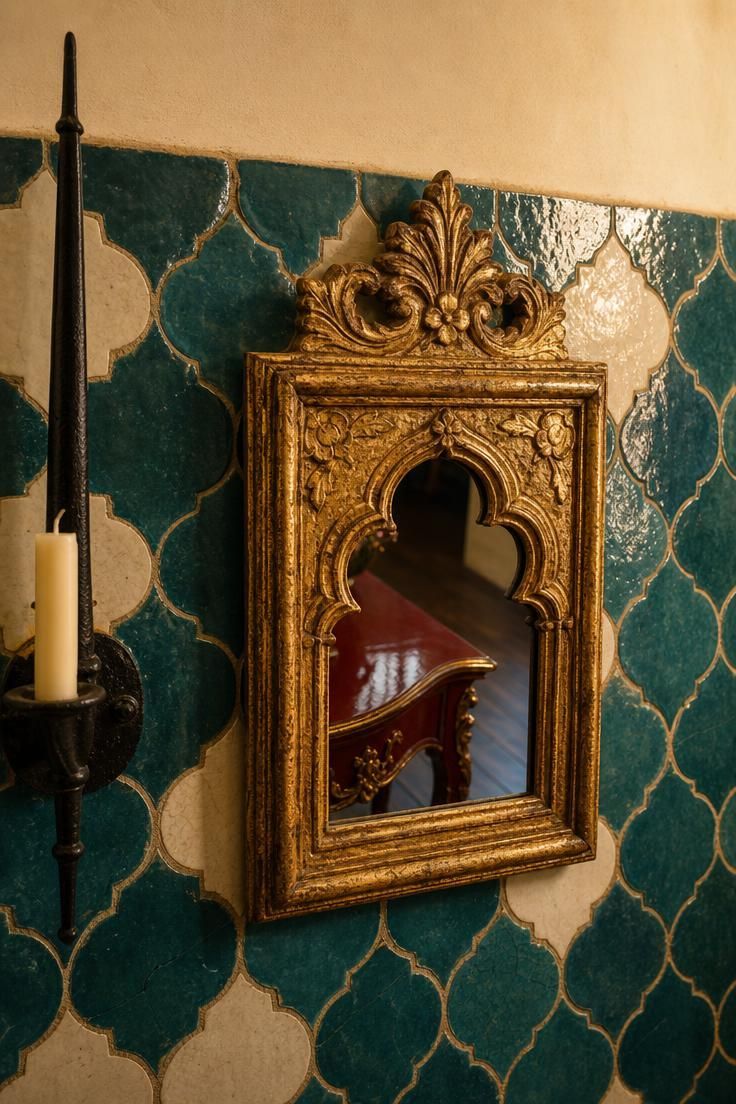
Running tile only to wainscot or half-wall height introduces pattern and shine in a small dose, leaving the upper wall quiet and preventing the small room from feeling tiled like a bathroom.
Zellige or handmade ceramic tile with irregular glaze creates a glossy, imperfect surface that catches warm light and feels collected rather than machine-made.
The ornate gilt mirror plays against the rustic tile with a deliberate clash of refinements, which is exactly the friction an eclectic entryway mirror needs.
A lacquered oxblood or Chinese-red console below supplies a saturated, high-gloss counterpoint that the mirror reflection partially doubles.
The detail crop focuses the image on the interplay of glazes and gilding, letting a small wall carry the entire room's personality.
Style Blueprint:
- Glossy handmade ceramic or zellige tile on the lower half of the wall only
- Ornate gilt or gold-leaf mirror in a heavily carved or shaped frame
- High-gloss lacquered console in oxblood, Chinese red, or deep coral
- Tile grout in a slightly contrasting warm tone rather than stark white
- One or two small objects on the console kept intentionally spare
Design Pro-Tip: When combining a busy tiled surface with an ornate mirror, keep the console surface nearly empty. The tile and mirror already produce visual density; adding many small objects turns a rich composition into clutter.
A Steel-Framed Partition With Reeded Glass and a Low Oak Shoe Bench
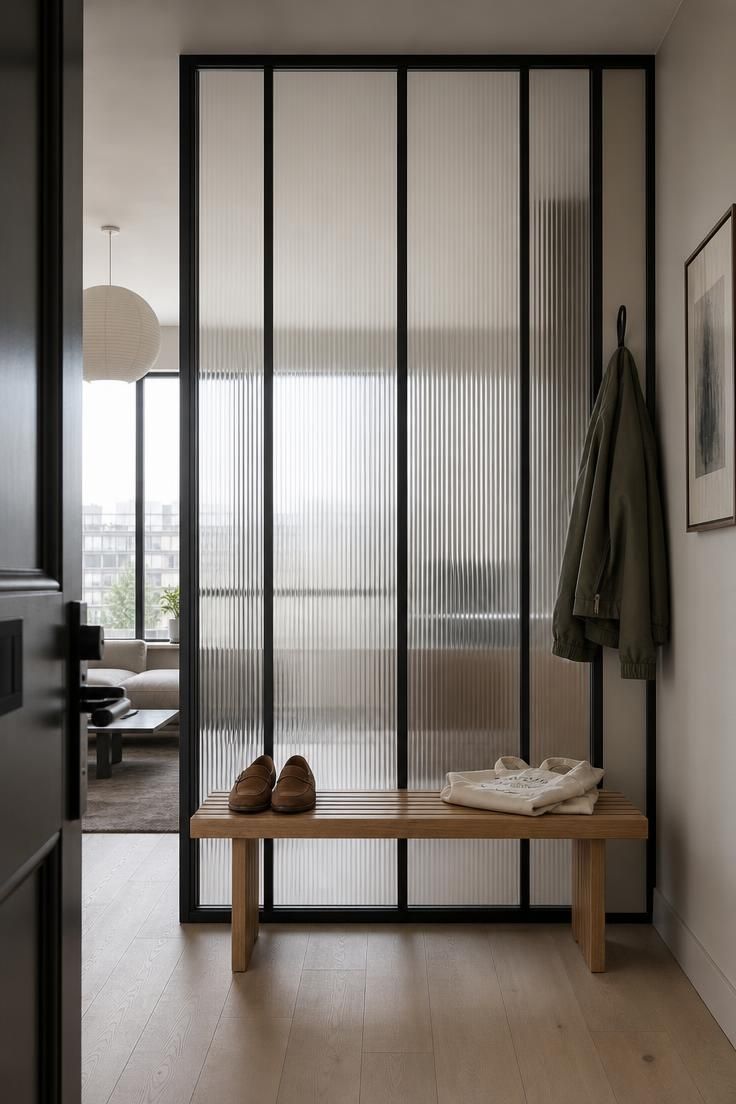
A steel-framed partition with reeded glass defines the entry without building a solid wall, preserving borrowed light from the adjacent room while creating a separate drop zone.
Reeded or fluted glass obscures the view just enough to hide the inevitable pile of shoes and bags while still glowing with light from the other side.
A low oak bench with a slatted seat dries quickly, resists scuffs, and keeps the visual line open beneath the glass.
The steel frame's black line pairs with the warm oak grain, creating a two-material composition that reads as architectural rather than decorative.
This solution suits flats and open-plan apartments where the entry is a zone, not a room; the partition does the work of a wall without the permanence.
The bench doubles as eclectic entryway storage for shoes below and a tote on top.
Style Blueprint:
- Blackened steel partition frame with reeded, fluted, or ribbed glass panels
- Low oak or teak bench with a slatted wood seat
- A single pair of shoes or a folded tote visible as a styled functional object
- Cool, neutral wall tones that let the steel and oak carry the contrast
- One small wall hook or knob on the partition for a single coat or bag
A Vintage Campaign Chest With Brass Corners and a Horseshoe-Top Mirror
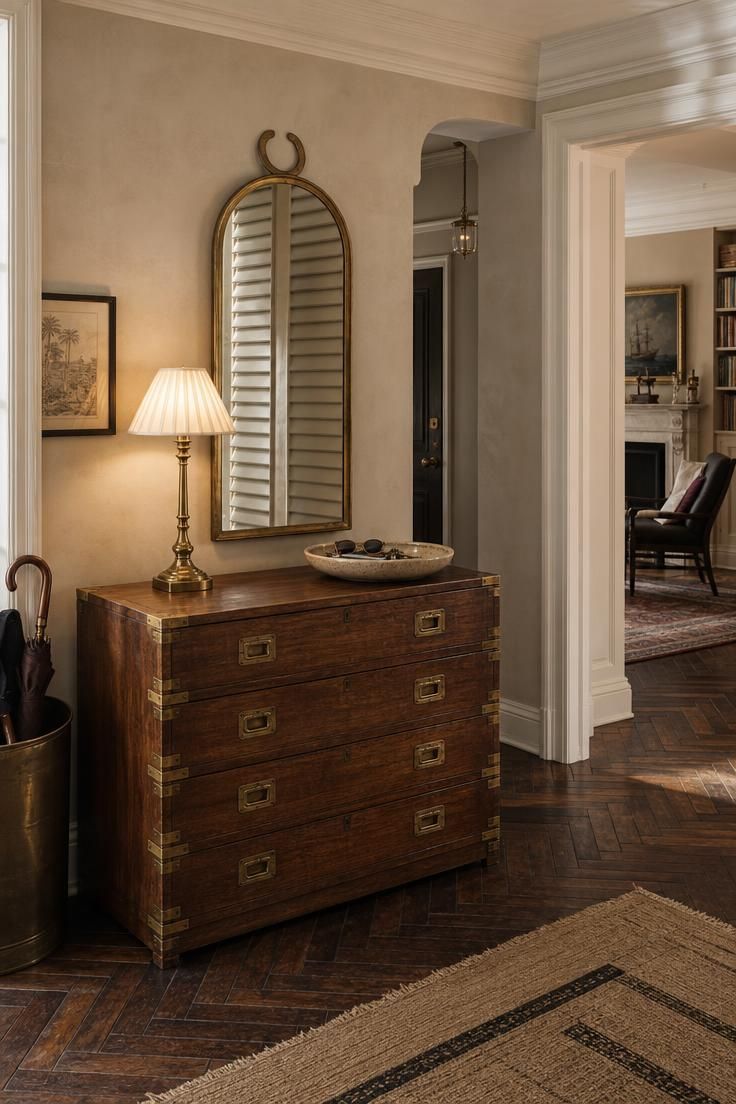
The vintage campaign chest supplies storage volume in the form of drawers that a delicate console cannot, earning its footprint in a wider entry.
Brass corner caps and recessed pulls repeat the metallic finish across the chest, the mirror rim, and the lamp base, producing cohesion among otherwise unrelated pieces.
The horseshoe-top or louvered mirror softens the straight lines of the chest and introduces an East Coast or British Colonial note without tipping into theme-park styling.
A pleated ivory lamp shade diffuses the light and adds a soft, fabric-covered vertical to a composition otherwise dominated by wood and brass.
The low ceramic bowl is large enough to hold actual daily debris rather than a staged single key.
This eclectic entryway storage approach keeps the wide foyer useful without filling it with furniture.
Style Blueprint:
- Vintage or vintage-style campaign chest in teak, mahogany, or walnut with brass corner caps
- Arched or horseshoe-topped mirror with a thin brass or wood frame
- Brass table lamp with a pleated ivory, parchment, or linen shade
- One low, wide ceramic bowl for keys, glasses, and pocket debris
- A small tray or dish to prevent metal objects from scratching the chest top
A Woven Raffia Console With a Ceramic Table Lamp and Dried Palm Frond
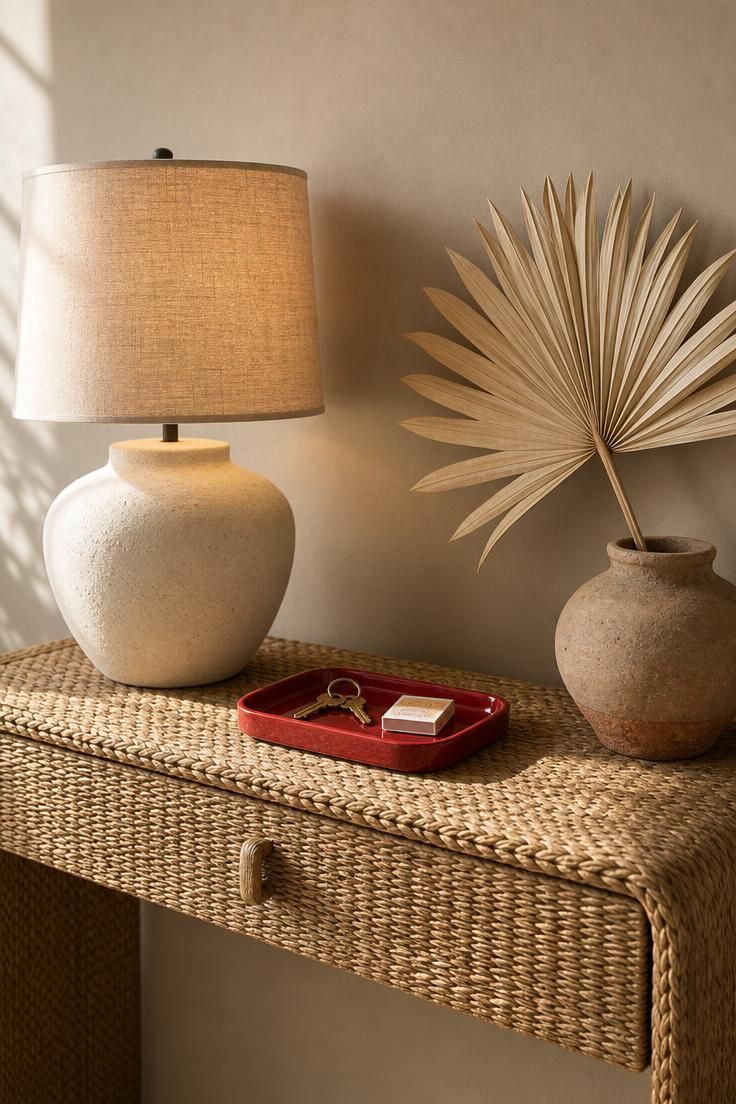
Woven raffia, seagrass, or abaca on the console front and sides introduces a deeply textured, matte surface that softens the acoustics and the visual tone of the entry.
The bulbous ceramic lamp base in a chalky, unglazed finish adds a second organic shape; the raw linen shade keeps the light warm and diffuse.
A single dried palm frond supplies a broad, sculptural silhouette that reads clearly against the quiet wall and does not wilt in low light.
The small red lacquered tray supplies one sharp, high-gloss color note that prevents the vignette from drifting entirely into beige-on-beige.
Keeping the wall behind the console free of art lets the woven texture and lamp glow do the visual work.
This eclectic entryway color pairing proves that one saturated accent can carry the whole room.
Eclectic entryway plants like a dried palm frond also work in spaces where living pots struggle.
Style Blueprint:
- Woven raffia, seagrass, or abaca console or chest
- Bulbous ceramic lamp base with a raw linen or cotton shade
- One dried palm, fan, or monstera leaf in a low earthenware vessel
- Small high-gloss lacquered tray in red, orange, or deep green
- Warm greige, putty, or blush matte wall color behind the composition
A Checkered Wool Blanket Draped Over a Bentwood Bench and a Zinc Umbrella Stand
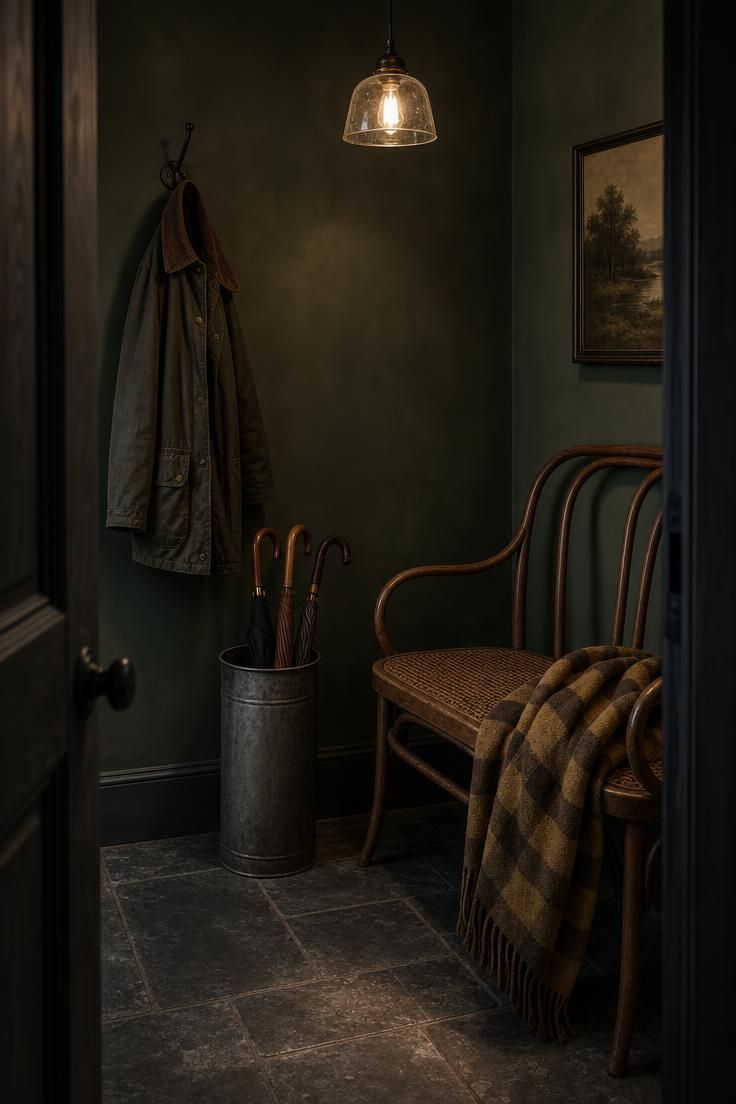
The bentwood bench introduces a curved, steam-bent silhouette that softens the straight lines of the door frame and the umbrella stand.
A checkered wool blanket in muted tones supplies pattern, warmth, and an extra layer for colder months.
A zinc or galvanized metal umbrella stand handles wet umbrellas without rusting or staining the floor, and its tall, cylindrical shape anchors the corner.
Three wooden-handled umbrellas in different woods and stick styles become a small collection rather than a single matched purchase.
The single wall peg for a waxed-cotton jacket keeps the wall from becoming a coat dumping ground while still accommodating the one layer most often grabbed on the way out.
Style Blueprint:
- Bentwood or steam-bent wood bench with an open, curved frame
- Muted checkered wool blanket in two or three colors, folded or draped
- Zinc, galvanized steel, or aged brass umbrella stand
- Two to four wooden-handled umbrellas with visibly different handles
- One wall peg or hook for a waxed-cotton or canvas jacket
Design Pro-Tip: Place the umbrella stand on a small stone or metal tray if the floor is wood. Even a galvanized vessel can transfer moisture to the flooring over time, especially in wet climates where umbrellas are stored dripping.
A Kilim-Covered Ottoman Under a Paper-Lantern Pendant and a Gallery Wall of Plates
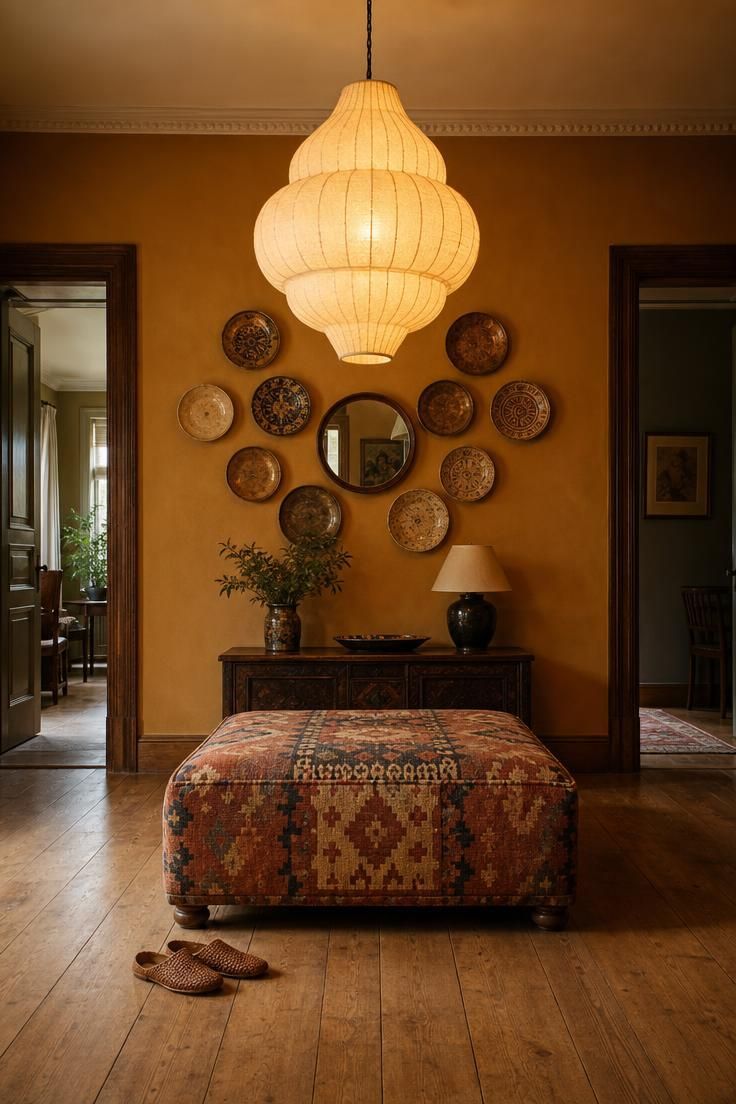
A central ottoman, when the entry is wide enough to circulate around it, provides a soft landing seat and a horizontal surface for bags without pushing furniture against every wall.
Kilim upholstery on the ottoman introduces flatweave pattern and texture that is durable enough for shoes, bags, and the occasional dog paw.
The paper-lantern pendant hangs lower than a standard ceiling fixture, making the room feel anchored from above and casting a soft, diffused glow.
A salon-style plate wall turns a collection of thrifted, chipped, and mismatched ceramics into a single large-scale artwork, and the plates' varied glazes reward close viewing in the small room.
The small round mirror at the center of the plate grouping provides the check-your-reflection function without dominating the composition.
This eclectic entryway lighting and eclectic entryway rug pairing works because both speak in faded, warm tones rather than bright accents.
The plate wall is the single large gesture that holds the room together.
Style Blueprint:
- Central ottoman upholstered in kilim, flatweave, or sturdy wool
- Sculptural paper, plaster, or alabaster pendant hung lower than standard
- Salon-style grouping of eight to twelve vintage ceramic or brass plates around one small mirror
- Warm wall color in ochre, terracotta, or deep cream to support the plate collection
- No other furniture against the plate wall, so the grouping remains the sole event
Conclusion
The outline above assembles image-driven entryway compositions that share a single principle: an eclectic threshold succeeds when one or two materials, objects, or architectural moves anchor the frame, and everything else supports that anchor.
Across the sections, concrete materials such as travertine, encaustic tile, cane, unlacquered brass, olive-green lacquer, and kilim weave carry more weight than any style label, and every idea remains tied to the daily realities of shoes, coats, keys, and a swinging door.
The final takeaway for the reader should be that an artful entryway is less about collecting more and more about editing a few tactile, functional pieces until they feel inevitable in the space.