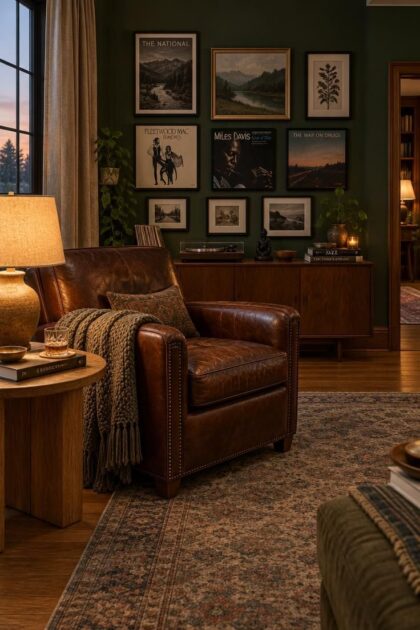
This post may contain affiliate links. If you make a purchase through these links, we may earn a commission at no additional cost to you.
A retreat at home feels best when it grows from one comfortable layer at a time rather than a showroom-style overhaul.
The most inviting rooms borrow from a space's existing quirks and turn them into a defined seating corner, a warm cluster of small lights, or a wall that shows off a personal collection.
This collection looks at residential hideaways through a visual lens, pairing each idea with the practical tradeoffs of making it work in a real home.
Deep seating, softened light, and objects with a story keep the room grounded and welcoming instead of themed or commercial.
Corner Nook with a Slipper Chair and Built-In Book Ledges
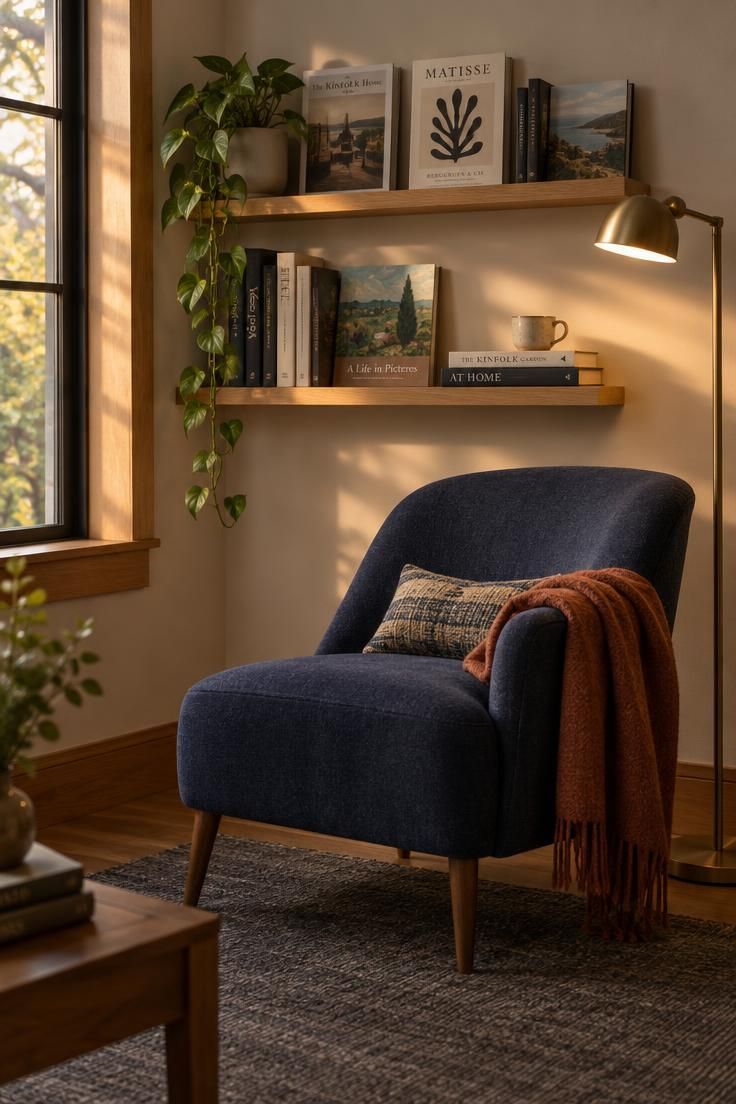
An unused corner becomes a contained retreat when slim picture ledges keep books and small objects at eye level instead of deep shelving that pushes into the room.
The slipper chair, with its low arms and compact footprint, contributes softness and fits where a full armchair would crowd the walls.
Two ledges stacked above the chair build a layered backdrop without visual weight, and the depth of a few art books gives the wall relief.
Choose a compact wool throw folded over one arm to define the chair's front edge and make the nook read as intentional rather than leftover space.
Position a small floor lamp just outside the corner so light washes across the pages and wall rather than sitting in the seat.
Keep the palette to two base neutrals and one warm accent such as rust or ochre, which holds the small composition together and keeps it from feeling busy.
Style Blueprint:
- Navy slipper chair with a low back
- Two narrow oak picture ledges set at eye level
- Rust or ochre wool throw folded over one arm
- Slim brass floor lamp placed just outside the corner
Layered Warm Lighting with a Picture Light and Small Table Lamps
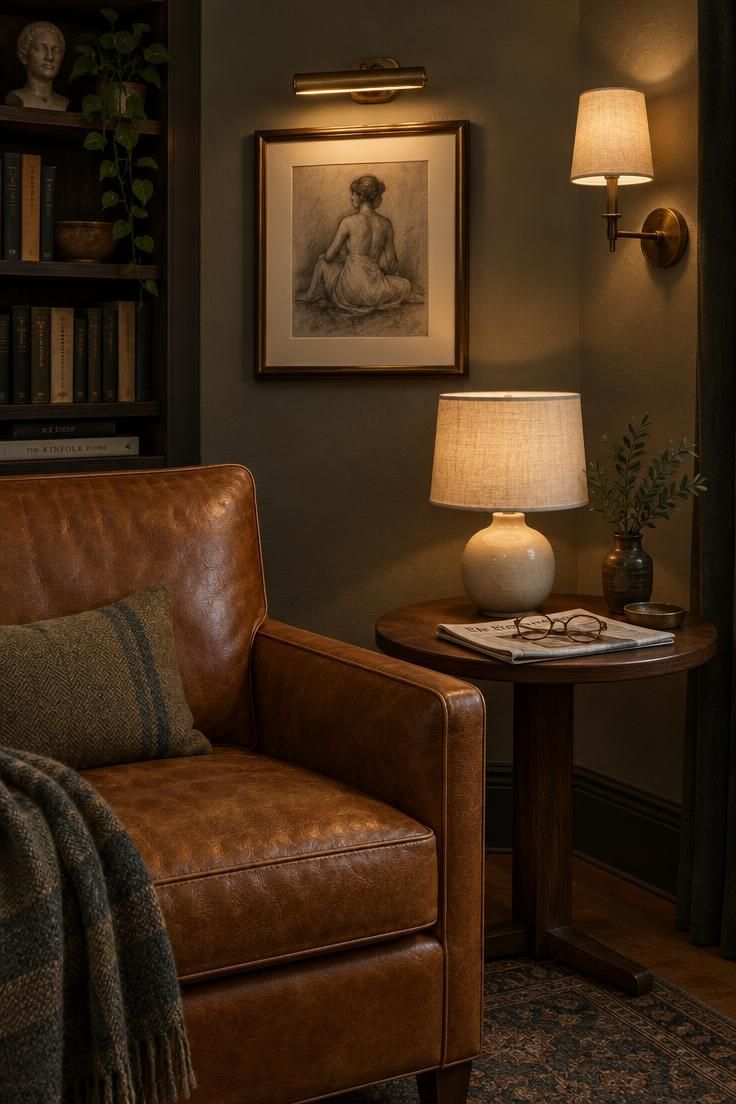
A low, pooled glow comes from placing three or more small light sources at different heights rather than relying on one bright fixture.
A picture light over a single framed piece, a squat table lamp on a side table, and a plug-in wall sconce near the seating each create their own pocket of warmth.
Color temperature matters more than brightness here, and smaller shades keep the light contained instead of flooding the walls.
Skipping a ceiling source for this scheme lets the contrast between bright pockets and shadowed edges give the room its intimate quality.
Cord placement deserves a check before committing to the arrangement, since small lamps and sconces work best when their cords can run close to the wall or tuck behind furniture.
Spacing the sources far enough apart keeps each pool of light distinct instead of merging into one flat wash.
A warm bulb in each fixture unifies the look, and dimmable options let the same corner shift from reading light to a softer evening glow.
The mix of metal, ceramic, and linen shades adds its own texture when the light grazes each surface.
Taken together, layered warm lighting reads as deliberate and generous rather than dim, and the variety of fixture heights keeps the eye moving around the corner.
Style Blueprint:
- Tan leather chair with a visible grain
- Walnut side table paired with a small ceramic lamp
- Brass picture light over one framed drawing
- Plug-in wall sconce with a linen shade
- Warm-toned bulbs in each fixture, dimmable where possible
Design Pro-Tip: Group small lamps at three different heights, then step back and check that no single source overpowers the others. Even spacing between pools of light keeps the corner feeling composed.
Tobacco Leather Sectional and a Low Slab Coffee Table
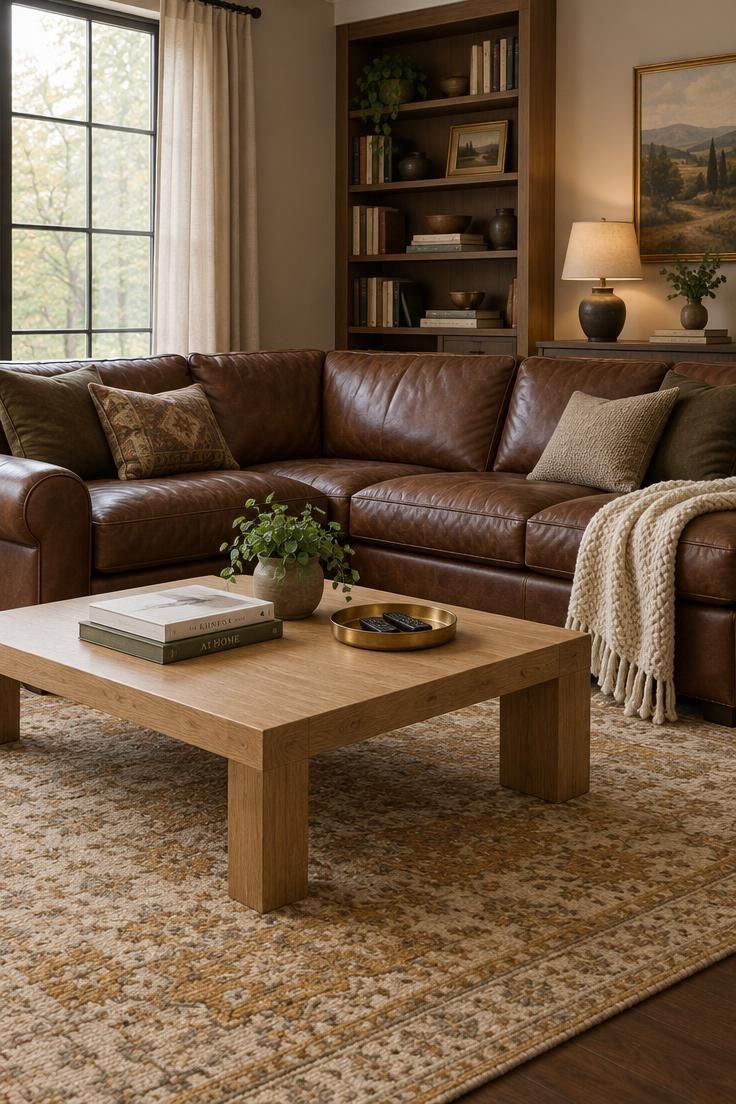
A deep-toned sectional in tobacco brown or oxblood brings weight and visual warmth to the center of a room, and its rounded arms keep the mass from feeling boxy.
Setting a low, thick-edged coffee table in front of it, preferably with visible wood grain and squared corners, gives the seating group a solid anchor.
Keeping the tabletop nearly bare, with just a couple of hardcover books, a tray for remotes, and a small plant, lets the table read as furniture rather than a surface for clutter.
A large flat-weave rug under the front legs of the sectional ties the group together and separates it from the surrounding floor.
One lighter textile, such as a cream knitted throw, interrupts the dark mass of leather and adds contrast where the eye needs it.
The mix of leather, wool, oak, and knit gives the room the texture-rich decor that keeps a dark palette from going flat.
Leather of this kind develops a patina over time and needs little beyond occasional conditioning, while a flat-weave rug shakes out and vacuums easily.
Those low-maintenance surfaces suit a room meant for daily lounging.
Style Blueprint:
- Tobacco or oxblood leather sectional with rounded arms
- Low coffee table with a thick oak top
- Large flat-weave rug in muted ochre and cream
- Cream knitted throw over one corner
- Small brass tray for remotes and everyday items
Wall Display Collections with a Single-Hue Art Grid
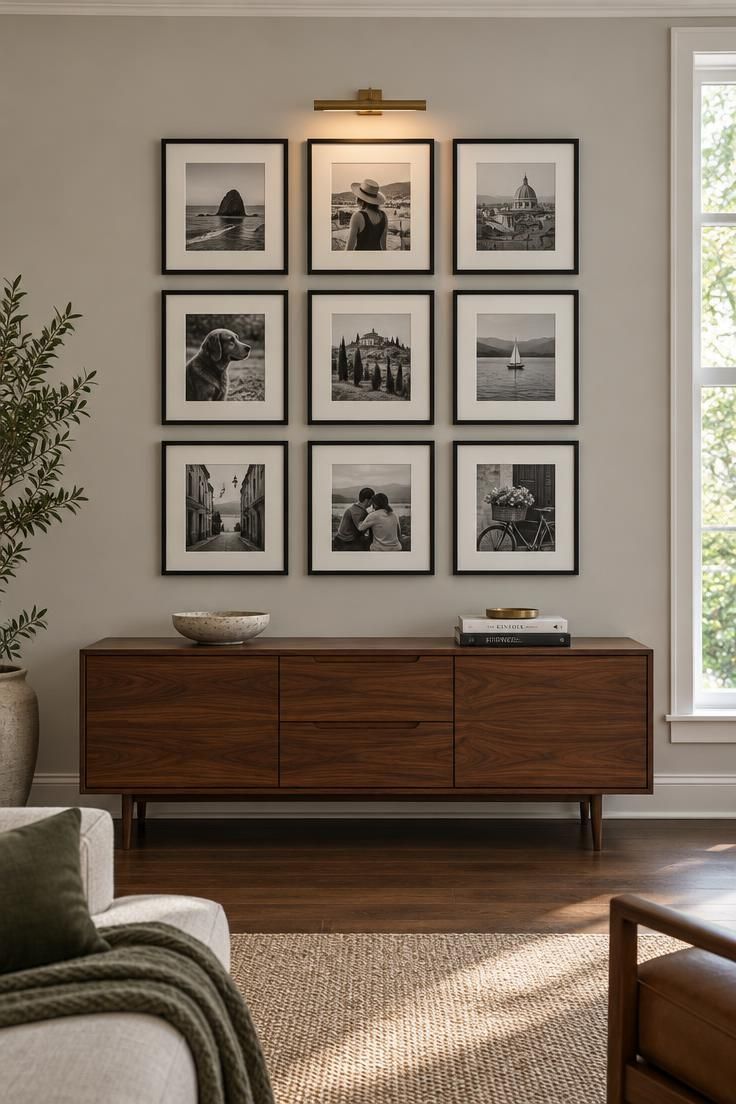
Give a large wall over a sofa or console one clear organizational rule: the same frame color, the same mat width, and prints or objects drawn from a single personal collection.
Vintage maps, band posters, black-and-white photographs, or record jackets all work when the frames stay uniform and slim.
Equal spacing between each piece and a grid tight enough to read as one composition keeps wall display collections from scattering across the wall.
A low credenza or bench underneath catches the eye and stops the bottom row from appearing to float.
Start with nine or twelve pieces and rotate a few out seasonally instead of expanding the grid without limit, since a fixed frame size makes later additions easy to match.
Uniform mats do most of the work here, so a mixed set of prints can still hang together.
Style Blueprint:
- Uniform black frames with cream mats
- Prints chosen from one collection or theme
- Long walnut credenza underneath
- Single brass picture light over the center
Vinyl Record Wall Above a Low Media Bench
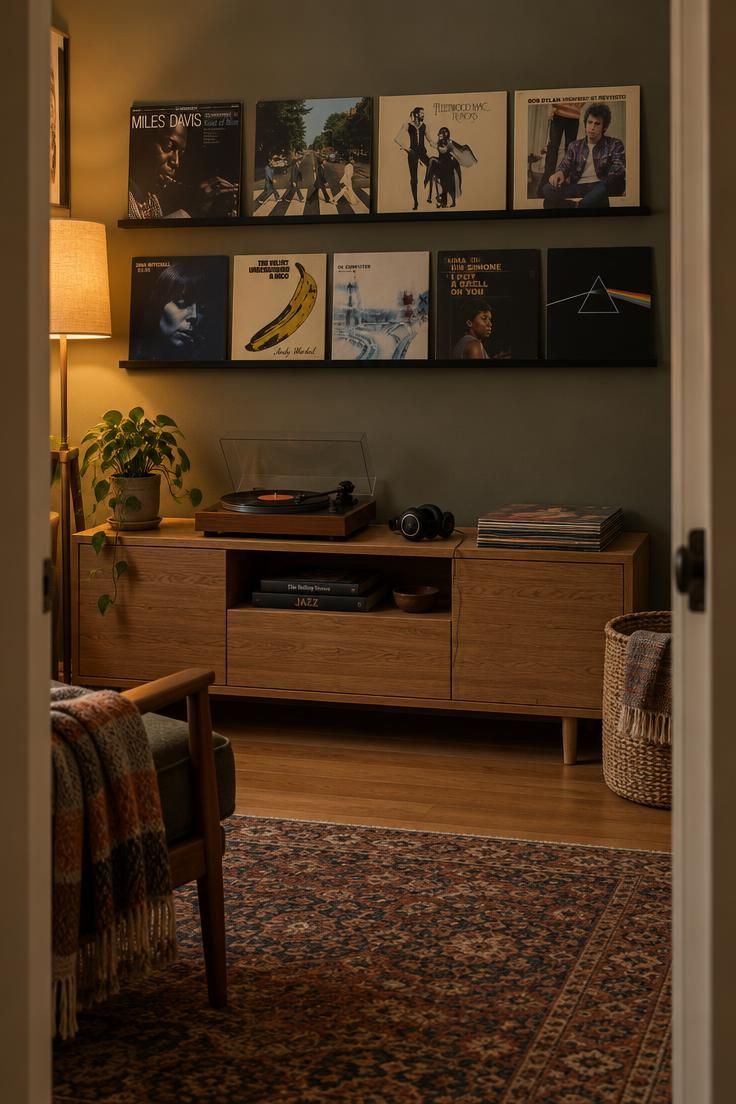
A music collection becomes wall texture when nine or twelve record jackets are arranged in a grid or a staggered row above a low bench.
Keeping the jackets in their sleeves and choosing a wall area away from direct sunlight helps limit fading over time.
Swapping a few jackets every few weeks keeps the arrangement feeling active, and storing the rest in a closed cabinet or crate below keeps the rotation easy.
A narrow shelf or picture ledge works better than hanging each jacket individually when frequent changes are part of the plan.
One black metal or wood ledge holding the whole row keeps the cover art in charge rather than the hardware.
The bench beneath gives the display a base and doubles as a place for the turntable, a basket, or a pair of headphones.
Style Blueprint:
- Low oak media bench
- Two black metal picture ledges in a row
- Nine record jackets in their sleeves
- Woven basket for rotation storage
Burgundy Lacquered Bar Cabinet with a Soapstone Top
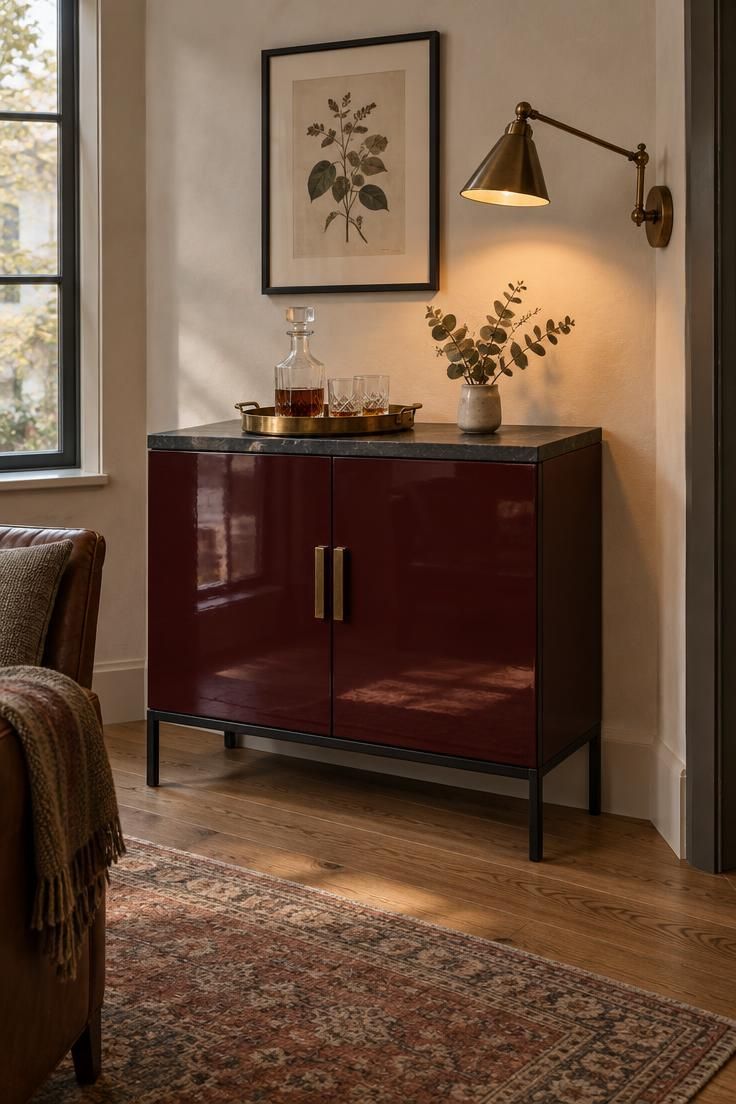
A lacquered cabinet in deep burgundy brings a warmer, less expected color than typical home bar finishes.
Setting it against a limewash wall, rather than paneling, gives the corner a soft, hand-finished backdrop that lets the glossy cabinet read as the main object.
The honed soapstone top provides a matte counterpoint to the lacquered finish and keeps small marks from becoming a focus.
A brass tray corrals a decanter and two tumblers, while dried eucalyptus in a petite cup adds a quiet organic shape without demanding fresh stem care.
A swing-arm brass lamp mounted on the adjacent wall directs light onto the soapstone surface, leaving the rest of the corner in softer shadow.
That single directed light source makes the cabinet feel more like a deliberate evening station than another storage unit.
Closed doors and a shallow drawer hold bottles and bar tools out of sight, so the visible surface stays uncluttered.
Soapstone can develop subtle pale marks from use, but those marks blend into the honed texture over time.
Style Blueprint:
- Deep burgundy lacquered bar cabinet with a matte black iron base
- Honed charcoal soapstone top for a matte work surface
- Brass tray with one decanter and two low tumblers
- Swing-arm brass wall lamp directed over the cabinet
- Limewash wall and a single black-framed botanical print behind the piece
Leather Club Chair with a Floor Cushion and Small Side Stack
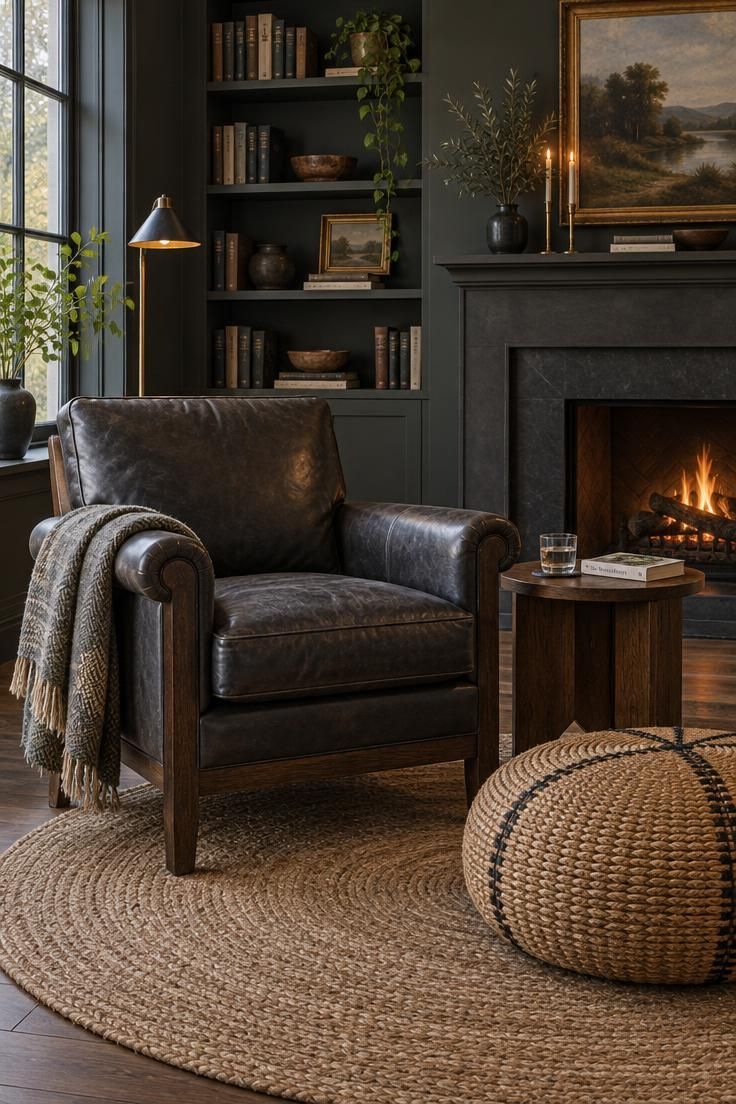
Build seating around one generous leather chair rather than a sofa, and add a large floor cushion or pouf nearby for extra seating without visual weight.
A chair with rolled arms and a deep seat reads as an invitation to stay, while swivel or office-styled bases tend to break the mood.
Keep a small side table or a stack of short books within arm's reach for a drink or the remote.
A small round rug under the chair and cushion defines the grouping, and leaving a clear sightline to the room's main focal point keeps the arrangement from feeling sealed off.
The club chair's leather takes on character with use, and the rattan cushion adds a lighter woven counterpoint to its dark mass.
A single round rug is easy to reposition when the seating shifts.
For upkeep, leather benefits from occasional conditioning and rattan from a quick dusting, and both suit a chair that sees daily use.
The floor cushion can be moved aside when floor space is needed.
Style Blueprint:
- Charcoal leather club chair with rolled arms
- Round rattan floor cushion with dark stitching
- Small stained-oak side table
- Round jute rug under the grouping
Wall-Mounted Blade Rack with a Oiled Birch Shadow Box
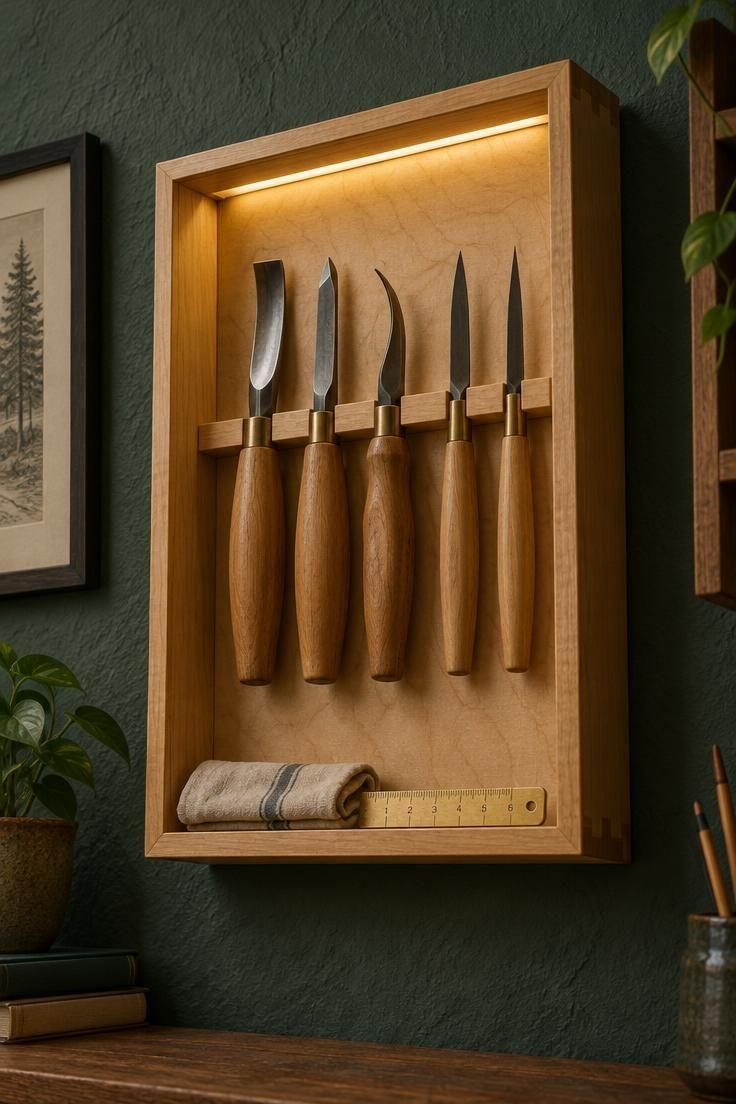
A shallow shadow box with an oiled birch interior offers a tidy way to keep a small blade or carving collection visible without turning the wall into open storage.
Mounting the box at chest height makes the handles easy to reach and keeps the sharp ends contained behind the front lip.
Inside the box, a single vertical rack holds two or three hand tools so the wooden handles read as the main visual feature.
A narrow warm light strip along the top edge gives the arrangement a soft museum-case quality without making the nook feel like a display case in a shop.
Placing the box on a deep green wall adds contrast against the pale birch, and the surrounding wall stays simple so the tools remain the focal point.
A folded linen cloth and a small brass ruler on the lower lip suggest the collection is used and maintained, not sealed away.
For a man cave seating nook, keeping the box shallow prevents it from sticking out too far into the room and allows the rest of the man cave seating or work area to sit comfortably beneath it.
Dust settles on the lower lip and the tool handles, so a light wipe every few weeks keeps the wood and brass from dulling.
Style Blueprint:
- Oiled birch shadow box with a shallow front lip
- Vertical rack for two to three handled tools
- Warm electric light strip along the top inside edge
- Deep green wall as the contrasting backdrop
- Folded linen cloth and brass ruler on the base lip
Rattan Lounge Chair and a Burlap Upholstered Ottoman
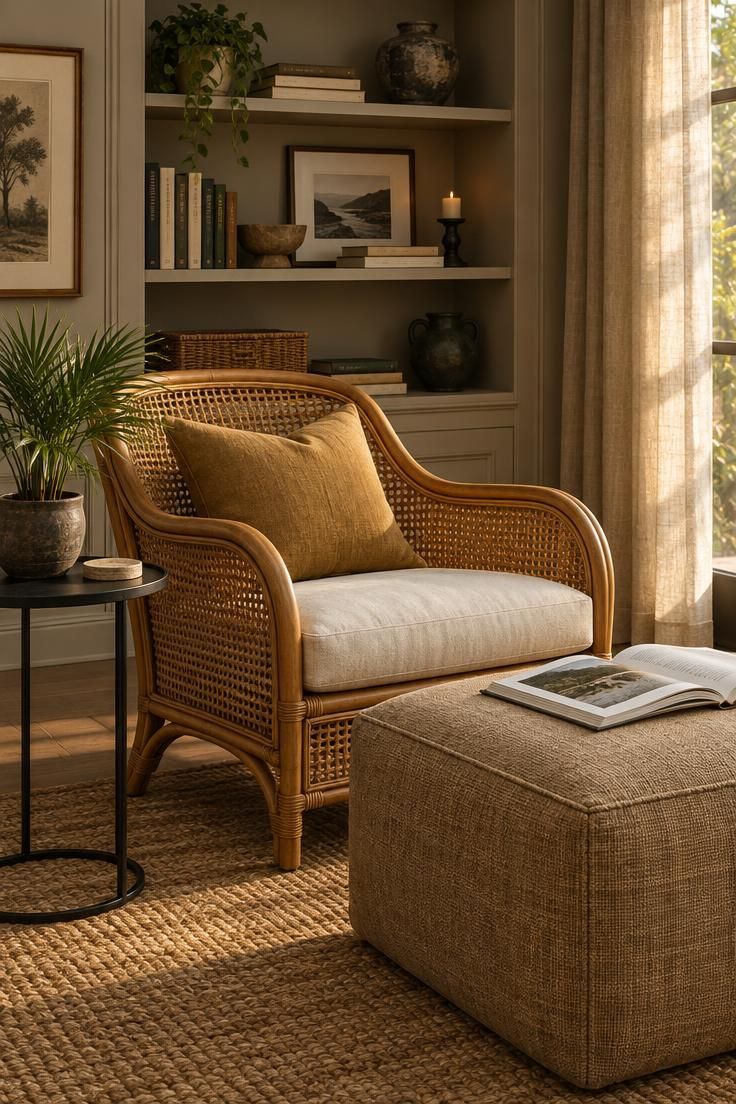
A woven rattan lounge chair adds mid-tone warmth and visible texture to a neutral room.
Pairing it with an upholstered ottoman in burlap or oatmeal fabric softens the harder cane lines and gives the pair a comfortable balance.
Keep the chair open and angled slightly toward a wall or shelf rather than flat against a wall, and place a small table or plant stand on the opposite side from the ottoman.
A single linen pillow in muted ochre or rust ties the two pieces together.
The cane weave catches light in fine stripes, which is why the pairing works: hard texture against soft cloth in one view.
Style Blueprint:
- Rattan lounge chair with curved arms
- Burlap or oatmeal upholstered ottoman
- Black metal side table with a small plant
- Ochre or rust linen pillow
Charcoal Wall with a Low Leather Bench and One Long Shelf
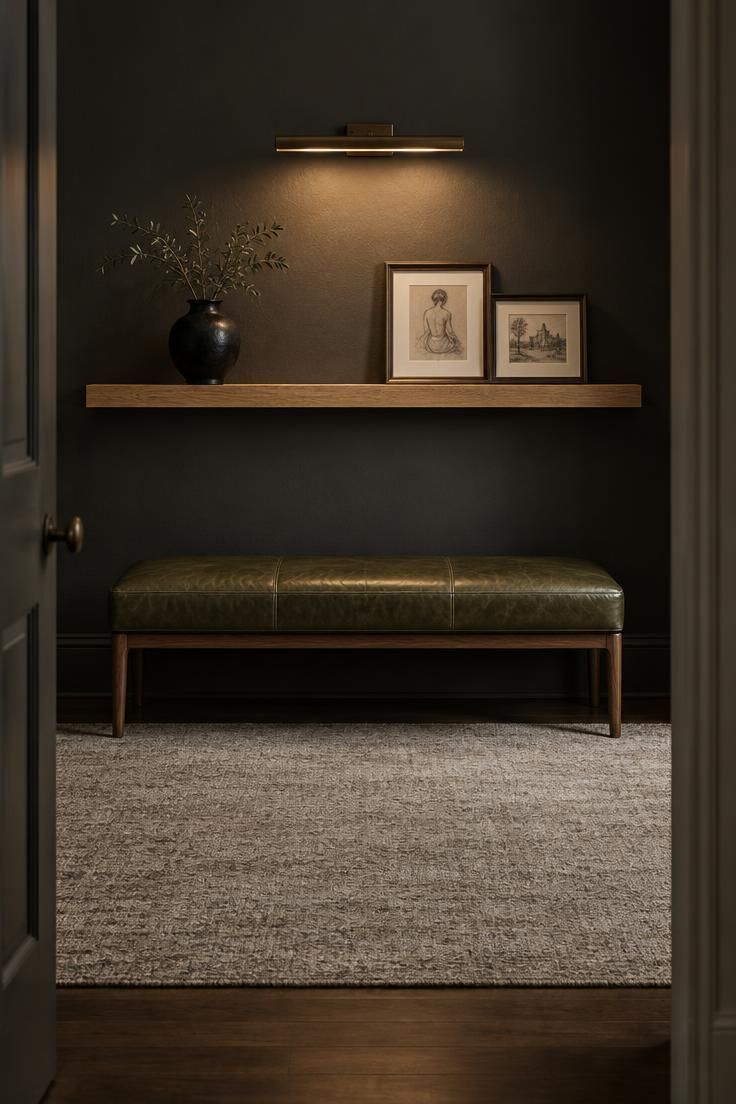
Paint one full wall in a soft charcoal or slate and use it as a backdrop for a single low bench and one long floating shelf.
The bench stays low and slim so it does not compete with the wall color, and leather or wool upholstery adds textural contrast.
One long shelf just above the bench holds only a few objects spaced widely, and a small picture light brightens one part of the shelf while the ends stay shadowed.
A large rug in a lighter neutral under the bench reflects some light back into the space.
The charcoal wall deepens the room's mood, though in a dim or small space it can read closed-in; a lighter rug and a lighter ceiling help balance it.
The single shelf keeps display simple and easy to dust.
Style Blueprint:
- Soft charcoal or slate wall paint
- Low olive leather bench
- One long white oak floating shelf
- Black ceramic vase and two small framed sketches
- Large lighter neutral rug under the bench
Small-Space Man Cave Zone with a Fold-Down Desk and Bench
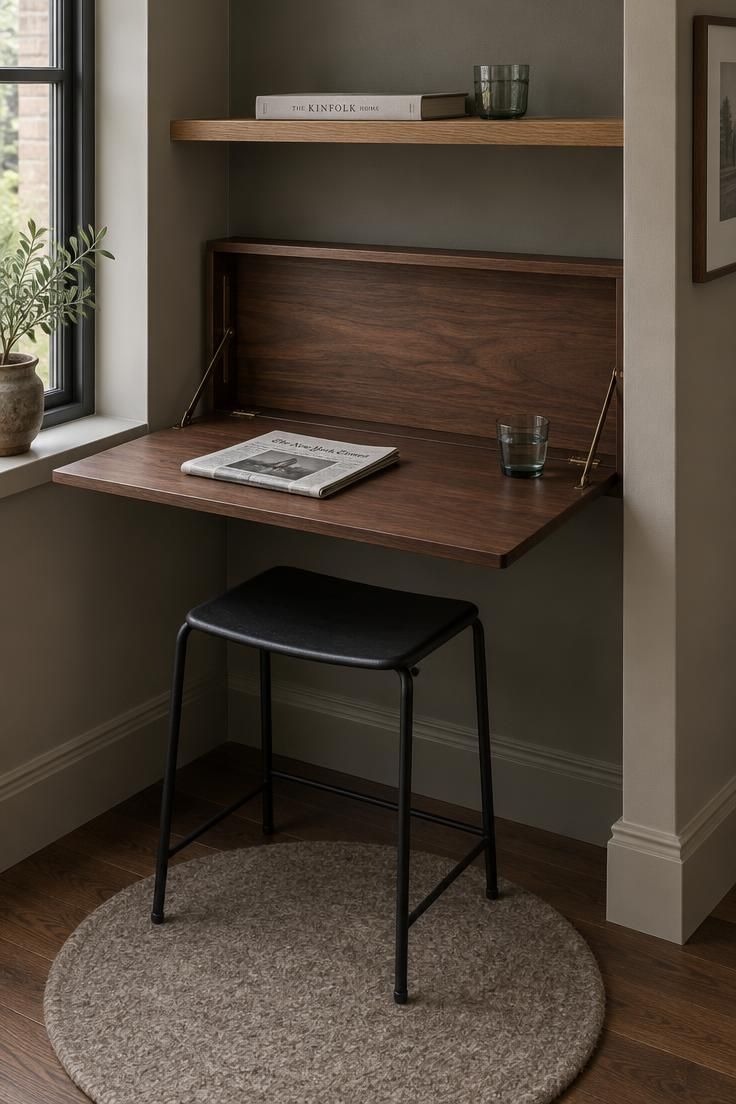
A defined retreat inside a larger room can start with a fold-down desk attached to the wall and a low bench that slides away when not in use.
A dark wood or painted finish for the desk lets it read as a deliberate panel when closed.
Add a slim stool or ottoman that fits under the desk, plus one wall-mounted shelf above for a few essentials.
For a small-space man cave zone, a small round rug under the bench marks the cozy man cave zone without blocking pathways.
Keeping the desk surface clear of electronics or office clutter preserves the lounge-like feel, so the alcove reads as a place to settle rather than a second workspace.
The fold-down format hides the desk's purpose when it is closed, which keeps the surrounding room calm.
Choose a stool that tucks fully beneath the desk so the alcove stays open when the surface is folded away.
One shelf is enough above, since more would crowd the compact proportions.
Style Blueprint:
- Dark walnut fold-down desk
- Slim black metal stool that tucks beneath
- Small round wool rug to mark the zone
- One floating oak shelf above
Low Oak Storage Wall with a Hinged Game Table
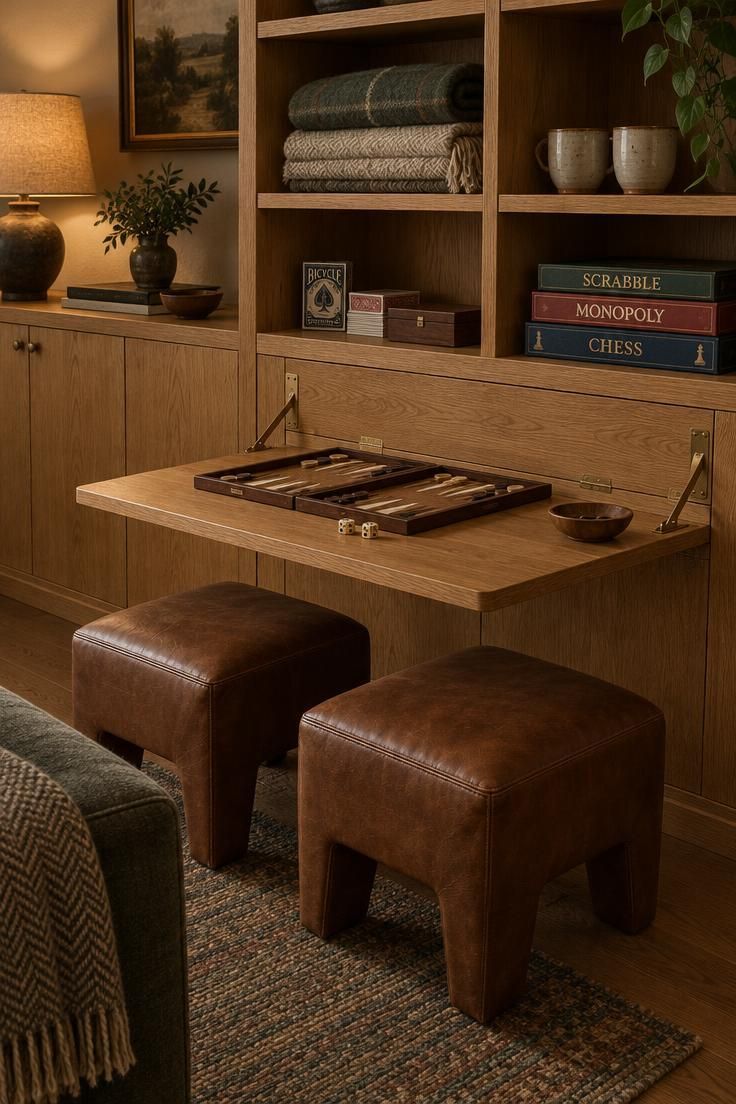
A low oak storage wall turns an unused stretch of wall into a compact activity zone without pushing seating into the center of the room.
Open cubbies hold board games, decks of cards, folded blankets, and a few everyday objects that make the space feel lived in rather than styled for show.
A hinged game table folded down from the wall offers a surface for cards, puzzles, or snacks and tucks away flat when the floor needs to stay clear.
Two short tobacco leather stools slide underneath the lowered table or stack to one side when not in use.
Keeping the storage run low preserves sightlines across the room and prevents the wall from feeling heavy.
Closed doors on the lower section hide less attractive items, while open cubbies keep the most-used things within reach.
The combination of oak, leather, ceramic, and paper game packaging gives the area a warm but uncluttered feel.
That mix of open and closed storage does the work of making a multifunction corner feel calm.
Style Blueprint:
- Low oak storage wall with open cubbies and closed doors
- Hinged oak game table folded down from the wall
- Two short tobacco leather stools
- Folded blankets and a stack of board games in cubbies
- Warm table lamp with a ceramic or linen shade
Design Pro-Tip: Reserve one open cubby for the items used most often and close off the rest. A half-empty storage run reads as intentional, not as a display surface that needs constant tidying.
Forest Green Wall Panel with a Sled-Style Daybed and Reading Sconce
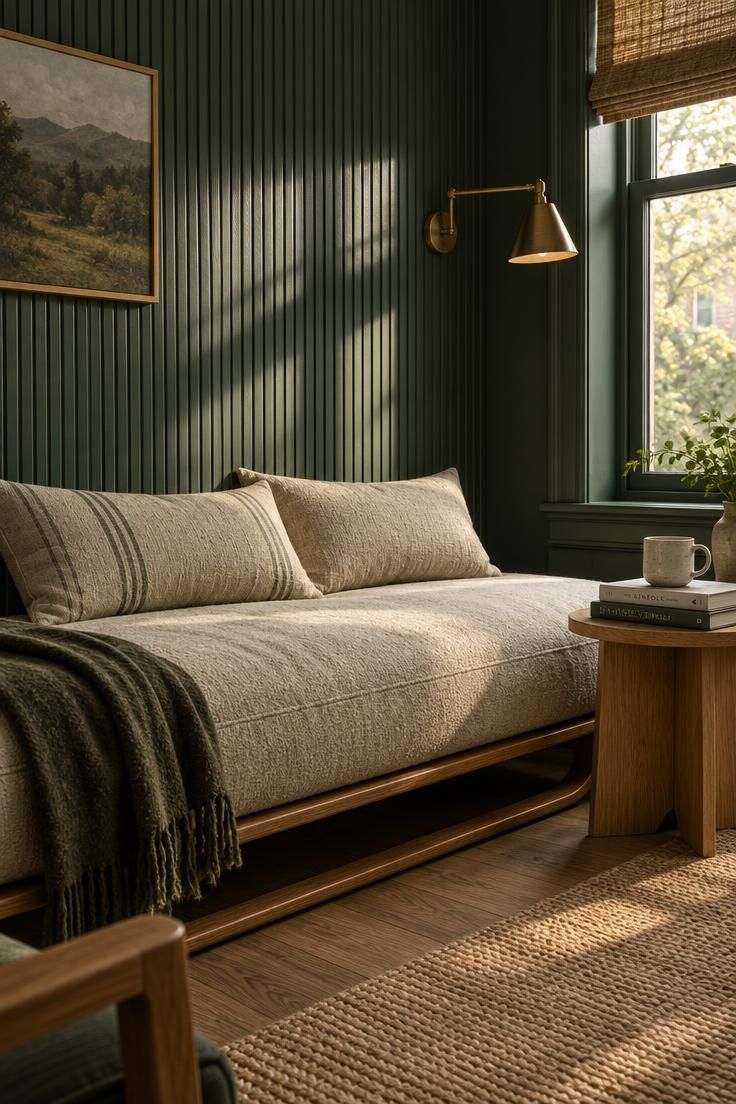
Covering one wall in vertical fluted wood panels creates texture without darkening the whole room.
The grooves catch daylight at different angles, so the forest green reads as a moving surface rather than a flat painted block.
Pair that paneled wall with a low sled-style daybed in a warm oat wool.
The daybed stays well below the panel line, which leaves the vertical grooves as the main event while still giving the room a long, low place to stretch out.
A matte brass swing-arm sconce on the adjacent wall directs light toward the cushion rather than the panel face.
That keeps the green from turning muddy after dark and gives the corner a quiet reading function without adding a floor lamp.
The paneled wall works best when other walls stay in a warm off-white or pale clay tone.
Since the panel itself becomes the focal wall, the rest of the room can stay simple with one small oak side table and a low stack of reading material.
Dust settles in the vertical grooves, so go with a panel profile that is wide enough to wipe quickly with a dry dusting cloth.
Choose a factory-finished panel or a sealed paint finish that tolerates a light wipedown without losing its sheen.
Style Blueprint:
- One forest green fluted wood panel accent wall, with a low sled-style daybed in oat wool, two long lumbar pillows in tonal beige and olive, and a matte brass swing-arm wall sconce mounted beside the window for reading without adding a floor lamp.
- Cover only one wall in vertical fluted wood panels so the forest green reads as a moving texture in daylight, while the other walls stay in a warm off-white or pale clay tone to keep the room from feeling enclosed.
- Keep the daybed low and place it below the panel line so the vertical grooves remain the main visual anchor, and add a small oak side table with a stacked book pile and a ceramic mug for a lived-in corner.
- Choose a panel profile wide enough to wipe dust quickly from the grooves with a dry cloth, and use a factory- finished or sealed paint surface that tolerates a light wipedown without losing sheen.
- Use warm afternoon daylight raking across the fluted texture to create soft shadows along the panel grooves, and position the daybed and sconce to keep the green from turning flat after dark.
Conclusion
A room like this usually comes from one strong visual decision supported by two or three quiet layers: texture, low light, and a clear focal point.
Each idea above starts with a physical anchor, whether a chair, a rug, a wall, or a ceiling, and builds around it rather than scattering accessories.
Choose the idea that naturally fits the room's existing shape, then add only the seating, rug, and light sources needed to make that version complete.
The result stays personal without becoming a collection of unrelated decor.