This post may contain affiliate links. If you make a purchase through these links, we may earn a commission at no additional cost to you.
Most coffee bar advice begins with the machine.
A better place to begin is the counter around it.
The difference between a station that feels permanent and one that feels improvised rarely comes down to size or budget.
It comes down to how the counter is organized, what is stored where, and how the setup looks when it is not in use.
A compact coffee bar setup with a clear workflow can feel more finished than a sprawling counter crowded with equipment.
What follows is a tour of the planning choices, storage logic, and material decisions that do the quiet work.
Why the Counter Sequence Matters More Than the Machine Count
The difference between a designed station and an appliance cluster is the order of the tools and the amount of clear landing space.
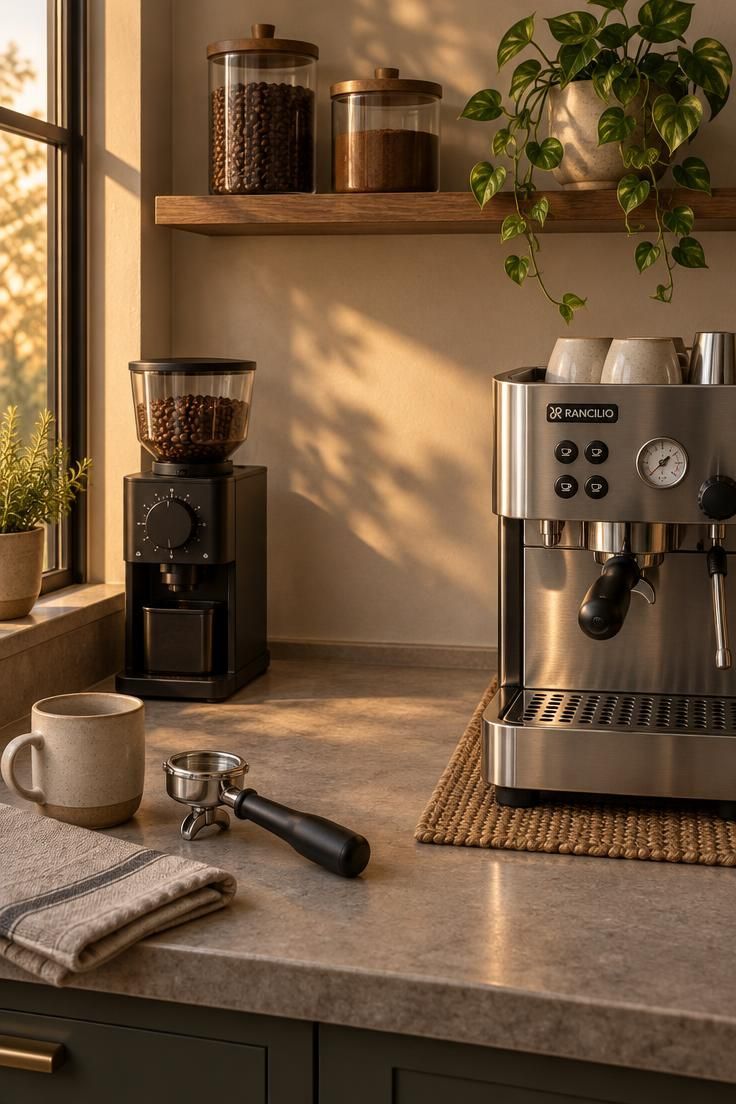
A coffee bar setup succeeds when it follows the sequence of actual use: store, grind, brew, customize, serve, clean.
Each step deserves a physical position on the counter.
The grinder belongs near the beans, not at the far end of a narrow run where it forces extra steps and collects clutter.
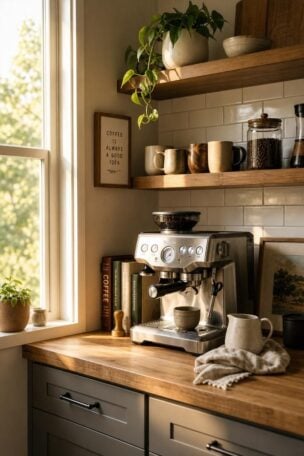
The brewer needs a wall of open counter beside it.
A machine pushed against a sidewall leaves nowhere for a mug, a filter, or a carafe to rest during the pour.
One common mistake is filling every inch of the counter and then discovering the kettle cannot be lifted to the faucet without moving three other items.
Assigning each tool a fixed home prevents that shuffle.
The most frequent failure is also the simplest: no landing zone.
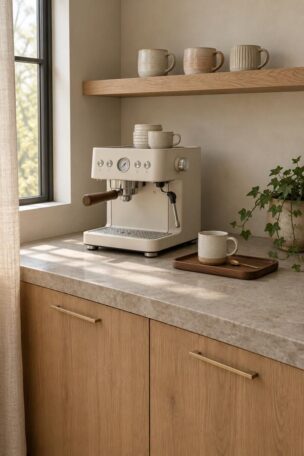
A brewer with a clear stretch of counter beside it feels calm even when it is working, because there is room for the mug, the scoop, and the small spill that always appears.
Check the machine’s full depth before choosing its counter section, including the water tank, the portafilter handle, and the space the steam wand needs.
A machine that fits the width but not the depth will tend to look wedged in.
Design Pro-Tip: Before committing to a counter section, pull out the machine’s water tank and swing the portafilter handle as far as they travel, then mark that footprint with painter’s tape so the real space requirement is visible.
The Storage Trio That Keeps Daily Essentials in Arm’s Reach
Every well-run station divides its storage into three zones: daily use, occasional use, and backstock.
The daily zone holds what the morning routine touches, and nothing else.
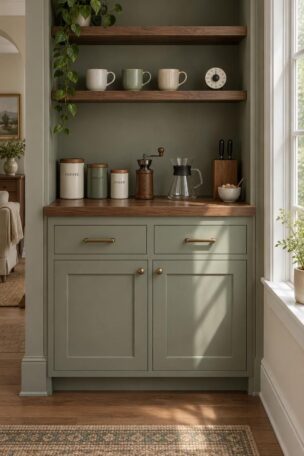
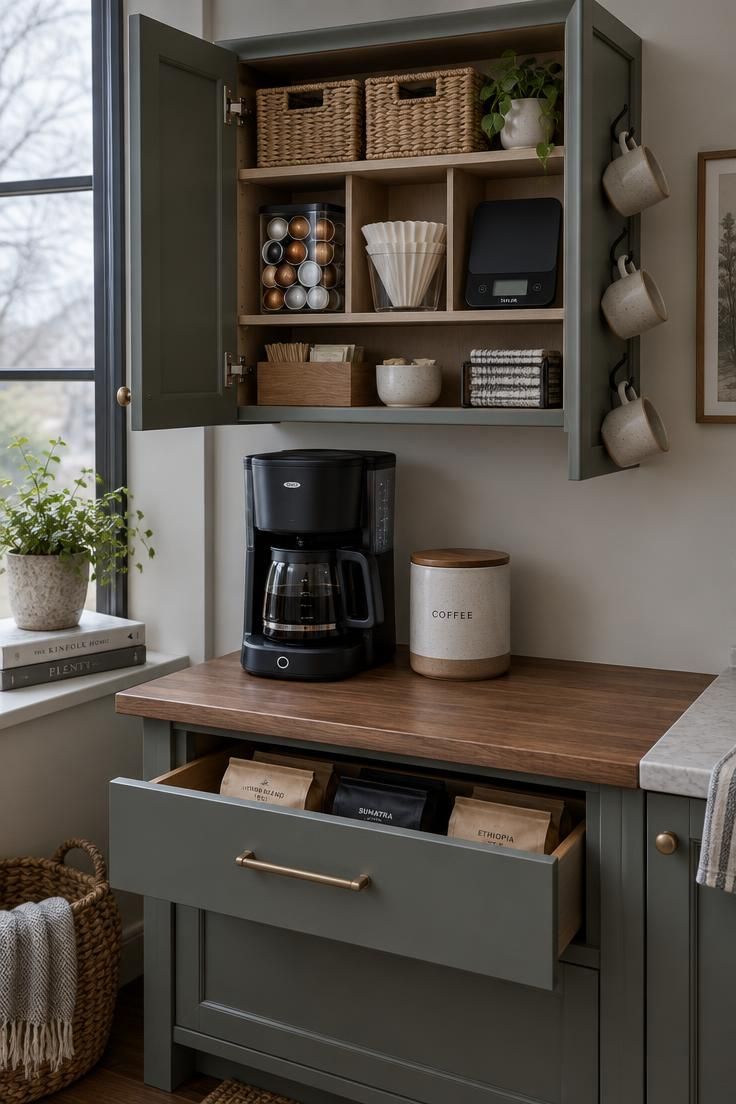
A countertop coffee station works best when a small drawer for filters and a narrow shelf for mugs sit within arm’s reach of the brewer.
That arrangement keeps the counter from becoming a collection point for stray spoons, half-empty bags, and forgotten travel cups.
Open shelving looks appealing but exposes everything to dust, steam, and coffee residue.
A mix of closed storage for backstock and one small open shelf for the few items used every morning usually serves better than display shelving on every wall.
A coffee bar cabinet organizer earns its place when it separates filters, scoops, and small tools into defined compartments.
It fails when it becomes another catch-all, so the dividers should match the tools rather than the available space.
Decide what belongs in the daily zone by watching the routine for a week.
Anything touched every day earns counter space; everything else moves up, down, or out.
Butler’s Pantry Coffee Areas: When Hiding Is the Better Choice
A butler’s pantry coffee area suits households that want the coffee routine close to the kitchen but out of its sightlines.
The appeal is partly practical and partly visual: the aroma, the clutter, and the heat-producing equipment stay in a separate zone while the coffee maker remains steps away.
Among newly added or upgraded butler’s pantries, 67% include small-appliance storage, and coffee machines are among the most common appliances placed there, according to Houzz’s 2026 U.S. Kitchen Trends Report.
That figure describes remodeling choices rather than a requirement, but it points to a real design pattern.
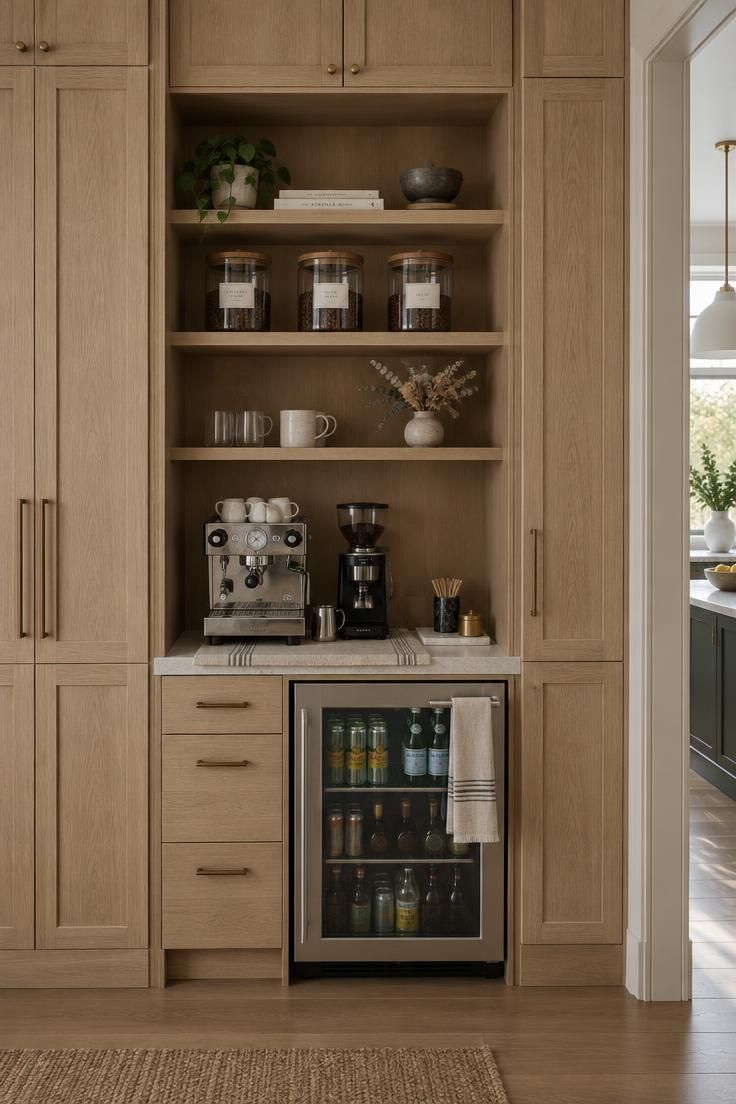
A practical arrangement pairs full-height cabinetry with a short prep counter and a water source nearby.
The tall cabinets hold backstock and occasional equipment, while the counter stays reserved for the machine and the mugs used daily.
The same station can serve double duty for guests, with room on the counter for a tray, syrups, and a few glasses.
That flexibility is often what makes the pantry worth its footprint.
The main tradeoff is separation itself.
If coffee gets made while someone is cooking, talking with family, or watching the kitchen, a pantry station can feel like a detour rather than a convenience.
Building In Without Looking Built-In: The Case for Modular Storage
Built-in coffee bar storage usually means a custom cabinet run integrated with the kitchen, but the same composed look can come from modular pieces arranged with intent.
A counter section with matching canisters, a wall-mounted shelf, and coordinated bins can read as deliberate while remaining adaptable.
The advantage of modular storage is that it moves with the coffee routine.
When the household adds a pour-over setup or switches from pods to whole beans, a shelf or drawer unit can be swapped without touching the cabinetry.
A built-in station hides cords and machines behind doors, which is why it photographs so well.
The tradeoff is that it locks in decisions: the appliance sizes, the cord routes, and the access to the water tank are all set once the cabinets are made.
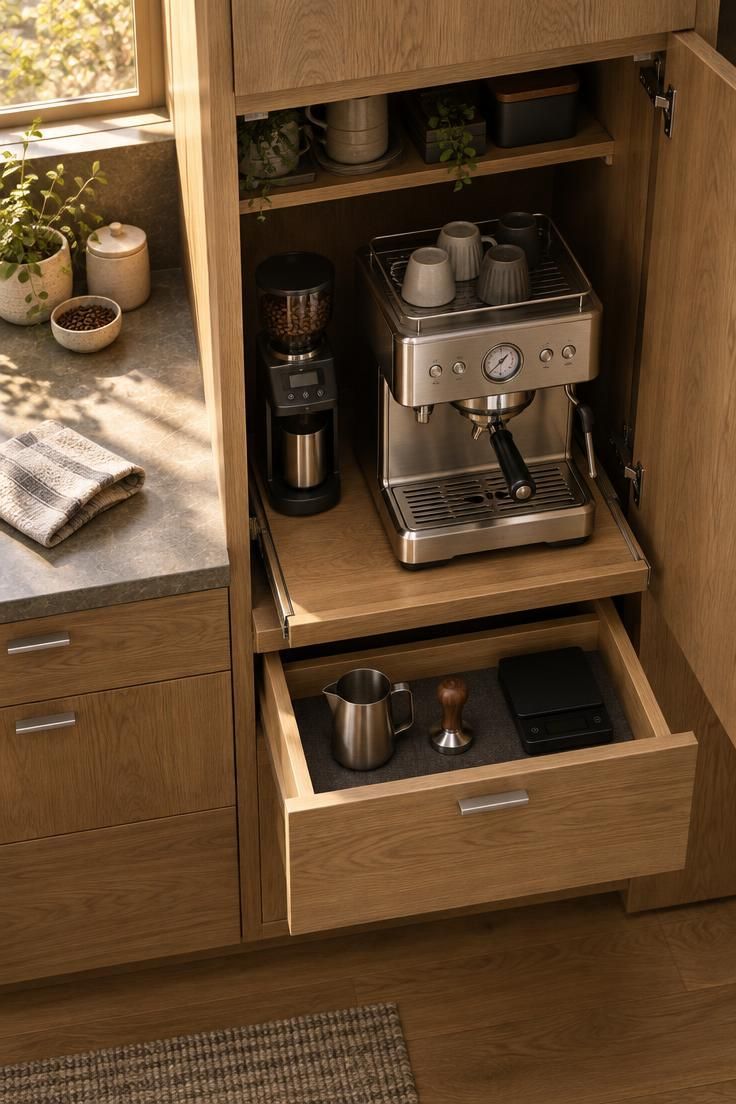
Slide-out shelves deserve particular attention.
A lower cabinet with a pull-out shelf for the grinder keeps the machine on the counter while the grinder hides below, and it can be pulled forward when the hopper needs refilling.
Stackable drawers placed on an existing counter offer a lighter version of the same idea.
They cost less, install nowhere, and can be rearranged as the routine changes.
The Backsplash Is Not Just Behind the Machine
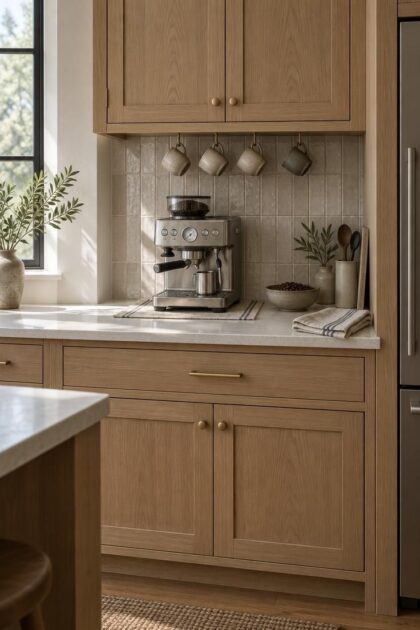
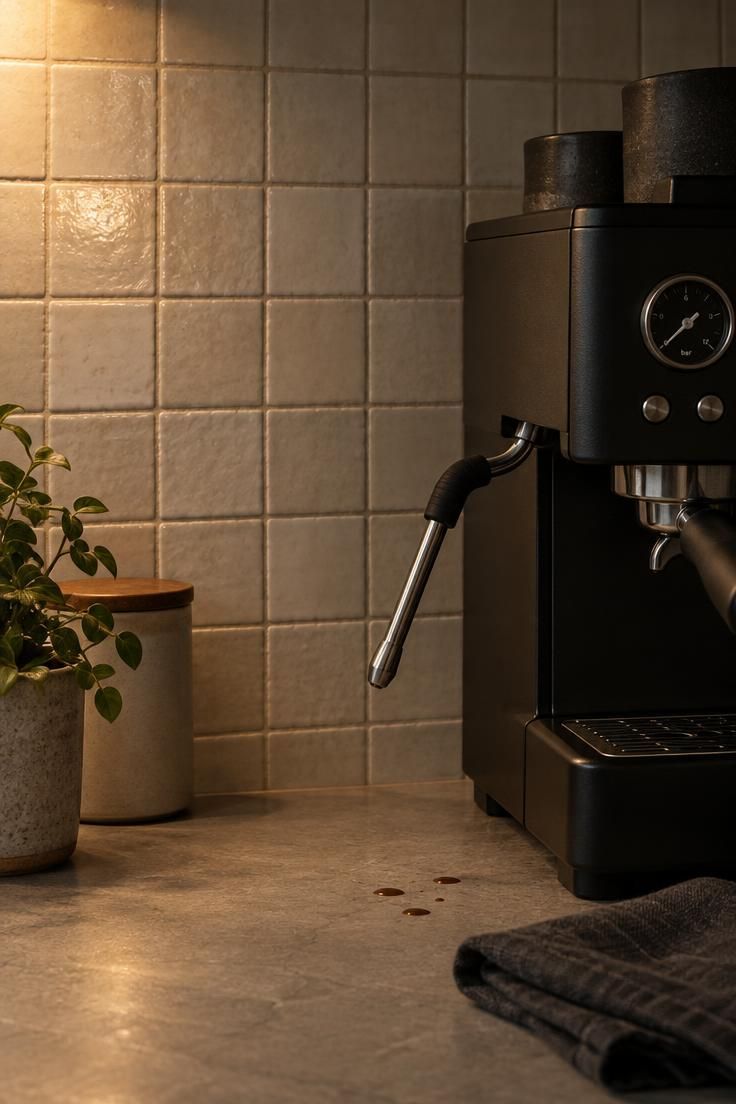
A coffee bar backsplash earns its place through daily splashes and residue more than through decoration.
Coffee, milk, and steam leave marks, and a small wipeable surface behind the brewing equipment saves the wall from becoming a slow accumulation of stains.
The backsplash also defines the station’s boundary on a shared counter.
Even a modest panel of tile or a fitted slab tells the eye where the coffee zone begins and the rest of the kitchen resumes.
Coffee bar backsplash ideas range from a vertical stack of handmade-look tile to a single slab that continues the counter material up the wall.
A washable painted surface behind a low-profile machine keeps things quiet, while a small swath of wallpaper can work if it sits fully out of the steam path.
The practical test is simple.
A finish that can be wiped down without fuss belongs behind a kettle or espresso machine, while porous or heavily textured options are better placed away from the brewing equipment.
A contrasting tile behind open shelving can turn a small station into an accent moment without committing the whole kitchen to a bold finish.
Because the area is small, the risk of a strong choice is lower here than almost anywhere else in the room.
The texture of the tile matters as much as its color.
A slightly irregular surface catches light and hides the small marks that a perfectly flat glossy tile tends to show.
Light Stations to Be Used, Not Just Admired
Layered light changes how a coffee bar feels at both ends of the day.
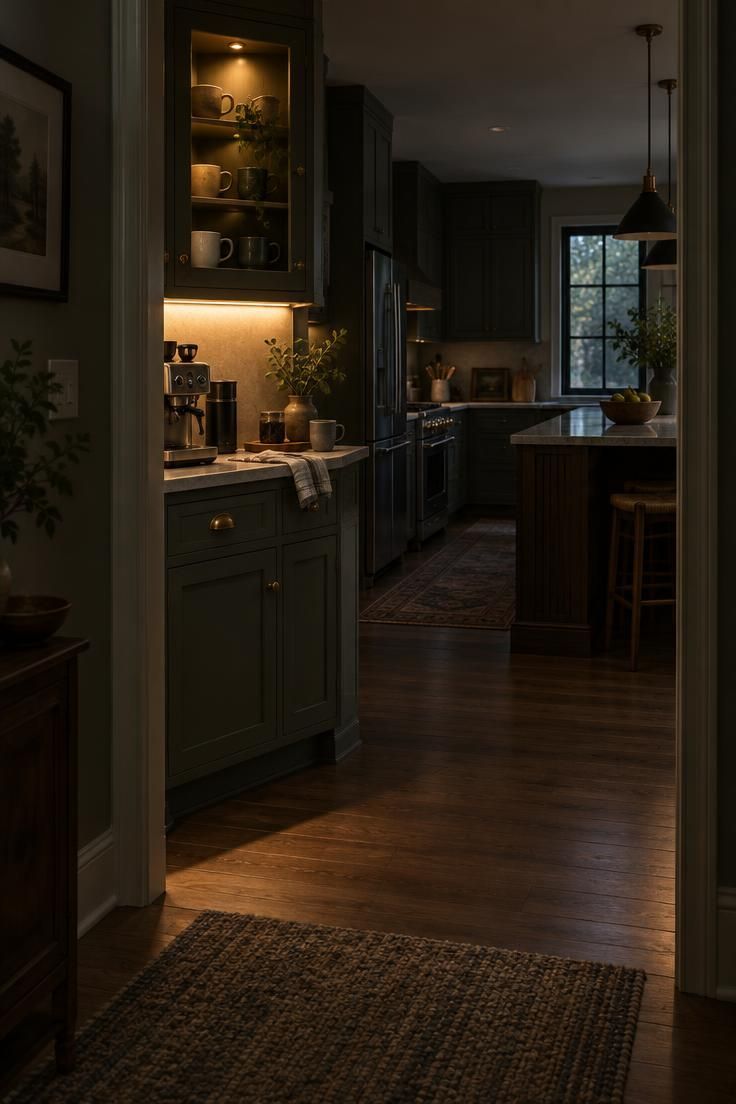
A task strip under an upper cabinet helps with measuring, grinding, and cleanup, while a small accent light turns an open shelf of mugs into a display after dark.
Under-cabinet and interior-cabinet lighting are among the leading lighting features in current kitchen design, according to the NKBA 2026 Kitchen Trends Report.
For a coffee station, both do specific work: one on the counter, one on the shelf.
A low-wattage under-cabinet strip angled toward the counter reduces the shadows the brewer casts on its own work surface.
A narrow puck light on the shelf above can pick out the glaze on a row of mugs without lighting the rest of the kitchen.
A single overhead fixture usually leaves the counter in the machine’s shadow and the shelves in darkness.
A pair of small lights at different heights gives the station its own atmosphere while the surrounding kitchen stays on its own circuit.
Watch the color temperature.
Cold, bright light beside warm bulbs elsewhere in the kitchen makes the station feel clinical, and a glossy tile or machine display can throw glare straight back at the person using it.
Design Pro-Tip: Turn on the proposed task light at night with the machine in place, then stand where the coffee actually gets made and check whether the display, the counter, or a glossy backsplash reflects the light back into the eyes.
Why a Coffee Bar Setup Is Worth Skipping Some Trends Over
The current interest in dedicated coffee bars does not mean every household should build one.
About 24% of renovating homeowners included beverage stations such as coffee or espresso bars, per Houzz’s 2026 U.S. Kitchen Trends Study, which makes the feature common in remodels but far from universal.
A coffee bar setup is unlikely to help a household that only drinks coffee on weekends.
It also struggles in a rental with a narrow galley counter, or in a kitchen where the sink and refrigerator sit far from the proposed station.
The case grows stronger with daily coffee drinkers, frequent guests, and households with several coffee preferences pulling in different directions.
An open kitchen where appliance clutter creates visual friction also tends to benefit, because a defined station gives the clutter a place to live.
The most common overbuilding mistake is designing around a high-end machine the household may not use.
Matching the station to the actual routine matters more than matching it to the most elaborate setup seen elsewhere.
A staged approach lowers the risk.
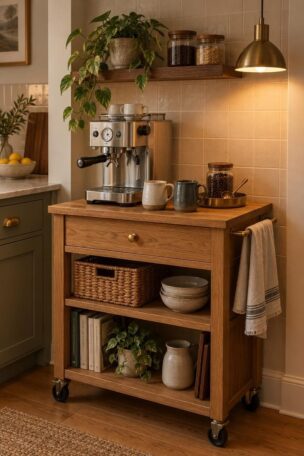
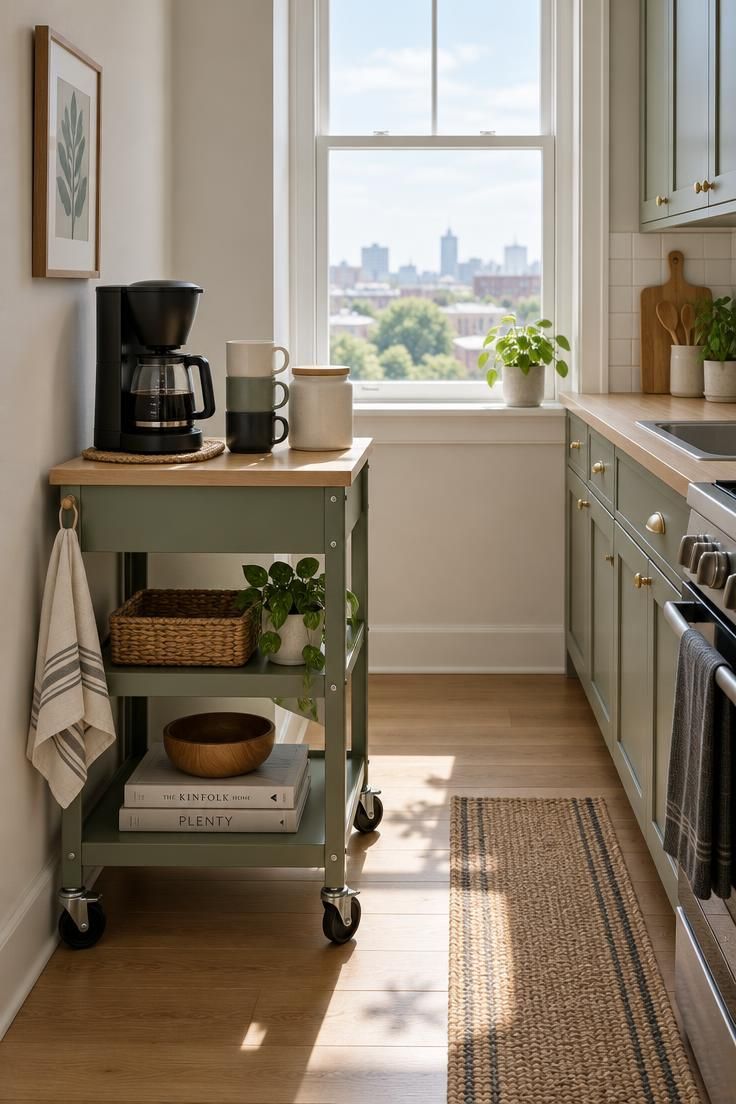
Start with a temporary cart or tray, live with the workflow for a few weeks, and let the routine reveal whether a permanent station is worth the space it would take.
The Sink Side Test: Placing the Station Toward the Rinse Path
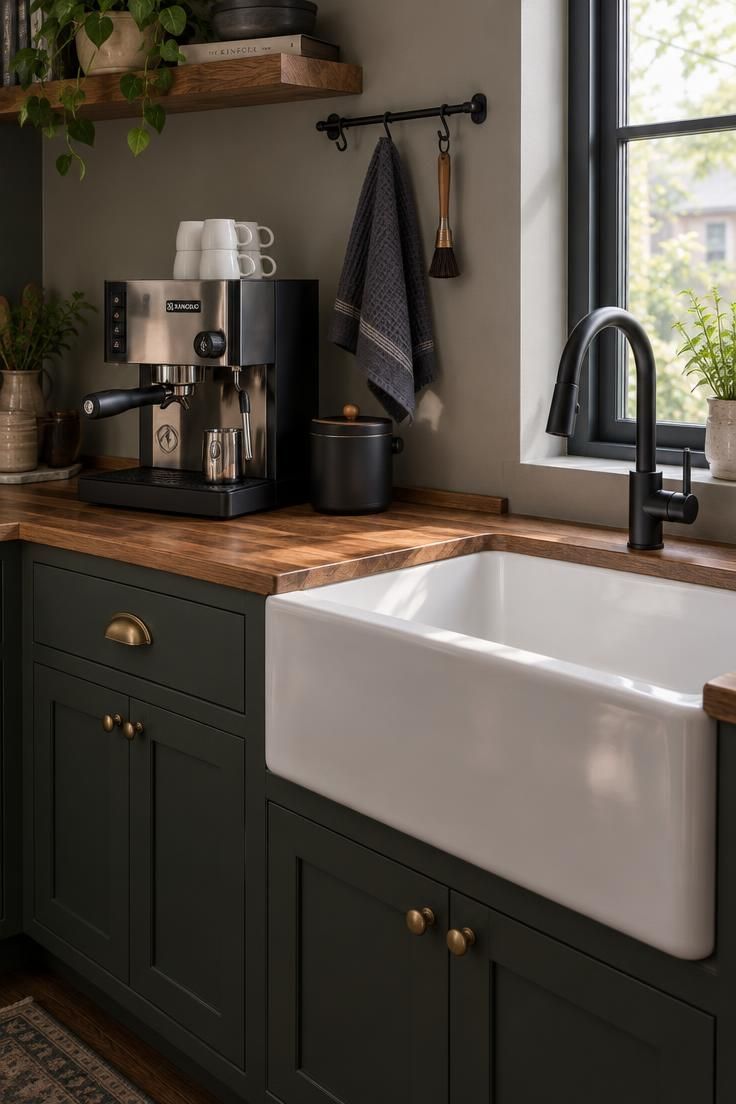
A coffee bar setup earns its place when the pathway from brewer to sink stays short and uncluttered.
Position the station so a spent puck, a rinsed filter, and a splashed drip tray can travel to the sink without crossing the main cooking area.
That relationship changes how the station gets used.
A machine tucked beside the faucet invites quick cleanup, while a machine across the room from water tends to accumulate residue near its base.
The rinse path also suggests where the small waste container should live.
Keep one close enough to catch a wet filter without dripping across a large stretch of counter, and place it on the same side as the brewer’s drip tray.
A modest towel bar or hook near the sink edge can hold a dark cotton towel only for coffee cleanup.
Keeping that towel separate from the kitchen hand towel prevents a damp coffee cloth from becoming the default surface wipe.
When the renovation is still just a styling plan, measure the route from the machine to the water source before deciding on mugs, canisters, and open storage.
Objects that look assembled on a dry counter can feel misplaced once the first rinse sends water and grounds toward the basin.
When stacking cups above the water zone, keep the arrangement shallow enough that a drying hand does not knock a mug into the basin.
Conclusion
A successful coffee bar setup is not defined by its size or its equipment list.
It is defined by how easily it supports the daily routine.
Give equal attention to three things: the landing space beside the brewer, the storage within arm’s reach, and a surface that cleans up without fuss.
Those three carry more weight than any single appliance choice.
Start small.
A portable tray or a single counter section can test the workflow before any commitment to custom cabinetry or a permanent renovation.
Live with that trial for a week or two, then adjust based on what actually got used.
The goal is a station that looks intentional when it is quiet and works smoothly when it is busy.
If only one change happens this month, clear the space beside the brewer and move the grinder next to the beans.
That single adjustment does more for a simple station than any new purchase.