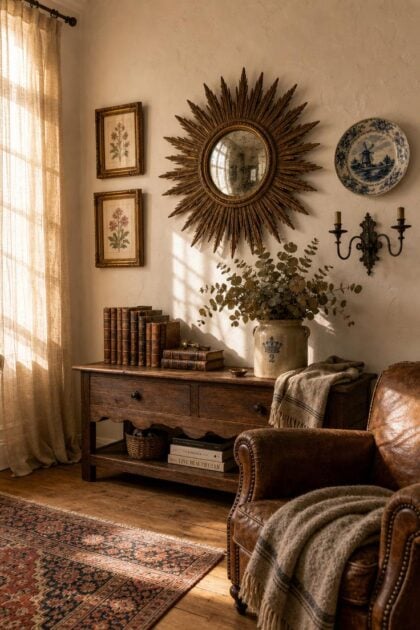
This post may contain affiliate links. If you make a purchase through these links, we may earn a commission at no additional cost to you.
There is something about a wall hung with old, well-worn things that makes a room feel as if it has been lived in for decades.
Antique wall decor brings depth that no catalog purchase can match, because every scratch, patina ring, and faded brushstroke carries a quiet history behind it.
Whether you collect at flea markets or inherit pieces from family, the trick is pairing these finds with your existing rooms so they look intentional rather than cluttered.
The 11 antique wall decor ideas below cover a range of styles from carved wood to hand-painted ceramics, each one specific enough to picture and easy enough to adapt to your own space.
A Tarnished Brass Sunburst Mirror With Patina Petals on a Cream Plaster Wall
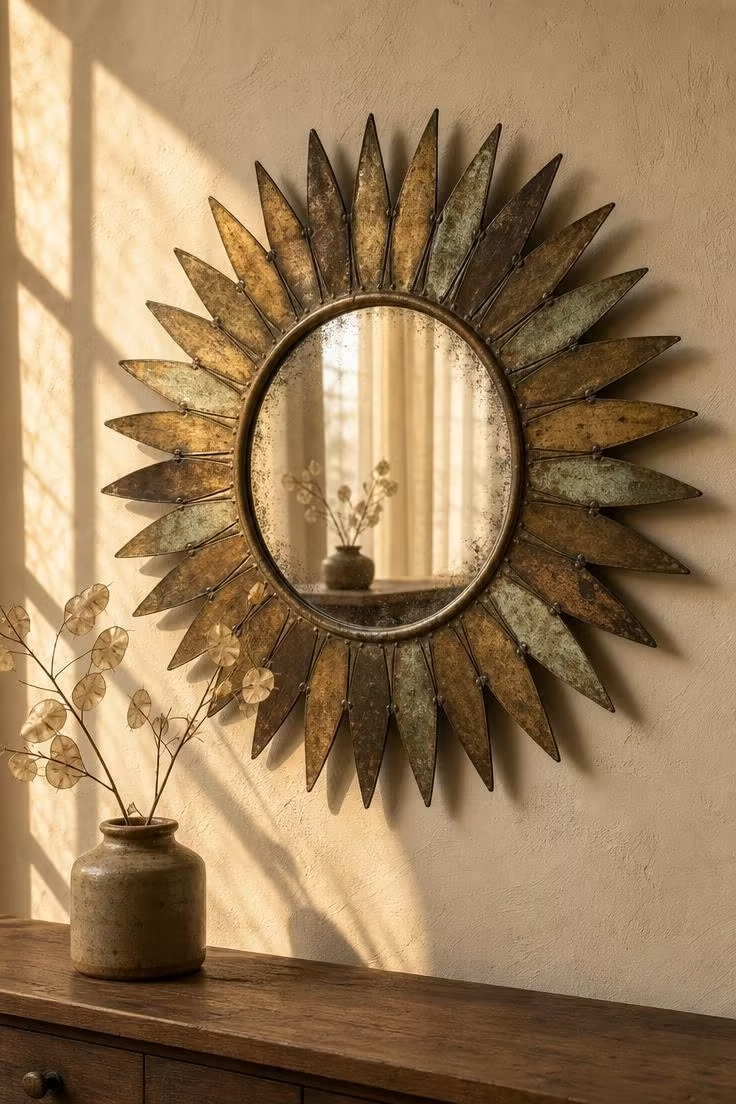
The uneven oxidation across each brass ray is what gives a mirror like this its warmth, because no two petals age the same way.
That irregularity catches the eye in a way that a polished reproduction never could, pulling your gaze around the circle rather than letting it settle in one place.
The cream plaster behind it matters more than you might expect, since a textured neutral wall absorbs light softly and lets the metal read as jewelry rather than hardware.
Placing a single dried botanical on the console beneath keeps the area from feeling bare without competing for attention.
Antique mirrors of this shape first became popular in the mid-20th century, but earlier hand-forged versions from French and Italian workshops carry a rougher, more personal quality.
If your mirror weighs more than ten pounds, anchor it with a toggle bolt into the wall rather than a simple nail, and check the wire on the back for corrosion before hanging.
A room with just this one piece on an otherwise empty wall already feels finished, which is the whole point of letting antique wall decor do the heavy lifting.
Style Blueprint:
- Tarnished brass sunburst mirror (24-36 inches across)
- Cream or warm white plaster wall with subtle hand-troweled texture
- Low wooden console table in a natural finish
- Single dried botanical stem in a stoneware vessel
- Toggle bolt hanging hardware rated for the mirror’s weight
A Set of Blue-and-White Delft Plates on a Dark Olive Dining Room Wall
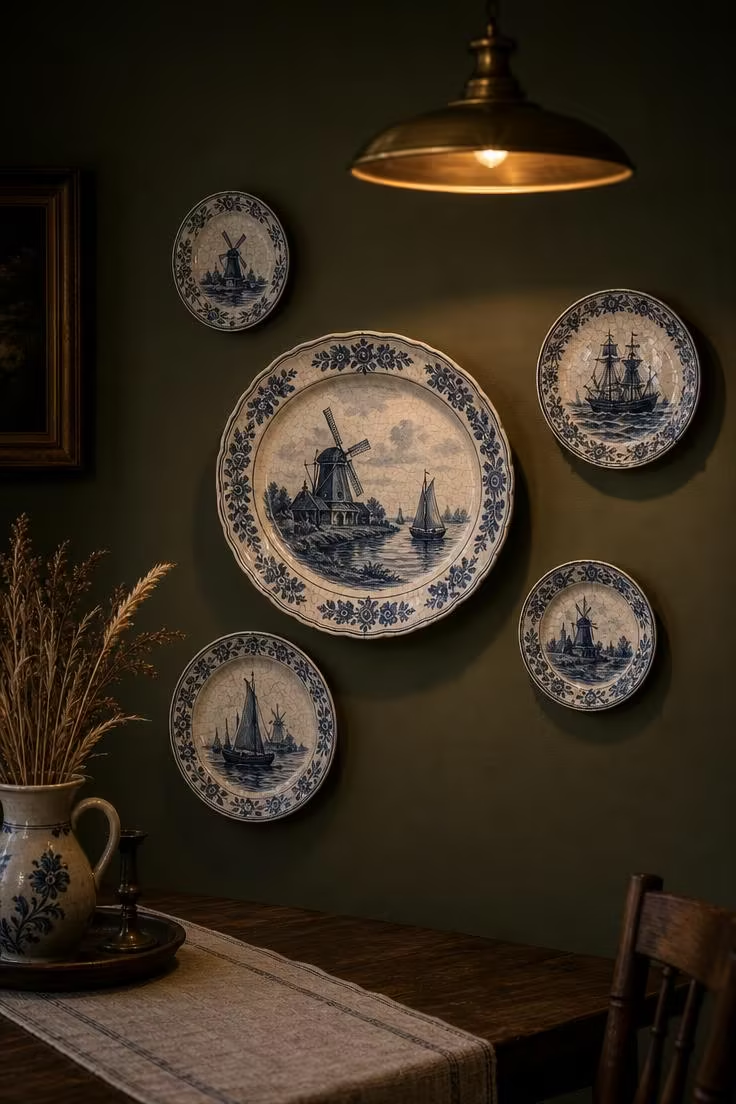
A dark wall behind pale ceramics creates a depth that lighter backgrounds simply cannot match.
The olive green absorbs enough light to let the cobalt blue motifs glow forward, almost like backlit stained glass in miniature.
Arranging antique plates in a loose cluster rather than a rigid grid gives the grouping a sense of having accumulated over time, plate by plate.
Look for pieces with crazing in the glaze, which is the web of fine cracks that develops over centuries and proves the plate is not a modern copy.
Mixing scenes, some with windmills, others with floral borders, keeps the cluster visually active even though every plate shares the same color story.
Wire plate hangers with white rubber tips grip securely without chipping the rims, and spacing each plate about three inches apart lets the wall color breathe between them.
Style Blueprint:
- Five blue-and-white Delft plates in graduated sizes (8-12 inches)
- Dark olive green matte wall paint
- Wire plate hangers with rubber-tipped grips
- Brass pendant lamp above for directional light
- Linen table runner and ceramic pitcher for the surface below
A Carved Oak Gothic Revival Panel Above a Stone Fireplace Mantel
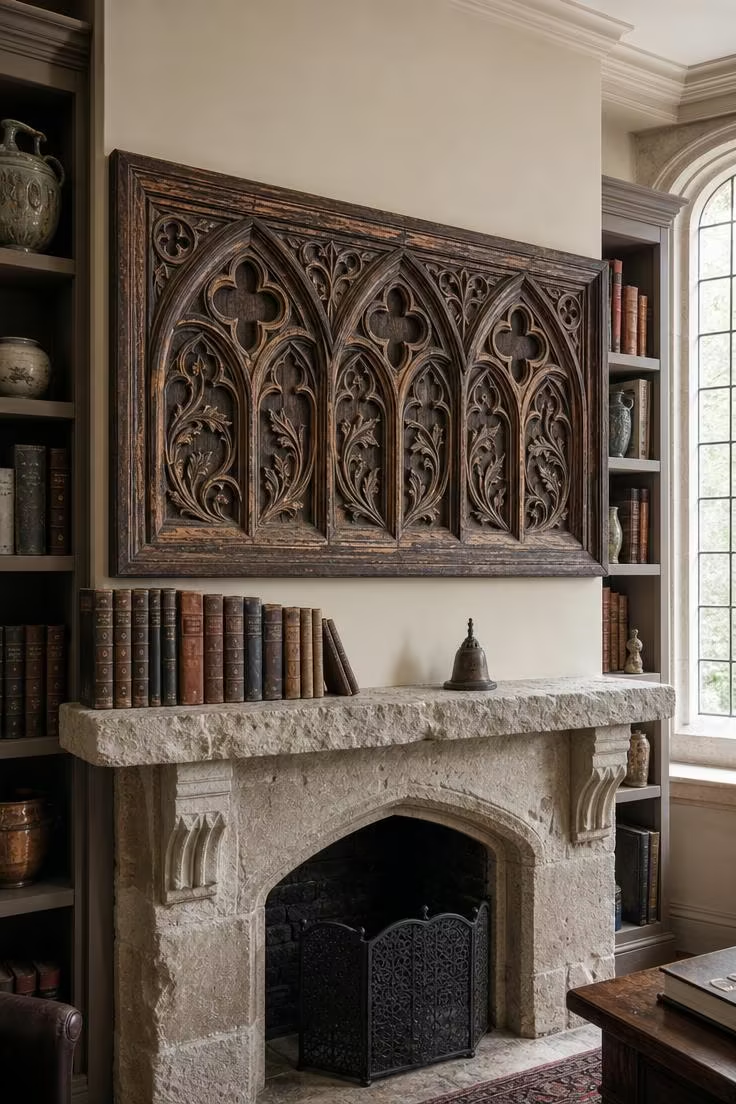
There is a density to carved wood panels from the Gothic Revival period that modern laser-cut pieces never replicate, because hand tools leave subtle tool marks and slightly uneven curves that register as warmth.
The pointed arch tracery on a piece like this echoes the architecture of old churches and libraries, which is why it reads so naturally above a stone mantel surrounded by books.
Dark-stained oak that has worn unevenly over time develops a two-tone quality, with the high points lighter and the crevices deep brown, and that contrast gives the relief carving its visual punch even from across the room.
A stone mantel provides enough visual weight to anchor the heavy panel above it, where a thin floating shelf would look mismatched.
Mounting a piece this large requires at least two wall studs and a sturdy French cleat system, so the panel sits flush against the wall without tilting forward.
The putty-colored wall behind keeps things calm and lets the oak be the loudest voice in the composition.
This kind of architectural salvage works equally well in a room with modern furniture, because the carved detail is ornate enough to stand as the single decorative statement.
If you find a panel with cracked or missing sections, leave them rather than filling them in, since those gaps tell the piece’s story more honestly than a clean repair would.
Style Blueprint:
- Carved oak Gothic Revival panel (approximately 48 by 24 inches)
- Rough-hewn limestone or stone mantel
- French cleat mounting system rated for heavy wood
- Leather-bound books and a small bronze object for the mantel surface
- Soft putty or warm grey wall paint
A Gallery Wall of Mismatched Gilt Frames Holding Vintage Botanical Prints
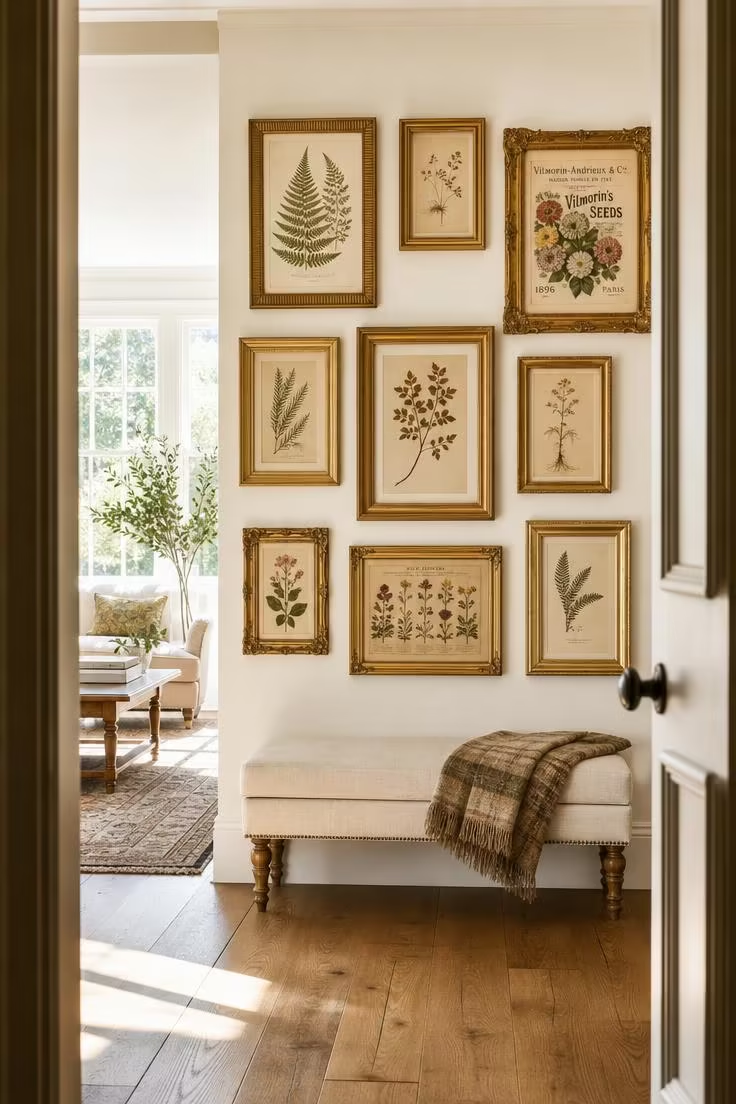
A gallery wall built from gilt frames of different profiles works because each frame asserts its own personality while the shared gold tone pulls the whole group together.
A reeded frame next to a scrolled one next to a plain beveled one creates a visual rhythm that feels collected over years rather than ordered from a single catalog.
Vintage botanical prints make ideal gallery wall subjects because their muted greens, browns, and creams harmonize with almost any gold frame without clashing.
Cut paper templates to the size of each frame, tape them to the wall, and rearrange until the layout feels balanced before committing a single nail to the plaster.
Aim for an irregular grid rather than perfect rows, leaving about two inches between frames so the eye moves easily from one to the next.
Mixing media inside the frames, such as pressed ferns alongside printed engravings, adds textural variety that keeps the wall interesting up close.
Bright midday light is the most forgiving for a display like this, because it reduces shadows between frames and lets the botanical details come through clearly.
Style Blueprint:
- Nine mismatched gilt frames in varied gold tones and profiles
- Vintage botanical prints, seed catalog pages, and pressed specimens
- Warm white wall paint
- Paper templates and painter’s tape for layout planning
- Low linen bench or console beneath the display
Design Pro-Tip: When building a gallery wall with antique picture frames, start by laying every frame on the floor in a rough arrangement before you pick up a hammer. Photograph the floor layout from directly above, then use that image as your map when transferring the arrangement to the wall. This one step saves hours of re-hanging and extra nail holes.
A Pair of Wrought Iron Candle Sconces Flanking a Linen-Covered Headboard
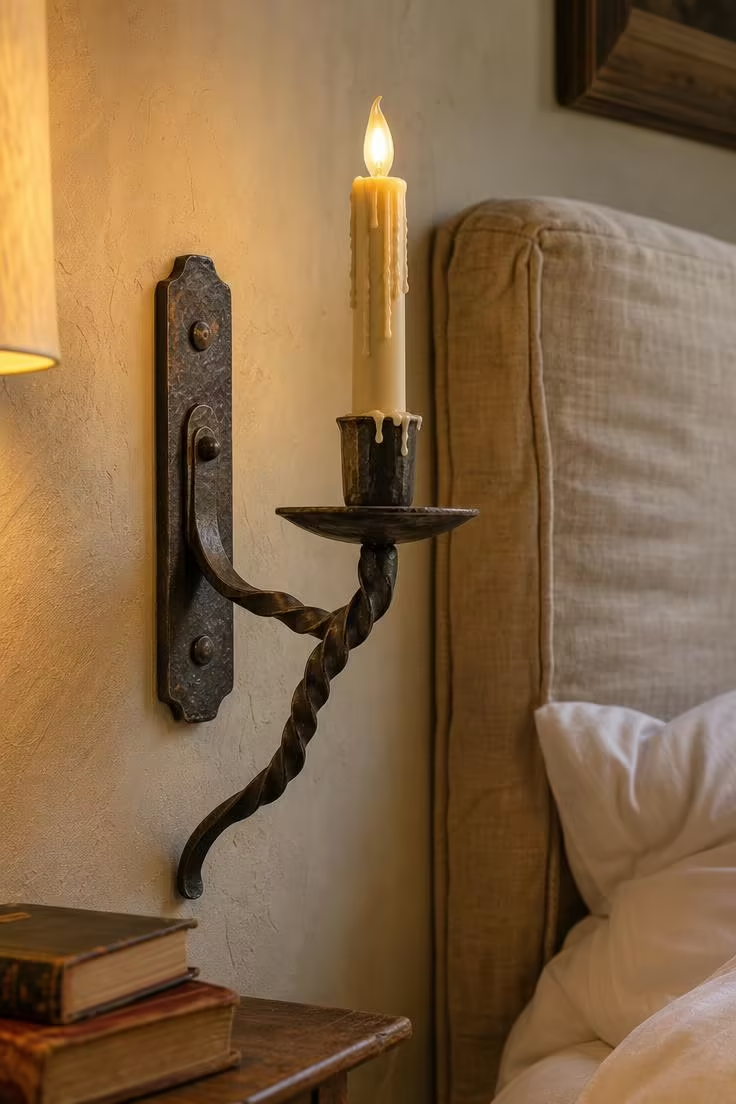
Hand-forged wrought iron wall hangings have a presence that cast iron copies lack, because the hammer marks and slight irregularities in the twist pattern prove that someone made this piece by hand at an anvil.
Flanking a headboard with matching sconces creates a balanced frame that draws the eye to the bed as the room’s focal point.
The dark metal against pale linen generates a contrast that is both graphic and soft, hard edges meeting a fabric that invites touch.
LED taper alternatives now come with realistic drip textures and a warm flicker that mimics real flame, so you get the atmosphere without any fire risk near bedding.
Look for sconces with their original bracket plates rather than replacements, since the plate often carries the most detailed ironwork and tells you the most about the maker.
Mounting height matters here: center the sconce at roughly the same level as the top of the headboard so the light falls naturally across the pillow area.
Style Blueprint:
- Pair of hand-forged wrought iron candle sconces with twisted arms
- Cream beeswax LED taper inserts with realistic drip texture
- Linen-covered headboard in oatmeal or natural tone
- Creamy plaster wall surface
- Mounting hardware appropriate for plaster or drywall (toggle bolts for heavy iron)
A Framed Antique French Toile Panel in Faded Red on a White Wainscot Wall
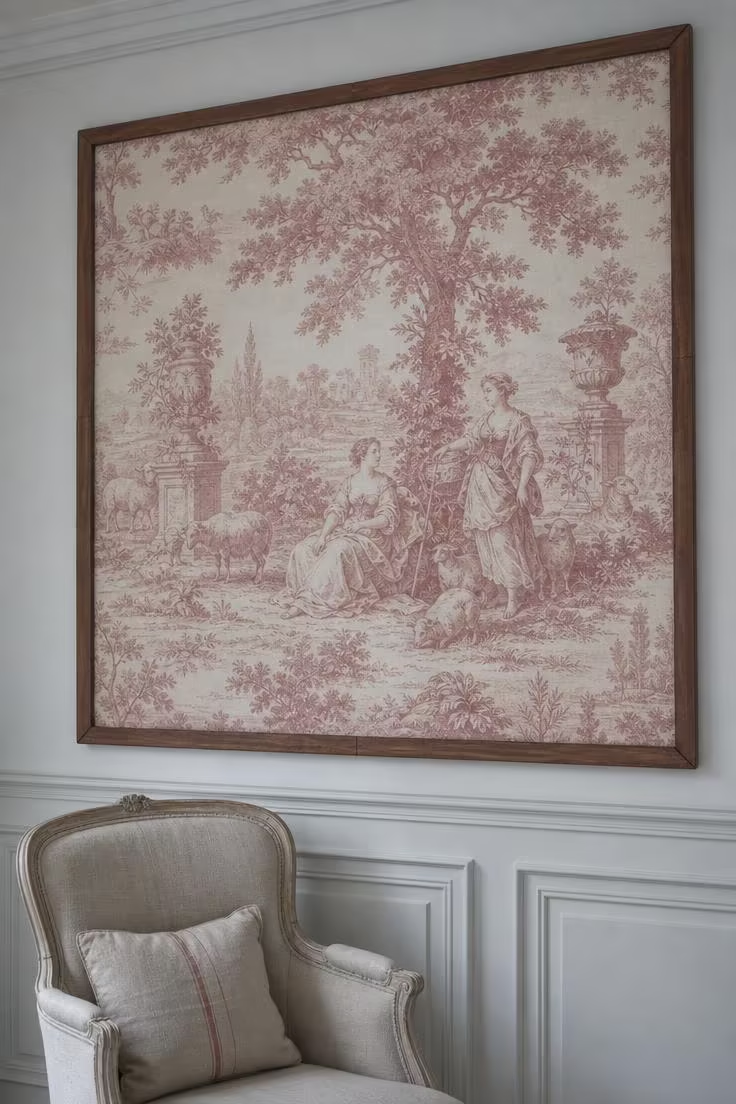
Faded textiles carry a softness of color that you cannot buy new, because years of light exposure gradually shift the dye from a sharp crimson to a dusty rose that feels restful rather than loud.
This kind of vintage wall art tells a story through its imagery, with pastoral scenes of shepherdesses and urns that connect to a long tradition of European decorative printing.
The slim cherry wood frame matters as much as the toile inside it, since old hand-mitered corners with tiny gaps from wood movement prove the frame has lived alongside the fabric for decades.
White wainscoting beneath provides a crisp, architectural base that prevents the textile from reading as limp or casual.
Cool morning light is the ideal condition for viewing faded fabrics, because warm light adds yellow that distorts the remaining color.
UV-filtering glass inside the frame slows further fading and keeps the toile stable for another generation of display.
A small upholstered chair beneath pulls the eye downward and creates a reading corner vignette that gives the wall purpose beyond decoration.
Pairing old French textiles with simple white millwork is one of the easiest ways to introduce a European sensibility to a room without committing to an entire style overhaul.
Style Blueprint:
- Framed antique French toile panel (faded red or blue)
- Slim cherry or walnut frame with visible age
- UV-filtering glass for preservation
- White wainscot wall with raised panel profiles
- Small upholstered chair beneath for a vignette anchor
A Salvaged Church Window Frame With Original Lead Came on an Exposed Brick Wall
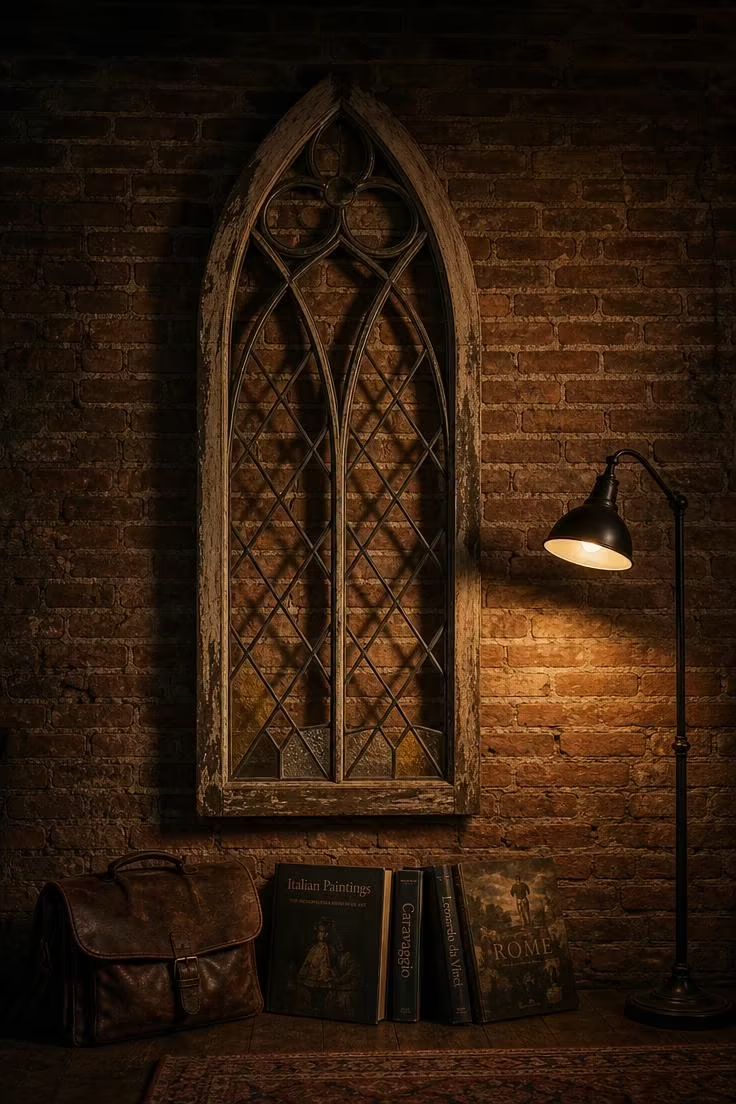
A piece of architectural salvage this large becomes the room’s anchor the moment you mount it, turning an ordinary brick wall into something that feels like a fragment of a much older building.
The lead came grid, with its diamond and trefoil pattern, casts detailed shadow lines when lit from below, creating a second layer of decoration that shifts throughout the evening.
Remaining glass fragments in amber or clear add a translucent quality that solid wood or iron pieces cannot offer.
Old brick and old lead share a visual language of weathered surfaces and irregular lines, so the pairing feels natural rather than forced.
If the frame weighs more than 20 pounds, use a pair of heavy-duty masonry anchors rather than adhesive, and test the brick for crumbling before drilling.
Style Blueprint:
- Salvaged church or chapel window frame with Gothic arch (4-6 feet tall)
- Original lead came grid with or without glass fragments
- Exposed brick wall in warm reddish-brown
- Floor lamp positioned for upward lighting
- Masonry anchor hardware rated for the frame’s weight
A Trio of Hand-Painted Majolica Platters Arranged Diagonally Over a Sideboard
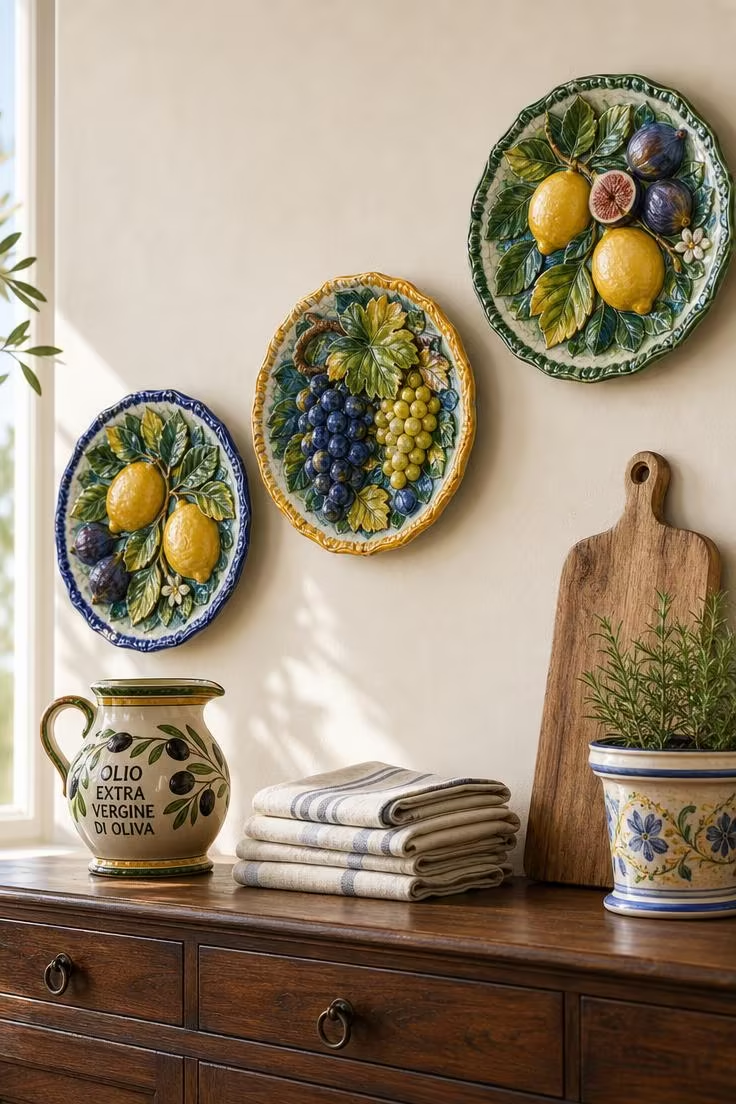
Majolica glazes carry a richness of color that few other antique ceramics can match, because the tin-based white ground underneath makes every painted hue punch forward with unusual clarity.
A diagonal arrangement of three platters creates movement across the wall, guiding the eye upward from the sideboard surface to the highest plate.
The raised relief on each platter, with sculpted lemons and overlapping leaves pushing out from the surface, adds a three-dimensional quality that flat prints or paintings do not provide.
Look for pieces with minor glaze crackle but no deep chips on the painted face, since small surface crazing is expected after a century or more and does not reduce the visual effect.
Italian and Portuguese antique picture frames designed for plate display often include ornate wire brackets that become part of the presentation rather than hiding behind the piece.
Bright midday light is ideal for majolica because it picks up the gloss of the glaze and reveals the full color range, where dim light can flatten these platters into dark circles on the wall.
Placing food-related antiques above a sideboard or dining surface ties the decorative and functional parts of the room together, reinforcing the space’s purpose without saying a word.
Style Blueprint:
- Three Italian or Portuguese majolica platters (12-14 inches each)
- Decorative wire plate hangers with ornamental brackets
- Warm cream wall paint
- Dark walnut sideboard or buffet
- Ceramic jug, linen napkins, and cutting board for the surface below
Design Pro-Tip: When hanging antique plates or platters, draw the arrangement on kraft paper at full size first, cut out each circle, and tape the paper templates to the wall. Step back and check the spacing from across the room before committing to hardware. Diagonal lines should follow the natural slope of your eye movement, usually rising left to right.
A Large Victorian Carved Wood Pediment Mounted Flat on a Warm Grey Wall
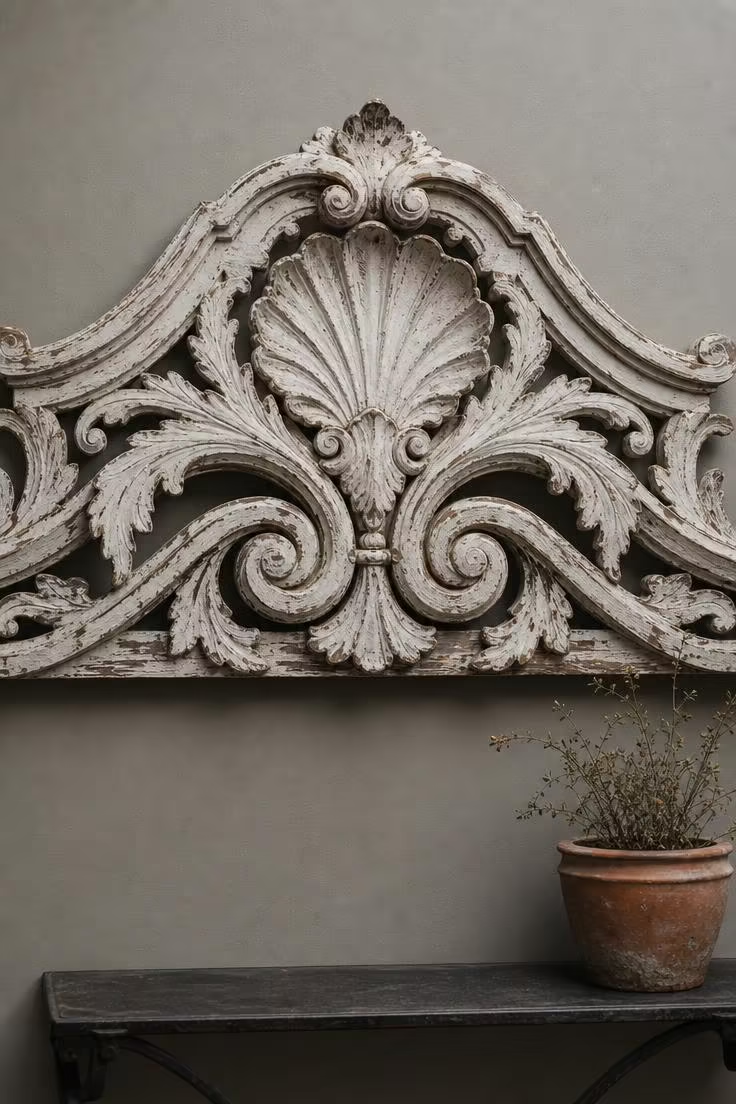
Mounting a pediment flat on a wall rather than above a doorway changes its role from architectural trim to sculpture, and that shift in context makes people look at the carving itself rather than the structure it once framed.
The layers of old paint, white over grey over dark wood, create a depth chart of the piece’s history that no single finish could offer.
Acanthus leaves and scrolling volutes are among the most common motifs on Victorian pediments, but the hand-carved versions have a looseness in the leaf edges that distinguishes them from machine-made reproductions.
A warm grey wall provides just enough contrast to let white-painted wood read clearly without the harshness that a pure white background would create.
Skylight illumination is the best match for a piece like this, because even overhead light fills every crevice of the relief carving and eliminates the deep shadows that side lighting would emphasize.
Architectural salvage yards are the most reliable source for pediments of this size, and prices vary widely based on wood type, carving complexity, and whether the original finish is intact.
Style Blueprint:
- Victorian carved wood pediment (approximately 48 by 18 inches)
- Original chippy paint layers showing multiple finishes
- Warm grey matte wall paint
- French cleat or heavy-duty bracket mounting
- Narrow iron console table with a single terracotta pot beneath
A Framed Antique Silk Embroidery Sampler on a Dusty Rose Bedroom Wall
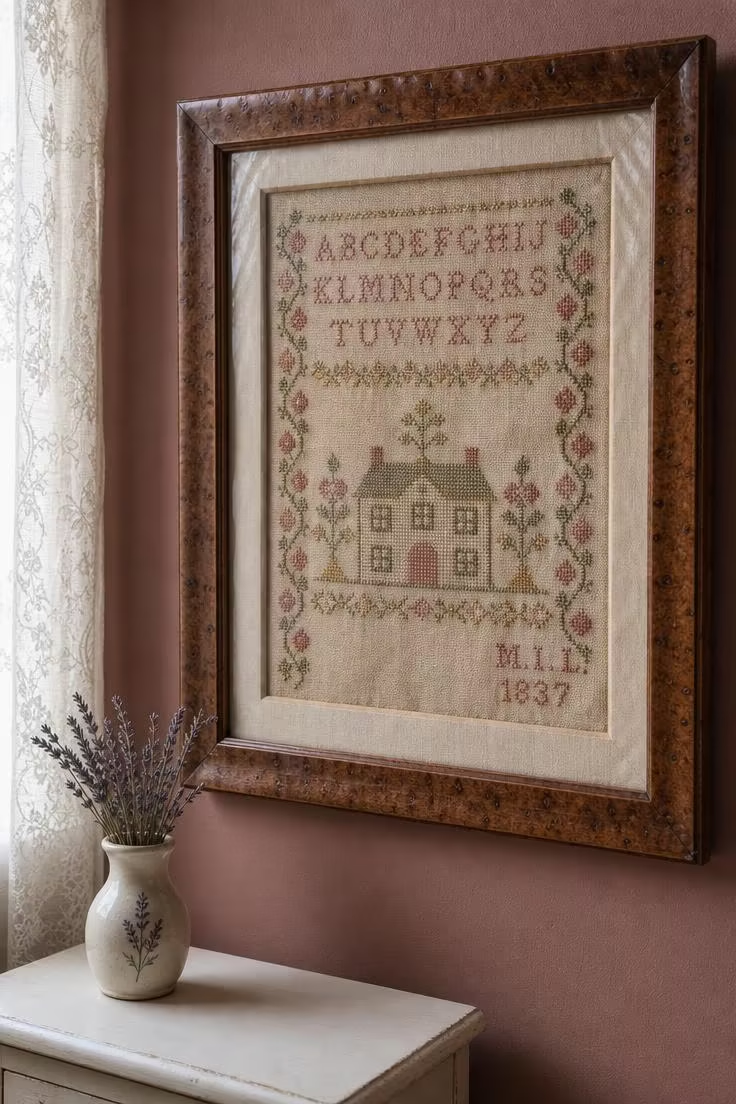
A handmade sampler carries a human presence that printed art never does, because every stitch was placed by a specific person on a specific day, and the slight irregularities in tension and spacing prove it.
The dusty rose wall behind this particular sampler works because it picks up the faded pinks in the thread palette, making the piece feel like it belongs to the room rather than just hanging in it.
Bird’s-eye maple frames from the 19th century have a figured grain pattern that swirls and catches light in a way that plain wood cannot, adding a second layer of handmade texture around the embroidery.
Wavy antique glass introduces a gentle optical distortion at the edges that modern float glass does not, and that imperfection is part of the piece’s character.
Acid-free matting between the fabric and the glass prevents the silk from touching the surface, which over time would cause staining and fiber degradation.
Cool overcast light preserves thread colors most faithfully, since warm bulbs shift the greens toward yellow and the roses toward orange.
Vintage brass sconces on either side of the sampler, kept small and simple, would frame it without competing for attention.
Samplers connect a room to domestic history in a way that few other antique wall pieces can, because they were made as learning exercises by young women, often recording their name, age, and hometown in the stitching itself.
Style Blueprint:
- Framed antique silk embroidery sampler in original frame
- Acid-free linen mat and UV-filtering glass
- Dusty rose or muted pink wall paint
- Bird’s-eye maple or period-appropriate frame
- Small ceramic vase with dried lavender on the surface below
A Chinoiserie Lacquer Panel in Black and Gold Leaning Against a Pale Blue Wall
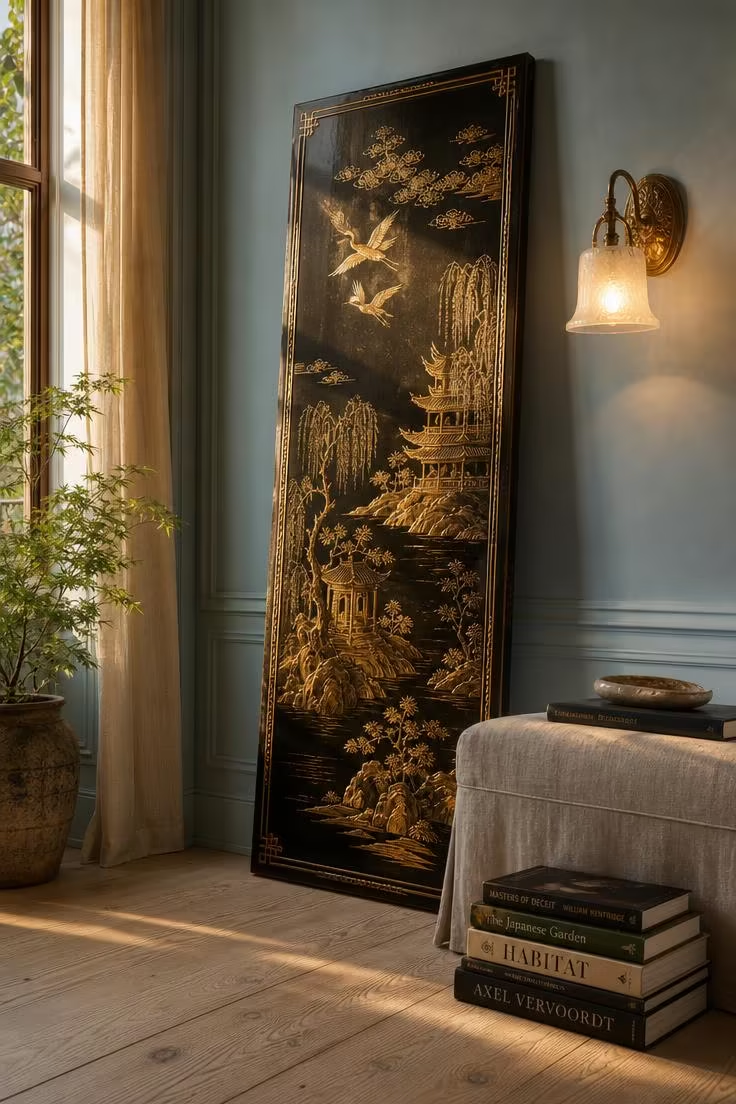
Leaning a tall panel against the wall instead of mounting it flat gives the piece a relaxed, gallery-like quality, as though it just arrived and you have not decided on its final position yet.
That casual lean also makes the panel easy to move, rotate, or swap out without leaving hardware holes in the wall.
The black lacquer ground acts as a deep void that pushes the gold leaf motifs forward into the light, and when low-angle sun catches those raised surfaces, the pagodas and cranes appear almost three-dimensional.
Pale blue walls create a restful backdrop that cools the gold without dulling it, producing a contrast that references traditional Chinese porcelain color pairings of blue and metallic tones.
A vintage brass sconce mounted nearby on the same wall echoes the gold in the panel and ties the two pieces into a shared palette.
Lacquer surfaces are more fragile than they appear, so keep the panel away from radiators and direct heat sources that can cause cracking, and dust with a soft dry cloth rather than any liquid cleaner.
This single piece, propped in a corner or beside a reading chair, can define the character of an entire room without requiring a single nail.
Style Blueprint:
- Chinoiserie lacquer panel in black and gold leaf (4-6 feet tall)
- Pale blue wall paint in matte or eggshell finish
- Wide-plank white oak or light hardwood flooring
- Vintage brass wall sconce with frosted shade
- Low ottoman or side table beside the panel for a grounded composition
Design Pro-Tip: When mixing antique wall decor from different periods and cultures, limit your shared element to one: a common metal tone (all gold or all dark iron), a shared color (all pieces include some shade of blue), or a unified frame material (all wood). That single thread of consistency lets you hang a Gothic panel next to a Chinese lacquer screen without the combination looking random.
Conclusion
You do not need a matched set or a decorator’s budget to fill your walls with character.
A single brass mirror, a cluster of old plates, or a carved panel from a salvage yard can change the entire mood of a room in an afternoon.
The best antique wall decor feels personal, because it is, with each piece carrying the fingerprints of whoever made it and the wear patterns of every home it has passed through.
Start with one piece that stops you at a flea market or catches your eye in a family attic, hang it where you will see it every day, and let the collection grow from there.
The walls will tell the story for you.