This post may contain affiliate links. If you make a purchase through these links, we may earn a commission at no additional cost to you.
Every room has at least one corner that sits empty, gathering dust and pulling attention for all the wrong reasons.
That bare angle where two walls meet is some of the most underused real estate in your home, and it takes surprisingly little to turn it into something worth noticing.
The right piece, whether a single tall plant or a carefully arranged set of shelves, changes the entire balance of a room.
These 11 corner wall decor ideas each focus on a specific material, finish, or technique so you can pick the ones that fit your space and skip the rest.
Staggered White Oak Floating Shelves With Collected Pottery
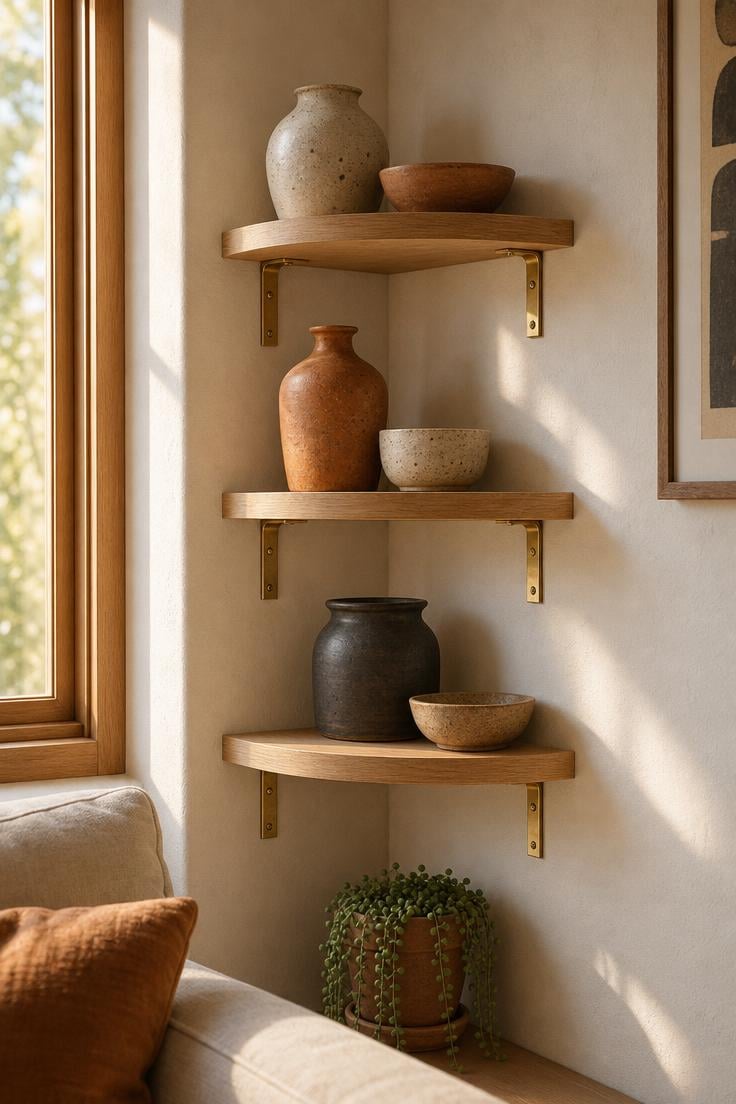
Corner shelf styling starts with the spacing between each shelf.
Mount them at uneven intervals, eight inches between the bottom two and twelve between the top pair, so the eye moves upward in a rhythm that feels intentional rather than rigid.
White oak is a strong choice here because its open grain picks up warm light without competing with the objects on display.
Keep the pottery restrained: two or three pieces per shelf in a tight color range reads as a collection, not clutter.
Those brass L-brackets do real work when left visible, adding a thin line of metallic contrast against the matte wood.
The corner seam itself becomes the anchor of the arrangement, drawing the eye into the angle instead of away from it.
Style Blueprint:
- Three quarter-round floating shelves in white oak, staggered at uneven heights
- Hand-thrown stoneware in cream, terracotta, and charcoal tones
- Exposed brass L-bracket hardware
- Trailing plant in a small terra cotta pot at floor level
- Warm off-white wall paint with slight plaster texture
A Trailing Cebu Blue Pothos on a Blackened Steel Corner Bracket
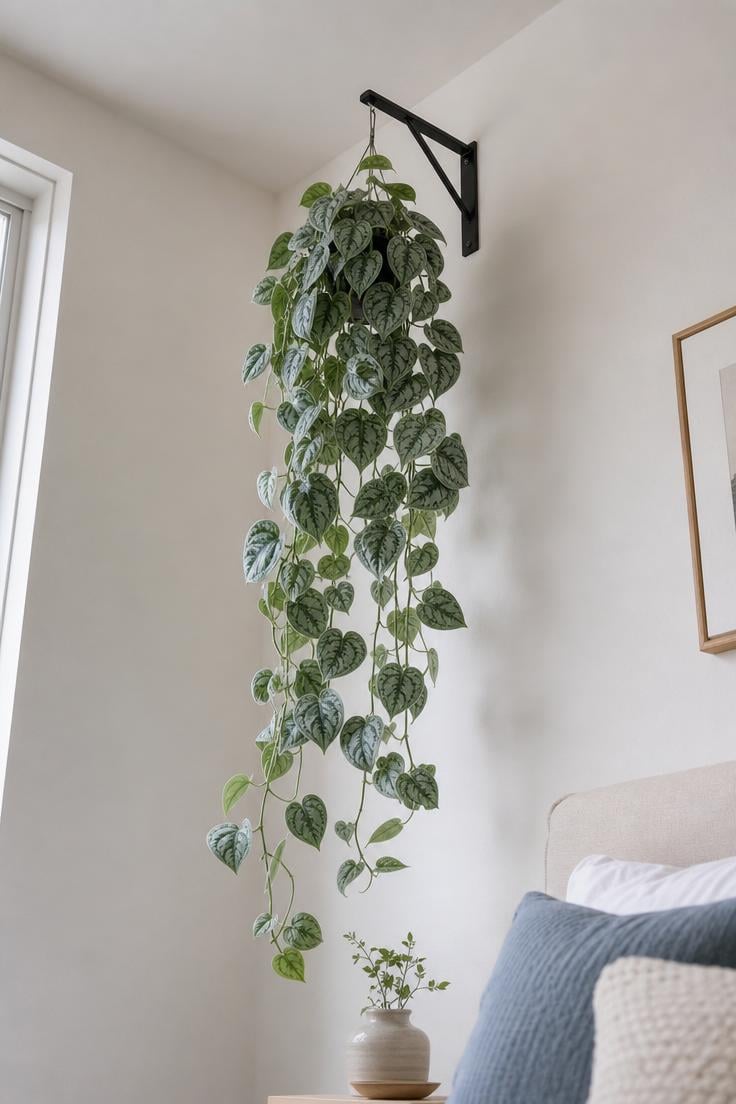
A single plant mounted high in a corner does more for a room than a dozen small pots scattered across surfaces.
The Cebu Blue Pothos is a strong candidate because its silvery blue-green leaves read as cool and unusual against a warm white wall, giving the corner its own color story.
This corner plant display draws the eye upward first, then lets it travel down along the vine, which fills the full vertical column of the corner without any furniture.
The blackened steel bracket adds a sharp industrial line that contrasts with the organic softness of the leaves.
Choose a bracket with a flat plate mount so it sits flush against both walls at the corner seam, carrying the weight of a heavy pot without tilting.
Water drip trays with a rubberized base are worth the small investment when the planter sits above finished flooring.
The trailing habit of this particular pothos means it will grow longer over the months, making the corner display more dramatic as time goes on.
Style Blueprint:
- Matte black powder-coated steel corner bracket with flat plate mount
- Cebu Blue Pothos in a ceramic hanging pot
- Rubberized drip tray beneath the pot
- Warm white wall with smooth matte finish
- Mounting hardware rated for the combined weight of pot, soil, and plant
A Wrapped Canvas Diptych Hung Across Both Walls of the Corner
Most people avoid hanging art near corners because the angle interrupts a flat display surface.
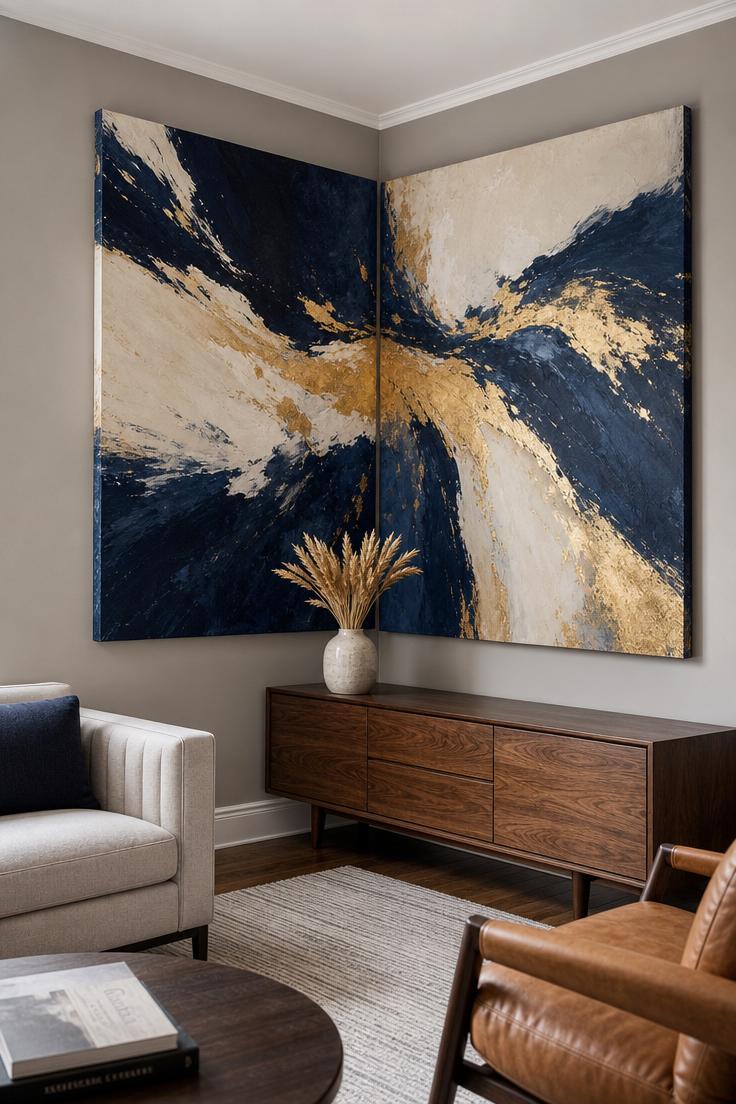
A diptych flips that problem into a feature by splitting one composition across two canvases, using the corner as the painting’s central axis.
The result is corner wall art that wraps the room rather than sitting flat on a single plane, pulling the viewer’s eye around the angle.
Navy and cream give the palette weight without darkness, and the gold leaf accents catch shifting daylight throughout the afternoon.
Wrapped canvas edges matter here: visible stretcher bars or raw wood sides would break the visual continuity at the corner seam.
Order the two canvases from the same artist or printer at the same time so the color matching is exact, since even slight batch differences show at close range.
Hang both pieces at the same height using a laser level rather than measuring from the ceiling, which can slope in older homes.
Leave the wall space below the diptych mostly open, a low credenza with one or two objects keeps the focus on the painting above.
Style Blueprint:
- Two stretched canvases forming a single diptych composition, frame-free wrapped edges
- Abstract palette of deep navy, cream, and gold leaf accents
- Laser level for precise alignment at the corner seam
- Low walnut credenza beneath with minimal styling
- Soft warm gray wall color
A Reclaimed Teak Ladder Shelf With Linen and Dried Stems
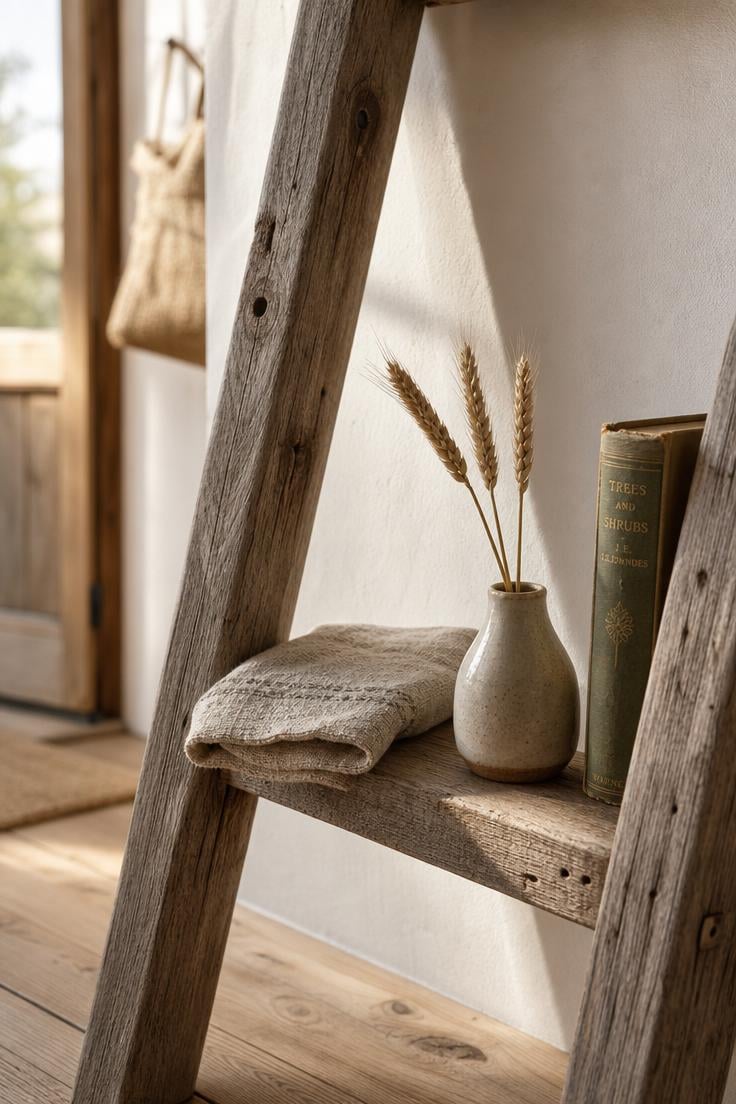
A leaning ladder shelf fits a corner without any mounting hardware, which makes it one of the easiest empty corner ideas to try and reverse.
The weathered teak brings texture that new furniture rarely matches, with old nail holes and silver-brown patina that tell a material story.
Keep each rung to one or two objects at most, a folded linen, a bud vase, a single book, so the arrangement reads as spare rather than cluttered.
The diagonal lean is what makes this work in a corner: the shelf bridges the gap between the two walls at an angle, filling the dead space without pressing flat against either surface.
Dried wheat stems are a reliable year-round option that holds their shape and color for months without water or maintenance.
Ground the base of the ladder with a small woven mat or felt pads to protect the flooring and keep the legs from sliding outward on hard surfaces.
Style Blueprint:
- Reclaimed teak ladder shelf with weathered silver-brown patina
- Oatmeal linen hand towels, folded flat on one rung
- Small ceramic bud vase with dried wheat stems
- Felt or rubber pads on ladder feet for floor protection
- White plaster walls and wide-plank white oak flooring
Design Pro-Tip: When styling a corner with a leaning piece like a ladder shelf or mirror, angle it at roughly 15 degrees off the wall rather than pressing it nearly flat. That slight lean creates a shadow line behind the piece that gives it visual depth and keeps it from looking like it was left there by accident.
Matte Black Hexagonal Mirrors in an Asymmetric Cluster
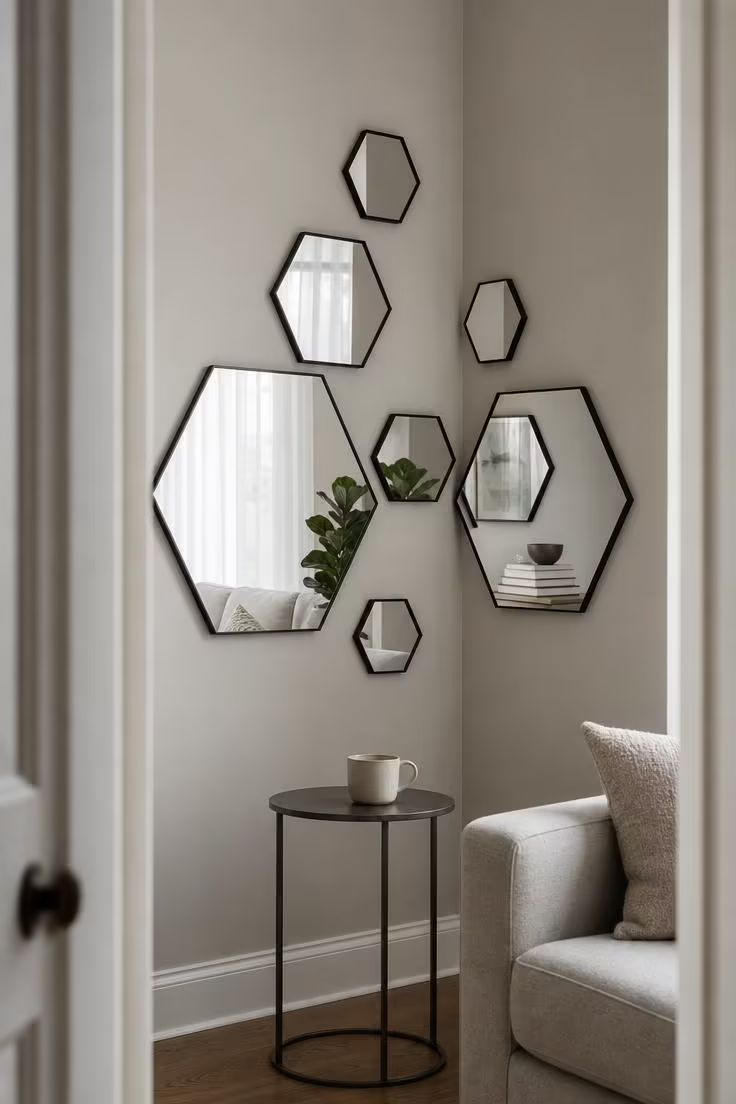
Mirrors in a corner multiply their effect because they catch light and reflections from two directions at once instead of one.
The hexagonal shape gives this wall corner design a geometric structure that round or rectangular mirrors lack, and the six-sided form tiles naturally without strict alignment.
Arrange the cluster loosely rather than in a tight grid, letting one or two mirrors drift slightly away from the main group to create a sense of organic movement.
Vary the sizes deliberately: a few small ones (six to eight inches) around two or three larger ones (twelve to fourteen inches) gives the cluster a center of gravity.
Mount some mirrors flush and others with a thin spacer behind the frame so they project forward by half an inch, which creates subtle shadow lines between pieces.
The matte black frames disappear against a dark wall and pop against a light one, so choose your wall color with the frame visibility in mind.
Cool overcast light is ideal for mirror clusters because it produces soft, even reflections without the bright hotspots that direct sunlight creates.
On a practical level, use paper templates cut to each mirror’s shape and tape them to the wall first, adjusting the layout before drilling a single hole.
A few of the mirrors will naturally reflect empty corner ideas from the opposite side of the room, pulling color and life into the corner passively.
Style Blueprint:
- Five to seven hexagonal mirrors in thin matte black frames, six to fourteen inches across
- Asymmetric cluster layout wrapping around both walls of the corner
- Thin spacers behind select frames for varied projection depth
- Paper templates for layout planning before mounting
- Pale warm gray wall color for frame contrast
A Corner Gallery Wall of Pressed Botanical Specimens in Raw Maple Frames
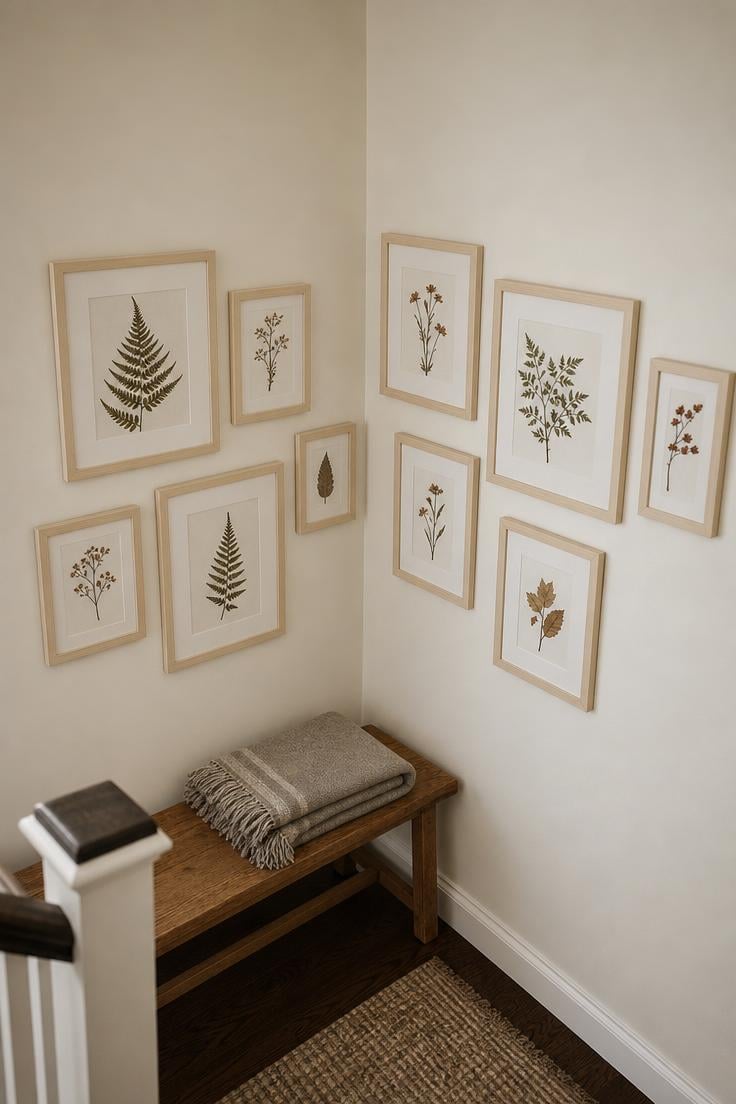
A corner gallery wall works best when the corner seam becomes the center of the arrangement rather than its edge.
Start by hanging one frame directly on the corner line, then build outward along both walls so the cluster reads as a single composition that happens to wrap around an angle.
Raw maple frames keep the palette neutral and let the pressed botanicals do the visual work, their natural browns, greens, and occasional rust tones provide all the color the display needs.
Press your own specimens for a personal collection, or source them from botanical supply shops where the pressing and drying is already done to archival standards.
Consistent two-inch spacing between frames is easier to maintain around a corner if you use painter’s tape as a temporary spacer guide before setting your nails.
The mix of five-by-seven and eight-by-ten frames prevents the grid from feeling rigid, and alternating sizes as you move outward from the center keeps both walls balanced.
This is a strong floating corner shelves alternative for renters or anyone who wants to decorate a corner without supporting weight on the wall.
Style Blueprint:
- Eight to ten frames in raw unfinished maple, mix of 5×7 and 8×10 sizes
- Real pressed fern fronds, leaves, and wildflowers under clear glass
- Consistent two-inch spacing maintained with painter’s tape guides
- Arrangement centered on the corner seam, spreading outward along both walls
- Warm cream wall color and narrow oak bench below
A Slim Walnut Console Table With a Single Oversized Ceramic Lamp
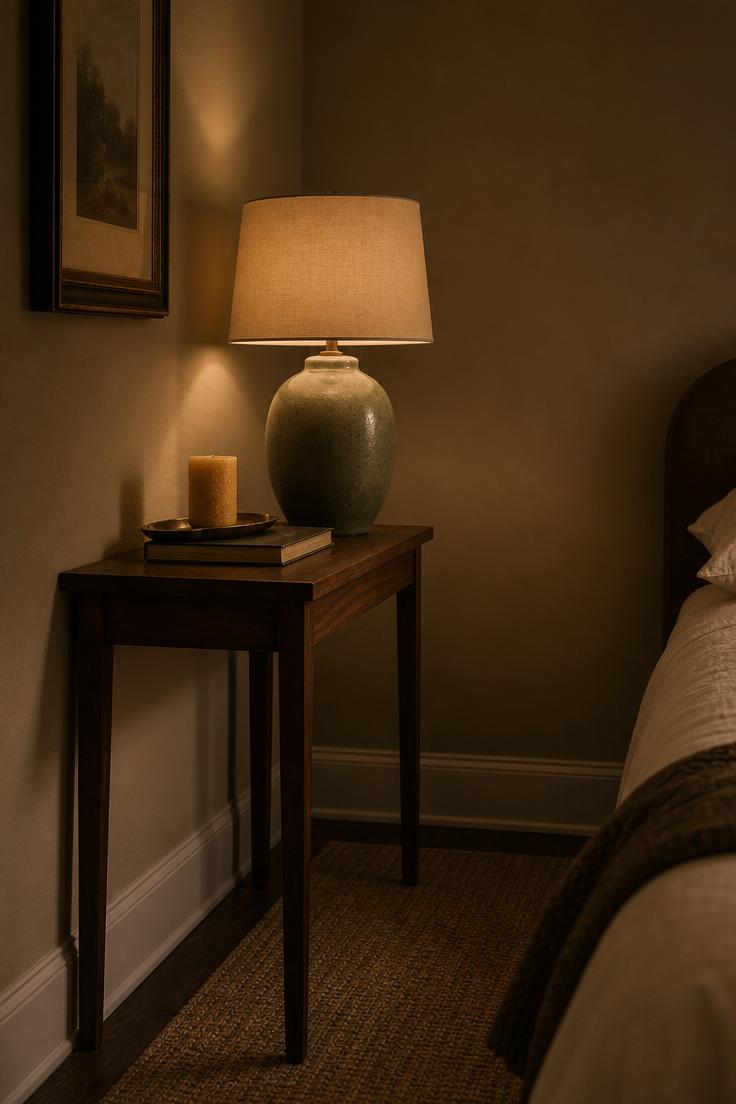
A single well-chosen lamp on a narrow table can anchor a corner more effectively than a dozen smaller objects.
The ten-inch depth of this console is the detail that makes it work in tight spaces, deep enough to hold a lamp base securely but shallow enough that it does not block a walking path.
Speckled sage glaze on an oversized ceramic base gives the lamp a handmade quality that mass-produced pieces rarely achieve, and the linen drum shade softens the light into a warm, even glow.
This kind of corner room decor works on a principle of contrast: one bright object in a dim corner draws the eye and makes the surrounding space feel larger by establishing a clear focal point.
Leave the rest of the console surface mostly bare, a small tray with one or two items is enough to suggest a lived-in feel without crowding the lamp.
The walnut’s dark grain against a warm putty wall creates a tone-on-tone effect that keeps the corner feeling cohesive rather than busy.
At evening, when the lamp is the primary light source, the corner becomes the warmest spot in the room, which naturally pulls attention and foot traffic toward it.
A woven jute rug beneath the console grounds the whole arrangement and protects the floor from the table legs.
Style Blueprint:
- Slim walnut console table, 30 inches wide by 10 inches deep
- Oversized ceramic table lamp in speckled sage green glaze with linen drum shade
- Small brass tray with one or two minimal objects
- Woven jute rug beneath the console
- Deep warm putty wall color for tone-on-tone contrast
Design Pro-Tip: When placing furniture in a corner, pull it forward by two to three inches from both walls rather than pressing it flush into the angle. That small gap creates an air of intentional placement and prevents the piece from looking like it was shoved into the corner as an afterthought.
Woven Seagrass Baskets Mounted in a Vertical Column
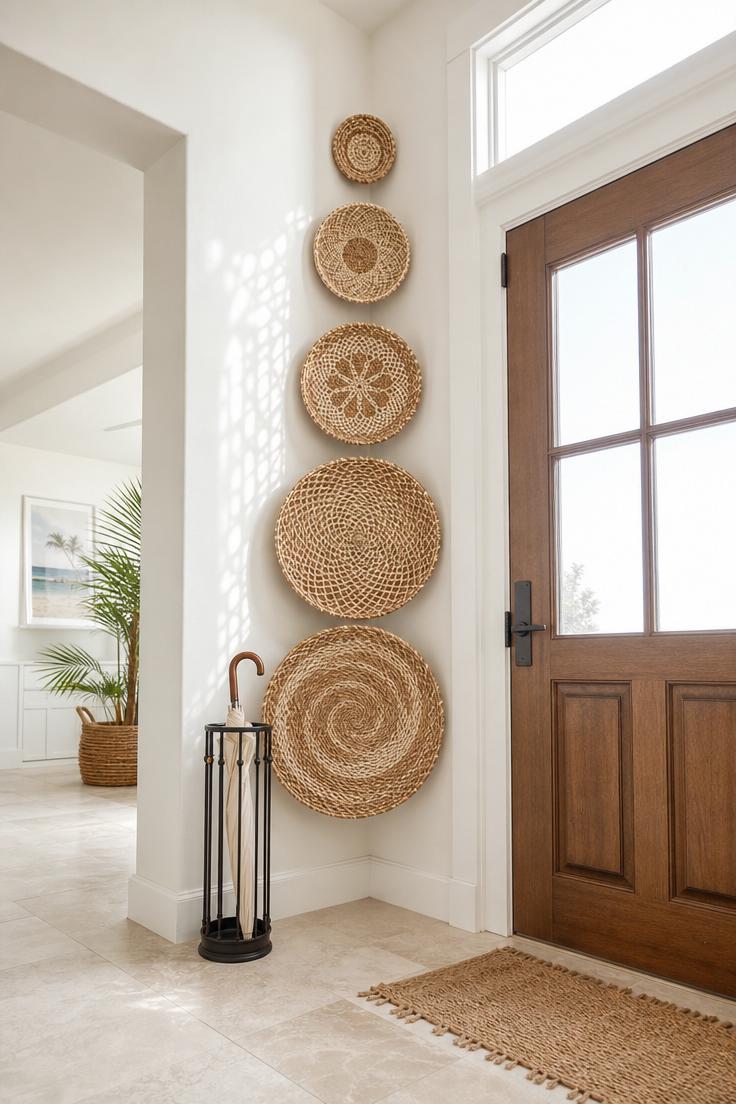
A vertical column of baskets fills the full height of a corner in a way that most wall art cannot.
The graduated sizing, largest at the bottom and smallest at the top, creates a natural taper that draws the eye upward and makes the ceiling feel higher.
Seagrass weave adds texture that reads as warm and coastal without committing to a full beach theme, making it work in farmhouse, modern, and transitional rooms alike.
Mount each basket using plate hangers or sawtooth brackets attached to the flat back, positioning them so the edge of each basket just touches the corner seam on both walls.
This is a strong decorative corner shelf alternative because it adds visual weight and texture to a corner without any protruding shelving.
Style Blueprint:
- Four round woven seagrass baskets in graduated sizes (8, 12, 16, 20 inches)
- Plate hangers or sawtooth brackets for flush wall mounting
- Natural tan and ivory weave patterns, each basket slightly different
- Pale limestone tile or light wood flooring
- White walls for maximum texture contrast
An Arc Floor Lamp in Brushed Brass Curving Over a Sheepskin Accent Chair
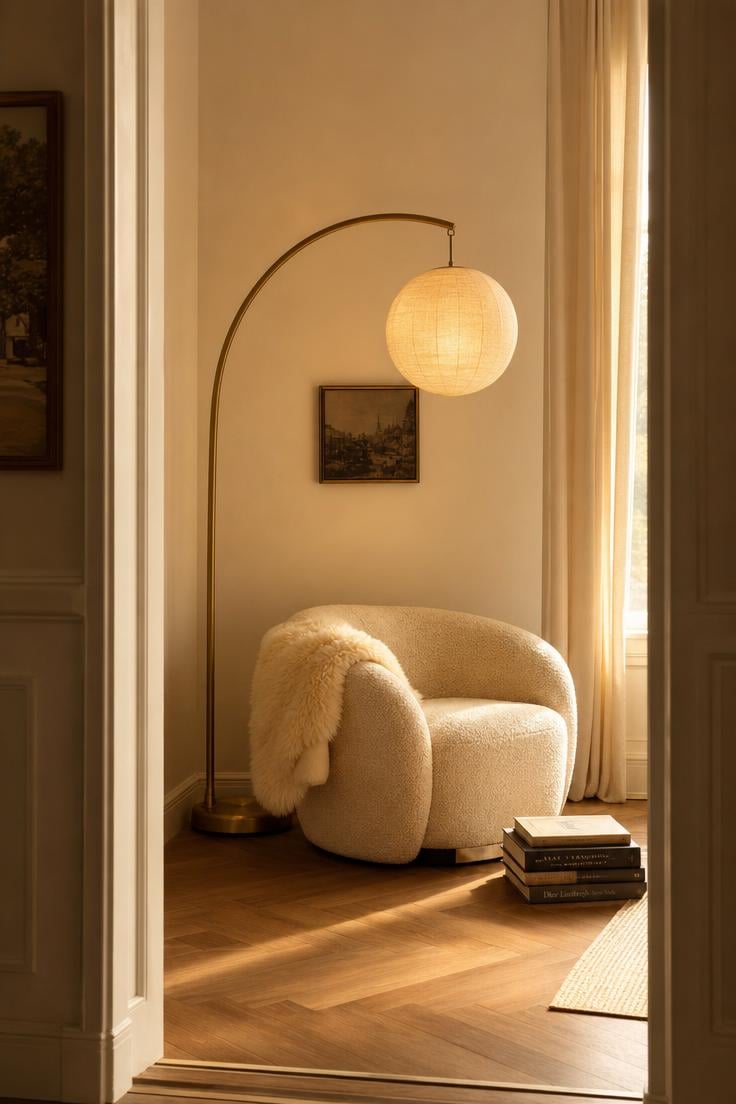
The arc lamp is one of the few floor pieces that fills both the vertical and horizontal space of a corner at the same time.
Its base sits on the floor in the angle while the arm reaches outward and over, claiming airspace that would otherwise sit empty above a chair or side table.
Brushed brass in a satin finish reads as warm without the formality of polished gold, and it ages well with a gentle patina that adds character over the years.
Pair it with a low accent chair rather than a tall one so the lamp’s arc clears the seated person’s head comfortably and the globe shade hangs at the right height for reading light.
The sheepskin throw is not just decoration: it softens the chair’s profile and adds a layer of texture that makes the whole corner feel warmer to the eye.
This setup turns a bare corner into a reading nook without any built-in carpentry, and it can be moved to another room in minutes.
A small stack of books on the floor beside the chair signals that the corner is meant for sitting and staying, not just passing through.
Style Blueprint:
- Brushed brass arc floor lamp with linen globe shade and weighted base
- Low ivory boucle accent chair
- Sheepskin throw draped over one arm
- Small stack of hardcover books on the floor
- Medium-toned white oak herringbone flooring
Design Pro-Tip: A corner accent wall does not need to cover the full surface of both walls. Painting just a 24-inch-wide vertical stripe on each side of the corner in a contrasting color frames any object placed there and gives the eye a clear boundary, turning a plain angle into a deliberate backdrop.
A Slim Pegboard Panel in Matte Olive With Brass Hooks and Small Planters
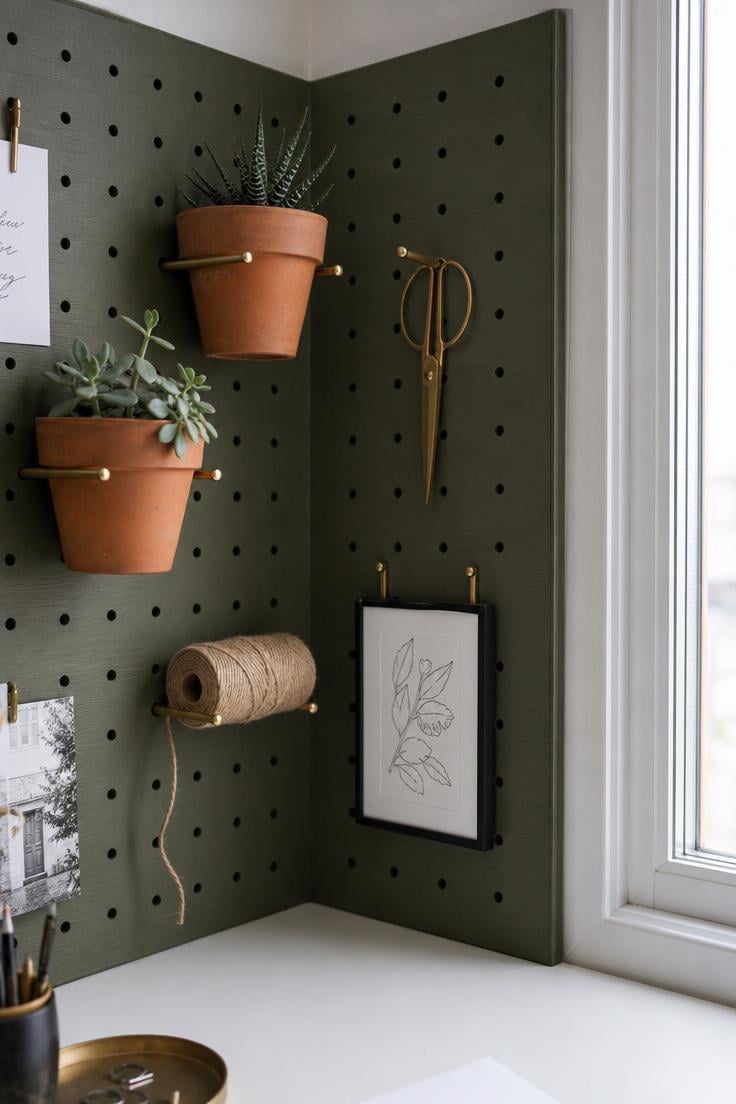
A pegboard turns a corner from empty negative space into a working wall where every object has a specific position.
Cutting the plywood to wrap around the corner angle is the step that makes this feel like a built-in feature rather than a board tacked to a flat wall.
Matte olive paint over the plywood lets the wood grain show through slightly, which adds a layer of texture that solid-color pegboards from hardware stores lack.
Brass peg hooks stand out against the green background and age to a darker tone over time, which only improves the look.
Mix functional items like scissors and twine with decorative ones like small framed prints and succulents so the board reads as both useful and styled.
The beauty of this corner accent wall approach is flexibility: rearrange the hooks and swap the objects seasonally without leaving marks or holes behind.
Style Blueprint:
- Custom-cut plywood pegboard panel, painted in matte olive green
- Brass peg hooks in assorted sizes
- Small terra cotta pots with succulents
- One or two framed line drawings in thin black frames
- Natural twine, scissors, and other small functional objects
A Floor-to-Ceiling Dried Floral Arrangement in a Tall Stoneware Vase
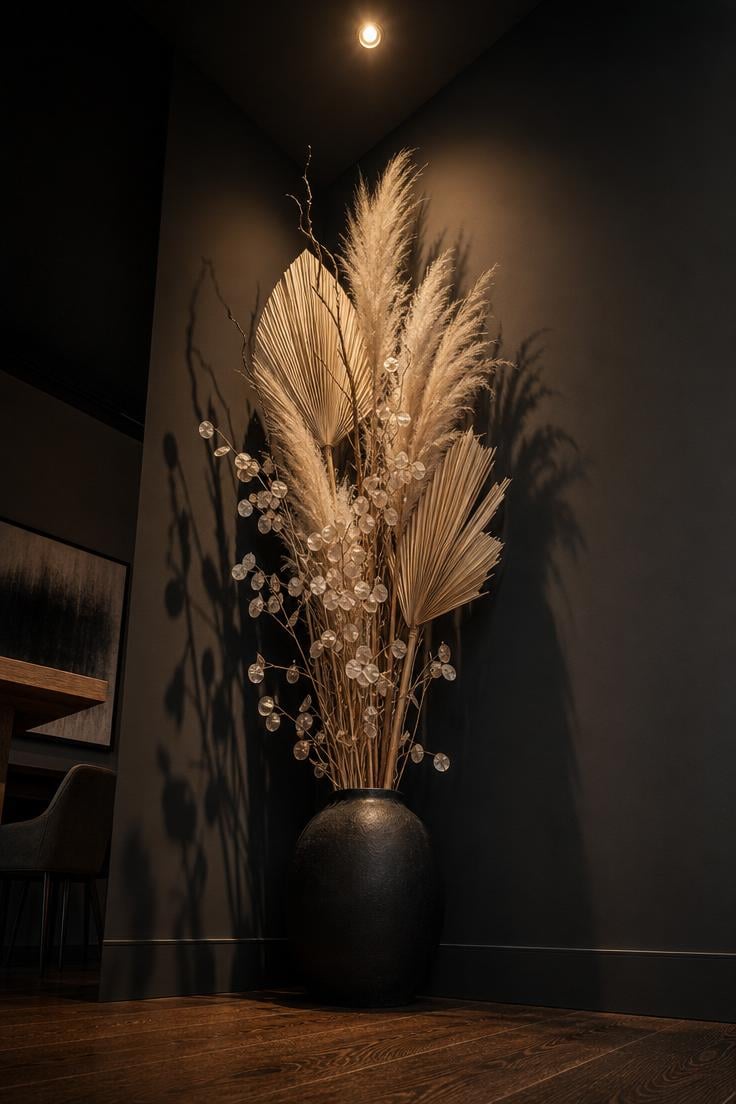
A single tall arrangement placed on the floor fills the entire vertical column of a corner from baseboard to near ceiling, which no shelf or small object can match.
The matte black stoneware vase grounds the arrangement with visual weight at the base, preventing the airy dried stems above from looking like they are floating without purpose.
Pampas plumes, lunaria seed pods, and bleached palm fans work well together because they share a neutral palette of cream, silver, and bone while offering three distinct textures: fluffy, flat and translucent, and broad and ribbed.
A single ceiling-mounted spotlight is what lifts this from a simple floor vase to a sculptural installation, casting long stem shadows across both walls of the corner in a way that doubles the visual impact.
Rotate the arrangement seasonally: dried florals in cooler months, and fresh flowering branches like cherry blossom or forsythia in spring, so the corner always has something new to look at.
Position the vase two to three inches out from each wall rather than pressed into the seam, giving the stems room to spread naturally in both directions.
This is one of the simplest empty corner ideas to set up, with no mounting, no hardware, and no tools beyond the vase and the stems themselves.
The dark wall behind the arrangement is optional but highly effective: charcoal or deep navy creates a backdrop that makes the pale dried stems glow under the spotlight.
Style Blueprint:
- Tall matte black stoneware vase, 24 to 30 inches tall
- Dried pampas plumes, lunaria seed pods, and bleached palm fans
- Single ceiling-mounted warm spotlight directed downward
- Deep charcoal or navy matte wall paint
- Vase positioned 2 to 3 inches out from each wall for natural stem spread
Conclusion
Every one of these 11 corner wall decor ideas starts with the same premise: the angle where two walls meet is an opportunity, not a problem.
Whether you lean toward the warmth of a reclaimed teak ladder shelf or the geometric precision of a hexagonal mirror cluster, the key is choosing one approach that fits the scale of your corner and committing to it fully.
Start with the corner that bothers you most, the one you walk past every day and wish looked different, and try a single idea from this list before moving on to the next room.