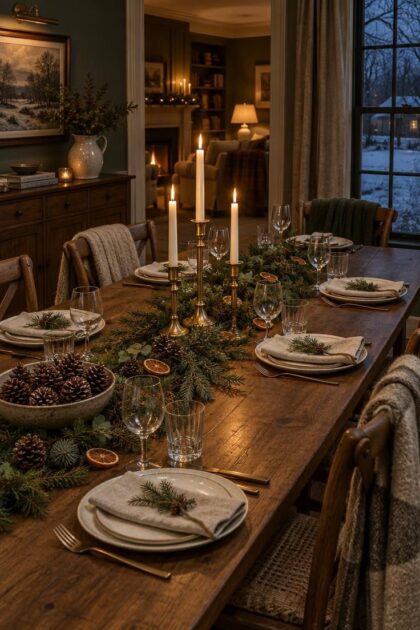
This post may contain affiliate links. If you make a purchase through these links, we may earn a commission at no additional cost to you.
A winter table can feel warm without leaning on a single holiday motif.
Layering natural materials, soft candlelight, and a restrained palette keeps the setting inviting for everyday meals and holiday gatherings alike.
The ideas below focus on one visual anchor per table, whether it is a runner, a cluster of candles, or an elevated centerpiece, so each arrangement is easy to borrow or adapt.
Practical notes on upkeep, reuse, and surface care appear where they help the look last through the season.
The result is a table that works from the first cold evening through late winter.
Evergreen Runner with Brass Candlestick Trio
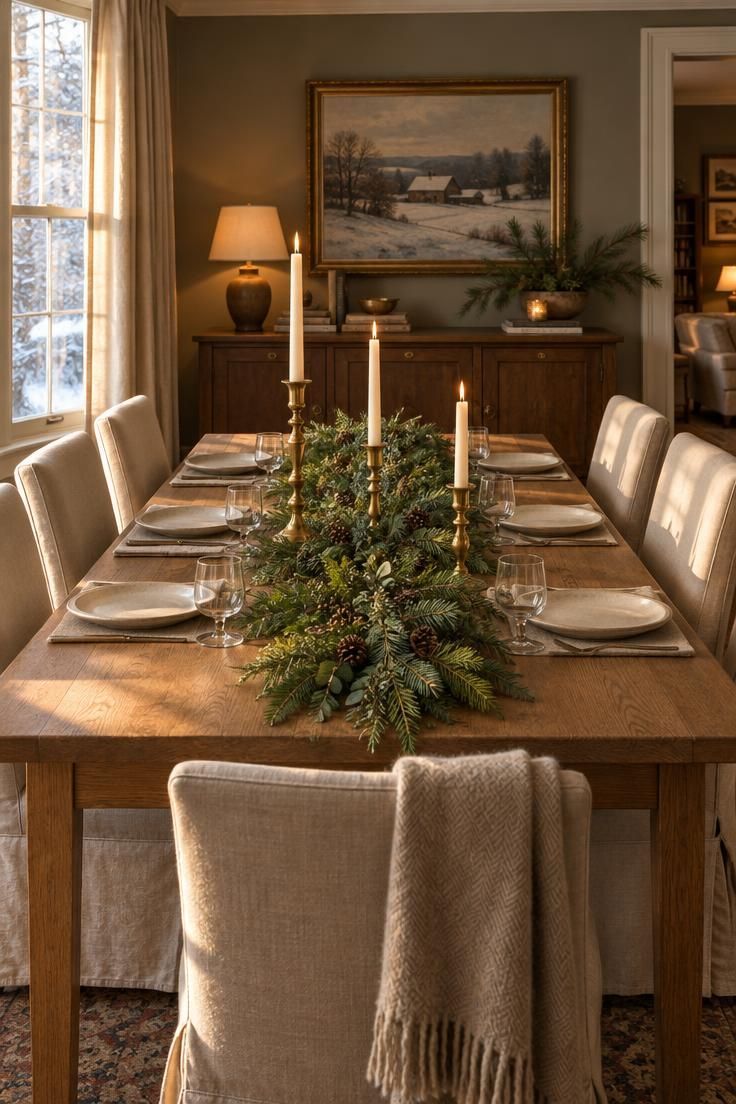
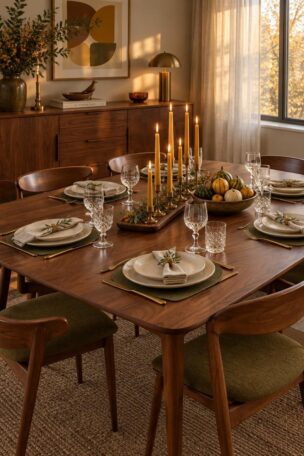
A long band of mixed evergreen laid down the center of a bare wood table gives the eye one clear line to follow, and the wood left visible at the edges keeps the setting from feeling crowded.
Three brass candlesticks at different heights turn that line into a small focal moment without adding a wide mass that would block the view across the table.
Fresh fir and cedar carry a natural look but dry out and drop needles, so they need replacing every week or two.
Faux evergreen holds its shape for years, needs an occasional dusting, and can be packed away between seasons.
Preserved eucalyptus sits between the two, keeping its color without water.
For readers weighing winter tablescape ideas, this arrangement is the most adaptable starting point because it depends on one runner and a handful of candlesticks rather than a themed set of objects.
The formula also scales: a short table takes a shorter runner and two candlesticks, while a long table can carry five.
Candle height matters more than candle count here.
Keeping the tallest near one end and the shortest near the other preserves a clear sightline across the table, which helps conversation during a long meal.
Trimming wicks before each use keeps the flame steady and the brass easy to wipe clean.
Style Blueprint:
- A neutral linen runner in oat or natural, slightly narrower than the table so wood shows at both edges
- Mixed fresh or faux fir, cedar, and pine sprigs, layered loosely rather than arranged in a tight row
- Three brass candlesticks in graduated heights with cream or ivory taper candles
- Cream stoneware plates and simple clear glassware to keep the palette quiet
Birch Logs and Cream Ceramic Bowls
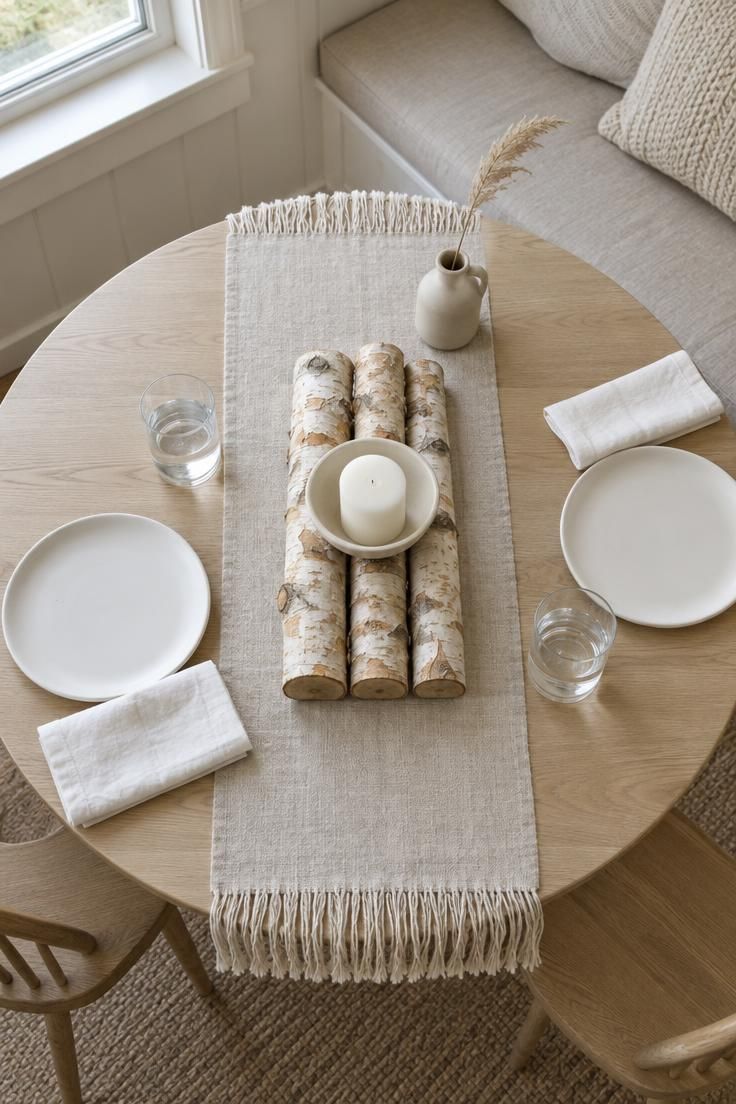
Birch brings a pale, papery texture that reads as midwinter without any holiday reference, and laying the logs parallel creates a low rectangular base on a round table.
A cream bowl and a short white pillar sit on top as a single cluster, which keeps the composition tidy and easy to lift away when the table is needed for a meal.
Keeping the whole arrangement low means diners can see each other across the table, a practical advantage in a small dining nook where the table already sits close to a wall or window.
Pale wood and white ceramic also brighten a compact room that may get less daylight in winter.
Natural birch bark can dry and shed thin flakes over time, so a light dusting with a soft cloth now and then keeps the logs looking clean.
Sealing the cut ends is a common way to slow cracking, though many people simply embrace the weathered look as part of the charm.
Two or three logs are usually enough for a small table.
More than that and the base starts to spread toward the place settings, which undercuts the neatness that makes this idea work.
The linen runner should stop short of the plates so the logs remain the clear center of attention.
Style Blueprint:
- Two or three short birch logs with visible peeling bark, laid parallel
- A small cream or off-white ceramic bowl as the central vessel
- One short white pillar candle, kept low so sightlines stay open
- A pale oat linen runner with fringed ends
- White linen napkins and simple white plates to carry the neutral palette
Cranberry and Copper Glass Cluster
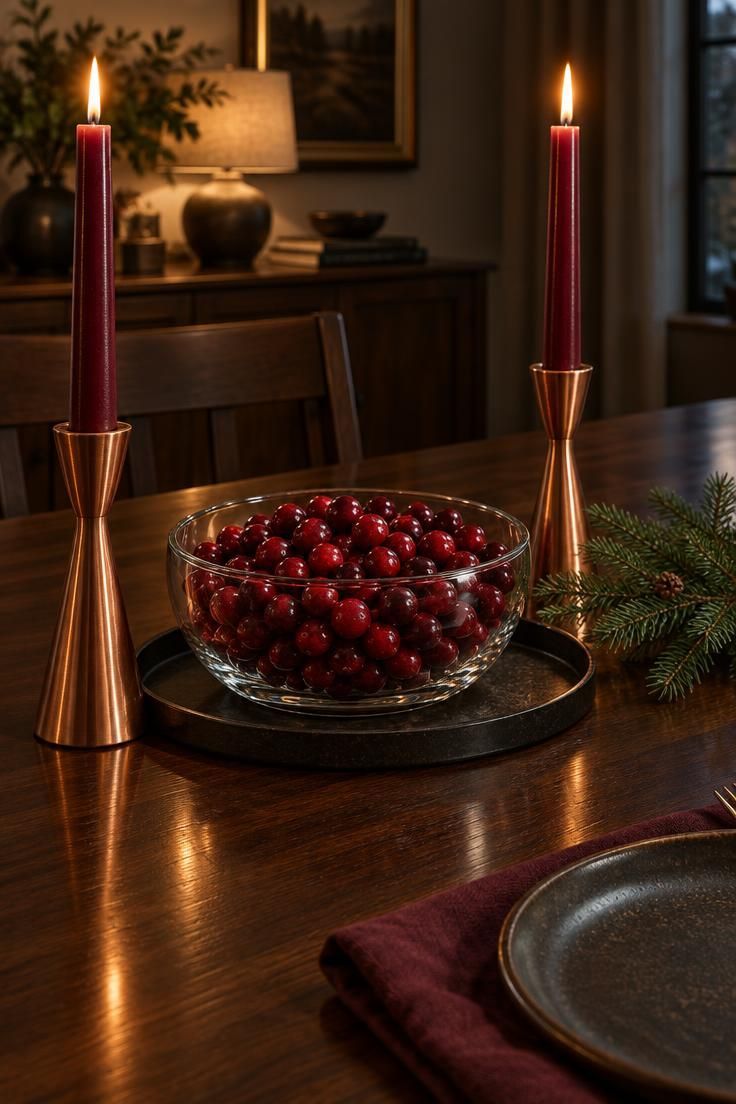
Deep red berries against dark wood and warm copper make this the richest arrangement in the group, and it leans toward evening meals when candlelight can play off the metal.
Keeping the bowl low and the candlesticks narrow means the color does the work rather than the size of the arrangement.
The palette narrows to red, copper, and dark brown, so place settings stay quiet: a dark plate, a burgundy napkin, plain glassware.
Adding green or white here would dilute the contrast that gives the cluster its character.
Cranberries sit in water in many arrangements, and a small tray beneath the bowl protects the wood from rings and stray juice.
Fresh berries hold for roughly a week before they soften, so this is a look to set out shortly before a gathering rather than weeks ahead.
For anyone collecting brass candlesticks and warm metal pieces, copper works as a close cousin and can be mixed with brass if the finishes stay in the same warm family.
Two candlesticks are enough here; a larger cluster would compete with the bowl rather than frame it.
Style Blueprint:
- A low clear glass bowl filled with fresh cranberries
- Two copper-toned candlesticks with deep red taper candles
- A small dark tray beneath the bowl to protect the table surface
- A dark wood table with burgundy linen and dark ceramic plates
Dried Citrus and Preserved Eucalyptus Runner
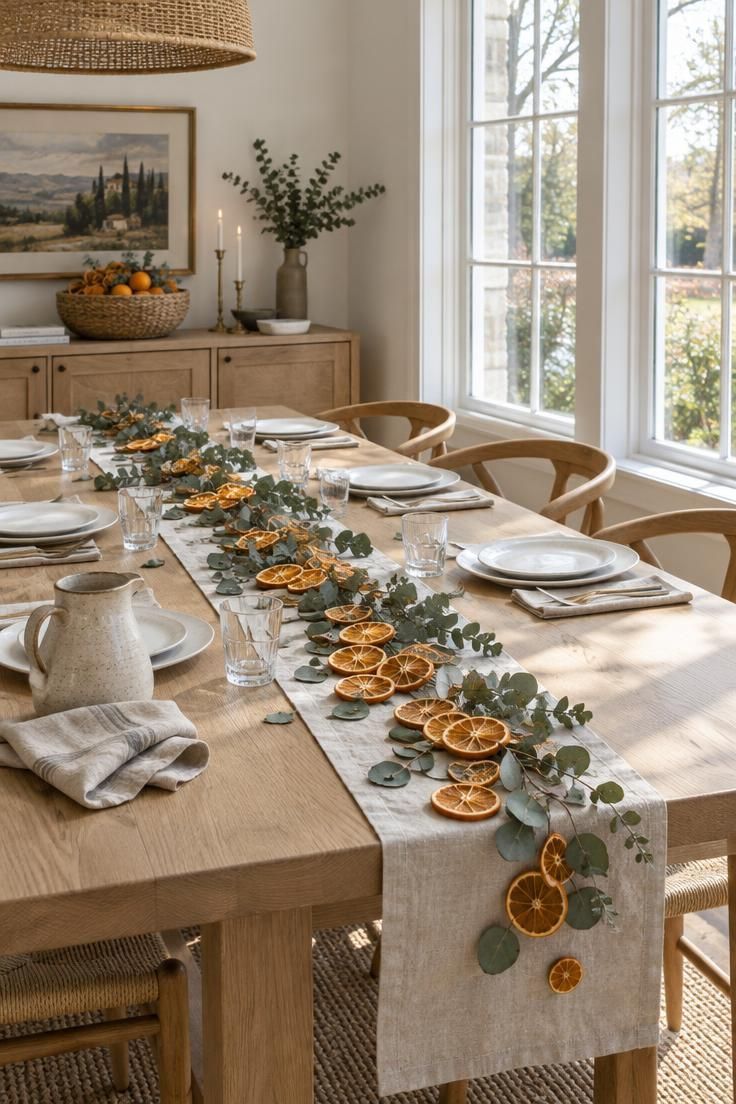
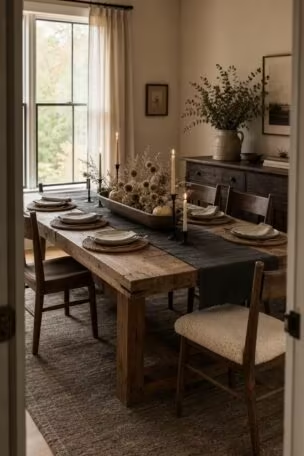
Dried orange slices bring a warm amber note that sits comfortably against pale wood, and preserved eucalyptus adds a muted green that keeps the composition from turning monotone.
Scattering rather than stacking the pieces gives the runner an easy, informal rhythm that suits a long table.
Nothing here needs water or refrigeration, which makes this the least demanding arrangement to maintain across several weeks.
The tradeoff is dust: dried botanicals and preserved stems collect it, and a soft brush or a quick pass with a hair dryer on cool works well before guests arrive.
White plates and clear glasses let the citrus hold the accent role.
Introducing a second strong color would split attention, so a narrow palette of amber, sage, and white keeps the table looking deliberate rather than busy.
Pieces can overlap the runner edges slightly for a relaxed look, but keeping most of the scatter within the runner keeps place settings clear.
The materials store flat in a box and come out again the following winter.
Style Blueprint:
- A wide natural linen runner in a warm neutral tone
- Dried orange slices scattered in loose overlapping groups
- Preserved eucalyptus sprigs in muted sage green
- White ceramic plates and clear glassware to hold the palette back
Candle Tray with Mixed Pillar Heights
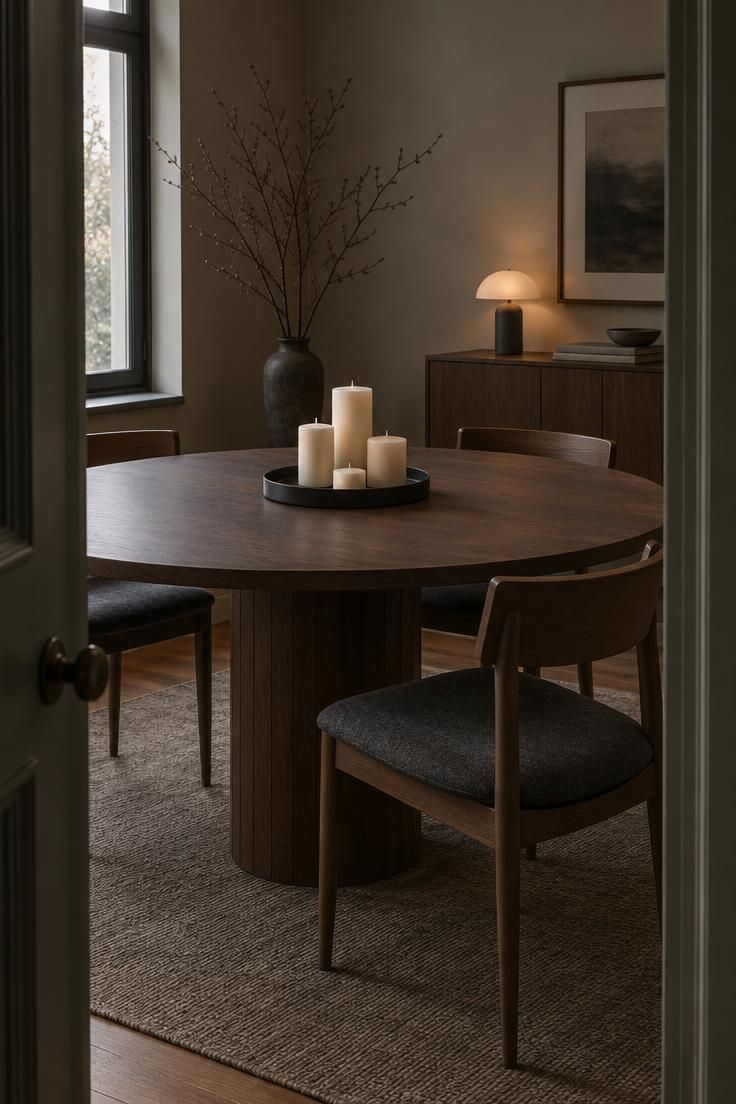
A single tray of pillar candles at mixed heights is the fastest arrangement in this group to set out, and it suits small tables where a long runner would overwhelm the surface.
Varying the diameters as well as the heights keeps the cluster from looking like a matched set.
Leaving the rest of the table bare is part of the composition.
Negative space around the tray makes the candles read as a deliberate centerpiece rather than the start of an unfinished arrangement.
Unscented candles are the safer choice when the table sits close to food, since scent can compete with the meal.
A small cloth kept nearby handles wax drips, and trimming wicks keeps the flames even.
Battery-operated candles avoid drips and smoke and suit a table used often, though they look less convincing up close.
Among simple winter centerpiece ideas, this one travels well: the same tray works on a buffet, a kitchen island, or a coffee table.
A tray with a slight lip contains the candles and makes the whole arrangement easy to move in one pass.
Style Blueprint:
- A low black metal or dark wood tray with a slight lip
- Four cream pillar candles in varied heights and diameters
- Unscented wax for tables set near food
- A small cloth kept nearby for drips
Footed Bowl of Pinecones and Ribbon
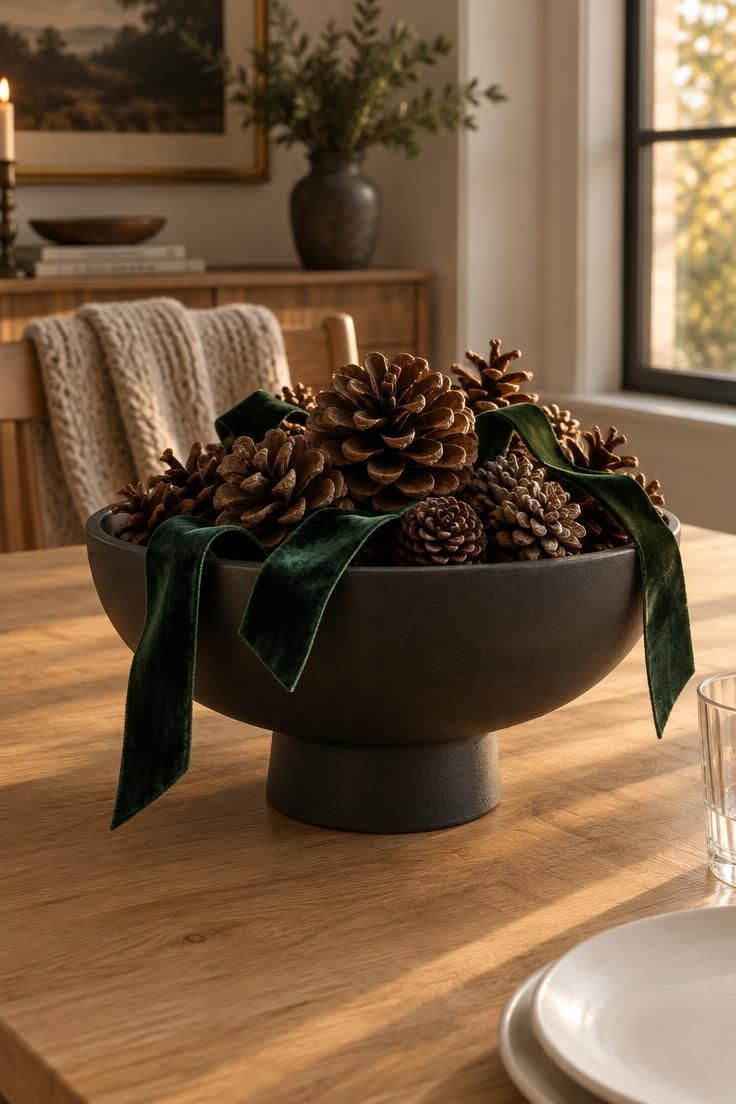
A footed bowl lifts the arrangement off the table surface, which gives the centerpiece a little presence without spreading it wide.
Filling it with pinecones keeps the shape rounded and full, and a few velvet ribbon tails add a soft contrast to the rough scales.
Containment is the whole idea.
Because everything sits inside the bowl, the arrangement reads as one sculptural object and resets in seconds when the table is needed for a meal.
The same bowl works on a sideboard or a console between gatherings.
Natural pinecones can gather dust and sometimes sap, so a light dusting and a quick check before setting them out keeps them tidy.
In a home with small children or pets, placing the bowl toward the center of the table keeps the small pieces out of easy reach from the edge.
Style Blueprint:
- A matte black or dark bronze footed bowl
- A mix of natural pinecones sized to fill the bowl to its rim
- Two or three short deep green velvet ribbon tails
Tartan Runner with White Ceramic Setting
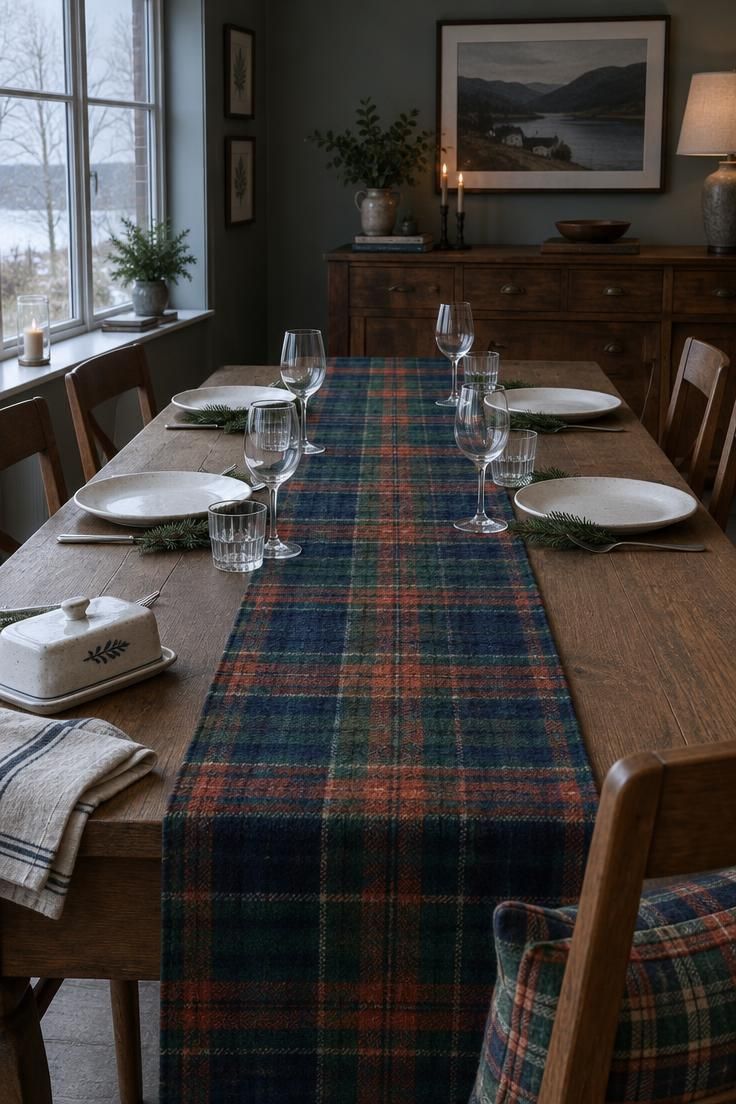
Tartan does most of the work here, so the rest of the table stays plain: white stoneware, clear glass, and one evergreen sprig at each place.
Letting the pattern lead is what keeps this from looking like a holiday display rather than a winter table.
A wool-blend or brushed cotton runner holds its shape and drapes well, and it carries the visual weight that a centerpiece would otherwise take.
That makes it a good choice for a casual supper or a winter brunch where platters need to move around the table.
Care depends on the fiber.
Wool blends usually want a cool hand wash or a trip to the cleaner, while brushed cotton can often go in the machine on a gentle cycle.
Reading the care label before the first wash avoids surprises.
This is a useful approach to an evergreen table runner setup for anyone who wants pattern rather than foliage at the center.
The look also carries past December, since tartan reads as winter rather than as a single holiday, and it can stay out through February without feeling stale.
Style Blueprint:
- A tartan runner in deep green, navy, and rust, in wool blend or brushed cotton
- White stoneware plates and clear glassware
- One small evergreen sprig at each place setting
- No large centerpiece, so the pattern stays the focus
Tall Magnolia Branch in a Heavy Vase
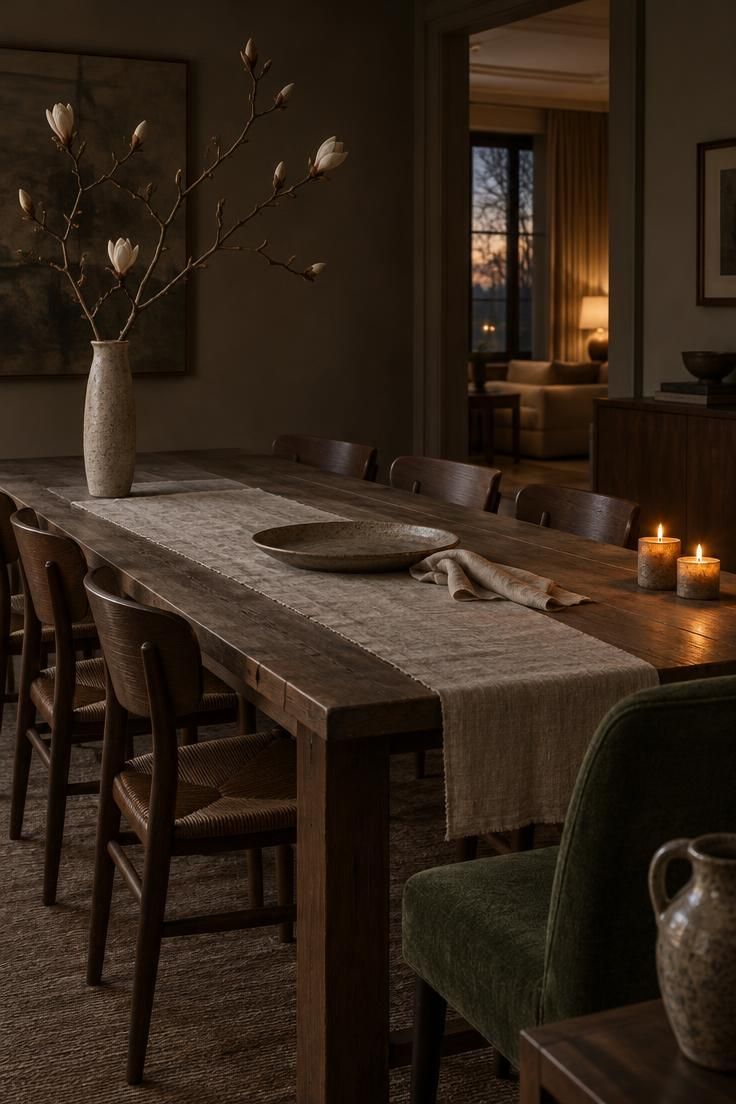
Putting the height at one end and the light at the other leaves the middle of the table open, which makes the asymmetry feel intentional rather than unfinished.
Bare magnolia branches bring a sculptural line that reads as winter, and their curves are more interesting than a dense mass of foliage.
This arrangement suits a long table where the vertical element sits away from the seated diners.
On a shorter table, the same idea works with one shorter branch and a single candle opposite, keeping the center free for serving dishes.
Branches with a few curves hold up better than straight stems, and a heavy vase keeps the tall arrangement steady when the table is brushed in passing.
A narrow vase also takes up less surface than a wide one, which matters when platters need room.
Style Blueprint:
- A tall narrow stoneware or ceramic vase in a muted tone
- Three or four bare magnolia branches with visible curves
- Two or three small candles clustered at the opposite end
- A low ceramic platter to keep the center of the table open
Entry Console Tray with Winter Objects
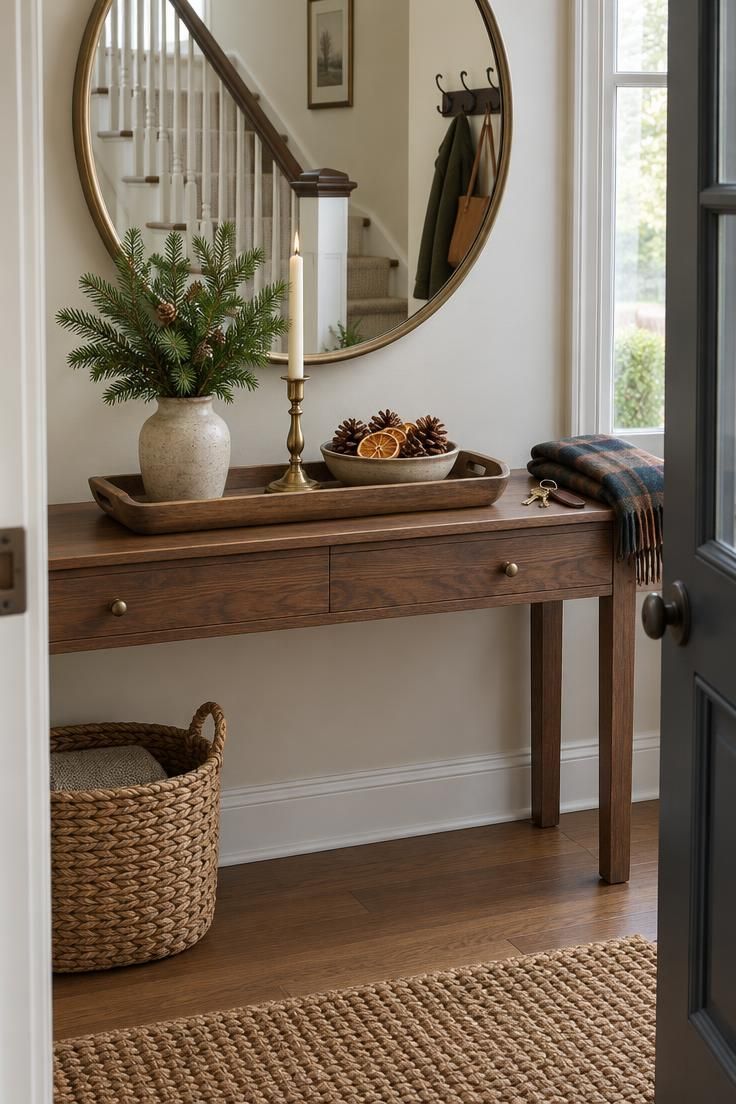
An entry console often ends up as a landing spot for keys and mail, so a tray gives the winter decor a defined zone while leaving space at each end for daily use.
Grouping the vase, candlestick, and bowl inside the tray keeps the objects from looking scattered.
A mirror behind the tray adds depth and bounces daylight into a part of the home that can feel dim in winter.
Framed art works in the same role where a mirror does not suit the wall.
Entry areas collect lint and dust quickly, so a weekly wipe of the tray and a quick dusting of the evergreen keeps the arrangement looking cared for.
This is also a helpful option for a household without a dedicated dining table, since the same mix of objects can scale up or down.
For entry console decor that holds up through the season, evergreen, brass, and dried citrus repeat the materials used on the dining table, which ties the two spaces together.
A shallow bowl of pinecones and dried orange slices also swaps out easily once the holidays pass.
Style Blueprint:
- A long low wooden tray with a raised edge
- A small stoneware vase with evergreen sprigs
- A single brass candlestick with a cream taper
- A shallow bowl of pinecones and dried orange slices
- A round mirror or framed winter print behind the tray
Post-Holiday White and Glass Refresh
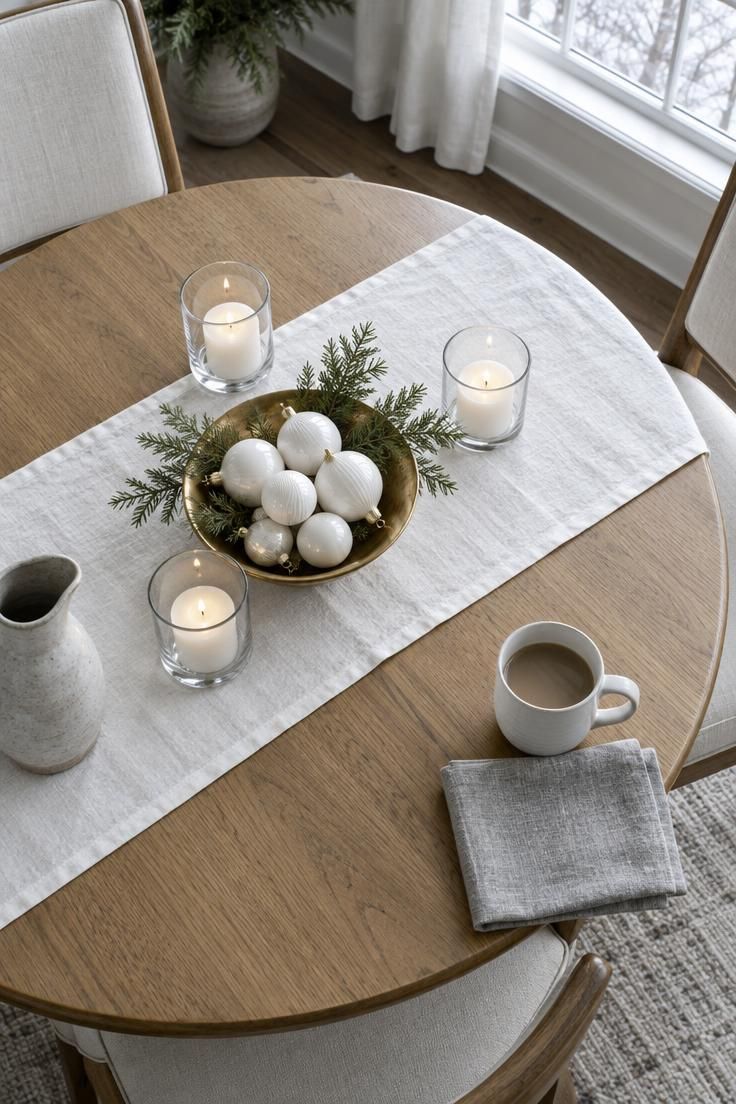
Once the red, green, and gift motifs come down, a palette of white, clear glass, and brushed brass keeps the table looking wintry rather than bare.
Clear votives and a brass bowl reflect daylight, which helps a January table feel bright even on gray afternoons.
This refresh is a practical way to extend winter table decor through January and February without buying anything new.
Most of the pieces come from what was already on the table in December, rearranged and edited down.
Keeping the arrangement low and airy suits the quieter mood after the holidays.
A white runner, three votives, and one small bowl are enough to anchor the surface, and the simplicity makes the table easy to reset for everyday meals.
Greenery is the element most likely to need swapping.
Fresh sprigs wilt within a week or two, and faux or preserved stems can take their place until the season turns.
Style Blueprint:
- A simple white linen runner
- Three clear glass votives with white candles
- A small brass bowl filled with white ornaments
- A few fresh or faux evergreen sprigs, swapped as needed
Conclusion
Winter table decor does not need to be complicated or tied to a single holiday.
An evergreen runner, a tray of candles, or a single sculptural branch can carry a table through the season with little effort.
The most useful approach is to choose one focal point, keep the palette limited, and adjust the height so conversation stays easy across the table.
These arrangements mix neutral and rich tones, fresh and faux materials, and dining and entry surfaces, so there is a starting point for a large table, a small nook, or a console by the door.
Small upkeep habits, such as dusting botanicals and wiping trays, keep each look intentional for weeks.