This post may contain affiliate links. If you make a purchase through these links, we may earn a commission at no additional cost to you.
Winter decor ideas for the home often trap rooms in a holiday-only look that disappears on January first.
This guide shifts the focus to layering texture, natural materials, and warm light that can stay through February and beyond.
The aim is to build rooms around quiet, tactile details rather than a single seasonal motif.
Each idea starts with a clear visual direction and the practical choices that make it hold up through the whole cold stretch.
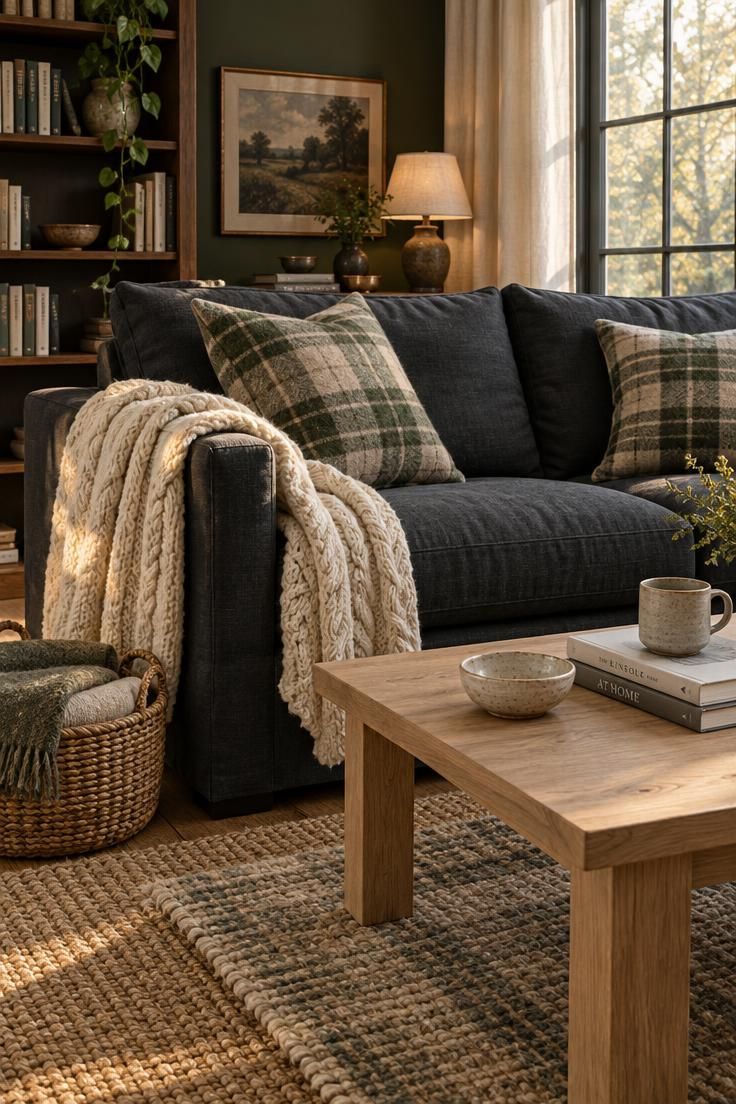
Cream Cable-Knit Throw and Plaid Cushions on a Charcoal Sofa
Winter seating benefits from a deliberate contrast of weights and weaves.
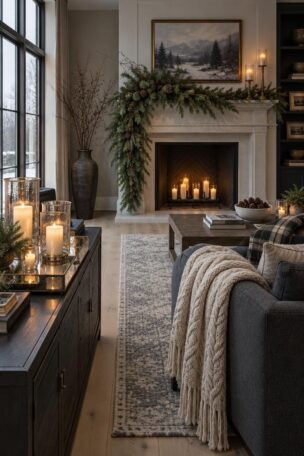
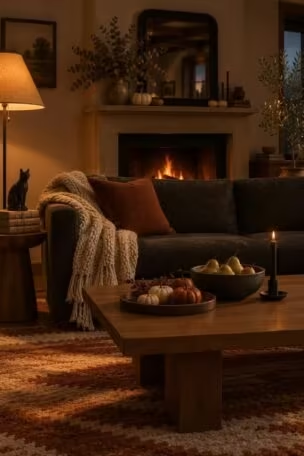
A cream cable-knit throw draped over one arm of a charcoal sofa adds bulk and a visible braid, while two oversize plaid cushions in oat and forest green bring a flatter, brushed surface against the solid linen of the sofa itself.
Grouped this way, the layered knit throw and cushions keep a dark sofa from reading as one flat block of color.
Placing the throw over the arm rather than folding it square signals everyday use, which suits a room meant to be lived in through the cold months.
Plaid brings the only pattern in the arrangement, so keep it to two cushions and let the knit and linen stay solid.
Mixing chunky knit, brushed wool, and smooth linen gives the eye three distinct surfaces within one tight color family.
Layered cushions do mean more covers to store and wash across the seasons.
Choose covers with removable zip closures so they can be cleaned without replacing the inserts, and keep a labeled bin for out-of-season covers if closet space is tight.
A small basket or tray on the coffee table can hold a few extra throws when the room warms up in the afternoon.
The palette stays quiet enough to carry into late winter without any holiday motif.
If the sofa is already light, reverse the logic and drape a deeper charcoal or forest knit over a cream sofa instead; the same three-texture structure works in either direction.
Style Blueprint:
- Cream cable-knit throw with a visible braid, draped rather than folded
- Two plaid cushions in oat and forest green with removable covers
- Pale wood coffee table with one handmade ceramic bowl
- Low woven basket for spare throws
Bare-Branch Floor Vase Arrangement Beside a Fireplace
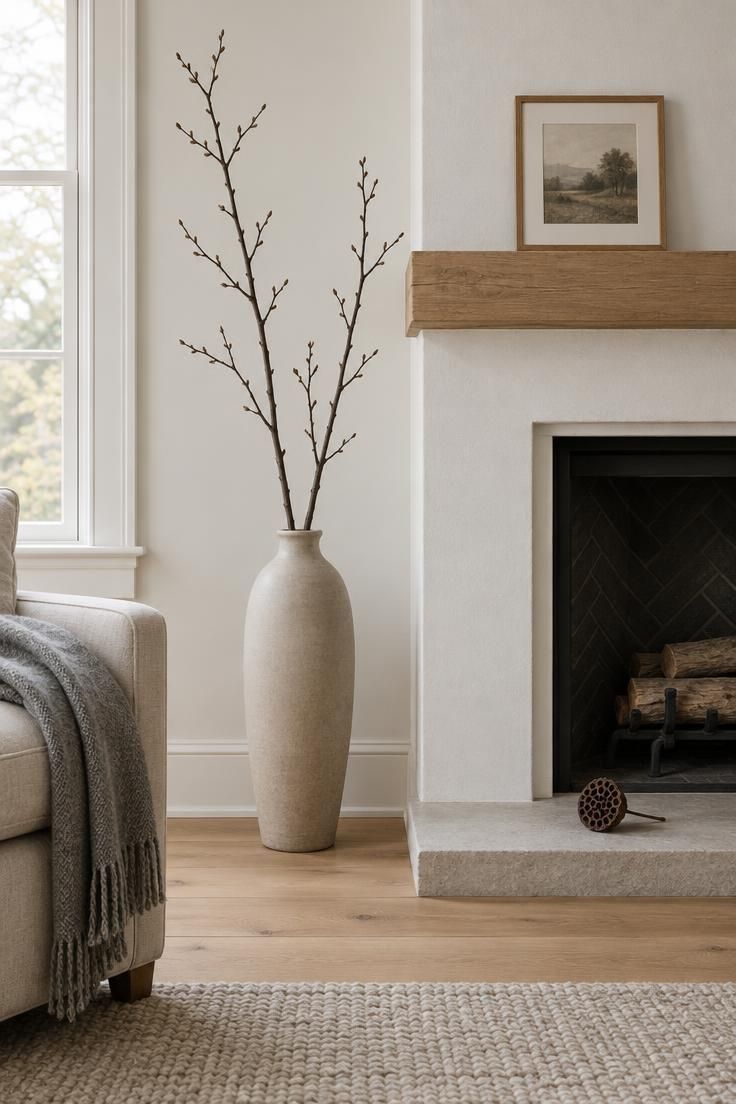
Bare branches give a room height and a lean, organic line without any red or green.
A bare-branch floor vase arrangement works because the eye travels up the stems instead of across another surface, which matters in a room that already has plenty of tabletop objects.
Three to five stems of varying heights read as a considered group, while a single stem can look accidental.
Choose a vase with a narrow neck so the stems stay near vertical without fussing.
Matte ceramic grounds the arrangement against pale walls, and clear glass lets the stems show all the way down.
Set the vase beside a fireplace or a bright window where the branching silhouette has a plain backdrop behind it.
Branches may shed small twigs as they dry, so a low felt pad under the vase catches debris and protects the floor.
Swap the stems when the bark fades or the shape collapses.
In a compact room this idea earns its place because it uses vertical space rather than tabletop surface, and a slimmer vase footprint leaves walkways clear.
The look carries from December straight through the end of the season with no styling change.
Pair it with a single framed print on the mantel and resist filling the shelf; the branches need empty wall around them to register as sculpture.
Style Blueprint:
- Tall matte ceramic vase with a narrow neck
- Three to five bare branch stems of uneven heights
- Low felt pad beneath the vase
- A plain wall or simple mantel as backdrop
Taper Candle Cluster on a Dining Table with Bronze Holders
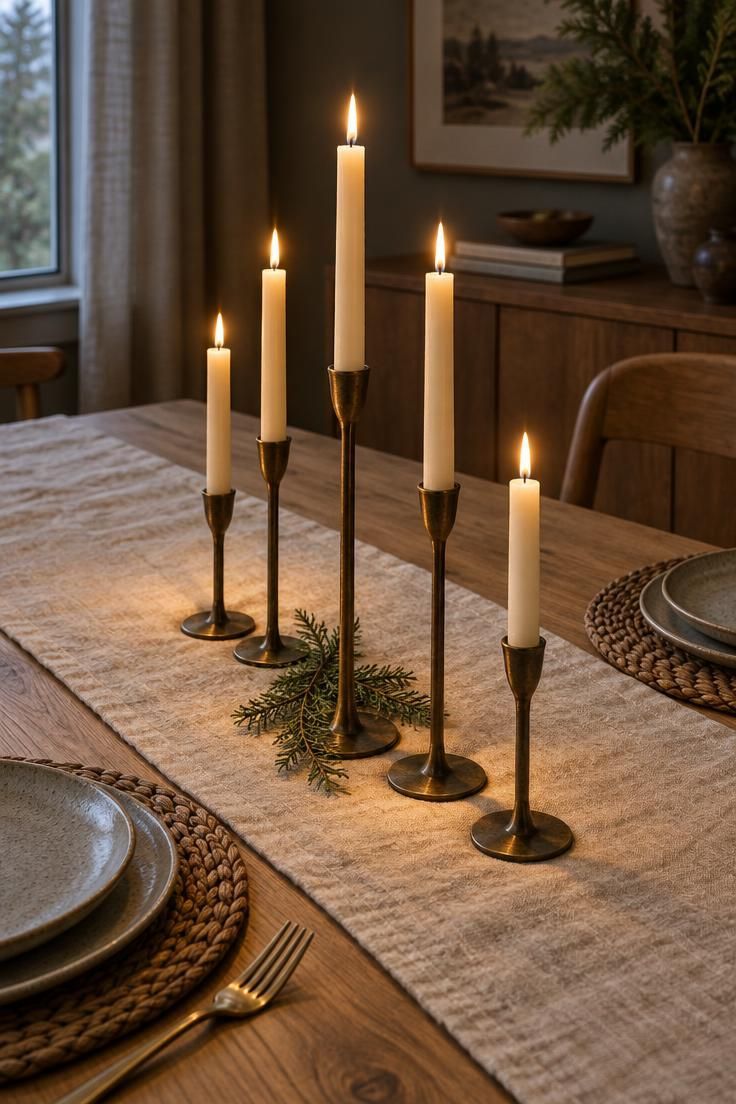
A cluster of tapers turns a dining table into the warmest surface in the house on a dark evening.
Group five candles in slim bronze or matte black holders along a simple runner or wide woven tray, and vary the heights slightly so the flames form a gathered, uneven line rather than a measured row.
Matching finishes hold the group together while the height differences keep it from looking like a store display.
This is one of the least expensive ways to add winter light exactly where people sit.
Place the group where it will not compete with a centerpiece; a single evergreen sprig laid at the base adds texture without adding another vessel.
Keep the rest of the table quiet so the candle line stays the focal point.
Tapers are open flames, so keep them away from loose fabric, paper, and draping textiles, and never leave them burning unattended.
Trim the wicks between uses so the flames stay even, and set the holders on a tray if wax drips are a concern on a porous wood finish.
For a longer table, extend the line with two more holders rather than widening the gaps.
The idea scales down cleanly to a small apartment table with three candles, which still reads as a deliberate cluster.
Style Blueprint:
- Five taper candles in matching slim bronze holders
- Cream linen runner or a wide woven tray as the base
- One cedar or fir sprig at the base
- Wick trimmer kept nearby for even flames
Weighted Tabletop Spruce Bundle in a Low Ceramic Bowl
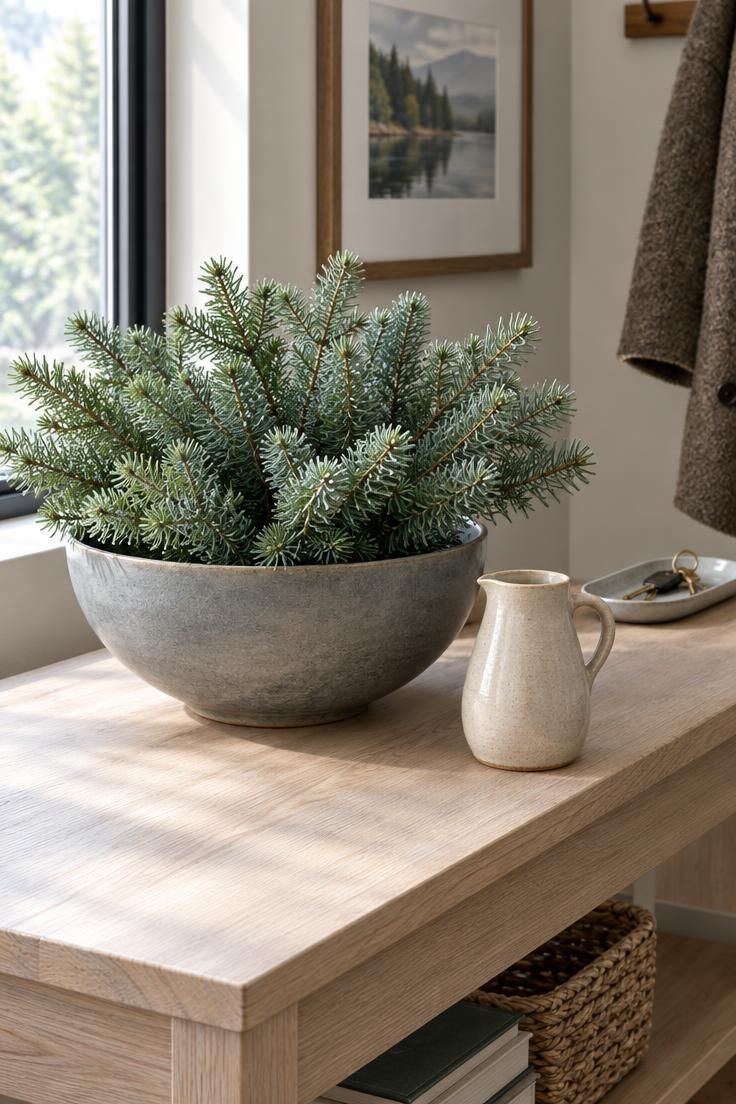
A low bowl packed with clipped evergreens reads as a dense block of winter green rather than a holiday arrangement.
Fill a wide, shallow ceramic bowl with spruce, cedar, or fir sprigs arranged to hold their own shape without a base, choosing varied needle lengths so the surface looks full but not busy.
The bowl sits on a console or side table, and the effect comes from density, not from a bow or a shape.
Keep the bowl shallow so the arrangement stays low and does not hide objects behind it.
A matte glaze in gray or putty lets the green do the talking, while a glossy finish adds a second reflective surface that can compete with everything around it.
One small pitcher or dish beside the bowl completes the group.
Fresh clippings dry out and drop needles, so plan to replace them every few weeks or switch to convincing faux stems.
Spruce varieties often hold longer than softer cedar.
Set the bowl on a cork or felt mat if the finish marks easily, and empty and wipe the bowl between refreshes.
This is the easiest idea here to scale down; a cereal-bowl-sized version works on a bedside table.
For a larger console, use two bowls of different widths instead of one very wide bowl, which keeps the arrangement from looking like a hedge.
Style Blueprint:
- Wide, shallow ceramic bowl with a matte glaze
- Clipped spruce, cedar, or fir sprigs in varied lengths
- Cork or felt mat under the bowl
- One small stoneware pitcher alongside
Matte White Vase with a Single Forced-Bulb Stem on a Side Table
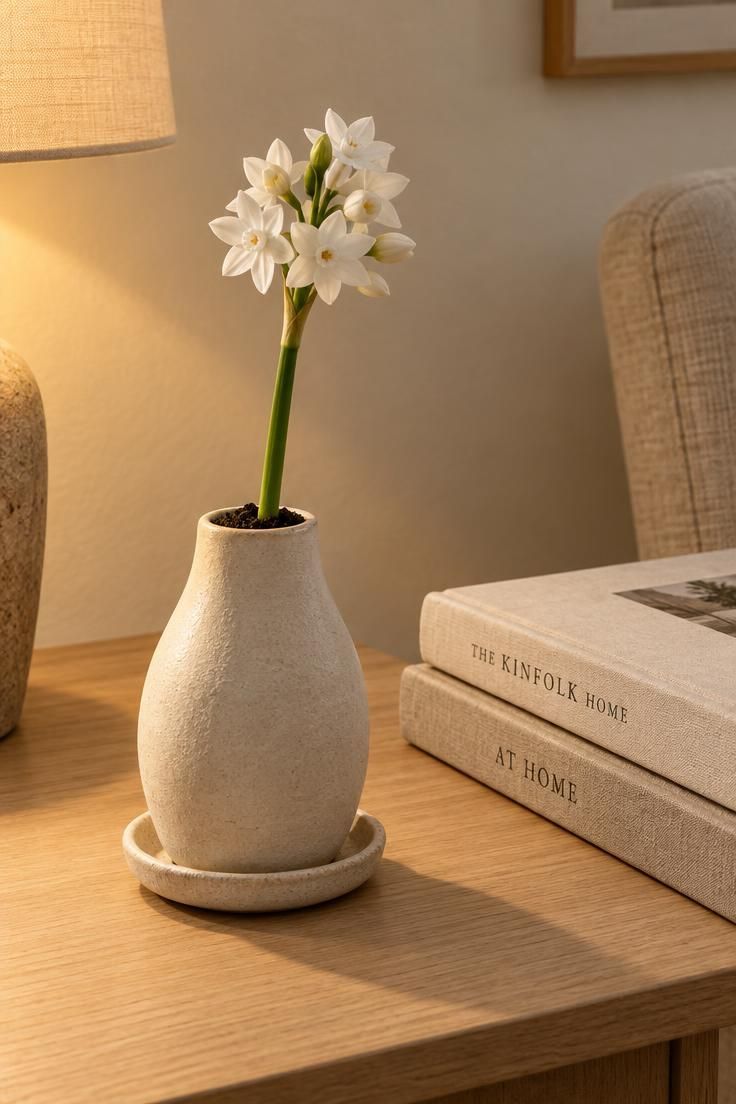
A single forced bulb makes a small, living accent that suits the quieter side of winter.
Set one paperwhite or amaryllis stem in a matte white stoneware bud vase on a side table or windowsill, and let the pale stem against dark soil do the work.
The bud vase keeps the proportions modest, which suits a bedside table or the narrow top of a console.
Because the bloom lasts only a few weeks, plan the follow-up before it fades.
A dried stem, a bare twig, or a short branch in the same vase continues the vignette without a gap.
If you keep dried stems on hand, a dried eucalyptus wreath stored from earlier in the season can supply loose sprigs for the swap.
Use a small saucer under the vase to catch water and protect the wood surface.
Keep the rest of the tabletop spare so the stem stays the focus; two books and a lamp are enough company.
For a longer-lasting option, choose a bulb that has already started to root so the bloom arrives on its own schedule rather than yours.
Rotate the vase a quarter turn every few days so the stem grows toward the light evenly rather than leaning hard into the window.
This idea suits renters and compact rooms because it adds almost no footprint.
Style Blueprint:
- Matte white stoneware bud vase
- Single paperwhite or amaryllis stem in dark soil
- Small saucer to protect the surface
- Two books or a lamp as quiet companions
Winter Bed Dressing with a Quilted Coverlet and Flannel Throw
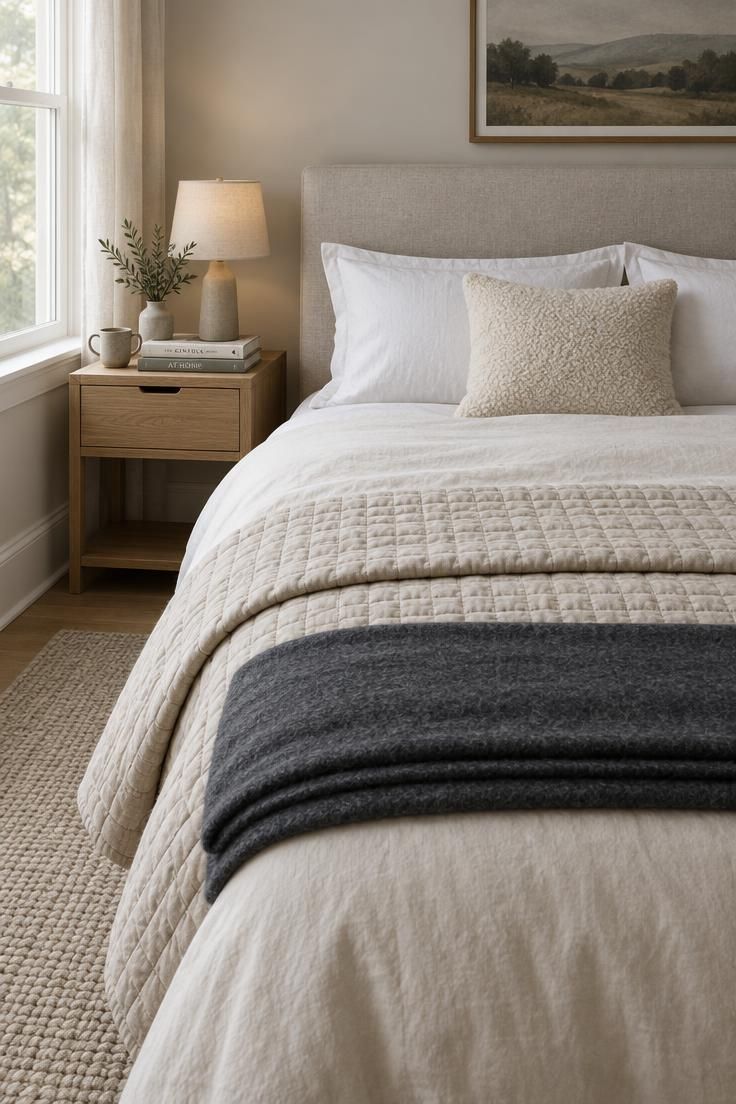
The bed carries more visual weight than any other surface in a bedroom, so a seasonal switch there changes the whole room.
Winter bed dressing with a quilt means layering a quilted coverlet or thin matelassé over the duvet, then folding a brushed flannel or wool throw at the foot.
One extra bouclé cushion ties the textures together at the head of the bed.
Choose a coverlet in a pale neutral so it works with any sheet set already in the linen closet, and let the flannel throw carry the deeper tone.
Folding the coverlet back rather than spreading it flat shows the duvet beneath and gives the layers visible edges, which is what makes the dressing read as intentional in a photograph as much as in the room.
Extra layers mean more bedding to launder and store when warmer months return, so keep a single bin for the winter set.
A quilted cotton coverlet washes more easily than wool, which makes it the practical first layer for a household with pets or children.
If the bed already feels full, skip the bouclé cushion and let the folded throw be the only accent.
The formula still holds with two layers instead of three, and a smaller bed benefits from fewer competing textures at pillow height.
Style Blueprint:
- Quilted coverlet in a pale neutral, folded back
- Brushed flannel or wool throw at the foot
- One bouclé cushion as the accent
- Storage bin for the winter bedding set
Brass and Glass Lantern Grouping on an Entryway Bench
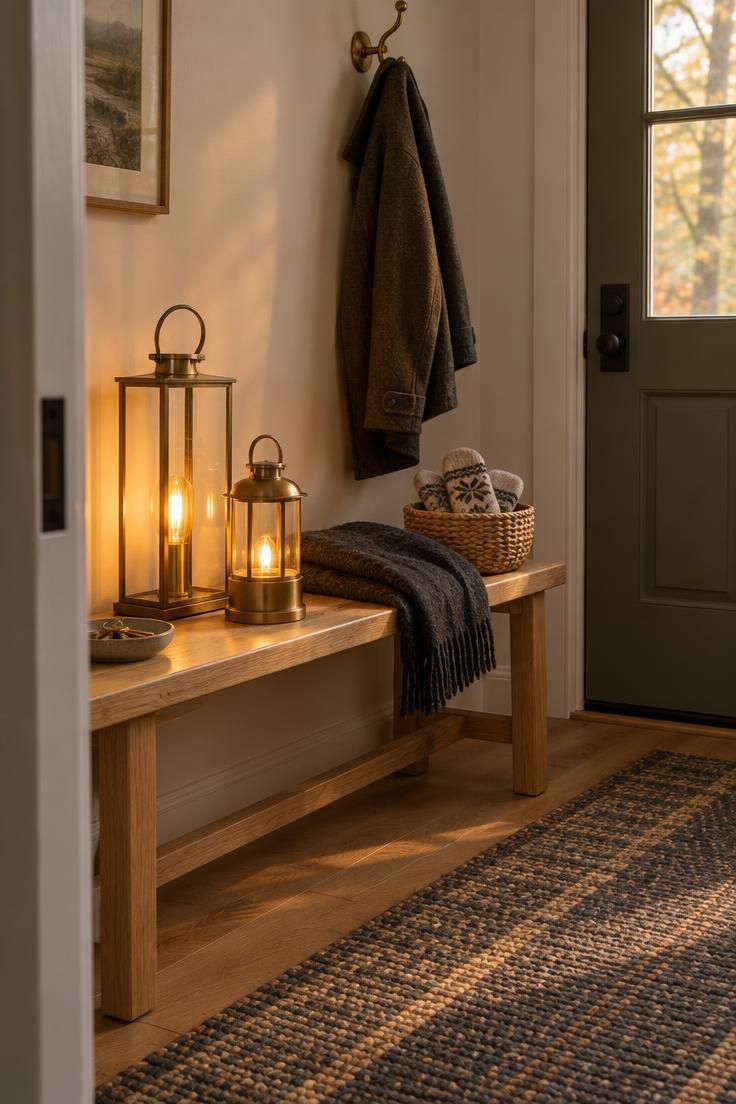
An entryway does double duty in winter as a landing spot for wet coats, cold hands, and everything pulled from pockets.
Two or three lanterns on a hallway bench, one tall glass with a brass frame and one shorter with a solid base, give that practical zone a warm anchor.
LED candles inside provide the glow without an open flame, which suits a spot where scarves and bags pass through constantly.
The mix of glass and brass catches low winter light from a nearby window or door, and the reflective surfaces keep a narrow hall from feeling dim.
A folded wool scarf and a small woven basket for gloves finish the arrangement and keep the bench working as a drop spot.
In a small entry, hold the grouping to three objects so there is still room to sit and set down a bag.
If the bench is shallow, choose one tall lantern and one basket rather than three lanterns, since height uses the back edge without crowding the seat.
Wipe the glass panels when fingerprints build up, and check that anything with a battery is switched off when the household turns in for the night.
The brass will darken over time, which suits the material; polish it only if an even shine matters to you.
Style Blueprint:
- Tall glass lantern with a brass frame
- Shorter solid-base brass lantern
- Woven basket for gloves and mittens
- Folded wool scarf as a soft accent
Wool Blend Runner with Cut-Out Geometric Border in a Hallway
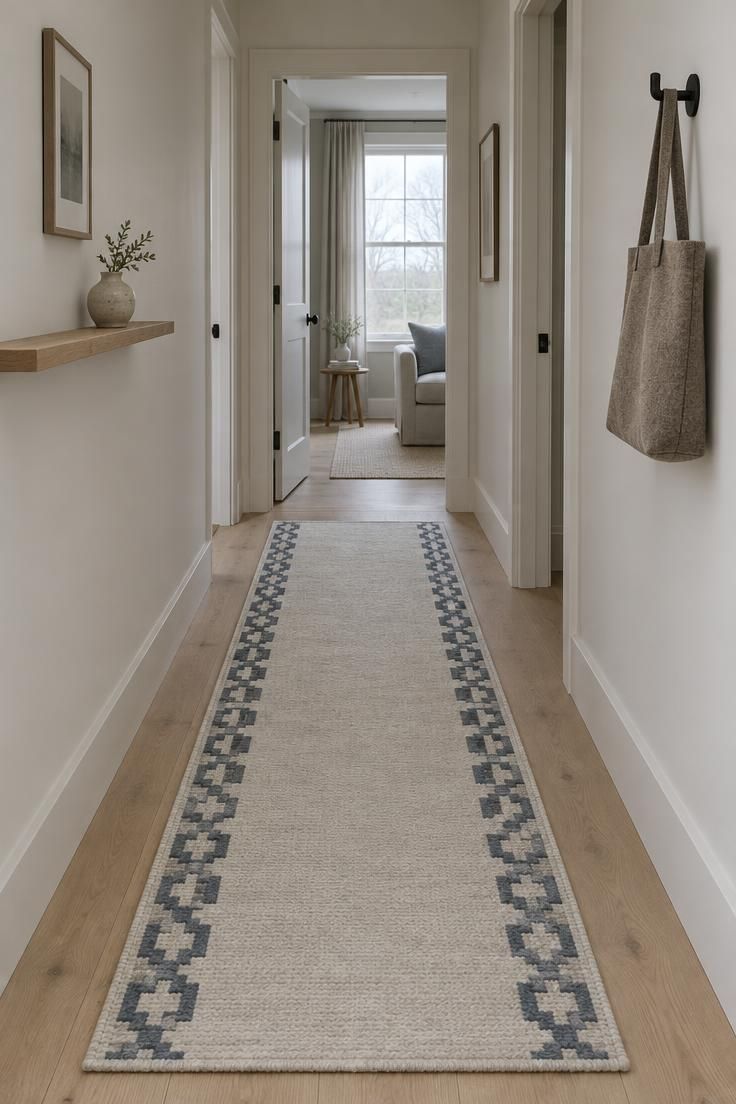
A hallway rarely gets decorated beyond paint and hooks, which makes a runner a high-impact move in a tight space.
A wool-blend runner with a cut-out geometric border in ivory and slate adds movement to an otherwise spare corridor, and the border keeps the piece from reading as a solid slab of carpet.
The pattern is subtle enough to stay in place past the holidays.
A low pile matters here because it lets doors clear the rug without catching, and a wool blend softens the path underfoot in a way that a flat synthetic weave does not.
In a hall with regular winter traffic, a single layer with no top rug will not shift or bunch, which keeps the walkway clear.
Color choice drives how the runner sits in the house.
Ivory and slate suits cool light and pale walls, while a deeper charcoal or forest version anchors a hall with dark trim.
The cut-out border shows dust along its open edges, so vacuum it with a brush attachment rather than a beater bar.
Measure the walkable length of the hall before choosing a size, leaving a margin of bare floor at each end so the runner reads as a deliberate strip rather than wall-to-wall carpet.
A slightly narrower runner works better in a hall that sees a lot of door swing.
Style Blueprint:
- Wool-blend runner in ivory and slate, low pile
- Cut-out geometric border along both edges
- Brush attachment for routine vacuuming
- Bare floor margin at each end
Aged Brass Mirror with a Mini Eucalyptus Bundle on the Mantel
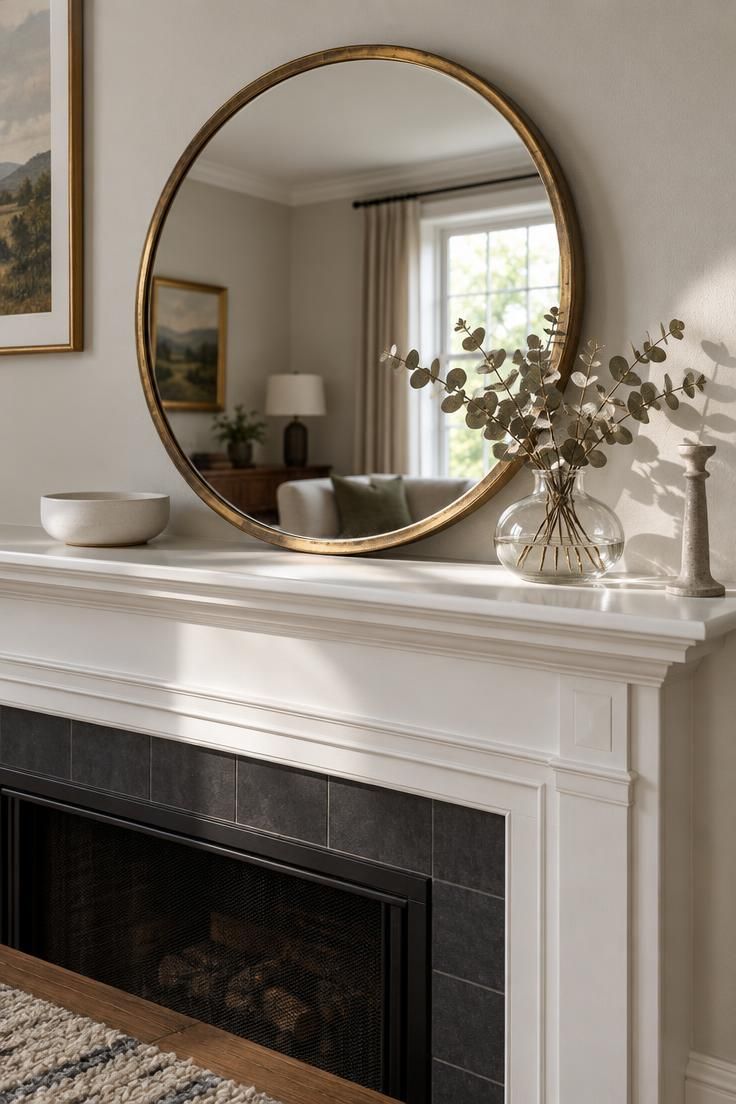
A mirror above a mantel does two jobs at once: it gives the shelf a finished backdrop and it bounces whatever natural light reaches the wall.
Lean a round or arched mirror in aged brass against the wall, then place a small bundle of dried eucalyptus stems in a low glass vase at one side.
The composition stays asymmetric, which keeps the shelf from looking staged.
Keep the eucalyptus short enough that it does not block the reflection.
The dried stems hold their shape and color for months, and the muted green-gray works with brass without competing with it.
When the bundle loses color, swap in a small ceramic bowl or a pair of pillar candles and the shelf resets with no other change.
If you keep a dried eucalyptus wreath on hand, a few loose stems from it can refresh the vase.
The candlelit mantel vignette that many rooms attempt starts with a strong backdrop like this one, then adds light in front of it.
Two or three pillar candles placed beside the mirror will reflect in the glass and double the glow on a dark evening.
Keep the candles on a tray and away from the eucalyptus, which is dry and flammable.
Aged brass patinas over time, so leave the finish alone unless an even shine matters.
Dust the mirror with a soft cloth, and check the wall behind it for any moisture near a fireplace before leaning anything against that surface.
Style Blueprint:
- Round or arched mirror in aged brass, leaned
- Low clear glass vase with short dried eucalyptus
- Matte white ceramic bowl as a counterweight
- Tray for pillar candles when adding light
Matte Black and Bronze Candle Holders with Pillar Candles on a Console
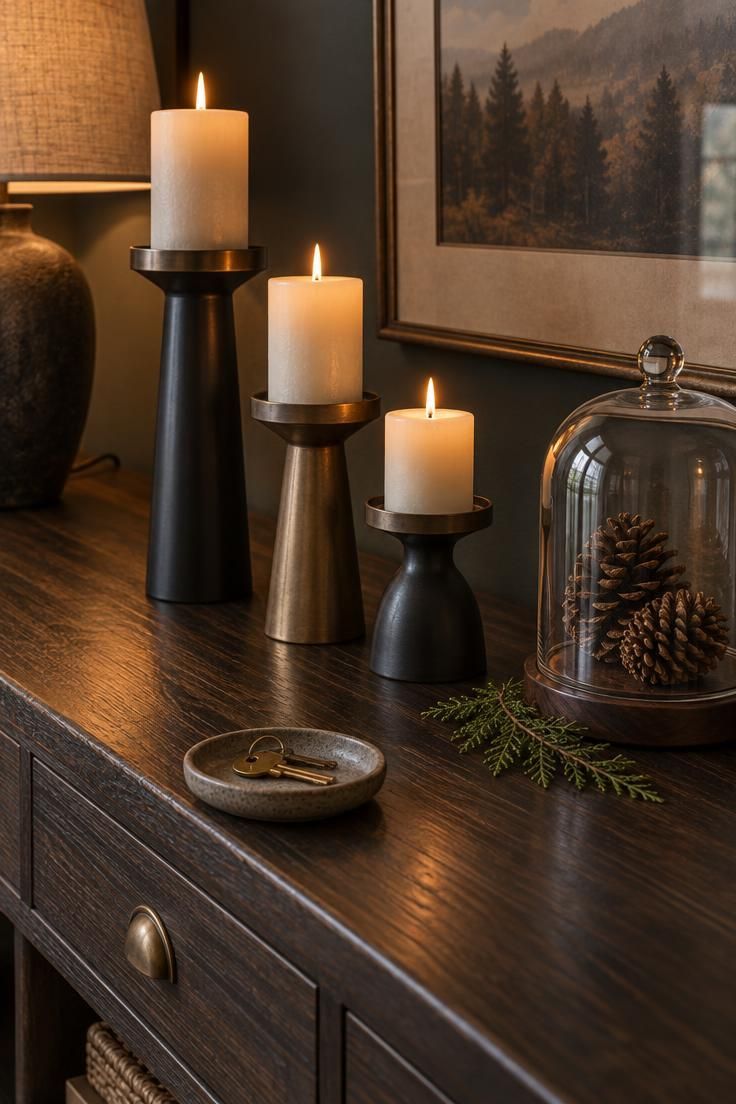
A console or sideboard usually holds keys and mail, which makes it a good candidate for a deliberate reset.
Three pillar candles in matte black and bronze holders of varying heights, paired with a small glass cloche holding pinecones or a cedar sprig, give the surface a crisp winter look without any holiday symbol.
The dark metal finishes sit well against dark wood and add a harder edge to the softer textures elsewhere in the room.
Place the tallest holder at one end and the cloche at the other to keep the arrangement balanced.
Staggering the middle candle slightly off the line stops the group from looking like a row.
A small dish at the front edge still leaves room for keys, so the console keeps working as a drop spot.
Pillar candles burn down unevenly if they sit in a draft, so keep the group away from a door or a heating vent.
Trim wicks before each lighting, and set a heat-safe tray beneath the holders to catch wax.
The cloche looks best with a light dusting of the glass every week or two, since fingerprints show quickly on clear surfaces.
For a lighter room, swap the matte black holders for all bronze and keep the dark wood console; the group still reads as winter without the heavier contrast.
The arrangement costs very little to change seasonally, which makes it a low-commitment way to refresh a high-traffic surface.
Style Blueprint:
- Three pillar candles in matte black and bronze holders
- Small glass cloche with pinecones or a cedar sprig
- Heat-safe tray beneath the holders
- Small dish at the front edge for keys
Dark Walnut Firewood Crate with Dried Hydrangea Stems by the Hearth
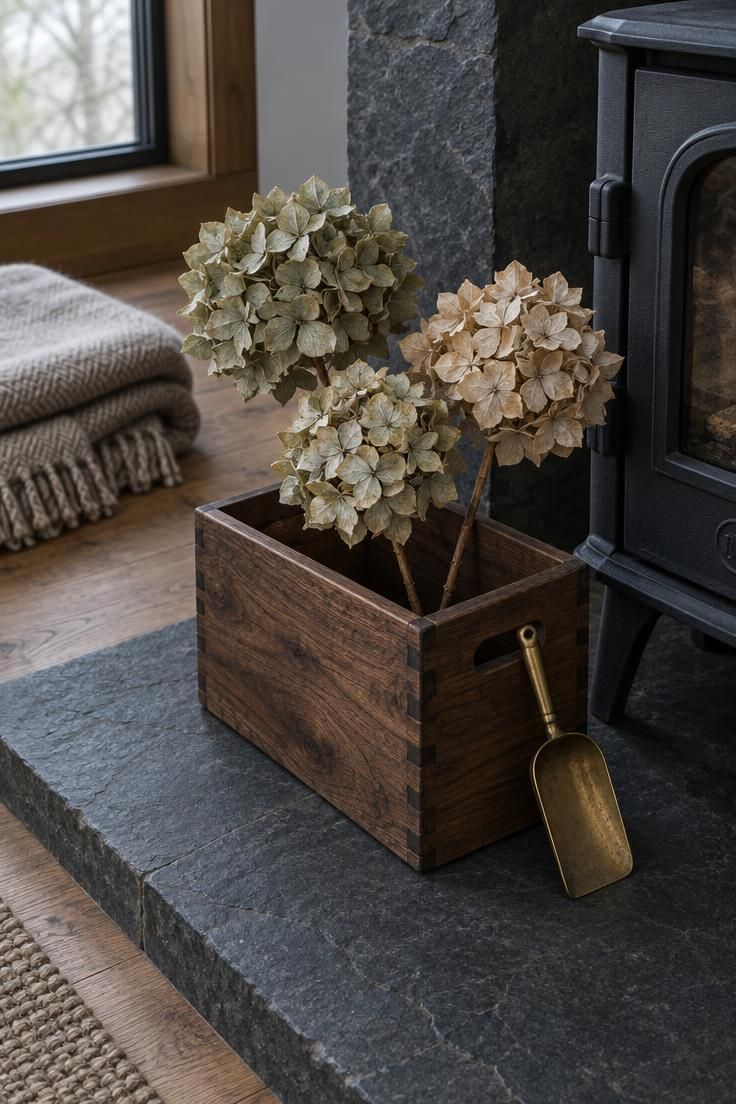
A low firewood crate gets a softer winter job when it holds dried hydrangea stems instead of logs.
The dark walnut frame and the faded flower heads make a quieter hearth-side arrangement than a woven basket full of pale birch.
This version suits a room where the wood stove already supplies the woody texture and the decor should not compete with it.
Leaning a small brass scoop against the crate gives the grouping a pulled-from-the-household feeling without adding another tabletop object.
Choose hydrangea stems with some variation in head size and let the petals stay slightly irregular.
The arrangement wants to look gathered from a late-season garden, not wired into a perfect fan.
In a smaller hearth area, keep the crate low and wide rather than tall.
The squat shape leaves the wall above open and makes the stove the tallest object in the corner, which keeps the grouping from feeling crowded.
Style Blueprint:
- Low dark walnut crate with visible grain
- Three dried hydrangea stems in sage and parchment
- Small brass scoop resting against the front edge
- Charcoal slate hearth surface
- Stone-colored wool blanket folded nearby
Pale Wool and Woven Seagrass Wall Hanging with a Slim Floor Lamp
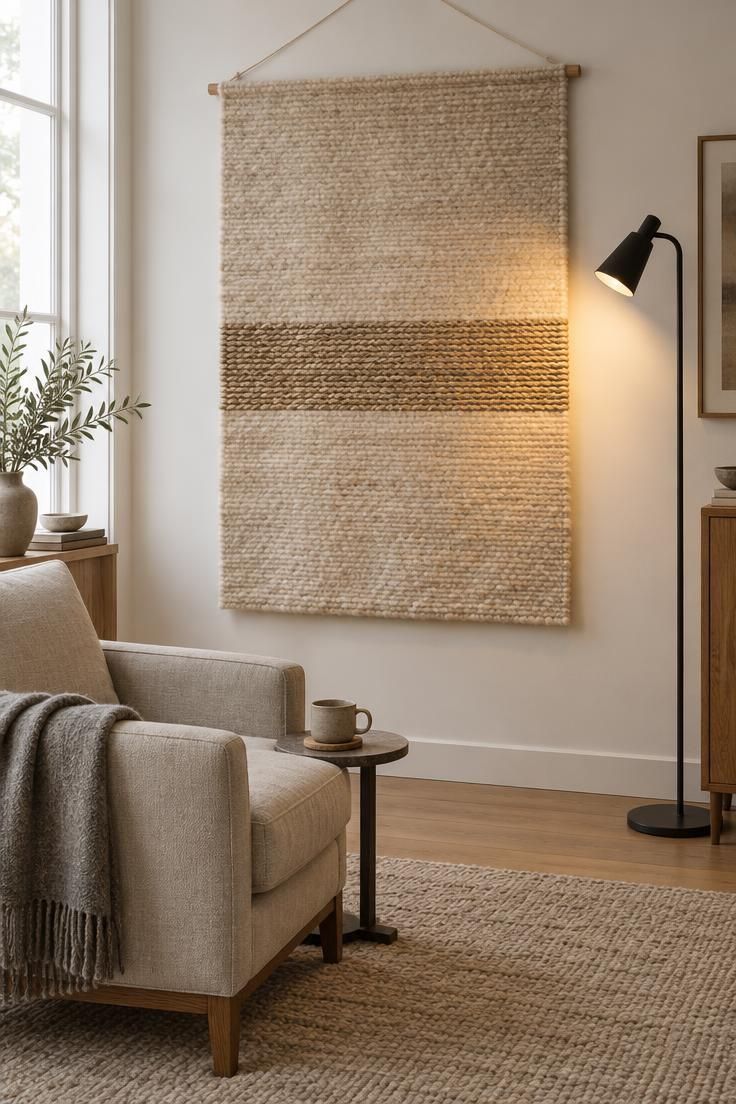
A large textile on a bare wall softens a room without adding another object to a surface.
A pale wool hanging with a woven seagrass band brings warmth and a visible weave to an empty wall, and the tonal palette keeps it from competing with furniture or art elsewhere in the room.
The textile also takes the hard edge off a large blank plane, which many rentals have in abundance.
Pair it with a slim adjustable floor lamp in matte black or brushed brass, and angle the lamp toward the hanging so the texture becomes visible after dark.
The lamp does the work of a picture light without any wall wiring.
Keep the colors tonal, in oat, sand, and ivory, so the wall stays calm.
Because the piece hangs from the wall rather than filling floor space, it suits a rental where permanent changes are not an option.
The textile adds a soft surface that helps with echo in a bare room.
Dust it with a brush attachment or a soft vacuum nozzle, and check the lower edge for sagging every few months.
Scale matters more than color here.
A hanging that covers a good portion of the wall reads as intentional, while a small one can look lost.
If the wall is very wide, pair the hanging with the floor lamp and leave the remaining space open rather than adding a second textile.
Style Blueprint:
- Pale wool wall hanging with a seagrass band
- Slim adjustable floor lamp angled toward the textile
- Tonal palette in oat, sand, and ivory
- Soft brush or vacuum nozzle for dusting
Stoneware and Glass Tray Vignette with Dried Grasses and a Small Mirror
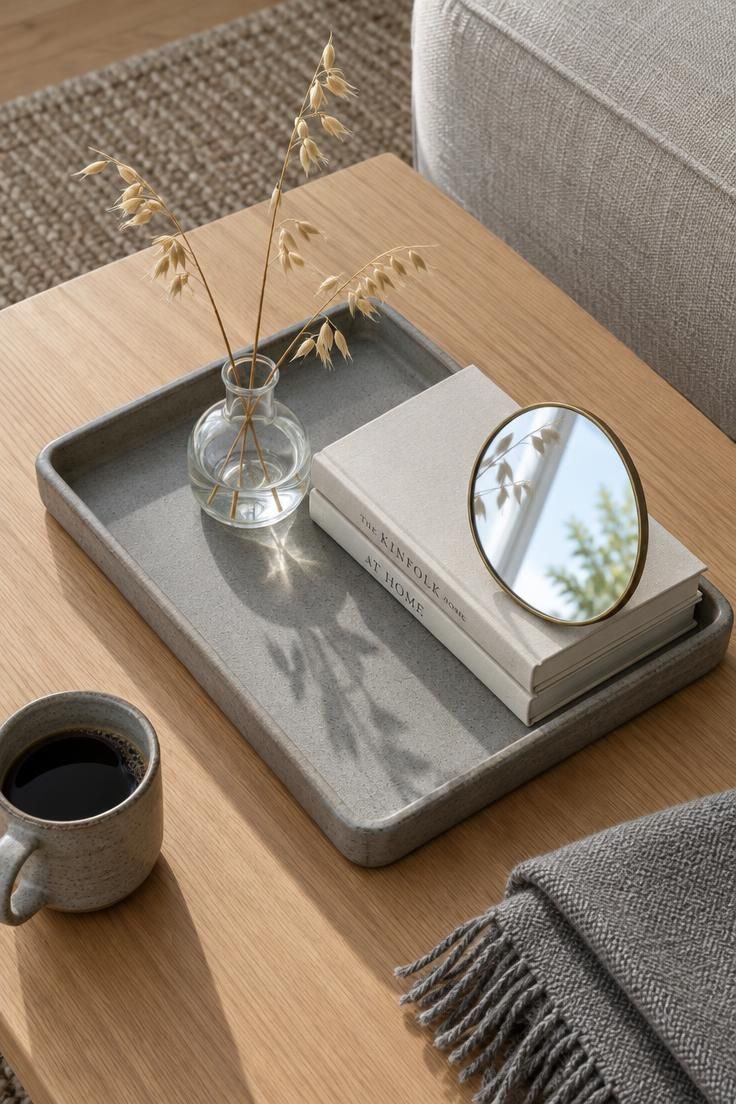
A tray turns a scattering of small objects into one composed still life, which is why it works so well in a small room.
Arrange a rectangular stoneware tray with a small glass vase of dried grasses, a short stack of two books, and a compact tabletop mirror leaning at the back.
The mirror reflects low winter light and gives the tray depth beyond its actual size.
Dried grasses like pampas or oat stems hold their shape when dry and need almost no care beyond an occasional gentle dusting.
Choose grasses with a soft, tonal color so the tray stays quiet.
The stoneware tray in a matte gray grounds the glass and the pale stems, and the mix of matte and reflective surfaces keeps the arrangement from looking flat.
Containment is the practical advantage here.
The entire display sits on one tray and can be lifted and moved in seconds, which suits a coffee table that also serves as a footrest or a homework spot.
Lift the vase out before moving the tray so the water does not spill.
Keep the mirror small enough that it does not dominate the tray, and angle it so it reflects a window rather than a blank wall.
If the table is round, a rectangular tray creates a useful contrast of shape; on a rectangular table, try an oval tray instead.
Style Blueprint:
- Rectangular stoneware tray in matte gray
- Small clear glass vase with three dried oat stems
- Two cream books as a riser
- Small round mirror leaned at the back
- Stoneware mug and folded throw nearby
Conclusion
The most useful winter decor ideas for the home are the ones that layer texture, natural materials, and warm light without relying on a holiday symbol.
Swap in one or two of these vignettes at a time, then live with them for a week before adding more.
Pay attention to how much storage and maintenance each idea needs, since textiles and dried botanicals both require occasional care.
Move the pieces around if a room feels cramped or dark, and remove anything that no longer holds its shape or color.