This post may contain affiliate links. If you make a purchase through these links, we may earn a commission at no additional cost to you.
A Thanksgiving table in a small home has to work harder than a formal dining room table.
It holds plates, serving dishes, and elbows, often in a footprint meant for weeknight dinners.
The modern approach is to edit rather than add: fewer objects, warmer textures, and a palette that connects to the room around it.
These ideas lean on reusable linens, stoneware, wood, and dried elements that can return to the shelf after the holiday.
Washed Linen Runner Over Bare Oak With a Single Low Stoneware Bowl
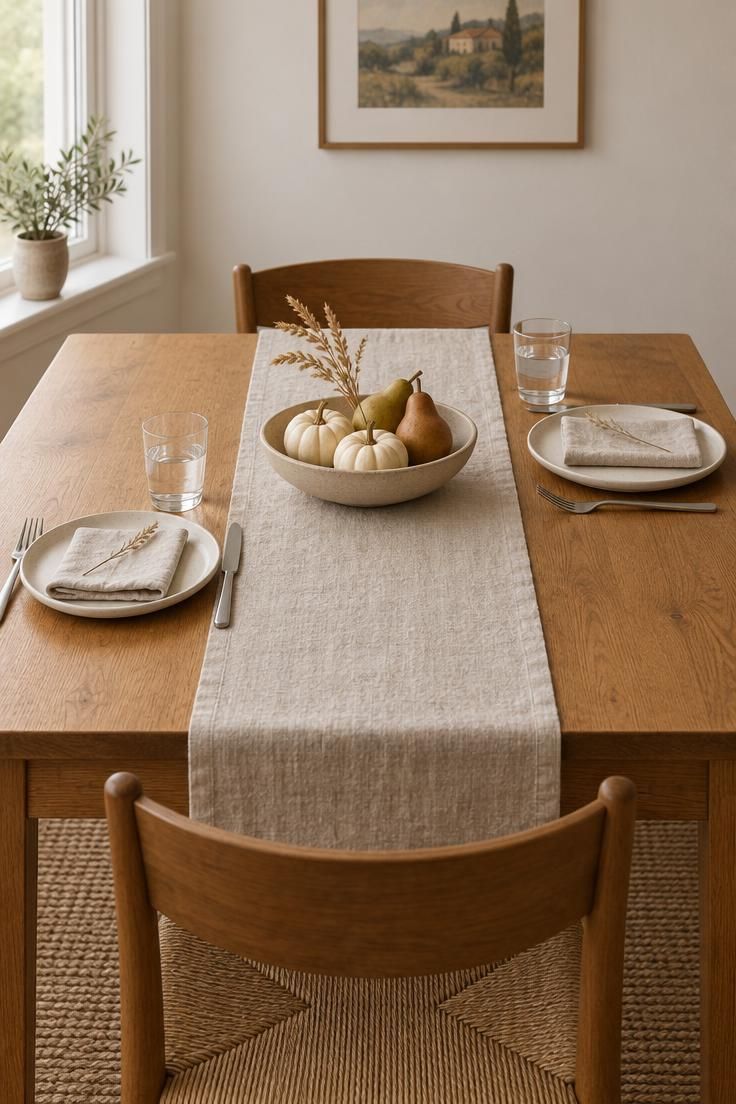
A runner preserves the wood surface that makes a small dining table feel like furniture rather than a stage set.
Leaving bare wood visible on both sides keeps the composition from looking fully dressed, and the oatmeal tone softens the setting without introducing pattern.
Choosing a width that still allows plate room on either side is the main decision here.
The single bowl does the work of a full centerpiece, and this is one of the more useful low centerpiece ideas for a table that doubles as a desk or homework spot.
Grouping mini pumpkins, pears, and dried grasses in one vessel keeps the arrangement compact and liftable.
A matte glaze reads quieter than a glossy finish against linen.
Linen wrinkles and shows water marks, which matters on a table used daily.
A slightly darker clay tone hides marks better than oatmeal, and a runner can be shifted a few inches to disguise wear near the edges.
Style Blueprint:
- Washed linen runner in a muted earthy tone
- Bare oak or pale wood table
- Single matte stoneware bowl with low seasonal produce
- Simple linen napkins in the same tone family
- Matte ceramic plates in cream or sand
Mixed Stoneware Place Settings With One Amber Glass Accent
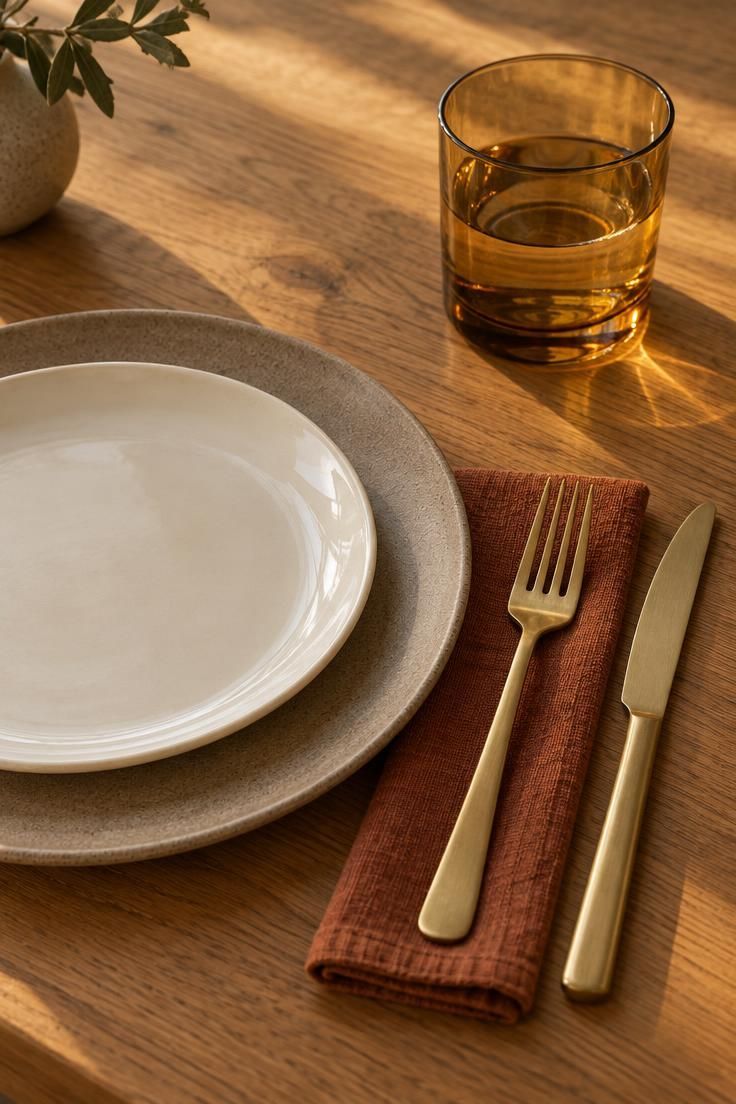
Layering plates with contrasting stoneware finishes gives a collected look without a matched set.
A neutral taupe dinner plate under a glossy ivory salad plate works because both pieces stay in the same tone family, and the finish difference carries the visual interest.
The amber glass is the only warm accent in the setting.
Keeping it to one glass per person keeps the place setting compact and the table from reading too seasonal.
Mixed stoneware place settings can look accidental when scale or palette drifts.
Two or three plate styles with one shared tone read intentional; four unrelated finishes read like a mismatched cupboard.
Matte finishes also show fingerprints more than glossy ones, which is worth knowing before committing an entire set.
Skipping chargers and butter plates keeps each setting narrow, which matters when a small table has to seat more people than usual.
Flatware placed plainly on the wood or on a linen placemat finishes the look.
Style Blueprint:
- Mix two stoneware finishes in a warm neutral tone
- One amber glass per setting
- Flatware placed directly on the table or a linen placemat
- No chargers or butter plates
- Small folded napkin in a muted color
Low Centerpiece of Dried Botanicals in a Footed Ceramic Compote
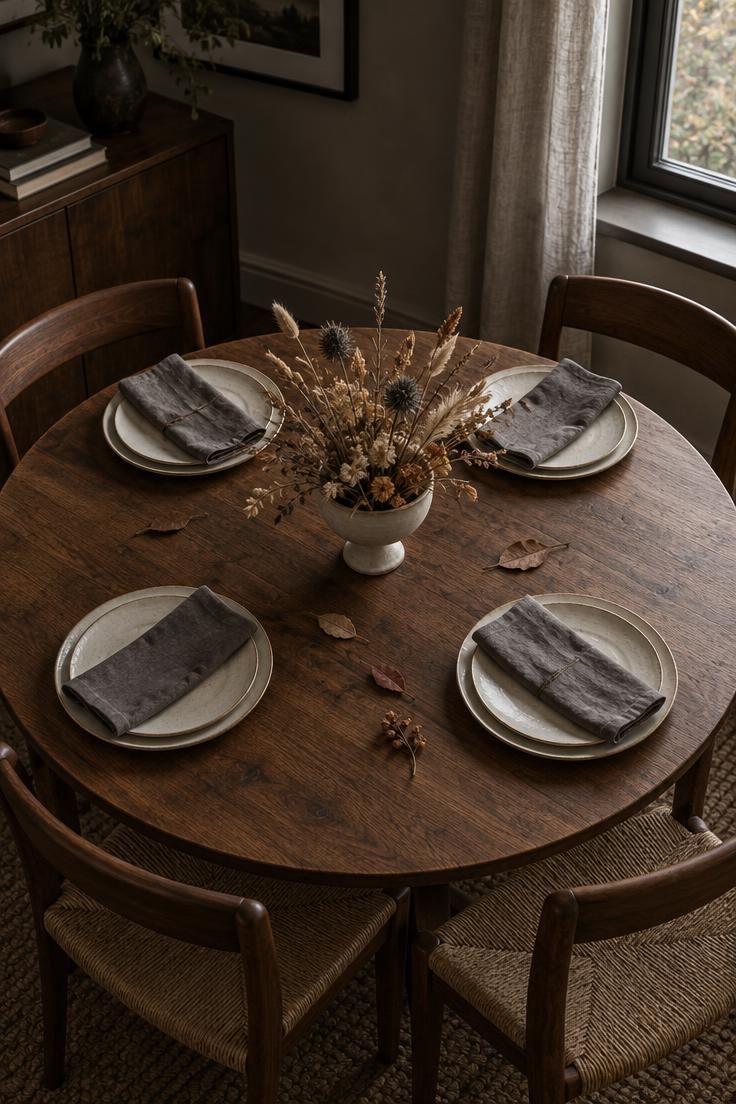
A footed compote raises dried elements just enough to feel considered without creating a visual wall.
Grasses, seed heads, and thin branches bring matte, muted texture that suits modern interiors, and the low profile keeps the modern thanksgiving table open for conversation and serving dishes.
Dry botanicals can be stored and reused in later seasons, which helps in a small home with limited storage.
They may shed or become brittle over time, so a loose arrangement that can be topped up or restyled loses less than a tightly wired one.
The compote itself can move to a side table or shelf after the holiday.
Place settings kept minimal let the texture dominate, and skipping extra candles or objects near the base keeps the centerpiece reading as one gesture rather than a cluster.
Style Blueprint:
- One footed ceramic compote in a neutral glaze
- Dried grasses, seed heads, and thin branches
- No additional candles or objects around it
- Bare wood table or a simple runner
- Place settings kept minimal to let texture dominate
Muted Autumn Table Palette With Sage, Ochre, and Clay
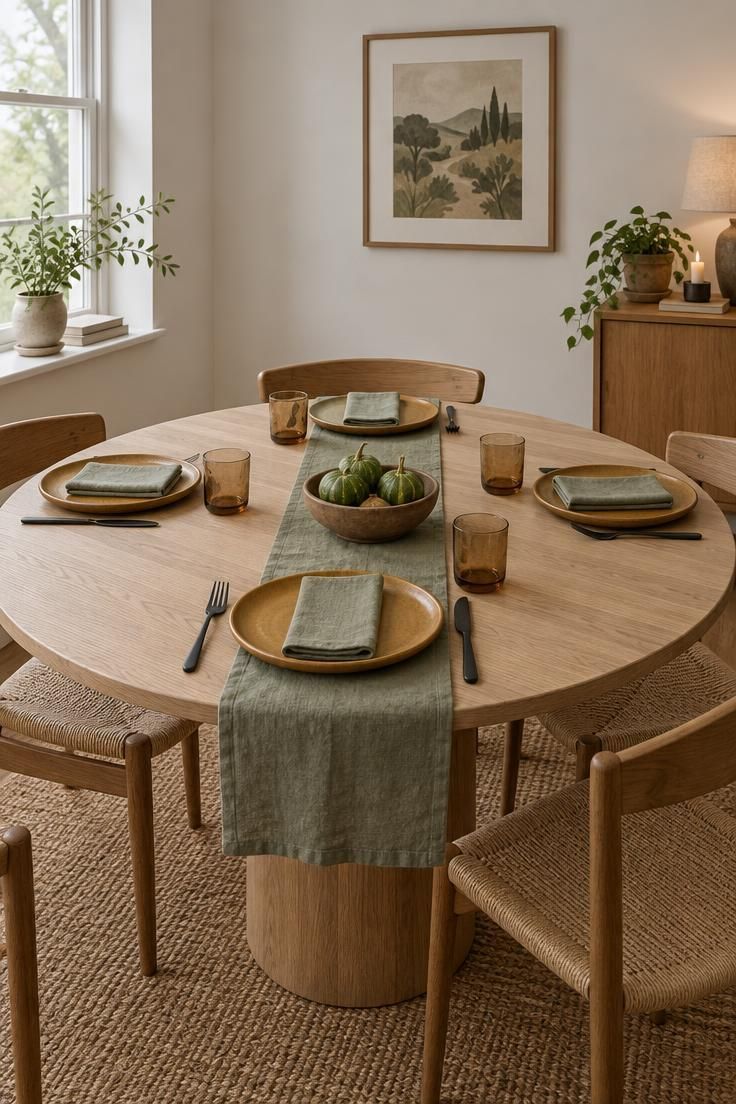
A reduced-saturation palette keeps the table modern while still referencing fall.
Sage napkins or a narrow runner pair with ochre plates and clay-toned glassware, and the effect is warm without being theme-heavy.
This muted autumn table palette works especially well in homes where the walls or furniture already lean warm.
One dark element keeps the mix from feeling flat.
Matte black flatware or a small dark walnut serving board adds contrast without adding another color.
The palette has a practical side: sage, ochre, and clay are close enough in value that a stain on a napkin or a chip on a plate is less obvious than it would be on bright white.
The tradeoff is that the table can veer toward earthy monotone if every piece sits in the same midtone range, so one lighter or darker note is worth planning.
Style Blueprint:
- Sage green linen napkins
- Ochre stoneware dinner plates
- Clay-colored water glasses
- Matte black flatware
- One small dark walnut serving board
Design Pro-Tip: Set the plate stack first at every seat, then place the centerpiece in whatever space remains rather than sizing the setting around a fixed arrangement.
Asymmetrical Branch Arrangement in a Wide Stoneware Vessel
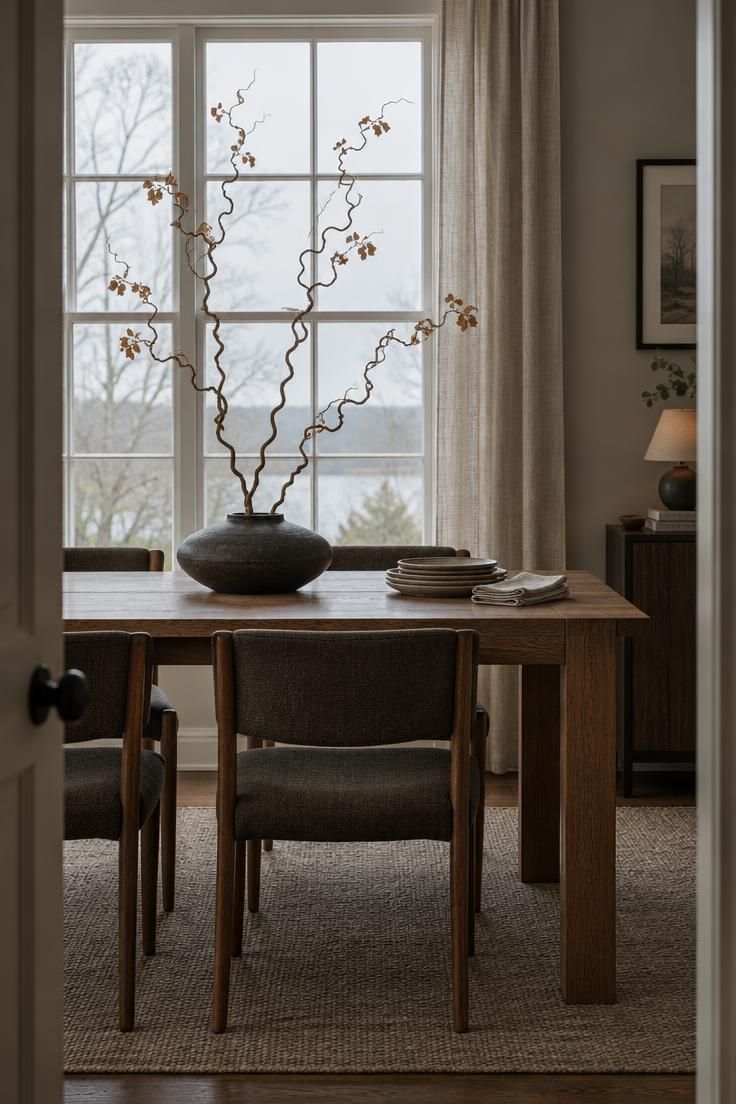
An off-center branch arrangement gives a rectangular table a less formal rhythm than a centered floral piece.
Curly willow, oak, or dried bittersweet branches create height without a full visual block because the branches stay airy, and the dark vessel anchors the composition at table level.
Asymmetry works better on a rectangular table than a round one, where an off-center piece can crowd one side.
Weighing the empty side with stacked plates or a folded napkin keeps the arrangement from looking like an unfinished thought.
A wide stoneware vessel can be heavy, so keeping it on a tray makes clearing the table easier after the meal.
Neutral linens on the opposite side avoid competing with the branch line, and two or three branches usually read better than a dense bundle.
Style Blueprint:
- One wide, low stoneware vessel in charcoal or dark brown
- Two or three bare branches with dried leaves
- No additional centerpiece objects
- Place settings balanced on the opposite side of the table
- Neutral linens to avoid competing pattern
Single Ceramic Pumpkin in a Woven Seagrass Basket With Sparse Greenery
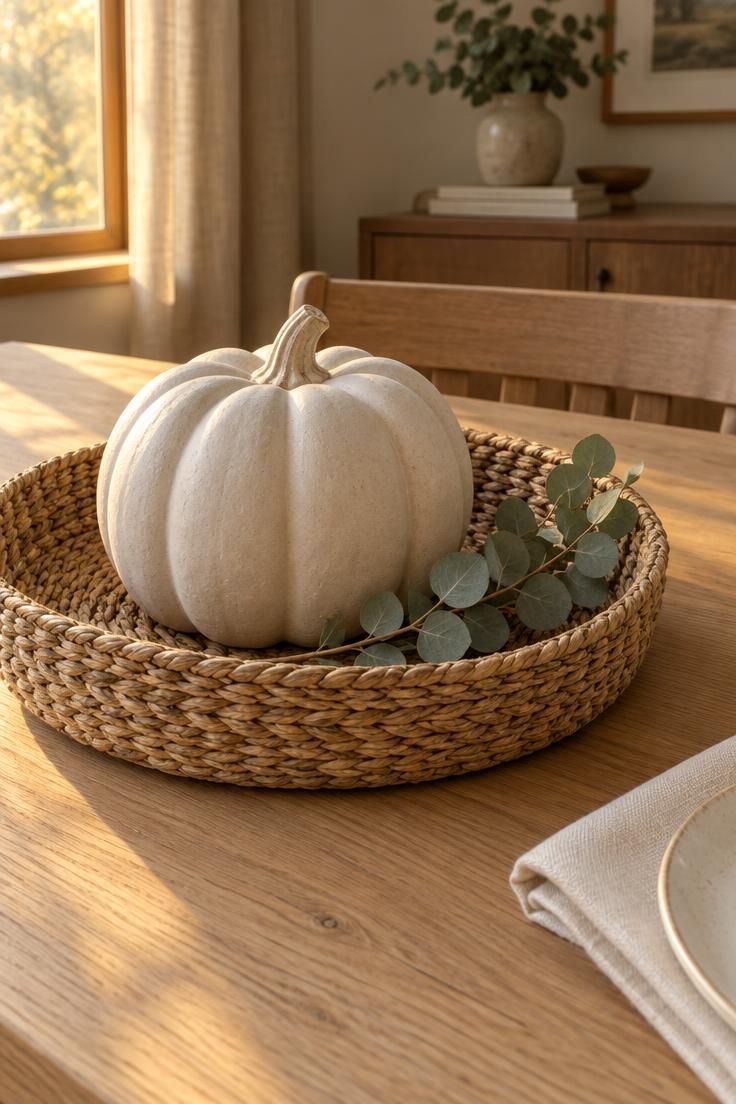
A shallow woven basket keeps a single ceramic pumpkin and a few eucalyptus sprigs contained and easy to move.
The basket occupies less room than a full washed linen table runner and can be lifted away in one motion when serving starts.
Laid flat, the greenery adds contrast in texture without bulk.
The composition stays low enough that sightlines remain open across a small table.
One oversized matte pumpkin in a pale glaze reads as a sculptural object rather than novelty decor, and a chalk or soft gray finish keeps it from tipping into orange.
Containment is the practical advantage here.
Loose gourds and stems scatter and roll; a basket holds the grouping and can move to a counter or entry table after the meal.
A matte glaze shows fewer reflections than a glossy one and settles well against cream stoneware and neutral napkins.
Style Blueprint:
- Shallow woven seagrass basket
- One oversized matte ceramic pumpkin in pale gray or chalk
- A few loose eucalyptus sprigs
- No other centerpiece objects
- Simple cream or ivory stoneware plates and neutral linen napkins
Dried Botanical Table Decor on a Narrow Console Behind the Dining Table
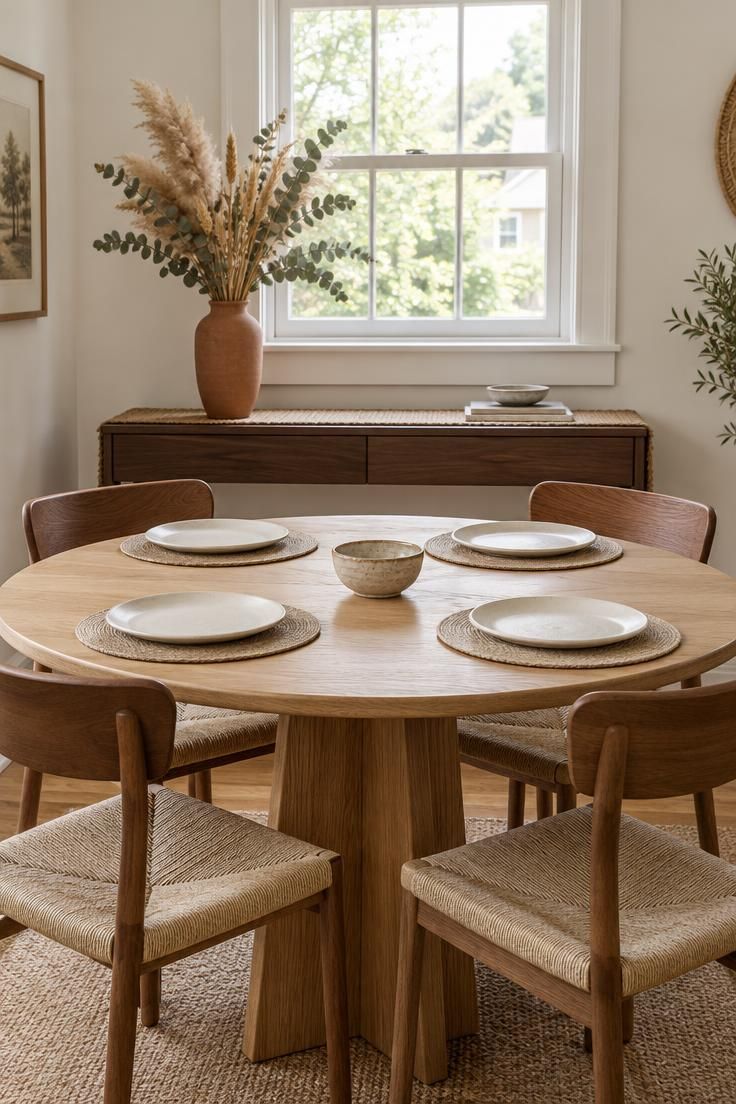
When the dining table itself is small, move seasonal decor to a nearby console or sideboard.
A low arrangement of dried pampas grass, wheat, and eucalyptus in a matte ceramic vase adds autumn texture without taking tabletop space, and the table stays clear for place settings and serving dishes.
This is dried botanical table decor with a job beyond appearance: it lets the dining surface stay functional while the room still reads seasonal.
One small bowl of nuts or a single candle on the table anchors it without competing with the console.
The tradeoff is a table without a true centerpiece.
Dried botanicals on the console can stay up through the season with little care, though they may shed on the surface below and fade over time.
Warm wood or stone surfaces behind the vase give the arrangement a calm backdrop.
Style Blueprint:
- Matte ceramic vase in a muted tone
- Dried pampas, wheat, and eucalyptus
- Console or sideboard behind the table
- One small neutral bowl on the dining table
- Warm wood or stone surfaces
Plaster-Finish Tray With Repeating Poured Candles and Fall Fruit
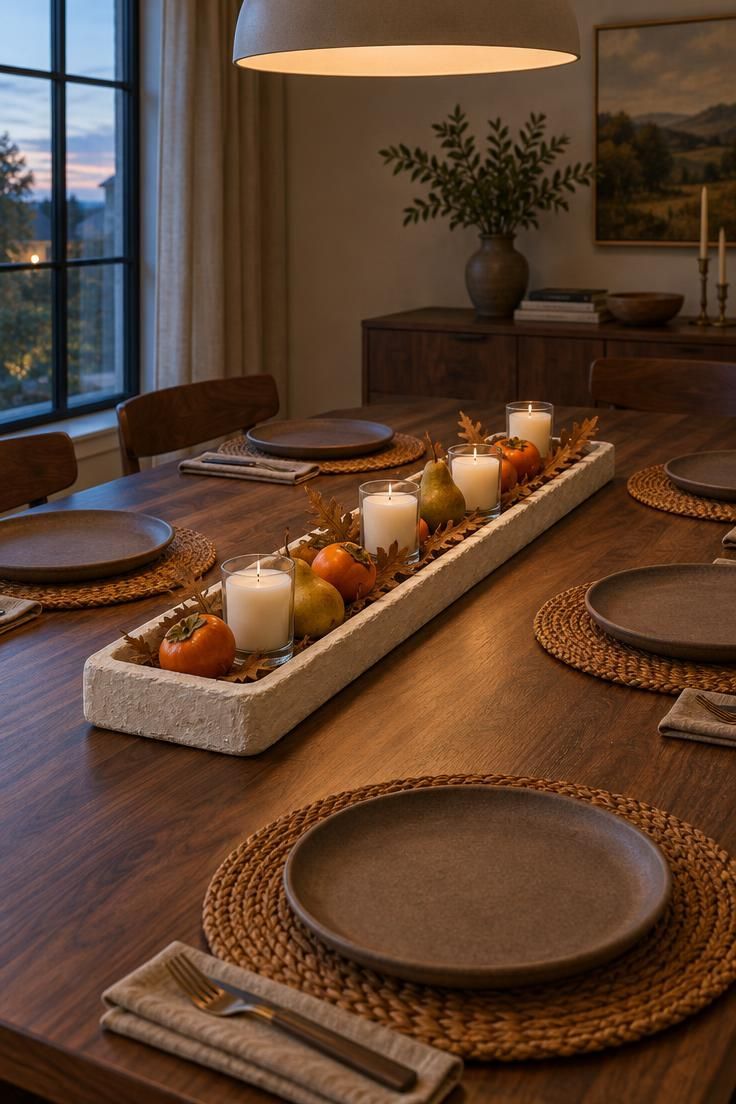
A long plaster-finish tray creates a low architectural band across the table without hiding the wood grain or interrupting conversation.
Cream candles spaced evenly inside the tray give the table a soft vertical rhythm, while pears and persimmons between the candles bring rounded autumn color and a natural asymmetry.
This arrangement works on a wide table because the tray defines the center without pressing against the place settings.
Keeping the tray monochrome cream or pale sand lets the fruit and candle glass read as the main points of interest.
After the meal, the tray can move to a sideboard or kitchen counter while the table gets cleared, so the centerpiece does not limit serving space.
The candles stay unlit as sculptural objects, which avoids heat, wax, and open-flame handling during a busy dinner.
Style Blueprint:
- One long plaster or pale ceramic tray
- Five cream pillar candles in clear or smoke-gray glass
- Seasonal fruit such as pears, persimmons, or small apples
- A few dried oak or maple leaves tucked low
- Woven placemats and unglazed stoneware plates
Raw-Edged Linen Tablecloth in Oatmeal With Dark Wood Accents
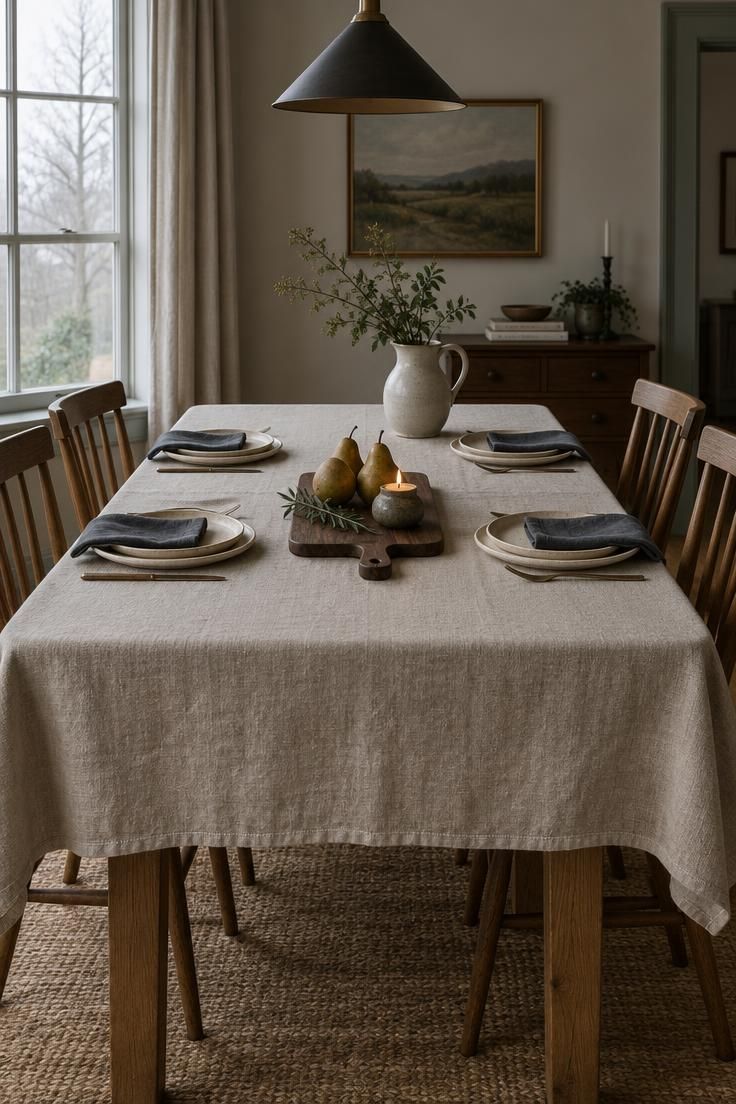
A full tablecloth softens the room and hides a less-than-perfect tabletop, though it can feel traditional.
A raw-edged or softly hemmed linen in oatmeal or stone keeps the look modern and relaxed, and the cloth should hang just past the table edge rather than puddle on the floor.
Dark wood serving boards, matte black flatware, or charcoal napkins balance the softness of a full cloth.
Without one of those darker notes, an all-oatmeal table can drift toward plain.
A tablecloth requires ironing or a willingness to embrace wrinkles, and it is less practical for daily use than a runner or bare table.
In a small home, it is the piece most likely to sit folded in a cupboard between holidays, so it earns its place mainly when the table will be seen from a distance or the tabletop needs covering.
Style Blueprint:
- Oatmeal linen tablecloth with visible texture
- Dark walnut serving board
- Matte black flatware
- Charcoal or slate linen napkins
- Cream stoneware plates
Woven Placemat Centerpiece With a Stacked Stoneware Bowl and Seasonal Fruit
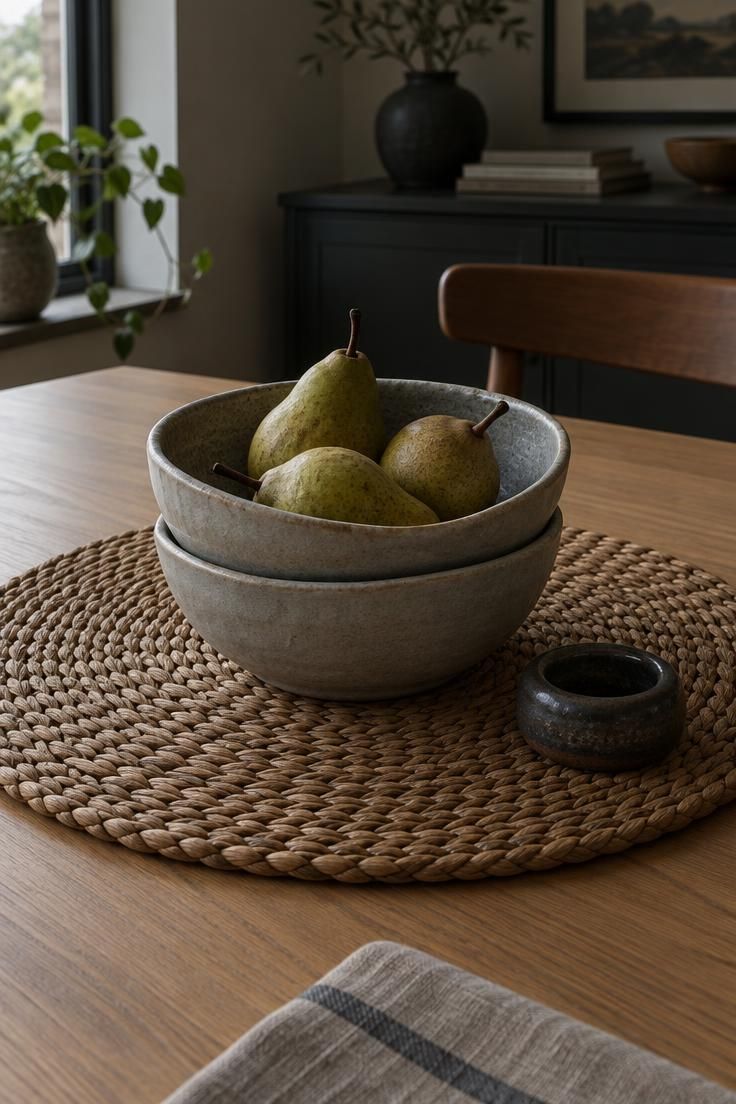
A round woven water hyacinth or rattan placemat works as the base for a stacked centerpiece instead of a tray.
A small stack of two or three stoneware pinch bowls in graduated warm neutrals sits on top, with the uppermost bowl holding a few small pears or persimmons.
The whole grouping stays low and compact.
A single dark ceramic ring or small wooden bead beside the stack adds subtle texture without introducing another material family.
The mat can be folded away or repurposed as a placemat after the meal, which suits a small home where every piece does two jobs.
Keep candles and metal objects off this composition so the woven texture and matte glaze hold the visual weight.
Style Blueprint:
- Round woven rattan or water hyacinth placemat
- Stack of two or three stoneware pinch bowls in cream, sand, and taupe
- A few small pears or persimmons
- One small dark ceramic ring
- No candles or metal objects
Design Pro-Tip: Choose a centerpiece that lifts off the table in one piece, so clearing the surface before serving takes a single motion.
Mixed Material Placemats With No Table Runner
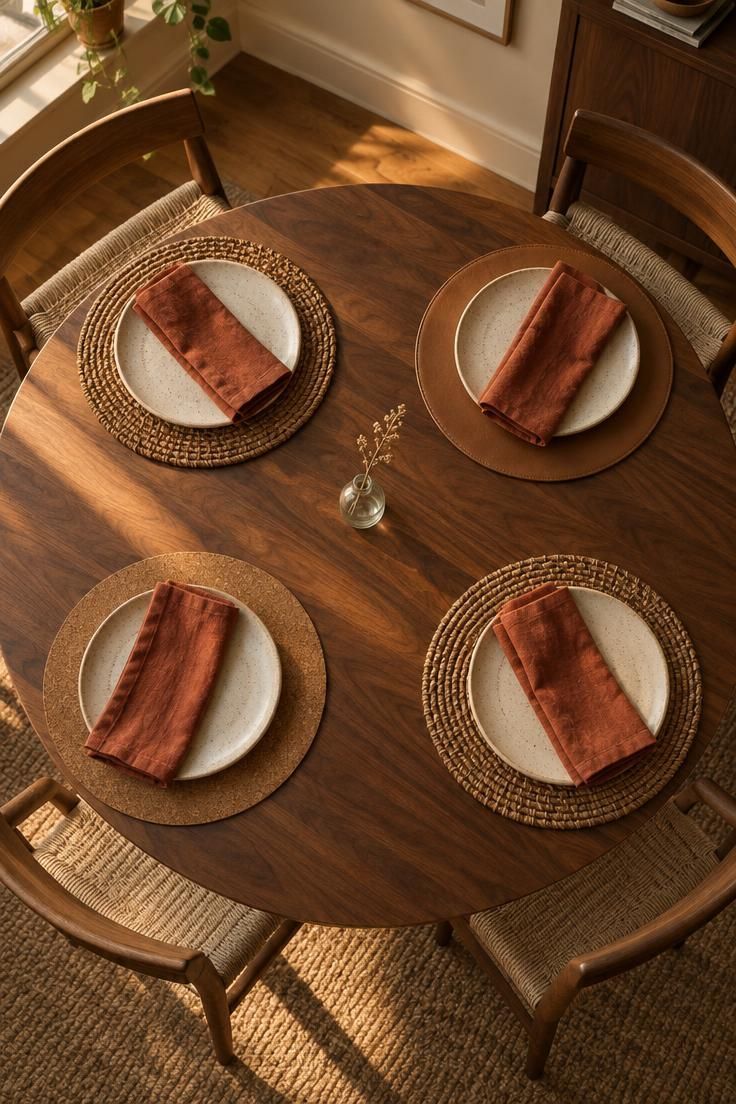
Leather, woven rattan, or cork placemats in a consistent warm tone act as individual anchors for each setting and remove the need for a runner.
This works especially well on smaller round tables where a long runner can look awkward.
The mats should be similar in scale and tone so the mix feels intentional.
Pair them with simple stoneware plates and one glass per setting.
Mat placemats wipe clean and store flat, which is a practical advantage in a small kitchen with shallow drawers.
The tradeoff is that they cover less of the table than a cloth, so an older tabletop shows more, and leather may darken or mark with use.
Without a runner, the center stays open for serving dishes, and a single small vase or bowl can anchor the middle if the table starts to feel bare.
Style Blueprint:
- Mix two placemat materials in a warm neutral
- No table runner or cloth
- Stoneware plates in cream or sand
- One water glass per setting
- Folded linen napkin in a muted autumn color
Charcoal Linen Runner With Pale Stoneware and a Single Ceramic Pumpkin
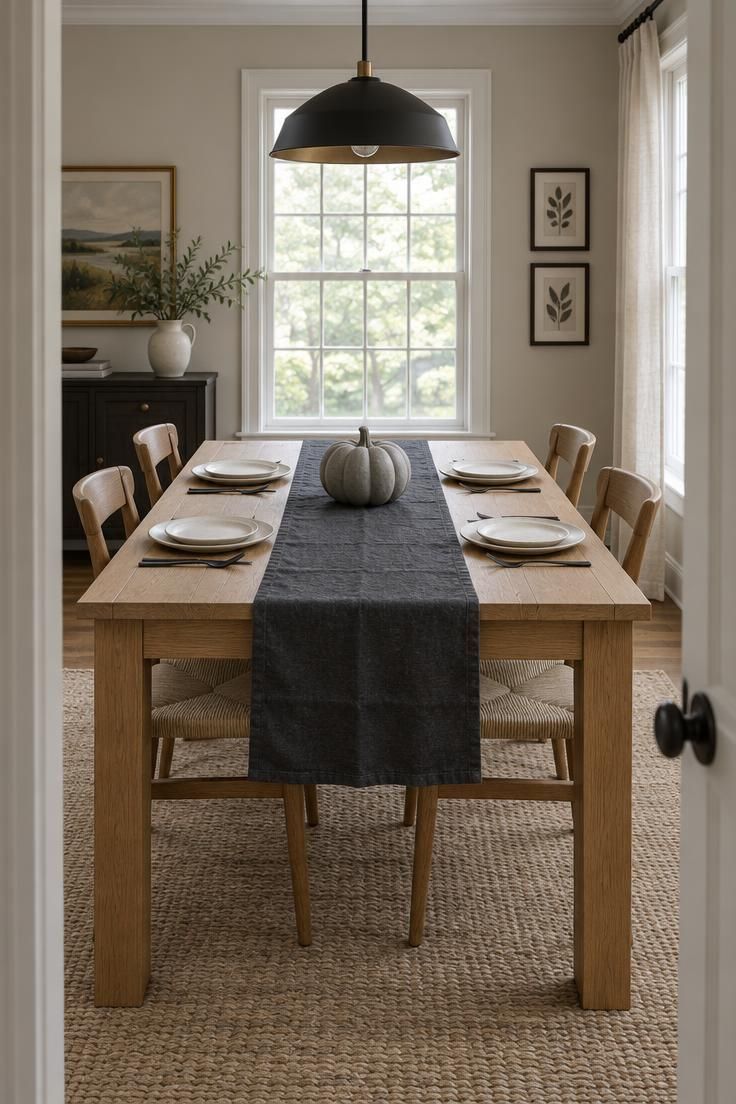
A dark runner grounds a pale table and makes light-colored plates stand out.
A charcoal or deep slate linen runner wide enough to hold a central object but narrow enough to leave plate room gives the setting a clear spine.
One oversized ceramic pumpkin in a pale gray or cream glaze replaces a full centerpiece.
The matte finish keeps it from reading as novelty decor, and a single object keeps the table uncluttered.
The runner hides scratches on an older table and shows fewer stains than pale linen, which helps on a table that sees daily use.
Napkins in soft gray or ivory continue the contrast without adding a third color.
Style Blueprint:
- Charcoal linen runner
- One matte ceramic pumpkin in pale gray or cream
- Cream stoneware plates
- Dark wood or black flatware
- Napkins in a soft gray or ivory
Warm Wood Serving Pieces as Decorative Objects on the Table
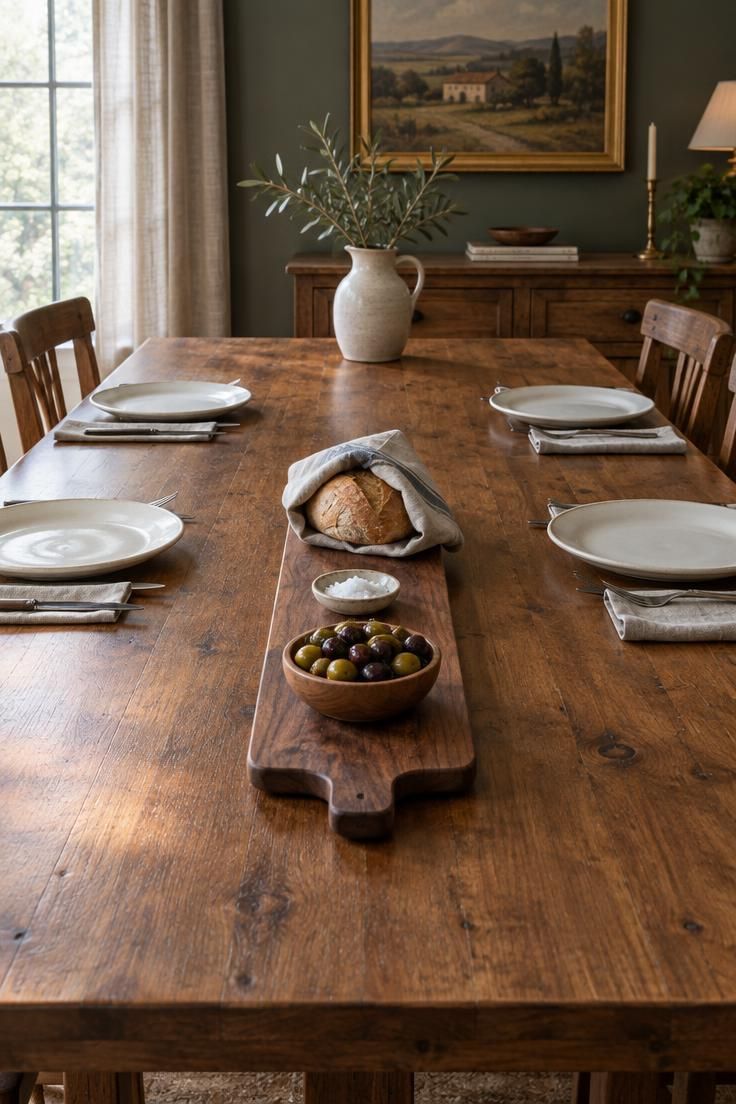
When serving happens directly from the table, wooden boards and bowls can double as decor.
A long walnut board with a small bowl of olives, a wooden salt cellar, and a linen-wrapped bread basket creates a still life that also functions during the meal.
Keeping the pieces in one wood tone and limiting the number of objects keeps the table composed.
This approach suits a buffet-style meal where dishes are passed, because the table remains visually settled before food arrives.
The boards and bowls move to everyday use after the holiday, which reduces storage pressure.
Wood benefits from occasional oiling and may show knife marks, and stoneware serving pieces can chip, so the set that gets used most is often the one that already carries a little wear.
Style Blueprint:
- One long walnut serving board
- Small wooden bowls for olives or nuts
- Linen-wrapped bread basket
- Ceramic salt cellar
- No additional centerpiece
Conclusion
A modern Thanksgiving table in a small space comes down to editing.
Choose one textural base, one low central object or a short row of objects, and one seasonal accent repeated in a restrained way.
Reusable materials such as stoneware, linen, wood, and dried botanicals keep the table connected to the rest of the home and reduce what has to be stored between holidays.
The setup that works best is the one that feels unhurried and leaves room for the food and the people around it.