This post may contain affiliate links. If you make a purchase through these links, we may earn a commission at no additional cost to you.
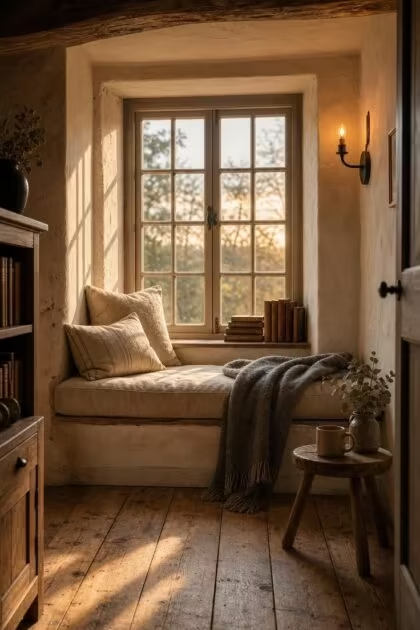
A rustic reading nook is one of those rare additions that makes a home feel both more personal and more useful at the same time.
The combination of weathered wood, natural stone, and soft handmade textiles creates a reading space that looks like it belongs in a countryside cottage, no matter where you actually live.
These 11 ideas cover a wide range of approaches, from built-in alcoves carved out of thick stone walls to simple freestanding arrangements you can put together in an afternoon.
Each one pairs raw, aged materials with comfortable seating and warm reading nook lighting to give you a space that pulls you in the moment you sit down.
A Rough-Sawn Pine Bench Under a Fieldstone Archway
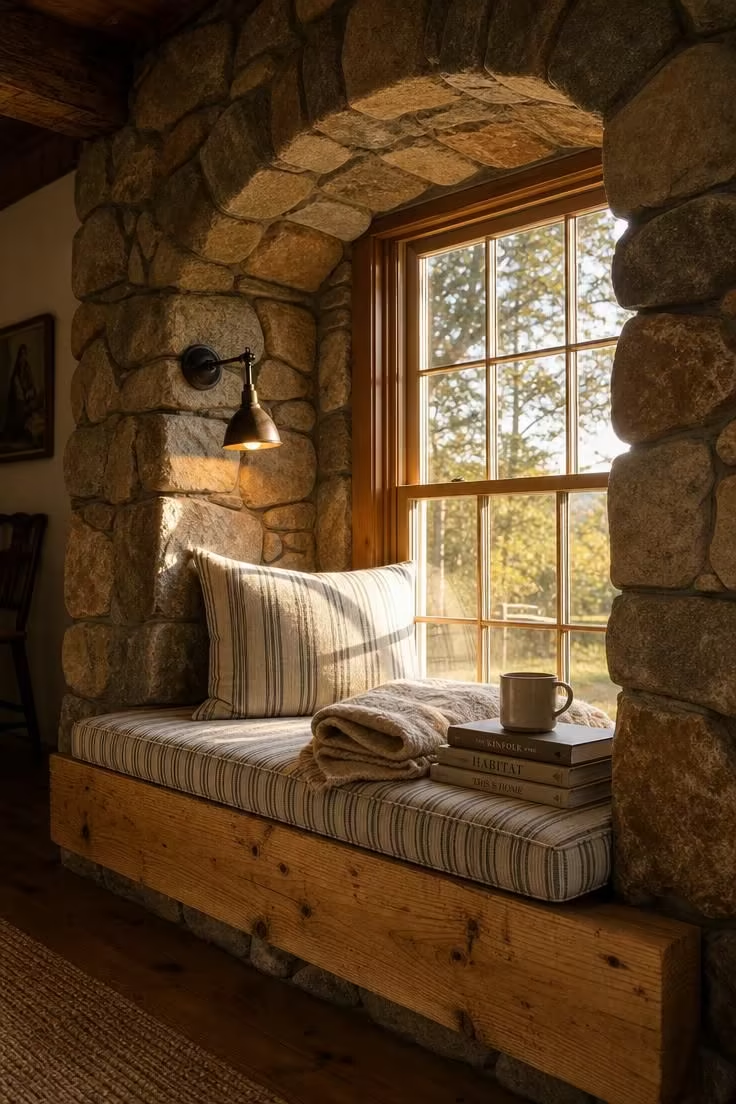
The weight of stacked fieldstone around a reading bench changes the way the whole corner feels.
Stone holds warmth and absorbs sound, so a nook framed by it stays quieter than one against drywall or painted wood.
Rough-sawn pine for the bench surface adds a second layer of texture that reads as handmade, even if the boards came from a local lumber yard.
The combination of hard stone and soft pine gives your eye two very different surfaces to move between, which keeps the space from looking flat.
A ticking-stripe cushion is the right choice here because its pattern is busy enough to feel comfortable but structured enough to match the clean lines of the bench.
Mounting a swing-arm sconce directly on the stone means you can angle the light exactly where you need it for reading without cluttering the bench with a table lamp.
This is the kind of rustic reading nook that looks like it has always been part of the house.
Style Blueprint:
- Rough-sawn pine planks (unfinished, with visible knots)
- Stacked fieldstone or river rock surround
- Ticking-stripe cushion in a neutral stripe
- Oil-rubbed bronze swing-arm wall sconce
- Oatmeal or charcoal wool throw blanket
Stacked Barnwood Crates as a Freestanding Book Tower Beside a Hide-Covered Ottoman
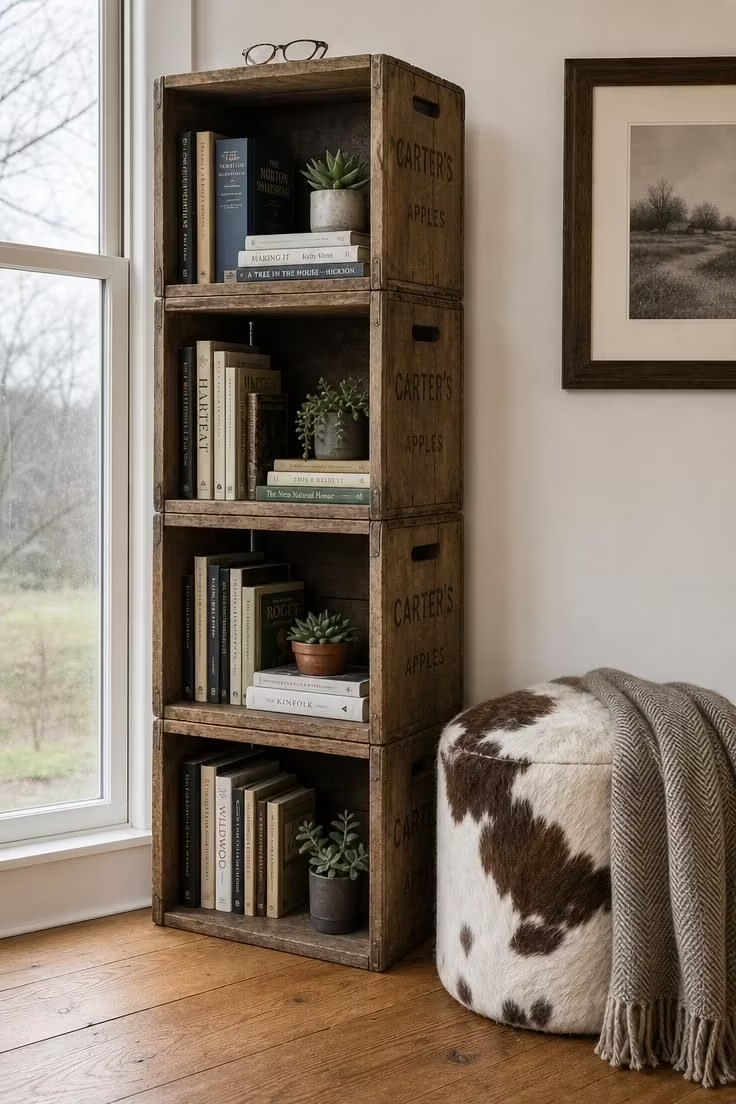
Old apple crates were built to hold weight, which makes them surprisingly good as open shelving when stacked vertically.
The irregular spacing between slats lets you see the wall behind each shelf, giving the tower a lighter feel than a solid bookcase.
Pairing this kind of reclaimed wood shelving with a cowhide ottoman keeps the look grounded and casual.
The reading nook cushions on the ottoman are thick enough to sit on for an hour or more, and the hide surface wears well over time.
Cool north-facing light is actually ideal for reading because it stays even throughout the day without creating harsh glare or shifting shadows.
This setup works in any room with a free corner and needs no installation or permanent changes.
Style Blueprint:
- Four salvaged apple crates (weathered barnwood)
- Round cowhide ottoman
- Herringbone wool blanket
- Small potted succulents for shelf styling
- Wide-plank wood floor beneath
An Iron-Framed Daybed With a Grain Sack Mattress in a Log Cabin Loft
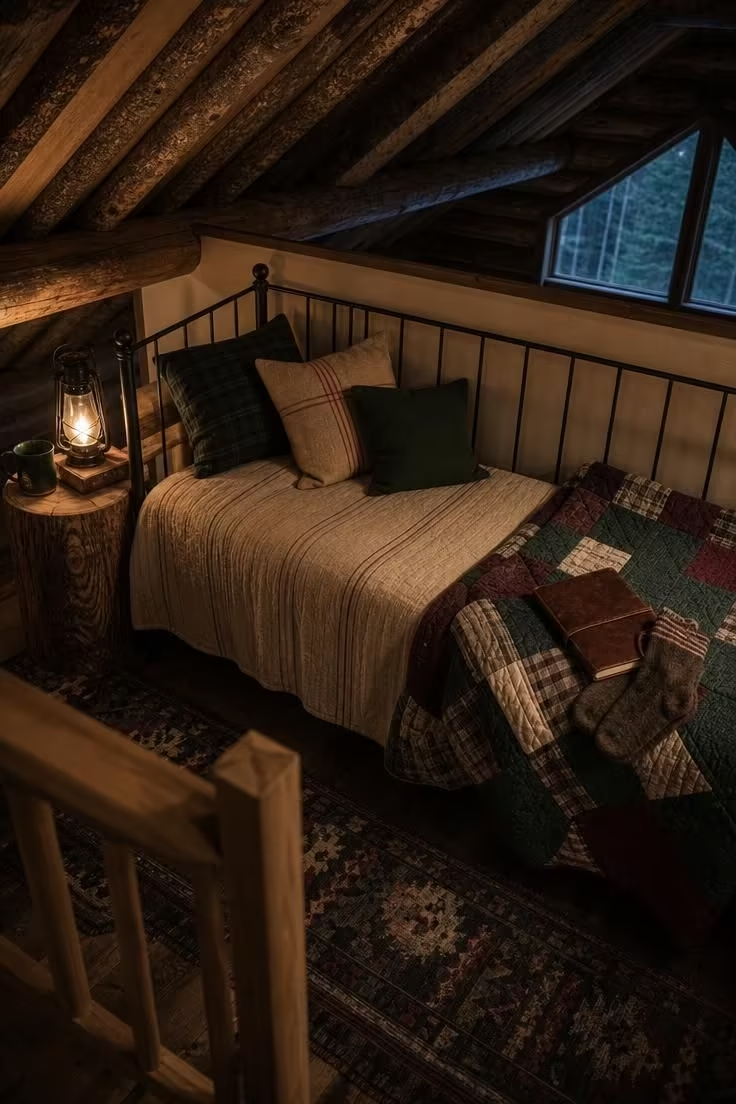
A loft space in a log cabin already has the bones of a great reading retreat, with low ceilings, exposed beams, and a sense of being tucked away from everything.
Adding a daybed rather than a chair gives you the option to stretch out fully, which matters during long reading sessions.
Grain sack linen has a history that fits perfectly here, as it was made to be durable and handled roughly, so it ages well and looks better over time.
The patchwork flannel quilt adds color without introducing a pattern that competes with the busy texture of log walls.
A hurricane lantern on a tree-stump side table gives this cabin reading corner a glow that no electric fixture can match.
The amber light bounces off the log surfaces and the iron frame in a way that softens the whole space.
This arrangement works best when you leave the styling sparse, letting the architecture and materials do the heavy lifting.
The fewer decorative objects you add, the more the eye focuses on the textures themselves.
Style Blueprint:
- Wrought-iron daybed frame (matte black)
- Antique grain sack linen mattress cover
- Patchwork flannel quilt in muted tones
- Tree-stump side table
- Hurricane lantern (glass and iron)
A Copper Tub Chair on a Braided Wool Rug Near a Cast-Iron Woodstove
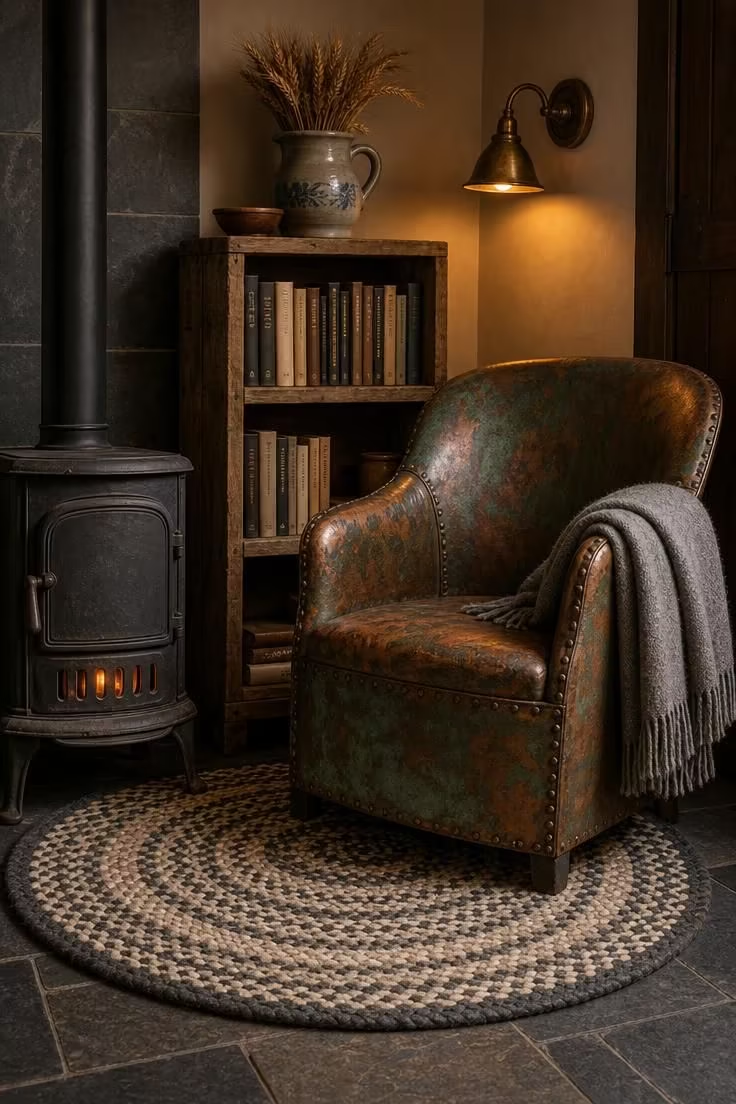
There is something about sitting near a woodstove that no other heat source can replicate.
The radiant warmth comes from one direction, which lets you feel the contrast between the heated side and the cooler air behind you.
A copper tub chair adds a material you do not see often in reading nooks, and its curved shape holds you in place in a way that feels different from a flat-backed seat.
The patina on aged copper shifts over years, developing green and brown tones that make the piece look more interesting the longer you own it.
A braided wool rug underneath absorbs the cold from a stone or tile floor and gives the whole cozy reading corner a defined boundary.
Keeping the bookshelf small and within reach means you never have to leave the warmth to find your next read.
Style Blueprint:
- Aged copper tub chair with visible rivets
- Braided wool rug in neutral tones
- Small cast-iron woodstove
- Three-shelf reclaimed wood bookstand
- Stoneware pitcher with dried wheat stalks
Design Pro-Tip: When placing a reading chair near a heat source like a woodstove, leave at least 30 inches of clearance between the chair and the stove body. This keeps the upholstery safe and gives you enough room to open the stove door without standing up.
A Hewn-Log Window Seat With Moss Green Canvas Cushions and Antler Bookends
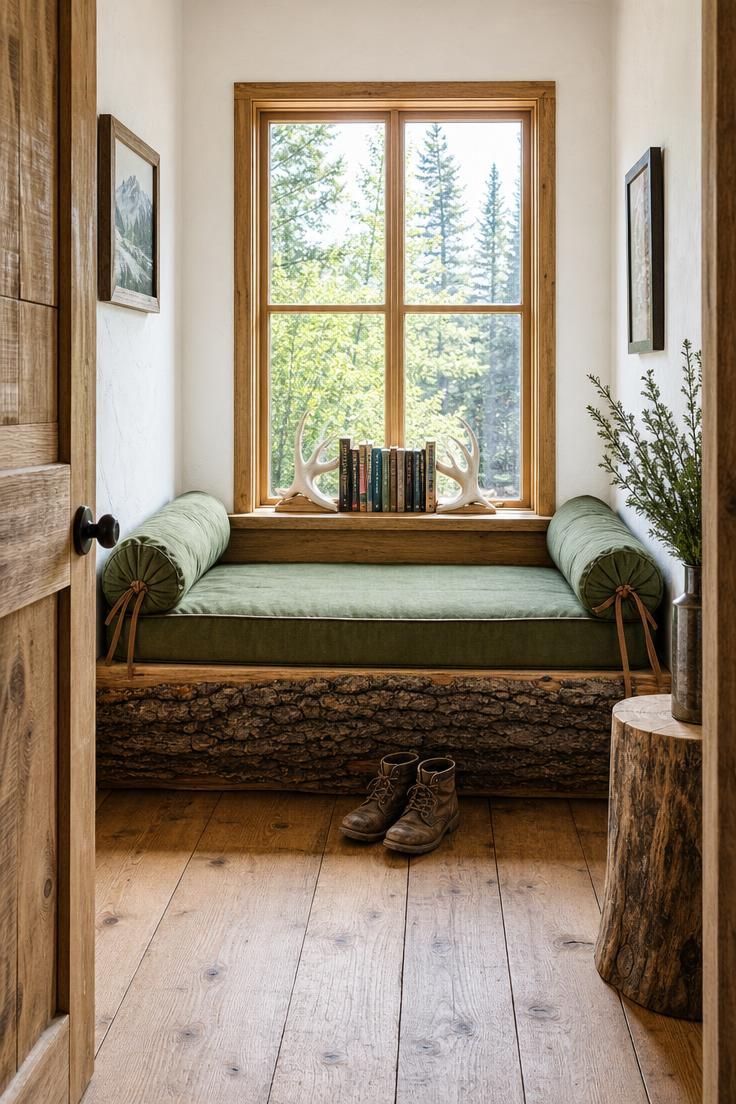
Hewn logs with their bark still attached bring the outside directly into the room in a way that no manufactured material can.
The irregular surface of each log means the front face of this window seat nook will have dips, ridges, and color variations that make it one of a kind.
Moss green canvas for the cushions pulls the outdoor connection even further, picking up the color of lichen and forest floor moss.
Leather-tied roll pillows are a better choice here than piped or zippered cushions because they match the handmade quality of the log frame.
Antler bookends are a practical detail that doubles as decoration, keeping a small rustic home library organized on the sill.
Midday light through an unobstructed window is the most honest light in a home, showing every texture and surface exactly as it is.
The boots on the floor are not a styling trick here; they suggest that this is a nook used by someone who spends time outdoors and comes inside to rest and read.
Leaving the plaster walls rough and whitewashed rather than smooth keeps the whole room at the same level of informality.
A space like this works best when nothing in it looks new or polished.
Style Blueprint:
- Hand-hewn half-log bench frame (bark edge visible)
- Washed canvas cushions in moss green
- Leather-tied roll pillow pillows
- Shed antler bookends
- Whitewashed plaster walls
A Suspended Driftwood Shelf Above a Burlap-Wrapped Floor Pallet
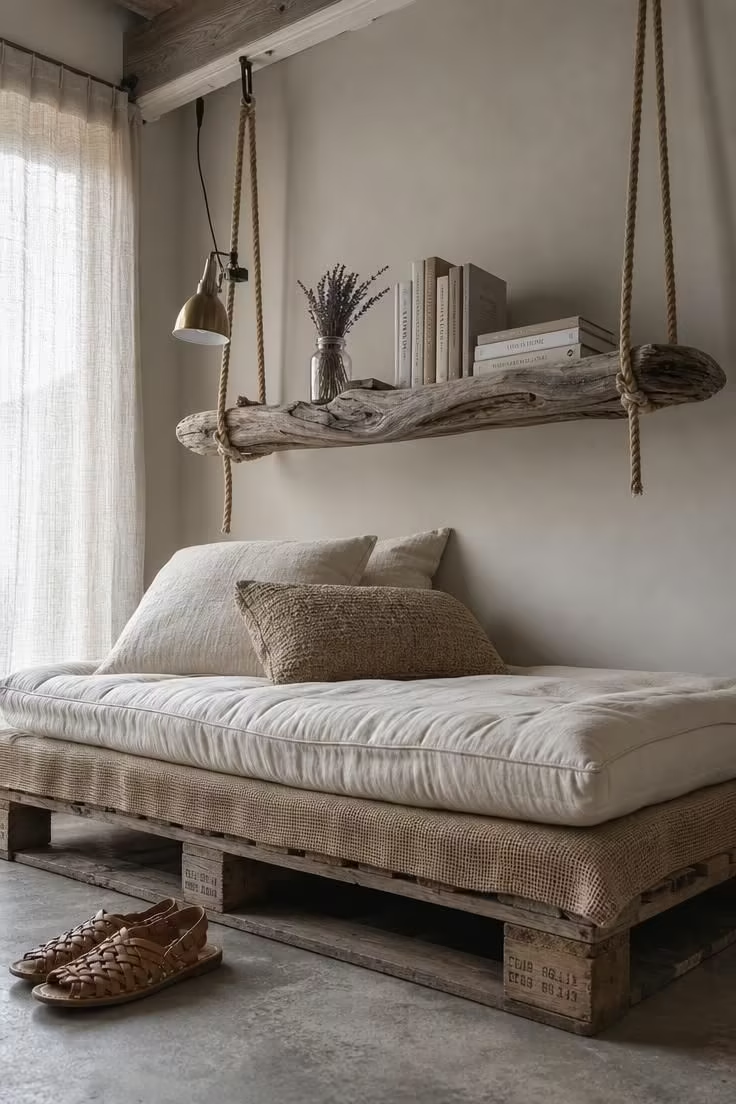
Sitting on the floor changes the way you experience a room, and a pallet-based reading spot makes that feel intentional rather than makeshift.
Wrapping the pallet in burlap hides the rough lumber underneath and gives the whole base a uniform texture that reads as a piece of furniture.
The driftwood shelf overhead serves a purpose that a regular wall shelf could fill, but the shape and color of sun-bleached wood adds character that milled lumber cannot.
Manila rope as the hanging material is strong enough to hold a full shelf of books while looking like it belongs on a dock or a sailboat.
A clip-on brass lamp attached to the rope is the kind of practical, no-fuss reading nook lighting that works when you do not have a wall outlet nearby.
This farmhouse reading spot has a coastal crossover that works in beach houses, lake cabins, or any room where you want the atmosphere to feel loose and unstructured.
The key is keeping the palette limited to natural, undyed materials so nothing fights for attention.
Style Blueprint:
- Large driftwood plank (sun-bleached)
- Thick manila rope for suspension
- Shipping pallet wrapped in burlap
- Unbleached muslin-covered cotton mattress pad
- Brass clip-on reading lamp
A Stone Cottage Windowsill Lined With Beeswax Candles and a Linen Roll Pillow
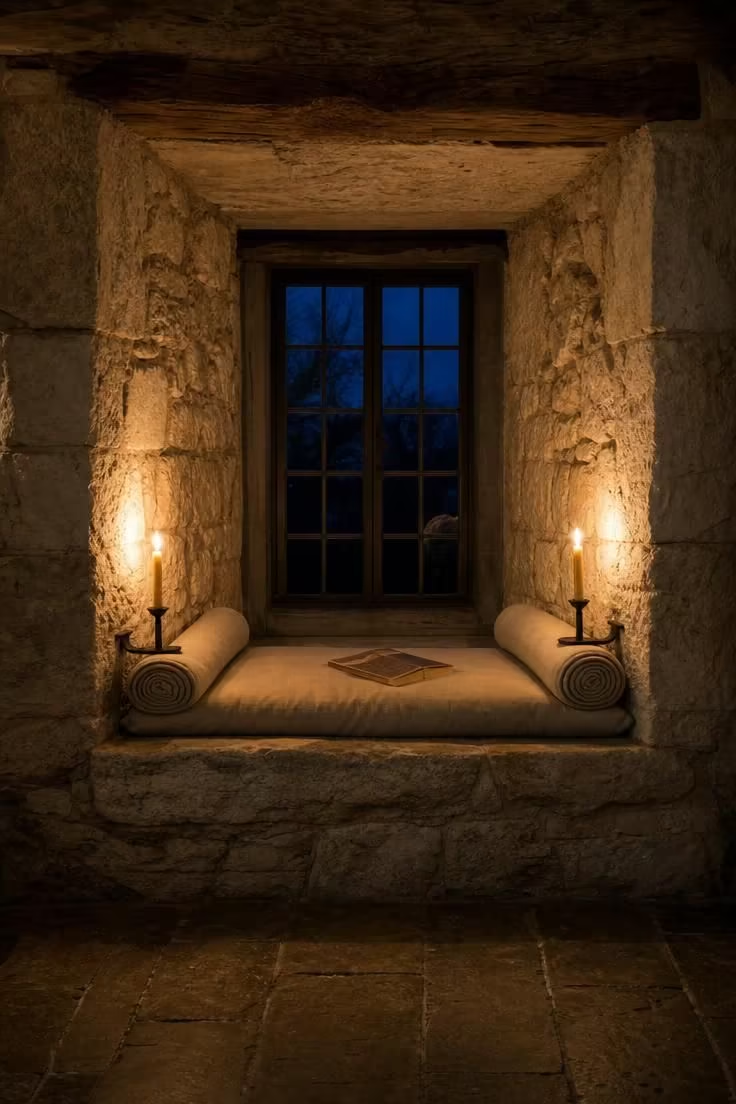
Thick stone walls create windowsills deep enough to sit in, which is a feature that modern construction rarely offers.
The depth of the recess wraps around you on three sides, blocking peripheral distractions and narrowing your field of view to just the book and the window.
Beeswax candles give off a warm, slightly sweet scent that no electric light can replicate, and their flicker adds a gentle movement to the space.
Iron holders are the right match because they will not look out of place against centuries-old stone.
This is a reading nook that works best in the evening, when the candlelight and the darkening sky outside create a contrast that makes the small space feel like a world of its own.
Style Blueprint:
- Deep stone windowsill (18+ inches)
- Long linen roll pillow in oatmeal
- Beeswax taper candles
- Simple iron candle holders
- Small multi-pane casement window
Design Pro-Tip: If your home does not have deep stone windowsills, you can build a similar effect by framing a shallow window with thick reclaimed timbers on three sides and adding a plank seat at sill height. The visual depth tricks the eye the same way.
A Knotty Alder Built-In Alcove With Wrought-Iron Curtain Rod and Burlap Panels
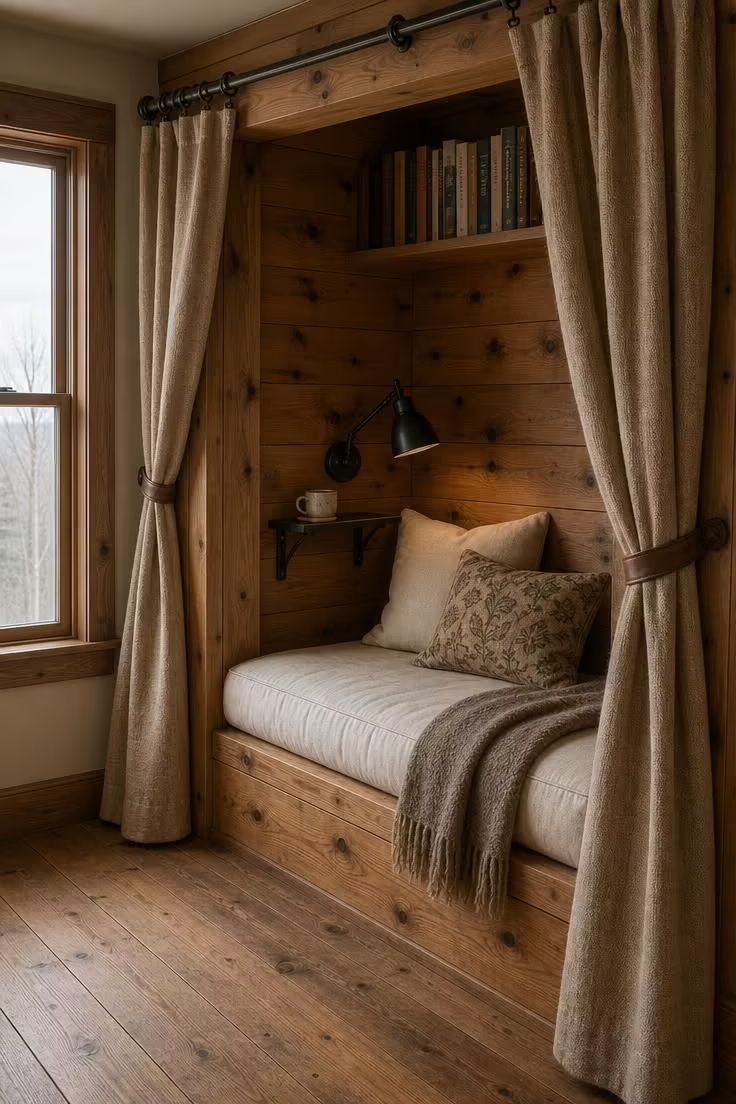
A built-in book nook works best when it feels like a separate room, even if it is only three feet deep.
Knotty alder has a warmth and character that makes the inside of the alcove glow, with dark knots creating a natural pattern across every surface.
Adding a curtain rod with burlap panels gives you the option to close yourself off completely, which changes the reading experience from “sitting in a corner” to “disappearing into a private space.”
Burlap is heavier than most curtain fabrics, so it hangs straight and blocks more light and sound than you might expect.
The feather cushion inside is a deliberate choice over foam because it conforms to your body and settles deeper the longer you sit.
A small iron wall shelf replaces the need for a side table, keeping the floor of the alcove clear for your feet or an extra pillow.
The overhead book shelf inside the alcove means your reading material is always within reach without leaving the nook.
This is the kind of reading nook cushions arrangement that makes you lose track of how long you have been sitting.
Style Blueprint:
- Knotty alder tongue-and-groove planks
- Wrought-iron curtain rod
- Burlap curtain panels with leather ties
- Thick feather-filled cushion in cream linen
- Small iron wall shelf with clip lamp
A Wagon Wheel Headboard Leaned Against Whitewashed Brick With Flannel Floor Pillows
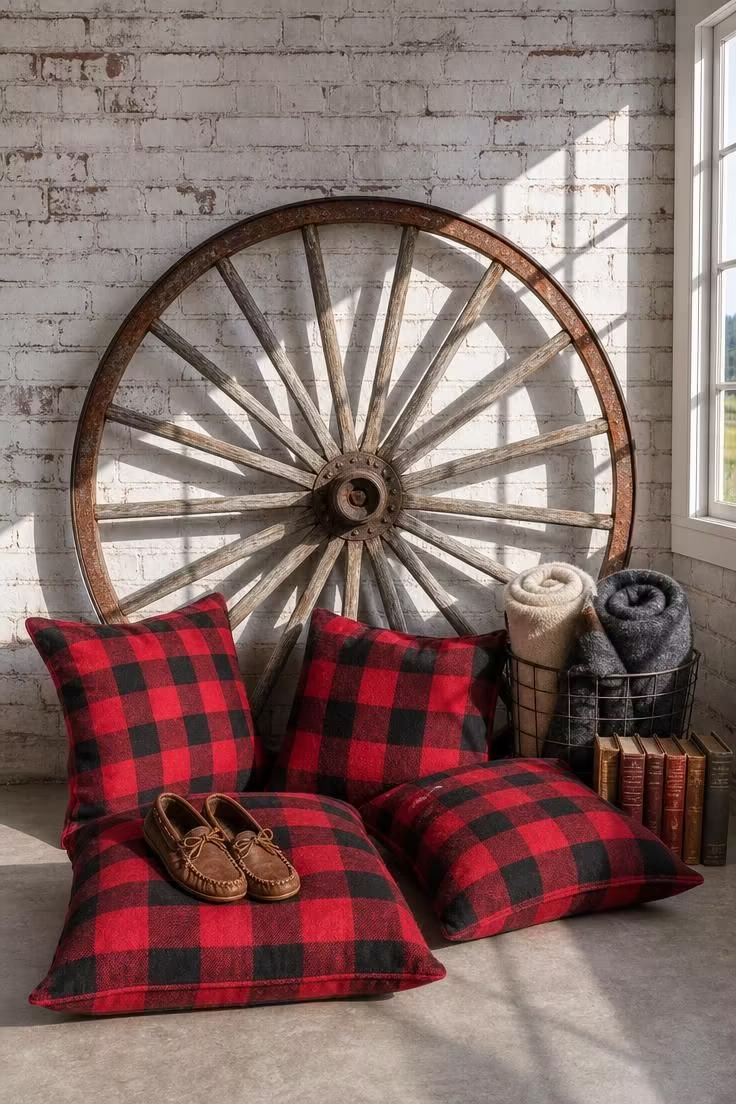
The wagon wheel is doing purely decorative work here, but it anchors the wall and gives the floor pillows a visual frame that makes the arrangement look deliberate.
Whitewashed brick is one of the best backgrounds for rustic pieces because the white surface lets the texture of the brick show through without competing with the objects in front of it.
Buffalo check flannel is a pattern that signals comfort immediately, and oversized floor pillows covered in it create a rustic window bench alternative that costs very little.
This is a ground-level reading setup, which means you lean back against the wall rather than sitting upright, and that changes the way your body relaxes while reading.
A wire basket for blankets keeps the extras organized and visible, so guests know they are welcome to grab one.
The spoke shadows cast by midday sun add a graphic element to the whole scene that changes throughout the day as the light moves.
Style Blueprint:
- Antique wooden wagon wheel (weathered gray)
- Whitewashed brick wall
- Oversized buffalo check flannel floor pillows
- Wire basket for rolled blankets
- Short stack of vintage hardcovers
Design Pro-Tip: Floor-level reading spots work best against walls that have some texture, like brick, stone, or rough plaster. A flat painted wall behind floor pillows can look unfinished, but a textured surface gives the arrangement a backdrop that makes it feel planned.
A Split-Rail Fence Frame Reading Corner Under a Corrugated Tin Awning
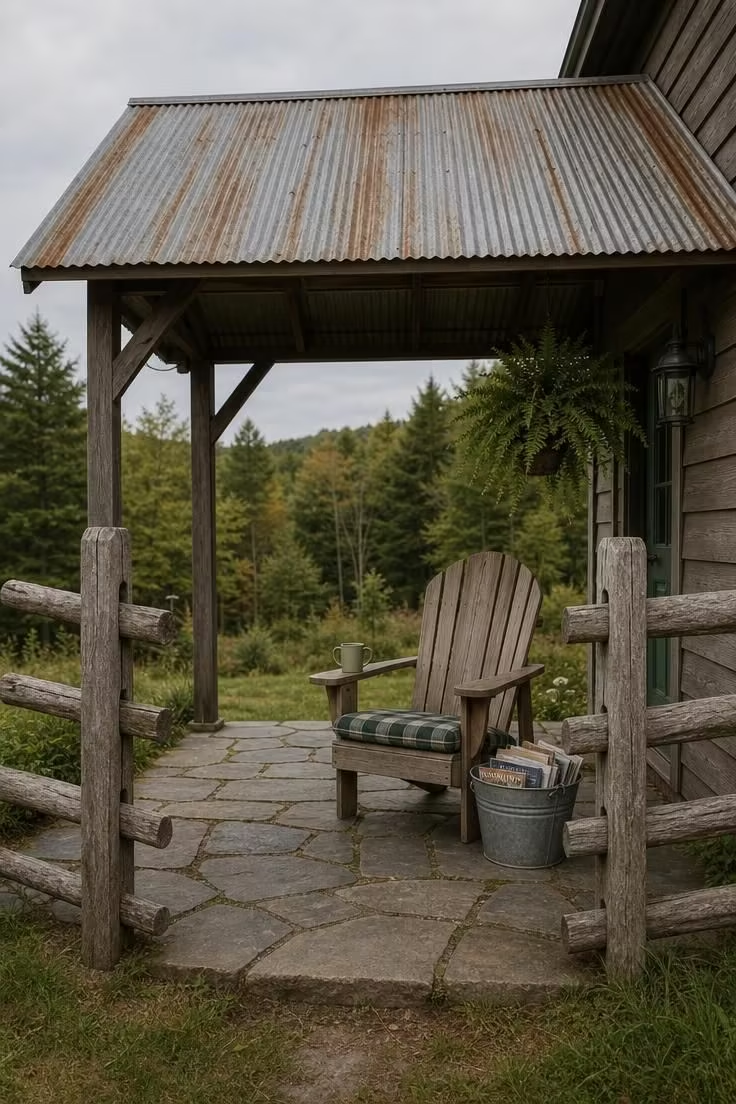
Moving a reading spot outside, even partially, changes the experience in ways you do not fully appreciate until you try it.
The sounds of wind, birds, and rustling leaves replace the silence of an indoor room, and that background noise can actually help with focus.
Split-rail fencing as a frame is a material choice that connects directly to rural and agricultural history, which grounds the whole space in a specific place and time.
Corrugated tin overhead serves a practical purpose, keeping rain off the chair and books, but its aged patina and rust streaks also add visual interest that a clean roof would not.
An Adirondack chair is one of the best seats for long reading sessions because its reclined angle supports your neck and the wide arms hold a mug or a book face-down.
A galvanized bucket is an unexpected but fitting stand-in for a magazine rack in this outdoor cabin reading corner.
The flagstone patio underfoot keeps the space grounded and level, preventing the chair from rocking on uneven ground.
Style Blueprint:
- Split-rail fence sections (repurposed)
- Corrugated tin lean-to awning
- Weathered cedar Adirondack chair
- Plaid wool seat pad in hunter green
- Galvanized bucket for books and magazines
A River-Rock Hearth Ledge With a Sheepskin Throw and Iron Candelabra
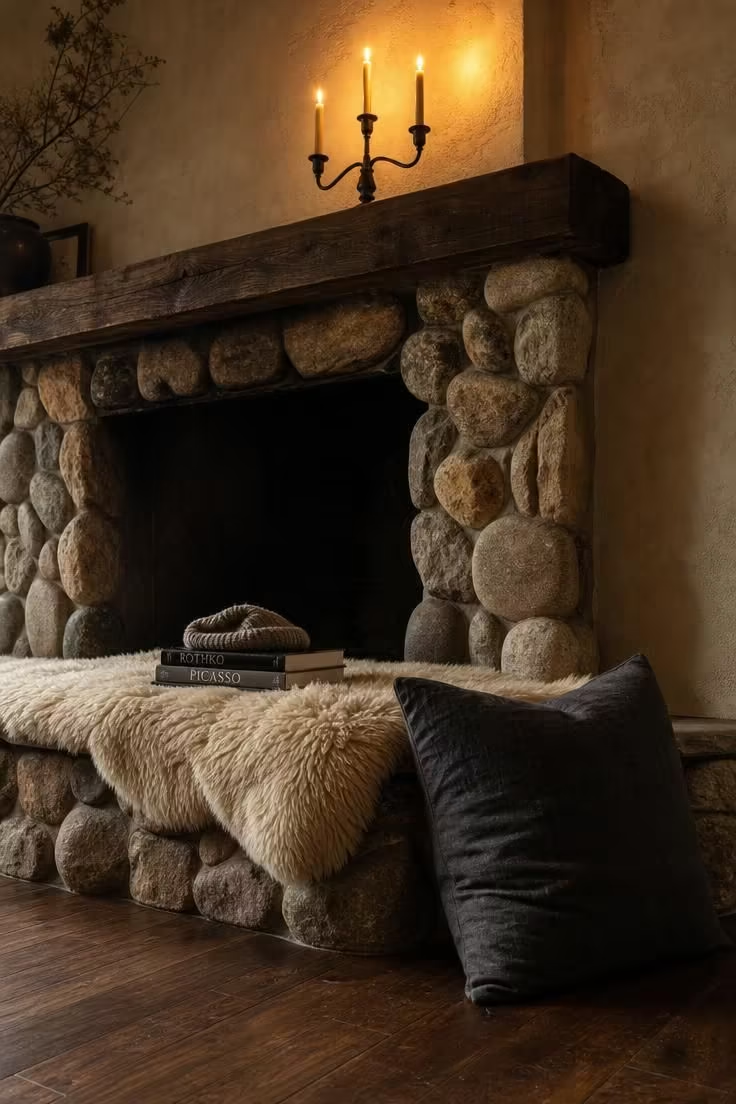
A hearth ledge is one of the most underused surfaces in a home, and it is wide enough to sit on in most older houses.
The rounded shapes of river rock under a sheepskin create a surface that has more give than you would expect, because the fleece padding fills the gaps between the stones.
Sitting at hearth level puts you lower than every other seat in the room, which creates a feeling of being grounded and enclosed even in a large space.
The unlit fireplace behind you becomes a dark backdrop that focuses attention forward, toward your book and the candlelight above.
An iron candelabra on the mantel is a farmhouse reading spot detail that serves double duty as both light source and sculptural object.
Beeswax tapers burn slowly and cleanly, giving you a reliable hour or two of reading light before they need replacing.
The charcoal linen floor cushion as a backrest is firm enough to hold its shape but soft enough to lean into comfortably.
This is the kind of space that works best in cooler months, when the stone holds a chill that the sheepskin and candlelight counterbalance.
Style Blueprint:
- Wide river-rock hearth ledge
- Natural cream sheepskin throw
- Oversized charcoal linen floor cushion
- Three-arm iron candelabra
- Beeswax taper candles
Conclusion
A rustic reading nook does not need to be complicated or expensive to feel right.
The ideas here rely on materials that are often available secondhand or locally, from barnwood crates and driftwood planks to old wagon wheels and river rock.
The thread connecting all 11 is a respect for raw texture and aged surfaces, paired with just enough softness to make sitting for an hour feel natural.
Whether you build a full alcove with knotty alder planks or simply pile flannel pillows under a wagon wheel, the result is the same: a corner of your home that is quiet, warm, and entirely yours.