This post may contain affiliate links. If you make a purchase through these links, we may earn a commission at no additional cost to you.
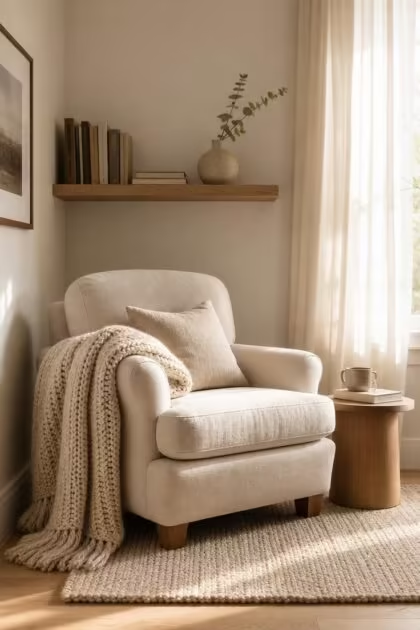
A reading nook aesthetic starts with one simple decision: choosing a corner that deserves more attention than it currently gets.
The right chair, a few layered textures, and a single well-placed lamp can turn a forgotten spot into the most used seat in the house.
These 12 reading nook aesthetic ideas cover a range of styles, from minimal floor-level setups to full built-in alcoves.
Each one pairs a specific piece of furniture with a distinct mood, so you can find the reading corner ideas that match your space and your taste.
A Boucle Swivel Chair for a Warm Reading Nook Aesthetic
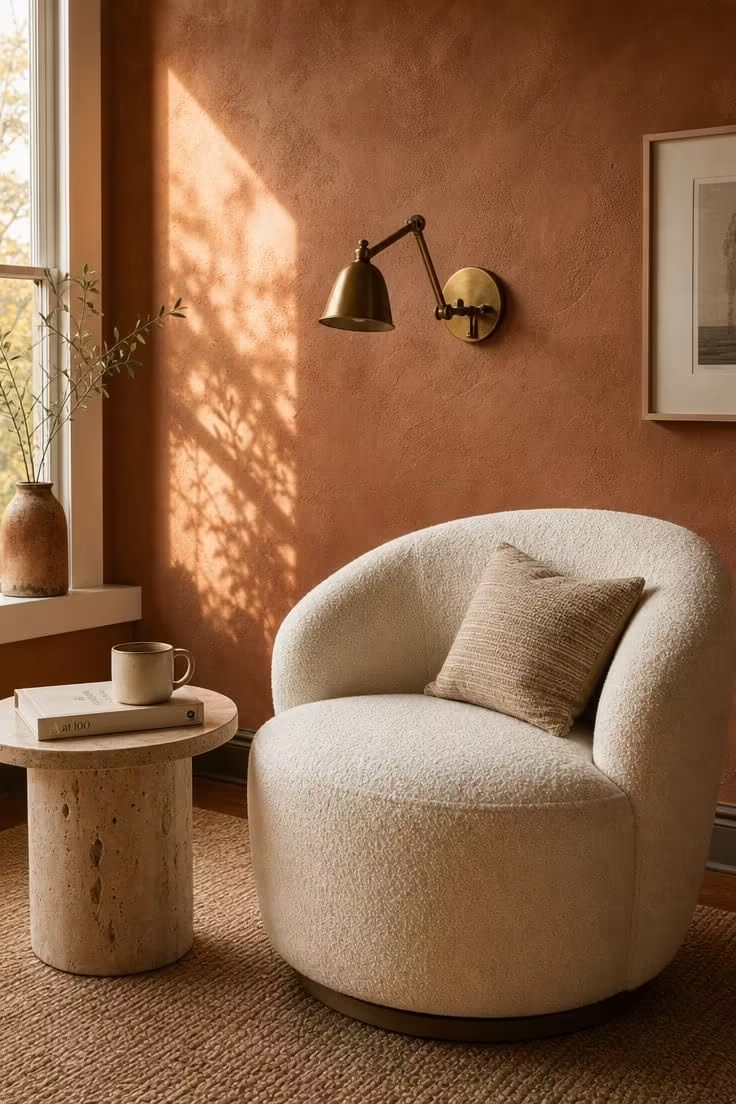
The boucle texture on this swivel chair does something unexpected against a hand-applied limewash wall.
It softens the raw mineral finish without competing with it, creating a reading nook aesthetic that feels grounded and warm at the same time.
The terracotta tone of the limewash brings an earthy depth to the corner, making it feel older and more settled than a fresh paint job ever could.
A travertine side table picks up the same tonal family without matching too precisely, which keeps the arrangement from looking like a catalog page.
The brass swing-arm sconce is the only metal in the scene, and that restraint gives it more presence.
Swiveling the chair to face different directions through the day changes the reading nook design entirely, from a window-facing morning seat to an inward-facing evening corner.
One detail worth borrowing: the jute rug grounds everything without adding visual noise.
Style Blueprint:
- Boucle swivel chair in cream or oatmeal
- Limewash wall finish in terracotta or pale clay
- Round travertine side table
- Brass swing-arm wall sconce
- Natural jute area rug
Linen Curtain Canopy Over a Daybed With Olive Cushions
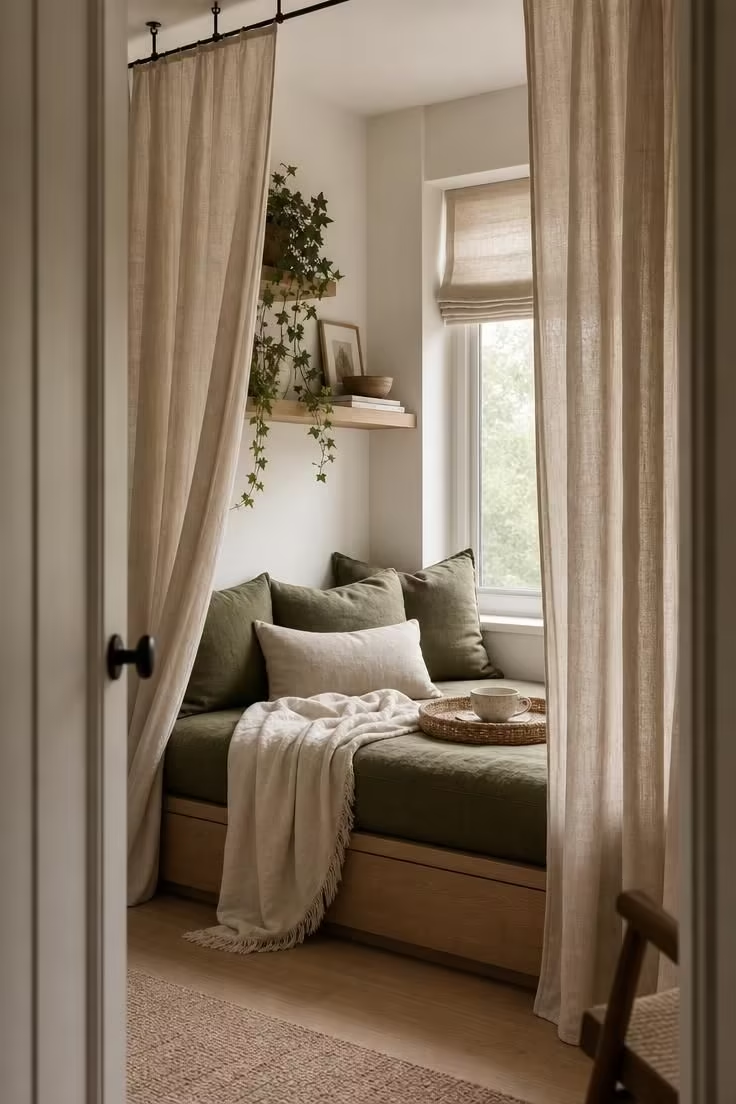
Hanging linen panels from the ceiling creates instant enclosure without construction or permanent changes.
The fabric filters light rather than blocking it, giving this cozy reading corner a gentle haze that feels restful rather than dark.
Olive green cushions bring a natural color that works across seasons, never too heavy in summer or too light in winter.
The daybed format invites more than sitting upright, and that shift in posture changes how you relate to a book.
A woven tray keeps the surface organized and prevents the reading nook cushions from disappearing under scattered objects.
This setup fits bedrooms, living rooms, and even wide hallways where a standard chair would feel too formal.
Style Blueprint:
- Sheer linen curtain panels with ceiling hooks
- Daybed or wide bench with deep cushion
- Olive and cream linen pillow set
- Woven rattan tray
- Floating shelf with trailing greenery
A Cane-Back Accent Chair on a Vintage Persian Rug
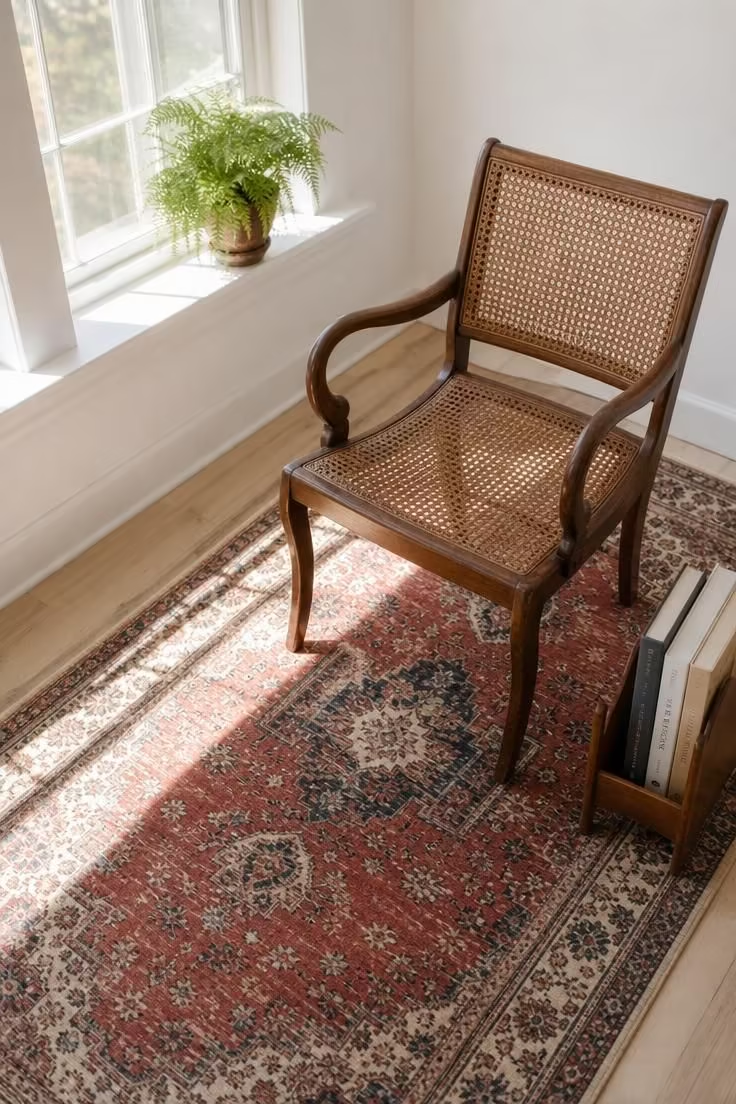
A cane-back chair looks lightweight even when it fills a corner, which makes it a smart pick for a small reading nook that needs to breathe.
The woven cane panel adds texture at eye level, drawing attention upward and making the seat feel more intentional than a simple upholstered option.
Pairing it with a vintage Persian rug creates a reading nook aesthetic built on contrast: the clean geometric cane against the organic, hand-knotted pattern.
Faded rugs work better here than saturated ones because they let the chair remain the focal point.
A slim bookstand takes up less floor space than a side table and keeps a small rotation of current reads within arm’s reach.
Bright midday light is the friend of this kind of setup, because it reveals the weave of the cane and the subtle color shifts in an old rug.
The white walls and pale floor act as negative space, which is exactly what a visually detailed reading chair needs around it.
This combination works in bedrooms, sunrooms, and living room corners where a full bookshelf would overwhelm the wall.
Style Blueprint:
- Natural cane-back accent chair
- Faded vintage Persian rug in muted tones
- Slim wooden bookstand or magazine rack
- Potted fern on the windowsill
- White or off-white wall backdrop
Built-In Arched Alcove With Plaster Finish and Sheepskin
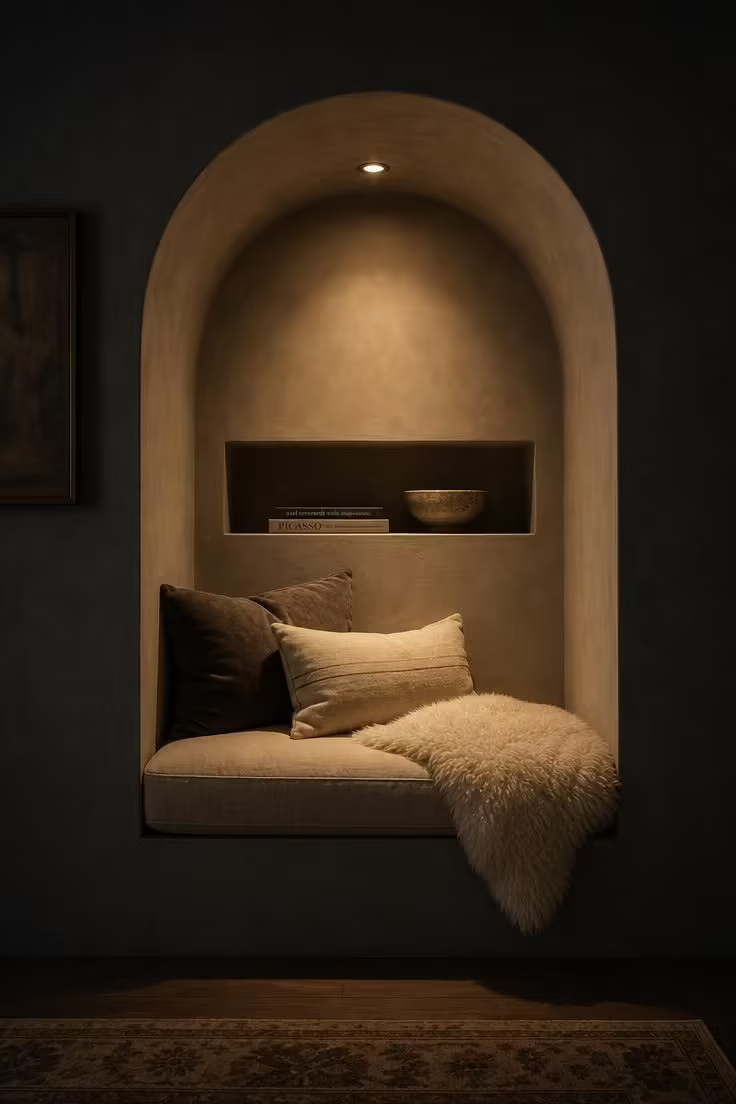
There is something about an arch that changes the way a reading nook feels.
The curved shape overhead creates a sense of shelter that flat ceilings and square walls cannot replicate, and it draws the eye inward like a frame around the person sitting inside.
A plaster finish on the interior surface gives the alcove warmth and irregularity, catching the recessed reading nook lighting in soft, uneven patterns.
The sheepskin adds a layer of comfort that is as much visual as it is tactile, its pale texture standing out against the linen bench cushion.
A recessed shelf within the arch means books stay within reach without cluttering the seat.
This is a reading nook design that rewards the investment of building it out, because every element is contained and considered.
Style Blueprint:
- Built-in arched alcove with plaster or limewash interior
- Deep linen bench cushion fitted to the alcove
- Sheepskin or faux sheepskin throw
- Recessed LED reading light
- Small built-in shelf for books
Design Pro-Tip: When choosing reading nook lighting, pick a fixture with a color temperature between 2700K and 3000K. Cooler light makes a cozy corner feel clinical, and anything warmer than 3000K can make text on a page hard to read. A swing-arm sconce or adjustable recessed light lets you direct the beam exactly where you need it.
A Hanging Rattan Chair With Chunky Knit Throw
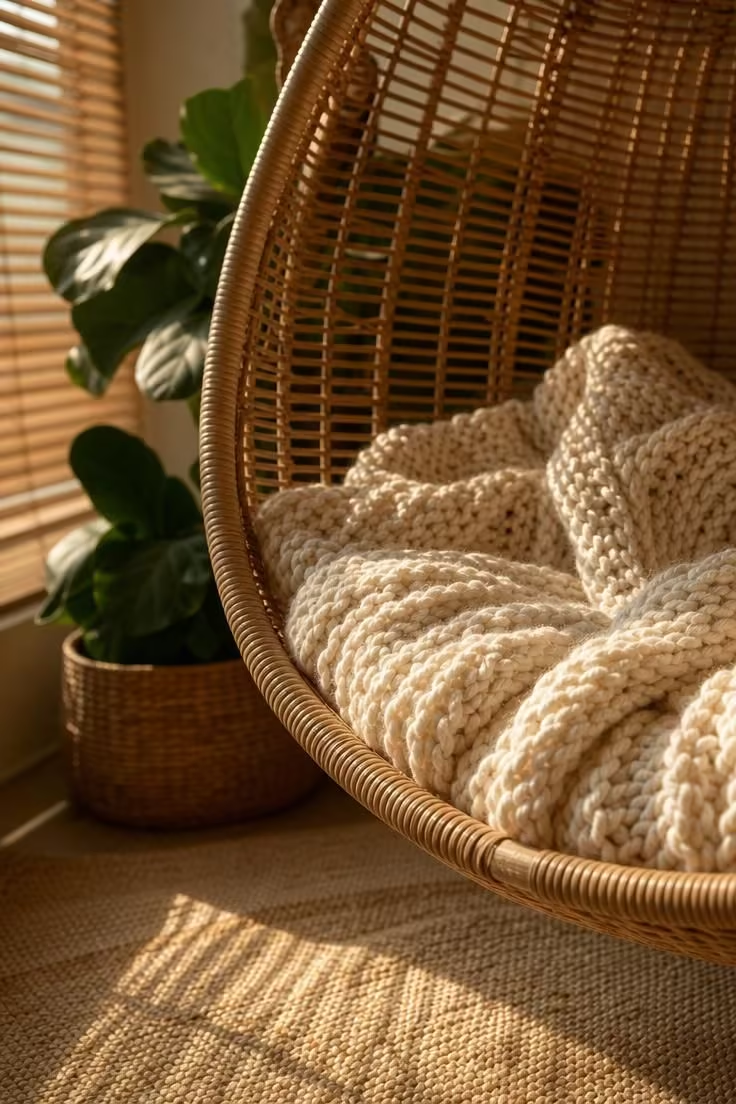
A hanging chair changes the reading experience from the ground up, literally.
The gentle rocking motion that comes from a ceiling-mounted seat creates a rhythm that most people find deeply calming, and it pairs naturally with the pace of turning pages.
Rattan as a material keeps the chair from feeling heavy, even at this scale, because light passes through the weave and softens the silhouette.
The chunky knit throw is not just decorative here, it fills the curved seat and creates a nest-like pocket that makes you sink in rather than perch.
A reading nook aesthetic built around a hanging chair always photographs well because it introduces a strong shape that breaks the horizontal lines of furniture around it.
The fiddle leaf fig in the background adds a second organic form without competing for attention.
Sisal underfoot absorbs sound and keeps the area grounded, which matters in open-plan rooms where a floating chair might otherwise feel disconnected.
This setup needs a ceiling joist or beam strong enough to support 250 pounds, so check the structure before you commit.
One practical note: keep the throw washable, because this will become the most-used seat in the house.
Style Blueprint:
- Egg-shaped hanging rattan chair with ceiling mount
- Chunky knit throw in cream or ivory
- Pale sisal or jute rug underneath
- Fiddle leaf fig or tall potted plant nearby
- Wooden blinds or woven shade on the nearest window
Dormer Window Bench With Striped Ticking Fabric
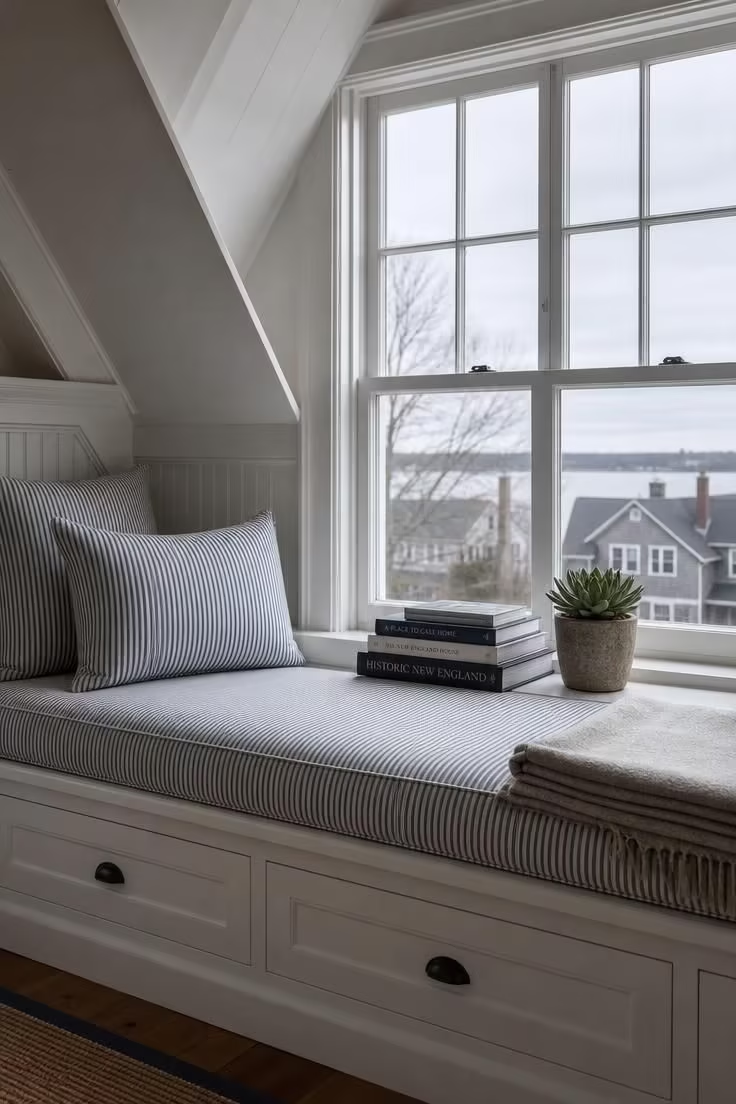
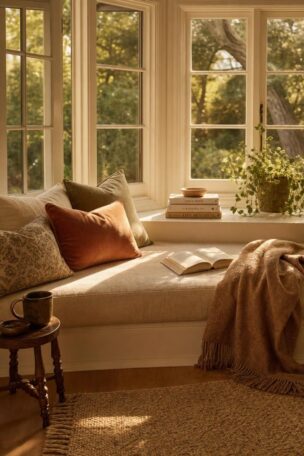
A dormer window already has the architecture of a reading nook built into its bones.
The angled ceiling and recessed window create natural walls on three sides, giving you enclosure without adding a single panel or curtain.
Ticking stripe fabric is a deliberate choice here because its clean, repeating lines echo the geometry of the window panes and beadboard.
The window seat nook format works so well for reading because the light source sits directly behind you, falling over your shoulder and onto the page.
Keeping the color palette to blue, white, and natural tones lets the architectural details carry the visual weight.
A folded wool blanket at the end of the bench suggests comfort without covering the fabric, and the dove shade prevents it from reading as ash or silver in this cool light.
This is the kind of cozy reading corner that makes attic rooms and upper-floor bedrooms feel worth the climb.
Style Blueprint:
- Built-in dormer bench with hinged storage lid
- Ticking stripe cushion in blue and white
- White-painted beadboard paneling
- Folded wool blanket in a muted neutral
- Small potted succulent on the windowsill
Dark Olive Walls for a Moody Reading Nook Aesthetic
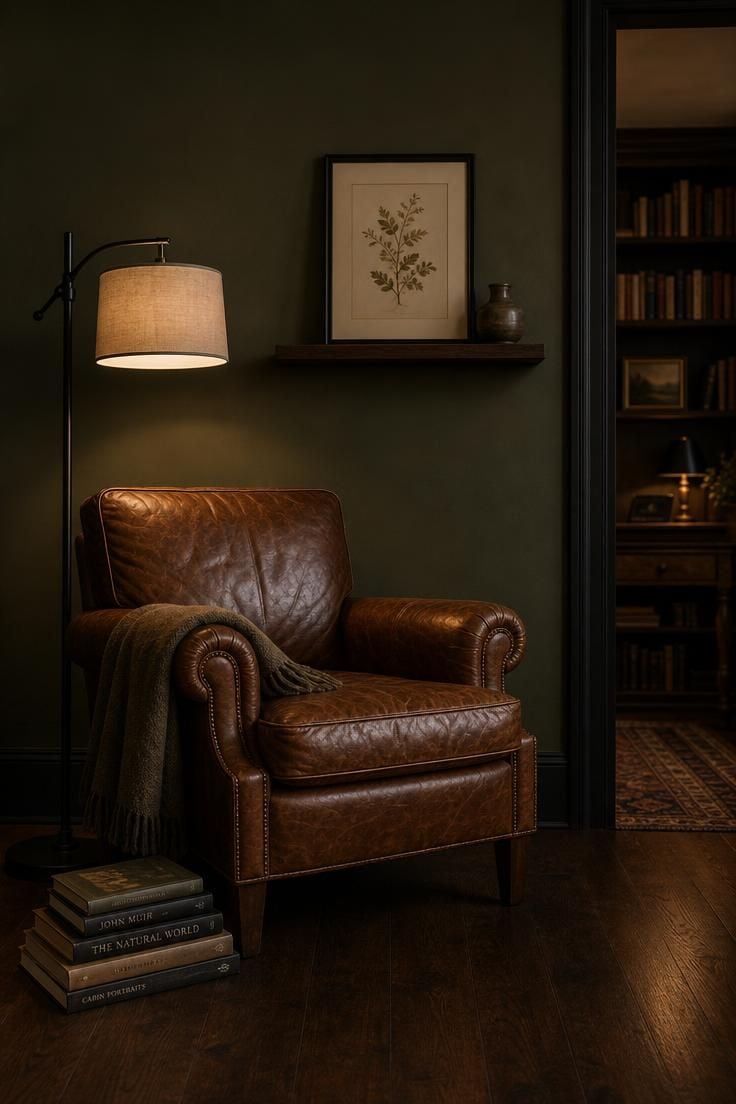
Deep olive on the walls does something that lighter greens cannot.
It absorbs light instead of reflecting it, which makes a reading corner feel enclosed and private even in the middle of an open room.
A cognac leather armchair warms against that depth, its patina telling a story that new furniture never could.
Over time the leather develops creases and color variations that make the reading chair look more personal, not more worn.
The matte black floor lamp with its linen shade provides directed light without introducing a second color into the metal palette.
Stacking books directly on the floor beside the chair is a styling choice that signals casual use, as if this corner gets daily attention rather than weekend visits.
A single floating shelf above with one framed print and one ceramic piece is enough to finish the wall without cluttering it.
This reading nook aesthetic leans toward a dark academia mood without tipping into costume territory, because the materials are honest and the arrangement is simple.
Style Blueprint:
- Deep olive wall paint (matte or eggshell finish)
- Worn cognac leather armchair
- Matte black floor lamp with linen drum shade
- Narrow floating shelf with a single framed print
- Dark walnut or espresso hardwood floor
A Japanese-Inspired Floor Cushion and Low Wood Shelf
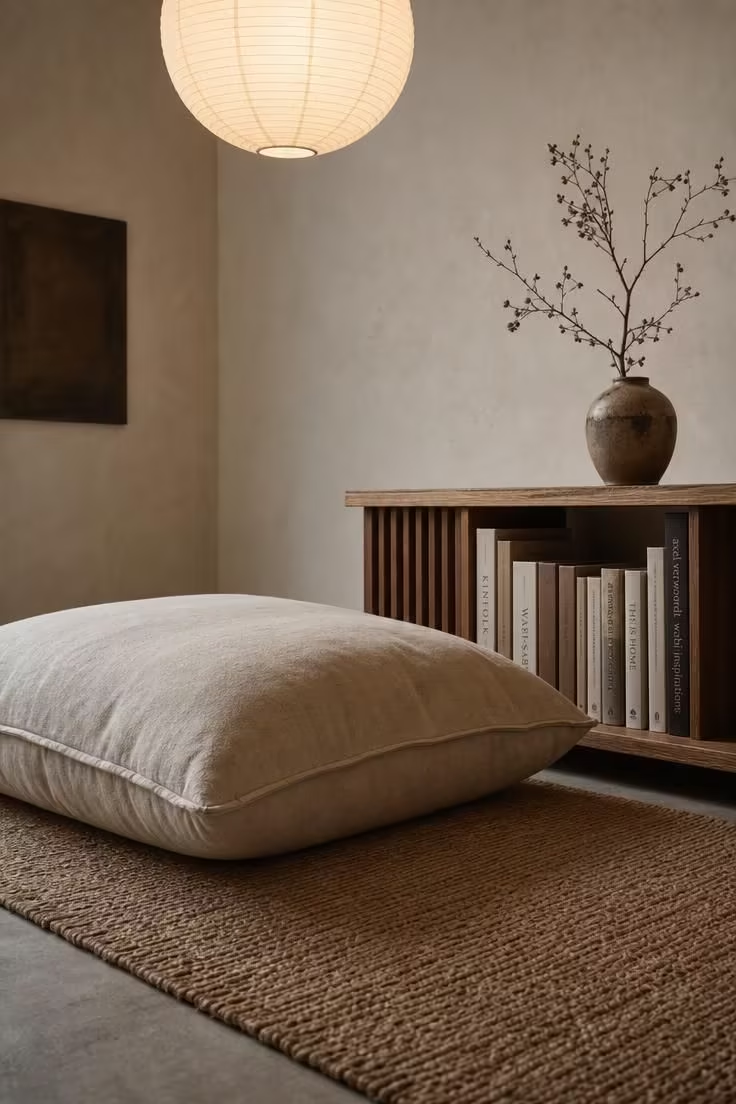
Sitting close to the ground changes the way a room feels around you.
Walls seem taller, ceilings more distant, and the reading nook itself becomes a contained zone defined by the rug beneath you rather than the furniture beside you.
A low slatted wood shelf keeps books accessible without stacking them vertically, and the horizontal display turns the spines into part of the room’s visual rhythm.
The dried branch in a ceramic vase is a single gesture that signals intention without decorating.
This reading nook design draws from Japanese residential interiors where negative space holds as much value as the objects in it.
A paper-shaded pendant overhead softens the reading nook lighting into a warm, even glow without harsh shadows.
Style Blueprint:
- Oversized linen floor cushion (at least 30 inches square)
- Low slatted wood shelf (under 18 inches tall)
- Textured jute or sisal rug
- Ceramic vase with a single dried branch
- Paper-shaded pendant light
Design Pro-Tip: When planning a small reading nook, measure the depth of the seat or cushion before you commit to a location. You need at least 24 inches of depth for a comfortable sit, and 30 inches if you plan to tuck your legs under you. Many corners look big enough at a glance but fall short once the cushion is in place.
Floating Oak Shelves Around a Velvet Wingback
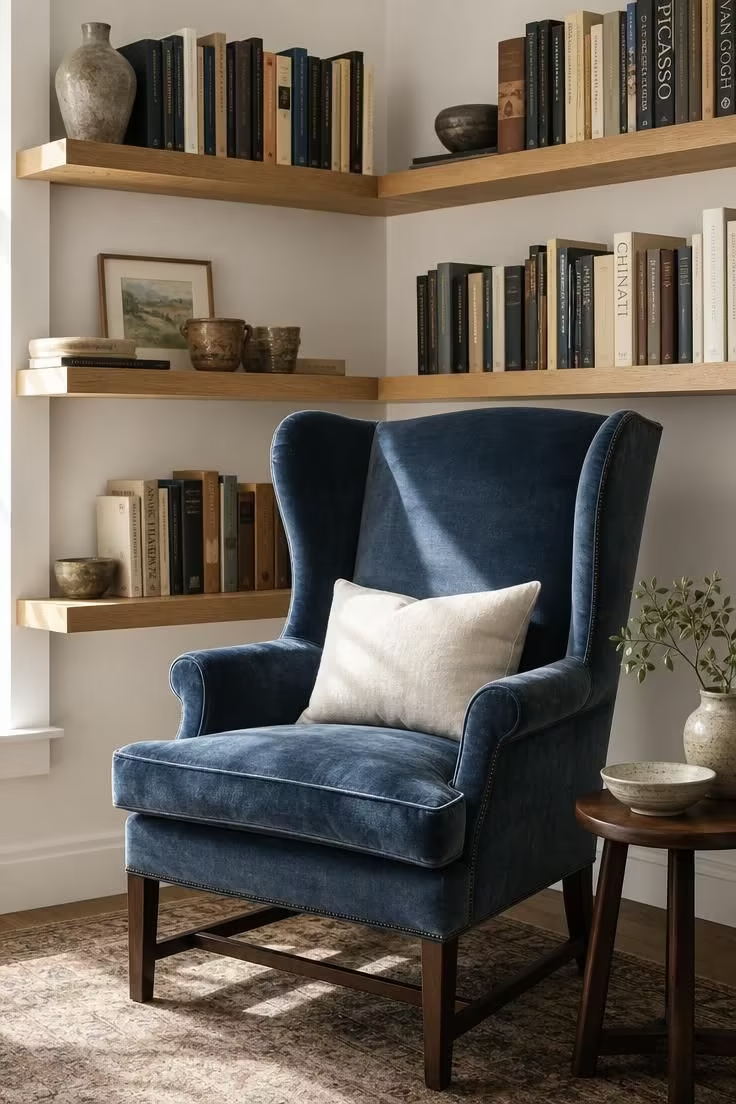
The wingback silhouette has a built-in reading function that most modern chairs have abandoned.
Those tall side panels direct your peripheral vision forward and create a sense of enclosure that works the same way as walls around a reading nook.
Dusty blue velvet brings depth without the weight of a dark neutral, and the way velvet shifts tone when light hits it at different angles keeps the reading chair from feeling flat.
Floating oak reading nook shelves on two adjacent walls wrap the chair in books without building a full bookcase.
The oak tone against white walls creates a warm frame that holds the entire composition together.
Keeping a few ceramic pieces among the books breaks the rhythm of spine after spine and adds personality.
A cream linen pillow in the seat softens the upright formality of the wingback without hiding the velvet.
Style Blueprint:
- Velvet wingback chair in dusty blue or sage
- Floating oak shelves (two to three per wall)
- Books arranged by height with small ceramic accents
- Cream or natural linen lumbar pillow
- White wall backdrop for maximum contrast
Closet Converted Into a Cushioned Book Nook
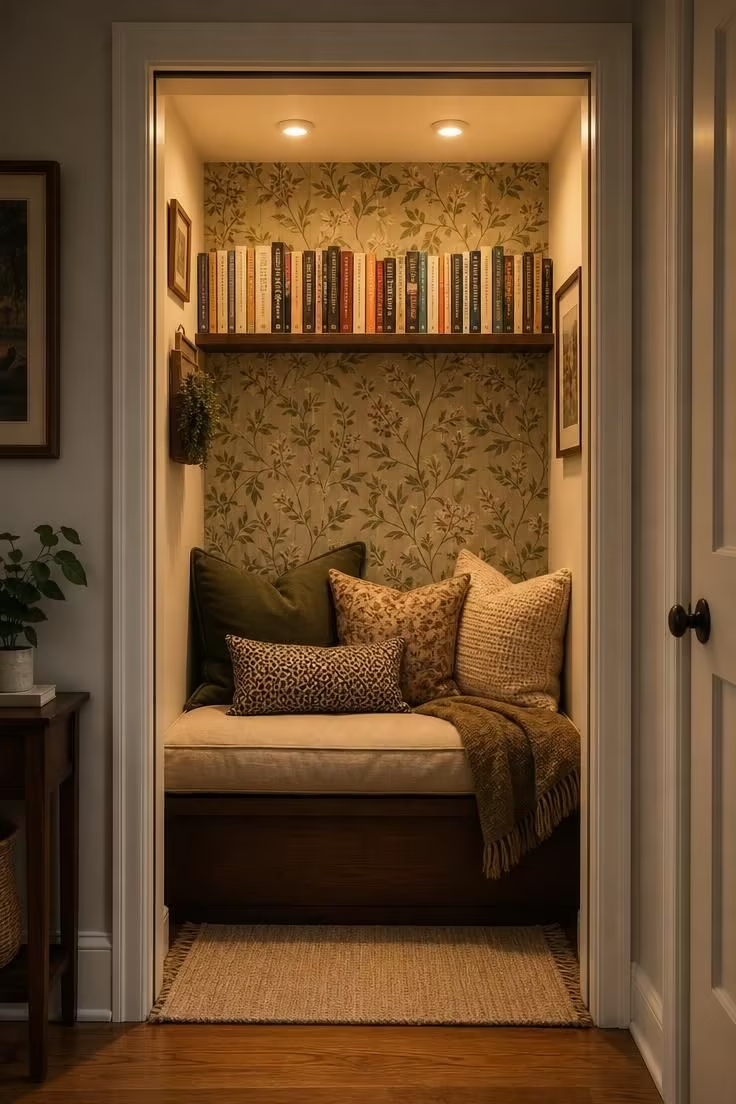
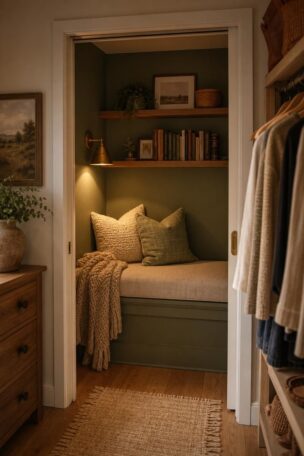
Removing the doors from a standard closet is one of the simplest ways to create a book nook decor moment that looks intentional and finished.
The existing depth of a closet, usually 24 to 28 inches, happens to be the right dimension for a deep seated reading bench.
Peel-and-stick wallpaper on the back wall adds character to the interior without risking a deposit or a weekend of pasting.
Battery-operated puck lights on the ceiling solve the lighting problem without running new wiring, and their warm glow fills the small space evenly.
Layered back pillows in mixed textures give the bench the comfort depth it needs, since a single flat cushion against a hard wall makes for a short reading session.
A narrow floating shelf above the cushion keeps a row of current reads at arm’s reach, turning the closet walls into functional book nook decor.
The small wool rug at the threshold creates a visual border that signals this is a separate room, even though it sits inside one.
This reading nook aesthetic works in bedrooms, hallways, and kids’ rooms where floor space is too tight for a full chair and bookcase.
Style Blueprint:
- Standard closet with doors removed
- Deep linen bench cushion (24-28 inches deep)
- Botanical peel-and-stick wallpaper on back wall
- Battery-operated LED puck lights (warm tone)
- Narrow floating shelf for books above the bench
Woven Hammock Chair With Macrame Plant Hangers
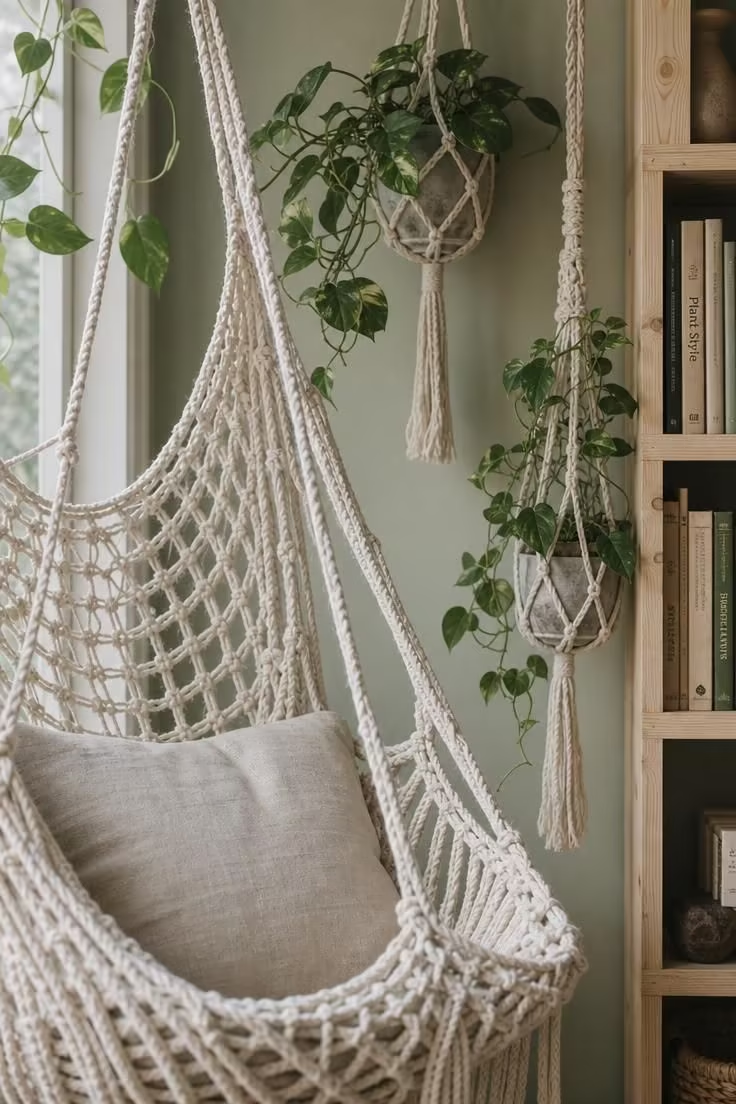
A cotton rope hammock chair creates a reading spot that moves with you, responding to every shift in weight with a gentle sway.
That movement is part of the reading nook aesthetic here, because it makes sitting feel more like floating than perching.
The macrame plant hangers at staggered heights introduce vertical layers that fill the corner without adding furniture.
Trailing pothos is a forgiving choice for indirect light spots, and its long tendrils soften the hard edges of the bookcase beside it.
The off-white and sage palette keeps this reading corner ideas setup feeling calm rather than cluttered, even with multiple textures competing for attention.
Raw pine on the bookcase adds warmth without the visual weight of a stained or painted finish.
Style Blueprint:
- Cotton rope hammock chair with ceiling mount
- Macrame plant hangers at two heights
- Trailing pothos or string-of-hearts plants
- Tall narrow pine bookcase
- Sage-painted accent wall
Design Pro-Tip: When mixing textures in a reading nook, limit yourself to three dominant materials. A room with rope, macrame, linen, velvet, wood, and ceramic all at once feels busy rather than layered. Pick three (here it is rope, pine, and linen) and let everything else recede into the background.
A Tufted Bench Under a Gallery of Small Framed Prints
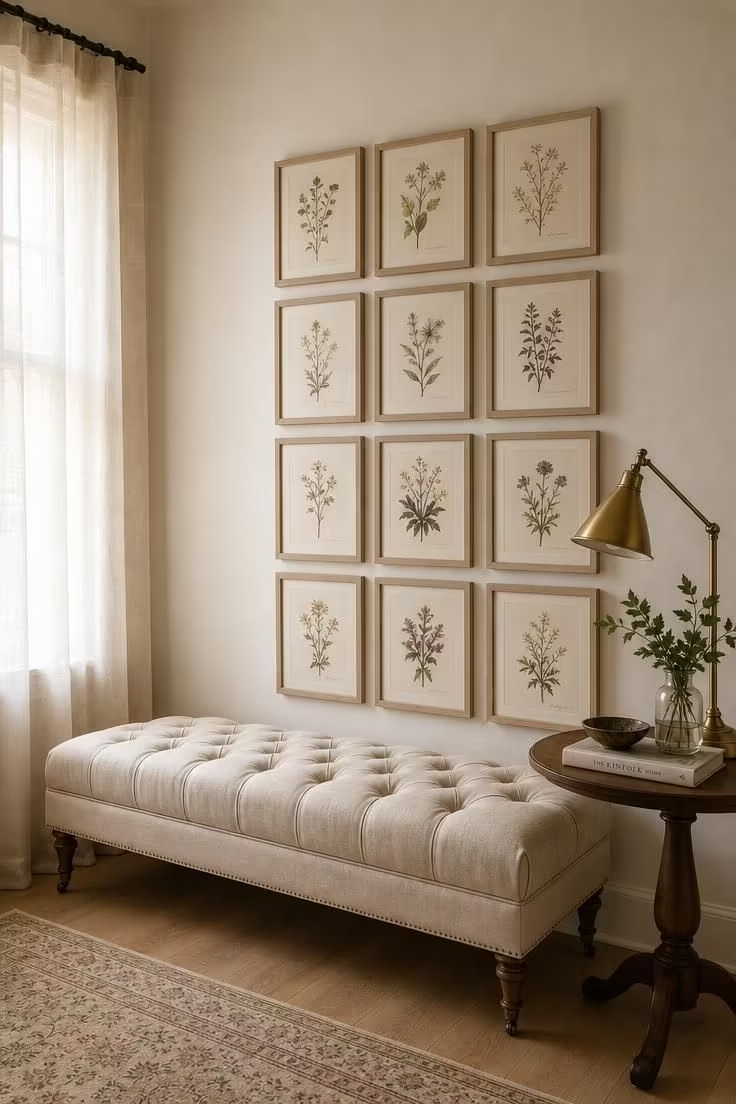
A tufted bench against a wall offers a reading seat that doubles as a landing spot for anyone passing through the room.
The button tufting creates small wells that catch light and shadow, giving the surface more visual interest than a flat cushion.
Mounting a grid of small framed prints above the bench gives the wall purpose and scale, turning what could be a dead zone into a gallery that rewards closer looking.
Botanical prints work well here because their organic lines contrast the geometric grid arrangement, and small frames keep the collection from overwhelming the bench below.
The round side table breaks the horizontal line of the bench and gives the brass reading lamp a dedicated surface.
Brass at a single point in the arrangement draws the eye without competing with the prints above.
This is a reading nook design that fits hallways, bedrooms, and living rooms where a full armchair would block the walkway.
Style Blueprint:
- Long tufted linen bench in oatmeal or natural
- Grid of small framed botanical prints (ash or oak frames)
- Round wooden side table
- Brass reading lamp with conical shade
- Soft warm white wall paint
Conclusion
A reading nook aesthetic comes down to choosing one good seat, placing it where the light falls well, and adding just enough texture to make the corner feel separate from the rest of the room.
You do not need a renovation or a large budget to create a cozy reading corner that you actually use every day.
Start with the reading chair that fits your body and the spot that gets the right light, then layer in a reading nook design that reflects how you actually spend your time with a book.
The 12 ideas above give you a specific starting point for each style, from a floor cushion in a quiet corner to a hanging chair beside a tall plant.
Pick one, try it this weekend, and see how quickly an overlooked corner becomes your favorite place in the house.